
Skip to content

Spider City!

The world’s largest spiderweb is home to more than 100,000 spiders.
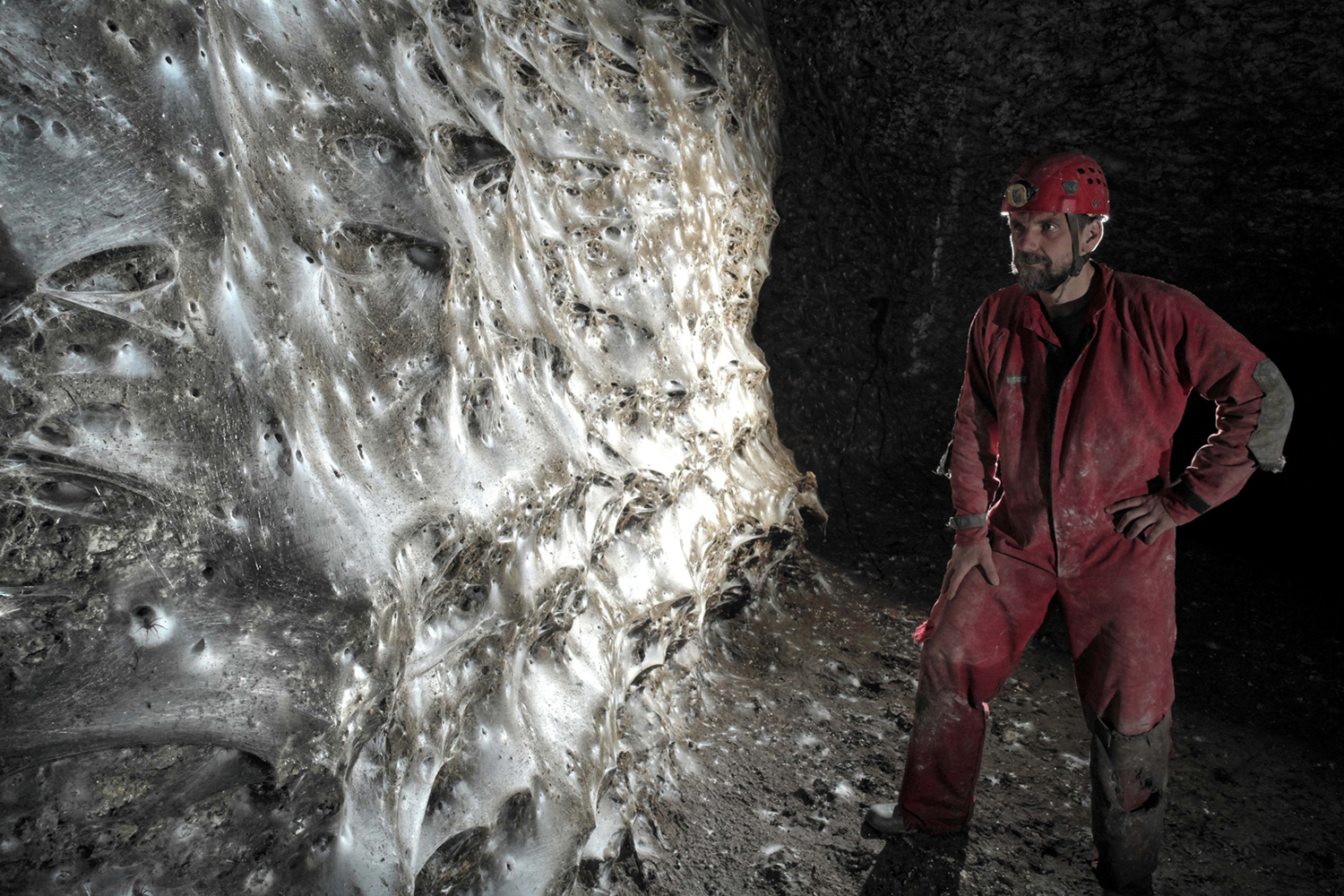
A man in a red hard hat and jumpsuit stands in a cave looking at a large network of funnel spiderwebs.

© Urak et al.—Subterranean Biology/Reuters

A cave explorer stands next to a network of spiderwebs in Sulfur Cave on the border between Greece and Albania. This may be the world’s largest spiderweb.

Scientists are studying a “spider mega-city” in a cave on the border between Greece and Albania. Sulfur Cave is home to what may be the world’s largest spiderweb, with tons of eight-legged residents. Even more remarkably, the spiders on the web are not all the same species. 

The giant web, which is really many funnel-shaped spiderwebs put together, measures more than 1,100 square feet (105 square meters). That’s about the size of many school classrooms. It’s a good thing the web is so large, because scientists say that more than 100,000 spiders make it their home! 

There are two species on the web: Tegenaria domestica (also called the barn funnel weaver or the domestic house spider) and Prinerigone vagans. Scientists say the T. domestica spiders built the web and the P. vagans spiders moved in. 
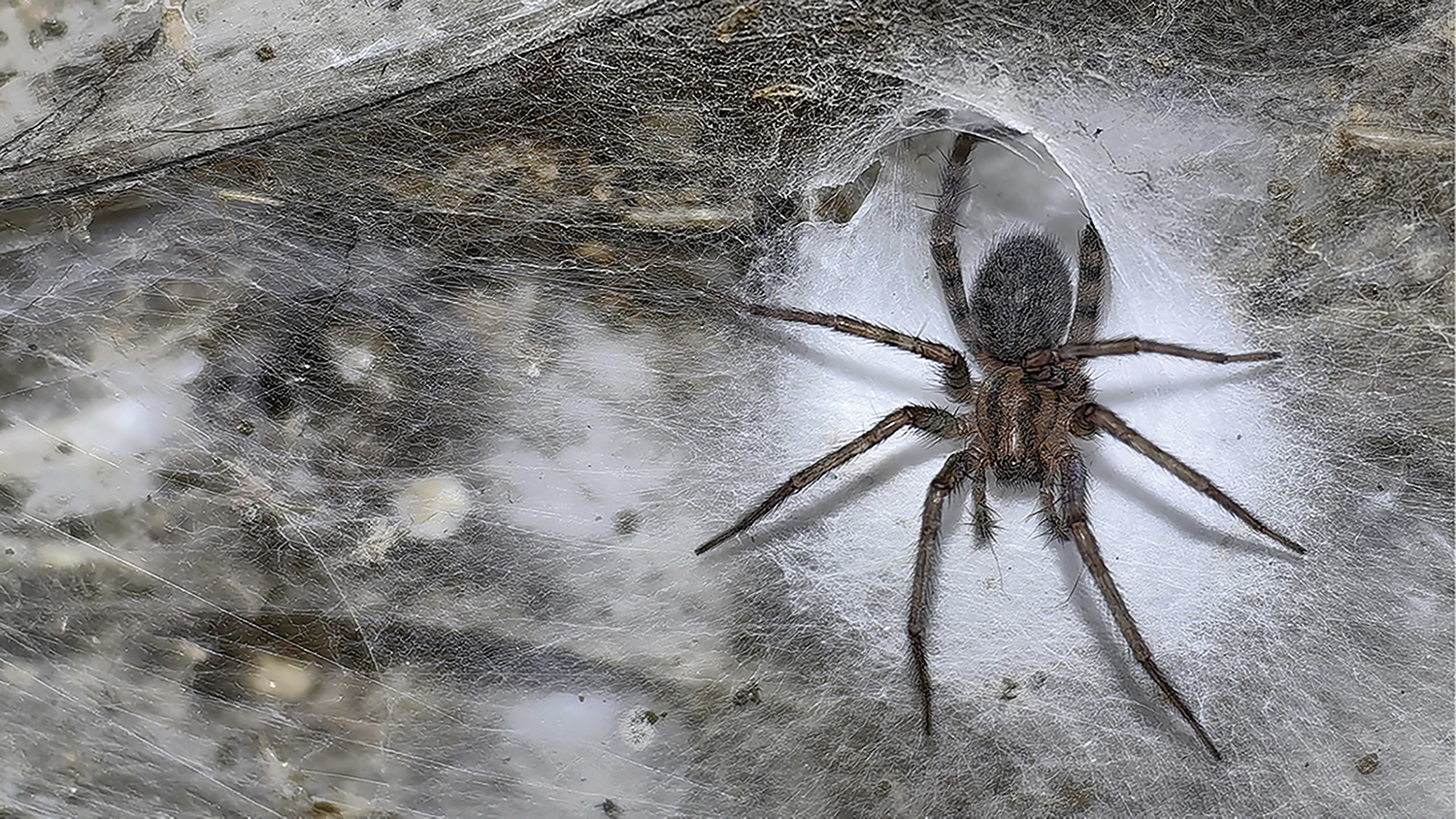
A brown spider sits in the funnel of a large spiderweb.

Urák I, Vrenozi B, Głąbiak Z, Lecoquierre N, Eiberger C, Maraun M, Ştefan A, Flot J-F, Brad T, Dainelli L, Sarbu SM, Băncilă RI (2025) An extraordinary colonial spider community in Sulfur Cave (Albania/Greece) sustained by chemoautotrophy. Subterranean Biology 53: 155-177. https://doi.org/10.3897/subtbiol.53.162344 (CC-BY-4.0)

A Tegenaria domestica spider sits on a spiderweb in Sulfur Cave.

This living arrangement surprised scientists for two reasons. First, both species are solitary, meaning they usually live alone. Second, T. domestica spiders (the larger of the two species) would normally eat P. vagans spiders. So how are these two species peacefully sharing a giant quilt of a spiderweb? Scientists believe the cave is dark enough to hide the smaller spiders from the larger ones.

Although these spiders wouldn’t normally share a web, Sulfur Cave offers delicious advantages. It’s full of tiny living things called microbes, which are eaten by small animals such as midges. A midge is a type of fly. Plenty of midges get caught in the web, so the spiders get what they need. For thousands of spiders, this cave city is the perfect home.

Face Thinking Icon

Did You Know?

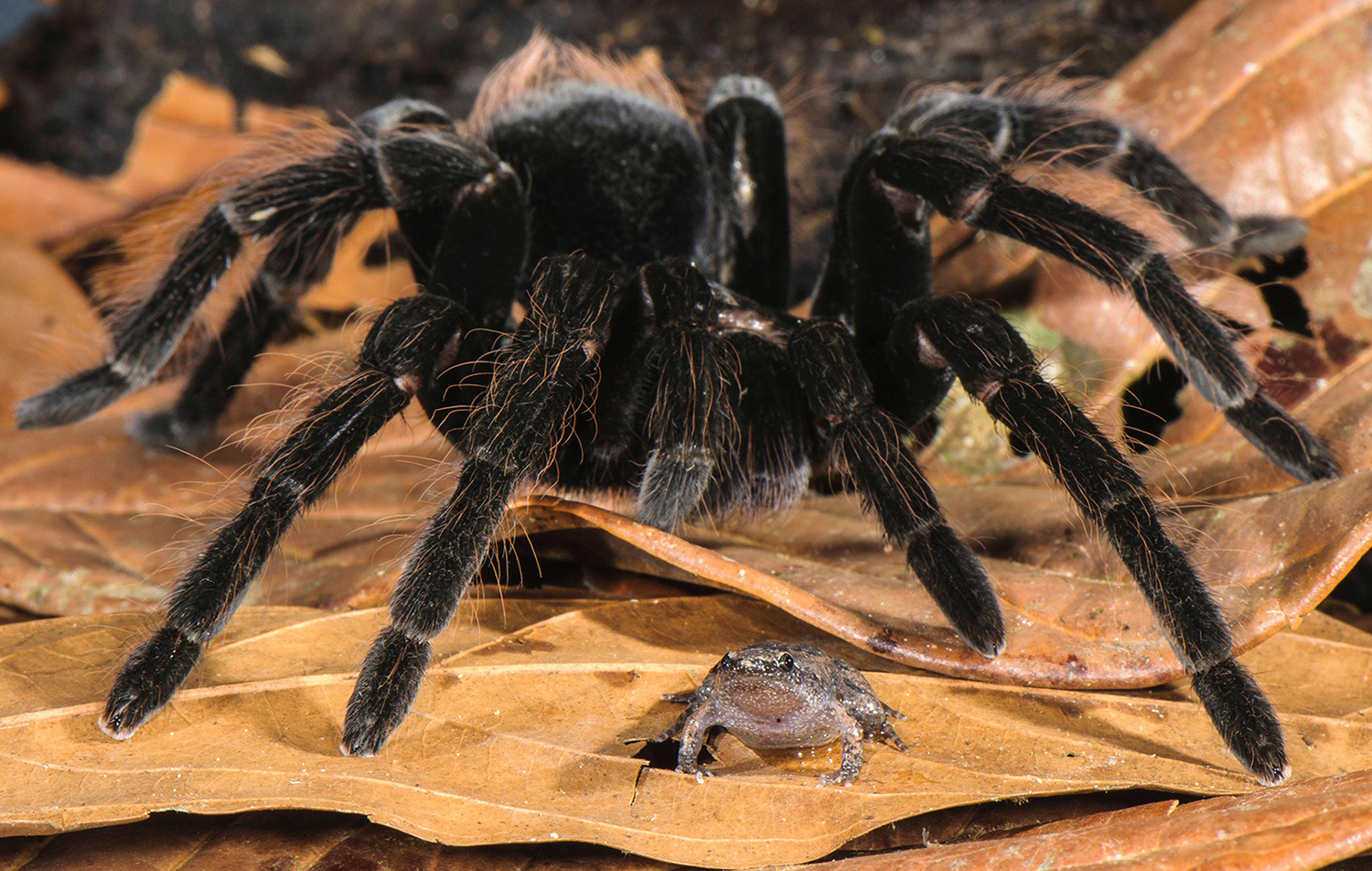
A tarantula sits close to a tiny frog on a pile of leaves.

© Emanuele Biggi—Nature Picture Library/Alamy

The Peruvian tarantula and the humming frog are unlikely roommates. But the two animals help each other by sharing a burrow (living space). The tarantula protects the frog from predators. The frog eats ants that try to eat the tarantula’s eggs.

An App That Speaks to All

Elly Savatia smiles while wearing wired gloves.

Courtesy of the Royal Academy of Engineering

Inventor Elly Savatia poses with gloves that are used to program his app, Terp 360.

Inventor Elly Savatia has developed an app that can translate speech into sign language. Called Terp 360, the app is a communication tool for people who are deaf or hard of hearing.

Savatia says it can be difficult for deaf people to communicate in the African nation of Kenya, where he is from. Many services aren’t translated into sign language. This limits opportunities and makes everyday tasks more difficult.

“To go to the workplace, education, health care, you have to communicate,” Savatia told CNN. “But the deaf community, they’re left behind.”

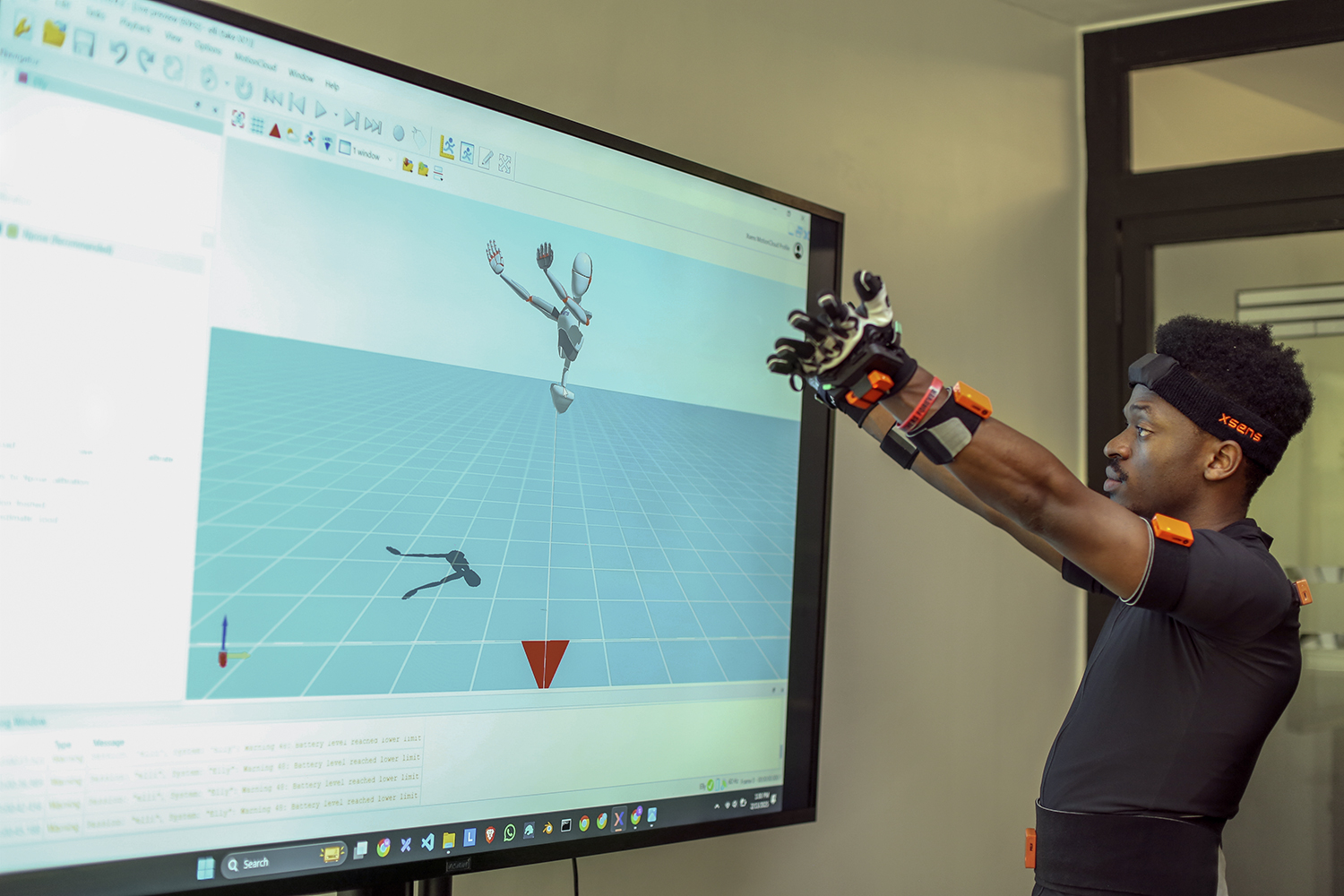
Elly Savatia stands in front of a screen and holds out his gloved hands while an avatar on the screen strikes the same pose.

Courtesy of the Royal Academy of Engineering

Elly Savatia works on his app, Terp 360.

Terp 360 “listens to” speech, and an avatar uses its hands to sign the words on the screen as they are being spoken. (An avatar is a computer-generated person.) The app can translate TV shows, announcements, conversations, and more.

In October 2025, the Royal Academy of Engineering in the United Kingdom awarded Savatia its Africa Prize for Engineering Innovation. The prize goes to people who develop technology to solve problems in Africa. But the app could help people all over the planet.

Terp 360 is currently designed to translate two spoken languages, English and Swahili, into Kenyan Sign Language. But there are thousands of spoken languages and hundreds of sign languages in the world. Savatia plans to expand the app so that it can translate into other sign languages, including South African Sign Language, British Sign Language, and American Sign Language.

What’s Inside Caves?

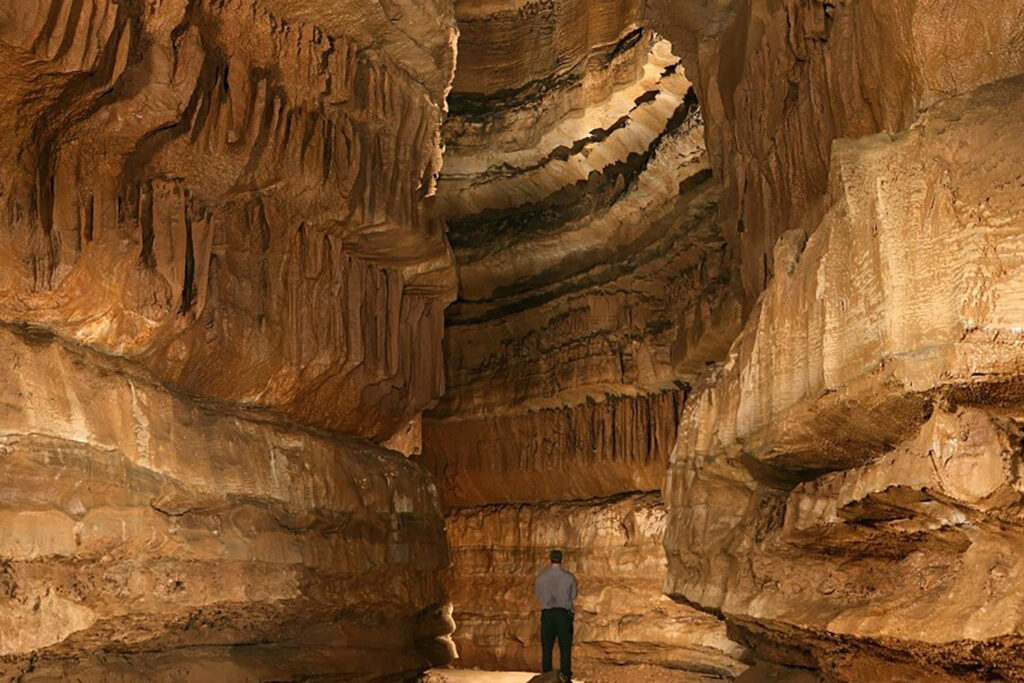
A man stands inside a large cave room.

U.S. National Park Service

A park ranger stands inside an area of Mammoth Cave called Cathedral Domes.

The Mammoth Cave system in the U.S. state of Kentucky is the longest known cave in the world. It’s more than 425 miles (680 kilometers) long—and it hasn’t even been fully explored yet!

How do caves form, and what living things might be found inside them? Learn the answers to these questions and more at Britannica!

Word of the Day Icon

Word of the Day

cavernous

Part of speech:

adjective

Definition:

: resembling a large cave : very large

Definitions provided by
Merriam-Webster Logo
Game Icon

Play

Crossword

Use the clues to solve the puzzle.

.

In Case You Missed It

A hungry wolf’s quest to get a snack led to an incredible scientific discovery.
January 4, 2026
A copy of the first comic book featuring Superman set a record when it was sold in an auction.
December 10, 2025
Some zoos are inviting visitors to watch as they provide veterinary care to their animals.
December 4, 2025
The National Toy Hall of Fame in the United States has chosen to honor three toys.
November 26, 2025