
Manumea, Where Are You?
The manumea is so rare that there aren’t many photos of it. Does it still even exist?
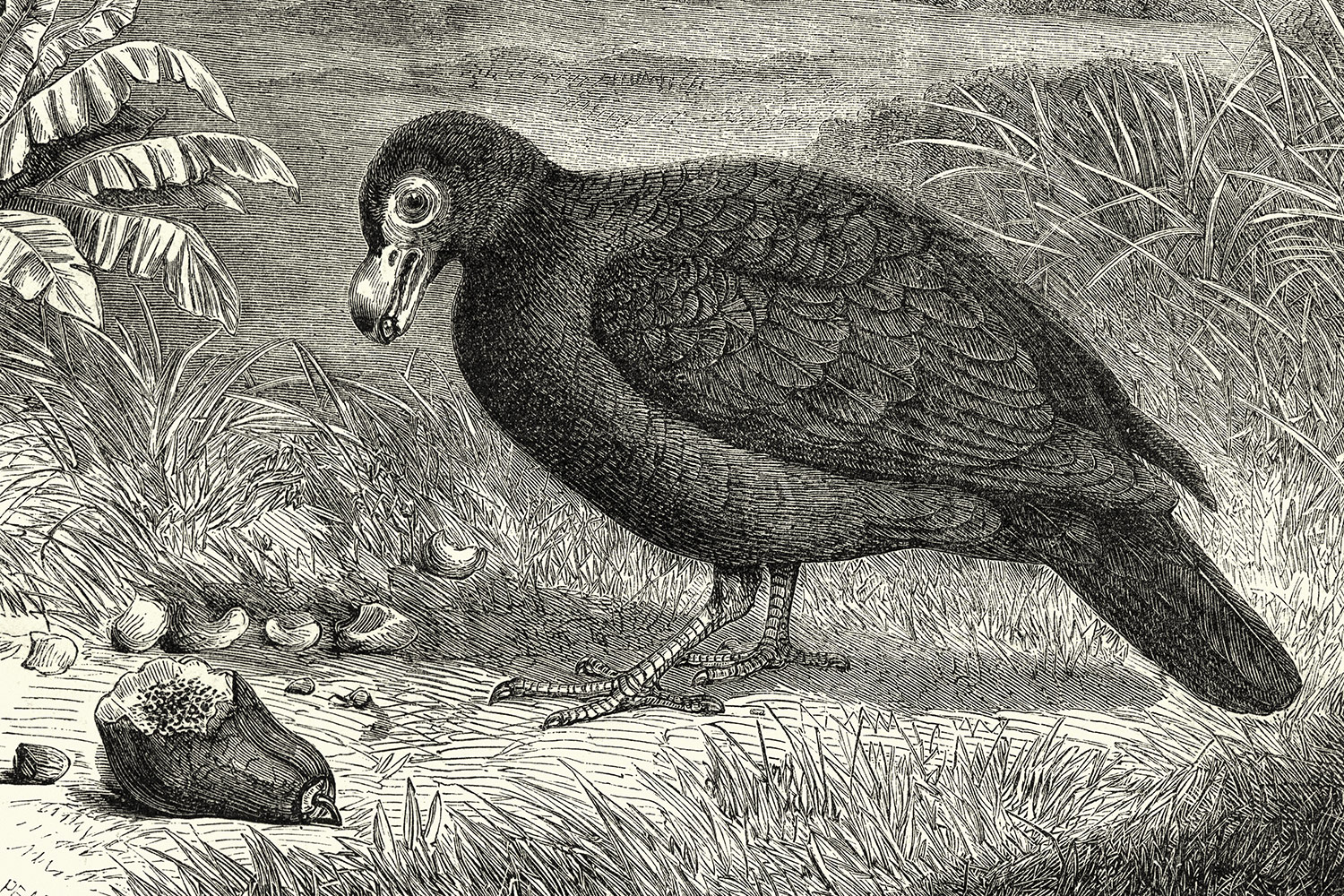
© duncan1890—DigitalVision Vectors/Getty Images
The manumea, or tooth-billed pigeon, is found only in Samoa.
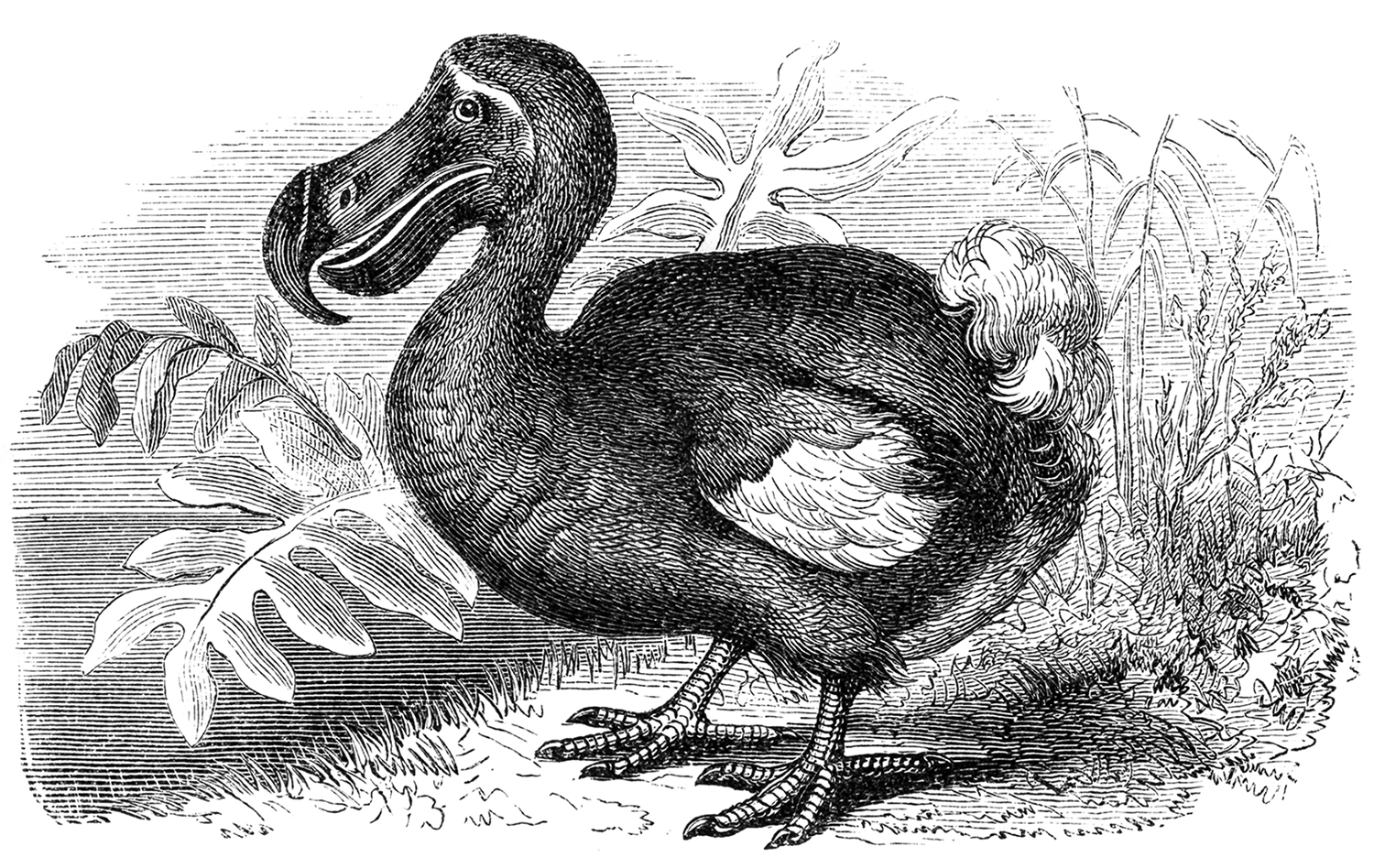
Hundreds of years ago, a bird species called the dodo went extinct. Now, experts fear that the dodo’s closest living relative, a bird species called the manumea, could also disappear. But a recent manumea sighting has scientists cheering.
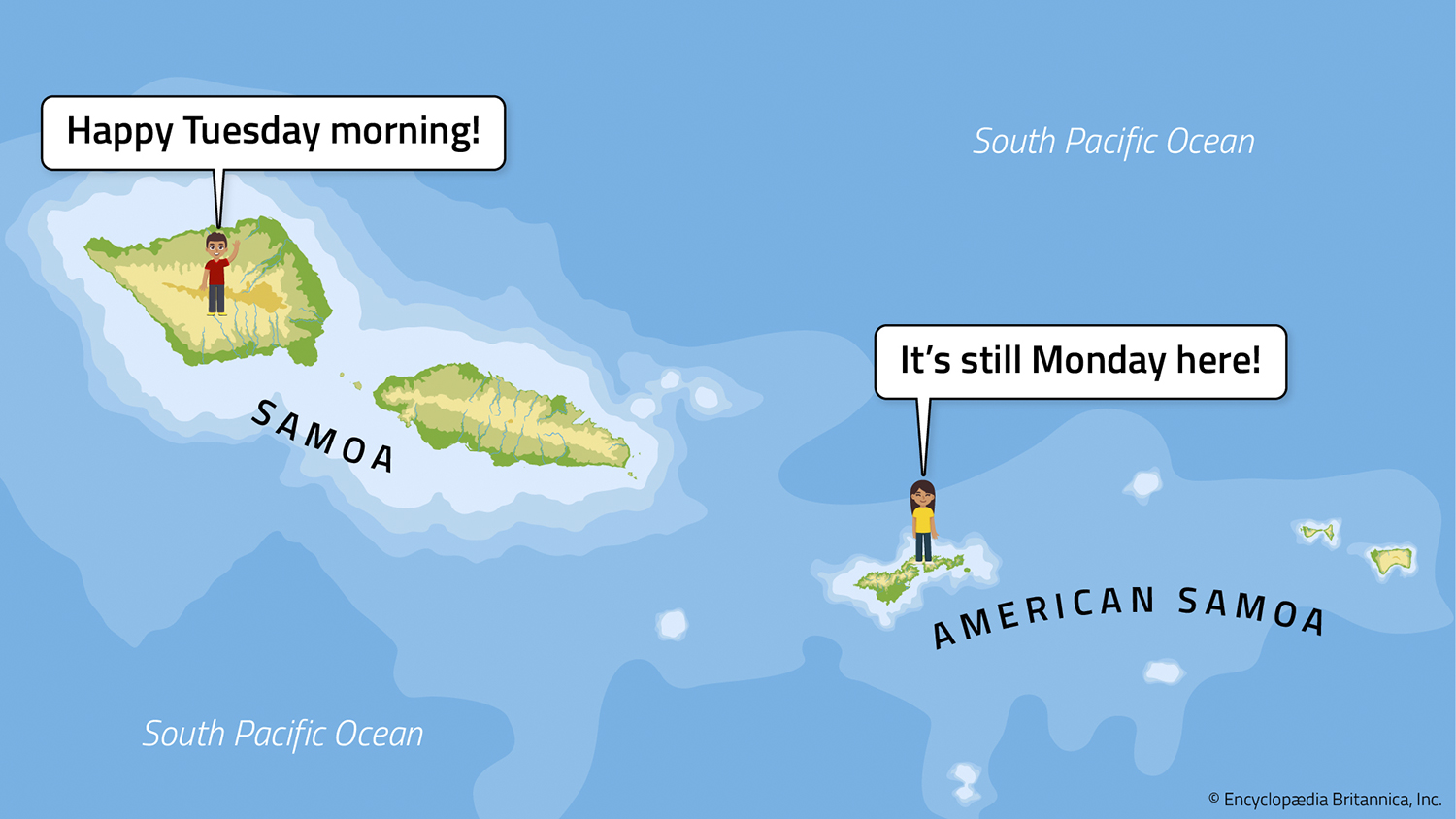
Found only in a Pacific island nation called Samoa, the manumea (also called the tooth-billed pigeon) is a chicken-sized bird with red-brown and blue-gray feathers. Its name means “little dodo” because it resembles the dodo. The manumea is critically endangered, meaning it is in danger of becoming extinct. There are many reasons for this, including hunting and the loss of the forest where the birds live. But the biggest problem may be rats and stray cats that have been introduced to the area. These animals hunt manumeas and eat their eggs.
According to expert estimates, there are only about 50 to 150 of the birds left. Even worse, no one saw a manumea between 2020 and 2025, leaving many to wonder if there were even fewer birds than anyone realized.
But recently, members of the Samoa Conservation Society went into the forest to look for manumeas and came back with great news. In just over three weeks, the organization saw manumeas five times.
“I had goosebumps all over,” conservationist Sefuiva Moeumu Uili told the Australian radio show Nesia Daily. “Some of us were…talking and having a break from hours of just sitting and looking [for manumeas], and then all of a sudden it just appeared.”
The conservationists were unable to get any photos of manumeas, but seeing the birds gives them hope. They’re committed to protecting Samoa’s forests and telling the public about the importance of saving wildlife. With hard work, the manumea won’t disappear like its cousin, the dodo.