
Skip to content

Japan’s Disappearing Snow Monsters

People are racing to save a beloved winter wonder on Japan’s Mount Zao.
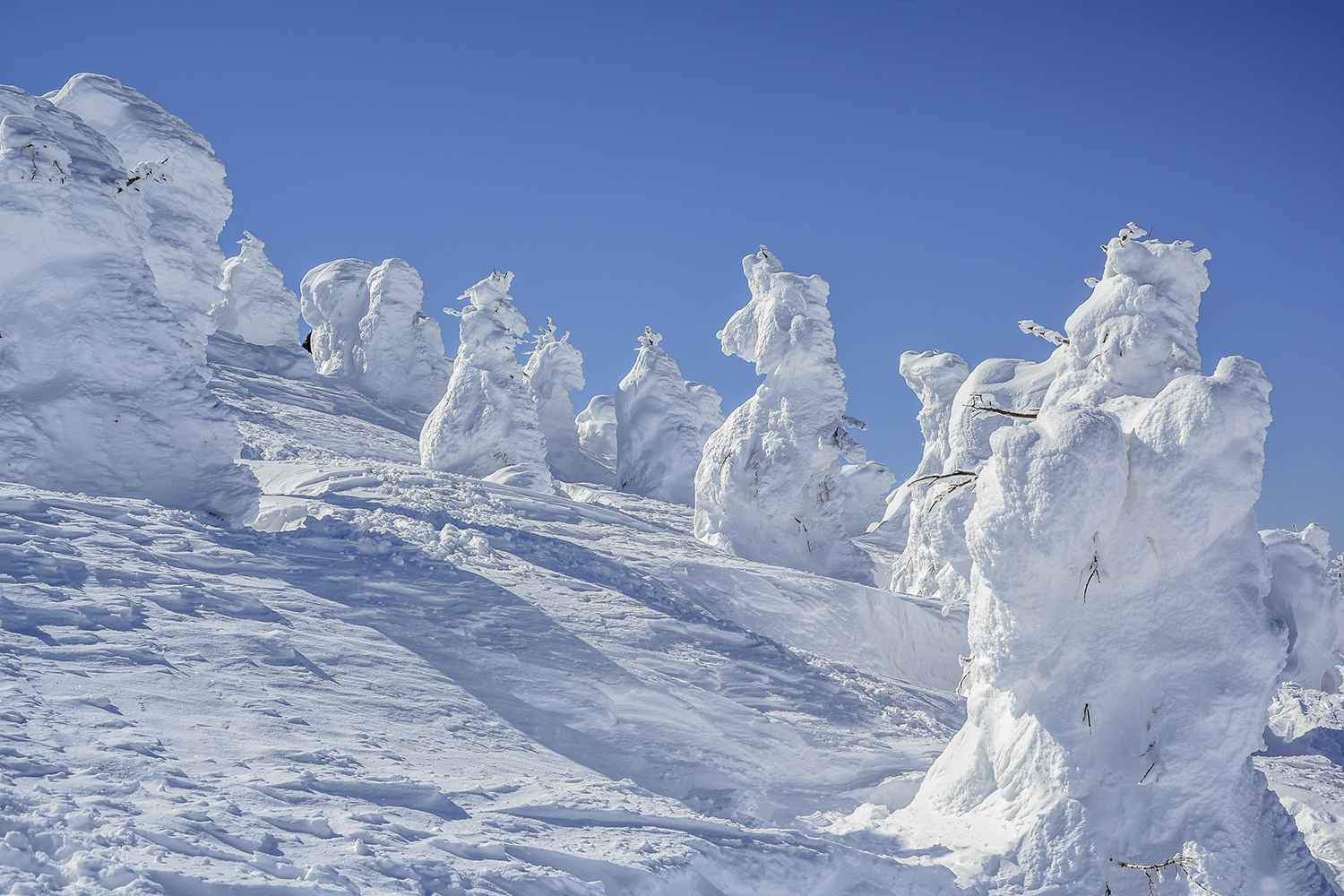
Snow has covered evergreen trees on a hillside, making them look like snow creatures.

© weniliou/stock.adobe.com

These snow-covered trees on Japan’s Mount Zao are known as juhyo.

Each winter, giant snow monsters appear across the landscape of Japan’s Mount Zao. Though they may look like towering ghosts or abominable snowmen, these “monsters” are just trees encased in snow and ice. People travel from all over the world to see this rare natural wonder—but new research shows that it’s at risk of disappearing. 

The monsters, called juhyo in Japanese, occur when cold and windy weather brings a supercooled, icy rain to the mountain. The icy rain freezes immediately when it meets the fir trees, encasing them in layers of ice and snow. The phenomenon turns the whole mountain into an otherworldly landscape. 

However, a team of Japanese researchers confirmed that the snow monsters are not growing as large as they did nearly 100 years ago.

“In the 1930s, we saw juhyo five to six metres [16–20 feet] across,” said Fumitaka Yanagisawa to the BBC. Yanagisawa is a professor at Japan’s Yamagata University who studies juhyo. “Since 2019, many are half a metre [1.6 feet] or less. Some are barely columns.”
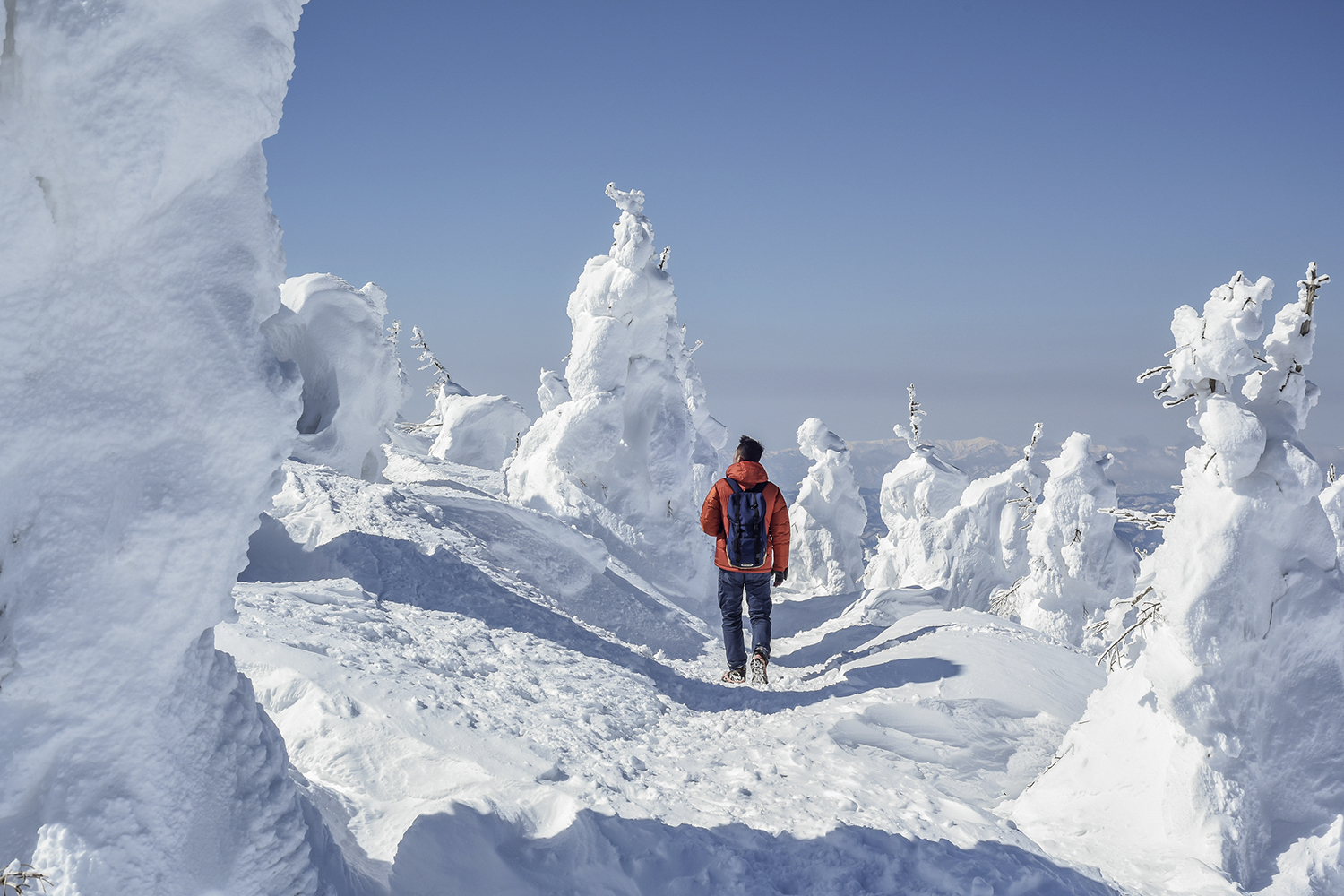
A man stands facing away from the camera and looking at snow-covered trees that resemble snow creatures.

© weniliou/stock.adobe.com

A hiker gets a look at Japan’s snow monsters.

Yanagisawa pointed to two environmental factors affecting the snow monsters: harmful insects and a warming climate. Insect outbreaks have hurt the fir trees, causing them to lose needles or damaging the bark, so many trees have died. This means there are fewer branches for the winter rain to freeze onto and create the iconic juhyo shape.

A warming climate also means the juhyo are melting faster and the special conditions that make the supercooled rain are increasingly rare. Still, the local community is racing to save the snow monsters. A collaboration between the local government and high school students is focusing on planting young fir trees on the mountain to revive the mountain forests.

“They are called snow monsters because nothing else looks like them,” said Kanon Taniai, one of the students helping plant trees, to the BBC. “I want the world to see them, and to feel how special Japan’s nature is.”
Did You Know?

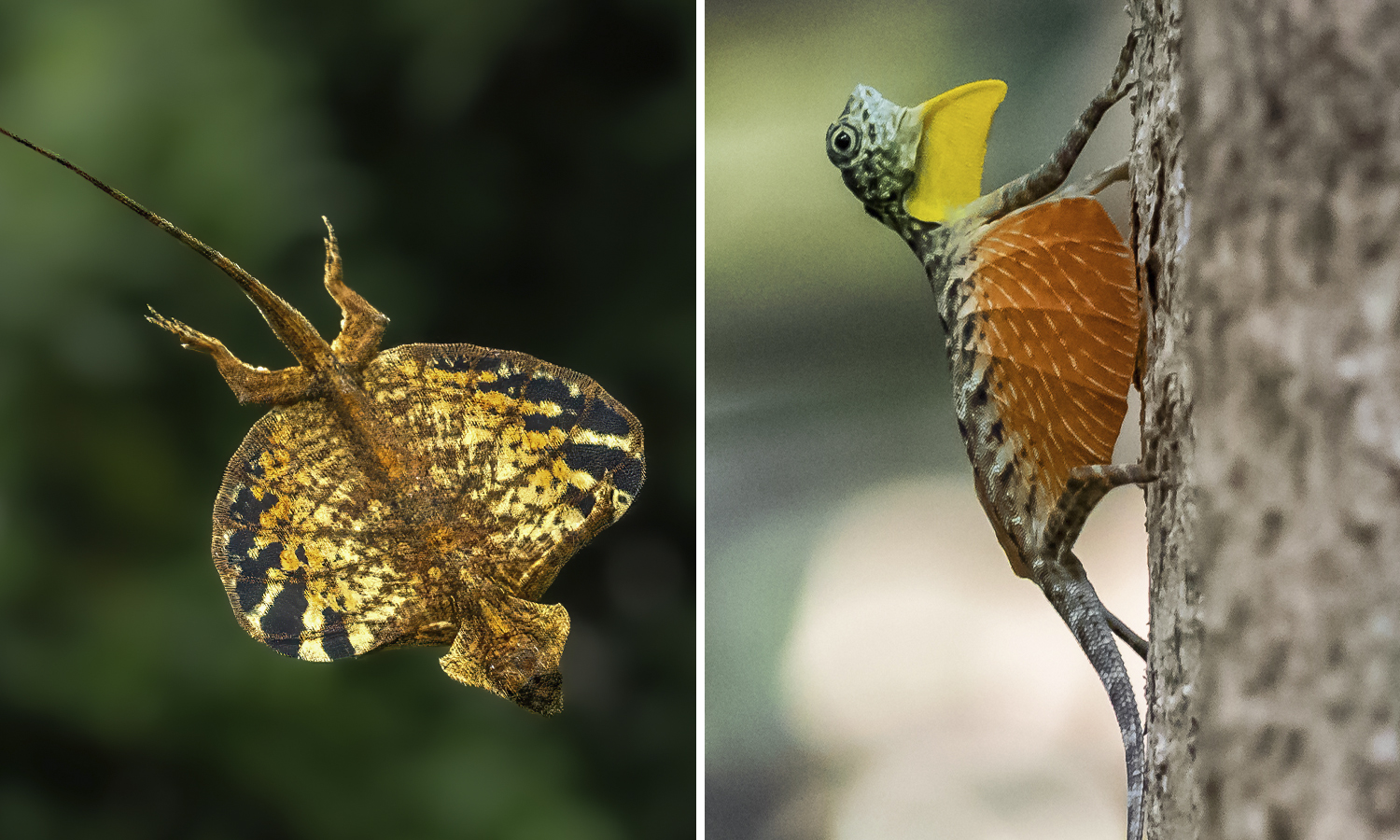
Dragons are mythical creatures—or are they? Southeast Asia is home to a type of small, flying lizard that can glide through the air with wing-like membranes. These flying lizards belong to the genus Draco, which is Latin for “dragon.”

Side by side images show a flying lizard in flight and climbing the side of a tree trunk.

© Lauren, ksumano/stock.adobe.com; Photo composite Encyclopædia Britannica, Inc.

A flying lizard glides through the rainforest in Indonesia (left) and climbs a tree.

A Case of Mistaken Identity

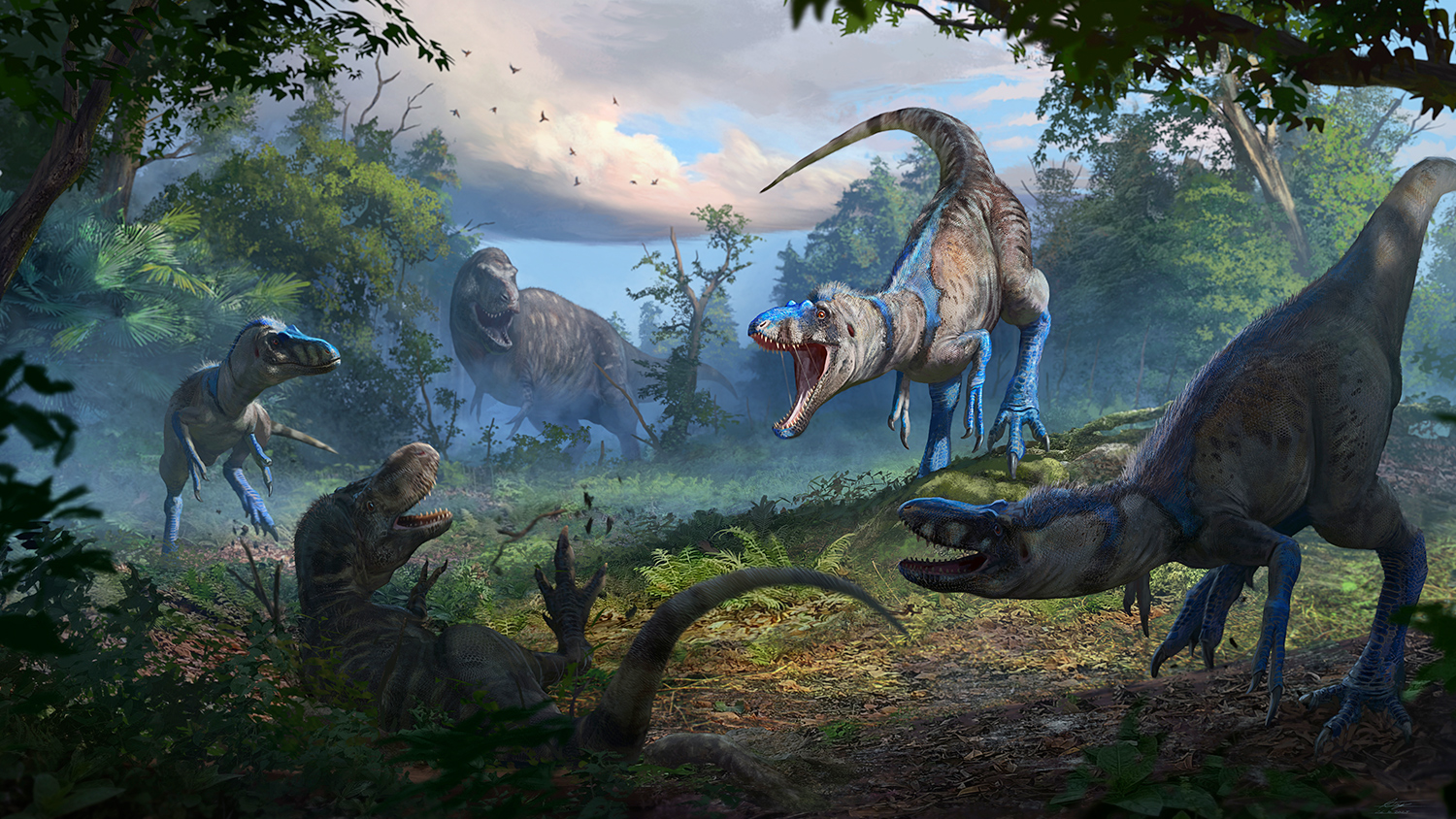
A pack of Nanotyrannus dinosaurs attack a juvenile T. rex.

© Anthony Hutchings/Friends of the NC Museum of Natural Sciences

In this illustration, a pack of Nanotyrannus dinosaurs attack a Tyrannosaurus rex that is not fully grown.

Paleontologists have uncovered a new dinosaur predator, while also revealing a case of mistaken identity for a skeleton within a famous fossil called the Dueling Dinosaurs. 

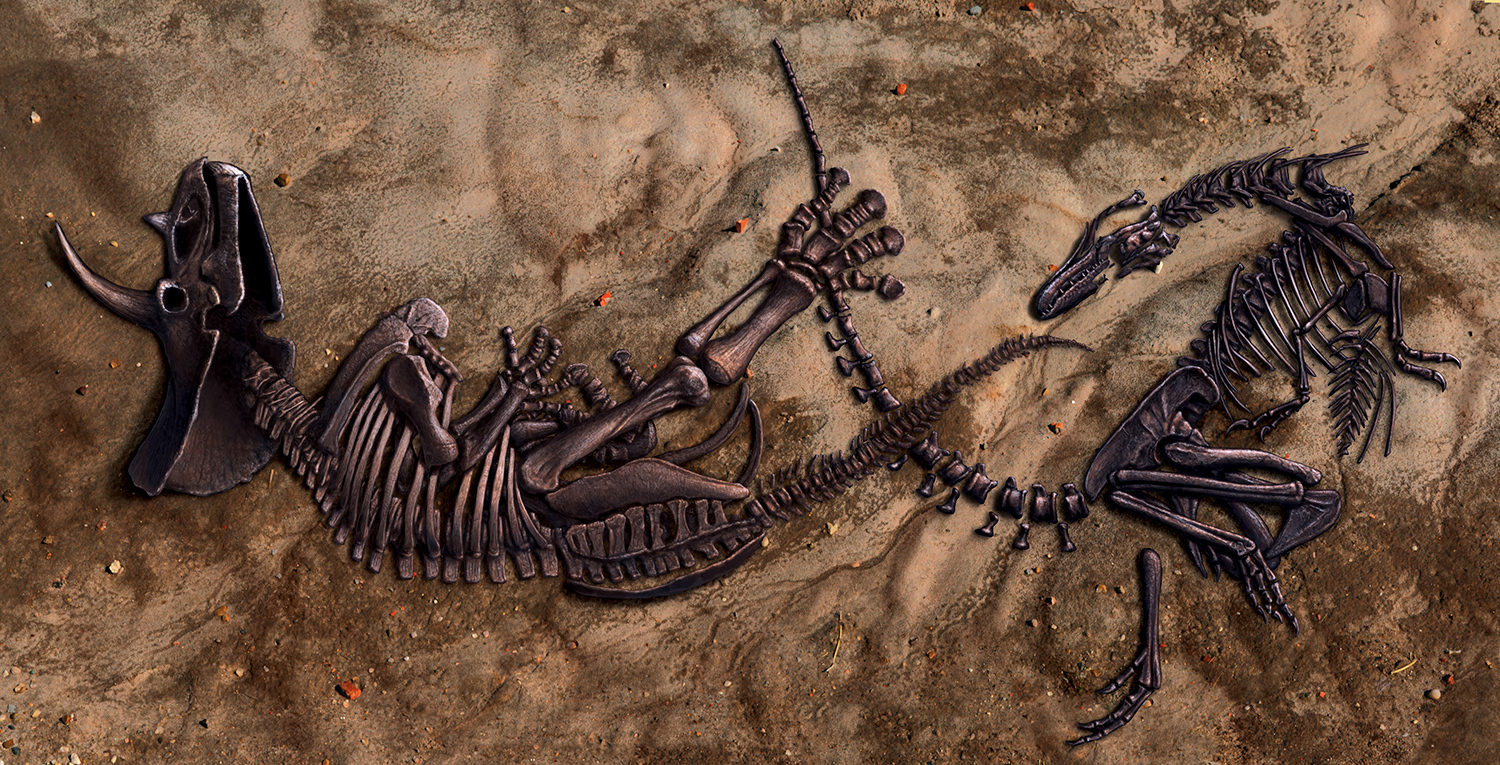
The fossil shows two dinosaurs—a leaf-eating Triceratops and a young predator—seemingly locked in a deadly battle. For decades, many experts thought the small, fierce predator in the fossil was a teen Tyrannosaurus rex. However, a recent study confirms that the fossil is a related, but entirely different, “dwarf” species of tyrannosaur called the Nanotyrannus.

Ultimately, key clues helped reveal the identity of the predator skeleton. Paleontologists studied the fossil’s arm length and bone growth rings to conclude the tyrannosaur was a fully grown adult dinosaur—not a young one.

A computer rendering of a fossil of a Triceratops and a Nanotyrannus in a position that suggests they were fighting.

© Julius Csotonyi/Friends of the NC Museum of Natural Sciences

This is a computer-made image of a fossil showing a Triceratops (left) and a Nanotyrannus fighting.

The new identification shows how these predators compare to each other. An adult Nanotyrannus would have reached about 18 feet (5.5 meters) in length and weighed about 1,500 pounds (680 kilograms). This is a fraction of the size of the colossal T. rex, which could grow longer than 42 feet (12.8 meters) and weigh 18,000 pounds (8,165 kilograms). In other words, if the T. rex were a city bus, the Nanotyrannus would be a small car. 

“This discovery paints a richer, more competitive picture of the last days of the dinosaurs,” said Lindsay Zanno, who is head of paleontology at the North Carolina Museum of Natural Sciences, where the fossil is housed. 

“With enormous size, a powerful bite force and stereoscopic vision, T. rex was a formidable predator, but it did not reign uncontested. Darting alongside was Nanotyrannus—a leaner, swifter, and more agile hunter.”

King of the Monsters

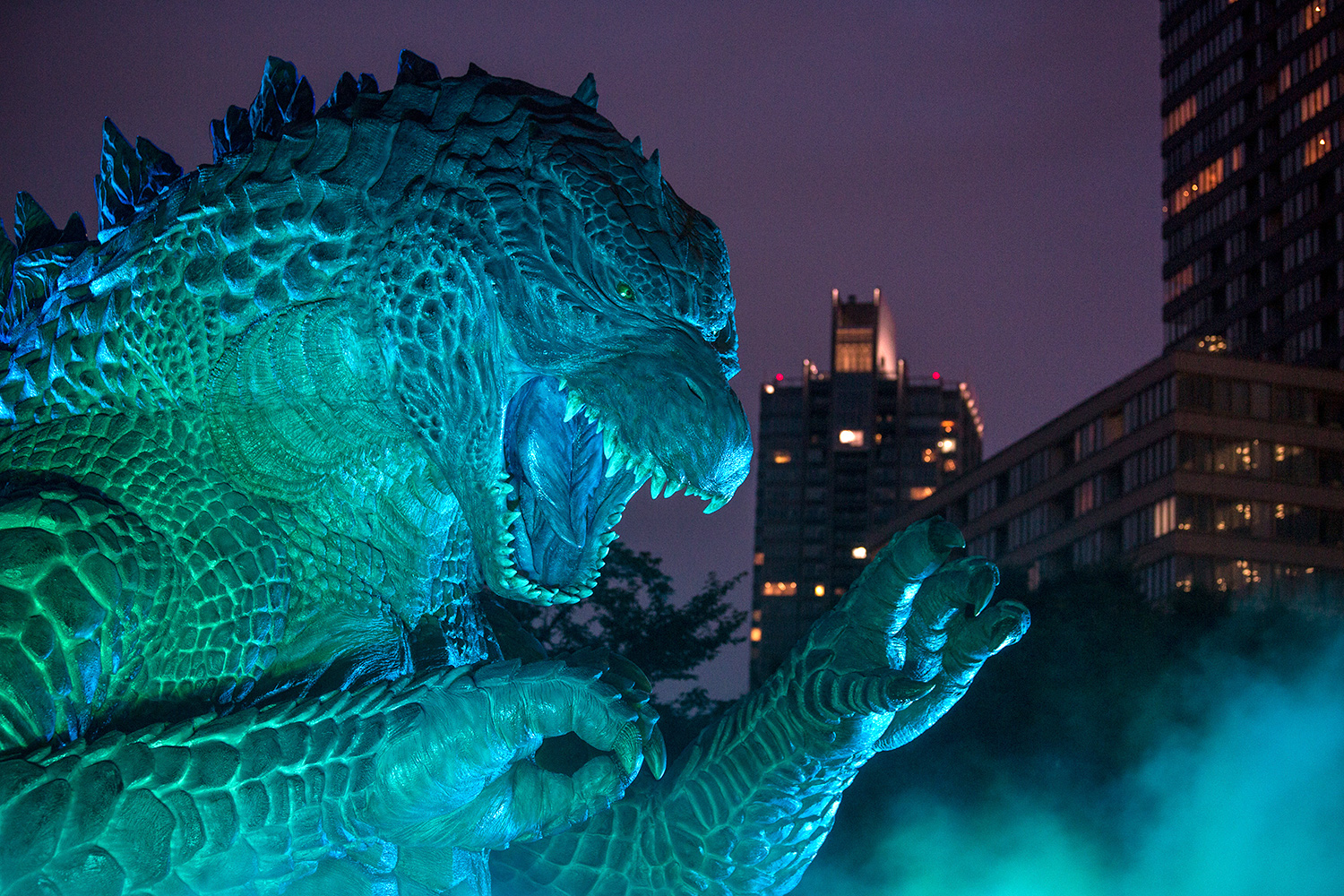
The head and shoulders of a lit-up Godzilla statue are seen against a night sky and two buildings.

© Chris McGrath/Getty Images

Godzilla has starred in many movies. In this photo, a huge Godzilla statue looms over Tokyo, Japan, during an event related to the release of a 2014 Godzilla film.

Many monster stories come from ancient folklore and legends, but Godzilla is a more recent tale. This massive creature first appeared in the 1954 Japanese film Godzilla and has inspired monster movies ever since. Read more about the classic film, and the classic monster, at Britannica! 

WORD OF THE DAY

behemoth

PART OF SPEECH:

noun

Definition:

: something very big and powerful

Definitions provided by
Merriam-Webster Logo

Word Flower

How many words can you make from the letters in the flower? All words must use the center letter.

O
O
O
O
O
O

In Case You Missed It

Quilen Blackwell plants seeds of hope by turning abandoned city lots into urban flower gardens.
January 15, 2026
Divers are working with archaeologists to help pull ancient Egyptian artifacts from the bottom of the Mediterranean Sea.
January 8, 2026
Shorter snouts on city raccoons show they’re becoming tamer than forest raccoons.
January 4, 2026
Thanks to three-wheeled electric vehicles, women in Zimbabwe have the independence they need to make a living.
December 10, 2025