
Seed Bank Savings
Ines Stuart-Davidson © RBG Kew
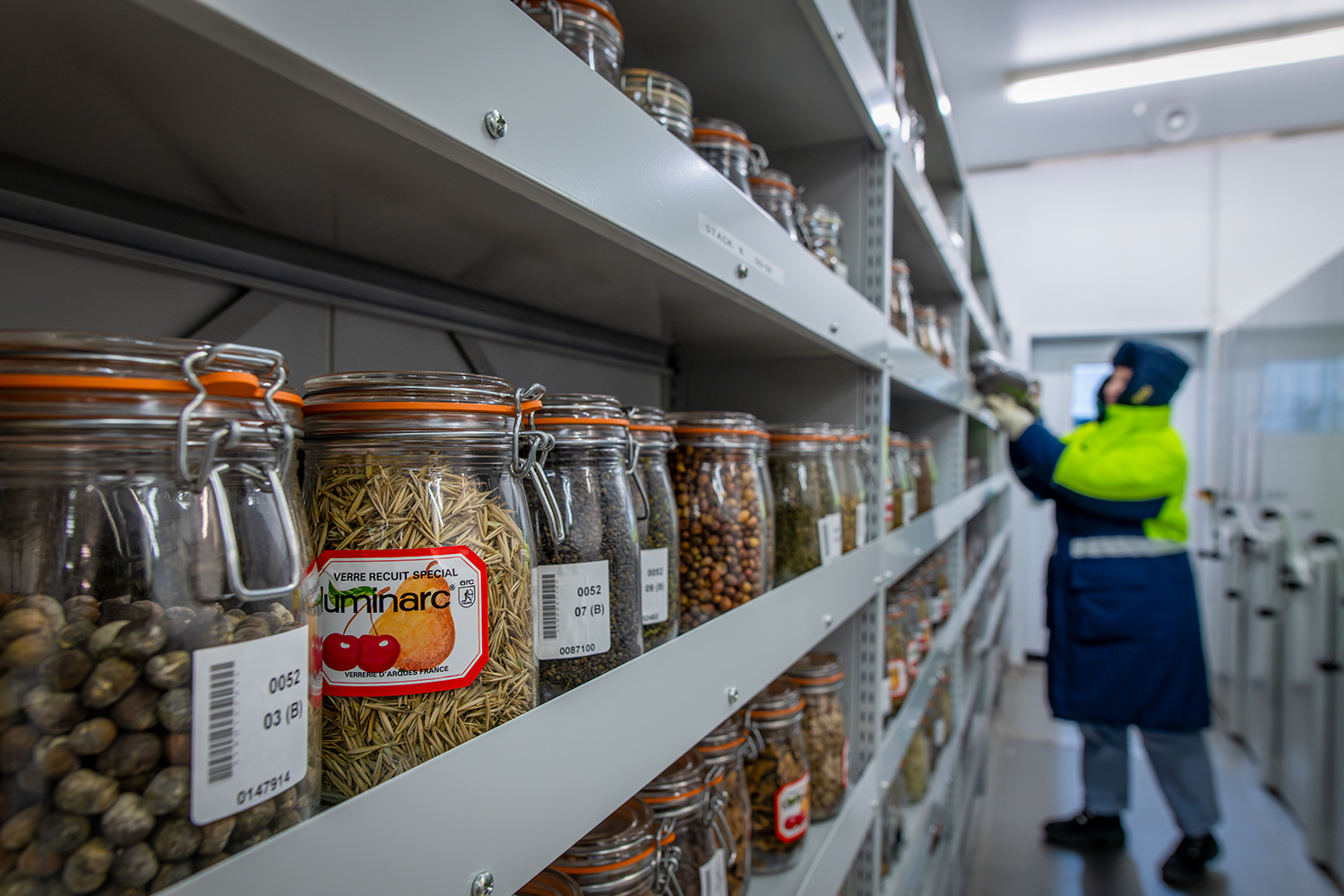
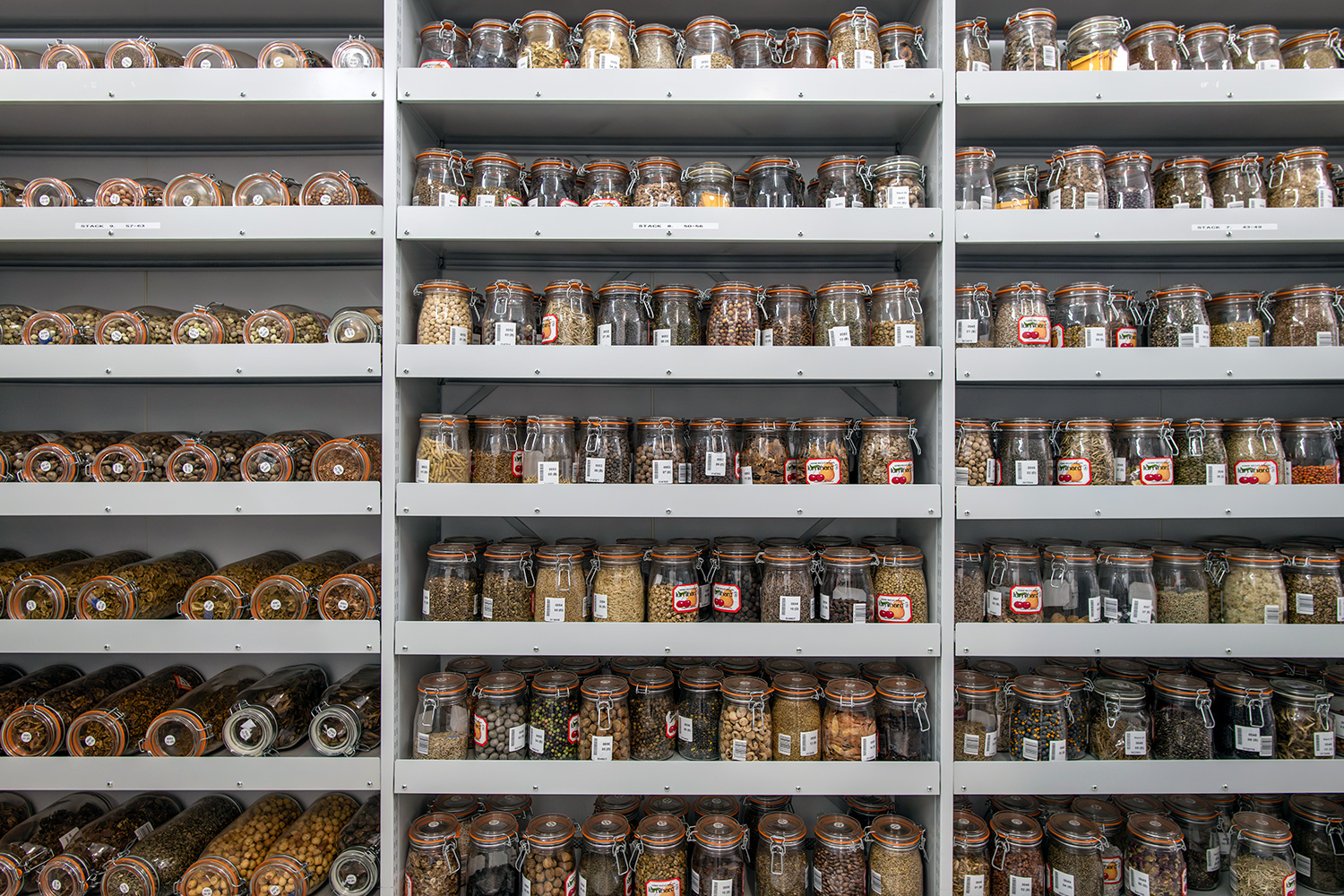
The Millennium Seed Bank’s vault holds jars of seeds from around the world.
Underneath a quiet botanic garden about an hour from London, England, there’s a fortified bank that holds a great treasure. It isn’t dazzling gold or sparkling jewels but seeds. The Millennium Seed Bank (MSB) is on a mission to safeguard billions of seeds and with them, Earth’s biodiversity.
“It’s invaluable,” the bank’s seed collections manager, Sharon Balding, told National Geographic Kids. “Our future survival depends on these seeds.” Plant biodiversity is the foundation for life on Earth. Plants are sources of food, medicines, building materials, and oxygen for the atmosphere. “Without [seeds], vital resources like food and medicines could be lost to us.”
Ines Stuart-Davidson © RBG Kew
The jars in the seed bank make it look almost like a home pantry!
In just 25 years, the MSB has gathered more than 2.5 billion seeds from nearly 100 countries. The seeds are stored in giant underground vaults that could protect the seeds from floods or blasts that could potentially harm them. But why go through all this effort for the humble seed?
“People often think that the vault is for a distant, doomsday scenario,” said seed scientist Owen Blake in an interview with National Geographic Kids. “But many of the seeds here are already urgently needed to restore degraded habitat!” The goal for these seeds is to restore destroyed wildlife habitats. If the destruction is big enough, these areas will need seeds to regrow lost plants.
Jeff Eden © RBG Kew
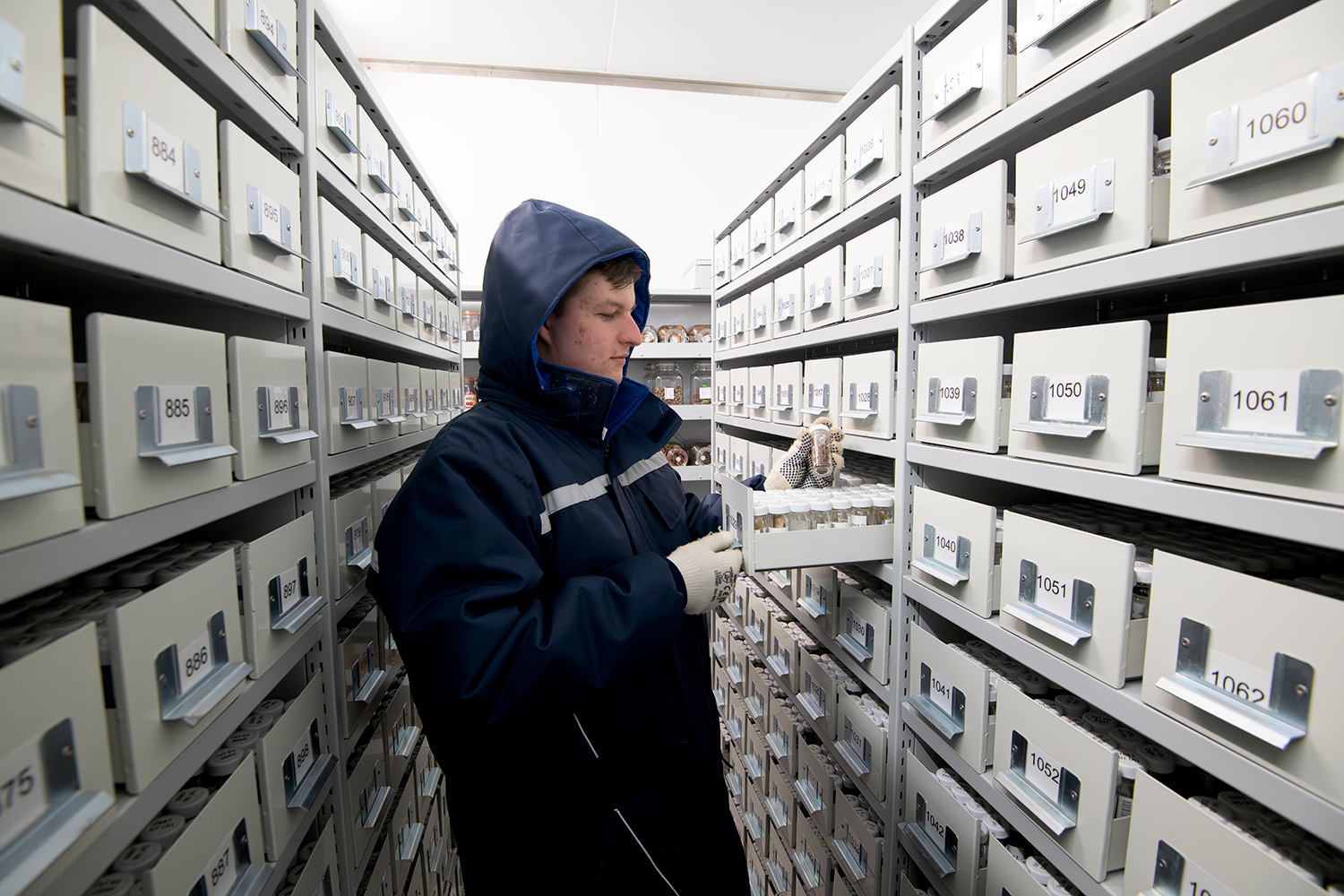
The seed vault is kept cold so that the seeds can be stored for a long time.
The MSB already jumped into action when a wildfire in 2020 decimated major habitats in Australia. From the thousands of Australian seeds stored in the bank, the MSB sent back 250 seeds to help Australian scientists regrow some rare plants destroyed in the fire.
Today the MSB houses seeds from about 40,000 different plant species. This may seem like a lot, but it is just a fraction of the estimated 435,000 unique land plant species on Earth. The more seeds that are added to the bank, the more biodiversity is saved to protect life on Earth as we know it.