
Does Ice Need a Blanket?
© Fabrice Coffrini—AFP/Getty Images
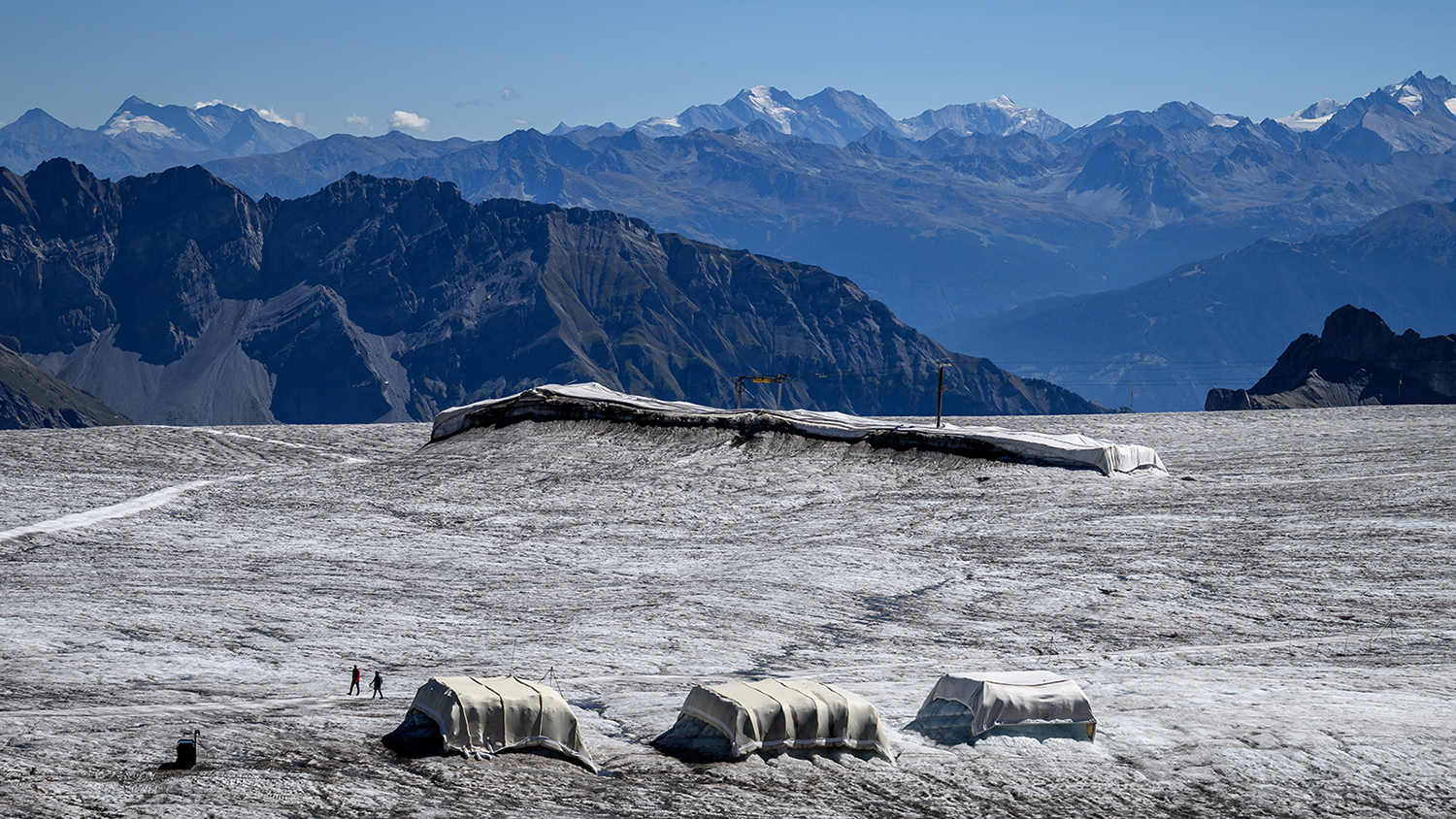
Sheep’s wool covers the two large pieces of ice on the left. The one on the right is covered by a plastic tarp.
Scientists in Switzerland have come up with a new way to keep the nation’s glaciers from melting too quickly. They are covering them with wool.
Glaciers, which are large ice sheets, have covered the upper part of the Alps mountain range for thousands of years. But the ice has been shrinking due to climate change. This past summer, a heat wave caused winter mountain snow to melt earlier in the year than usual, leaving the glaciers exposed to the Sun for longer. With less ice, rocks are more likely to slide down the mountain, causing danger to communities below.
For years, scientists have put plastic coverings called tarpaulins, or tarps, over some of the ice during the summer. The plastic reflects the sunlight, keeping the heat of the Sun away from the glaciers. But the tarps also shed tiny pieces of plastic, polluting the area. That’s where the wool comes in.
© Fabrice Coffrini—AFP/Getty Images
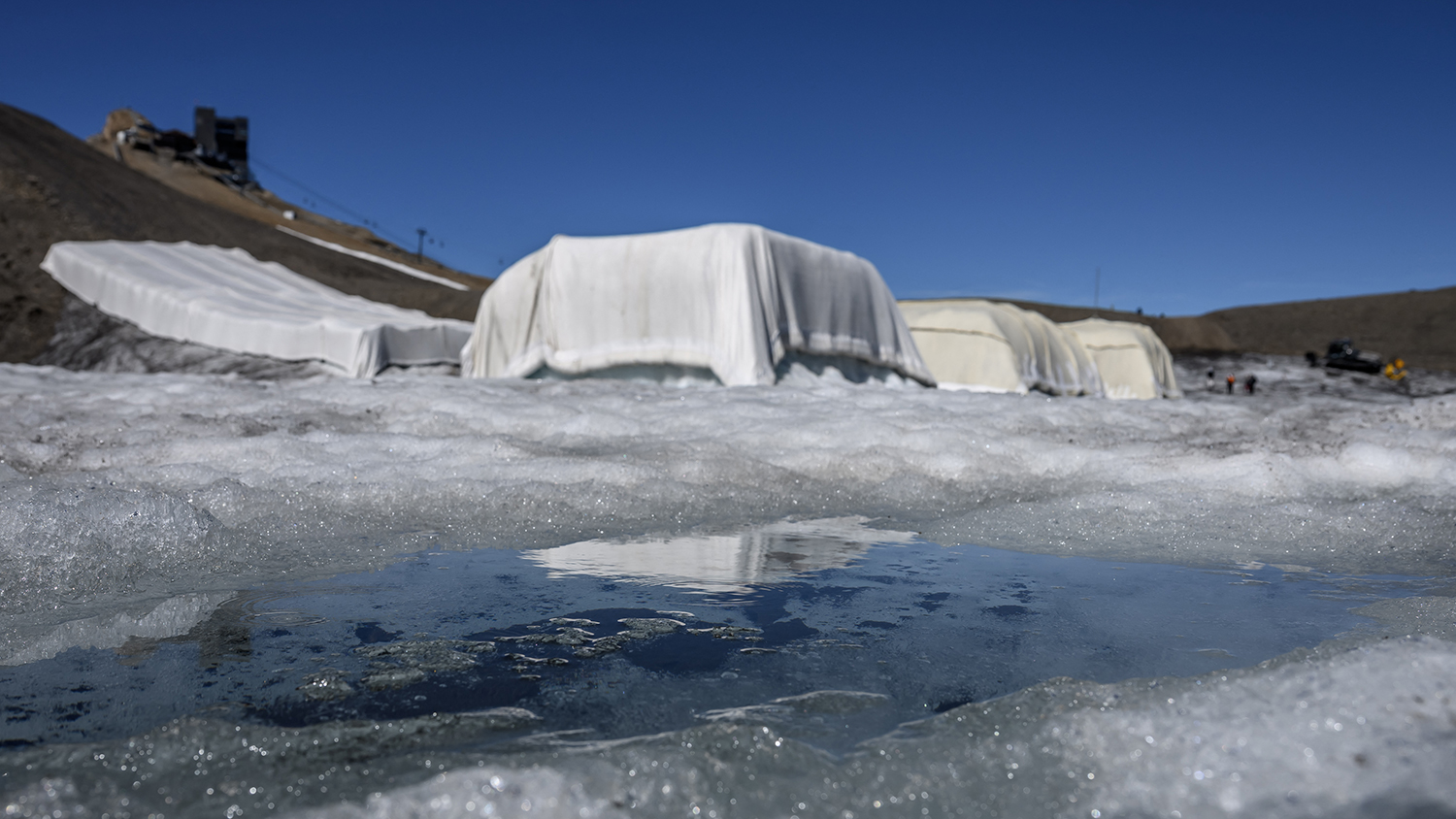
The coverings in the photo are helping to keep large glaciers from melting in the Sun’s heat.
A group of scientists and university students decided to try covering the glaciers with wool blankets instead of plastic tarps. In June 2026, the group placed two blankets over 2,100 square feet (200 square meters) of a glacier. All summer, they compared the rate of melting in those areas with that of ice that was covered by a tarp. The scientists found that the ice under the wool melted as slowly as the ice under the tarp.
“Now we have a result we can see and even touch,” said Elliot Gaffiot, a student. “It worked incredibly well.”
But the wool doesn’t solve the bigger problem. It can’t cover all the world’s melting glaciers. It doesn’t change the fact that climate change is bringing about other issues, such as more severe weather. The way to slow climate change, scientists say, is to reduce greenhouse gases. And that means burning fewer fossil fuels.