
Can Wolves Use Tools?
A hungry wolf’s quest to get a snack led to an incredible scientific discovery.
Courtesy Kyle Artelle and the the Haíɫzaqv Wolf and Biodiversity Project (onlinelibrary.wiley.com/doi/10.1002/ece3.72348)
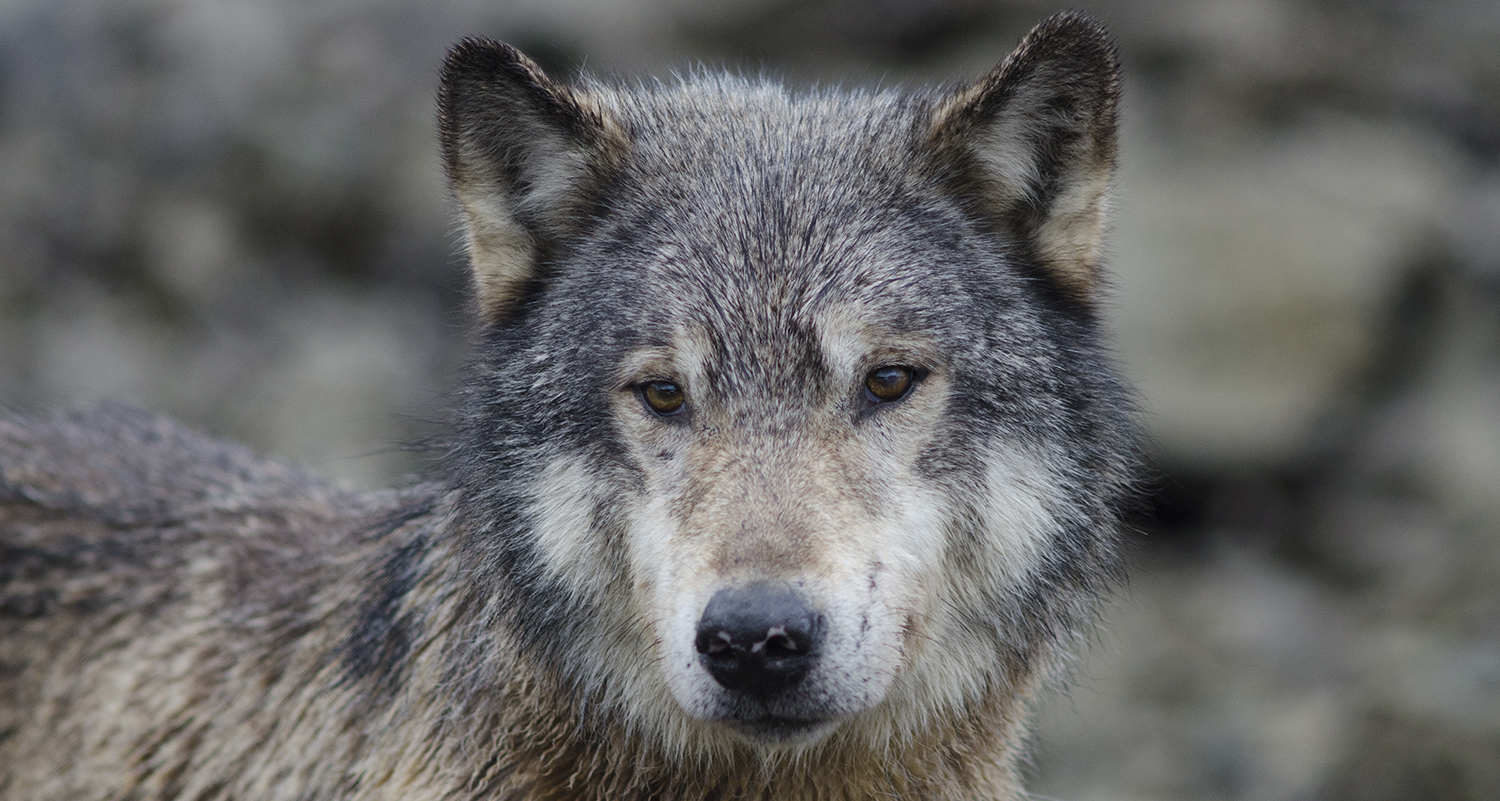
A video showed this wolf stealing fish in an unusual way.
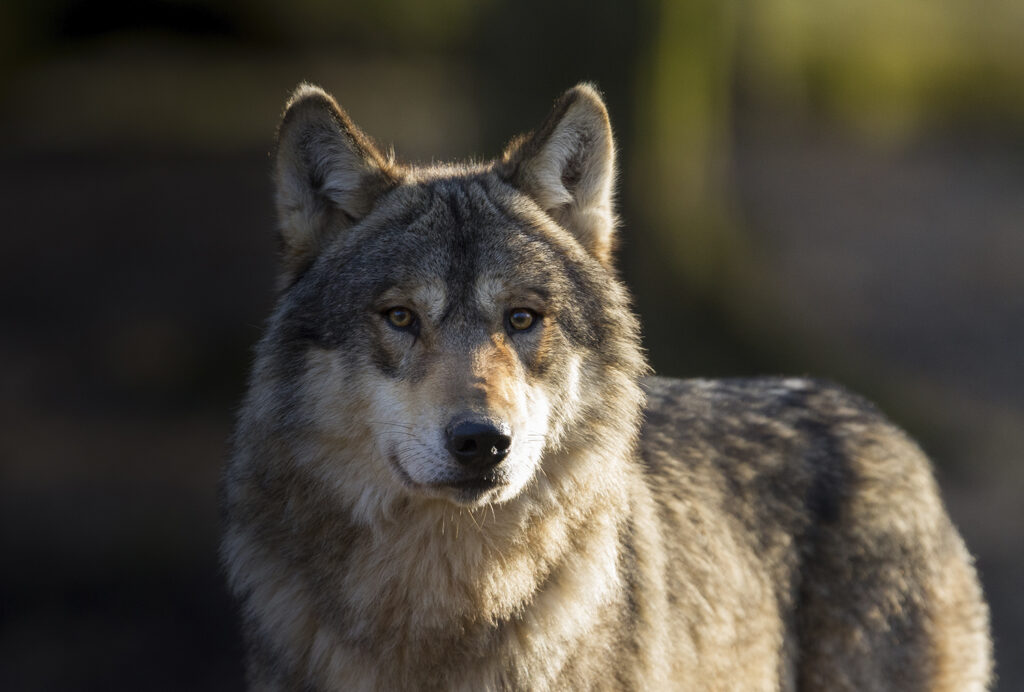
A hungry wolf in British Columbia, Canada, helped scientists make what they believe is an incredible discovery. And all she did was find a clever way to get some food!
Here’s what happened. The Heitsuk (or Haíɫzaqv) Nation, Indigenous (native) people who live in the area, set up a camera because they wanted to find out which animal was destroying crab traps they had placed in a body of water. When they looked at the video, they saw something remarkable.
In the video, a wolf swam out to a buoy (a floating object that marked the location of the crab trap), put the buoy in her mouth, and swam back to shore. Then she used her mouth to grab the line that was attached to the buoy on one end and a trap on the other. The wolf pulled the line toward the shore until the trap came out of the water. Then she pulled the trap to the shore. Next, she broke into the cup holding the delicious fish that was meant to attract crabs and had a nice meal.
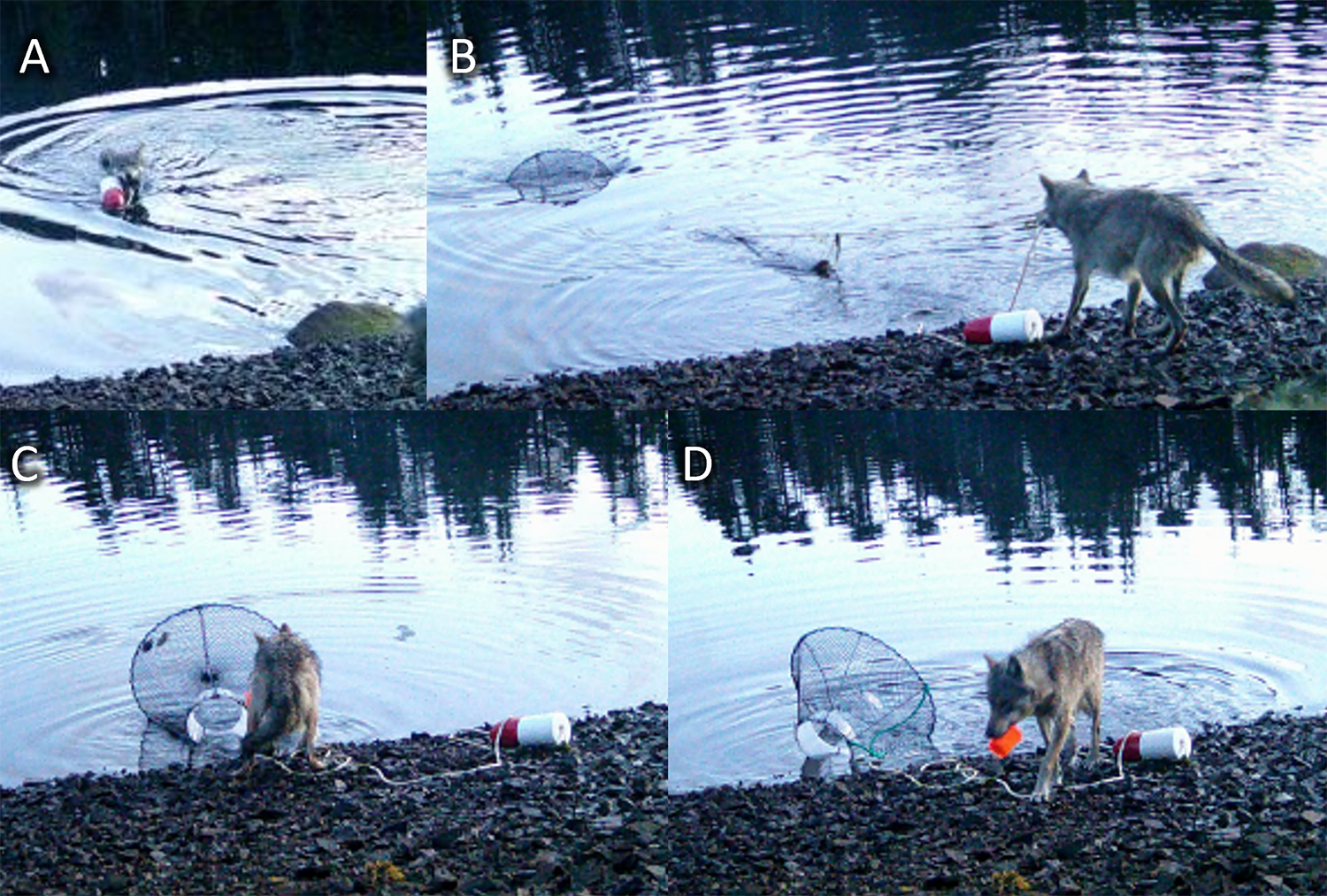
Haíɫzaqv Wolf and Biodiversity Project. Artelle, Kyle A. and Paquet, Paul C. 2025. “Potential Tool Use by Wolves (Canis lupus): Crab Trap Pulling in Haíɫzaqv Nation Territory” (onlinelibrary.wiley.com/doi/10.1002/ece3.72348) Ecology and Evolution (CC-BY-4.0)
These images were taken from a video showing a wolf pulling a crab trap out of the water, step by step.
You may be wondering what’s so special about this. Many family dogs can easily grab a loaf of bread off a kitchen counter or even push open a garbage can to get last night’s leftovers. But the wolf in the video didn’t just use her mouth or snout to get her dinner. She used the buoy. And then, step by step, she used other objects as well.
“You normally picture a human being with two hands pulling a crab trap,” William Housty, a Heiltsuk hereditary chief and the director of the Heiltsuk Integrated Resource Management Department, told Global News.
Scientists say they’ve seen several animals use tools. These include elephants, dolphins, and chimpanzees. But not everyone agrees that the wolf’s use of the buoy counts as “using a tool.” Kyle Artelle, a scientist who cowrote a new study about this wolf, says he believes it does.
“[The wolf was] problem-solving, and it’s problem-solving exactly the way humans do it,” Artelle told CNN. “We would have done the exact same thing if we were trying to [get] that trap from shore.”
Here’s the video of the hungry wolf!
Haíɫzaqv Wolf and Biodiversity Project. Artelle, Kyle A. and Paquet, Paul C. 2025. “Potential Tool Use by Wolves (Canis lupus): Crab Trap Pulling in Haíɫzaqv Nation Territory” (onlinelibrary.wiley.com/doi/10.1002/ece3.72348) Ecology and Evolution (CC-BY-4.0)