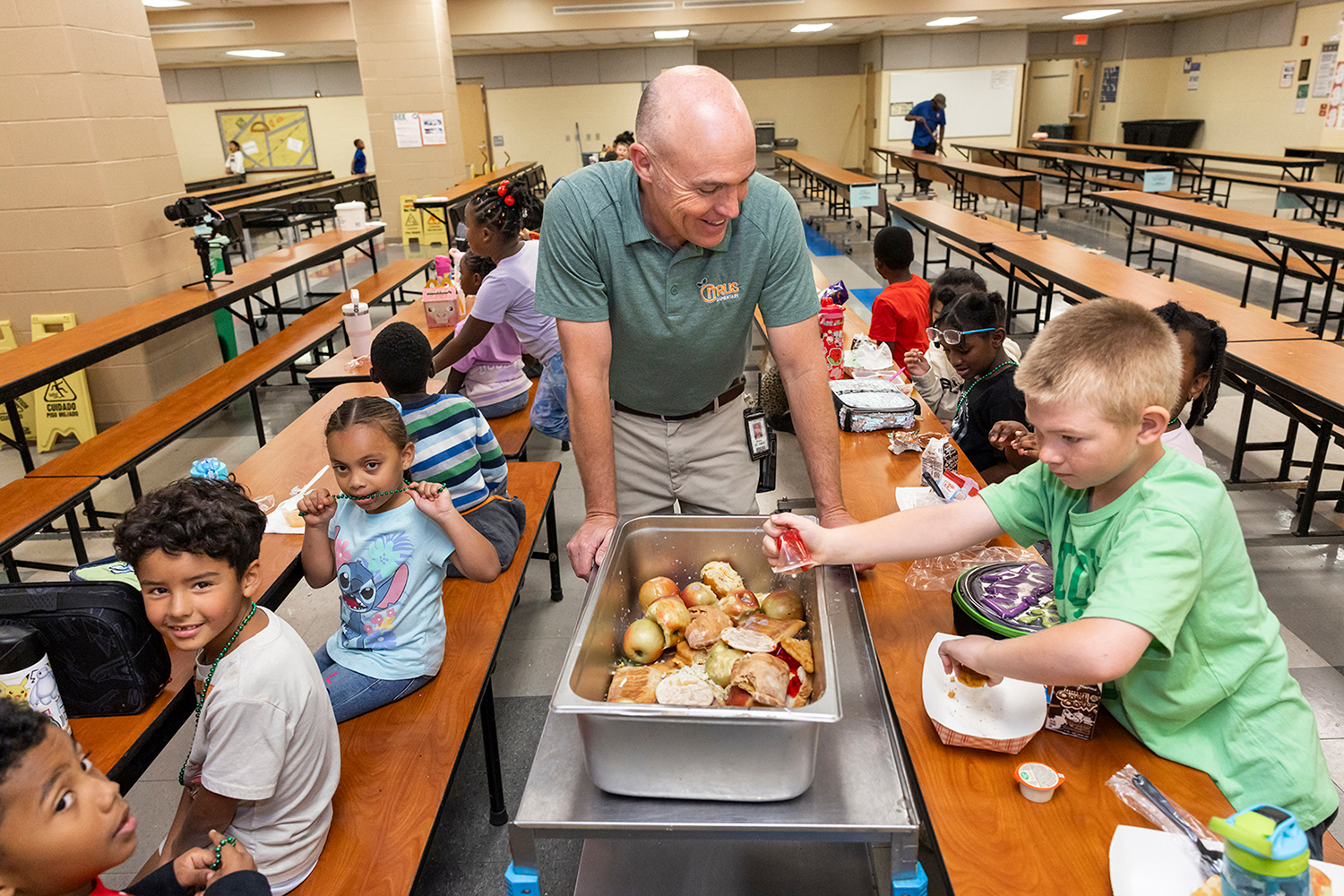
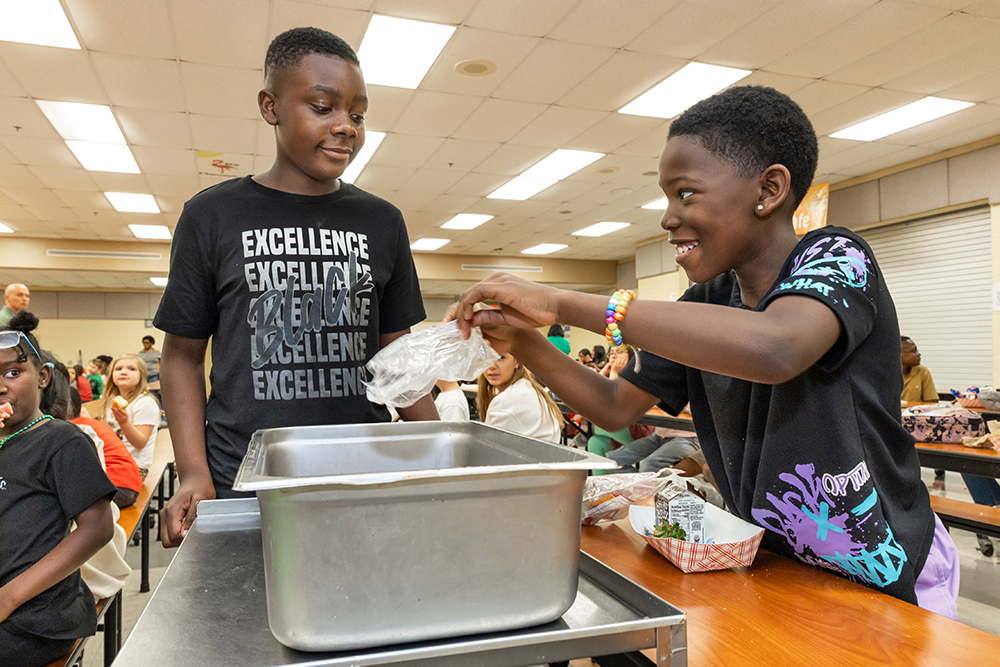
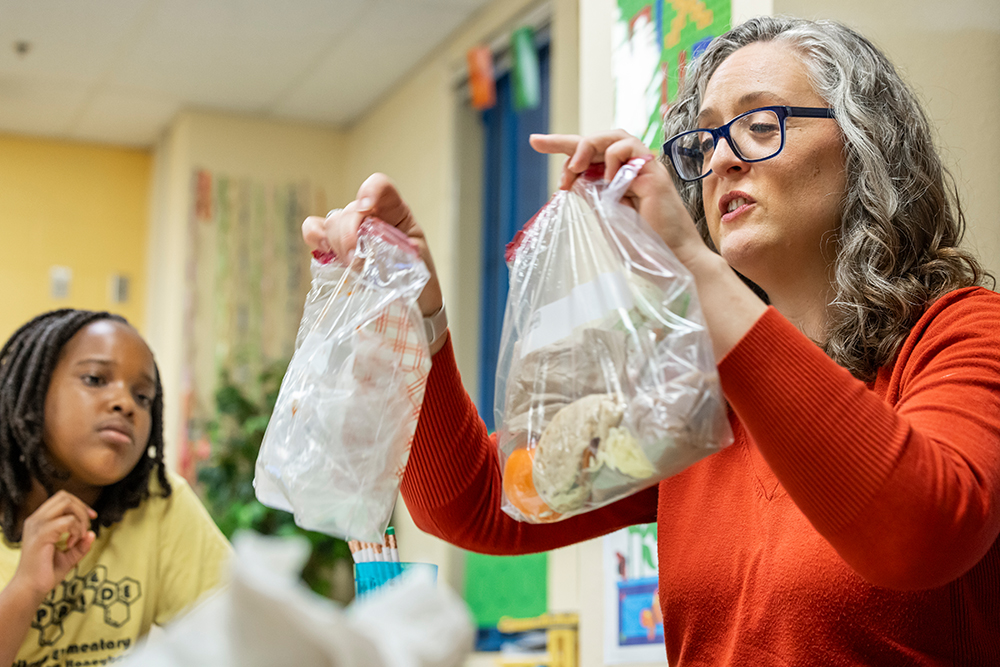
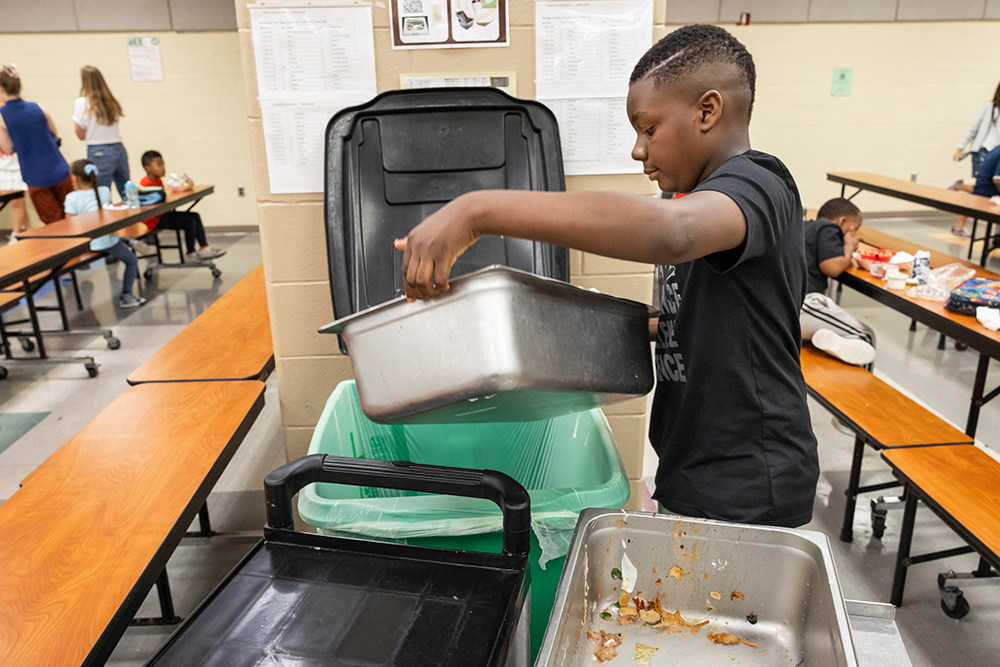
What happens when kids don’t finish their school lunches? In most cases, the unwanted food goes into the garbage. In fact, more than 530,000 tons of food are thrown away every year in U.S. schools alone! But not all food scraps have to end up in a landfill. A program called Food Waste Warriors aims to teach students how to reduce food waste by putting scraps to good use.
Wasted food doesn’t just add to the mountains of garbage already in landfills. Producing food requires a lot of resources, including land and water. Billions of gallons of water are used each year to grow crops and keep cows and other livestock healthy.
Organized by the World Wildlife Fund, the Food Waste Warriors program aims to end food waste within one generation. The program helps students, teachers, and school staff set up systems to conserve (save) unused food and reuse much of the food that’s left on plates at the end of a meal.
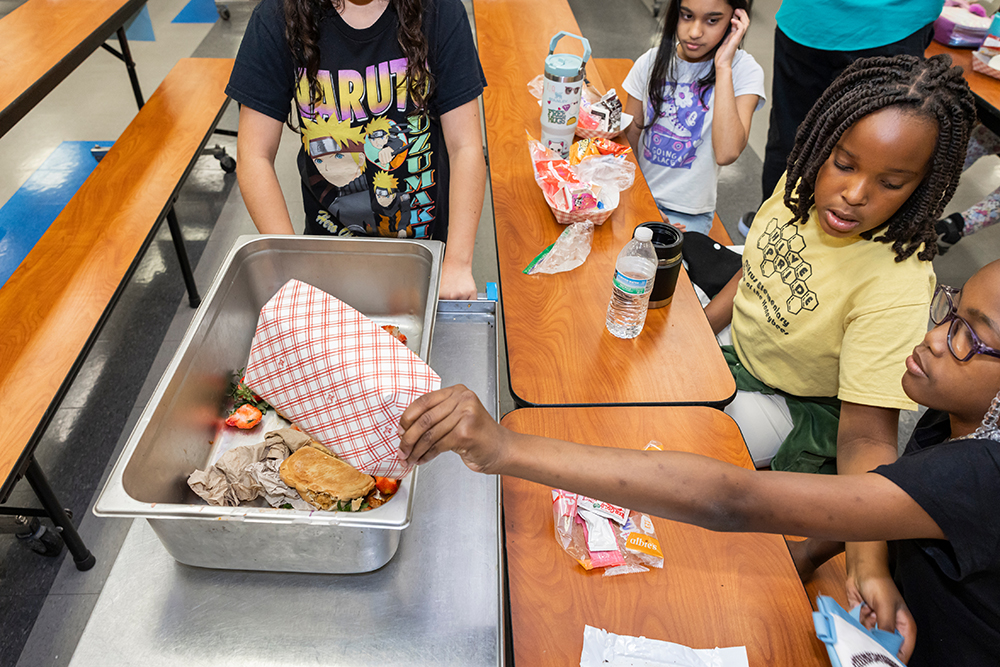
More than 1,000 schools have joined the Food Waste Warriors program. Lovin Elementary School in Lawrenceville, Georgia, is one of them. In 2018, students studied the food that had been discarded in their school cafeteria and learned that two hours of lunchtime led to nearly 600 pounds (270 kilograms) of wasted food. Together, the students and the staff decided things needed to change.
Lovin now finds other uses for its uneaten food. Unopened milk and uneaten whole fruits go into a refrigerator or onto a “share table” so that anyone can take them. Some uneaten food scraps are fed to the chickens being raised on school grounds.
Students collect other scraps, like banana peels and apple cores, in pails for composting. These foods are kept in a large bin until they decompose, or break down, to a rich material called compost. Compost is full of nutrients that can help new plants grow. The school has its own vegetable garden and also donates compost to other gardens.
It’s a winning formula.
“Now there’s not a lot going to the landfill, and there’s not just scraps everywhere,” Lovin student Aissatou Brown told the Associated Press. “And it feels like we’re saving the planet.”
Click through the slideshow for more photos of food waste warriors at work!