
An Electric Tricycle Revolution
Thanks to three-wheeled electric vehicles, women in Zimbabwe have the independence they need to make a living.
© Tafara Mugwara—Xinhua News Agency/Getty Images
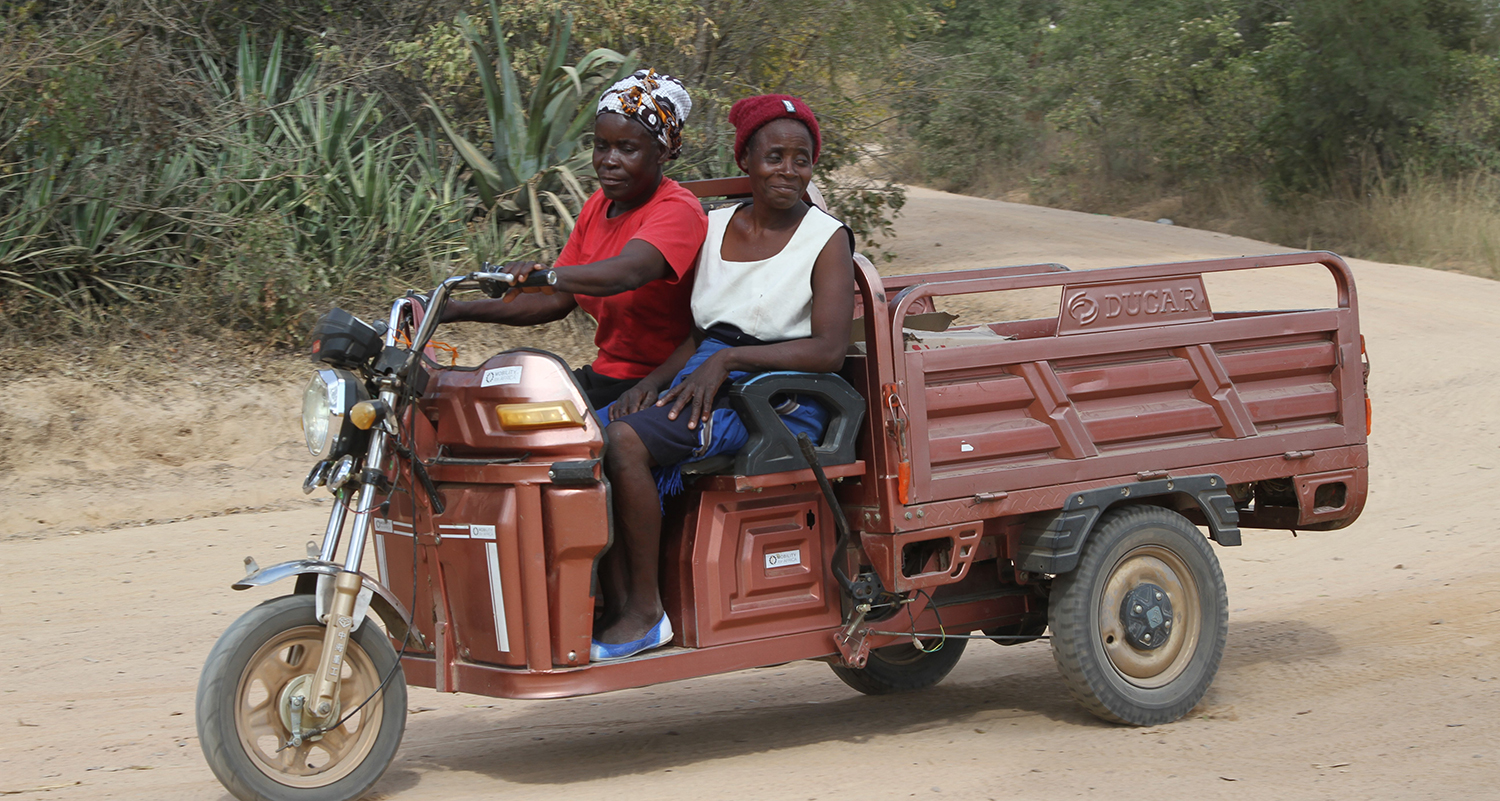
Adefi Mtambo (left) drives an e-tricycle on a road in Wedza, Zimbabwe.
Some new vehicles are hitting the road in Zimbabwe—electric tricycles! These three-wheeled electric vehicles (EVs) are giving women in rural Zimbabwe some yearned-for independence.
In Zimbabwe’s rural areas, many women are disconnected from public transportation and economic opportunities. Some have to walk a great distance to hand-deliver crops and goods to sell at marketplaces so that they can make money for their families. The other option is to rely on family members to make time to drive them.

© Tafara Mugwara—Xinhua News Agency/Getty Images
A woman balances a bucket of tomatoes on her head in Wedza, Zimbabwe. Electric tricycles are making it easier to transport crops and other goods.
A Zimbabwean start-up company called Mobility for Africa is changing this through a program that sells EV tricycles to a primarily female customer base. Nicknamed Hamba, which means “go” in the Ndebele language, the EVs look like a cross between a motorcycle and a small pickup truck. Women use them to sell goods and provide taxi services.
© Tafara Mugwara—Xinhua News Agency/Getty Images
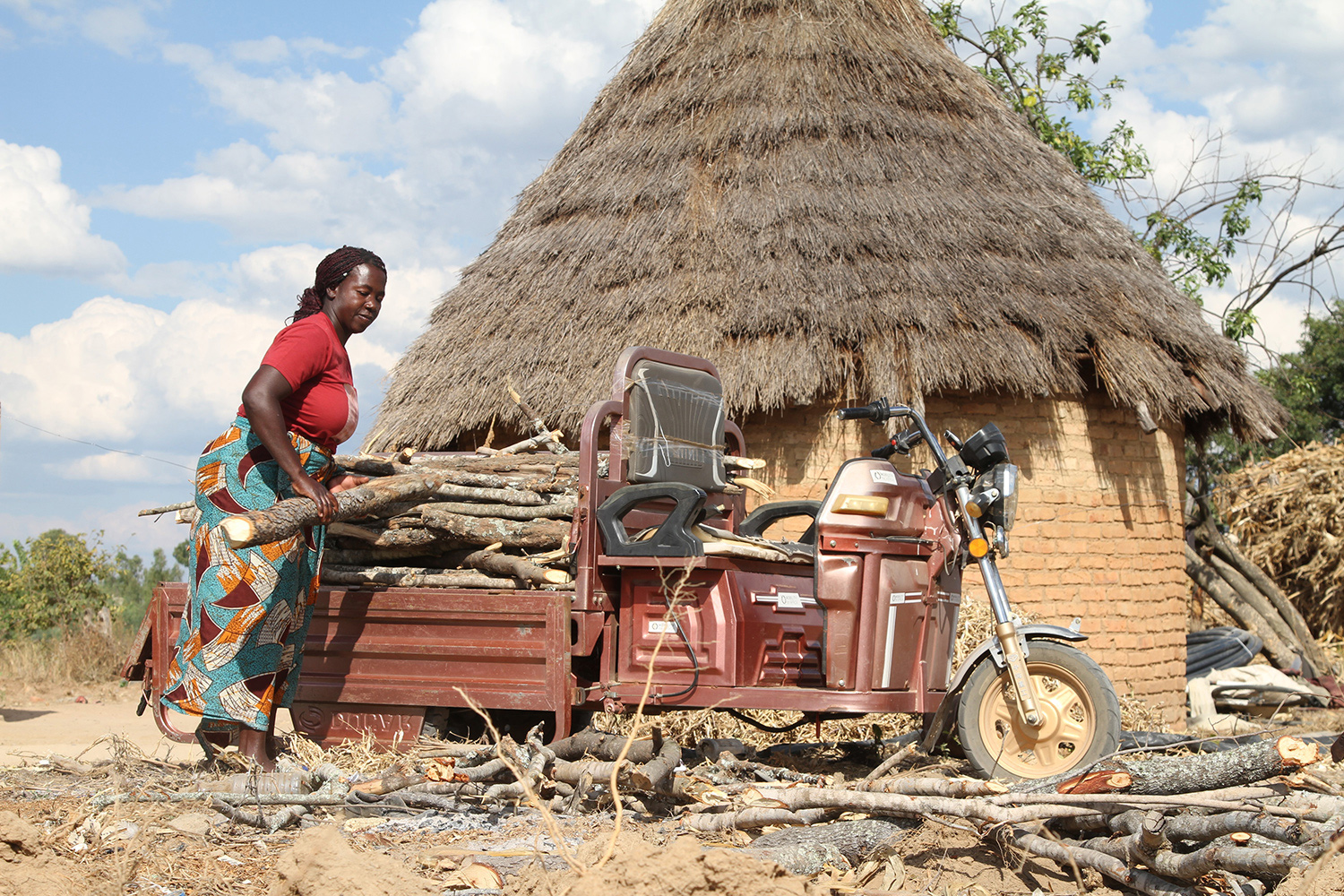
Philis Chifamba removes firewood from an e-tricycle at her home in Wedza, Zimbabwe.
Shantha Bloemen, the founder of Mobility for Africa, drew inspiration for this company from women in rural China who use the three-wheeled EVs. The tricycle offers stability on narrow and underdeveloped roads and is powered by a rechargeable battery pack.
In an interview with CNN, EV owner Beauty Simango said the tricycle helps her save time and energy fetching water and delivering crops, increasing her income from about $30 a month to around $150. “It has changed [our] way of life,” she said.