
Japan’s Disappearing Snow Monsters
People are racing to save a beloved winter wonder on Japan’s Mount Zao.
© weniliou/stock.adobe.com
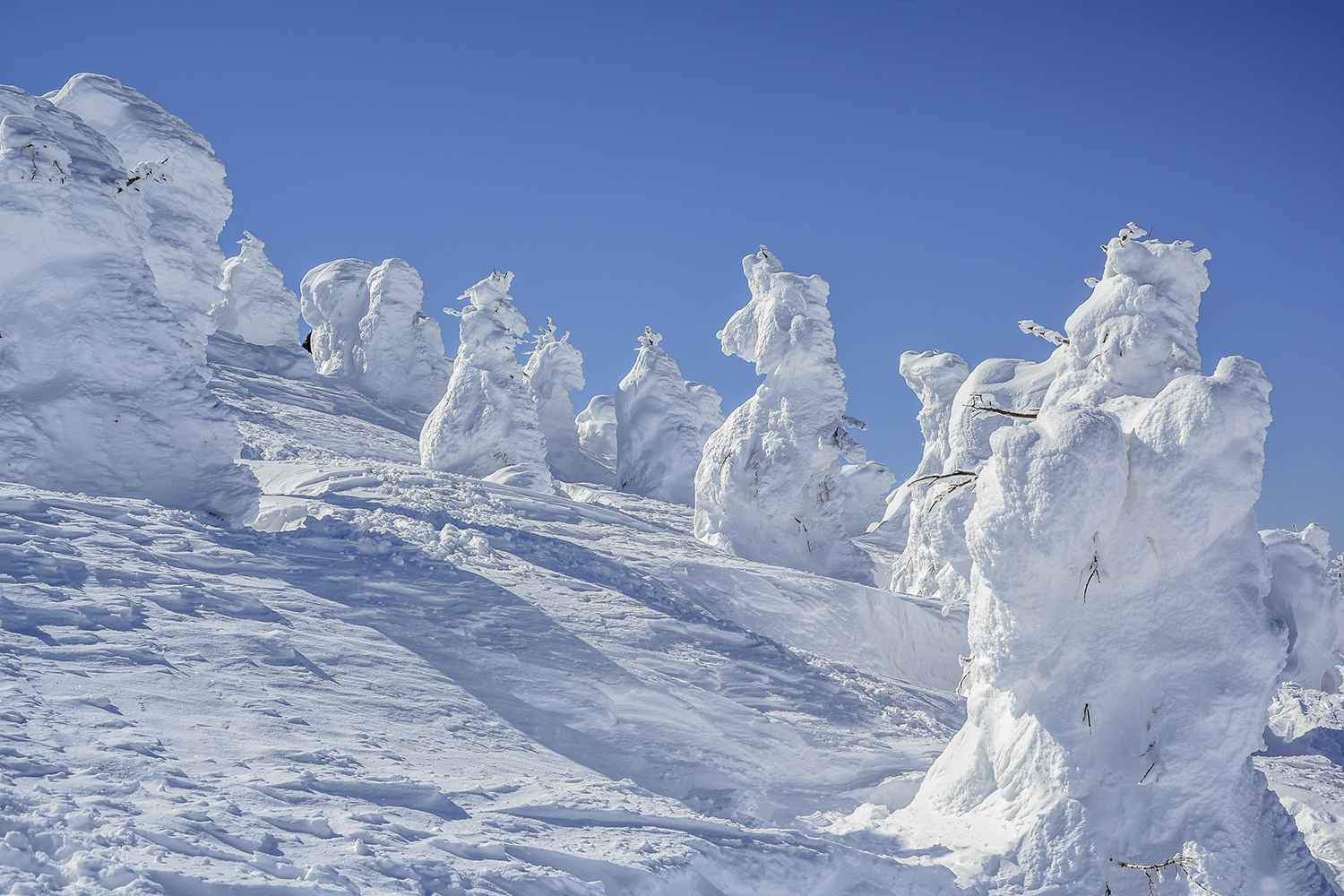
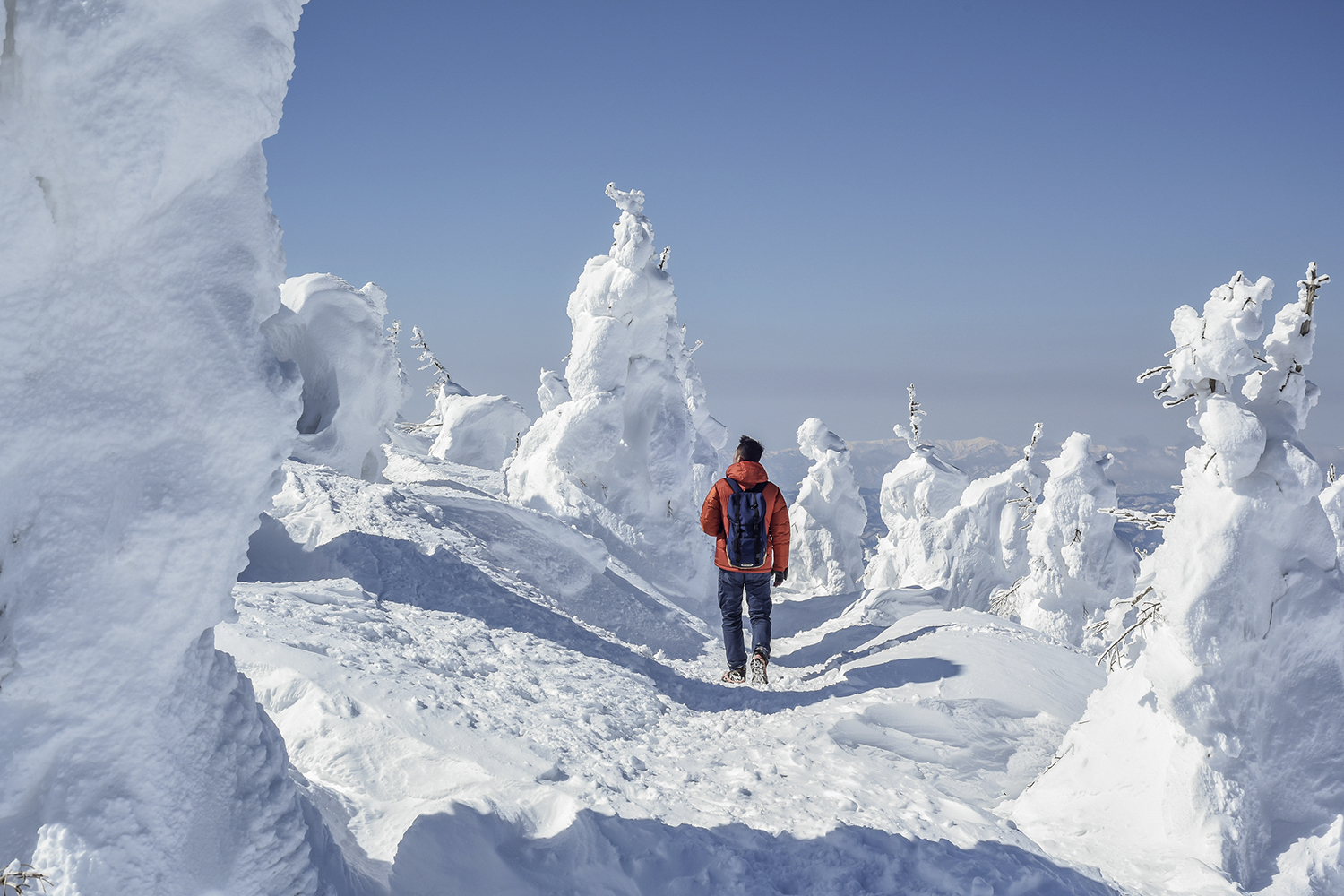
These snow-covered trees on Japan’s Mount Zao are known as juhyo.
Each winter, giant snow monsters appear across the landscape of Japan’s Mount Zao. Though they may look like towering ghosts or abominable snowmen, these “monsters” are just trees encased in snow and ice. People travel from all over the world to see this rare natural wonder—but new research shows that it’s at risk of disappearing.
The monsters, called juhyo in Japanese, occur when cold and windy weather brings a supercooled, icy rain to the mountain. The icy rain freezes immediately when it meets the fir trees, encasing them in layers of ice and snow. The phenomenon turns the whole mountain into an otherworldly landscape.
However, a team of Japanese researchers confirmed that the snow monsters are not growing as large as they did nearly 100 years ago.
“In the 1930s, we saw juhyo five to six metres [16–20 feet] across,” said Fumitaka Yanagisawa to the BBC. Yanagisawa is a professor at Japan’s Yamagata University who studies juhyo. “Since 2019, many are half a metre [1.6 feet] or less. Some are barely columns.”
© weniliou/stock.adobe.com
A hiker gets a look at Japan’s snow monsters.
Yanagisawa pointed to two environmental factors affecting the snow monsters: harmful insects and a warming climate. Insect outbreaks have hurt the fir trees, causing them to lose needles or damaging the bark, so many trees have died. This means there are fewer branches for the winter rain to freeze onto and create the iconic juhyo shape.
A warming climate also means the juhyo are melting faster and the special conditions that make the supercooled rain are increasingly rare. Still, the local community is racing to save the snow monsters. A collaboration between the local government and high school students is focusing on planting young fir trees on the mountain to revive the mountain forests.
“They are called snow monsters because nothing else looks like them,” said Kanon Taniai, one of the students helping plant trees, to the BBC. “I want the world to see them, and to feel how special Japan’s nature is.”