
Skip to content

The Dogs Are All Ears

New research shows dogs can learn new words by listening in on human conversations.
Three dogs of different breeds tilt their heads to the right against a blue background.

© Sandra/stock.adobe.com

Attention dog owners: a not-so-secret spy may be eavesdropping on your conversations! And dogs are not only listening to people; they may be learning new words. 

New research shows that certain dogs are able to learn new vocabulary by observing humans talking to each other. This ability is limited to “gifted” dogs, ones that can learn tricks and instructions really quickly. The finding puts the clever pooches on the same learning level as human toddlers who also learn through watching adults and older kids interact.
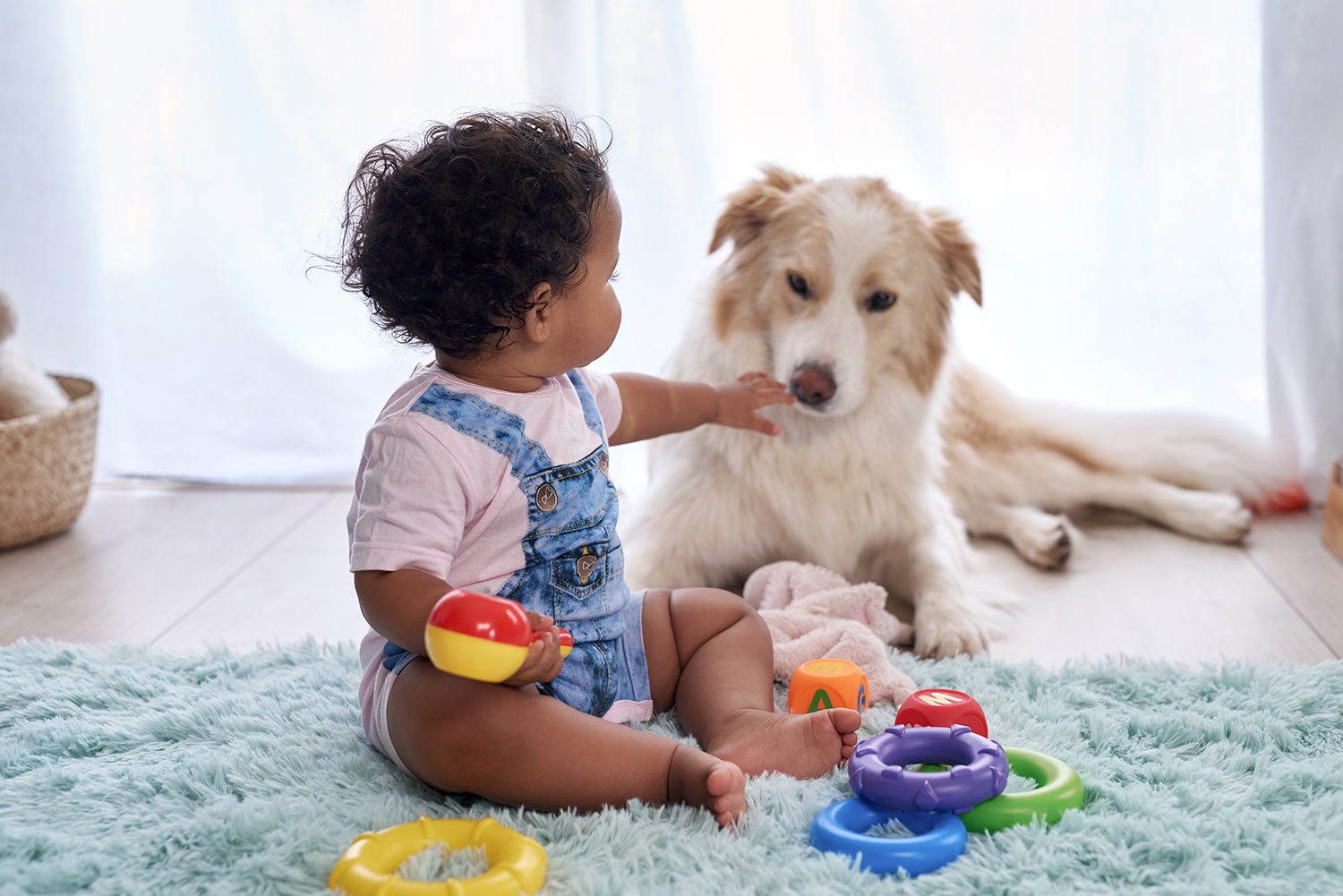
A baby sits on a rug with toys and reaches out to a dog that is lying nearby.

© Daxiao Productions/stock.adobe.com

Being cute isn’t the only thing toddlers and dogs have in common.

To study this, scientist Shany Dror put 10 family dogs to the test. Dror had the dogs’ owners hold a new dog toy, like a stuffed armadillo, and describe it in detail to another person while their pet watched. The owner also had to use the new toy’s name, “armadillo,” in the conversation. Later, the owner would put the armadillo in a toy-filled room and ask the pup to retrieve it using the name of the toy. Seven out of the 10 dogs in the test were able to return with the armadillo, proving they could learn through eavesdropping and context clues. 

“This is the first time that we see a specific group of dogs that are able to learn labels from overhearing interactions,” said Dror in an interview with the Los Angeles Times. Dror is an animal trainer and a scientist at the University of Veterinary Medicine in Austria.

Parrots and apes are the other animals shown to learn through overhearing social interactions. The latest research highlights that the animals around us may be paying closer attention than we realize. 
Did You Know?

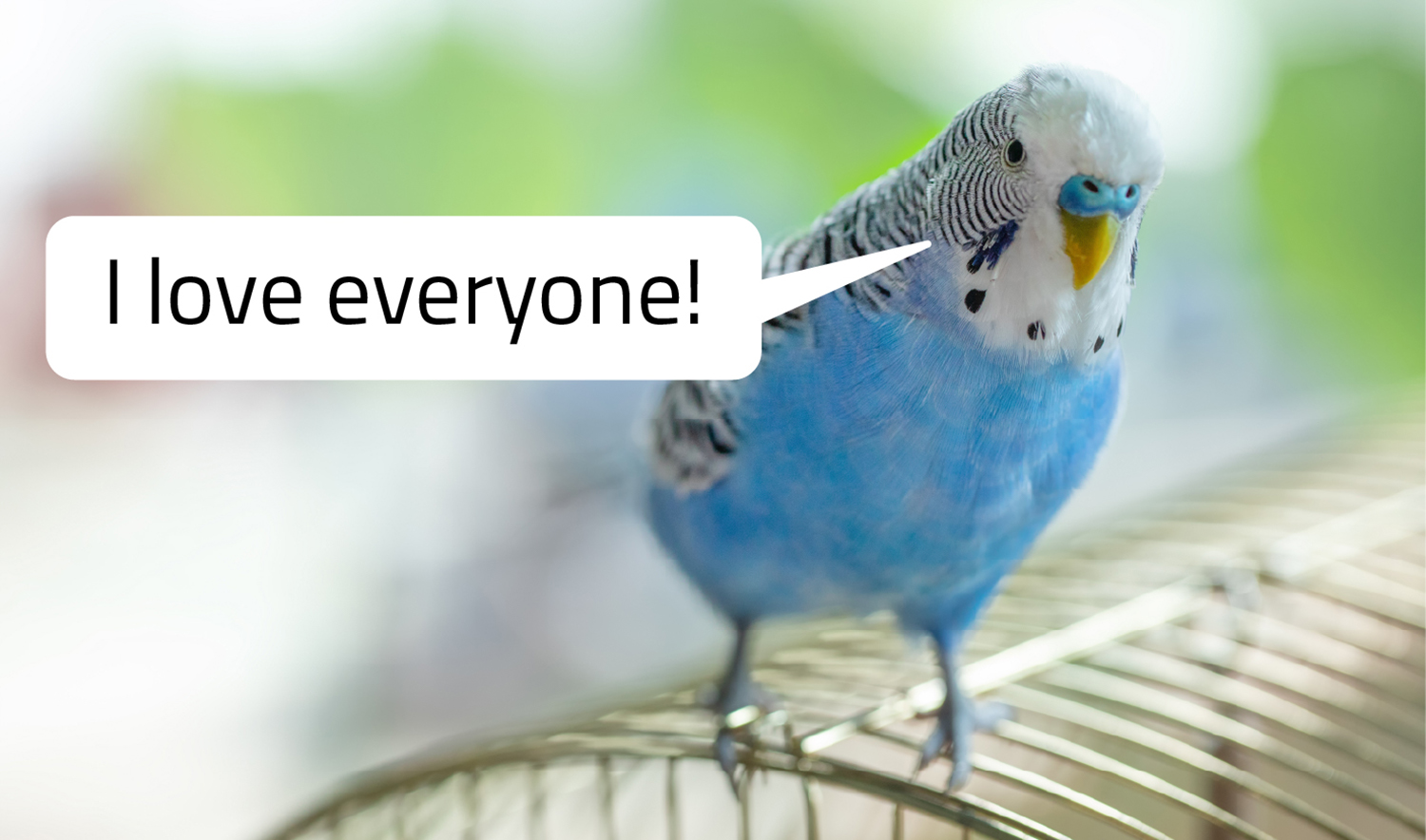
Parrots have an excellent ability to mimic human speech, though they may not understand the meaning. The parrot that set the record for the most words in its vocabulary was a parakeet (also called a budgerigar) named Puck. Puck could say 1,728 words!

A speech bubble shows a blue parakeet or parrot saying “I love everyone.”

© CreativeSuburb/stock.adobe.com; Photo illustration Encyclopædia Britannica, Inc.

Squeaks and “Shoequakes”

The feet of young basketball players are shown wearing sneakers on a wooden gym floor.

© matimix/stock.adobe.com

Walking into a school gymnasium, you may be greeted with a familiar noise—SQUEAK! This is the sound of rubber-soled sneakers on a hardwood floor, and it’s often heard in PE classes and basketball games. For years, no one knew exactly why this rubber-meets-floor combination created so much squeaking. Finally, we have an answer: shoe earthquakes.

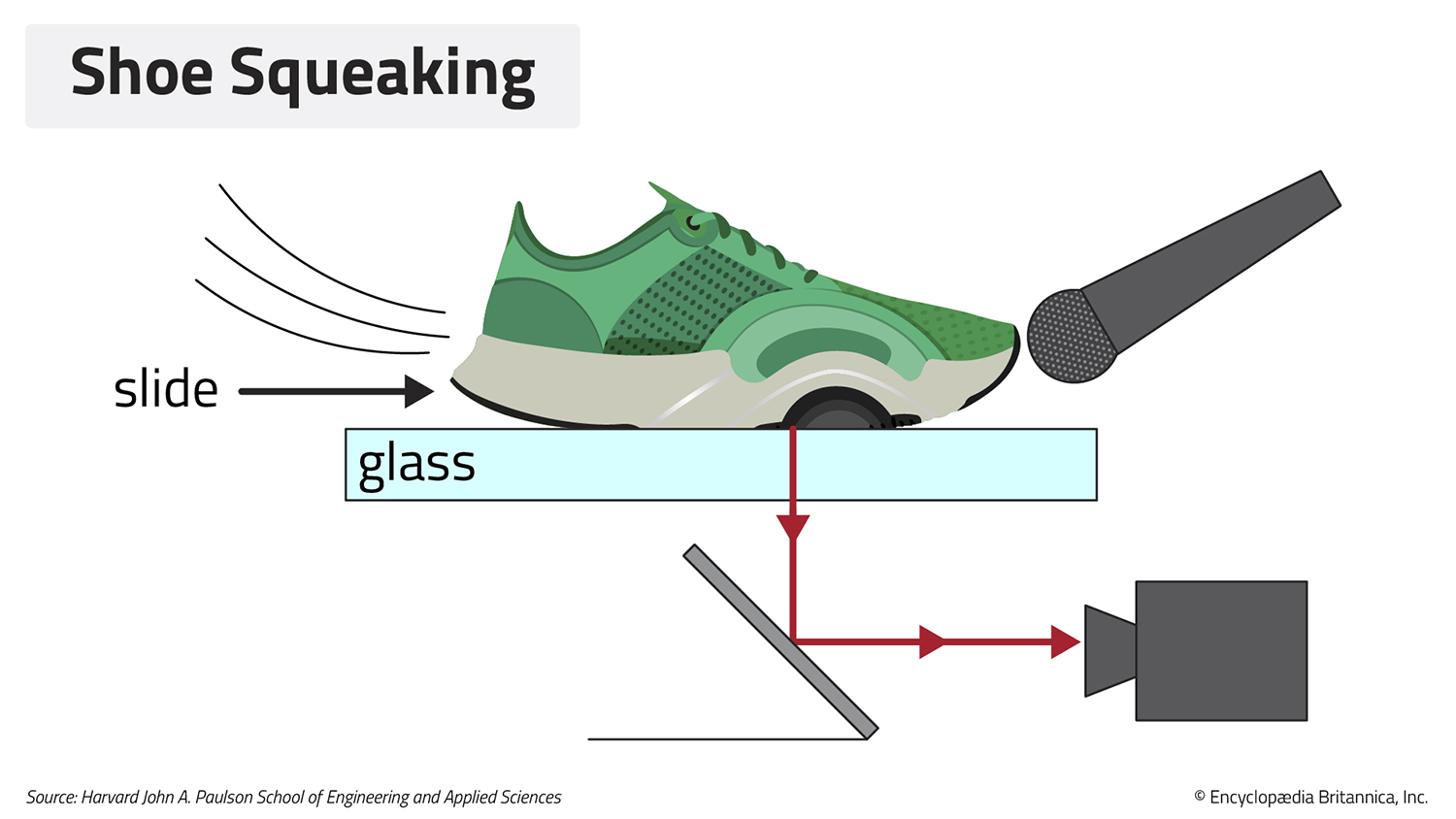
To pinpoint the noisy culprit, Harvard University scientist Adel Djellouli set up a sliding sneaker station equipped with high-speed cameras and microphones. Djellouli and his colleagues slid sneakers back and forth over a smooth glass plate, capturing the motion and sound of the rubber as the shoe moved.

Djellouli discovered that the rubber shoe sole ripples and changes shape as it grips and releases its traction with the floor. This movement happens thousands of times per second at supersonic speed. The result is a high-pitched sound. 

A diagram shows a sneaker sliding on a piece of glass behind a microphone

© AP Stock/stock.adobe.com; Photo illustration Encyclopædia Britannica, Inc.

This diagram shows how scientists used a camera and microphone to record a moving sneaker. A mirror under the glass helps the camera view the bottom of the sneaker.

“That squeaking is basically your shoe rippling, or creating wrinkles that travel super fast. They repeat at a high frequency, and this is why you get that squeaky noise,” Djellouli said in an interview with the Associated Press. 

Though it is hard to detect, the rippling movement in the rubber is like an earthquake, said Djellouli in a separate interview with CBC Radio. “It’s basically ‘shoequakes’ that we discovered—earthquakes at a different scale.”

Signing Through Time

Two teenagers sit on a windowsill and use sign language to communicate.

© Natalia Lebedinskaia—Moment/Getty Images

Humans have been sharing information through signs and expressions for ages, possibly before they developed speech. Sign language is used around the world as a communication tool between people who don’t speak the same language, and for people who are deaf or hearing impaired. 

Read more at Britannica!

WORD OF THE WEEK

phonetic

PART OF SPEECH:

adjective

Definition:

: of or relating to spoken language, speech sounds, or the science of phonetics

Definitions provided by
Merriam-Webster Logo

Word Flower

How many words can you make from the letters in the flower? All words must use the center letter.

O
O
O
O
O
O

In Case You Missed It

Figure skater Alysa Liu felt happy and confident at the 2026 Olympics. She skated off with a gold medal!
March 5, 2026
An all-women ranger team protects endangered animals on the Indonesian island of Sumatra.
February 26, 2026
Nima Rinji is showing the world the powerful spirit of the Sherpa people as he climbs the world’s tallest mountains.
February 19, 2026
Life wouldn’t be as fun without the work of these three inventors.
February 12, 2026

How to Cite This Page

Here is how to cite this page using the MLA style. While every effort has been made to follow citation style rules, there may be some differences. Please refer to the appropriate style manual or other sources if you have any questions.

“In the News: The Dogs Are All Ears.” Britannica School, Encyclopaedia Britannica, 16 Mar. 2026. https://news.eb.com/level2/the-dogs-are-all-ears. Accessed 16 Mar. 2026 [Replace this date with today’s date.]