
Skip to content

Seed Bank Savings

A seemingly strange bank is saving one of Earth’s most valuable resources.
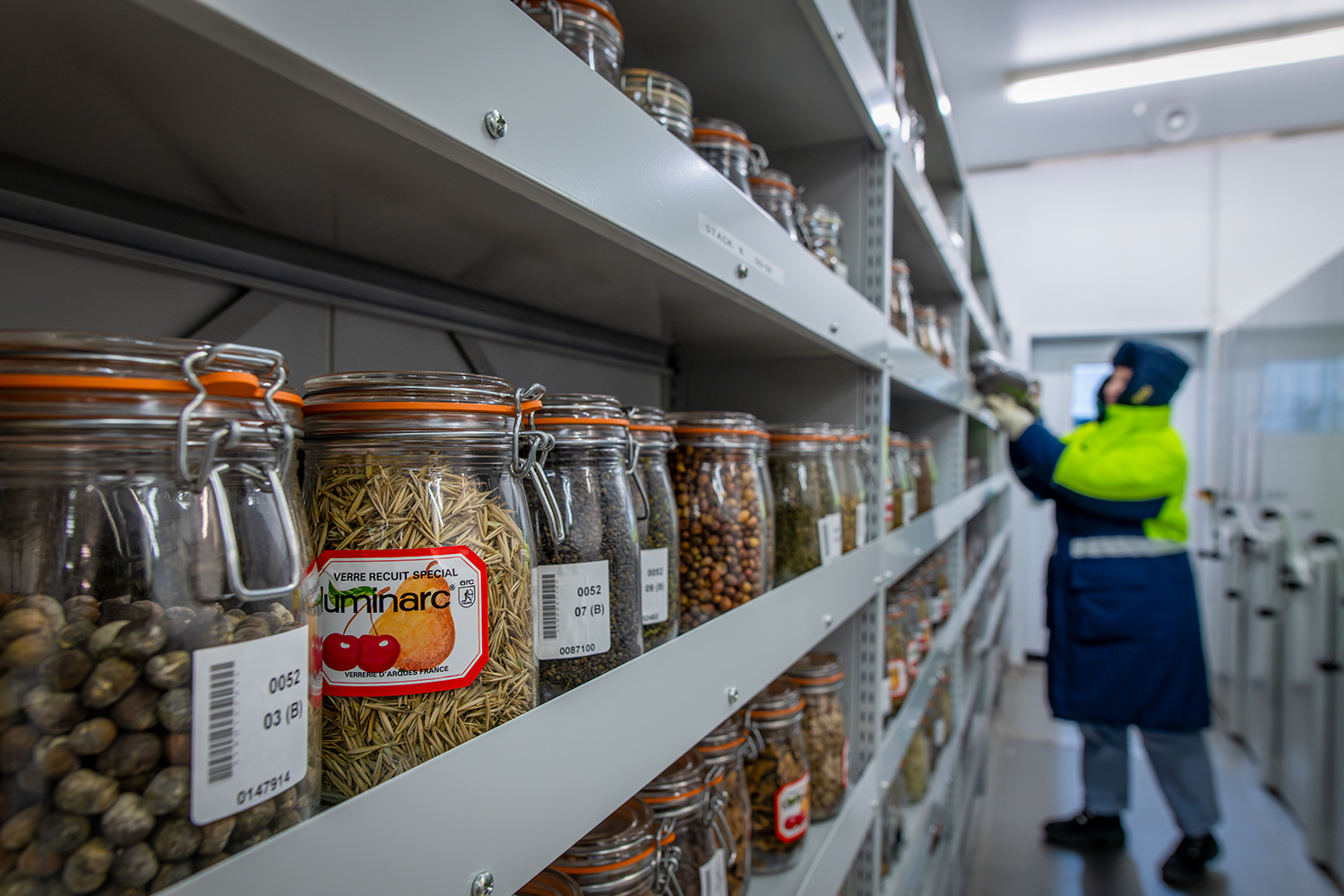
Labeled mason jars with different kinds of seeds sit on metal shelves. A person can be seen working in the background.

Ines Stuart-Davidson © RBG Kew

The Millennium Seed Bank’s vault holds jars of seeds from around the world.

Underneath a quiet botanic garden about an hour from London, England, there’s a fortified bank that holds a great treasure. It isn’t dazzling gold or sparkling jewels but seeds. The Millennium Seed Bank (MSB) is on a mission to safeguard billions of seeds and with them, Earth’s biodiversity.

“It’s invaluable,” the bank’s seed collections manager, Sharon Balding, told National Geographic Kids. “Our future survival depends on these seeds.” Plant biodiversity is the foundation for life on Earth. Plants are sources of food, medicines, building materials, and oxygen for the atmosphere. “Without [seeds], vital resources like food and medicines could be lost to us.”
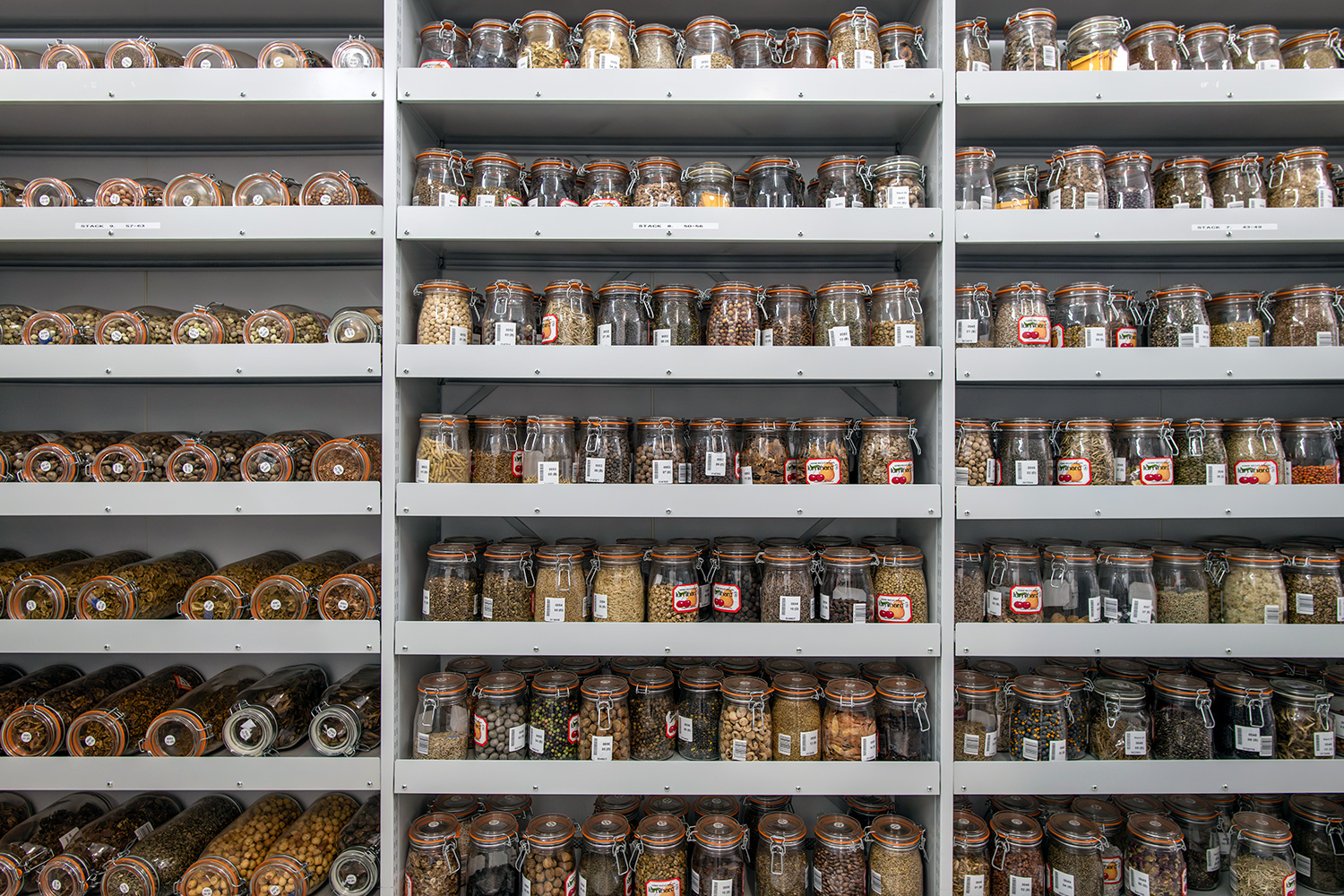
Rows of labeled mason jars filled with seeds sit on shelves.

Ines Stuart-Davidson © RBG Kew

The jars in the seed bank make it look almost like a home pantry!

In just 25 years, the MSB has gathered more than 2.5 billion seeds from nearly 100 countries. The seeds are stored in giant underground vaults that could protect the seeds from floods or blasts that could potentially harm them. But why go through all this effort for the humble seed?

“People often think that the vault is for a distant, doomsday scenario,” said seed scientist Owen Blake in an interview with National Geographic Kids. “But many of the seeds here are already urgently needed to restore degraded habitat!” The goal for these seeds is to restore destroyed wildlife habitats. If the destruction is big enough, these areas will need seeds to regrow lost plants.
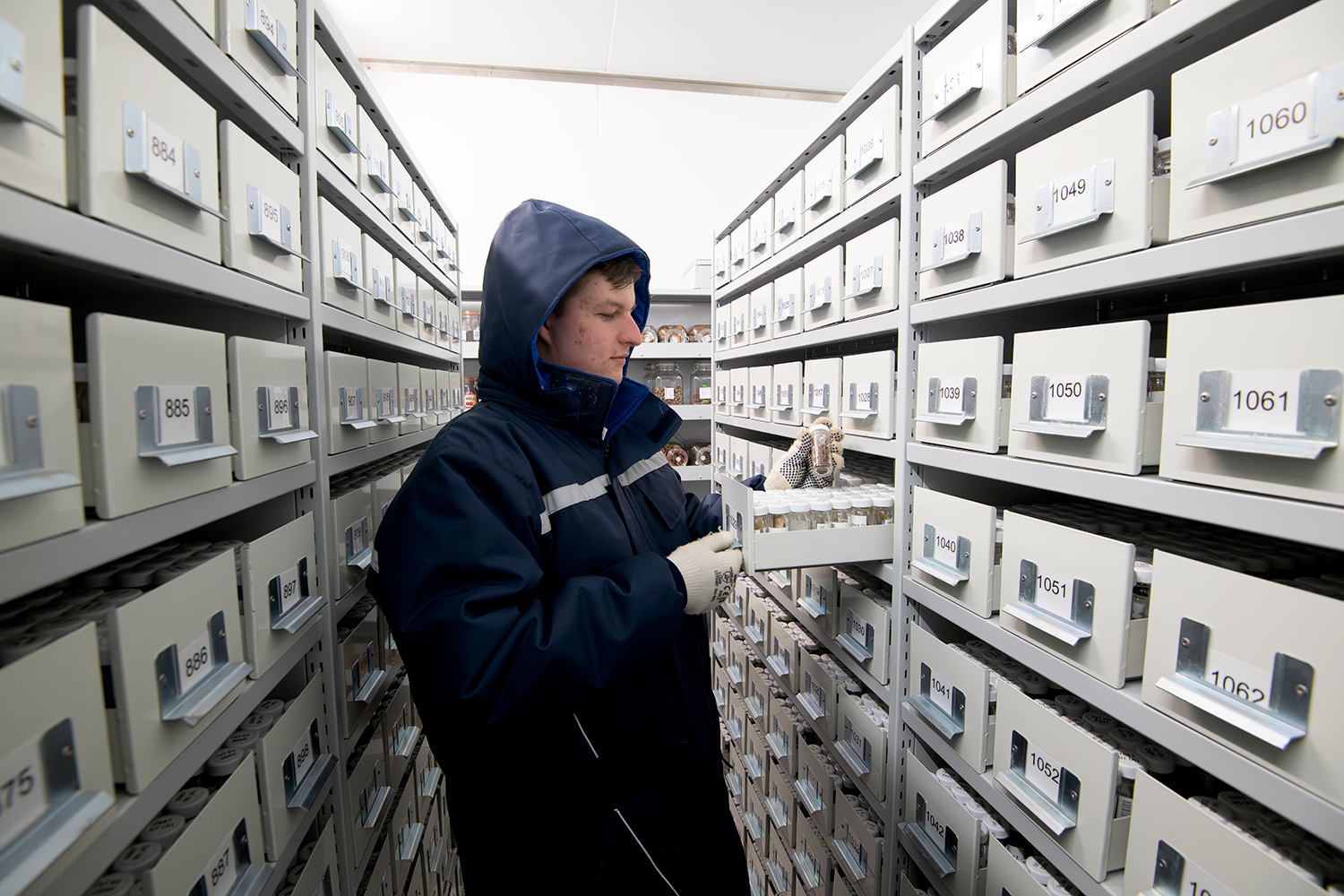
A man wearing a coat is holding a vial of seeds he has pulled from a small drawer that holds many other vials.

Jeff Eden © RBG Kew

The seed vault is kept cold so that the seeds can be stored for a long time.

The MSB already jumped into action when a wildfire in 2020 decimated major habitats in Australia. From the thousands of Australian seeds stored in the bank, the MSB sent back 250 seeds to help Australian scientists regrow some rare plants destroyed in the fire.

Today the MSB houses seeds from about 40,000 different plant species. This may seem like a lot, but it is just a fraction of the estimated 435,000 unique land plant species on Earth. The more seeds that are added to the bank, the more biodiversity is saved to protect life on Earth as we know it.
NEWS EXTRA

Moon Mission Accomplished!

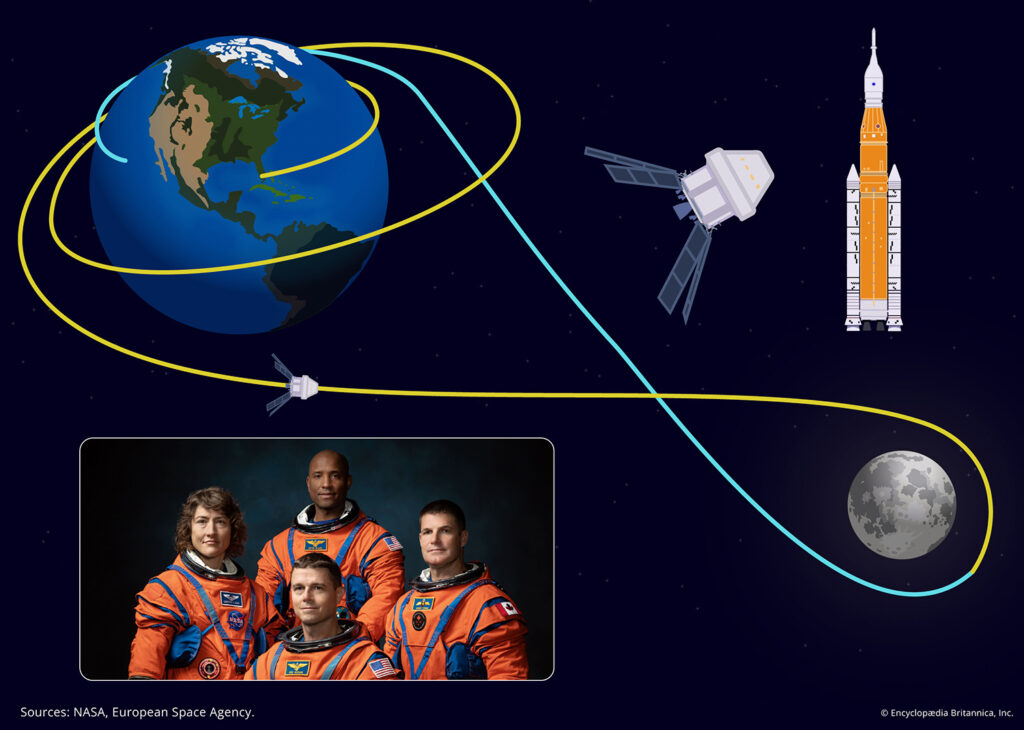
Earth and the Moon are shown with a line drawn to show Orion’s path around Earth and then around to the far side of the Moon and back to Earth, along with a portrait of the crew.

NASA; Photo illustration Encyclopædia Britannica, Inc.

The yellow and blue line traces the path traveled by the crew of Artemis II (shown here).

The crew of NASA’s Artemis II has returned after a mission to the Moon that took them farther from Earth than anyone had ever traveled in space. Commander Reid Wiseman, pilot Victor Glover, and mission specialists Christina Koch and Jeremy Hansen landed in the Pacific Ocean as planned on April 10. U.S. Navy divers were on hand to make sure the four astronauts returned to land safely.

The highlight of the 10-day mission took place on Day 6, when the spacecraft, the Orion, flew by the far side of the Moon, where no human had ever gone. The astronauts reached a distance of more than 250,000 miles (400,000 kilometers) from Earth.

The Artemis II mission is part of a larger project to develop new space travel technology. NASA hopes that humans will one day be able to build a settlement on the Moon and even explore areas far beyond Earth and the Moon.

Did You Know?

If stored properly, seeds can last a really long time! 

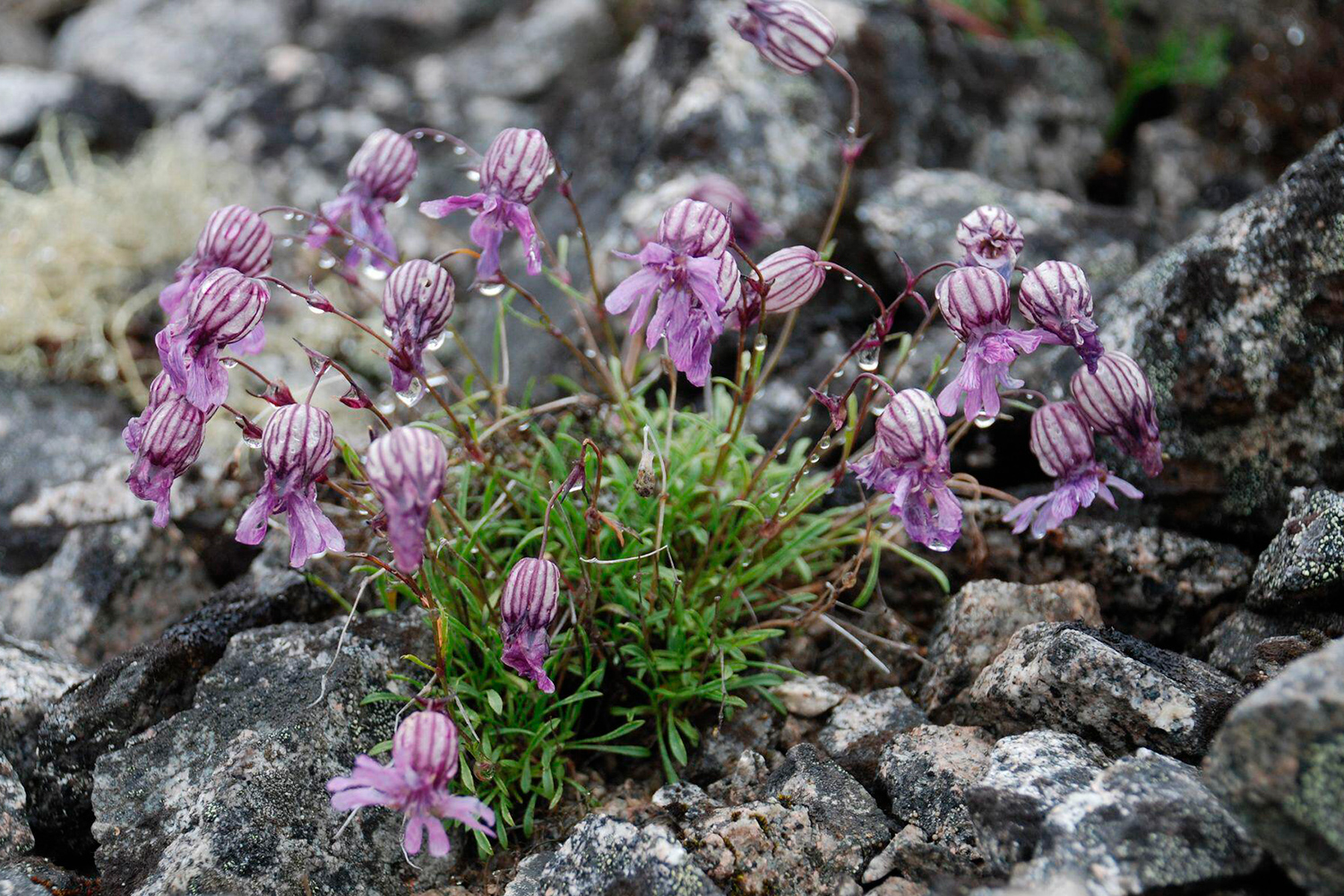
According to scientists, the oldest seeds to successfully produce plants were 32,000-year-old seeds from Silene stenophylla, a flowering plant found in Siberia. The seeds survived because an Ice Age squirrel had buried them deep underground in frozen soil. The scientists unearthed the seeds and grew the plants thousands of years later!

A purple flowered plant is growing in the wild.
© piemags—nature/Alamy

Scientists were able to grow Silene stenophylla from extremely old seeds. The photo shows a different S. stenophylla plant growing in the wild.

Sing for Your Health!

Teens or young adults smile and gesture as they sing in a choir with the help of a director.

© Monkey Business/stock.adobe.com

If you’ve ever enjoyed singing in a choir at school or singing in a group during a holiday, there’s a reason it feels so good. Singing is good for your health!

Research shows that singing can benefit the whole body, from the head to the heart. The biggest boost comes from singing in a group, like a choir. 

Alex Street, a researcher who studies the use of music therapy, told the BBC, “Singing is a cognitive, physical, emotional and social act.” 

Singing calms the mind and body in several ways. First, singing activates the vagus nerve, a part of the body that sends signals to the brain and heart to relax. This helps the heart rate and blood pressure go down. It can also boost immune system responses, which means that singing can help the body fight infections. 

Singing in a group boosts these benefits. People who have survived cancer and strokes have found their health improved after joining a community choir. Group singing appears to help repair damage in the brain and boosts general health. The “feel good” response can even be seen on singers’ faces and heard in their voices, said Street.

So, strike up the tunes the next time you go to choir practice or sing along with your friends. It’s good for you! 

Treasuring Earth Day

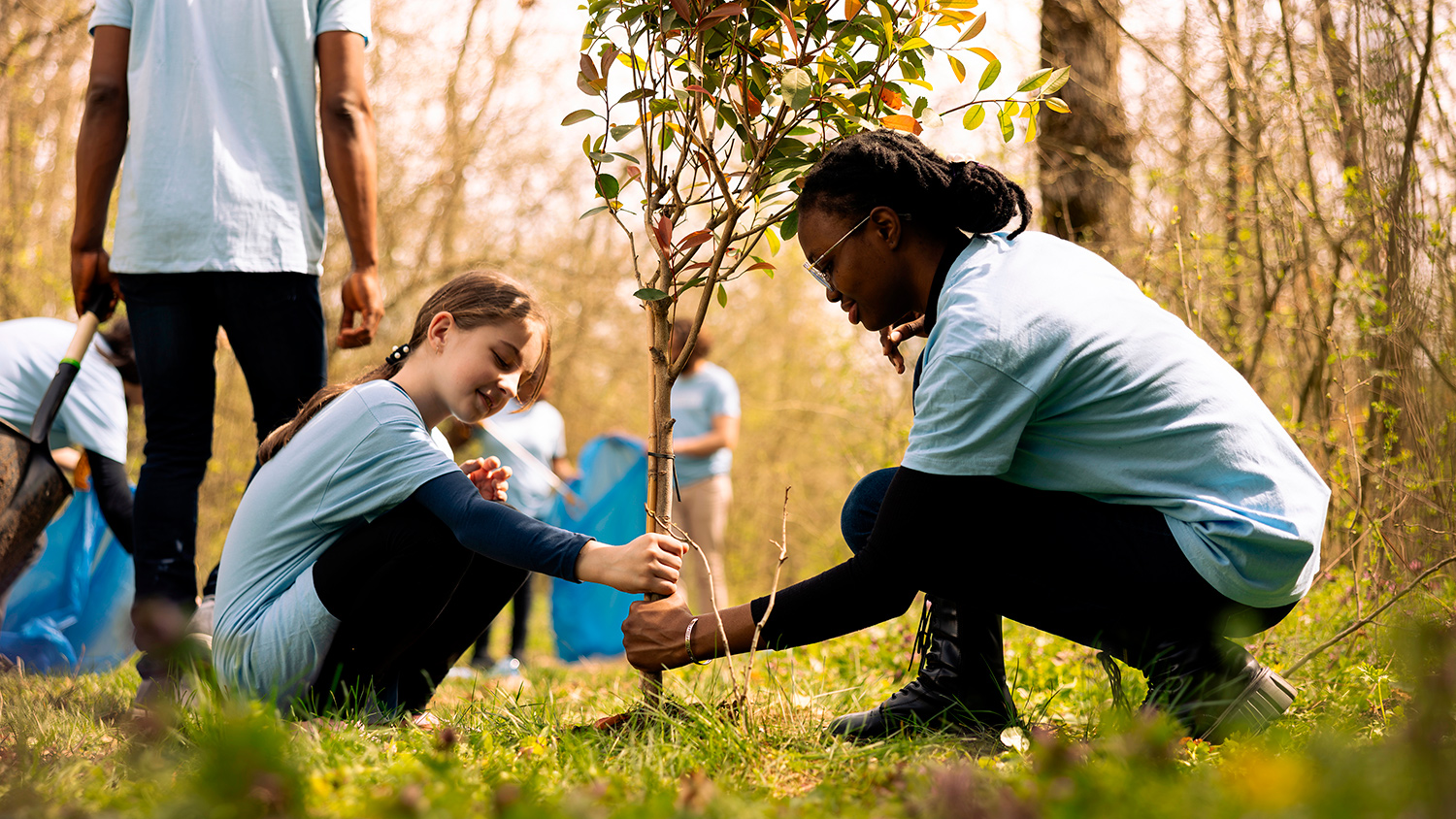
An adult and a child plant a young tree together as other people plant trees and pick up trash in the background.

© DC Studio/stock.adobe.com

April 22 is Earth Day, a global celebration of nature! Instead of organizing parades or parties, people often spend Earth Day doing things that help the environment. People of all ages can help plant trees or pick up trash. 

Read more about Earth Day at Britannica.

WORD OF THE WEEK

inestimable

PART OF SPEECH:

adjective

Definition:

: too great, valuable, or excellent to be measured

Definitions provided by
Merriam-Webster Logo

Word Flower

How many words can you make with these letters? All words must use the letter in the center. At least one word uses all the letters.

O
O
O
O
O
O

In Case You Missed It

A new survey shows teens and young adults are giving back to their communities in big and small ways.
April 2, 2026
Creating a chindogu means finding an absurd solution to a small, daily problem.
March 26, 2026
When a rat-shaped hole in a city sidewalk went viral, scientists investigated. But was the hole really made by a rat?
March 19, 2026
New research shows dogs can learn new words by listening in on human conversations.
March 12, 2026

How to Cite This Page

Here is how to cite this page using the MLA style. While every effort has been made to follow citation style rules, there may be some differences. Please refer to the appropriate style manual or other sources if you have any questions.

“In the News: Seed Bank Savings.” Britannica School, Encyclopaedia Britannica, 12 Apr. 2026. https://news.eb.com/level2/seed-bank-savings. Accessed 13 Apr. 2026 [Replace this date with today’s date.]