
Skip to content

Water-Walking Robots!
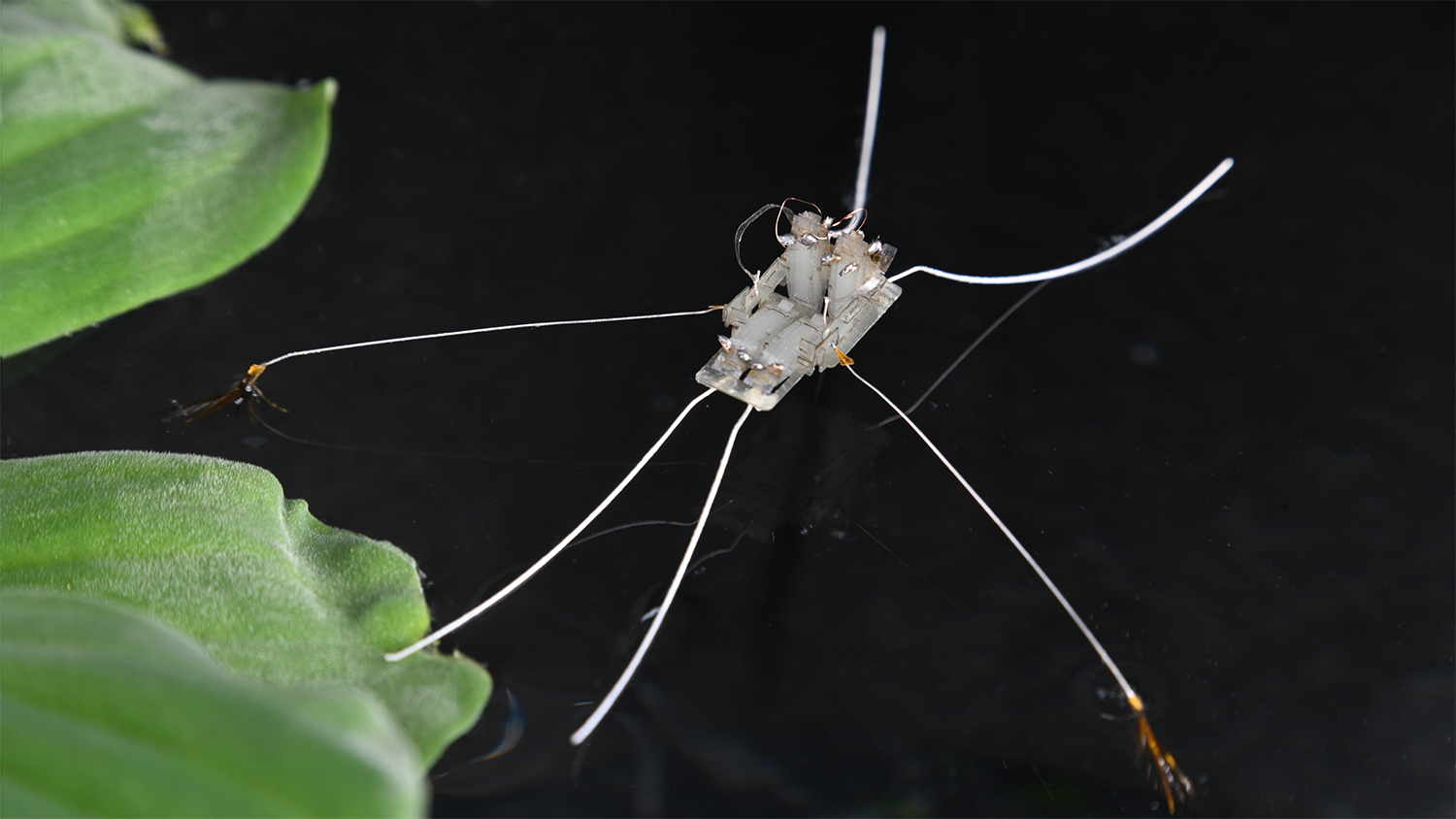
A bug that walks on water inspired a frilly new robot design.
A robot that looks like a ripple bug and appears to have six legs sits on the surface of water.

Je-Sung Koh, POSTECH; Dongjin Kim, Ajou University

This robot was inspired by a bug that can walk on water.

Fish can swim in water and elephants can walk on land, but what creature can walk on water? The ripple bug can! Now this bug’s special ability has inspired the design for a tiny water-walking robot.

The ripple bug is a kind of water strider, which is an insect that moves lightly across water. The bug has tiny little fans on the ends of its feet. The frilly feet fans keep it from falling into the water and help it make quick turns as it moves. 

“If you are blinking, you miss the action,” said scientist Víctor Ortega Jiménez in an interview with Science News Explores. Watching the ripple bug’s feet made him wonder if frilly feet could help a robot walk on water too.
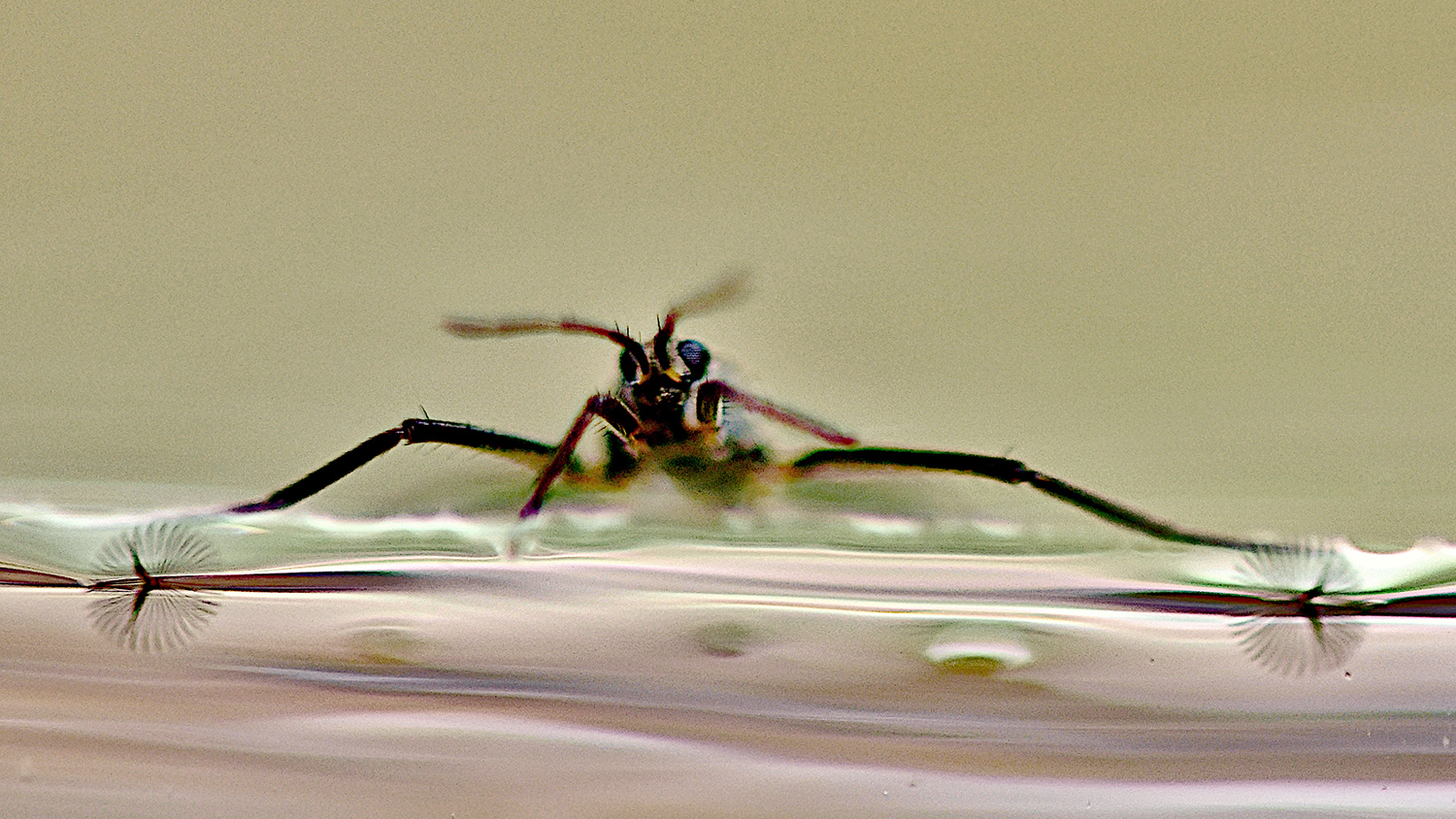
A ripple bug sits on the surface of water, facing the camera.

Victor Ortega/UC Berkeley

The ripple bug’s “frilly feet” help it walk on water.

Ortega Jiménez works at the University of California, Berkeley, in the United States. He studies the way animals move to get ideas for making new kinds of technology. After watching the ripple bug move, Ortega Jiménez made a small robot and put tiny fans on its feet. Just like the bug, the robot could dart across the water. It made turns and glided on the water’s surface without falling in. 

Jiménez hopes that tiny water-striding robots can one day be used in places with water. Water-walking robots could check streams for pollution. They could also go into flooded cities and help look for people who need help. All of this may be possible thanks to the ripple bug’s fancy feet.

Je-Sung Koh, POSTECH; Dongjin Kim, Ajou University

Here’s how the bug-like robot moves on water.

Fun Fact Icon

Fun Fact

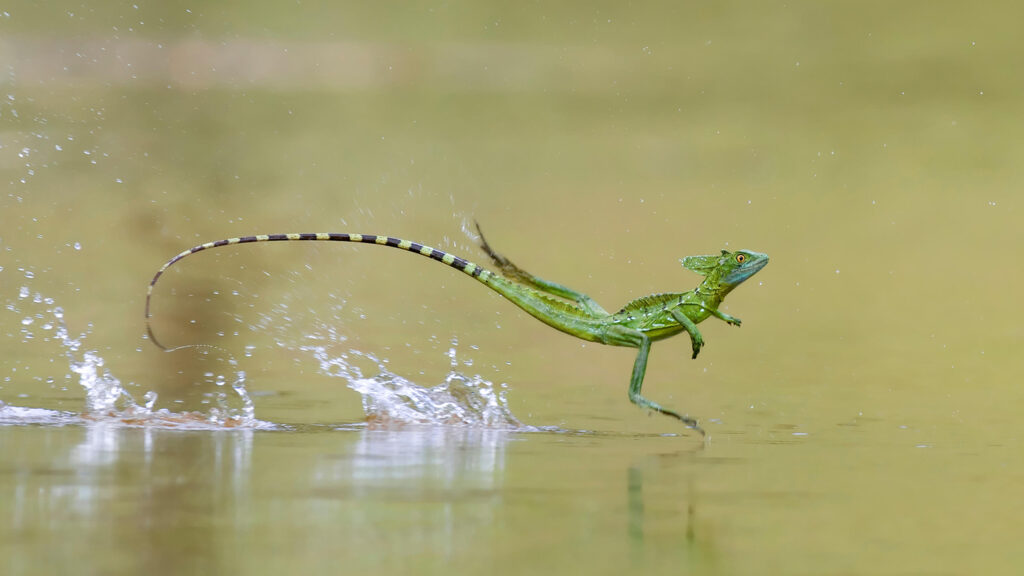
A green lizard with a long tail appears to be running on the water’s surface.

© Bence Mate—Nature Picture Library/Alamy

The basilisk lizard in Central America uses its back legs to run on top of the water for a short distance. It can run about the length of a car before it slows down and must swim.

Critter Creations

People who design robots often look at animals for inspiration. Here are some recent robot designs that come from animals. 

Gecko Feet
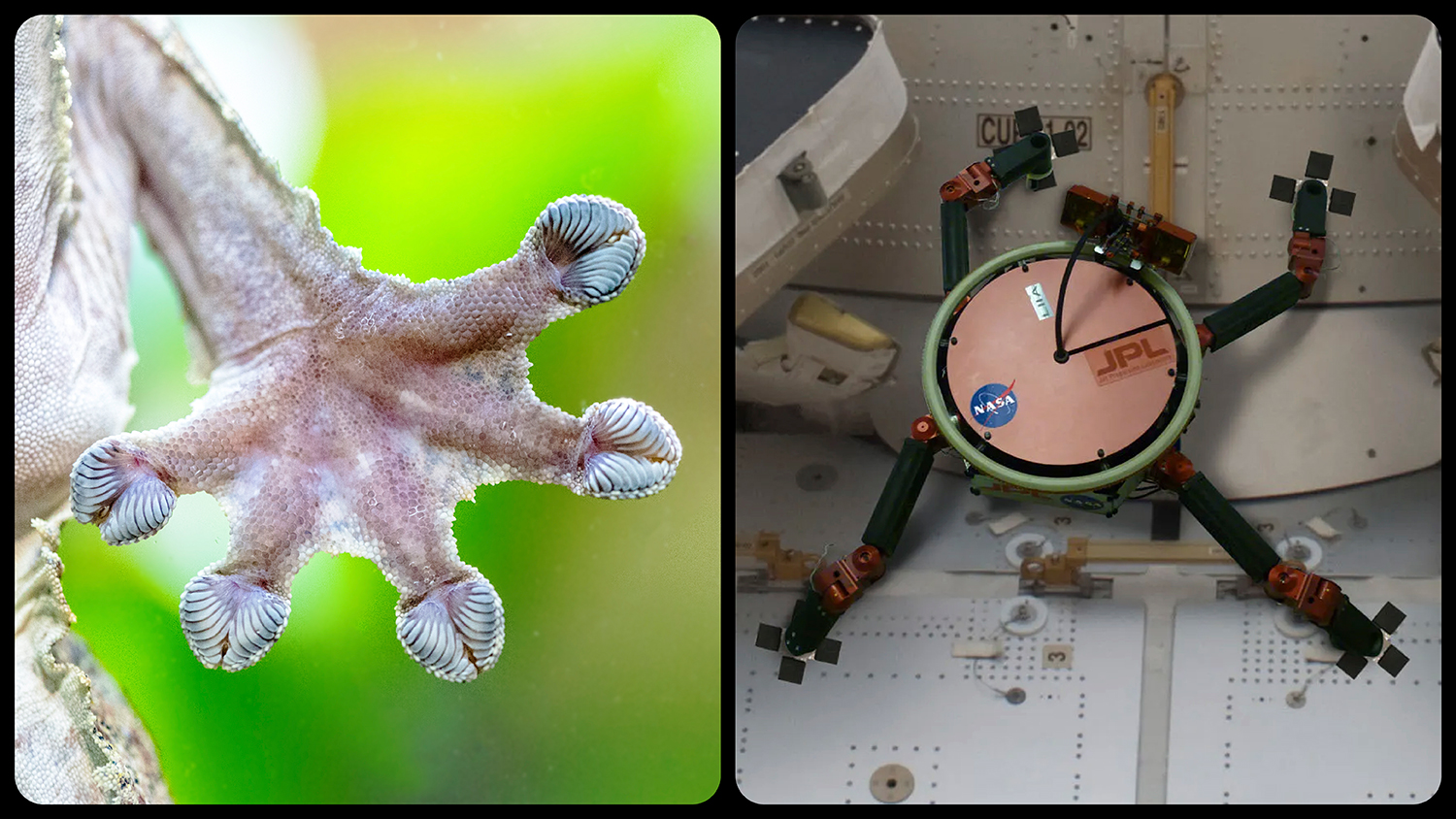
The underside of a gecko’s foot is seen alongside a robot with four gripping “feet.”

© adogslifephoto/stock.adobe.com, NASA; Photo composite Encyclopædia Britannica, Inc.

(Left) A gecko’s foot has grippers. (Right) This illustration shows a robot with gripping feet that could one day be used in space.

Geckos are famous for their sticky feet. The lizards are able to grip any surface thanks to millions of tiny hairs on the bottoms of their toes. This ability inspired the Gecko Gripper, a type of robot foot that helps robots stick to slippery objects using tiny, gecko-like hairs. The Gecko Gripper could be helpful for robots that need to work on the International Space Station. It would keep the robots stuck to the station, so they don’t fly off into space.

Grasshopper Hops
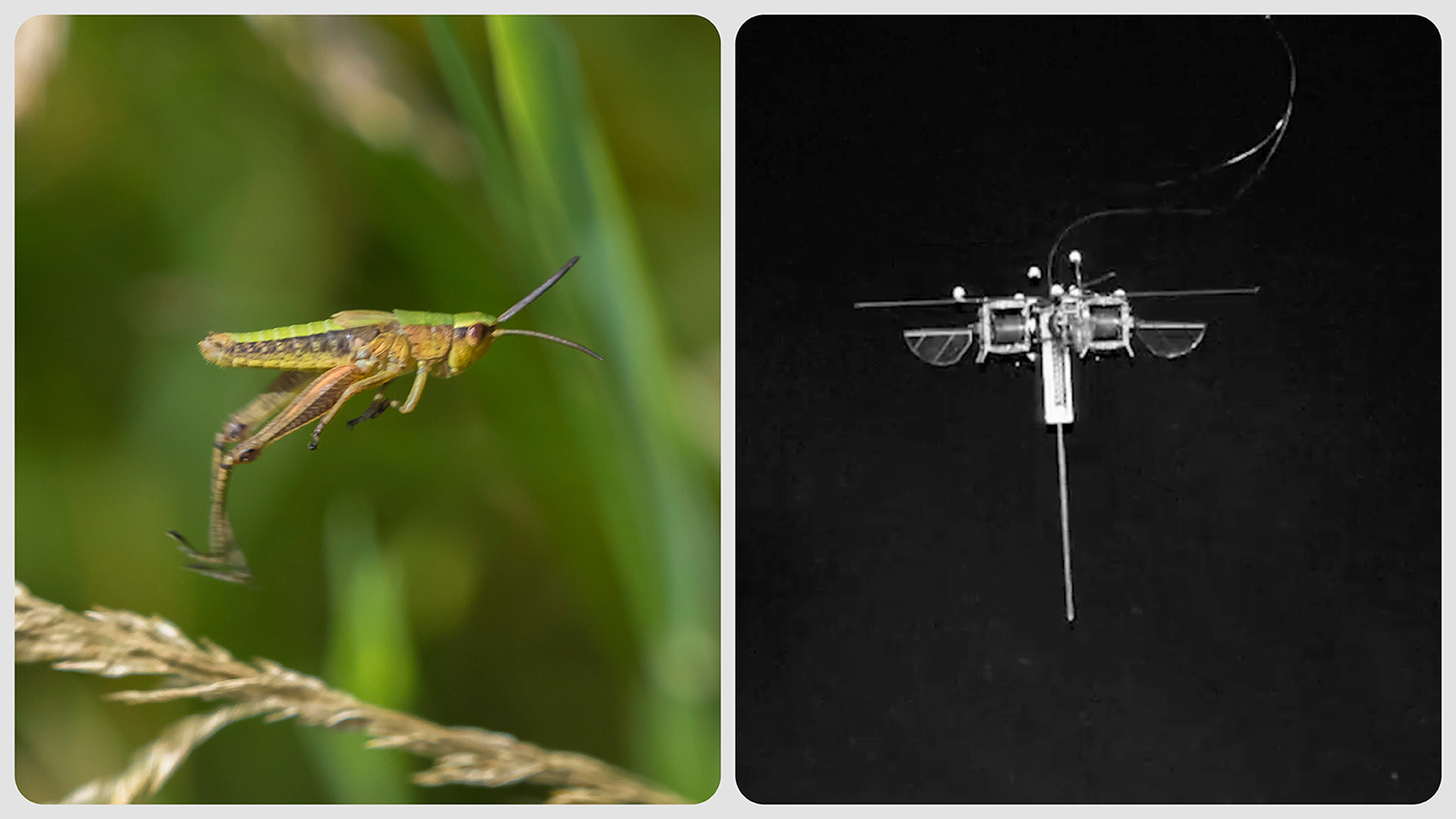
A hopping grasshopper is seen alongside a small robot with a long body.

© Wolfgang Unger/Wirestock/stock.adobe.com, Courtesy of the researchers (CC BY-NC-ND 3.0); Photo composite Encyclopædia Britannica, Inc.

(Left) A grasshopper jumps. (Right) This tiny robot’s springy legs allow it to jump like a grasshopper.

Robots that can run and crawl may get stuck if something is in their way. But what if a robot could simply hop over roadblocks? Scientists at the Massachusetts Institute of Technology designed a robot that’s inspired by jumping grasshoppers. This tiny bouncing bot has a springing leg and small wings to propel it off the ground. 

Turtle Flippers
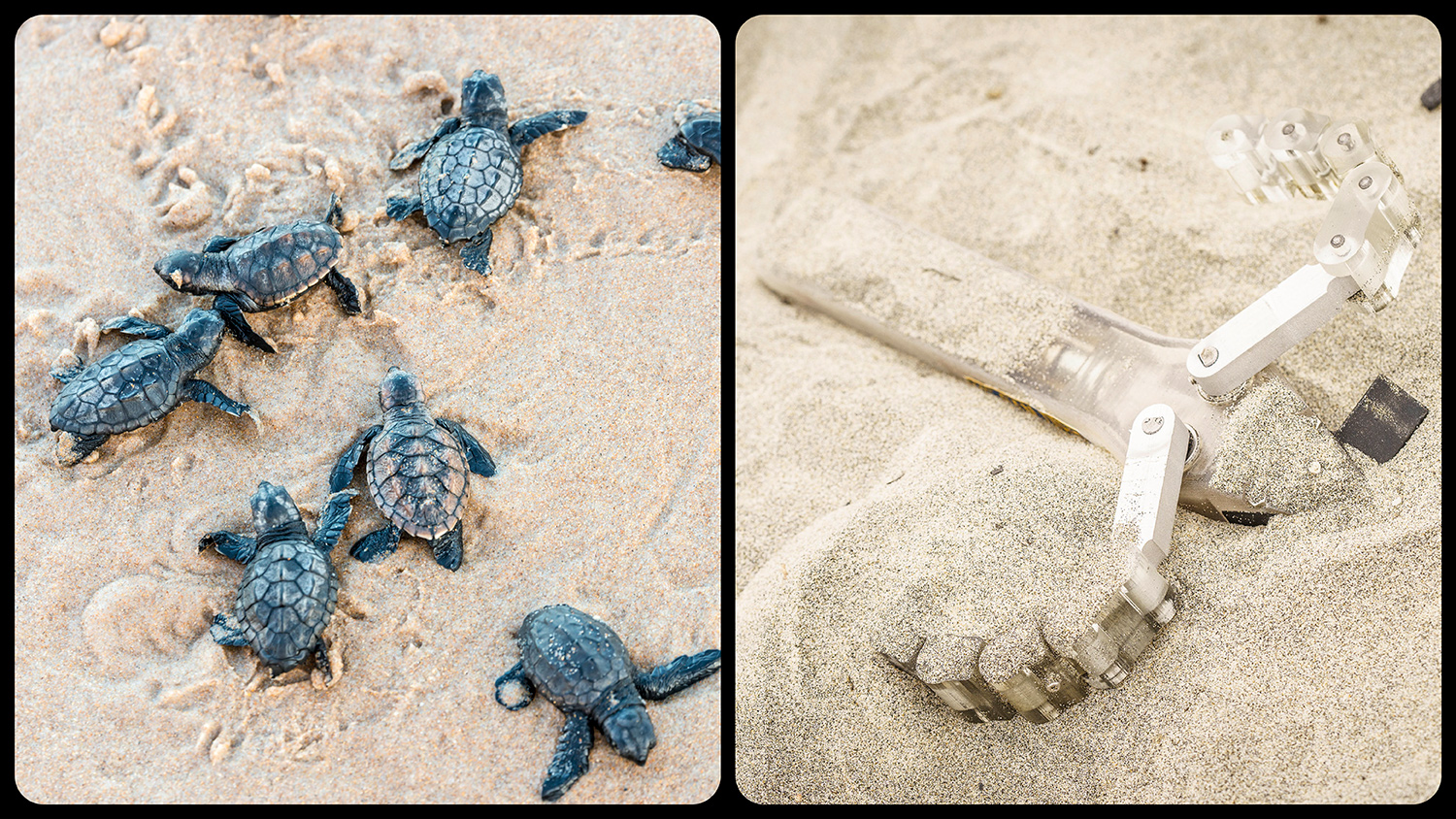
Several baby turtles with their flippers digging in sand are seen alongside a robot with flippers digging in sand.

© Diego/stock.adobe.com, UC San Diego Jacobs School of Engineering, CC BY 2.0; Photo composite Encyclopædia Britannica, Inc.

(Left) Baby sea turtles use their flippers to dig in the sand. (Right) This robot’s flippers were inspired by sea turtles.

Sea turtle flippers are great for swimming, but could they also help a machine move through sand? The answer is yes! Scientists at the University of California San Diego made a robot with flippers that copy the way baby sea turtles dig themselves out of the sand after they hatch from eggs. The robot could investigate what’s under the ocean floor or explore sand-covered planets.

You Can Build It!

Children sit around a table and work on a computer and with robots equipment.

© insta_photos/stock.adobe.com

Engineers solve problems by building new things.

Do you like inventing or building things? You could be an engineer! An engineer is someone who creates new things. Read more about this cool job at Britannica.

Word of the Day Icon

WHAT'S THE WORD?

skitter

Part of speech:

verb

Definition:

: to move quickly and lightly along a surface

Definitions provided by
Merriam-Webster Logo
Game Icon

Play

Criss-Cross

Can you figure out where each word goes?

.

In Case You Missed It

Scientists say hedgehogs can hear better than dogs. That could help save them.
April 21, 2026
Teens in the United Kingdom and the United States are doing their part for the planet.
April 9, 2026
Some U.S. states are teaching cursive writing. Is it a worthwhile skill?
April 7, 2026
A man gave his town some land. He had one requirement: The land had to be made into a community garden.
April 2, 2026

How to Cite This Page

Here is how to cite this page using the MLA style. While every effort has been made to follow citation style rules, there may be some differences. Please refer to the appropriate style manual or other sources if you have any questions.

“In the News: Water-Walking Robots.” Britannica School, Encyclopaedia Britannica, 26 Apr. 2026. https://news.eb.com/level1/water-walking-robots. Accessed 27 Apr. 2026 [Replace this date with today’s date.]