

Skip to content

Sunny Side Up on the Sidewalk
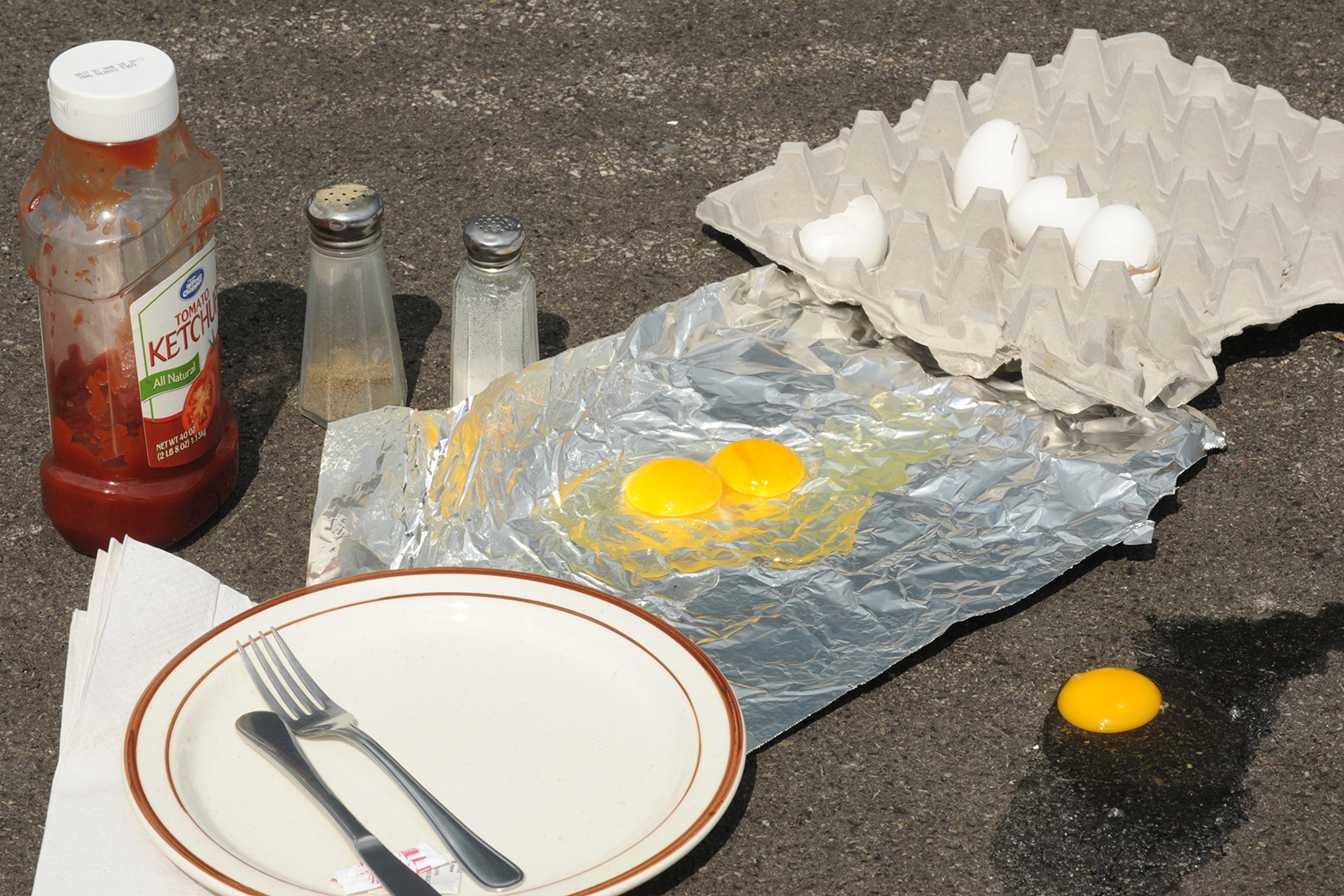
Is a sidewalk ever hot enough to cook an egg? A fun annual tradition has people putting that theory to the test!
Two raw eggs sit on aluminum foil that has been placed on an outdoor blacktop next to a partial carton of eggs, salt and pepper, ketchup, and a plate and silverware.

©Michael P. Farrell/Albany Times Union—Hearst Newspapers/Getty Images

This egg frying experiment took place outdoors at Albany International Airport on a hot day in 2013.

Have you ever heard the phrase “it’s hot enough to fry an egg on the sidewalk?” In Oatman, Arizona, this isn’t just a figure of speech; it’s an annual challenge! The Oatman Sidewalk Egg Fry takes place each year on July 4, drawing people from near and far to try cooking an egg using just the heat from the Sun. This local tradition is part science experiment, part cooking competition, and a whole lot of fun!
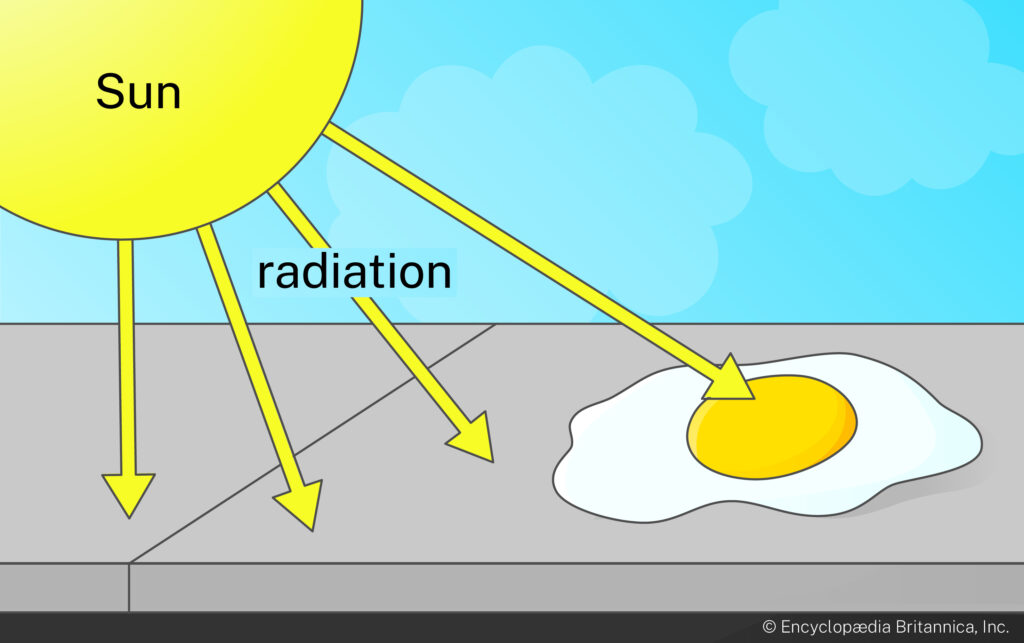
Radiation from the Sun reaches a cracked egg on the sidewalk.

Encyclopædia Britannica, Inc.

The Sun’s radiation can heat up a sidewalk and a raw egg on warm days, but rarely enough to fully cook the egg.

Cracking a raw egg on a Sun-baked sidewalk is an age-old challenge that’s now featured on some YouTube channels. What makes it fun is that while it is possible, most attempts will fail. This is because concrete sidewalks are actually poor heat conductors. An egg needs to reach 158 degrees Fahrenheit (70 degrees Celsius) to “cook,” and most sidewalks—even on the hottest days—will reach a maximum of only 145 degrees F (63 degrees C). As steamy as it is, 145 degrees isn’t hot enough to make breakfast.

A street in Oatman, Arizona, is lined with old buildings that have old fashioned business signs, and there are many cars and pedestrians.

© Kelly Murphy—iStock/Getty Images

Oatman, Arizona

But this physical improbability doesn’t stop the hundreds of people who gather each year in the old western mining town of Oatman, which has hosted the egg fry since 1991. Summer temperatures in Oatman can regularly exceed 100 degrees, making it the perfect place to try frying. People can bring cooking pans, aluminum foil, or any other material that could help trap the Sun’s rays. The only rule is that the cooks have to use solar energy—no fire or electricity is allowed.  

At high noon, the cooking begins, and people have 15 minutes to fry their raw eggs. Some cooks have invented solar ovens that can reflect and amplify solar rays to reach the necessary temperature in a few minutes. Some still crack a raw egg on the sidewalk to see if a transformation will happen. The challenge remains, as another saying goes, a tough egg to crack.
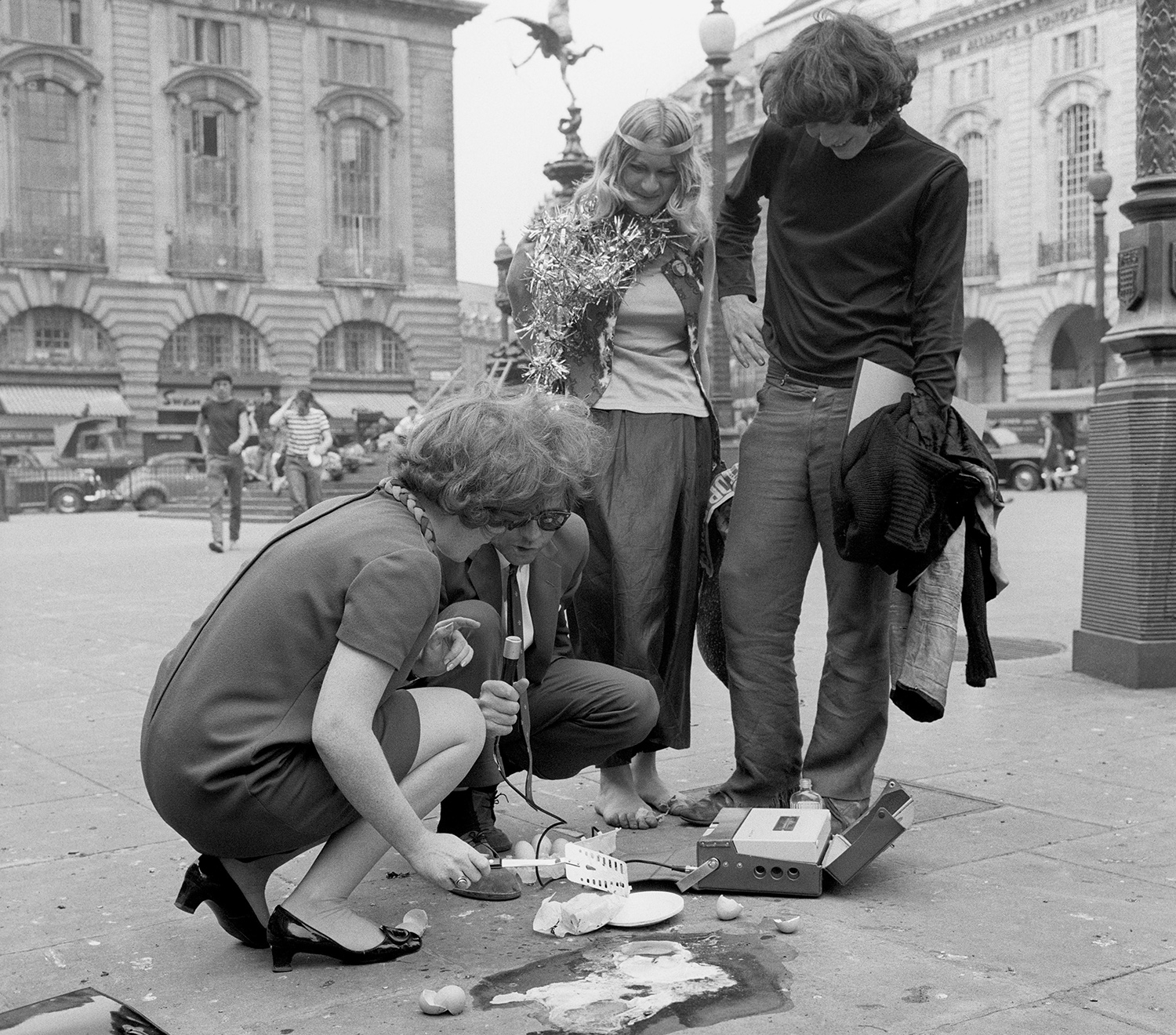
Two people attempt to fry an egg on a sidewalk and speak into radio equipment as two other people watch.

© PA Images/Getty Images

In this 1968 photo, two radio reporters test whether they can fry an egg on a London, England, sidewalk as two other people watch.

NEWS BREAK

The United States at 250

A statue of Pasquale Paoli is in front of green hills in Corsica.

© Yann Guichaoua-Photos—Moment/Getty Images

On July 4, 2026, the United States will mark its 250th birthday. Celebrate with us by reading about a revolution in Europe that helped inspire the American Revolution. 

Did You Know?

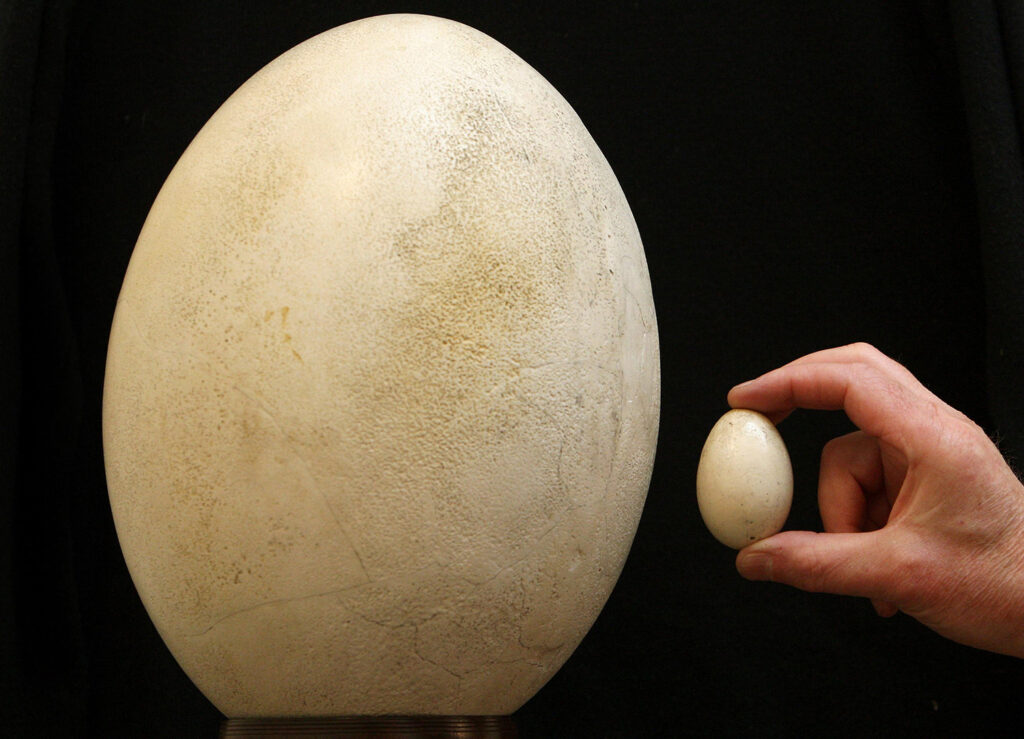
The world’s largest eggs belonged to the elephant bird of Madagascar. This flightless bird is now extinct, but some fossilized eggs remain. One elephant bird egg could fit up to 180 chicken eggs inside!

A hand holds a chicken egg next to an elephant bird egg that is many times its size.

© Dominic Lipinski—PA Images/Getty Images

The elephant bird’s eggs were many times larger than chicken eggs.

The Fireworks Boom

Multi colored fireworks are in a dark sky over a lake.

© Costfoto—NurPhoto/Getty Images

Around the world, glittering fireworks signal a celebration: Canadians light them on July 1 for Canada Day, the United States sets them off for Independence Day, and they light up the beaches of Brazil on New Year’s Eve. But these glowing displays wouldn’t be possible if not for the ancient Chinese.

As you can imagine, the story of fireworks started with a bang. Historians think that about 2,000 years ago, around the year 200 BCE, someone in China threw a piece of bamboo into a fire. The air pockets in bamboo stalks expand quickly with a fire’s heat, bursting the stalk apart in an explosion. Knowing this reaction, people sometimes carried bamboo stalks to make loud bangs with fire.

About a thousand years later, someone combined sulfur, charcoal, and potassium nitrate together, an invention that became known as gunpowder. When put into a bamboo stalk and lit with a flame, the gunpowder made a noisy, glittering orange display. People in China began lighting these early fireworks for entertainment. Fireworks spread to other countries around the 14th century, but they remained the same orange color for hundreds of years.

Colorful fireworks wouldn’t come into existence until the 1830s, when advances in chemistry showed that adding strontium and barium to the mix created colors like red and green. By this point, fireworks were increasingly common in celebrations around the globe.

Despite being more than a thousand years old, firework chemistry is still evolving. Blue fireworks are made using copper, which will work only if the fireworks are set off at just the right temperature. This is a particularly difficult thing to get just right, so blue fireworks can be rare to see. 

Although fireworks have taken off in countless countries, China remains the world’s largest producer. 

Oh, Canada!

A man in a hat and an outfit with Canadian maple leaves holds a Canadian flag and a sign in the shape of a maple leaf.

© Nick Lachance—Toronto Star/Getty Image

Toros Djerdjeian of Toronto, Ontario, shows off his Canadian pride on Canada Day in 2025.

Each year on July 1, Canadians celebrate Canada Day with fireworks, parades, and a lot of red and white! Learn more about this national holiday at Britannica.

WORD OF THE WEEK

high jinks

PART OF SPEECH:

noun

Definition:

: wild or playful behavior

Definitions provided by
Merriam-Webster Logo

Slider

Slide the number tiles around until the numbers are in order.

O
O
O
O
O
O

In Case You Missed It

This annual cheese rolling race in England has racers bumping and rolling for a chance at victory.
June 17, 2026
Middle school teacher Freddie Hendricks received a Tony Award for his role changing lives through theater.
June 12, 2026
At 10 years old, Max Alexander was the youngest person ever to show a collection at fashion’s biggest event.
June 5, 2026
This chef’s story shows how an immigrant can find success and help feed the world.
May 28, 2026

How to Cite This Page

Here is how to cite this page using the MLA style. While every effort has been made to follow citation style rules, there may be some differences. Please refer to the appropriate style manual or other sources if you have any questions.

In the News: Sunny Side Up on the Sidewalk.Britannica School, Encyclopaedia Britannica, 28 June 2026. https://news.eb.com/level2/sunny-side-up-on-the-sidewalk Accessed 29 June 2026 [Replace this date with today’s date.]