
Skip to content

Chef José Andrés Is Ready to Help
This chef’s story shows how an immigrant can find success and help feed the world.
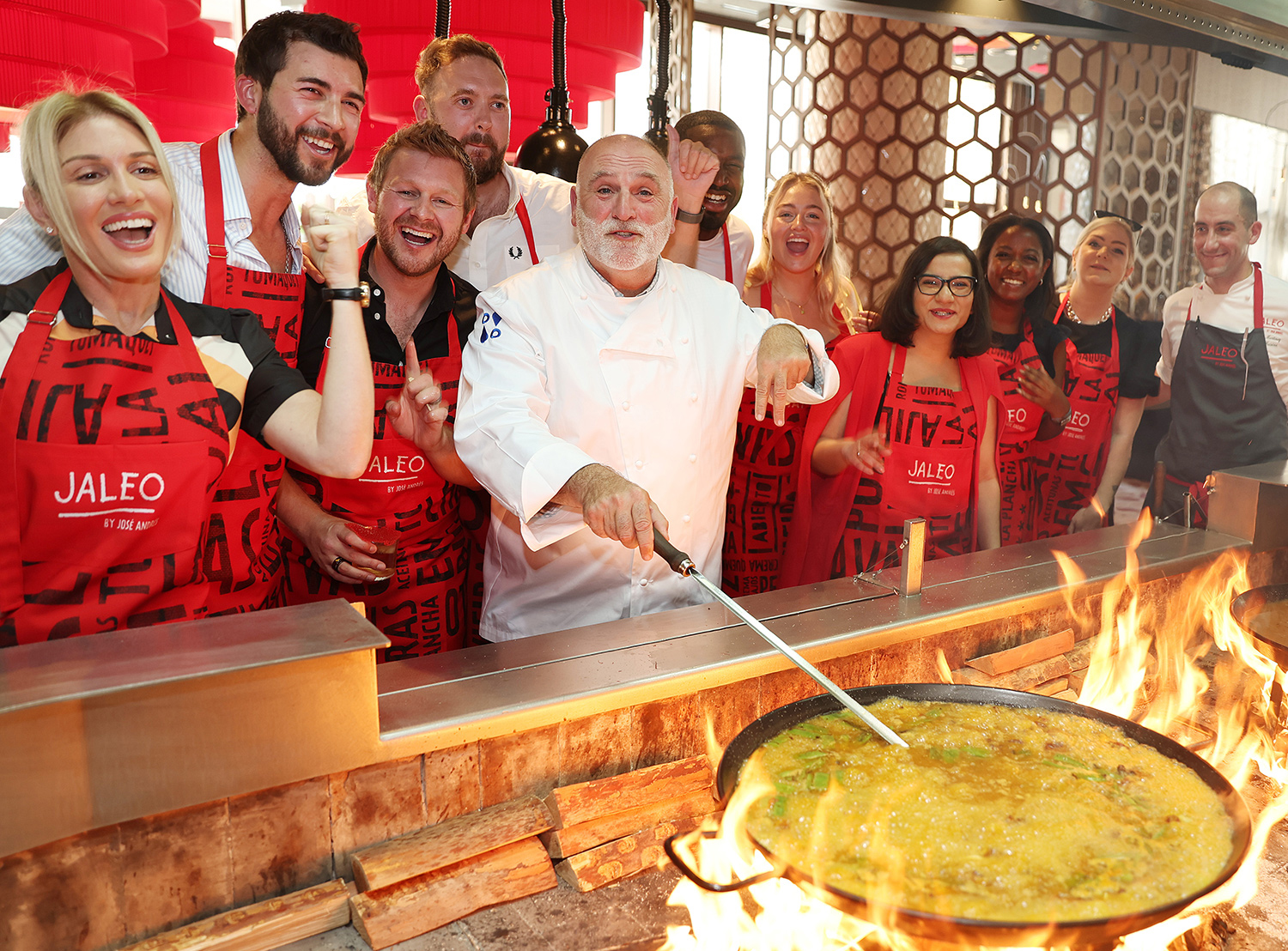
José Andrés stirs paella over a flame as several people in red aprons surround him and smile.

© Francois Nel—Atlantis The Royal/Getty Images

Chef José Andrés (center, in white) teaches a cooking class at one of his restaurants.

When a devastating hurricane hit the Caribbean island of Puerto Rico in 2017, thousands of homes were destroyed and even more had no electricity to cook food. Immediately after the storm, Chef José Andrés arrived with other volunteers to cook and deliver food to anyone who needed it. Andrés’s nonprofit organization, called World Central Kitchen, provided almost four million meals to people affected by the hurricane. 

Andrés, an award-winning chef and an immigrant to the United States, is now dedicating his life to feeding people when disaster strikes. June is National Immigrant Heritage Month in the United States. It’s a time to celebrate the heritage of immigrants in America and honor their contributions. Immigrant stories like Andrés’s show how much one person can affect a country, and the world.

“My story is like the story of one more immigrant,” said Andrés in a 2020 interview with the Tufts University podcast Tell Me More. “To a degree, I believe we are all immigrants in more ways than we think.”

Andrés learned to cook as a young man in Spain before moving to the United States in 1991 with only $50 in his pocket. After working in several restaurants, he helped open some of his own in the city of Washington, D.C. These largely Spanish- and Latin-inspired eateries made him famous as a chef and earned him several top awards.
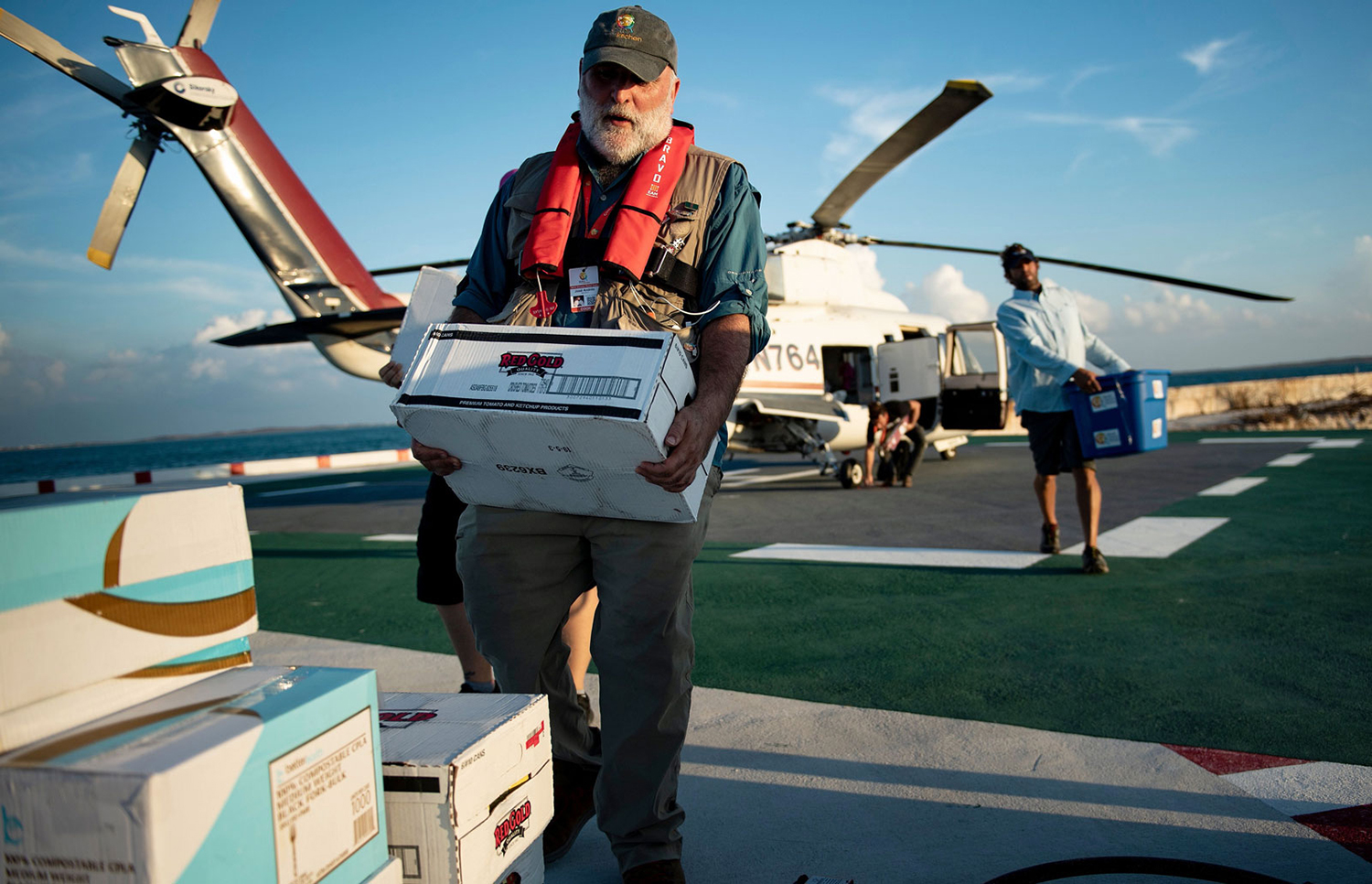
José Andrés walks away from a helicopter while carrying a box toward a pile of similar boxes.

© Brendan Smialowsk—AFP/Getty Images

In this 2019 photo, José Andrés carries a box of food for survivors of Hurricane Dorian in the Bahamas as part of his work with World Central Kitchen.

Amid his success, Andrés desired to find ways to help people. He began working with a local nonprofit that provided food to people in need. He also began advocating for better working conditions for fellow immigrants in the food industry. 

“Because sometimes being American or belonging to a country is not by the passport you own, but by the heart you put in the every day in your community. That’s what makes a person belong to a place,” he said.

In 2010, Andrés founded World Central Kitchen with the goal of bringing emergency food relief to people who survived natural disasters or live in war zones. To date, chefs with World Central Kitchen have made 600 million meals for people around the world. 

“I’m so proud that today we have these men and women that when something happens, we get in a plane, we land, and with one plate of food at a time, we start building a better tomorrow,” said Andrés. 

Did You Know?

We wouldn’t have YouTube without immigrants! The popular video-sharing platform was founded in 2005 by Steve Chen, Chad Hurley, and Jawed Karim. Chen came to the United States from Taiwan, and Karim is from Germany. 

Steve Chen, Chad Hurley, and Jawed Karim pose in a large room while holding a video recorder, a laptop, and a camera.
© Martin Klimek—ZUMA Press/Alamy

This 2005 photo shows YouTube founders Steve Chen (left), Chad Hurley, and Jawed Karim (right).

Bon Appétit! Immigrant Foods on American Plates

People can now get American-style hamburgers in almost every country. But did you know hamburgers were not an American food to begin with? 

Immigration has influenced many famous foods in the United States. Here are just some of the seemingly all-American foods that wouldn’t exist without immigration.

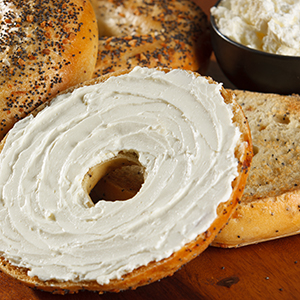
A bagel is cut in half and spread with cream cheese, and two other bagels are still whole.

© gridspot/stock.adobe.com

Bagels and Cream Cheese

A favorite breakfast bread, the bagel likely originated among Jewish bakers in Poland. In the 1800s, Jewish emigrants from Eastern Europe moved to the North American cities of New York and Montreal and started making bagels there. Cream cheese, a popular bagel topping, was invented in the late 1800s in New York, based on a similar style of cheese spread from France.

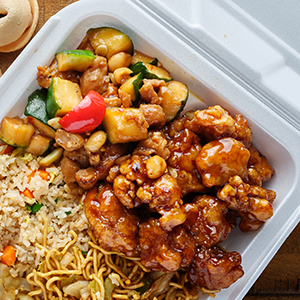
General Tso’s chicken, vegetables, and fried rice are in a styrofoam takeout container.

© rez-art—iStock/Getty Images

General Tso’s Chicken 

General Tso’s chicken has been a beloved takeout dish in the U.S. for decades. This deep-fried chicken is coated in a sweet and savory sauce. The original dish was developed in 1953 in Taiwan by Chinese chef Peng Chang-kuei, who brought it with him when he moved to New York in 1973. 

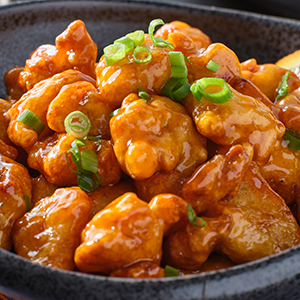
Orange chicken is in a bowl and next to a bowl of white rice and some cut up oranges.

© Joshua Resnick/stock.adobe.com

Orange Chicken

General Tso’s chicken also inspired the creation of a truly multicultural dish called orange chicken. Orange chicken is the brainchild of chef Andy Kao, who was born in Taiwan and trained in French cuisine. Kao made the dish in 1987 while creating recipes for the Chinese American restaurant chain Panda Express. The sweet and tangy dish has been popular ever since. 

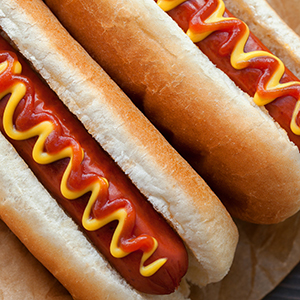
Two hot dogs in buns have ketchup and mustard and are next to containers of ketchup and mustard.

© natapetrovich/stock.adobe.com

Hot Dogs

Though both Germany and Austria claim to be the originators of the first hot dog form (called frankfurter in German), it was German immigrants who brought the food to America in the 1860s. A meat sausage served on a bread bun, the hot dog quickly became a popular street food to buy from sidewalk vendors. 

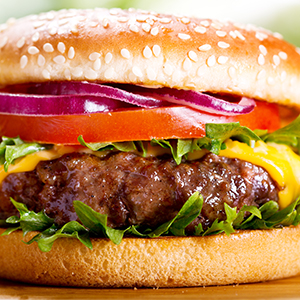
A hamburger with cheese, lettuce, tomato, and onion.

© Nitr/stock.adobe.com

Hamburgers

Not much is known about the true origin of the hamburger, but the ground beef patty and bun arrived in the United States with German immigrants around the same time as the hot dog. It has since become a quintessential American food. 

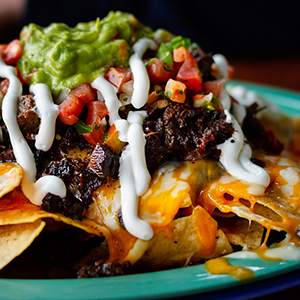
Nachos are topped with cheese, black beans, tomatoes, and guacamole.

© a7880ss/stock.adobe.com; Photo illustration Encyclopædia Britannica, Inc.

Nachos

Nachos—a snack of crispy chips with melted cheese and other toppings—were a tasty accident. The story goes that nachos were created in the 1940s at a restaurant in Piedra Negras, a Mexican town near the Texas border. The name comes from the man who invented it, Ignacio “Nacho” Anaya García, who quickly made the snack for a hungry customer when the restaurant kitchen was closed. Nachos became more popular when they became available to buy at sporting events.

The Ellis Island of the West

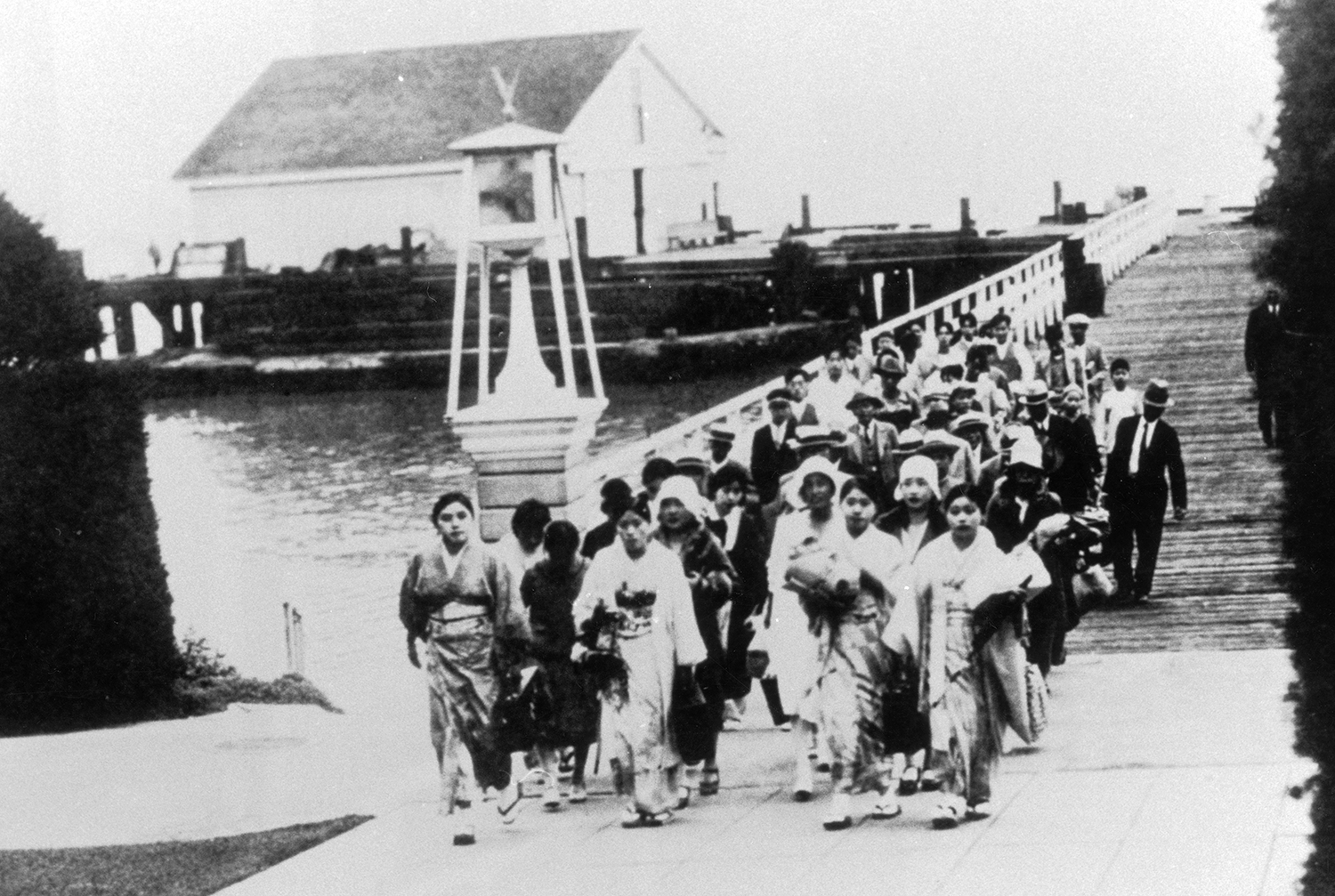
Asian immigrants in early 20th century clothing walk across a bridge over a body of water.

© Fotosearch/Getty Images

Immigrants arrive at the Quarantine Station at Angel Island in 1911.

If you were an immigrant who had crossed the Atlantic Ocean to work in New York City in 1900, you would probably have passed through the famous immigration station on Ellis Island. But what if you had crossed the Pacific? In that case, you would have gone to Angel Island. 

Read more about this historic California immigration center at Britannica.

WORD OF THE WEEK

multicultural

PART OF SPEECH:

adjective

Definition:

: relating to or including many different cultures

Definitions provided by
Merriam-Webster Logo

Crossword

Use the clues to fill in the puzzle.

O
O
O
O
O
O

In Case You Missed It

Sprinter Gout Gout has sped past a milestone set by the fastest man on Earth.
May 14, 2026
The island of Corsica showed American colonists that a courageous revolution could defeat an empire.
May 7, 2026
Physicist Narinder Singh Kapany developed fiber optic cables, helping to make the Internet possible.
April 30, 2026
How can you tell whether photos and videos are real or made with AI? Here are a few tips.
April 24, 2026

How to Cite This Page

Here is how to cite this page using the MLA style. While every effort has been made to follow citation style rules, there may be some differences. Please refer to the appropriate style manual or other sources if you have any questions.

In the News: Chef José Andrés Is Ready to Help.Britannica School, Encyclopaedia Britannica, 30 May 2026. https://news.eb.com/level2/chef-jose-andres-is-ready-to-help Accessed 1 June 2027 [Replace this date with today’s date.]