
Skip to content

A Whale Graveyard Discovery
Researchers have uncovered the deepest known whale graveyard. Located in the Indian Ocean, the area holds ancient whale fossils.
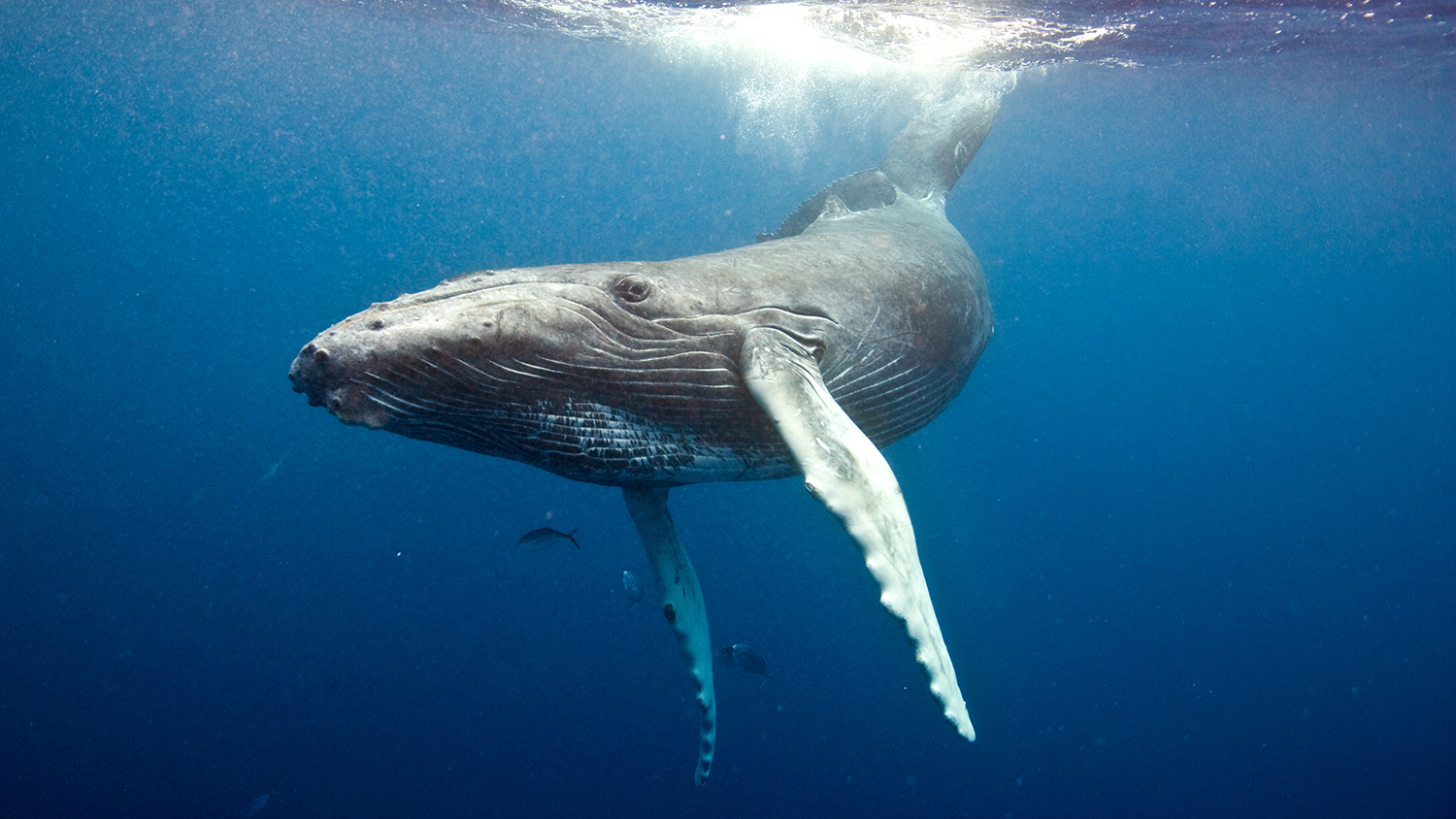
A humpback whale swims in the sea.

© willtu/stock.adobe.com

This humpback whale lives in the Caribbean Sea. The world’s oceans have been home to whale species for millions of years!

Scientists have discovered an enormous whale graveyard where the remains of hundreds of whales have settled on the floor of the Indian Ocean. Among the remains are ancient whale species that swam in the ocean millions of years ago. This underwater graveyard not only holds secrets of the ocean’s ancient past but also could be home to living organisms that scientists have never seen before. For ocean enthusiasts, it’s a treasure trove unlike any other. 

When a whale dies in the ocean, the body will sink to the ocean floor. This is called a whale fall. Some previous whale falls have been found at depths of about 2.5 miles (4 kilometers). This new whale fall discovery is the deepest yet, at more than 4.5 miles (7 kilometers) deep. At this depth, there is very little oxygen and a lot of ocean pressure, creating excellent conditions for preserving bones and carcasses.
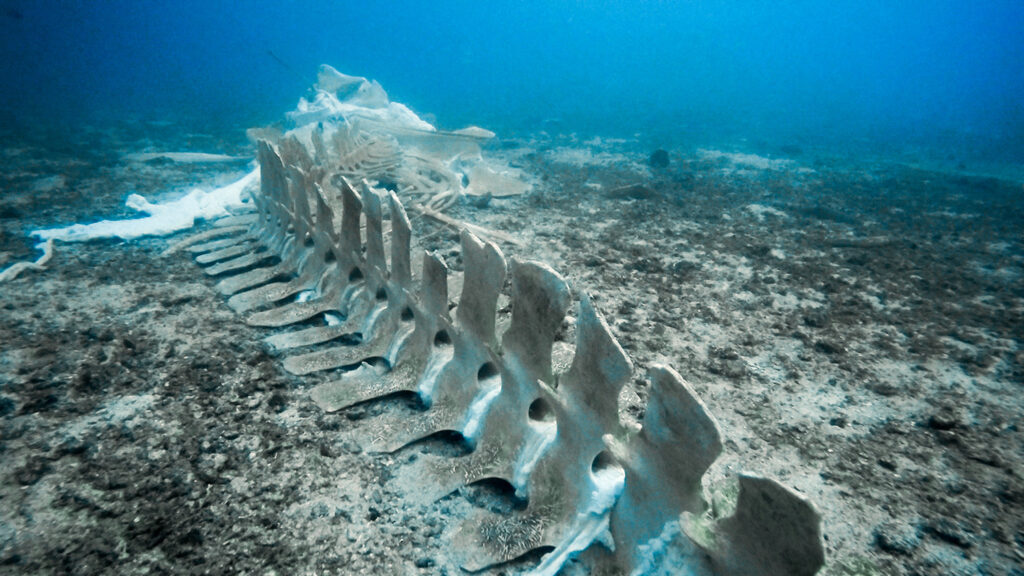
A spine and other parts of a whale skeleton lie on a seafloor.

© Placebo365—E+/Getty Images

Whale remains can be found all over the world. This whale skeleton lies at the bottom of the Andaman Sea, near Thailand.

A team of scientists from China, Italy, and New Zealand used a submersible to dive to the bottom of the ocean 32 times. The researchers discovered 485 whale-fossil sites, meaning there were remains of whales from very long ago. The oldest of these discoveries was a skull of an extinct beaked whale called Pterocetus benguelae that is estimated to be 5.3 million years old. 

Researchers also found five whale falls of modern species that were in the process of being consumed by deep-sea creatures such as types of crabs, mollusks, sea stars, and worms. The researchers think some of these carcass-eating creatures are previously undiscovered species.

The whale graveyard extends hundreds of miles, suggesting there may be mysteries waiting to be revealed as researchers study the area. Click the video below to explore the graveyard!

© China News Service/Reuters

Living creatures eat whale remains at this deep-sea necropolis, or burial site.
Did You Know?

Whales help each other give birth! In 2023 a pod of female sperm whales was observed helping a pregnant whale mother while she was in labor. The whales then took turns helping the mother keep the newborn calf near the surface to breathe until it could swim on its own.

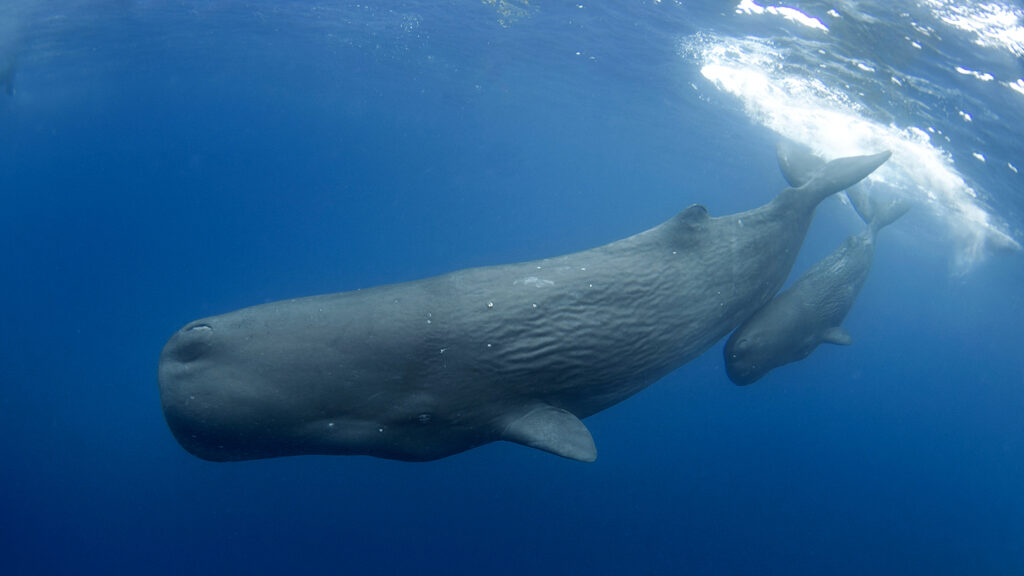
A sperm whale mother and calf swim together.

© prochym/stock.adobe.com

This image shows a sperm whale mother and her calf.

Sperm Whales Speak?
Sort Of!

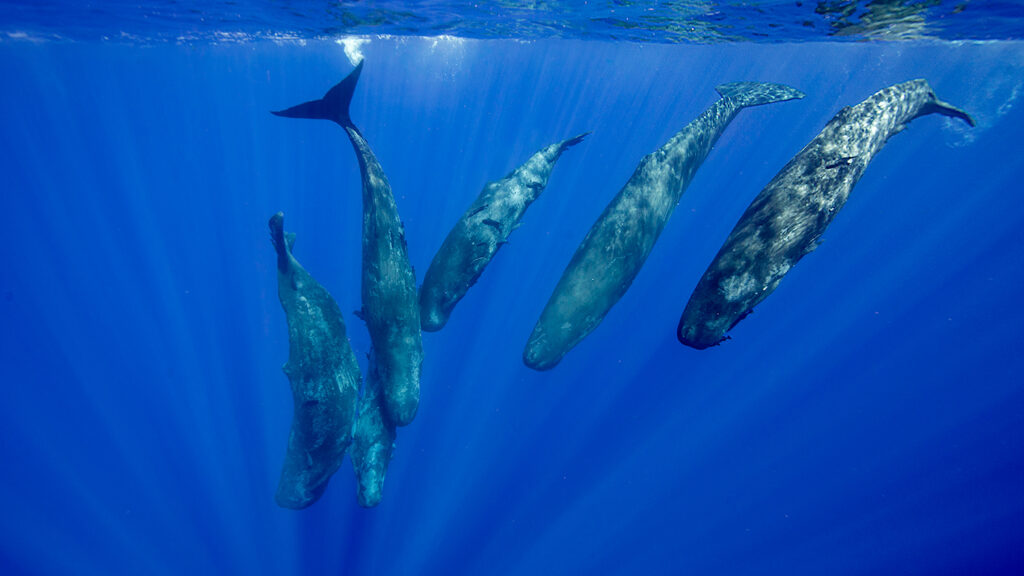
Six sperm whales swim from the sea’s surface down.

© by wildestanimal—Moment/Getty Images

A pod, or group, of sperm whales dive together in search of food.

Do you speak whale? This may sound like a joke from the movie Finding Nemo, but it turns out some whales “speak” like humans. A new analysis of sperm whales’ vocal clicks shows they use patterns similar to those found in human languages.

Let’s back up a little. Researchers have known for a long time that whales communicate through a “language” of vocalizations made up of clicks, whistles, and squeals. However, scientists have yet to translate whale language. One group that is on a mission to do so is the Cetacean Translation Initiative (called Project CETI). 

Project CETI has been analyzing the clicking patterns of sperm whales. Two years ago, CETI researchers discovered that these whales have an alphabet of sounds. Just as humans move their tongues and mouths to produce different sounds, sperm whales manipulate parts of their bodies to produce different sounds as they talk to each other. These sounds are similar to our human vowels, like a and i.

NOAA Fisheries/Matthew Bowers, Laura Dias, Gina Rappucci, and Lynne Hodge; thumbnail © by wildestanimal—Moment/Getty Images

Play the video for the sounds of sperm whales.

New Project CETI research shows that the clicking patterns and vowels are surprisingly similar to some human languages. Whales use these sounds in patterns like those found in Slovenian, Mandarin, and Latin languages.

“I think it’s another humbling moment that we’re not the only species with rich, communicative, communal and cultural lives,” said David Gruber in an interview with the Guardian. Gruber is the founder and president of Project CETI. 

This discovery brings the group one step closer to translating what sperm whales are actually saying—and maybe one day they’ll be able to speak whale too. 

The Ocean Explorer Who Inspired Many

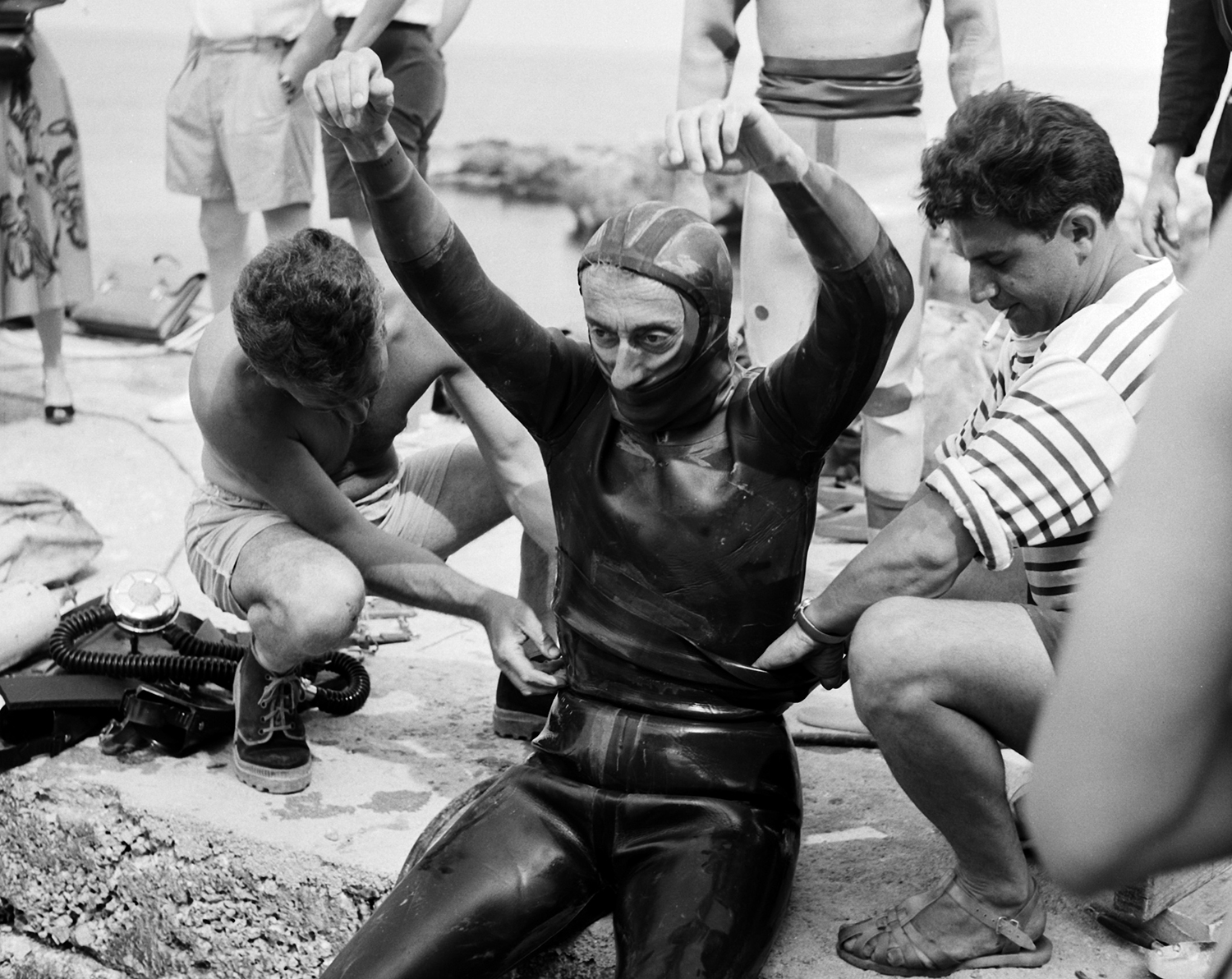
Jacques Cousteau sits on a sea wall with his arms up as two men help him finish putting on his diving gear.

© Daniel Fallot—INA/Getty Images

Jacques Cousteau (center) prepares for a dive.

Generations of marine biologists and ocean explorers can trace their passion for the ocean to one man: Jacques Cousteau. The pioneering Cousteau helped many people see ocean life in color for the first time with his underwater films. 

Learn more about this adventurer at Britannica! 

WORD OF THE WEEK

fathom

PART OF SPEECH:

noun

Definition:

a unit of length equal to six feet (about 1.8 meters) used especially for measuring the depth of water

Definitions provided by
Merriam-Webster Logo

Word Search

See if you can find all the words.

O
O
O
O
O
O

In Case You Missed It

Is a sidewalk ever hot enough to cook an egg? A fun annual tradition has people putting that theory to the test!
June 25, 2026
This annual cheese rolling race in England has racers bumping and rolling for a chance at victory.
June 17, 2026
Middle school teacher Freddie Hendricks received a Tony Award for his role changing lives through theater.
June 12, 2026
At 10 years old, Max Alexander was the youngest person ever to show a collection at fashion’s biggest event.
June 5, 2026

How to Cite This Page

Here is how to cite this page using the MLA style. While every effort has been made to follow citation style rules, there may be some differences. Please refer to the appropriate style manual or other sources if you have any questions.

“In the News: A Whale Graveyard Discovery.” Britannica School, Encyclopaedia Britannica, 5 July 2026.

https://news.eb.com/level2/a-whale-graveyard-discovery/. Accessed 6 July 2026 [Replace this date with today’s date.]