
Pigeons Trust Their Guts
© Wolfram Steinberg/dpa—picture alliance/Getty Images
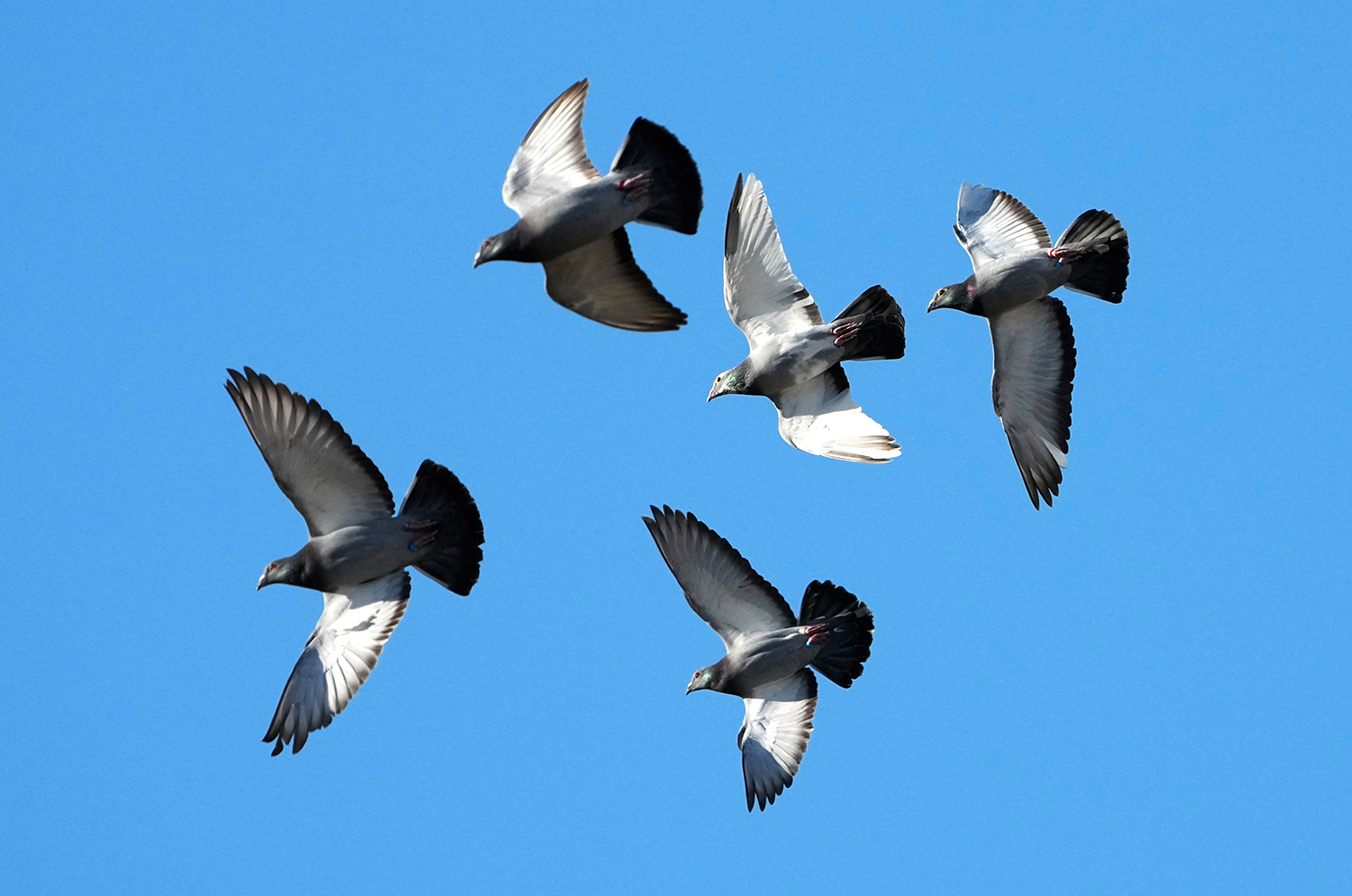
These homing pigeons, which live in Portugal, know how to find their way back to their home.
On October 4, 1918, near the end of World War I, an unlikely hero saved the lives of a battalion of U.S. soldiers trapped behind enemy lines. A homing pigeon, named Cher Ami, managed to fly 25 miles while badly wounded and partially blinded by bullets to deliver an important message from the battalion so that they could be rescued. His determination to fly home against all odds earned Cher Ami a medal for bravery from the French government.
Cher Ami was able to deliver his life-saving message—even while injured and blinded—due to a remarkable ability to always find his way home from any location and in any weather. This navigational sixth sense is common among homing pigeons. It’s the reason these pigeons were often used to deliver messages before telephones or radios existed. Many people have wondered how these birds can navigate with what appears to be little more than a gut instinct.
“The magnetic sense has been this mystery for almost 100 years,” Martin Wikelski, an animal behavior researcher, told the Associated Press. Now Wikelski and his colleagues have the answer—the magnetic sense is in the pigeon’s liver.
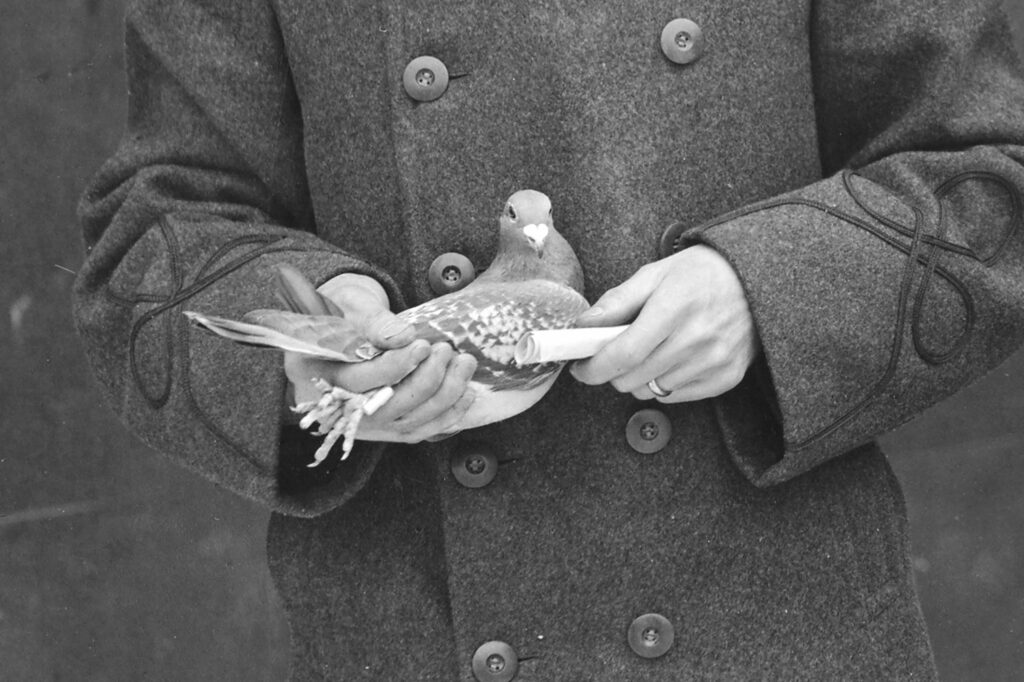
National Archives, Washington, D.C. (ID no. 55166221)
In this photo, which dates back to World War I, a U.S. Army lieutenant holds a homing pigeon that he is raising.
New research out of Germany reveals that pigeon navigation relies in part on specialized immune cells in the bird’s liver. These cells help the liver store iron, which seems to be the key to being sensitive to Earth’s magnetic field.
By detecting the planet’s magnetic signals, the birds know which direction to fly home, particularly when the weather is cloudy. In their research, the scientists temporarily removed these specialized cells from homing pigeons to see if they could still navigate home on cloudy days. They could not. It was only with these cells that a pigeon’s liver is able to send signals that point the bird in the right direction when it can’t take cues from the Sun.
For animals like Cher Ami, flying home can take more than a lot of guts—it can also take some special cells in the liver.