
Skip to content

Would You Eat This Cookie?
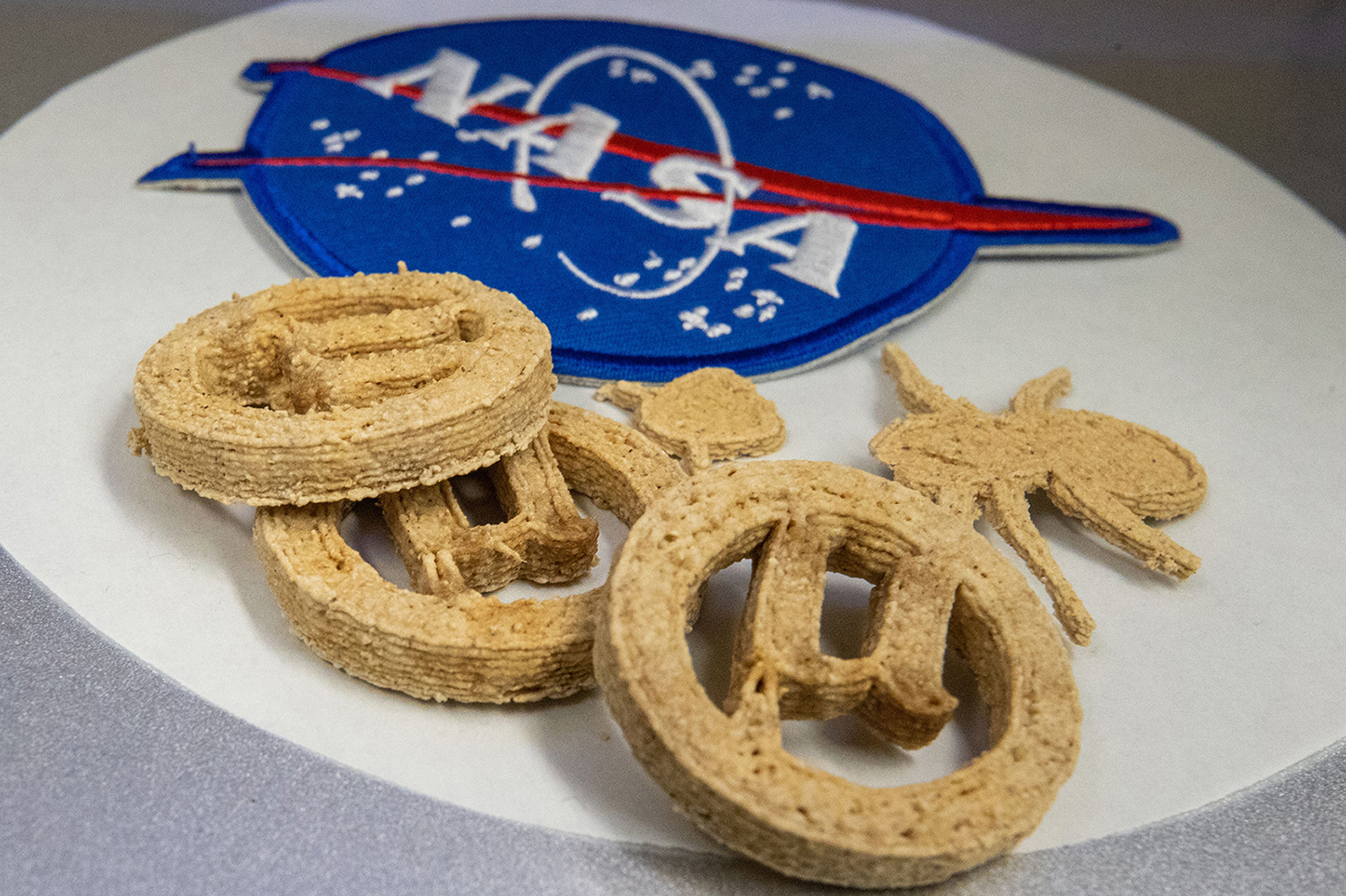
Researchers have found a way to turn plastic into an edible food.
Brown cookies in different shapes are arranged next to a fabric patch with the NASA logo.

Courtesy of Southern Illinois University Carbondale; Photo by Russell Bailey

These 3D-printed cookies, originally designed as part of a NASA project, are made from upcycled plastic.

You wouldn’t eat a plastic cookie, but what about a cookie made with ingredients that used to be plastic? Scientists have found a way to turn upcycled plastic back into food ingredients, which they then 3D-print into “cookies,” a method that could one day feed astronauts in space.

If this sounds like it’s from a science fiction book, just wait, because truth can be stranger than fiction. The project began as a part of NASA’s Deep Space Food Challenge, which invites scientists to figure out how to feed astronauts traveling on long space missions. Lahiru Jayakody, a scientist who creates technology to upcycle, or repurpose, plastic, had an idea. 

“We thought, why not look into food? Plastic is carbon and food is carbon,” said Jayakody in an interview with The Guardian.
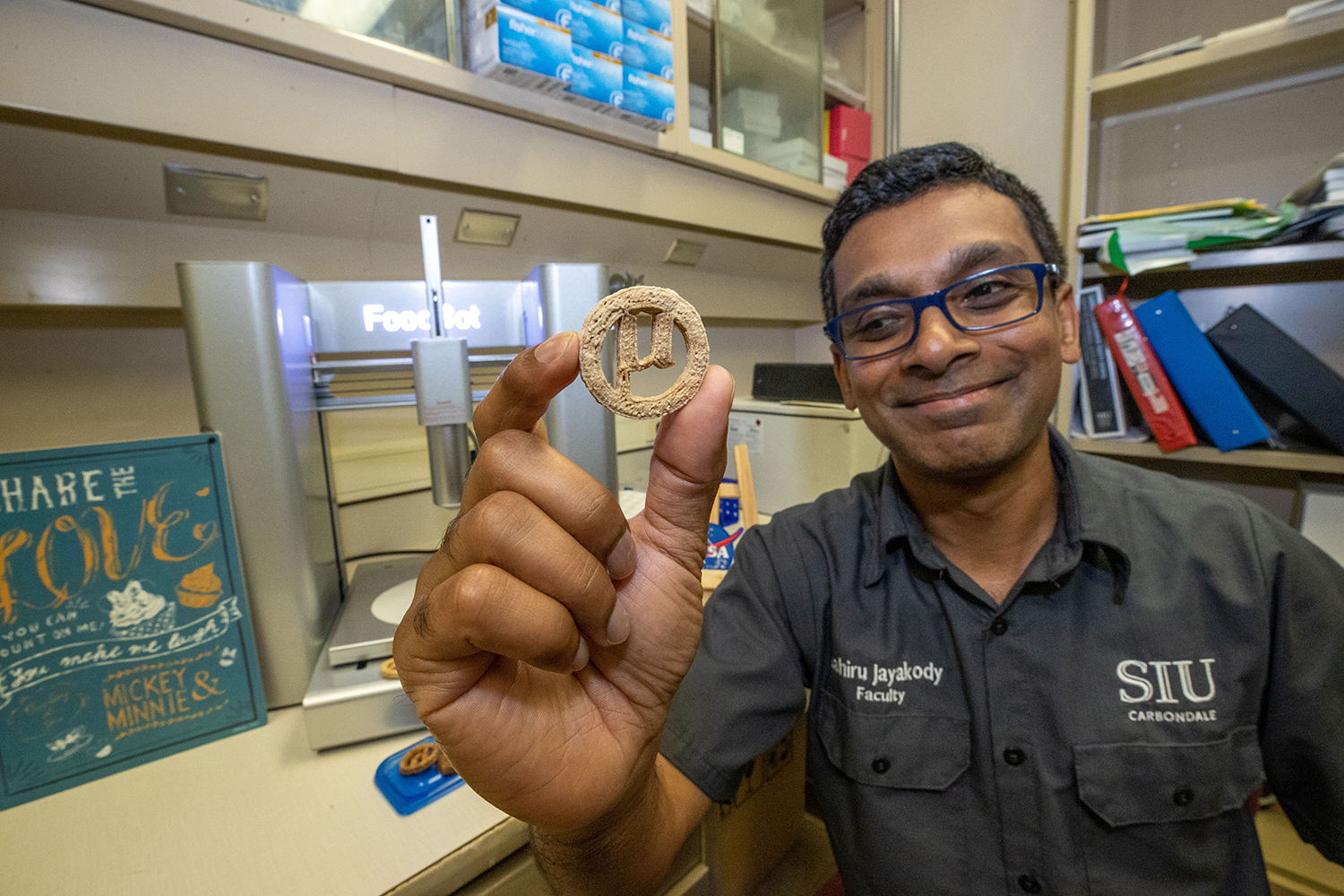
Lahiru Jayakody sits in a room with some books and equipment and holds up a round cookie.

Courtesy of Southern Illinois University Carbondale; Photo by Russell Bailey

Scientist Lahiru Jayakody shows off one of the cookies he helped develop.

Think back to science class, where you will have learned that carbon is a building block of life. Carbon makes up many things on Earth: coal, plastic, and yes, food! Knowing this, Jayakody’s team genetically modified some yeast so that it could digest all the plastic, as well as some agricultural waste. The yeast could then transform the carbon back into edible forms, like proteins, fats, and other nutrients. 

The researchers then put the nutrients into a 3D printer, which printed the food into disc, or “cookie,” shapes. Despite the excitement around the new cooking method, a human has yet to taste-test a cookie. “We haven’t eaten them yet because we’re awaiting approval for testing in humans,” said Jayakody.
Did You Know?

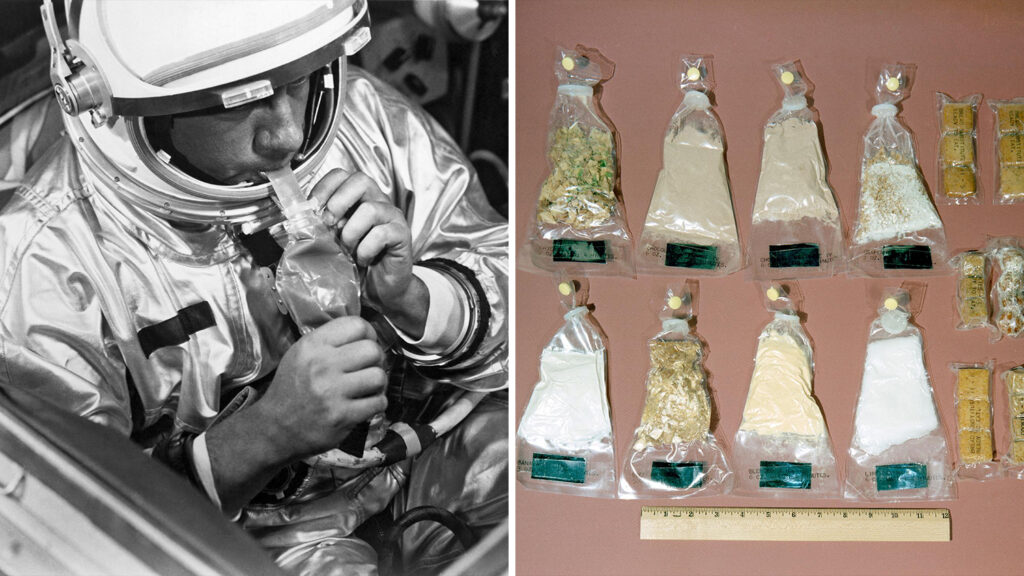
Not only was Yuri A. Gagarin the first person in space, but he was also the first to eat food in space! During a single orbit around the Earth on April 12, 1961, Gagarin ate beef and liver paste, then chocolate sauce, from squeeze tubes.

A man in a space suit eats food from a tube and a number of tubes containing solids and liquids are laid out on a surface.

© Underwood Archives—Archive Photos/Getty Images, NASA; Photo composite Encyclopædia Britannica, Inc.

These photos show some of the food provided to NASA astronauts in the 1960s.

A Preposterous Prize

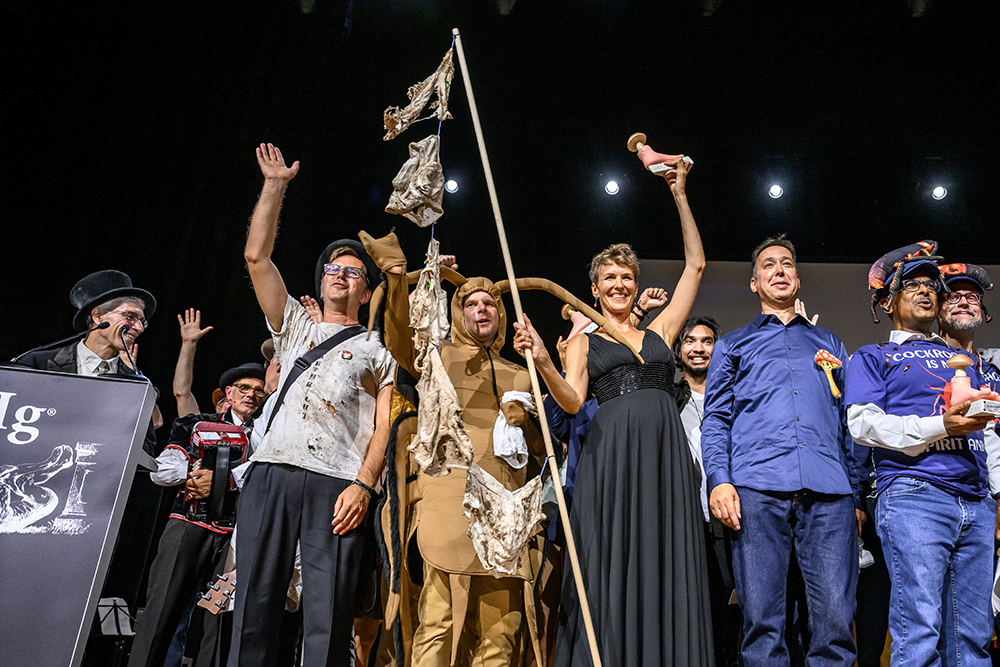
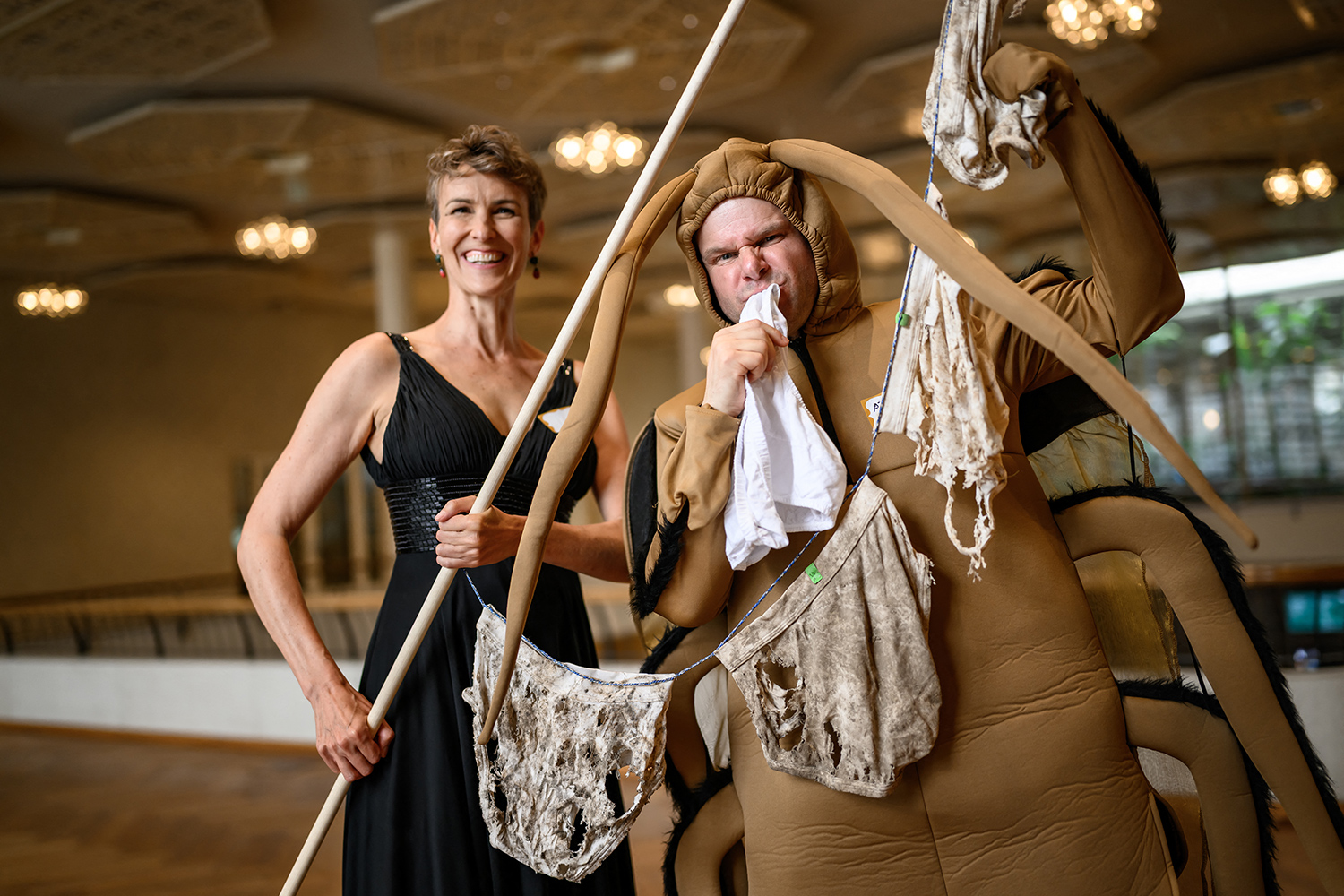
A woman in a dress and a man in a cockroach costume pose with several pairs of underwear that are attached to a line, dirty, and full of holes.

© Fabrice Coffrini—AFP/Getty Images

Swiss scientist Pia Viviani (left) and Swiss journalist Atlant Bieri won an Ig Nobel prize “for burying 1000 identical pairs of underpants in more than 25 countries, and then digging them up after two months.”

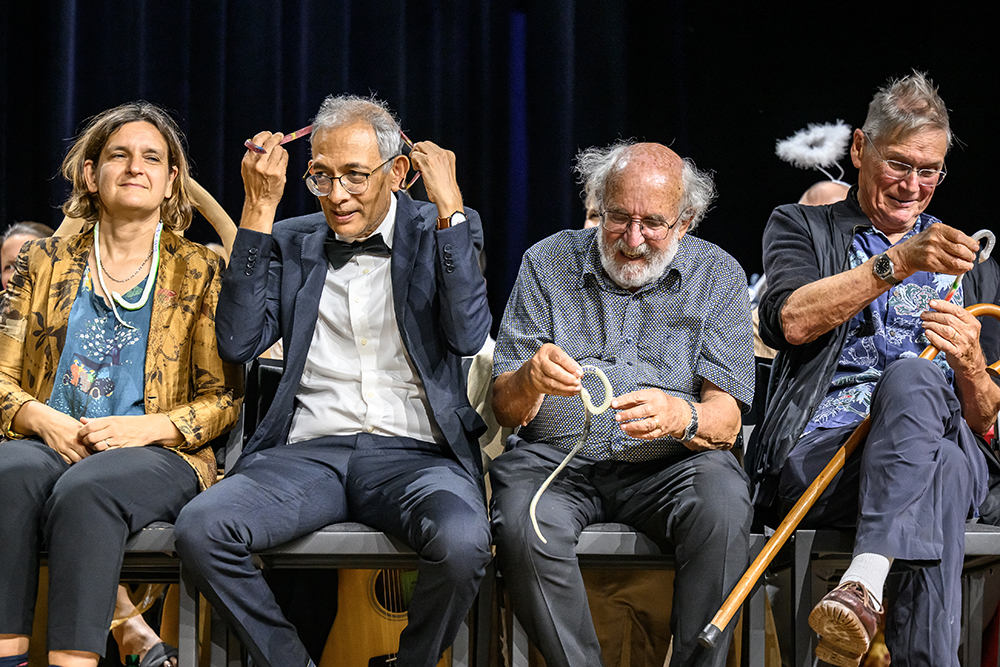
What do buried cotton underwear, cockroach milk, and stinky teenagers have in common? These are all prize-winning research topics at the 2026 Ig Nobel Prize ceremony! The Ig Nobel Prize, which is a parody of the more famous Nobel Prize, honors “achievements that first make people laugh and then make them think.”

Here are a few of the 2026 Ig Nobel winning research topics:

  • Scientists buried 1,000 pairs of cotton underwear for two months in more than 25 countries to study how quickly they would decompose in the soil. 
  • Researchers proved the smell of newborn babies activates their parents’ brains, but this effect wears off by the time children reach their teenage years. 
  • Researchers discovered that milk proteins from cockroaches have three times the amount of energy as the milk proteins from cows. 

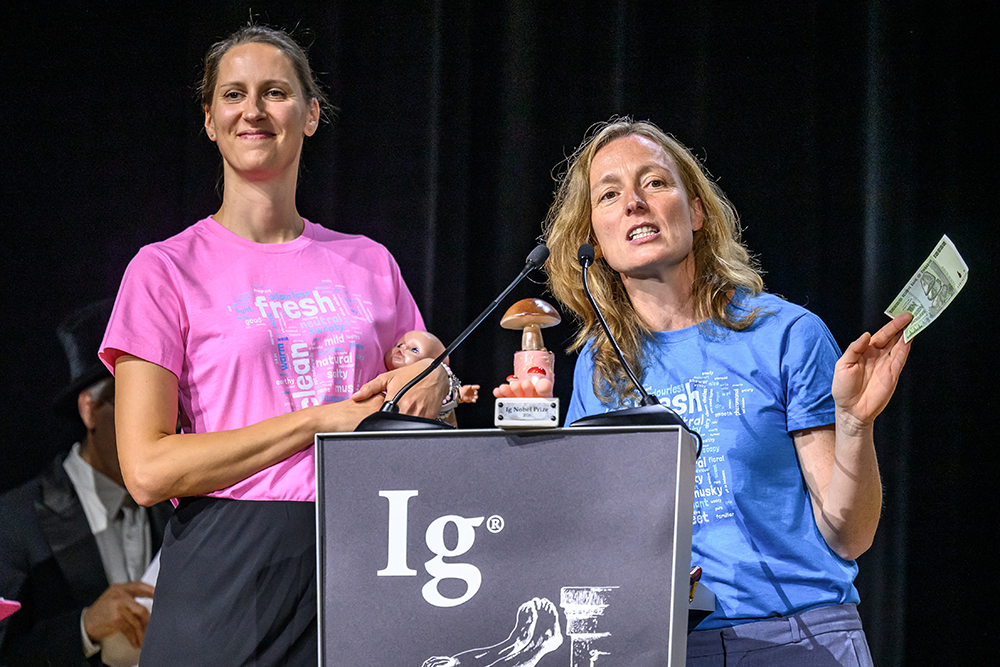
Since this year’s ceremony theme was “fungi,” each winner received an award in the shape of a foot with mushrooms growing on it. There are time-honored traditions as well, like the paper-airplane salute (where attendees pelt the stage with paper airplanes) and real Nobel laureates handing out the prizes on stage. No matter how silly the events of the night, the Ig Nobels are dedicated to curiosity and the joy of interesting science.

© Fabrice Coffrini—AFP/Getty Images, © Fabrice Coffrini—AFP/Getty Images, © Fabrice Coffrini—AFP/Getty Images, © Fabrice Coffrini—AFP/Getty Images

Fungus Among Us

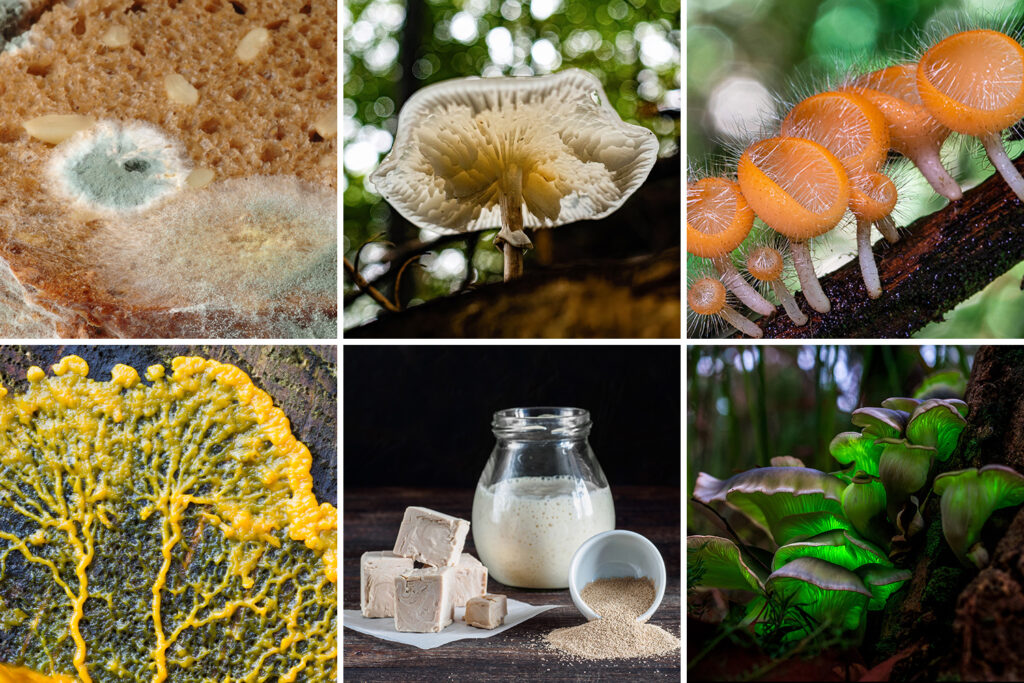
Six different types or species of fungi, including mushrooms and mold.

© Mario Hoesel, Nakornthai, fascinadora/stock.adobe.com, ©Ana Fernandez/SOPA Images—LightRocket/Getty Images, © AlbyDeTweede—iStock/Getty Images, © Petar Belobrajdic—500px Plus/Getty Images; Photo composite Encyclopædia Britannica, Inc.

Yeast, like the kind Lahiru Jayakody is using to upcycle plastic into food, is a kind of fungus! Fungi are fascinating organisms that come in many forms. Edible mushrooms are fungi, but so are toxic molds. How can such different things be related? Find out at Britannica!

WORD OF THE WEEK

transmute

PART OF SPEECH:

verb

Definition:

: to completely change the form, appearance, or nature of (someone or something)

Definitions provided by
Merriam-Webster Logo

Sudoku

Can you figure out where each word goes?

O
O
O
O
O
O

In Case You Missed It

Meet the tilcayo, the newest cat species to be discovered in more than 100 years.
October 8, 2026
Pop star Taylor Swift joins a growing movement of people protecting their voices against AI copies.
October 1, 2026
The 2026 World Nomad Games celebrate cultures that wander.
September 24, 2026
Long-buried objects from history are coming to the surface in Europe’s drying rivers.
September 17, 2026

How to Cite This Page

Here is how to cite this page using the MLA style. While every effort has been made to follow citation style rules, there may be some differences. Please refer to the appropriate style manual or other sources if you have any questions.

“In the News: Would You Eat This Cookie?” Britannica School, Encyclopaedia Britannica, 18 Oct. 2026. https://news.eb.com/level2/would-you-eat-this-cookie Accessed 19 Oct. 2026 [Replace this date with today’s date.]