
Skip to content

Curiosity Found a Cat!
Meet the tilcayo, the newest cat species to be discovered in more than 100 years.
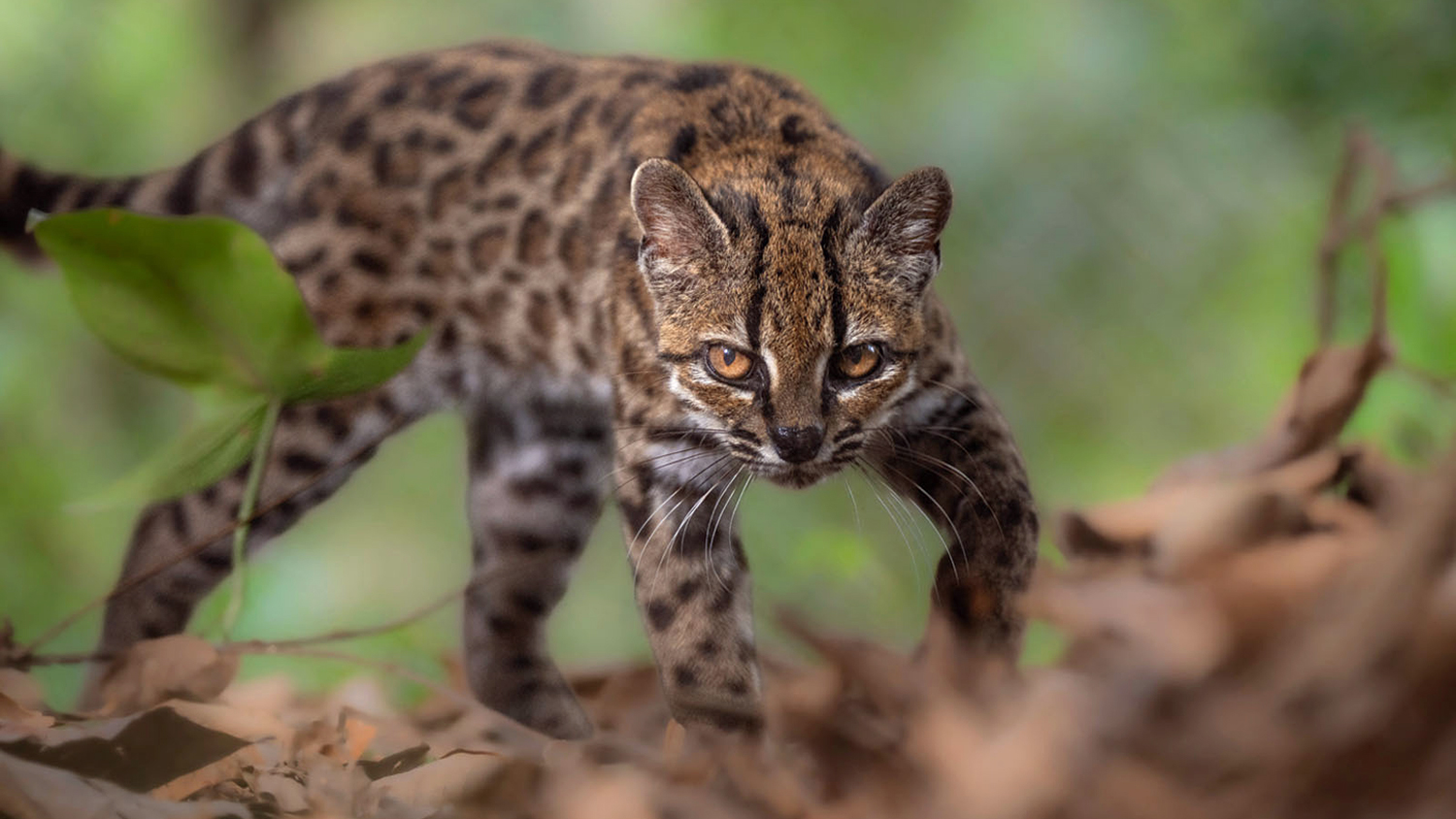
A tilcayo stands on a bed of brown leaves and looks at the camera.

© Fernando Faciole—National Geographic/Reuters

The tilcayo is a small, newly discovered wild cat.

In Bolivia’s cloud forests walks a small, mysterious cat that, until now, has kept its identity hidden from the world. Called tilcayo, this animal is not only a new species of wild cat but also the first to be discovered in more than a century. 

Like some of its feline relatives, the tilcayo has black and brown spots, called rosettes, on light brown fur. The adult tilcayo, which weighs about three or four pounds, is smaller than the typical house cat.

The tilcayo’s discovery was almost accidental. As the story goes, a local man found what he thought was a lost kitten along a forest road. He raised it in his home until he realized it was not a domestic cat at all, but likely a wild animal. According to National Geographic, the man gave the cat to an animal sanctuary, who then called biologist Paola Nogales-Ascarrunz about the arrival of a “weird cat.”
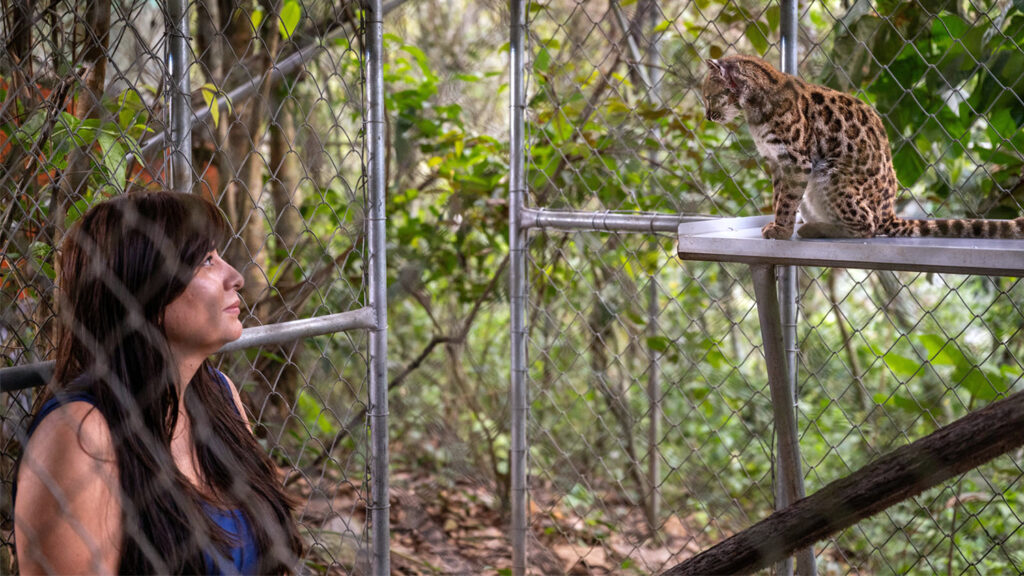
Paola Nogales Ascarrunz looks at a tilcayo that is on a climbing apparatus inside a sanctuary.

© Fernando Faciole—National Geographic/Reuters

Biologist Paola Nogales-Ascarrunz observes a tilcayo that lives at the Senda Verde animal refuge in Bolivia.

After photographing the cat, Nogales-Ascarrunz spent years trying to figure out its identity. She realized the cat’s features didn’t match those of other wild cats in Central or South America. Working with experts around the world, she finally proved that tilcayo had not been scientifically documented before and was therefore brand new to the cat family tree. The last feline to be scientifically identified was the pampas cat in 1923, also from South America.

While the mystery of the tilcayo’s identity is solved, many more remain. Biologists still do not know what tilcayo eats in the wild or how it reproduces. This mission puts a new emphasis on protecting the elusive tilcayo’s habitat, which may even be home to other undiscovered species. 

“Even in the cats, there are things out there that are undescribed, things that people haven’t found yet,” said Nogales-Ascarrunz in an interview with National Geographic. “So let’s go out and find them and protect them.”

NEWS EXTRA

Indigenous Peoples’ Day

A composite of five images showing people from different Indigenous groups engaged in basket weaving, dancing, and other activities.

© David Lyons/Alamy, Encyclopædia Britannica, Inc., © Chris Pietsch/The Register-Guard—USA Today Network/Imagn Image, © Joseph Prezioso—AFP/Getty Images, © Tom Croke/Alamy; Photo composite Encyclopædia Britannica, Inc.

In many U.S. states and cities, October 12 is Indigenous Peoples’ Day, when Americans honor the history, resilience, and many cultures and traditions of American Indians. 

Indigenous Peoples’ Day occurs the second Monday in October, the same day as Columbus Day. American Indians were in the Americas for thousands of years before Italian explorer Christopher Columbus first set foot there. 

“This day is about reclaiming histories,” Kyle Mays, an associate professor of American Indian Studies at the University of California, Los Angeles, told the Associated Press in 2023. “It’s acknowledging the history of dispossession [loss of land and culture] and violence against Indigenous people.”

A good way to observe Indigenous Peoples’ Day is to learn more about Indigenous peoples. With 575 federally recognized tribes in the United States, each with its own history, culture, and traditions, it can be hard to know where to begin. One idea is to start where you live. If you’re in the United States, find out which Indigenous peoples live or lived where you now live and learn about their history. 

Did You Know?

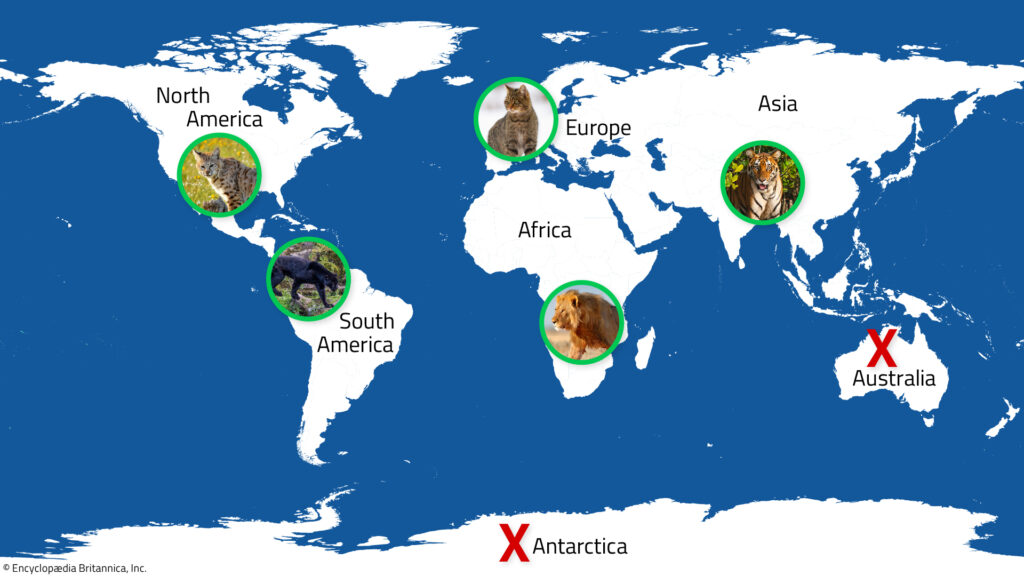
Australia and Antarctica are the two continents that have never had native wild cats. Domestic cats arrived in Australia with European settlers about 200 years ago.

A world map in which five continents each has a photo of a wild cat that lives there with Xs on Australia and Antarctica to show there are no wild cats there.

© ondrejprosicky, WildMedia, Peter Robinson/stock.adobe.com, © Romel Adhikary—500px/Getty Images, © Donyanedomam/Dreamstime.com; Photo illustration Encyclopædia Britannica, Inc.

Smartphone-less Safari

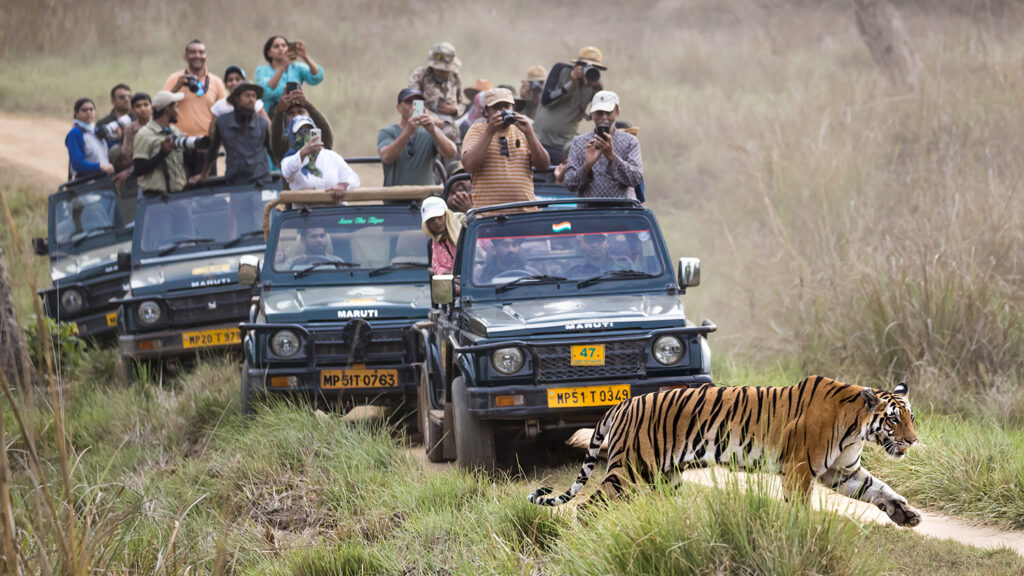
People traveling in four open Jeeps stand up and take photos of a tiger that is passing in front of the vehicles.

© Manuel ROMARIS—Moment Unreleased/Getty Images

Tourists in India take photos of a Bengal tiger as it crosses a road.

Tourists hoping to capture a glimpse of the majestic tiger in India’s tiger reserves are being told to put their phones down for the experience. A ruling from India’s Supreme Court in November 2025 has banned mobile phones in some of the country’s tiger reserves as part of a larger effort to keep tigers safe and stress-free in their protected habitats.

According to the BBC, photo-hungry tourists have been getting too close to the tigers, stressing out the cats and putting the tourists themselves at risk. 

“People have got reckless in getting photos with the animals,” said Indian journalist Charukesi Ramadurai in an interview with the BBC. “There was an incident where a child fell off a Jeep because the mother was taking a selfie and the child got jostled out of the way. The guide had to jump and pick up the child—the tiger was a few feet away.”

Travel writers like Prachi Joshi are encouraging people to appreciate experiences beyond getting the perfect photo for social media. “I believe tourists should stop chasing tiger sightings and instead focus on appreciating the wider ecosystem, the varied landscapes, rich birdlife and the natural moments that make the forest truly special,” Joshi told the BBC.

Biggest Cat of the Americas

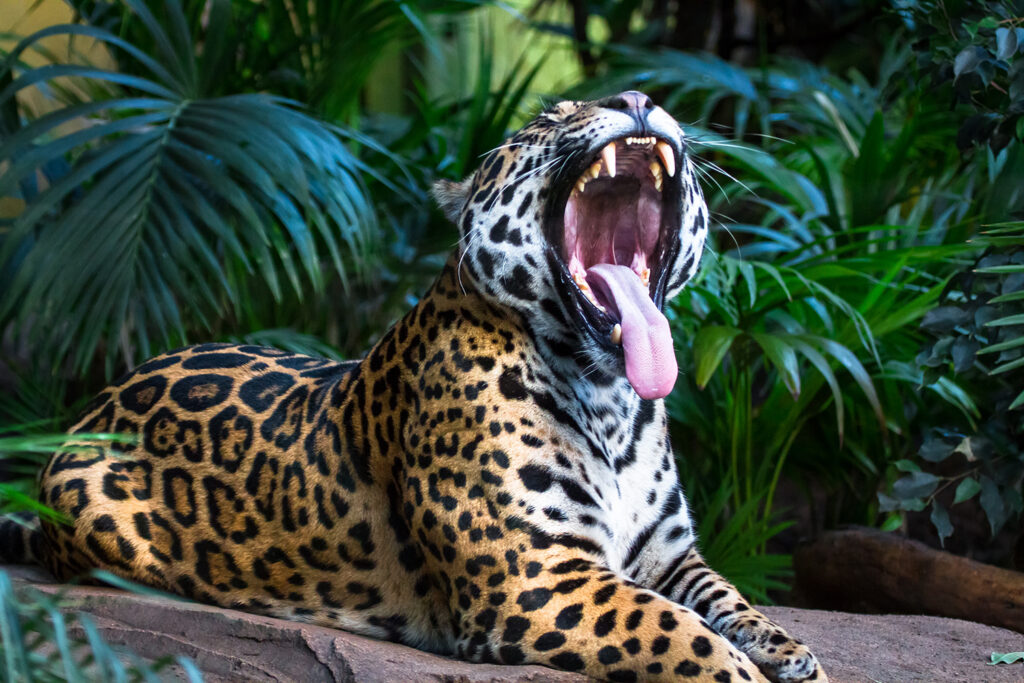
A jaguar yawns while lying on a rock in front of vegetation.

© Kevin/stock.adobe.com

Bolivia is home not only to the newly discovered tilcayo but also to the largest wild cat in North and South America: the jaguar. Read more about this large spotted cat at Britannica! 

WORD OF THE WEEK

slink

PART OF SPEECH:

verb

Definition:

: to move in a way that does not attract attention especially because you are embarrassed, afraid, or doing something wrong

Definitions provided by
Merriam-Webster Logo

Word Flower

How many words can you make from the letters in the flower? All words must use the letter in the center.

O
O
O
O
O
O

In Case You Missed It

Pop star Taylor Swift joins a growing movement of people protecting their voices against AI copies.
October 1, 2026
The 2026 World Nomad Games celebrate cultures that wander.
September 24, 2026
Long-buried objects from history are coming to the surface in Europe’s drying rivers.
September 17, 2026
Actor Rita Moreno overcame prejudice to become a legend of stage and screen.
September 10, 2026

How to Cite This Page

Here is how to cite this page using the MLA style. While every effort has been made to follow citation style rules, there may be some differences. Please refer to the appropriate style manual or other sources if you have any questions.

“In the News: Curiosity Found a Cat!” Britannica School, Encyclopaedia Britannica, 11 Oct. 2026. https://news.eb.com/level2/curiosity-found-a-cat Accessed 12 Oct. 2026 [Replace this date with today’s date.]