An Eagle Feather in Space
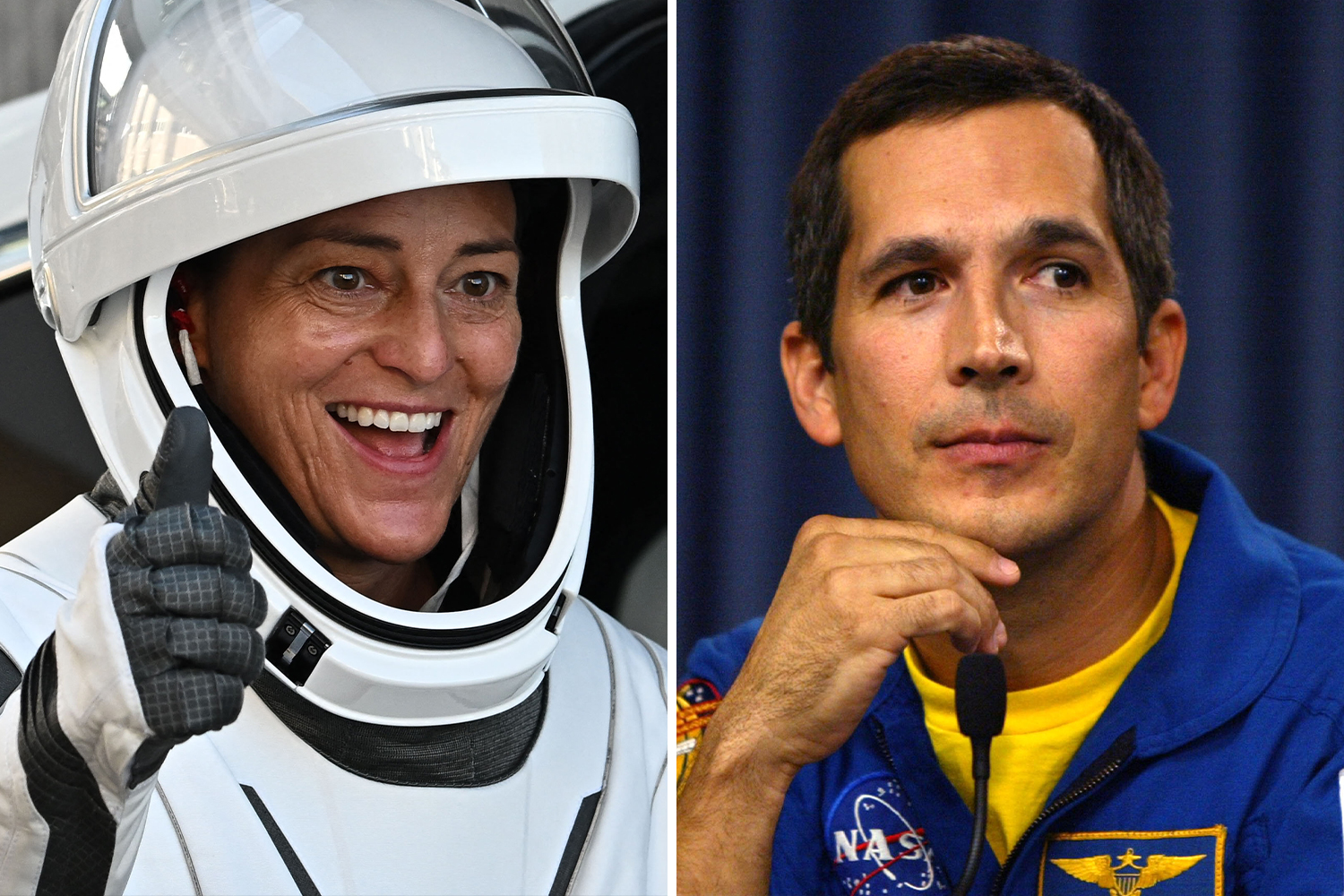
© Jim Watson—AFP/Getty Images, © Brian Cleary—AFP/Getty Images; Photo composite Encyclopædia Britannica, Inc.
NASA astronauts Nicole Mann (left) and John Herrington (right)
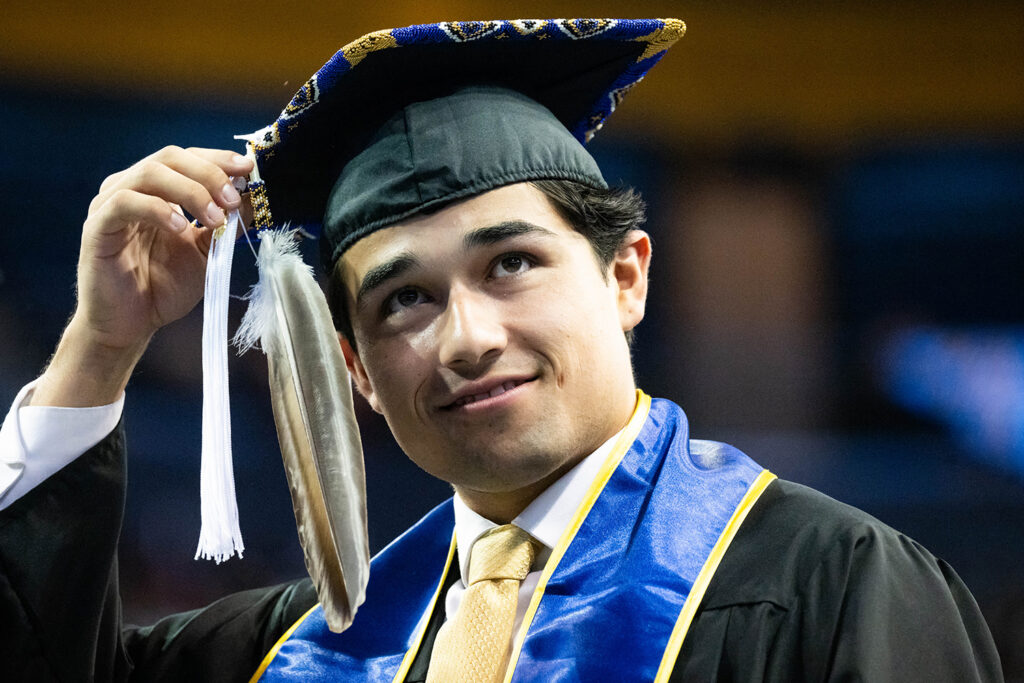
When John Herrington flew to space in 2002, he brought with him three symbolic objects—a flute, a beaded eagle feather, and a flag from the Chickasaw Nation. These pieces of Herrington’s heritage helped commemorate his milestone as the first Native American in space.
Herrington, a member of the Chickasaw Nation in Oklahoma, went on a 13-day mission to the International Space Station (ISS). Because there is limited space on the rockets used to transport astronauts, they are allowed to bring only a few personal items on these missions. Herrington’s flute was handmade by a Cherokee friend who was also an engineer at the space center. The eagle feather had a beaded design that symbolized “Mother Earth and Father Sky and all the people of the world,” said Herrington in an interview with PBS.
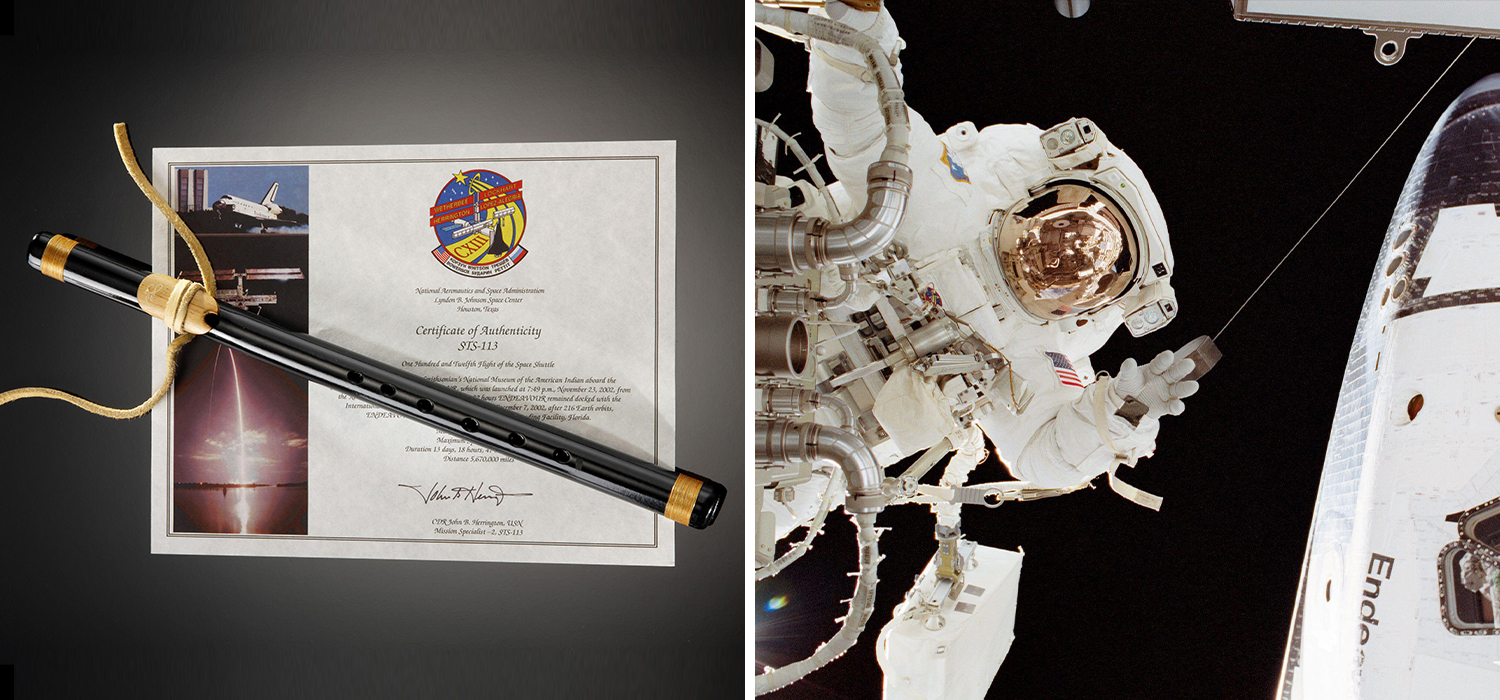
© NASA/ZUMA Wire—ZUMAPRESS.com/Alamy; Photo composite Encyclopædia Britannica, Inc.
John Herrington (right, on a spacewalk) brought the flute shown on the left on a space mission.
In 2022, exactly 20 years after Herrington’s mission, the first female Native American astronaut journeyed to space. Nicole Mann, a member of the Wailacki of the Round Valley Indian Tribes in California, acted as the mission commander for her crew while they lived and worked on the ISS for six months.
Like Herrington, Mann chose to bring along a personal symbol of her heritage to space: a dream catcher from her mother. The dream catcher, which originates from the Ojibwe tradition, is a hoop with a woven web-like design at its center and beads and feathers hanging from the bottom. Native American parents hang dream catchers at their children’s bedsides to catch bad dreams while allowing good dreams to fly through to sleeping children.
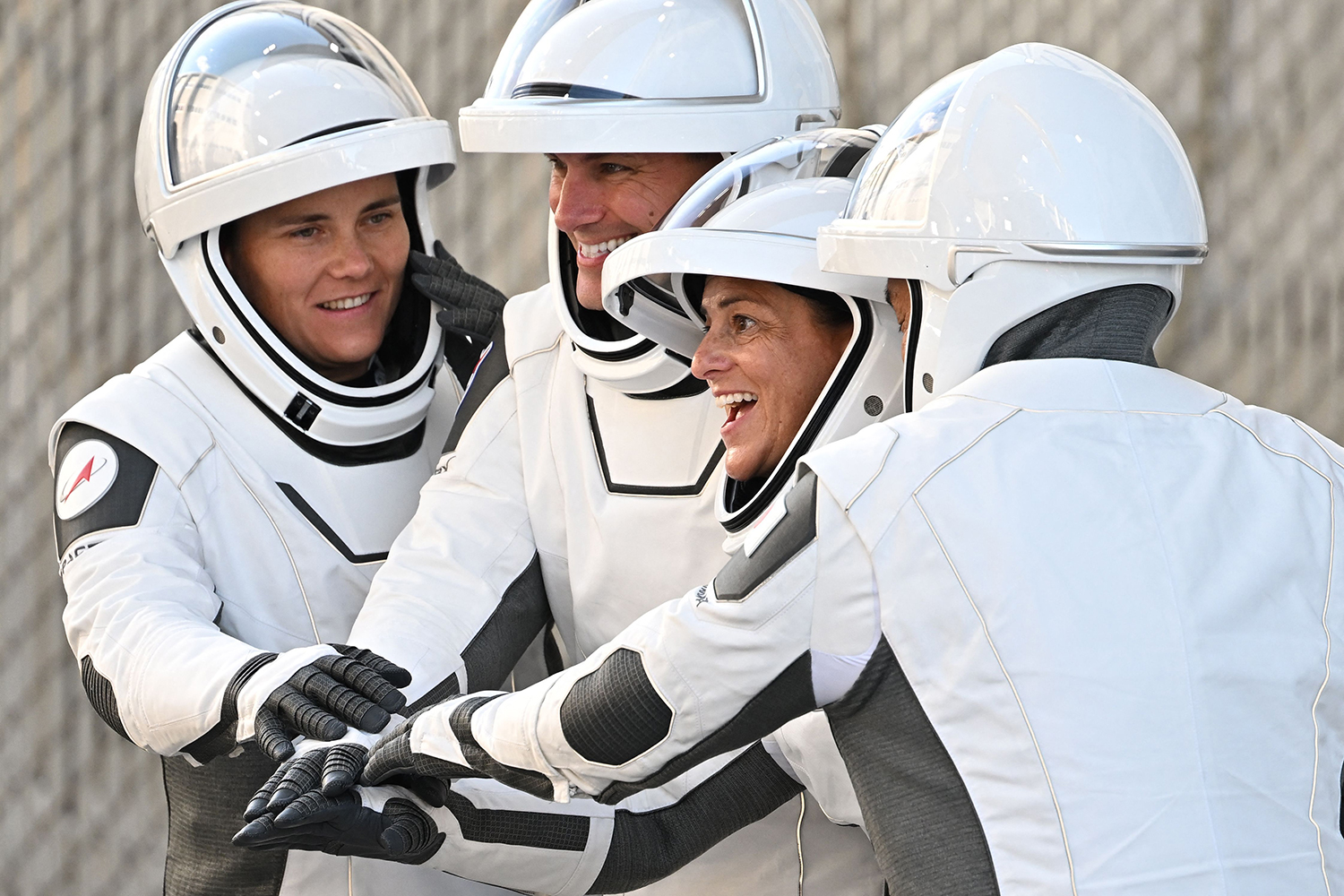
© Jim Watson—AFP/Getty Images
In this 2022 photo, Nicole Mann (second from right) poses with her crew just before their launch to begin a six-month mission in space.
In an interview with NPR around the time of her launch, Mann said she hoped her journey would help inspire young people to seize opportunities.
“These young women, maybe Natives, maybe people from different backgrounds, that realize that they have these opportunities and potentially these barriers that used to be there are starting to be broken down,” said Mann. “And so hopefully that will inspire that younger generation.”