Skip to content

Historic Drought Uncovers Hidden History

Long-buried objects from history are coming to the surface in Europe’s drying rivers.
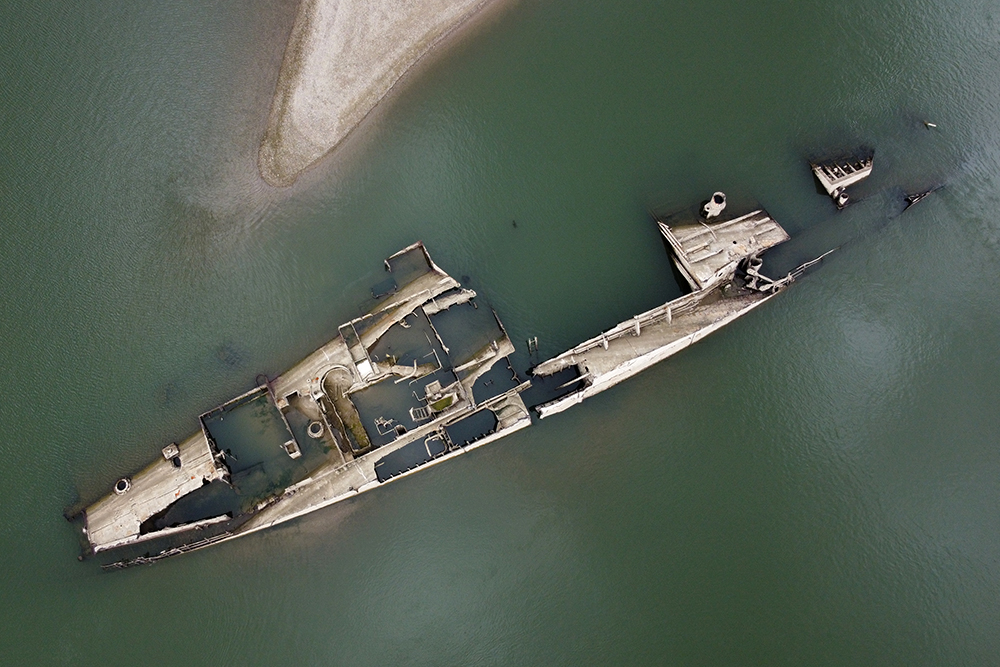
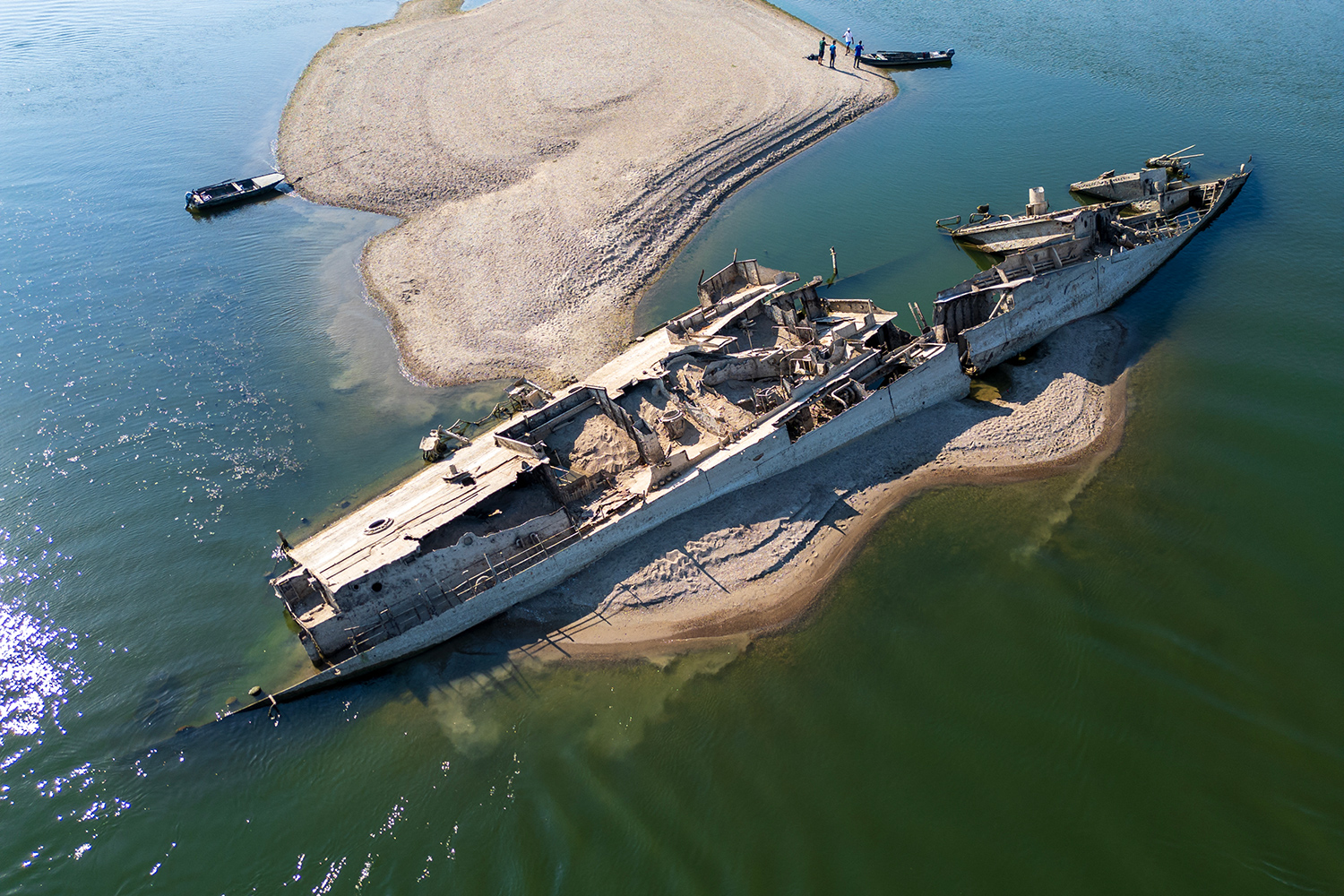
The wreckage of a German World War II ship is shown over an exposed sandbar on the Danube River.

© Andrej Isakovic—AFP/Getty Images

A summer drought lowered the water level of the Danube River in Serbia, exposing the wreckage of a German ship from World War II. The ship sank in 1944.

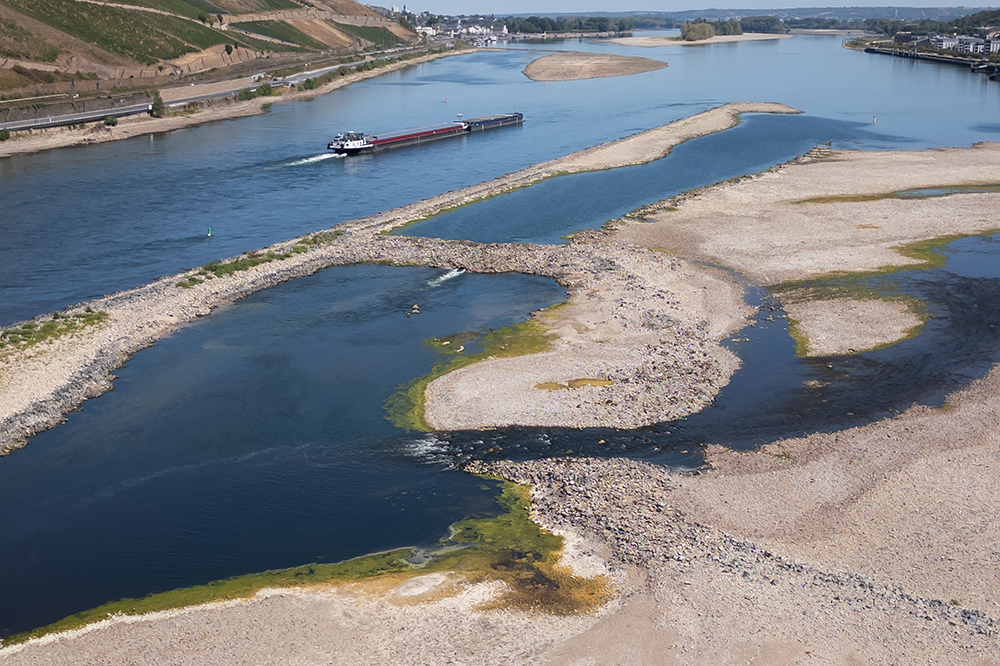
A summer drought across Europe has revealed something unexpected—or rather, many things. Low water levels in rivers, lakes, and reservoirs mean long-buried objects are coming to the surface, including ancient Roman ruins and German warships. 

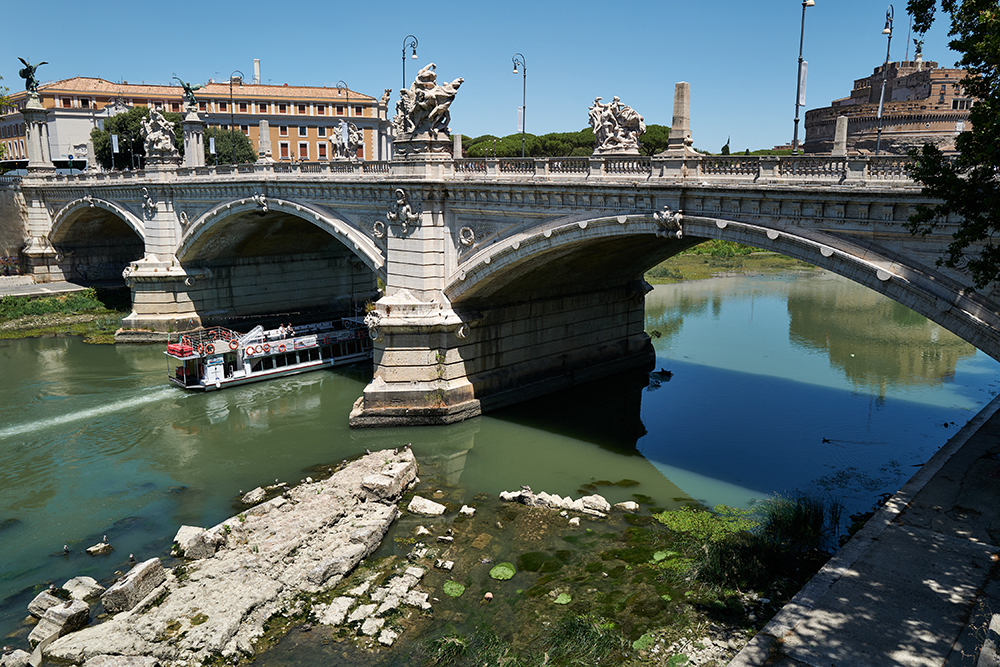
In Rome, the remains of an ancient bridge have emerged from the low Tiber River. Though it is called “Nero’s Bridge” after the man who ruled the Roman empire approximately 2,000 years ago, some experts believe the bridge was built during the reign of Nero’s uncle, Emperor Caligula. 

In eastern Serbia, about 20 German warships from World War II have surfaced from the receding Danube River. These ships are among the 200 that were deliberately sunk in 1944 to avoid capture by the army of the Soviet Union, a former country that included what is now Russia. Eighty-two years later, locals and tourists have been able to visit, and even swim around, the now-visible shipwrecks.

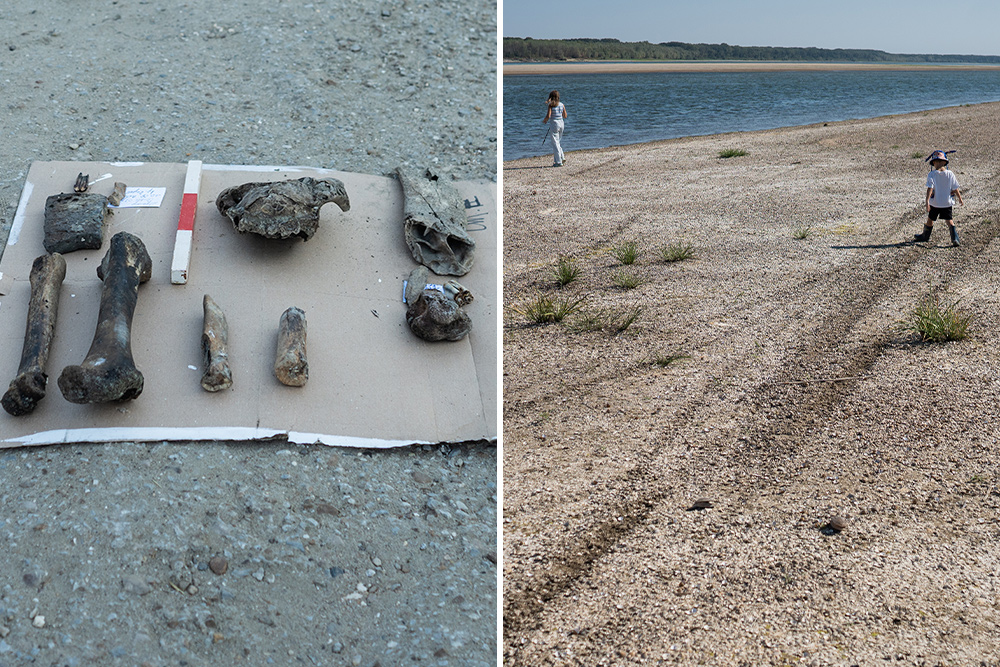
But sunken warships are not the only thing the Danube River was hiding. Farther downstream, in Bulgaria, a village local found what is believed to be mammoth remains. A lower jaw, tusks, and a rib bone were collected from the riverbed for confirmation, but the Regional History Museum director in a nearby town said it is likely from a mammoth that lived and died thousands of years ago. 

Though low waterways have revealed exciting treasures, Europe’s prolonged drought and heat waves have been a cause for alarm. Farmers in the region are warning of low crop harvests from lack of rain, and there is increased wildfire risk in such dry conditions. 

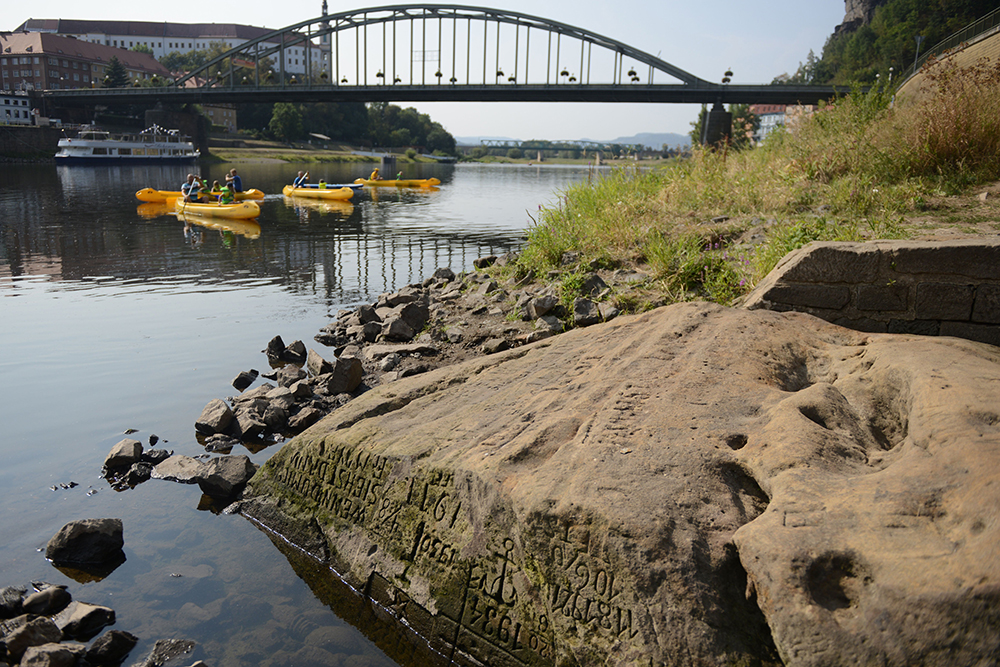
These current concerns match a 400-year-old stone carving that has also emerged from a dry riverbank in the Czech Republic. The carving reads, in German: Wenn du mich siehst, dann weine, which means “If you see me, then weep.” Carved into what is called a “hunger stone,” the message is revealed when the Elbe River runs low in the city of Děčín. It serves as a record of past droughts, and it is also a warning of the impacts of a year with little water.

Click through the slideshow for more photos.
© Andreas Solar—AFP/Getty Images, © Amir Hamzagic—Anadolu/Getty Images, © Hristo Rusev/Getty Images; Photo composite Encyclopædia Britannica, Inc., © Michal Cizek—AFP/Getty Images, © Andreas Rentz/Getty Images

NEWS EXTRA

Fat Bear Week 2026

The bear called 32 Chunk stands on the shoreline of a river.

E. Johnston/U.S. National Park Service

The bear known as 32 Chunk won Fat Bear Week in 2025.

The bears of Katmai National Park & Preserve in Alaska are feasting on salmon to fatten up for the winter. During Fat Bear Week (September 22-29), Katmai celebrates these bulky bears by inviting the public to vote on its favorite. Last year’s winner, a bear known as 32 Chunk, is in the running again. But will he claim a second victory?

You can cast your votes at the explore.org website!

We’ll report on the winner on a future In the News page.

Did You Know?

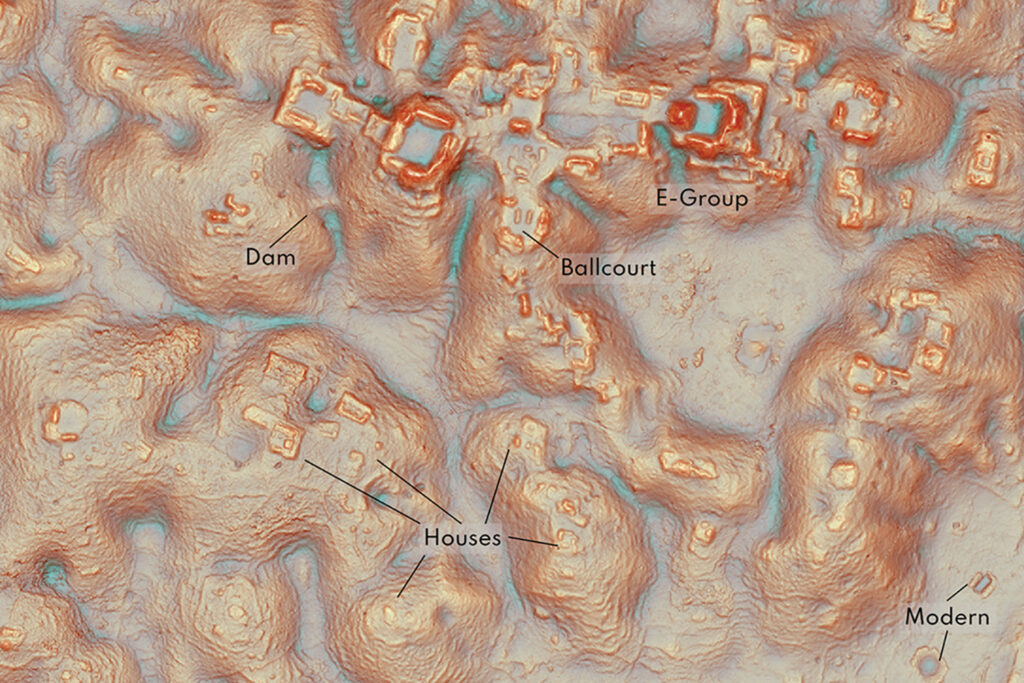
These days archaeologists are finding more lost ruins thanks to a tool called lidar. Lidar uses lasers, mounted on airplanes or drones, to scan landscapes for ancient roads, walls, forts, and temples that are hidden in dense jungles or other places that are difficult to reach.

A lidar image with labels showing a dam, a ball court, and houses.

Luke Auld-Thomas, Marcello A. Canuto, Adriana Velázquez Morlet, Francisco Estrada-Belli, David Chatelain, Diego Matadamas, Michelle Pigott, and Juan Carlos Fernández Díaz, Cambridge University Press (CC-By-4.0)

A tool called lidar showed the ruins of a lost city that was once part of the Maya civilization in what’s now Mexico.

Belgian Teen Finds Buried Gold

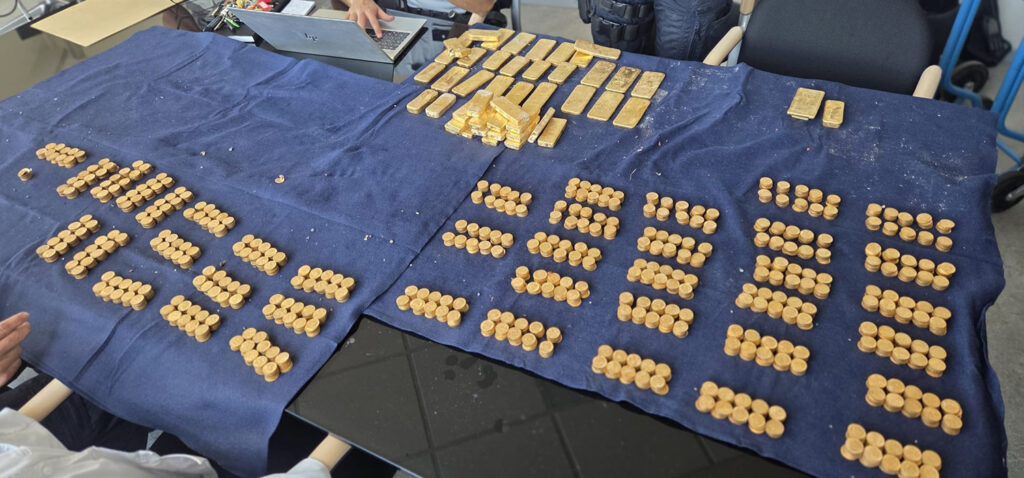
Gold coins and bars are laid out on a table.

Courtesy of Dendermonde Local Police

A Belgian teen named Kobe found all this gold on a construction site.

Eighteen-year-old Kobe was planning to make some money this summer before starting his university studies in the fall. He didn’t expect to find nearly $10.5 million worth of gold! 

Kobe’s summer construction job at a building site in Sint-Gillis-Dendermonde, Belgium, took a sudden turn when he accidentally discovered a treasure trove buried underground. While helping colleagues dig trenches for a new sewer line, he literally struck gold. 

“We suddenly saw something lying there,” he explained to VTM News, a Belgian news network. Thinking it was a stash of modern coins, Kobe said, he and his colleagues started digging it out. “Then we saw a gold bar. It turned out to be a bit more than we thought.”

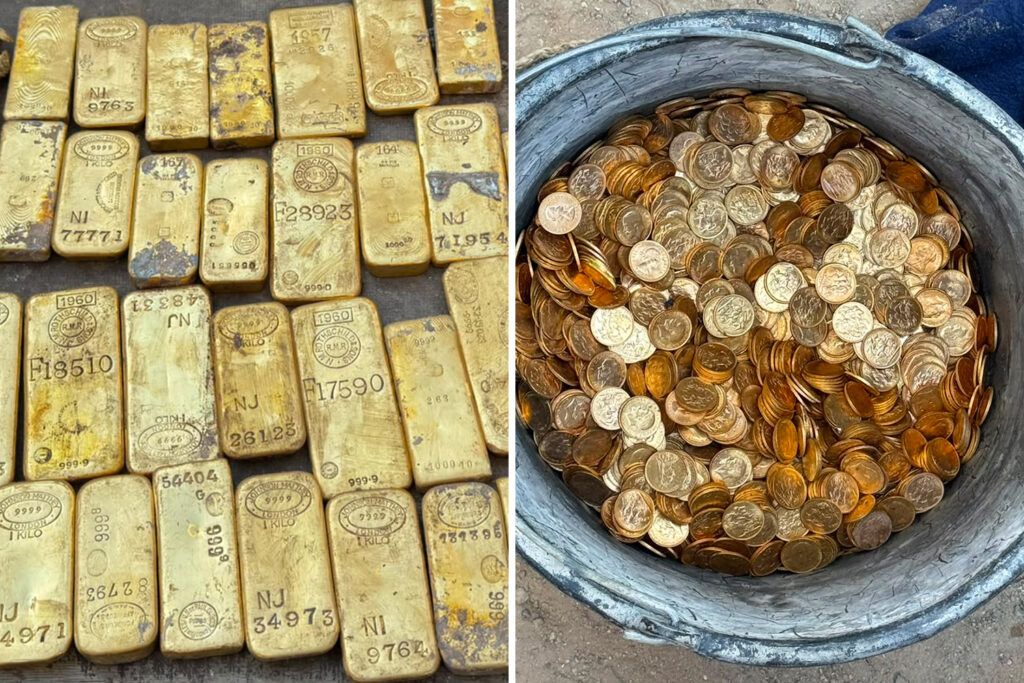
Buried in the ground were thousands of gold coins, nuggets, and at least 40 bar bullions, which is the name for a block of gold. The work crew notified the police to secure the gold and begin an investigation to find its owner. 

Closeup views show gold bullion bars on a table and gold coins in a bucket.

Courtesy of Dendermonde Local Police; Photo composite Encyclopædia Britannica, Inc.

A closeup shows the details of Kobe’s discovery.

The hoard was buried on the site of a former brewery that operated from 1899 to 1970. The brewery had belonged to a man named Theophilus Van Assche, and the gold was discovered behind a cellar wall that would have been part of the owner’s residence. 

Authorities will investigate whether the gold is stolen or belongs to the Van Assche family. The current property owner, an organization dedicated to social programs like affordable housing, may also have a claim to the gold. For their part, Kobe and the other construction workers hope they will one day receive a small reward for their discovery.

The Most Fire-Prone Country on Earth

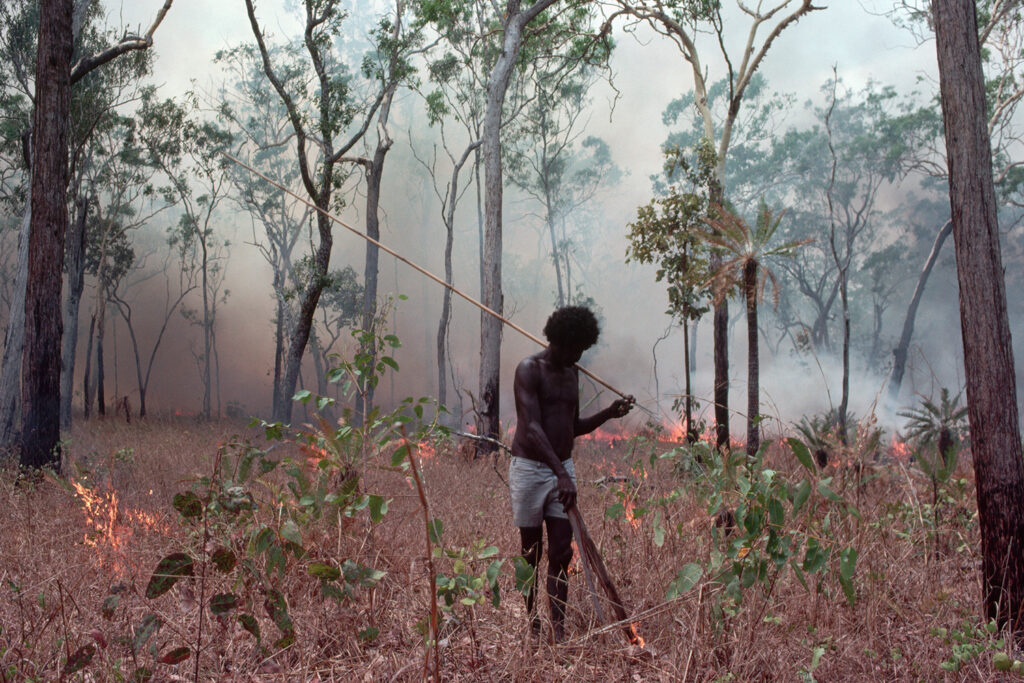
An Indigenous man uses a tool to set fire to an area with trees and brush.

© Penny Tweedie—The Image Bank Unreleased/Getty Images

George Milpurrurru, an Aboriginal Australian, starts a controlled fire to clear out brush and avoid wildfires.

“Bushfires,” the fires that burn through grasslands, are a natural event in Australia because of the country’s hot and dry climate. In fact, Aboriginal Australians were managing bushfires on the continent for thousands of years! Visit Britannica to read more about Australia’s history of bushfires.

WORD OF THE WEEK

enshroud

PART OF SPEECH:

verb

Definition:

: to cover (something or someone) in a way that makes seeing or understanding difficult

Definitions provided by
Merriam-Webster Logo

Sudoku

How many words can you make from these letters? All words must use the letter in the center.

O
O
O
O
O
O

In Case You Missed It

Actor Rita Moreno overcame prejudice to become a legend of stage and screen.
September 10, 2026
Sara Curtis broke the world record for the 50-meter backstroke two days in a row.
August 27, 2026
A wild raccoon with a rare spinal condition has captured hearts on the Internet.
August 19, 2026
Women’s professional baseball returns to the United States after more than 70 years.
August 13, 2026

How to Cite This Page

Here is how to cite this page using the MLA style. While every effort has been made to follow citation style rules, there may be some differences. Please refer to the appropriate style manual or other sources if you have any questions.

In the News: Historic Drought Uncovers Hidden History.Britannica School, Encyclopaedia Britannica, 20 Sept. 2026. https://news.eb.com/level2/historic-drought-uncovers-hidden-history Accessed 21 Sept. 2026 [Replace this date with today’s date.]