Shattering a Glass Mystery
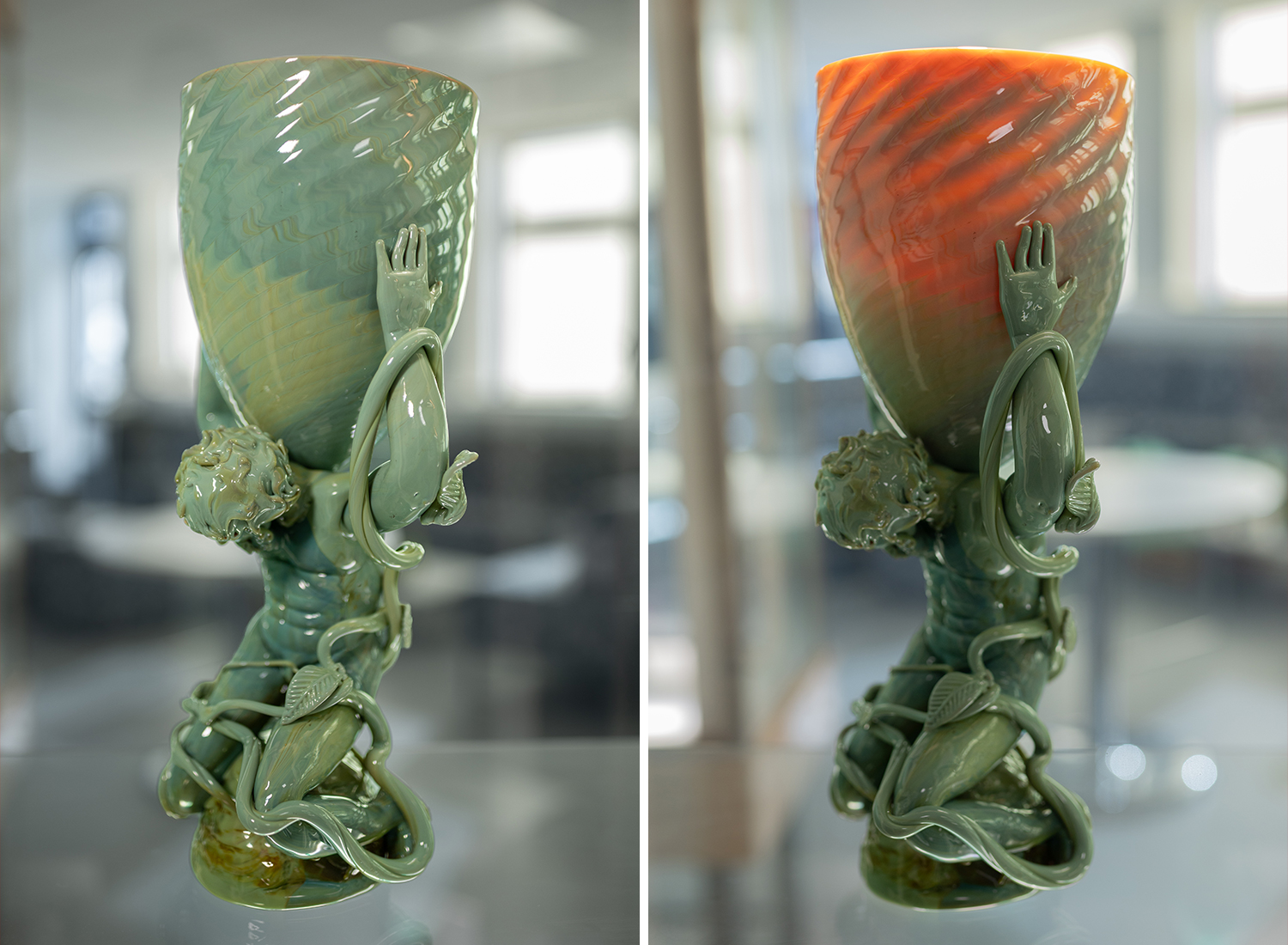
Courtesy of Ed Cartledge/Sort of Films; Photo composite Encyclopædia Britannica, Inc.
This glass cup was created at the University of Sheffield in 2026. The glass changes color like similar glasses from ancient Rome.
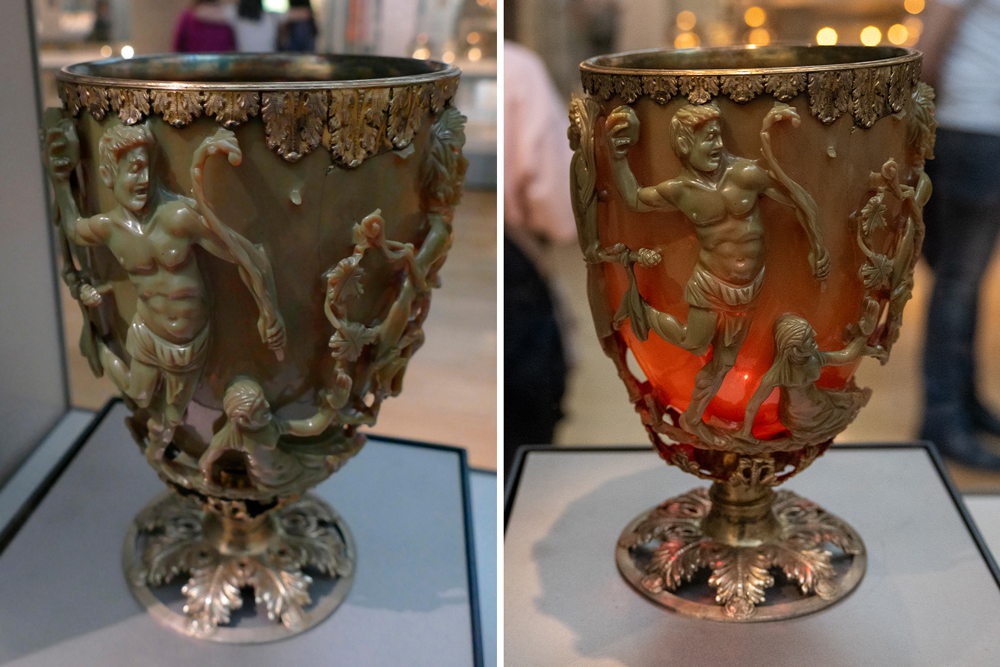
On display in the British Museum is the Lycurgus Cup, a 1,600-year-old Roman drinking glass that does something magical. In different kinds of light, the cup transforms from jade green to fiery red. The material that creates this color-changing illusion is called dichroic glass, and until recently, the Roman-era skills that made it were a mystery. Today, a glass technical expert may have finally recreated the Roman dichroic glass that has stumped historians for decades.
Researchers solved half of the dichroic glass mystery in the 1990s, when they learned that gold and silver nanoparticles infused in the glass created the color-changing effect. Still, experts couldn’t quite recreate the Roman colors. So the rest of the mystery remained: how exactly did Romans, with limited technology and ingredients, embed nanoparticles into the glass?
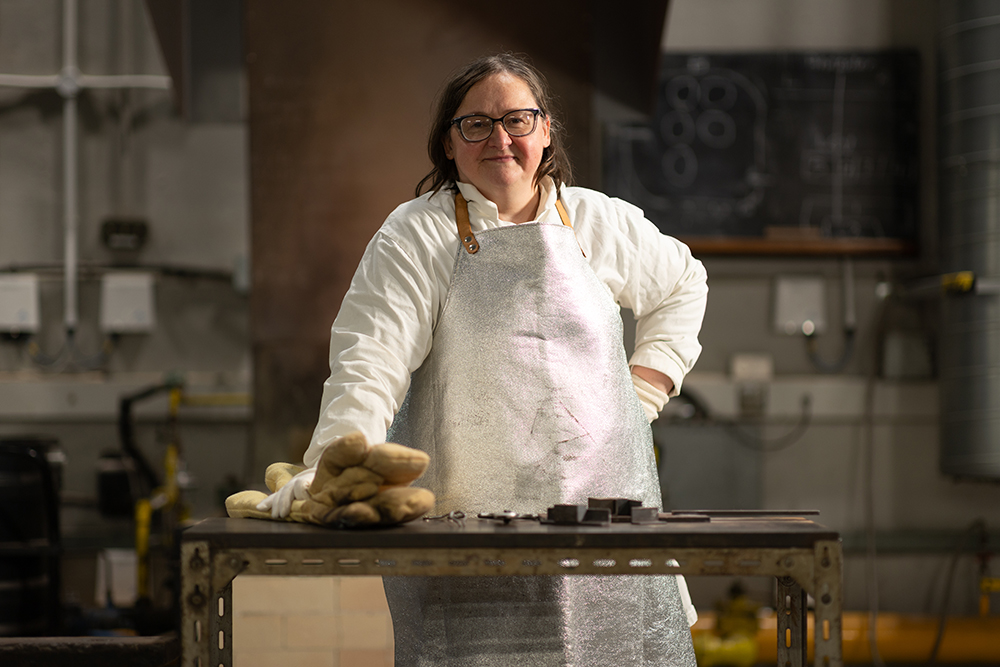
Cut to now, at the University of Sheffield in the United Kingdom, where technician Lisa Hollands has been steadily experimenting with different ingredients and processes to replicate the glass. Hollands could use only the raw materials available to Roman artisans 1,600 years ago and had to experiment with different furnaces and heating.
“If the Romans could have seen me experimenting, they’d probably laugh and ask: ‘Why does she not know how to make this?’” said Hollands in an interview with the Guardian. Her work finally paid off when she was able to recreate the recipe. “To me, it’s magic,” she said about the glass.
Part of Hollands’s success relied on finding the right position in the furnace to place the glass and achieve the magical color. “The fact that the color is so sensitive to the position in the furnace suggests that it would have been very difficult for the Romans to control the color,” said Ian Freestone, an expert in archaeological materials at University College London. “It makes me think that, with the Lycurgus glass, they hit the jackpot.”
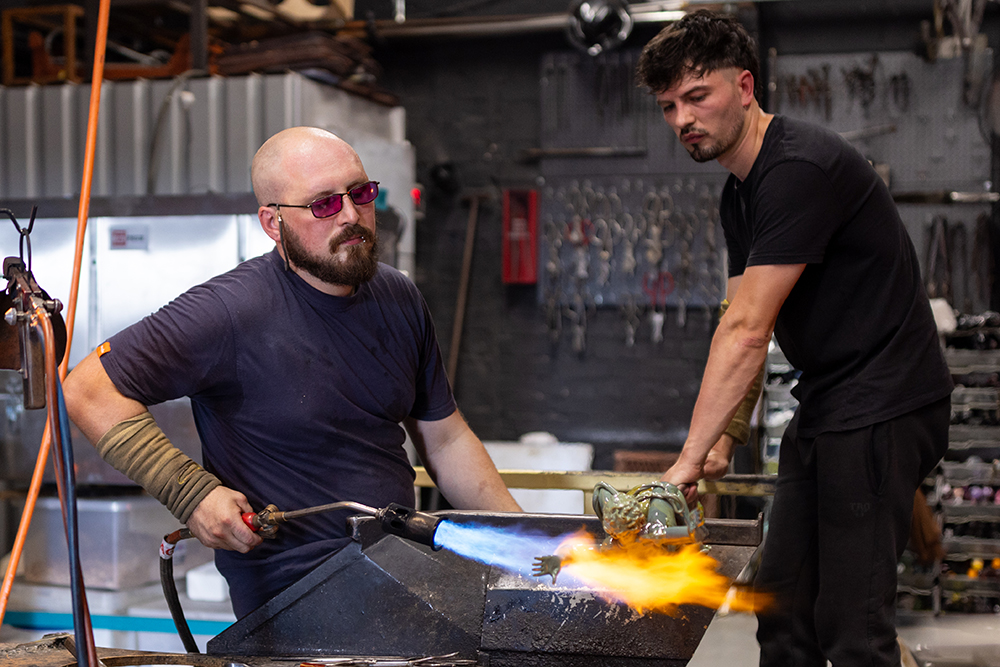
The university where the discovery was made is celebrating the success by collaborating with glass artist Elliot Walker to make a new dichroic glass sculpture that honors the original Lycurgus Cup. The new sculpture will go on display at the university’s Turner Museum of Glass.
Check out the slideshow for more photos!
Courtesy of Ed Cartledge/Sort of Films, Courtesy of Ed Cartledge/Sort of Films, ID © World History Archive/Alamy, © Joseph Creamer/Dreamstime.com; Photo composite Encyclopædia Britannica, Inc.