
Skip to content

A Look Back in Time

The powerful James Webb Telescope captured an image of a spiral galaxy that’s millions of light-years away from Earth.
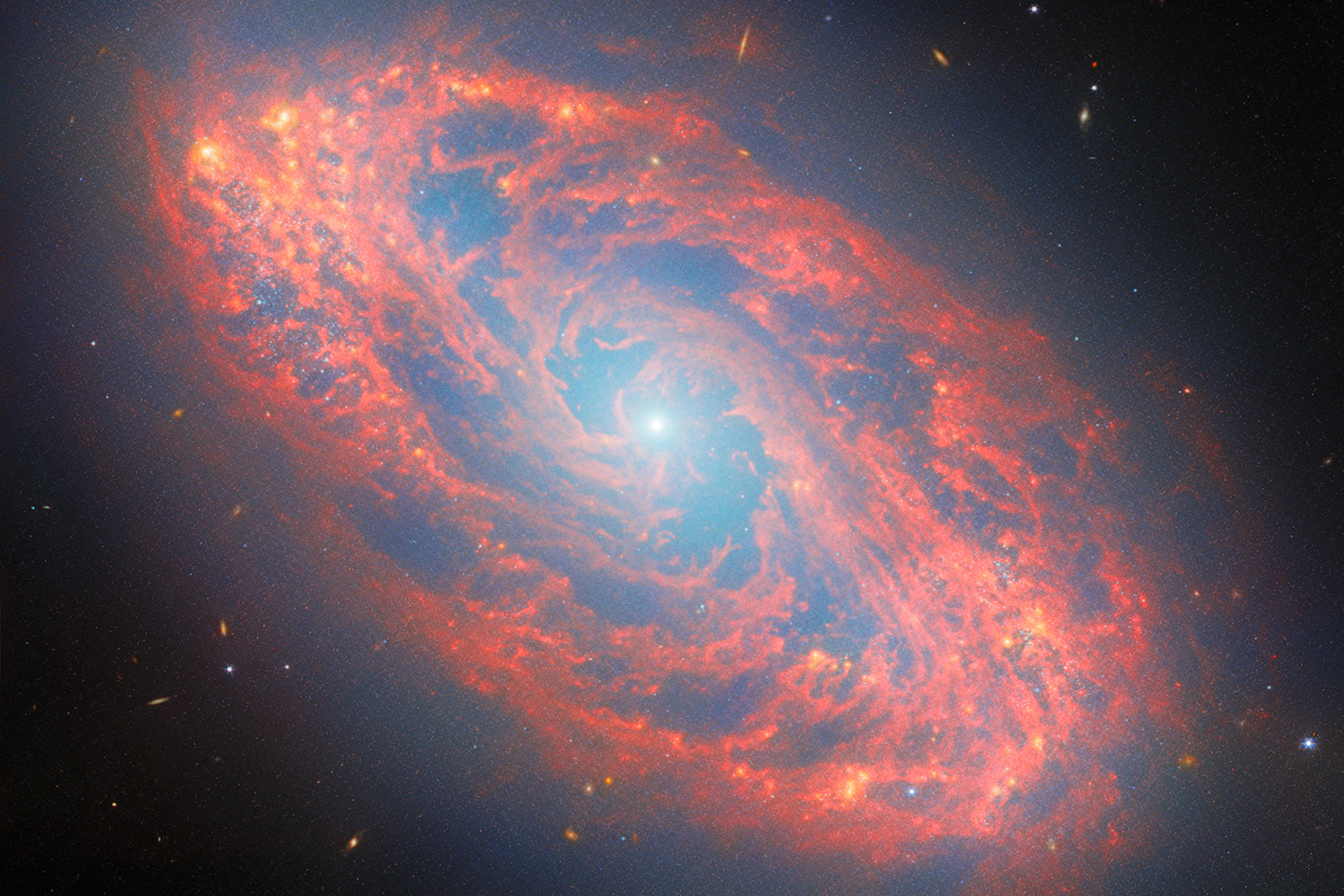
The NGC 5134 spiral galaxy appears to be made up of stars and red gases against the black background of the universe.

ESA/Webb, NASA & CSA, A. Leroy (CC BY 4.0)

The James Webb Telescope captured this image of the NGC 5134 galaxy.

Peering into the universe can be a bit like traveling back in time. Recently, a powerful space telescope gave us a view of a galaxy that’s millions of light-years away. The telescope’s image of the galaxy shows light that began traveling to the telescope not long after the dinosaurs roamed Earth.

Looking Back in Time

The image of the galaxy, which is called NGC 5134, was captured by the James Webb Space Telescope. NGC 5134 is 65 million light-years away from the Webb telescope. What does that mean? A light-year is a measure of distance. One light-year is the distance light travels in one year. That means the light from NGC 5134 takes 65 million years to reach the telescope. 

In other words, the image from the telescope shows the NGC 5134 galaxy as it looked 65 million years ago! At that time, the dinosaurs had only recently become extinct, and it would be tens of millions of years before humans appeared. 
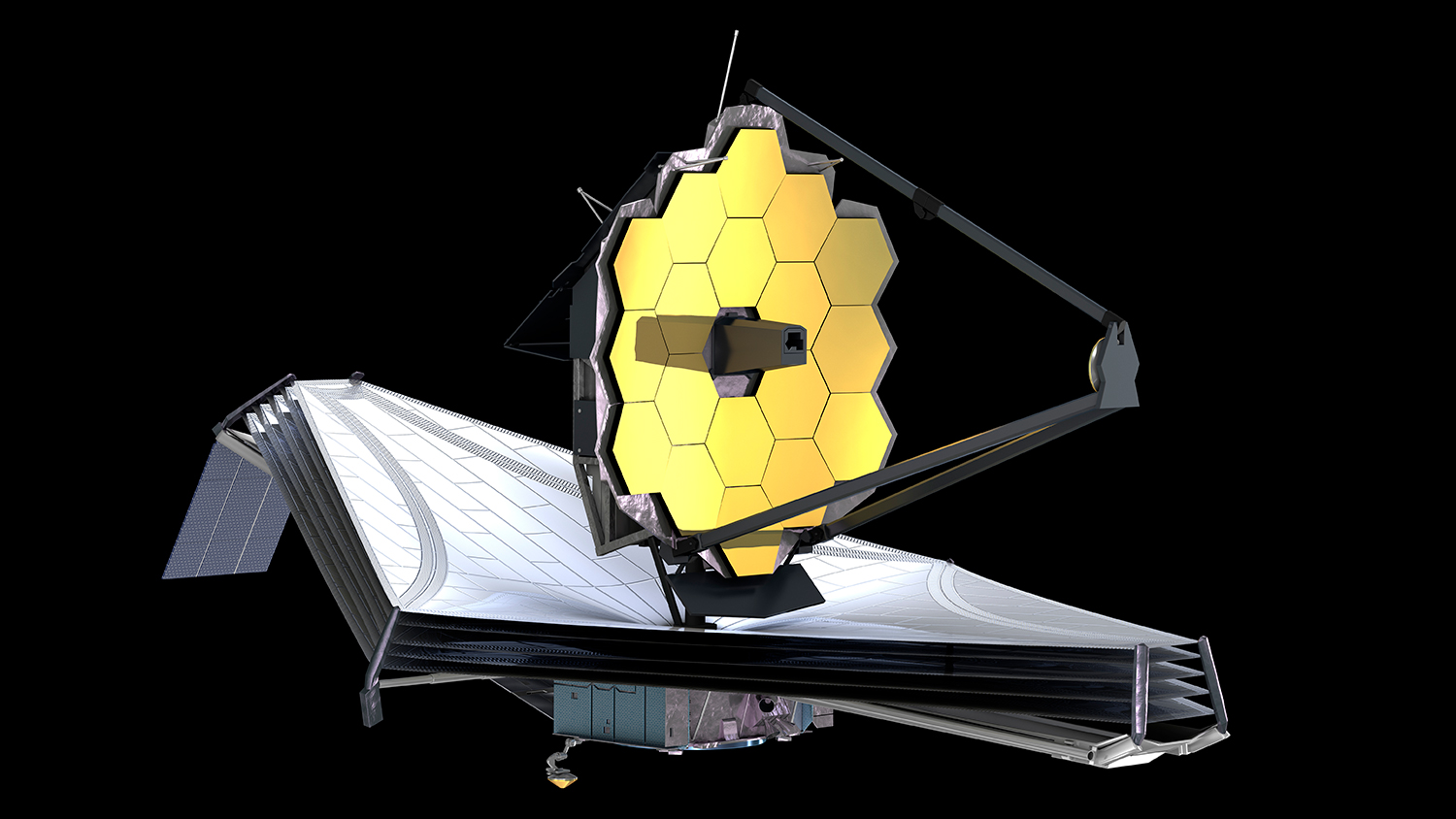
An illustration of the large James Webb telescope shows how it looks in space.

© alex-mit—iStock/Getty Images

This illustration shows what the James Webb telescope looks like in space.

A Star Factory

But 65 million light-years is still not a huge distance compared to the size of the universe. NGC 5134 is close enough for the Webb telescope to capture lots of little details so that scientists can learn more about what goes on in galaxies. One big thing that goes on is that new stars are born.

NGC 5134 is a spiral-shaped galaxy, with clouds of gas floating around the “arms” of the spiral. This gas gets used up to form new stars. But each time an old star dies, some of its gas is recycled and made available again. 

There’s still plenty to learn. Scientists estimate that there may be as many as two trillion (2,000,000,000,000) galaxies in the universe. Each one holds its own treasure trove of information.

Face Thinking Icon

Did You Know?

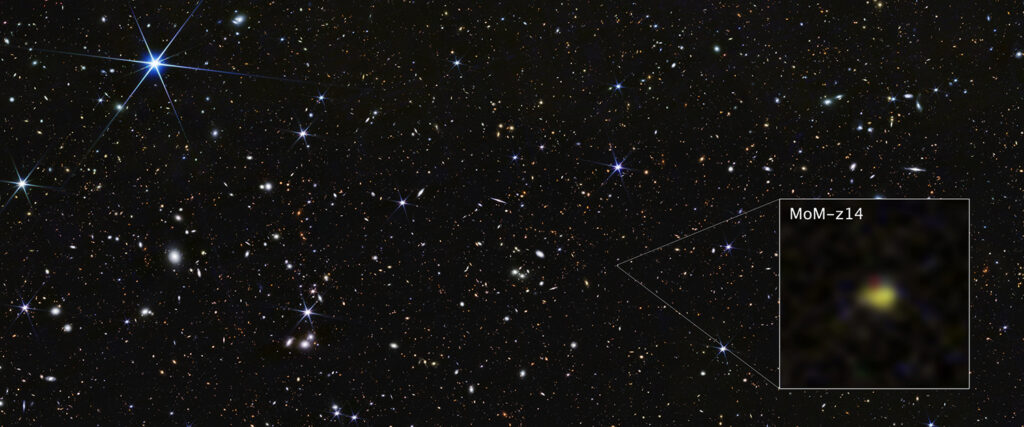
An image of the universe has an inset showing the location of the MoM z14 galaxy.

NASA, ESA, CSA, STScI, Rohan Naidu (MIT); Image Processing: Joseph DePasquale (STScI) (CC BY 4.0)

The MoM z14 galaxy is the farthest galaxy ever spotted. It’s more than 13 billion light-years away.

The James Webb telescope orbits the Sun about 1 million miles (1.5 million kilometers) from Earth. It can observe objects that are more than 13.5 billion light-years away!

The Trip of Many Lifetimes

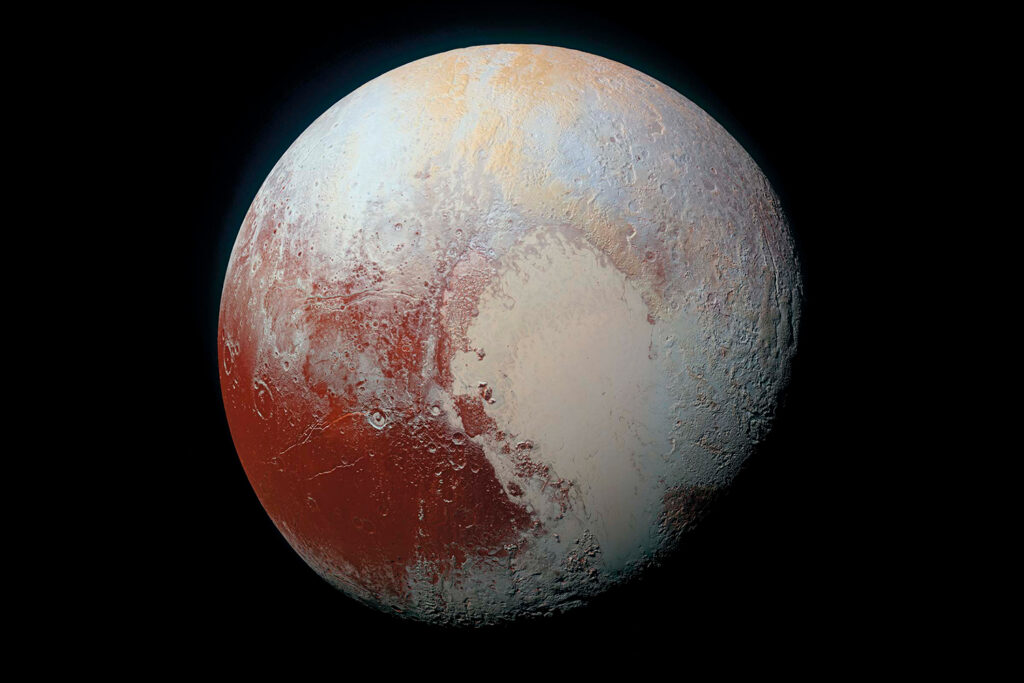
An image of Pluto makes it appear to have red, orange, and white coloration.

NASA/JHUAPL/SwRI

This image of Pluto is actually four images put together. It would take years to reach Pluto.

With the technology we have now, a trip from Earth to the Moon takes about three days. But if you think three days is a lot, here’s how long it would take to get to some other places in space.

Mars

The distance between Earth and Mars changes, depending on where the two planets are on their orbital paths. On average, Earth and Mars are about 140 million miles apart. It would take about nine months to get to Mars. 

Pluto

Pluto, a planetoid, is farther from the Sun than any other planet in our solar system. It would take about nine and a half years to get there.

The Closest Star (other than our Sun)

The star that’s closest to our Sun is called Proxima Centauri. But it’s not that close. It would take more than 73,000 years to travel to Proxima Centauri!

The Closest Galaxy

The galaxy closest to ours is called the Canis Major Dwarf Galaxy. It would take about 750 million years to get there!

The Awesome Universe

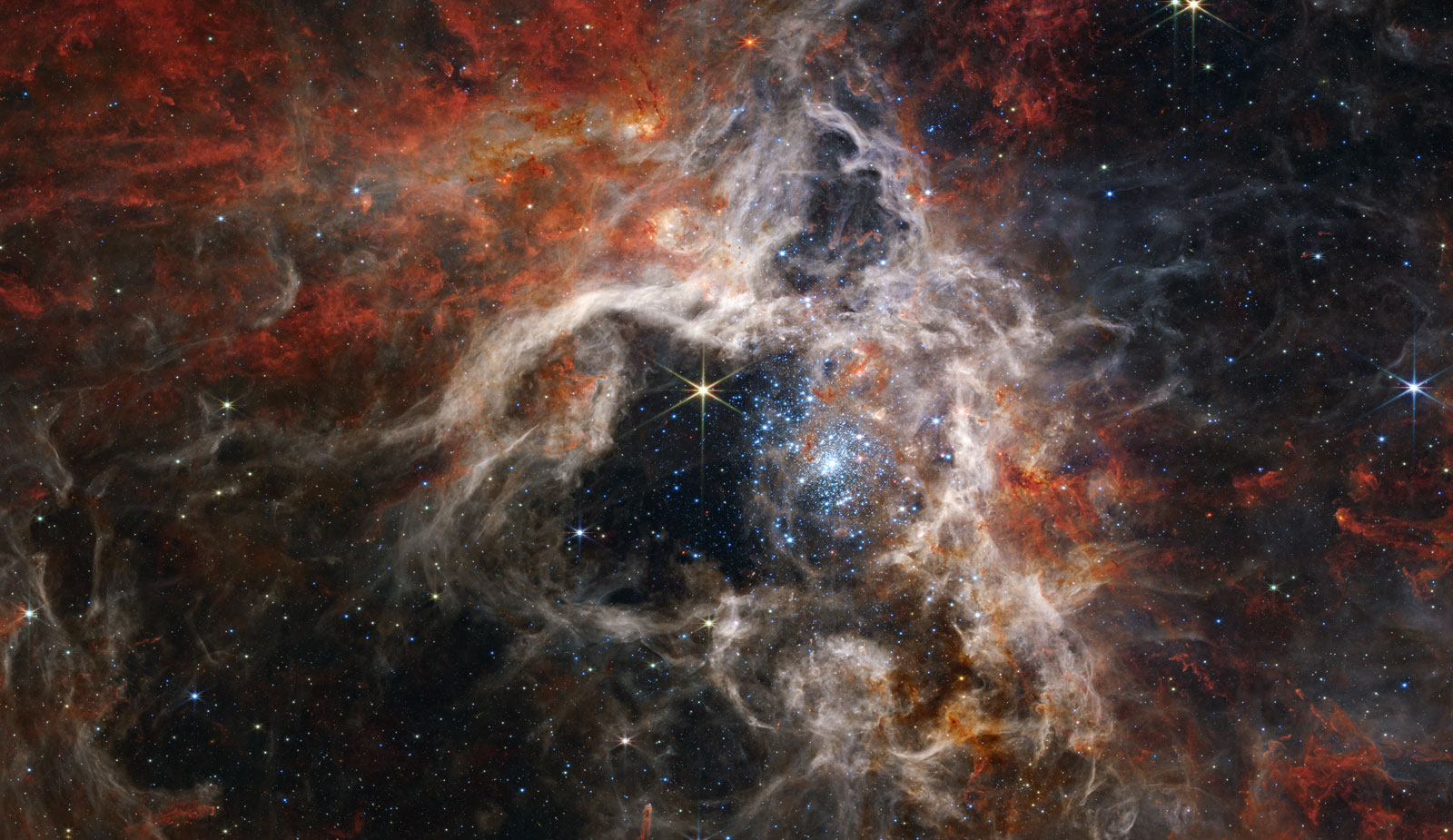
The Tarantula Nebula is shown as many stars and irregularly shaped dust and clouds that look white and orange.

NASA, ESA, CSA, STScI, and the Webb ERO Production Team

The picture shows a big cloud of gas and dust called a nebula. This one is named the Tarantula Nebula because it looks a bit like a hairy spider. The Tarantula Nebula is one of an almost endless number of features in our universe.

You can learn more about the universe at Britannica!

Word of the Day Icon

WHAT'S THE WORD?

gargantuan

Part of speech:

adjective

Definition:
: very large in size or amount : gigantic
Definitions provided by
Merriam-Webster Logo
Game Icon

Play

Word Search

Can you find all the planets, plus a few other words?

.

In Case You Missed It

The powerful James Webb Telescope captured an image of a spiral galaxy that’s millions of light-years away from Earth.
March 31, 2026
In a classic April Fools’ Day trick, people in London were invited to watch some lions being bathed.
March 26, 2026
Researchers say Stone Age humans put their meals together carefully.
March 24, 2026
Marnie won the top prize at Scruffts, a competition for dogs that are more than one breed.
March 19, 2026

How to Cite This Page

Here is how to cite this page using the MLA style. While every effort has been made to follow citation style rules, there may be some differences. Please refer to the appropriate style manual or other sources if you have any questions.

“In the News: A Look Back in Time.” Britannica School, Encyclopaedia Britannica, 1 Apr. 2026. https://news.eb.com/level1/a-look-back-in-time. Accessed 2 Apr. 2026 [Replace this date with today’s date.]