Skip to content

Clever Canines!

A new study suggests that dogs can tell what we’re feeling by looking at our faces.
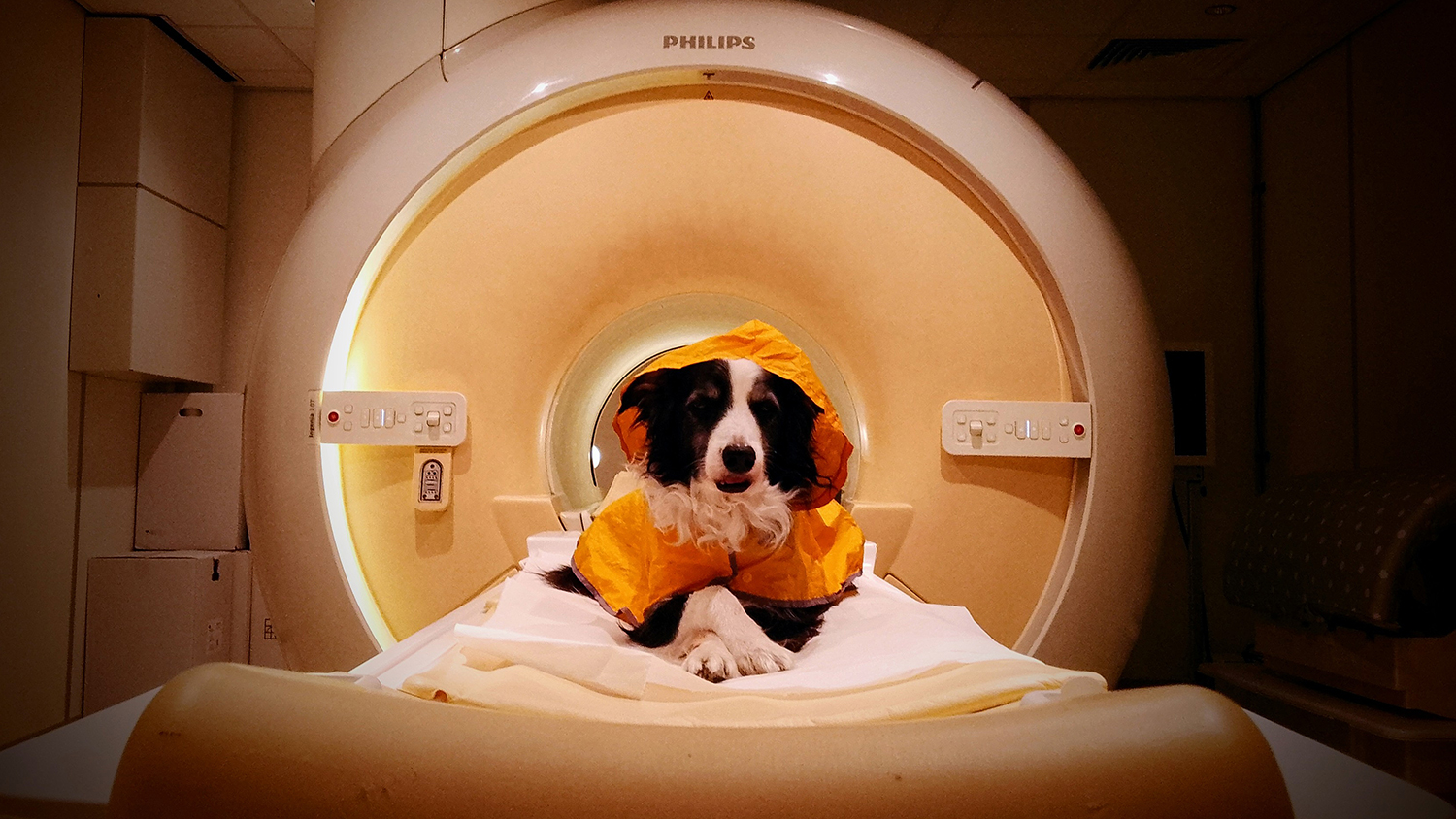
A border collie in an orange jacket lies on its belly in front of the opening of an MRI machine with its head up and looks at the camera.

Courtesy of Laura Cuaya

Scientist Laura Cuaya’s own border collie, Kun-Kun, took part in the dog study. In this photo, Kun-Kun lies in front of an MRI machine.

Dogs can learn words like treat and walk, but can they tell what we’re feeling just by looking at our faces? A new study suggests they can!

In previous studies, scientists learned that dogs can tell the difference between two big human emotions—happiness and anger—when we smile or frown. You could call these opposite emotions. One is positive, or pleasant, and the other is negative, or unpleasant. But can dogs tell the difference between two negative emotions, like anger and fear? The new study aimed to find out.

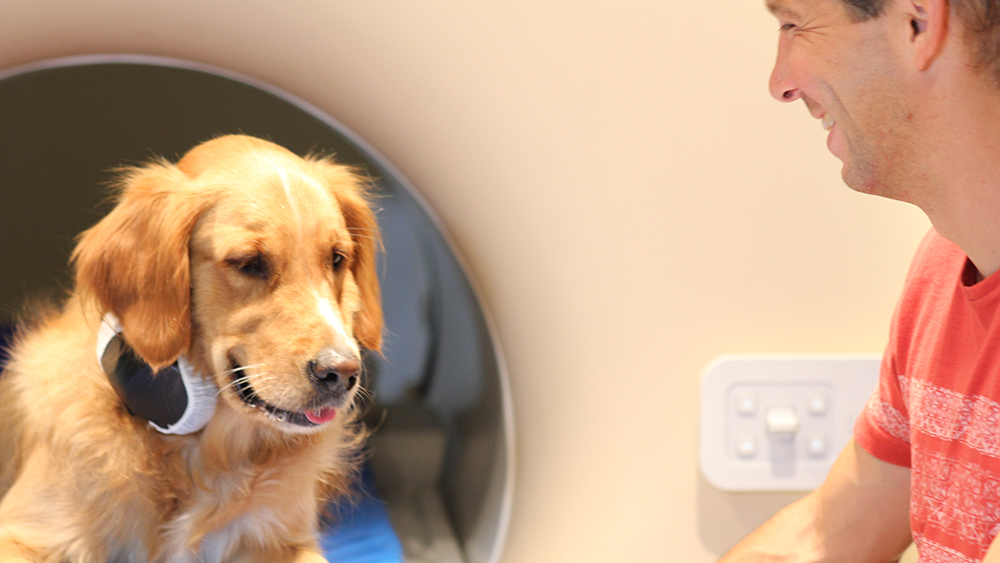
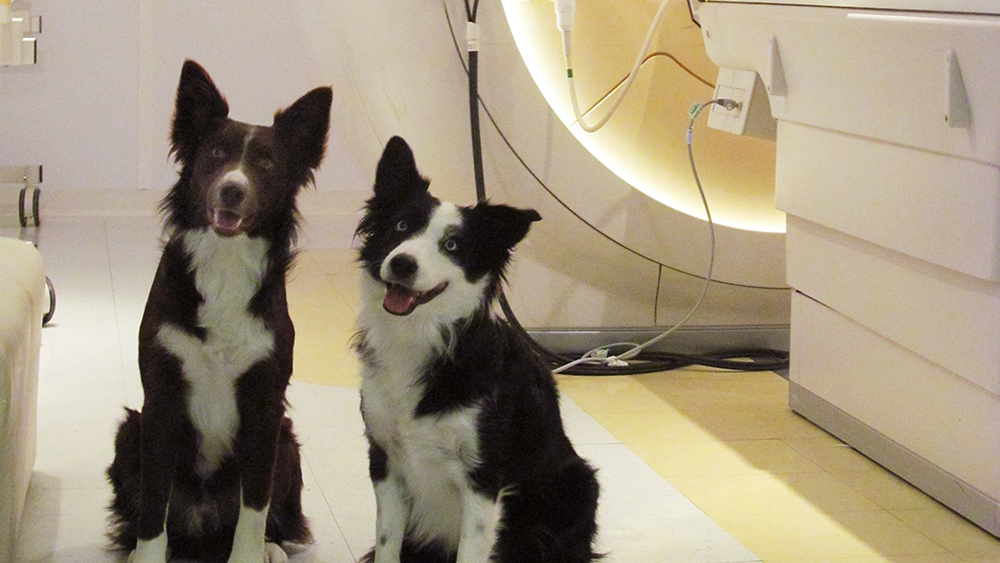
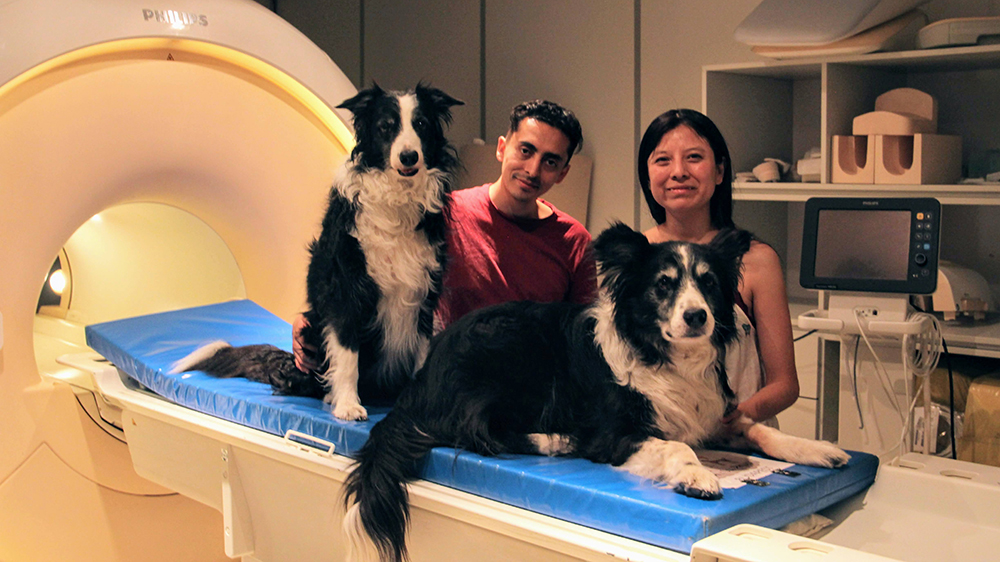
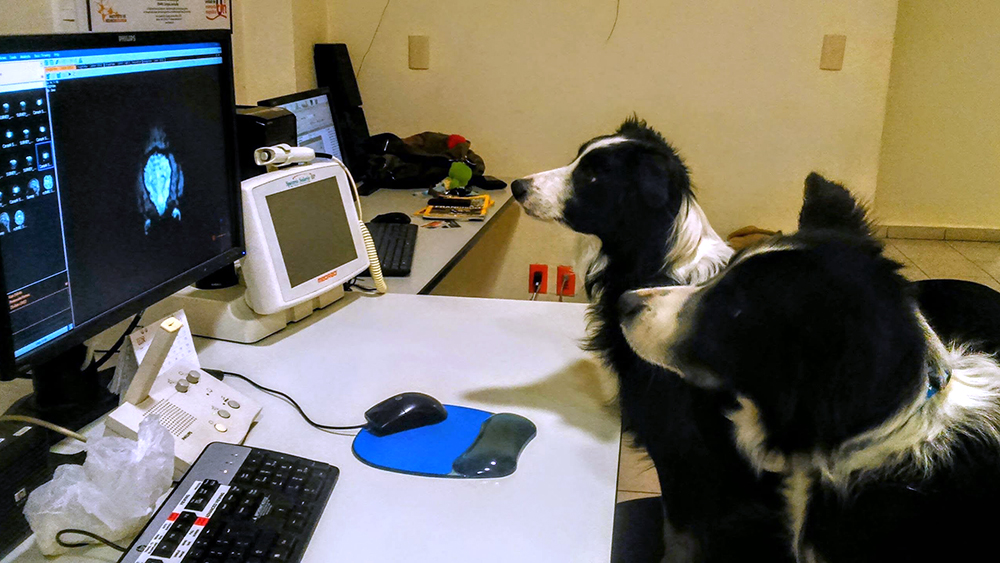
For the study, scientists at the University of Vienna in Austria used a machine called an MRI scanner to produce images of the brains of 14 dogs, including border collies, a Labrador retriever, and a golden retriever. They had to train the dogs to stay perfectly still while the machine did its work.

First, scientists showed the dogs human faces that were either happy or neutral (not showing any expression) while the machine scanned the dogs’ brains. The happy faces activated, or made active, parts of the brain that respond to rewards.

“This [activation] is related when the dog is expecting a snack or a food reward, but also when they hear praise,” scientist Laura Cuaya told the Washington Post.

Then scientists showed the dogs faces that were sad, angry, or fearful. The dogs’ brains could not tell the difference between sadness and anger on a person’s face. But they could tell the difference between anger and fear. This probably means dogs use other clues besides facial expressions to tell when people are sad versus angry.

The scientists say the dogs in the study showed their brains can understand more about human facial expressions than previously thought. 

Click through the slideshow for more photos of the scientists and dogs!
Courtesy of Eniko Kubinyi, Courtesy of Icky Garciadiego Cano, Courtesy of Eniko Kubinyi, Courtesy of Laura Cuaya

Face Thinking Icon

Did You Know?

Seven children each display a different facial expression against a yellow background.

© Hammarby Studios—iStock/Getty Images, © puhimec—iStock/Getty Images, © BNMK0819, Luqman Aditiamala, BuyoutReese10/peopleimages.com, Gecko Studio, Asier/stock.adobe.com; Photo composite Encyclopædia Britannica, Inc.

In the 1970s, a scientist concluded there are seven basic facial expressions that all humans recognize, no matter where they are from. The expressions are anger, disgust, fear, surprise, happiness, sadness, and contempt (a strong dislike or lack of respect for someone).

The World’s Smartest Dogs

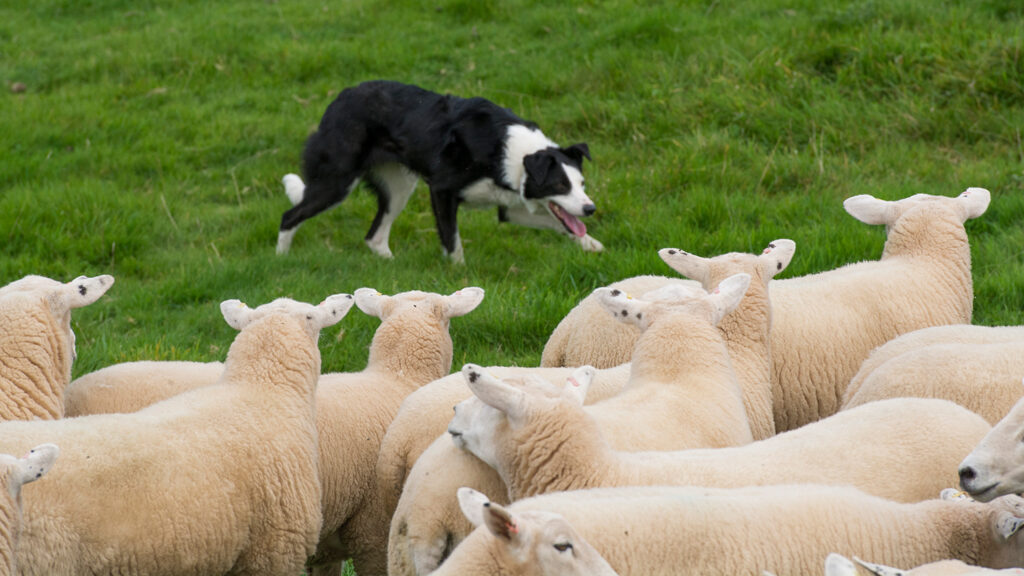
A black and white border collie has its head lowered while staring at a flock of sheep in a grassy field.

© Wayne Hutchinson—Farm Images/Universal Images Group/Getty Images

Border collies are intelligent enough to herd flocks of sheep without much guidance from humans.

The border collie is considered the world’s smartest dog breed because of its ability to learn and perform complicated tasks, like sheep herding. While most dogs can learn tricks by responding to commands, border collies can also do their jobs independently once they’ve learned them. They’re known for their ability to control the movement of sheep just by staring at them!

A seated border collie does a high-five with a person as another seated border collie watches.

© Mr Vito—E+/Getty Images

Border collies aren’t quite as smart as people!

Pet border collies are great at playing Frisbee and solving puzzle toys. But these smarty-pants dogs need to be kept busy. If they get bored, they can destroy furniture and other objects around the house.

Other dog breeds known for their intelligence include poodles, German shepherds, golden retrievers, and Doberman pinschers.

Brainy Facts

© HotFlash—Creatas Video+/Getty Images

An octopus has nine brains—one in its head and one in each arm!

A few animals, like jellyfish and sea sponges, don’t have brains! But most animals need their brains to perform a wide variety of functions. How does the brain work, and which animal has the heaviest brain? Learn more at Britannica!

Word of the Day Icon

WHAT'S THE WORD?

demeanor

Part of speech:

noun

Definition:

: a person’s appearance and behavior : the way someone seems to be to other people

Definitions provided by
Merriam-Webster Logo
Game Icon

Play

Slide

Can you find all the words?

.

In Case You Missed It

Olivia Miles of the WNBA is one of the league’s top players, and she’s just getting started.
October 20, 2026
Check out the finalists for the Nikon Comedy Wildlife Awards.
October 15, 2026
Zoo Atlanta has welcomed two new pandas that are on loan from China.
October 13, 2026
Scientists are covering large ice sheets called glaciers with wool so they won’t melt as fast.
October 8, 2026

How to Cite This Page

Here is how to cite this page using the MLA style. While every effort has been made to follow citation style rules, there may be some differences. Please refer to the appropriate style manual or other sources if you have any questions.

“In the News: Clever Canines.” Britannica School, Encyclopaedia Britannica, 25 Oct. 2026. https://news.eb.com/level1/clever-canines. Accessed 26 Oct 2026 [Replace this date with today’s date.]