
Skip to content

Fixing Mistakes in Ancient Egypt
Ancient Egyptian artists made mistakes sometimes. They used white fluid to fix them.
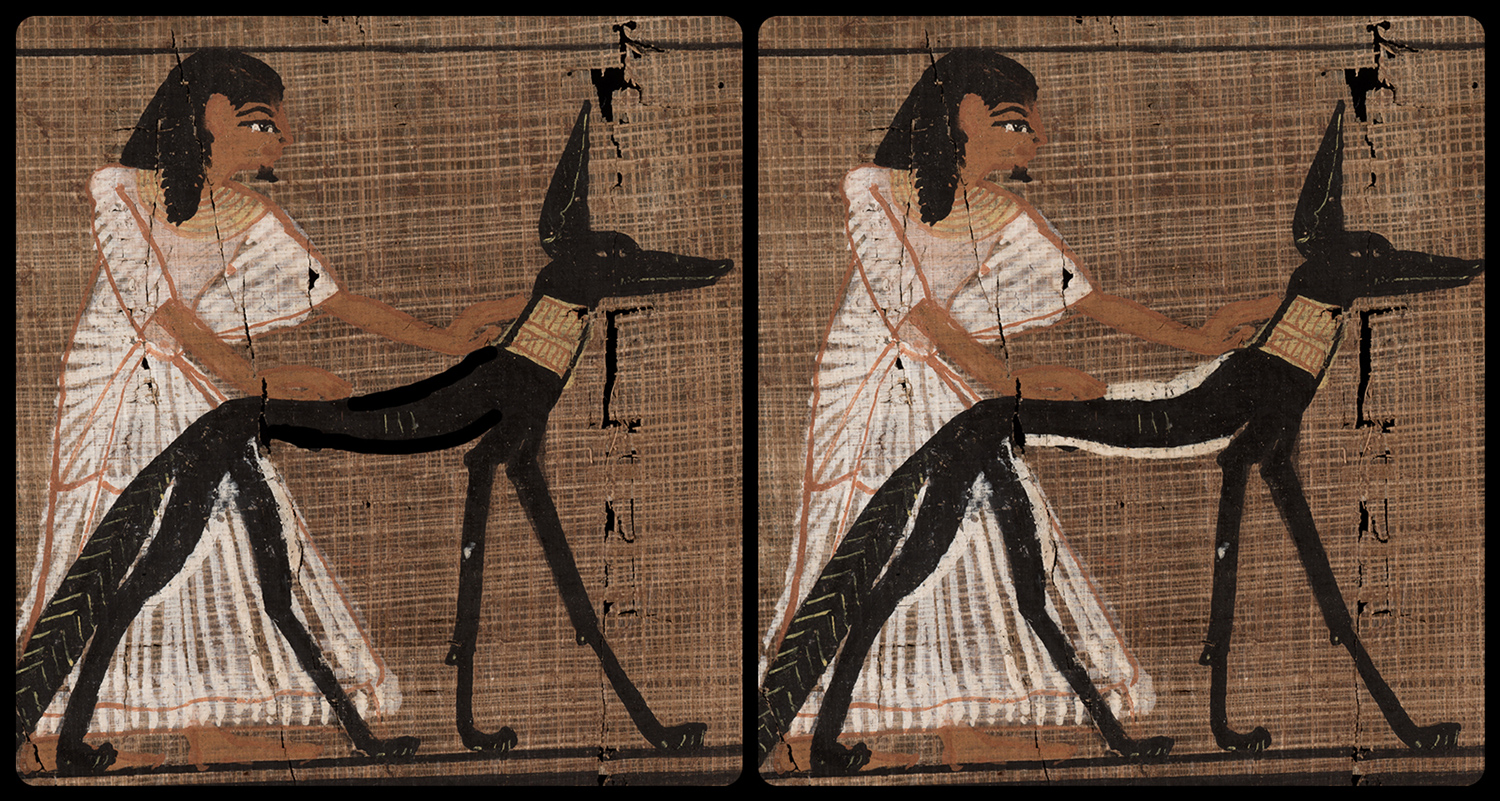
An ancient Egyptian painting of the jackal god Wepwawet with white “correction fluid” around its outline side by side with the same painting without the correction fluid.

Helen Strudwick/Photo © The Fitzwilliam Museum, University of Cambridge; Photo composite Encyclopædia Britannica, Inc.

The image on the right shows white “correction fluid” around an ancient painting of a jackal. The image on the left shows what the jackal would look like without the correction fluid.

Mistakes aren’t easy to fix when you’re working with paint or ink, but experts have discovered that ancient Egyptian artists found a way to cover their errors. They used a thick white “correction fluid.”

Researchers at the Fitzwilliam Museum in Cambridge, United Kingdom, discovered the fluid on a 3,300-year-old painting of an animal called a jackal. The artist had made the outline of the jackal and then covered part of it with the correction fluid and painted a new line over it. 

The researchers studied the fluid with the help of infrared photography, which can show things the human eye can’t see. 

Using a digital microscope, the researchers discovered that the fluid was made of two minerals called calcite and huntite. (Ancient Egyptians also used minerals to make paint.) The microscope also revealed that the artist had added bits of yellow paint to the correction. This would have helped everything blend in with the yellowish papyrus so that the mistake wouldn’t be as visible.
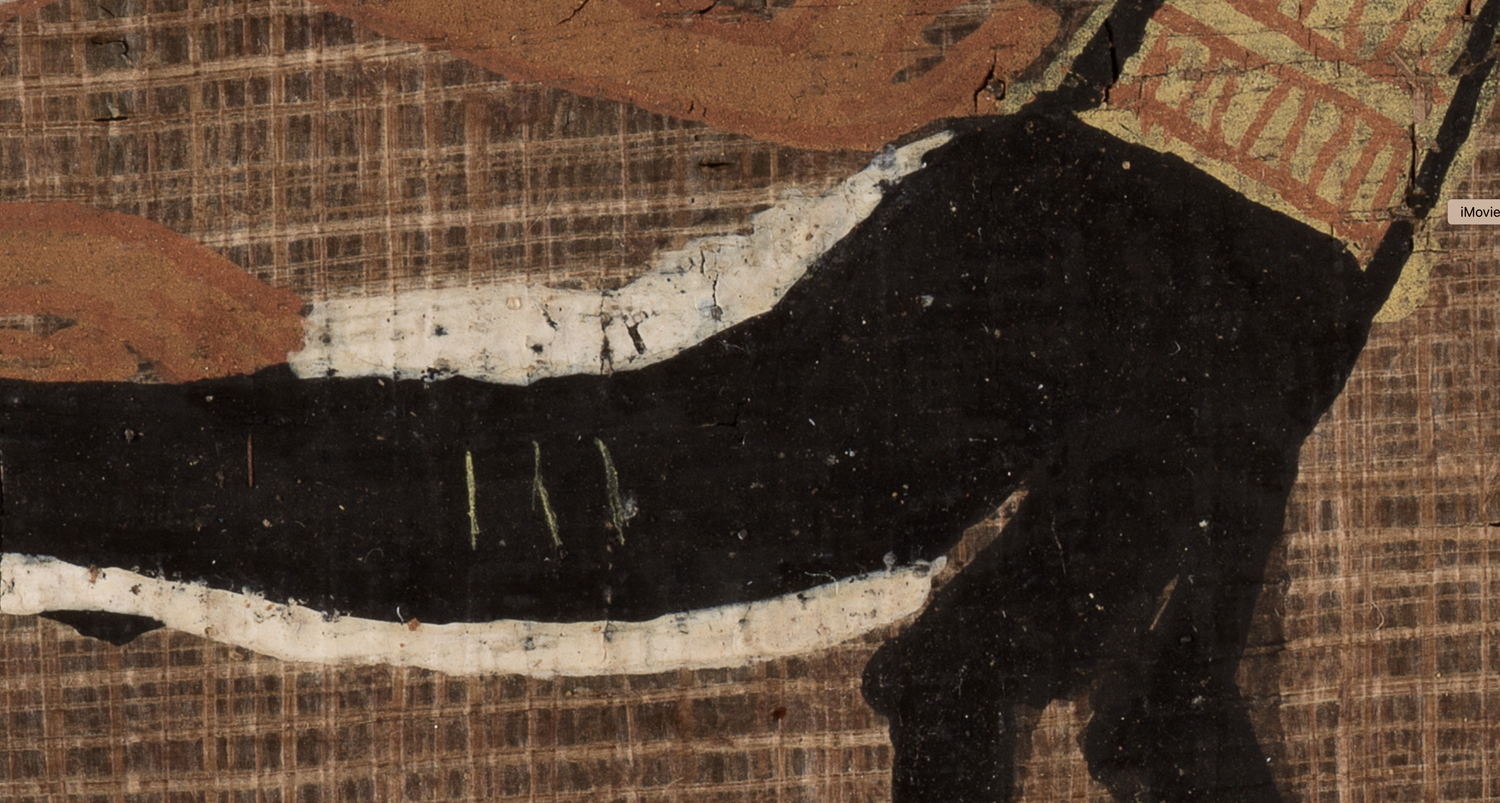
A closeup shows white correction fluid around the painted body of a jaguar.

Helen Strudwick/Photo © The Fitzwilliam Museum, University of Cambridge

Researchers studied the correction fluid to find out what it was made of and why it was applied.

The jackal painting appeared in a Book of the Dead that was created for a scribe called Ramose. Scribes were people who performed duties like record-keeping. They ranked high in ancient Egyptian society, often working directly for the pharaoh, or king. The painting in the book shows Ramose putting his hands on the jackal, which is meant to represent an Egyptian god.

Books of the Dead were filled with spells that ancient Egyptians believed could guide the dead through the afterlife. Since this was long before printing technology, books were difficult to make and were owned only by high-ranking people like Ramose.

A mistake would have been a major problem for such an important book. Luckily, the correction fluid was available.


Face Thinking Icon

Did You Know?

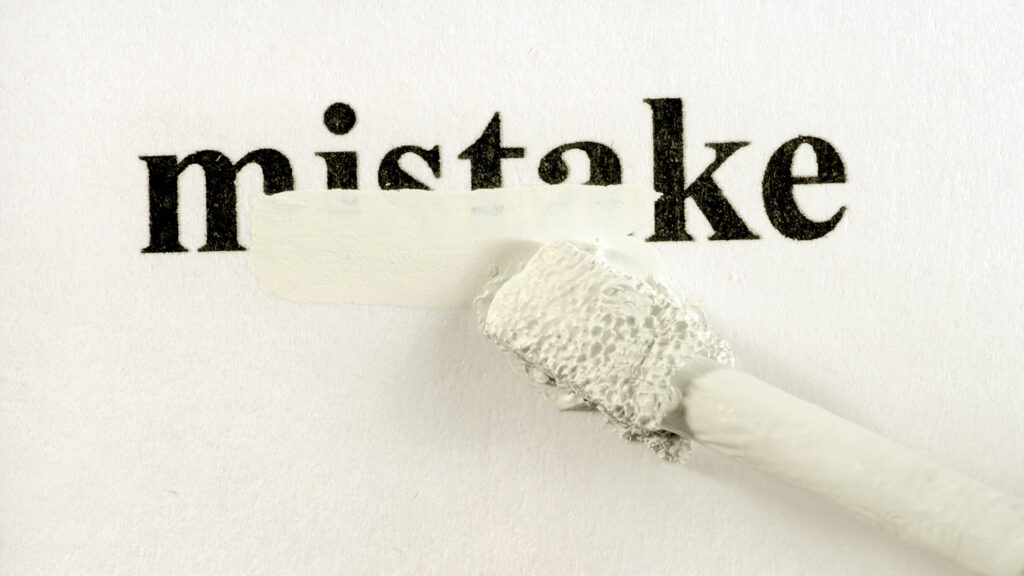
The word "mistake" typed on a piece of paper, partially covered by white correction fluid

© Ieva Zigg/stock.adobe.com

Before computers became common, many people used typewriters. Typists often fixed mistakes by applying a white correction fluid to the paper and then typing over it.

The Joy of “Terrible Art”

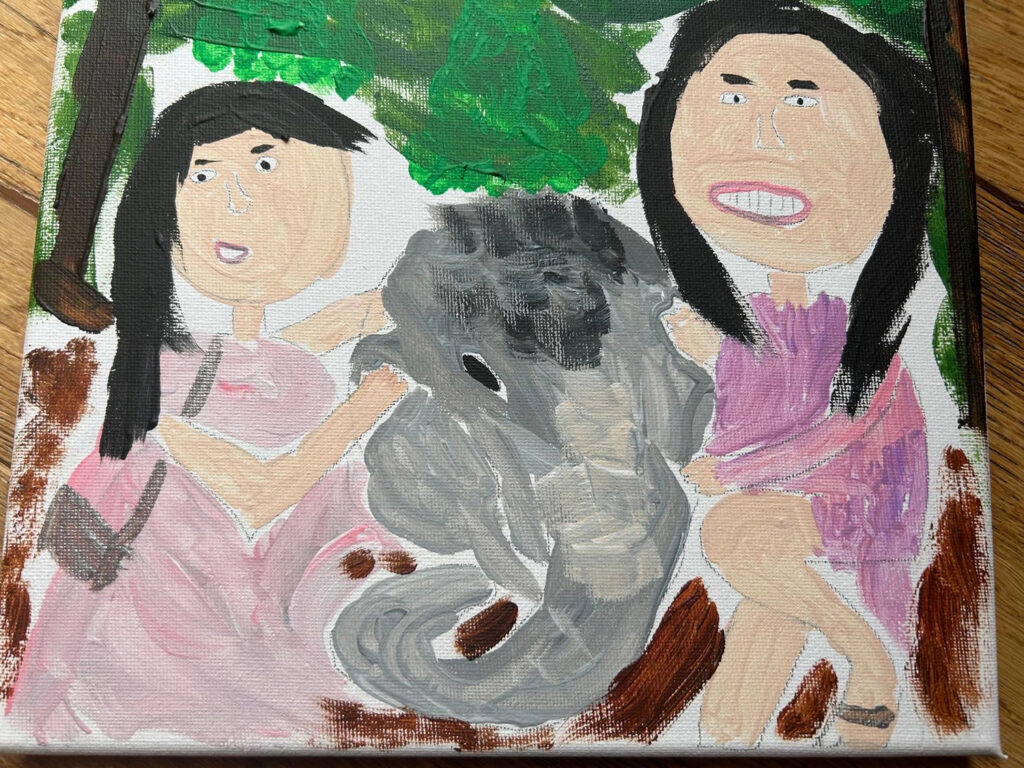
A painting shows two people smiling and holding an elephant by the ears.

Courtesy Jamie Lee Matthias (instagram.com/terribleartbyjamielee)

Jamie Lee Matthias made this “terrible” painting of two young women with an elephant. 

A dad from the United Kingdom has created a business selling what he calls his “terrible art.” People from all over the world aren’t just loving Jamie Lee Matthias’s paintings. They’re asking for more. 

Matthias’s career as an artist started as a joke when he painted a picture for his wife, Kate. Believing he had no talent, he just intended to make her laugh. It worked. But when Kate Matthias shared the painting on social media, thousands of people posted comments. They loved Jamie Lee’s enthusiasm and willingness to laugh at himself. 

Today, Matthias posts his paintings under the Instagram name @terribleartbyjamielee. People don’t only comment on his art. They also buy it. Some people even ask him to paint pictures from photos they send to him. Matthias, who has a full-time job and three kids, paints in his spare time. He loves to read Instagram comments from his growing legion of fans.

“Most people respond [to my paintings] with joy and laughter, which is why it’s been so fun, because they absolutely get it,” he told Good News Network.

Life in Ancient Egypt

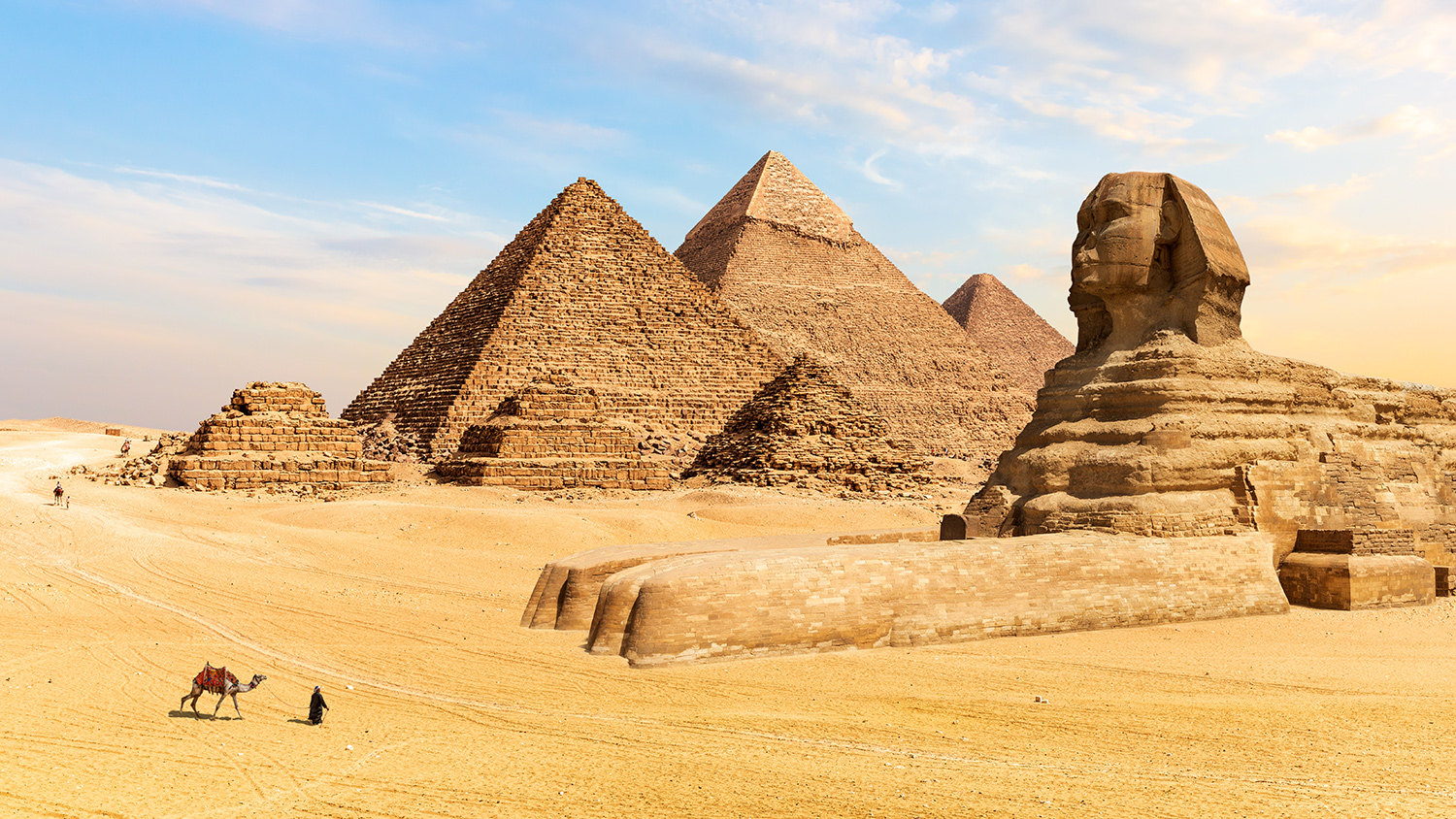
The pyramids of Giza and the Great Sphinx stand in the desert.

© AlexAnton/stock.adobe.com

The ancient Egyptians built the pyramids of Giza and the Great Sphinx, a creature with a human head and a lion’s body.

The ancient Egyptians built massive pyramids and filled them with treasures. Although they’re thousands of years old, some of the pyramids, and the treasures, still exist!

Learn more about life in ancient Egypt at Britannica.

Word of the Day Icon

WHAT'S THE WORD?

modify

Part of speech:

verb

Definition:

: to change some parts of (something) while not changing other parts

Definitions provided by
Merriam-Webster Logo
Game Icon

Play

Word Flower

How many words can you make from the letters in the flower? All words must use the center letter.

.

In Case You Missed It

A doctor used a robot to perform surgery on a patient who was more than 1,000 miles away!
May 13, 2026
The United States is marking its 250th birthday. To celebrate, here’s the story of Prince Hall, an early American who fought for liberty and equality.
May 7, 2026
A new robot hand can pick up delicate objects—even potato chips.
May 4, 2026
Gyo Fujikawa’s illustrations show a world where children of all backgrounds laugh and play together.
April 30, 2026

How to Cite This Page

Here is how to cite this page using the MLA style. While every effort has been made to follow citation style rules, there may be some differences. Please refer to the appropriate style manual or other sources if you have any questions.

In the News: Fixing Mistakes in Ancient Egypt.Britannica School, Encyclopaedia Britannica, 17 May 2026. https://news.eb.com/level1/fixing-mistakes-in-ancient-egypt. Accessed 18 May 2026 [Replace this date with today’s date.]