
Skip to content

Imagine That!

An ape played pretend games with researchers, suggesting that some apes can use their imaginations.
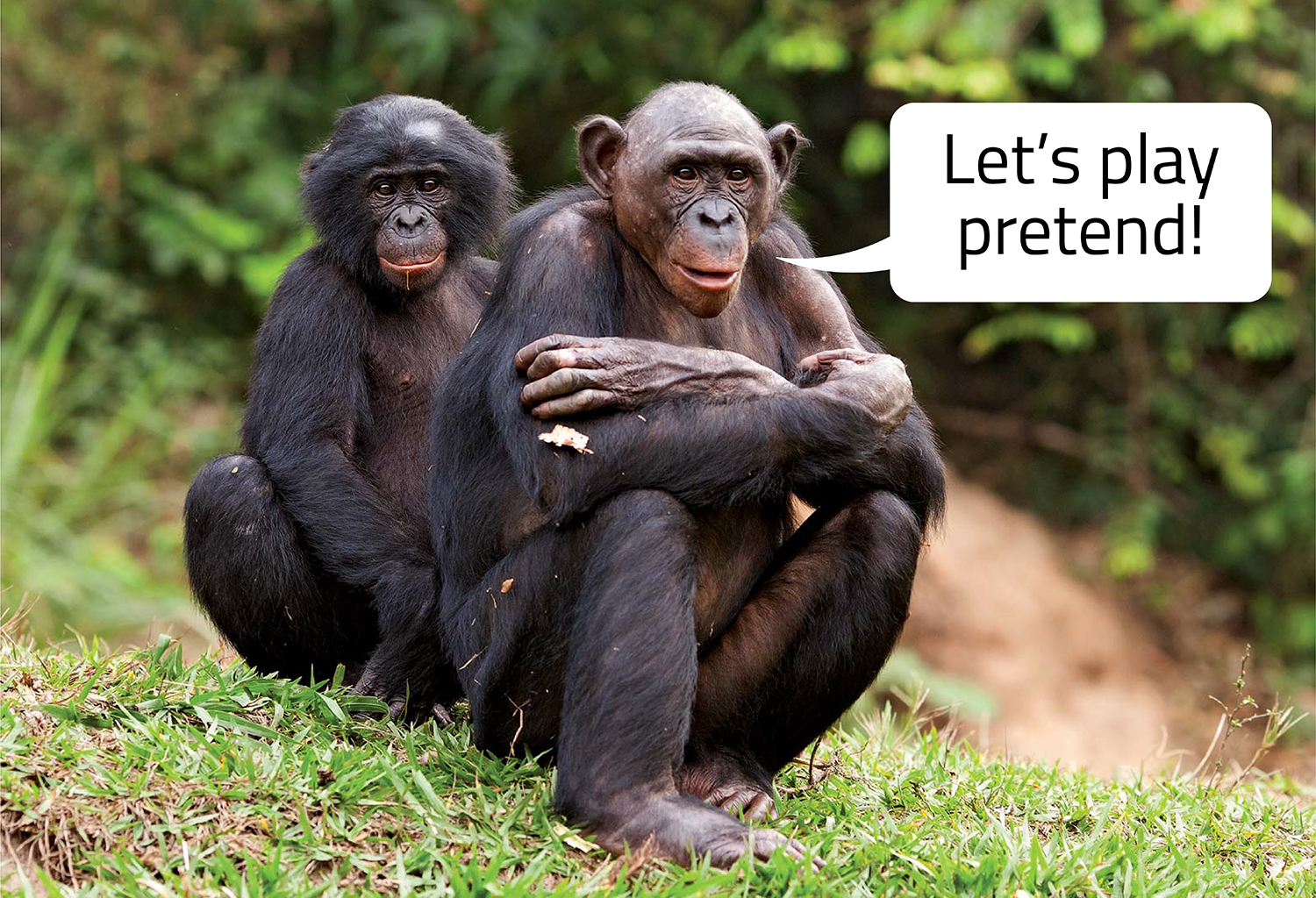
Two bonobos sit on grass and a speech bubble shows one of them saying “Let’s play pretend.”

© Uryadnikov Sergey/stock.adobe.com; Photo illustration Encyclopædia Britannica, Inc.

Can all bonobos play pretend games?

Have you ever played a game where you pretended? Maybe you imagined you were captain of a spaceship or a busy parent. It turns out, humans aren’t the only animals that are able to imagine and play pretend. In a recent study, a bonobo (a type of ape) played a pretend game with scientists.

In the study, scientists wanted to learn if a bonobo called Kanzi was able to act as if a pretend thing was real. They began by showing Kanzi a bottle of juice and an empty bottle and asking him to tell them which bottle had juice. Kanzi picked the correct bottle all 18 times he was asked.
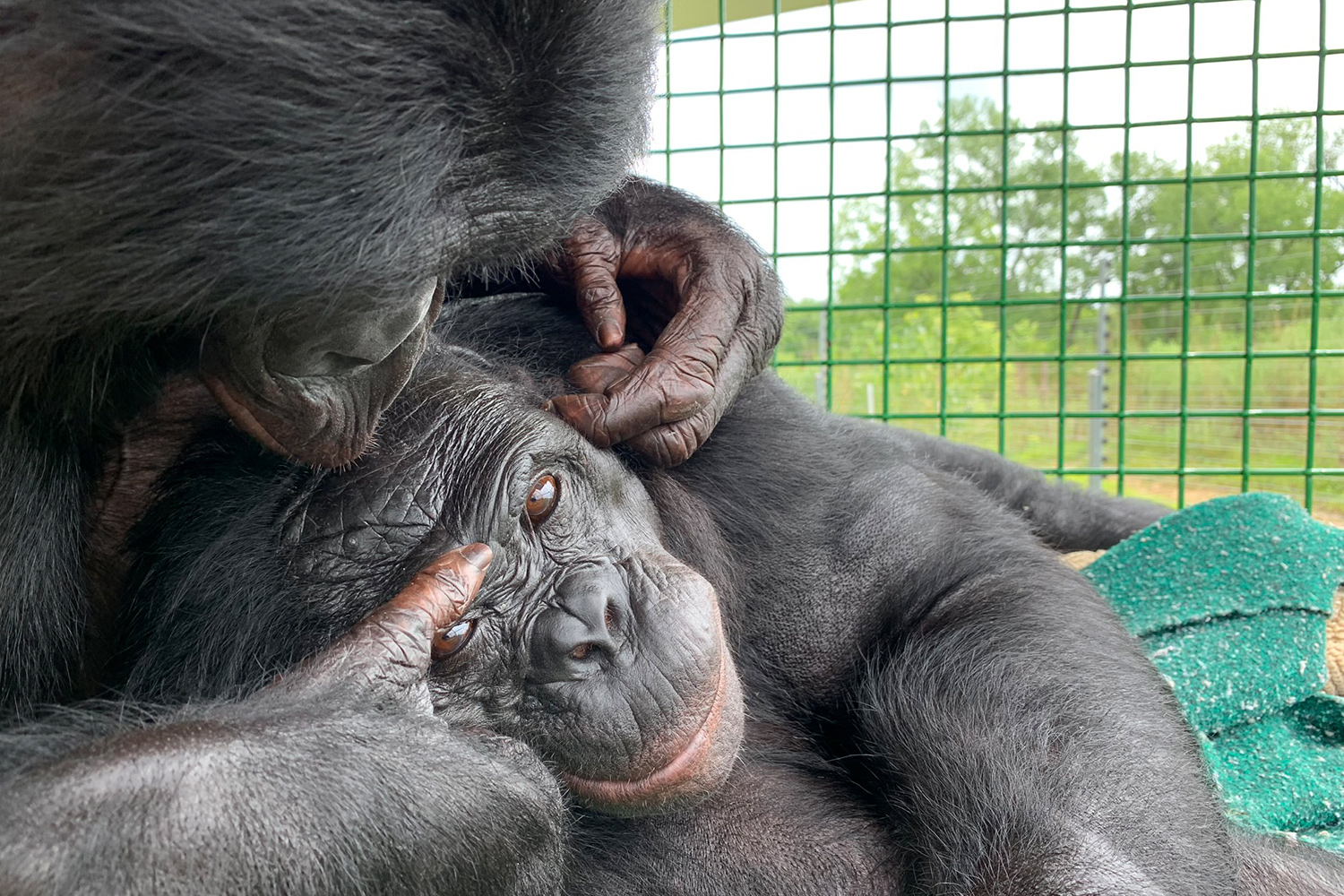
One bonobo lies on the lap of another, who caresses it.

Photo courtesy of Ape Initiative (apeinitiative.org)

Two bonobos, Kanzi and Nyota, spend time together in their home at the Ape Initiative in the U.S. state of Iowa.

A scientist then showed Kanzi two empty cups. The scientist pretended to pour juice from a pitcher into both cups and then from one cup back into the pitcher. 

“Which cup has the juice?” the scientist asked Kanzi. The scientist did this several times. Sixty-eight percent of the time, Kanzi picked the cup that had the pretend juice in it.

To make sure Kanzi understood the difference between real juice and pretend juice, the scientist offered him an empty cup and a cup of real juice. He picked the cup of real juice nearly every time.
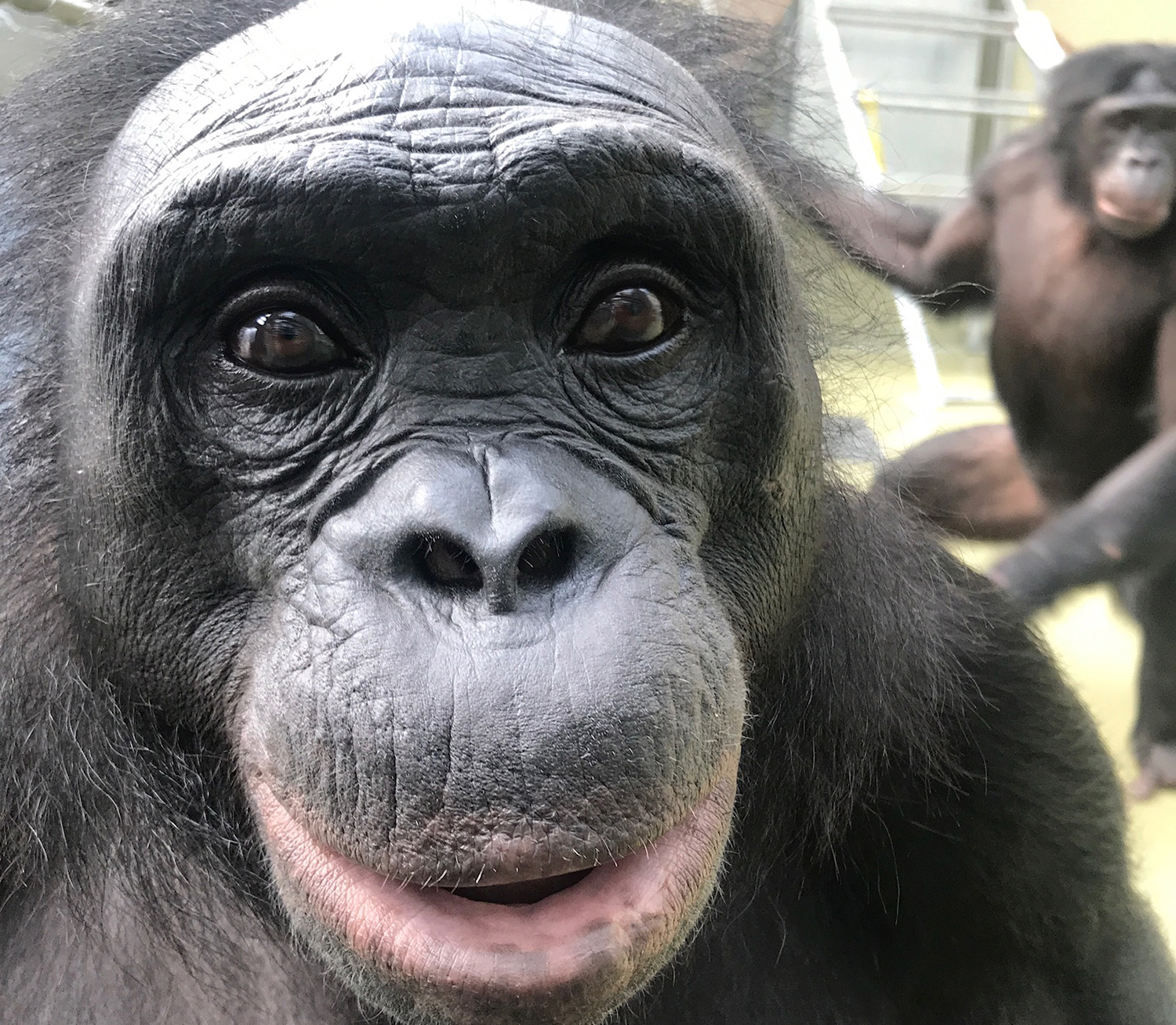
A closeup view shows the face of Kanzi the bonobo while another bonobo is active in the background.

Photo courtesy of Ape Initiative (apeinitiative.org)

A closeup view shows Kanzi, the bonobo that played pretend games with scientists.

Kanzi, who sadly died in 2025, may not have been the best representative of what bonobos can do. He lived with humans and had been taught many English words, so he had an unusually good foundation for understanding humans. 

But there are hints that other apes may share Kanzi’s gift of imagination. For example, scientists have seen a captive chimpanzee playing with what looked like imaginary blocks after playing with real blocks. They’ve also observed wild chimpanzees carrying sticks around as if they were babies, like human children play with dolls. 

Scientists want to continue studying apes to learn more.
NEWS EXTRA

???

© Bettmann/Getty Images

In this 1983 photo, Jesse Jackson announces that he is running in the 1984 U.S. presidential election.

Civil rights leader Jesse Jackson has died. He was 84.

 Jackson was born in South Carolina in 1941. He grew up at a time when the southern United States was racially segregated. Black people were not allowed to use the same public places as white people. Jackson began protesting segregation while still a teen. Eventually, he worked alongside civil rights leader Dr. Martin Luther King, Jr.

 Jackson dedicated his life to the fight for civil rights. In 1971 he founded an organization called PUSH to help Black Americans get jobs and open businesses. He later founded the Rainbow Coalition to work for equal opportunities. Jackson also worked for peace and freedom in several places around the world.

 Jackson ran for president twice—in 1984 and 1988. Although he did not win, his efforts made history. No other Black candidate had been so successful in a presidential election up to that point.

 “[Our father’s] belief in justice, equality, and love uplifted millions,” his family said in a statement. “And we ask you to honor his memory by continuing the fight for the values he lived by.”

Face Thinking Icon

Did You Know?

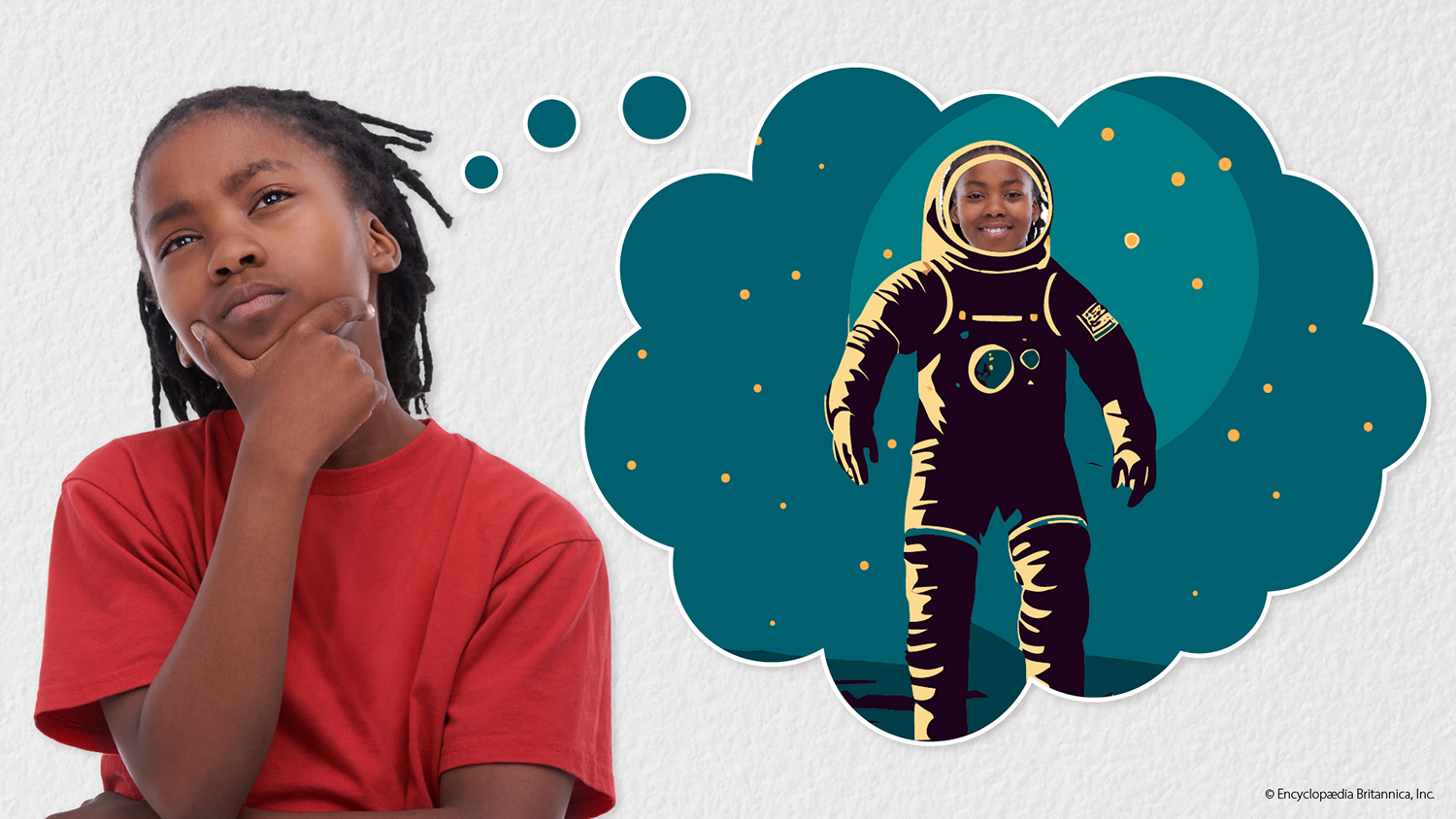
A child looks inquisitive as a thought bubble shows an image of the child as an astronaut.

© Duncan M—peopleimages.com, Dominik Guzei—Wirestock Creators, Nattha99; Photo illustration Encyclopædia Britannica, Inc.

Using your imagination is good for you! Scientists believe that pretend play and other imaginative thinking helps kids develop creativity and problem-solving skills.

Games That Celebrate Traditions

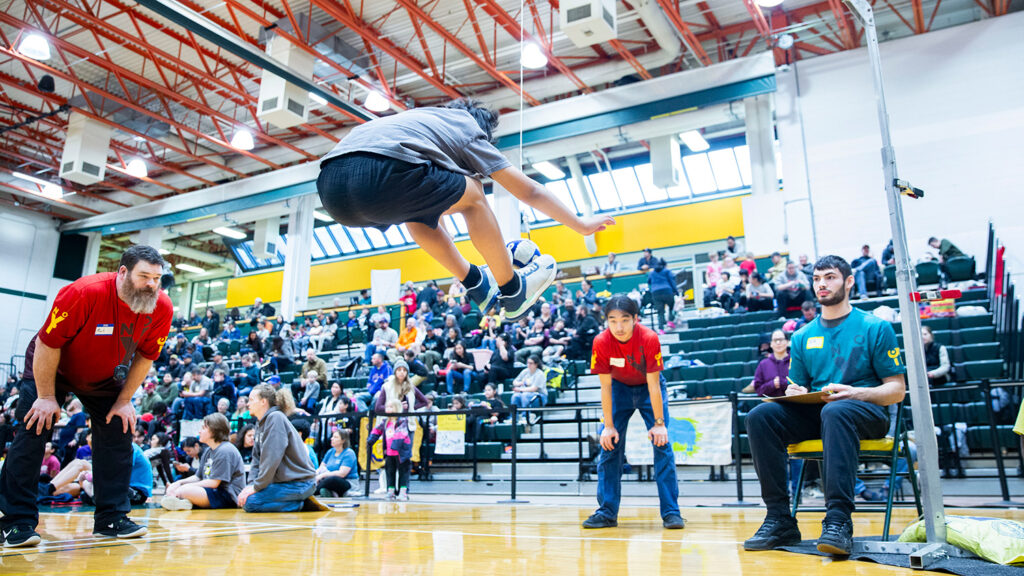
In a gym, a teen has jumped up and is about to kick a hanging ball with two feet as officials and spectators watch.

Courtesy of Cook Inlet Tribal Council, Inc. 

A teen does the two-foot high kick at the 2025 Native Youth Olympic Games.

From February 27 to March 1, kids in 1st through 8th grades will compete in the Junior Native Youth Olympic (JNYO) Games in Anchorage, Alaska. The annual sporting event, which is open to all kids, is a celebration of Native traditions meant to bring Indigenous (Native) communities together. 

JNYO events are based on games Indigenous peoples in the Arctic played to develop their hunting and survival skills. Here are some examples of JNYO events.

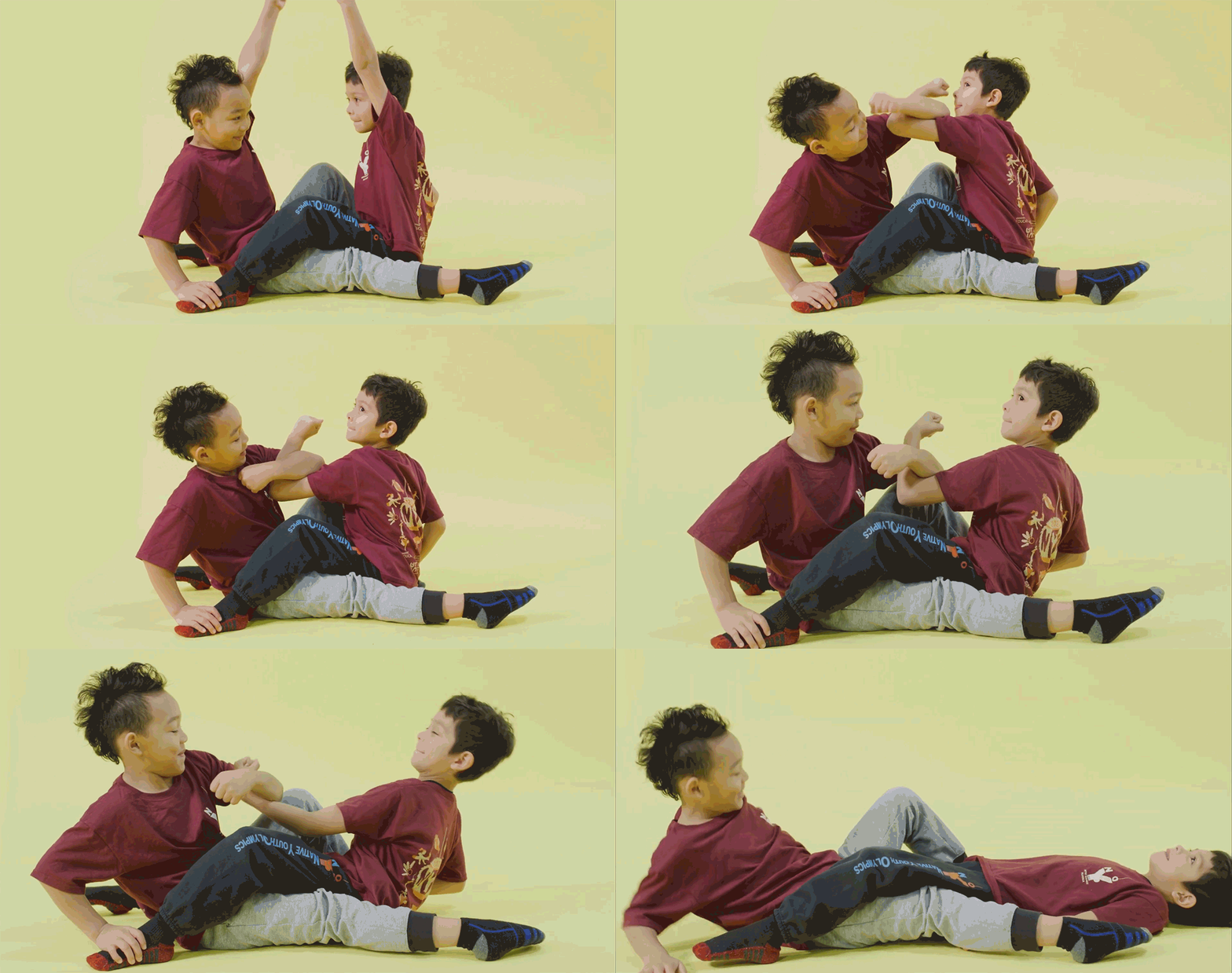
Arm Pull

Courtesy of Cook Inlet Tribal Council, Inc. Courtesy of Cook Inlet Tribal Council, Inc.; Photo illustration Encyclopædia Britannica, Inc.

How It’s Done: Two athletes sit on the floor facing each other, interlace their legs, and lock either their left or right arms. Then both athletes start pulling their bodies straight back until one athlete is able to straighten the other’s arm or pull the other’s body toward them.

Why It’s Done: Training for the Arm Pull helped hunters develop strength and endurance (lasting energy).

Kneel Jump
A child jumps onto two feet from a kneeling position.

Courtesy of Cook Inlet Tribal Council, Inc.; Photo illustration Encyclopædia Britannica, Inc.

How It’s Done: Athletes kneel down and then jump up and forward. The object is to land on both feet at the same time without moving any farther.

Why It’s Done: Training for the Kneel Jump helped hunters jump quickly from the ground or from ice if a dangerous animal was approaching.

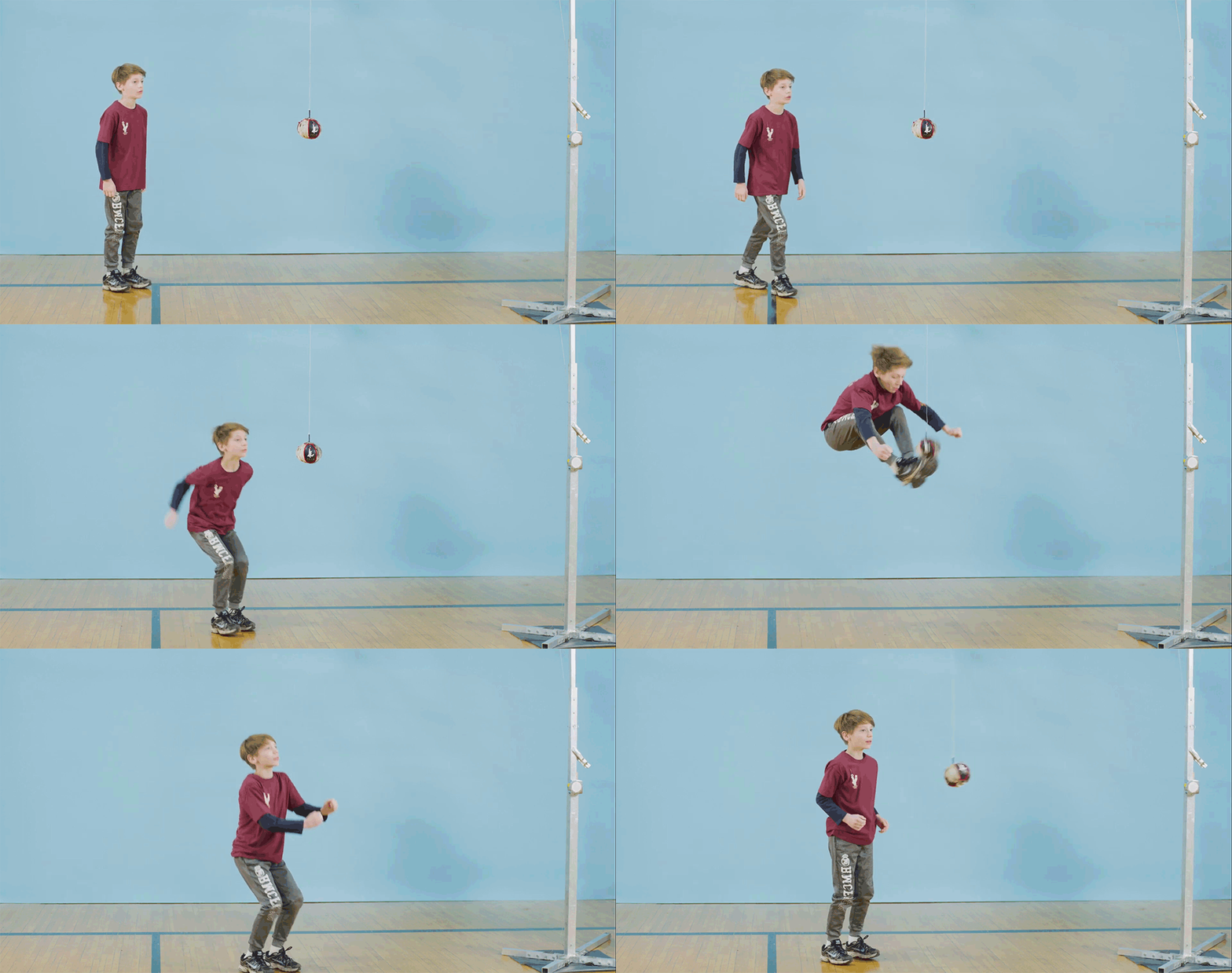
Two-Foot High Kick
A child uses two feet to kick a ball that is hanging by a tether.

Courtesy of Cook Inlet Tribal Council, Inc.; Photo illustration Encyclopædia Britannica, Inc. 

How It’s Done: Athletes jump with both feet to kick a ball that’s suspended in the air. They must land on both feet without falling backward. The ball is hung higher and higher as the event continues.

Why It’s Done: Indigenous hunters used the Two-Foot High Kick to quickly signal villagers that the hunt was successful. 

Ape Vs. Monkey

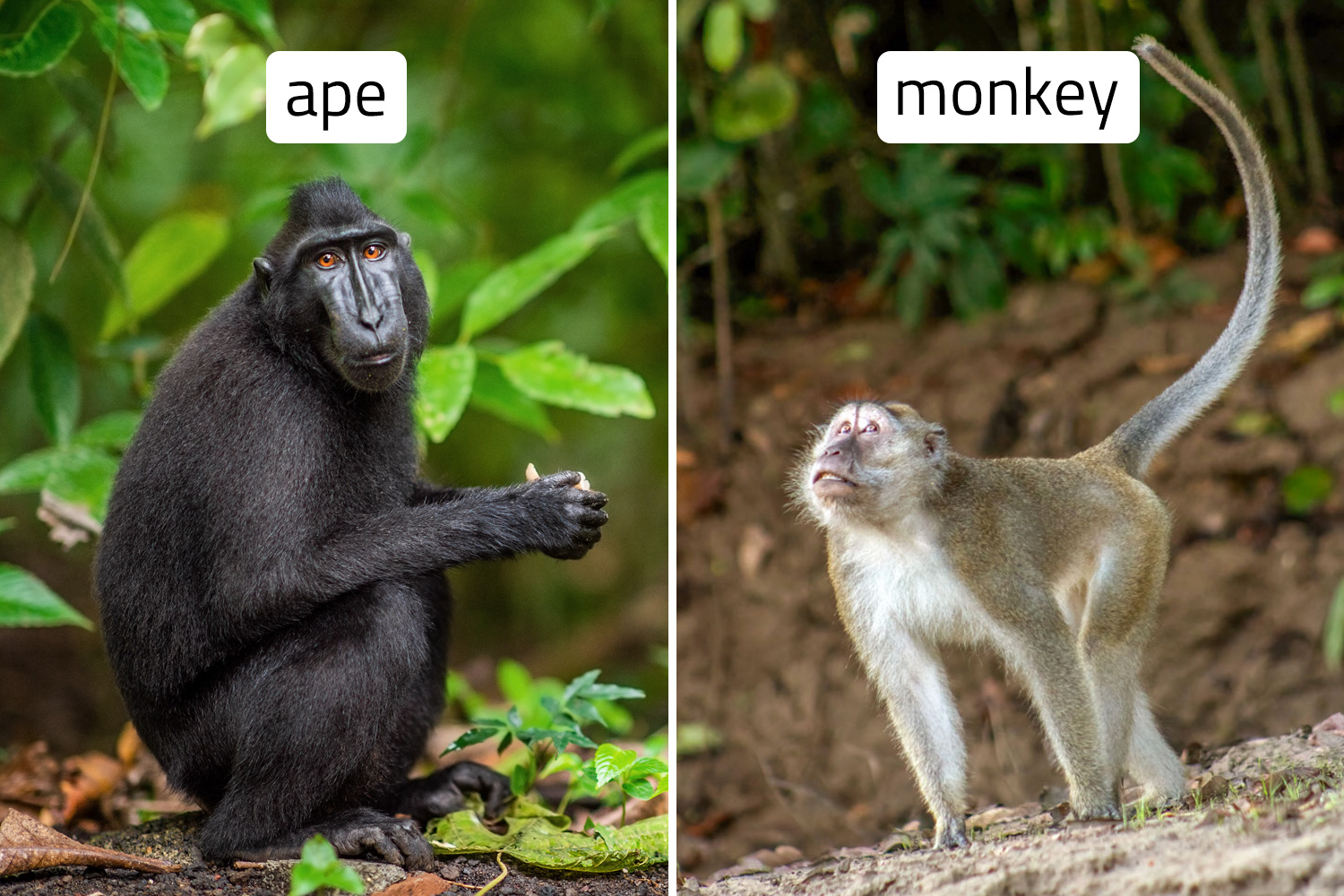
Side by side photos of a crested black macaque, labeled ape, and a long tailed macaque monkey, labeled monkey.

© Uryadnikov Sergey, Kaitlind/stock.adobe.com; Photo illustration Encyclopædia Britannica, Inc.

What’s the difference between an ape and a monkey? For one thing, apes have more complex brains than monkeys. Some scientists even believe that great apes have shown the ability to communicate with sign language.

Learn more about apes at Britannica.

Word of the Day Icon

WHAT'S THE WORD?

imaginative

Part of speech:

adjective

Definition:

: having or showing an ability to think of new and interesting ideas : having or showing imagination

Definitions provided by
Merriam-Webster Logo
Game Icon

Play

Word Search

Can you find all the ape-related words?

.

In Case You Missed It

Researchers found that wild jaguars meow like house cats. But why?
February 17, 2026
Aura V is the youngest person ever to win music’s top award.
February 11, 2026
Taylor Swift is set to become one of the youngest people ever to enter the Songwriters Hall of Fame.
February 10, 2026
The Newbery, Caldecott, and King awards honor the best books for kids and teens.
February 5, 2026

How to Cite This Page

Here is how to cite this page using the MLA style. While every effort has been made to follow citation style rules, there may be some differences. Please refer to the appropriate style manual or other sources if you have any questions.

“In the News: Imagine That!” Britannica School, Encyclopaedia Britannica, 19 Feb. 2026. https://news.eb.com/level1/imagine-that. Accessed 19 Feb. 2026 [Replace this date with today’s date.]