
Skip to content

The City of the Future
If you could build a city, what would it look like? Australia will soon have its first new city in 100 years.
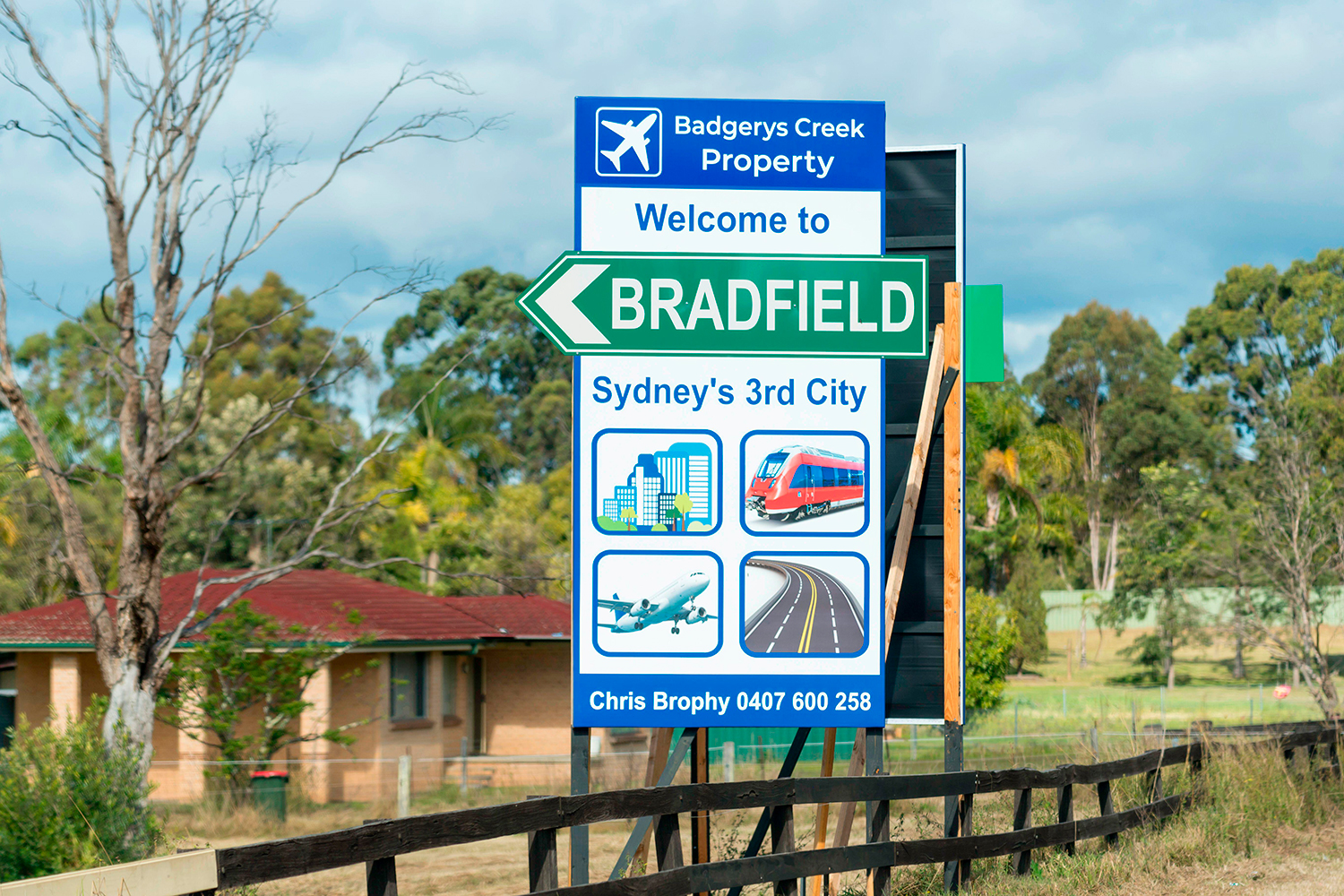
A sign in front of a building and some land says Welcome to Bradfield, Sydney’s third city.

© Stephen Dwyer/Alamy

Bradfield will be located just west of Sydney, Australia.

Imagine being able to build a new city from the ground up! It’s happening in Australia, where planners are constructing the nation’s first major city in over 100 years. 

Bradfield will be located in eastern Australia, about 30 miles (48 kilometers) west of the center of Sydney. The new urban center, or city, won’t just be a nice place for people to live. It’s designed to meet the needs of everyone and everything that lives there, including humans, plants, and animals. 

If everything goes as planned, the new city will have up to 10,000 homes, plus schools, offices, stores, hotels, and doctors’ offices. All those businesses will need workers, so the new city will provide thousands of job opportunities. There will also be parks, including a large park in the middle of the city called Green Loop, and many trees throughout the city. Plants will even be grown on rooftops.

City areas with lots of plants are often called “green spaces.” City planners say green spaces are important for many reasons. Plants absorb harmful pollution, and spending time in nature can help improve physical and mental health. Trees and other plants also support wildlife by providing food and shelter. 

“We set out to create a precinct where nature and [city] life are intertwined,” said Kevin Lloyd.  Lloyd is an architect who is helping to design Bradfield.

It’s important to city planners to balance the hustle and bustle of the city with the quietness of nature. Bradfield is being built on land where Aboriginal peoples lived for thousands of years before Europeans arrived in Australia. (Aboriginal peoples are the native peoples of Australia.) Aboriginal peoples believe in respecting nature and taking natural resources, like trees, water, and animals, only when they are needed.

The city planners are working with Aboriginal leaders to make sure Bradfield is developed in a way that respects Aboriginal history, culture, and beliefs. 

Bradfield won’t be built overnight. The process will take years. If there are no delays, Australians can expect their new community to start looking like a city in about 2030, when Stage 1 is completed. By then, Bradfield will have its first 1,400 homes and several buildings. 

Face Thinking Icon

Did You Know?

© Ami Bornstein/stock.adobe.com

Why walk when you can hop?

Australia is the only place in the world where kangaroos can be found in the wild. 

Kangaroos hop on their spring-like back legs because it allows them to travel huge distances without using a lot of energy.

Get a Little Greener

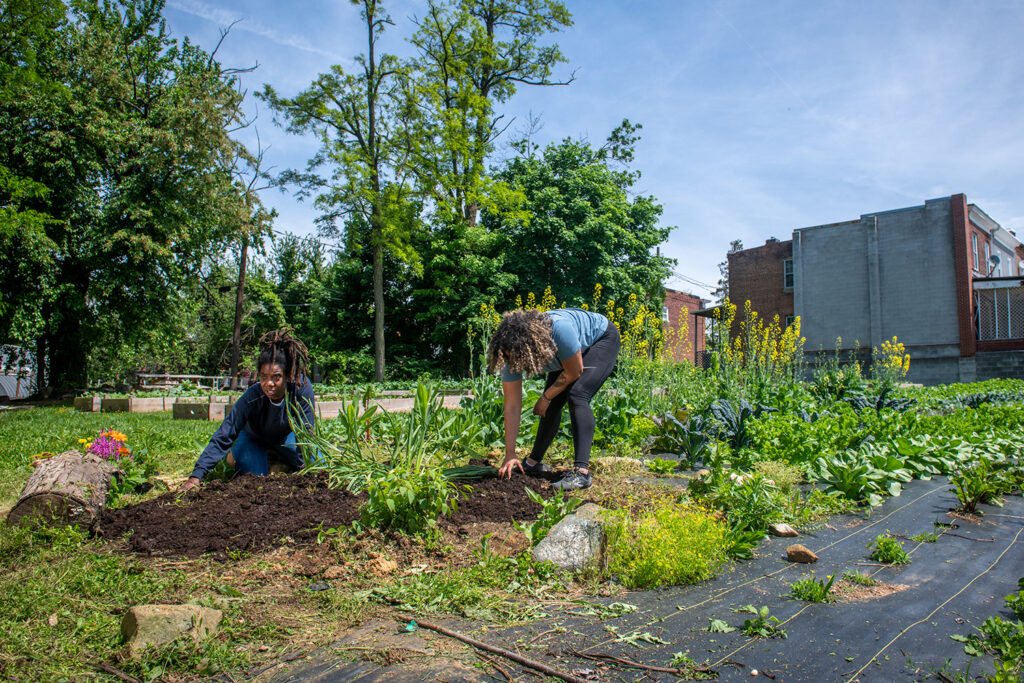
Two people work in a garden in an area next to some buildings.

© Edwin Remsberg/VWPics—Universal Images Group/Getty Images

Every community has wildlife, whether it’s bears or bees or both! Here’s how you can help protect the wildlife in your town or city.

Don’t litter. Garbage doesn’t just look bad. It’s also bad for the planet. Some types of litter break down into harmful chemicals. Other litter can end up in soil or waterways, where animals can become trapped in it or mistake it for food.

Plant a garden. Plants provide food and shelter for insects and other animals. Plus, bees and butterflies pollinate flowers while collecting their nectar. You don’t need a backyard to have a garden. Many cities have community gardens that neighbors share.

Leave wildlife alone. It’s fun to watch wildlife from a distance! But wild animals can become stressed out if they are handled or chased. Even giving bread to ducks can be harmful because ducks aren’t meant to eat bread.

Australia’s Aboriginal Peoples

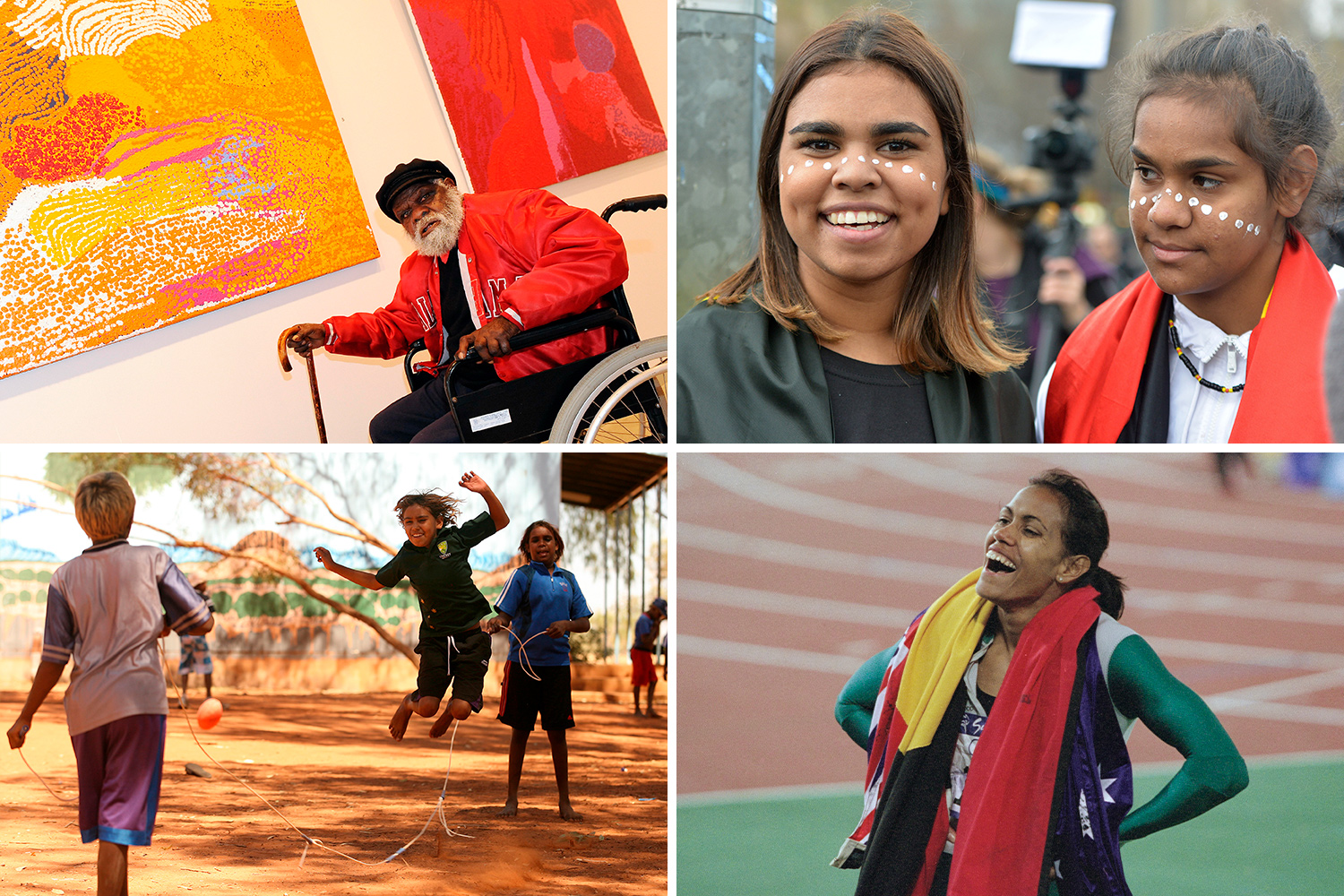
A composite shows Aboriginal painter Yannima Tommy Watson sitting in a wheelchair next to his painting in a gallery, two women who are Aboriginal or Torres Strait Islander smiling in front of a crowd, three children jumping rope in a schoolyard, and Cathy Freeman smiling near a running track with an Aboriginal flag on her shoulders.

© Torsten Blackwood—AFP/Getty Images, © Recep Sakar—Anadolu Agency/Getty Images, © Pat Scala/The AGE—Fairfax Media/Getty Images, © Henri Szwarc—Bongarts/Getty Images; Photo composite Encyclopædia Britannica, Inc.

Top left: Aboriginal painter Yannima Tommy Watson poses with some of his art. Top right: Aboriginal people and Torres Strait Islander people (who are native to islands near Australia) attend a march in Melbourne, Australia. Bottom left: Aboriginal children play. Bottom right: Track and field athlete Cathy Freeman, who is Aboriginal, celebrates after winning a race at the 2000 Summer Olympics.

How long have Aboriginal peoples lived in Australia? Scientists have found skeletons that are more than 40,000 years old! You can learn more about the history and culture of Australia’s Aboriginal peoples at Britannica!

Word of the Day Icon

WHAT'S THE WORD?

verdant

Part of speech:

adjective

Definition:

: green with growing plants

Definitions provided by
Merriam-Webster Logo
Game Icon

Play

Word Search

Can you find all the cities?

.

In Case You Missed It

If you could build a city, what would it look like? Australia will soon have its first new city in 100 years.
March 17, 2026
Banana Ball is baseball with a little extra fun thrown in.
March 12, 2026
When 5th graders asked Major League Baseball player Ozzie Albies which pet fish to get, he helped out in a big way.
March 11, 2026
Taryn Smith is the first American woman to row solo across the Atlantic Ocean.
March 5, 2026

How to Cite This Page

Here is how to cite this page using the MLA style. While every effort has been made to follow citation style rules, there may be some differences. Please refer to the appropriate style manual or other sources if you have any questions.

“In the News: The City of the Future.” Britannica School, Encyclopaedia Britannica, 17 Mar. 2026. https://news.eb.com/level1/the-city-of-the-future. Accessed 19 Mar. 2026 [Replace this date with today’s date.]