Skip to content

Shattering a Glass Mystery
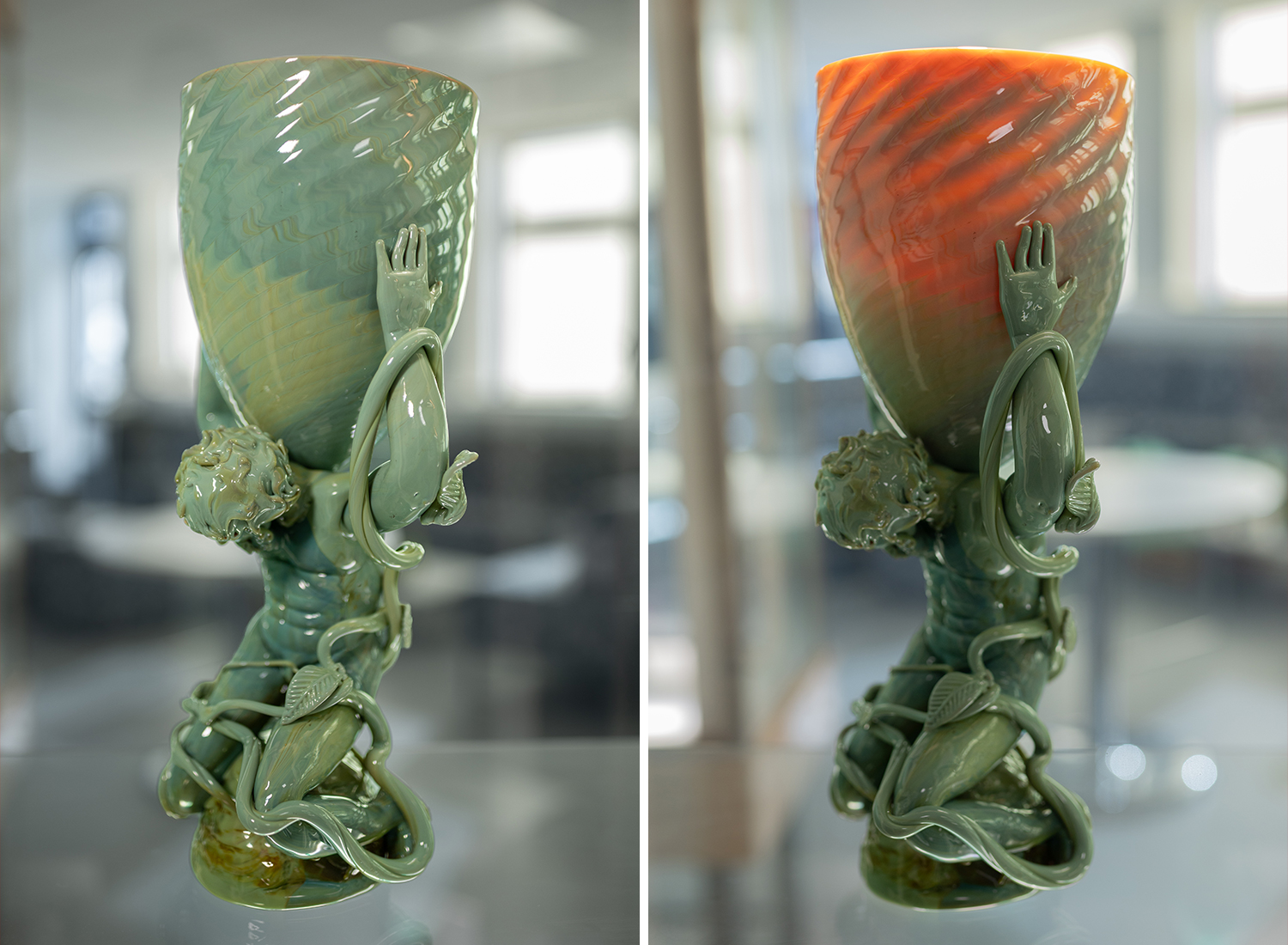
Until now, experts could not figure out how Romans created color-changing glass 1,600 years ago.
An intricately designed glass is all green on the left and the top of the same glass has turned orange on the right.

Courtesy of Ed Cartledge/Sort of Films; Photo composite Encyclopædia Britannica, Inc.

This glass cup was created at the University of Sheffield in 2026. The glass changes color like similar glasses from ancient Rome.

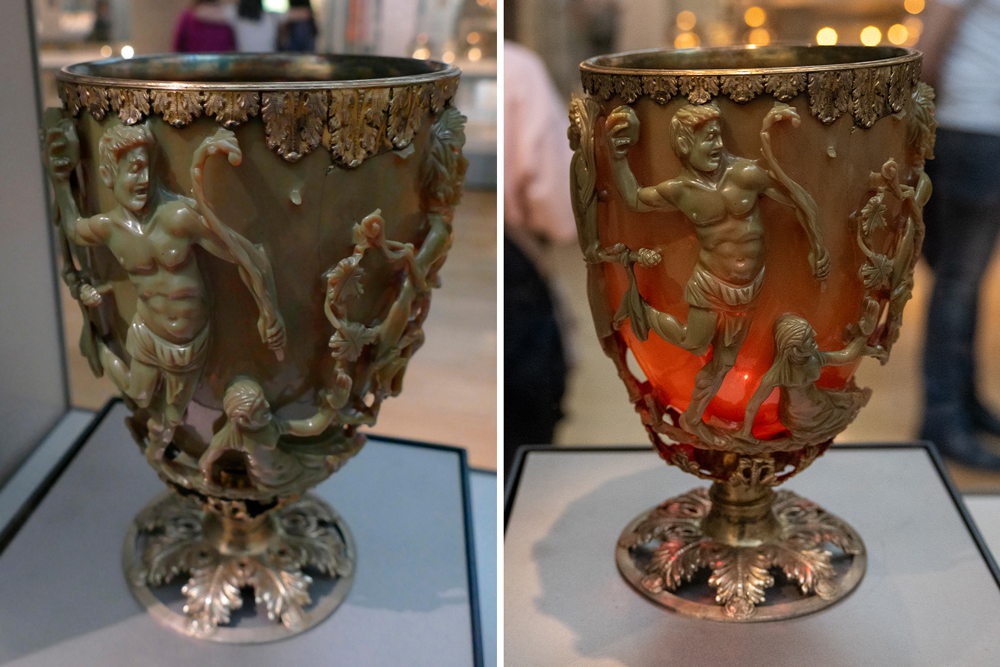
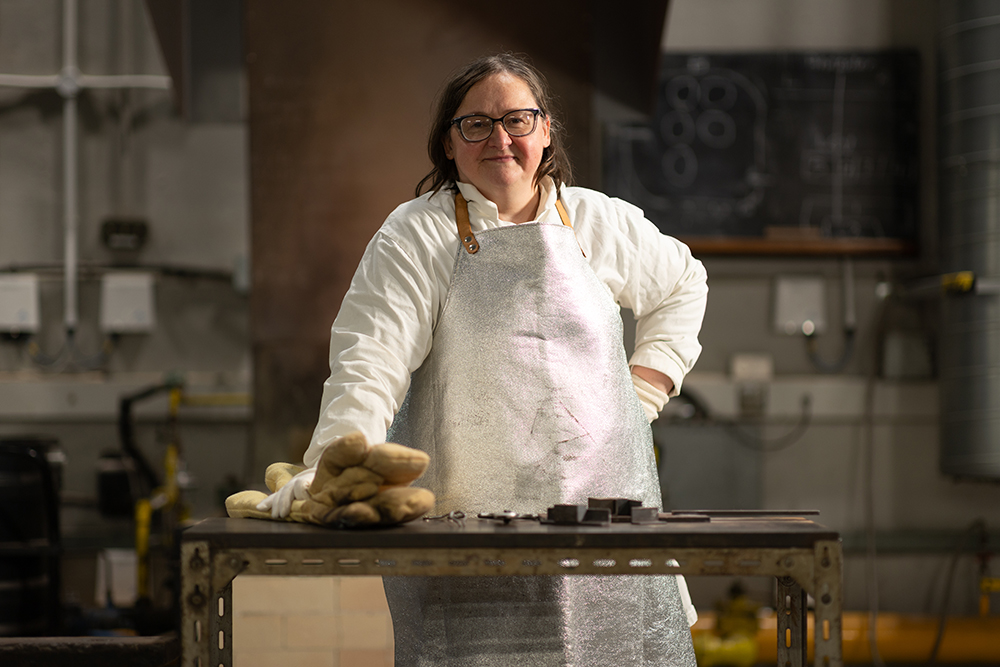
On display in the British Museum is the Lycurgus Cup, a 1,600-year-old Roman drinking glass that does something magical. In different kinds of light, the cup transforms from jade green to fiery red. The material that creates this color-changing illusion is called dichroic glass, and until recently, the Roman-era skills that made it were a mystery. Today, a glass technical expert may have finally recreated the Roman dichroic glass that has stumped historians for decades.

Researchers solved half of the dichroic glass mystery in the 1990s, when they learned that gold and silver nanoparticles infused in the glass created the color-changing effect. Still, experts couldn’t quite recreate the Roman colors. So the rest of the mystery remained: how exactly did Romans, with limited technology and ingredients, embed nanoparticles into the glass? 

Cut to now, at the University of Sheffield in the United Kingdom, where technician Lisa Hollands has been steadily experimenting with different ingredients and processes to replicate the glass. Hollands could use only the raw materials available to Roman artisans 1,600 years ago and had to experiment with different furnaces and heating. 

“If the Romans could have seen me experimenting, they’d probably laugh and ask: ‘Why does she not know how to make this?’” said Hollands in an interview with the Guardian. Her work finally paid off when she was able to recreate the recipe. “To me, it’s magic,” she said about the glass. 

Part of Hollands’s success relied on finding the right position in the furnace to place the glass and achieve the magical color. “The fact that the color is so sensitive to the position in the furnace suggests that it would have been very difficult for the Romans to control the color,” said Ian Freestone, an expert in archaeological materials at University College London. “It makes me think that, with the Lycurgus glass, they hit the jackpot.”

The university where the discovery was made is celebrating the success by collaborating with glass artist Elliot Walker to make a new dichroic glass sculpture that honors the original Lycurgus Cup. The new sculpture will go on display at the university’s Turner Museum of Glass. 

Check out the slideshow for more photos!
Courtesy of Ed Cartledge/Sort of Films, Courtesy of Ed Cartledge/Sort of Films, ID © World History Archive/Alamy, © Joseph Creamer/Dreamstime.com; Photo composite Encyclopædia Britannica, Inc.
Did You Know?

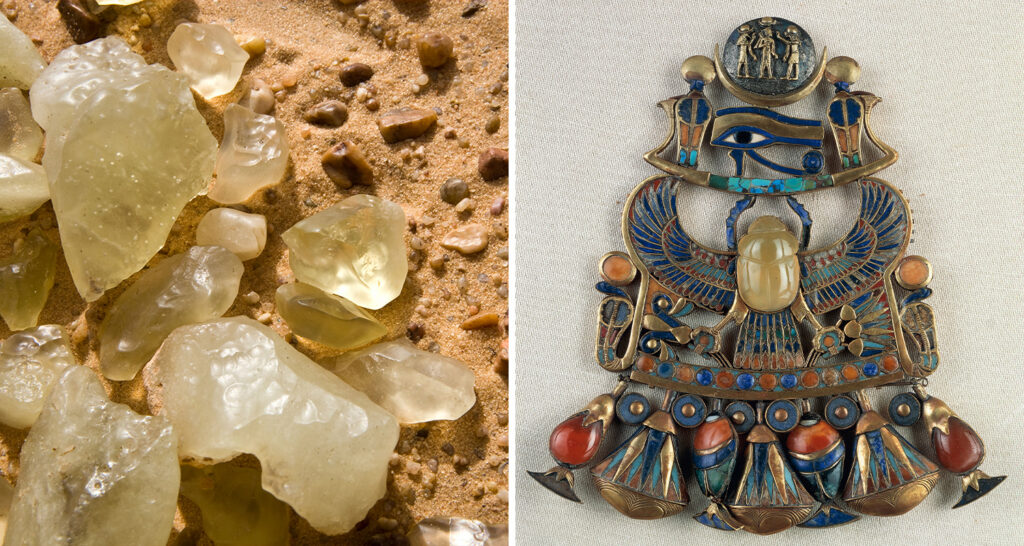
Twenty-nine million years ago, a meteorite crashed into the desert in what is now western Egypt, creating a yellow glass in the heat of the impact. This rare natural glass, known as Libyan desert glass, can still be found in parts of Egypt.

Pieces of yellow glass are on a desert floor and embedded in a multi-colored metal-based breastplate.

© Mike P Shepherd/Alamy, © DEA/A. Jemolo—De Agostini/Getty Images; Photo composite Encyclopædia Britannica, Inc.
Yellow glass pieces lie on the desert floor (left). A breastplate found in an ancient Egyptian tomb includes yellow glass (right).

Doodle Boy’s Art Show

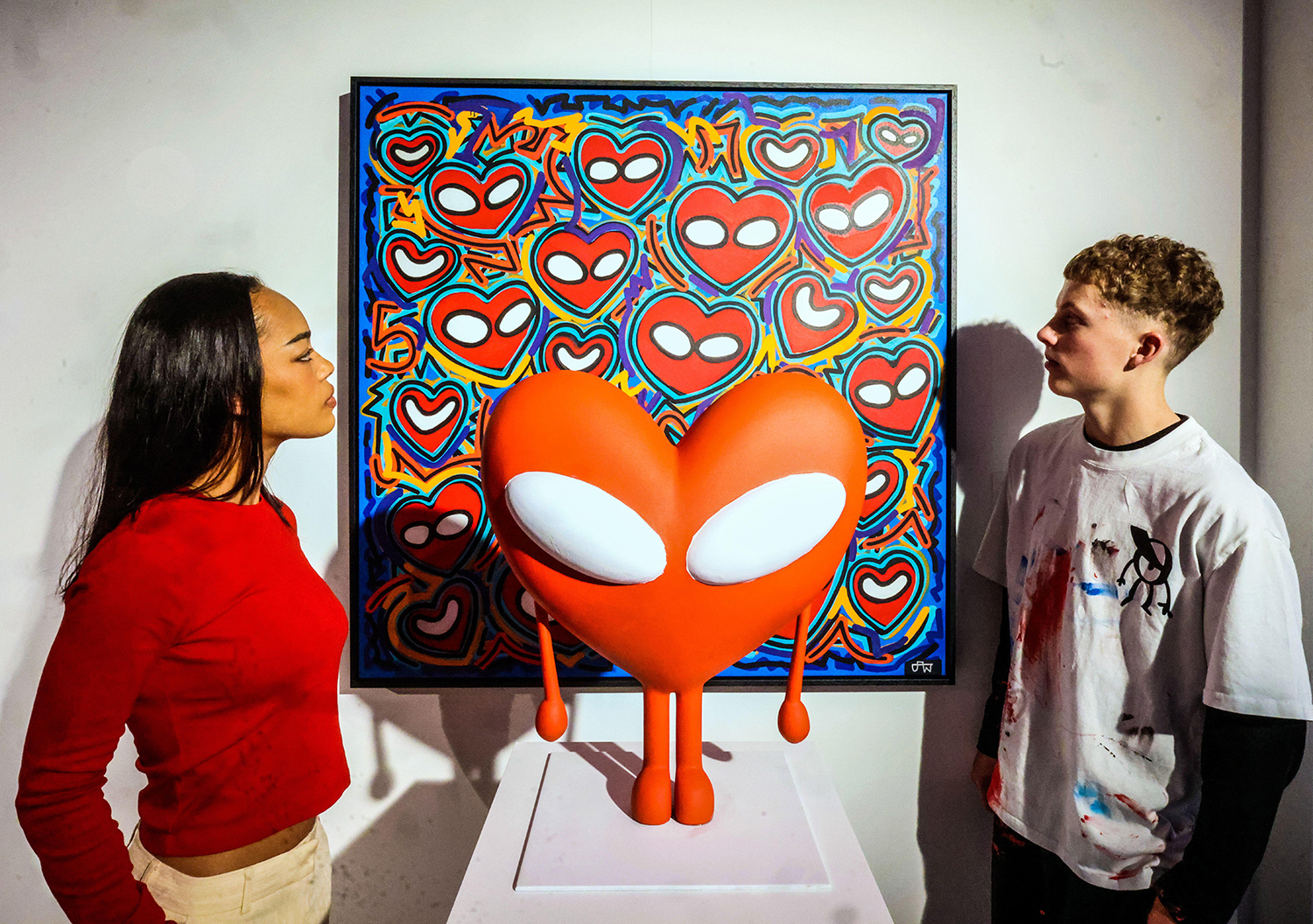
Joe Whale and another person pose on either side of a painting and a sculpture featuring red hearts with what appear to be smiles and eyes.

© Paul Quezada-Neiman/Alamy

Artist Joe Whale (right) attends an art show and poses with art that he created.

Teenager Joe Whale’s interest in art started where many other young artists begin—with classroom doodling. But Joe’s doodling quickly grew larger than life when, at 9 years old, he was asked to turn his doodles into a mural at a restaurant in his hometown of Shrewsbury in the United Kingdom. Seven years later, the artist known as the “Doodle Boy” has just completed his first solo art show in London in October of this year, proving that no one should ever underestimate the joy of scribbling. 

Since first gaining attention, Joe’s imaginative doodles have appeared in other murals, illustrated books, and even artistic collaborations with Nike and Disney. His artistic style is highly detailed, often with bold outlines and imaginative characters that overlap and interact.

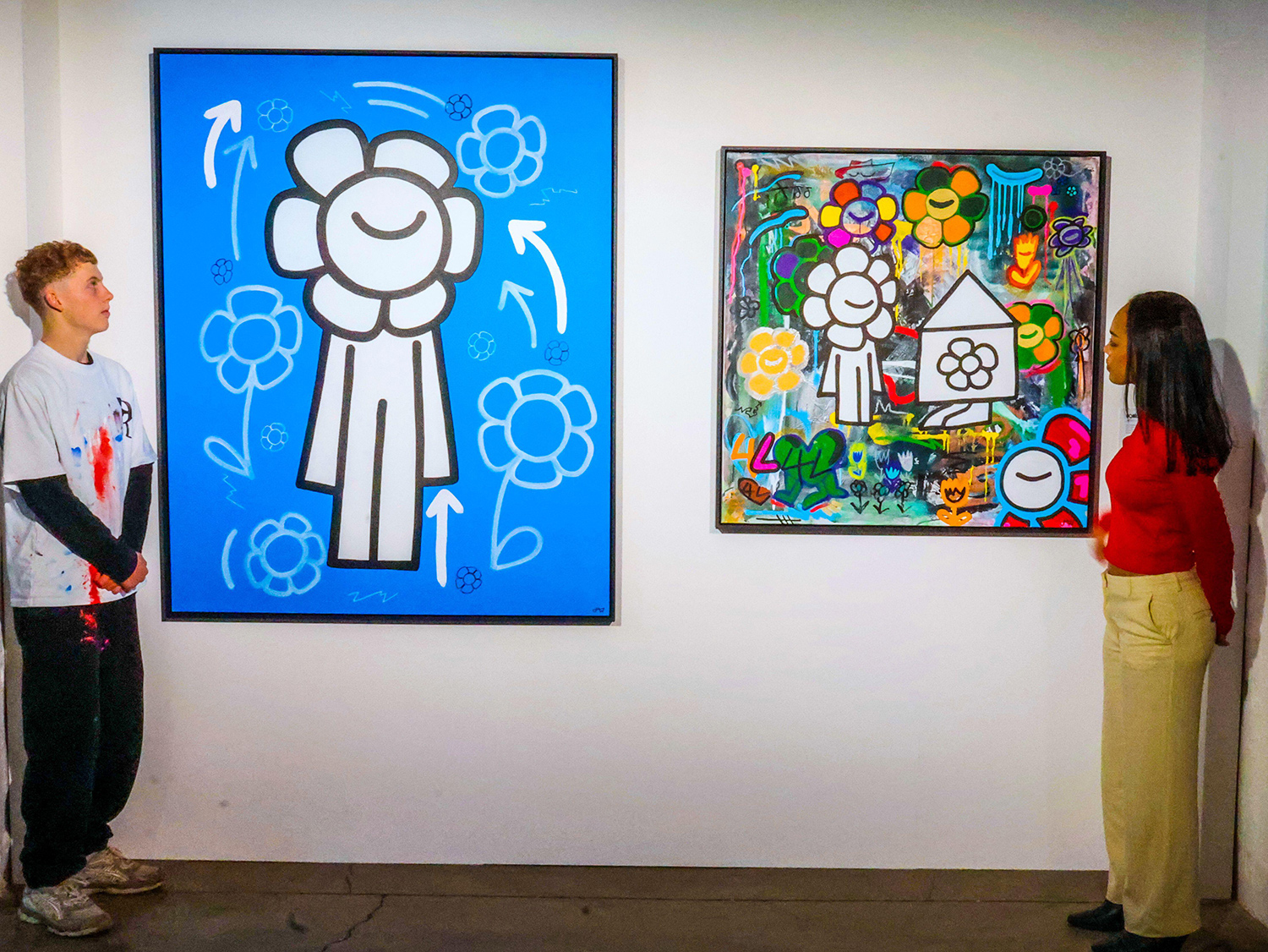
Joe Whale and another person pose on either side of two paintings that feature flowers, hearts, a house, and other shapes.

© Paul Quezada-Neiman/Alamy

Joe Whale (left) created both paintings seen here.

Now a 16-year-old, Joe has called his debut art show the Ambassadors of Feeling. The exhibit focuses on the emotions of growing up, which are embodied as 10 characters that appear across original paintings, sculptures, and even hand-painted jackets.

“What it’s about is 10 key characters which represent a key emotion in the human experience. Especially for me as I navigate my youth,” said Joe in an interview with the BBC. On his personal website, Joe described these characters as “ten characters, each one an emotion I’m still working through: awareness, rebellion, peace, positivity, and more.” 

Joe now lives in Adelaide, Australia, and is pursuing his art career full time. 

The Man Who Created Snoopy

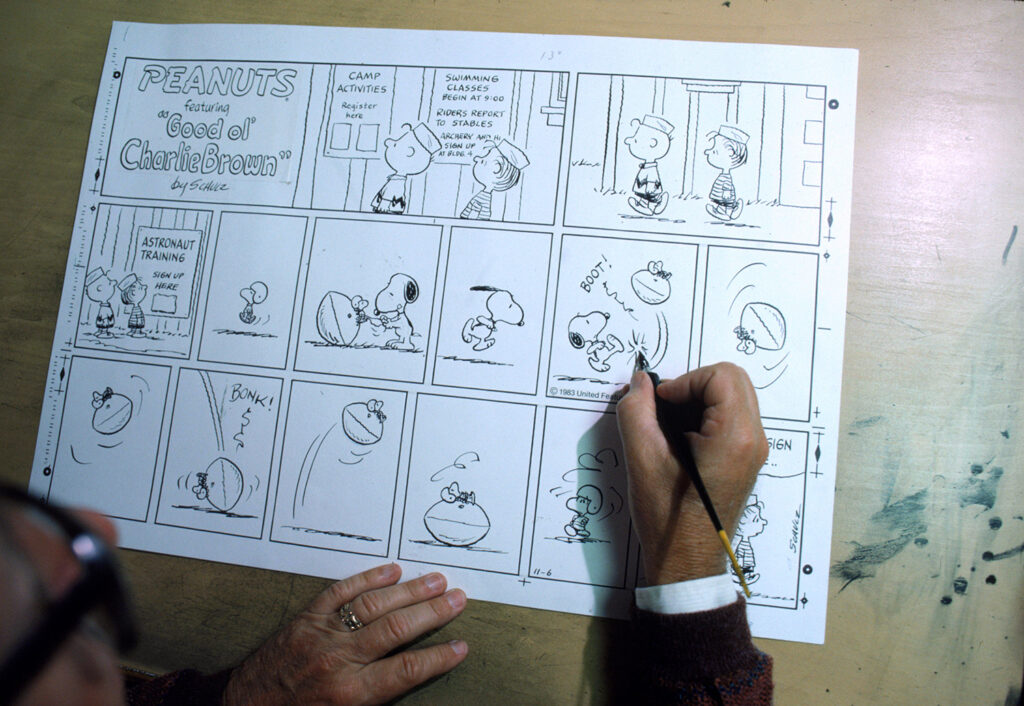
Charles Schultz’s hands are drawing a multi-paneled Peanuts comic.

© Cavan Images/Alamy

In this photo, Charles Schultz draws one of his famous Peanuts comics, featuring the characters Snoopy, Charlie Brown, and Linus.

More than 75 years ago, comic readers were introduced to a bodacious beagle named Snoopy. Today, Snoopy still appears on backpacks and T-shirts all around the world, thanks to Charles Schultz, the cartoonist who created the popular comic strip called Peanuts. Learn more about Schulz and his comics at Britannica!

WORD OF THE WEEK

tinker

PART OF SPEECH:

verb

Definition:

: to try to repair or improve something (such as a machine) by making small changes or adjustments to it

Definitions provided by
Merriam-Webster Logo

Slide

Move the numbers until they are in the correct order.

O
O
O
O
O
O

In Case You Missed It

Karl Bushby finally finished his mission to walk from Chile to England.
November 12, 2026
A group of student drone pilots in Mozambique proved a new rescue network saves lives.
November 4, 2026
Cultural treasures accompanied Native American astronauts to space.
October 29, 2026
An award-winning invention could help schools screen for concussions during student sporting events.
October 22, 2026

How to Cite This Page

Here is how to cite this page using the MLA style. While every effort has been made to follow citation style rules, there may be some differences. Please refer to the appropriate style manual or other sources if you have any questions.

“In the News: Shattering a Glass Mystery.” Britannica School, Encyclopaedia Britannica, 22 Nov. 2026. https://news.eb.com/level2/a-28-year-walk Accessed 23 Nov. 2026 [Replace this date with today’s date.]