
Skip to content

Solving Chicago’s Rat Hole Mystery
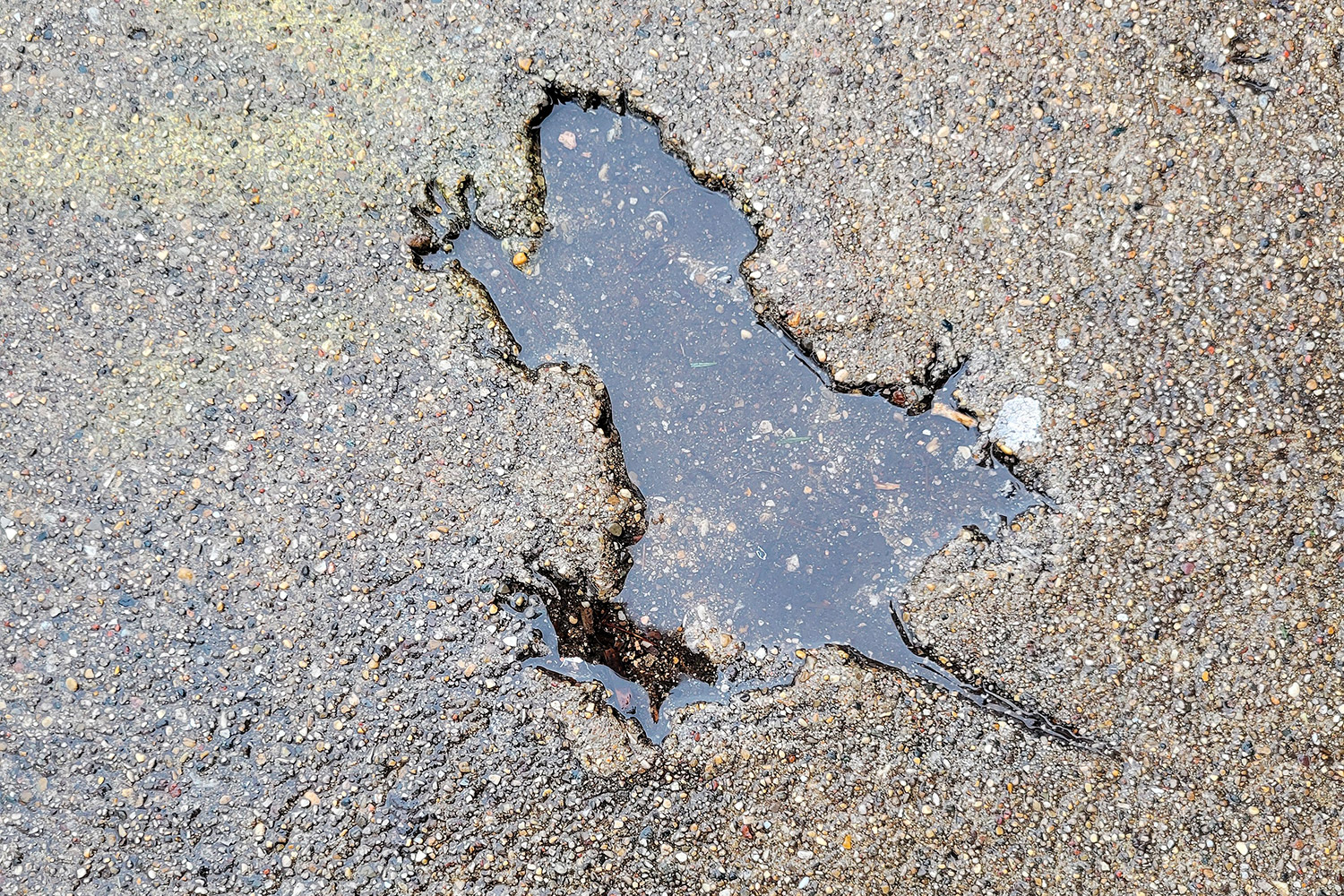
When a rat-shaped hole in a city sidewalk went viral, scientists investigated. But was the hole really made by a rat?
A hole that appears to be shaped like a rat has been made in a city sidewalk.

© Winslow Dumaine (CC SA BY-4.0.)

This photo of the Chicago rat hole went viral online, with more than five million views.

In January 2024, a curious rat-shaped imprint in a Chicago sidewalk went viral online, inspiring tourists to journey to the neighborhood to take pictures and leave coins and cheese as offerings. The hole also drew in scientists who were determined to uncover the origins of the imprint. In a stunning discovery, the researchers say the “Chicago Rat Hole” is a case of mistaken identity.

Let’s rewind a bit. It was Michael Granatosky, a researcher who studies animal evolution, who decided to figure out what caused the sidewalk imprint.

“It seemed like a fun project,” said Granatosky in an interview with Science News Explores.

Using the viral photos, Granatosky and his team applied paleontology methods to measure features of the imprint. They analyzed the creature’s paws, the width of its head, and the distance from nose to tail. They then compared these measurements to rodent species that live in Chicago. It turns out the imprint doesn’t match a rat’s body, but it does appear to match that of a tree squirrel. 
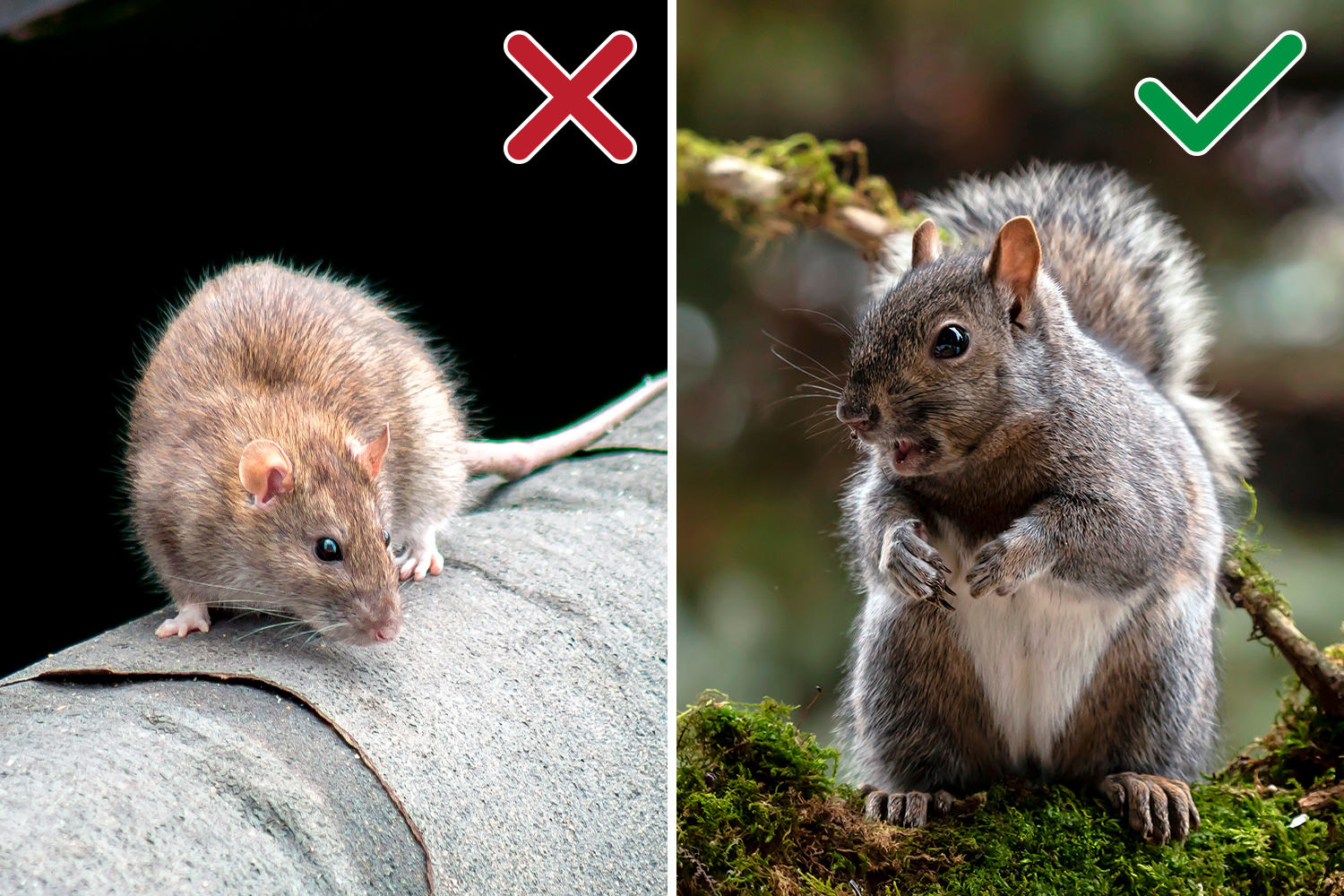
Side by side images of a rat and a squirrel with an X by the rat and a checkmark by the squirrel.

© kvdkz, Denny/stock.adobe.com; Photo illustration Encyclopædia Britannica, Inc.

Based on the evidence, the hole was made by a squirrel, not a rat.

Based on the evidence, the research team made some hypotheses. The first is that a squirrel misjudged the jumping distance between trees, so it fell into some freshly poured concrete below. The other explanation is a hawk caught the squirrel and then accidentally dropped it. Either way, once the squirrel’s body landed, it made a lasting imprint when the concrete hardened. However, the cement did not preserve the fine fur of the squirrel’s bushy tail, which is why the imprint looked so rat-like.
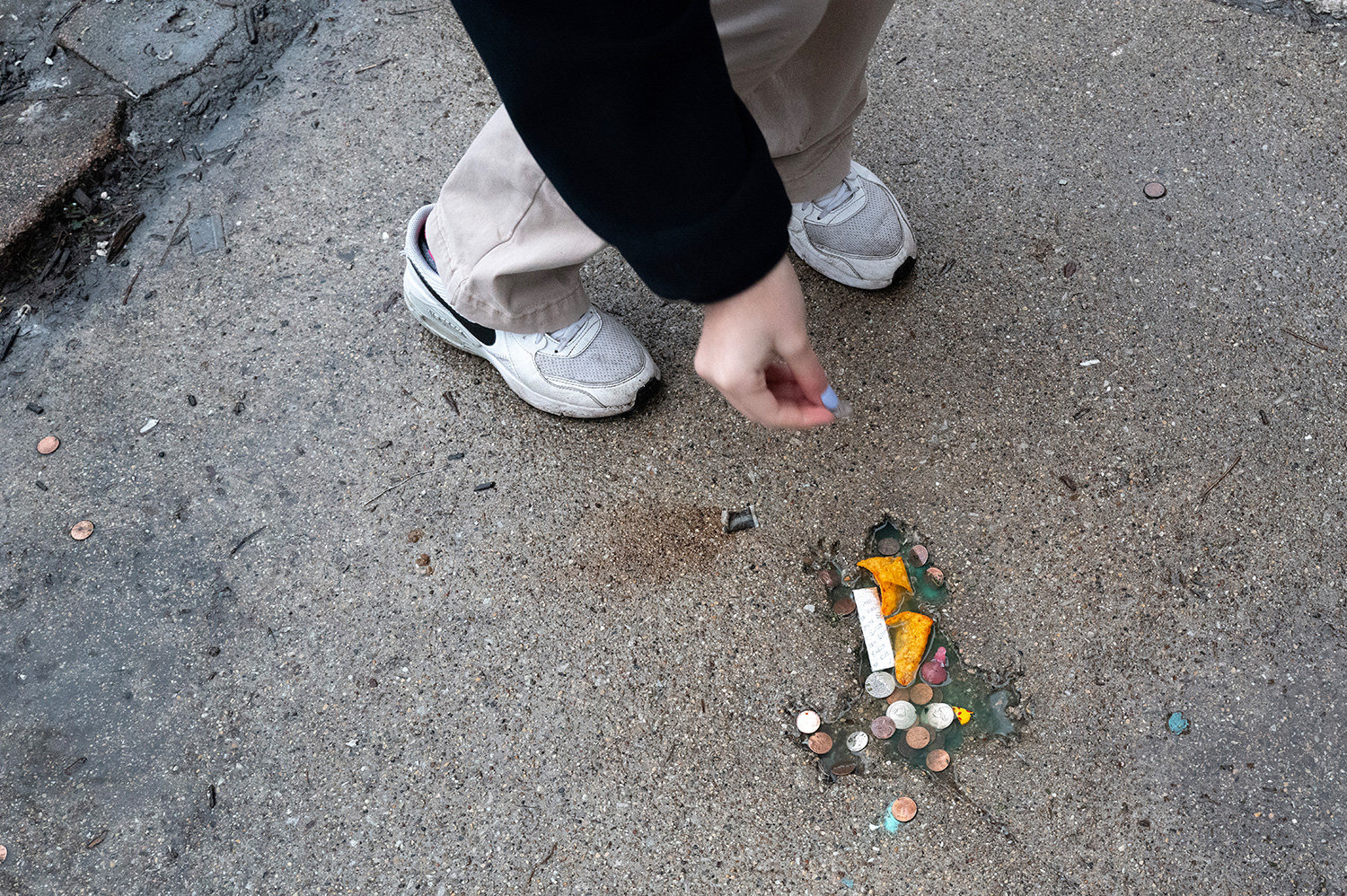
A person’s hand can be seen playing a coin in a rat-shaped hole that already contains food and other coins.

© Scott Olson/Getty Images

A visitor leaves a coin in the Chicago rat hole in January 2024.

Granatosky is happy that scientific tools made to study the past can help answer modern mysteries about the natural world. 

“It’s so rare to get such a fun story,” he said. “It really speaks to what we do in my lab—which is take data and package it in a way that is accessible.”

Since the imprint went viral, city officials have moved the rodent-stamped sidewalk slab from its original spot, with a plan to one day proudly display it for tourists again.

NEWS BREAK

WNBA Players Get a Pay Raise

A’ja Wilson and Jackie Young stand on a basketball court wearing shirts that say “Pay us what you owe us.”

© Steph Chambers/Getty Images

In this 2025 photo, A’ja Wilson (left) and Jackie Young of the Las Vegas Aces wear shirts that say “Pay us what you owe us” to send a message to the WNBA.

It’s very likely that WNBA players are about to get a pay bump. After hours of negotiations, the league and the players’ union reached a spoken deal that will increase player salaries.

Basketball fans know that NBA players often sign contracts worth millions of dollars, while salaries paid to the female pros of the WNBA are considerably lower. The average WNBA salary for the 2024–2025 season was $102,000.  Compare that to nearly $12 million for the NBA.

The new deal will raise the average WNBA player salary to about $600,000 per season. Top players are eligible to earn over a million dollars. At press time, in fact, A’ja Wilson of the Las Vegas Aces was expected to sign a new $1.4 million contract.

The players and their union have been fighting for a pay increase for many years. They argued that the WNBA is becoming more popular—and making more money—and that player salaries should reflect that. Although the new deal isn’t final yet, it looks like this will happen.

Did You Know?

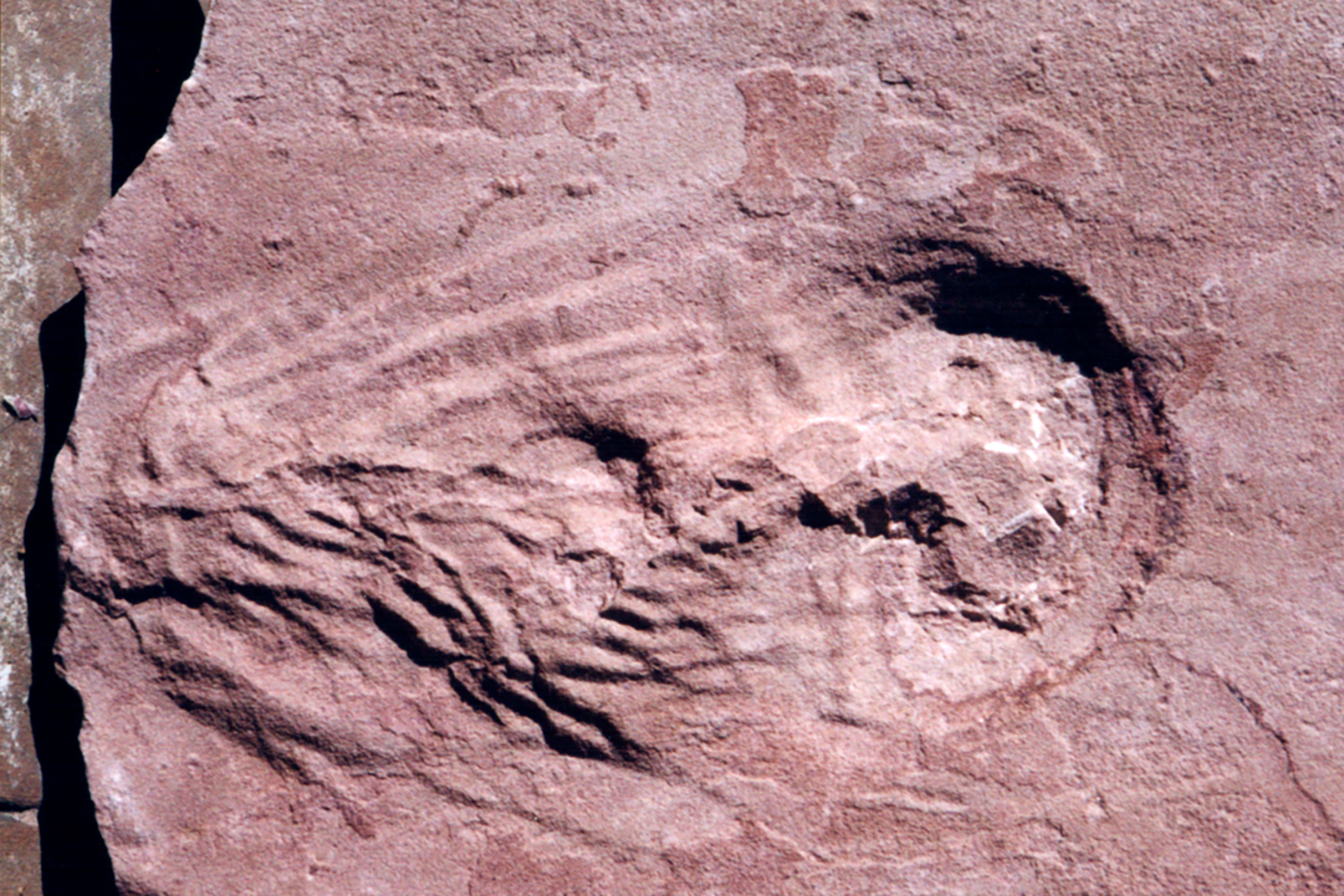
Paleontologists can study dinosaur pee from fossilized imprints! This ancient pee print is called a urolite. Like fossilized footprints, urolites were made when a dinosaur peed in sand and then the sand layer turned to rock.

A fossilized imprint of dinosaur urine is carved into a slab of rock.

Marcelo Adorna Fernandes

Mammoth Memories

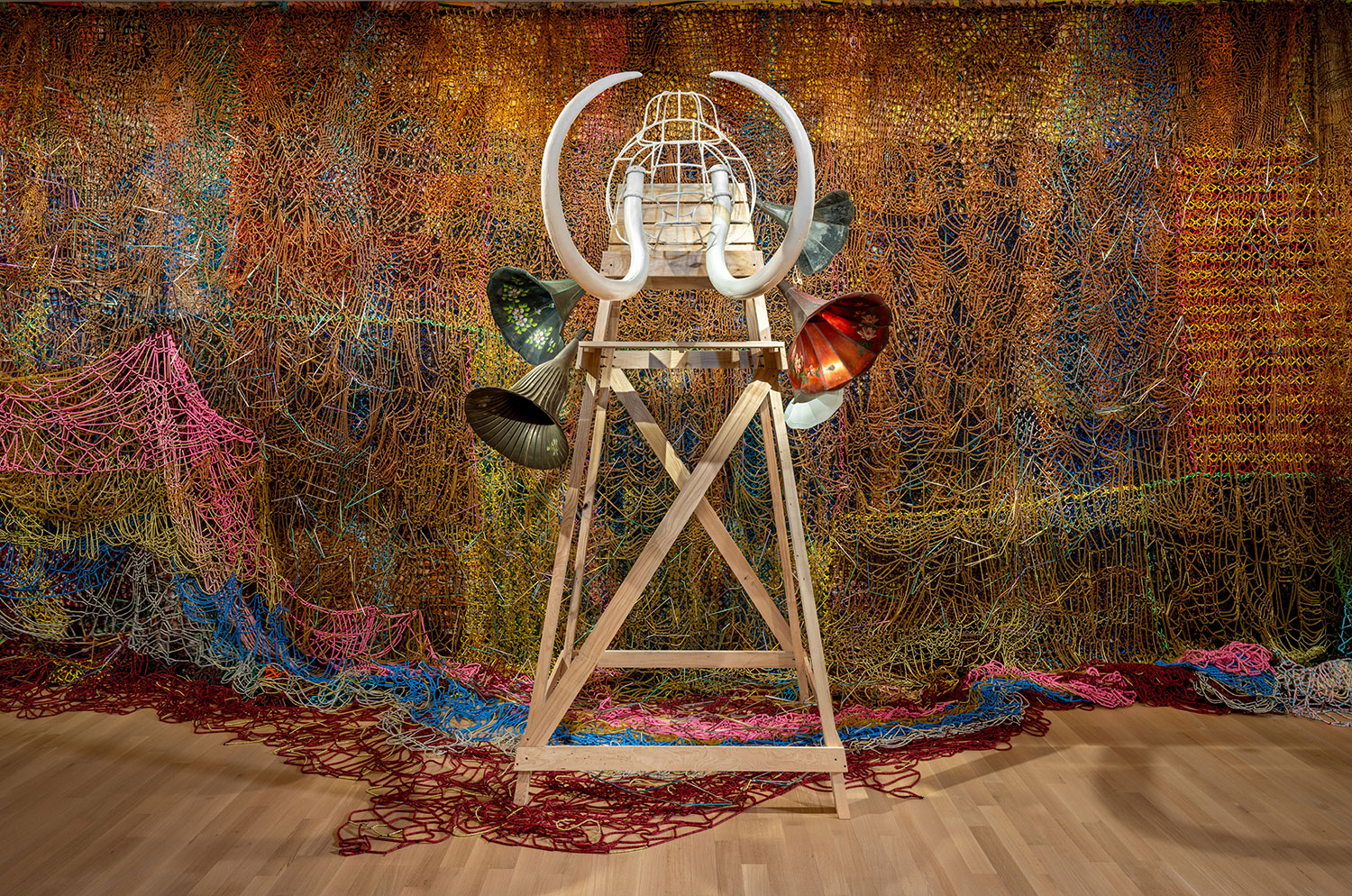
A mammoth made with wood, found objects, and tusks is on display in a museum setting.

© NickCave; Photo by RON BLUNT STUDIO

An example of one of Nick Cave’s mammoths is shown here. (Installation photography of Nick Cave: Mammoth, Smithsonian American Art Museum, 2026.) 

Woolly mammoths have been extinct from Earth for thousands of years. All that is left today are some preserved remains and our own imagination of what these animals were like. Artist Nick Cave is taking this imagination to a monumental level by recreating these prehistoric beasts with collected objects.

“Nick Cave gathers fragments of daily life—toys, tools, keepsakes…and transforms them into a shared space of memory and imagination,” said Sarah Newman, an art curator at the Smithsonian American Art Museum (SAAM), where Cave’s work is displayed.

Nick Cave crouches in his studio examining some of his art and surrounded by his other art as well as found objects.

Image courtesy of the artist and Jack Shainman Gallery. Photos by James Prinz.

Nick Cave in his studio with variable objects featured in an exhibit called “A Lit History.” Image courtesy of the artist and Jack Shainman Gallery. 

Cave makes artistic creatures using materials from craft stores and thrift shops. He crafts plastic containers, beads, wigs, used clothing, old telephones, and wooden toys into creatures. The idea behind the exhibit is that these everyday items hold memories and stories of the past. These stories can be buried and rediscovered, like ancient animals. 

“And so when I think about mammoths, I think about that at one point, they existed on the Earth, and then were extinct and buried, and then rediscovered. What is erased becomes revealed. What is removed, reappears,” said Cave in an interview with CNN.

Cave’s artwork is part of a new exhibit called “Nick Cave: Mammoth.” It is featured at the SAAM in the U.S. capital of Washington, D.C., from now through January 3, 2027.

“His work is a powerful reminder that objects are often more than things; they carry our histories, our knowledge and the stories that carry us forward,” said Newman.

Trees That Turned to Stone

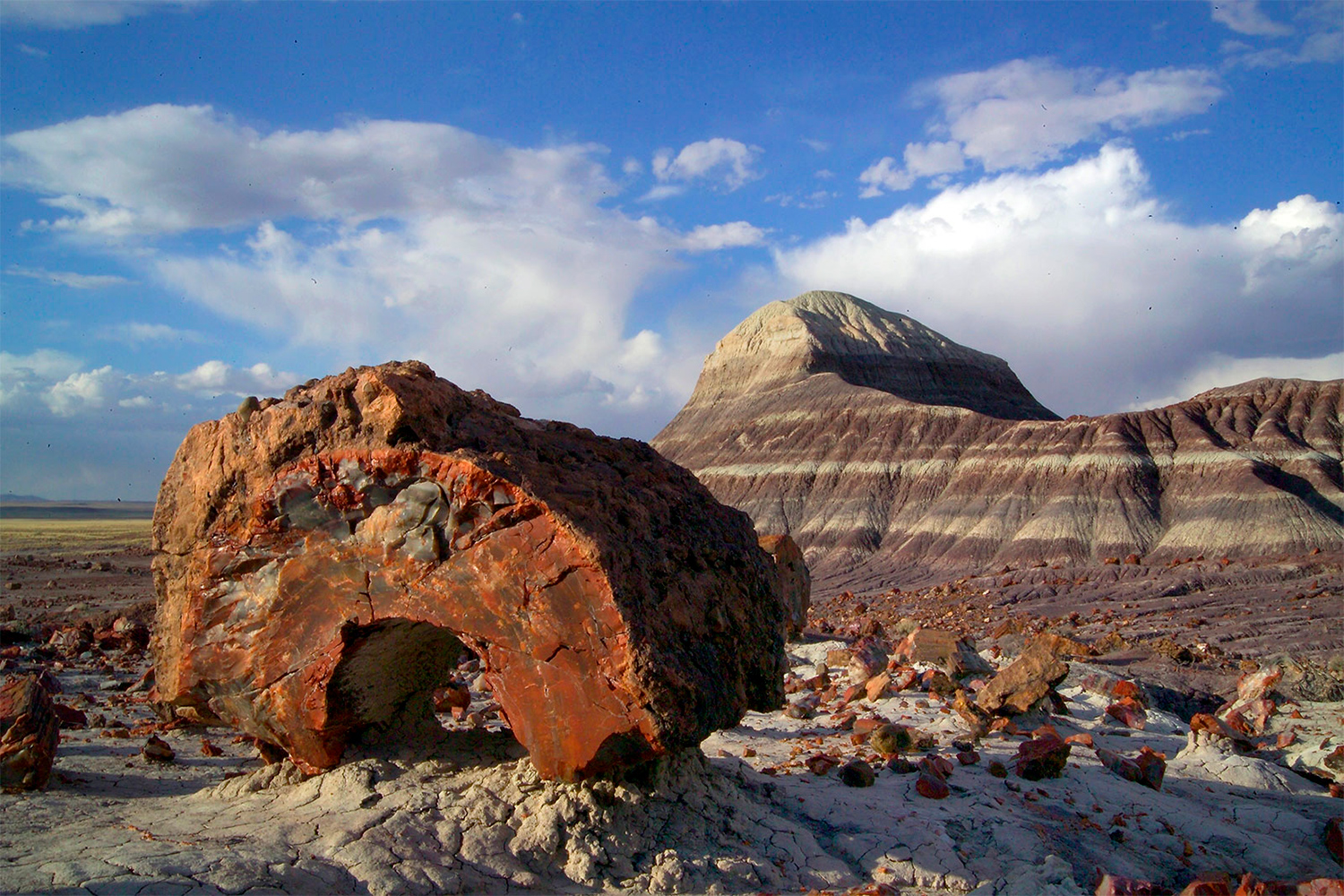
A hollowed out petrified log is in the foreground and a land formation is in the background.

U.S. National Park Service

The petrified log in this photo is in Petrified Forest National Park in Arizona.

Millions of years ago in western North America, trees that once stood tall and green fell to the ground and began to slowly change into rock in a process called petrification. Today people can walk among the remains of these stone trees. 

Read more about this otherworldly place at Britannica!

WORD OF THE WEEK

inference

PART OF SPEECH:

noun

Definition:

: the act or process of reaching a conclusion about something from known facts or evidence

Definitions provided by
Merriam-Webster Logo

Criss Cross

Can you figure out where each word goes?

O
O
O
O
O
O

In Case You Missed It

When a rat-shaped hole in a city sidewalk went viral, scientists investigated. But was the hole really made by a rat?
March 19, 2026
New research shows dogs can learn new words by listening in on human conversations.
March 12, 2026
Figure skater Alysa Liu felt happy and confident at the 2026 Olympics. She skated off with a gold medal!
March 5, 2026
An all-women ranger team protects endangered animals on the Indonesian island of Sumatra.
February 26, 2026

How to Cite This Page

Here is how to cite this page using the MLA style. While every effort has been made to follow citation style rules, there may be some differences. Please refer to the appropriate style manual or other sources if you have any questions.

“In the News: Solving Chicago’s Rat Hole Mystery.” Britannica School, Encyclopaedia Britannica, 20 Mar. 2026. https://news.eb.com/level2/solving-chicagos-rat-hole-mystery. Accessed 23 Mar. 2026 [Replace this date with today’s date.]