An Unexpected Treasure
A 9-year-old found an unusual rock. It turned out to be a prehistoric axe!
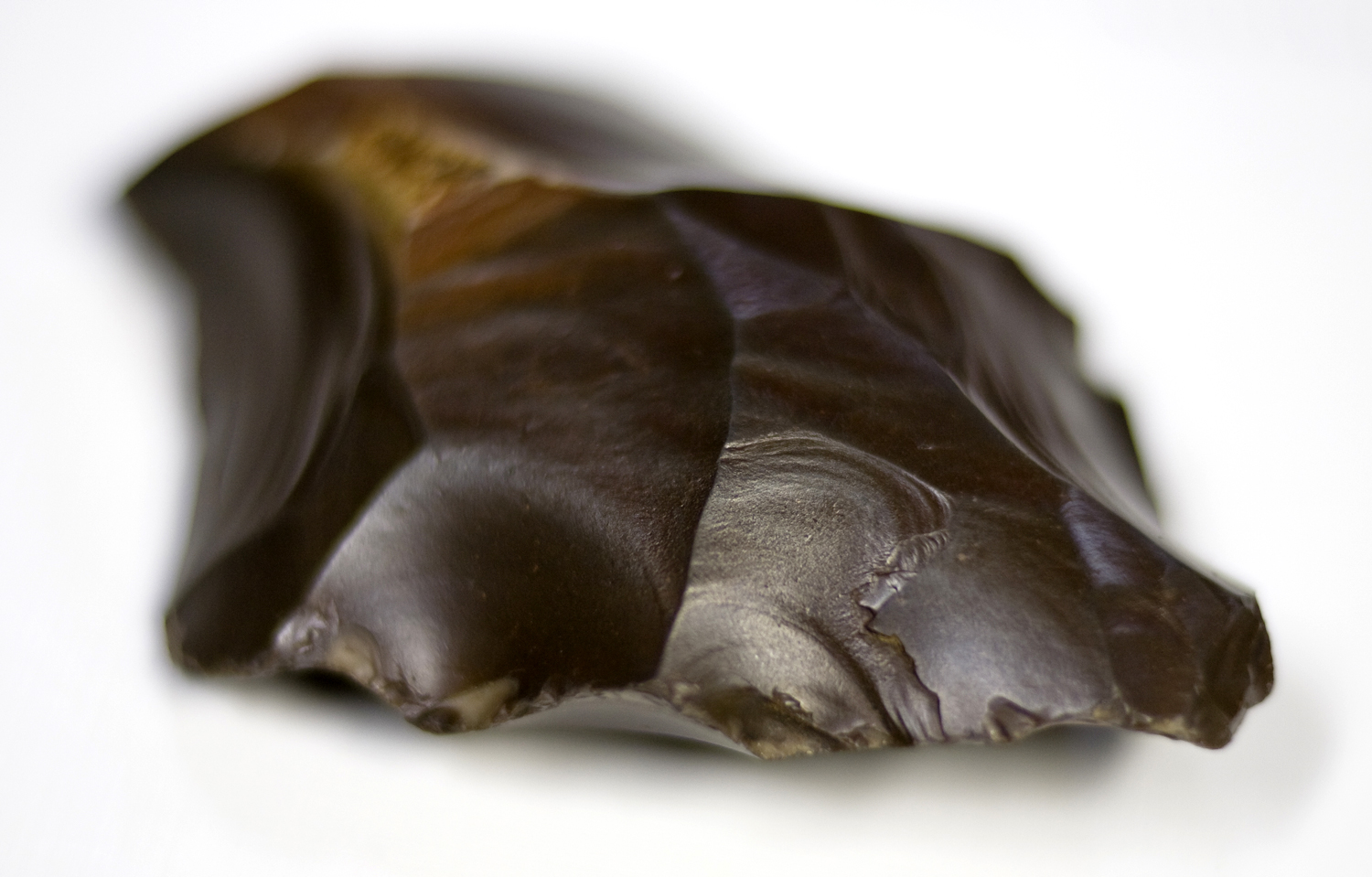
© Jose Gil/Dreamstime.com
This Stone Age axe is similar to the one discovered by 9-year-old Ben Witten.
When 9-year-old Ben Witten found a small, pointy rock on a beach a few years ago, he didn’t think about what it might be. He just thought it was cool, so he took it home and put it in his bedroom. But after a recent visit to a museum, Ben learned that what he’d found was an axe that had been made by an early human called a Neanderthal!
Ben’s discovery came after he visited the Worthing Museum in southern England, where he lives. The museum had a Neanderthal axe on display that looked a lot like what Ben had in his room. This led Ben and his mom to send photos of Ben’s rock to the museum’s archaeologist, James Sainsbury. (An archaeologist is a scientist who studies ancient people by examining bones and human-made objects from the past.) Sainsbury told Ben that his suspicions were correct. The rock he had found at the beach is also a Neanderthal axe, and it may be 60,000 years old.
“This is by far the oldest item shown to myself in [more than 10] years,” Sainsbury told Fox News Digital. “Neanderthal hand axes are rare in [this area]. This is the first to be found in years. The nature of the find, being made by a young local boy on the beach, makes it doubly special.”
Neanderthals were humans that evolved a little earlier than Homo sapiens (today’s humans) but died out about 40,000 years ago. The axe Ben found might have been used to cut, dig, chop wood, or butcher animals.
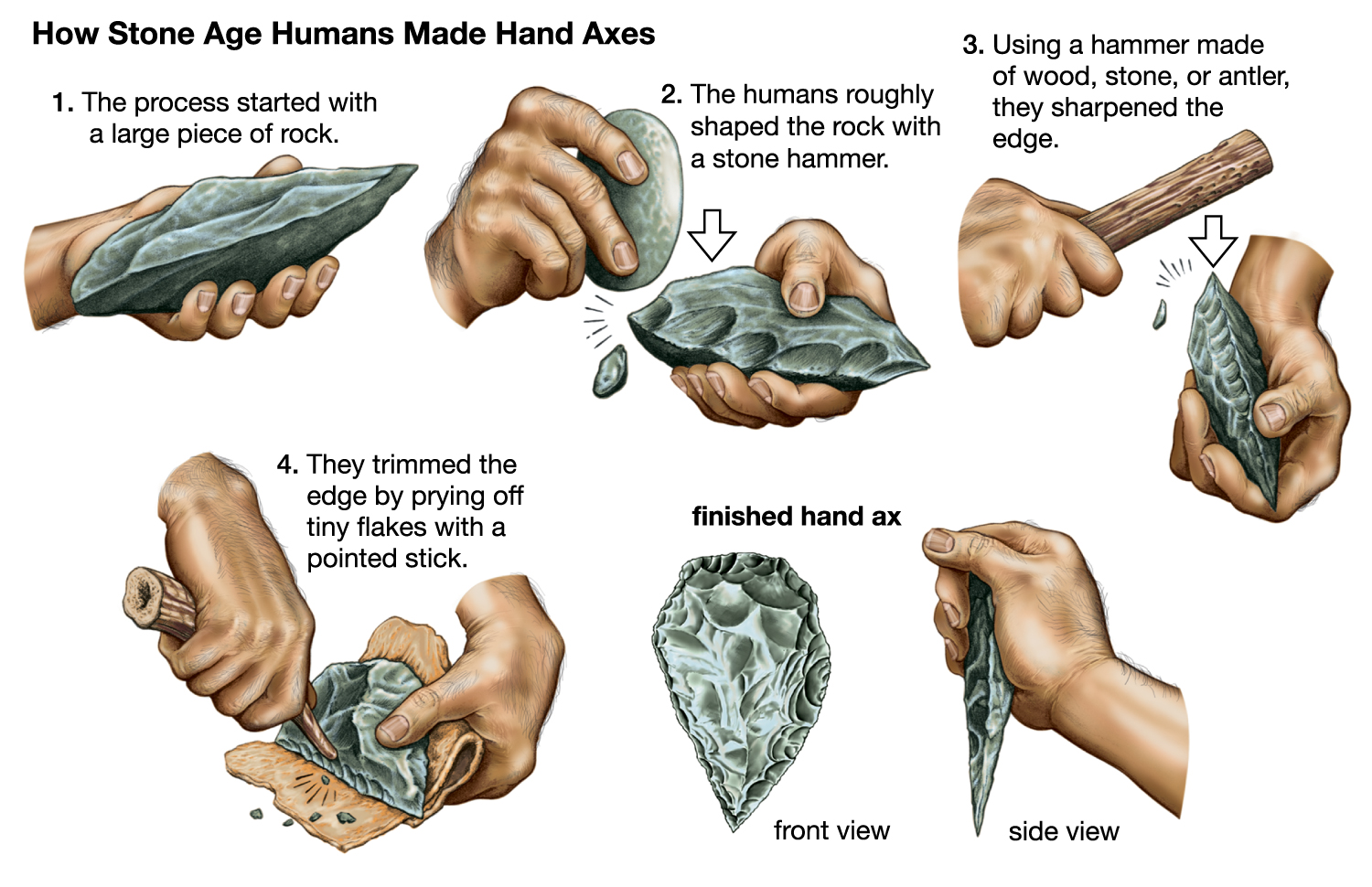
Encyclopædia Britannica, Inc.
Early humans used many tools to make axes out of rocks.
Ben loaned the axe to the Worthing Museum, where it will be on display until February.
“They said it’s their best find in 10 years. Now it’s in a case in the museum. I was really excited. My heart was beating really fast,” Ben told the British Broadcasting Corporation (BBC).
Sainsbury says Ben’s discovery should be a reminder that anyone can find cool objects from the past.
“I hope people realize that they don’t need specialist training to find interesting archaeology,” Sainsbury told Fox News Digital. “[Also], it is incredibly important to report any finds [to experts] so they can be properly recorded. Otherwise, that information is lost forever.”

Did You Know?
Neanderthals probably had the ability to talk and develop some kind of language, but scientists aren’t sure their speech was as fancy as ours can be!
© Ernest Akayeu/Dreamstime.com; Animation Encyclopædia Britannica, Inc.
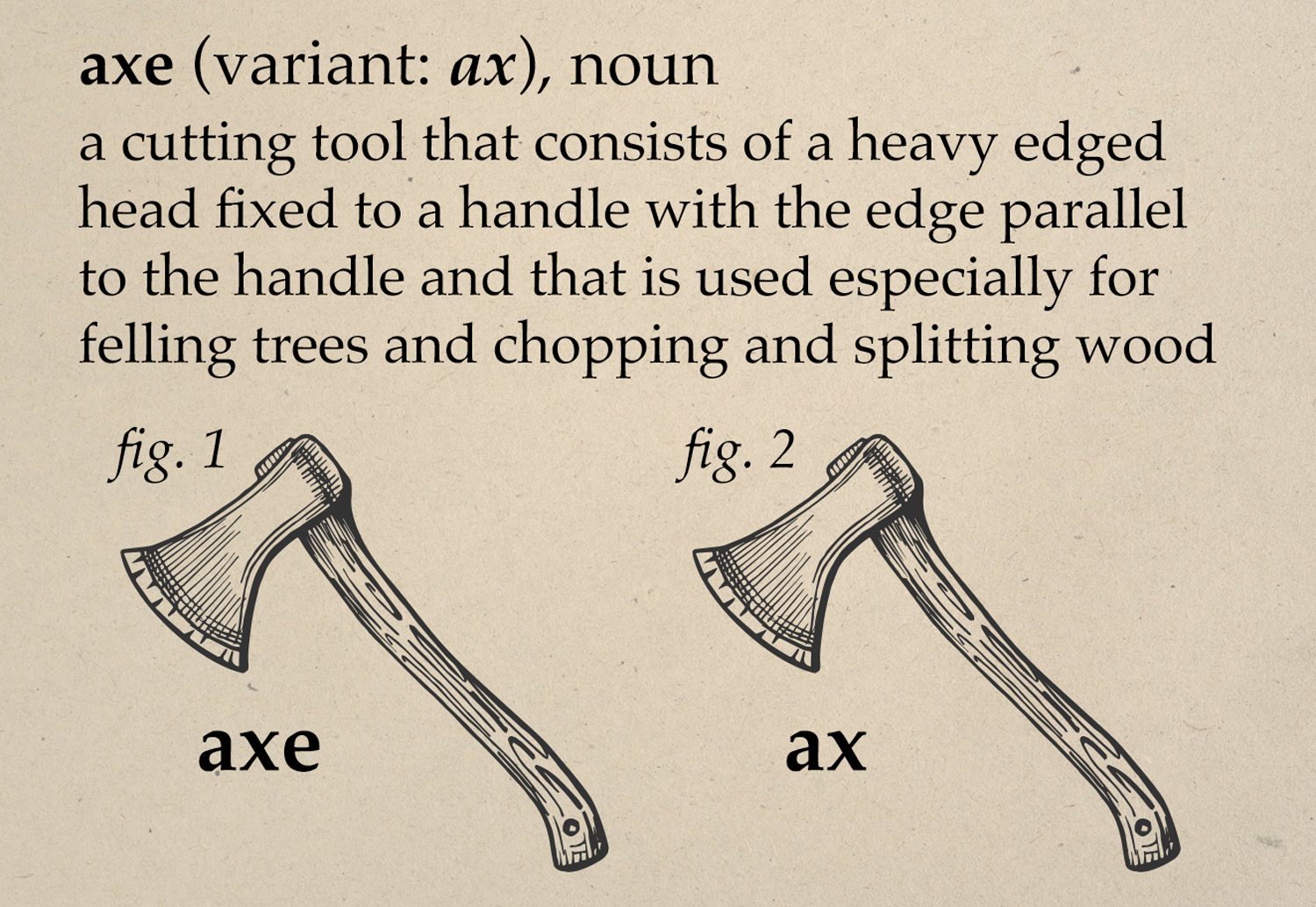
Ax or Axe?
© Anastasiya Alforova/Dreamstime.com; Illustration composite Encyclopædia Britannica, Inc.
An ax is the same thing as an axe!
A dictionary will usually tell you exactly how a word is spelled. But sometimes there’s more than one way to spell a word! According to the Merriam-Webster Online dictionary, the word axe can be spelled either axe or ax.
How did this happen? Before the 1600s, there were no dictionaries to tell people how to spell English words. When the first dictionaries came out, the people who wrote them made their own rules. Different dictionaries had different spellings!
Over time, people agreed on how to spell most English words. But one of the words people never agreed on was axe. Some people thought the word should be spelled ax because that’s how it sounds. Others thought there should be an e at the end.
Today, if you look up axe in the dictionary, you will probably see the word spelled two ways, but axe is the most common spelling.
How We’ve Changed!
© ruiruito/stock.adobe.com, © Tanya Puntti, Jiri Hrebicek/Dreamstime.com, © kristianbell, Inventori—iStock/Getty Images; Photo composite Encyclopædia Britannica, Inc.
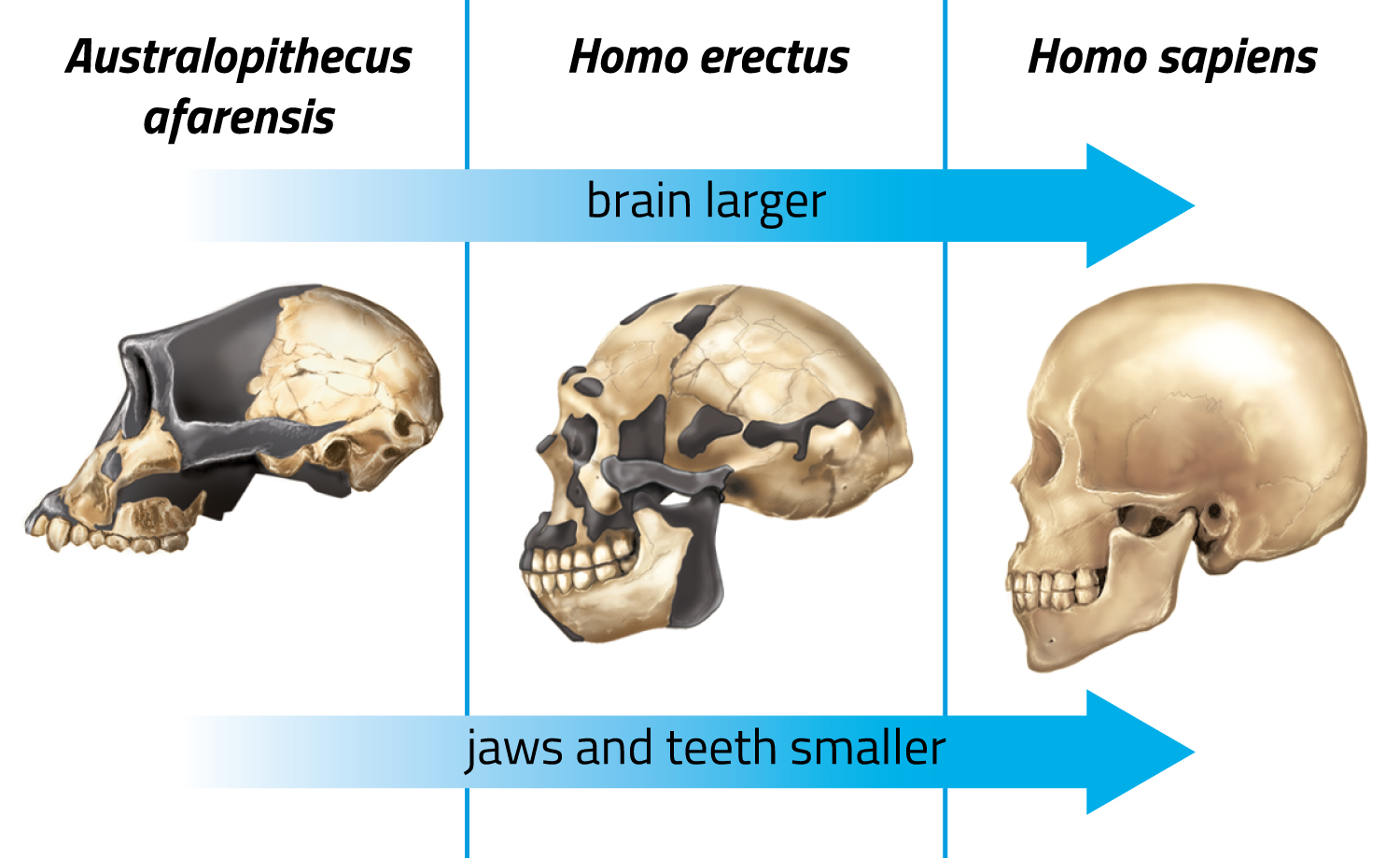
If you read today’s main article, you know that humans haven’t always been the same. Instead, they evolved over millions of years from an ancestor (early relative) that was similar to an ape.
The above illustration compares the skulls of early humans with the modern human skull.
You can learn more about how humans developed at Britannica!

Word of the Day
artifact
noun
: a simple object (such as a tool or weapon) that was made by people in the past


Play
Word Search
Can you find all the words?