Skip to content

An Eagle Feather in Space

Cultural treasures accompanied Native American astronauts to space.
Nicole Mann waves and smiles while wearing a spacesuit and John Herrington in a NASA jumpsuit.

© Jim Watson—AFP/Getty Images, © Brian Cleary—AFP/Getty Images; Photo composite Encyclopædia Britannica, Inc.

NASA astronauts Nicole Mann (left) and John Herrington (right)

When John Herrington flew to space in 2002, he brought with him three symbolic objects—a flute, a beaded eagle feather, and a flag from the Chickasaw Nation. These pieces of Herrington’s heritage helped commemorate his milestone as the first Native American in space.

Herrington, a member of the Chickasaw Nation in Oklahoma, went on a 13-day mission to the International Space Station (ISS). Because there is limited space on the rockets used to transport astronauts, they are allowed to bring only a few personal items on these missions. Herrington’s flute was handmade by a Cherokee friend who was also an engineer at the space center. The eagle feather had a beaded design that symbolized “Mother Earth and Father Sky and all the people of the world,” said Herrington in an interview with PBS.
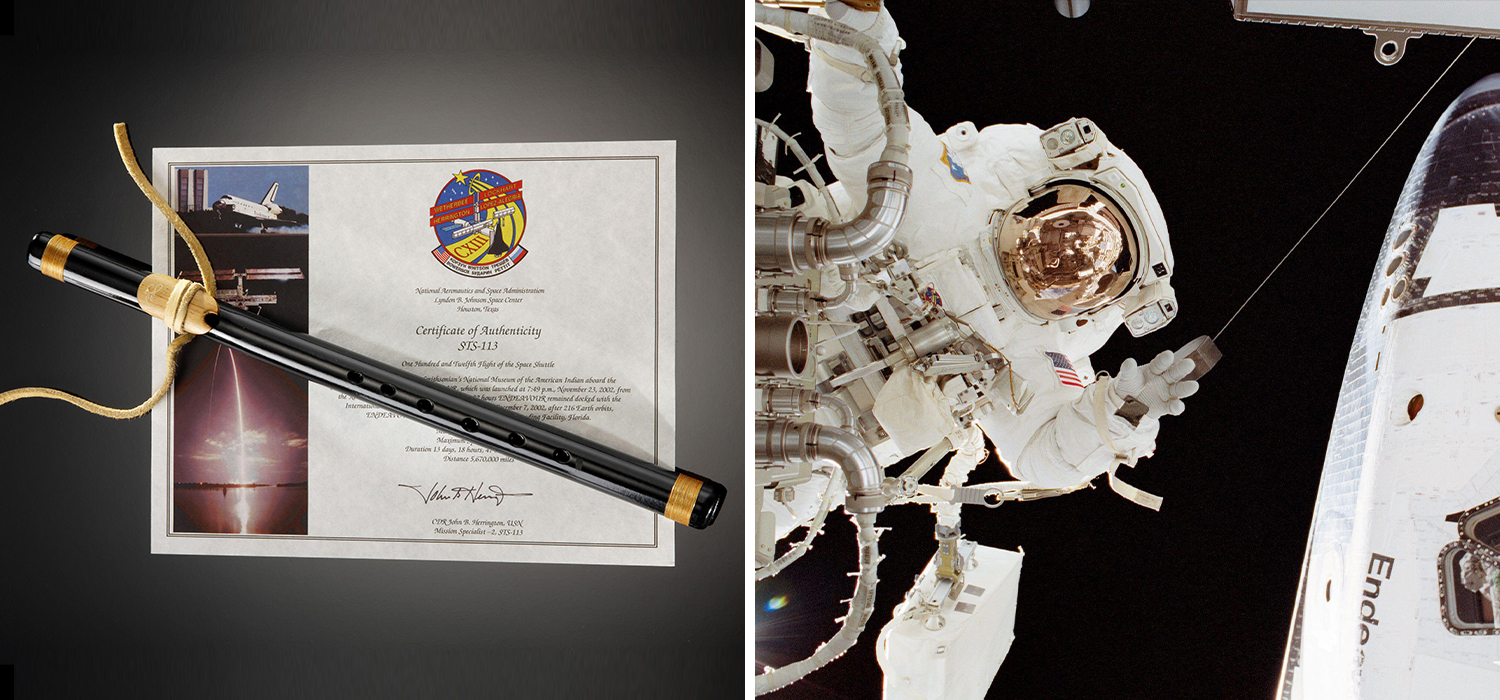
A black flute sits on a certificate showing that the flute traveled into space with John Herrington, and Herrington in a full space suit on a space walk.

© NASA/ZUMA Wire—ZUMAPRESS.com/Alamy; Photo composite Encyclopædia Britannica, Inc.

John Herrington (right, on a spacewalk) brought the flute shown on the left on a space mission.

In 2022, exactly 20 years after Herrington’s mission, the first female Native American astronaut journeyed to space. Nicole Mann, a member of the Wailacki of the Round Valley Indian Tribes in California, acted as the mission commander for her crew while they lived and worked on the ISS for six months. 

Like Herrington, Mann chose to bring along a personal symbol of her heritage to space: a dream catcher from her mother. The dream catcher, which originates from the Ojibwe tradition, is a hoop with a woven web-like design at its center and beads and feathers hanging from the bottom. Native American parents hang dream catchers at their children’s bedsides to catch bad dreams while allowing good dreams to fly through to sleeping children.

Nicole Mann and three other astronauts pose with their hands touching while wearing white astronaut uniforms.

© Jim Watson—AFP/Getty Images

 In this 2022 photo, Nicole Mann (second from right) poses with her crew just before their launch to begin a six-month mission in space.

In an interview with NPR around the time of her launch, Mann said she hoped her journey would help inspire young people to seize opportunities.

“These young women, maybe Natives, maybe people from different backgrounds, that realize that they have these opportunities and potentially these barriers that used to be there are starting to be broken down,” said Mann. “And so hopefully that will inspire that younger generation.”

Did You Know?

An eagle feather is considered sacred, or religiously significant, in many Native American and First Nations cultures. Eagle feathers can represent honesty, courage, wisdom, and freedom, and they are given to people in moments of honor, such as at graduation ceremonies. 

Huumaay Banegas is about to move the feather and tassel on his graduation cap.

© Sarah Reingewirtz/MediaNews Group—Los Angeles Daily News/Getty Images

Huumaay Banegas, who is Kumeyaay, added a feather to his tassel when he graduated from UCLA in 2024.

“We Hold the Rock!”

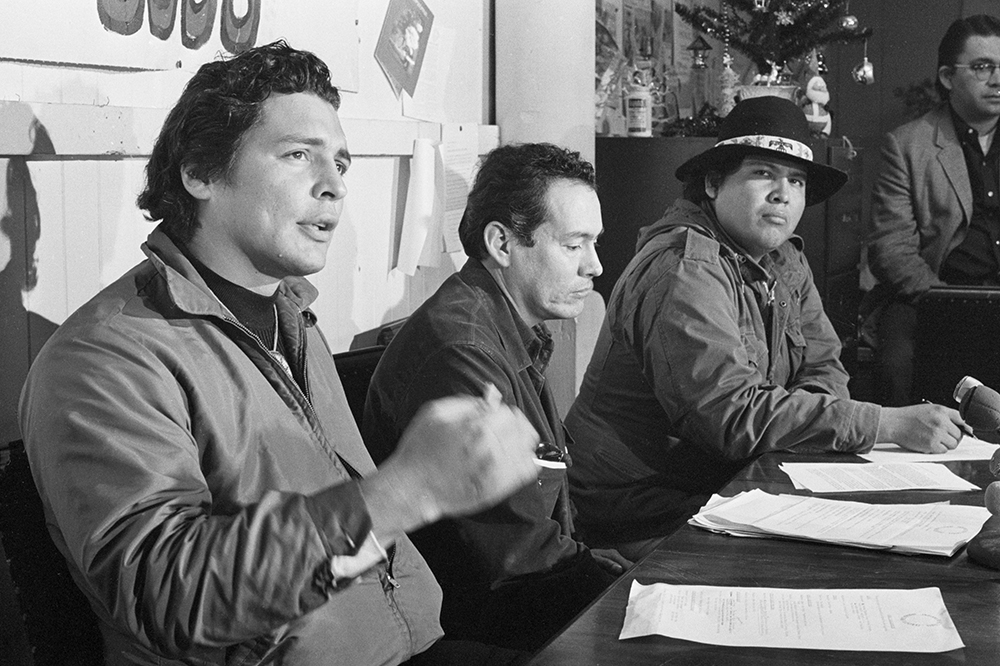
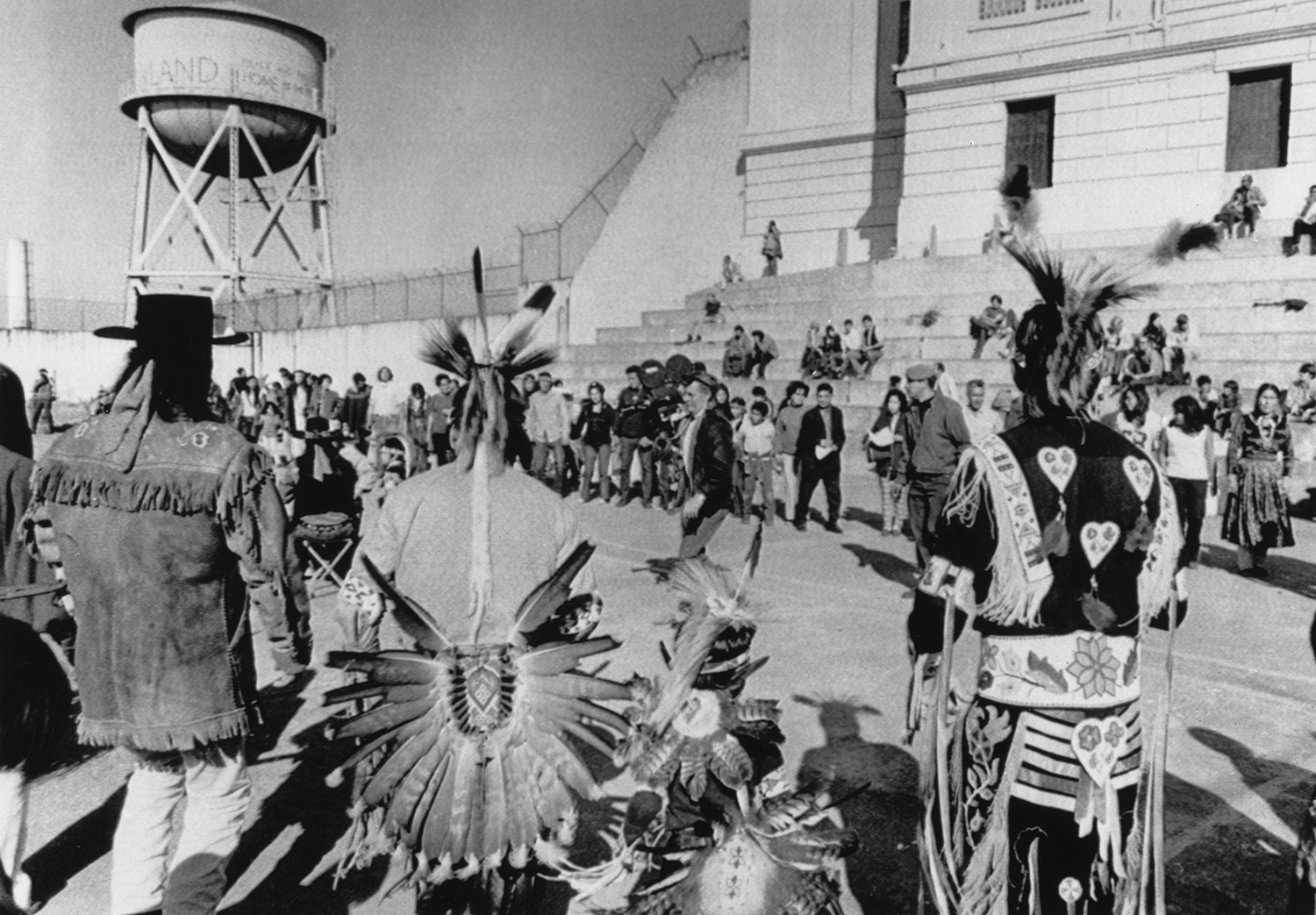
A group of Native American people, some wearing headdresses, gather outside a building on Alcatraz.

© Bettmann Archive/Getty Images

Protesters gather in front of the main cell block at the former Alcatraz Prison on November 11, 1970.

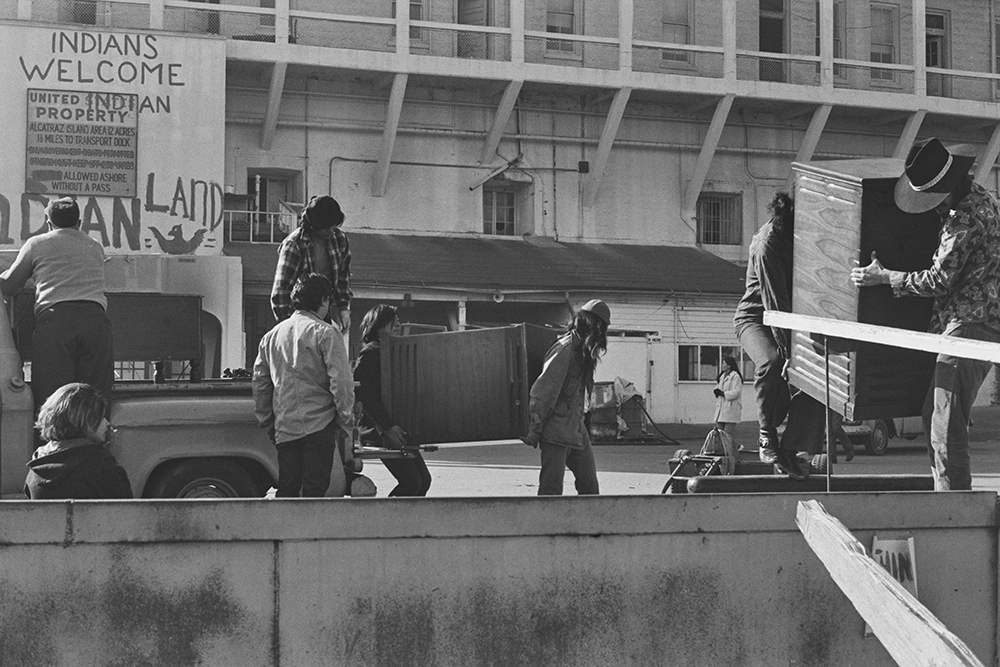
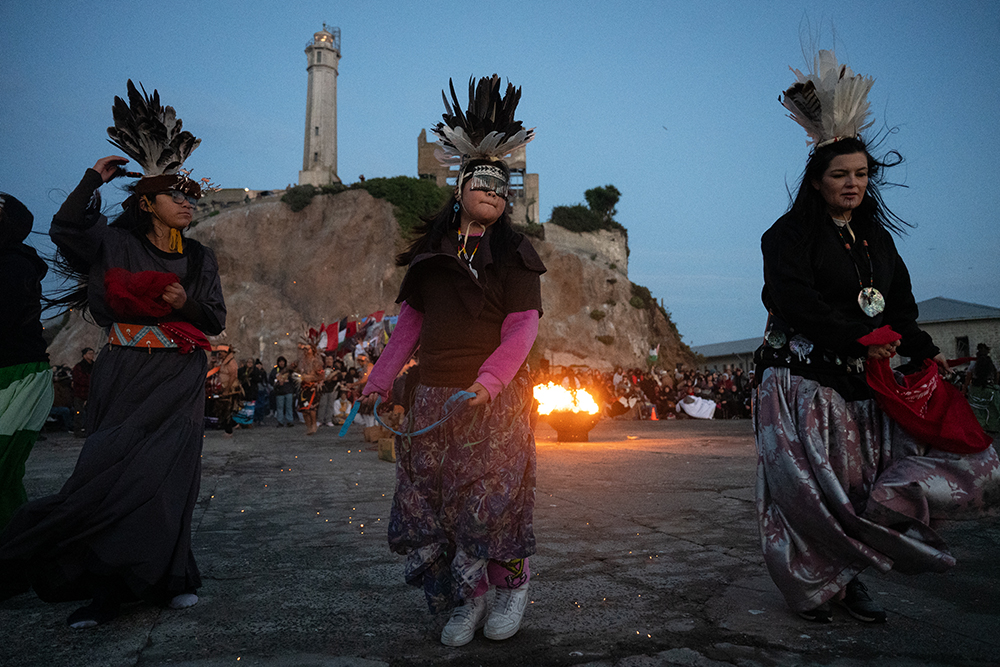
Each November, people in the United States celebrate Native American Heritage Month to honor Indigenous American cultures and remember important moments in history. One such moment took place in November 1969, when a group of Native American protesters did something unexpected: they moved into a prison. Not just any prison, but the famed former prison on Alcatraz Island, a rocky island off the coast of San Francisco, California. The Alcatraz “takeover” was a bold form of nonviolent protest, and it succeeded in drawing attention to Native American civil rights and the right for tribes to govern themselves.

The protest took place six years after the prison closed. A group of around 80 people who called themselves “Indians of All Tribes” claimed the island, citing an old treaty with the U.S. government that said any abandoned property reverted to Native American ownership.

“We reclaim this island for our Indian nations,” said a proclamation issued from the group. “We feel this claim is just and proper, and that the land should rightfully be granted to us for as long as the rivers run and the sun shall shine. We hold the Rock!”

The Indians of All Tribes lived on Alcatraz Island for 19 months. Meanwhile, they asked the U.S. government to give them the land for use as a cultural and educational center. The government refused, and in June 1971 federal marshals forced the protesters off the island. Though the protest ended, the event brought attention to Indigenous rights in the United States and helped improve laws and policies that respect tribal rights. 

Click through the slideshow for more photos.

© Bettmann Archive/Getty Images, © Soloman Kargin/Pix—Michael Ochs Archives/Getty Images, © Zhu Ziyu—Visual China Group/Getty Images

Life on the Cliff’s Edge

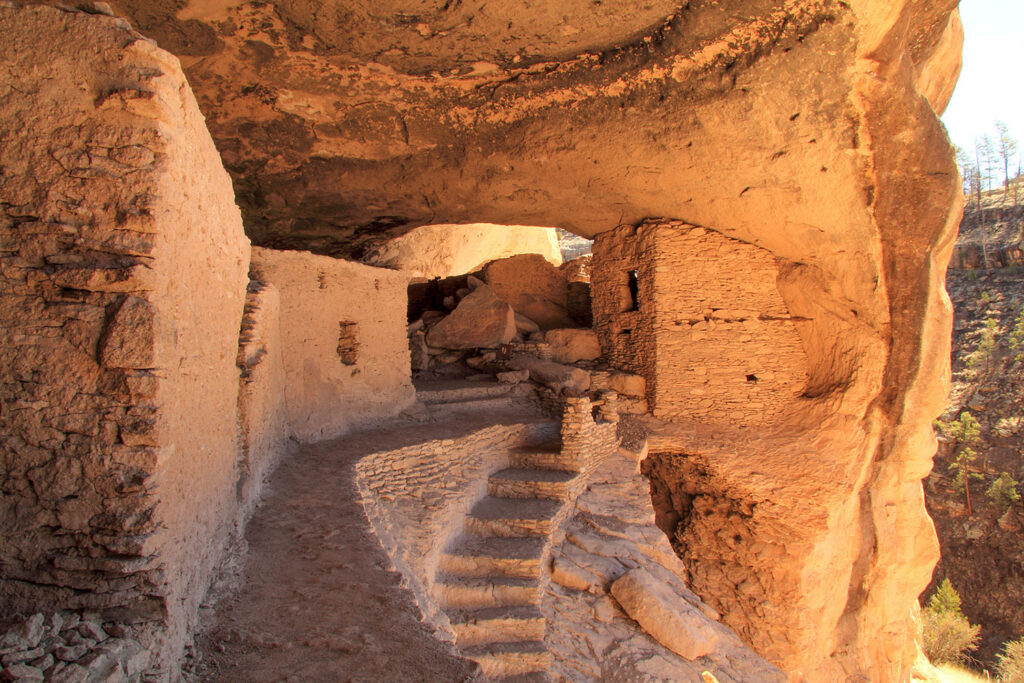
A stone and clay structure, including a staircase, is built on the side of a cliff.

© Wilsilver77/Dreamstime.com

Ancient Puebloan people built these cliff dwellings in the 1200s in what is now New Mexico.

About 800 years ago, the Ancestral Puebloan people built homes and cities that seemed to defy gravity. Called cliff dwellings, these multistory stone and clay complexes were built under cliff overhangs. Read more about what made cliff dwellings unique at Britannica!

WORD OF THE WEEK

sovereignty

PART OF SPEECH:

noun

Definition:

: a country’s independent authority and the right to govern itself

Definitions provided by
Merriam-Webster Logo

Crossword

Can you figure out where each word goes?

O
O
O
O
O
O

In Case You Missed It

An award-winning invention could help schools screen for concussions during student sporting events.
October 22, 2026
Researchers have found a way to turn plastic into an edible food.
October 15, 2026
Meet the tilcayo, the newest cat species to be discovered in more than 100 years.
October 8, 2026
Pop star Taylor Swift joins a growing movement of people protecting their voices against AI copies.
October 1, 2026

How to Cite This Page

Here is how to cite this page using the MLA style. While every effort has been made to follow citation style rules, there may be some differences. Please refer to the appropriate style manual or other sources if you have any questions.

“In the News: An Eagle Feather in Space.” Britannica School, Encyclopaedia Britannica, 1 Nov Oct. 2026. https://news.eb.com/level2/an-eagle-feather-in-space Accessed 2 Nov. 2026 [Replace this date with today’s date.]