Skip to content

Free Rein at the World Nomad Games

The 2026 World Nomad Games celebrate cultures that wander.
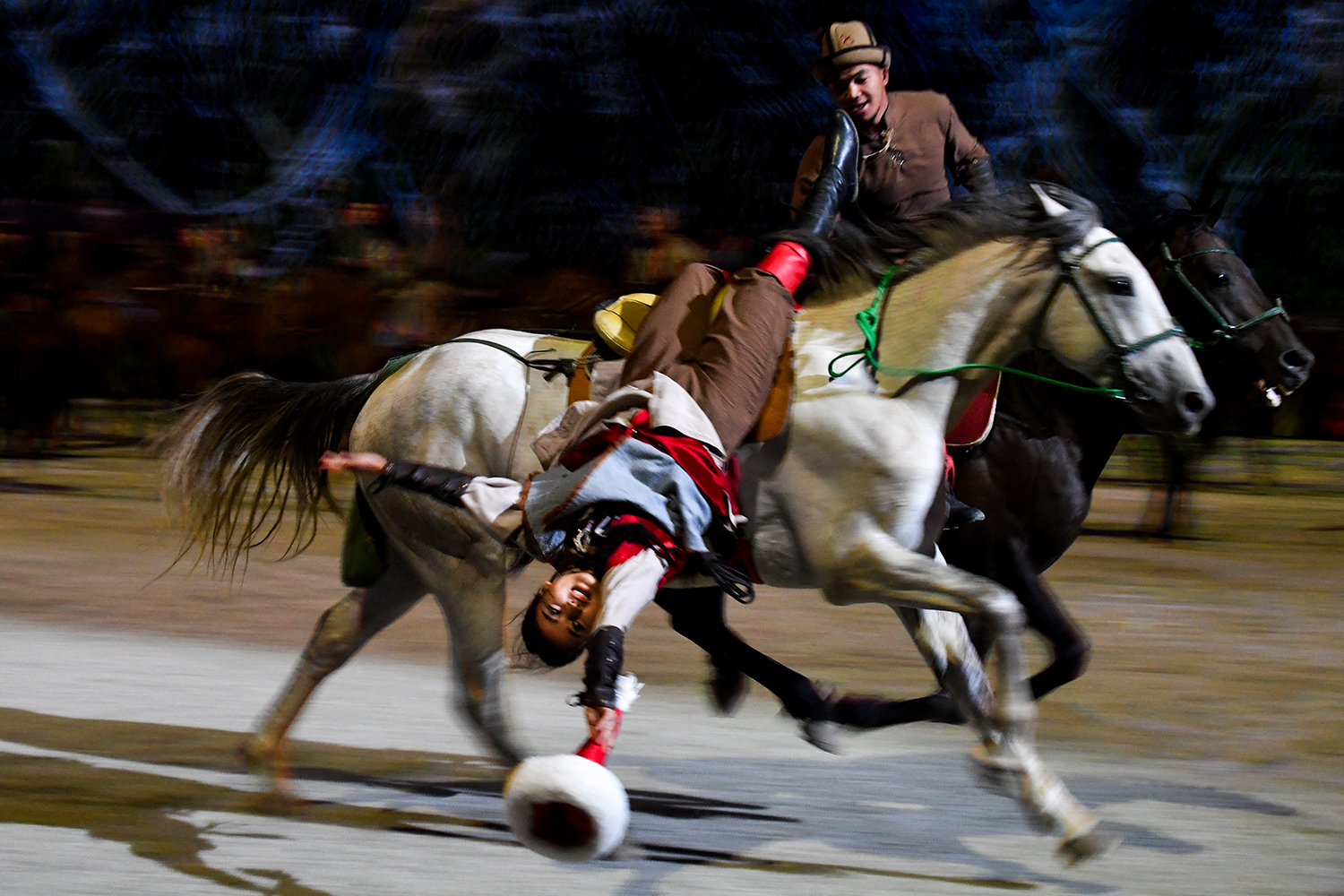
A horseback rider holds onto another rider who hangs over her moving horse on her back while holding an object.

© Vyacheslav Oseledko—AFP/Getty Images

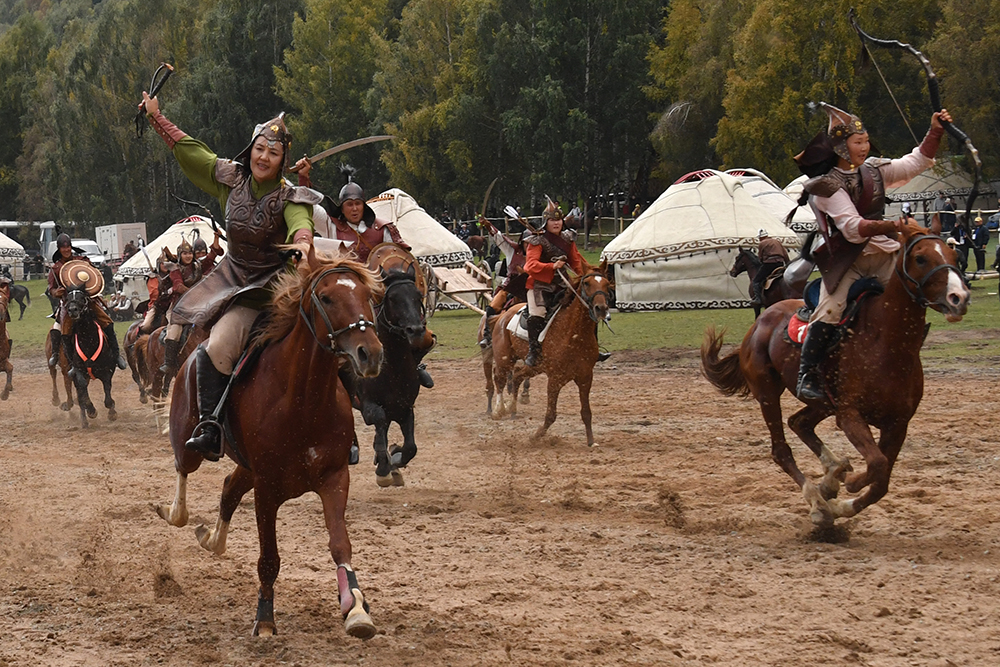
Riders perform during the opening ceremony of the 2026 World Nomad Games in Bishkek, Kyrgyzstan.

You have probably heard of sports like wrestling and archery, but can you imagine doing those sports while also riding a horse? The competitors at the 2026 World Nomad Games do this and more, showing off skills required for a nomadic life—a life on the move. 

The World Nomad Games, which took place September 1 to 6 in the country of Kyrgyzstan, are an international sports competition much like the Olympics. There is one key difference: all the sports come from the nomadic cultures of Central Asia. Nomadic sports frequently feature animals like horses and eagles. Other competitions focus on skills with tools or weapons, like the bow and arrow, which are still a major part of life in these cultures.

There are countless nomadic groups in Central Asia with roots that span countries like Kyrgyzstan, Kazakhstan, Mongolia, and Turkmenistan, to name a few. Historically, these groups would move seasonally to find fresh pastures for their livestock, such as sheep. Moving frequently meant their homes, tools, and clothing needed to move with them. Everything in their lives was designed around movement. While the groups had similar lifestyles, each one developed its own traditions, languages, and clothing. 

One thing many of the groups shared is a close relationship with horses. The horses helped herd cattle, move supplies, and fight battles. As a result, the nomadic people of this part of the globe are known for their incredible horsemanship. 

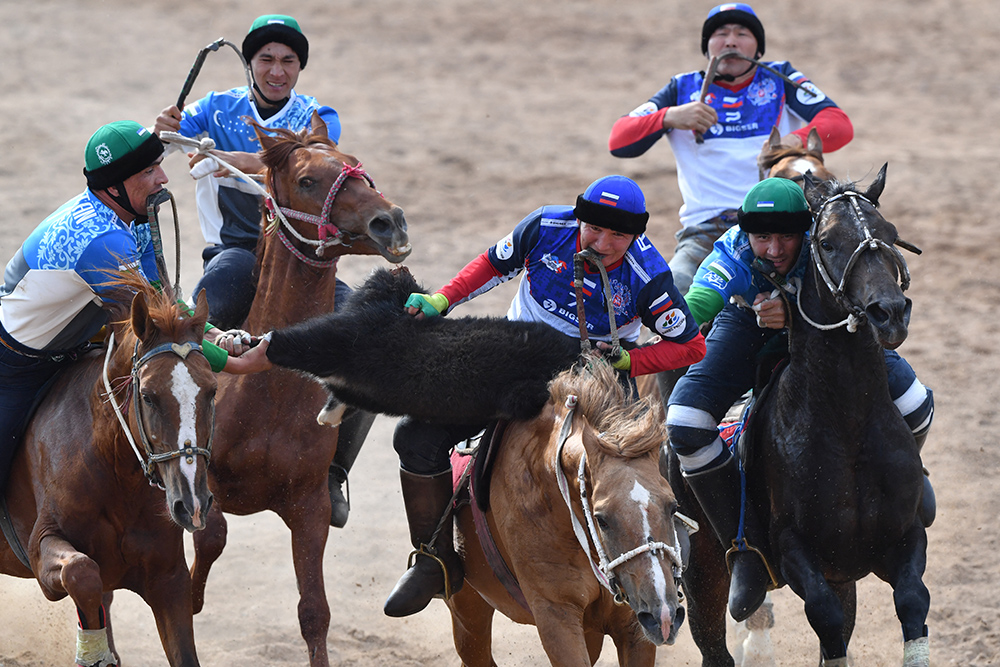
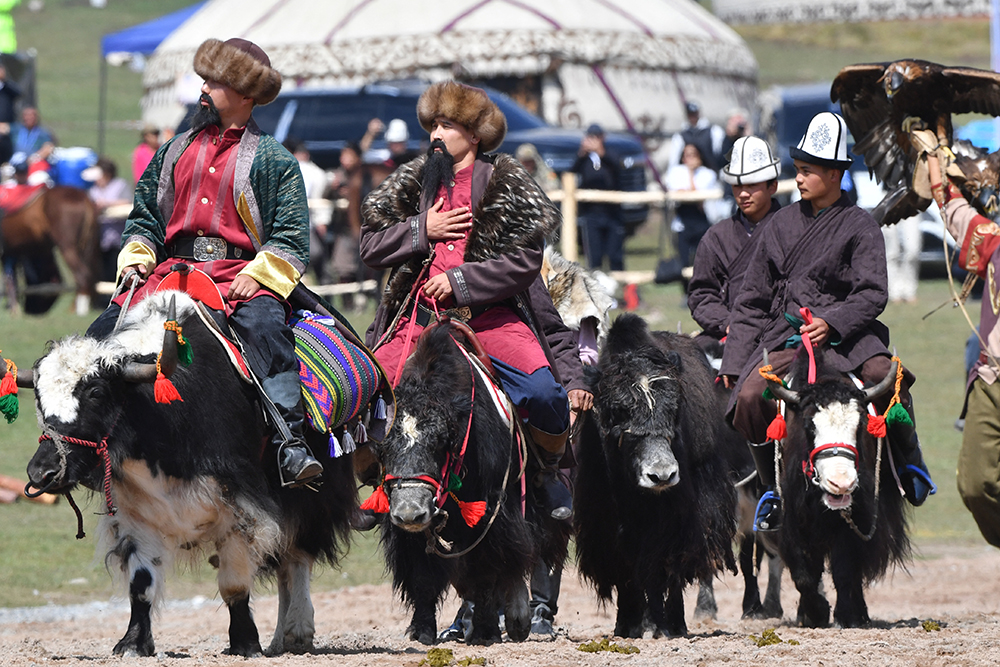
At the World Nomad Games, horsemanship is on full display. The 2026 opening ceremony featured dozens of horses thundering across the stage. One of the most popular competitions at the games is a horseback game called kok-boru. Two teams of riders wrestle and race each other to grab a stuffed goat skin and throw it into the other team’s goal for points. There is also tyiyn enmei, in which riders must gather coins on the ground as fast as they can without getting off their horses. 

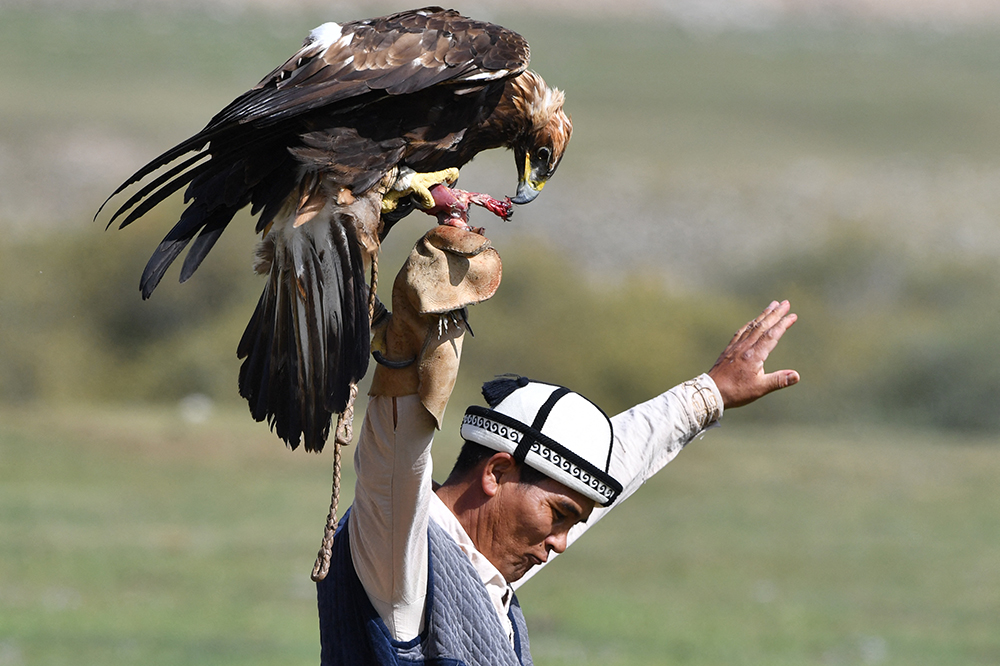
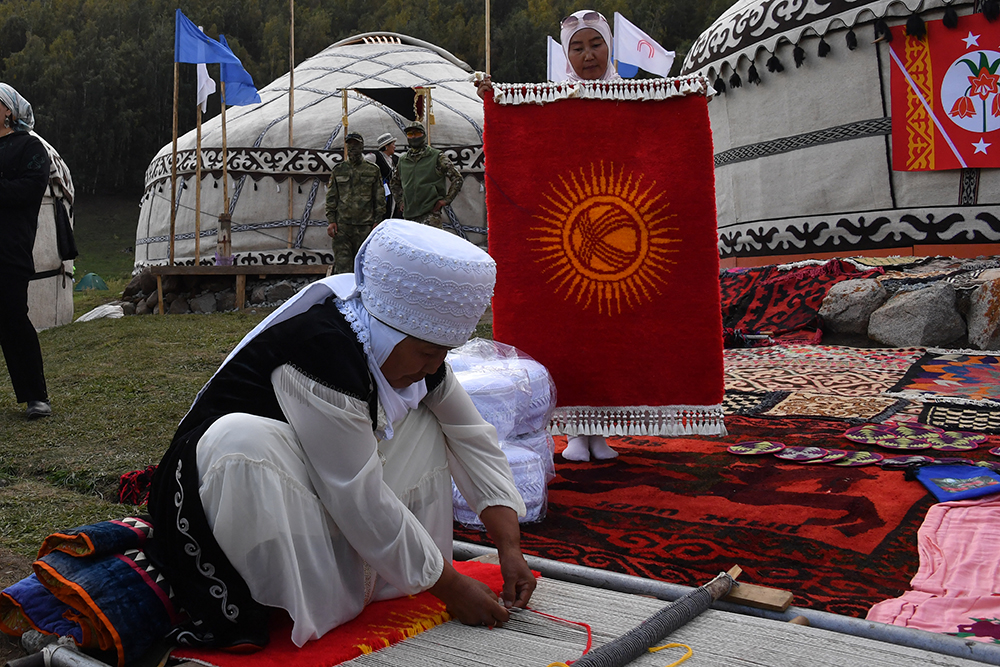
Non-horse competitions include tug-of-war, hunting with eagles, and archery (although there is also a horseback archery event). There are also cultural displays showcasing the different weaving, dancing, and clothes-making styles of some nomad groups. Beyond the athletics and sports, the World Nomad Games celebrate the traditions that people in this region still follow today.

Click through the slideshow for more photos from the games!
© Vyacheslav Oseledko—AFP/Getty Images, © Vyacheslav Oseledko—AFP/Getty Images, © Vyacheslav Oseledko—AFP/Getty Images, © Vyacheslav Oseledko—AFP/Getty Images, © Vyacheslav Oseledko—AFP/Getty Images

Did You Know?

About 5,500 years ago, an ancient nomadic group called the Botai people became the first to domesticate wild horses. The Botai lived in what is now known as the country of Kazakhstan. 

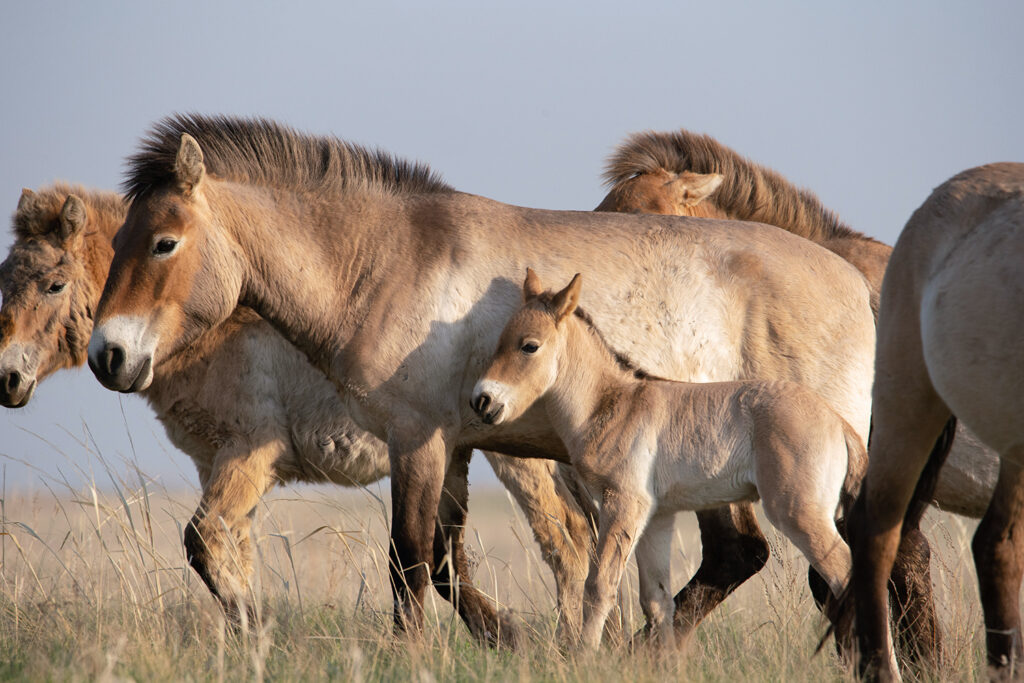
Five Przewalski’s horses stand in a field.

© Alexey/stock.adobe.com

This species, called Przewalski’s horses, may descend from the horses the Botai people domesticated.

Egyptian Warrior Princesses

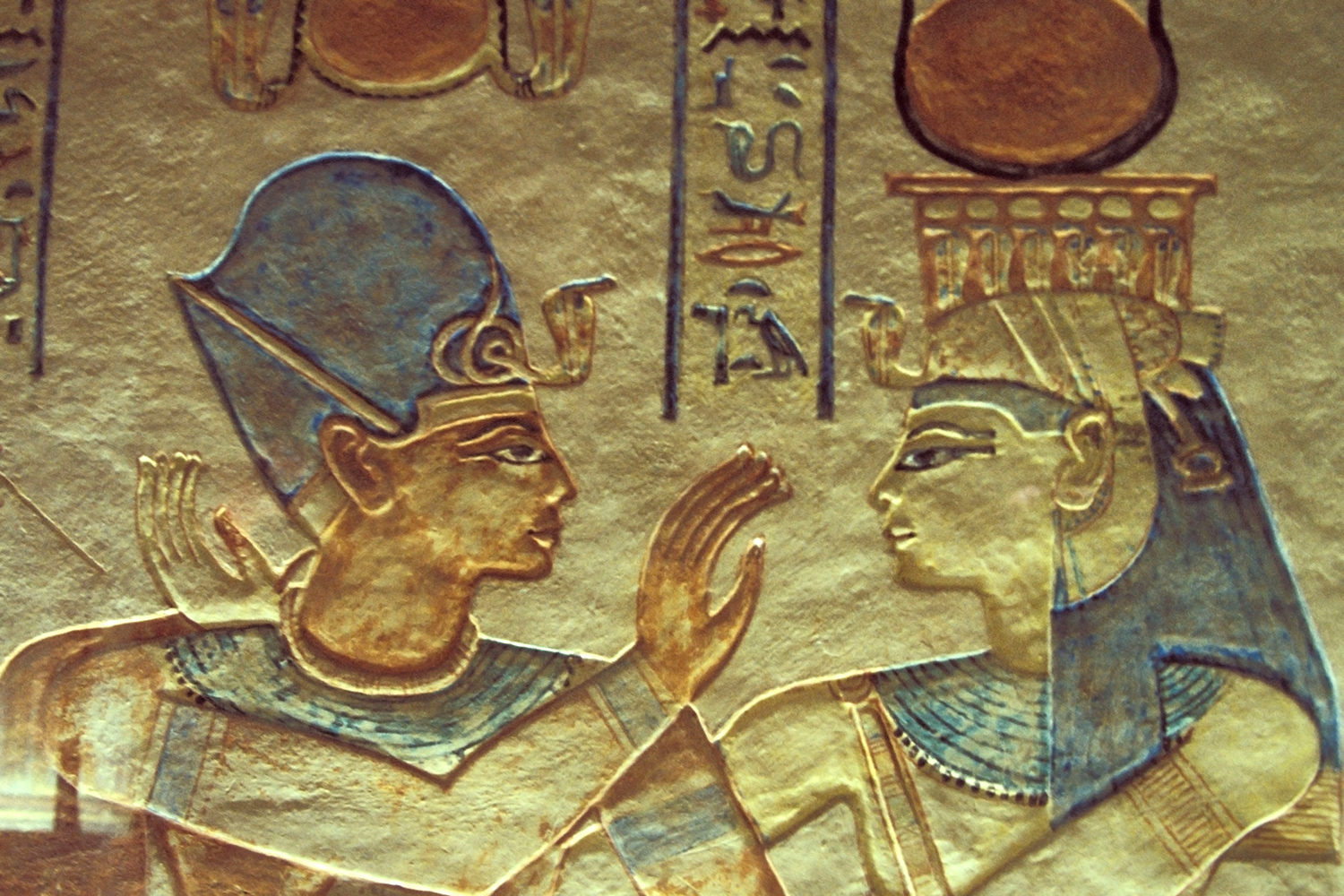
A relief from an ancient Egyptian tomb shows a man and woman facing each other and some hieroglyphics.

© Malie Rich-Griffith—infocusphotos.com/Alamy

This relief, or carving, from a tomb shows a woman who was ancient Egyptian royalty.

About 4,000 years ago, four Egyptian princesses were mummified and buried in elaborate tombs filled with royal jewelry. They were also buried with daggers, maces, bows, and arrows. When archaeologists first discovered these ancient tombs in the 1890s, they assumed the weapons were ceremonial objects. But new research into the lives of these four princesses says that these weapons were not just for show. The princesses wielded them, indicating they were skilled warriors. 

Zeinab Hashesh, an archaeologist in Egypt, was part of the team that studied the princesses’ remains. Their research found that the princesses’ skeletons had signs of extensive training with weapons, as well as healed injuries. These signs show that the women were actively training and using weapons to become skilled fighters, said the researchers. 

“The feeling when we realized these women actually used their weapons was one of scientific excitement mixed with a sense of historical justice,” said Hashesh in an interview with National Geographic.

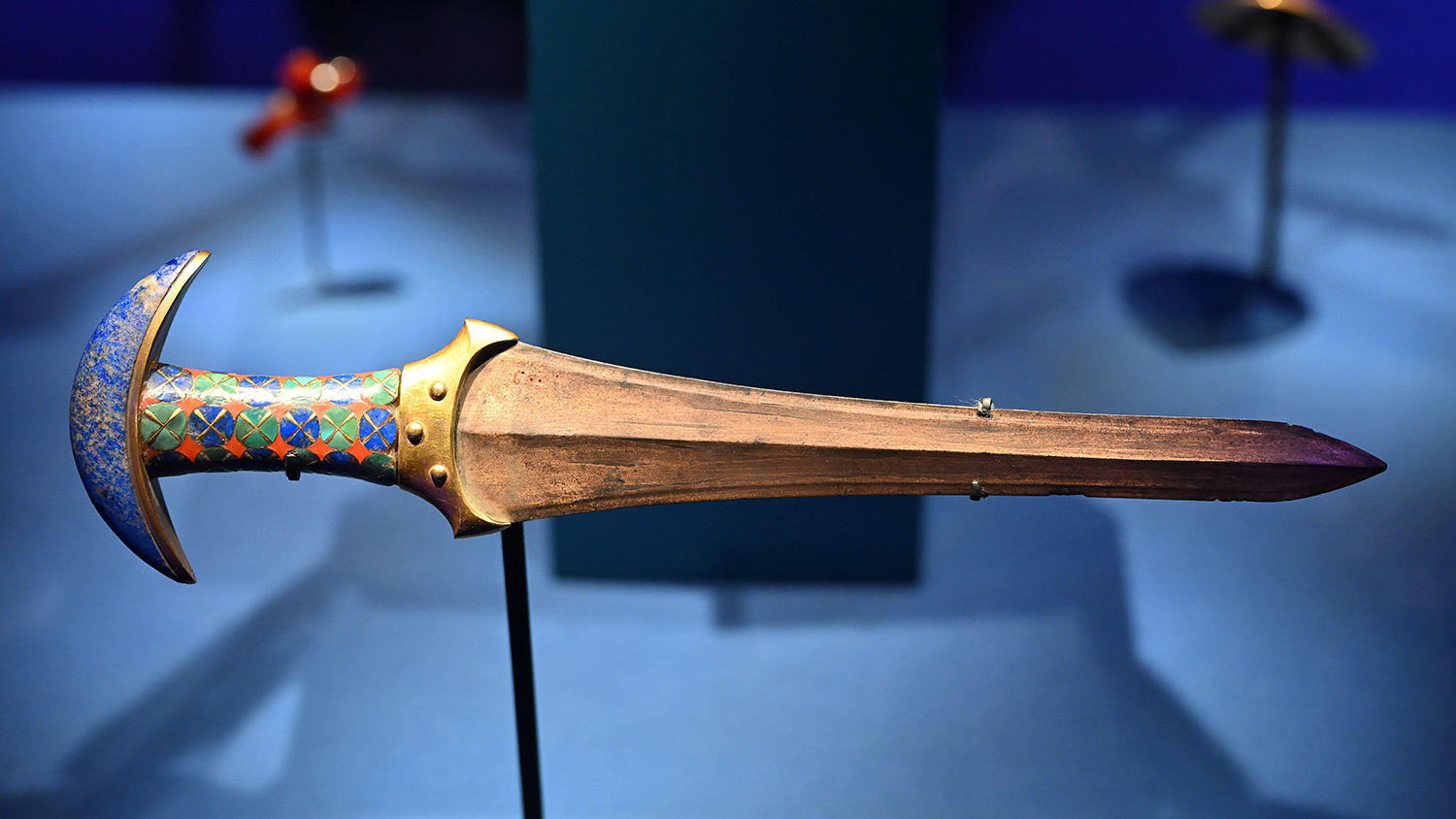
A dagger has a colorful geometric design on its handle.

© John Bingham/Alamy

This dagger was discovered in the coffin of an ancient Egyptian princess.

Not all archaeological experts see this research as definitive proof that the princesses were warriors. Some argue there are other explanations for the placement of weapons in the tombs and that more research is needed to prove that the princesses used them. 

But Hashesh says these findings paint a richer picture of the daily life of these princesses. Hashesh told Science News the princesses “were not leading sedentary lives of luxury. They were well-conditioned athletes whose bodies were hardened by the same skilled force and disciplined movement as the men of their time.”

Wandering Cultures

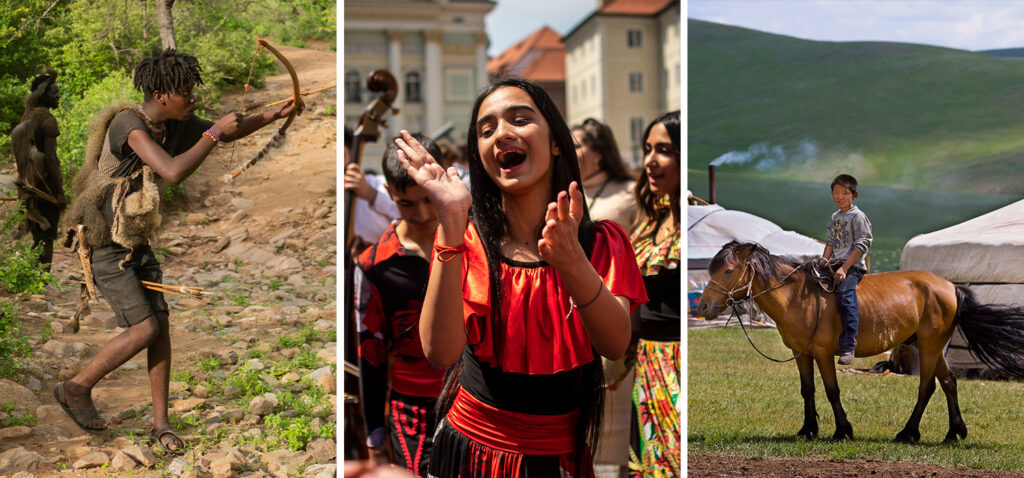
Composite showing a man hunting, a woman in a parade, and a Mongolian child on a horse.

© Mehmet Aslan—Anadolu/Getty Images, © Gabriel Kuchta/Getty Images, © Barry Lewis/In Pictures Ltd.—Corbis/Getty Images; Photo composite Encyclopædia Britannica, Inc.

(From left to right) A Hadza man uses an arrow to hunt, a Roma woman participates in a parade, and a child from a family of Mongolian herders rides a horse.

Nomadic groups wander from place to place for different reasons. Some move to make sure their animals have enough food, like the Mongolian herders of the Asian steppes. Others are hunter-gatherers, like the Hadza of Tanzania, or traders like the Roma people. 

Read more about the lifestyles of these different wandering cultures at Britannica. 

WORD OF THE WEEK

itinerant

PART OF SPEECH:

adjective

Definition:

: traveling from place to place : staying in a place for only a short amount of time

Definitions provided by
Merriam-Webster Logo

Criss Cross

Can you figure out where each word goes?

O
O
O
O
O
O

In Case You Missed It

Long-buried objects from history are coming to the surface in Europe’s drying rivers.
September 17, 2026
Actor Rita Moreno overcame prejudice to become a legend of stage and screen.
September 10, 2026
Sara Curtis broke the world record for the 50-meter backstroke two days in a row.
August 27, 2026
A wild raccoon with a rare spinal condition has captured hearts on the Internet.
August 19, 2026

How to Cite This Page

Here is how to cite this page using the MLA style. While every effort has been made to follow citation style rules, there may be some differences. Please refer to the appropriate style manual or other sources if you have any questions.

“In the News: Free Rein at the World Nomad Games.” Britannica School, Encyclopaedia Britannica, 27 Sept. 2026. https://news.eb.com/level2/free-rein-at-the-world-nomad-games Accessed 28 Sept. 2026 [Replace this date with today’s date.]