Which Toys Came Out on Top?

The exterior of the Strong Museum of Play shows a giant Trivial Pursuit gamepiece and giant Scrabble tiles spelling out PLAY in front of the building.

Which Toys Came Out on Top?

The National Toy Hall of Fame in the United States has chosen to honor three toys.  

The exterior of the Strong Museum of Play shows a giant Trivial Pursuit gamepiece and giant Scrabble tiles spelling out PLAY in front of the building.

Courtesy of The Strong Museum of Play

The Strong Museum of Play, home of the National Toy Hall of Fame, celebrates the history of play. There’s also a skyline climb, a butterfly garden, and a video game hall of fame.

Slime is getting its time in the spotlight! The gooey stuff, which has entertained generations of kids, is now part of America’s National Toy Hall of Fame, along with the board games Trivial Pursuit and Battleship.

Each year, the National Toy Hall of Fame in Rochester, New York, honors toys that encourage creative play and have lasting popularity. Anyone can nominate a toy for the Hall of Fame by going to its website. Winners are selected by a panel of experts as well as an online voting system that’s open to the public.

The packaging and components of Trivial Pursuit, Battleship, and slime are displayed.

Courtesy of The Strong Museum of Play

The games Trivial Pursuit (left) and Battleship (right) and the longtime favorite, slime, are now in the National Toy Hall of Fame.

This year’s winners are classics. Battleship players try to sink each other’s ships, while Trivial Pursuit challenges players to answer questions about categories like history and sports. Slime is just slime. The sticky stuff was first sold as a toy in 1976, but kids were probably having fun with homemade slime before that. Michelle Parnett-Dwyer of the National Toy Hall of Fame says that while slime may seem simple for a toy, it’s actually quite valuable.

“Though slime continues to carry icky [connections] to slugs and swamps—all part of the fun for some—the toy offers meaningful play,” Parnett-Dwyer said on the Hall of Fame’s website.

Toys that were nominated for the Hall of Fame but didn’t make the cut include Connect Four, Spirograph, the Star Wars lightsaber, and Tickle Me Elmo.

Fun Fact Icon

Fun Fact

LEGO, the maker of plastic brick toys, is the world’s largest tire manufacturer! The company makes hundreds of millions of tiny tires for its building kits every year.
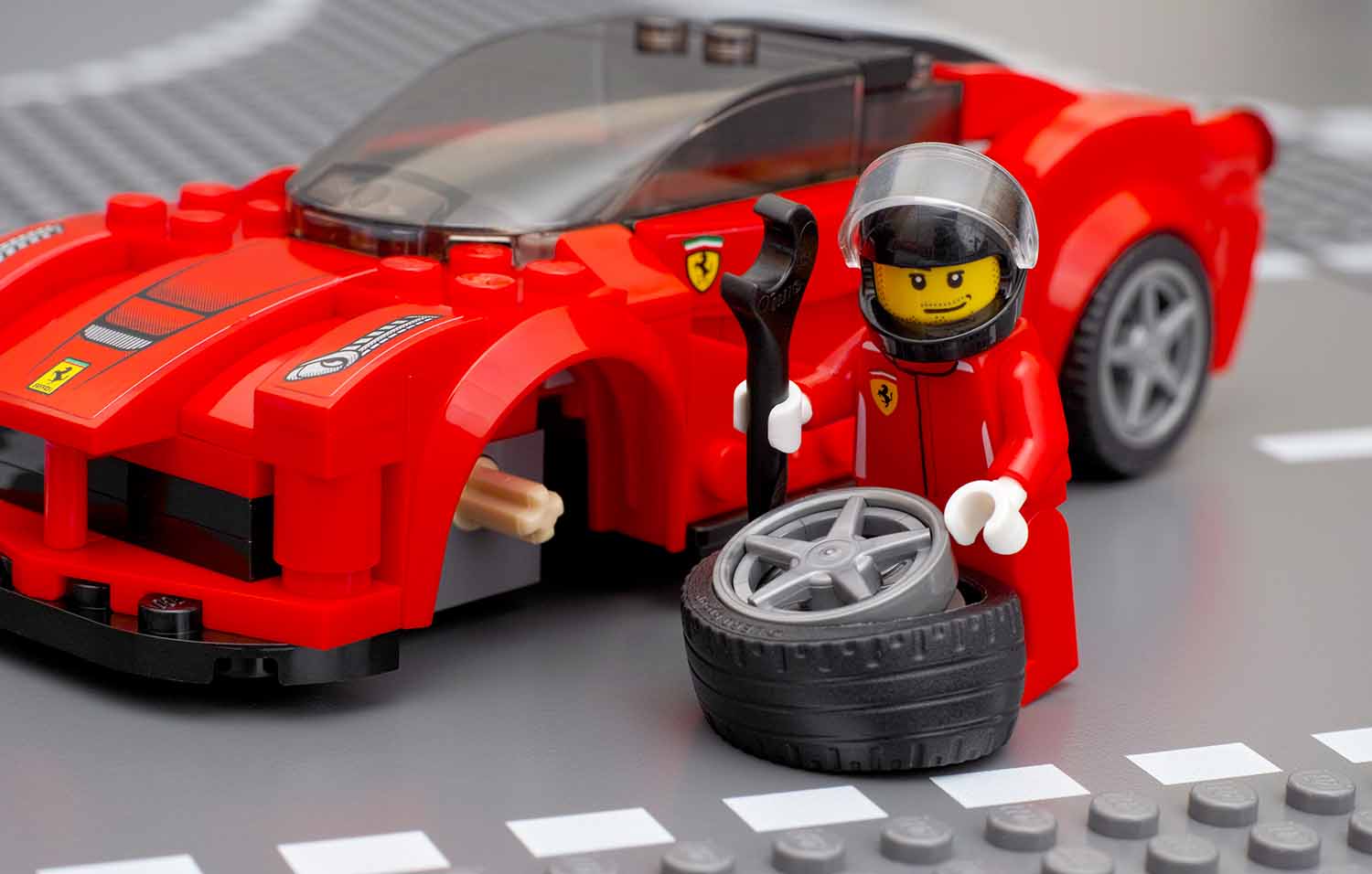
A LEGO mechanic figure is posed in front of a LEGO car holding a wrench as if it is about to put a tire onto the car.

© Ekaterina79—iStock/Getty Images

Slime’s Story Stretches Way Back
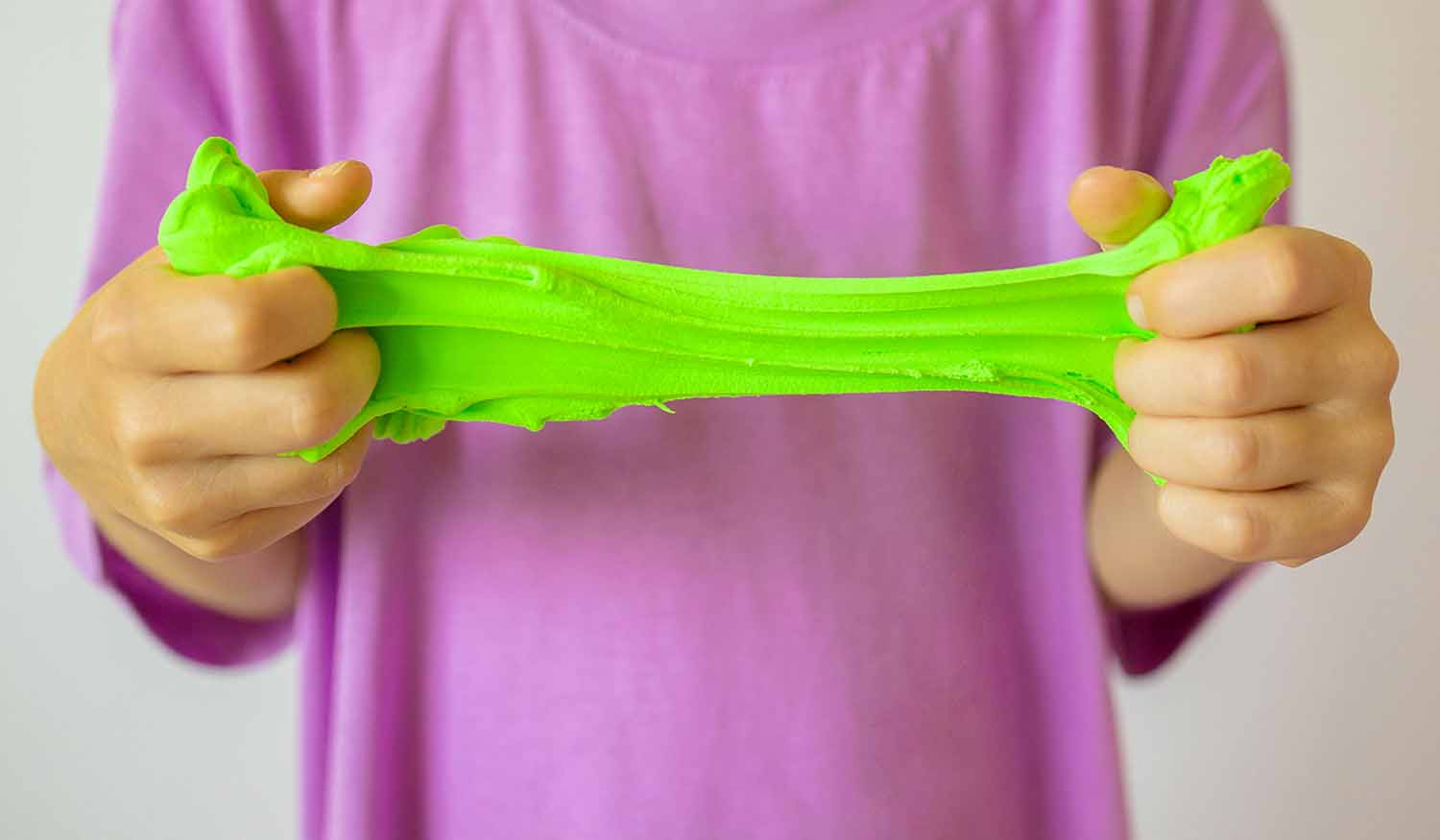
A child’s hands stretch some green slime.

© Olga Aleksandrova/Alamy

It seems like slime will never go out of style, and it’s no wonder. Stretchy, endlessly moldable, and just plain gross, slime can provide hours of fun. If you’ve ever observed a slug creeping across a rock, you may know that slime occurs in nature. (Notice what the slug leaves behind.) But who came up with the idea to sell slime as a toy? 

Slime’s history as a plaything began in 1966, when a company called Wham-O introduced Super Stuff. Pink and gooey, Super Stuff was similar to the slime kids know and love today. But the popularity of toy slime didn’t really explode until 1976, when Mattel began selling Slime. 

Maybe it was the name or the gross green color, but Slime was an immediate hit. Hoping to compete with Mattel, other toy makers started selling slime as well. Soon, there was slime all over toy store shelves (safely packaged, of course)!

Slime’s success goes so far back that many of the adults in your family may have played with it when they were growing up.

You can make your own slime! All you need is glue, baking soda, contact lens solution, and permission from an adult. Add food color and glitter to make it fancy.

Big-Time Slime Makers

© paolo/stock.adobe.com

Check out that trail of slime!

Land snails and slugs make slime! The stretchy stuff oozes out of the animal’s body, helping it move along the ground. Snails and slugs also secrete slime when they feel threatened because a slime-covered animal is a less tempting meal than a drier one.

You can read more about snails and slugs at Britannica!

Word of the Day Icon

Word of the Day

exude

Part of speech:

verb

Definition:

: to produce a liquid or smell that flows out slowly

Definitions provided by
Merriam-Webster Logo
Game Icon

Play

Word Flower

How many words can you make from the letters in the flower? All words must use the center letter.


.

In Case You Missed It

Taryn Smith is the first American woman to row solo across the Atlantic Ocean.
March 5, 2026
A powerful waterfall doesn’t easily freeze, but this winter has been especially cold!
March 3, 2026
For Women’s History Month, we’re honoring two women who inspired many others to take to the skies.
February 26, 2026
Baseball player Ron Teasley has died. Teasley was one of the last living athletes to play in the Negro Leagues.
February 24, 2026

A New Way to Ride to School

Sam Balto wears a neon safety vest and bike helmet as he poses with adults, children, and their bikes on a suburban street.

A New Way to Ride to School

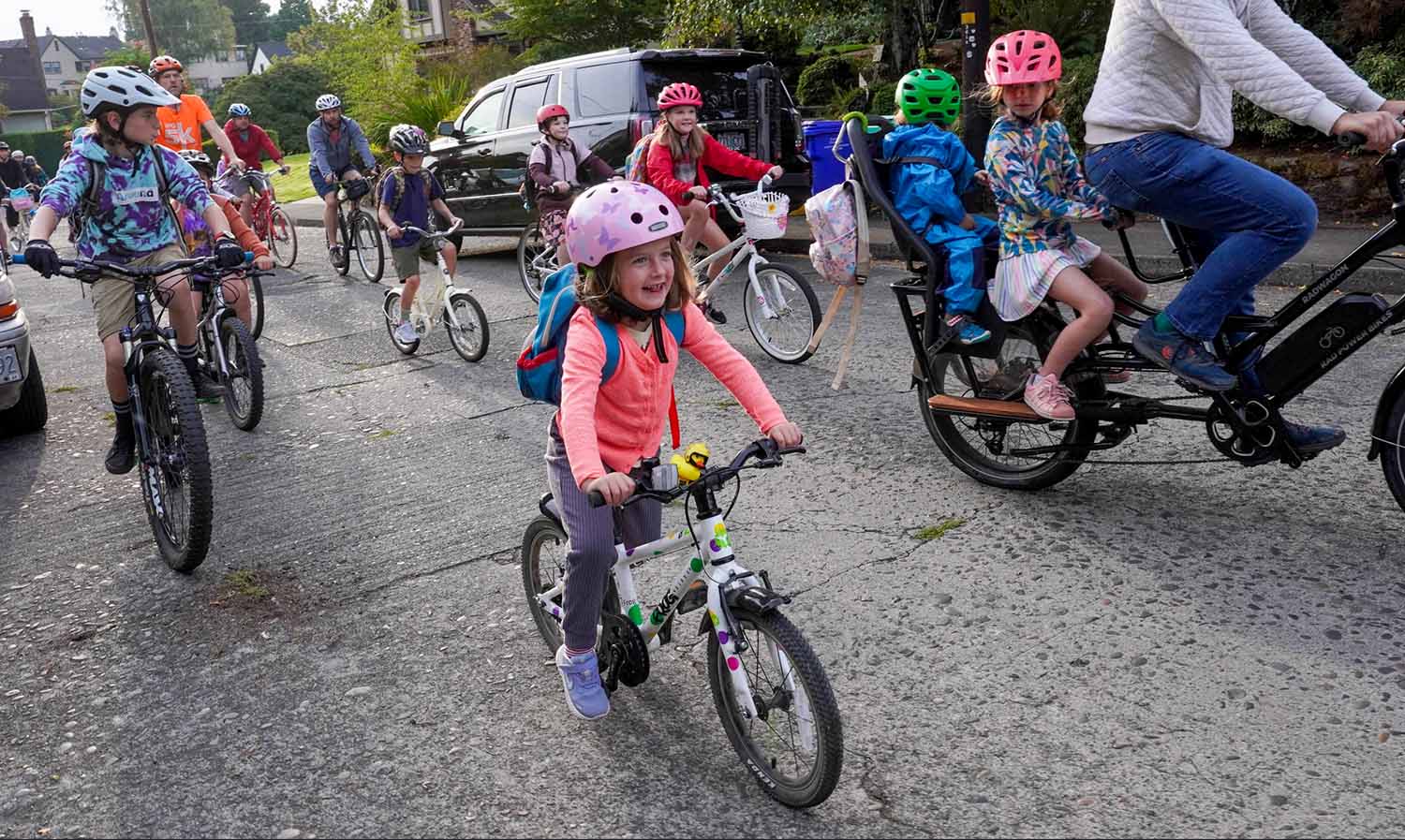
Many communities have formed bike buses, groups of kids and adults who ride their bikes to school together.

Sam Balto wears a neon safety vest and bike helmet as he poses with adults, children, and their bikes on a suburban street.

Courtesy of © Jonathan Maus/BikePortland

Sam Balto (center, wearing neon safety vest) poses with the Portland, Oregon, bike bus in 2022. 

In Montclair, New Jersey, many kids ride buses to school. But once a week, a growing number of the town’s elementary school students get to school using the power of their own two legs. They’re part of Montclair’s “bike bus,” a group of kids and adults who ride their bikes to school together every Friday.

Now in its third year, the Montclair bike bus includes up to 400 people who follow a 5-mile (8-kilometer) route, stopping at each of the town’s elementary schools. (Some kids join the bus along the way.) All participants wear helmets, and adult volunteers wear fluorescent safety vests. 

Traveling by bike is Earth-friendly and a great form of exercise. But in many places, the streets are too busy for kids to ride their bikes alone. With the bike bus system, there’s safety in numbers—and many kids say it’s more fun than riding on the school bus.

“It’s not like being on the bus,” said one young participant. “You’re outside, but you’re also biking to school with your friends.”

Montclair isn’t the only community that has started a bike bus. There are hundreds of others in the United States, plus more in Spain, Australia, and other countries.

A group of adults and children of different ages ride their bikes down a suburban street.

Courtesy of © Jonathan Maus/BikePortland

In this 2022 photo, children and parents ride to Alameda Elementary School in Portland, Oregon, as part of a weekly bike bus.

In the United States, bike buses began with Sam Balto, a teacher from Portland, Oregon. Balto was inspired to start a Portland bike bus after he saw a video of a bike bus in Barcelona, Spain. Balto now leads his local group every week. He’s also the founder of Bike Bus World, which gives communities the information they need to start their own bike buses. In Portland, bike bus volunteers have seen the benefits firsthand.

“It’s great to see kids, rain or shine, getting out there and being active and just the joy that they show, and how excited they are to see their friends,” Brian Sniffen, a bike bus volunteer in Portland, said in a Bike Bus World video. “It’s really amazing.”

Fun Fact Icon

Fun Fact

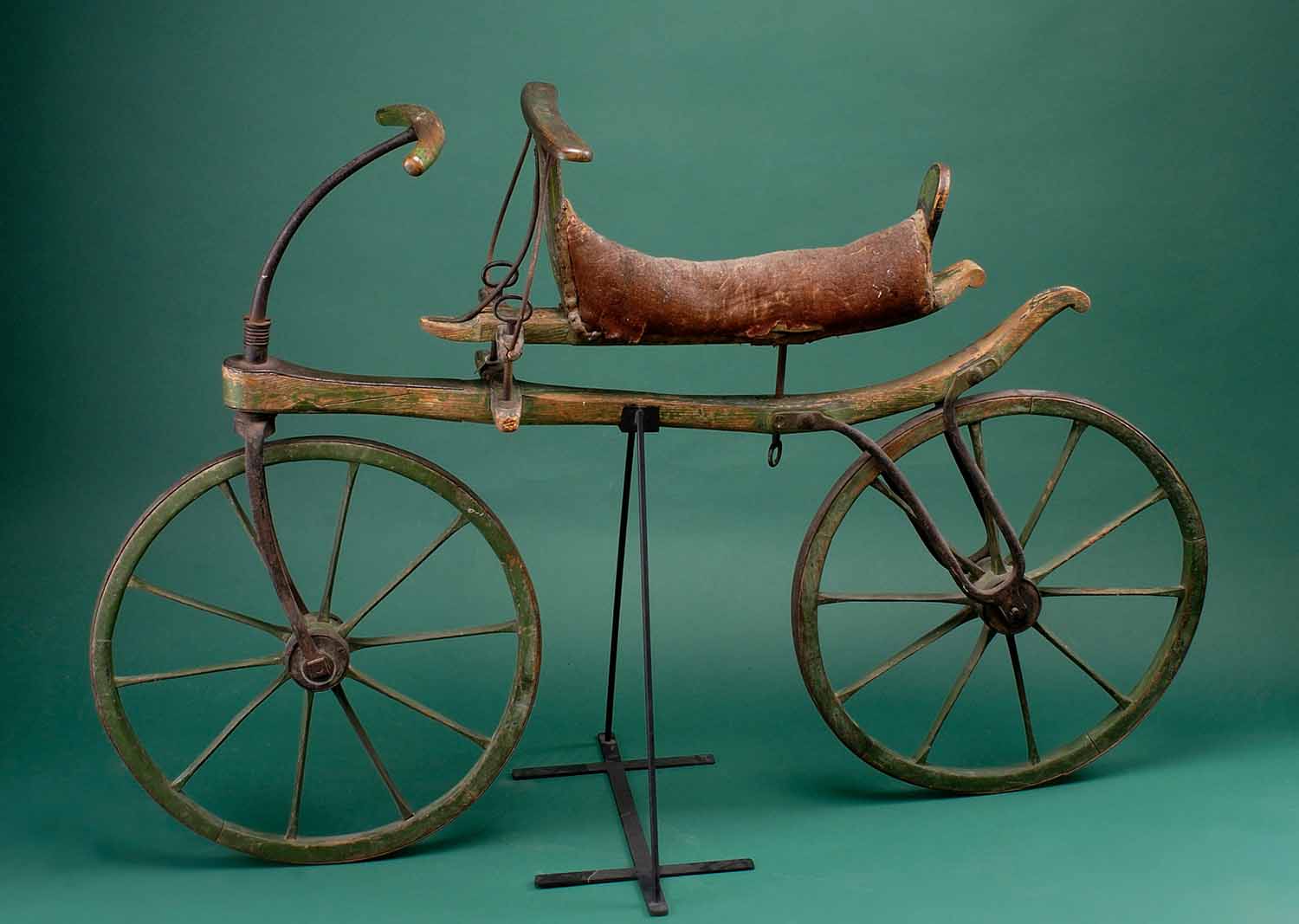
The Laufmaschine (running machine) was the earliest form of bicycle. Invented by Karl Drais of Germany in 1817, it had a wooden frame and no pedals.

A Laufmaschine, a bike with a wooden frame and no pedals, is propped on a metal stand.

Gift of Preston R. Bassett, National Museum of American History, Smithsonian Institution, Washington, D.C.

This Laufmaschine is now at a museum. Would you be willing to try it?

Reading Rainbow Returns

Mychal Threets poses in a children’s library while holding the book No Cats in the Library.

Courtesy of Buffalo Toronto Public Media and Embassy Row

Mychal Threets is a librarian.

Some of the adults in your life may remember watching a TV show called Reading Rainbow on the TV channel PBS. On each episode of Reading Rainbow, host LeVar Burton presented books as doorways to a magical world filled with countless characters, adventures, and information. The series, which was produced between 1983 and 2006, inspired countless American kids to read.

Now, Reading Rainbow is back with host Mychal Threets. Threets, a longtime children’s librarian who grew up watching Reading Rainbow, is excited to inspire a new generation of young kids. 

“I was raised on Reading Rainbow [and] LeVar Burton is my hero,” Threets wrote on social media. “I am a reader, I am a librarian because LeVar Burton and Reading Rainbow so powerfully made us believe we belong in books, we belong everywhere.”

Four episodes of Reading Rainbow are available for viewing on YouTube.

Check Out These Wheels!

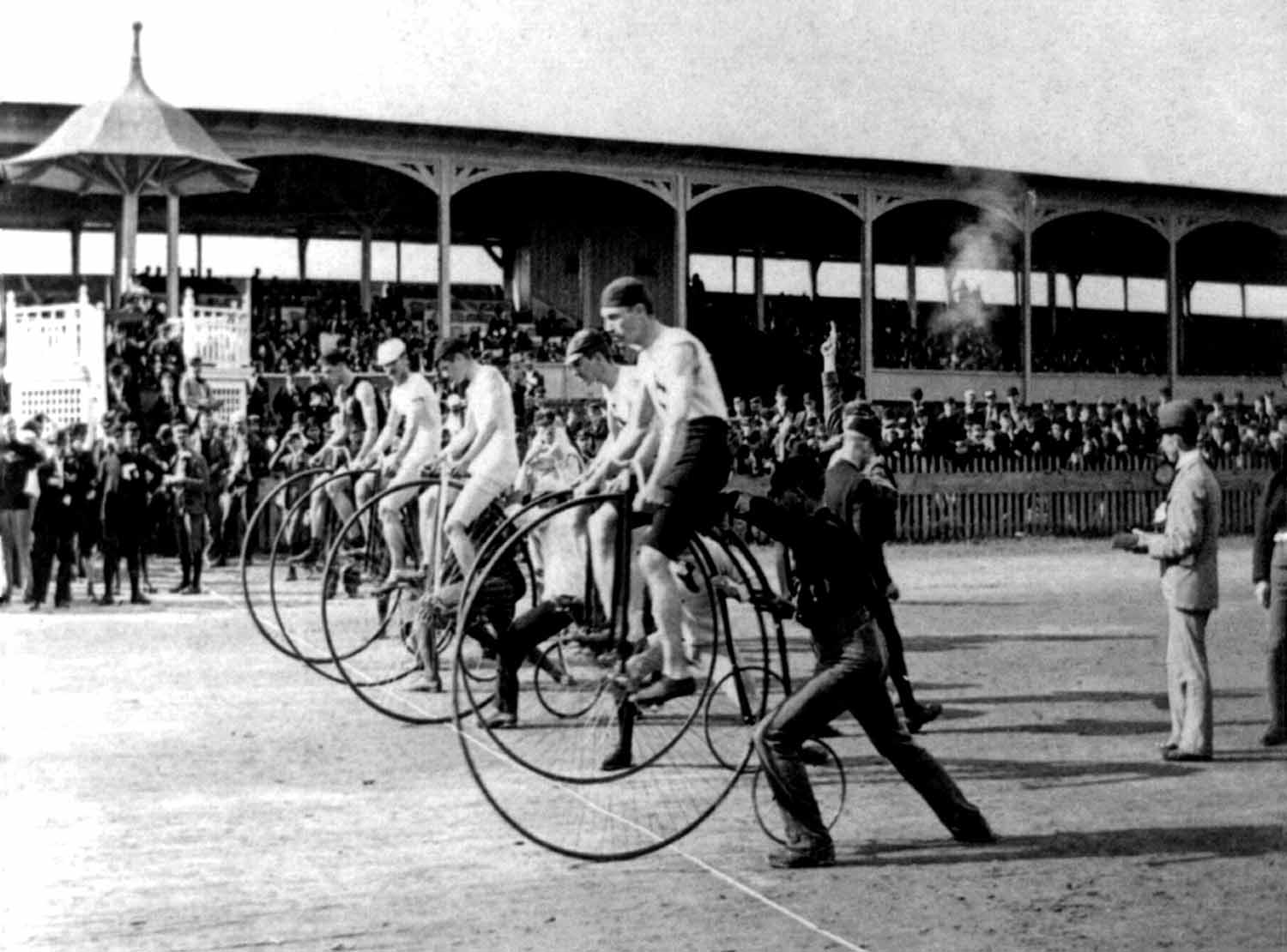
A black and white image shows riders racing pennyfarthings in an arena with spectators watching.

© hodagmedia/stock.adobe.com

Known as the penny-farthing, this bicycle was popular in the late 1800s.

Today’s bicycles are a lot lighter and easier to ride than some earlier versions!

You can learn more about bicycles at Britannica.

Word of the Day Icon

Word of the Day

commute

Part of speech:

verb

Definition:

: to travel regularly to and from a place and especially between where you live and where you work

Definitions provided by
Merriam-Webster Logo
Game Icon

Play

Criss Cross

See if you can figure out where each word fits into the grid.

.

In Case You Missed It

Taryn Smith is the first American woman to row solo across the Atlantic Ocean.
March 5, 2026
A powerful waterfall doesn’t easily freeze, but this winter has been especially cold!
March 3, 2026
For Women’s History Month, we’re honoring two women who inspired many others to take to the skies.
February 26, 2026
Baseball player Ron Teasley has died. Teasley was one of the last living athletes to play in the Negro Leagues.
February 24, 2026

Moai Mystery Solved?

Four moai statues stand in a row and are visible from the waist up with the sea in the background.

Moai Mystery Solved?

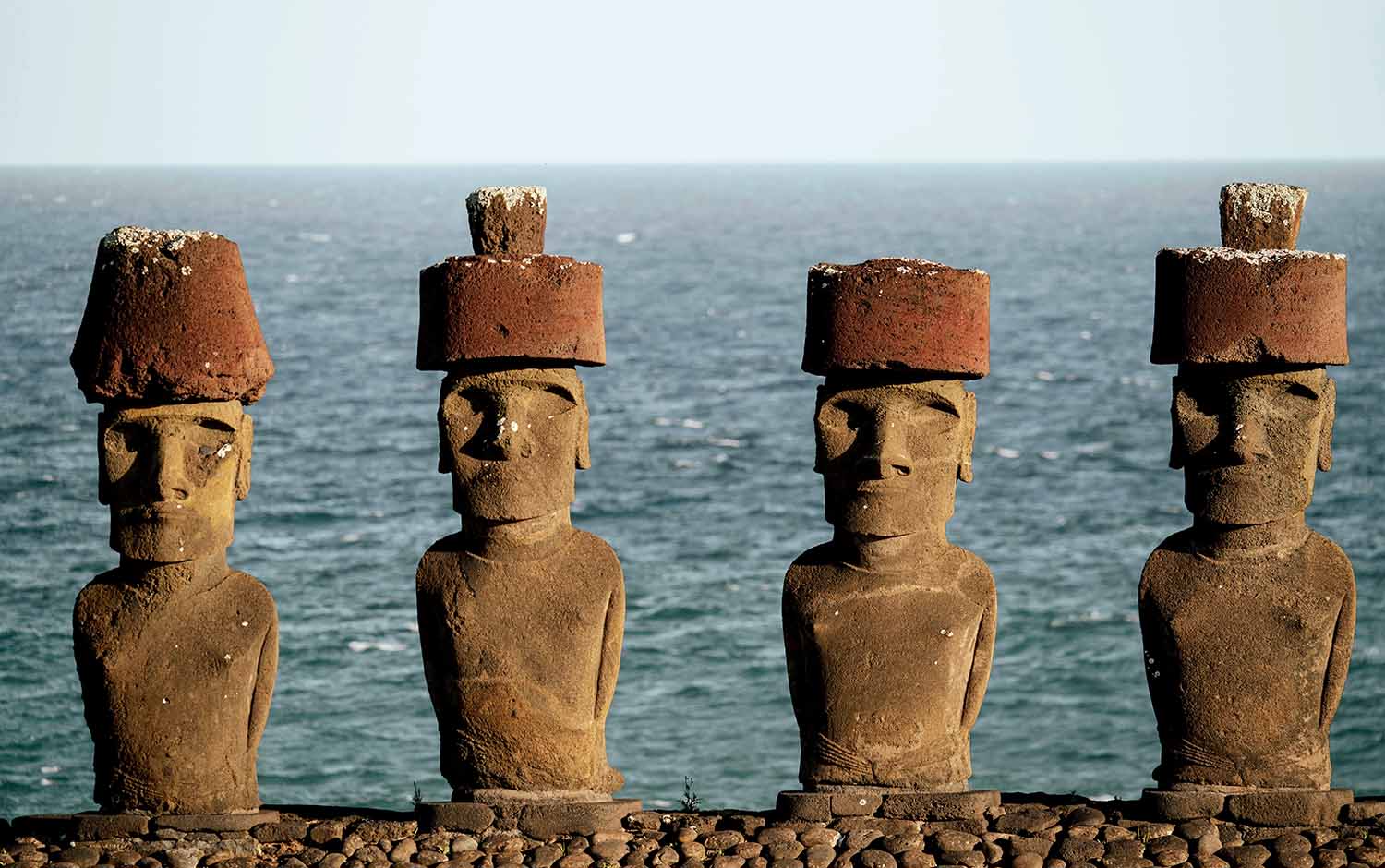
How did ancient people move these giant statues to their present location? New research may have solved this mystery.

Four moai statues stand in a row and are visible from the waist up with the sea in the background.

© NurPhoto/Getty Images

The Rapa Nui people of Easter Island carved these giant moai statues.

The giant statues of Easter Island have long been the subject of a mystery. Made of volcanic rock, the ancient statues, called moai, are massive. Yet many of them have somehow been placed in rows, where their huge faces watch over the island. Experts have long wondered how the heavy statues were moved to their present locations. A new study may have solved the mystery. 

What Are the Moai Statues?

The moai statues are giant figures that have faces and torsos but no legs. There are about 900 moai statues on Easter Island, which is located in the Pacific Ocean about 2,200 miles (3,500 kilometers) west of Chile.

The moai were made between the years 700 and 1680 by the Rapa Nui people, who are indigenous (native) to the island. The statues were carved near the source of the rock and then moved to locations all over Easter Island. But since there was no machinery at the time, no one—not scientists nor the modern-day Rapa Nui people—is sure how the moai were moved.

Moving the Moai

Recently, two anthropologists conducted a study to see if they could solve the mystery. (Anthropology is the study of human societies and cultures.) Carl Lipo of Binghamton University and Terry Hunt of the University of Arizona came up with a theory and then put it to the test.

The team began by creating 3D models of the moai to study their design. They noted the shape of each statue’s base and the fact that each one leaned forward. This would have made it easier to move the statue by rocking its base back and forth in a gentle, zigzagging motion, almost as if the statue were walking on its base.

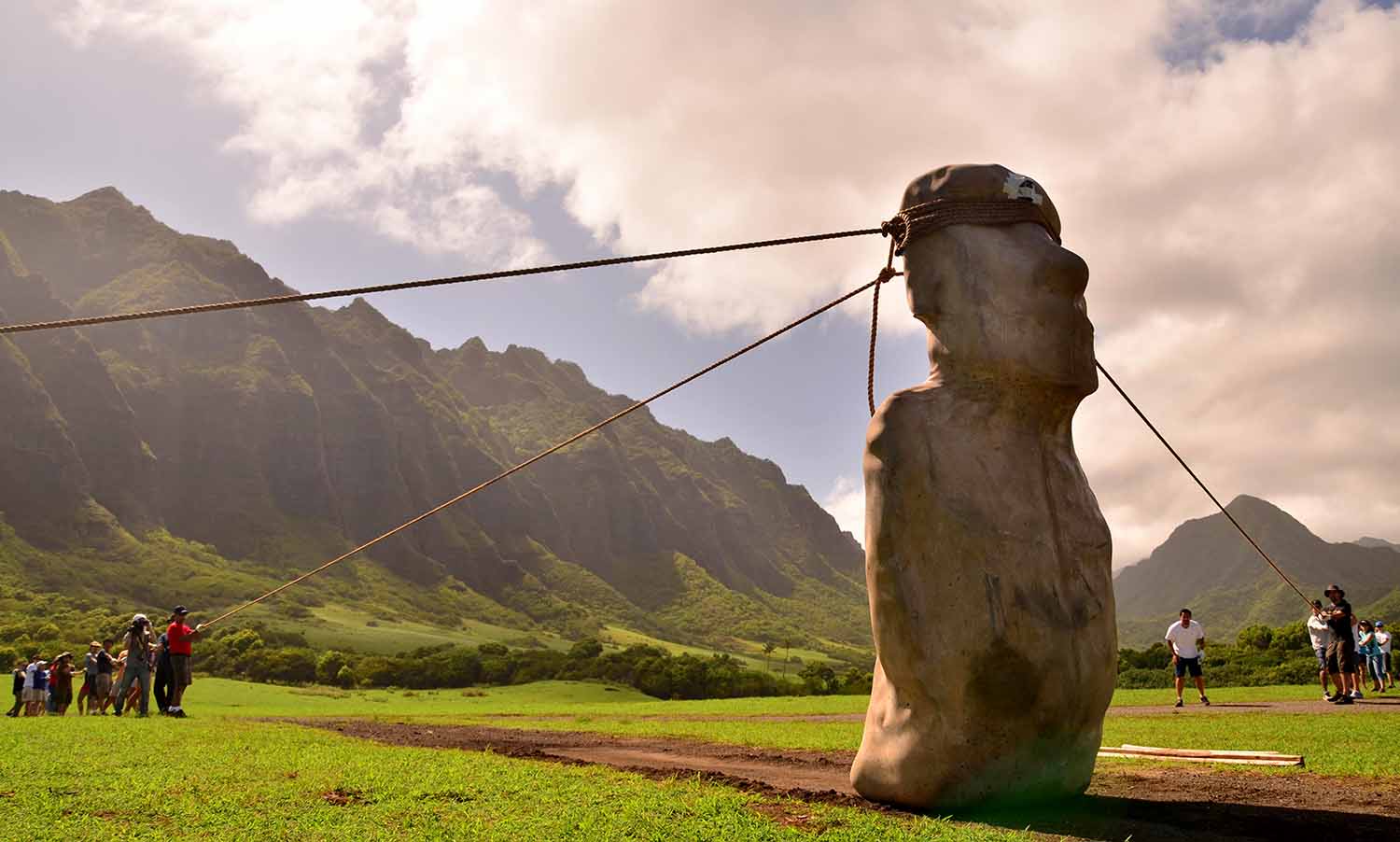
A replica of a large moai statue stands on a dirt path as people pull on ropes that are tied around its head.

Courtesy of © Carl Lipo, Binghamton University and Terry Hunt, University of Arizona.

A research team built this moai statue and then used rope to determine whether they could move the statue without modern equipment.

Then it was time to test the theory. The scientists built a 4.35-ton moai that had all the design features of the original statues. A group of 18 people tied rope around the moai replica (copy) and used the zigzagging “walking” motion to move it 328 feet (100 meters) in 40 minutes. 

Based on this experiment, Lipo says he believes the Rapa Nui people used this “walking” method to move each moai to its location. This would have allowed the Rapa Nui people to accomplish an enormous task with no machinery.

“It shows that the Rapa Nui people were incredibly smart. They figured this out,” Lipo said in an article on the Binghamton University website. “So it really gives honor to those people, saying, look at what they were able to achieve, and we have a lot to learn from them in these principles.”

Face Thinking Icon

Did You Know?

The indigenous people of Easter Island call their home Rapa Nui. The first European visitors to the island, who were Dutch, named it Easter Island because they arrived on the island on Easter Sunday in 1722.

A giant statue is perched over an open space where a crowd of people are using eclipse glasses to look at the sky.

© Jonathan Martins—AFP/Getty Images

In this 2024 photo, residents and tourists gather on Easter Island to view a solar eclipse.

A Sweet Potato Surprise

Whole and cut up sweet potatoes rest on a cloth.

© ddukang/stock.adobe.com

Sweet potatoes helped tell the story of the Rapa Nui people.

Is a sweet potato exciting? It is when it helps tell the story of an entire population!

Scientists were surprised when they discovered that the ancient Rapa Nui people had grown sweet potatoes on Easter Island. Why? Sweet potatoes are native to South America, which is 2,200 miles (3,500 kilometers) away from the island. The sweet potatoes turned out to be evidence that the Rapa Nui people had visited South America at some point. 

How long ago did the Rapa Nui people explore South America? Recent studies show that modern-day Rapa Nui people have had South American ancestors in their family trees for hundreds of years. Scientists think the Rapa Nui people reached South America sometime between the years 1250 and 1430.

That’s amazing! Engines and modern navigation equipment didn’t exist during ancient times, so the Rapa Nui people would have canoed the thousands of miles to South America and back using only the stars as their guide.

The Pacific Islands

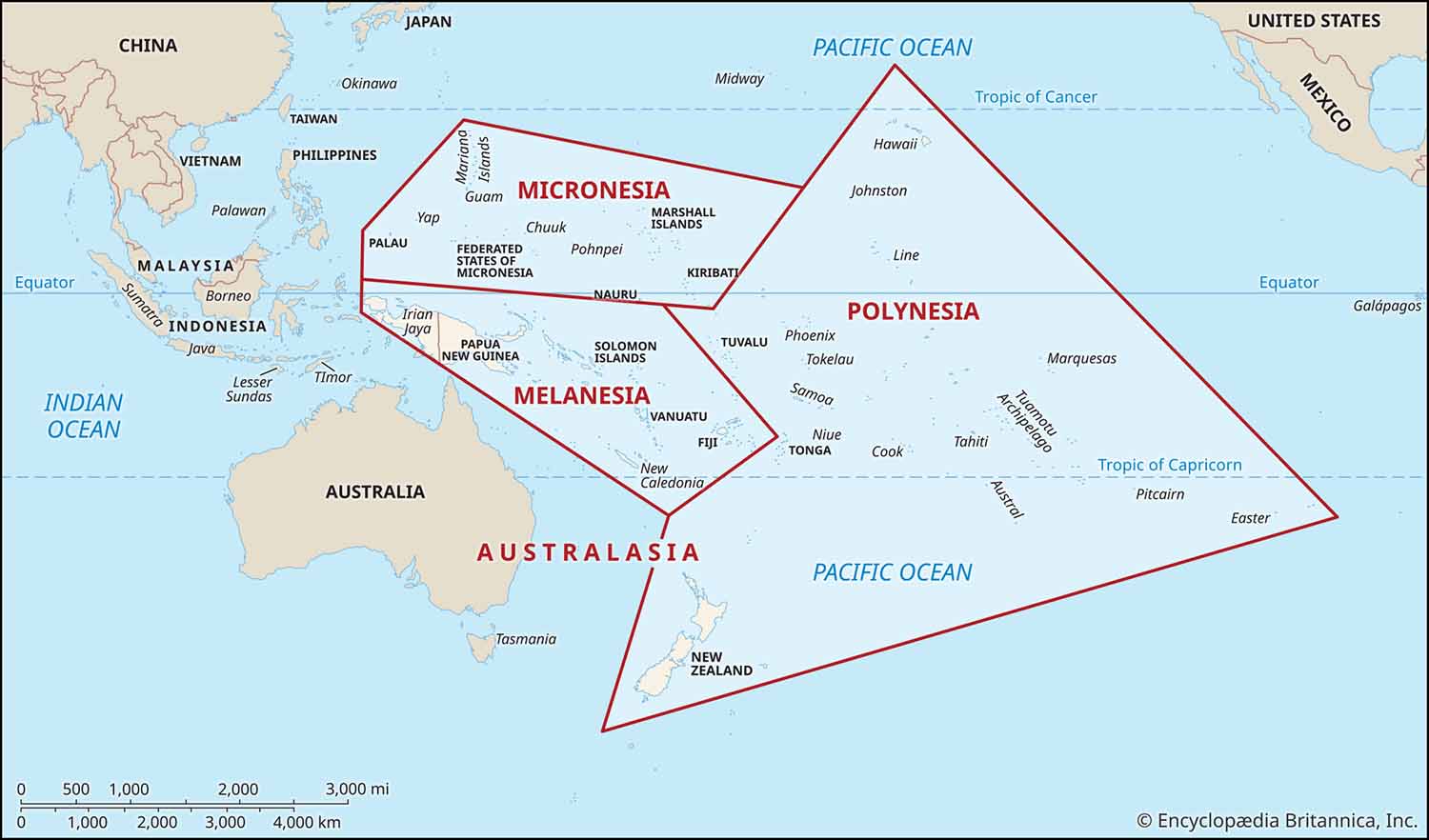
A map shows the islands of the Pacific Ocean and marks the Melanesia, Micronesia, and Polynesia regions.

Encyclopædia Britannica, Inc.

Can you find Easter Island on this map?

There are tens of thousands of islands in the Pacific Ocean. You can learn more about who lives on these islands, and what it might be like to visit them, at Britannica!

Word of the Day Icon

Word of the Day

maneuver

Part of speech:

verb

Definition:

: to move (something or someone) in a careful and usually skillful way

Definitions provided by
Merriam-Webster Logo
Game Icon

Play

Word Search

Can you find all the words?

.

In Case You Missed It

Taryn Smith is the first American woman to row solo across the Atlantic Ocean.
March 5, 2026
A powerful waterfall doesn’t easily freeze, but this winter has been especially cold!
March 3, 2026
For Women’s History Month, we’re honoring two women who inspired many others to take to the skies.
February 26, 2026
Baseball player Ron Teasley has died. Teasley was one of the last living athletes to play in the Negro Leagues.
February 24, 2026

Robot Helps Save Dying Languages

Danielle Boyer poses in front of a blank backdrop with a Skobot on her shoulder.

Robot Helps Save Dying Languages

A young inventor has created a robot that can help teach Indigenous languages to kids.

Danielle Boyer poses in front of a blank backdrop with a Skobot on her shoulder.

Courtesy of Danielle Boyer/The STEAM Connection

Danielle Boyer, co-founder of the STEAM Connection, poses with the robot she invented.

Danielle Boyer has been interested in robots since she was a kid. Now 24, Boyer has developed Skobot, a robot that can help teach Indigenous languages to kids.

Boyer herself is Indigenous, a word that can be used to describe American Indians, or Native Americans, in the United States. She is part of the Ojibwe community. When she was 10, Boyer began noticing that most of the people who spoke Anishinaabemowin (an Ojibwe language) were older. Younger people, like herself, were much less likely to know the language. 

Boyer had identified a widespread problem. Experts say that thousands of languages are dying out as fewer and fewer people speak them. Many of these dying languages are Indigenous. 

“It can be a really scary thing to see that your language is disappearing because to lose your language is to lose your culture,” Boyer told ABC 10 News.

But Boyer has a trick up her sleeve—her knowledge of robotics. A few years ago, Boyer invented Skobot, a robot that uses artificial intelligence (AI) to translate English words into Ojibwe words. Designed for kids and teens, Skobot “listens” to the user’s English word and then speaks that word in Anishinaabemowin or another Indigenous language.

Skobot is designed to perch on the user’s shoulder like a bird, but it looks more like a character from the 2015 animated movie Minions. Boyer’s organization, The STEAM Connection, distributes the robot parts to schools. Kids put together the robots and are encouraged to decorate them or even dress them however they like. Made of recycled plastic, Skobot is inexpensive to produce and free to kids. 

Face Thinking Icon

Did You Know?

At one time, there were about 500 different Indigenous languages in North America.

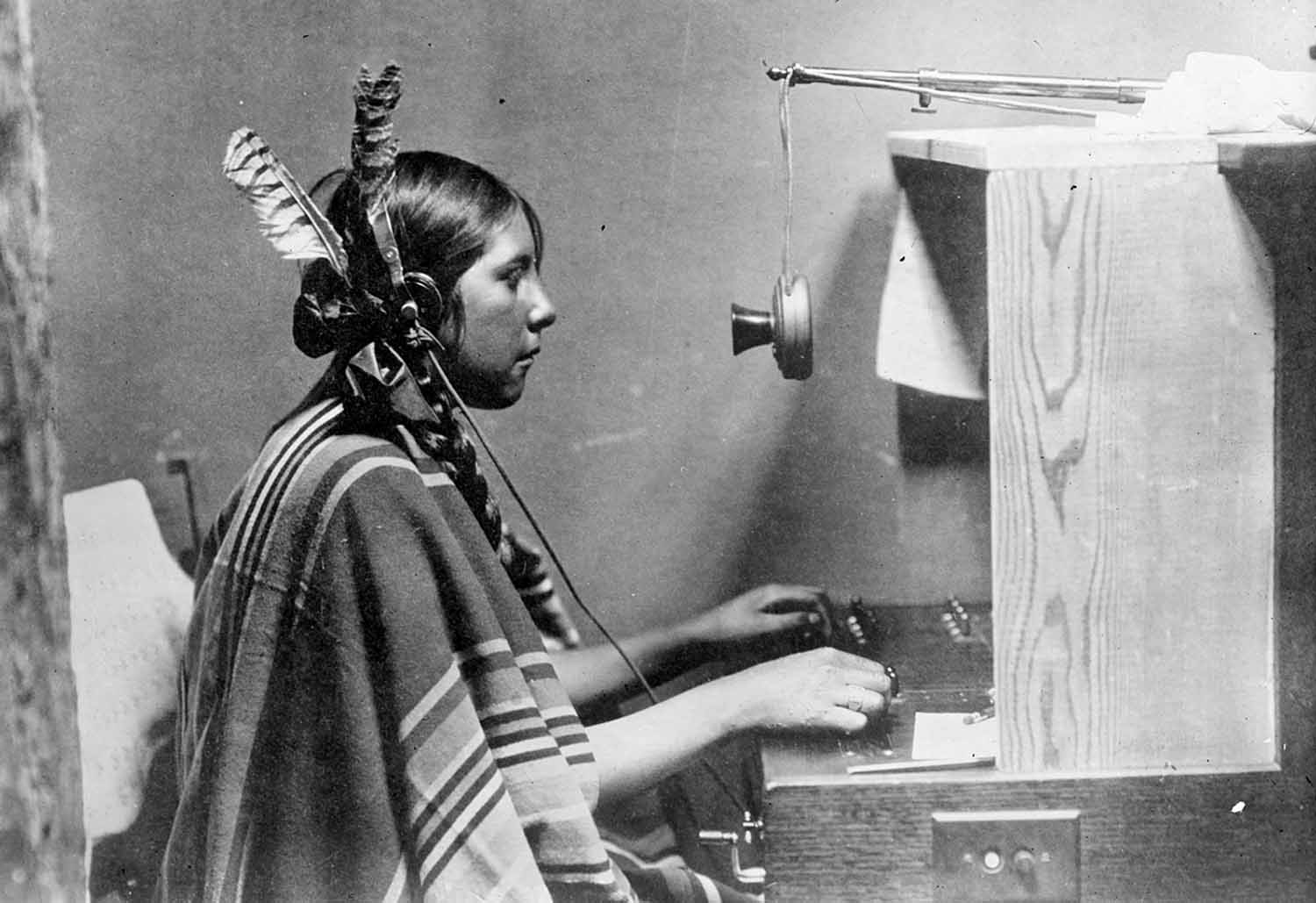
A woman in traditional Blackfeet clothing sits at a small telephone switchboard.

Library of Congress, Washington, D.C. (digital no. ggbain 38272)

In this 1925 photo, a member of the Blackfeet Nation works at a telephone switchboard at a hotel in Montana.

Firefighters Bring Pride to Their Community

A fire truck travels down a street.

© Robert Asento/stock.adobe.com

Minneapolis, Minnesota, is home to the first all-Indigenous firefighting crew in the United States.

The four-person crew of Minneapolis Fire Station 6 includes Captain Michael Graves of the Ojibwe Red Lake Nation, Fire Motor Operator Jessie Strong of the Bois Fort Band of Ojibwe, firefighter Bobby Headbird of the Leech Lake Band of Ojibwe, and firefighter Johnny Crow of the Oglala Sioux Tribe.

Graves says the firehouse is a source of pride for the community it serves, which is populated mostly by Indigenous people.

“The community, and the Native community specifically, has had a tremendous response of just loving [to see] an all-Native crew,” Graves told KOTA Territory News. 

Crow says being a firefighter is aligned with the values he learned as a member of the Oglala Sioux. 

“I carry the values that were instilled in me [taught to me] of being a protector and provider. [As firefighters, we are] doing that for the community. Not just the Native community, but for the city.”

Native American Heritage Month

© grandriver—E+/Getty Images, © Richard Tsong-Taatarii—Star Tribune/Getty Images, © Jad Davenport—National Geographic Image Collection/Alamy, © François Robert-Durand—AFP/Getty Images, Sgt. Sarah D. Sangster—U.S. Army Photo/U.S. Department of Defense

November is Native American Heritage Month in the United States. There are hundreds of Indigenous groups in North, Central, and South America. Click through the slideshow above. Then learn more at Britannica!

Word of the Day Icon

Word of the Day

lineage

Part of speech:

noun

Definition:

: the people who were in someone’s family in past times

Definitions provided by
Merriam-Webster Logo
Game Icon

Play

Word Flower

How many words can you make from the letters in the flower? All words must use the letter in the center.

.

In Case You Missed It

Taryn Smith is the first American woman to row solo across the Atlantic Ocean.
March 5, 2026
A powerful waterfall doesn’t easily freeze, but this winter has been especially cold!
March 3, 2026
For Women’s History Month, we’re honoring two women who inspired many others to take to the skies.
February 26, 2026
Baseball player Ron Teasley has died. Teasley was one of the last living athletes to play in the Negro Leagues.
February 24, 2026

Misty’s Last Bow

Misty Copeland stands in the middle of a stage with her arms outstretched as dancers behind her clap and confetti falls.

Misty’s Last Bow

Misty Copeland finished her legendary career as a ballet dancer with a wonderful performance.

Misty Copeland stands in the middle of a stage with her arms outstretched as dancers behind her clap and confetti falls.

© Rosalie O’Connor Photography, courtesy of American Ballet Theatre

Misty Copeland takes a bow after her farewell ballet performance on October 22, 2025.

When Misty Copeland joined the American Ballet Theatre (ABT) ballet company in 2001, she was ABT’s only Black woman dancer. Copeland became a star, inspiring many people to start dancing. So when she gave her last performance on October 22, the night became a celebration of a wonderful career.
Born in Kansas City, Missouri, in 1982, Copeland began taking ballet classes when she was in middle school. In 1998, when she was 15, she won first prize in a ballet competition. That summer, she was awarded a full scholarship to a summer ballet program with the San Francisco Ballet in California. Two years later, she won a scholarship to take part in ABT’s summer program, followed by an invitation to join the ABT studio company for young dancers in training.
Misty Copeland stands in a pose during a ballet performance as a male partner stands behind her.

© Rosalie O’Connor Photography, courtesy of American Ballet Theatre

Misty Copeland dances with Calvin Royal III during her farewell performance on October 22, 2025.

In 2007, Copeland became the ABT’s first Black female soloist in 20 years. In a ballet company, a soloist is a dancer who is featured in leading roles and has the opportunity to dance alone during some performances.  

In 2015, the ABT chose Copeland to become its first-ever Black principal dancer. The principal dancers are the highest-ranking members of a ballet company, performing the biggest and most difficult roles in every ballet. Copeland was featured in many ballets, including The Firebird and Swan Lake, which relied on their stars to play characters and tell a story with their movements.

Misty Copeland dances a solo as other dancers pose around her.

© Hiroyuki Ito/Getty Images

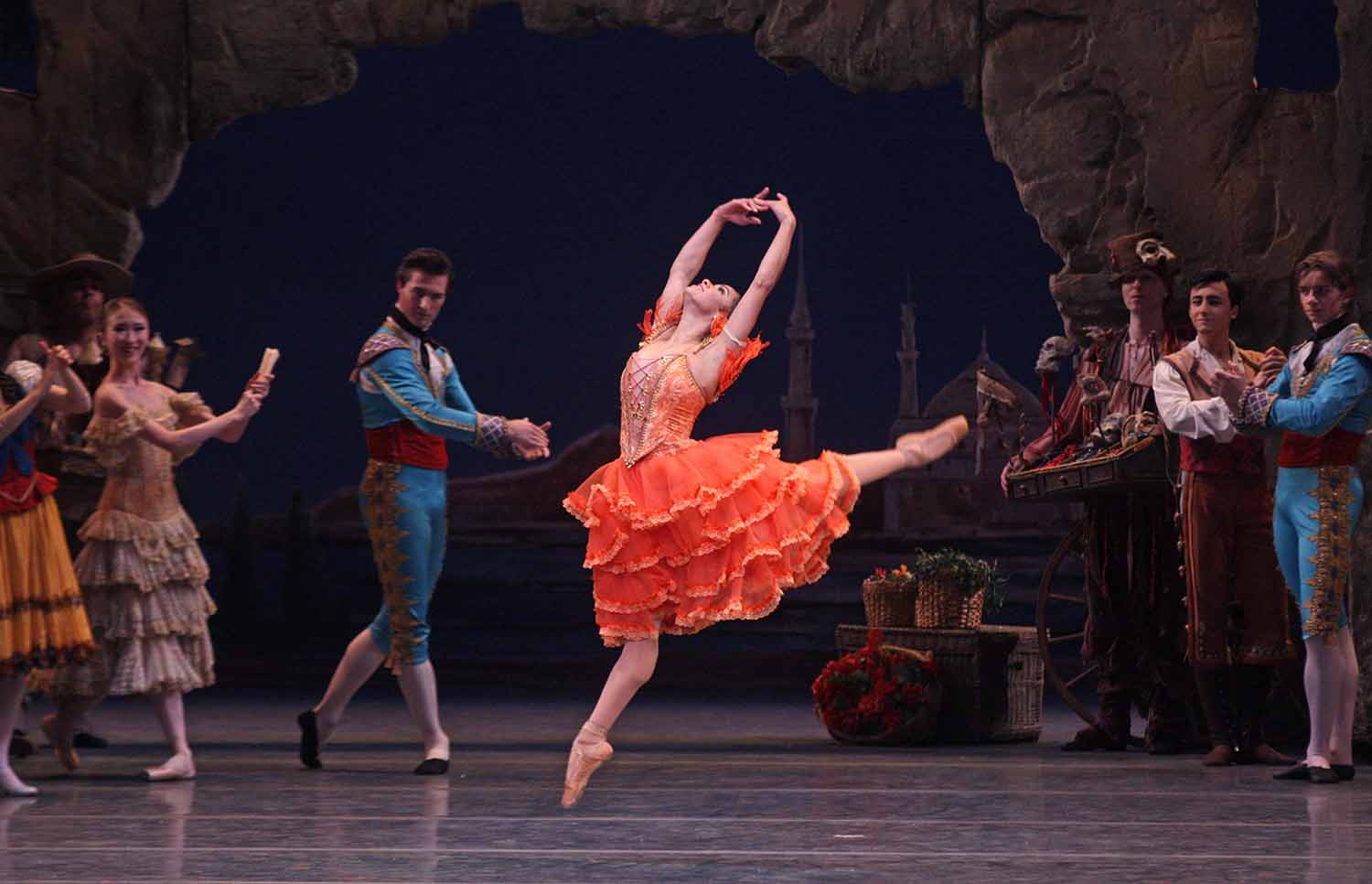
Misty Copeland and the American Ballet Theatre perform the ballet Don Quixote in 2017.

During her long career as a dancer, Copeland used her fame to promote diversity in ballet. In 2021, she started the Misty Copeland Foundation. The foundation introduces children of all backgrounds to ballet and gives them an opportunity to learn this special form of dance. 

For her final performance, in October, Copeland danced in portions of several ballets. Speakers at this event included business leader and TV host Oprah Winfrey and actor and dancer Debbie Allen. Both Winfrey and Allen spoke about how Copeland changed the face of ballet by opening the door for Black dancers.

“Misty didn’t just perform ballet,” Winfrey said. “She changed it. She redefined who belongs, who gets to be seen, and who gets to lead.”

Face Thinking Icon

Did You Know?

Misty Copeland has written several books. Her latest, Bunheads, Act 2, is about two young dancers who support each other’s dreams.

The cover of Bunheads, Act 2 shows two young ballet dancers smiling at each other as they both dance en pointe.

Courtesy of Penguin Young Readers

On Your Toes!

A closeup shows feet dancing in pointe shoes.

© Carl Johnson—Moment/Getty Images

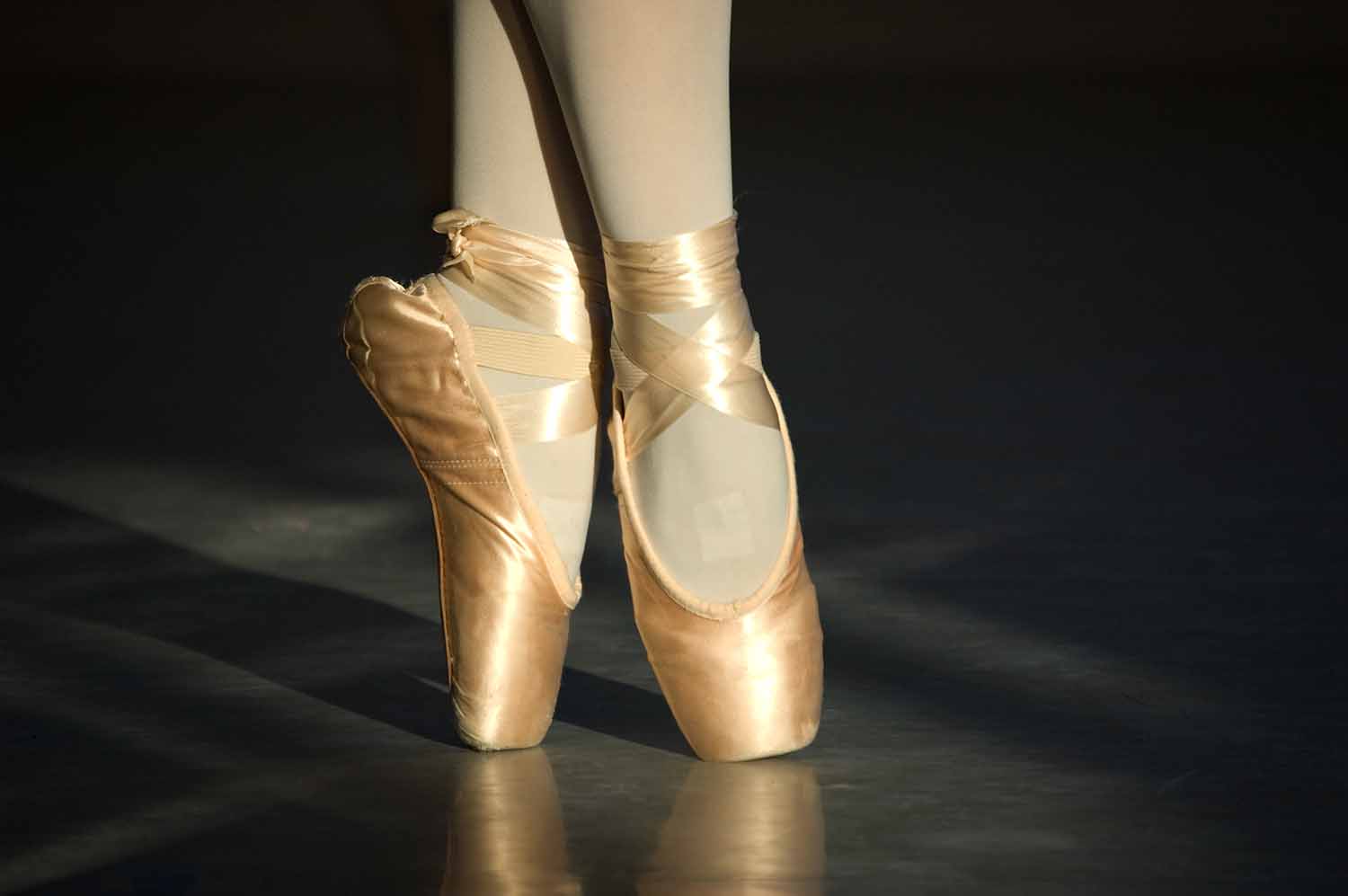
Pointe shoes allow dancers to stand—and dance—on their toes.

Some female ballet dancers actually dance on the tips of their toes. This is called dancing en pointe. But how is it done?

To dance en pointe, a dancer needs to wear specially designed shoes called pointe shoes, or toe shoes. The tip of a pointe shoe contains a “toe box,” which is made of burlap or canvas that has been hardened with glue. When the dancer stands on her toes, the pressure of her body weight goes through the toe box instead of her toes. 

But a dancer can’t just step into pointe shoes and start dancing en pointe. It’s a technique that requires years of training and muscle development.

A Dancer’s Life

Misty Copeland and a teen boy dance together in a dance studio.

© Mireya Acierto/Getty Images

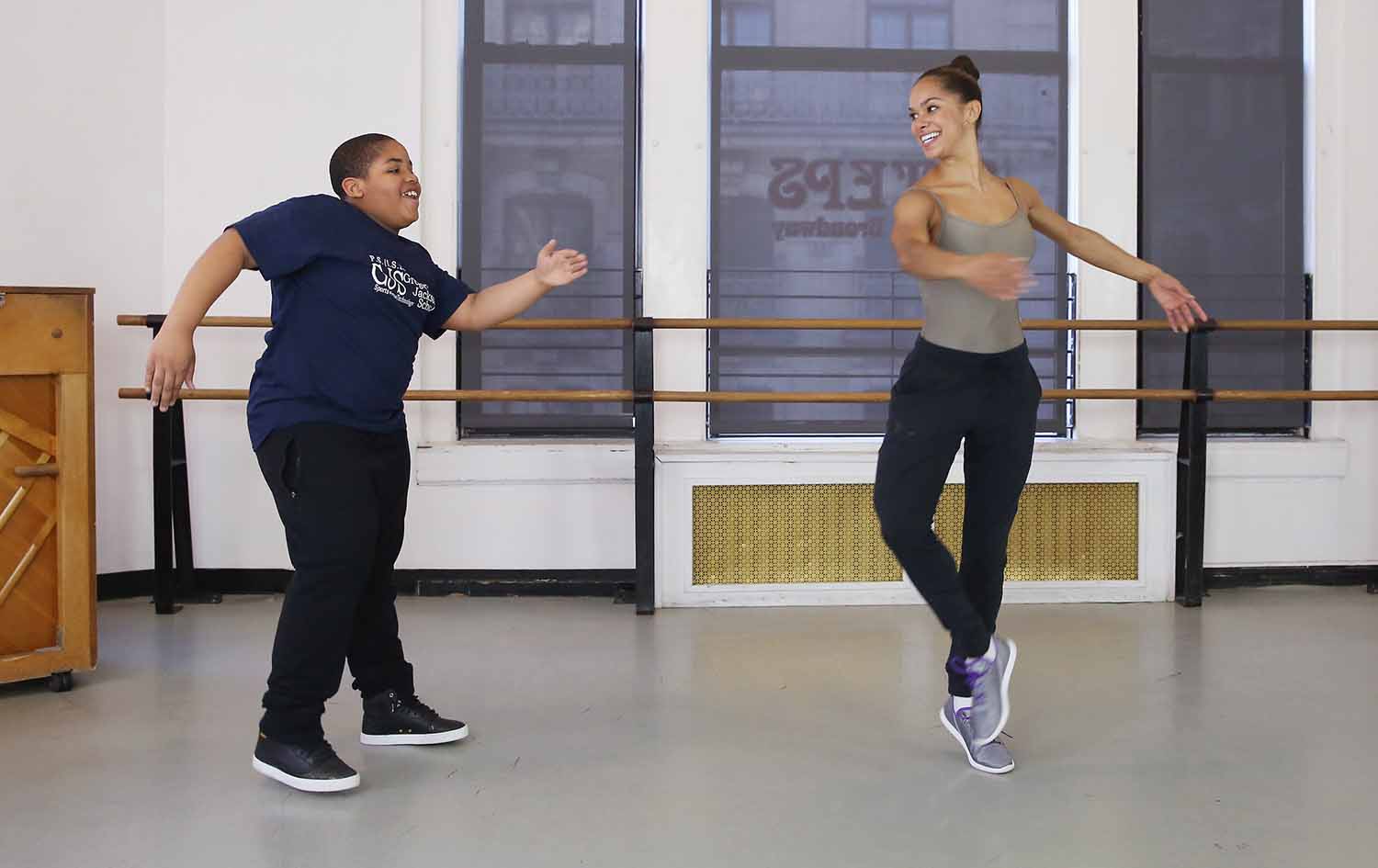
In this 2016 photo, Misty Copeland dances with Hyemel Roberts, a student at Turnaround Arts School, as part of a program that introduces students to dance and other forms of art.

Misty Copeland is one of the world’s great ballet dancers. You can learn more about her life and career at Britannica!

Word of the Day Icon

Word of the Day

artistic

Part of speech:

adjective

Definition:

: having or showing the skill of an artist

Definitions provided by
Merriam-Webster Logo
Game Icon

Play

Word Search

Can you find all the styles of dance?

.

In Case You Missed It

Taryn Smith is the first American woman to row solo across the Atlantic Ocean.
March 5, 2026
A powerful waterfall doesn’t easily freeze, but this winter has been especially cold!
March 3, 2026
For Women’s History Month, we’re honoring two women who inspired many others to take to the skies.
February 26, 2026
Baseball player Ron Teasley has died. Teasley was one of the last living athletes to play in the Negro Leagues.
February 24, 2026

Furry, Feathered, and Funny!

A GIF shows a gannet’s face covered by grass, a lion shaking water into another lion’s face, a lemur licking its index finger, a flamingo tucking its head so it seems invisible, an elephant covering its eyes with its ears, a gorilla kicking up one foot, a frog using another frog as a stepstool, a crane kicking up one leg, one lizard hugging another, two lemurs sitting side by side, and a bird with its head in another bird’s beak.

Furry, Feathered, and Funny!

The Nikon Comedy Wildlife Awards honors the world’s funniest animal photos!

A GIF shows a gannet’s face covered by grass, a lion shaking water into another lion’s face, a lemur licking its index finger, a flamingo tucking its head so it seems invisible, an elephant covering its eyes with its ears, a gorilla kicking up one foot, a frog using another frog as a stepstool, a crane kicking up one leg, one lizard hugging another, two lemurs sitting side by side, and a bird with its head in another bird’s beak.

© Alison Tuck, © Massimo Felici, © Liliana Luca, © Miles Astray, © Henry Szwinto, © Mark Meth-Cohn, © Andrew Mortimer, © David Rice, © Jessica Emmett, © Andrey Giljov, © Warren Price, Photo gif Encyclopædia Britannica, Inc.

A selection of finalists from the Nikon Comedy Wildlife Awards includes photos by (in order) Allison Tuck, Massimo Fellici, Liliana Luca, Miles Astray, Henry Szwinto, Mark Meth-Cohn, Andrew Mortimer, Jessica Emmett, Andrey Giljob, and Warren Price.

From a squirrel’s bad hair day to a couple of gossiping leopards, the world’s most hilarious animals are being celebrated once again at the 2025 Nikon Comedy Wildlife Awards. The annual contest invites photographers from around the globe to enter their funniest wildlife photos.

This year, 40 finalists were chosen from 10,000 photos that were submitted by photographers in 108 countries. There’s a lemur licking its fingers after a tasty meal, two monitor lizards that look like they’re hugging but might be fighting, and a gannet (a type of bird) with its head caught in some grass. Most animals probably don’t realize they’re being funny—except maybe the young gorilla in Rwanda that started dancing while his family was foraging for food. Intentional or not, all the finalists are guaranteed to bring the laughs.

Each finalist has been placed in one of several categories. There are categories for mammals, birds, and so on. There is also a category for photographers age 16 and one for photographers age 25 or under. These two categories give entrants the chance to win a new camera. In addition, judges will choose an overall winner to receive the ultimate prize—a wildlife safari in the African nation of Kenya! Winners will be announced on December 9, 2025.

The Comedy Wildlife Awards began in 2015, after photographer Paul Joynson-Hicks realized that wildlife photography could draw attention to the need for conservation. (Conservation is the protection of the environment, including animals and their habitats.) Since then, the contest has used entertainment to highlight the importance of conservation.

To get the public more involved in the cause, all contest finalists will be entered into the People’s Choice competition so that voters can choose a favorite. Online voting will be open between December 2025 and March 2026.

NEWS EXTRA

Honoring Veterans

Scottish soldiers and veterans, many in uniform, march on a hill led by bagpipe players.

© Jeff J. Mitchell/Getty Images

In this November 2024 photo, soldiers and veterans gather in Spean Bridge, Scotland, to pay respect to the people who have served in wars.

In several countries, mid-November is a time to honor veterans—people who served in the military. The practice dates back to November 11, 1918, when an armistice, or peace agreement, ended World War I. Beginning in 1919, nations that had been involved in the war began observing Armistice Day on November 11. Over time, the holiday was expanded to honor veterans who served in later wars as well as those who served in World War I.

Today, the name of the November 11 holiday has been changed to Veterans Day in the United States and Remembrance Day in Canada and Australia. The United Kingdom observes Remembrance Sunday on the second Sunday of November. Although the nations’ traditions are different, their purpose is the same: to give thanks to all those who serve their country and to remember the soldiers who have been lost.

Face Thinking Icon

Did You Know?

The photo below, which is a finalist in this year’s Nikon Comedy Wildlife Awards, doesn’t look like it could be real. But it is! It was taken in the Falkland Islands, where both penguins and sheep can be found.

The Comedy Wildlife Awards doesn’t accept photos that have been altered, or changed, using technology such as artificial intelligence (AI). All the photos in the contest are totally real!

Four large penguins stand on a grassy hill in front of some sheep and lambs.

© Ralph Robinson/Nikon Comedy Wildlife Awards

Serious Dancers

A large group of flamingoes stand in water and strike the same pose.

© Pedro Szekely (CC BY 2.0)

Male flamingoes show off their best moves.

A dancing gorilla featured in one of the photos in the 2025 Nikon Comedy Wildlife Awards seems to be having fun. (You can find it at the top of this page.) But some animals dance with a serious purpose. For example, honeybees do a “dance” to communicate with one another, moving their bodies in the direction where food can be found. 

Most animals dance as part of their courtship. In other words, males dance to impress females! Large groups of male flamingoes, which live in South America, dance together to try to attract attention from the nearby females. 

Protecting the Planet

A young girl plants a tree in some moist soil in a field.

© lovelyday12/stock.adobe.com

A young girl plants a tree.

The Comedy Wildlife Awards are meant to raise awareness about conservation. Animals, plants, and water are all examples of natural resources that can disappear if we don’t work to protect them. 

You can learn more about conservation—and how you can help conserve resources—at Britannica.

Word of the Day Icon

Word of the Day

captivating

Part of speech:

adjective

Definition:

: attractive and interesting in a way that holds your attention

Definitions provided by
Merriam-Webster Logo
Game Icon

Play

Crossword

Use the clues to fill in the grid.

.

In Case You Missed It

Taryn Smith is the first American woman to row solo across the Atlantic Ocean.
March 5, 2026
A powerful waterfall doesn’t easily freeze, but this winter has been especially cold!
March 3, 2026
For Women’s History Month, we’re honoring two women who inspired many others to take to the skies.
February 26, 2026
Baseball player Ron Teasley has died. Teasley was one of the last living athletes to play in the Negro Leagues.
February 24, 2026

Exercise Powers the Brain

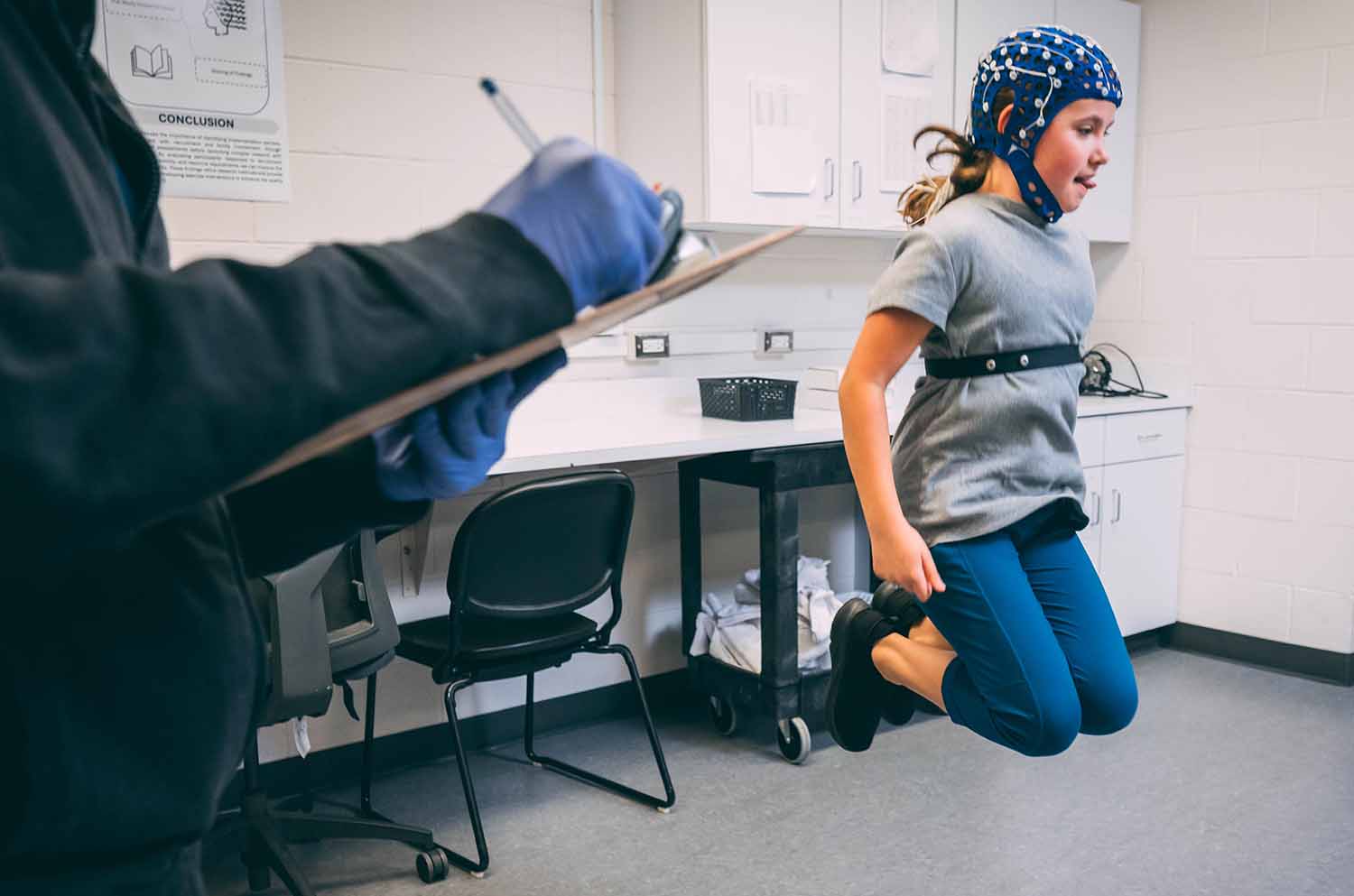
A child with equipment attached to her head and torso jumps in the air as an adult takes notes on a clipboard.

Exercise Powers the Brain

In a new study, scientists found that exercise can help students focus at school.

A child with equipment attached to her head and torso jumps in the air as an adult takes notes on a clipboard.

Courtesy of © Sean Norona/University of North Carolina – Greensboro

A 10-year-old girl does an exercise while scientists monitor how the movements affect her brain.

Exercise isn’t just good for our bodies—it can also benefit our brains. In a new study, scientists found that short exercise breaks can improve students’ ability to focus at school.

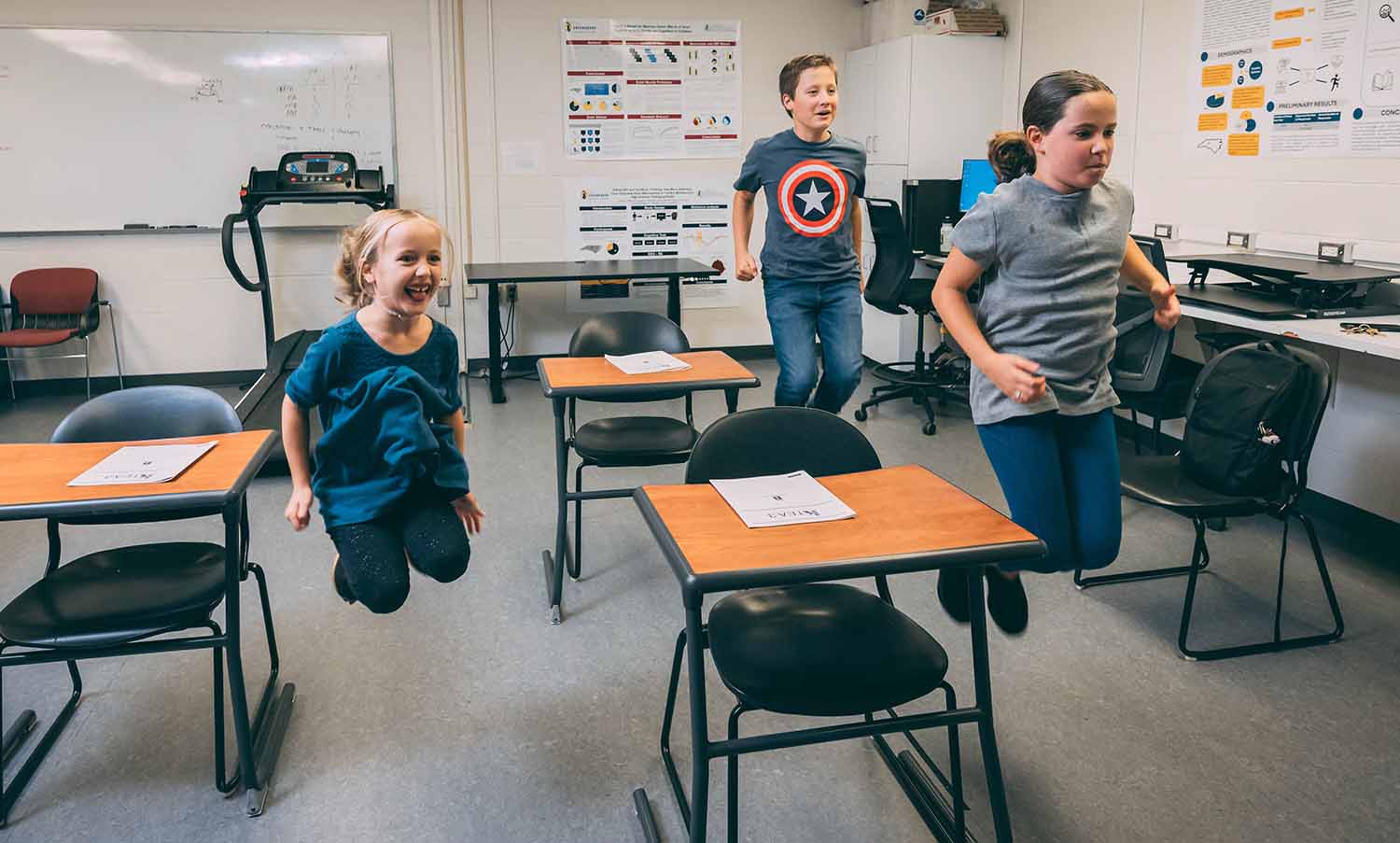
The study, led by University of North Carolina (UNC) at Greensboro professor Eric Drollette, involved 25 students aged 9 to 12. Scientists asked the kids to do jumping jacks, squats, and other high-intensity exercises for 30 seconds, with a 30-second break between each exercise. (High-intensity exercises are movements that increase our heart rate and may make us sweat.) In total, the students exercised for nine minutes.

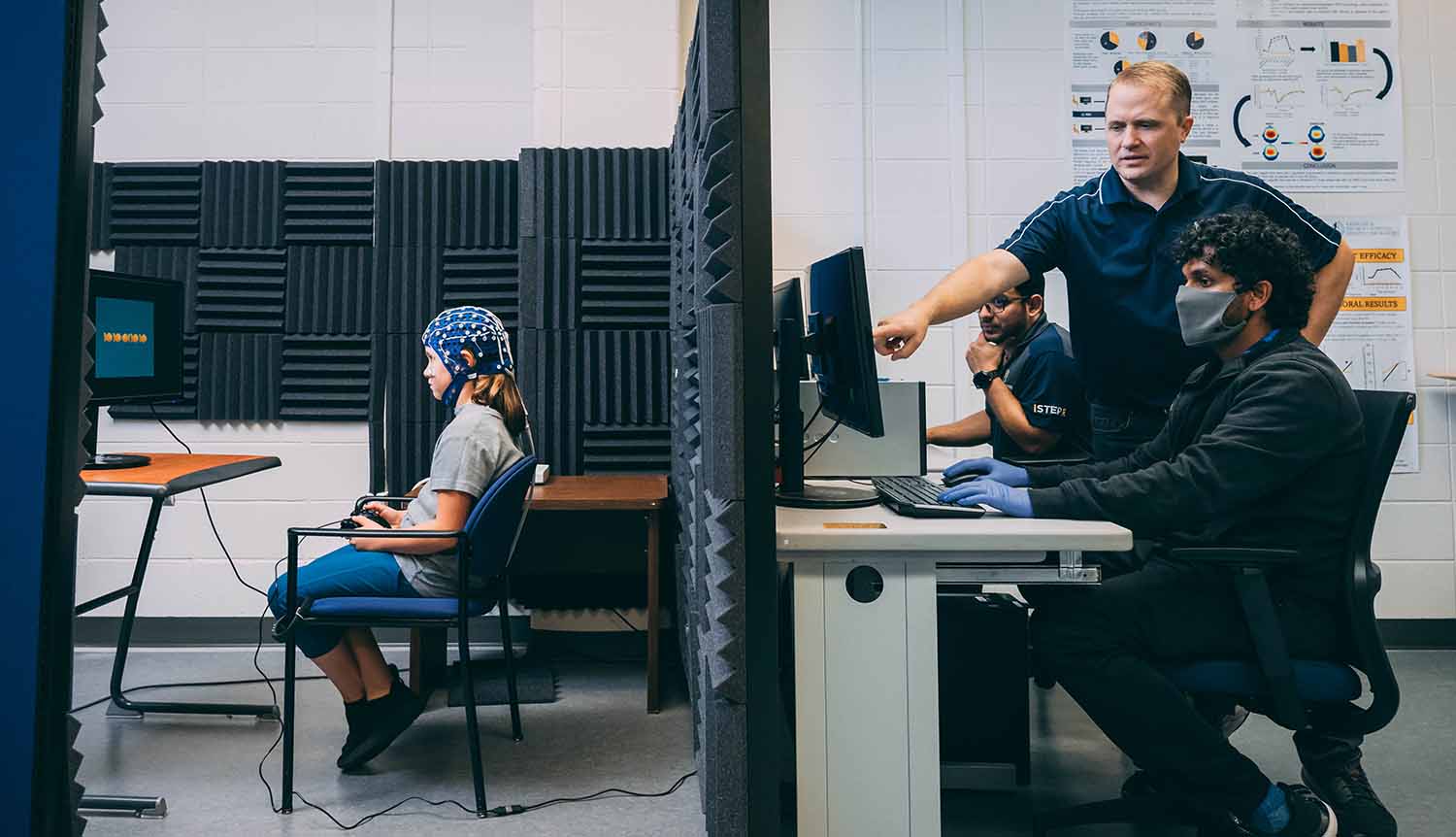
A child with electronic equipment attached to her head does a computer task while adults on the other side of a wall look at a computer screen.

Courtesy of © Sean Norona/University of North Carolina – Greensboro

Professor Eric Drollette (standing at right) and two of his students test a girl as she does tests on a computer after exercising.

After the exercise, the scientists asked the kids to take tests on a computer. Many of these tests focused on reading or other language skills.

Scientists wanted to see if the high-intensity exercise changed the test results. To do this, they also had the kids take tests after doing easier exercise (riding an exercise bike) and after watching a video. The scientists found that the kids did best on the language tests after the high-intensity exercise. 

Scientists monitored the kids’ brain activity throughout the experiment and found that the high-intensity exercise changed a type of brain response called error-related negativity (ERN). ERN occurs when we recognize that we have made a mistake. The high-intensity exercise lowered the ERN brain response. In other words, the kids recognized when they made a mistake on their tests, but they didn’t spend too long focusing on the mistake. Instead, they were able to move on in a healthy way and focus on the rest of the test. 

Three children jump in the air next to desks in a room that is set up like a classroom.

Courtesy of © Sean Norona/University of North Carolina – Greensboro

Three children demonstrate the types of exercises that can be done in a classroom with no special equipment.

Drollette believes these results mean that high-intensity exercises may help students by improving their focus. Since students could do the exercises in the classroom, Drollette says this is a good example of how to get the benefits of exercise with no special equipment. 

“Physical education and physical activity are good for our rising generation,” Drollette said in an article on the UNC website. “It’s good for mental health. It’s good for brain health and academic achievement.” 

Face Thinking Icon

Did You Know?

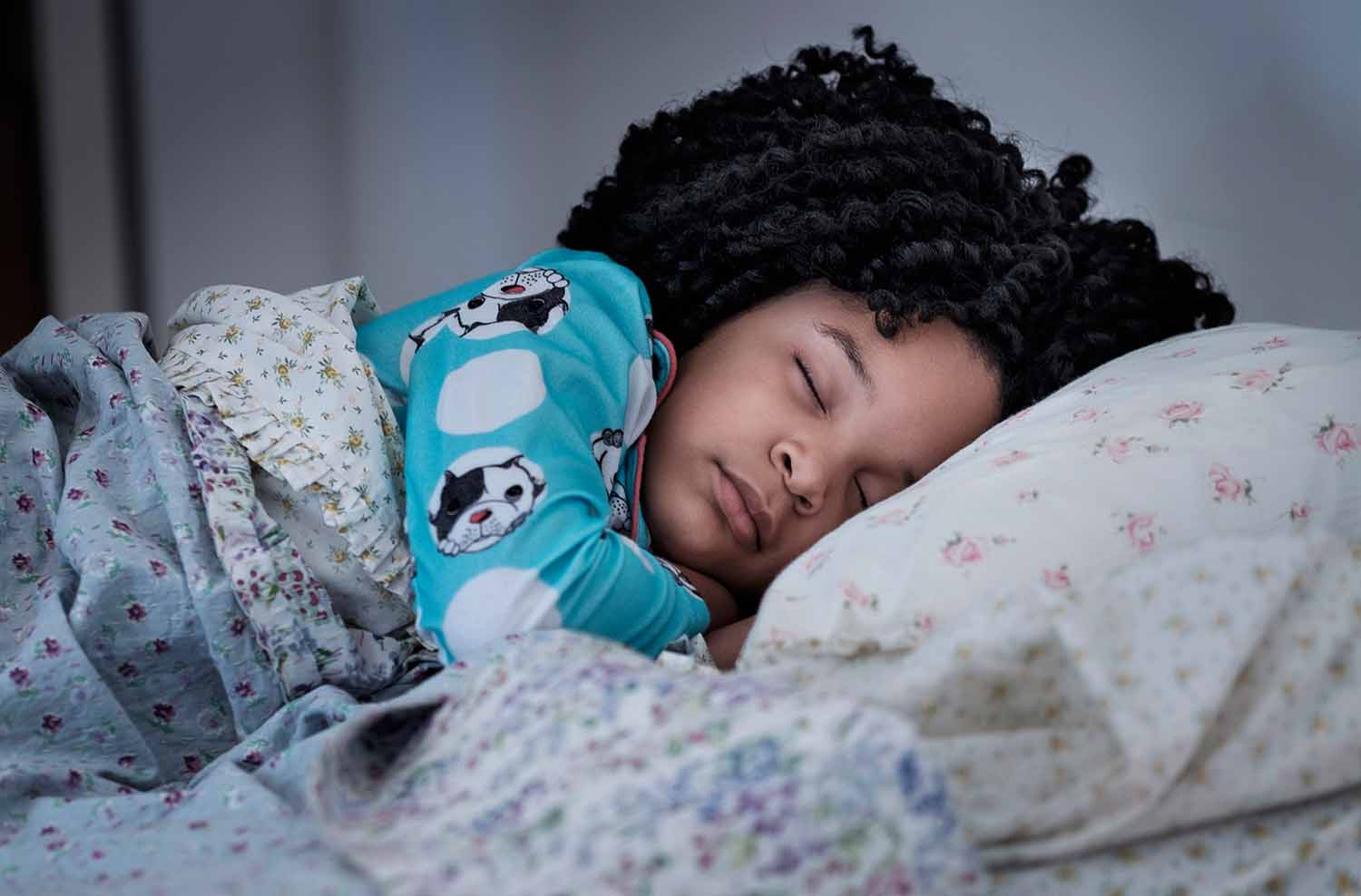
Our brains aren’t at their best unless we’ve had enough sleep. Most 6- to 12-year-olds need between 9 and 12 hours of sleep every night.

A child sleeps in a bed.

© JGI/Tom Grill—Tetra Images/Getty Images

Get Moving!

A boy and girl play tag among trees in a park.

© Imgorthand—iStock/Getty Images

High-intensity exercise, like jumping jacks, seems to get our brains going. But experts say any kind of movement is good for us. Here are a few ways to get moving and have some fun!

  • Have a dance contest. Gather some friends or family members and take turns moving to your favorite tunes. Have one or two people serve as judges to decide who is the best dancer. Or just have a dance party!
  • Set up an obstacle course. An obstacle is something that’s in your way. An obstacle course is a race from start to finish with obstacles like pillows to jump over, hoops to hop through, slides to run up, and balance beams to get across.
  • Play catch…with a catch. Start by standing close to the person you’re playing with. For every 10 or 20 catches in a row, move a little farther apart. Or just see how long you can go without letting the ball touch the ground. (Be sure to use a soft ball, like a foam ball, if you’re indoors.) 
  • Play tag or freeze tag. In freeze tag, the person who gets tagged must freeze in place until another player (not the person who is “it”) unfreezes them by tagging them.
  • Have a scavenger hunt. In a scavenger hunt, players find objects from a list—for example, “a red sock” or “a dog with brown fur.” You can play indoors or outdoors. 
  • Set up a race. There are many ways to race your friends and family, from the classic foot race to the potato sack race. In a wheelbarrow race, one person walks on their hands while another person holds up their legs.
  • Jump rope. Head to a backyard or park and practice jumping rope. Then try some variations, like alternating from jumping on one foot to jumping on the other.  

Why Our Bodies Love to Move

Three girls play jump rope on a lawn with a landscaped garden in the background.

© Stuart Dee—Photodisc/Getty Images

You’ve heard that exercise is good for you. But do you know how movement benefits your body? You can learn more at Britannica!

Word of the Day Icon

Word of the Day

vigorous

Part of speech:

adjective

Definition:

: done with great force and energy

Definitions provided by
Merriam-Webster Logo
Game Icon

Play

Word Search

Can you find all the words?

.

In Case You Missed It

Taryn Smith is the first American woman to row solo across the Atlantic Ocean.
March 5, 2026
A powerful waterfall doesn’t easily freeze, but this winter has been especially cold!
March 3, 2026
For Women’s History Month, we’re honoring two women who inspired many others to take to the skies.
February 26, 2026
Baseball player Ron Teasley has died. Teasley was one of the last living athletes to play in the Negro Leagues.
February 24, 2026

Teen Invents a Turtle-Like Robot

Two teens pose with two adults and hold up awards reading CWSF Best Project.

Teen Invents a Turtle-Like Robot

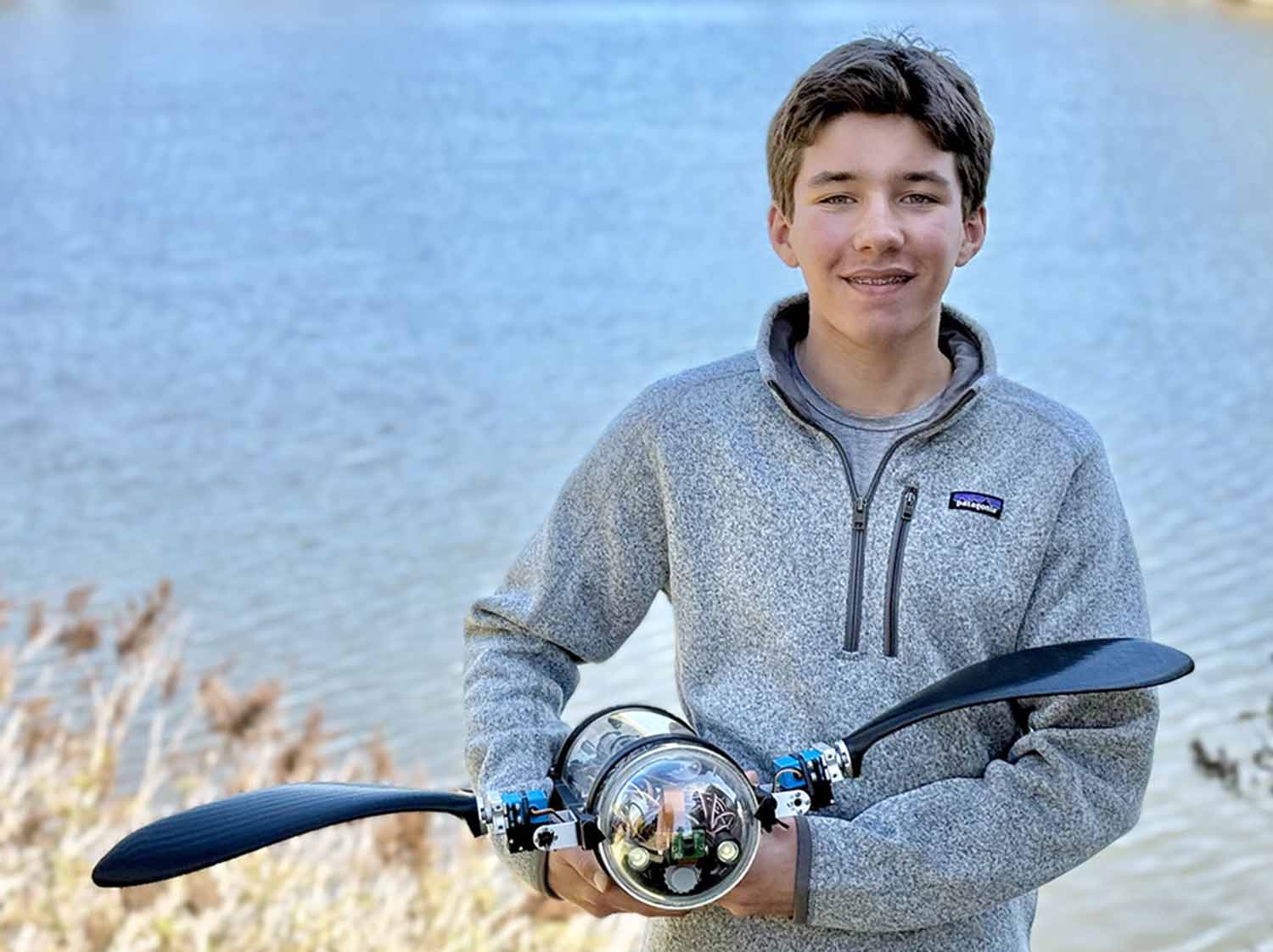
Fifteen-year-old Evan Budz has invented a turtle-like robot that can help protect coral reefs.

Two teens pose with two adults and hold up awards reading CWSF Best Project.

Courtesy of Youth Science Canada/Justin Dutcher Photography

Evan Budz (third from left) poses with officials at the 2025 Canada-Wide Science Fair awards ceremony. Also pictured is fellow winner Sara Waquas (second from left). 

If you invented a robot, what would you like it to do? Fifteen-year-old Evan Budz of Ontario, Canada, decided he wanted his robot to be able to detect certain threats to underwater life. Budz not only built that robot but also designed it to resemble a sea turtle. 

The turtle robot uses artificial intelligence to monitor underwater environments for threats to marine life. The robot can detect the health of a coral reef with 96 percent accuracy (correctness). 

“With my project, I’ve created a robot that swims underwater similarly to a sea turtle, and…[is] able to detect different types of threats that may occur in an underwater environment, from coral bleaching to invasive species,” Budz told CBC Radio’s Metro Morning. Coral bleaching is the term used when colorful coral turns white due to stress. Climate change can cause coral bleaching by warming the ocean waters.

Evan Budz stands in front of a body of water and poses while holding a robot with flippers that resemble that of a sea turtle.

Courtesy of Evan Budz

Evan Budz holds the robot he designed and built.

Budz decided to make his robot look and move like a sea turtle for two reasons. One, sea turtles are great swimmers, thanks to their flippers. And two, a robot that looks like a turtle can blend into an ocean environment without disturbing the living things around it. Budz designed the robot by adding motors to “flippers” that he made using a 3D printer.

To test the robot, Budz printed models of coral in different colors, including some that looked like they had been bleached. He found that the robot could tell the difference between the healthy-looking coral and the bleached coral.

The robot works so well that it has won multiple awards. Budz received the Best Project (Innovation) Award at the 2025 Canada-Wide Science Fair in Fredericton, New Brunswick, Canada. He was also one of four first-prize winners at the 2025 European Union Contest for Young Scientists in Riga, Latvia. His prize was $8,200.

Budz isn’t finished yet! He wants to keep improving the robot so that it can detect plastics and other pollutants in the water.

Face Thinking Icon

Did You Know?

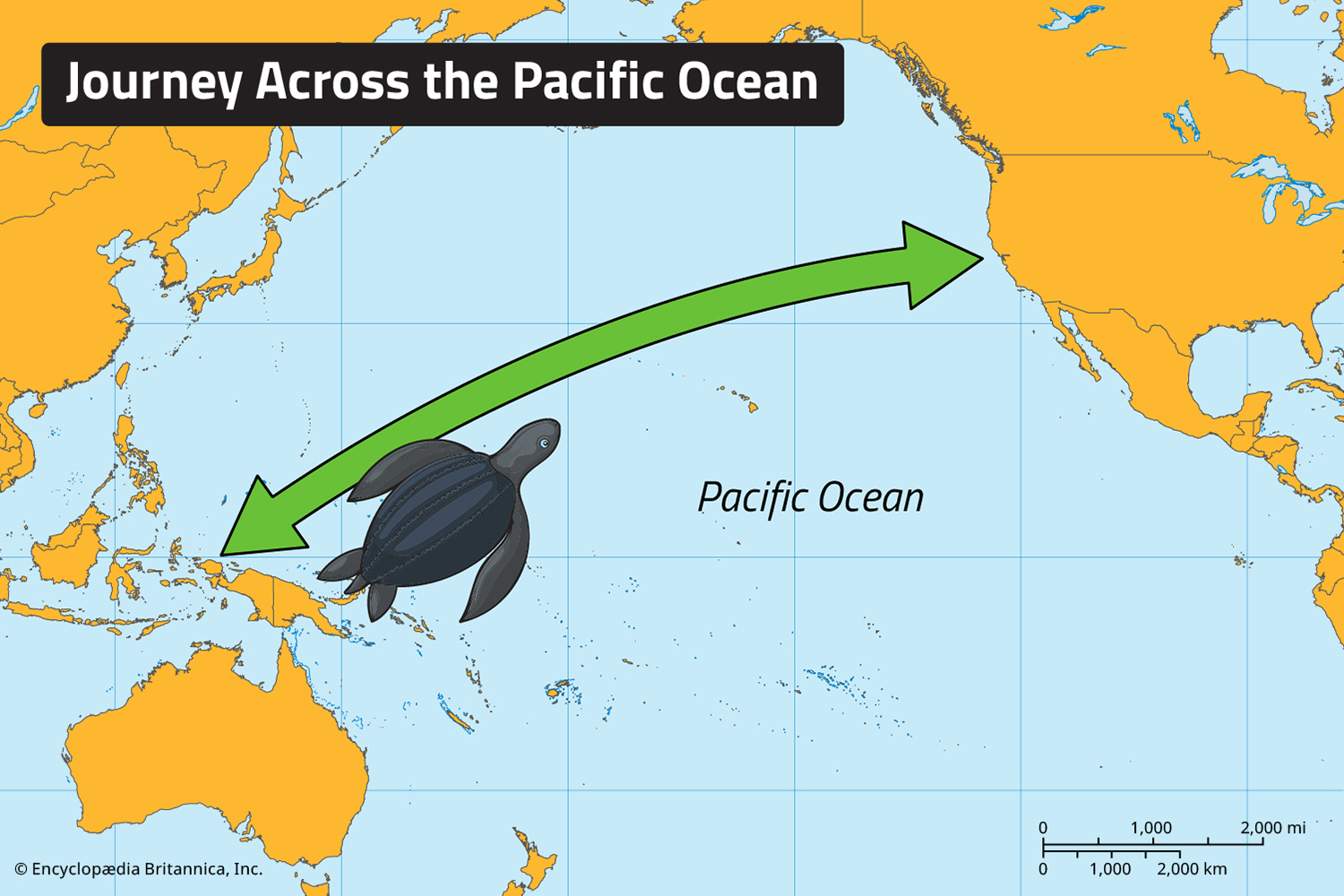
Each year, Pacific leatherback turtles go on an epic journey, swimming from their nesting grounds in Asia to feeding places in North America…and back again. The trip is thousands of miles each way!

An illustration of a turtle is shown on a map, swimming across the Pacific Ocean from Indonesia to the west coast of the United States.

© Buch&Bee/stock.adobe.com; Photo illustration Encyclopædia Britannica, Inc.

Why This Turtle Is All Bite

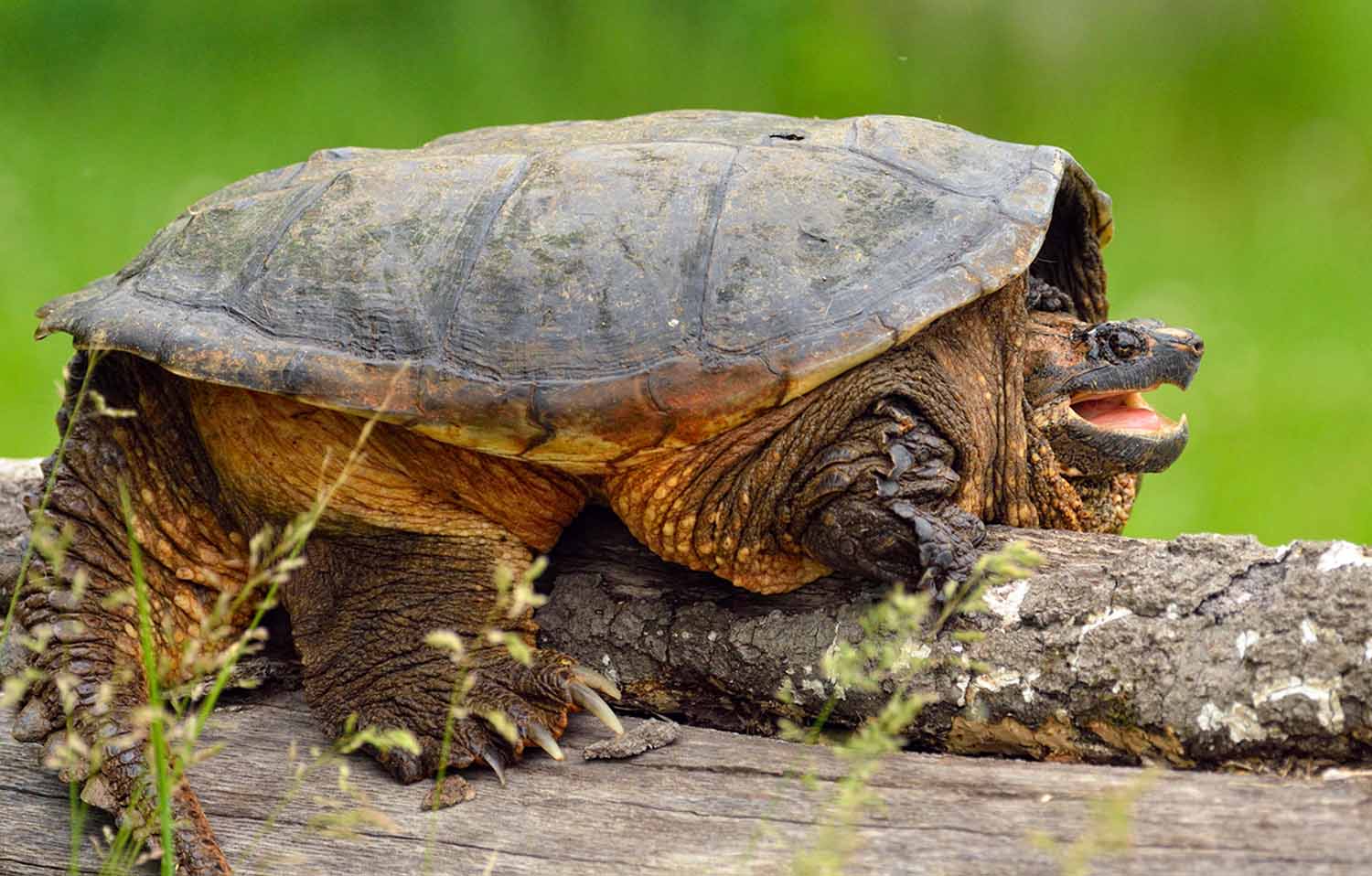
A snapping turtle sits on a log with its mouth open.

© Don Johnston_IH/Alamy

The snapping turtle can’t hide inside its shell.

One look at a snapping turtle’s open mouth reveals where this animal got its name. The snapping turtle can defend itself by snapping its powerful jaws at any animal that threatens its safety.

But scientists say there’s no need to think of this turtle as a monster. While it does eat frogs and insects, the snapping turtle doesn’t bite larger animals unless it feels threatened.

Why bite at all? Since turtles move very slowly on land, they need to be able to protect themselves from predators. Unlike most turtles, the snapping turtle can’t hide inside its shell when there’s a threat. 

Snapping turtles live on land and in water. If you ever come across a snapping turtle, just leave it alone and observe from a distance.

Animals That Don’t Move

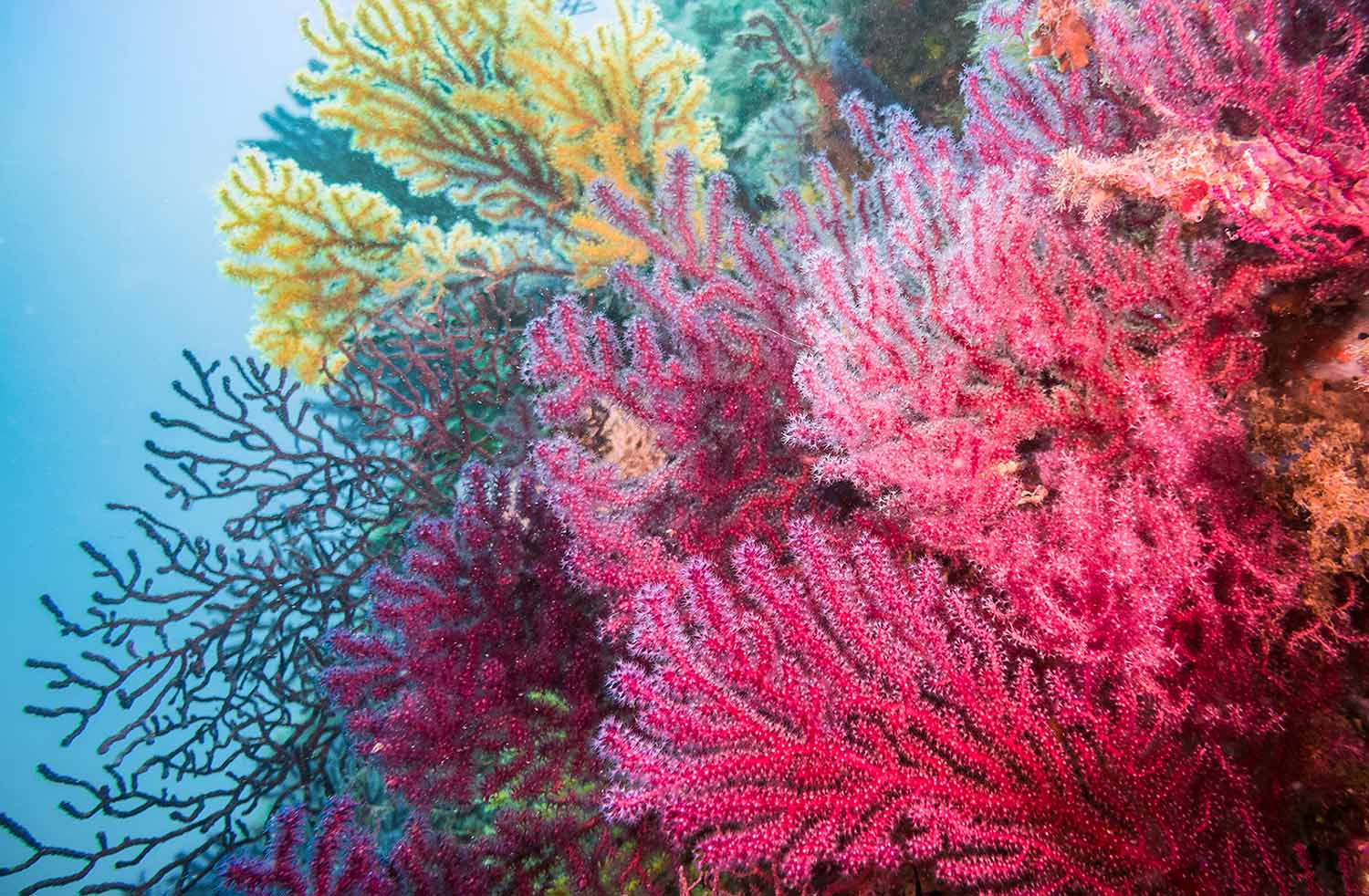
A colorful coral reef is under the sea.

© Eloi_Omella—iStock/Getty Images

Most animals are always on the move, but not corals. Corals are unusual because they remain in one spot for their entire lives. You can learn more about corals at Britannica!

Word of the Day Icon

Word of the Day

simulate

Part of speech:

verb

Definition:

: to look, feel, or behave like (something)

Definitions provided by
Merriam-Webster Logo
Game Icon

Play

Word search

Can you find all the turtles?

.

In Case You Missed It

Taryn Smith is the first American woman to row solo across the Atlantic Ocean.
March 5, 2026
A powerful waterfall doesn’t easily freeze, but this winter has been especially cold!
March 3, 2026
For Women’s History Month, we’re honoring two women who inspired many others to take to the skies.
February 26, 2026
Baseball player Ron Teasley has died. Teasley was one of the last living athletes to play in the Negro Leagues.
February 24, 2026

This Pumpkin Weighs a Ton!

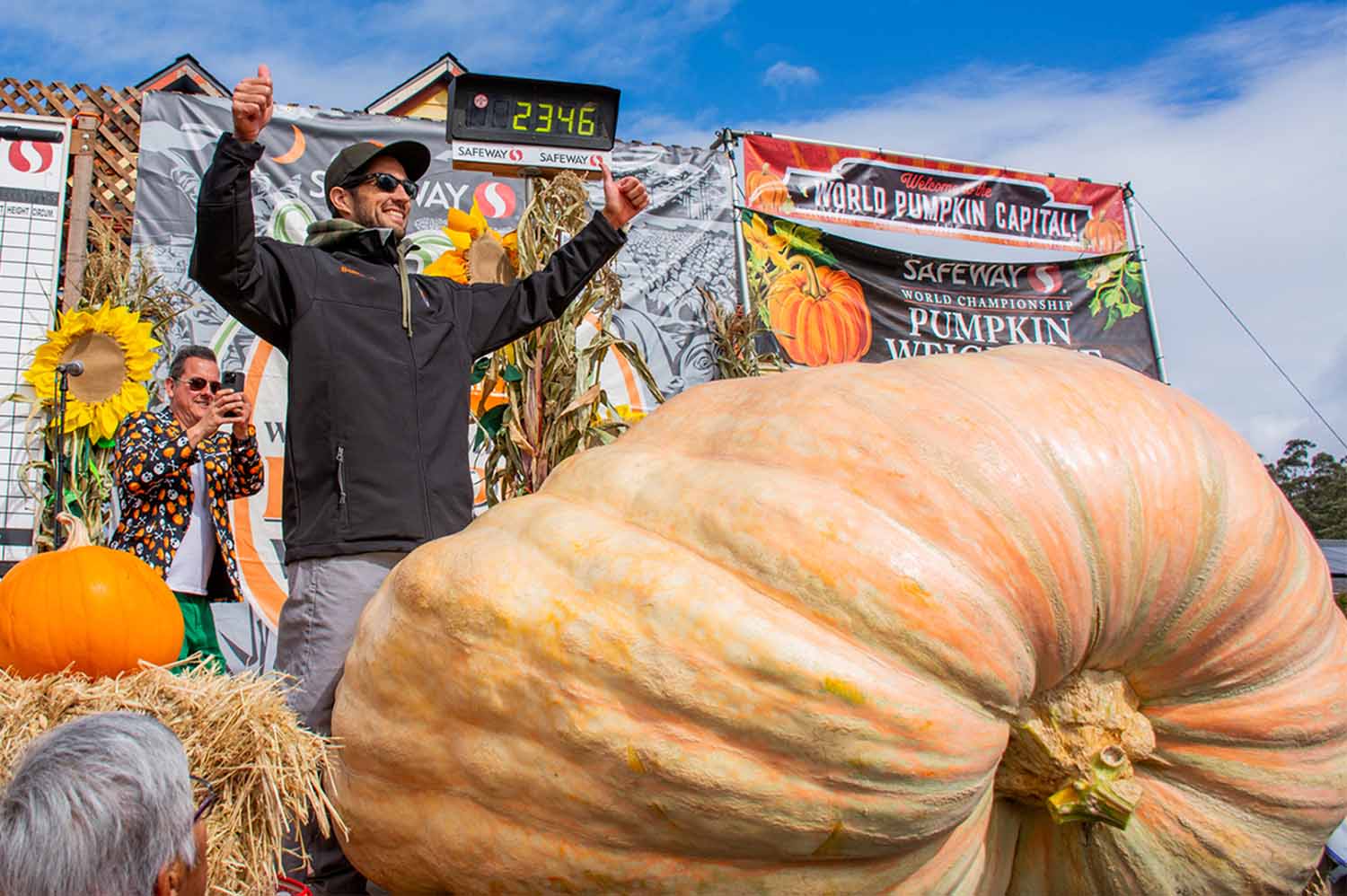
A giant pumpkin is on a scale that reads 2,346 pounds. Behind it, Brandon Dawson holds up his arms and gives two thumbs up.

This Pumpkin Weighs a Ton!

Brandon Dawson took home the top prize at the annual World Championship Pumpkin Weigh-Off for growing the biggest gourd.

A giant pumpkin is on a scale that reads 2,346 pounds. Behind it, Brandon Dawson holds up his arms and gives two thumbs up.

Courtesy of Safeway World Championship Pumpkin Weigh-Off

Brandon Dawson of Santa Rosa, California, celebrates winning the 2025 World Championship Pumpkin Weigh-Off.

Who can grow the heaviest pumpkin? That’s the key question at the annual World Championship Pumpkin Weigh-Off in Half Moon Bay, California. This year’s top prize went to Brandon Dawson, whose pumpkin weighed about as much as a small car!

Grown from a tiny seed, Dawson’s giant gourd tipped the scales at 2,346 pounds (1,064 kilograms), more than any other pumpkin in the contest. After Dawson realized he’d won, he put his two kids on top of the pumpkin and pumped his fists in the air. It was Dawson’s first win, but not his first try. He placed second at the 2024 weigh-off, where his massive pumpkin wasn’t quite heavy enough.

“My mind is kind of racing because I was in this position last year when I lost by 6 pounds (3 kilograms),” Dawson told the Associated Press.

Last year’s winner, Travis Gienger, was unable to participate in this year’s contest because his giant pumpkin split open while it was growing. But Gienger still traveled to the event from his home in Minnesota to cheer on the other growers.

Experts say it takes patience and plenty of time to grow giant pumpkins, which belong to a pumpkin species called the Atlantic Giant. The seed is planted in April and takes about 6 months to grow into a mature pumpkin. Like most other plants, the giant pumpkin plant uses sunlight to make its own food—but it can require hundreds of gallons of water daily. With the proper care, a giant pumpkin can grow by 50 to 70 pounds (23 to 32 kilograms) each day!

For Dawson, an engineer who considers gardening to be his hobby, the effort paid off. He took home $21,000 along with the glory of victory.

Fun Fact Icon

Fun Fact

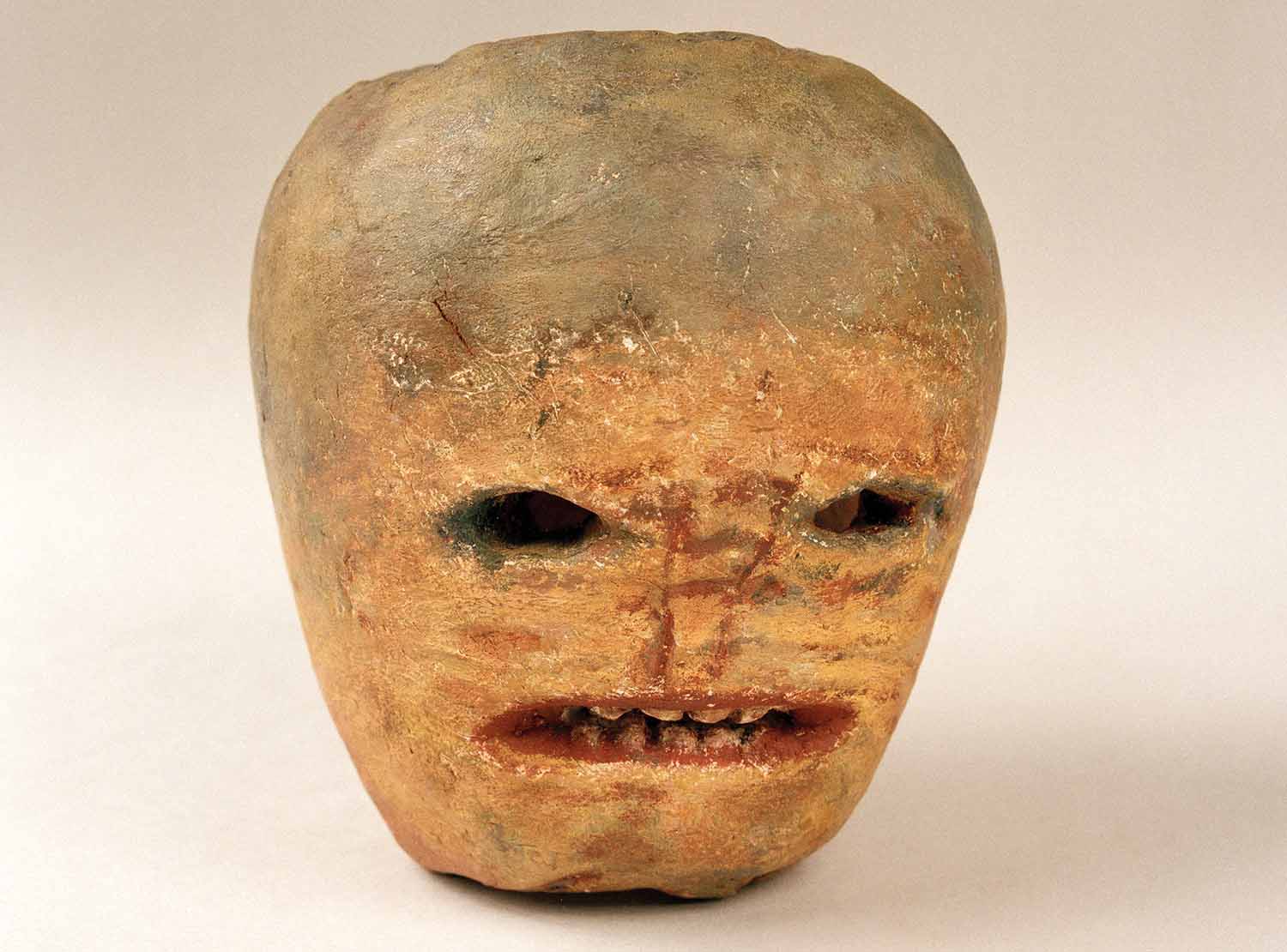
The jack-o’-lantern tradition started in Ireland, when people began carving turnips and other vegetables to use as lanterns. Sometimes they even carved faces into the vegetables. Irish immigrants in the United States continued the tradition—but they used pumpkins, which are larger and easier to carve.

A cast of a turnip has a face carved into it.

© National Museum of Ireland, NMI Collections DF14176

This is a model of a turnip that was carved in Ireland many years ago.

Row, Row, Row Your Pumpkin…

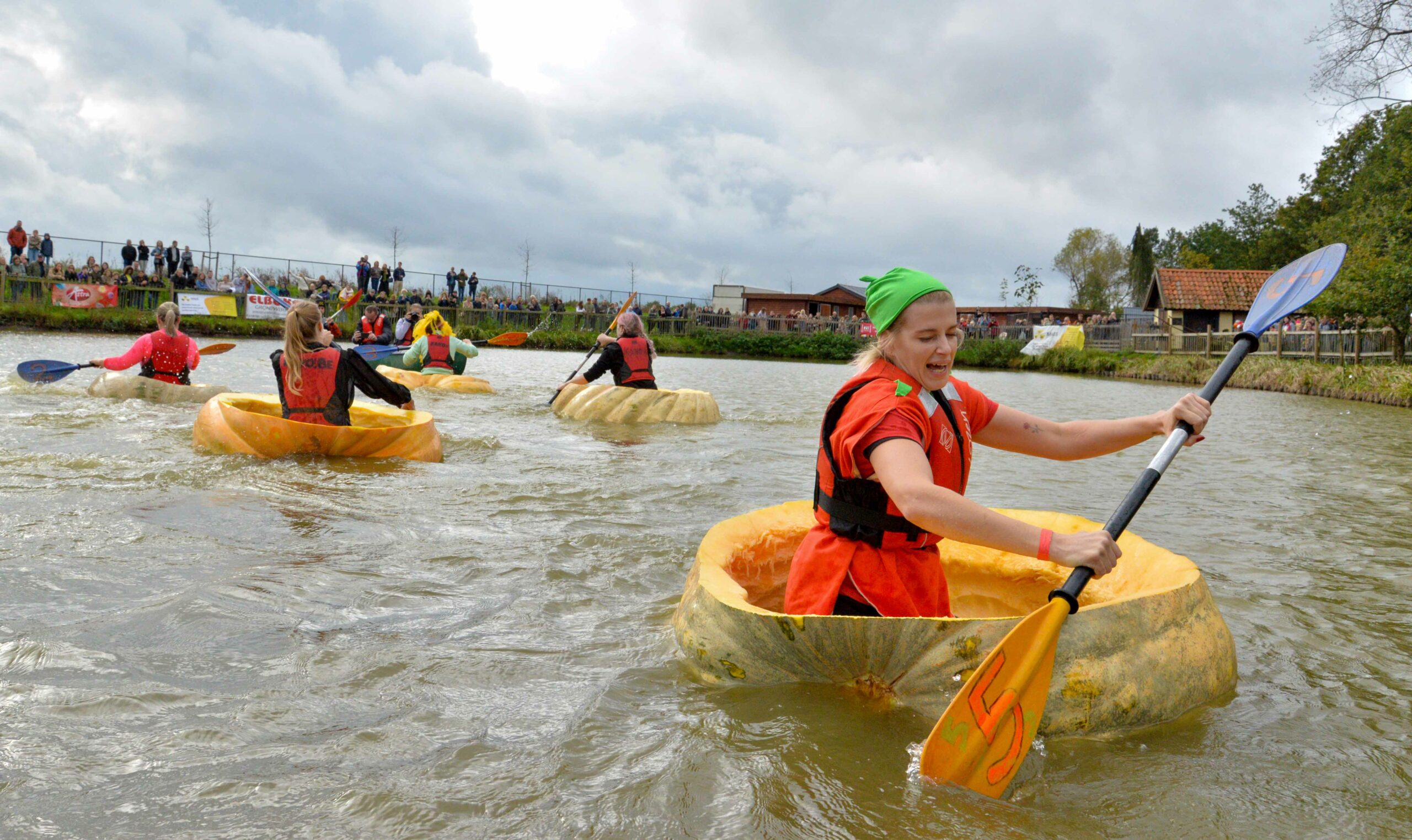
Five women each sit inside a hollowed out giant pumpkin and paddle on a body of water.

© Laia Ros/Getty Images

This pumpkin regatta takes place each year on a lake in Belgium.

Did you know that some pumpkins can grow large enough to be used as boats?

A pumpkin regatta is a boat race in which the boats are giant, hollowed-out pumpkins. According to several sources, the pumpkin regatta exists thanks to Wayne Hackney of New Hampshire. In 1996, Hackney decided to turn a giant pumpkin he’d grown into a boat. Three years later, the first known pumpkin regatta took place in Nova Scotia, Canada. Today, pumpkin regattas are held in North America and Europe. 

Like any boat, a pumpkin needs to be seaworthy—able to hold its passenger and move through the water without sinking. Regatta pumpkins usually weigh between 400 and 1,200 pounds (180 to 540 kilograms). They’re hollowed out just enough to be as light as possible while remaining sturdy and watertight.

Farming, Then and Now

A teenager squats in a garden and plants seeds in the ground while three other people tend to plants.

© Bob Nichols/U.S. Department of Agriculture

In this 2014 photo, a student plants beans in the Three Sisters Garden at the USDA’s People’s Garden in Washington, D.C. Indigenous people often planted corn, beans, and squash (known as the “three sisters”) together because these crops help one another thrive.

Pumpkins are native to North America, where Indigenous people were the first to grow them thousands of years ago. Indigenous people in many parts of the world developed resourceful ways of growing crops. Many of their practices are still used by gardeners today. Learn more at Britannica!

Word of the Day Icon

Word of the Day

humongous

Part of speech:

adjective

Definition:

: very large : huge

Definitions provided by
Merriam-Webster Logo
Game Icon

Play

Criss Cross

Can you figure out where each type of boat goes?

.

In Case You Missed It

Taryn Smith is the first American woman to row solo across the Atlantic Ocean.
March 5, 2026
A powerful waterfall doesn’t easily freeze, but this winter has been especially cold!
March 3, 2026
For Women’s History Month, we’re honoring two women who inspired many others to take to the skies.
February 26, 2026
Baseball player Ron Teasley has died. Teasley was one of the last living athletes to play in the Negro Leagues.
February 24, 2026

Scuba-Diving Lizards

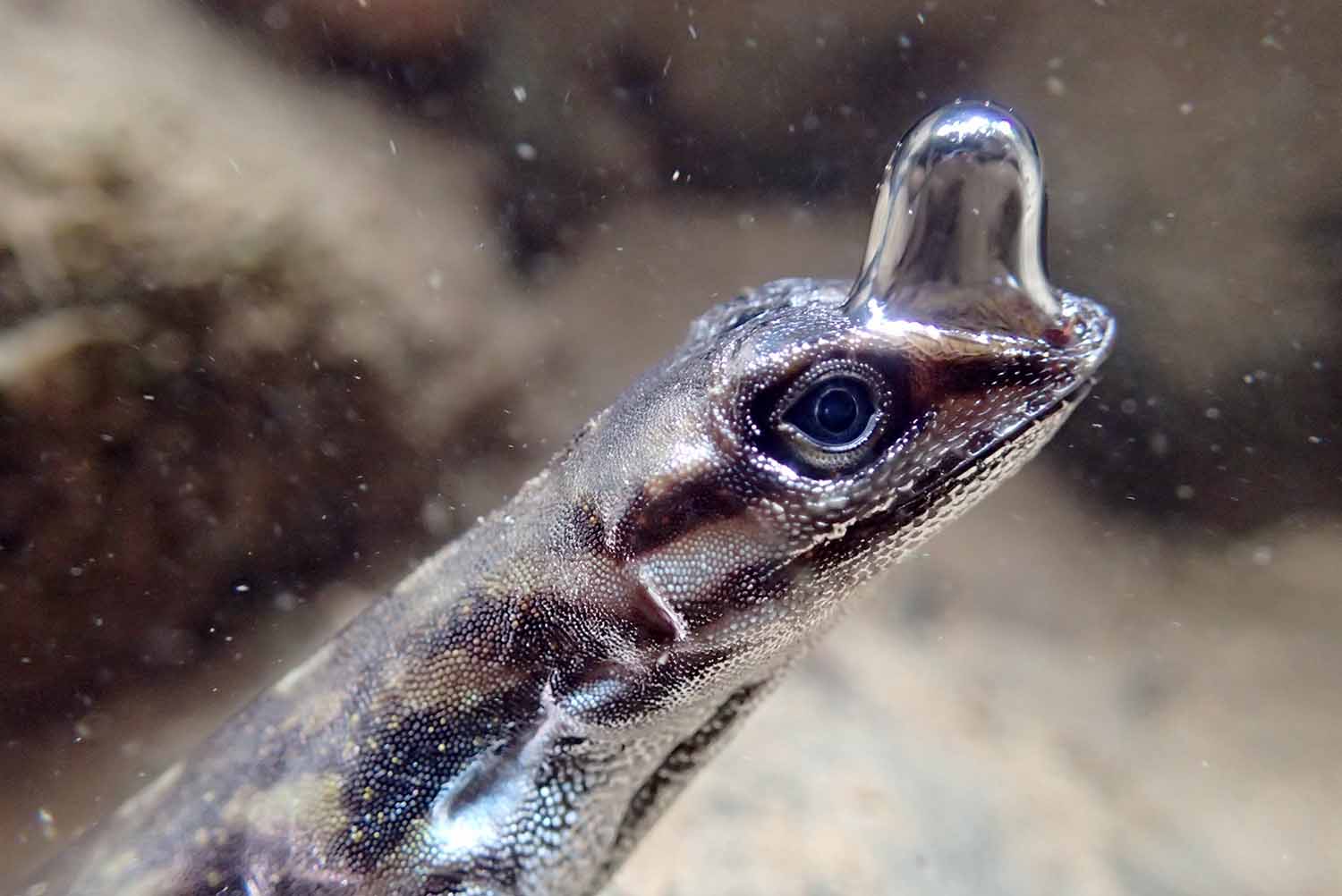
A closeup of a brown speckled lizard with an air bubble on top of its head

Scuba-Diving Lizards

A type of lizard in Costa Rica uses a bubble method to breathe underwater.

A closeup of a brown speckled lizard with an air bubble on top of its head

Courtesy of © Dr. Lindsey Swierk/Binghamton University

This water anole has created an air bubble on the top of its head so it can breathe under water.

In Costa Rica’s flowing rivers, tiny lizards swim underwater with bubbles clinging to their heads. But these bubbles are not an accident. In fact, they help the lizards breathe underwater!

Biologist Lindsey Swierk studies these scuba-diving lizards, which are called water anoles. She has discovered that the lizards dive underwater and hide from predators.

“Anoles are kind of like the chicken nuggets of the forest. Birds eat them, snakes eat them,” Swierk told BingUNews. “So, by jumping in the water, they can escape a lot of their predators.”

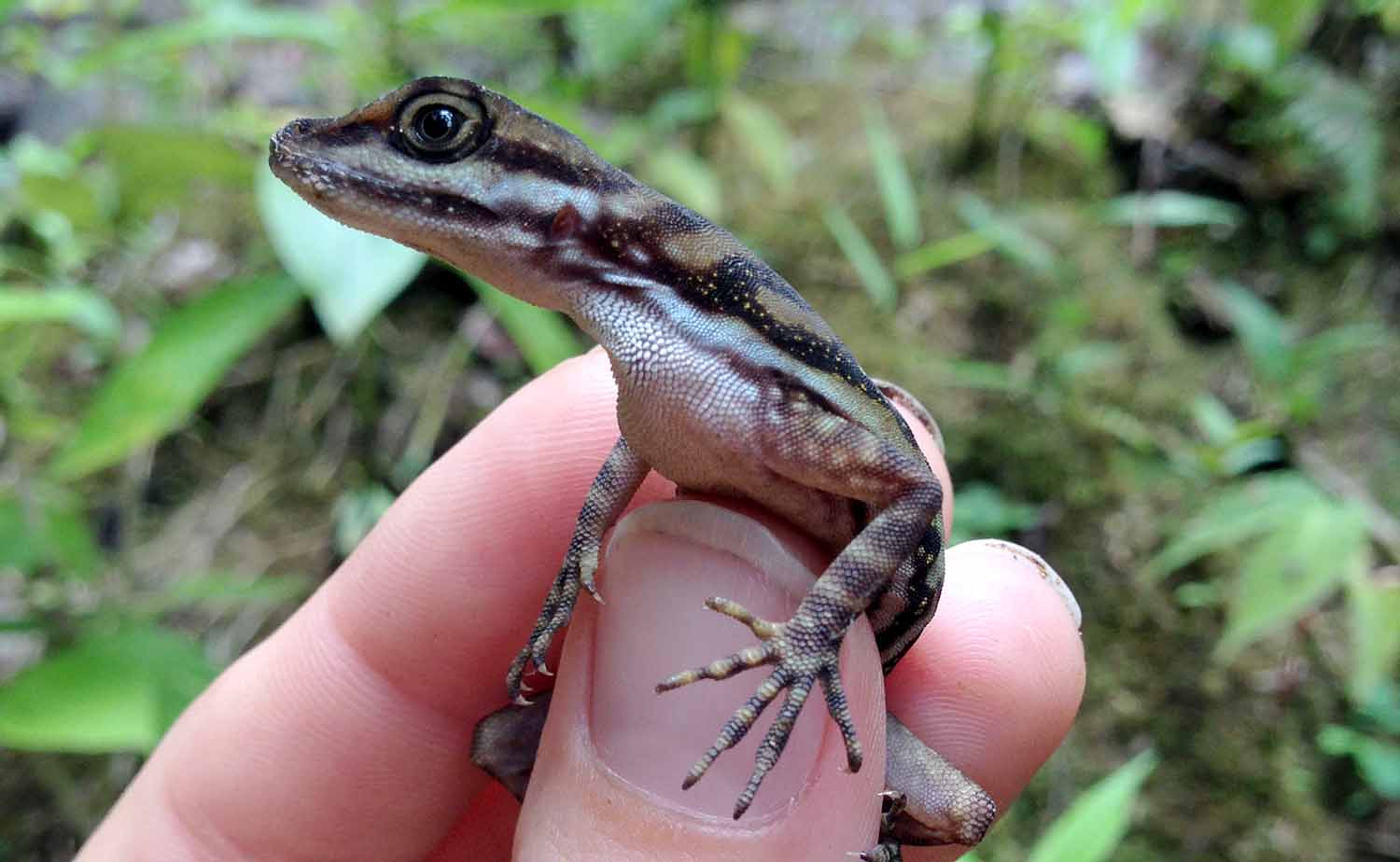
A brown speckled lizard is being held in a human hand.

Courtesy of © Dr. Lindsey Swierk/Binghamton University

This photo shows the size of a water anole compared to a human hand.

But anoles can’t stay underwater long without air. Swierk’s research shows that the skin on the anole’s head has a special trait. Air can stick to the skin, allowing the lizard to create a bubble of air so it can breathe underwater. 

These air bubbles allow the anoles to stay safe much longer.  

“They’re pretty well camouflaged [hidden] underwater as well, and they just stay underwater until that danger passes,” said Swierk. “We know that they can stay underwater at least about 20 minutes, but probably longer.”

Face Thinking Icon

Did You Know?

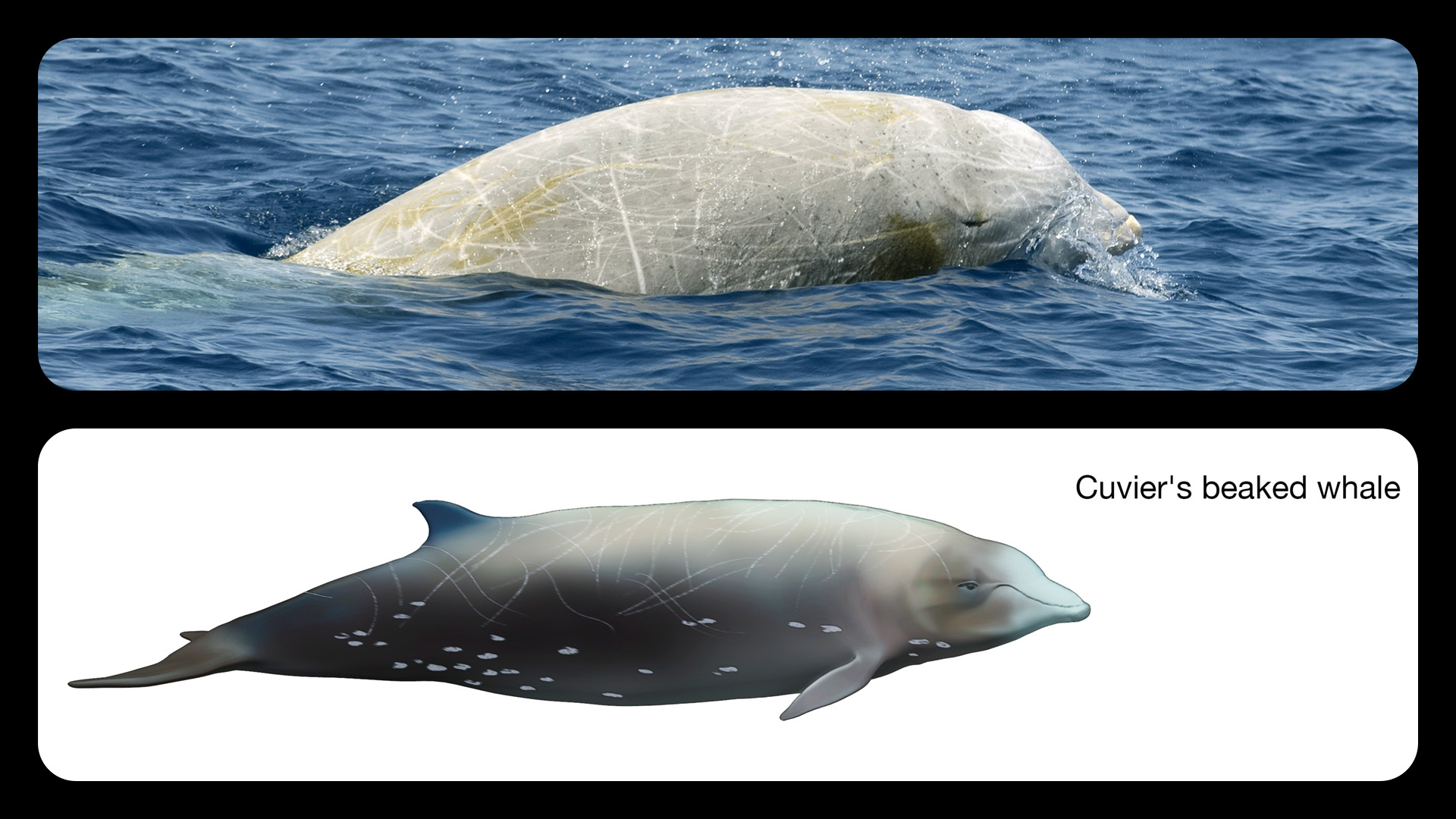
A Cuvier’s beaked whale holds the record for longest time holding its breath for a dive. In 2017, scientists observed this whale making a dive that lasted for more than 3.5 hours!

A photo of a Cuvier’s beaked whale at the water’s surface is shown above an illustration of the same species.

© Christopher Swann/Science Source, © Mikkel Juul Jensen/Science Source; Photo composite Encyclopaedia Britannica, Inc.

This whale is not the one that broke the record, but all Cuvier’s beaked whales can stay under the water for a long time.

The ‘Egyptian Whale’ Sets Diving Record

A man in scuba gear is at the bottom of a pool being assisted by three other men in scuba gear.

Courtesy of Walaa Hafez

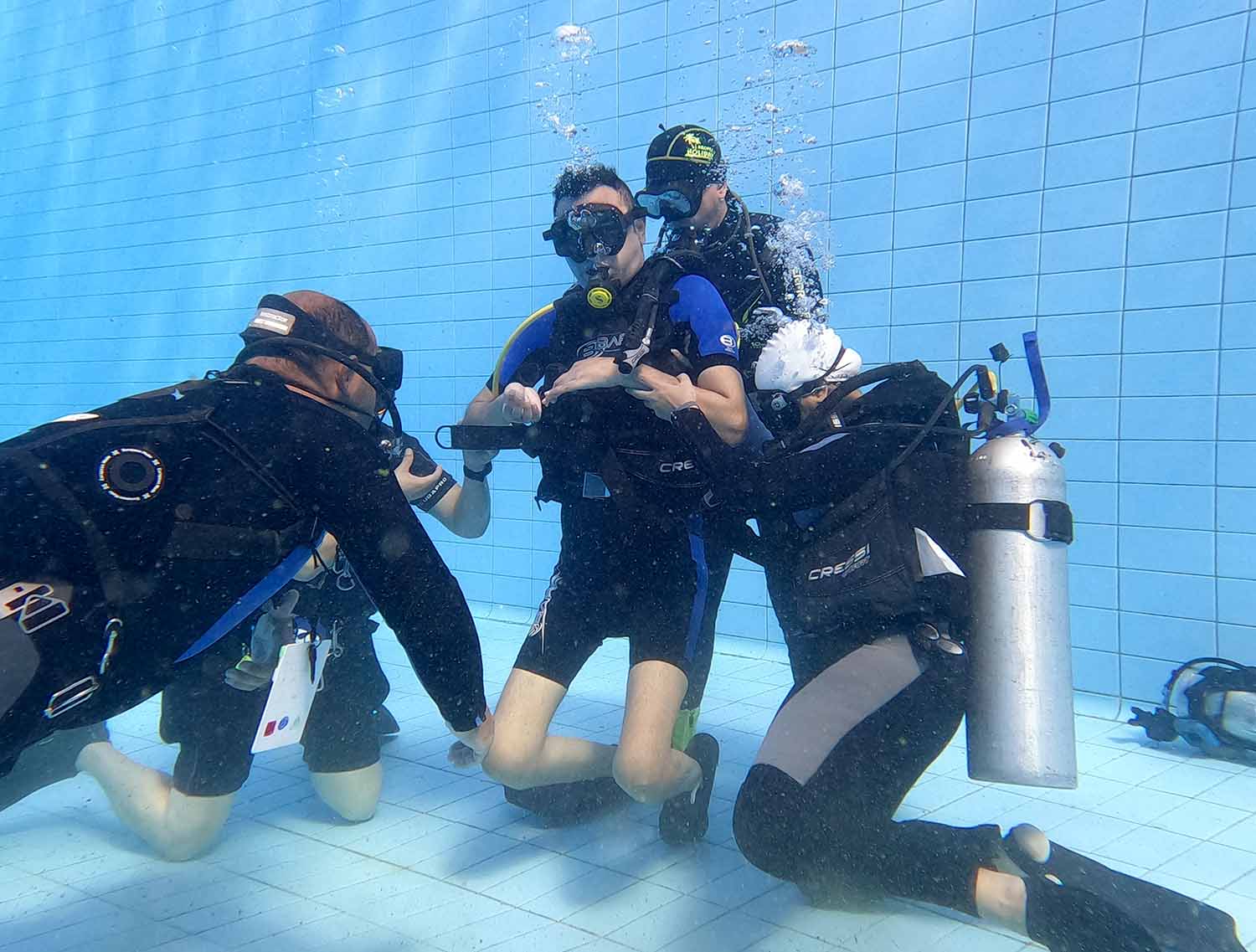
Walaa Hafez (center, facing the camera) set a scuba diving world record on August 11, 2025.

Underwater diving is Walaa Hafez’s passion. He loves it so much, his nickname is the “Egyptian Whale.” But after a car accident changed his life forever, it seemed like scuba diving might not be possible. Now in 2025, Hafez is back in his scuba gear and has achieved a scuba-diving world record.

Hafez has long been an experienced scuba diver. Before the accident, he would spend days underwater with his scuba-diving gear. In 2015, he set a men’s record for longest scuba dive, at 51 hours, 24 minutes, and 13 seconds. That’s more than two days underwater! 

Hafez became quadriplegic after a 2016 car accident. This means he cannot move his arms or legs. But Hafez still dreamed of scuba diving. He worked with other experienced divers to make sure he stayed safe underwater. He also used a swimming pool so that nothing unexpected could happen.

On August 11, 2025, Hafez set the record for longest scuba dive by a quadriplegic man. He stayed underwater for 6 hours, 4 minutes, and 45 seconds. It’s another Guinness World Record for the Egyptian Whale!

Dive into Scuba!

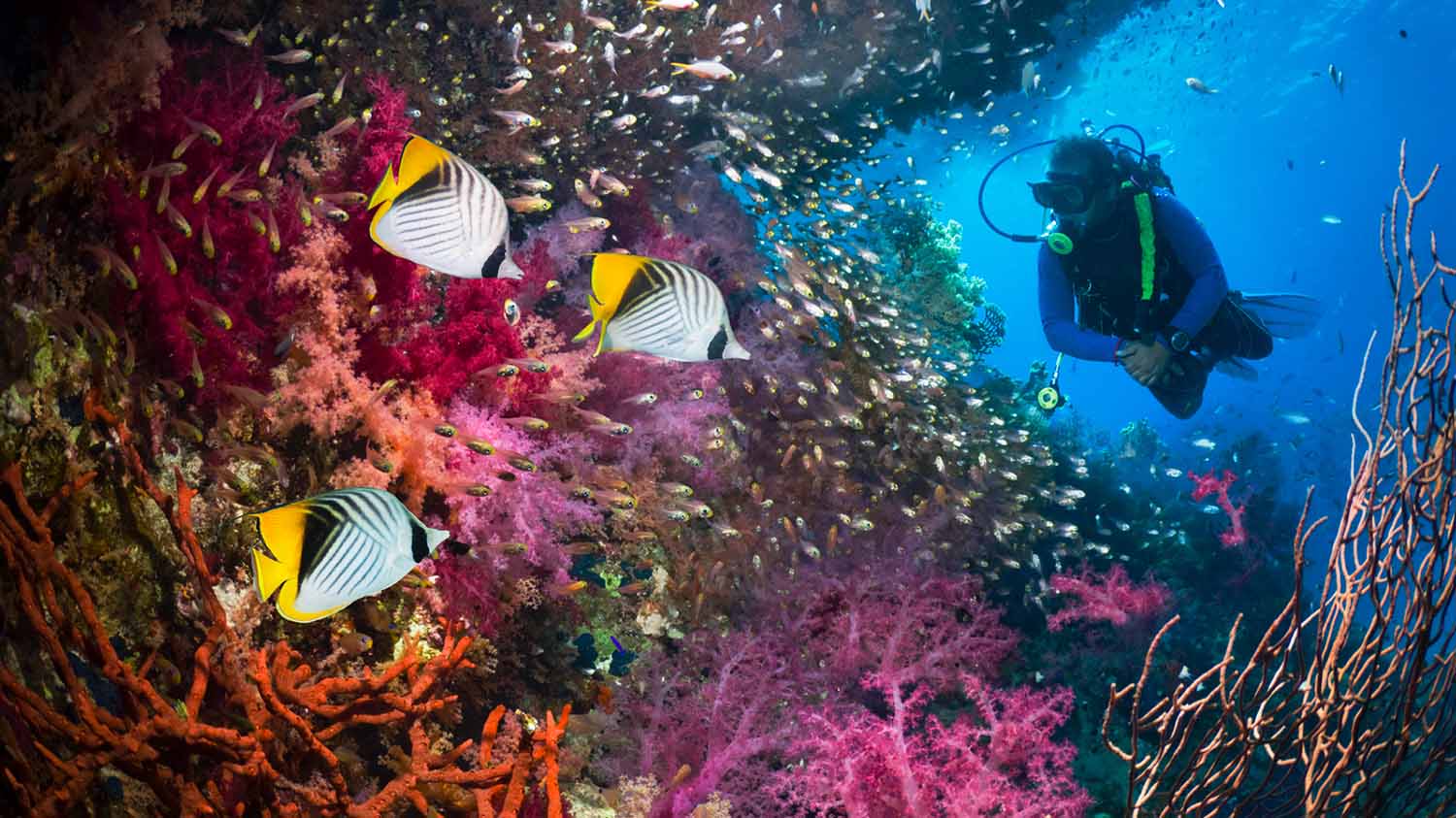
A scuba diver swims near a colorful coral reef with many fish swimming nearby.

© Georgette Douwma/Getty Images

People go diving to explore all kinds of things under the water’s surface! Some adventures need little equipment, but certain types of diving require a lot of gear. Learn more about underwater diving at Britannica!

Word of the Day Icon

Word of the Day

bubbly

Part of speech:

adjective

Definition:

: very happy, cheerful, and lively

Definitions provided by
Merriam-Webster Logo
Game Icon

Play

Word Search

.

In Case You Missed It

Taryn Smith is the first American woman to row solo across the Atlantic Ocean.
March 5, 2026
A powerful waterfall doesn’t easily freeze, but this winter has been especially cold!
March 3, 2026
For Women’s History Month, we’re honoring two women who inspired many others to take to the skies.
February 26, 2026
Baseball player Ron Teasley has died. Teasley was one of the last living athletes to play in the Negro Leagues.
February 24, 2026