




Midtown Bramble and Bloom
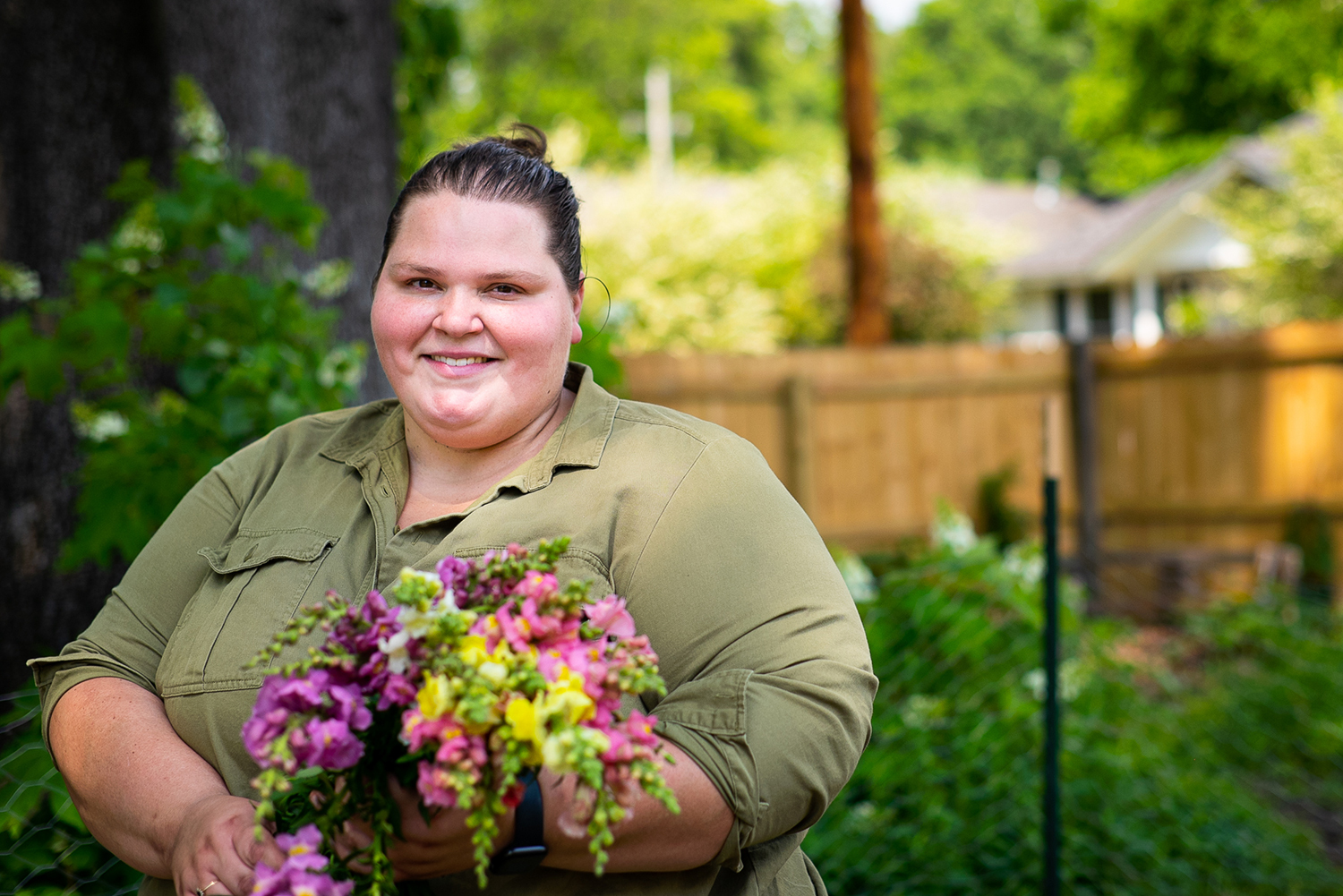
Marisa Mender-Franklin started a flower-growing business called Midtown Bramble and Bloom.
A woman in the U.S. state of Tennessee was able to start her own flower-growing business, thanks to some generous neighbors.
Marisa Mender-Franklin is a florist, meaning she grows and sells flowers. Mender-Franklin, who was once an art teacher, discovered her love of flowers when she grew them to decorate her own wedding in 2020. The experience gave her an idea: Why not start a flower farm and sell the flowers? There was just one problem. Mender-Franklin didn’t have enough land.
Midtown Bramble and Bloom
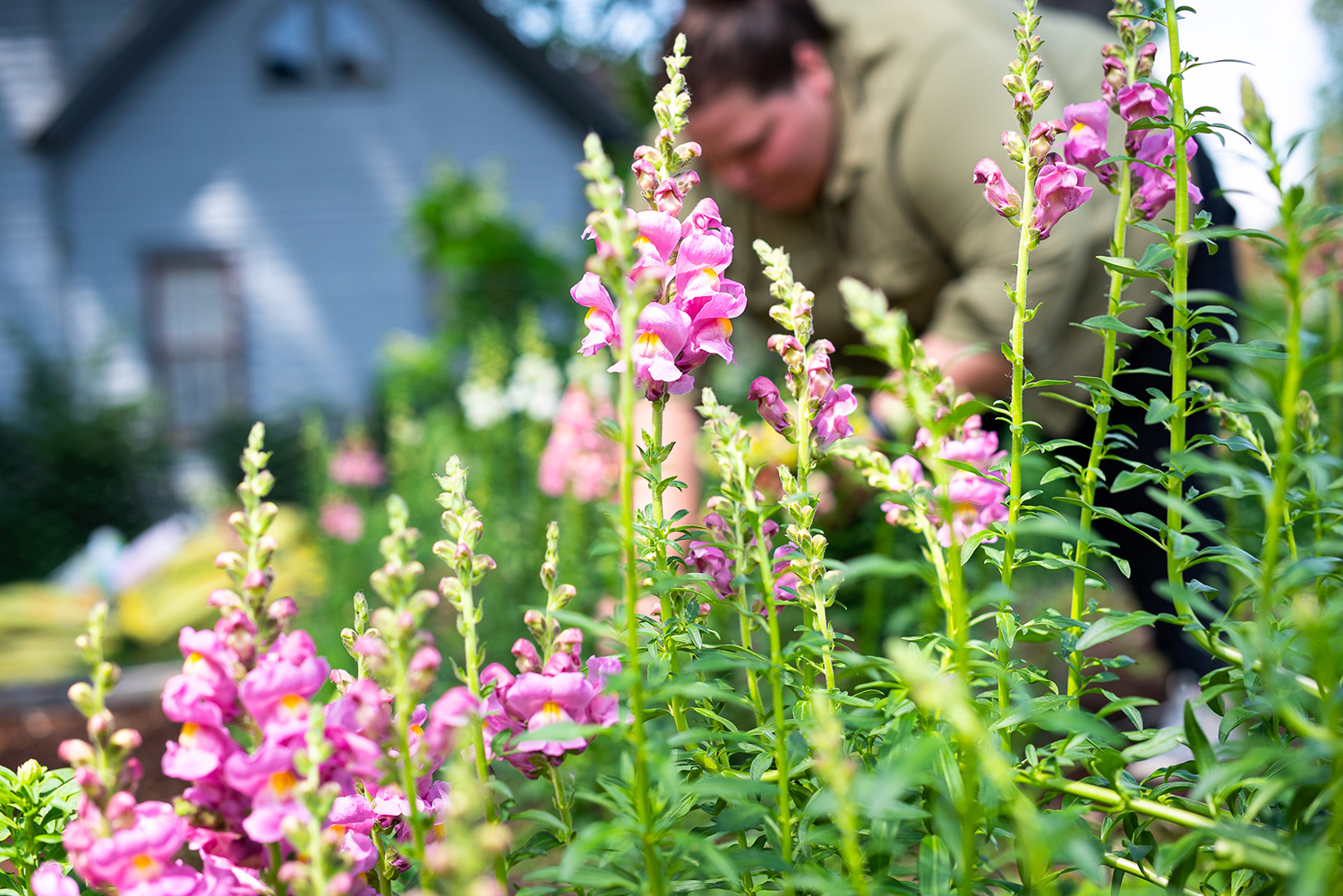
Marisa Mender-Franklin tends to some of the flowers she is growing as part of her business.
She decided to go on Facebook and ask her neighbors in Memphis, Tennessee, if she could use their property to grow flowers. She told the radio show Marketplace that within one week, 40 people had offered the use of their backyards. This was the beginning of Midtown Bramble and Bloom, a company run by Mender-Franklin and her husband, Corey Franklin.
The company began by taking small orders for things like bouquets. After a few months, Midtown Bramble and Bloom was providing flowers for weddings.
Midtown Bramble and Bloom
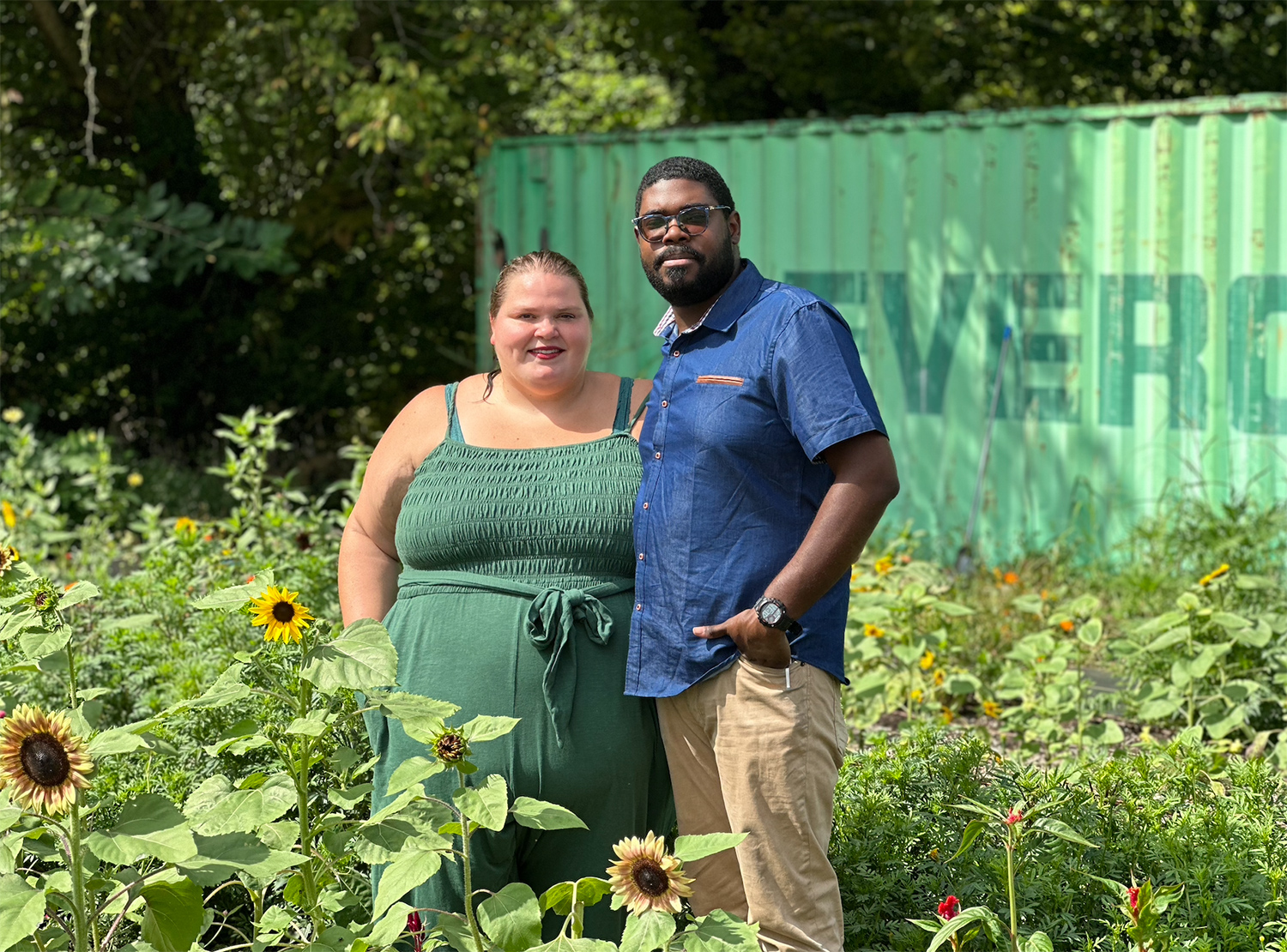
Marisa Mender-Franklin and Corey Franklin co-own Midtown Bramble and Bloom.
Today, Midtown Bramble and Bloom still grows its flowers in neighbors’ yards. The company doesn’t pay the landowners, but it does provide free gardening and lots of flowers. The arrangement works out well. The landowners’ gardens are blooming, and Mender-Franklin’s business is booming.
© Fiaz/stock.adobe.com
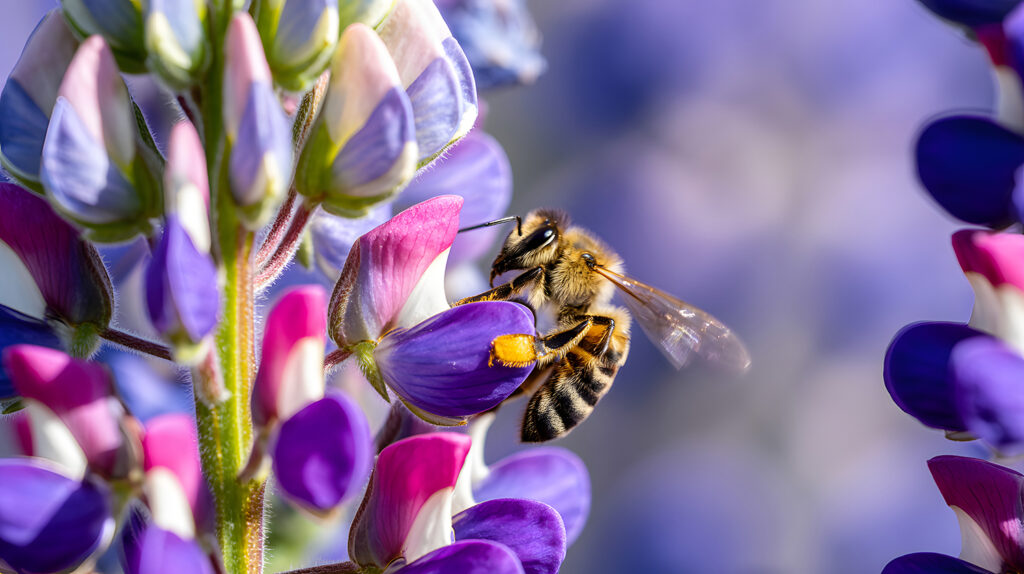
We may plant flowers because they are pretty, but a flower’s beauty has a purpose. Its bright colors attract bees and other animals that spread its pollen.
Without pollinating animals, we wouldn’t have many of the fruits and vegetables we need.
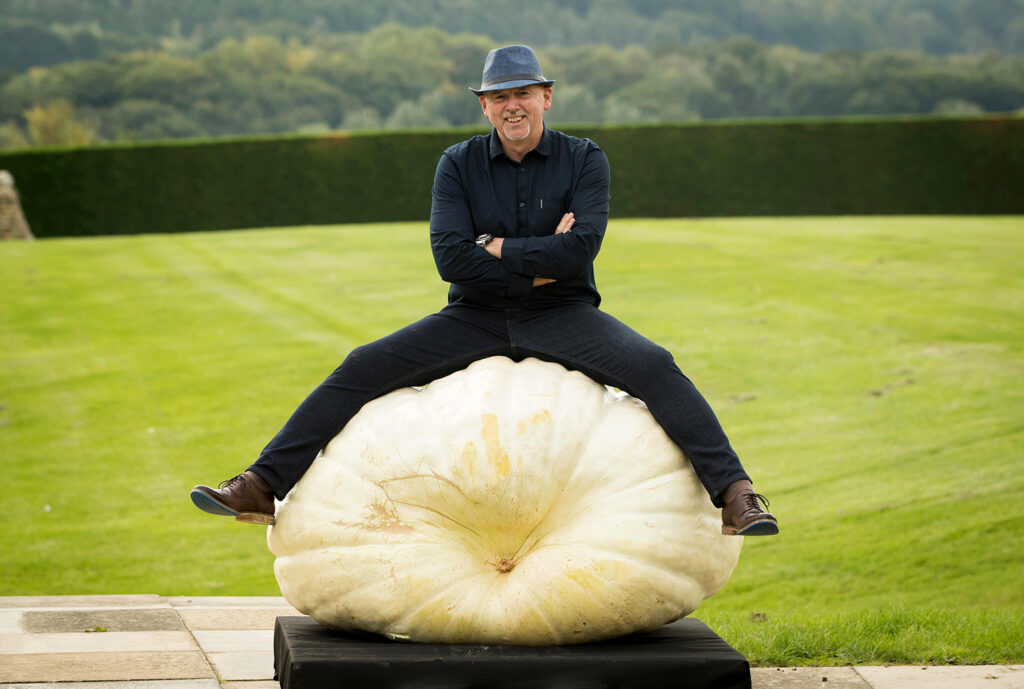
© Danny Lawson—PA Images/Alamy
Graham Barratt poses with a giant pumpkin that he grew.
A gardener from the United Kingdom has an unusual claim to fame. He has grown some of the biggest vegetables ever!
Graham Barratt of Gloucestershire, England, recently set a world record for growing the heaviest bulb of garlic ever. The stinky sprout measures more than 7 inches (19 centimeters) all around and weighs nearly 4 pounds (2 kilograms). Barrett planted the super-sized garlic in September 2025 and harvested it in June 2026.
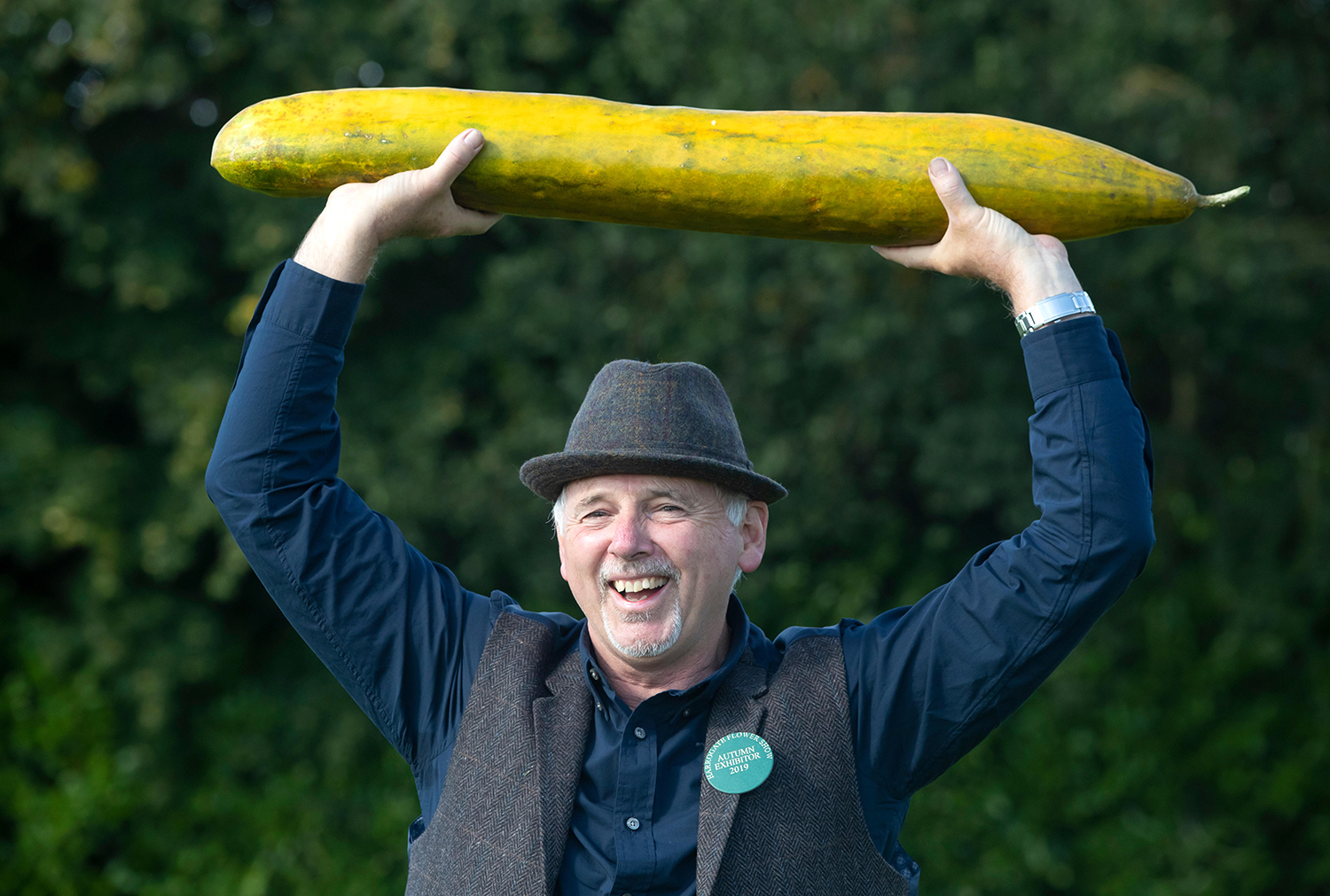
© Danny Lawson—PA Images/Alamy
Graham Barratt grew this cucumber, which is more than 3 feet long.
Barratt’s prize-winning plant is elephant garlic, a variety of garlic that’s larger than the kind many people are used to finding in grocery stores. Still, even the typical elephant garlic bulb weighs only about 1 pound.
Barratt has set 10 world records for giant vegetables, including heaviest pea pod.
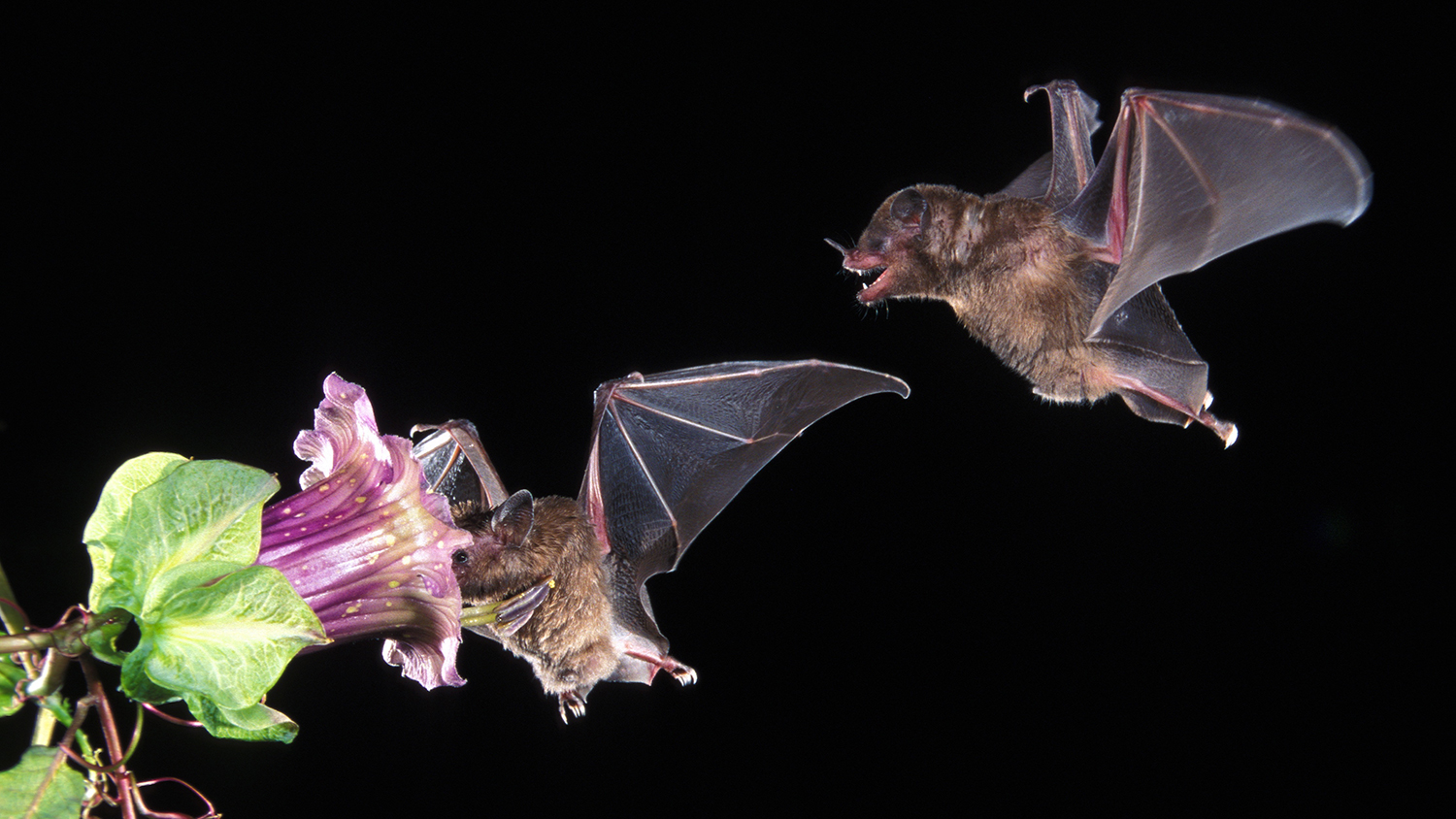
© Nill—ullstein bild/Getty Images
Bees are well-known pollinators, but did you know that some bat species also pollinate plants? The bat is the world’s only flying mammal.
Learn more about bats at Britannica!
noun
Definition:
: a person who starts a business and is willing to risk loss in order to make money
Word Flower
How many words can you make from these letters? All words must use the letter in the center.
.
Here is how to cite this page using the MLA style. While every effort has been made to follow citation style rules, there may be some differences. Please refer to the appropriate style manual or other sources if you have any questions.
“In the News: A Business Planted in Kindness.” Britannica School, Encyclopaedia Britannica, 26 July 2026. https://news.eb.com/level1/a-business-planted-in-kindness. Accessed 27 July 2026 [Replace this date with today’s date.]

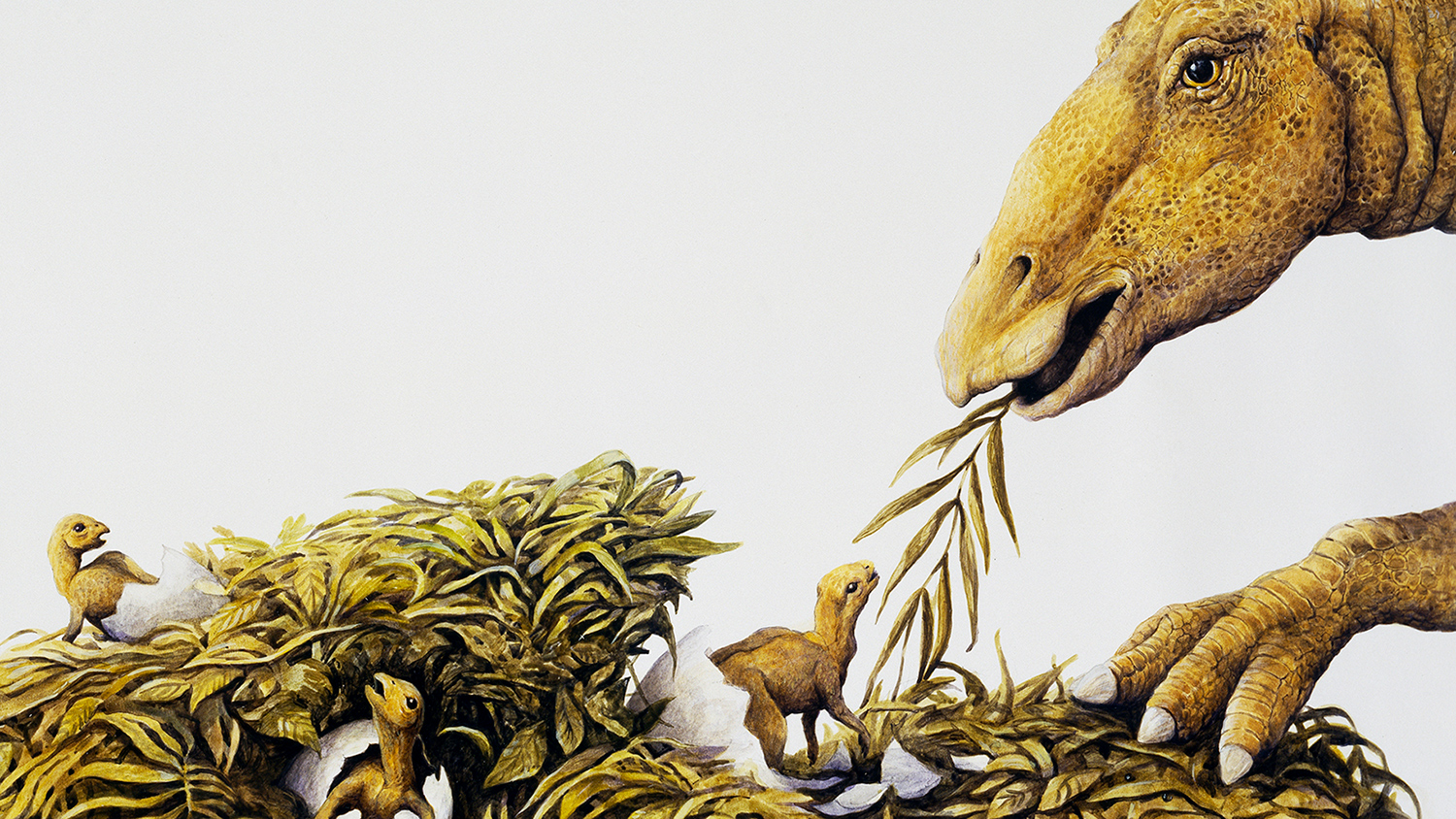
© De Agostini Picture Library—De Agostini/Getty Images
Which animals make the most caring parents? Dinosaurs may be on the list. Scientists have found evidence that some dinosaurs carefully selected the food they gave their young.
Researchers at Ohio State University learned what dinosaur families ate by studying the wear and tear on the teeth of a type of duck-billed dinosaur called Maiasaura. Maiasaura, which lived in North America about 80 million years ago, was an herbivore. This means it ate plants, not animals.
The researchers found differences between the wear and tear on adult Maiasaura teeth versus juvenile (young) teeth. Adult teeth showed that dinosaur parents often ate stems and leaves, which are fairly hard to chew. Juvenile teeth suggested that young dinosaurs were eating softer fruits.

John P. Hunter, Christine M. Janis, Palaeogeography, Palaeoclimatology, Palaeoecology, 2026 (CC BY 4.0)
This photo shows casts, or molds, of the teeth of newly hatched Maiasaura dinosaurs.
This suggests that Maiasaura, and maybe some other dinosaur species, didn’t just stay with their young and feed them. They may have also given their young foods that were softer but more nutritious while saving the tougher foods for themselves. Another possibility is that Maiasaura parents gave regurgitated food to their young. When food is regurgitated, it is partially digested by animal parents.
Scientists know that bird parents feed their young in this way—and they’re already aware that dinosaurs are related to today’s birds. It’s possible that Maiasaura acted more like modern birds than anyone realized.
Click the video below for a closeup of a mother bird feeding her young!
© ittipol/stock.adobe.com
Birds feed their young with care.

John P. Hunter, Christine M. Janis, Palaeogeography, Palaeoclimatology, Palaeoecology, 2026. Illustration by Brian Regal. (CC BY 4.0)
Newborn Maiasaura dinosaurs were only about 1 foot (30 centimeters) long. By adulthood, a Maiasaura might be 30 feet (900 centimeters) long!
Courtesy the University of Calgary
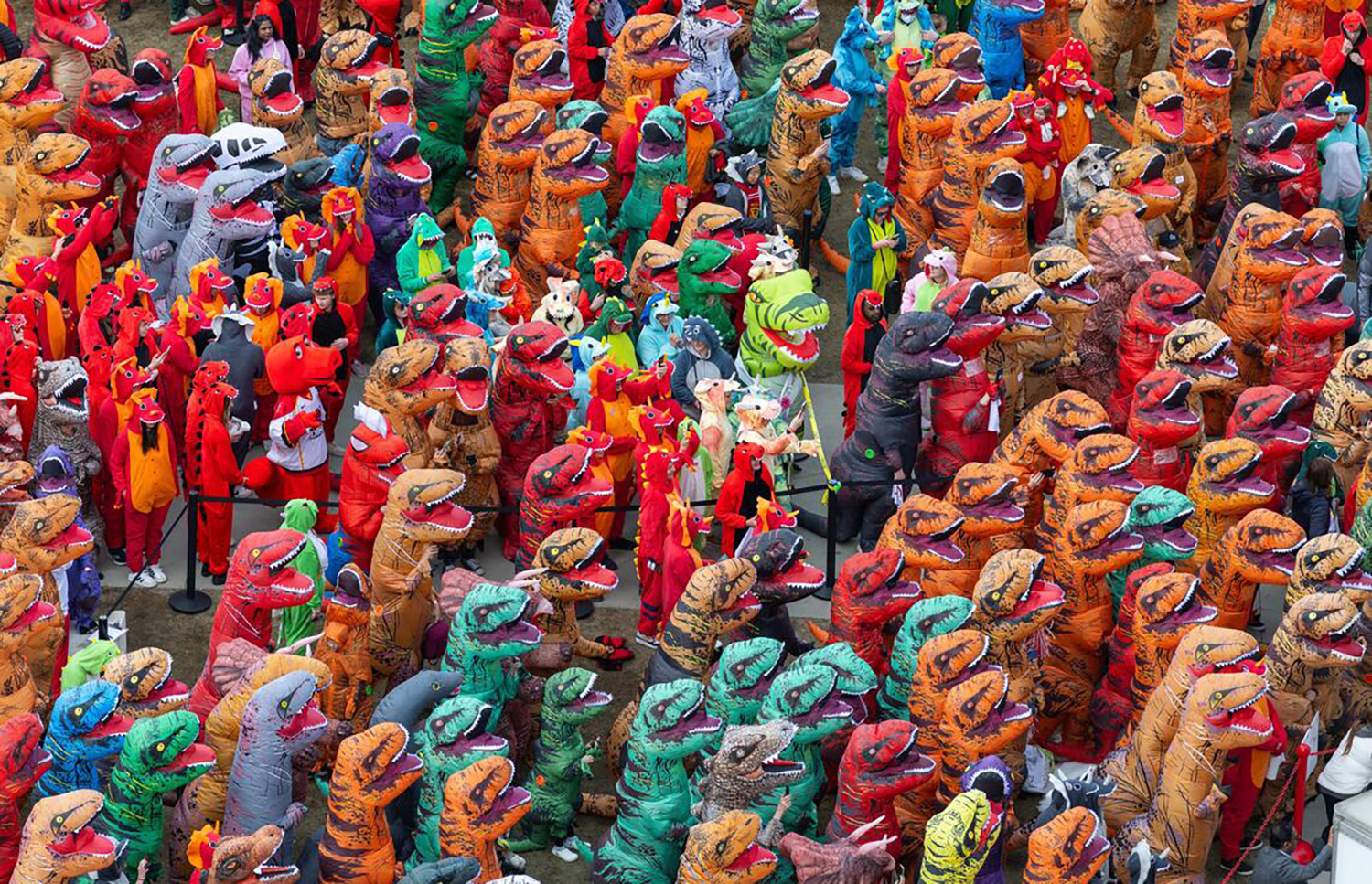
People in dinosaur costumes gather at the University of Calgary to set a world record on April 11, 2026.
Dinosaurs may be extinct, but that didn’t stop a group of Tyrannosaurus rexes from gathering at the University of Calgary in Canada.
In April 2026, 682 people assembled on the university campus wearing T. rex costumes to set a new Guinness World Record for the largest gathering of people dressed as dinosaurs.
“The record was 468,” Verity Turpin, who works at the university, told the Canadian Broadcasting Corporation. “We broke it, so we are record holders with 682 people dressed in dinosaur costumes.”
Courtesy the University of Calgary
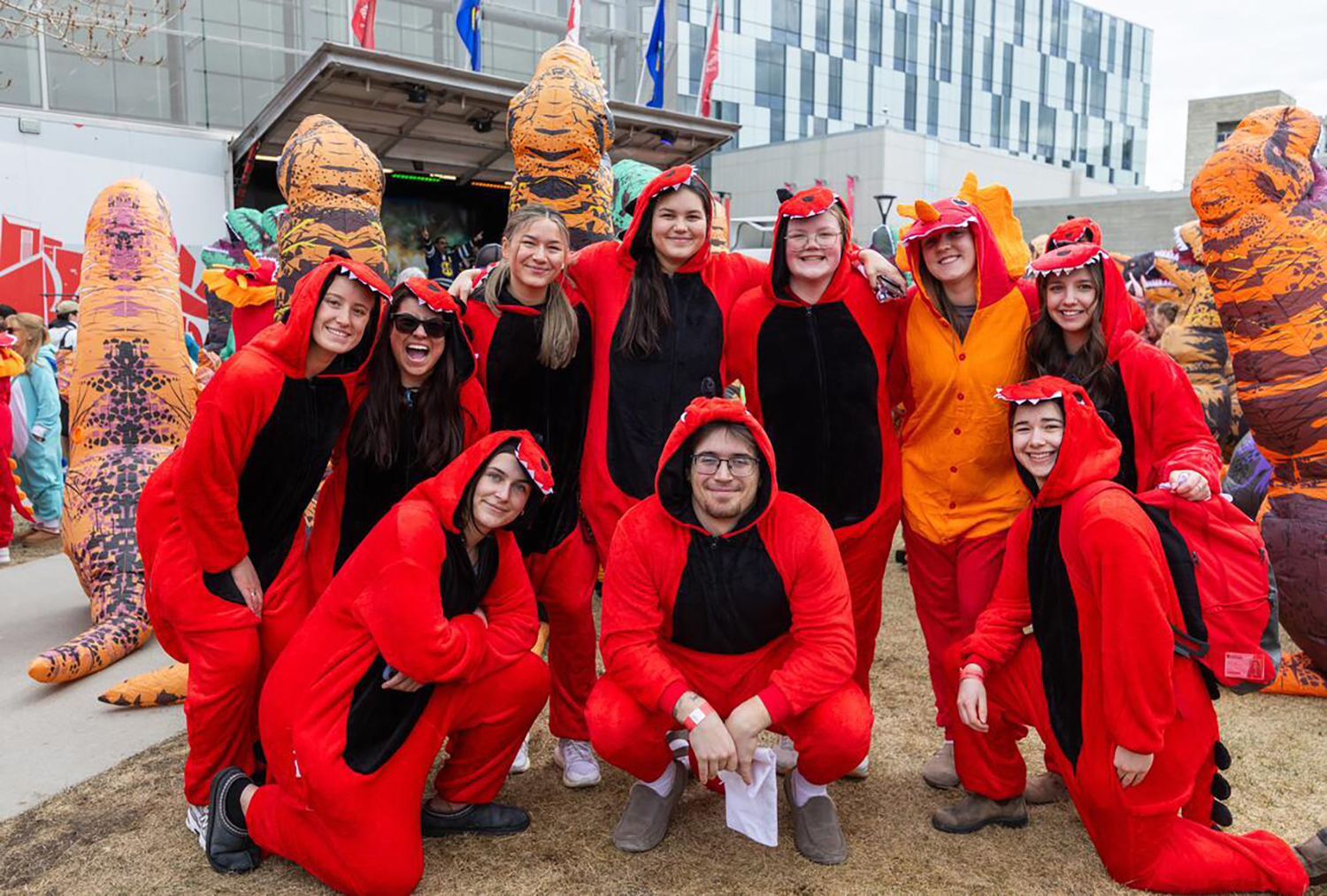
People dressed as dinosaurs pose for a photo while they attempt to set a world record at the University of Calgary.
University officials did everything they could to get as many people as possible to show up for the gathering. The only requirement was to arrive dressed as a dinosaur.
“[The university] said, ‘If you look like a person, you’re not good enough,’” said Turpin. “We couldn’t be dragons, we couldn’t be majestical objects. You had to be a dinosaur.” Some dogs were also dressed as dinosaurs. But, according to Turpin, “they didn’t count, of course.”
Encyclopædia Britannica, Inc.
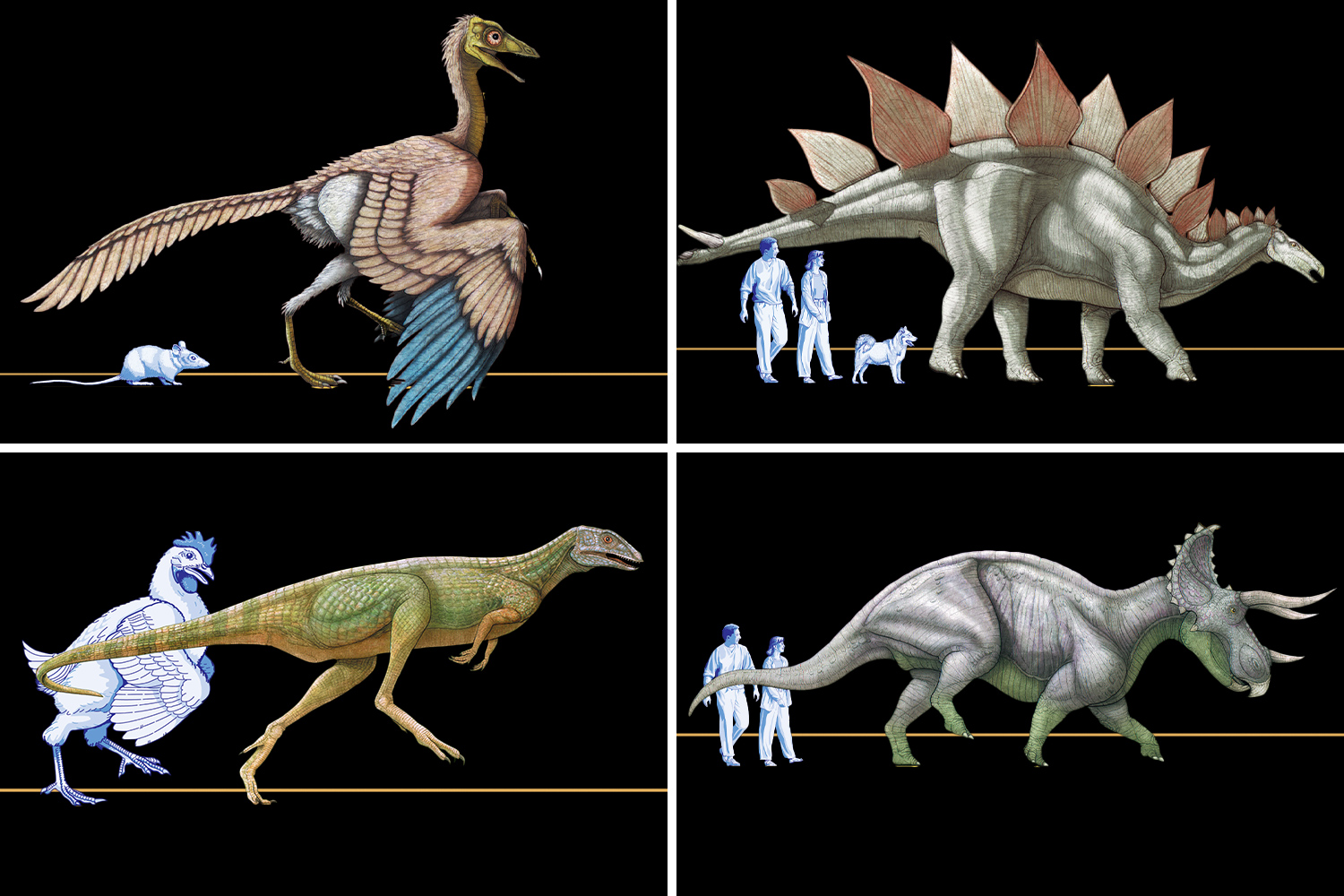
Whether you’re an expert or you’re just curious about dinosaurs, you’ll find something interesting in Britannica’s dinosaur feature. Look up dinos by name or by time period!
adjective
Definition:
: showing a lot of love or attention
Word Search
Can you find all the lizards?
.
Here is how to cite this page using the MLA style. While every effort has been made to follow citation style rules, there may be some differences. Please refer to the appropriate style manual or other sources if you have any questions.
“In the News: These Dinosaurs Were Good Parents.” Britannica School, Encyclopaedia Britannica, 19 July 2026. https://news.eb.com/level1/these-dinosaurs-were-good-parents. Accessed 20 July 2026 [Replace this date with today’s date.]

Innlandet County Municipality
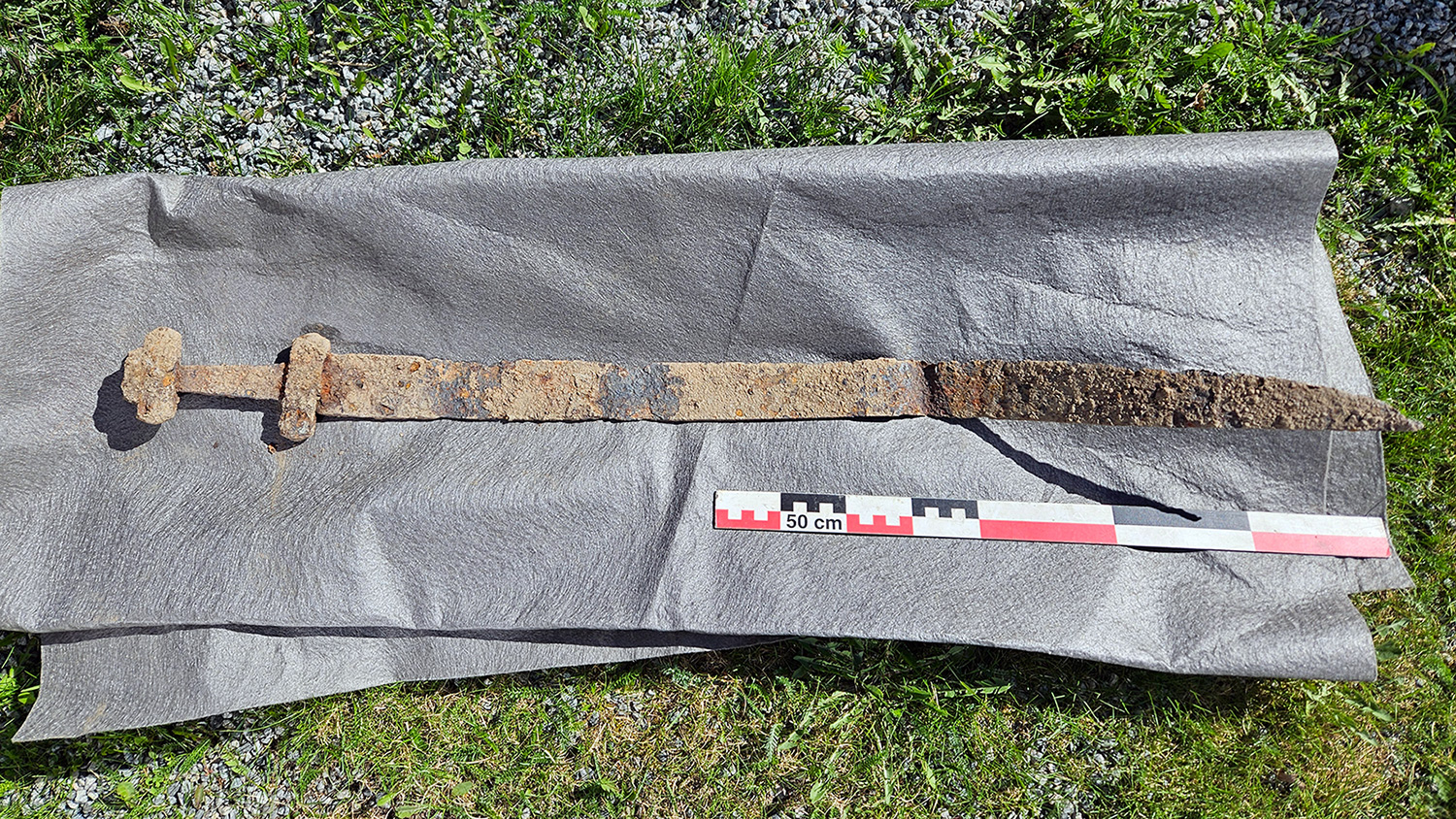
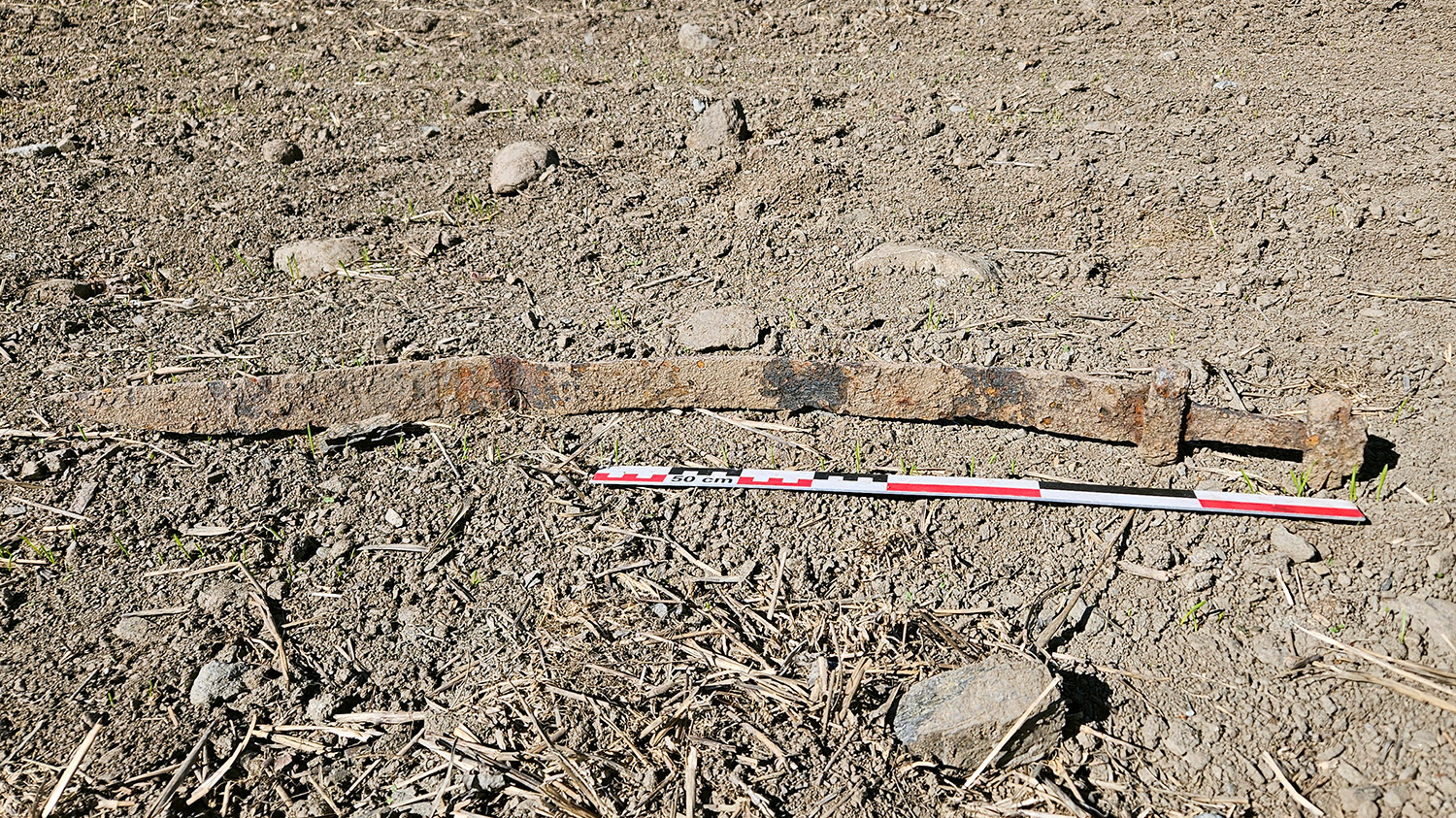
Six-year-old Henrik Refsnes Mørtvedt found this ancient sword on a class trip.
You never know what treasures are lurking under the ground. When a 6-year-old named Henrik Refsnes Mørtvedt discovered a half-buried metal object, it turned out to be a sword that was made more than 1,000 years ago.
Henrik, who lives in Norway, found the sword while walking through a field with his 1st-grade class this past April. The students were trying to find rocks for an art project. Spotting the metal in the ground, Henrik had two thoughts. One was, “What if a tractor drives over the metal, and its tire is ruined?” The other was, “What if this is some kind of important object?”
“This part stuck out,” Henrik later told Hadeland, a Norwegian newspaper, pointing to the sword’s handle. “It was rust and dirt. So I thought I would pick it up and see what it was.”
That’s when the full object was revealed. It was a sword with a single-edged (sharp on only one side) blade called an enegget. Henrik’s teachers decided to call some archaeologists, scientists who study objects from the ancient past.
Encyclopædia Britannica, Inc.
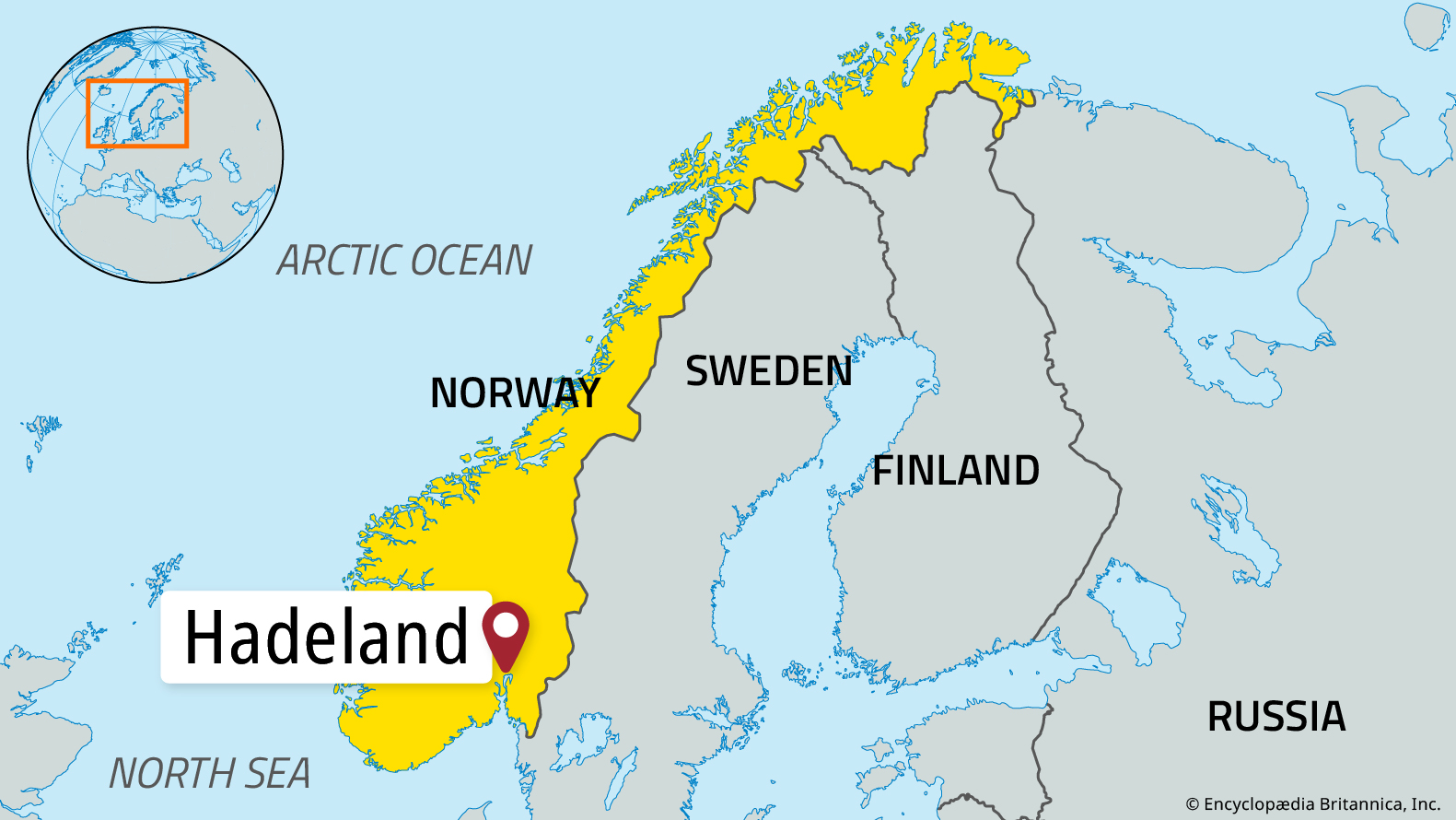
Vikings were from a region called Scandinavia. Henrik found the sword in Hadeland, Norway.
Experts believe the sword was made some time between the years 750 and 850 CE, at the beginning of the Viking Age. The Vikings were a group of people from a part of northern Europe now known as Scandinavia. They are best known as warriors who invaded many parts of the world. Their weapons included swords like the one Henrik discovered.
The area of Norway where Henrik found the sword is called Hadeland, which means “land of the warrior.” Many objects from the Viking era have been found there.
Encyclopædia Britannica, Inc.
Vikings were from a region called Scandinavia. Henrik found the sword in Hadeland, Norway.
Archaeologist Øystein Lia believes the sword belonged to someone who was important within Viking society.
“It was most likely owned by a man, a free landholding individual and a significant [important] warrior,” Lia told Fox News Digital. “He may also have served as a military advisor to a local Viking chieftain.”
© Universal History Archive—Universal Images Group/Getty Images
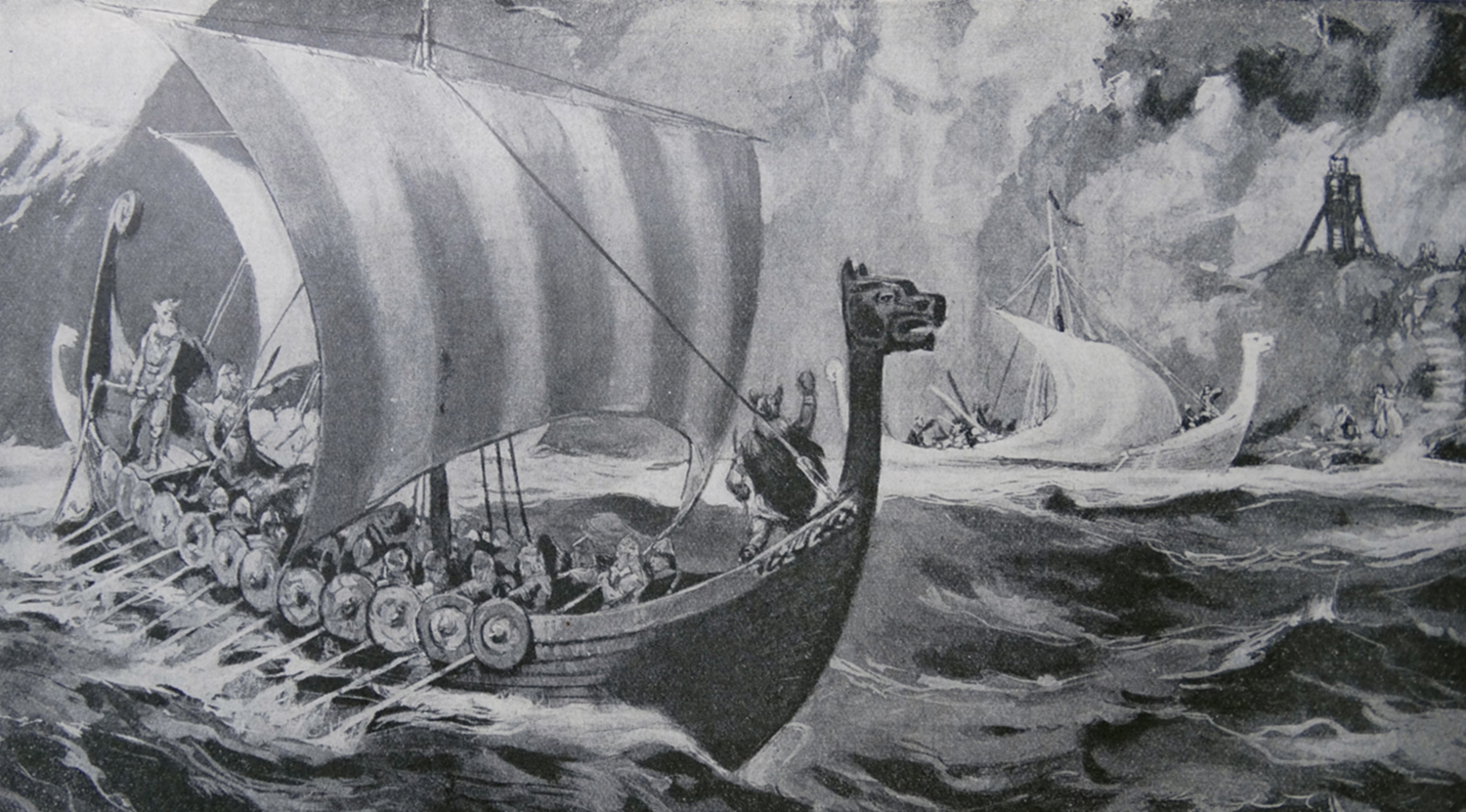
The word viking means “pirate” in an ancient Scandinavian language. Vikings had a reputation for raiding new lands and taking treasures.
© Claus Lunau/Science Source
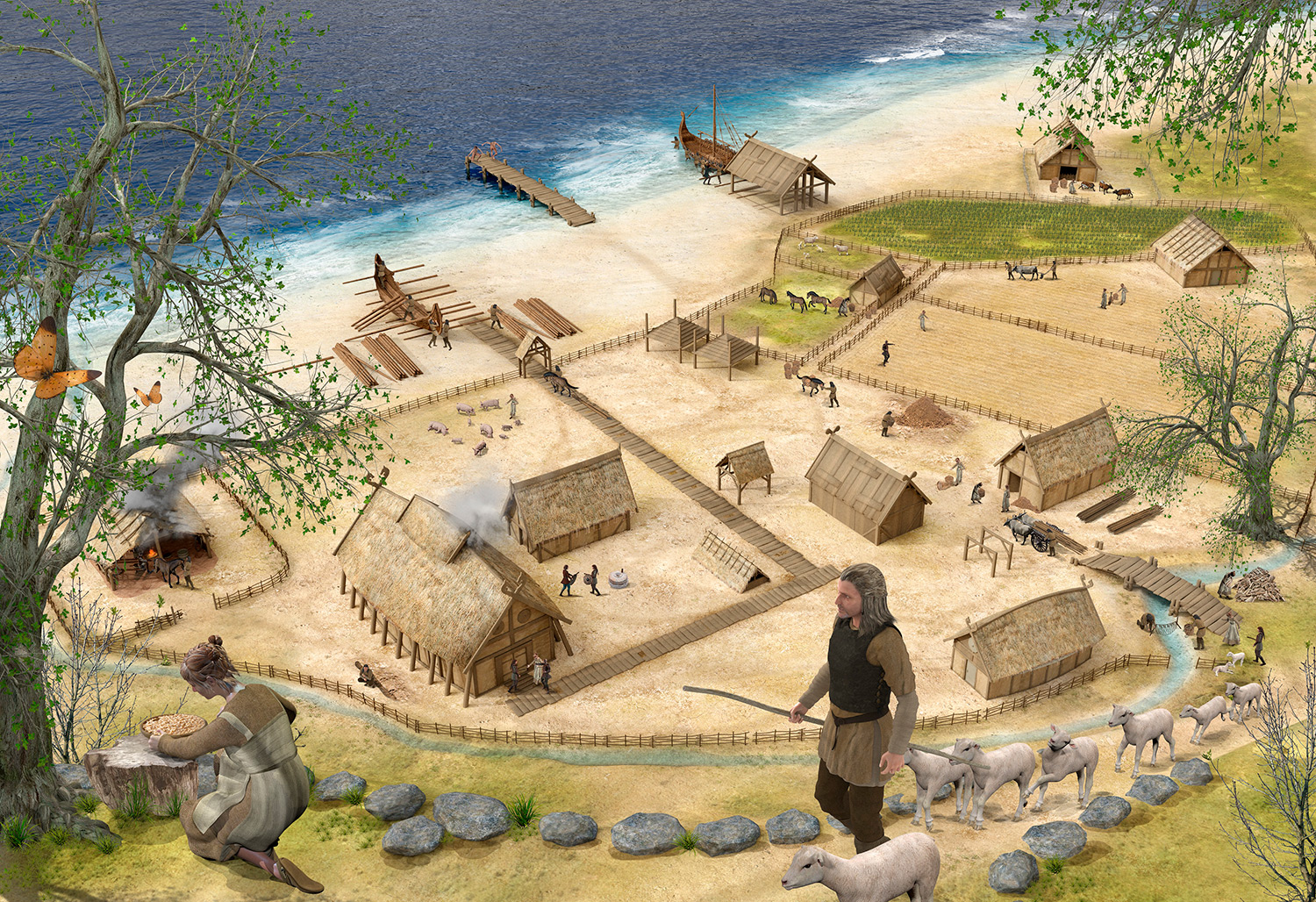
While they are known for invading other lands, Vikings were farmers in their everyday lives.
Most people think of Vikings as warriors who invaded new lands and stole whatever treasures they found. But who were the Vikings?
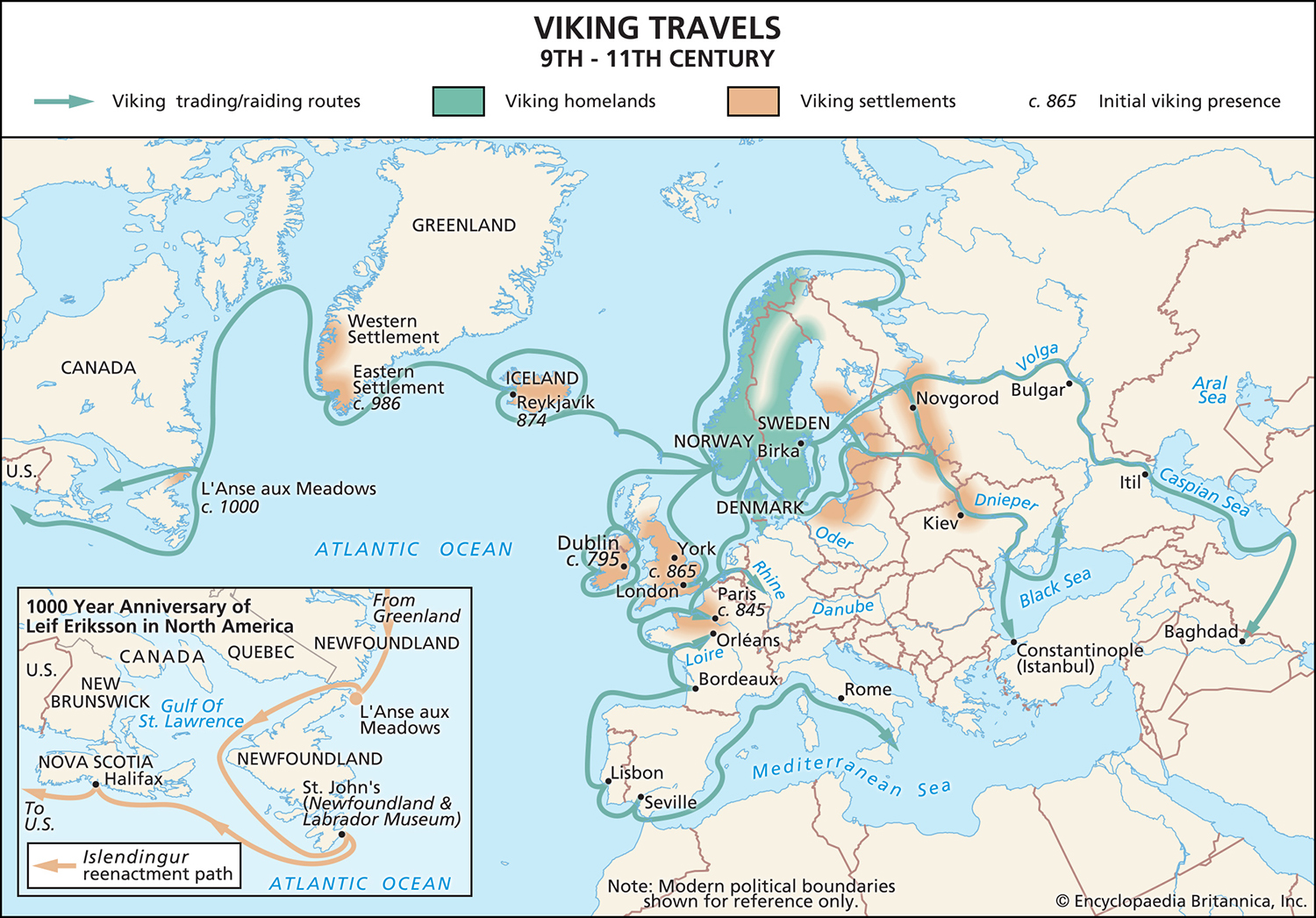
The story begins in Scandinavia. Today, this region includes the countries Denmark, Norway, and Sweden. Back in about 790 CE, it contained many small communities of farmers and fishermen. At that time, any kind of travel was a risky adventure because most people knew little about the world around them. But in these communities, there were plenty of people who were ready for adventure. Plus, there was the possibility of finding treasures in faraway lands. This made the voyage even more tempting. So community leaders called chieftains began gathering men for these journeys. These men became known as Vikings.
The Vikings sailed in wooden ships called longships. They were good sailors. They used the position of the Sun and the stars to find their way at sea.
Encyclopædia Britannica, Inc.
This map shows the Vikings’ homelands and where they traveled. The inset shows a recreation of Viking Lief Eriksson’s route from Greenland to Canada.
These skills took them far. In the late 700s, the Vikings launched the first in a series of attacks on England. Although the English fought back, the Vikings eventually ruled England between 1013 and 1042. Viking descendants, or relatives, called Normans, took over England again in 1066.
The Vikings also attacked Ireland and founded many kingdoms there. The Irish finally defeated the Vikings in 1014. Vikings invaded many lands to the east, including Russia.
Vikings sailed west, too. They founded settlements in Iceland, Greenland, and beyond. In 1000 CE, a Viking named Leif Eriksson reached North America. It’s likely that Eriksson was the first European in North America, arriving almost 500 years before Christopher Columbus.
© Heritage Images/Getty Images
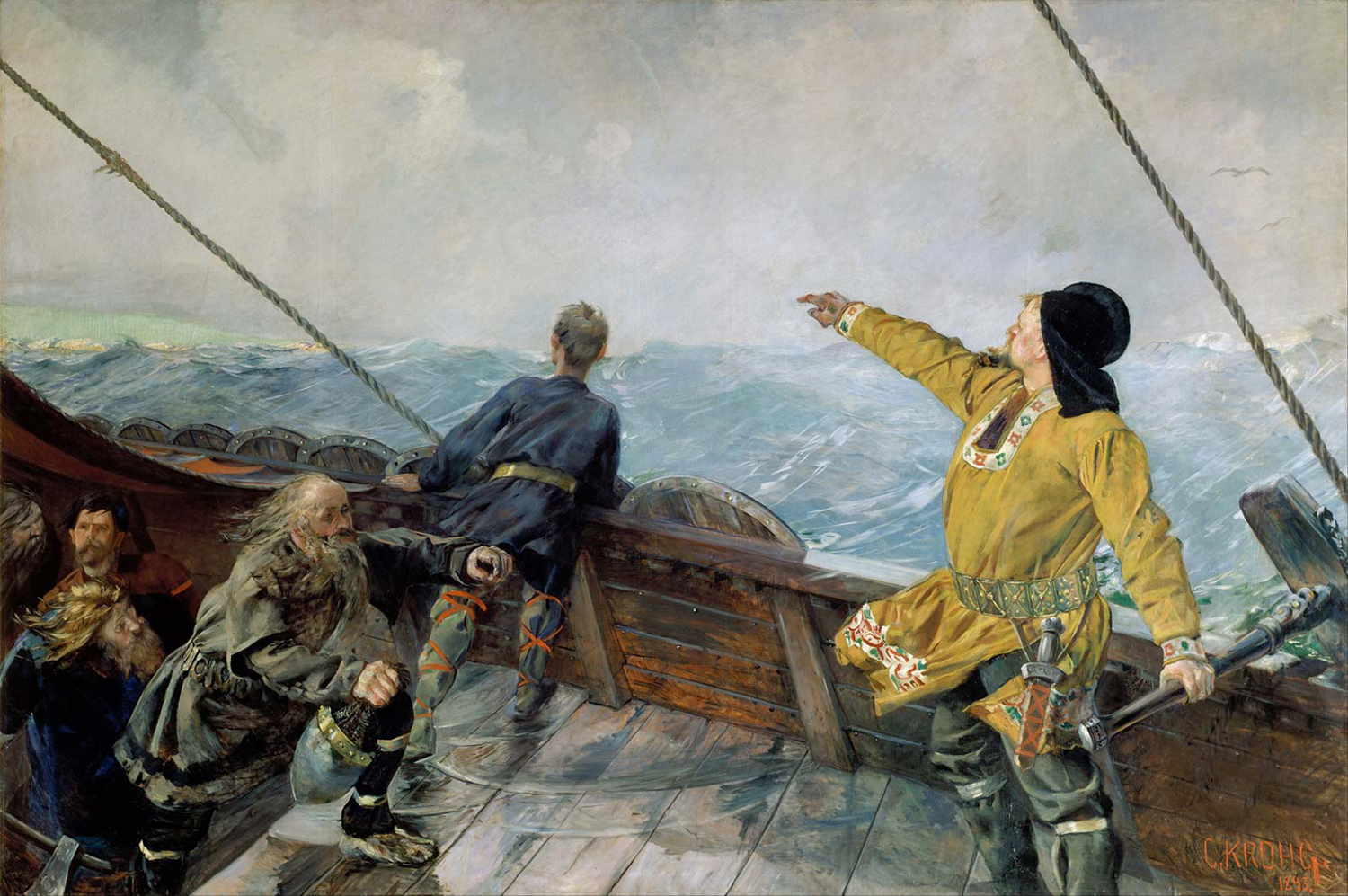
This 1882 painting shows Leif Eriksson’s arrival in Canada. Eriksson is on the right.
In the year 1000 CE, a Viking named Leif Eriksson arrived in what is now Canada. He was probably the first European to reach North America. Experts know that Vikings reached Canada because they built houses and other things there.
But what happened to Leif Eriksson? Learn more at Britannica!
noun
Definition:
: the activity of traveling on the sea especially while working on a boat or a ship
Criss Cross
Place the words in the grid.
.
Here is how to cite this page using the MLA style. While every effort has been made to follow citation style rules, there may be some differences. Please refer to the appropriate style manual or other sources if you have any questions.
“In the News: Kid Discovers Ancient Sword.” Britannica School, Encyclopaedia Britannica, 12 July 2026. https://news.eb.com/level1/kid-discovers-ancient-sword. Accessed 13 July 2026 [Replace this date with today’s date.]

© Getty Images
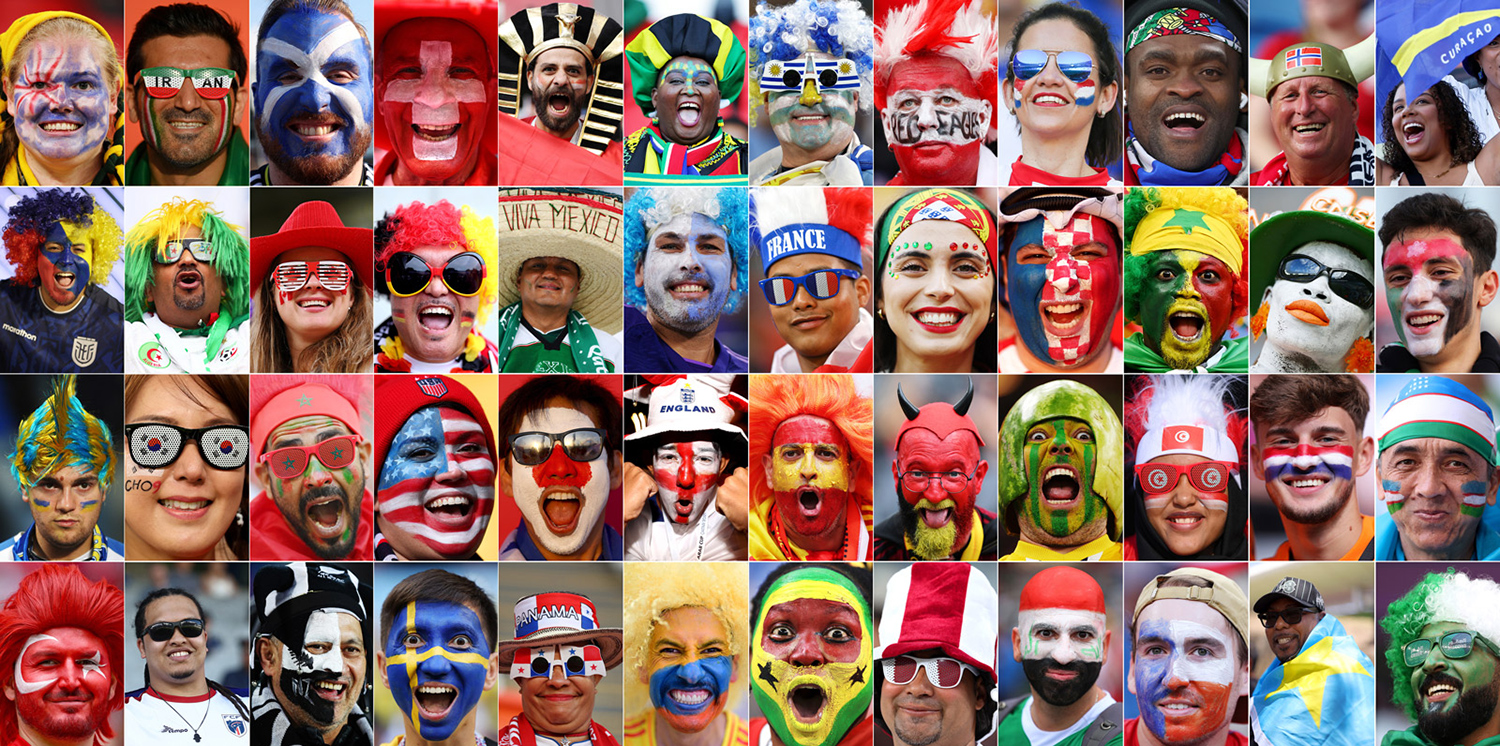
World Cup fans from all 48 participating countries show off their team spirit.
What happens when soccer (football) fans from all over the world gather for a giant competition? It turns into an opportunity for friendship, music, and fun!
The 2026 World Cup has been taking place in several cities across Canada, the United States, and Mexico since mid-June. The event features soccer teams from 48 countries. But it’s not just the players who have made themselves at home in North America. Enthusiastic fans from all corners of the globe traveled thousands of miles to see the games in person. Together with their hosts, they’re making the World Cup a celebration of goodwill and kindness.
Here are a few World Cup stories that are making us smile.
Kansas Welcomes Algeria

© Scott Winters—Icon Sportswire/Getty Images
In this June 27 photo, Algerian fans display a banner thanking the town of Lawrence, Kansas, for hosting them during the event.
When the Algerian national soccer team decided to stay in Lawrence, Kansas, to prepare for its first game (which took place in Kansas City, Missouri), they received a warm welcome from the people of Lawrence.
The city posted welcome signs on streetlamps, and a local artist recreated the flag of the North African nation on the University of Kansas soccer field, where the team practiced. The university marching band also played the Algerian national anthem during practices.
Japanese Fans Clean Up the Stadium

© Carl Recine/Getty Images
A Japanese fan cleans up garbage after her team’s match with Tunisia in Monterrey, Mexico.
After Japan’s national team won a June 20 match against Tunisia in Monterrey, Mexico, it was time to party. But before leaving the stadium, Japanese fans pulled out bags and began picking up trash.
The Japanese people believe in a practice called gomi hiroi (picking up trash). The idea is that everyone takes responsibility for the places they share, such as stadiums. Gomi hiroi is not just a sports tradition. It’s also practiced in Japanese schools, where children are expected to help clean up their classrooms.
Scottish Fans Bring Joy to Boston

© Natalie Reid/MLB Photos—Major League Baseball/Getty Images
Members of the Tartan Army prepare to watch a baseball game between the Boston Red Sox and the Texas Rangers on June 14.
When fans from Scotland (known as the Tartan Army) arrived in Boston, Massachusetts, to support their team, they brought their culture with them. Bagpipe music could often be heard in the streets as Scottish fans joyously chanted, sang, and danced. Scottish fans even attended a baseball game at Boston’s Fenway Park, bringing energy to the stadium by loudly singing songs from the stands.
Boston residents loved their Scottish visitors, but it was soon time for the Tartan Army to move on to Miami, Florida, for Team Scotland’s next game. A newspaper called the Boston Globe published a farewell message.
“Thank you for the laughter, the bagpipes, and the memories,” it said. “The World Cup will move on. So will the songs, but we’ll never forget the joy you brought to our city.”

© Justin Setterfield/Getty Images
Team Spain and Team Cabo Verde take part in a June 15 World Cup game in Atlanta, Georgia.
The sport that’s called football in most of the world is known as soccer in the United States. The name soccer comes from England. It’s short for “association football.”
Soccer is by far the world’s most popular sport. Maybe that’s why people have developed countless variations, or versions, of it. Here are a couple of them for you to try out!
Soccer Golf (or FootGolf)
If you guessed that this sport combines soccer and golf, you’re right. Players try to get a soccer ball into a large hole in as few kicks as possible. If you don’t have a soccer golf field nearby, you can lay a towel flat in a field, yard, or park and then try to kick the ball onto the towel.

© Kaz Photography/Getty Images
Lucia Cermakova of Slovakia takes a shot that will lead to victory in the 2023 FootGolf World Cup.
Soccer Tennis
Soccer tennis can be played one on one or with teams of two people. Players use their feet or heads to try to get the ball over a low net or rope. They also try to keep their opponents from kicking the ball back over the net.

© Juan Mabromata—AFP/Getty Images
Guillermo Canas (right) of Argentina and Carlos Moya of Spain take part in a soccer tennis match in 2006.

© Paul Bersebach—MediaNews Group/Orange County Register/Getty Images
In this June 2026 photo, five kids play a game during a soccer clinic at Saddleback College in California.
The 2026 World Cup continues until July 19! Learn more about how soccer, or football, was invented and how it works today at Britannica.
adjective
Definition:
: generous and friendly to guests or visitors
Word Search
Can you find all the words?
.
Here is how to cite this page using the MLA style. While every effort has been made to follow citation style rules, there may be some differences. Please refer to the appropriate style manual or other sources if you have any questions.
“In the News: Smiles From the World Cup.” Britannica School, Encyclopaedia Britannica, 05 July 2026.
https://news.eb.com/level1/smiles-from-the-world-cup/. Accessed 06 July 2026 [Replace this date with today’s date.]

© Adam Gray/Getty Images
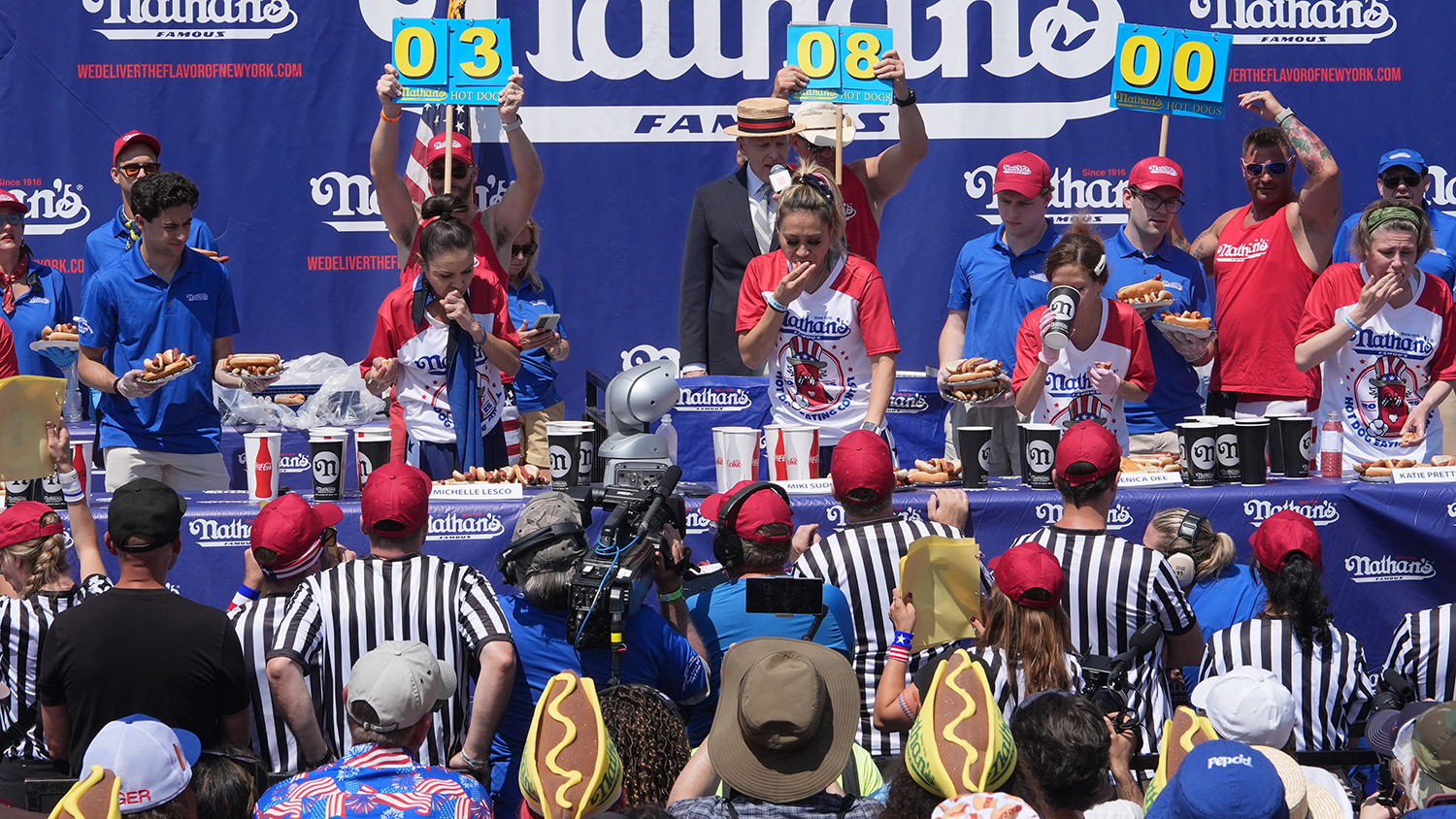
People take part in the women’s competition at the 2025 Nathan’s Famous Hot Dog Eating Contest.
Across the United States, Americans celebrate Independence Day with parades, fireworks, and backyard barbecues. But in Coney Island, New York, July 4 brings another tradition: a hot dog eating contest.
The annual Nathan’s Famous Hot Dog Eating Contest is exactly what it sounds like. Competitors have 10 minutes to eat as many hot dogs and buns as they can. It’s okay to dip the dogs in a cup of water to make it easier to swallow. It’s not okay to add ketchup, mustard, or anything else. The competitor who has eaten the most hot dogs and buns in 10 minutes wins the contest.
© Photo Researchers—Science History Images/Alamy
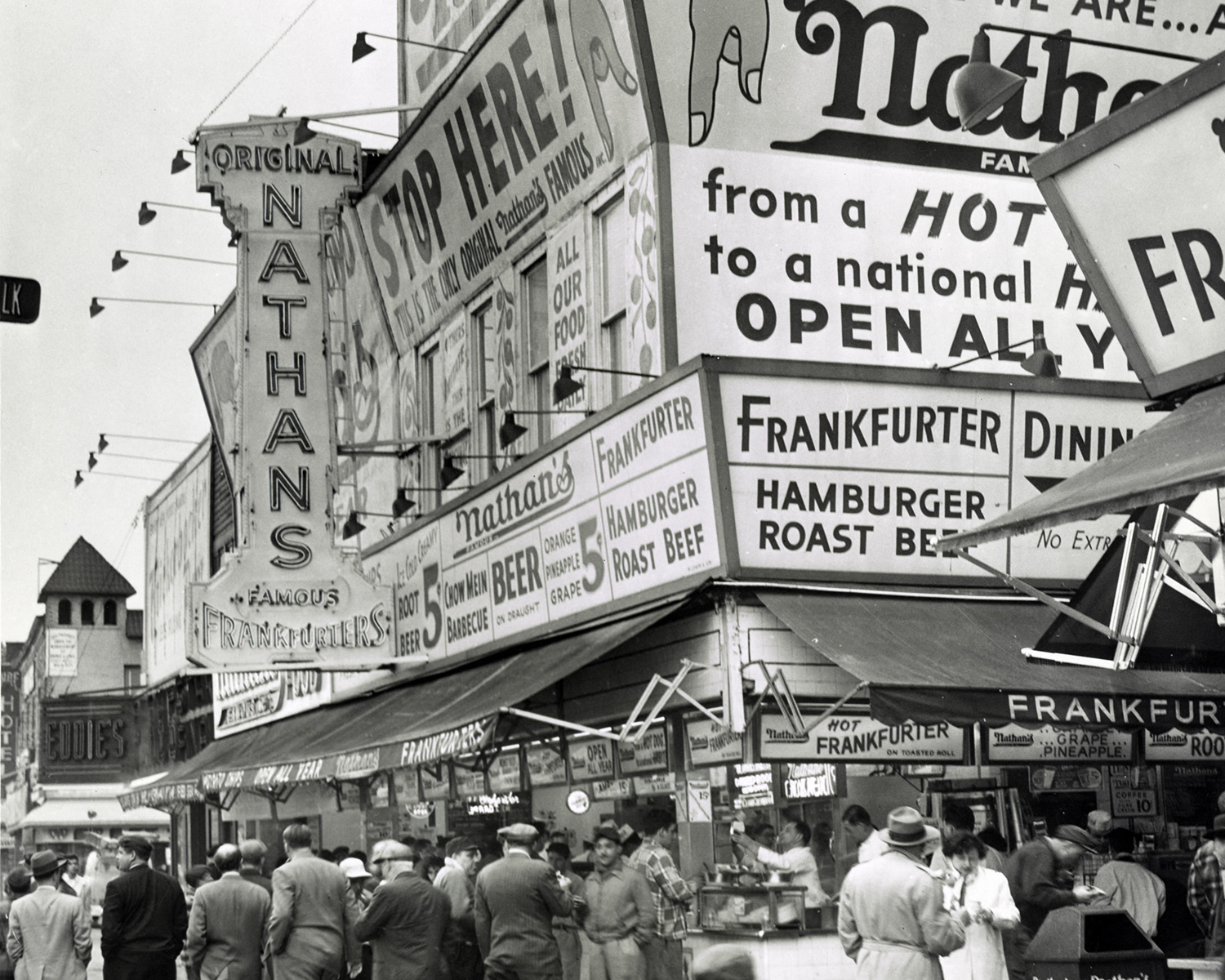
Nathan’s Famous has been open since 1916. This photo shows how it looked in 1954.
How Did It Start?
According to Nathan’s Famous, the hot dog company that sponsors the contest, the event dates back to 1916. A group of people were hanging out at Coney Island, a beach area in New York City, where a new hot dog stand called Nathan’s Famous had recently opened. The friends dared each other to see how many hot dogs they could eat.
The contest became an official, annual event in 1972. That year, Jason Schechter of the United States won the contest after eating 14 hot dogs and buns. The contest, and the number of hot dogs eaten, only grew from there.

© Adam Gray/Getty Image
Joey Chestnut (left) and Miki Sudo pose for a photo after winning the Nathan’s Famous Hot Dog Eating Contest in 2025.
Modern-Day Champs
Today, Joey Chestnut is the most famous male participant in the contest. Chestnut has won 17 times. In 2021, he even broke a world record by eating 76 hot dogs and buns within the 10-minute time limit!
Miki Sudo is a big name in the women’s contest, with 11 wins. In 2024, Sudo ate an amazing 51 hot dogs and buns during the event.
But heavy eating is a sport best left to the pros. Experts say eating fast is not healthy and should not be attempted without proper training. People who eat competitively train their muscles and their stomachs over a long period of time. They also practice eating fast in a safe way.
You don’t have to attend the 2026 Nathan’s Famous Hot Dog Eating Contest to witness it. The event will air in the United States on ESPN at 10:45 a.m. Eastern Time on July 4.
NEWS EXTRA
© The History Collection/Alamy
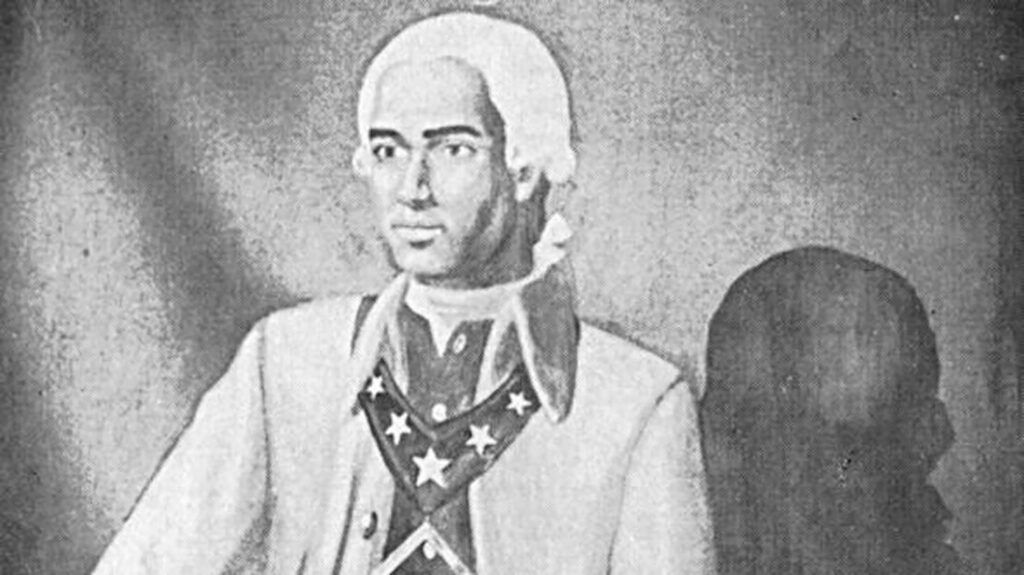
On July 4, 2026, the United States will mark its 250th birthday! Celebrate with us by reading about Prince Hall, an early American patriot who fought for liberty and equality.

BLACK AND WHITE PHOTO: © Bob Henriques/Pix—Michael Ochs Archives/Getty Images COLOR PHOTO: © Anthony Aneese Totah Jr/Dreamstime.com
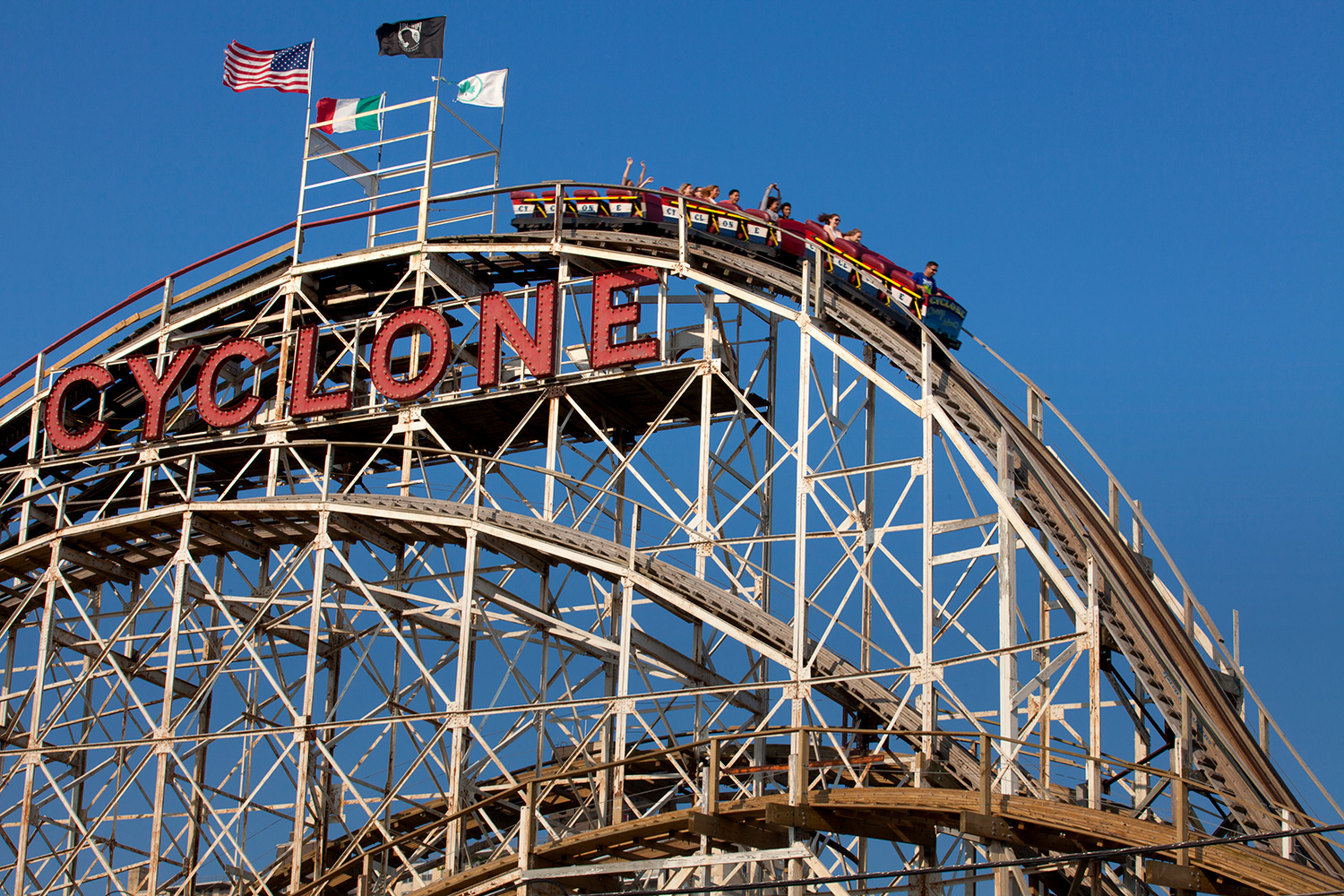
Coney Island is home to the Cyclone, a legendary roller coaster that opened in 1927! Move the arrow from the left to the right for a view of the Cyclone in the 1950s and in more modern times.
© Shaiith/Dreamstime.com
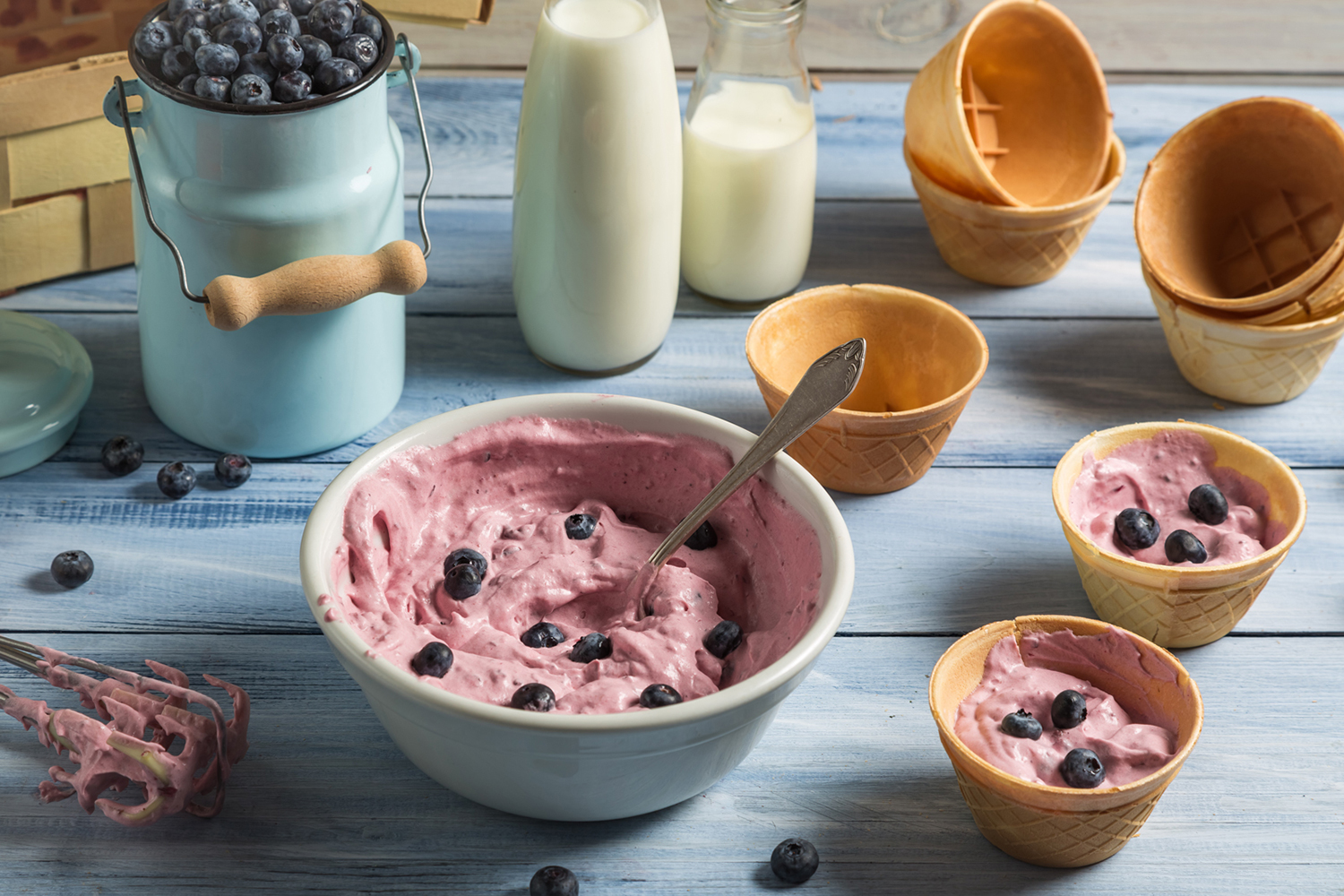
There’s nothing better than ice cream on a hot summer day! You can make this sweet treat even without a freezer. All it takes is a few ingredients and a little bit of muscle.
What You Need
What to Do

© Liang Sen—Xinhua News Agency/Getty Images
July 1 is Canada Day, a time to celebrate the day in 1867 on which Canada became a nation. Learn more about this special holiday at Britannica!
verb
Definition:
: to quickly eat all of (something) especially in a way that shows that you are very hungry
Slider
Slide the number tiles around until the numbers are in order.
.
Here is how to cite this page using the MLA style. While every effort has been made to follow citation style rules, there may be some differences. Please refer to the appropriate style manual or other sources if you have any questions.
“In the News: A July 4 Tradition Like No Other.” Britannica School, Encyclopaedia Britannica, 28 June 2026. https://news.eb.com/level1/a-july-4-tradition-like-no-other. Accessed 29 June 2026 [Replace this date with today’s date.]

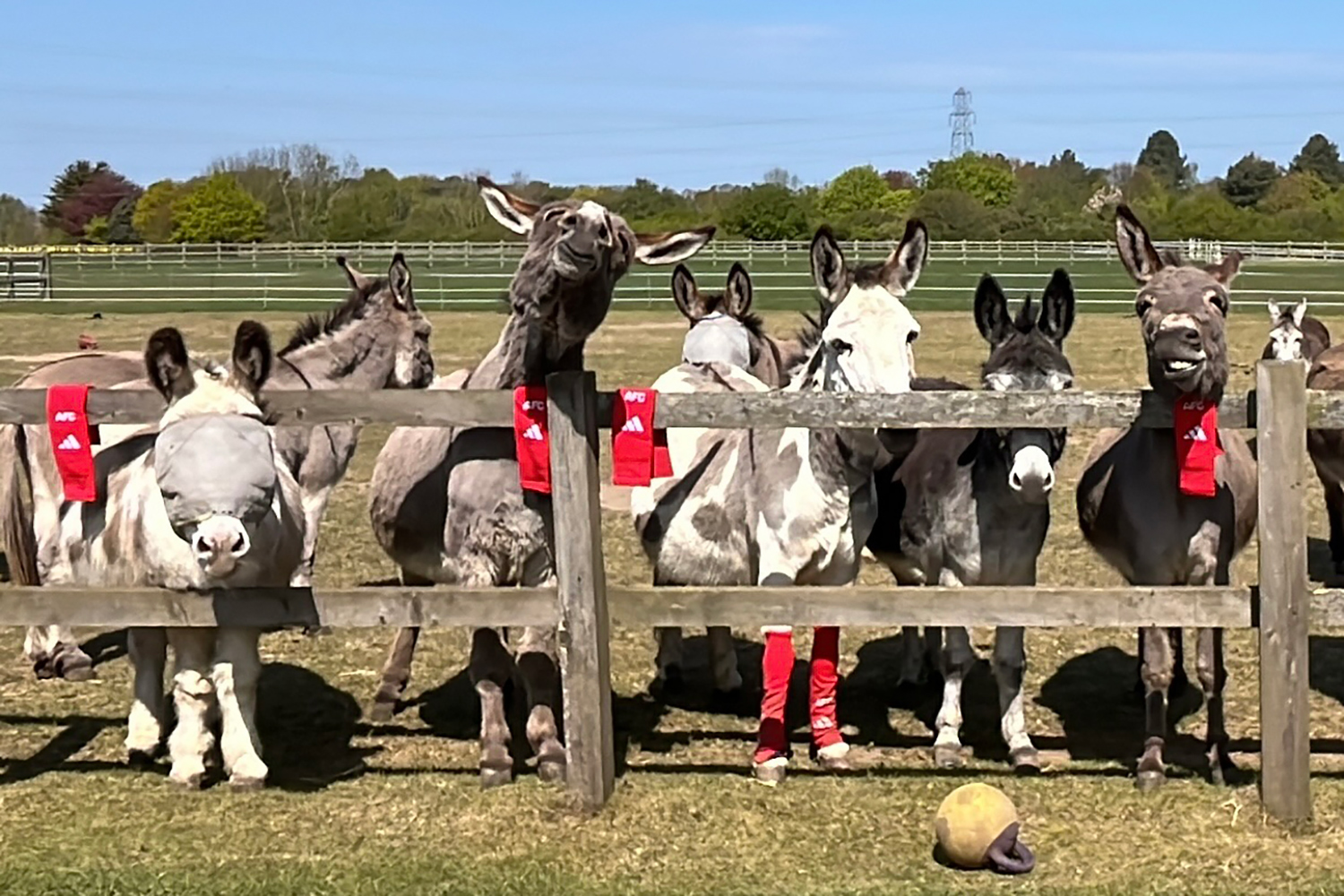
Redwings Horse Sanctuary (www.redwings.org.uk)
Donkeys at Redwings Horse Sanctuary display the red socks that have been donated by Arsenal Football Club.
Redwings Horse Sanctuary in the United Kingdom (UK) provides love and care for more than 1,000 horses and donkeys. But even the kind sanctuary workers can’t keep flies from biting the animals.
“In the summer, flies take a fancy to our donkeys’ legs and can cause a lot of pain and scabs,” Jenny Herod of Redwings told the British Broadcasting Corporation (BBC).
Luckily, the donkeys are getting help from an unlikely place: a football (soccer) club. Arsenal Football Club, a legendary soccer team, is donating its players’ old socks to the sanctuary. The bright red socks have no “feet,” so it’s fairly easy to put them on donkeys’ legs. They protect the animals from flies and many other things.
“The socks are being used for anything from protecting our rescued residents’ sensitive legs from flies to holding their vet bandages in place,” Nicola Knight of Redwings told the Southwest News Service.
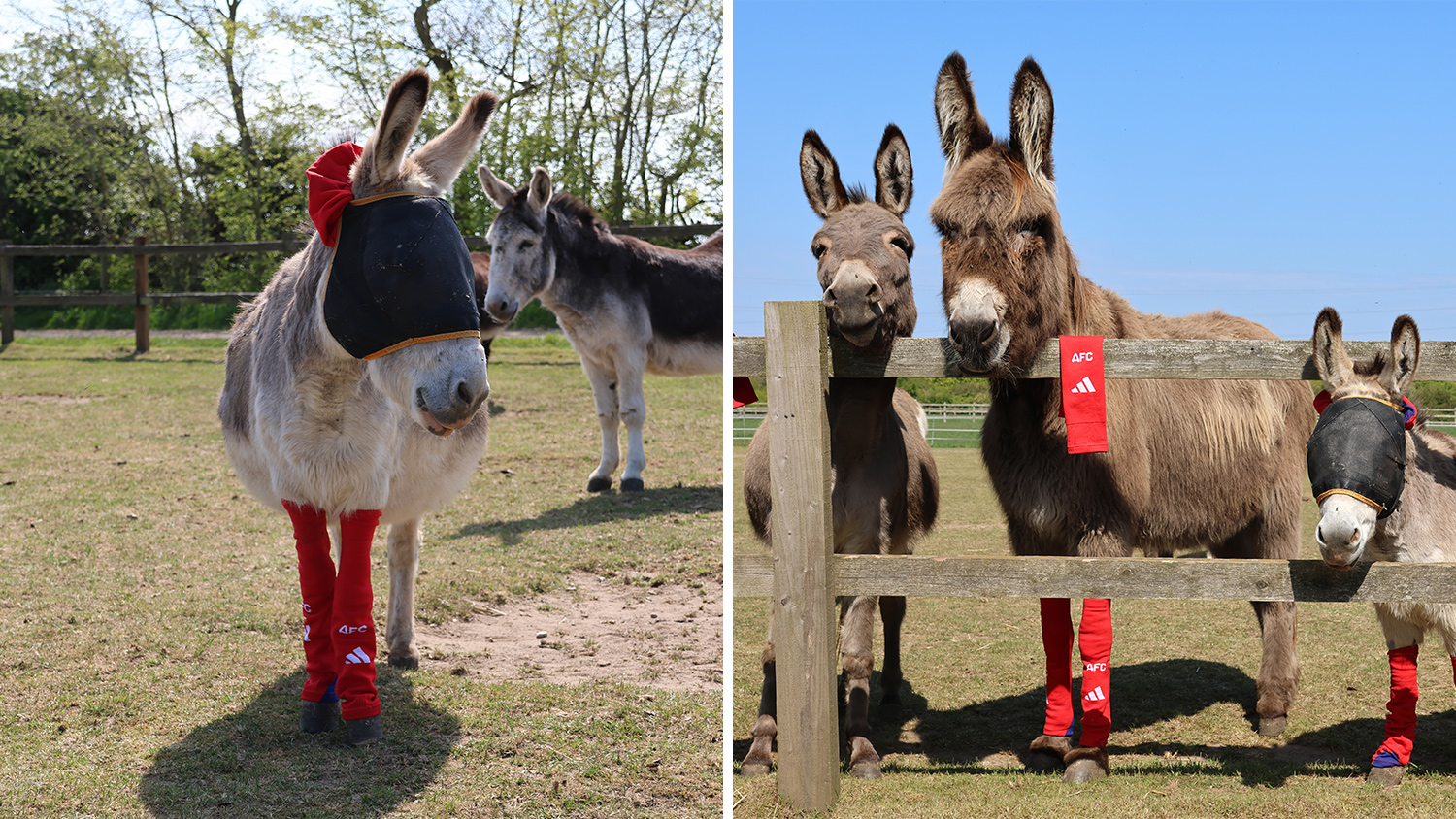
Redwings Horse Sanctuary (www.redwings.org.uk); Photo composite Encyclopædia Britannica, Inc.
(left) A donkey at Redwings Horse Sanctuary wears a mask and a pair of socks to keep the flies away. (right) Three donkeys display AFC socks.
The idea for the sock donation came from Michael Lloyd, who works for Arsenal. Football, the game that’s called soccer in the United States, can be rough. It doesn’t take long before a pair of socks are too worn out for a player to use them again. Rather than throw out old socks, Lloyd thought, why not donate them? Redwings gratefully accepted the offer.
It’s possible that one particular Arsenal player influenced Lloyd’s decision to donate the socks. Kai Havertz loves donkeys so much that his teammates call him “Donkey.” In 2023, he was thrilled when another donkey sanctuary named one of their animals after him.
“Donkeys are such incredible animals, and I am very happy to give my name so this little donkey can help raise awareness of the importance of good donkey welfare, here and all around the world,” Havertz told the BBC at the time.
Now, a lucky donkey may be wearing Havertz’s old socks.

© Elsa/Getty Images
Megan Rapinoe (15) of the United States and Clare Polkinghorne of Australia wear their soccer socks during a game.
Soccer players wear long socks for many reasons. The tight socks squeeze the leg muscles, improving blood circulation. This helps the muscles feel less achy after a game.
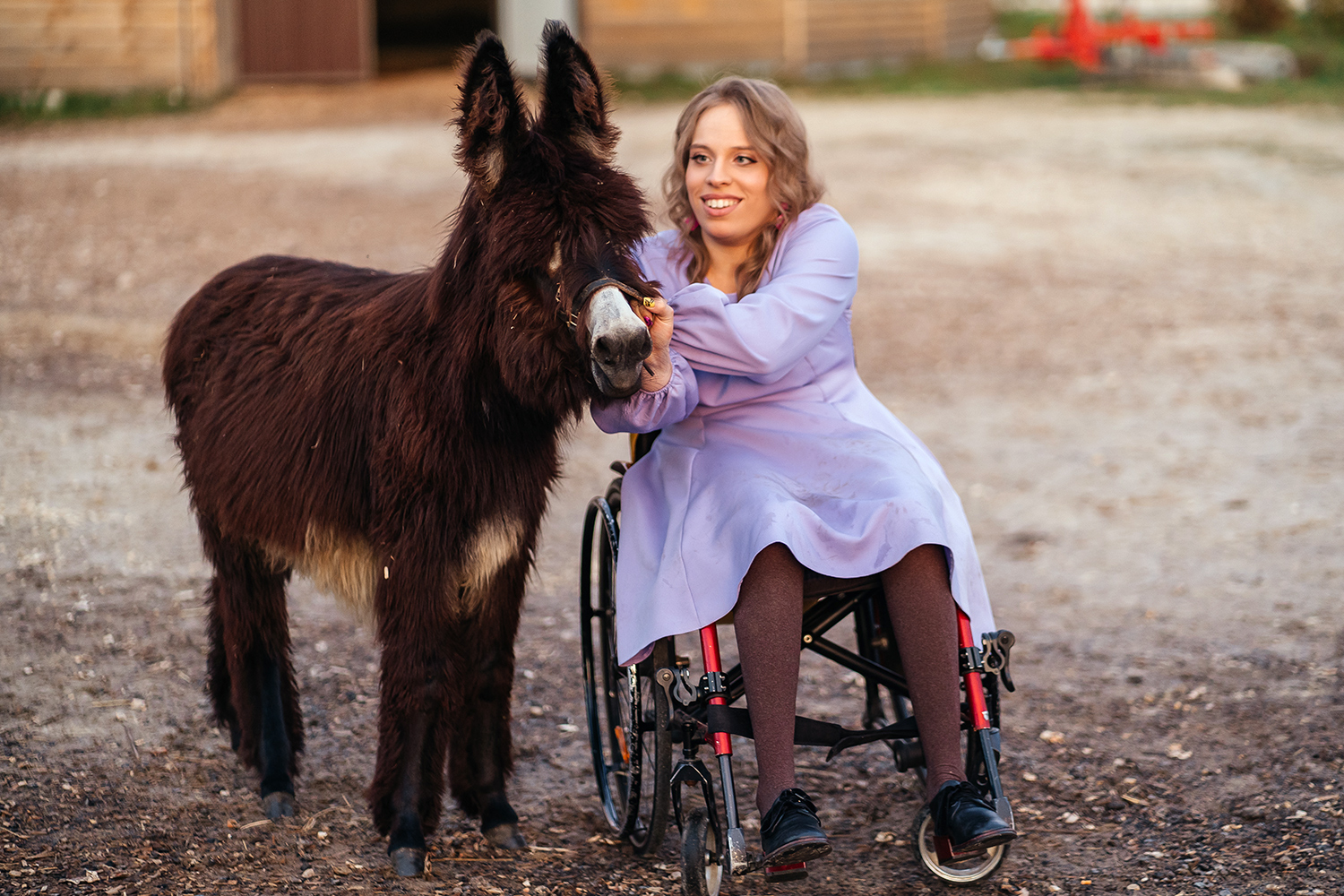
© Svetlana Repnitskaya—Moment/Getty Images
Did you know that donkeys can be great therapy animals? Intelligent, gentle, and calm, donkeys have positive effects on people.
Donkeys can improve people’s moods. Their quiet presence can help people feel calmer and happier. Therapy donkeys have been used in places like hospitals and schools.
Some donkeys are used in physical therapy programs. People with disabilities or people who are recovering from accidents practice different movements just by caring for a donkey or guiding it around a farm or field. The therapy can help improve things like strength and balance.
Margaret Coulter is the executive director of Road to Independence, a U.S. organization that provides donkey therapy. Coulter says donkeys know how to help people.
“We do have some folks who are not confident walkers,” she told New Hampshire Public Radio. “And so if [the donkeys] sense that someone is unsteady, they’ll stop on their own, wait for them to rebalance, and then walk forward.”
© Matteo Ceruti/stock.adobe.com
On farms, donkeys bray to mark their territory, ask for food, or just say hello.
There’s a lot more to learn about donkeys. Check out Britannica to find out what else there is to know!
noun
Definition:
: a place where someone or something is protected or given shelter
Word Flower
How many words can you make from the letters in the flower? All words must use the letter in the center.
.
Here is how to cite this page using the MLA style. While every effort has been made to follow citation style rules, there may be some differences. Please refer to the appropriate style manual or other sources if you have any questions.
“In the News: A Gift for Donkeys.” Britannica School, Encyclopaedia Britannica, 21 June 2026. https://news.eb.com/level1/a-gift-for-donkeys. Accessed 22 June 2026 [Replace this date with today’s date.]

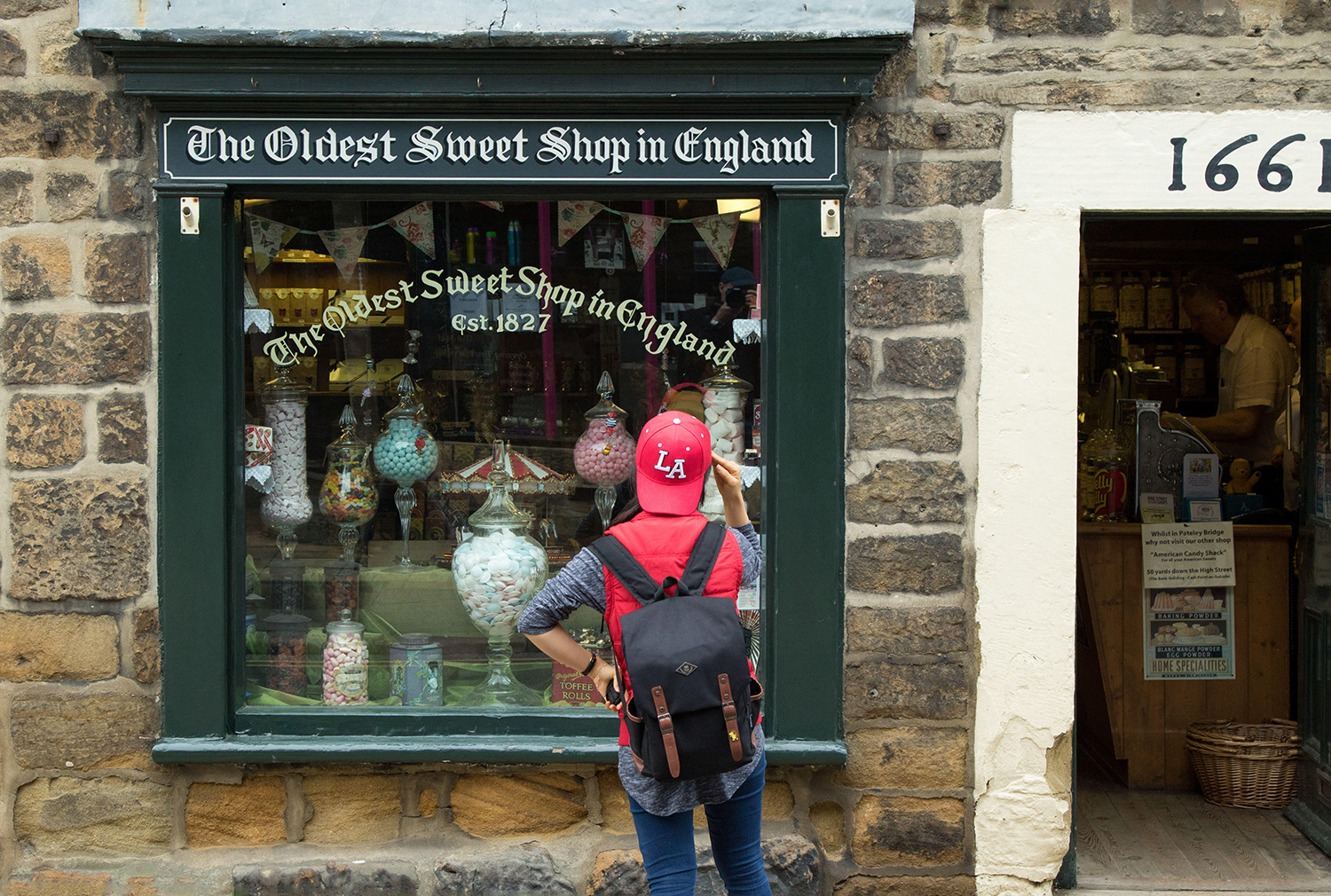
© Steven Gill/Alamy
A visitor looks at a candy display in the window of The Oldest Sweet Shop.
Life was very different 200 years ago, but some things never change. People loved candy then as much as they do now. A store called The Oldest Sweet Shop is proof of that. It’s been selling many of the same candies since it opened in 1827, making it the oldest sweet shop in England.
Located in Pateley Bridge, England, The Oldest Sweet Shop still stocks candy varieties that people loved nearly 200 years ago—like striped hard candies called humbugs. Some other candies, like bonbons, kola cubes, and rhubarb & custards, have been available at the shop for decades. There’s also licorice, chocolate, fudge, and jellybeans. Although the shop stocks more modern candy as well, the commitment to old-school treats is what keeps customers coming back.
“We have all different types [of candy] from across different centuries, but it’s the old ones people want,” Ben Howie told SWNS. Howie owns the store and runs it with his brother, James. “I guess you can’t escape the classics. They are still the favorites for a reason.”
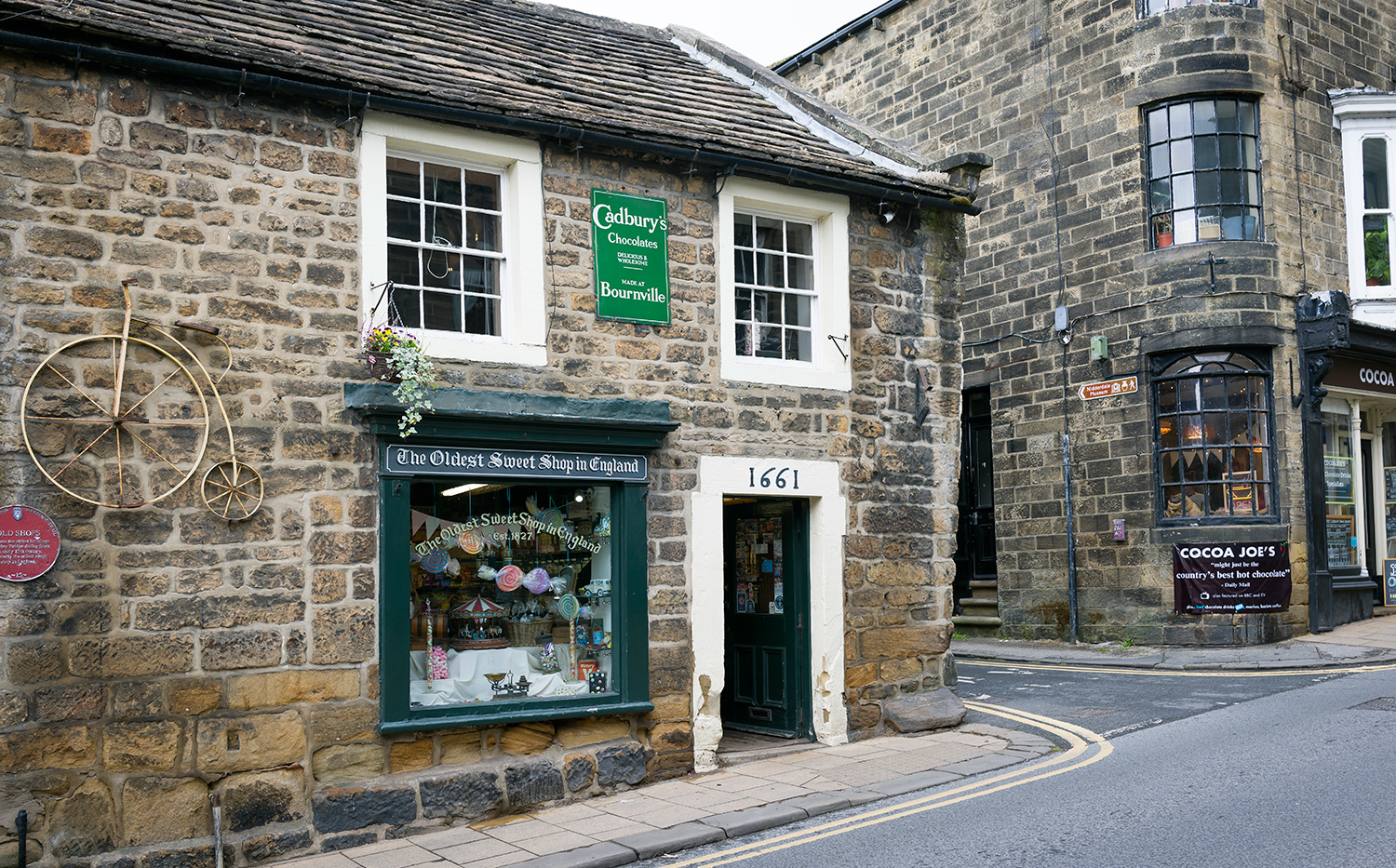
© aulMaguire—iStock Editorial/Getty Images
The Oldest Sweet Shop is in a building that is hundreds of years old.
The shop, which is in a nearly-400-year-old building, hasn’t changed much since it opened. Large glass jars on wooden shelves hold tempting treats of different shapes and colors.
“It isn’t uncommon for customers to come in and be [thinking] over which sweets they want,” James Howie told SWNS. “They can be inside making up their minds for 20 minutes, and even when they come to the [counter] they aren’t sure.”
About 20,000 people visit the shop every year. Some of them come from as far away as Australia and China. And it’s no wonder. Candy never goes out of style!
NEWS EXTRA

© Elizabeth Frantz—The Washington Post/Getty Images
Opal Lee prepares to speak during a Juneteenth concert at the White House in 2023.
On June 19, 1865, General Gordon Granger arrived in Texas to tell the state’s enslaved people they were free. It was two and a half years after the Emancipation Proclamation had freed all enslaved people in the South. In Texas, June 19 became known as Juneteenth. Juneteenth is now a national holiday, thanks to a retired teacher named Opal Lee.
In 2016, at the age of 89, Lee set out to walk from her home in Fort Worth, Texas, to Washington, D.C. Her goal was to gather support for making Juneteenth a national holiday. Lee walked 2.5 miles per day. This is because it took two and a half years for the enslaved people of Texas to receive the news that they were free.
The walk was the start of a long effort. Lee eventually collected 1.5 million signatures and presented them to Congress. In 2021, lawmakers passed a law declaring Juneteenth a national holiday, and President Joe Biden signed it into law.
In 2024, Opal Lee was awarded the Presidential Medal of Freedom, the highest civilian honor in the United States. Now known as the “Grandmother of Juneteenth,” Lee will turn 100 in October 2026.
“To [be] 100 years old, almost, and be able to tell some young people how it used to be so that it never happens again…I’m as proud as I can be,” Lee told CBS19 in Texas earlier this year.


© Joe Shlabotnik (CC-BY-2.0)
Ichiwa opened more than 1,000 years ago. Today, the shop is located in this building.
The world’s oldest candy shop opened in 1000 CE, making it more than 1,000 years old! Located in Japan, Ichiwa sells only one thing: a sweet rice cake called mochi.
© Artem Zakharov—iStock/Getty Images
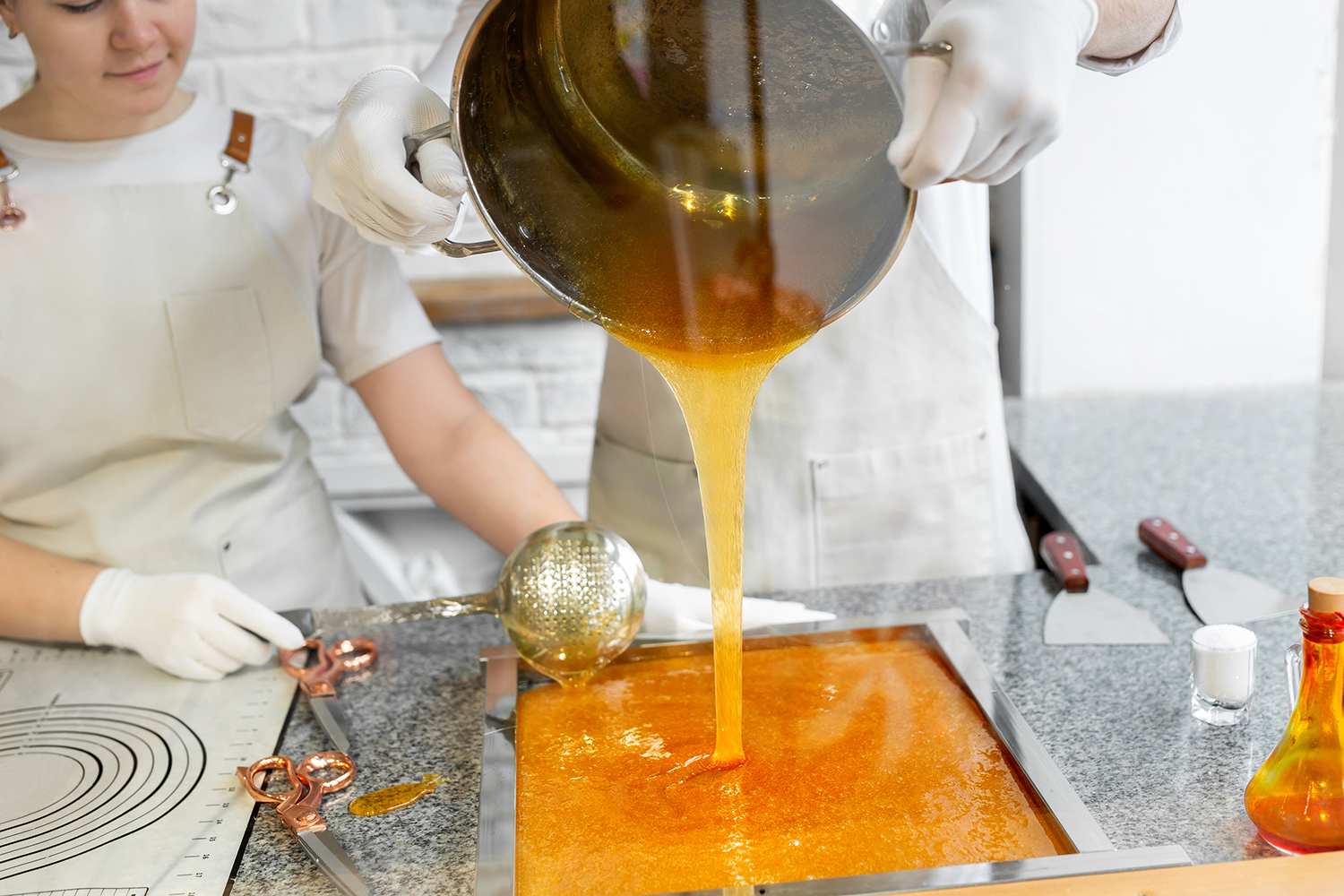
It’s not too hard to make hard candy! All you need is sugar, water, and corn syrup. (You and a grownup can find exact amounts in a cookbook or online.) You can also add mint extract or other flavors.
With adult supervision, bring everything to a boil in a pot. Use a candy thermometer to measure the temperature. Once the mixture reaches about 300 degrees Fahrenheit (150 degrees Celsius), pour it into a pan to cool.
The candy will harden as it cools. Cut it into bite-sized pieces while it’s still soft but cool enough to handle. Then toss all the pieces with powdered sugar so that they don’t stick together.

© Niday Picture Library/Alamy, © Tom Williams—CQ-Roll Call/Getty Images, © Michael Macor/The San Francisco Chronicle—Hearst Newspapers/Getty Images, © Paul Weaver/SOPA Images—LightRocket/Getty Images; Photo composite Encyclopædia Britannica, Inc.
The top left photo shows a Juneteenth celebration in the year 1900. The rest of the photos show modern-day celebrations.
June 19 is a federal holiday called “Juneteenth” in the United States. Juneteenth marks the day in 1865 when U.S. soldiers informed enslaved people in Texas that they were free.
You can learn more about Juneteenth and how it’s celebrated at Britannica.
noun
Definition:
: a liking for sweet foods
Word Search
Can you find all the words?
.
Here is how to cite this page using the MLA style. While every effort has been made to follow citation style rules, there may be some differences. Please refer to the appropriate style manual or other sources if you have any questions.
“In the News: Selling Candy for 200 Years.” Britannica School, Encyclopaedia Britannica, 14 June 2026. https://news.eb.com/level1/selling-candy-for-200-years. Accessed 15 June 2026 [Replace this date with today’s date.]

© Peter Endig/dpa—picture alliance/Getty Images
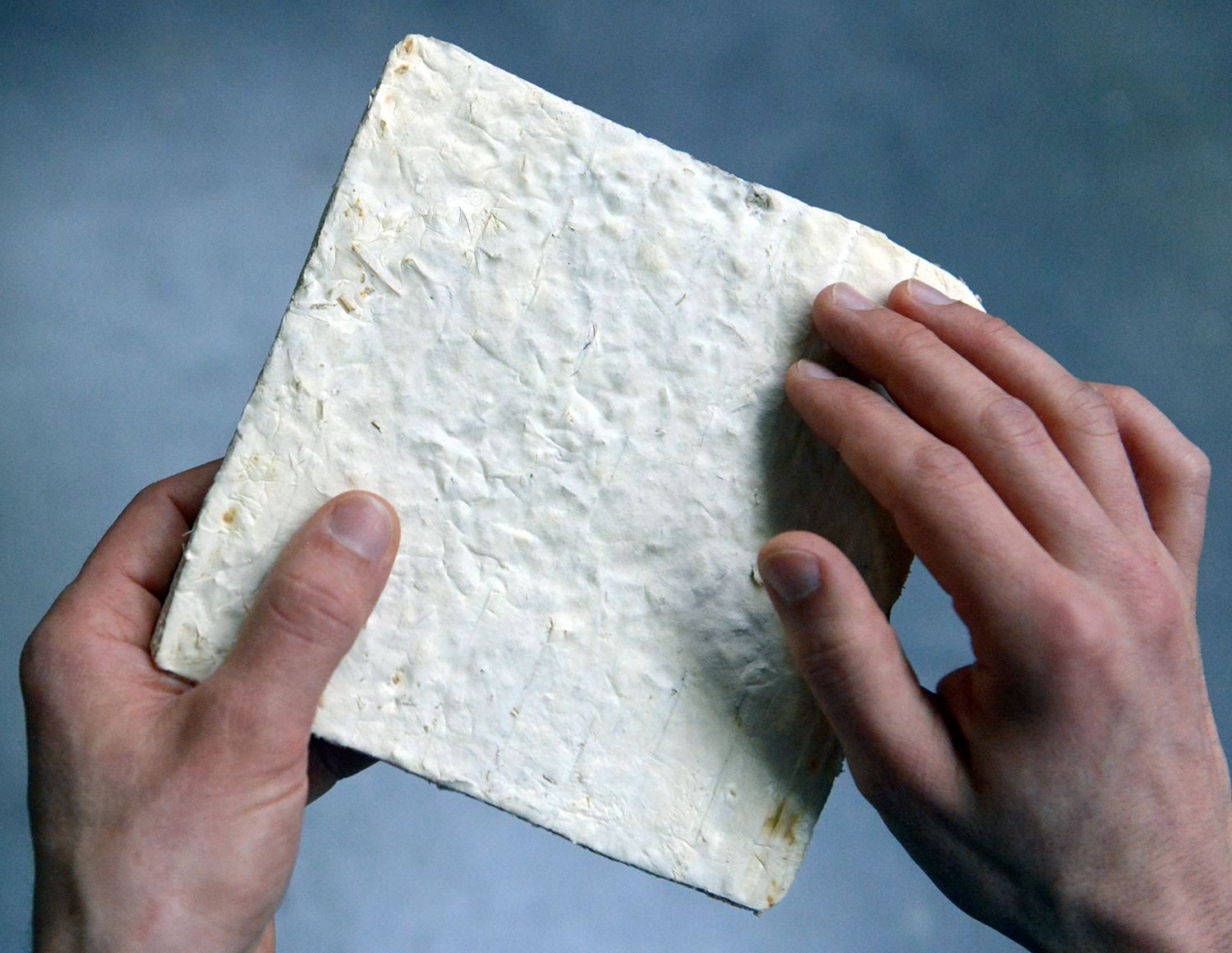
This material was made from a part of a fungus called mycelium. It can be used to create doors.
The word fungus makes some people cringe, but not all fungus is bad. In fact, the yeast in our bread and the mushrooms on our plates are both fungi. Now, a company in Denmark has developed a door with fungus as a main material.
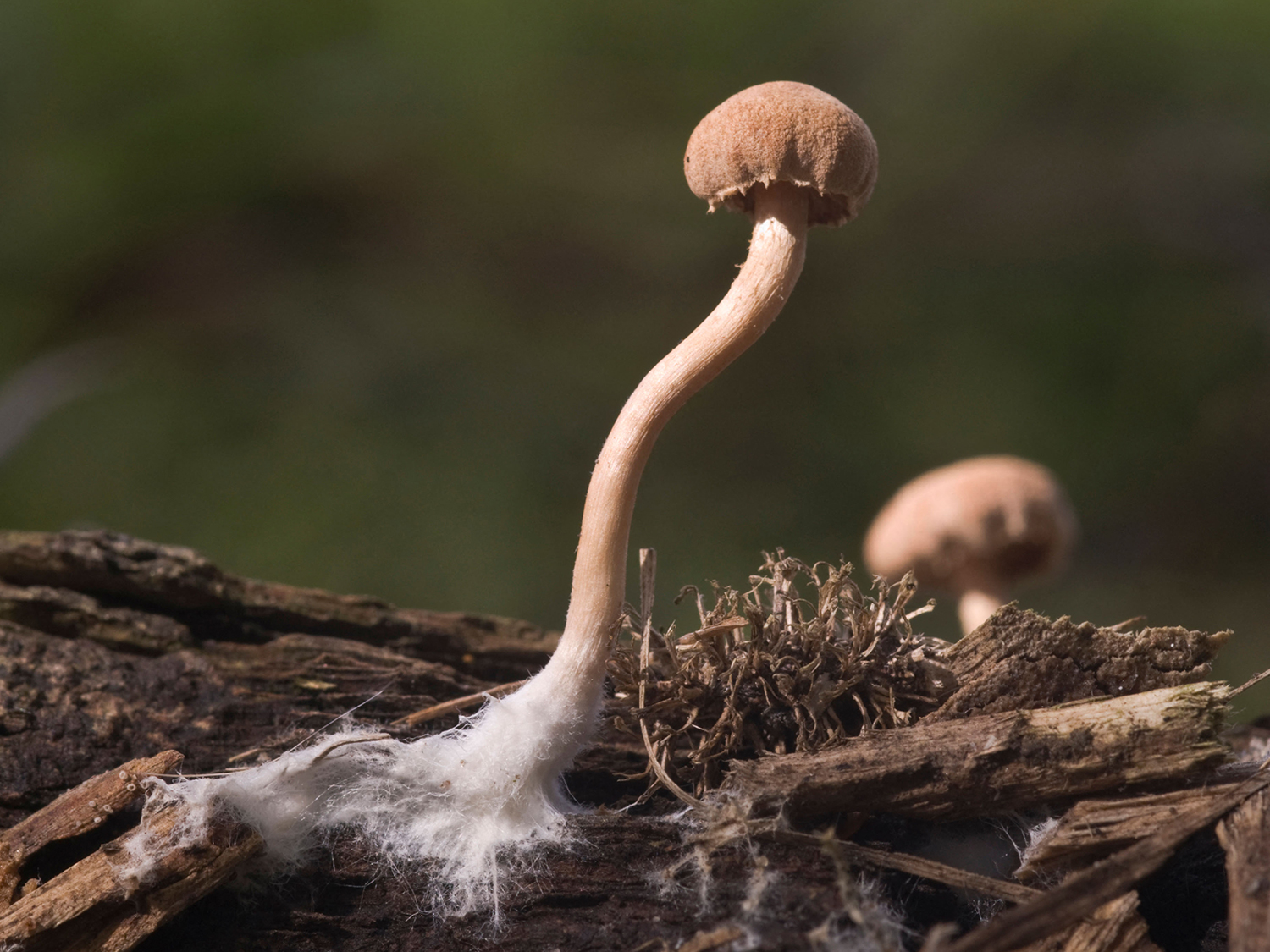
Danish company Rebound worked with an architectural company (a company that designs buildings) to develop a door that contains mycelium. Mycelium is a bit like the roots of a fungus. If you were to dig a mushroom out from the ground, the mycelium would be the part that’s underground.
© Christine Whitehead/Alamy
The white stuff in this photo is mycelium.
Why use mycelium instead of wood to make a door? Unlike trees, which grow slowly, mycelium grows quickly, so it’s easy to produce.
Rebound grows the mycelium in a door-shaped mold with a wooden frame. In only about two weeks, the material grows into a panel that’s lightweight but strong enough to be used as an interior (inside) door. Like wooden doors, mycelium doors help block sounds. Their handles are made from recycled seashells.
The architects decided to use this technology to make doors because the natural material has a special look that’s not at all like wood. Mycelium doors are details that can make a home more interesting.
And if anything happens to a mycelium door, it won’t take long to create a new one. That’s the beauty of fast-growing fungus.
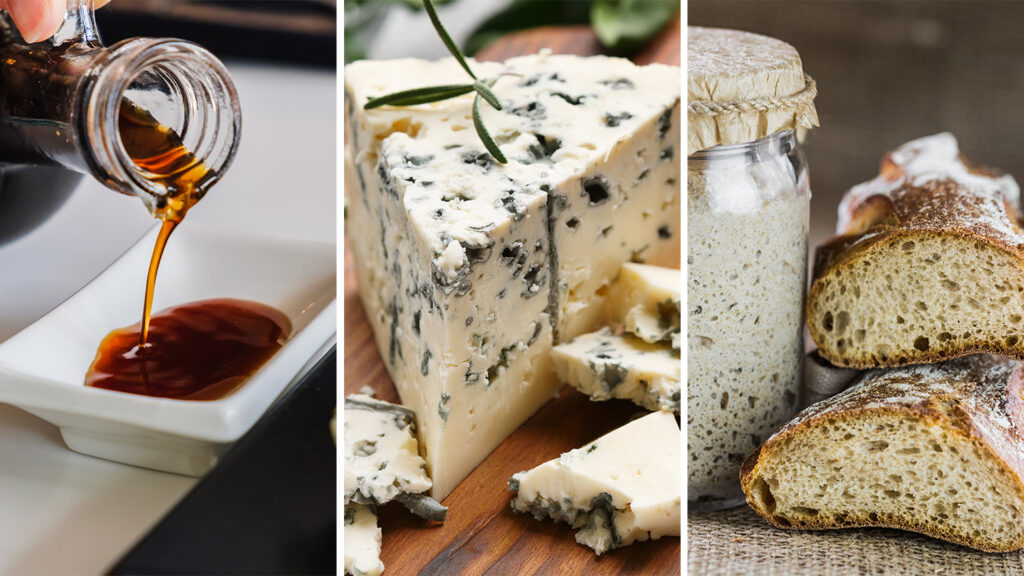
© bravissimos, Prostock-studio, innazagorulko/stock.adobe.com; Photo composite Encyclopædia Britannica, Inc.
Many foods are made using fungi, including soy sauce, cheese, and bread.
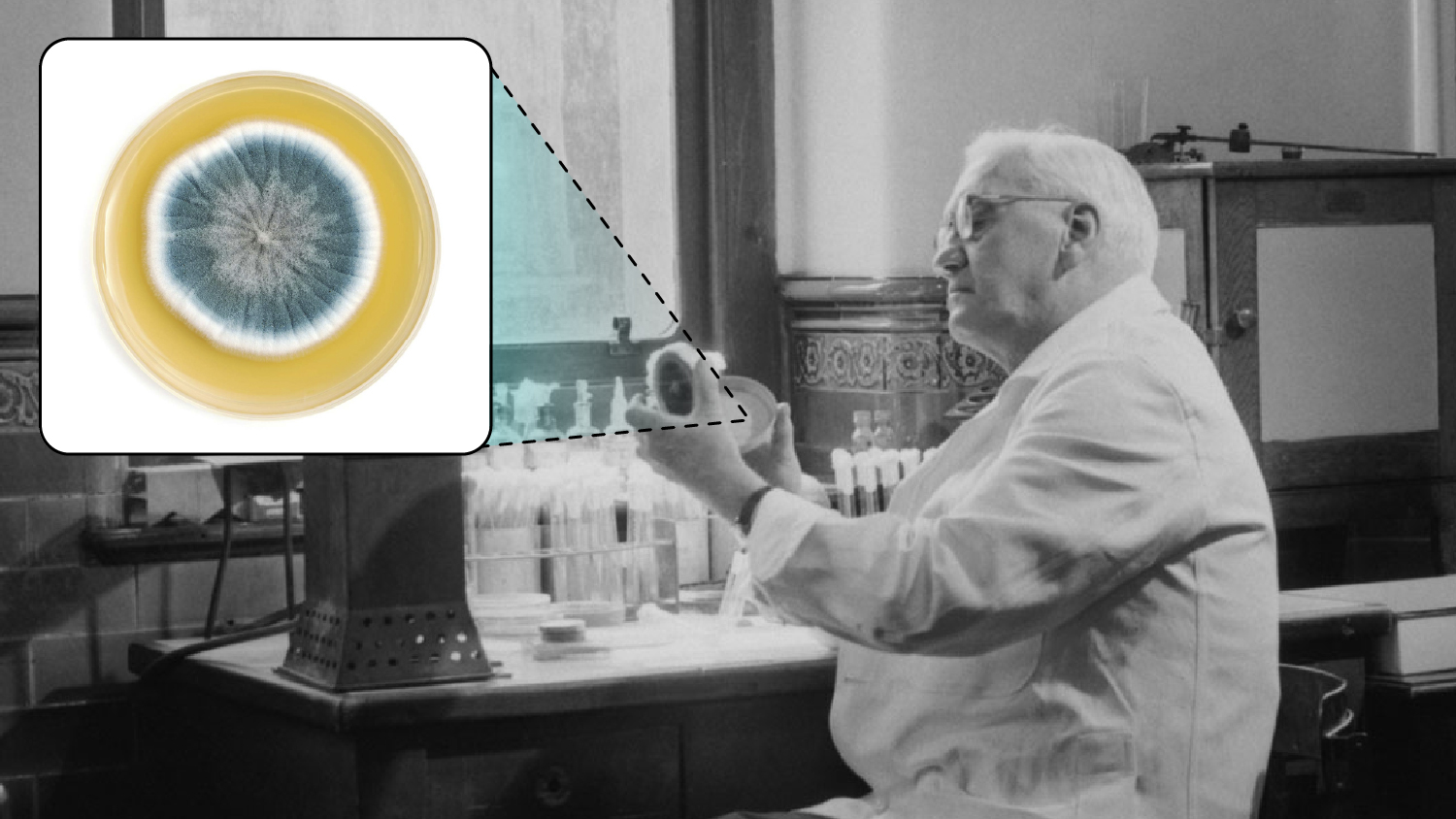
© Chris Ware—Keystone Features/Getty Images, © Catolla—iStock/Getty Images; Photo illustration Encyclopædia Britannica, Inc.
This photo shows Alexander Fleming at work. The inset shows what the mold he found might have looked like.
Antibiotics are amazing. These medications can stop many infections, like strep throat, before they become dangerous. Antibiotics wouldn’t exist if it weren’t for fungus.
Scottish doctor Alexander Fleming discovered the power of fungus in 1928. Fleming was trying to figure out how to stop certain kinds of bacteria, which can cause disease. Before leaving for vacation, Fleming put some bacteria called Staphylococcus on a culture plate (a piece of equipment on which bacteria can be grown). When he came back, he found that mold, a type of fungus, had begun to grow on the bacteria. The part of the bacteria with the mold on it had stopped growing.
Fleming, along with other scientists, figured out which part of the mold could control the bacteria and named it penicillin. Penicillin became the world’s first antibiotic.
Antibiotics changed the world by stopping countless infections in their tracks!
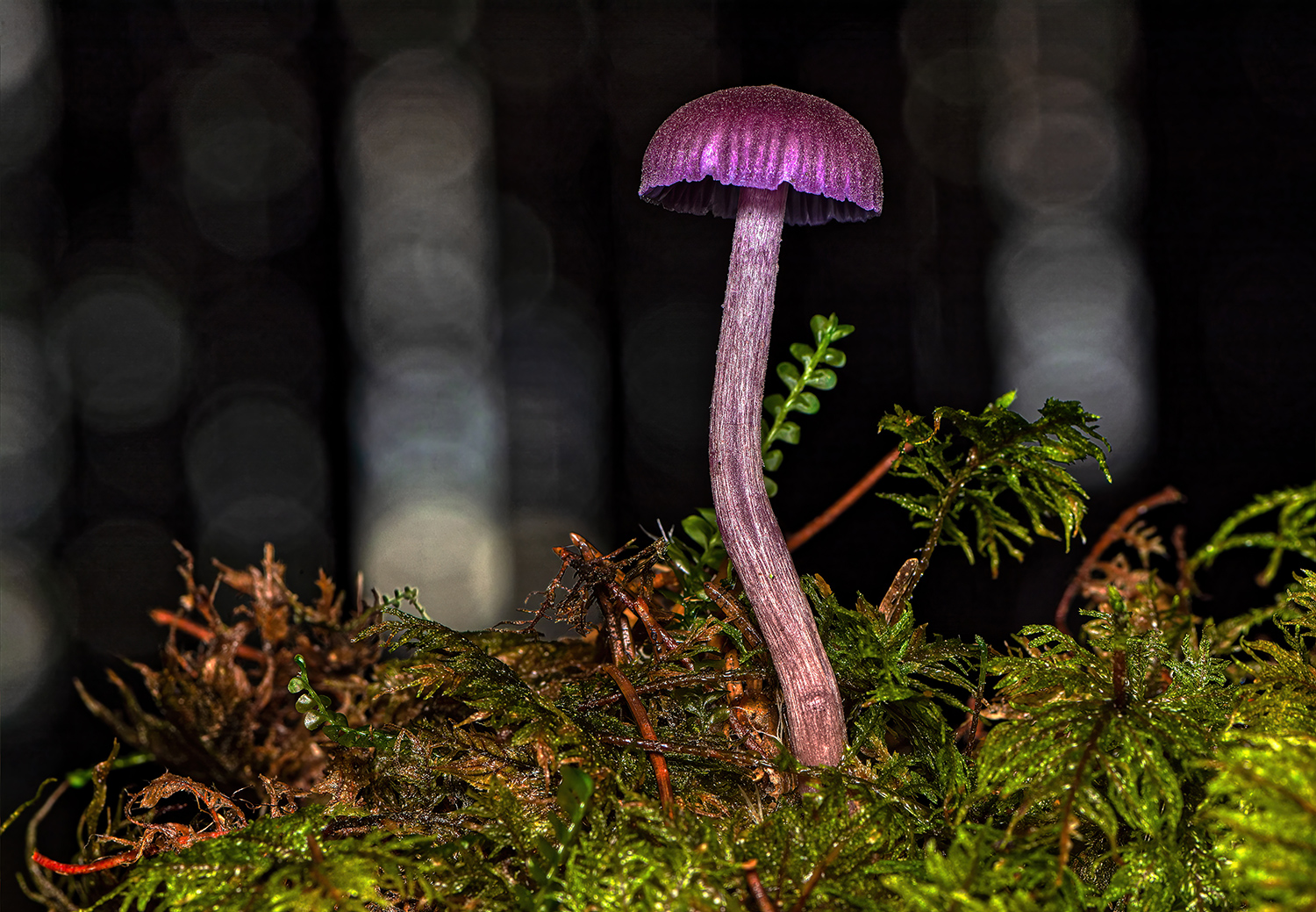
© Herbert/stock.adobe.com
A fungus is a living thing, but it’s not a plant or an animal. How does a fungus grow, and when is it harmful? You can learn more at Britannica!
verb
: to increase in number or amount quickly
Word Search
Can you find all the words?
.
Here is how to cite this page using the MLA style. While every effort has been made to follow citation style rules, there may be some differences. Please refer to the appropriate style manual or other sources if you have any questions.
“In the News: A Door Made of Fungus.” Britannica School, Encyclopaedia Britannica, 10 June 2026. https://news.eb.com/level1/a-door-made-of-fungus. Accessed 11 June 2026 [Replace this date with today’s date.]


© Richard McManus—Moment/Getty Images
These elephants live in the forests of Gabon, a country in Africa.
When elephants eat farmers’ crops, are they really just trying to treat their illnesses? Farmers in the African nation of Gabon noticed that elephants that steal their crops eat the leaves of the plants, but not the fruits. A new study suggests that this may be because certain leaves are like medicine for elephants.
Scientist Steeve Ngama collected dung (poop) samples from some elephants that are known for stealing crops in Gabon. Ngama found that some of the dung samples contained parasites. A parasite is a living thing (often a kind of worm) that lives inside another living thing. Parasites can make people and animals sick.
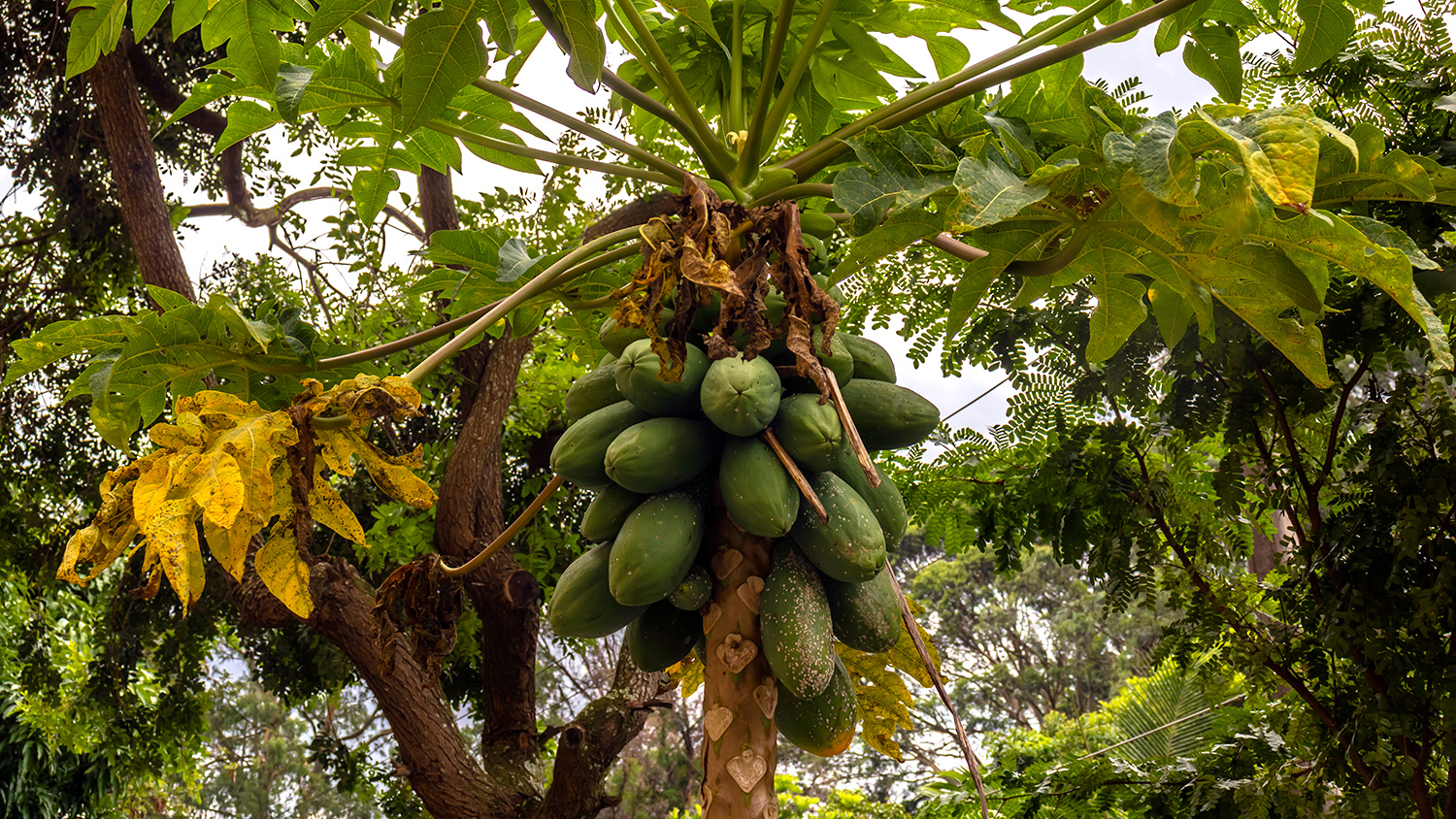
© Andrea Lopes—iStock/Getty Images
Elephants eat leaves from papaya plants when they have parasites.
Ngama also collected samples of the types of leaves the elephants were stealing and eating. They included banana and papaya leaves. Scientists know that these leaves have ingredients that fight certain kinds of parasites. Ngama found that the elephants with parasites were more likely to eat the banana and papaya leaves. This could mean the sick elephants steal these leaves because they are trying to feel better.
How do elephants know which plants to eat in order to feel better? Elephants are social animals, which means they live in groups and communicate knowledge to each other. Over time, elephants probably learned that when they eat certain leaves, they felt less sick. Older elephants may teach this to each new generation of elephants.
Ngama says it’s possible that elephants’ knowledge may prove value to humans who hope to develop new medicines.
NEWS EXTRA
© Heather Diehl/Getty Images
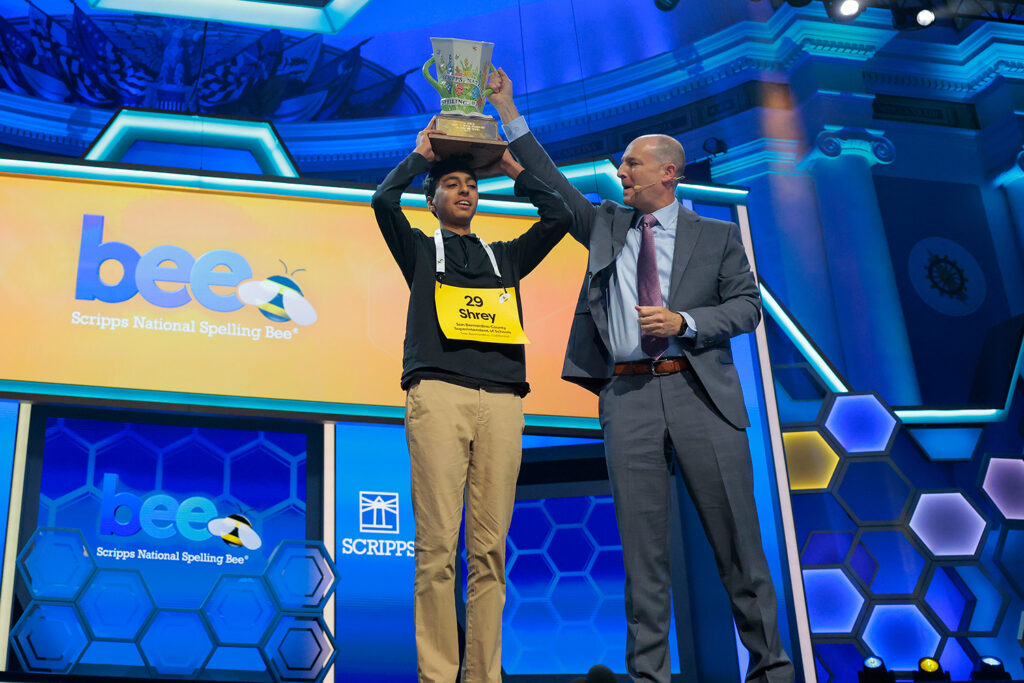
Shrey Parikh holds up the trophy he earned by winning the 2026 Scripps National Spelling Bee.
The United States has a new spelling champ! Fourteen-year-old Shrey Parikh of Rancho Cucamonga, California, won the 2026 Scripps National Spelling Bee. It was a comeback performance for Shrey. He came in third at the 2024 spelling bee but didn’t make it to the national level last year.
“Right now I’m probably the happiest I’ve ever been,” Shrey told the Associated Press. “I’m just so happy and relieved, and just such a flood of emotions. … I had a really tough time [last year], but I’m glad I was able to bounce back.”
This year’s spelling bee came down to a tie-breaker lightning round between Shrey and 12-year-old Ishaan Gupta of Jersey City, New Jersey. Both spellers attempted to spell more than 30 words correctly in 90 seconds. While Ishaan got 25 words right, Shrey got 32. The word that put him over the top was bromocriptine.
“I was counting and I’m like, OK, this is more than 30 [words],” Shrey’s mother, Khyati Mehta, told the Associated Press. “And at that point, I’m like, ‘I think this is it.’”
As the winner, Shrey received $52,500, a trophy, and other prizes.

© Samuel Berube/stock.adobe.com
An elephant’s nose can smell water that is miles away!

© LindaPhotography/stock.adobe.com
Mist that rises above the Amazon rainforest is important to other parts of the world.
Did you know that many of the medicines doctors and nurses use to treat their patients are made with plants that grow in South America’s Amazon rainforest? We wouldn’t have these medicines without the Amazon.
What else do rainforests do for the planet?
Protect Species
About two-thirds of Earth’s plant and animal species live only in rainforests. Most of them are undiscovered or haven’t yet been well studied.
Absorb Carbon Dioxide
Carbon dioxide in the atmosphere leads to climate change, and we humans produce more than our fair share of carbon dioxide. Rainforests absorb some carbon dioxide, helping to protect our future.
Control Water and Oxygen
Rainforest plants produce oxygen. Rainforests also absorb rainwater, and through a process called transpiration, they help deliver fallen rainwater back into the air. Amazingly, this can help prevent droughts in other parts of the world.
© Miguel/stock.adobe.com
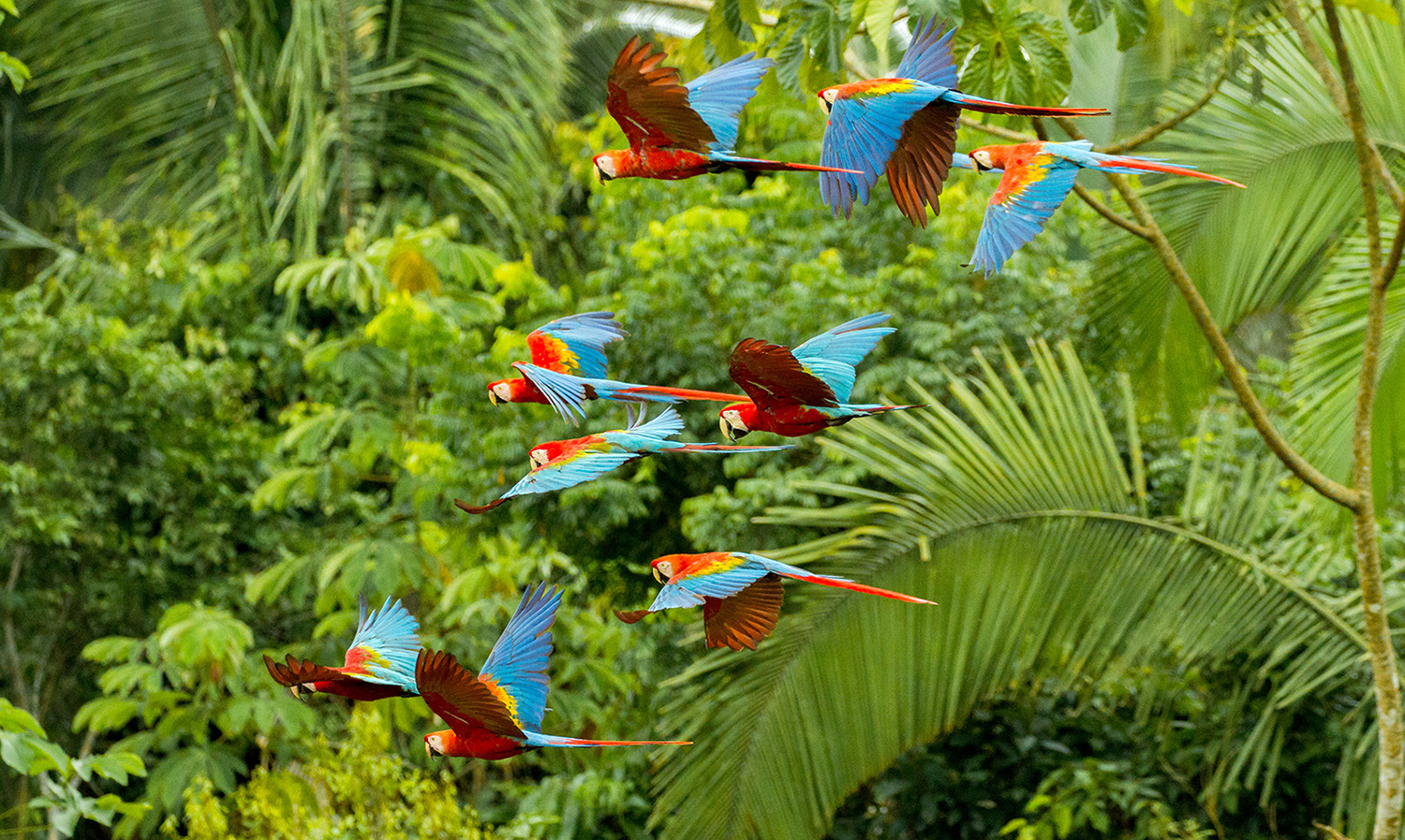
Birds known as macaws fly over the Amazon rainforest.

© Pablo Morano—BSR Agency/Getty Images, © Central Press—Hulton Archive/Getty Images, © David Cannon—Allsport/Getty Images, © DPA—Picture Alliance/Getty Images, © Archivo El Grafico/Getty Images, © Kim Jae-Hwan—AFP/Getty Images; Photo composite Encyclopædia Britannica, Inc.
Get ready for the 2026 World Cup! The world’s biggest soccer (football) event will take place from June 11 to July 16 in 16 cities across Canada, the United States, and Mexico. Forty-eight teams from around the world will compete to find out which one comes out on top.
The World Cup takes place every four years. You can learn more about it at Britannica!
adjective
: used to prevent or cure disease or to relieve pain
Criss Cross
Can you figure out how the words fit into the grid?
.
Here is how to cite this page using the MLA style. While every effort has been made to follow citation style rules, there may be some differences. Please refer to the appropriate style manual or other sources if you have any questions.
“In the News: What Do Elephants Know?” Britannica School, Encyclopaedia Britannica, 7 June 2026. https://news.eb.com/level1/what-do-elephants-know. Accessed 8 June 2026 [Replace this date with today’s date.]

Courtesy Krista Richard, Bikes and Trikes for Everyone
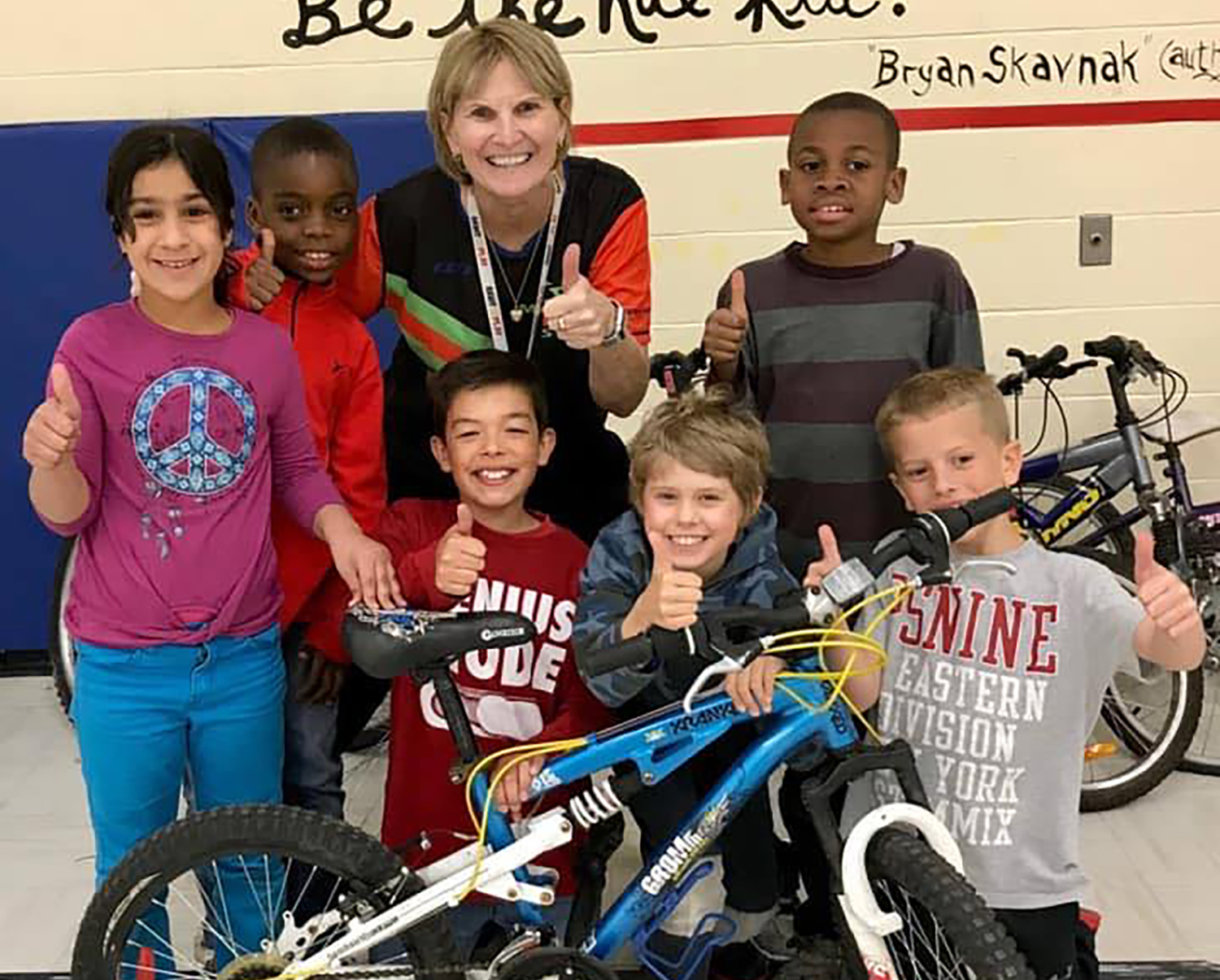
Krista Richard (center) makes bicycles available to as many kids as possible.
Krista Richard has a collection of bicycles and tricycles she’s fixing up. She’s not planning to sell the bikes but to give them to kids as part of a program she started called Bikes and Trikes for Everyone.
Richard, who lives in Moncton, New Brunswick, Canada, collects donated bikes with the help of a small team of volunteers. Between April and October, after doing any necessary repairs, she holds giveaways. Kids get to choose a bike out of several available options.
In the past 14 years, Richard has given away thousands of bikes. She says it’s a good way to encourage kids to play outside at a time when video games and other activities often keep them indoors. Riding a bike provides fresh air, exercise, and more.
“If you get a bunch of kids on their [bikes], then they get to know each other and then the families get to know each other,” Richard told the Canadian Broadcasting Corporation (CBC). “I think the more time you spend outside, the better.”
Richard also gives some bikes to adults to encourage parents to ride with their kids.
Bikes and Trikes for Everyone has proven so popular that there’s a waiting list, so Richard relies on community members to continue to be generous. In May 2026, she posted a request on the Bikes and Trikes Facebook page.
“I have given out 116 bikes so far, but I still have a lot of kids on the waiting list…especially for 20”, 24” and 26” bikes. Please continue to donate your gently used bikes. Thank you,” Richard wrote. Along with the request, there was a list of people who had already donated.
Richard says that as long as people keep donating, she’ll keep doing the giveaways because bikes make kids happy.
“Just to see their joy, their smile, it makes everything worth it,” she told the CBC.
© Aurelien Meunier/Getty Images
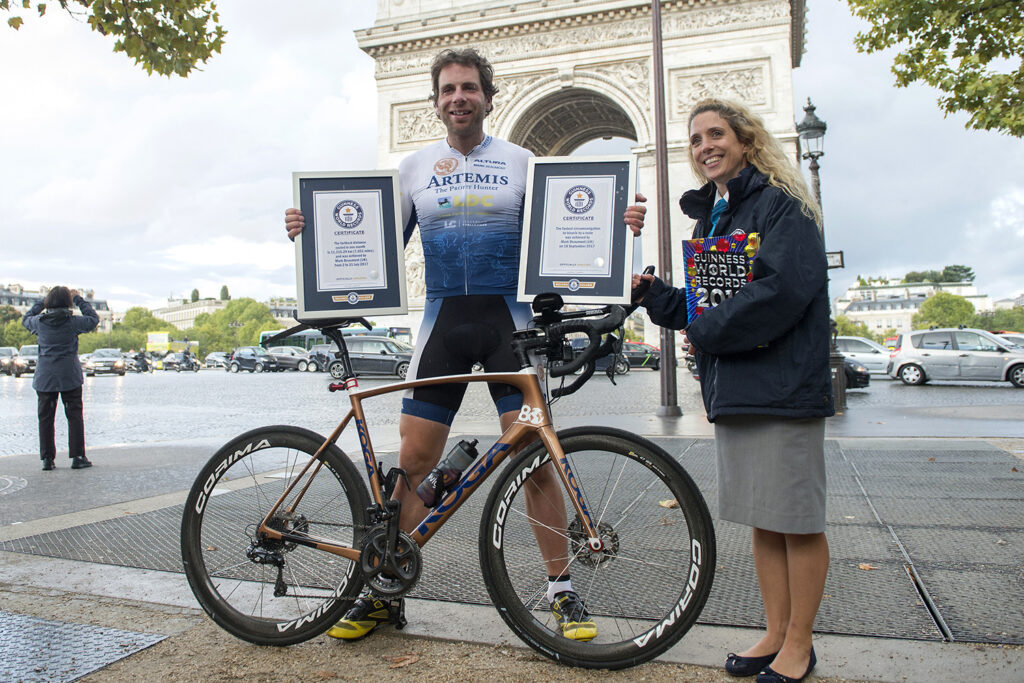
Mark Beaumont achieved two Guinness World Records when he rode a bicycle around the world in 2017.
In 2017, Mark Beaumont of the United Kingdom broke the world record for the fastest bicycle ride around the world. The journey took just under 79 days. It required Beaumont to ride an average of 240 miles (386 kilometers) per day.
© FatCamera—E+/Getty Images
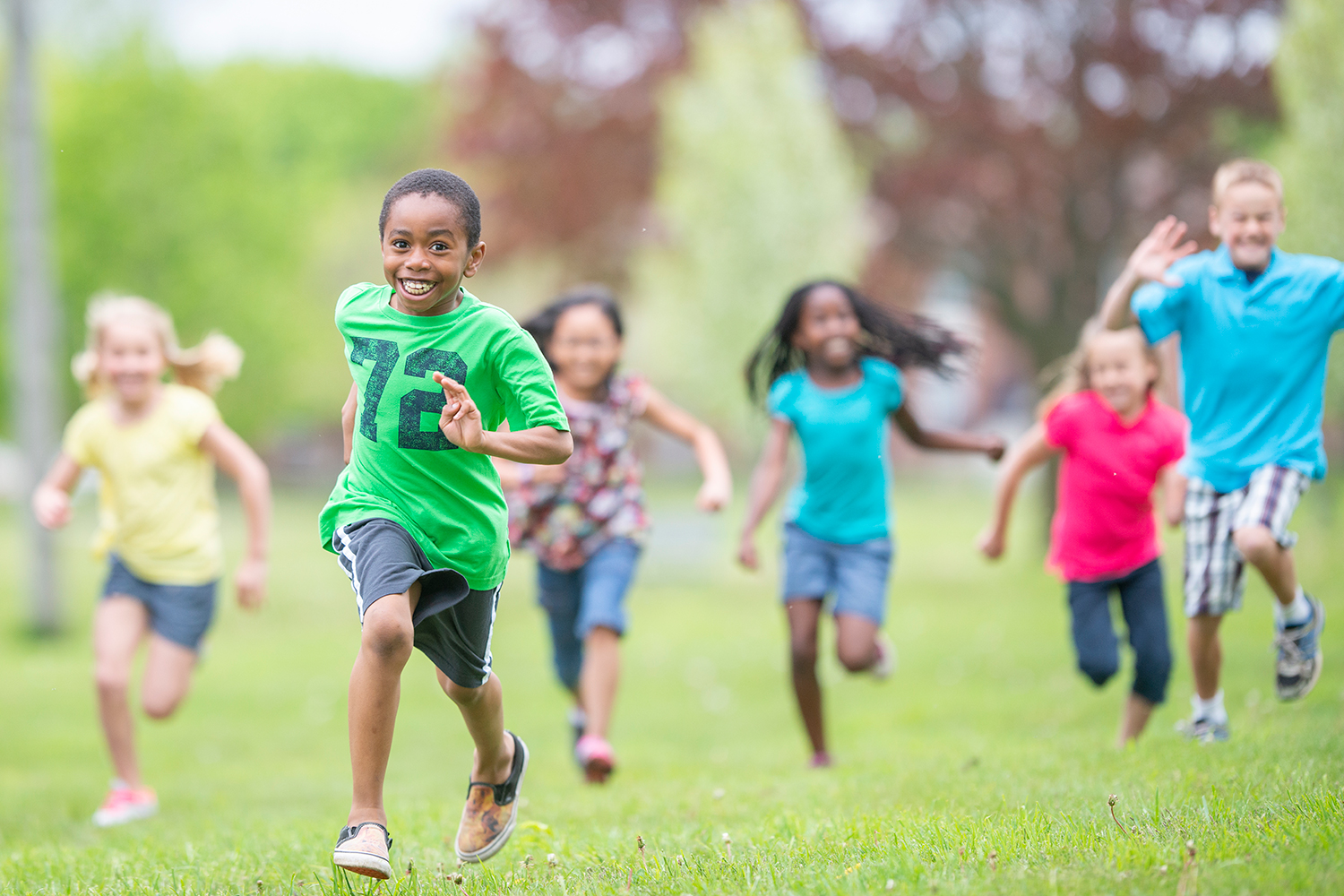
If you want to have some outdoor fun this summer, we’ve got you covered! Check out a few of our favorite warm-weather activities. Be sure to ask an adult before you head out on your adventure!
Number of people: Two or more
Equipment needed: Pen and paper or a phone
How to play: Make a list of things you might find in your neighborhood, such as a certain kind of insect or a parked red car. Then, as a group, go outside and look for as many of the items as you can.
Number of people: Three or more
Equipment needed: None
How to play: This game is a race with a twist. Before playing, pick one person to be the leader. Everyone else should line up at a starting line. When the leader yells “green light,” everyone can go. When the leader yells “yellow light,” everyone should slow down. When the leader yells “red light,” everyone should freeze. If a player moves during a “red light,” that player must return to the starting line. The first player to reach the leader gets to be the leader in the next round.
Number of people: Three or more
Equipment needed: None
How to play: Tag is usually played with one person as “It.” In this form of the game, everyone is It. Anyone who gets tagged must stop playing (by sitting on the ground, for example) until the person who tagged them gets tagged. Then they are free to play again! If two players tag each other, they play Rock, Paper, Scissors to see who is out and who gets to keep playing.
Number of people: One or more
Equipment needed: Chalk
How to do it: With permission, draw on a sidewalk! Your creation will last as long as it doesn’t rain.

© Troy Parla/Getty Images
Brooke Hobson (number 11) of the Ottawa Charge fights for the puck with Kati Tabin (number 9) of the Montreal Victoire during the Professional Women’s Hockey League playoff finals in 2026.
There’s a lot to do outdoors, including sports! You can learn about many different sports at Britannica. What’s your favorite?
adjective
: lively and enthusiastic
Word Search
See if you can find all the words.
.
Here is how to cite this page using the MLA style. While every effort has been made to follow citation style rules, there may be some differences. Please refer to the appropriate style manual or other sources if you have any questions.
“In the News: The Gift of a Bicycle.” Britannica School, Encyclopaedia Britannica, 3 Jun 2026. https://news.eb.com/level1/the-gift-of-a-bicycle. Accessed 4 June 2026 [Replace this date with today’s date.]