
The Man Who Connected the World
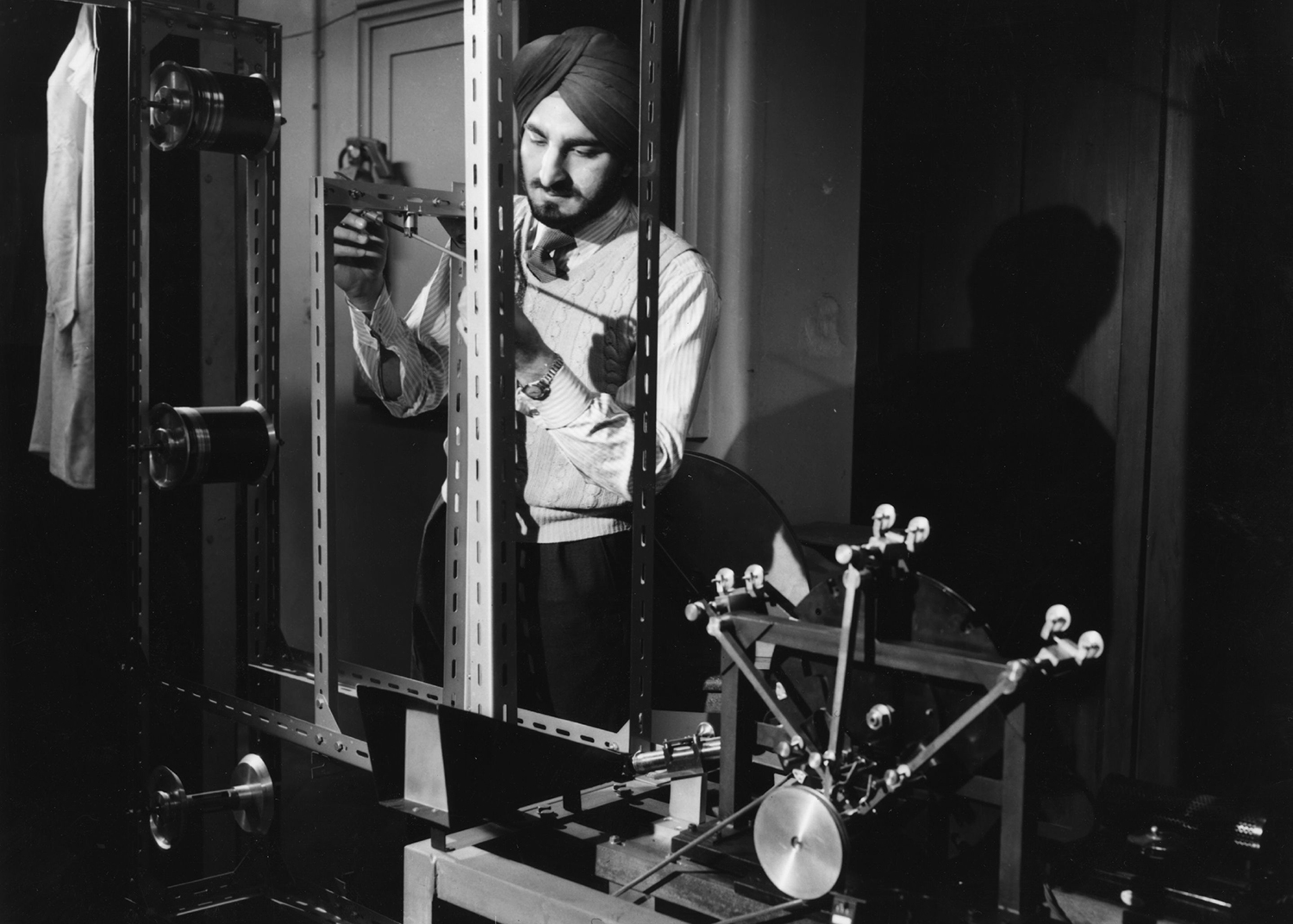
© Joseph McKeown/Picture Post—Hulton Archive/Getty Images
In this 1955 photo, Narinder Singh Kapany adjusts a machine that aligns glass fibers into a fiber-optic cable.
Behind many digital activities—watching TV, using the Internet for a research project, or streaming music on a smartphone—there is a vast, yet unseen network of fiber-optic cables making those activities happen at the speed of light. The person who made it all possible was Narinder Singh Kapany.
Kapany, an Indian American physicist, is considered the “father of fiber optics.” Without him, it’s likely we would not have the world as we know it. Born in Punjab, India, Kapany completed his graduate studies at Imperial College London in the United Kingdom. It was there, in 1953, that Kapany successfully transmitted light through bent bundles of thin glass fibers.
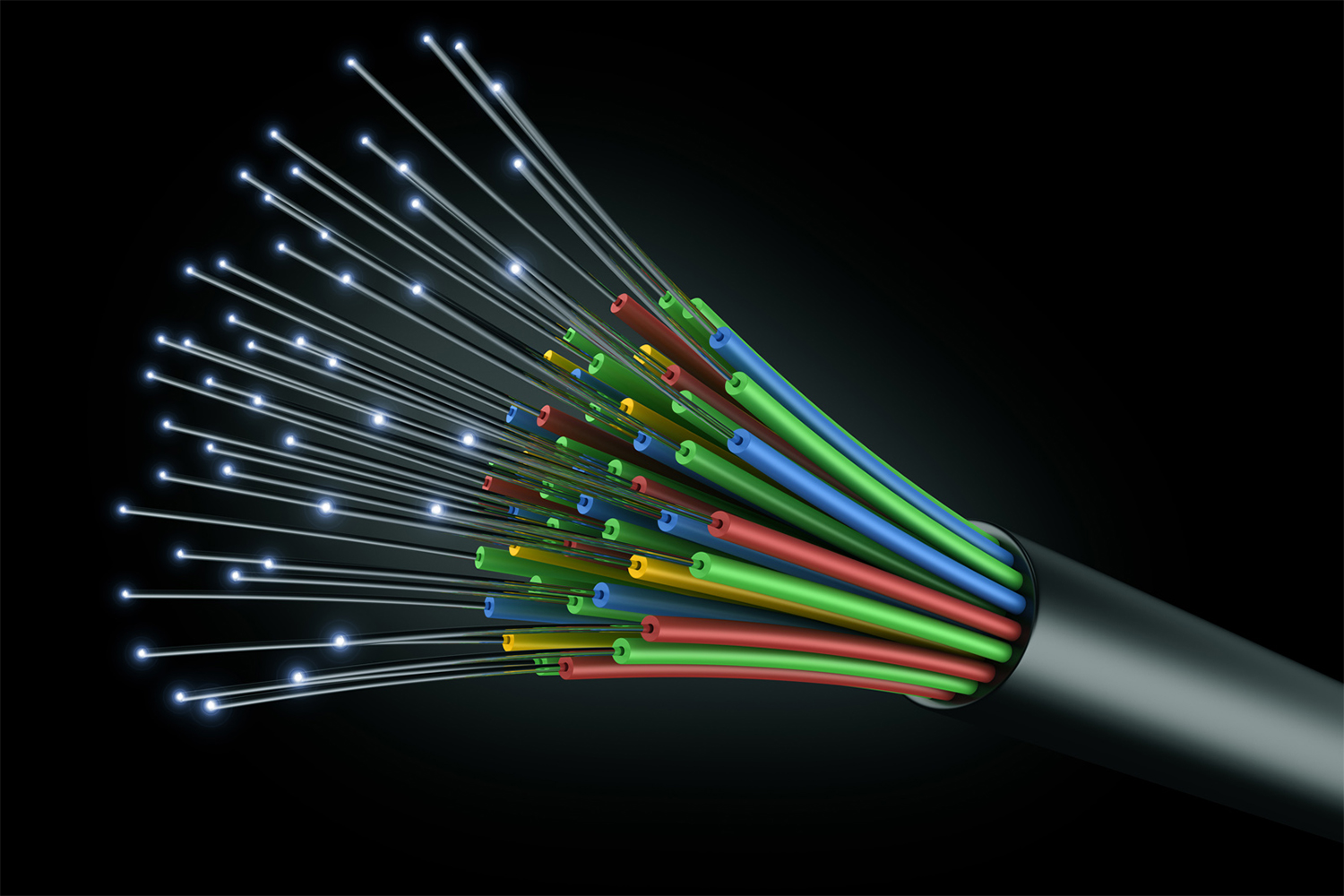
A fiber-optic cable is made up of many thin glass strands called fibers.
Though we take this capability for granted today, it was a breakthrough at the time. Before this, it was impossible to transmit high-quality images over long distances. Kapany figured out how to “bend light” to send these images through thin glass strands called fibers. Bundling many fibers together could make cables that sent images at the speed of light.
Kapany first coined the term “fiber optics” in a 1960 publication in the magazine Scientific American. It was around this time that he had moved to the United States and founded an optics technology company. Kapany became an expert and champion for the technology as it expanded. Today, fiber-optic cables cross oceans and traverse landscapes to connect the world. Without it, there likely wouldn’t be high-speed Internet for playing online games or doing homework.
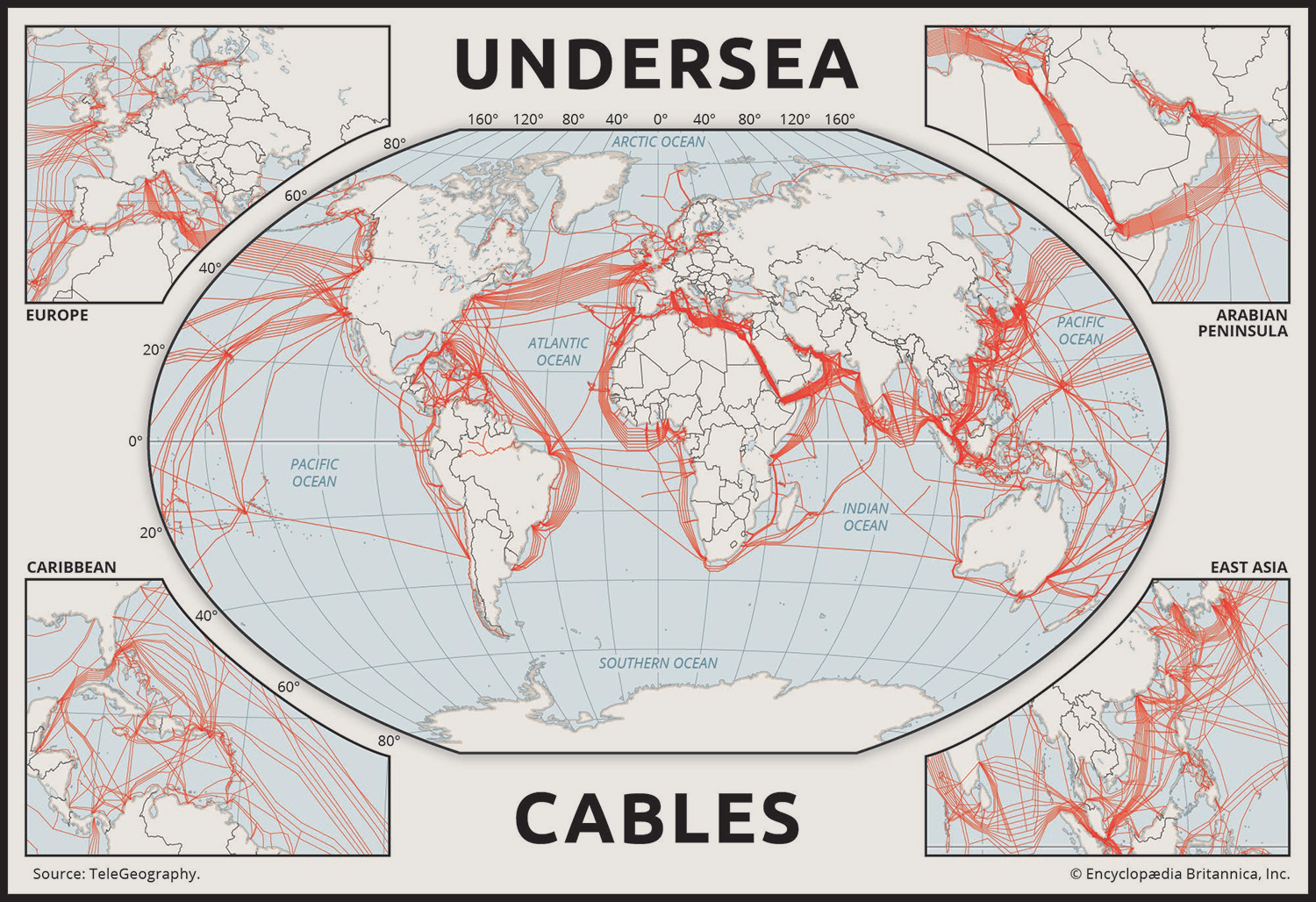
Encyclopædia Britannica, Inc./Refugio Mariscal
This map shows the cables that help enable the technology we rely on.
Here are some ways fiber-optic cables are used:
- To share data and information (also called telecommunications)
- For video streaming and online gaming
- As medical instruments to help doctors perform surgery
- To transmit audio and video signals for broadcasting television
- As safety sensors in factories
- For lighting and decoration
Kapany’s work earned him many awards, and Fortune magazine named him one of the “Unsung Heroes” of the 20th century. Kapany died in 2020, leaving behind a legacy of sharing light and connecting the world.