The Trip of a Lifetime

Udoh Ebaide Joy poses behind her motorcycle holding her helmet.

The Trip of a Lifetime

Udoh Ebaide Joy is the first Black African woman to ride a motorcycle solo from East Africa to West Africa.

Udoh Ebaide Joy poses behind her motorcycle holding her helmet.

Udoh Ebaide Joy

Udoh Ebaide Joy

Until recently, Udoh Ebaide Joy had never ridden a motorcycle. But after a life-changing event, she made a decision that led to the ultimate adventure. In June, Joy became the first Black African woman to ride a motorcycle solo from East Africa to West Africa.

Joy didn’t always have such a sense of adventure. But about nine years ago, when she was 23, she was involved in a serious accident. Unable to walk for several months, she got around by using a wheelchair. As Joy healed, she began to think about the future.

“[The accident] made me decide that I will live my life to the fullest,” she told the British Broadcasting Corporation (BBC).

Earlier this year, Joy bought a motorcycle she named Rory and took a weeklong class to learn how to ride it. Then, on March 8, 2024, Joy set off from Kenya, in East Africa, and headed west. Joy’s 5,600-mile (9,000-kilometer) journey took her from Mombasa, Kenya, to Lagos, Nigeria, in about three months.

Joy’s route went through nine countries. Along the way, she rode through the mountainous terrain of Rwanda and saw a waterfall called Victoria Falls at the Zambia-Zimbabwe border. In a village in Tanzania, some women offered her a meal and asked her about her experiences as a motorcycle rider.

“The conversation was so sweet,” Joy told the BBC. “It just felt good to eat and to see people.”

She got encouragement from people all over the world, who watched the videos she posted on social media. She also met other bikers (motorcycle riders), who gave her advice about where to stay and get good meals.

Some bikers also met her in Lagos, at the end of her trip. It was a celebration.

“When I arrived, I couldn’t hold back my tears. People were dancing and cheering. I couldn’t contain my excitement,” Joy said.

Joy started a new bike trip in September. This time, she’s riding through 15 countries.
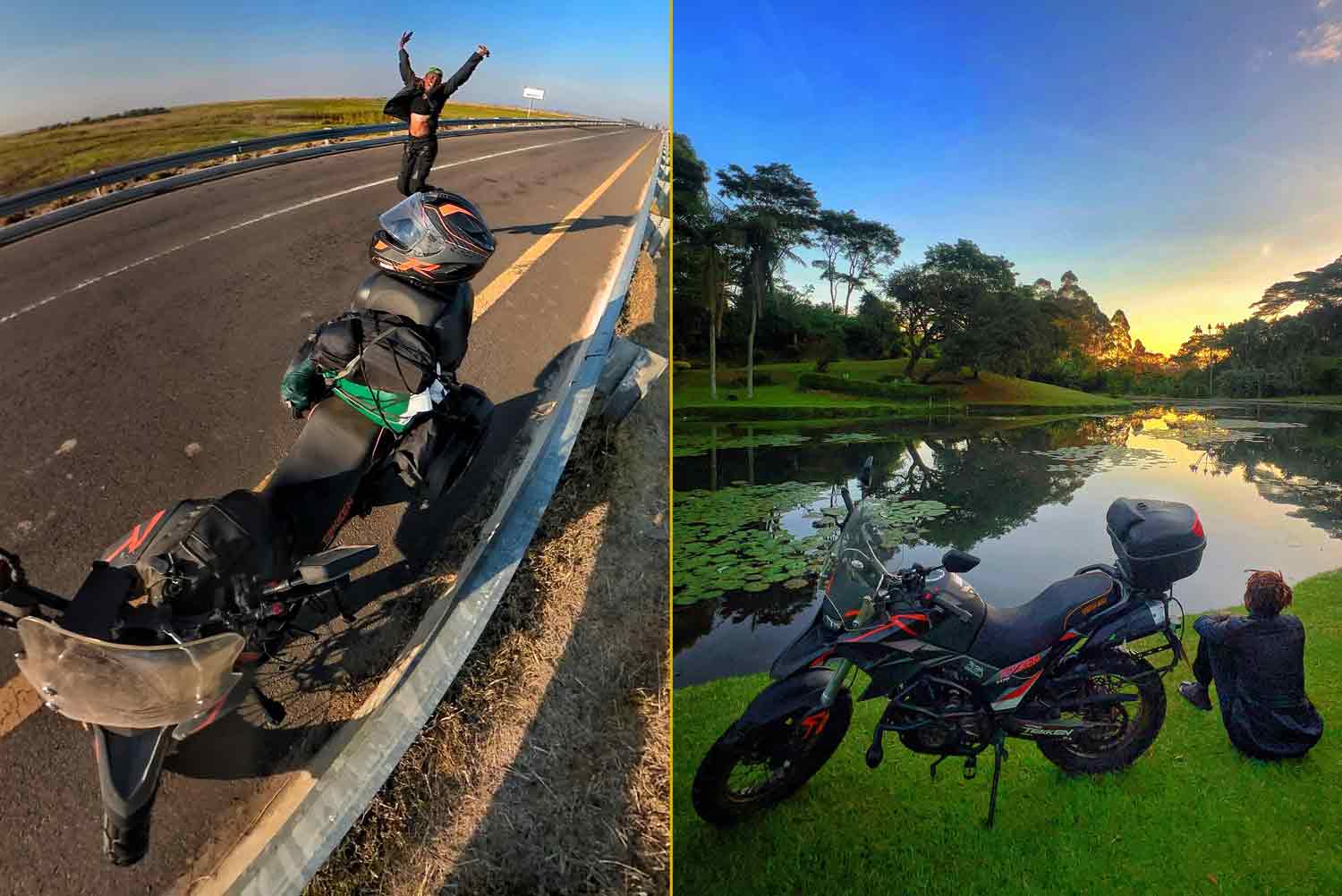
Udoh Ebaide Joy behind her motorcycle on a road with her arms in the air and Udoh Ebaide Joy sitting by a pod next to her motorcycle.

Udoh Ebaide Joy

These photos were taken during Udoh Ebaide Joy’s journey across Africa.

Fun Fact Icon

Fun Fact

One of the first vehicles that could be called a motorcycle was the Michaux-Perreaux steam velocipede, invented in the late 1860s. The photo shows one of these motorcycles being displayed at a museum.
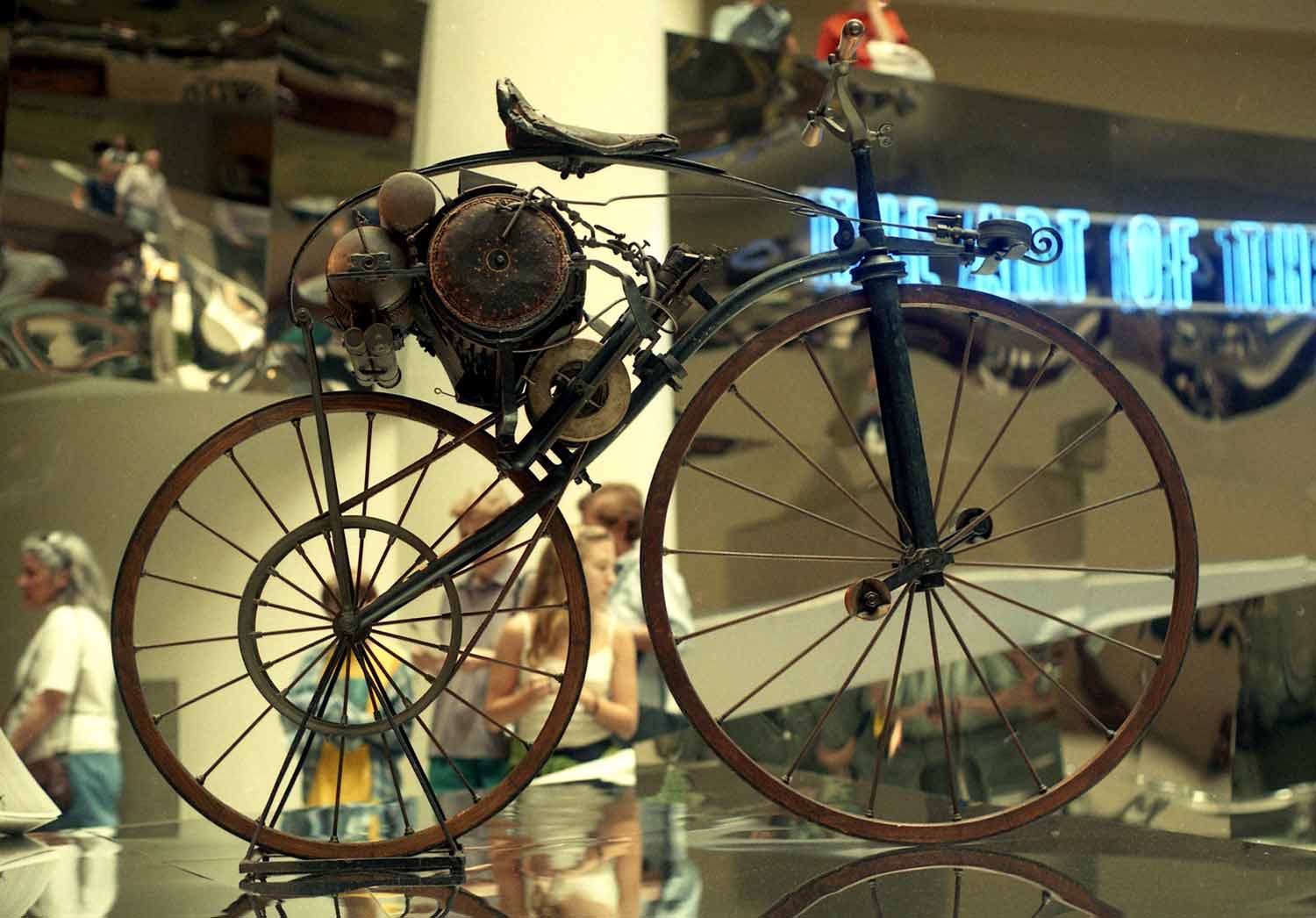
The Michaux-Perreaux steam velocipede is displayed at a museum.

ROGERIOMACHADO (CC BY-SA 2.0)

The World’s Biggest Waterfall!
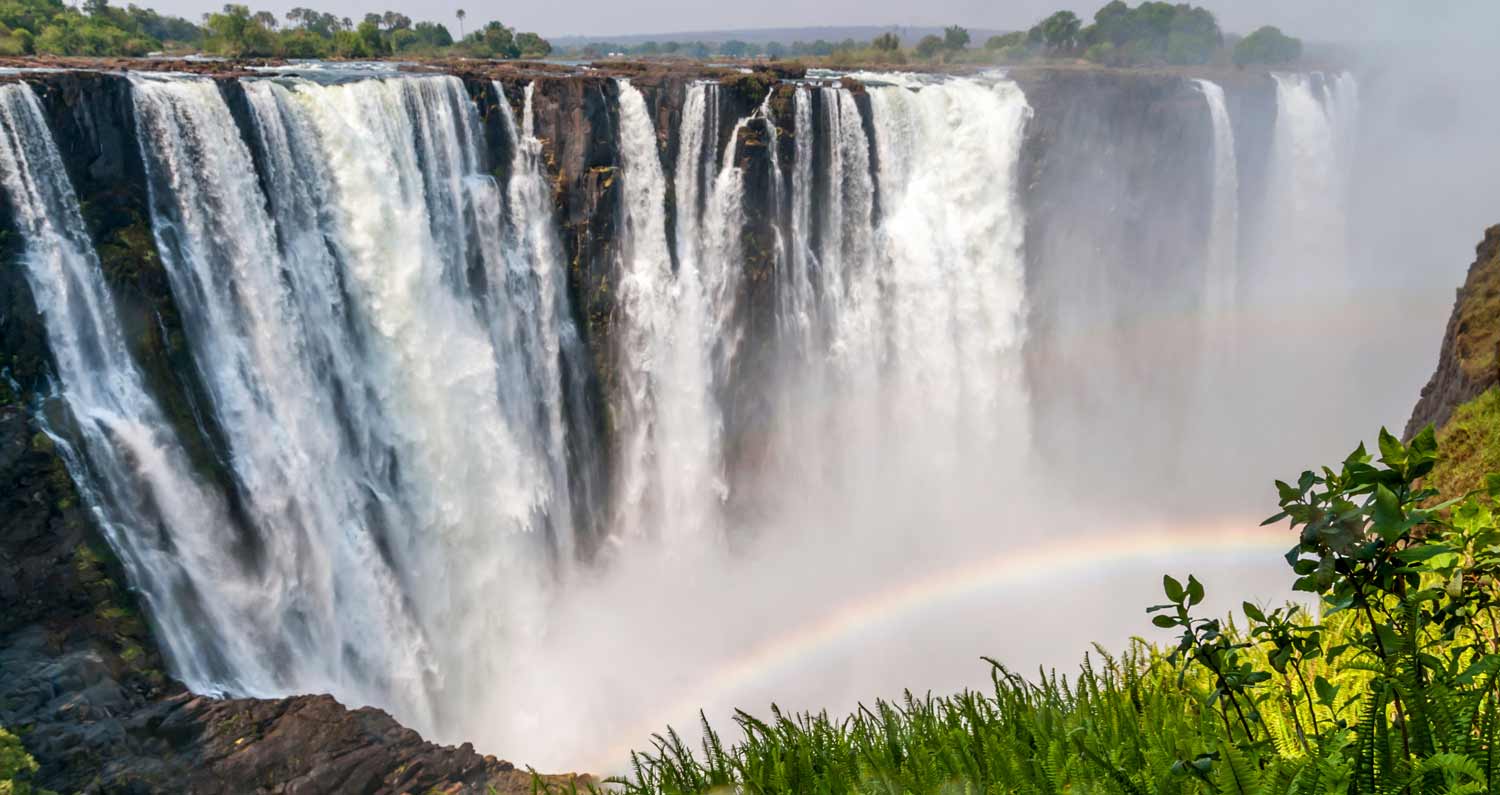
Victoria Falls is shown with a rainbow in front.

© milosk50/stock.adobe.com

Along the border between Zambia and Zimbabwe in Africa, there’s a waterfall that’s described as the largest in the world. Best known as Victoria Falls, its original name was Mosi-oa-Tunya, which means “The Smoke That Thunders” in the Lozi language. 

The falls do sound a bit like thunder, probably because of their size! Victoria Falls is twice as high and twice as wide as Niagara Falls in North America.

Wonders of the World

Various World Heritage sites are shown in a flashing GIF.

Adobe: ChristianHerzog, R.M. Nunes; Dreamstime: Tatiana Kashko, Rpianoshow, Kobby Dagan, Ongchangwei, Louis Michel Desert, Znm, Wangkun Jia, Beat Germann; Getty: Nick Brundle Photography—Moment, hadynyah—E+, Westend61; Lazare Eloundou Assomo/© UNESCO

Victoria Falls in Africa is a World Heritage site. This means it’s a special place that has been set aside for protection.

Some World Heritage sites are shown above. You can read about other World Heritage sites at Britannica!

Word of the Day Icon

Word of the Day

itinerary

Part of speech:

noun

Definition:

: the places you go to or plan to go to on a journey

Definitions provided by
Merriam-Webster Logo
Game Icon

Play

Word Search

Can you find all the natural features that are hidden in this puzzle?

O
O
O
O
O
Made by Amy Birnbaum using the online word search builder from Amuse Labs

In Case You Missed It

When 5th graders asked Major League Baseball player Ozzie Albies which pet fish to get, he helped out in a big way.
March 11, 2026
Taryn Smith is the first American woman to row solo across the Atlantic Ocean.
March 5, 2026
A powerful waterfall doesn’t easily freeze, but this winter has been especially cold!
March 3, 2026
For Women’s History Month, we’re honoring two women who inspired many others to take to the skies.
February 26, 2026

Robot Helpers Coming Soon?

A man in a baseball cap poses next to a humanoid robot in a gray cloth suit.

Robot Helpers Coming Soon?

In the future, this humanoid robot could be helpful around the house.

A man in a baseball cap poses next to a humanoid robot in a gray cloth suit.

© 1X Technologies

Bernt Bornich, head of 1X Technologies, with his company’s robot, NEO Beta.

If you could have a robot helper, what would you want it to do? A company called 1X hopes its new robot will eventually be able to help a lot of people in their own homes.

The robot, called NEO Beta, is humanoid, which means it has the shape of a human. 1X says it believes this will make people more comfortable having NEO Beta in their homes. 1X made a video showing some of what NEO Beta can do. In the video, the robot faces a woman and gestures to a backpack that’s sitting on the floor. When the woman nods, the robot picks up the backpack and gives it to her.

NEO Beta runs on artificial intelligence (AI), a type of technology that lets computers (like robots) perform advanced functions, or tasks. With AI, computers can even “learn” new information that they can use to perform new functions.

1X is working on further developing NEO Beta’s functions. The company wants NEO Beta to be able to bring objects to people, organize household items, do household chores like cleaning, and keep people company. 

NEO Beta isn’t for sale just yet. 1X is testing the robot inside some homes to see how it does around people in their living spaces. But the company is planning to make NEO Beta available to buyers in the next few years and says the robot will probably cost about the same as a car.

Check out the video to see NEO Beta in action.

© 1X Technologies

Face Thinking Icon

Did You Know?

A Chinese company called Unitree Robotics claims that its humanoid robot, called H1, can run at speeds of up to 11 miles per hour (18 kilometers per hour). That’s slower than a human but still speedy for a machine on two legs!

The video below shows what else H1 can do.

© Unitree

Robot Hotel

A dinosaur robot wears a uniform and stands behind a hotel reception desk.

© Kazuhiro Nogi—AFP/Getty Images

At Henn na Hotel, you might be greeted by a dinosaur robot.

In 2015, Henn na Hotel in Nagasaki, Japan, became the first hotel in which the workers are robots. Some of the robots look like people. Others look like dinosaurs!

Today, there are Henn na Hotels in New York City; Seoul, South Korea; and, of course, Japan.

Why fill a hotel with robots? The company behind Henn na Hotels says it’s cheaper to operate robots than to pay more human employees. The company claims this makes it less expensive for guests to book a stay at one of the hotels. Plus, robots are just fun!

Robots Everywhere!

A collage shows robots serving food, dancing, and harvesting vegetables, as well as a furry therapy robot and a dog robot.

© Yoshikazu Tsuno—AFP,  Teera Konakan—Moment, Kazuhiro Nogi—AFP/Getty Images, © Kawee Wateesatogkij, Irina Velichkina/Dreamstime.com

People might soon be able to buy humanoid robots to help around their homes. But robots of all shapes and sizes are already doing many jobs in factories, laboratories, and more.

Find out how robots work at Britannica.

Word of the Day Icon

Word of the Day

android

Part of speech:

noun

Definition:

: a robot that looks like a person

Definitions provided by
Merriam-Webster Logo
Game Icon

Play

Word Search

All the words in the puzzle are related to robots. Can you find them?

O
O
O
O
O
Made by Encyclopaedia Britannica using PuzzleMe's free word search maker

In Case You Missed It

When 5th graders asked Major League Baseball player Ozzie Albies which pet fish to get, he helped out in a big way.
March 11, 2026
Taryn Smith is the first American woman to row solo across the Atlantic Ocean.
March 5, 2026
A powerful waterfall doesn’t easily freeze, but this winter has been especially cold!
March 3, 2026
For Women’s History Month, we’re honoring two women who inspired many others to take to the skies.
February 26, 2026

If You Drop a Bag of Cheetos…

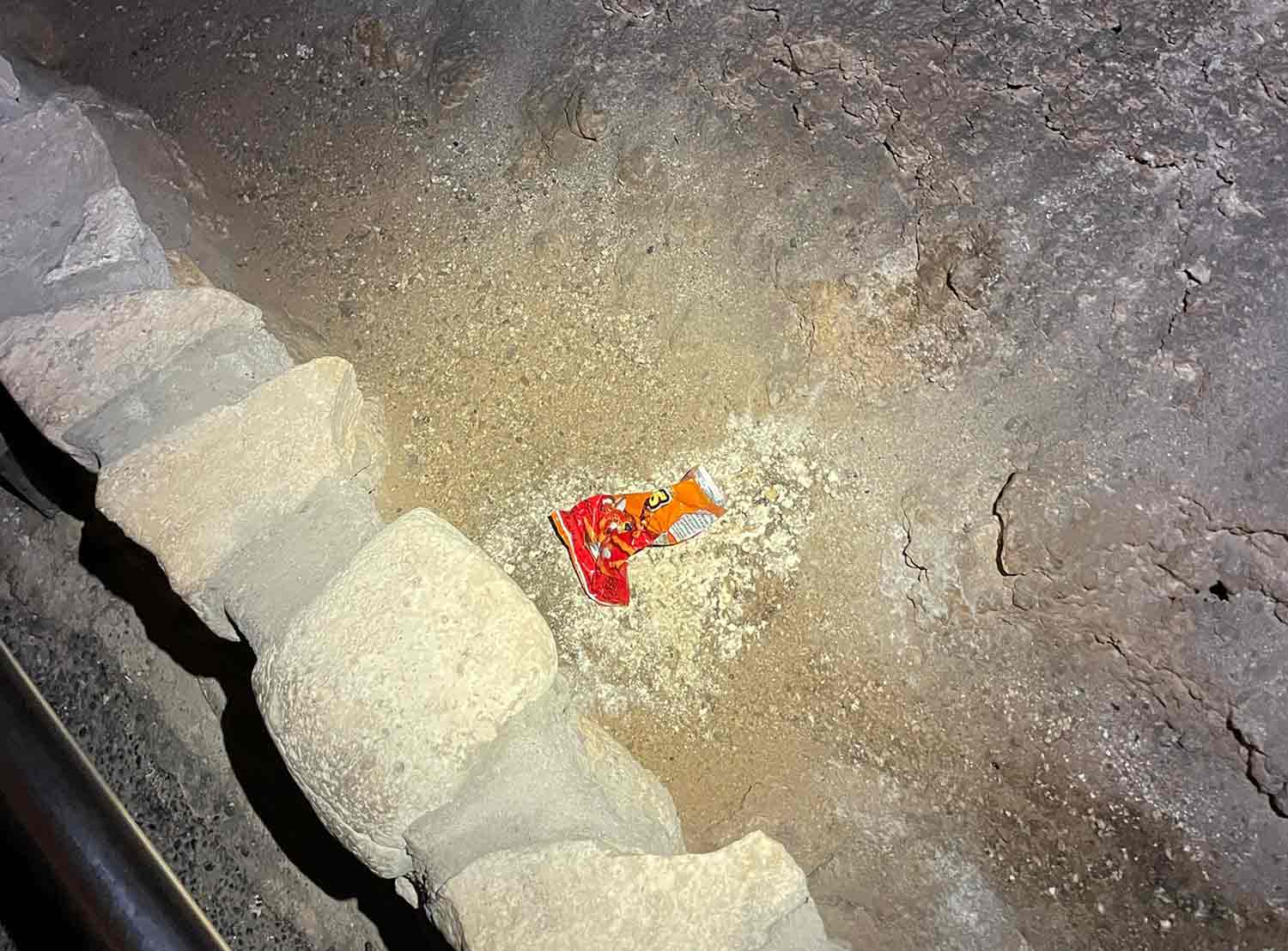
An empty, crumpled Cheetos bag lies on the floor of a cave.

If You Drop a Bag of Cheetos…

When a visitor dropped a bag of Cheetos on the floor of a cave, big problems emerged.

An empty, crumpled Cheetos bag lies on the floor of a cave.

Carlsbad Caverns National Park

A Cheetos bag sat on the floor of a cave, causing many problems before officials cleaned up the crumbs.

How bad is it to drop one piece of garbage on the ground? When an empty bag of Cheetos (a cheesy corn snack) ended up on the floor of a cave, it turned out to be a very big deal.

The bag was discovered inside a cave at Carlsbad Caverns, a national park in New Mexico. Each year about 500,000 people visit Carlsbad Caverns. They’re not supposed to bring food into the caves, which are full of delicate life forms.

“A spilled snack bag may seem [unimportant], but to the life of the cave it can be world changing,” a National Park Service (NPS) official wrote on Facebook.

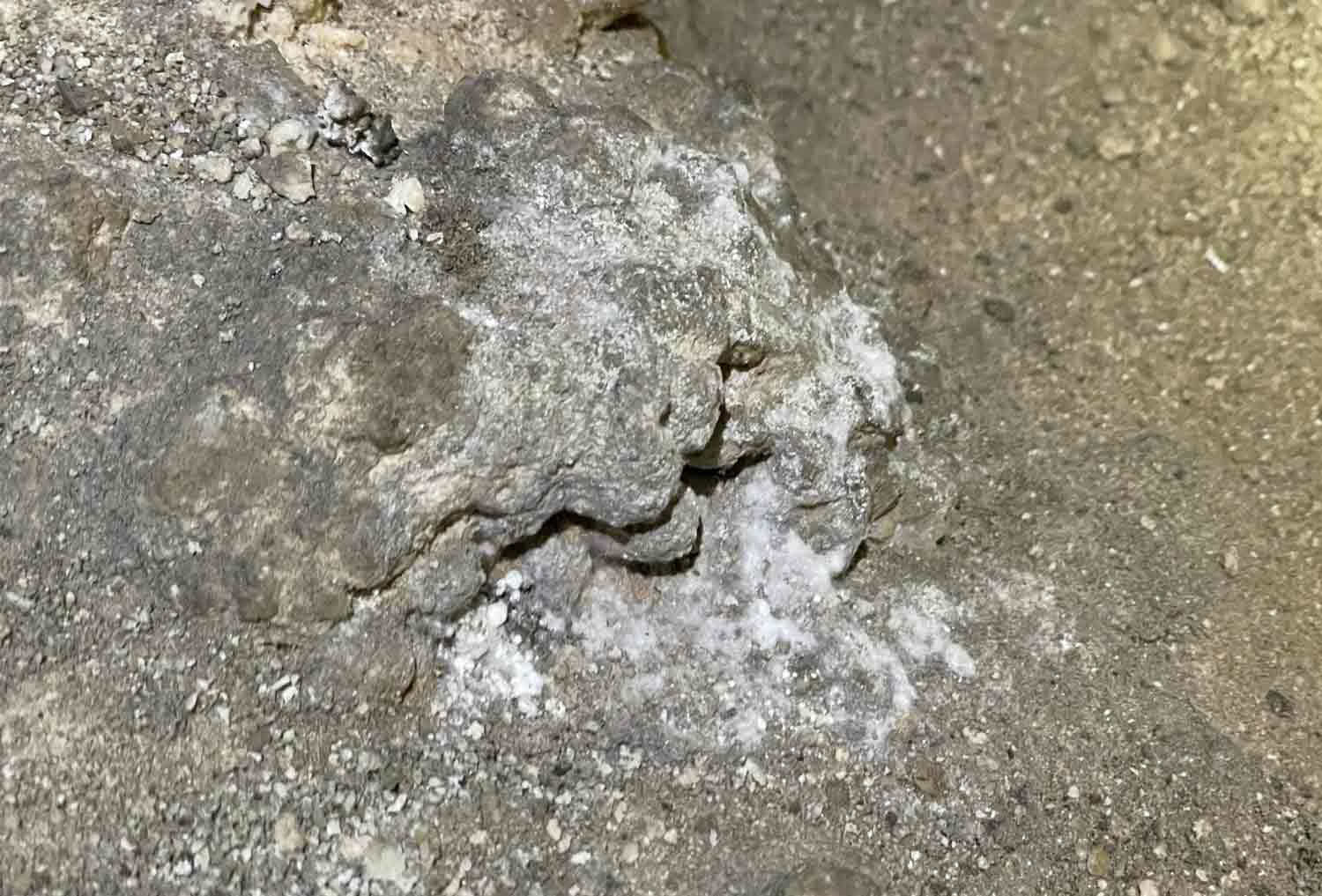
A large amount of mold has grown on the floor of a cave.

Carlsbad Caverns National Park

Mold grew where a bag of Cheetos was dropped in a cave.

Inside the humid (moist) cave environment, the dust and crumbs from the Cheetos bag began to soften. Mold (a type of fungus) began to grow on the Cheeto dust. Crickets, mites, spiders, and flies came to eat the mold and ended up spreading it around to other parts of the cave. Luckily, cave experts at the park were able to clean up the mess, using a toothbrush and other tools.

But while this problem was solved, experts say people need to be careful about what they leave behind. Every environment contains ecosystems, or communities of living things that are connected and depend on one another. Litter can upset the balance of an ecosystem and affect many life forms.

People who visit U.S. national parks create millions of tons of trash every year. The NPS says park visitors should leave no trace, which means that when they leave the parks, there should be no sign they were ever there. 

After all, if one bag of Cheetos makes such a difference, think of what many tons of trash can do!

Fun Fact Icon

Fun Fact

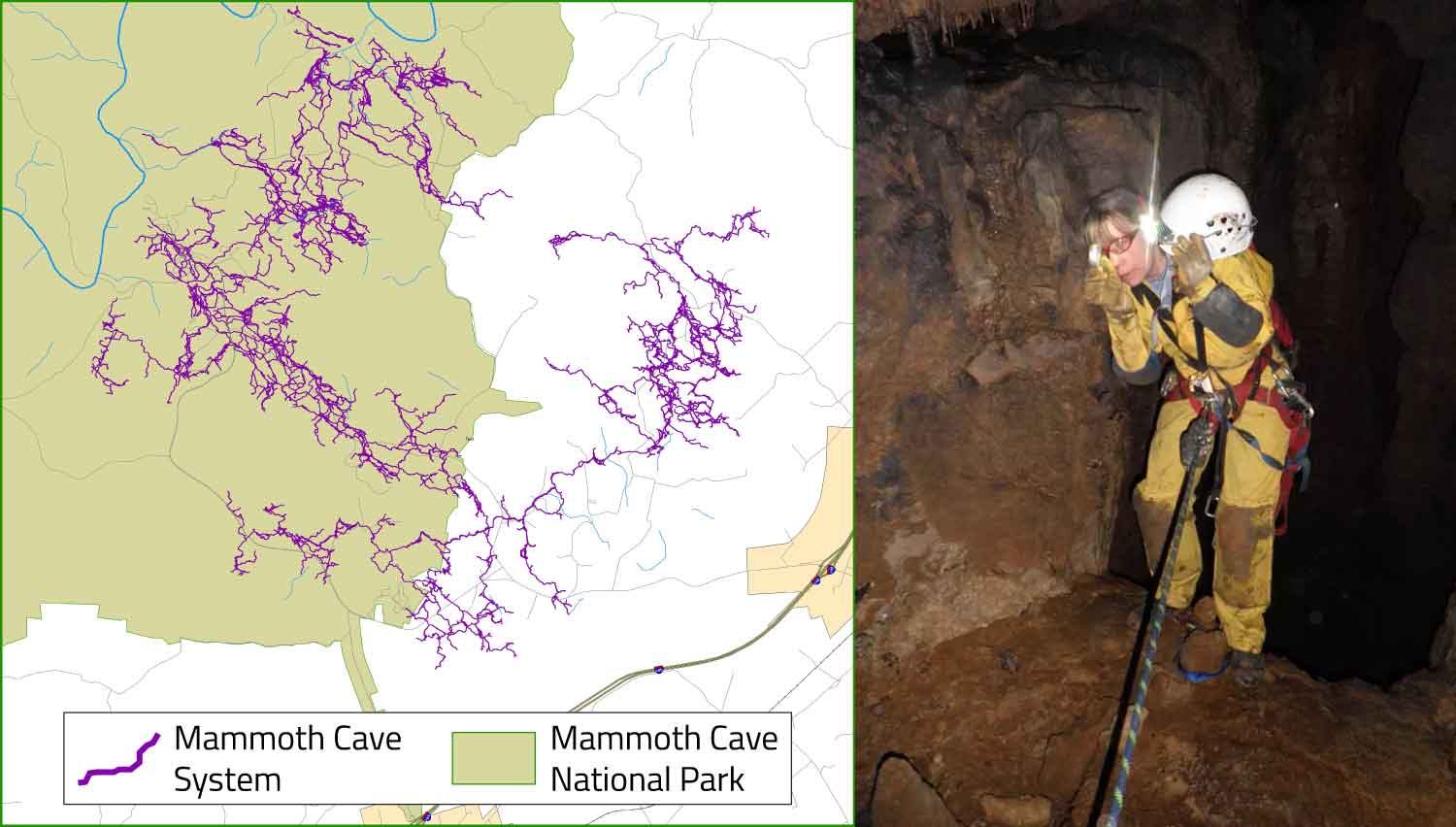
A map shows all the cave passages within and beyond Mammoth Cave National Park and a surveyor explores and maps one of the cave’s passages.

National Park Service, Rick Olson/NPS; Photo composite Encyclopædia Britannica, Inc.

So far, scientists like the one in the photo have measured 426 miles (686 kilometers) of passages in Kentucky’s Mammoth Cave system. It would take at least five days to walk through all those passages!

Leave No Trace

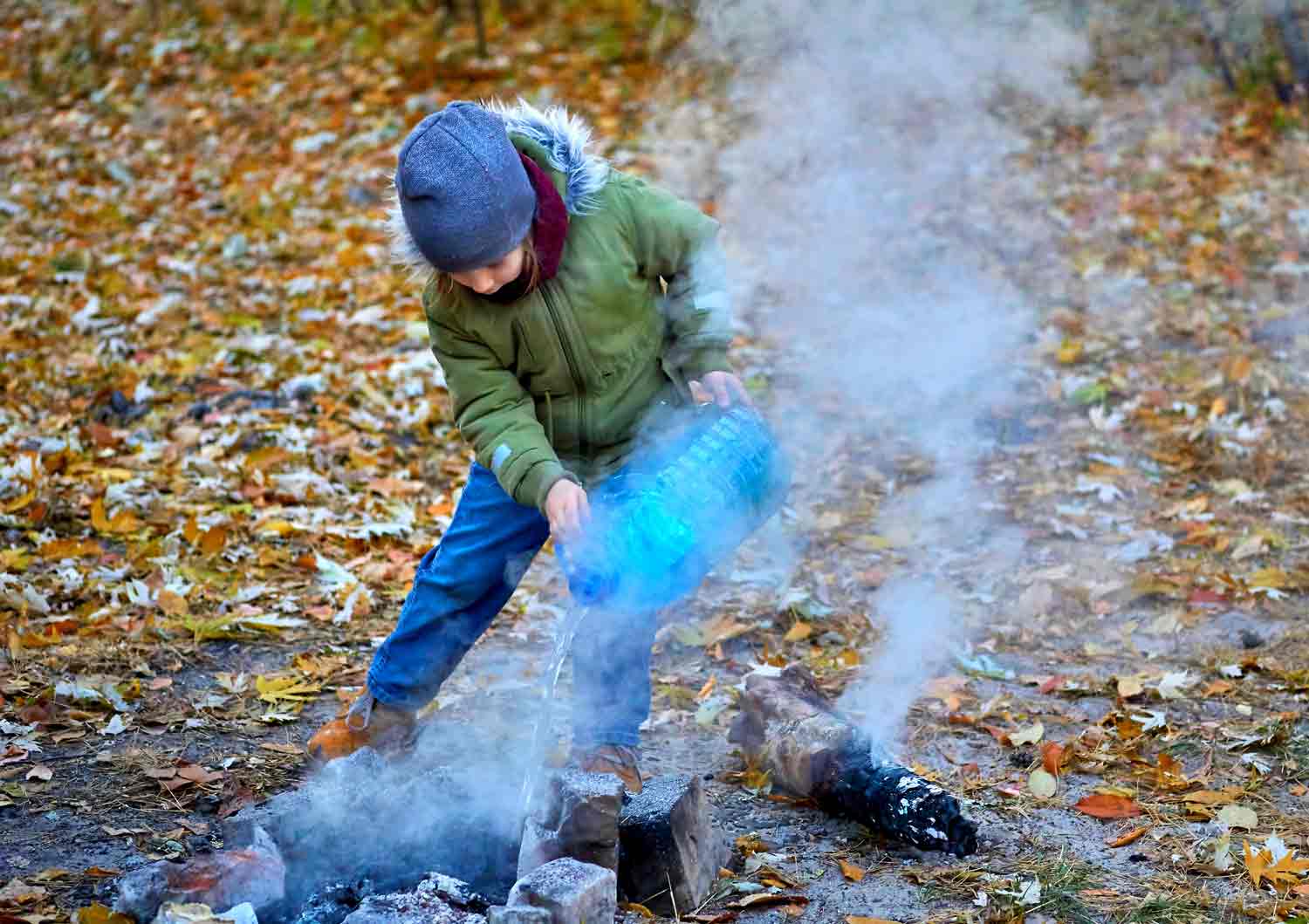
A child uses a large bottle of water to put out a campfire.

© Igor/stock.adobe.com

Make sure all campfires are out completely before walking away!

It’s a good idea to be aware of how your actions can affect living things. Leaving no trace means enjoying nature without changing it.

Whether you’re in a city park, in a national park, on a beach, or at a campsite, here are some ways you can leave no trace.

  • Don’t touch wild animals or pick plants. Take photos instead!
  • Don’t feed wild animals.
  • If your pets chase other animals, leave them at home.
  • If you are camping, set up your campsite at least 200 feet (60 meters) away from riverbanks. Many living things depend on rivers.
  • Do not wash dishes in or near rivers and lakes. Dish soap can harm the environment.
  • If possible, use existing toilets instead of using nature.
  • Many campsites have firepits or camping stoves. Don’t build a fire if there is no firepit.
  • Always put out campfires completely.
  • Don’t litter.
  • Take home your garbage and leftover food.

Cave Magic

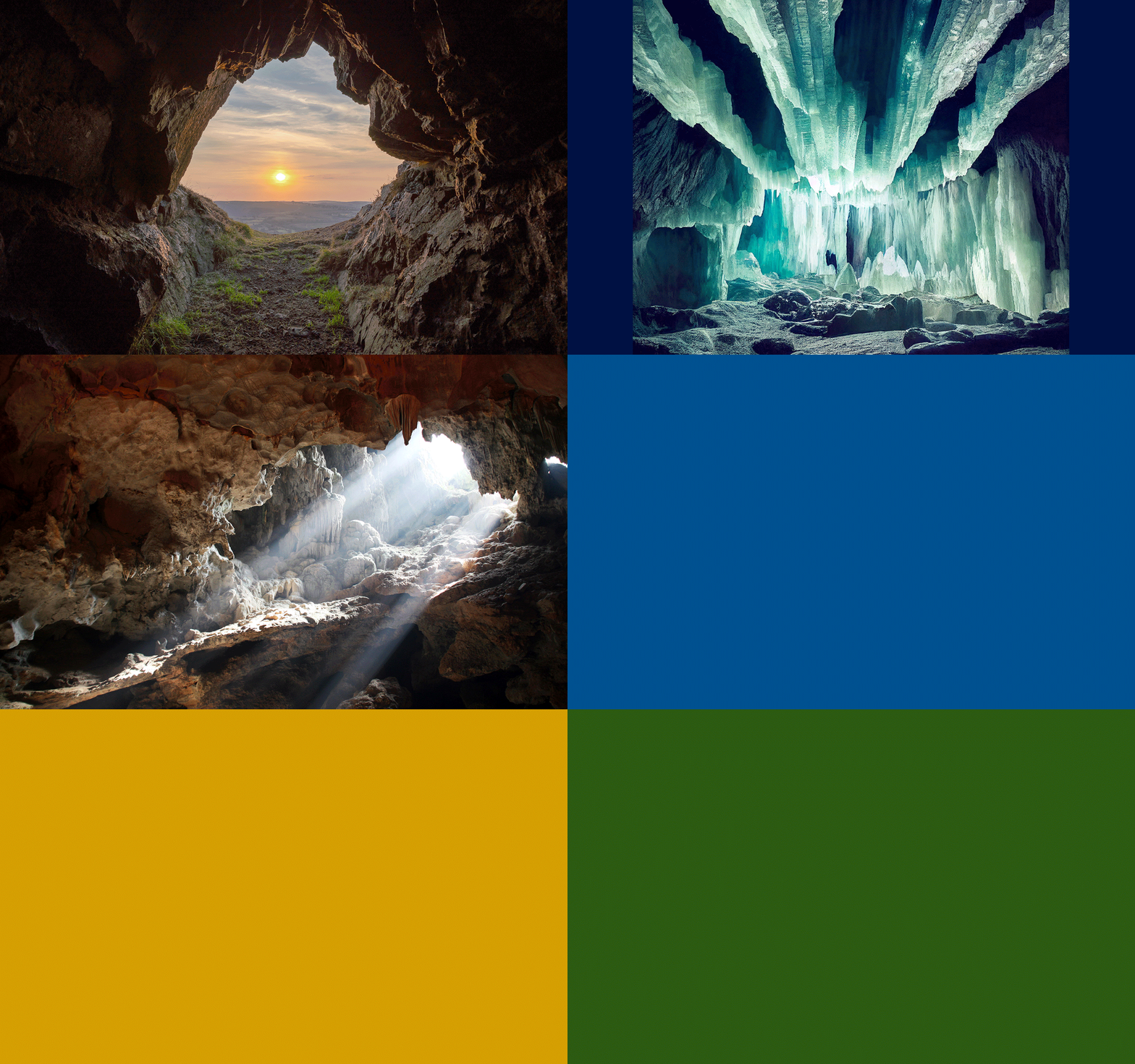
A flashing GIF shows six different caves with crystals and other features.

© Helgidinson, Kaido Rummel, Vinicius Tupinamba/Dreamstime.com, © jeremyabaxter, Joshua/stock.adobe.com, © wedekiba—iStock/Getty Images; Animation Encyclopædia Britannica, Inc.

Caves aren’t just openings under the ground. They can develop into huge systems of “rooms” and contain amazing features like crystals. You can learn more about caves at Britannica!

Word of the Day Icon

Word of the Day

stalagmite

Part of speech:

noun

Definition:

: a pointed piece of rock that sticks up from the floor of a cave and that is formed by dripping water that contains minerals

Definitions provided by
Merriam-Webster Logo
Game Icon

Play

Word Search

See if you can find all the cave words!

O
O
O
O
O
Constructed by Amy Birnbaum using PuzzleMe's online word search generator

In Case You Missed It

When 5th graders asked Major League Baseball player Ozzie Albies which pet fish to get, he helped out in a big way.
March 11, 2026
Taryn Smith is the first American woman to row solo across the Atlantic Ocean.
March 5, 2026
A powerful waterfall doesn’t easily freeze, but this winter has been especially cold!
March 3, 2026
For Women’s History Month, we’re honoring two women who inspired many others to take to the skies.
February 26, 2026

Dragons With Iron Teeth

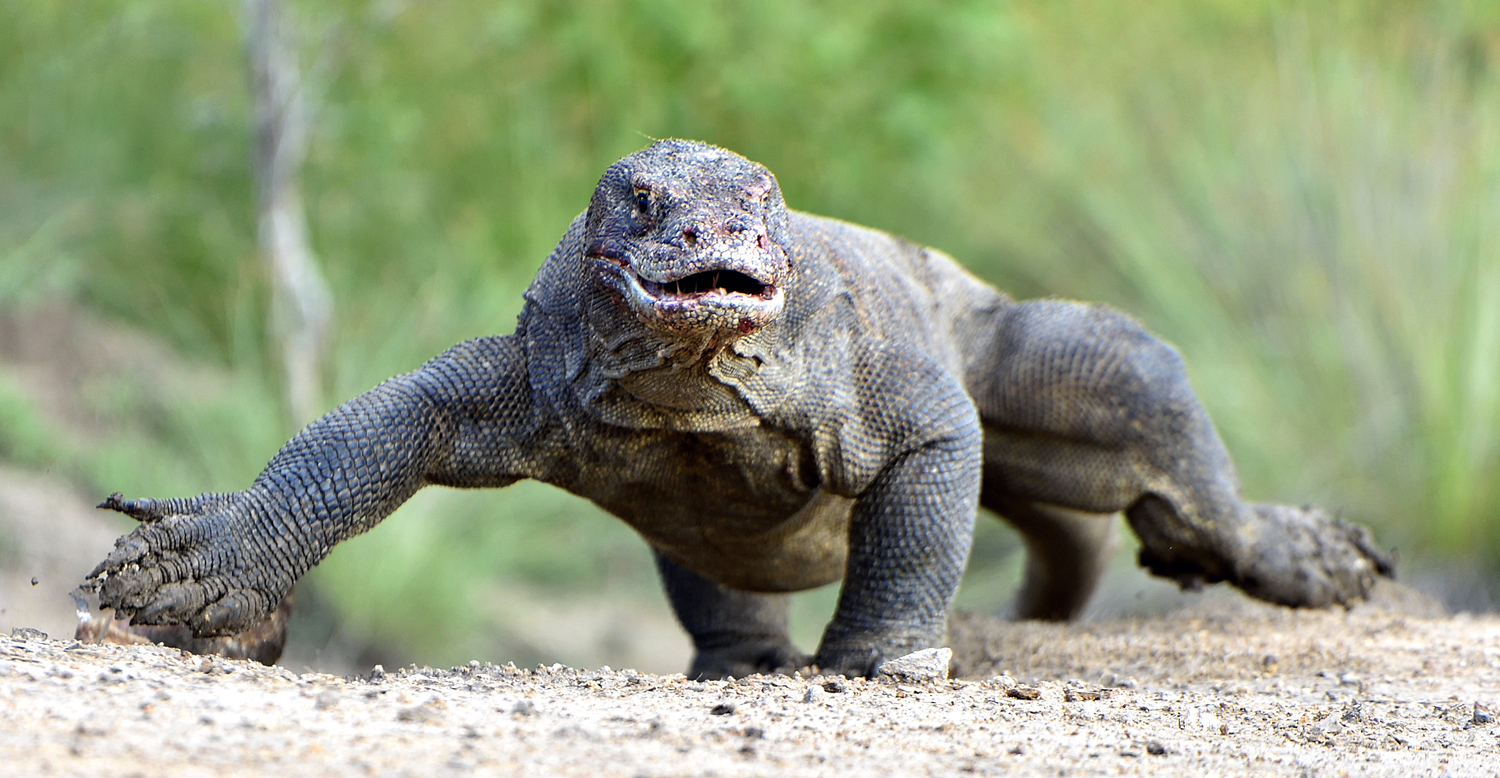
A Komodo dragon stands on the pebbly ground and faces the camera.

Dragons with Iron Teeth

Scientists have discovered why Komodo dragons’ teeth are so strong.

A Komodo dragon stands on the pebbly ground and faces the camera.

© Uryadnikov Sergey/stock.adobe.com

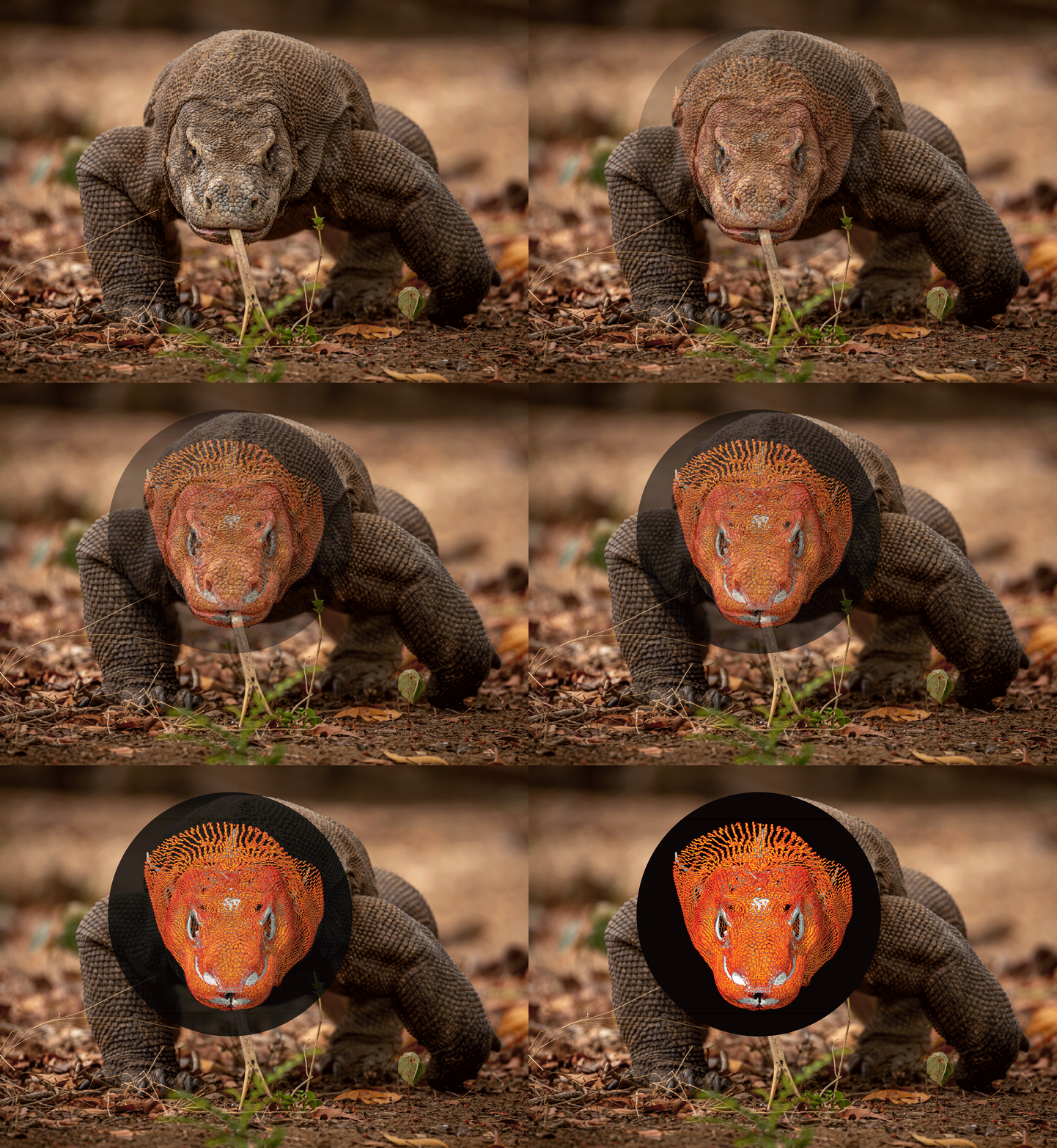
Komodo dragons are the largest living lizards on the planet. But it’s not just their bodies that are powerful. Their teeth are super strong, too—and scientists have learned that this is because they’re coated with a layer of iron. 

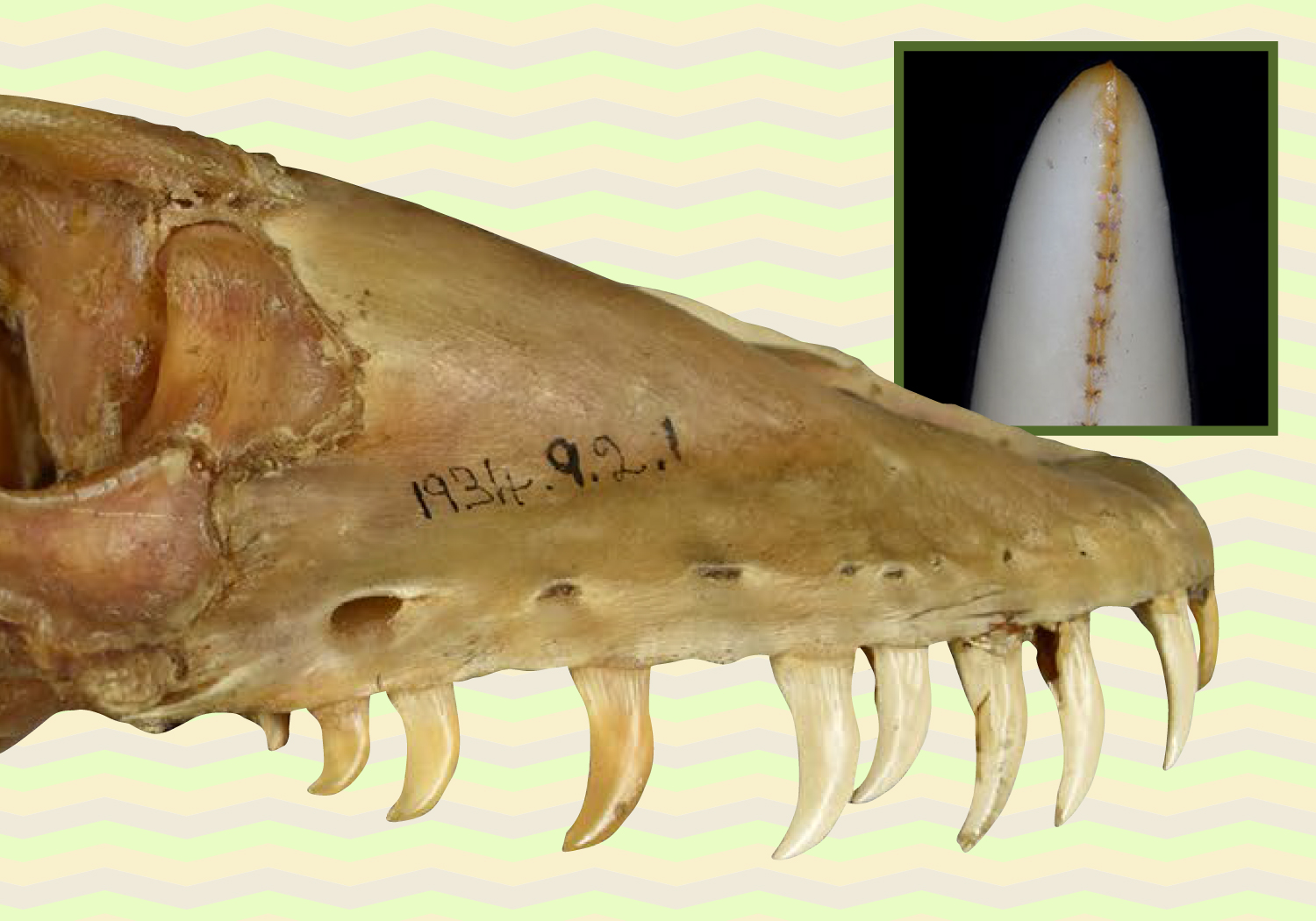
Scientists at King’s College in London, England, made the discovery while studying the teeth of several reptiles. These included Komodo dragons, monitor lizards, alligators, crocodiles, and dinosaurs. When scientists put the teeth under a microscope, they found that all of them except the dinosaur teeth had orange markings. It turned out that the orange stuff was iron.

A skull of a Komodo dragon with inset photo showing a tooth with orange serrations running down the center of the tooth

LeBlanc, A.R.H., Morrell, A.P., Sirovica, S. et al. Iron-coated Komodo dragon teeth and the complex dental enamel of carnivorous reptiles. Nat Ecol Evol (2024). (CC BY 4.0) Natural History Museum, London (NHMUK 1934.9.2.1), Museum of Life Sciences (MoLS X263); Photo composite Encyclopædia Britannica, Inc.

This Komodo dragon skull has huge teeth! The smaller photo shows the orange-colored iron.

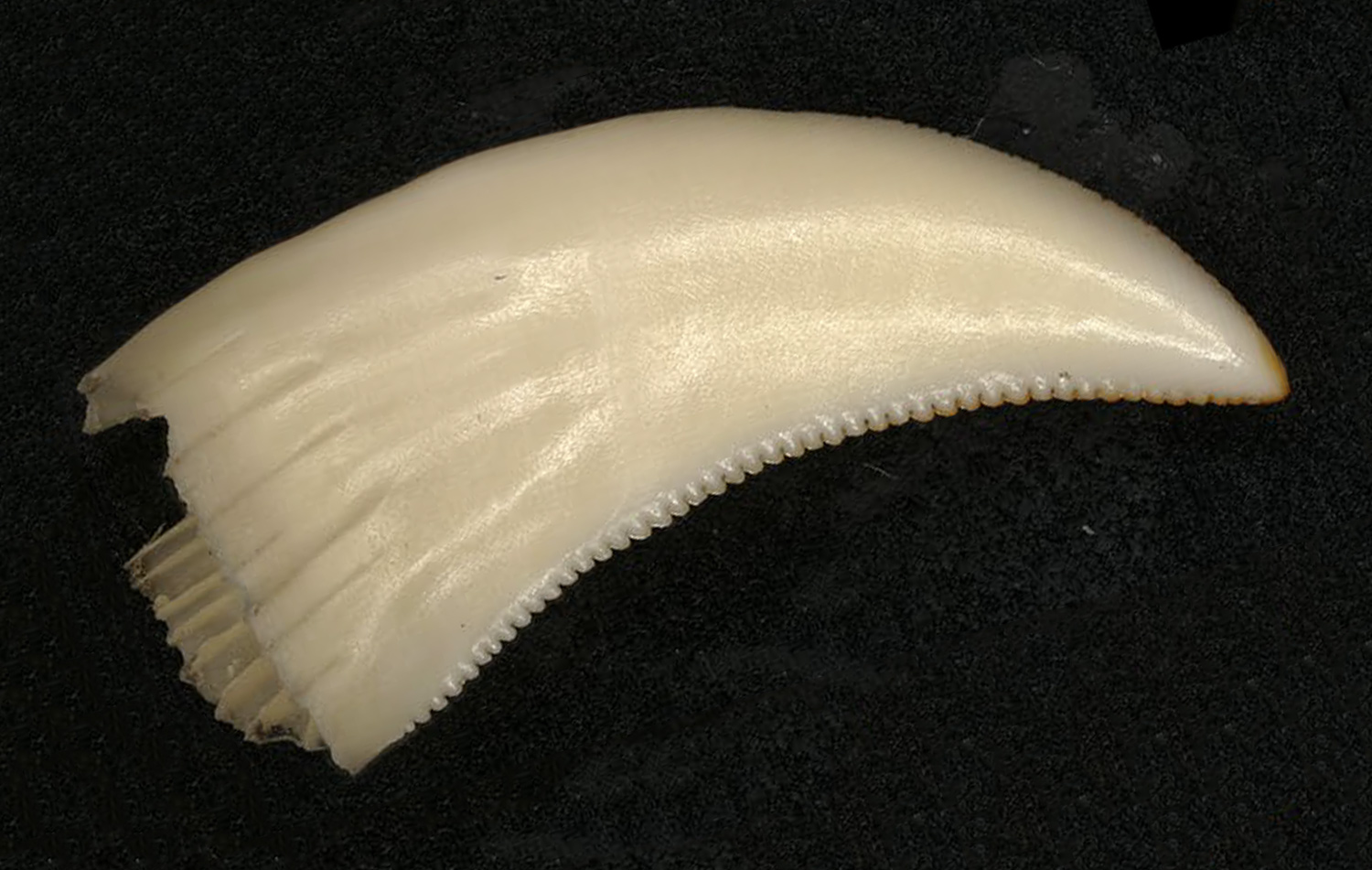
All the reptiles the scientists studied are carnivores, or meat eaters. Komodo dragons, which live on several islands in the country of Indonesia, can kill animals as large as cattle with a bite that contains venom. Like the other reptiles in the study, their teeth are serrated. This means they have tiny notches along the edges, just like many knives. 

Scientists found that most of the iron on the reptiles’ teeth was located along the serrated edges. This suggests that the iron helps keep the teeth strong enough to bite into the flesh of their prey. 

“If they didn’t have this iron coating, I’m sure the enamel on the cutting edges would wear away very quickly and the tooth would dull,” scientist Aaron LeBlanc told CNN. “That’s not very good for an animal that relies on having these razor-blade sharp teeth.”

A Komodo dragon tooth with a serrated edge

LeBlanc, A.R.H., Morrell, A.P., Sirovica, S. et al. Iron-coated Komodo dragon teeth and the complex dental enamel of carnivorous reptiles. Nat Ecol Evol (2024). (CC BY 4.0) Museum of Life Sciences (MoLS X263)

Komodo dragon teeth are serrated, like many knives.

While the dinosaur teeth in the study didn’t have a similar iron coating, scientists believe the amount of iron on the teeth may have changed as the teeth became fossils. 

Scientists say that studying Komodo dragon teeth may help them understand how carnivorous dinosaurs’ teeth remained strong, even though they were used a lot! 

Face Thinking Icon

Did You Know?

Komodo dragons have a layer of tiny bones under their skin that acts as a protective suit of armor. Why do they need this? These big lizards don’t have any natural predators, but they do sometimes fight with other Komodo dragons!

An adult komodo dragon faces the camera with its tongue out and its head fades to a layer of bones

The University of Texas at Austin/Jackson School of Geosciences, © Tai/stock.adobe.com; Animation Encyclopædia Britannica, Inc.

Small But Mighty!

Few animals will mess with a Komodo dragon. But not every animal has the size, strength or armor to defend itself. What do you do when you’re too small to take on an enemy? You fight back in other ways. Click through the slideshow to check out some of nature’s most surprising defense methods!

© Chris/stock.adobe.com, Laciny A, Zettel H, Kopchinskiy A, Pretzer C, Pal A, Salim KA, Rahimi MJ, Hoenigsberger M, Lim L, Jaitrong W, Druzhinina IS (2018) Colobopsis explodens sp. n., model species for studies on “exploding ants” (Hymenoptera, Formicidae) (CC BY 4.0), © Derrick Neill/Dreamstime.com, © Paul Starosta—Stone/Getty Images, © Peter Southwood (CC BY-SA 4.0), Rpillon (CC BY-SA 3.0)

Dragon on the Move!

© Barry Kusuma—DigitalVision/Getty Images

Did you know that some Komodo dragons weigh more than 300 pounds (135 kilograms)? Find out more about these beasts at Britannica!

Word of the Day Icon

Word of the Day

predator

Part of speech:

noun

Definition:

: an animal that lives by killing and eating other animals : an animal that preys on other animals

Definitions provided by
Merriam-Webster Logo
Game Icon

Play

Word Search

Can you find all the Komodo dragon words?

O
O
O
O
O

In Case You Missed It

When 5th graders asked Major League Baseball player Ozzie Albies which pet fish to get, he helped out in a big way.
March 11, 2026
Taryn Smith is the first American woman to row solo across the Atlantic Ocean.
March 5, 2026
A powerful waterfall doesn’t easily freeze, but this winter has been especially cold!
March 3, 2026
For Women’s History Month, we’re honoring two women who inspired many others to take to the skies.
February 26, 2026

These Trains Have Eyes!

A black subway car with decal eyes on the front leads a number of other cars on an outdoor track.

These Trains Have Eyes!

Do the subway cars in Boston, Massachusetts, have faces? No, but they have eyes!

A black subway car with decal eyes on the front leads a number of other cars on an outdoor track.

Massachusetts Bay Transportation Authority

Eyes make Massachusetts Bay Transportation Authority trains look like they have faces!

Fans of Thomas the Tank Engine or The Little Engine That Could, listen up! Just as those fictional trains have faces, some real-life trains do too. Eyes have been added to a few subway trains in Boston, Massachusetts, making life a little more fun for the city’s travelers.

Phillip Eng, who runs Massachusetts Bay Transportation Authority (MBTA), said the idea came from a group of city residents. The group even brought a package of plastic googly eyes to the MBTA headquarters and suggested sticking them on the front of the city’s subway trains.

“When I saw it, it made me laugh,” Eng told the Associated Press. “I thought we could do something like that to have some fun.”

Eng loved the idea but decided not to use the plastic eyes, fearing they’d fall off the trains and become a safety hazard. Instead, the MBTA used decals (stickers) that look just like googly eyes, without the moving eyeballs. Added to the other details on the front of each train, the eyes make it look like the trains have faces.

The front of a purple subway car with decal eyes that is sitting on an indoor track.

Massachusetts Bay Transportation Authority

The MBTA added the eyes to only five of its trains so that getting to ride a train with eyes would be rare and special for travelers. Eng compared this to Where’s Waldo, the book series in which readers try to find a man named Waldo in a series of complicated pictures.

“When we chatted about it, [we decided] it would be like finding Waldo,” he told the Associated Press. “It gave us all a chance to have a laugh and for the people who use our service to have some fun.”

Face Thinking Icon

Did You Know?

Examples of public art include a mural on the side of a building and four large outdoor sculptures.

© Faina Gurevich, Patrick Gosling, F11photo, Arevhamb/Dreamstime.com, © travel4brews.com (CC BY 2.0); Photo composite Encyclopædia Britannica, Inc.

Googly eyes make city trains more fun. Similarly, public art can make life in a town or city more interesting and enjoyable. Public art is any art that’s created for the public. It’s often found on streets, sidewalks, and the sides of buildings. Have you spotted any public art? 

Have a Fun Trip!

Many cities have buses and trains that allow people to get around. But some places have forms of transportation that might not exist anywhere else. Click through the slideshow to check out just a few creative conveyances!
© Clickos/Dreamstime.com, © Tupungato/Dreamstime.com, © Mikhail Dudarev/Dreamstime.com, © Detlef Voigt/Dreamstime.com, © Alexander Cimbal/Dreamstime.com

Getting Around

A flashing GIF shows a number of types of transportation from the past and present.
© FLHC 20212/Alamy, Library of Congress, Washington, D.C. (digital. id. cph 3b21115, LC-DIG-ppprs-00626), © Adie Bush—Image Source, monkeybusinessimages—iStock/Getty Images, Encyclopædia Britannica, Inc., © alpegor/stock.adobe.com, © Riderofthestorm, Emirhan Karamuk, Mikhail Leonov/Dreamstime.com; Animation Encyclopædia Britannica, Inc.
If you could pick any form of transportation to use, which would it be? Before you decide, check out Britannica’s article about transportation. Maybe you’ll get a few new ideas!
Word of the Day Icon

Word of the Day

conveyance

Part of speech:

noun

Definition:
: something that carries people or things from one place to another : vehicle
Definitions provided by
Merriam-Webster Logo
Game Icon

Play

Word Search

Can you find all the words related to trains?

O
Created by Amy Birnbaum using PuzzleMe's word search puzzle maker

In Case You Missed It

When 5th graders asked Major League Baseball player Ozzie Albies which pet fish to get, he helped out in a big way.
March 11, 2026
Taryn Smith is the first American woman to row solo across the Atlantic Ocean.
March 5, 2026
A powerful waterfall doesn’t easily freeze, but this winter has been especially cold!
March 3, 2026
For Women’s History Month, we’re honoring two women who inspired many others to take to the skies.
February 26, 2026

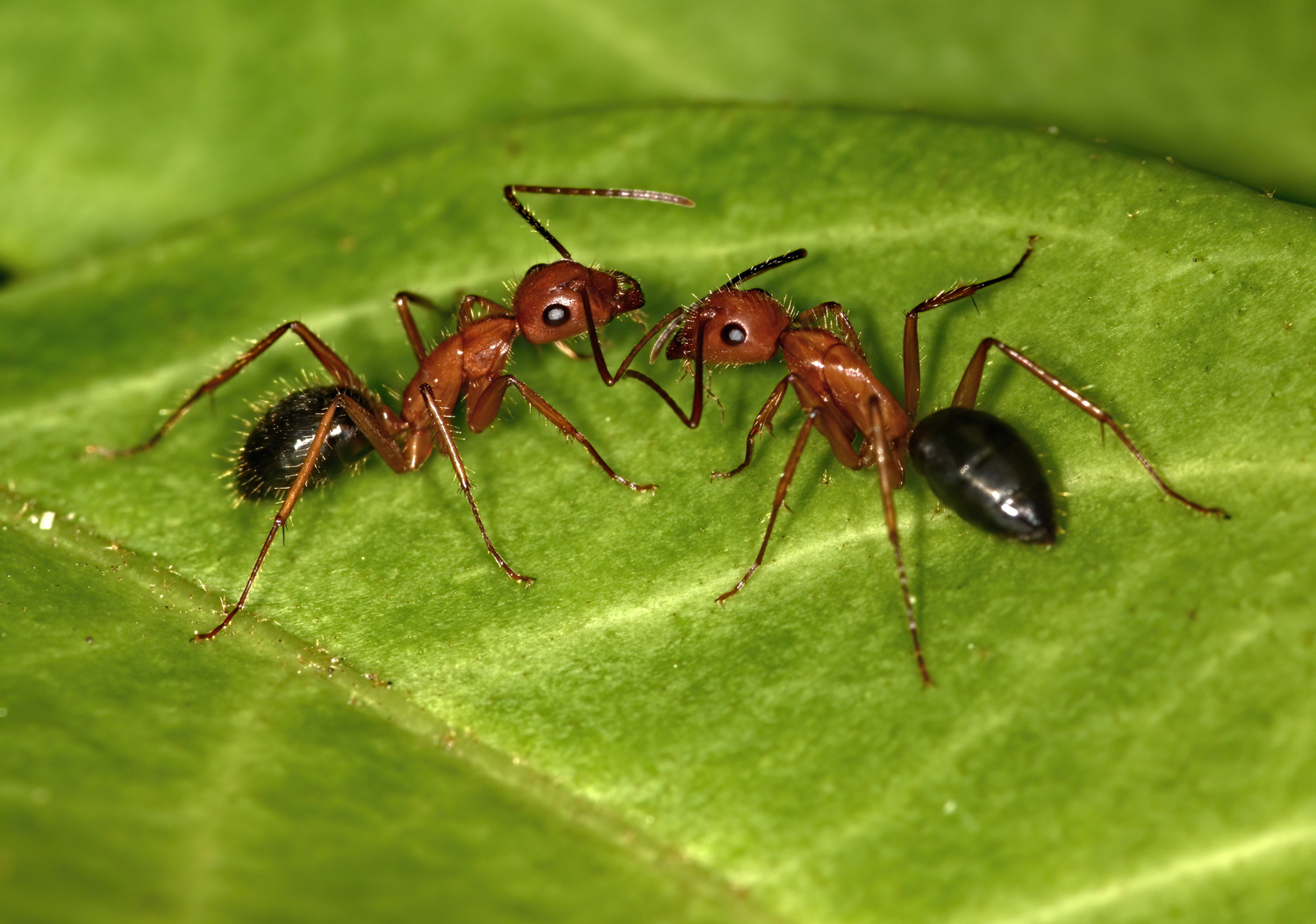
Ants Do Surgery On Each Other

Two ants on a leaf facing each other.

Ants Do Surgery On Each Other

Scientists thought only humans did surgery on each other. They were wrong!

Two ants on a leaf facing each other.

© Russell/stock.adobe.com

Ants live together in colonies, and each ant has a job to do. They all depend on each other. So what happens when an ant becomes injured? Scientists have learned that when a Florida carpenter ant has a certain kind of leg injury, another ant will amputate the injured leg by chewing it off. It may sound harsh, but the amputation usually saves the ant’s life.

Florida carpenter ants can become injured when they defend their home against invaders. If an ant injures its upper leg, another ant will lick the wound and then do the amputation. Scientists noticed that almost all the ants that had a leg amputated survived.

But are these amputations necessary? To find out, scientists tried separating some injured ants from their colonies so they could not have the amputations. Many of those separated ants did not survive. This is why scientists believe that an amputation can save an injured ant’s life.

Scientists believe the amputations stopped leg wounds from getting infected and becoming dangerous.

Scientists also noticed that the ants did an amputation only if the wound was high up on the leg. If the wound was lower on the leg, the ants only licked it. Scientists think it may be harder to stop an infection in the lower leg, so there would be no point in doing an amputation. 

Ants seem to know when to do the amputation and when not to do it. But that doesn’t mean they think carefully about their choices. Instead, they are acting on their instincts, scientist Daniel Kronauer told National Public Radio (NPR).

“[Ants] have basically evolved over like thousands and thousands and probably millions of years to be kind of ‘programmed’ to react to different kinds of injuries in a certain way,” Kronauer said.

Fun Fact Icon

Fun Fact

Ants can live for a long time. Scientists observed one species in which the queen lived for almost 30 years!

Around a human sized birthday cake, one ant says happy birthday to their queen while the queen wears a crown and says it’s her favorite flavors, sugar and sugar.

 © Adchariya, Dmstudio, Viktoria Ivanets/Dreamstime.com; Photo illustration Encyclopædia Britannica, Inc.

Why So Many Leaves?

 © mihtiander—Creatas Video+/Getty Images Plus

Leafcutter ants got their name because they bite pieces of leaves off trees. They then carry the pieces to their nest, as shown in this video. If you came across this in the wild, you might wonder why the ants need all those leaves. And you might think the ants are going to eat the leaves. That would be a good guess, but it’s not quite correct.

Leafcutter ants place the leaves inside the nest, like a gardener plants seeds. The leaves decay (rot) as a fungus grows on them. The ants eat the fungus!

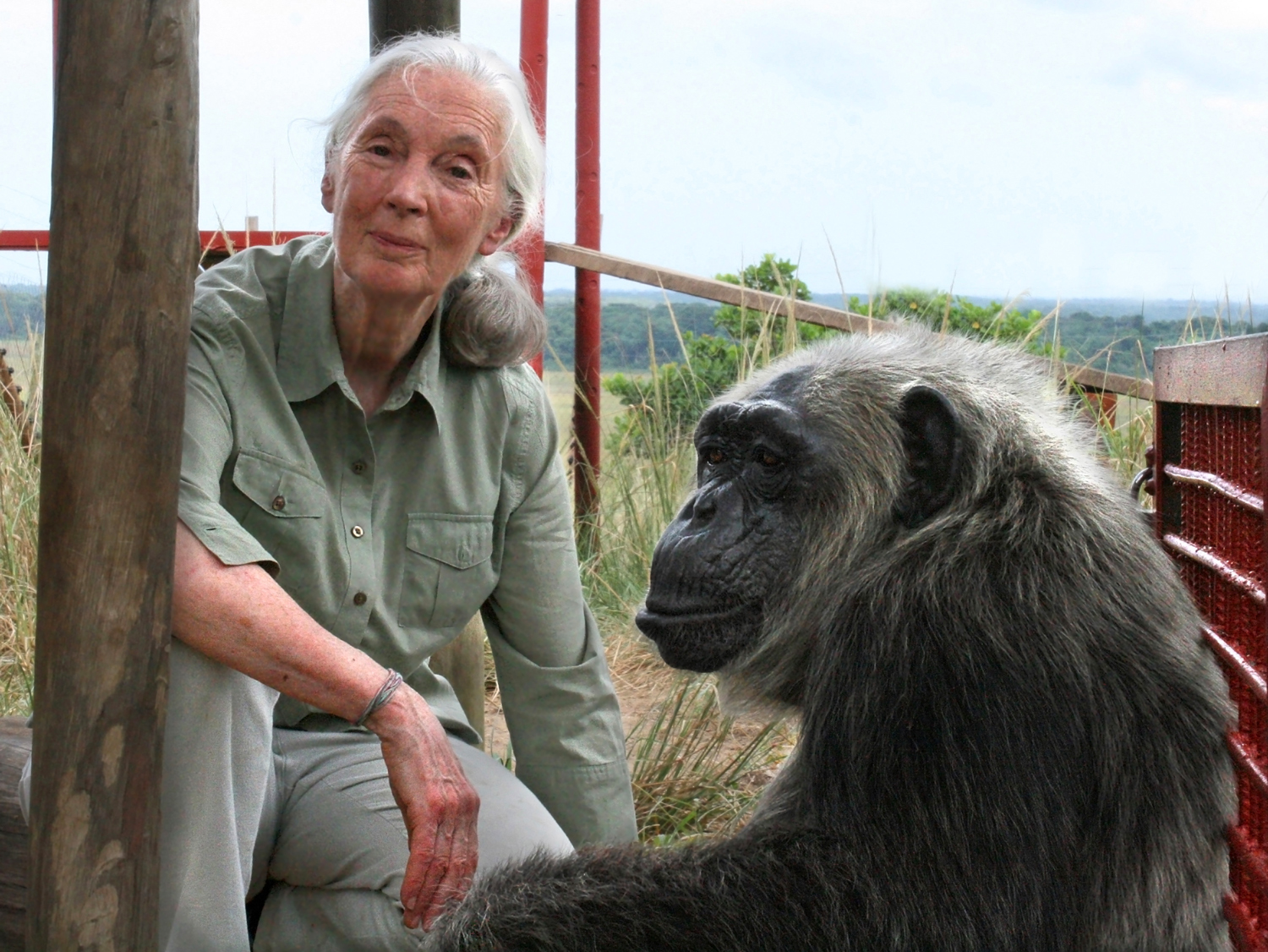
Learn About Animals!

Jane Goodall poses with a chimpanzee.

 Fernando Turmo/the Jane Goodall Institute

Zoologist Jane Goodall has been studying chimpanzees for many years.

If you love to learn about animals, you might be interested in zoology. Zoology is the study of animals. You can learn more about it at Britannica.

Word of the Day Icon

Word of the Day

observation

Part of speech:

noun

Definition:
: the act of careful watching and listening
Definitions provided by
Merriam-Webster Logo
Game Icon

Play

Word Search

There are ants in this puzzle—and a whole lot more. Can you find all the words?

O
O
O
O
O

In Case You Missed It

When 5th graders asked Major League Baseball player Ozzie Albies which pet fish to get, he helped out in a big way.
March 11, 2026
Taryn Smith is the first American woman to row solo across the Atlantic Ocean.
March 5, 2026
A powerful waterfall doesn’t easily freeze, but this winter has been especially cold!
March 3, 2026
For Women’s History Month, we’re honoring two women who inspired many others to take to the skies.
February 26, 2026

Flying Cars Take Off!

A three-wheeled vehicle with wings and a tail flies in the air.

Flying Cars Take Off!

Minnesota just became the second state to allow flying cars on its roads and airstrips.

A three-wheeled vehicle with wings and a tail flies in the air.

© 2024 Samson Sky

This image shows what Samson Sky’s Switchblade flying car will look like in the air.

Imagine getting around town in a flying car! Minnesota governor Tim Walz took this dream one step toward reality in May 2024, when he signed a bill allowing flying cars on the state’s roads and airstrips. Minnesota is the second state to say yes to flying cars, after New Hampshire.

A few companies are building or planning to build flying cars, which can travel on roads but unfold their wings when they’re ready to take flight. Some of these vehicles take off vertically, like a helicopter. Others need a runway to take off, like an airplane. (Like airplanes and helicopters, flying cars can’t be flown without a pilot’s license.)

One example of a car that takes off on a runway is Samson Sky’s Switchblade, a three-wheeled car with foldable wings that can fly for about 450 miles (720 kilometers) at a time at an altitude below 10,000 feet (3,000 meters). (Commercial airplanes fly at an altitude of about 35,000 feet, or 11,000 meters.) Samson Sky says it will start building its vehicles in the next two years. Yet the company has already sold more than 100 cars, and about 2,400 more cars have been reserved.

© 2024 Samson Sky

See Samson Sky’s Switchblade change from a plane to a car and back again.

At this point, most people probably have never seen a flying car in the air. But that’s set to change, as more of the high-flying vehicles become available. More and more people will be able to buy a flying car or call one to take them somewhere, like a taxi or an Uber. Laws, like the one in Minnesota, allow these cars to operate. To ensure that flying cars are operated safely, these laws set rules about where flying cars can take off and land.

Flying cars aren’t just a dream. They’re part of our future.

Fun Fact Icon

Fun Fact

What do you think cars will look like in 50 years? In 1956, an American company built a car based on what they thought cars would look like in the year 2000. The photo shows just how wrong they were!

A white car with 1950s-style fins and chrome has a rounded glass hatch instead of doors.
Petersen Automotive Museum, petersen.org

In the 1950s, this is what some people thought cars would look like in the year 2000.

Can I Play?

Salvador Perez poses in a backyard with seven children of different ages.
Courtesy of Lesley Lard

Kansas City Royals catcher Salvador Perez took the time for a photo with his temporary Wiffle ball teammates.

A group of young Wiffle ball players in Kansas got the thrill of a lifetime when a Major League Baseball superstar asked if he could join their game.

The kids have been playing Wiffle ball together in their neighborhood several nights a week for the past three years, and just about anyone is welcome to join them. So when Kansas City Royals catcher Salvadore Perez showed up, the answer was yes! Perez, a nine-time All-Star, had been visiting a friend in the area.

“He was like, ‘Hello guys, can I play?” said 9-year-old Cameron Lard, whose mom took a video of the whole thing. Perez played defense for a bit and also batted, even hitting a home run during his 15 minutes on the field.

Check out the video for a highlight! 

Courtesy of Lesley Lard

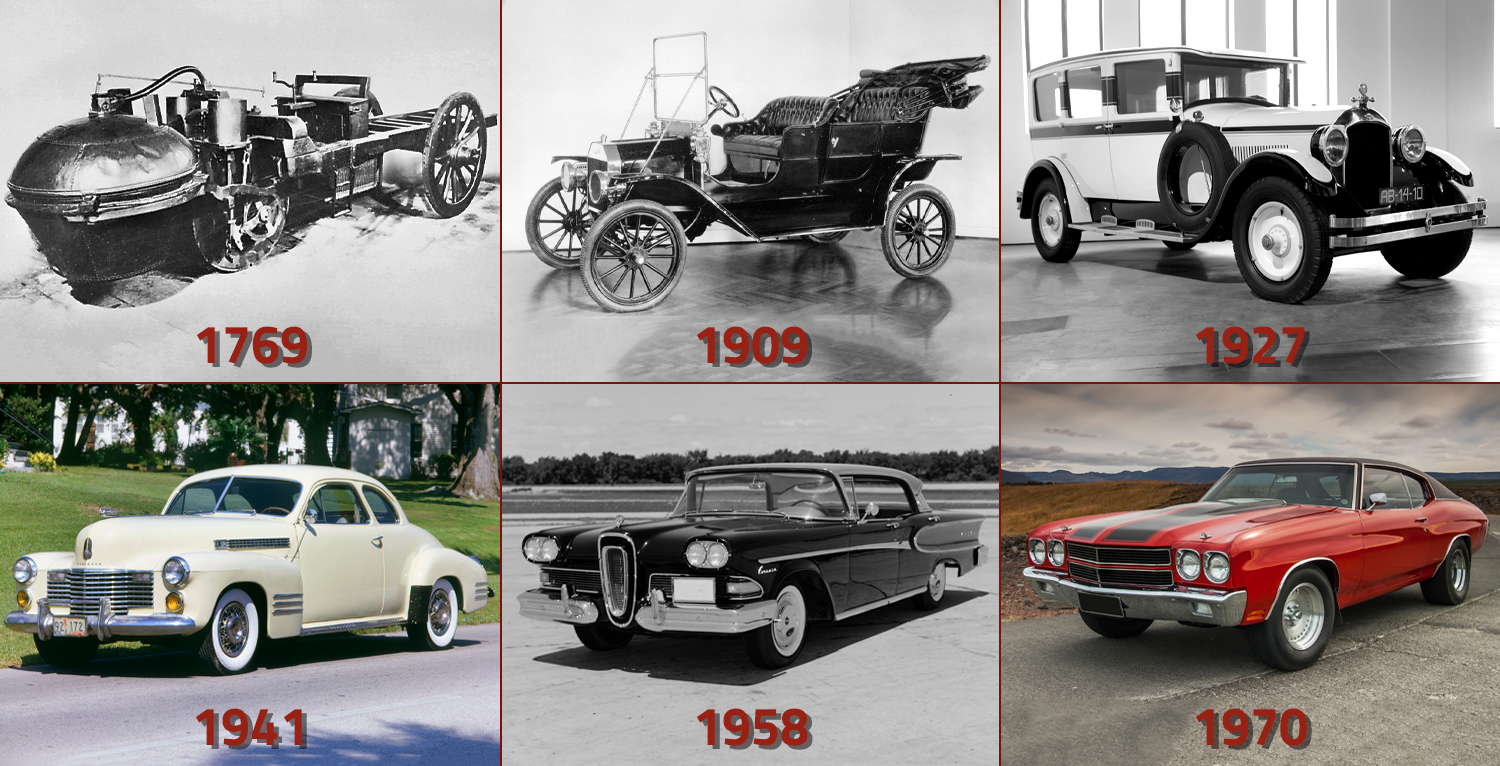
Cars, Then and Now

Six photos show cars from 1769, 1909, 1927, 1941, 1958, and 1970.

National Motor Museum, Beaulieu, Hampshire; Ford Motor Company; © Bright, Sigurbjornragnarsson/Dreamstime.com; National Motor Museum—Heritage Images, Ken Fermoyle—The Enthusiast Network/Getty Images; Photo composite Encyclopædia Britannica, Inc.

The first real automobile was invented in 1769. This car, which is in the top left photo, ran on steam power. 

Today, many people around the world depend on cars to get them where they need to go. Have you ever wondered how a modern car works? You can find out at Britannica!

Word of the Day Icon

Word of the Day

prediction

Part of speech:

noun

Definition:

: a statement about what will happen or might happen in the future

Definitions provided by
Merriam-Webster Logo
Game Icon

Play

Word Search

Can you find all the car words? 

O
O
O
O
O

In Case You Missed It

When 5th graders asked Major League Baseball player Ozzie Albies which pet fish to get, he helped out in a big way.
March 11, 2026
Taryn Smith is the first American woman to row solo across the Atlantic Ocean.
March 5, 2026
A powerful waterfall doesn’t easily freeze, but this winter has been especially cold!
March 3, 2026
For Women’s History Month, we’re honoring two women who inspired many others to take to the skies.
February 26, 2026

A Scientist Without Boundaries

Ynes Mexia smiling and holding binoculars with a botanical pattern behind her.

A Scientist Without Boundaries

Mexican-American scientist Ynes Mexia explored the world and helped expand what we know about plants.

Ynes Mexia smiling and holding binoculars with a botanical pattern behind her.

 © California Academy of Sciences, © Natalia Slavetskaya/Dreamstime.com; Photo illustration Encyclopædia Britannica, Inc.

Ynes Mexia was a botanist who identified many plant species.

Until very recently, many people thought explorers had to be men. They thought the world was too dangerous for women to explore alone. But women explored anyway. A botanist named Ynes Mexia was one of them.

Ynes Mexia was born in Washington, D.C., in 1870, to an American mother and a Mexican father. She loved to read, write, and spend time outdoors. When Mexia finished school, she moved to Mexico, where she helped run, and eventually took over, her father’s ranch. After about 30 years, Mexia moved to San Francisco, California. Her love of the outdoors was as strong as ever, so when she met people who were working to help the environment, she joined them. One of the projects she worked on was to help stop loggers from cutting down California’s famous redwood trees.

Mexia’s interest in trees fed a new dream—to become a botanist, a scientist who studies plants. In 1921, at age 51, Mexia enrolled at the University of California, Berkeley, to study this field. She graduated four years later. Mexia wanted to collect specimens (plant samples) so she and other scientists could study them. At the time, though, women were discouraged from traveling alone, especially in the wild, because of beliefs that they were not as capable as men. Mexia didn’t let this stop her.

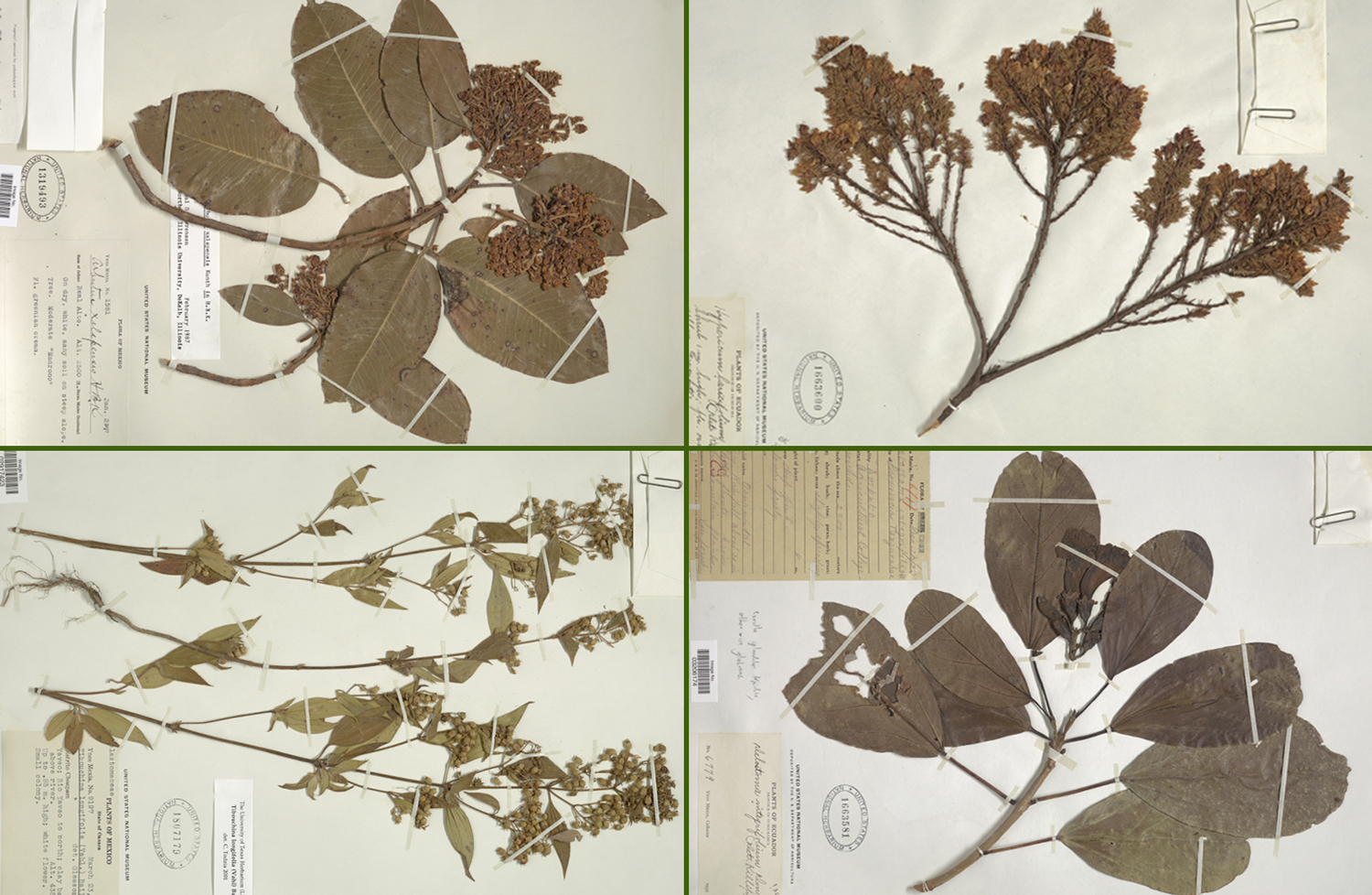
Four plant specimens on paper with labels and notes.

 Botany Department/Smithsonian National Museum of Natural History (02978415, 03003905, 02917423, 03206174); Photo composite Encyclopædia Britannica, Inc.

Here are four of the thousands of plant specimens that Ynes Mexia collected.

Mexia’s career as a botanist would take her to many parts of North and South America, where she would collect specimens so that she and other scientists could study them. She ventured through Mexico, Peru, Ecuador, and more. She was the first botanist to collect samples in Alaska’s Denali National Park. In total, she collected more than 145,000 specimens. Five hundred of them had never been identified by a botanist before. A few of these are named after Mexia! 

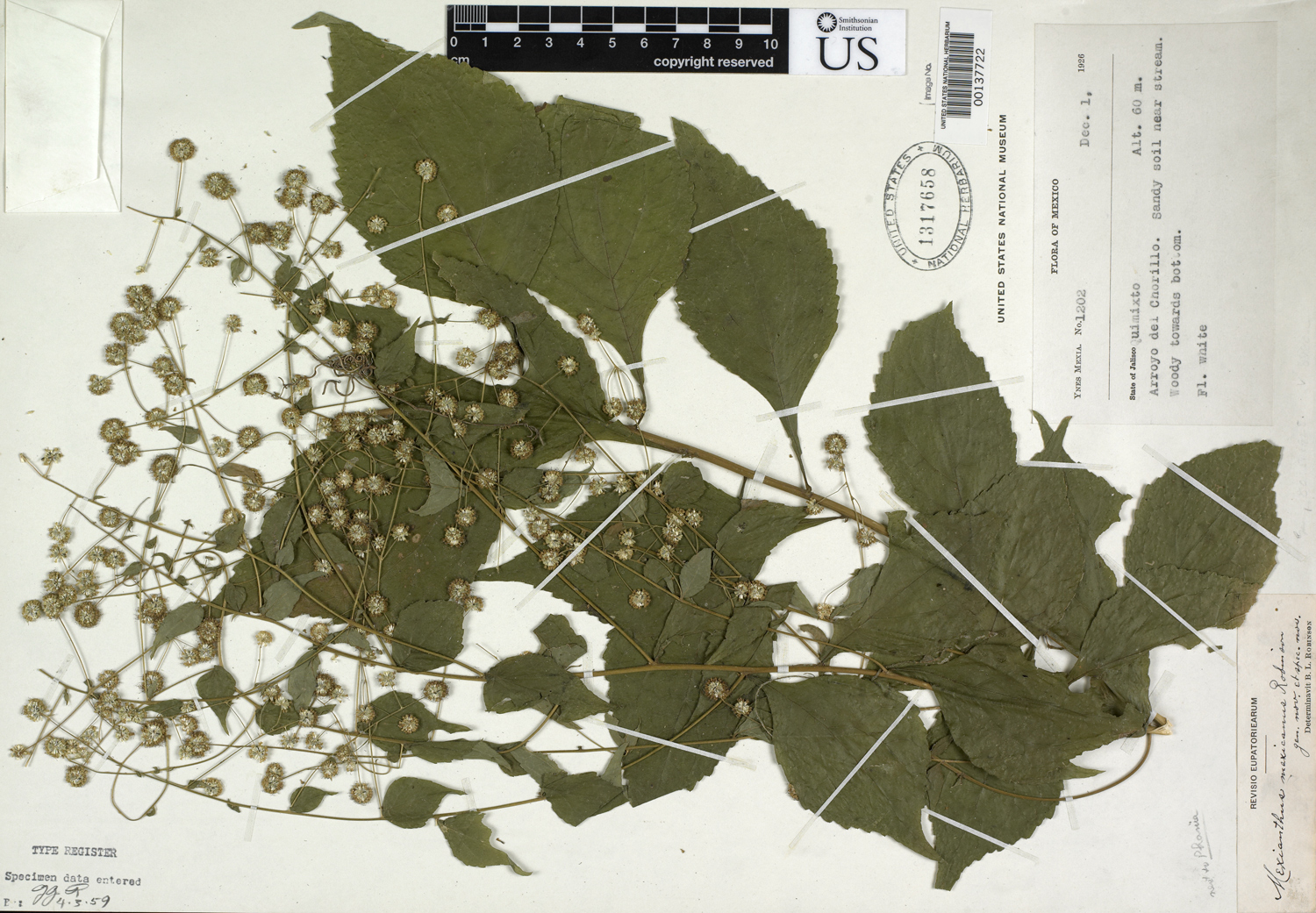
A sample of a plant on paper with typed notes.

Botany Department/Smithsonian National Museum of Natural History (00137722)

This is a sample of a plant genus Mexianthus mexicanus, which is named for Ynes Mexia.

Mexia inspired other women, especially women of color, to live their dreams. By going to college at age 51, Mexia showed it’s never too late to start something new. By traveling far and wide in search of new plants, she showed that exploration was not limited to men.

“I don’t think there is any place in the world where a woman can’t venture,” she once said.

Face Thinking Icon

Did You Know?

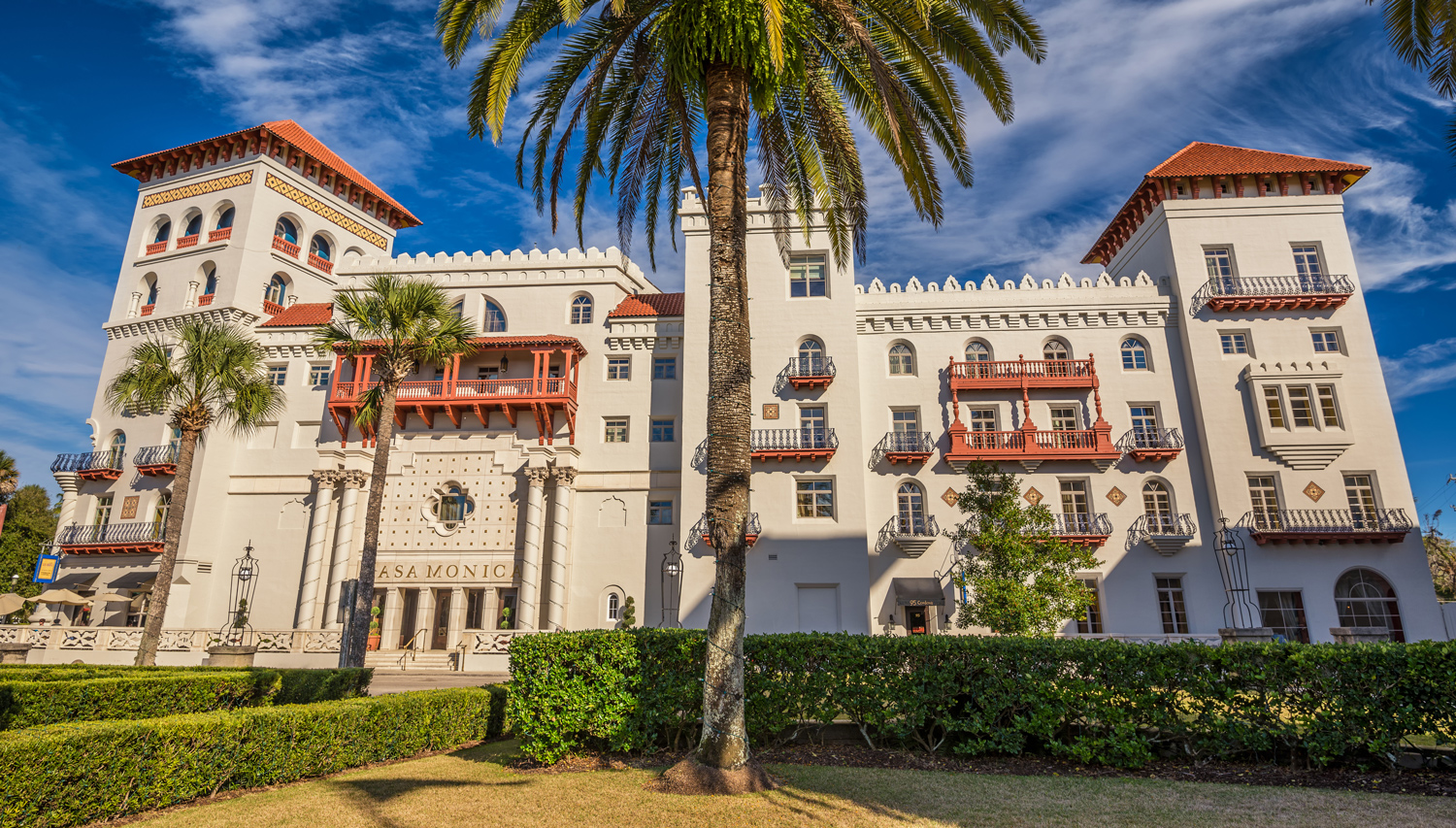
The Spanish were some of the first Europeans to settle in what is now the United States. In fact, the oldest city in the U.S. is St. Augustine, Florida. It was founded by the Spanish in 1565! Many of the buildings in St. Augustine are built in a Spanish style.

A large, Spanish-style hotel with palm trees in front.

© Miroslav Liska/Dreamstime.com

Celebrating Hispanic Heritage

September 15 to October 15 is National Hispanic Heritage Month in the United States. To celebrate, we’re highlighting a few notable people with Hispanic and Latino backgrounds.

Portrait of Jovita Idar

© University of Texas at San Antonio Special Collections

Jovita Idar, journalist
(1885–1946)

Born in Texas, Jovita Idar wrote newspaper articles opposing racism and supporting rights for Mexican Americans. She also worked in support of women’s rights. During the Mexican Revolution, a 10-year fight against a Mexican dictator, Idar supported the cause. She also traveled to Mexico to work as a nurse.

Frida Kahlo looks at the camera as she paints a portrait of a woman.

© Bettmann/Getty Images

Frida Kahlo, artist
(1907–1954)

Mexican artist Frida Kahlo was known for her ability to express her emotions in her artwork, especially her self-portraits. Kahlo’s work was bright and colorful, but it also showed the pain she experienced in her life due to health problems and other struggles.

Mario Molina smiles as President Barack Obama puts a medal around his neck.

© Rena Schild/Shutterstock.com

Mario Molina, chemist
(1943–2020)

Mario Molina helped discover that chlorofluorocarbons (CFCs) could destroy the ozone layer, a part of the upper atmosphere that protects Earth from harmful solar radiation. CFCs have been used in aerosol sprays and refrigerants (which are used in air conditioners), and to make plastic foam. Molina’s work has led to efforts to ban the use of CFCs.

José Andrés poses in a kitchen wearing a chef’s jacket

© Francois Nel/Getty Images

José Andrés, chef
(1969–)

After training as a chef in his native Spain, Andrés began working in restaurant kitchens and eventually opened restaurants of his own in the United States. In 2010, Andrés established World Central Kitchen (WCK). The group was founded to gather food that would otherwise go to waste and give it to hungry people. WCK has also traveled to many parts of the world, providing meals to people who have been affected by wars and other disasters.

Hispanic Heritage Month

Photos of Hispanic Americans flash on and off screen.

© Keith Dannemiller/Alamy, © Sundry Photography, Kobby Dagan//Shutterstock.com, © Carlos R, Julio/stock.adobe.com, © Jinlide/Dreamstime.com, Laurence Griffiths, Focus on Sport/Getty Images, Steve Petteway/Collection of the Supreme Court of the United States, Centers for Disease Control and Prevention

Hispanic Heritage Month begins on September 15. You can read about more Hispanic and Latino Americans at Britannica School!

Word of the Day Icon

Word of the Day

foliage

Part of speech:

noun

Definition:

: the leaves of a plant or of many plants

Definitions provided by
Merriam-Webster Logo
Game Icon

Play

Word Search

Can you find all the words related to fall?

O
O
O
O
O

In Case You Missed It

When 5th graders asked Major League Baseball player Ozzie Albies which pet fish to get, he helped out in a big way.
March 11, 2026
Taryn Smith is the first American woman to row solo across the Atlantic Ocean.
March 5, 2026
A powerful waterfall doesn’t easily freeze, but this winter has been especially cold!
March 3, 2026
For Women’s History Month, we’re honoring two women who inspired many others to take to the skies.
February 26, 2026

A Giant Discovery

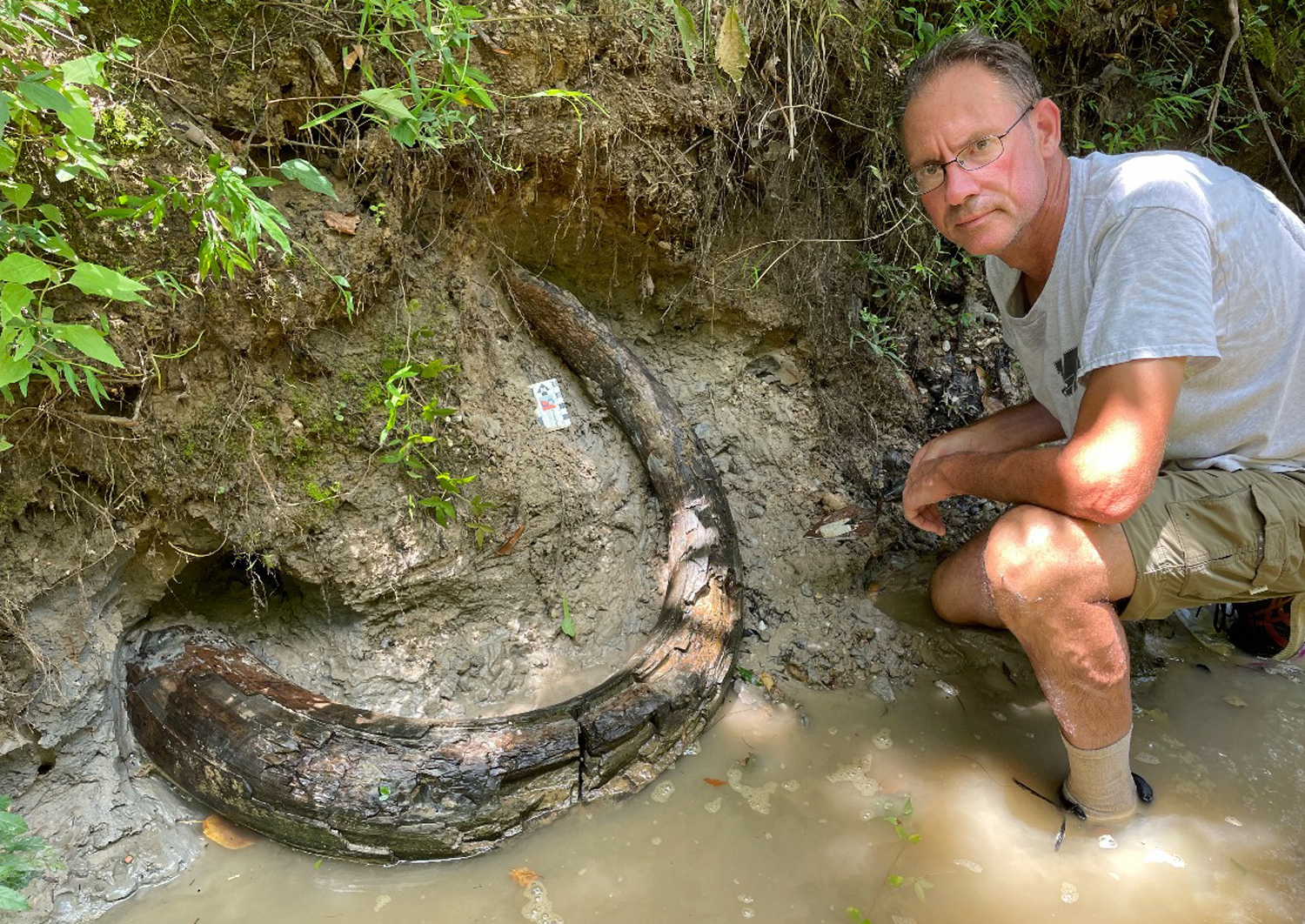
A man kneels at a creek bed next to a large mammoth tusk.

A Giant Discovery

A man in Mississippi discovered a mammoth tusk that’s more than 10,000 years old.

A man kneels at a creek bed next to a large mammoth tusk.

Mississippi Department of Environmental Quality

A scientist poses with a Columbian mammoth tusk that was discovered by fossil hunter Eddie Templeton.

Eddie Templeton loves to look for fossils, and he’s found quite a few in Mississippi, where he lives. But in August 2024, Templeton came across something he’d never found before—the tusk of a prehistoric, elephant-like animal called a Columbian mammoth.

Templeton found the tusk sticking out of a mudbank in a creek, where it had been for a long time. Scientists say Columbian mammoths lived between 11,700 and 75,000 years ago, during the Ice Age. Although they looked a lot like elephants, they were far bigger, weighing nearly 22,000 pounds (10,000 kilograms) and growing to be more than 13 feet (4 meters) tall. At 7 feet (2 meters) long, the tusk Templeton discovered was also huge. And it was still in one piece!

At first, Templeton thought the tusk had belonged to a mastodon, another relative of the modern elephant. Templeton and others have found many mastodon fossils in the area. But while Columbian mammoth teeth have been discovered in Mississippi, no one had ever found one of its tusks there. That’s because mammoths couldn’t live in as many different habitats as mastodons could, so their numbers were smaller.

Still, there was something about this tusk. It was curved, nearly making the shape of a C. Mammoths tusks were much more curved than mastodon tusks.

“When I learned it was a mammoth and not a mastodon, I got even more excited,” Templeton told the Mississippi Clarion Ledger. “I’ve never found any part of a mammoth. I always hoped to find a part of a mammoth, but that’s pretty rare down here.”

Templeton sent George Phillips, a paleontologist who works at the Mississippi Museum of Natural Science, a photo of the tusk. Soon, a team of scientists arrived at the site. It was clear that Templeton had found something rare and special.

“I was kind of open mouthed when I saw the picture,” Phillips told CNN. “I thought, ‘OK, well, cool, a tusk. Wait a second…it’s so curved…. This a mammoth tusk.’”

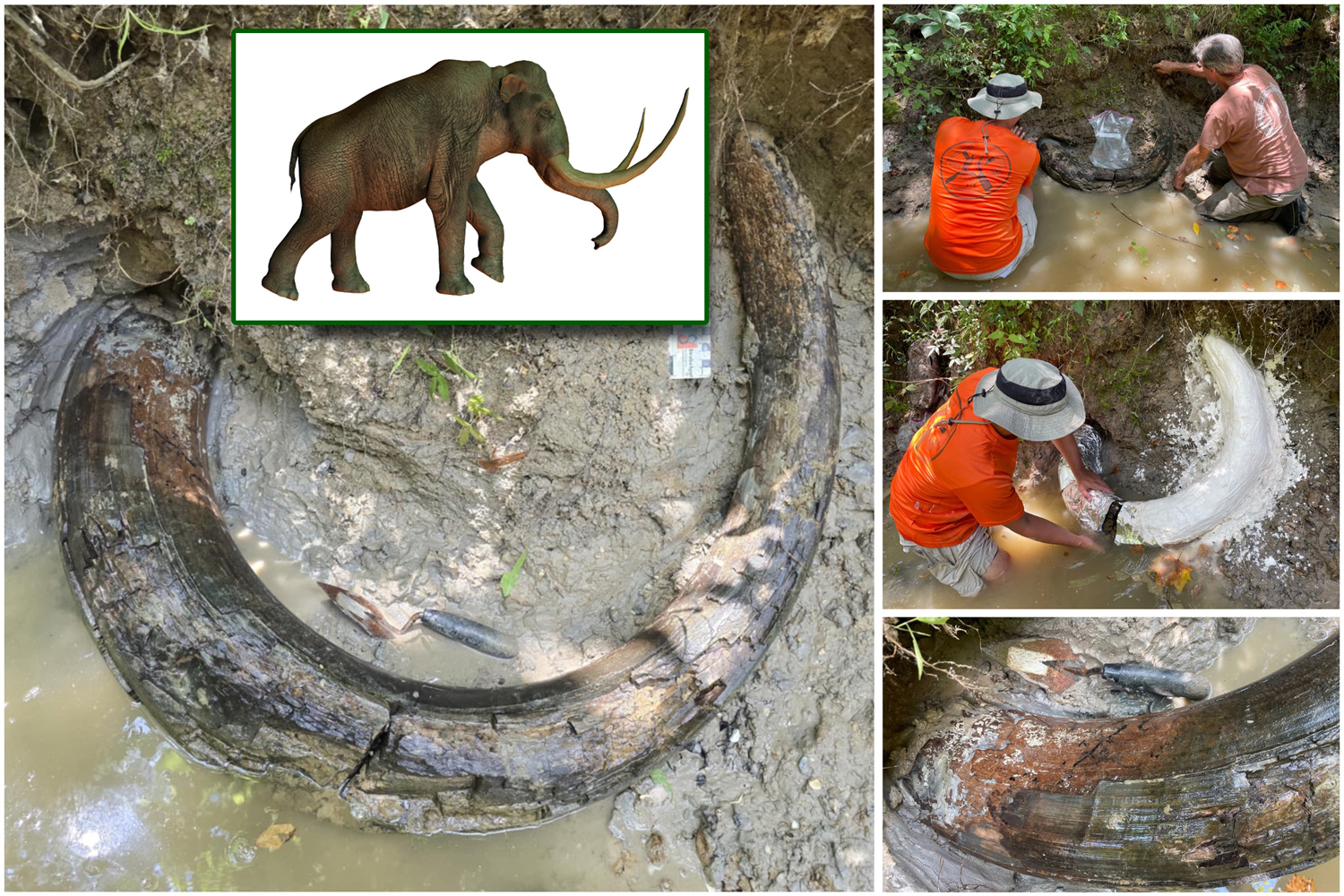
A photo series showing the mammoth tusk in the creed bed, scientists looking at the tusk, and the tusk in plaster.

Mississippi Department of Environmental Quality, © Corey A Ford/Dreamstime.com; Photo composite Encyclopædia Britannica, Inc.

Eddie Templeton discovered the Columbian mammoth tusk in these photos. In one photo, the tusk has been put in plaster so it can be moved.

The tusk has been taken to the museum, where it will be displayed.

“This is the first complete mammoth tusk found in Mississippi,” Templeton told CNN. “And so that’s pretty cool.”

Fun Fact Icon

Fun Fact

Although they were big and powerful, mammoths were herbivores, meaning they ate plants.

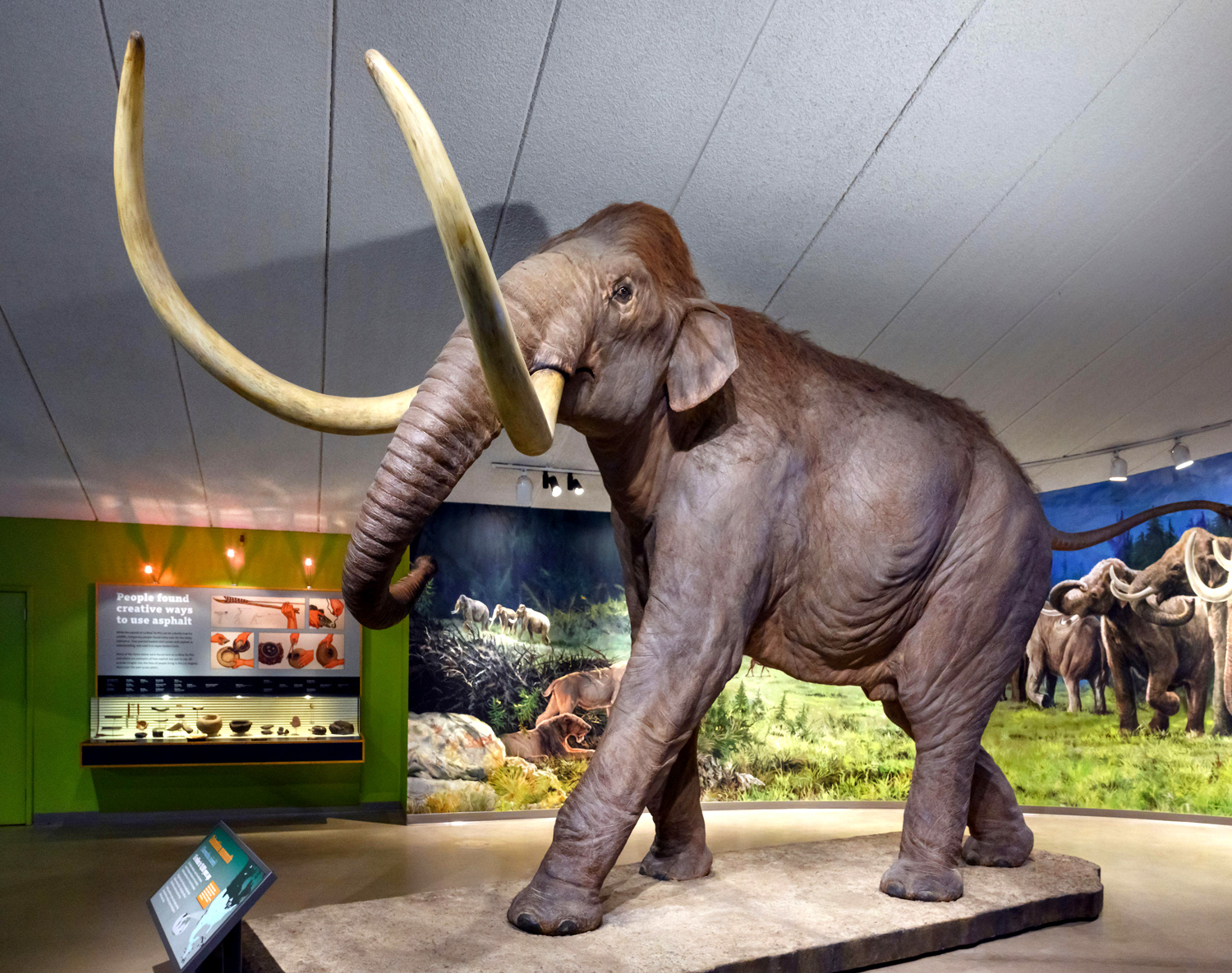
A model of a Columbian mammoth is on display at a museum

 © Ian Dagnall/Alamy

This model shows what the Columbian mammoth looked like.

Close, But Not the Same

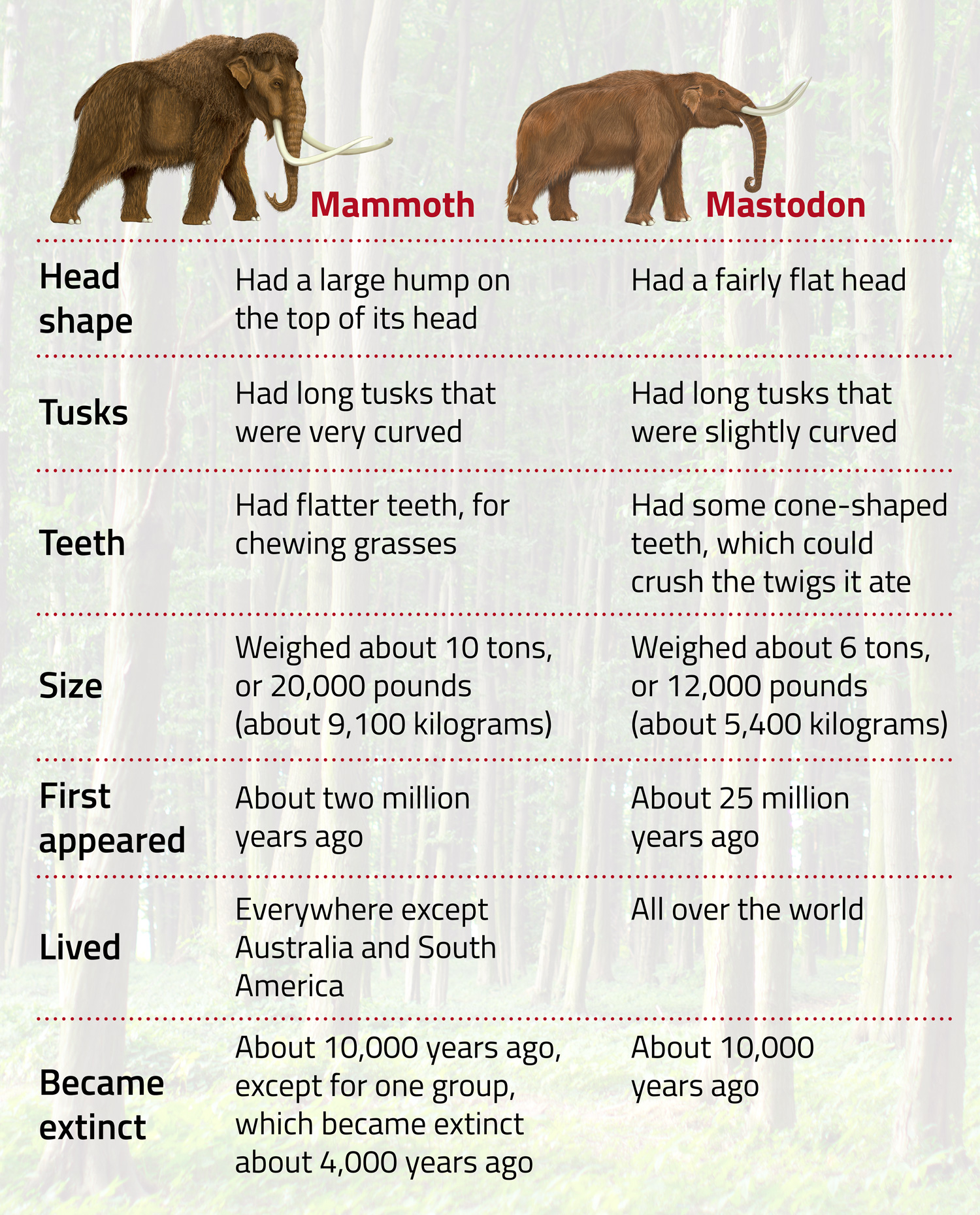
Mammoths and mastodons were both ancient mammals that looked like their cousin, the elephant. But mammoths and mastodons weren’t the same. In fact, while mammoths are closely related to elephants, mastodons are more distantly related.

Here are some other ways to tell mammoths and mastodons apart.

A table comparing the physical characteristics of mammoths and mastodons.

Encyclopædia Britannica, Inc.; Background image © Anzhelika Bosak/Dreamstime.com;

A Frozen World

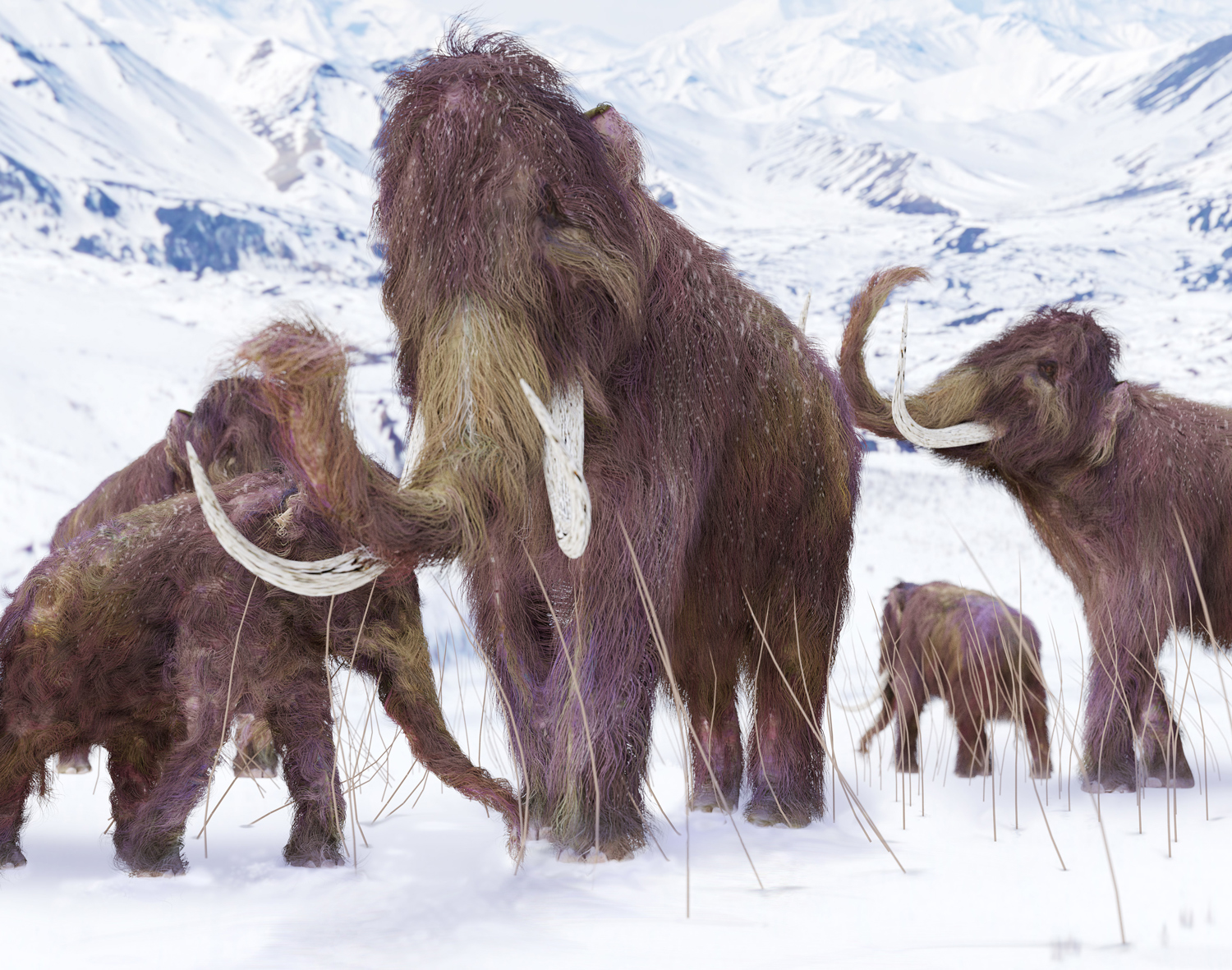
Five mammoths of different sizes on a snowy landscape.

© William Roberts—Auntspray/Dreamstime.com

Mammoths and mastodons lived during a time known as an ice age. What is an ice age? Find out at Britannica!

Word of the Day Icon

Word of the Day

prehistoric

Part of speech:

prehistoric

Definition:

: of, relating to, or existing in the time before people could write

Definitions provided by
Merriam-Webster Logo
Game Icon

Play

Word Search

Can you find all the ice age words?

O
O
O
O
O

In Case You Missed It

When 5th graders asked Major League Baseball player Ozzie Albies which pet fish to get, he helped out in a big way.
March 11, 2026
Taryn Smith is the first American woman to row solo across the Atlantic Ocean.
March 5, 2026
A powerful waterfall doesn’t easily freeze, but this winter has been especially cold!
March 3, 2026
For Women’s History Month, we’re honoring two women who inspired many others to take to the skies.
February 26, 2026

Stonehenge Stones Came From Far Away

Stonehenge with a sunset in the background.

Stonehenge Stones Came From Far Away

Ancient people brought giant stones together to build a monument that’s now famous.

Stonehenge with a sunset in the background.

© Raduang/Dreamstime.com

Stonehenge is a famous monument in England.

Beginning about 5,000 years ago, long before there were any motorized vehicles, people somehow arranged giant stone slabs into a monument called Stonehenge, in what’s now England. Recently, scientists found that one of these massive stones came from hundreds of miles away! The discovery makes Stonehenge even more remarkable.

Stonehenge is made up of slabs that have been placed in an incomplete circle, with other stones in the center. Scientists believe that some of the stones came about 16 miles (25 kilometers) away, while others came from about 125 miles (200 km) away, in Wales. The idea that prehistoric people somehow moved these massive stones 125 miles is amazing to think about. But when scientists took a closer look at one of the stones, they concluded that its journey was much longer.

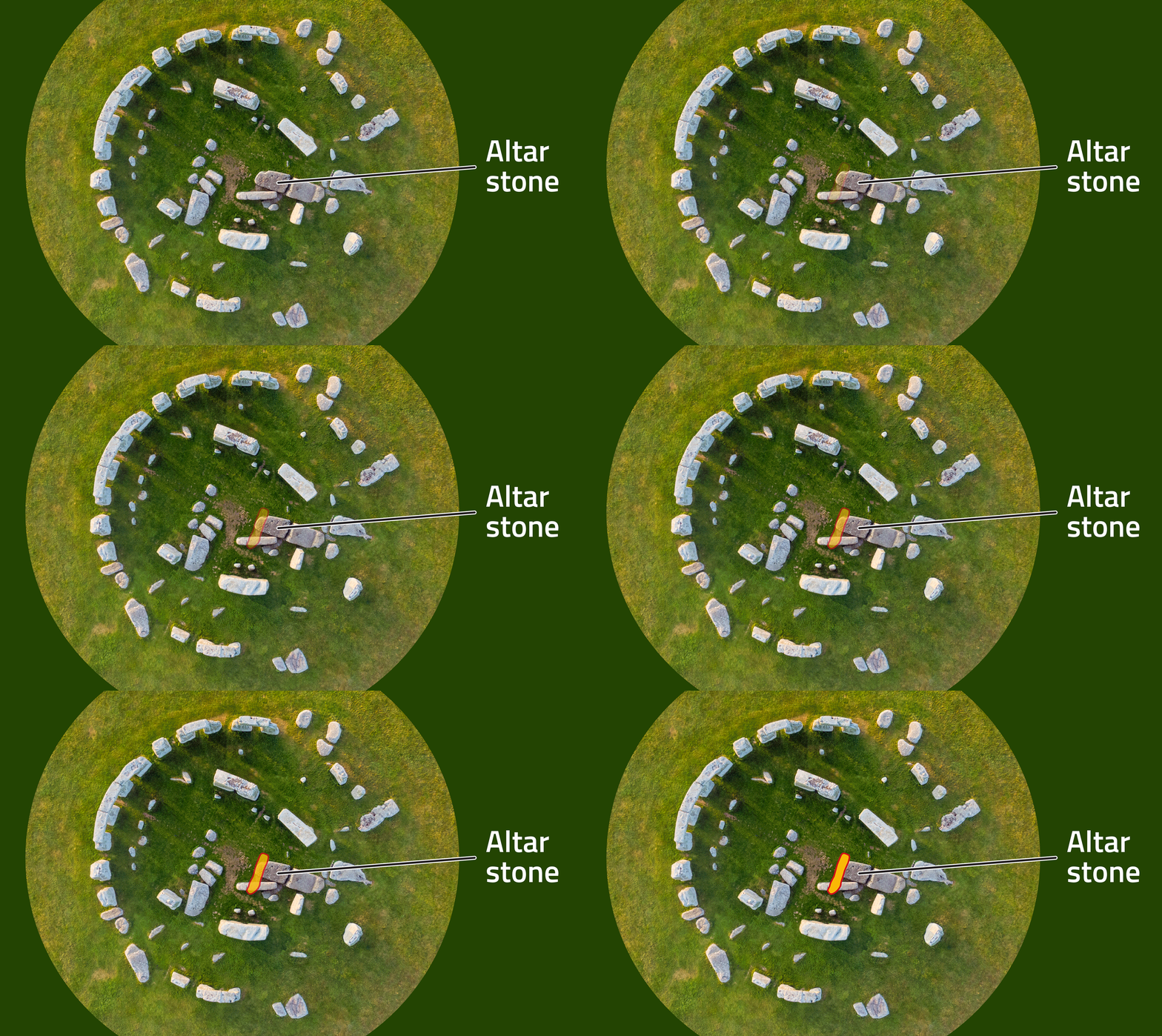
An overhead view of Stonehenge with an animated rectangle in the location of the altar stone.

© Gavin Hellier/robertharding/Getty Images; Animation Encyclopædia Britannica, Inc.

The yellow rectangle shows where the altar stone is located.

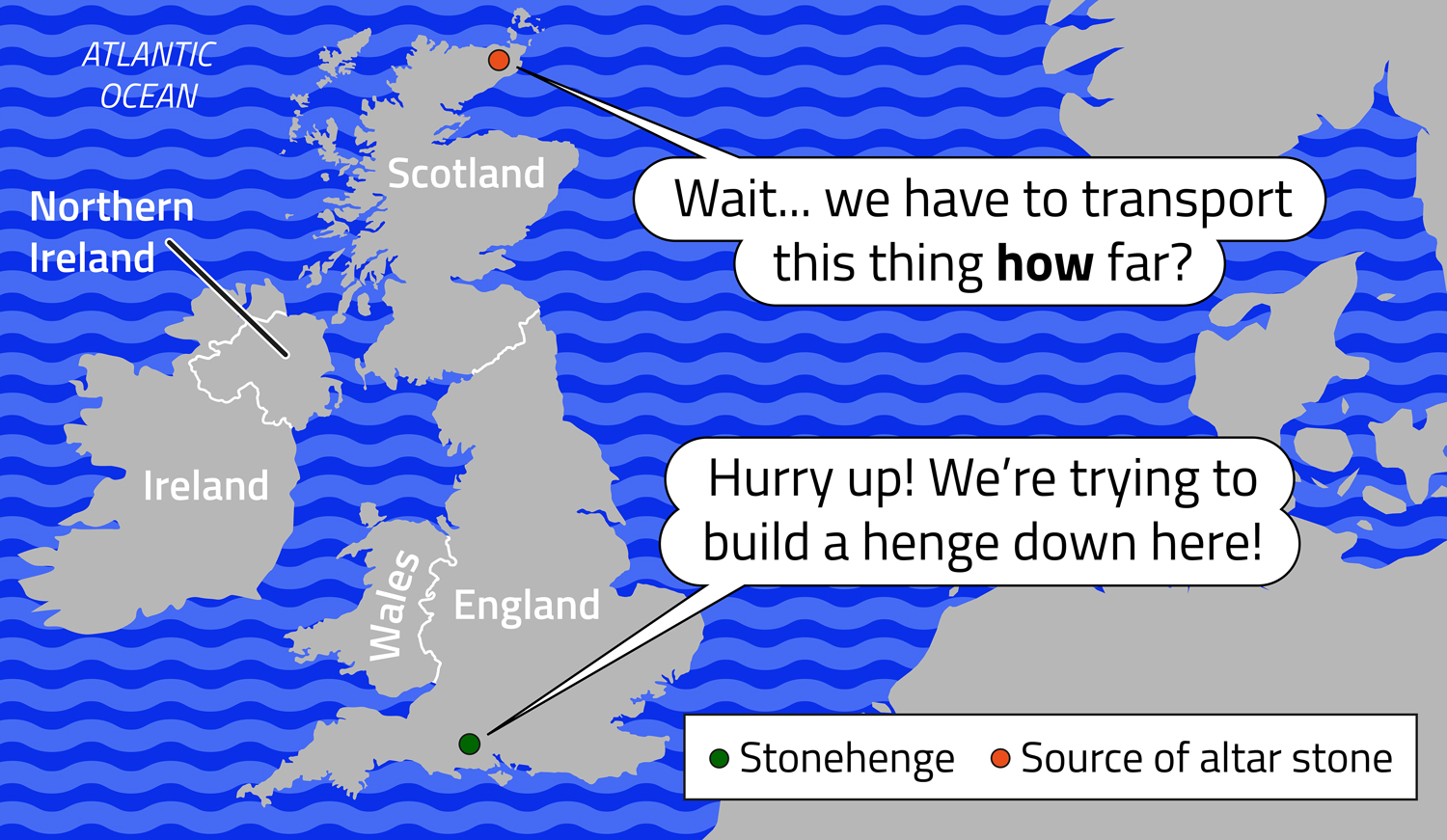
Scientists studied what’s known as the “altar stone,” which is near the center of the monument and partly buried. The altar stone is made of old red sandstone. Scientists studied its chemical makeup and determined the age of its ingredients. They looked at the surrounding lands, hoping to find similar rock of a similar age, which would tell them where the altar stone came from. They were shocked to find old red sandstone in northeastern Scotland, which tells them that the altar stone was transported at least 466 miles (750 km)!

A map with England, Scotland, Ireland, Northern Ireland, and Wales labeled, along with the locations of the altar stone and Stonehenge.

 © Pytyczech/Dreamstime.com; Photo illustration Encyclopædia Britannica, Inc.

The altar stone was found in Scotland and brought all the way down to England.

Scientists still aren’t sure how the altar stone, which weighs more than 6 tons, got to where it is now, in the center of Stonehenge. Some experts believe the slab was transported in part by boat.

But archaeologist Mike Pitts, who wrote a book about Stonehenge, doesn’t think that’s what happened. He believes it would have been too risky because the slabs could have fallen into the water. Pitts wasn’t involved in the study of the altar stone, but he’s excited about it.

“[The study] is exciting,” Pitts told the Guardian. “It’s long been known that [some of the stones] come from Wales, but this identifies links with a quite different part of Britain, and significantly more distant from Stonehenge.”

Face Thinking Icon

Did You Know?

No one is sure why Stonehenge was built. One clue is that its stone slabs are lined up to match with the movements of the Sun. Stonehenge would have helped farmers keep track of the Sun’s movements at different times of the year.

But Stonehenge was also a burial site of ancient people. This makes archaeologists think Stonehenge had some sort of religious purpose.

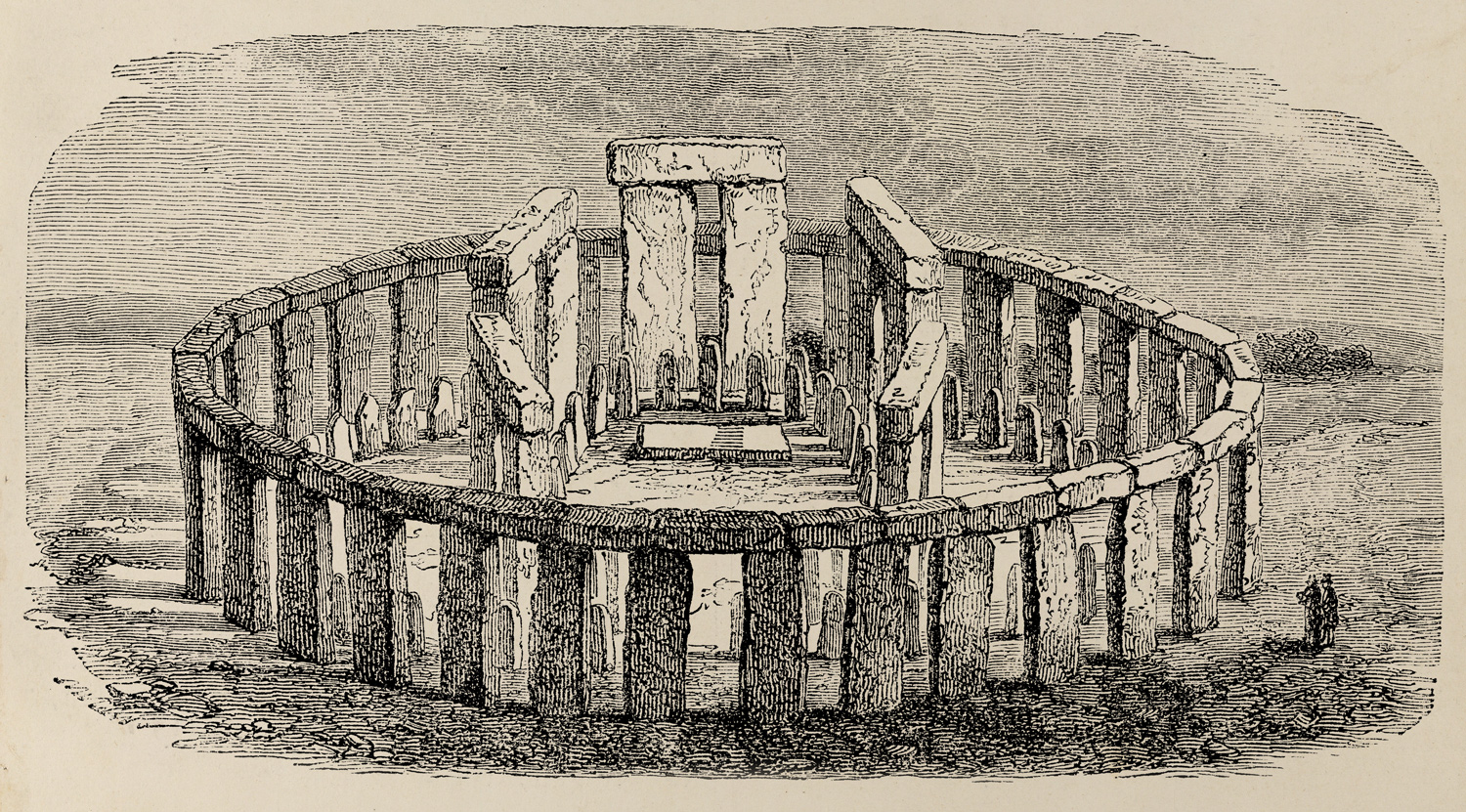
An engraving shows what Stonehenge might have looked like when it was complete.

© acrogame/stock.adobe.com

Was Stonehenge once a complete circle?

Meanwhile, in Egypt…

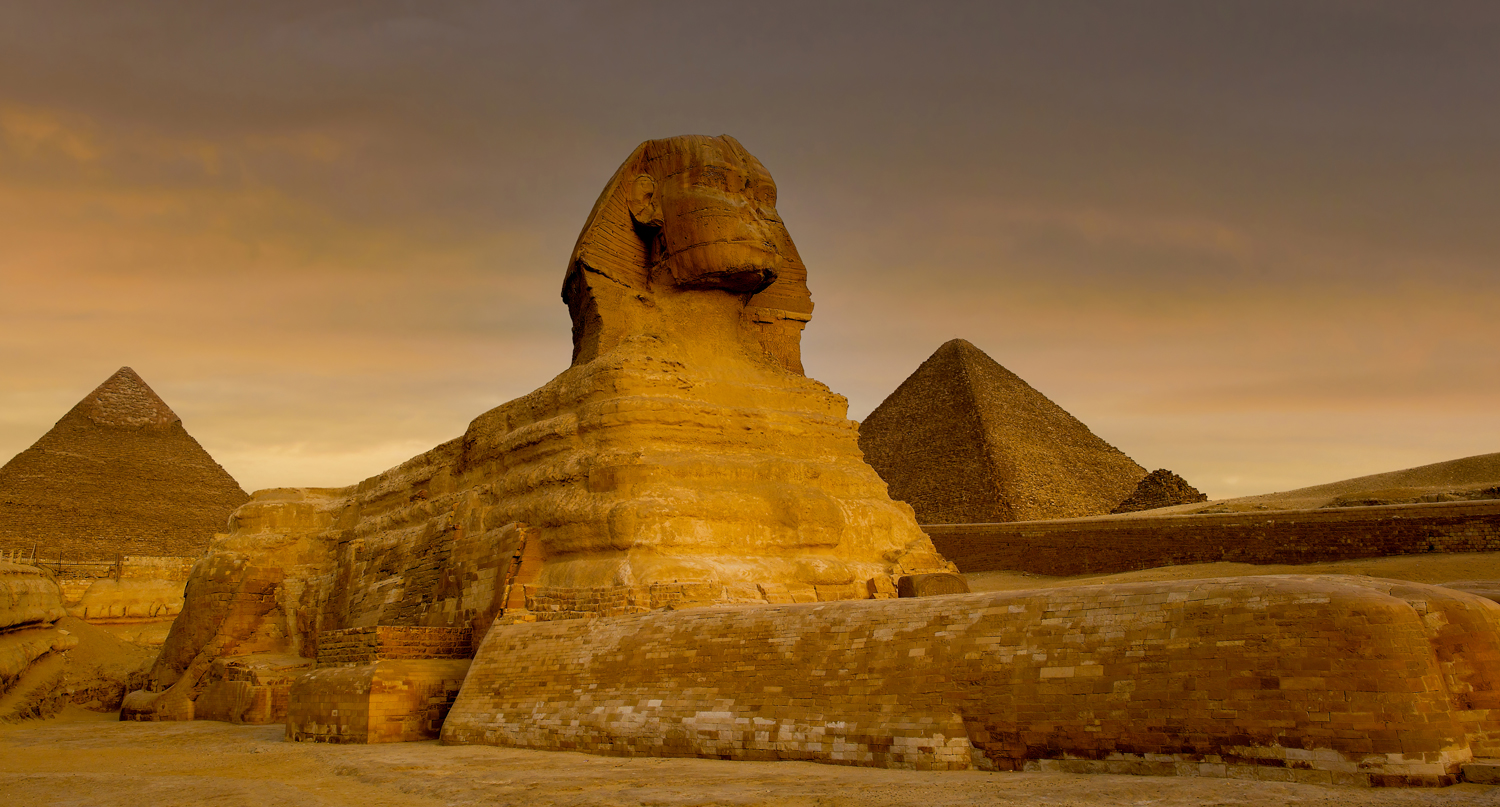
A view of the Great Sphinx at sunset.

© Nick Brundle Photography—Moment/Getty Images

 The Great Sphinx

Stonehenge was built between about 3000 BCE and 1550 BCE. (Yes, it took more than 1,000 years to build!) During that time, the ancient Egyptians built another monument, called the Great Sphinx.

The sphinx, which is carved out of a single block of limestone, is about 240 feet (73 meters) long and 66 feet (20 meters) high. It has the body of a lion and the face of a man. Experts disagree on whether the face is meant to resemble an Egyptian pharaoh (king) named Khafre or his father, Khufu. They also disagree about who ordered the sphinx to be built, although most people believe that it was Khafre himself.  Khafre ruled Egypt between about 2575 and 2465 BCE.

Why build a giant statue of a man-lion? Experts aren’t sure. The sphinx is located near several pyramids, which were tombs of pharaohs and other Egyptian nobles. It’s possible that it was meant to guard these tombs.

Pyramid Builders

A collage of five images shows pyramids from different civilizations.

© Kobby Dagan, Debra Reschoff Ahearn/Dreamstime.com, Barna Tanko/Alamy, © Kitti Boonnitrod—Moment, Diy13—iStock/Getty Images; Photo composite Encyclopædia Britannica, Inc.

In some ancient civilizations, people constructed giant pyramids, even though this must have been incredibly difficult. How do you think they did it?

Find out why these pyramids were built at Britannica!

Word of the Day Icon

Word of the Day

monolith

Part of speech:

noun

Definition:

: a very large stone that is usually tall and narrow, especially a stone that was put in position by people as a monument or for religious reasons

Definitions provided by
Merriam-Webster Logo
Game Icon

Play

Word Search

Can you find all the words?

O
O
O
O
O

In Case You Missed It

When 5th graders asked Major League Baseball player Ozzie Albies which pet fish to get, he helped out in a big way.
March 11, 2026
Taryn Smith is the first American woman to row solo across the Atlantic Ocean.
March 5, 2026
A powerful waterfall doesn’t easily freeze, but this winter has been especially cold!
March 3, 2026
For Women’s History Month, we’re honoring two women who inspired many others to take to the skies.
February 26, 2026