The Moon House

A tiny red house with white trim and a green door sits among some equipment.

The Moon House

An artist built a little red house and launched it into space. If all goes as planned, the house will be placed on the Moon’s surface. 

A tiny red house with white trim and a green door sits among some equipment.

Courtesy of ispace, Inc.

The Moonhouse, seen here before it was launched into space in January 2025.

No one lives on the Moon, but a Swedish artist plans to put a home there anyway. Artist Mikael Genberg and a team of engineers (building experts) constructed a little red house that’s expected to land on the Moon in a few months.

“In my mind, [it was a] really poetic thought to put a red house with white corners on the surface of the Moon,” Genberg said in a video posted on the Internet. “And now it’s going to happen.”

At 4.7 inches (12 centimeters) long, 3.1 inches (8 cm) wide, and 3.9 inches (10 cm) tall, the Moonhouse is the size of a toy. But unlike a typical dollhouse, it’s made of aluminum and is designed to withstand its journey into space, says Emil Vinterhav, head of the Moonhouse technical team.

“The house structure has undergone…shock and vibration tests to ensure it can…survive intact in its new climate,” Vinterhav said in a statement. “Even just finding a durable red paint for the house is a story in itself.”

This won’t be the first trip to space for the Moonhouse. It has already been high up in trees, under water, atop the Great Wall of China, and aboard the International Space Station, which is 248 miles (400 kilometers) above Earth.

For its latest journey, the house was launched into space aboard a Japanese lunar lander in January. It’s expected to take four months to reach the Moon. Once there, the Moonhouse is there to stay.

“[The lander] should release the house, take some pictures, and leave it alone standing there for thousands and thousands and maybe millions of years,” Genberg said.

Face Thinking Icon

Did You Know?

The Moonhouse will take four months to reach the Moon. But the voyage from Earth to the Moon can be shorter, depending on the path taken. Here’s how long it takes to get to some other space destinations from Earth.

The Moon: 3 days to a few months

Mars: 7–10 months

Jupiter: 5–6 years
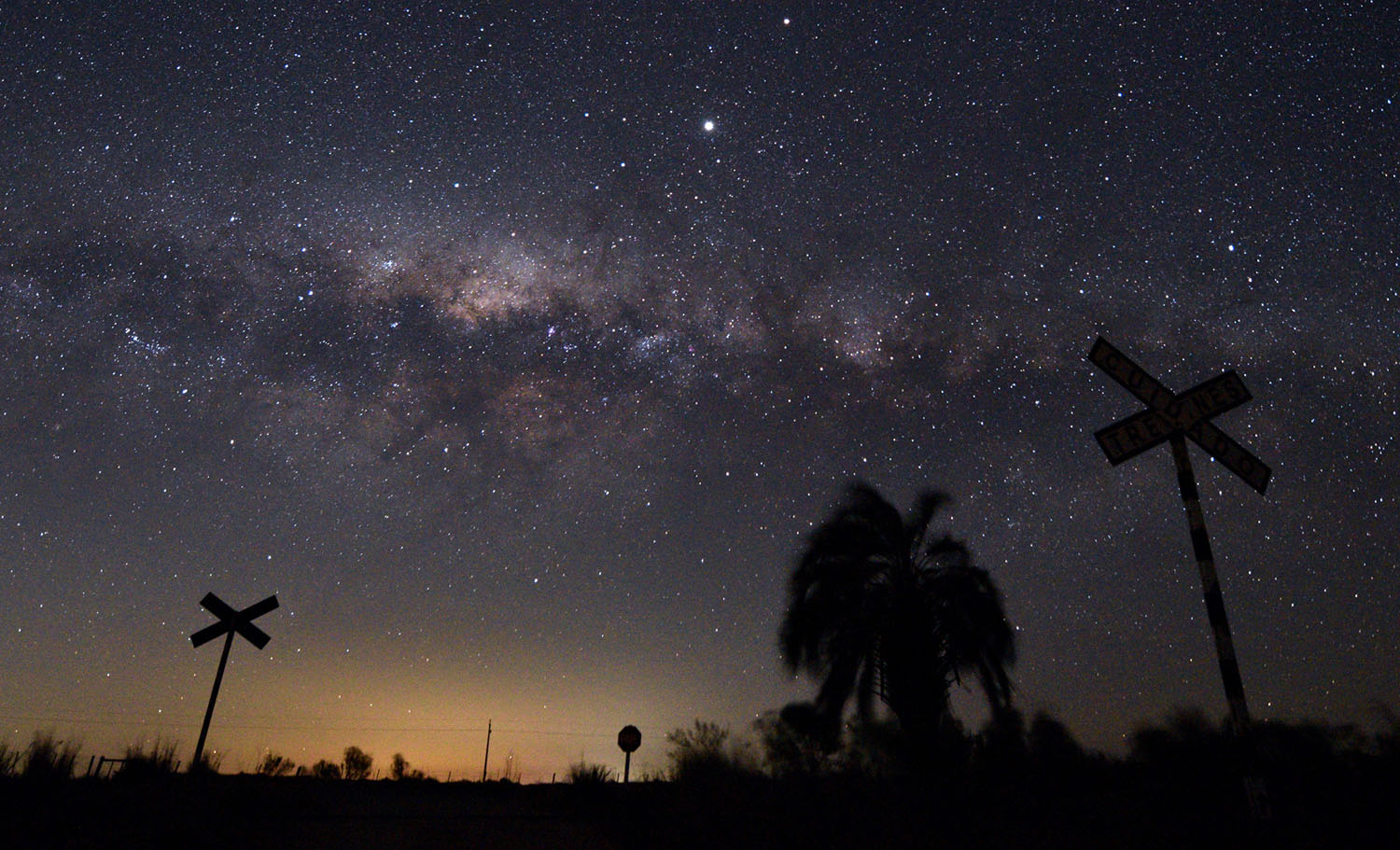
A starry sky with Jupiter seen as the brightest light.

© Mariana Suarez—AFP/Getty Images

The brightest light in this photo looks like a star—but it’s actually Jupiter!

Get Ready for Pi Day!

How many kinds of pie can you think of? There’s pizza pie, apple pie, and cherry pie, just to name a few. There’s also pi, a long number that can be shortened to 3.14. Since 3/14 is also another way to write March 14, many people celebrate the 14th of March as Pi Day!

Here’s a neat trick you can do with pi.

Picture a circle. It could be a pie or a Frisbee or just a plain circle. If you measure the length around the circle, you get its circumference. If you measure the length across the circle at its widest point, you get its diameter.
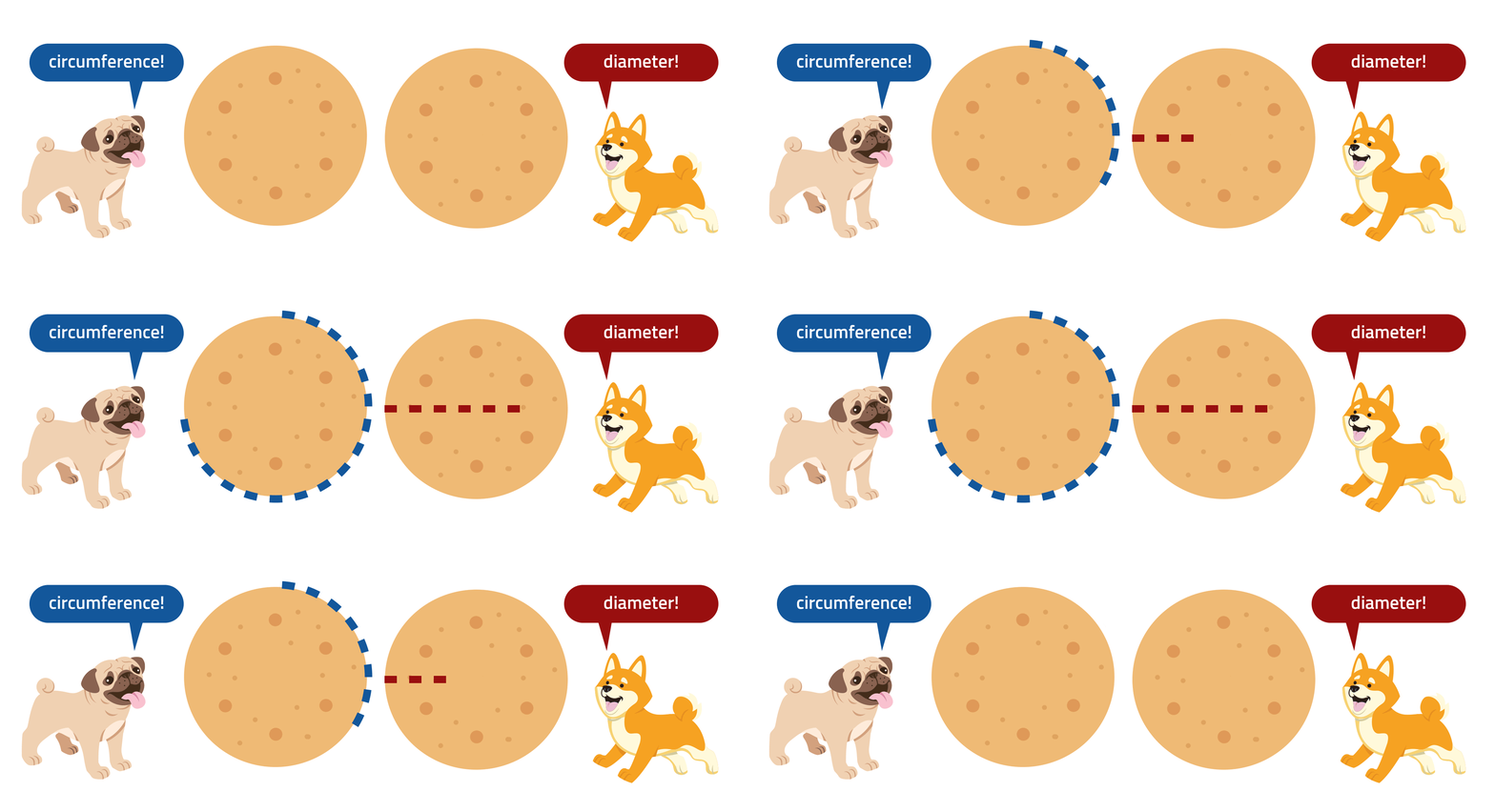
Two round circles are shown. One circle has a dotted line showing the circumference and the other has a dotted line showing the diameter. Two dogs “bark” the labels for circumference and diameter.

© bazzier, Arif_Vector/stock.adobe.com; Photo illustration Encyclopædia Britannica, Inc.

Now divide the circumference by the diameter. You’ll always get a number that’s very close to 3.14. In other words, you’ll always get pi.
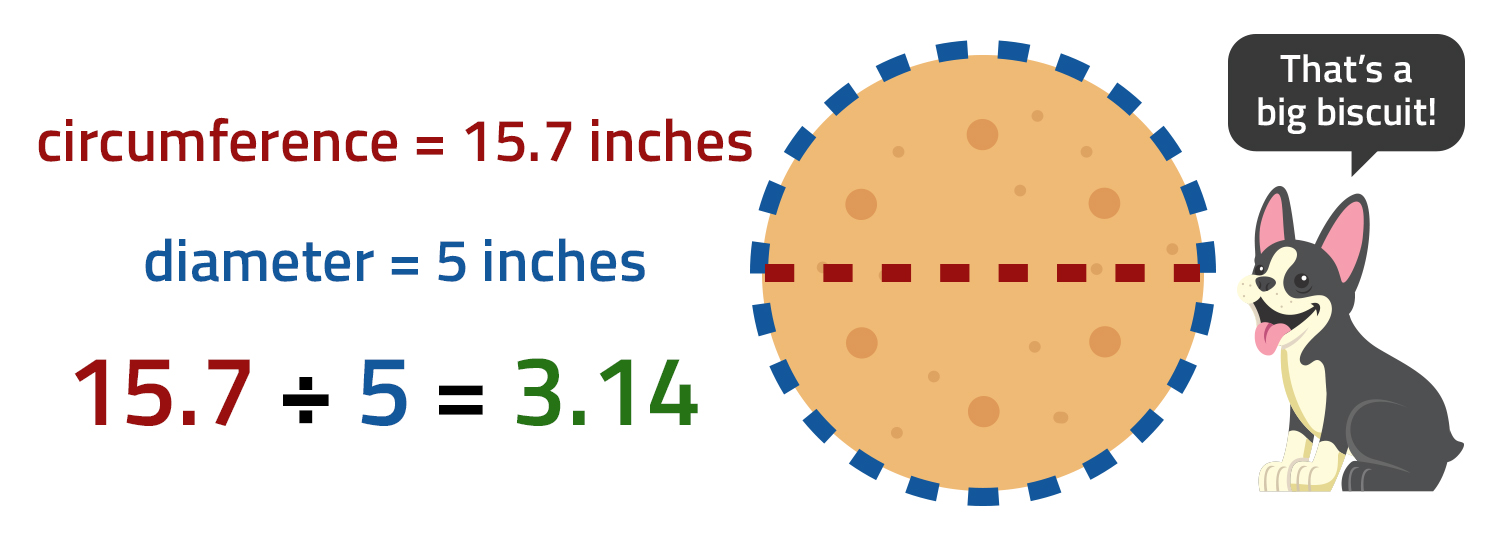
A circle is shown with an equation showing that the circumference divided by the diameter equals roughly 3.14.

© bazzier, Arif_Vector/stock.adobe.com; Photo illustration Encyclopædia Britannica, Inc.

Try this at home! Find a circular object and measure it. Then divide the circumference by the diameter and see what you get.

Pi Day isn’t just about math, though. It’s often celebrated by eating pie!

Want to Live on the Moon?

A full moon is over Mount Rainier at dusk.

© Allen/stock.adobe.com

Scientists say humans may one day build settlements on the Moon! If you had a chance to live on the Moon, would you take it?

You can learn more about Earth’s moon at Britannica!

Word of the Day Icon

Word of the Day

dwelling

Part of speech:

noun

Definition:

: a place where a person lives

Definitions provided by
Merriam-Webster Logo
Game Icon

Play

Word Flower
.

In Case You Missed It

When 5th graders asked Major League Baseball player Ozzie Albies which pet fish to get, he helped out in a big way.
March 11, 2026
Taryn Smith is the first American woman to row solo across the Atlantic Ocean.
March 5, 2026
A powerful waterfall doesn’t easily freeze, but this winter has been especially cold!
March 3, 2026
For Women’s History Month, we’re honoring two women who inspired many others to take to the skies.
February 26, 2026

Researchers Launch a Wooden Satellite

Takao Doi stands in a laboratory holding a small, cube-shaped satellite.

Researchers Launch a Wooden Satellite

The satellite will orbit Earth for a total of six months.

Takao Doi stands in a laboratory holding a small, cube-shaped satellite.

© Irene Wang/Reuters

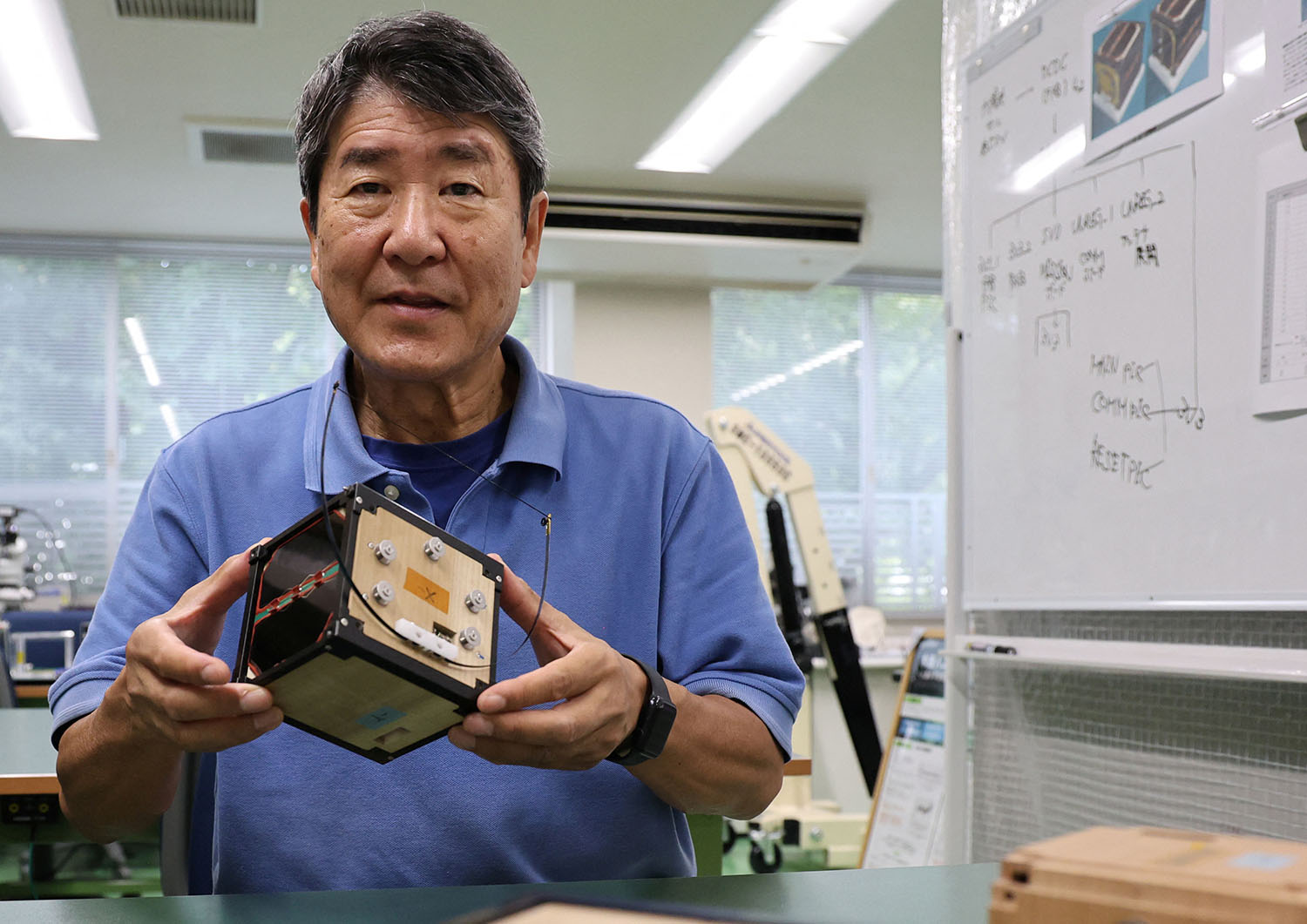
In this October 25, 2024, photo, former astronaut Takao Doi holds a model of the wooden LignoSat satellite.

Could we one day plant trees and build wooden houses on the Moon and Mars? Scientists hope a wooden satellite called LignoSat will help them answer this question. 

Built by Japanese researchers, LignoSat was launched into space in November 2024 and entered orbit around Earth in December. The tiny satellite is scheduled to remain in orbit for a total of six months. 

LignoSat was designed to help scientists find out if wood can stand up to the harsh environment in space. (Most satellites are made of metal.) As it orbits Earth, the satellite will go from darkness to sunlight every 45 minutes and experience temperatures ranging from -148 degrees Fahrenheit (-100 degrees Celsius) to 212 degrees Fahrenheit (100 degrees Celsius). 

Scientists think wood might hold up well in space. On Earth, water and oxygen cause wood to rot over time. There’s no water or oxygen in space.

If wood does prove to be a strong space material, scientists hope to be able to use more of it. Wood will come in handy when scientists build settlements on the Moon and Mars. In both of these worlds, it may be possible to construct wood buildings and even plant trees!

Wood is also better for the environment than metal because it’s easier to get rid of when it’s no longer useful. When old metal satellites fall to Earth, they produce particles that can harm the atmosphere. LignoSat’s wooden frame will burn up and produce less pollution.

“With [wood], a material we can produce by ourselves [in space], we will be able to build houses, live and work in space forever,” astronaut Takao Doi told Reuters. Doi, an aerospace engineer (someone who designs materials for use in space), helped design LignoSat.

Fun Fact Icon

Fun Fact!

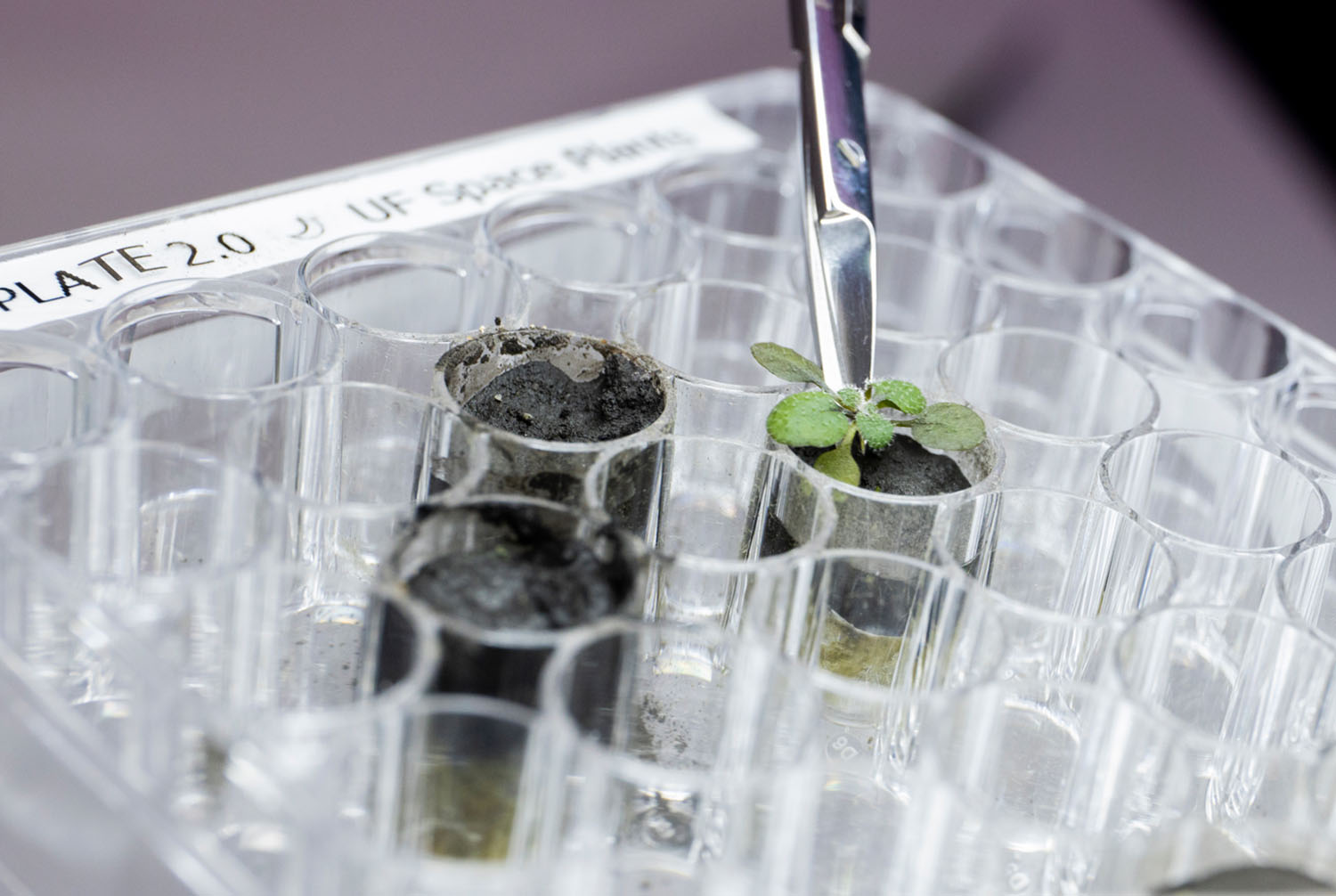
It may seem hard to imagine trees growing anywhere other than on Earth. But in 2022, NASA scientists announced that they had grown plants in soil taken from the Moon!

Several test tubes are filled with soil and one of them holds a green plant.

© Tyler Jones, UF/IFAS

This little green plant grew in lunar soil.

The Space Junk Problem

Earth surrounded by many white dots.

© Johnson Space Center/NASA Orbital Debris Program Office

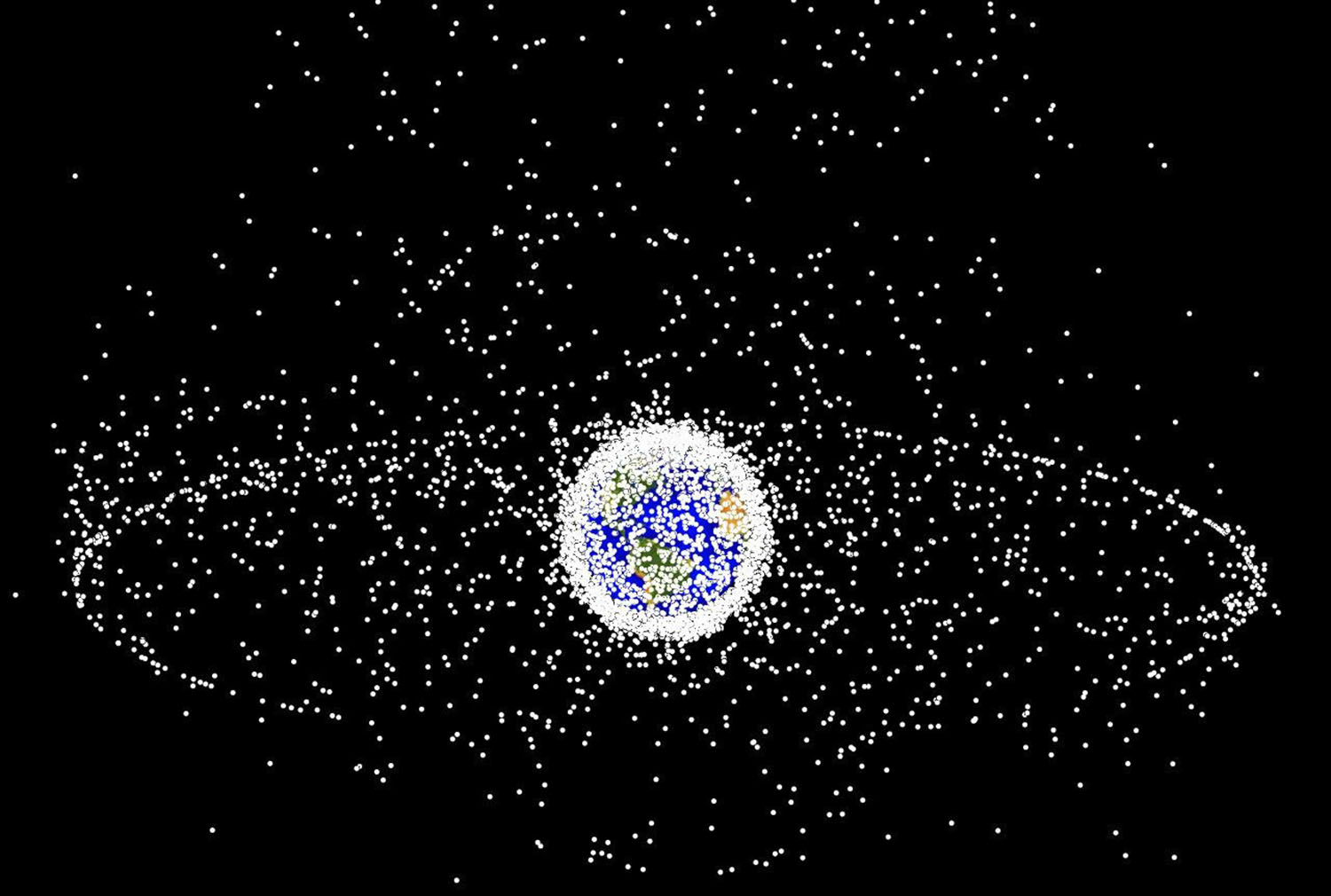
This computer-generated image shows objects that are in Earth’s orbit. About 95 percent of the objects are space junk.

Humans have done amazing things in space. We’ve gone to the Moon, sent spacecraft to distant planets, and used giant space telescopes to observe objects millions of miles away. We’ve also launched thousands of satellites into orbit. Without satellites, we wouldn’t have GPS or the ability to closely track storms and other weather systems. 

But all that space activity comes at a cost. We’ve left lots of our equipment in space, where it becomes what scientists call “space junk.” Experts say there are more than 30,000 pieces of large space junk and millions of pieces of small space junk floating around in space. We’ve also left a lot of junk on the Moon.   

Scientists are working on technology that can help clean up some of that junk. For future space missions, they hope to use more sustainable materials—like wood.

Beyond Earth

A rover is on the surface of Mars and its tracks are visible all around it.

© NASA/JPL-Caltech/MSSS

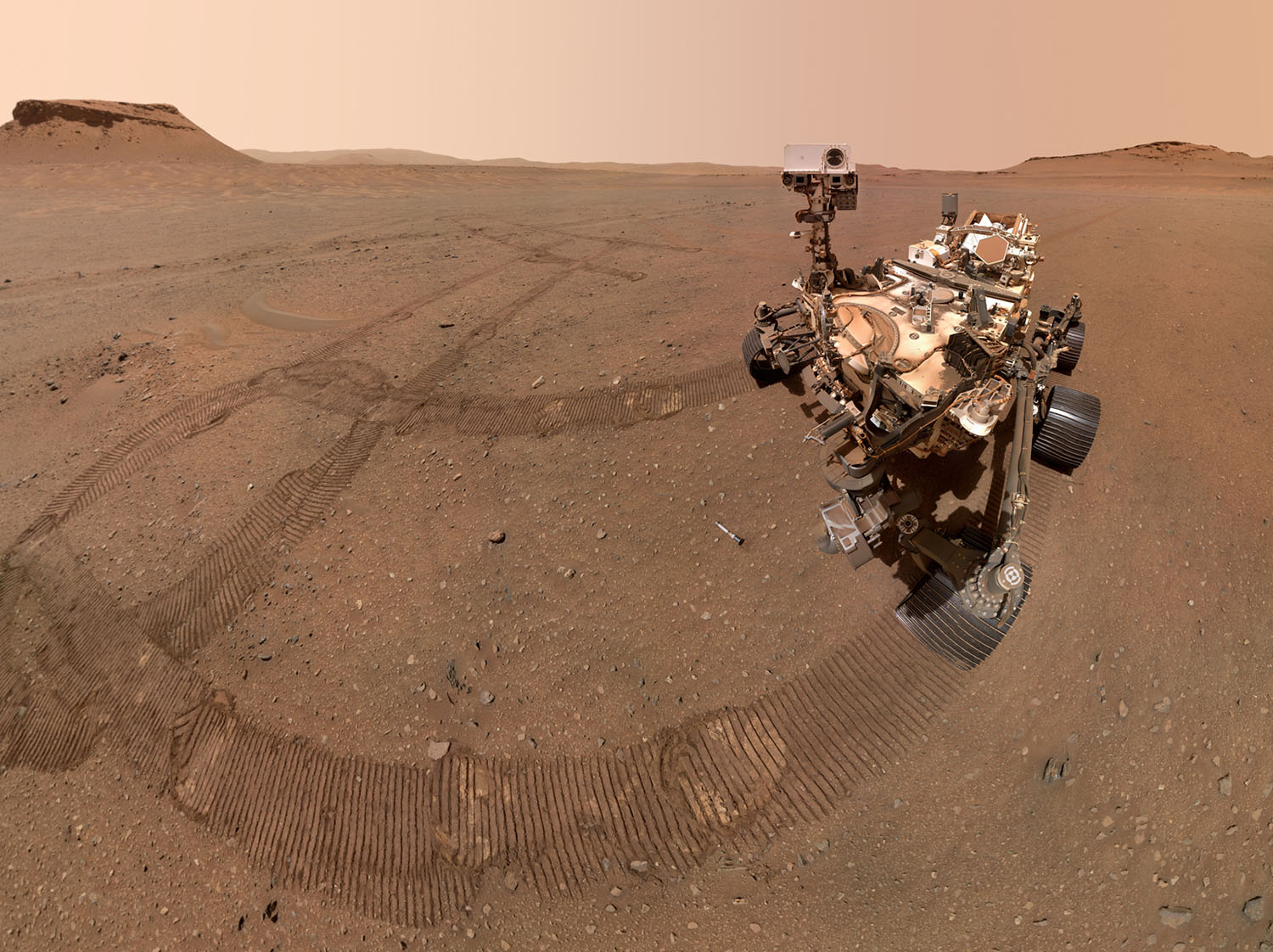
NASA’s Perseverance rover has been on Mars since 2021. The rover used its robotic arm to take this selfie in 2023.

When did people begin to explore space, and where are we going next? You can learn more about the past and future of space exploration at Britannica!

Word of the Day Icon

Word of the Day

debris

Part of speech:

noun

Definition:

: things that are lying where they fell or that have been left somewhere because they are not wanted

Definitions provided by
Merriam-Webster Logo
Game Icon

Play

Word Flower
.

In Case You Missed It

When 5th graders asked Major League Baseball player Ozzie Albies which pet fish to get, he helped out in a big way.
March 11, 2026
Taryn Smith is the first American woman to row solo across the Atlantic Ocean.
March 5, 2026
A powerful waterfall doesn’t easily freeze, but this winter has been especially cold!
March 3, 2026
For Women’s History Month, we’re honoring two women who inspired many others to take to the skies.
February 26, 2026

Daisy Bates: Working for Racial Justice

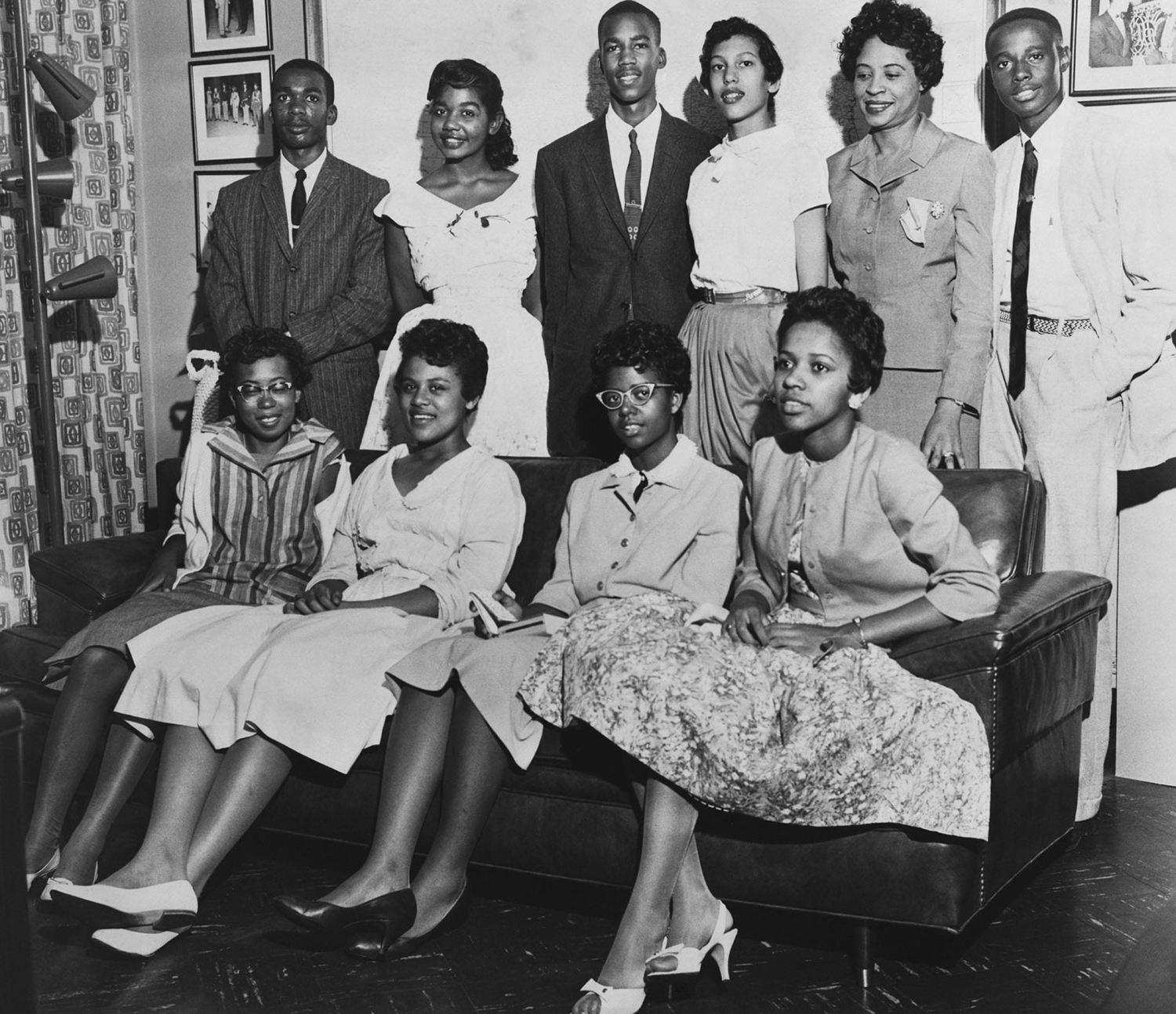
Daisy Bates poses for a photo with the students known as the Little Rock Nine.

Daisy Bates: Working for Racial Justice

Daisy Bates used her position as a newspaper owner and writer to highlight racial injustice.

Daisy Bates poses for a photo with the students known as the Little Rock Nine.

© Everett Collection Historical/Alamy

Daisy Bates (back row, second from right) with the “Little Rock Nine”— the nine students she helped as they enrolled in an all-white high school.

Did you know that March is Women’s History Month in the United States? All through history, many women have fought for the rights of others, even at times when women themselves had fewer rights than men. Daisy Bates was one of those women.

Daisy Bates was born in Huttig, Arkansas, in 1914. She experienced racism as a child, and as she grew up she became determined to work for justice and equality. In 1941, Bates married a journalist named L.C. Bates. (A journalist is a person who writes news stories.) The couple moved to Little Rock, Arkansas, and started a newspaper called the Arkansas State Press. The Arkansas State Press was dedicated to highlighting racial injustice in Arkansas.

Bates was heavily involved in the civil rights movement. In 1952, she became the president of the Arkansas chapter of the National Association for the Advancement of Colored People (NAACP), an organization that works for equal rights for Black Americans.

At the time, many public places in the South were segregated, meaning Black people were not allowed to be in the same places as white people. This began to change in the 1950s, thanks to the work of civil rights activists. In 1954, the U.S. Supreme Court ruled that public schools had to integrate, meaning they could no longer be segregated. But many schools, including those in Little Rock, made little or no effort to integrate.

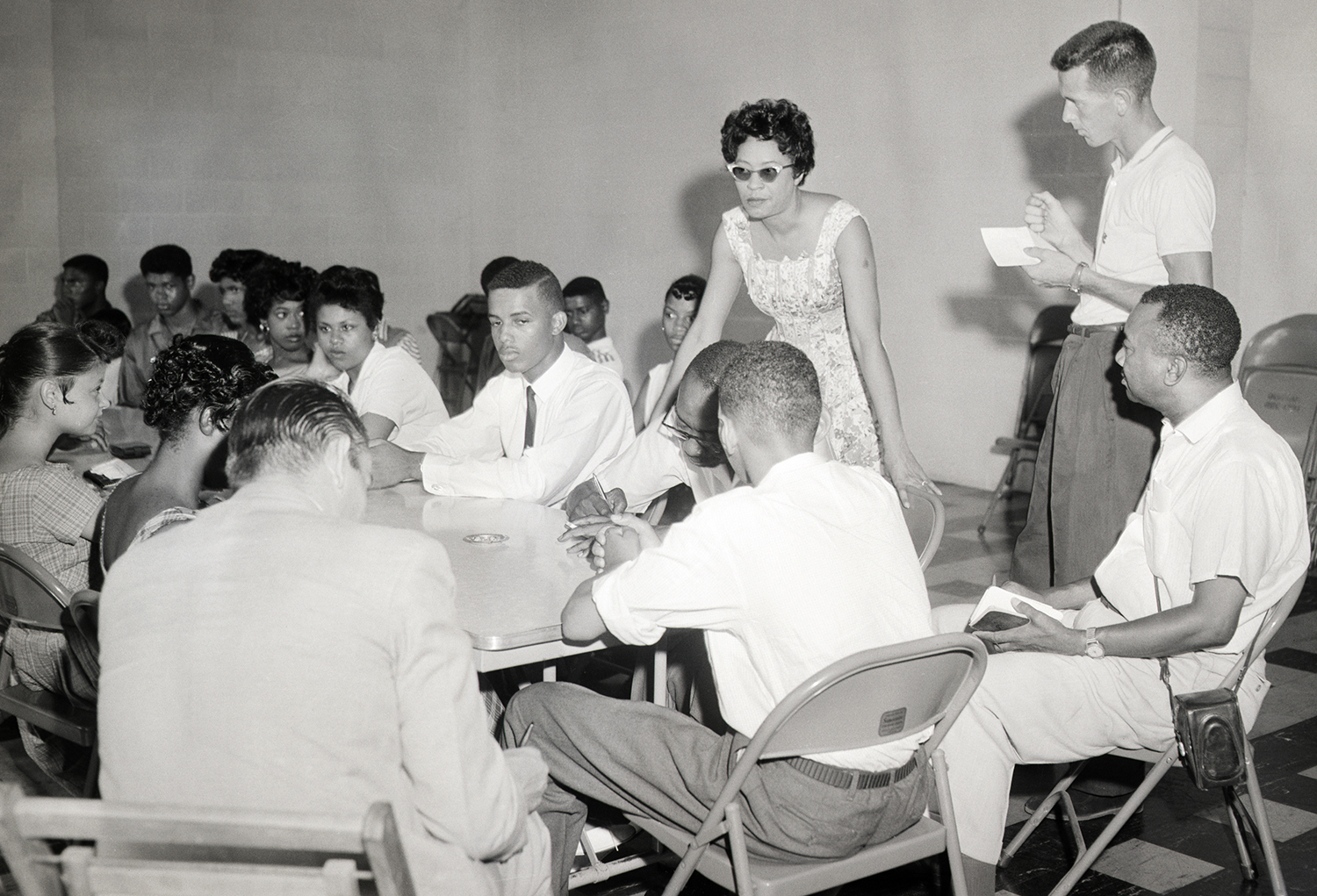
Daisy Bates stands before a group of teens who sit around a large table as well as on chairs near the table.

© Bettmann Archive/Getty Images

In this 1959 photo, Daisy Bates (standing) meets with high school students to plan a protest after the students were told they could not attend a “white” high school.

Bates decided to take matters into her own hands. She began taking Black children to schools that had been all white. When schools refused to let the Black students in, Bates would write about it in the Arkansas State Press so that the public knew the Supreme Court’s decision was not being respected.

In 1957, with support from the NAACP, Bates helped nine Black students enroll in the all-white Central High School in Little Rock and even arranged to walk them into the school. But when the group arrived for their first day, they were violently attacked and not permitted into the building. This happened day after day, until President Dwight D. Eisenhower ordered federal troops to protect the students.

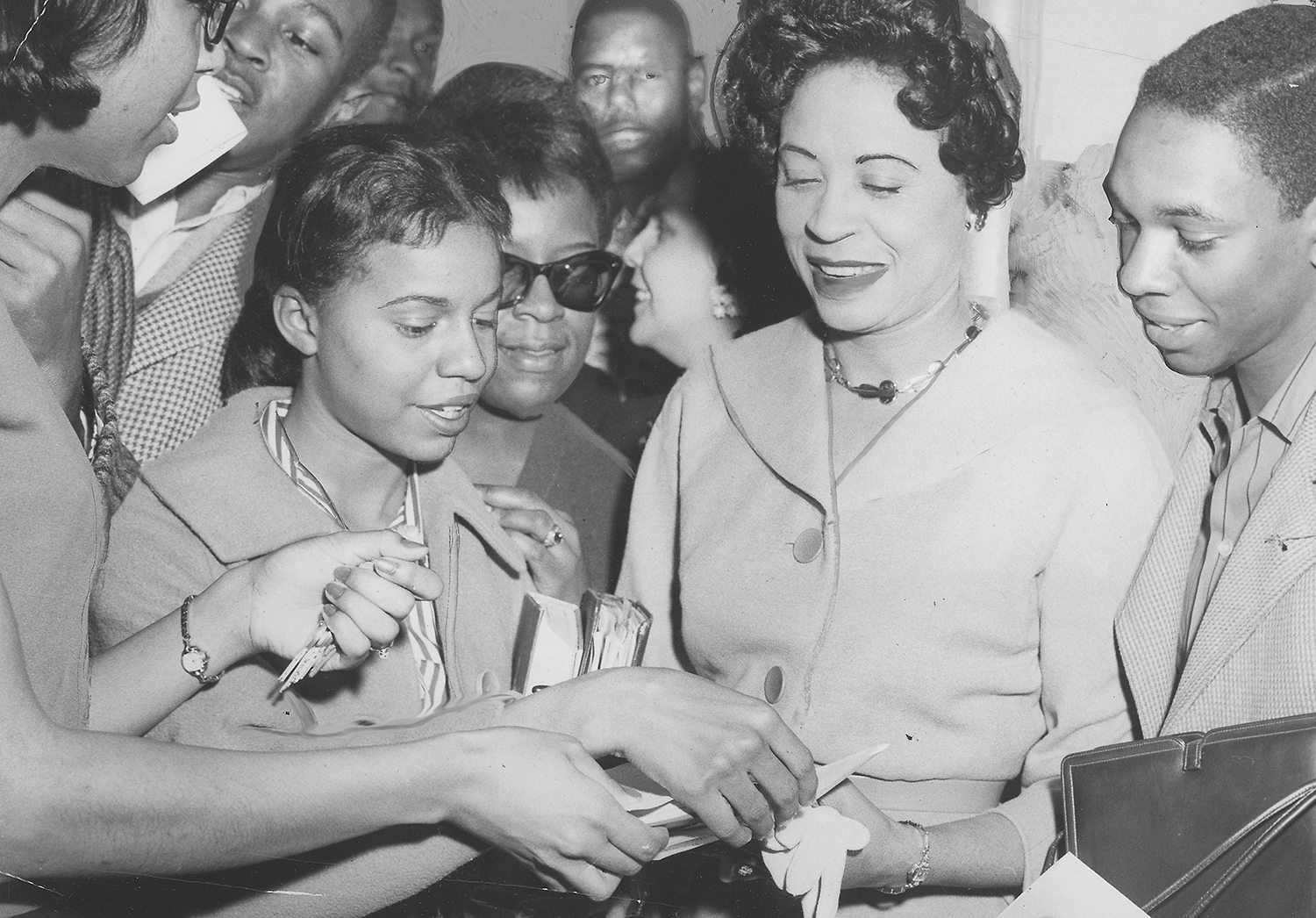
Daisy Bates smiles as she signs a piece of paper for a teen amid a crowd of other teens waiting for autographs.

© Afro American Newspapers—Gado/Getty Images

In this 1959 photo, Daisy Bates signs autographs for a group of admirers during a visit to Maryland.

Bates herself continued to experience threats and violence because of her civil rights work. In 1959, these issues forced Bates and her husband to stop printing the Arkansas State Press. But Bates continued to work for justice. In the 1960s, she moved to Washington, D.C. There, she worked for voting rights for Black Americans and supported President Lyndon Johnson’s efforts to reduce poverty.

Bates died in 1999.

Face Thinking Icon

Did You Know?

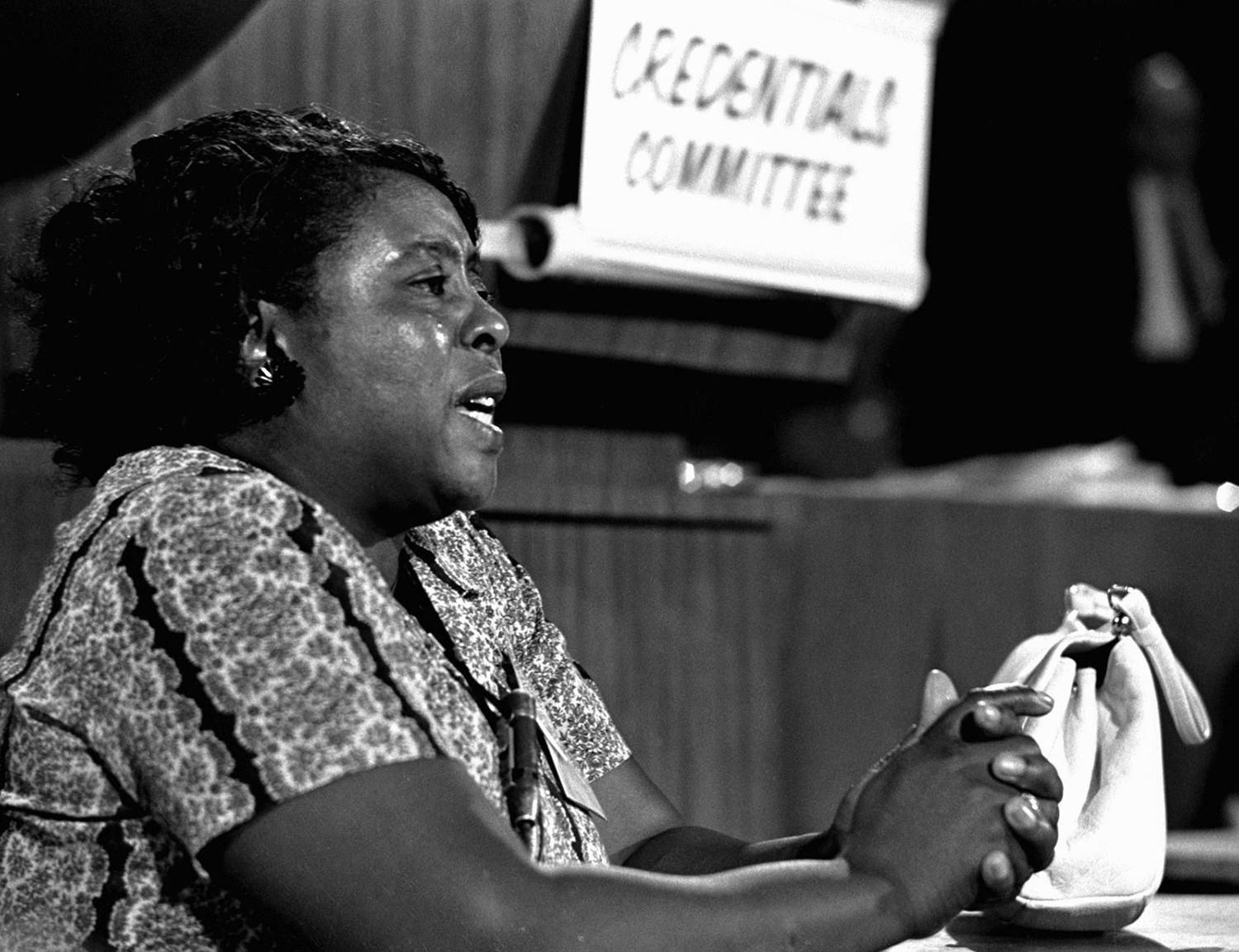
Many women participated in the civil rights movement, and some, like Daisy Bates, organized and led campaigns for equality and justice. But female civil rights leaders had to fight to be treated with respect because of the belief that women were not equal to men.

Fannie Lou Hamer sits and speaks to an audience that is off camera.

© AP Images

Civil rights leader Fannie Lou Hamer used political actions to expand rights for Black Americans.

Read Across America Week

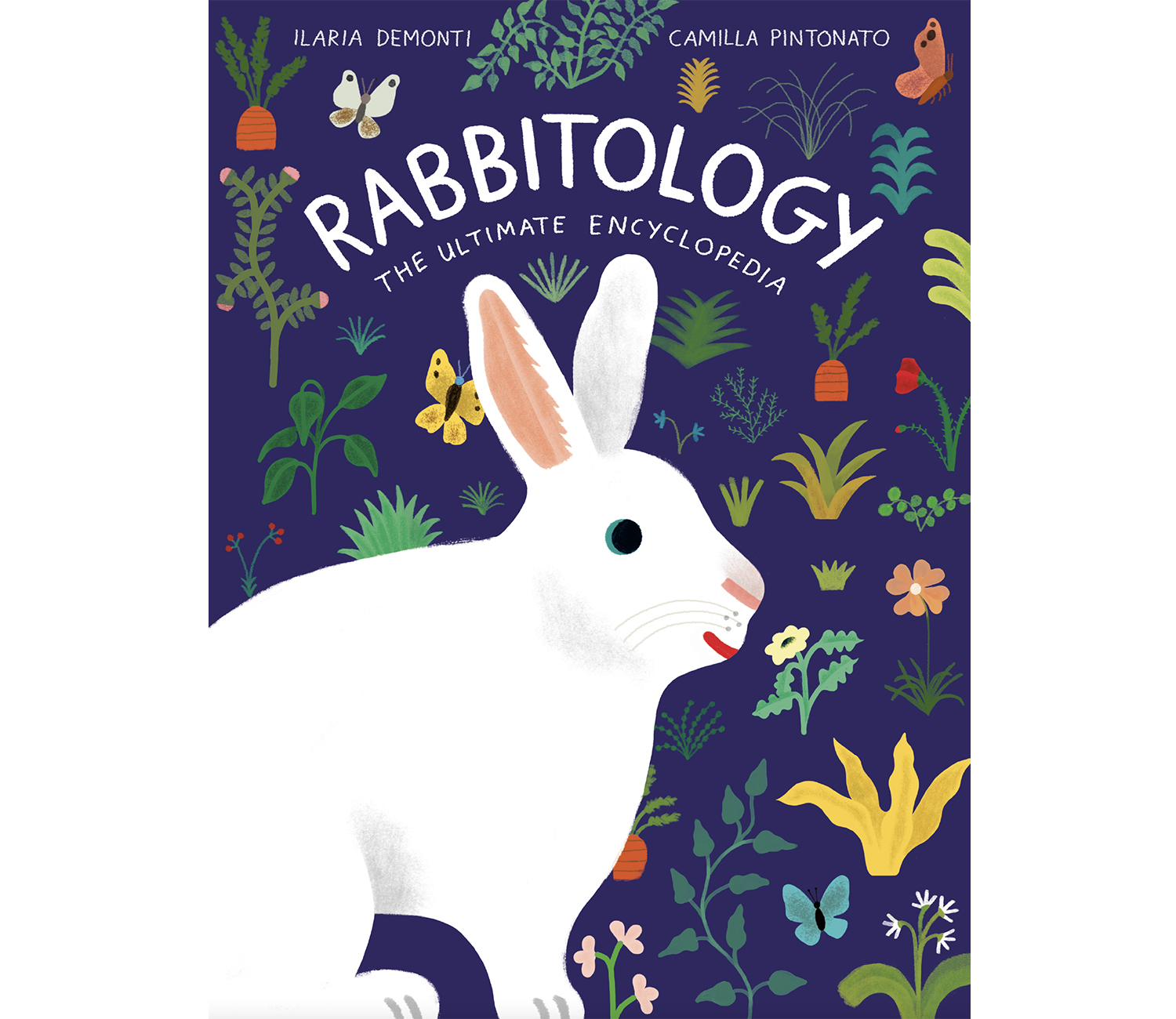
The cover of Rabbitology features a white rabbit with vegetables, flowers, and butterflies in the background.

Courtesy of © Princeton Architectural Press

March 2–6 is Read Across America Week. Take the time this week to tell your friends and your teacher about your favorite books, and we’ll tell you about one of ours!

Colorfully illustrated by Camilla Pintonato and packed with bite-sized factoids from author Ilaria Demonti, Rabbitology tells you everything you ever wanted to know about rabbits!

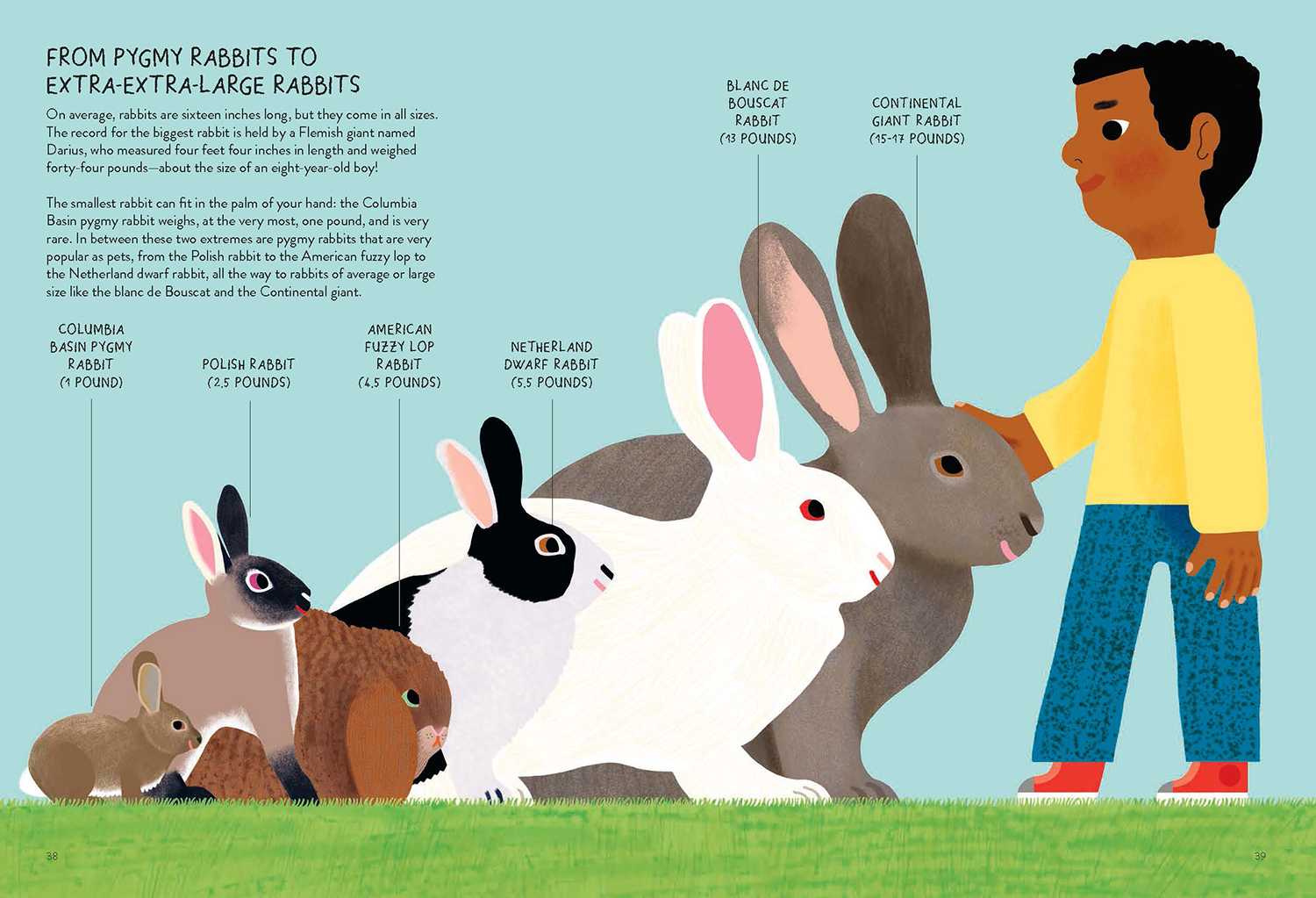
An interior page from Rabbitology shows a child with six types of rabbits, all labeled. There is also text describing the rabbits.

Courtesy of © Princeton Architectural Press

Here’s a sample page from Rabbitology.

Can a frog jump farther than a rabbit? What can you learn from rabbit poop? Is it true that rabbits’ teeth never stop growing? The answers are on the pages of Rabbitology

Rabbitology is the latest in a nonfiction series that also includes Chickenology, Sheepology, and Pigology.

Women in History

© ICP— incamerastock/Alamy; © Soe Than Win—AFP/Getty Images; Encyclopædia Britannica, Inc.; © Robert Gauthier—Los Angeles Times/Getty Images; © Dan Mullan/Getty Images

In honor of Women’s History Month, click through the slideshow to learn about more notable women.

Then check out Britannica’s women’s history feature, where you can read about extraordinary women from all walks of life.

Word of the Day Icon

Word of the Day

injustice

Part of speech:

noun

Definition:

: unfair treatment : a situation in which the rights of a person or a group of people are ignored

Definitions provided by
Merriam-Webster Logo
Game Icon

Play

Crossword

.

In Case You Missed It

When 5th graders asked Major League Baseball player Ozzie Albies which pet fish to get, he helped out in a big way.
March 11, 2026
Taryn Smith is the first American woman to row solo across the Atlantic Ocean.
March 5, 2026
A powerful waterfall doesn’t easily freeze, but this winter has been especially cold!
March 3, 2026
For Women’s History Month, we’re honoring two women who inspired many others to take to the skies.
February 26, 2026

Why Polar Bear Fur Doesn’t Freeze

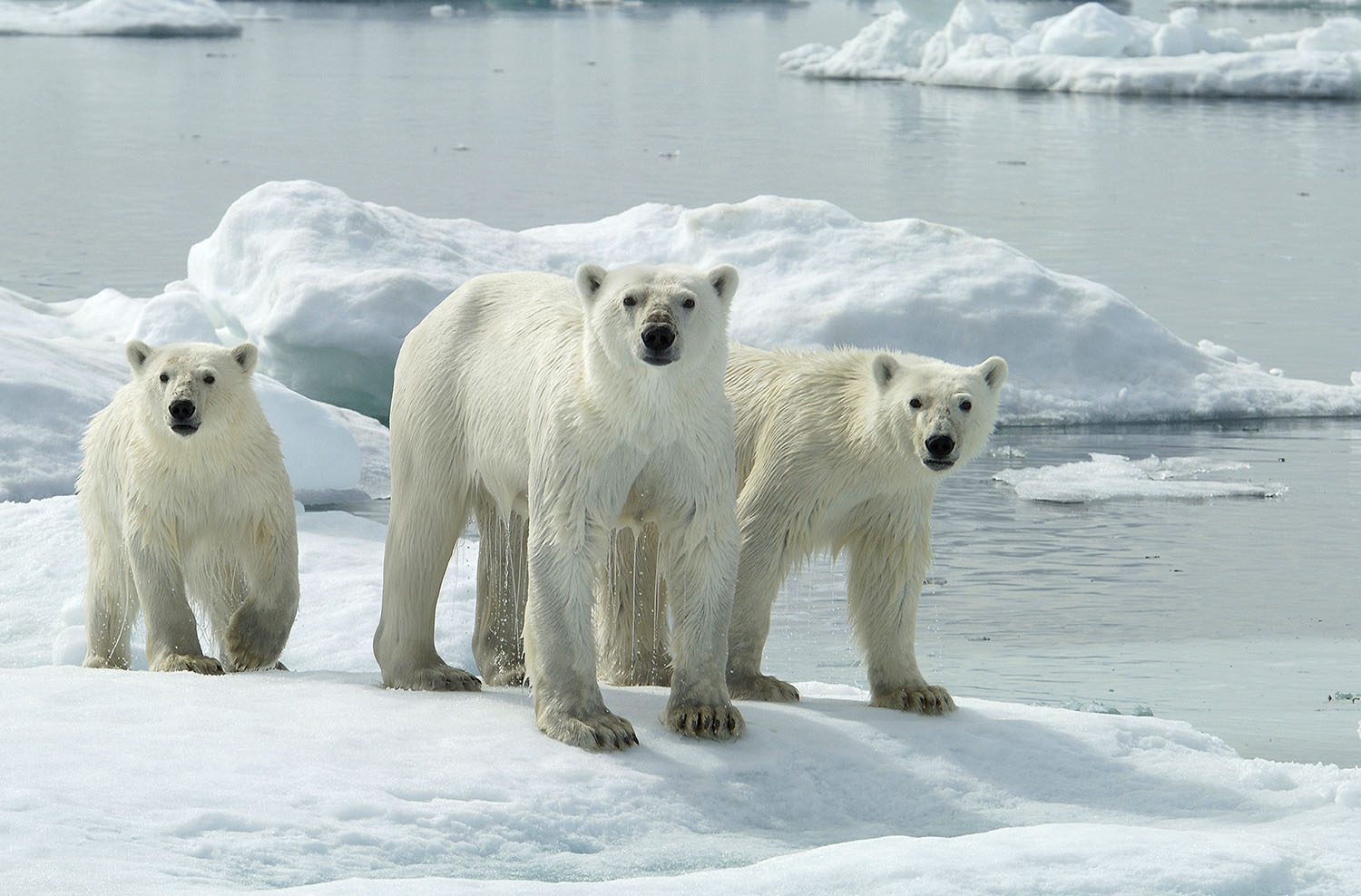
Three wet polar bears stand on frozen land near a body of water.

Why Polar Bear Fur Doesn’t Freeze

Polar bears swim on the coldest of days. So why doesn’t their fur freeze? Scientists have the answer.

Three wet polar bears stand on frozen land near a body of water.

© Dennis Fast—VWPics/Getty Images

These bears will drip dry!

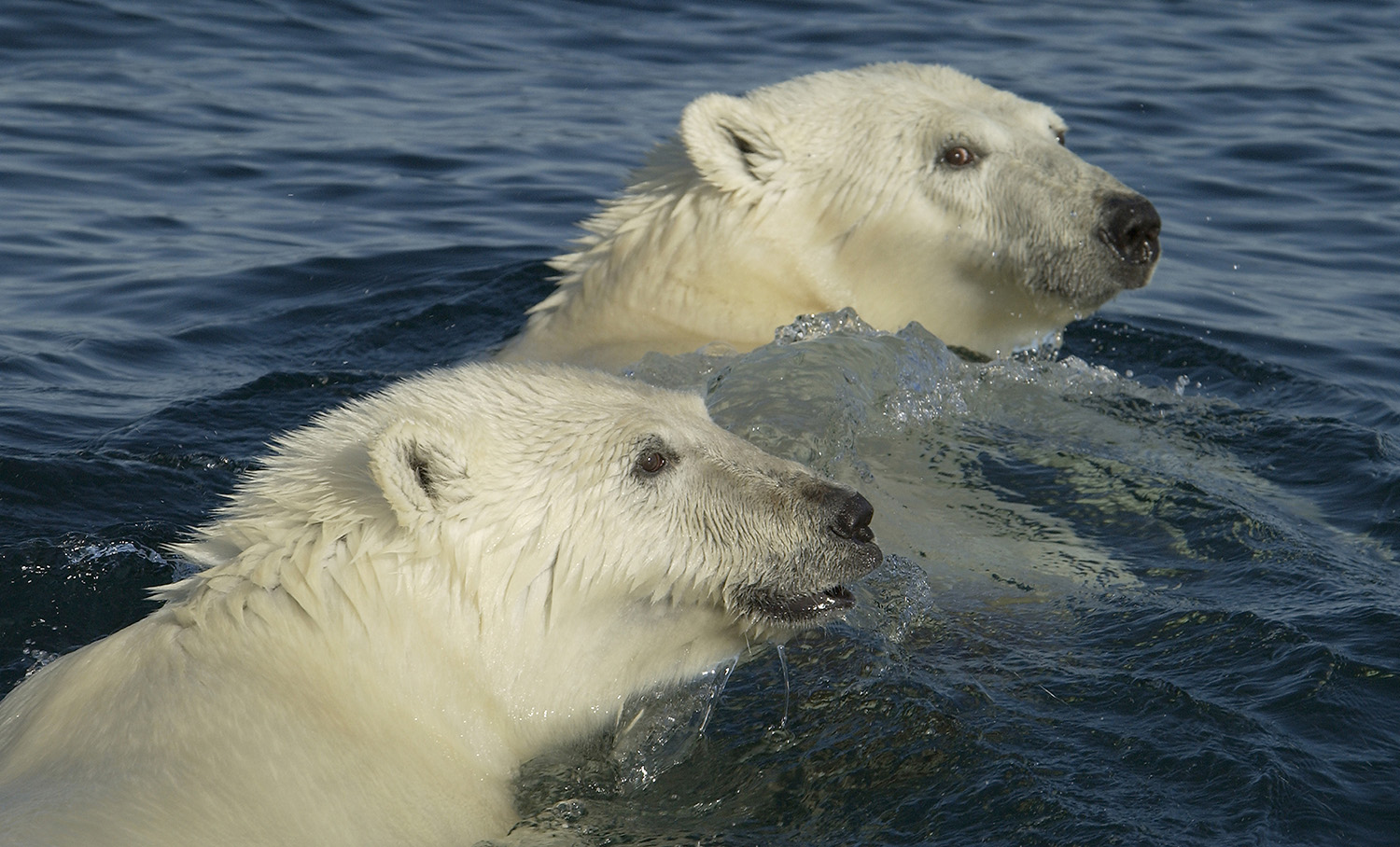
If you were to go outdoors with wet hair on a really cold day, your hair might freeze. That’s true of most mammals. But polar bears are different. Their fur doesn’t freeze, even after they’ve been diving in icy waters. In a new study, scientists found out why.

Scientists in Norway studied polar bear fur to see what kept it from freezing. At first, they thought there might be something in the structure, or makeup, of the fur that prevented it from freezing. But there wasn’t anything unusual about the way the fur looked under a microscope. The scientists did notice something else, though—the fur was very greasy. So they washed the grease out of the fur and then wet the fur and tried freezing it. Without the grease, the fur froze. 

Now that they knew the grease was responsible for the fur’s anti-freezing properties, scientists looked at the molecules that make up the grease. They found that the grease has high levels of certain chemical compounds that don’t freeze easily because ice doesn’t stick to them. Ice sticks easily to a compound called squalene, but the grease on polar bear fur does not have this compound.

Two swimming polar bears have their heads above the water.

© Dennis Fast—VWPics/Getty Images

Does that mean human hair won’t freeze if it’s greasy? Curious to find out, one of the scientists did not wash his hair for a week. Although it became greasy, the hair froze as easily as it did when it was clean.

“[That scientist] tested the anti-icing properties and could see very clearly that human hair, whether you wash it or not, isn’t very good at anti-icing,” scientist Bodil Holst told National Public Radio.

Scientists say it’s useful to know what prevents polar bear fur from freezing. It could lead to the development of new products for de-icing (preventing ice on) items such as airplanes and road signs. Existing de-icing products can be harmful to the environment.

Fun Fact Icon

Fun Fact

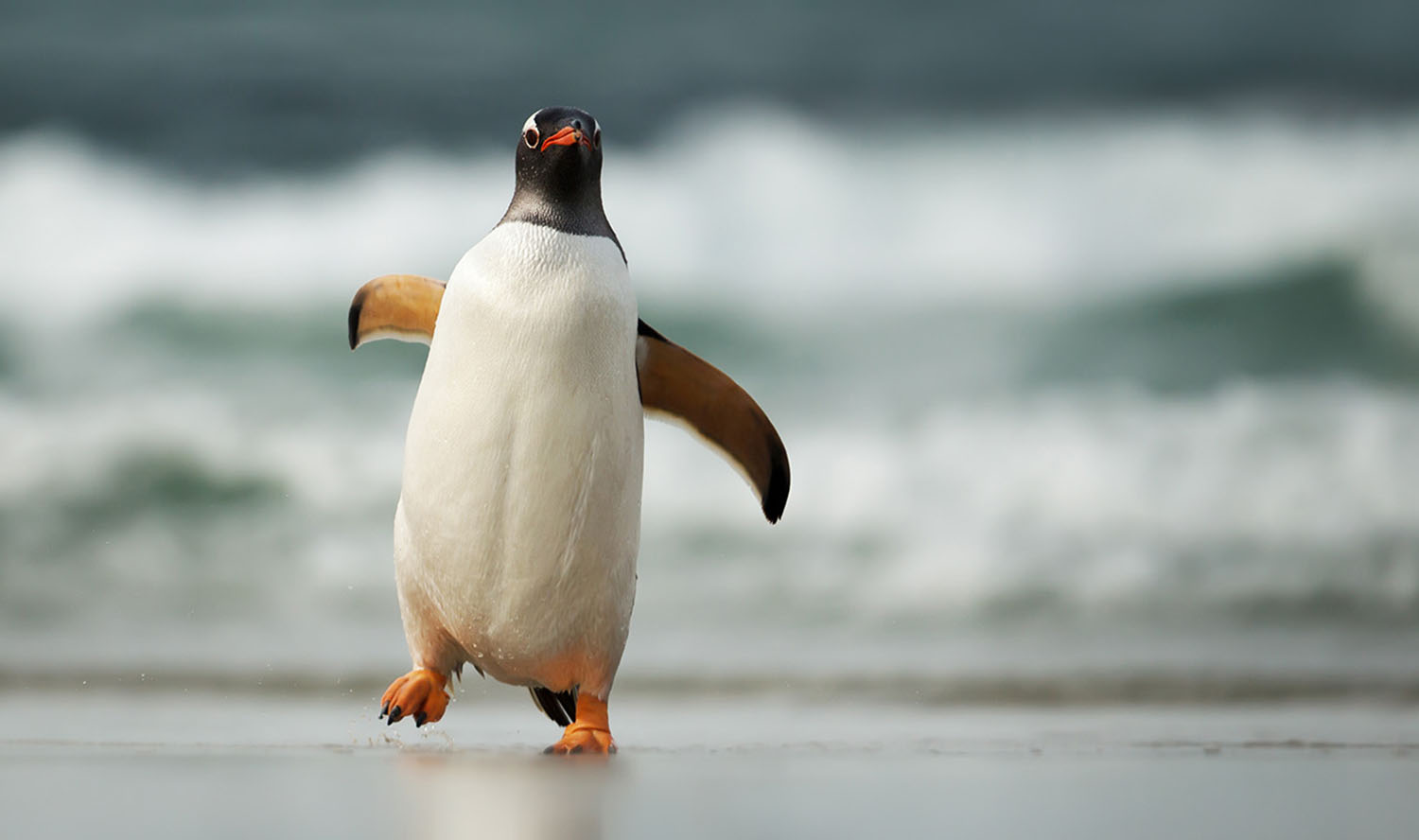
Like polar bear fur, cold-weather penguin feathers don’t freeze when they get wet. Scientists say this is because tiny pores on the birds’ feathers keep water out by trapping air instead.

A gentoo penguin walks on a beach away from the water.

© giedriius/stock.adobe.com

Weird Facts About the North Pole

A map of the North Pole with the land to its south.

Encyclopædia Britannica, Inc.

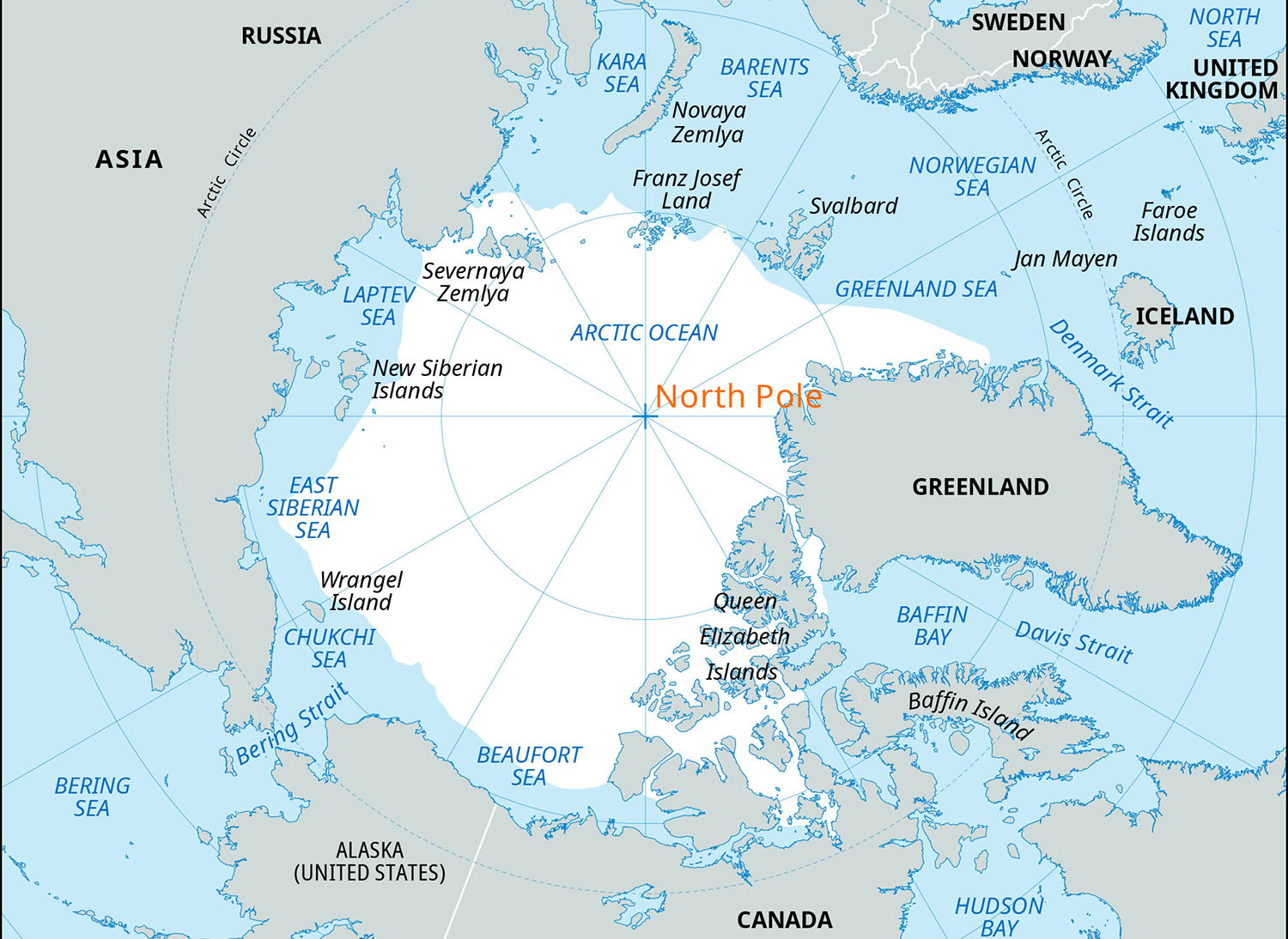
There’s no land at the North Pole. The white on this map is ice.

Polar bears live in the northernmost parts of Earth and have even been spotted near the North Pole. What else do we know about the North Pole? Here are a few facts that may surprise you!

  • The North Pole is the northernmost part of our planet. If you traveled anywhere from the North Pole, you’d be going south.
  • There’s no land at the North Pole. The pole is located at a part of the Arctic Ocean that’s covered in ice.
  • At the North Pole, the Sun rises on March 20 and stays up for six months. It sets on September 22 and stays down for another six months. This is because Earth is tilted on its axis.
  • The North Pole is cold, but Antarctica is colder. On July 21, 1983, temperatures at a research station there measured -128.6°F (-89.2°C). That’s the coldest temperature ever recorded on Earth.

The Bear Facts

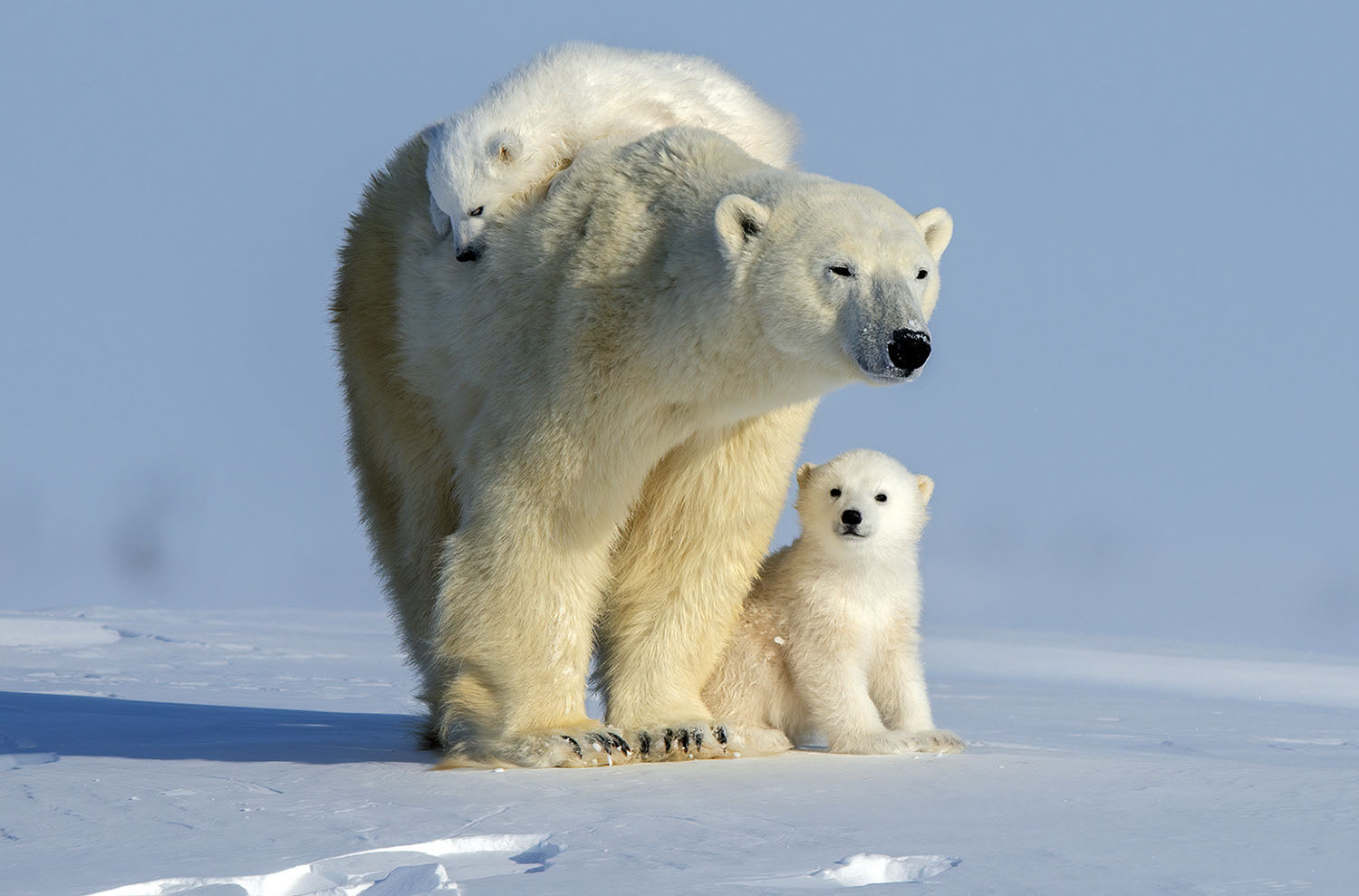
A polar bear with two young cubs. One cub sits beside her and the other is on her back.

© Hao Jiang—500px/Getty Images

Did you know that a polar bear’s paw can be wider than a Frisbee? You can learn more about polar bears at Britannica!

Word of the Day Icon

Word of the Day

frigid

Part of speech:

adjective

Definition:

: very cold

Definitions provided by
Merriam-Webster Logo
Game Icon

Play

Criss Cross

Can you find all the words?

.

In Case You Missed It

When 5th graders asked Major League Baseball player Ozzie Albies which pet fish to get, he helped out in a big way.
March 11, 2026
Taryn Smith is the first American woman to row solo across the Atlantic Ocean.
March 5, 2026
A powerful waterfall doesn’t easily freeze, but this winter has been especially cold!
March 3, 2026
For Women’s History Month, we’re honoring two women who inspired many others to take to the skies.
February 26, 2026

A Friend to All Books

Press photo of Mac Barnett looking at the camera with a wood panel wall in the background.

A Friend to All Books

Author Mac Barnett is the 2025–2026 National Ambassador for Young People’s Literature.

Press photo of Mac Barnett looking at the camera with a wood panel wall in the background.

 © Chris Black, courtesy of the Library of Congress, Washington, D.C.

Mac Barnett

Mac Barnett is a huge fan of picture books.

“Picture books are a beautiful, sophisticated, and vibrant art form,” Barnett says. “The joy of sharing picture books with kids is why I started writing children’s books in the first place.” 

Now a best-selling author of dozens of children’s books, Barnett has the perfect opportunity to share what he loves. He’s just been named the 2025–2026 National Ambassador for Young People’s Literature. Barnett is the ninth author to be named ambassador. Like the authors before him, he’ll use this position to help get kids excited about books.

“It’s [an] honor to serve as ambassador. When I got the news, I was speechless, which is unusual for me,” Barnett said, after the announcement was made. “Now I feel energized to proclaim the many glories of children’s literature, with a particular focus on a unique and marvelous way of telling stories: the children’s picture book.”

As ambassador, Barnett plans to highlight the way a picture book uses illustrations to tell a story. The illustrations aren’t just beautiful. They help move the story along, as much as the words do.

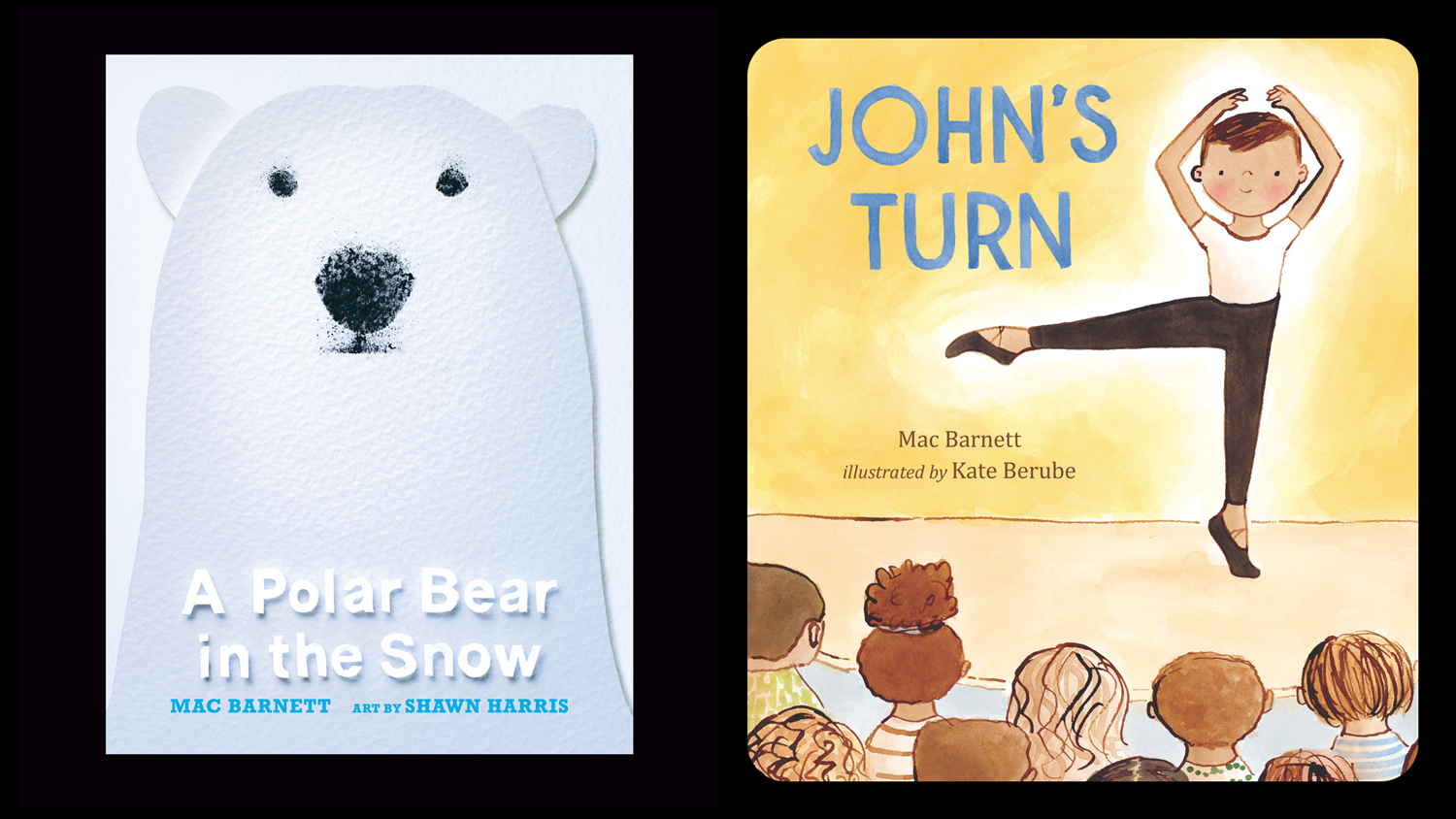
The covers of Mac Barnett’s books, A Polar Bear in the Snow and John’s Turn, are shown side by side.

Used by permission of Candlewick Press; Photo Composite Encyclopaedia Britannica, Inc.

Mac Barnett isn’t just a fan of picture books. He has written several of them!

Barnett’s own picture books include Extra Yarn, A Polar Bear in the Snow, and Sam & Dave Dig a Hole. (Barnett writes the words while an illustrator draws the pictures.) Barnett is also the author of the Mac B., Kid Spy series of novels and the First Cat in Space graphic novels.

“[As ambassador] I am, of course, excited to talk to young readers,” Barnett said. “But I’m also eager to speak to adults—who often underestimate or overlook children’s literature—to champion the power of picture books and the brilliance of the kids who read them.”

Face Thinking Icon

Did You Know?

When he was in high school, Mac Barnett volunteered his time helping kids with their reading. This experience inspired him to become a writer.

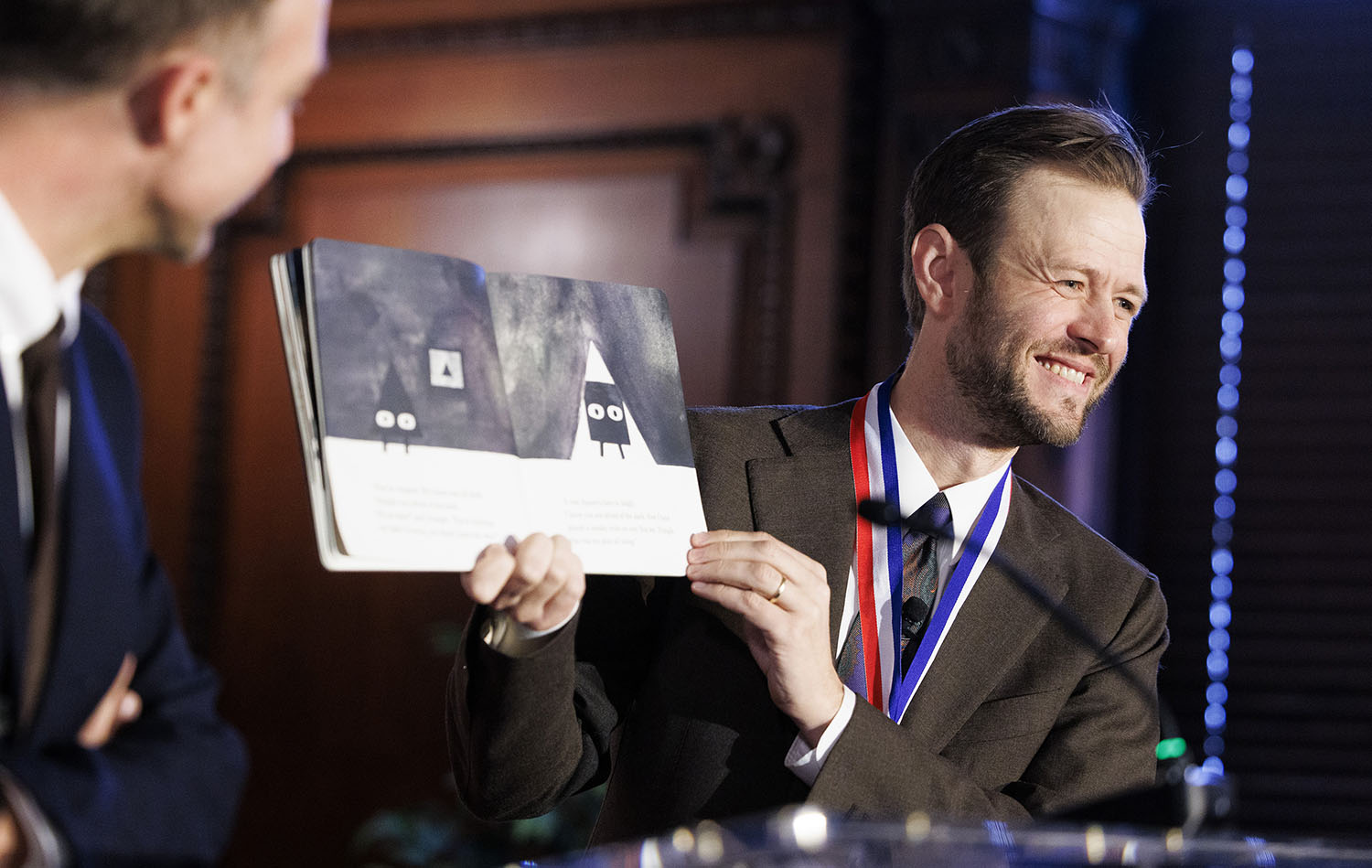
Mac Barnett smiles as he holds open his book, Triangle, to show the illustrations to an audience as Jon Klassen looks on.

© Shawn Miller/Library of Congress

Mac Barnett (right) and illustrator Jon Klassen read from their book, Triangle, on February 2, 2025.

A Sweet Invention

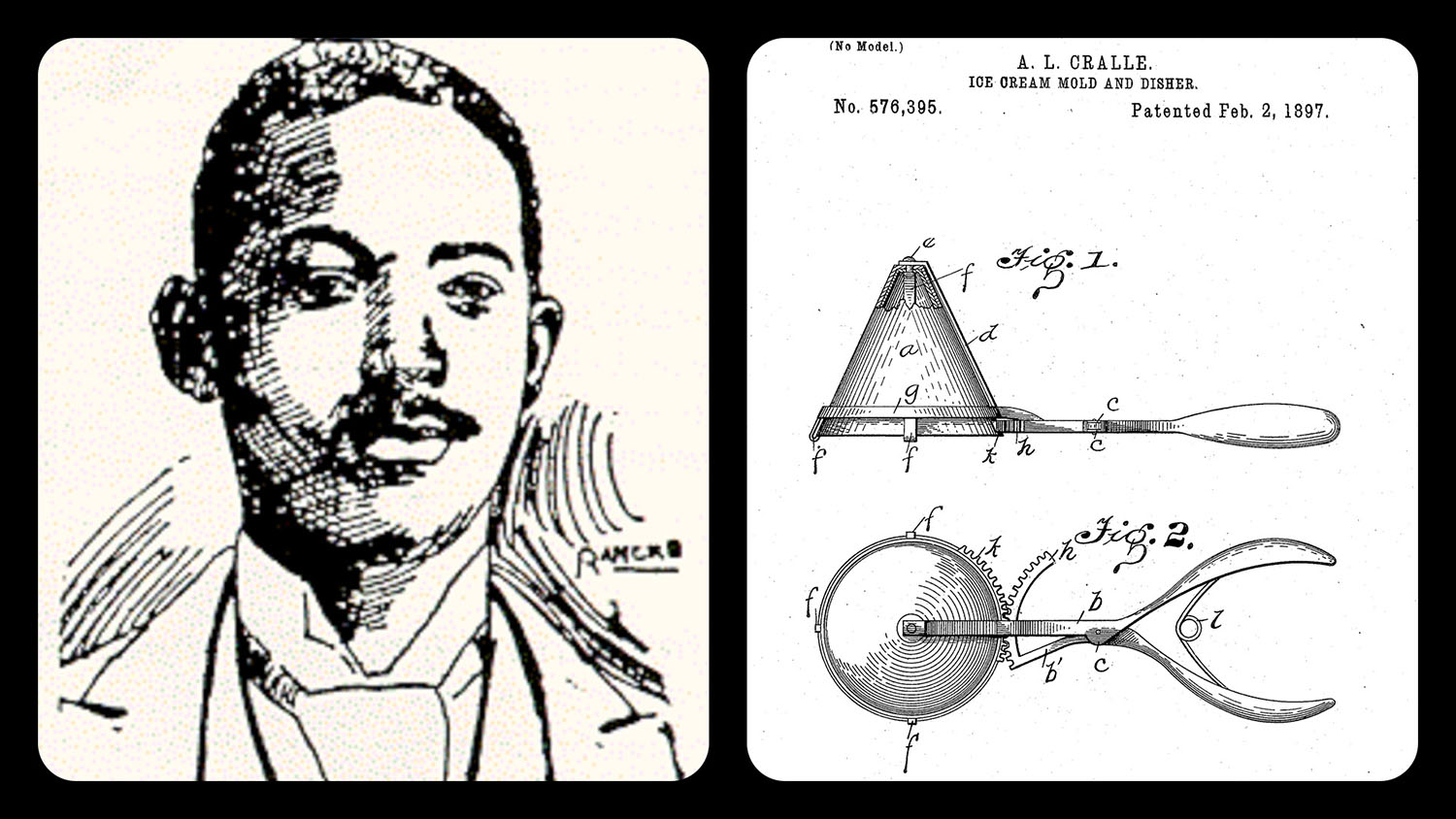
Side by side, an etching of Alfred L. Cralle and the 1897 patent for his ice cream scoop.

© Alpha Stock/Alamy, Courtesy of the U.S. Patent and Trademark Office, Photo Composite Encyclopaedia Britannica, Inc.

Alfred L. Cralle (left) invented the Ice Cream Mold and Disher. An illustration of his invention is shown on the right.

Have you ever tried to scoop ice cream? It’s not always easy…unless you have an ice cream scoop. Ice cream scoops came about in the 1890s, thanks to the genius of a man named Alfred L. Cralle.

Cralle was working at a drugstore and hotel where ice cream was being served when he noticed the problem. When servers used a spoon as a scoop, the ice cream would stick to the spoon, and a second spoon was necessary to scrape the cold, sticky stuff into the bowl. Cralle felt there had to be a better way.

Cralle created a device he called the Ice Cream Mold and Disher. The device had a built-in scraping tool. Now, ice cream could be scooped and plopped into a bowl or cone with one hand. This was an early version of the modern ice cream scoop.

Cralle’s invention forever changed the way ice cream was served.

Creative Minds

The Metropolitan Museum of Art, New York; Courtesy of the American Antiquarian Society; ©  Addison N. Scurlock—Michael Ochs Archives/Getty Images; © Apic/Getty Images; © Science History Images/Alamy

Where would dessert fans be without the creativity of Alfred L. Cralle, inventor of the ice cream scoop?

Some inventors solve big problems. Some solve little problems. Others, like toy inventors, just add a little more fun to our lives.

The slideshow above features just a few of the inventors who helped change the world. You can read more about them and many other inventors at Britannica!

Word of the Day Icon

Word of the Day

doohickey

Part of speech:

noun

Definition:

: an object or device whose name you do not know or have forgotten

Definitions provided by
Merriam-Webster Logo
Game Icon

Play

Word Search

Can you find all the words?

.

In Case You Missed It

When 5th graders asked Major League Baseball player Ozzie Albies which pet fish to get, he helped out in a big way.
March 11, 2026
Taryn Smith is the first American woman to row solo across the Atlantic Ocean.
March 5, 2026
A powerful waterfall doesn’t easily freeze, but this winter has been especially cold!
March 3, 2026
For Women’s History Month, we’re honoring two women who inspired many others to take to the skies.
February 26, 2026

Check Out These Winning Books!

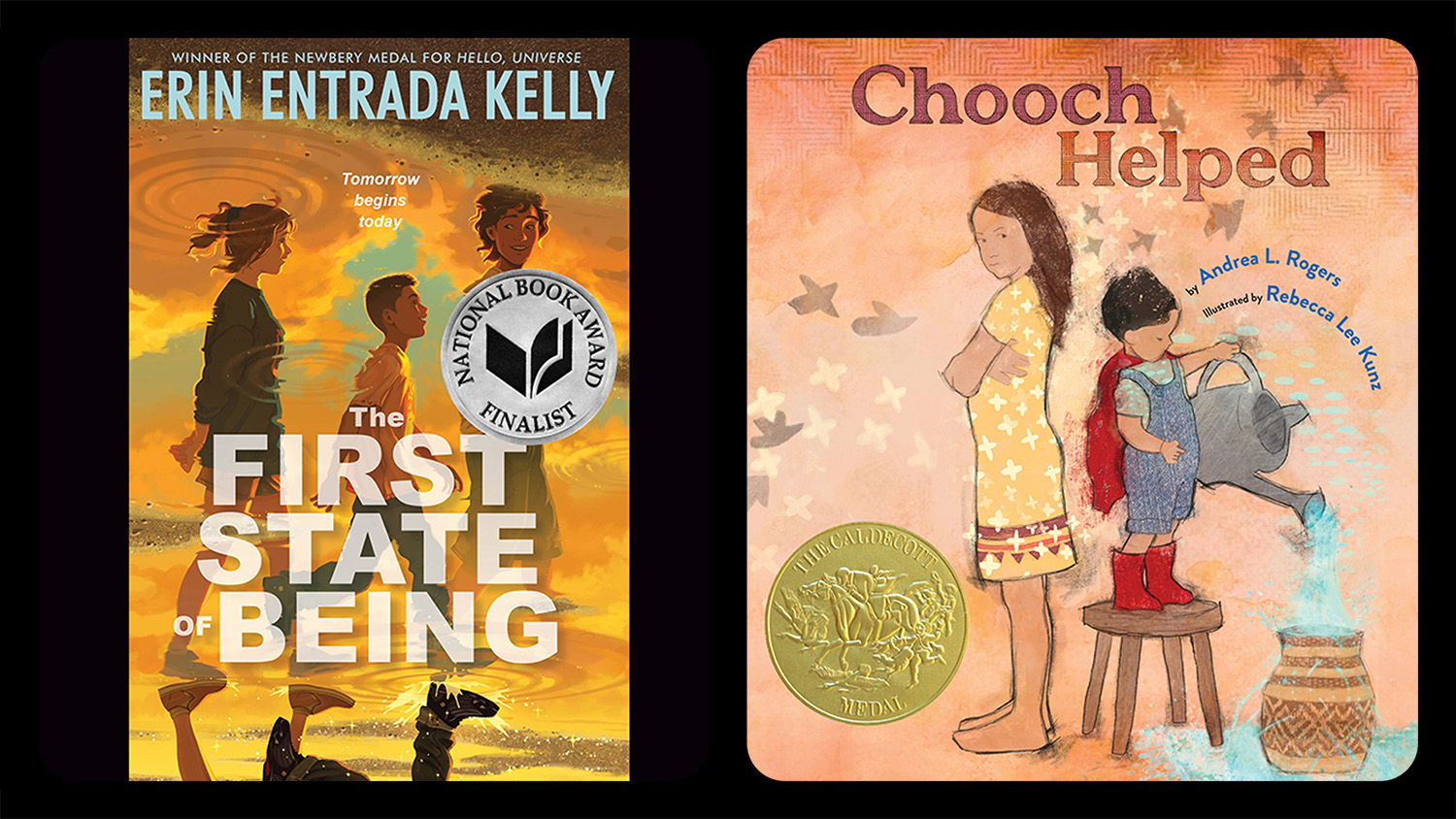
Side by side book covers for The First State of Being and Chooch Helped.

Check Out These Winning Books!

The 2025 Newbery and Caldecott Medals went to the best books of 2024. Here’s more about the big winners!

Side by side book covers for The First State of Being and Chooch Helped.

© Greenwillow Books, an imprint of HarperCollins Publishers, Illustrated by Rebecca Lee Kunz, used with permission of Levine Querido; Photo Composite Encyclopaedia Britannica, Inc.

The First State of Being (left) won the Newbery Medal, while Chooch Helped (right) won the Caldecott Medal.

It’s awards season for children’s books, and this year’s biggest winners have just been revealed.

On January 27, the American Library Association (ALA) awarded its two highest honors—the Newbery Medal for outstanding children’s literature and the Caldecott Medal for excellence in children’s picture books. The Newbery and Caldecott medals are awarded each year. The 2025 awards went to books that were published in 2024.

The First State of Being by Erin Entrada Kelly is the winner of this year’s Newbery Medal. The book, which takes place in 1999, is about 12-year-old Michael Rosario, who worries the world might be thrown into disorder when the year 2000 arrives—a common concern at the time. When Michael meets a time traveler from the future, he becomes desperate to know what will happen in the next 20 years.

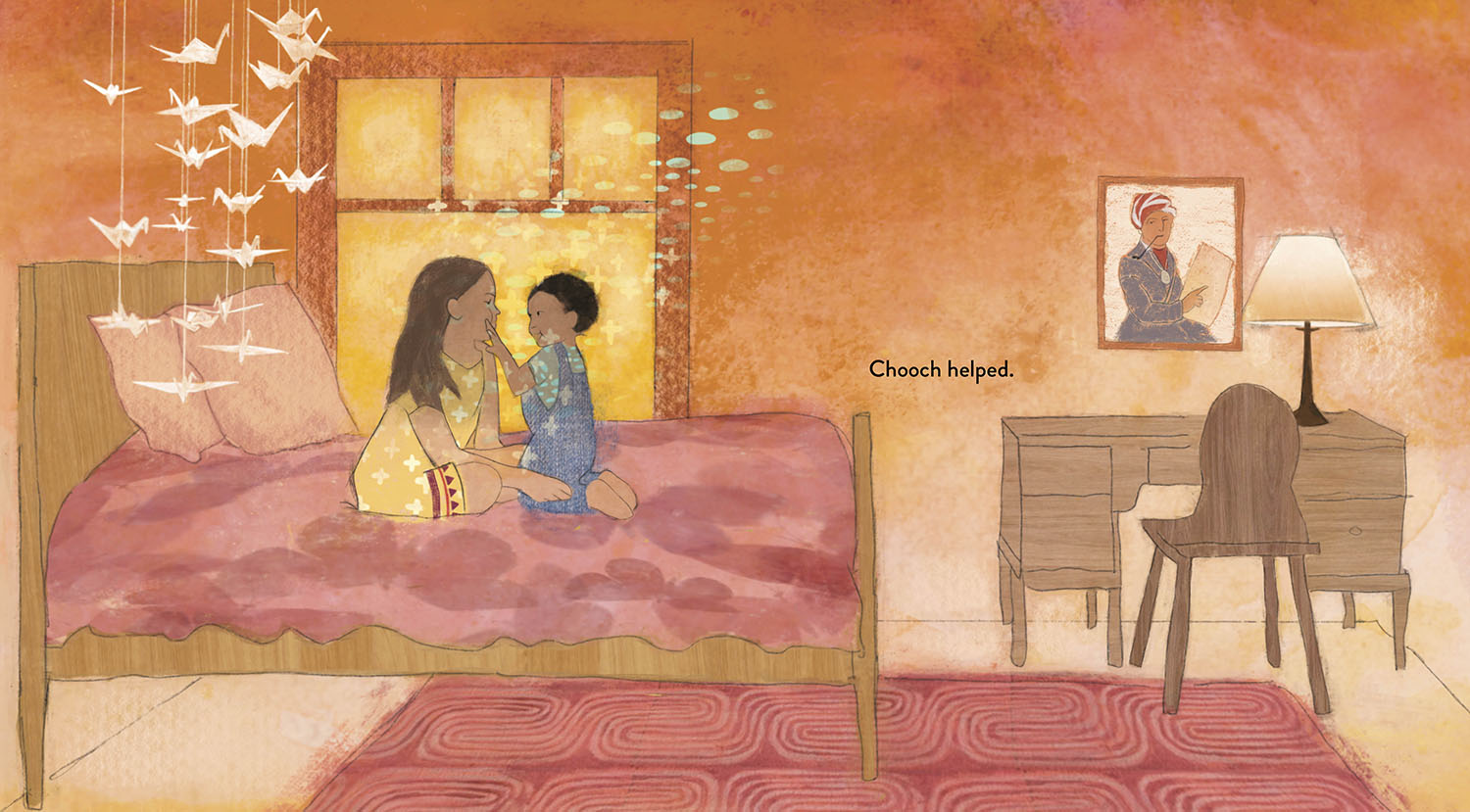
The Caldecott Medal went to Chooch Helped, illustrated by Rebecca Lee Kunz and written by Andrea Rogers. Chooch Helped is about Sissy, a kid whose 2-year-old brother, Chooch, messes up everything. Sissy becomes even more frustrated when her parents say that Chooch is only trying to help.

An interior page from Chooch Helped shows a sister and her infant brother sitting on a bed.

Illustrated by Rebecca Lee Kunz, used with permission of Levine Querido.

A page from Chooch Helped, the winner of the 2024 Caldecott Medal for excellence in picture books.

The ALA recognized other books with Newbery Honors and Caldecott Honors. For an author, receiving an “honors” recognition is a bit like winning a silver medal instead of a gold medal at the Olympics. It’s still a pretty big deal.

Several children’s books received other honors, including Coretta Scott King Book Awards, which recognize Black American authors and illustrators. Below is an incomplete list of winners. Find them online or at the library!

Newbery Honor Books

  • Across So Many Seas, by Ruth Behar
  • Magnolia Wu Unfolds It All, by Chanel Miller
  • One Big Open Sky, by Lesa Cline-Ransome
  • The Wrong Way Home, by Kate O’Shaughnessy

Caldecott Honor Books

  • Home in a Lunchbox, written and illustrated by Cherry Mo
  • My Daddy Is a Cowboy, illustrated by C.G. Esperanza and written by Stephanie Seales
  • Noodles on a Bicycle, illustrated by Gracey Zhang and written by Kyo Maclear
  • Up, Up, Ever Up! Junko Tabei: A Life in the Mountains, illustrated by Yuko Shimizu and written by Anita Yasuda

Coretta Scott King Author Book Award

Twenty-four Seconds from Now…, by Jason Reyolds

Coretta Scott King Illustrator Book Award

My Daddy Is a Cowboy, illustrated by C.G. Esperanza and written by Stephanie Seales

Coretta Scott King Author Honor Books

  • Black Girl You Are Atlas, by Renée Watson
  • Black Star, by Kwame Alexander
  • One Big Open Sky, by Lesa Cline-Ransome

Coretta Scott King Illustrator Honor Books

  • Coretta: The Autobiography of Mrs. Coretta Scott King, illustrated by Ekua Holmes and written by Coretta Scott King with the Reverend Dr. Barbara Reynolds
  • Everywhere Beauty Is Harlem: The Vision of Photographer Roy DeCarava, illustrated by E.B. Lewis and written by Gary Golio
  • Go Forth and Tell: The Life of Augusta Baker, Librarian and Master Storyteller, illustrated by April Harrison and written by Breanna J. McDaniel
Face Thinking Icon

Did You Know?

In 1999, many people worried about the “Y2K bug.” This was thought to be a bug (problem) inside computer systems that would prevent computers from being able to handle calendar dates after 1999. If this bug existed, computers around the world would stop working correctly when the calendar changed over to the year 2000. Luckily, that didn’t happen.

Two men in uniform look worried as they speak on phones at a command center with several phones and computers.

© Mark Leffingwell—AFP/Getty Images

In this 1999 photo, two U.S. military officers make preparations for the arrival of the year 2000. Many people were concerned that computer systems would not be able to handle it.

Looks Good, Tastes Good!

A woman wearing virtual reality goggles pours a virtual cup of coffee, shown as an illustration, while illustrations of other foods hover around her.

© Best View Stock/Getty Images

Scientists in Hong Kong have invented a handheld device that they’re calling a “virtual reality lollipop.” Virtual reality (VR) technology lets people use their senses to experience (see and hear) objects and environments that aren’t really there. Scientists are trying to expand VR experiences so that users can use their other three senses—smell, touch, and taste.

The VR lollipop has tiny pouches filled with different gels. When users lick one of the gels, they taste one of nine flavors—sugar, salt, citric acid, cherry, milk, green tea, passion fruit, grapefruit, and durian (a type of fruit).

The Newbery Medal

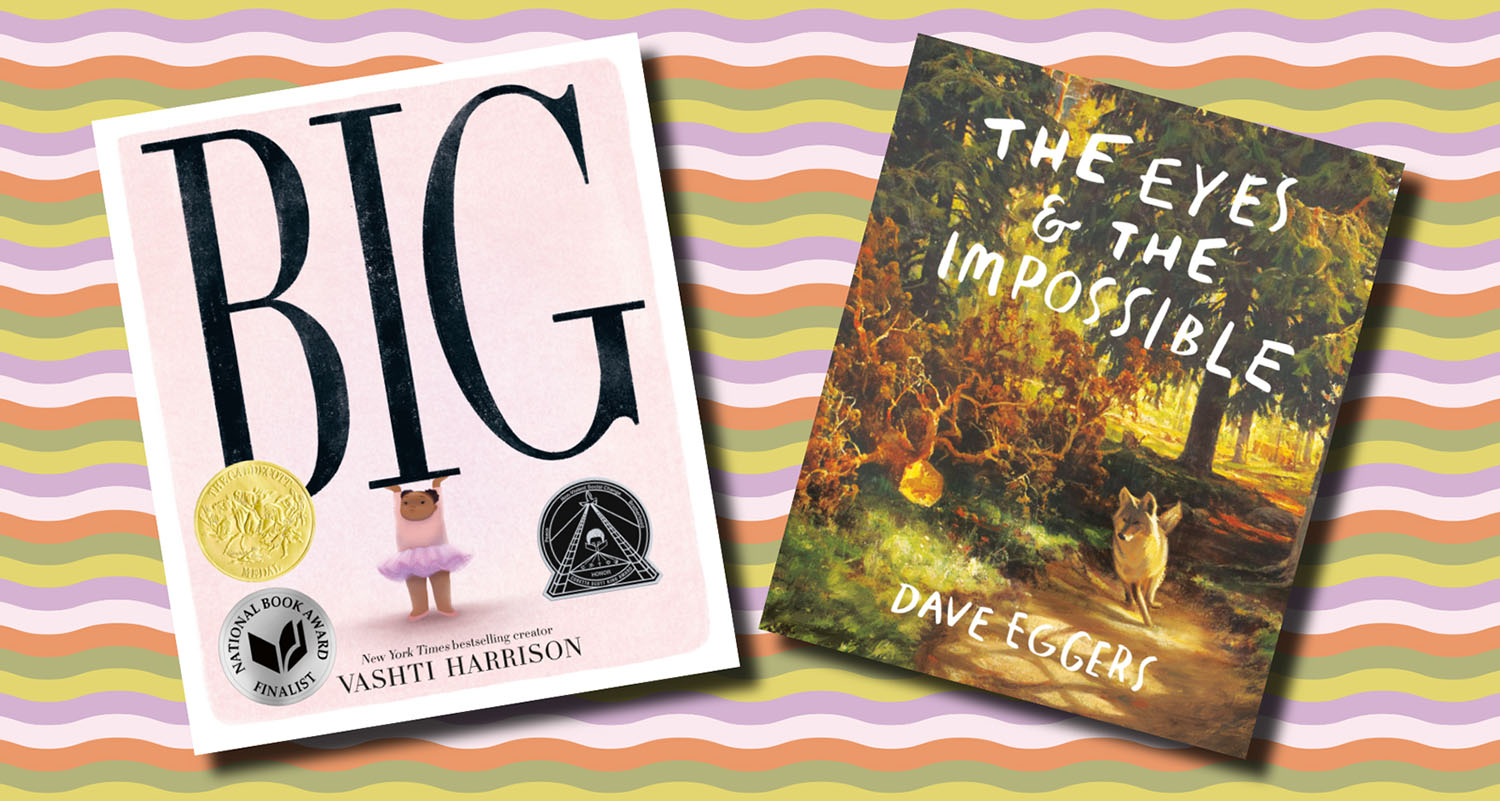
Side by side covers of Big by Vashti Harrison and The Eyes and the Impossible by Dave Eggers.

© Little, Brown Books for Young Readers; Knopf Young Readers/Random House Children’s Books, Photo Illustration Encyclopaedia Britannica, Inc.

The Eyes and the Impossible, by Dave Eggers, was the winner of the 2024 Newbery Medal. Big, by Vashti Harrison, won the Caldecott Medal.

If you’re looking for a good book to read, it’s hard to go wrong with a Newbery Medal winner. You can read about the Newbery Medal and find a list of all the previous winners at Britannica.

Word of the Day Icon

Word of the Day

devour

Part of speech:

verb

Definition:

: to enjoy (something) in a way that shows you are excited about it

Definitions provided by
Merriam-Webster Logo
Game Icon

Play

Word Search

Can you find all the words?

.

In Case You Missed It

When 5th graders asked Major League Baseball player Ozzie Albies which pet fish to get, he helped out in a big way.
March 11, 2026
Taryn Smith is the first American woman to row solo across the Atlantic Ocean.
March 5, 2026
A powerful waterfall doesn’t easily freeze, but this winter has been especially cold!
March 3, 2026
For Women’s History Month, we’re honoring two women who inspired many others to take to the skies.
February 26, 2026

LEGO Gets SMART (TEST)

Against a dark background, a Darth Vader minifigure appears to have thrown a LEGO brick that is lit up in two colors.

LEGO Gets SMART

New “SMART Play bricks” may change what it’s like to play with LEGO building sets.

Against a dark background, a Darth Vader minifigure appears to have thrown a LEGO brick that is lit up in two colors.

© 2025 The LEGO Group

LEGO SMART minifigures and SMART bricks can react to each other by lighting up, making sounds, and more.

LEGO plastic building bricks haven’t changed much in more than 60 years. But the classic toy is set for a major change this year, when LEGO introduces its SMART Play system. The system’s electronic bricks, minifigures, and tiles will be able to sense and react to each other with lights, sounds, and more. 

LEGO users can add the SMART Play bricks to anything they decide to build. But unlike regular LEGO bricks, SMART Play bricks contain lights, sensors, and other technology. SMART Play bricks, minifigures, and tiles can sense and react to one another by lighting up or making sounds. 

What are some ways to use the SMART Play system? A helicopter that’s built using the system will make “whooshing” noises if it’s moved around. Two cars built using the system can react if they’re pushed to race each other. The cars will make engine noises while they’re moving and even crash noises if they flip over.

Two children play with a LEGO set while icons indicate that some bricks are responding to movement.

© 2025 The LEGO Group

Two kids play with a LEGO Star Wars SMART Play building set.

The SMART Play system will be introduced in March 2026, with the release of three new Star Wars LEGO sets. The sets come with minifigures of Luke Skywalker and other famous Star Wars characters, along with bricks for building starfighters and other vehicles. 

Not everyone is excited about the SMART Play system. Josh Golin, of a children’s health group called Fairplay, told the BBC that adding electronics to LEGO sets gives kids less of a chance to use their imaginations.

“As anyone who has ever watched a child play with old-school Legos knows, children’s Lego creations already do move and make noises through the power of children’s imaginations,” Golin said.

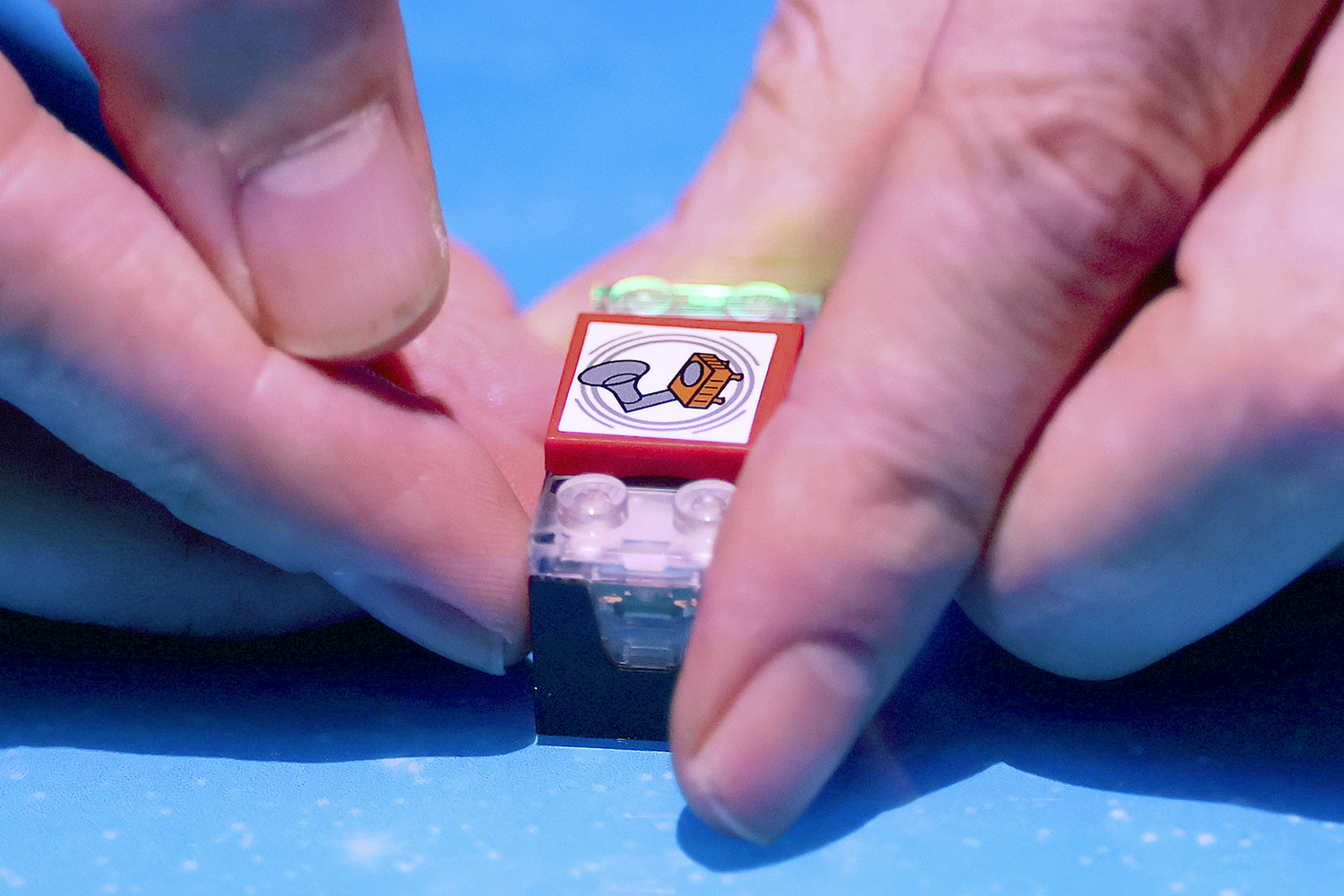
Two hands hold a lit up LEGO brick featuring an illustration of a speaker to indicate sound.

© Tom Dulat—The LEGO Group/Getty Images

A LEGO SMART brick is shown at a 2026 LEGO event in London, England.

But the LEGO company says LEGO bricks still give users the chance to be creative by building the sets and making up their own ways to play with them. Tom Donaldson of LEGO says SMART Play bricks only add to the fun of using LEGO bricks.

“The launch of LEGO SMART Play brings creativity, technology and storytelling together to make building worlds and stories even more engaging, and all without a screen,” Donaldson said.

Fun Fact Icon

Fun Fact

Hands are shown manipulating several pieces that have been constructed with wires and LEGO bricks.

© Cloudy Design/stock.adobe.com

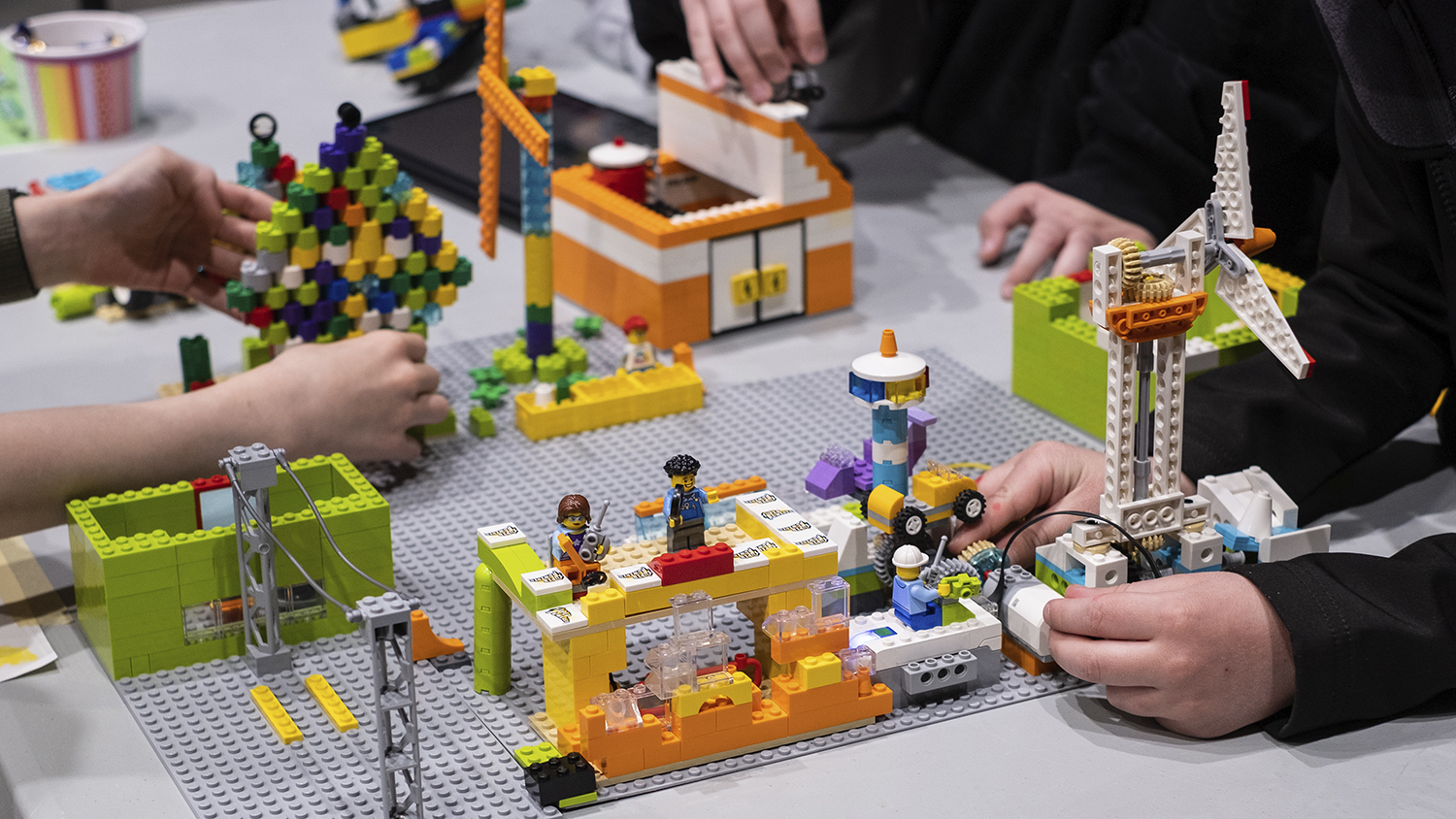
In this 2023 photo, kids demonstrate a robot they built with LEGOs.

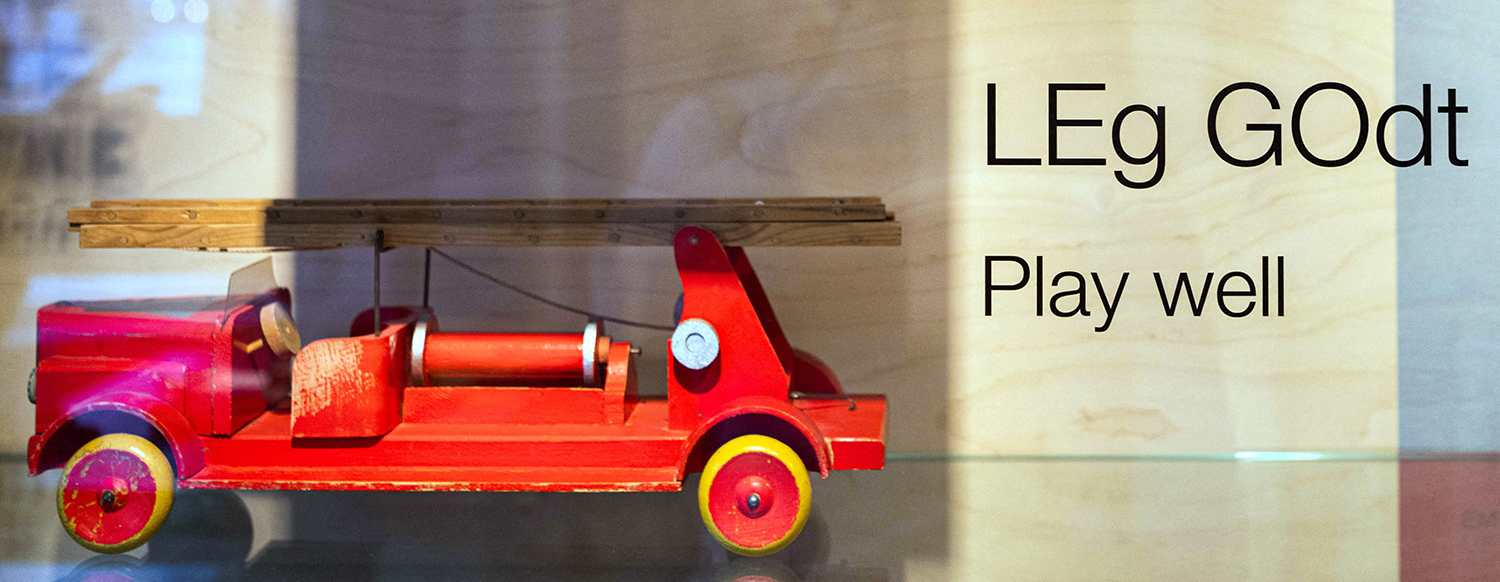
The word LEGO comes from the Danish phrase leg godt, which means “play well.”

A Magical World of Ice and Snow

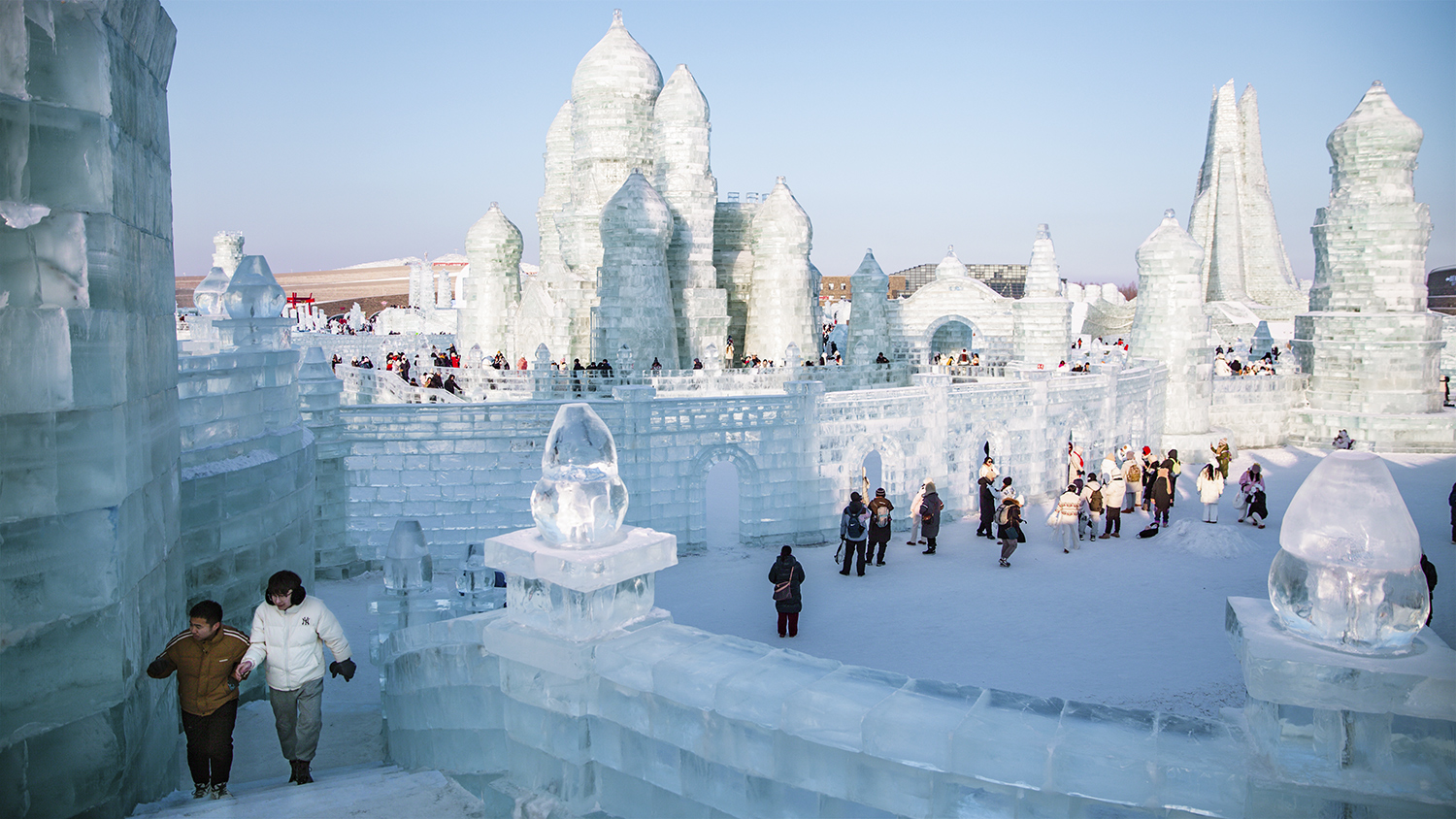
Several people stand and walk around an area where there are many walls and turrets constructed with bricks of ice.

© Chalffy—iStock Unreleased/Getty Images

Tourists walk around at the 2024 Harbin International Ice and Snow Festival.

Every year, the northern Chinese city of Harbin transforms into a winter wonderland for the Harbin International Ice and Snow Festival. The event attracts ice sculptors from around the world, along with millions of tourists. 

This year’s festival theme is “A Fairy Tale World.” About 400,000 cubic meters of snow and ice have been sculpted into walls, turrets, and statues that light up in different colors each night.

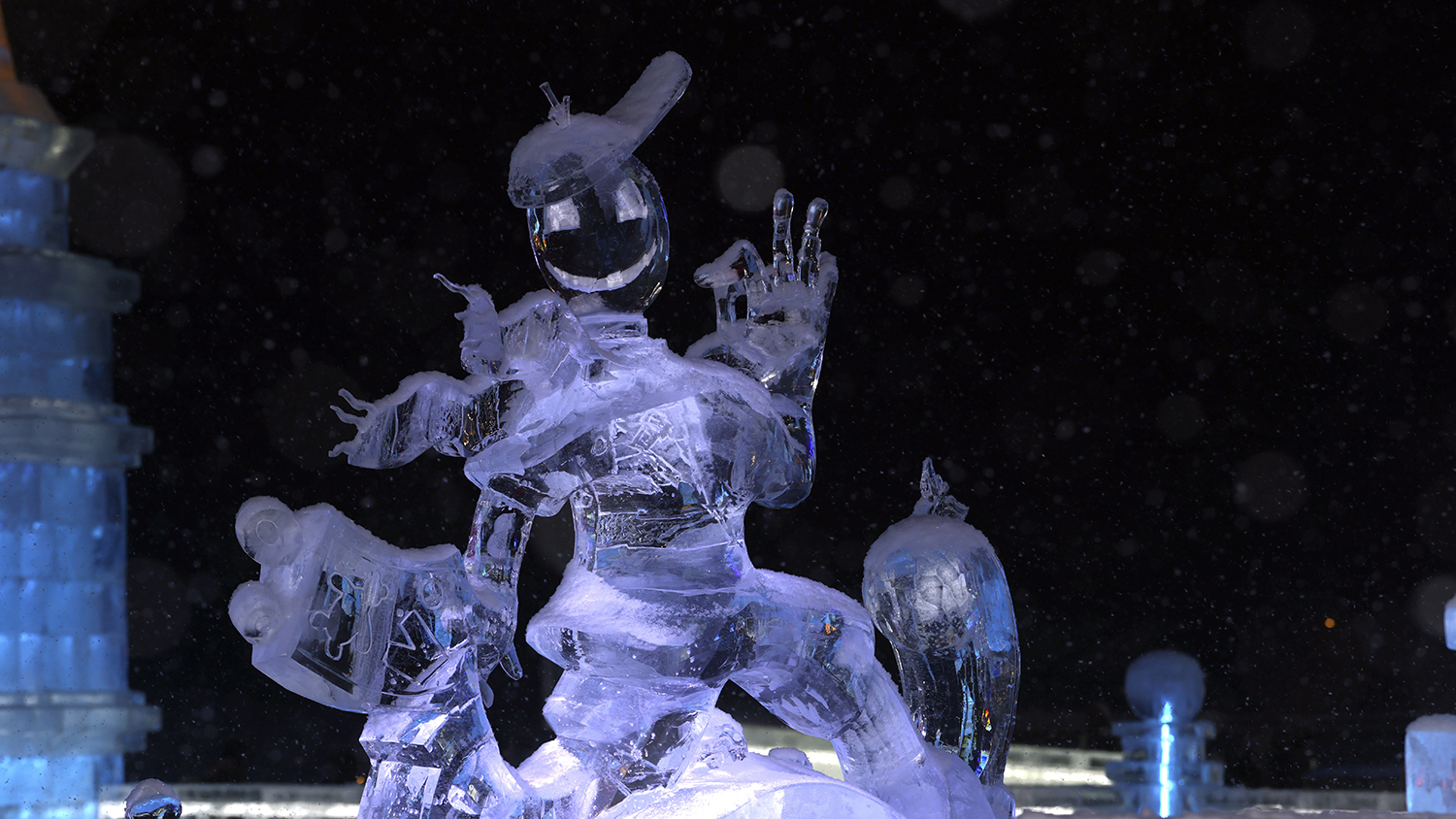
A large ice sculpture of a man in a baseball cap smiling and making a happy gesture.

© Visual China Group/Getty Images

This ice sculpture was created for the 2026 Harbin International Ice and Snow Festival.

There are also plenty of activities at and around the festival site, including ice slides, skiing, and snowboarding.

The festival opened in late December and is expected to last until mid-February, provided the icy creations don’t melt before then!

LEGO’s Story

A wooden toy fire truck is in a display case next to the words LEG GODT and play well.

© Jonathan Nackstrand—AFP/Getty Images

A LEGO toy fire engine is displayed at the LEGO Museum in Denmark, where the LEGO company is based.

The LEGO company originally sold wooden toys (as seen in the photo) before switching over to plastic building bricks. Today, there are LEGO video games, movies, and even theme parks. 

You can learn more about the world of LEGO at Britannica!

Word of the Day Icon

Word of the Day

interlock

Part of speech:

verb

Definition:

: to connect or lock (two or more things) together

Definitions provided by
Merriam-Webster Logo
Game Icon

Play

Word Flower
How many words can you make from the letters in the flower? All words must use the center letter.

.

In Case You Missed It

When 5th graders asked Major League Baseball player Ozzie Albies which pet fish to get, he helped out in a big way.

March 11, 2026
Taryn Smith is the first American woman to row solo across the Atlantic Ocean.
March 5, 2026
A powerful waterfall doesn’t easily freeze, but this winter has been especially cold!
March 3, 2026
For Women’s History Month, we’re honoring two women who inspired many others to take to the skies.
February 26, 2026

How to Cite This Page

Here is how to cite this page using the MLA style. While every effort has been made to follow citation style rules, there may be some differences. Please refer to the appropriate style manual or other sources if you have any questions.

“In the News: LEGO Gets SMART.” Britannica School, Encyclopaedia Britannica, 26 Jan. 2026.

https://news.eb.com/level1/LEGO-gets-smart. Accessed 27 Jan. 2026 [Replace this date with today’s date.]  

An American Story

Four Black Americans wearing 19th century clothing stand in front of a small cabin.

An American Story

In honor of Black History Month, here’s the story of the Black homesteaders who helped settle the American West.

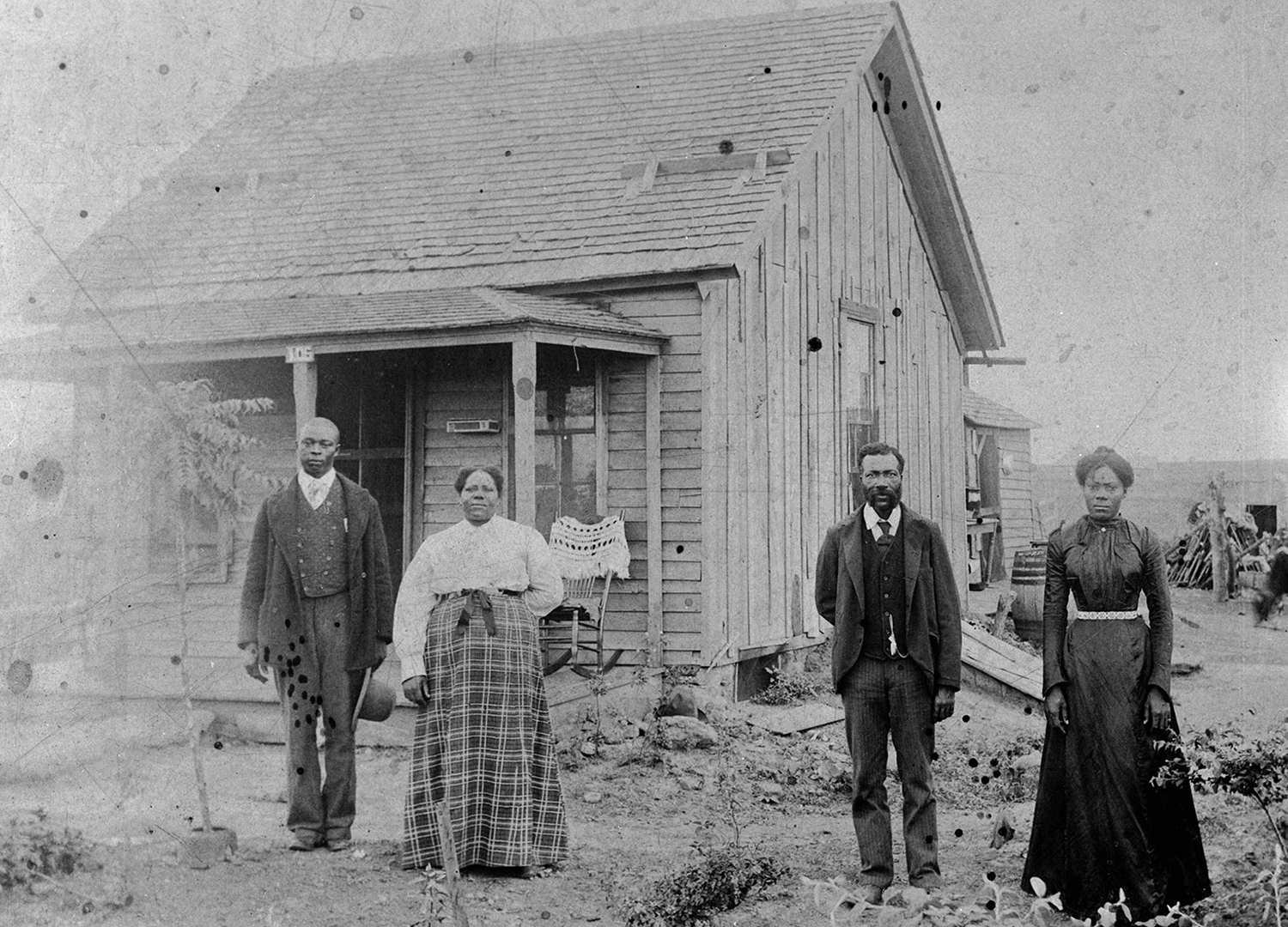
Four Black Americans wearing 19th century clothing stand in front of a small cabin.

Library of Congress, Washington D.C.

These homesteaders settled in Nicodemus, Kansas, a community established by formerly enslaved people in 1877.

You may have heard tales of people traveling west across the United States in covered wagons in the 1800s. Many of the farms, towns, and cities founded by these settlers still exist today! But did you know that some of the settlers who helped populate the midwestern and western U.S. were Black Americans? Here’s a very short telling of their story.

A Law Opens Up the West

The story begins with a U.S. law called the Homestead Act of 1862. The Homestead Act said that any loyal American who was 21 or older or the head of their household could claim 160 acres of government-owned land. These settlers were required to build a house and grow crops on the land they claimed. They also had to live on the land for at least five years. If they did all of this, they could keep the land!

This law wasn’t good news for everyone. The U.S. government had taken this land from American Indians. Native peoples in much of the country were forced to move to small pieces of land called reservations so that mostly white settlers could have the rest of the land.

Black Settlers

For settlers, the law meant a chance to own their own land. This was life-changing, especially for Black Americans. In the southern U.S., most Black people were enslaved until the 1860s. In 1865, the U.S. Constitution was changed to make slavery illegal.

But while Black people were no longer enslaved, life was still very hard. Most enslaved people had no opportunity to go to school or learn many skills. It was often difficult for them to find jobs or earn enough money to get ahead. Many people who had been enslaved continued to work for the same people who had enslaved them. They had few other choices.

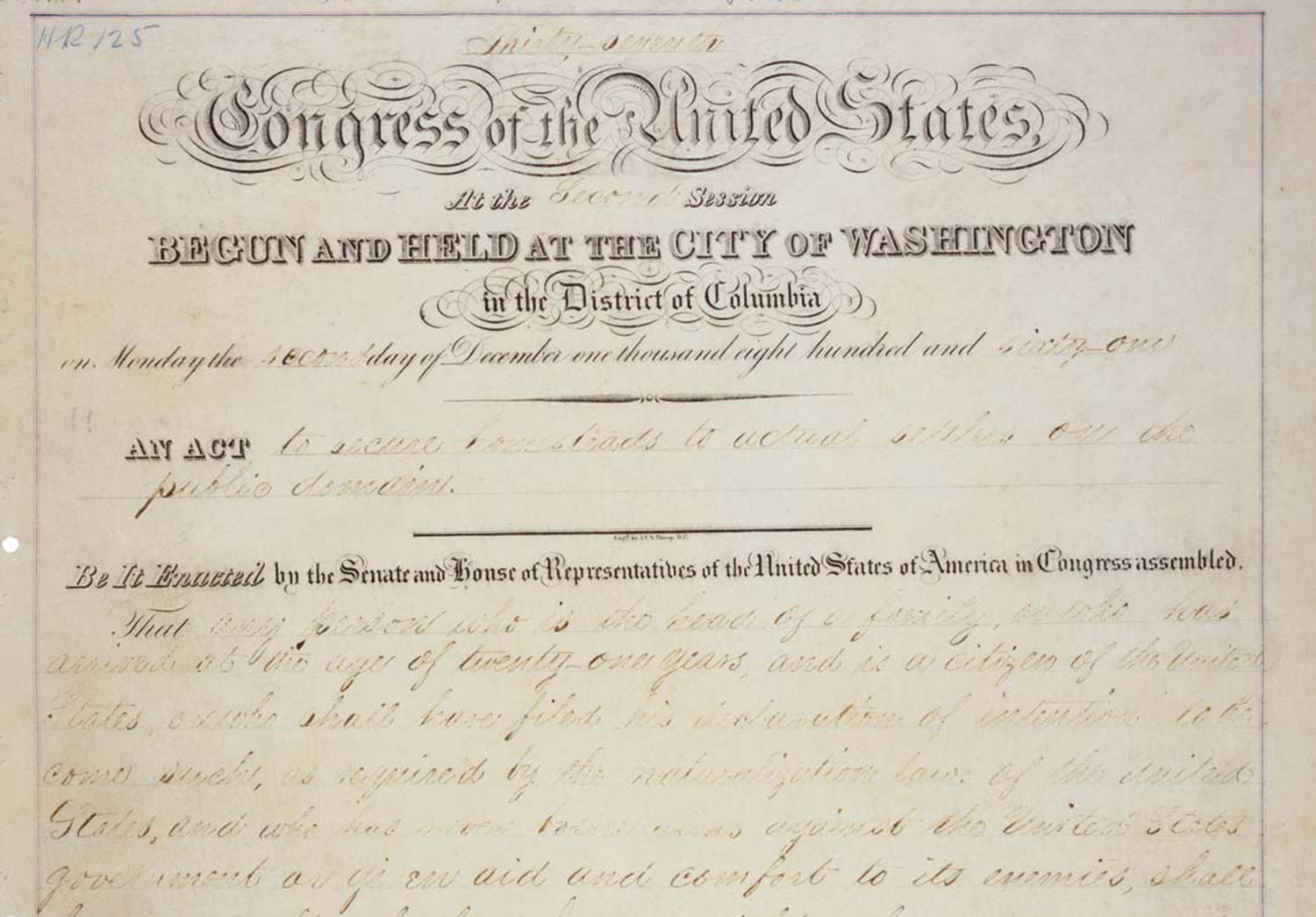
A handwritten document with the words Congress of the United States at the top.

National Archives and Records Administration

In 1862, the U.S. Congress passed the Homestead Act. The law is written down on this document.

But the Homestead Act was open to Black Americans, just as it was open to white Americans. And so, thousands of Black Americans journeyed north and west to newly opened lands. For them, the chance to own land was a form of freedom they’d never had before. Once they claimed their 160 acres, that land was theirs for as long as they liked. They could live on it, grow crops on it, and sell the crops for money.

New Lives

Settling the land was not easy. Black and white settlers faced harsh weather, failed crops, and many other problems. Some people did not think Black people deserved the same opportunities as white people. They treated Black settlers unfairly. Some were even violent. 

To protect themselves and each other, many Black settlers made their journeys with friends and family. They settled the land together, forming communities so that they could help one another. This happened in many states, including Kansas, Nebraska, Oklahoma, Wyoming, and Colorado. Successful settlers could open schools, churches, and businesses.

For Black settlers, land ownership was just the beginning. It gave the settlers the money they needed to build their futures.

Face Thinking Icon

Did You Know?

To keep their land, settlers had to build on it, farm it, and live on it for five years. This was called “proving up.” More than 50 percent of settlers who filed for claims under the Homestead Act proved up on their land.

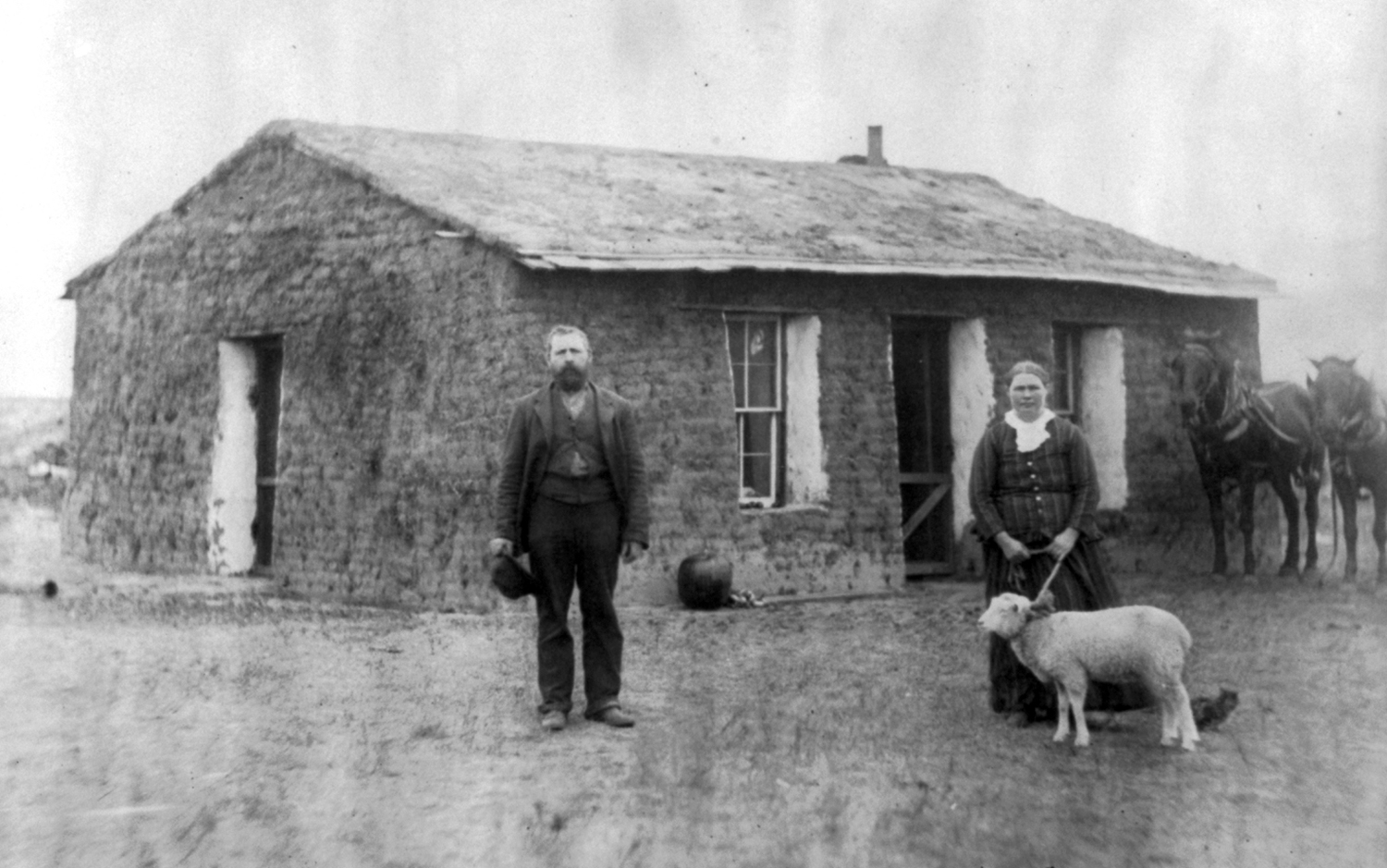
Solomon Devore Butcher/Library of Congress, Washington, D.C.

These homesteaders settled in Nebraska. Like many settlers, they built their house out of sod because there were not many trees in the area.

A Coming-of-Age Story

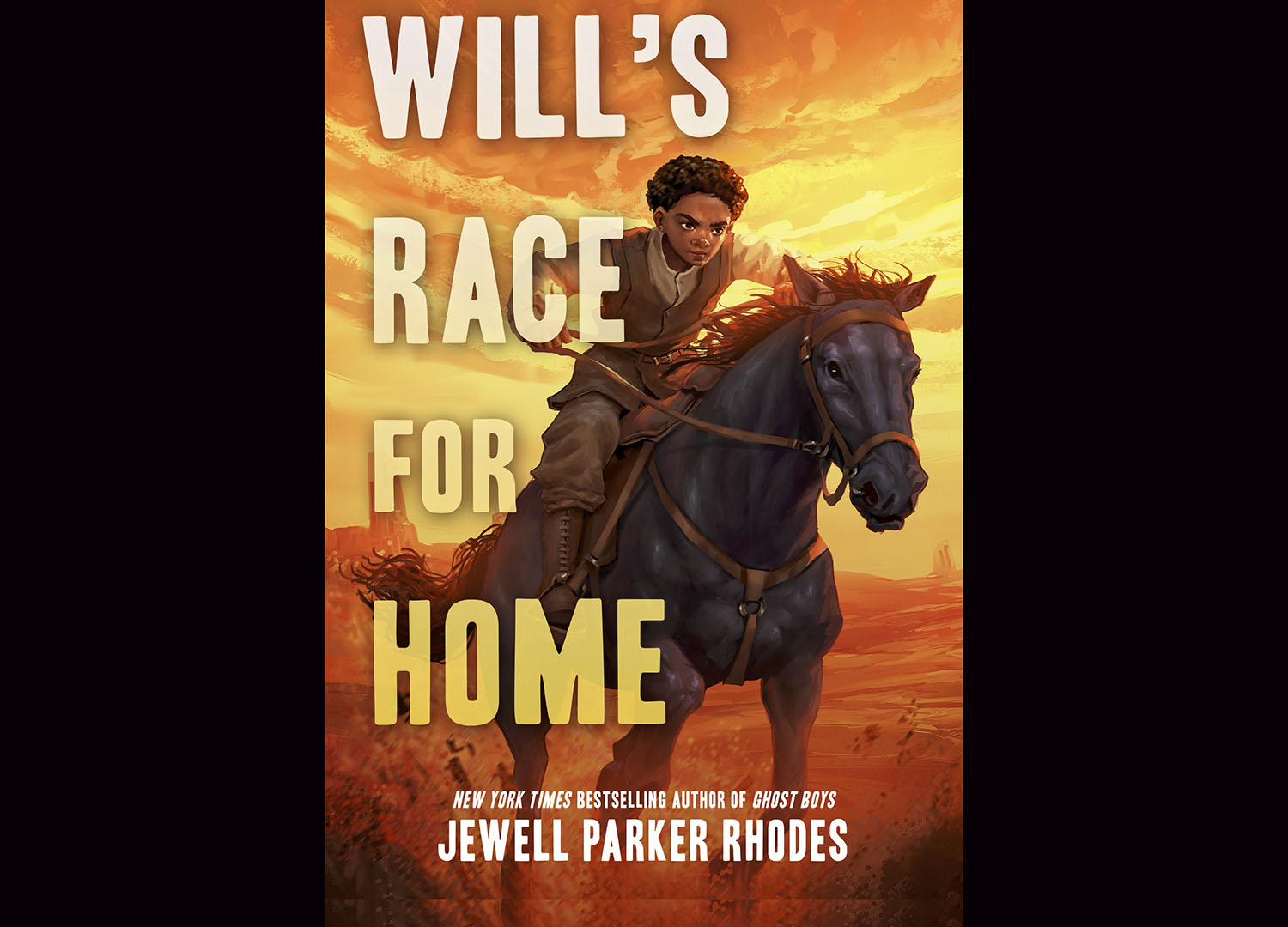
A book called Will’s Race for Home shows a young boy moving quickly on horseback.

Jewell Parker Rhodes with illustrations by Olga and Aleksey Ivanov. Copyright © 2025. Reprinted with permission of Little, Brown Books for Young Readers. All rights reserved.

Family, friendship, loyalty, action, and adventure. All of these are at the heart of Will’s Race for Home, a new chapter book by Jewell Parker Rhodes.

The book tells the story of Will, a 12-year-old who undertakes a difficult journey to help his family. It’s the year 1888, and Will’s family is living in Texas. They are sharecroppers, which means they grow crops on land they don’t own and must give the landowner most of the money they earn.

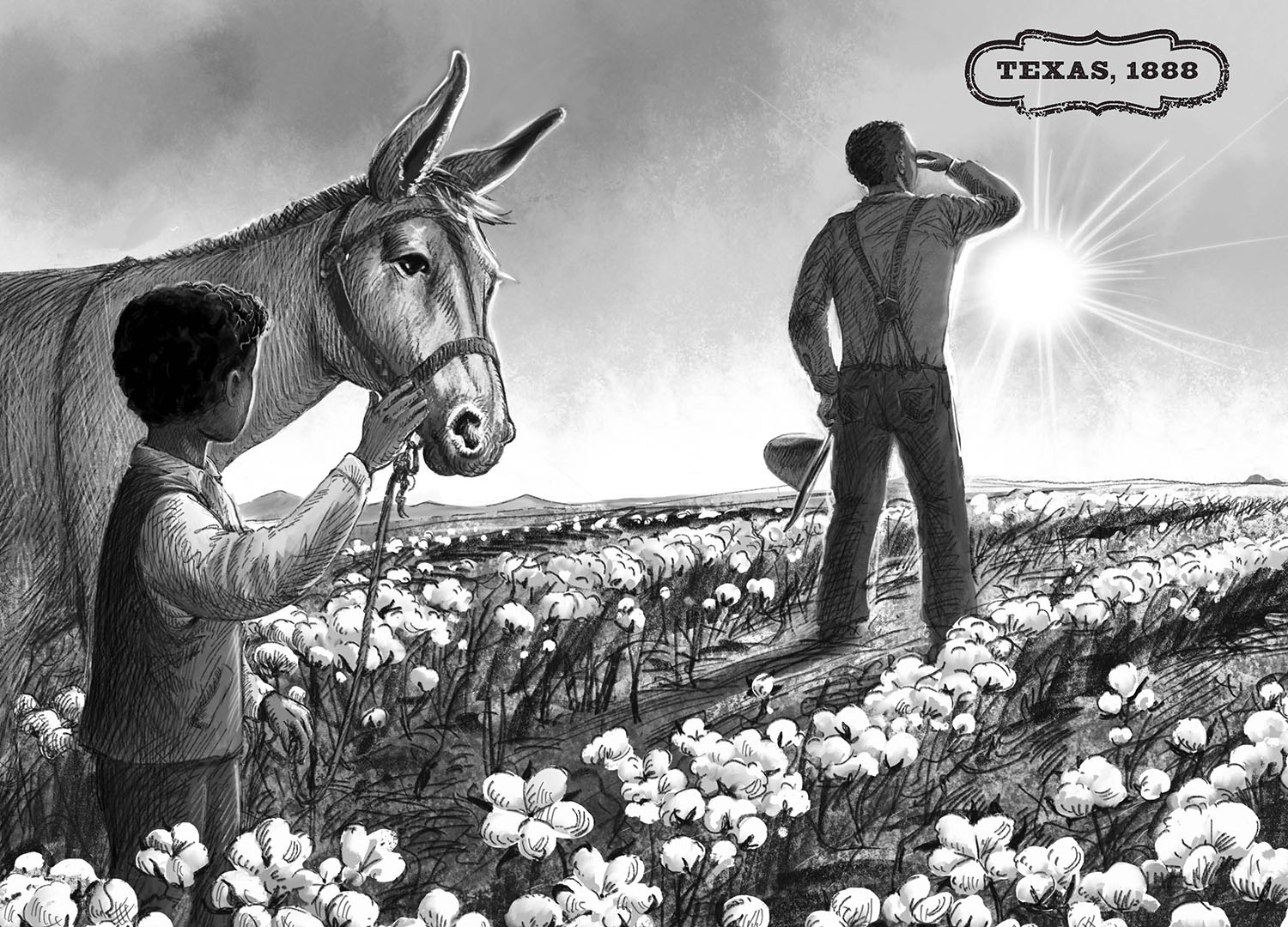
A man in 19th century clothing surveys a cotton field as a boy and a mule stand behind him.

Jewell Parker Rhodes with illustrations by Olga and Aleksey Ivanov. Copyright © 2025. Reprinted with permission of Little, Brown Books for Young Readers. All rights reserved.

A mule called Belle is a loyal friend to Will.

Will’s dad, who grew up as an enslaved person, longs for the freedom of owning his own land. When the family hears that there’s free land available in Oklahoma, Will and his dad set out to claim some of it.

It won’t be easy. Will and his dad must cross miles and miles of land and a raging river. And not everyone they meet is welcoming to a Black family. A new friend helps Will and his dad but also brings trouble. That’s when Will must make the hardest journey of his life—alone.

From Homesteader to Scientist

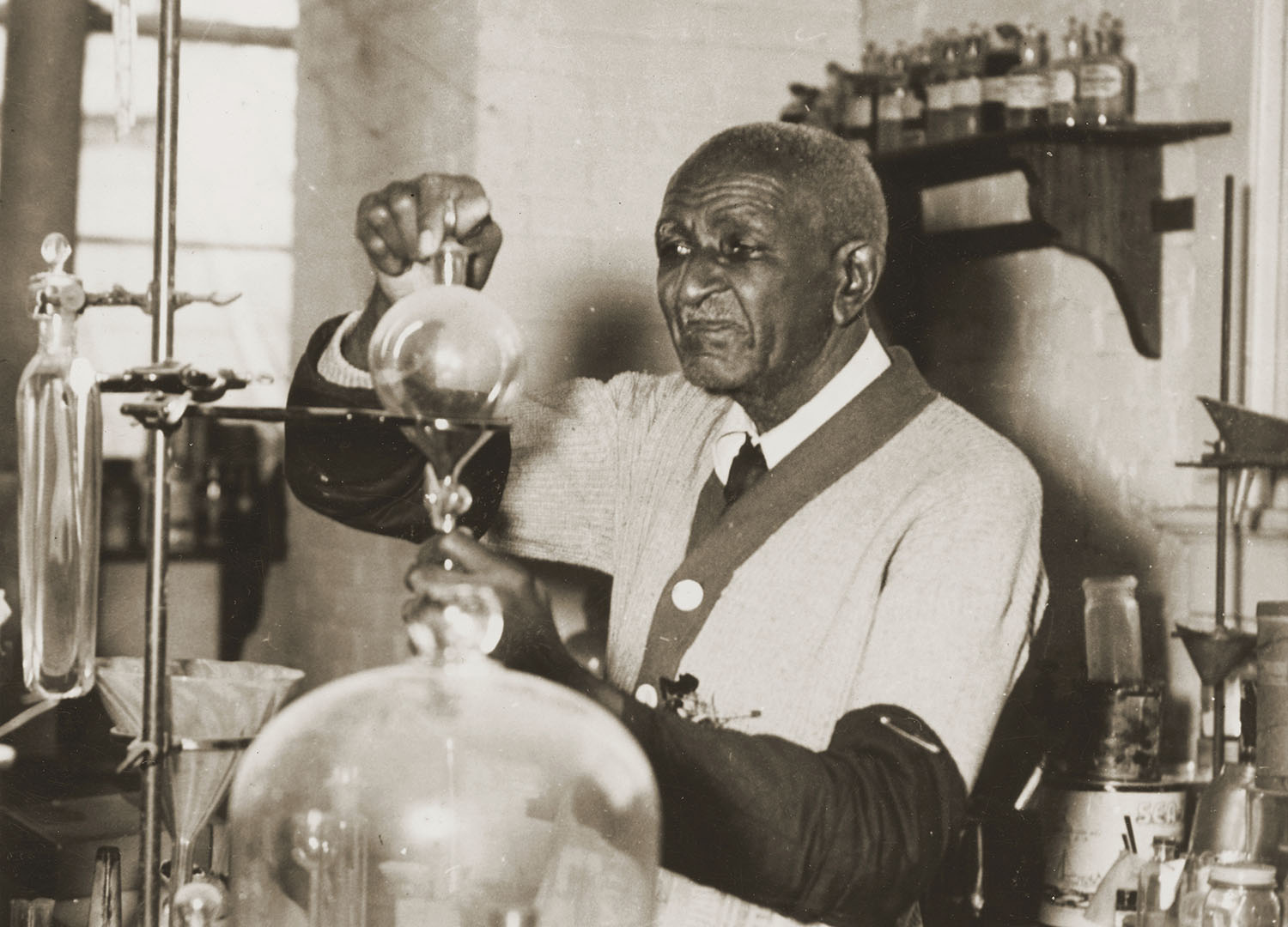
Older George Washington Carver works with chemistry equipment in his lab.

© VCG Wilson—Corbis Historical/Getty Images

In this 1923 photo, George Washington Carver works in his lab at Tuskegee University.

One of the Black Americans who tried homesteading was George Washington Carver. As a young man, Carver made his way to Kansas to claim his 160 acres. But he soon realized he didn’t like life on the frontier and decided to try something else. Carver would go on to become a teacher, an inventor, and a scientist.


You can read more about Carver at Britannica.

Word of the Day Icon

Word of the Day

foray

Part of speech:

noun

Definition:

: an attempt to do something especially for the first time

Definitions provided by
Merriam-Webster Logo
Game Icon

Play

WordSearch

Can you find all the authors?

O
O
O
O
O

In Case You Missed It

When 5th graders asked Major League Baseball player Ozzie Albies which pet fish to get, he helped out in a big way.
March 11, 2026
Taryn Smith is the first American woman to row solo across the Atlantic Ocean.
March 5, 2026
A powerful waterfall doesn’t easily freeze, but this winter has been especially cold!
March 3, 2026
For Women’s History Month, we’re honoring two women who inspired many others to take to the skies.
February 26, 2026

Dinosaurs Were Here!

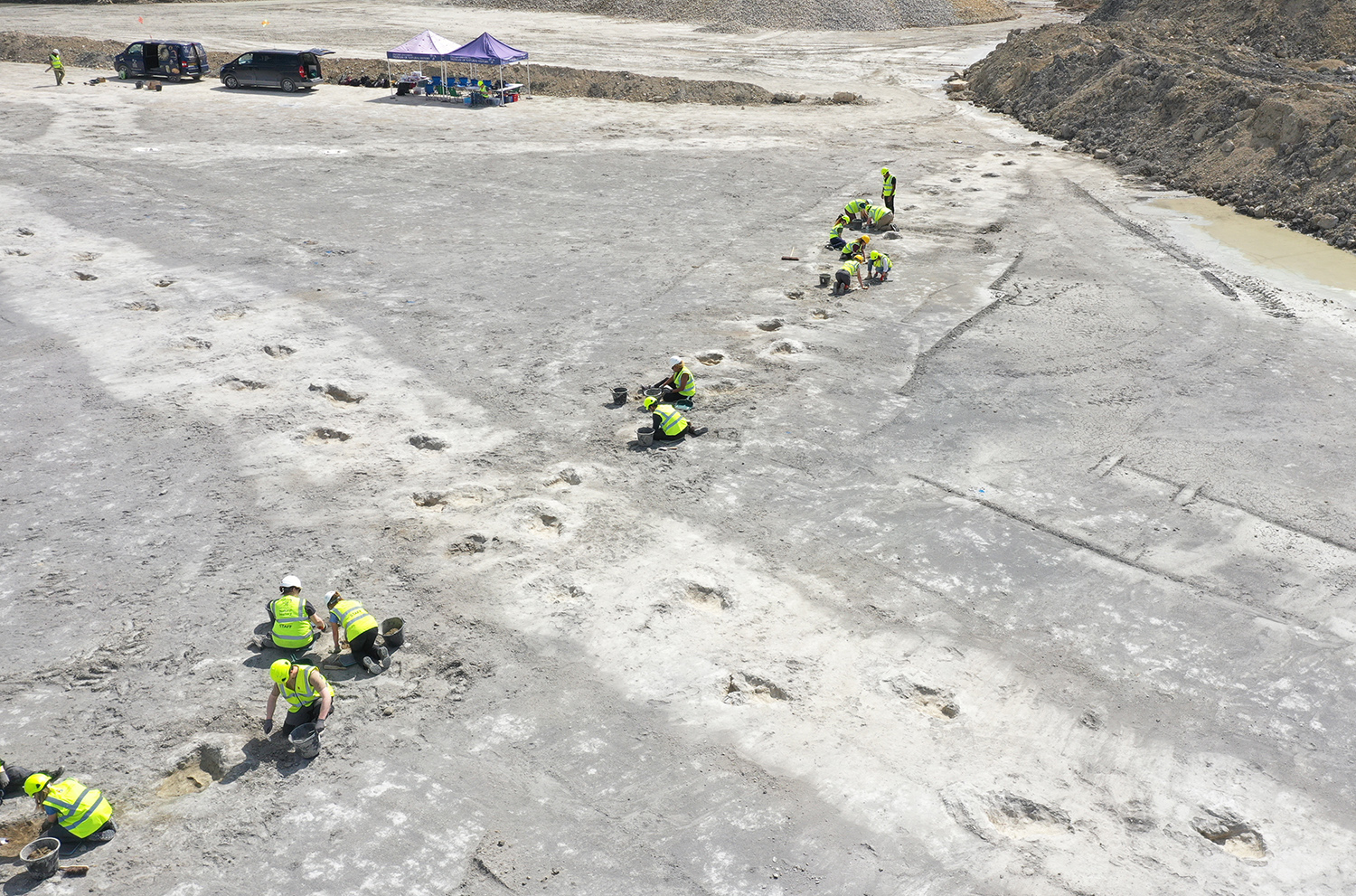
Two paths of large animal tracks cross each other and people in neon vests are seen excavating the tracks.

Dinosaurs Were Here!

Scientists discovered hundreds of dinosaur tracks that date back millions of years.

Two paths of large animal tracks cross each other and people in neon vests are seen excavating the tracks.

© University of Birmingham

Scientists discovered about 200 tracks forming five paths. The tracks were created in limestone that dates back 166 million years.

It’s not unusual to see animal prints in mud or snow, but ancient prints are much rarer. Some recently discovered animal tracks were created 166 million years ago, by dinosaurs.

Scientists uncovered nearly 200 dinosaur tracks in a quarry—a place where limestone is mined—in southern England. The tracks follow five different paths, suggesting that five dinosaurs were walking to five different places at around the same time. The longest path is 492 feet (150 meters) long. At one point, the paths cross. This makes scientists wonder if the dinosaurs interacted in some way.

Four of the paths were most likely created by a type of dinosaur called Cetiosaurus, an herbivore (plant eater) that was about 59 feet (18 meters) long. The Cetiosaurus tracks measure 35 inches (90 centimeters), or almost three feet, in length. The fifth path was created by a type of dinosaur called Megalosaurus, a carnivore (meat eater) that was about 30 feet (9 meters) long. The Megalosaurus tracks were only a bit smaller than those left by Cetiosaurus.

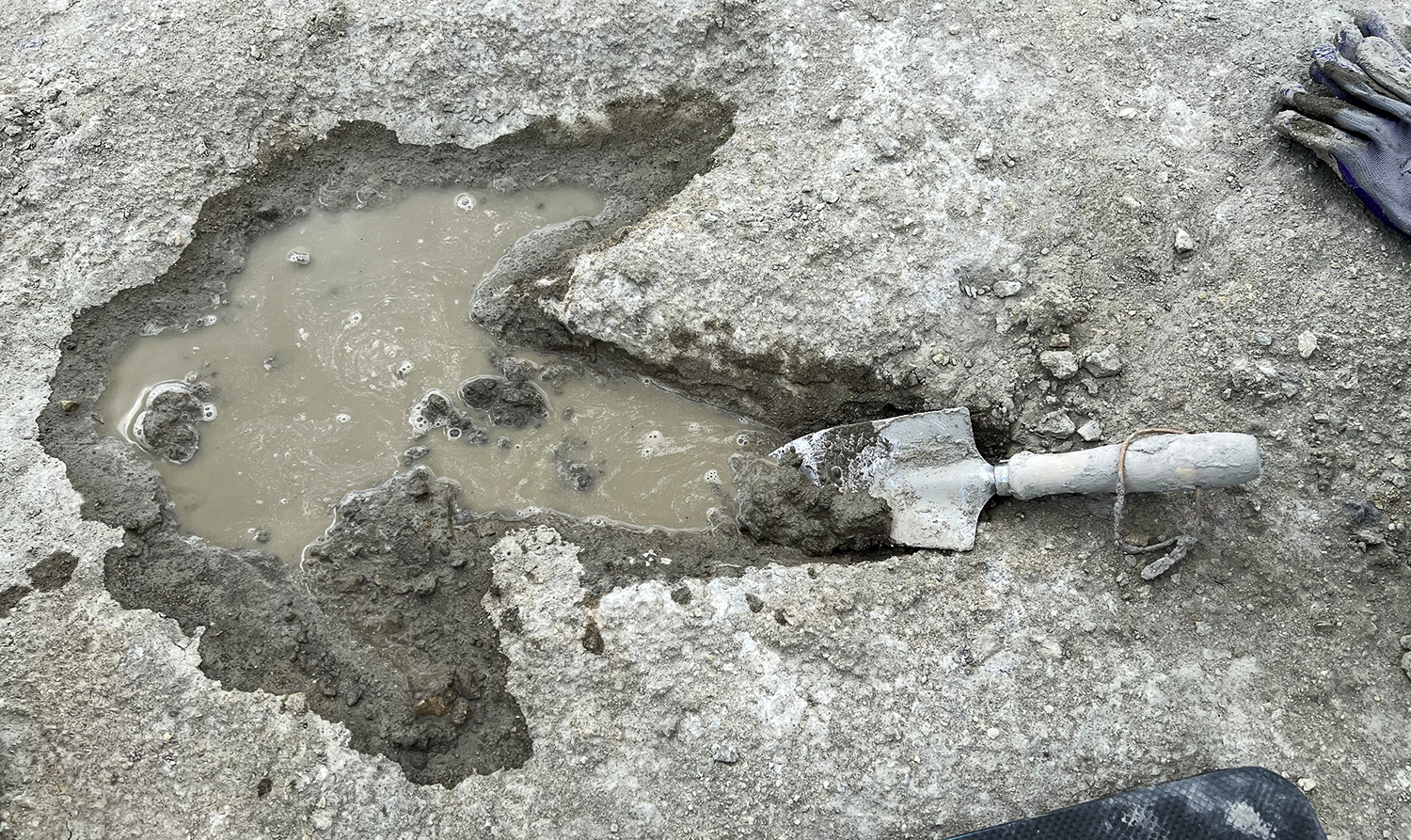
A large dinosaur track is seen with a shovel next to it for a size comparison.

© Emma Nicholls/Oxford University Museum of Natural History

Scientists placed this shovel here to show how large this dinosaur footprint is!

Where were the dinosaurs going? Scientists can’t be sure, but they can tell that the creatures were moving northeast at about 3 miles per hour (5 kilometers per hour). That’s about as fast as humans walk. The dinosaurs didn’t seem to be in hurry, although scientists don’t believe Megalosaurus was able to run anyway.

Lawrence Tanner is a professor at LeMoyne College in the United States who studies fossils to learn about prehistoric life. Tanner was not involved in the study of the dinosaur tracks in England, but he explained how scientists can determine the speed of an animal from its tracks.

“The general rule…is that the faster the animal is moving, the farther apart the footprints will be,” Tanner told CNN.

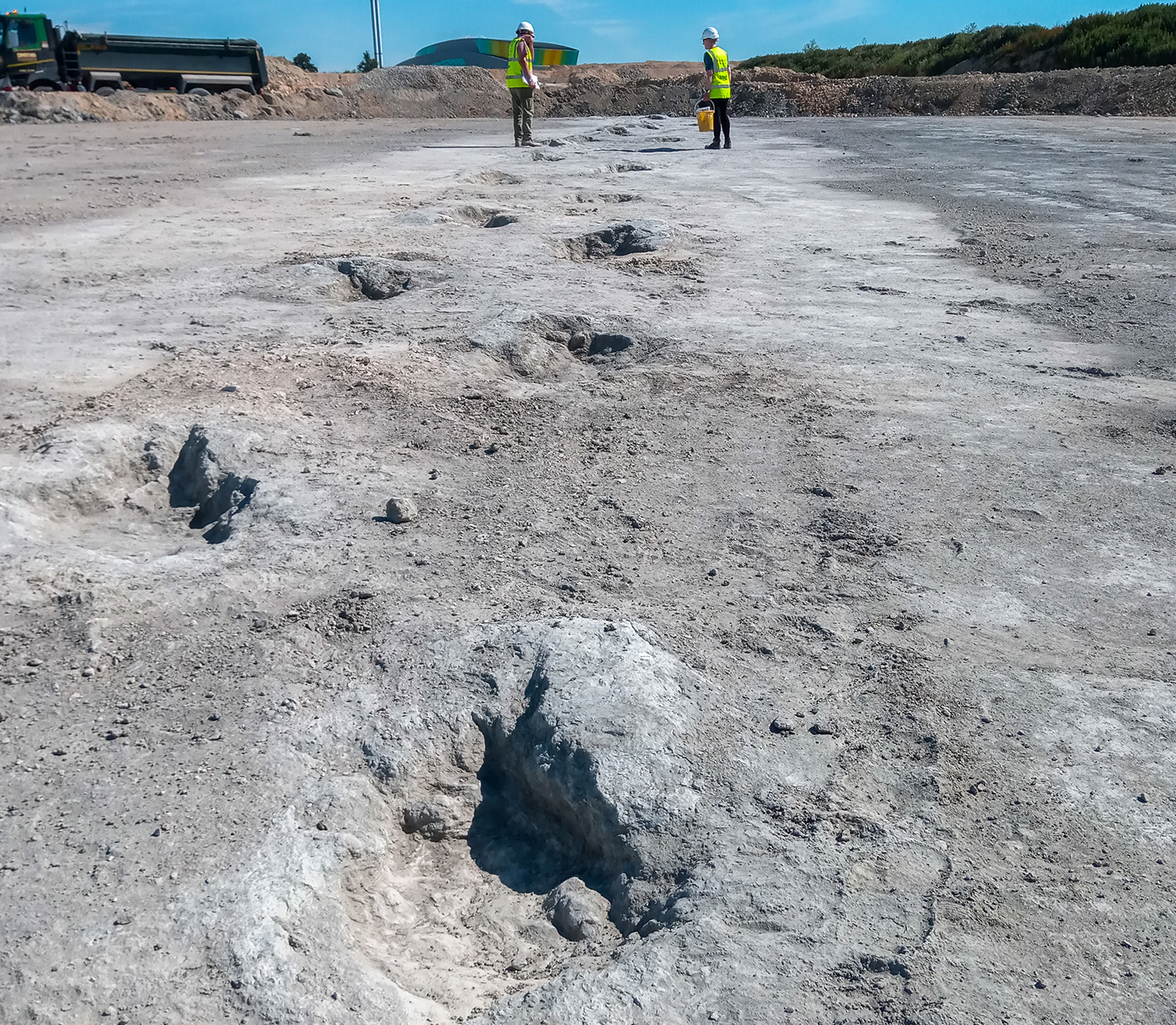
One dinosaur path is seen with two workers in the background.
© Caroline Wood/University of Oxford

Where was this dinosaur going?

Kirsty Edgar, a professor of micropaleontology at the University of Birmingham in England, did study the newly uncovered tracks. Edgar says dinosaur footprints give scientists all sorts of information about dinosaur behavior.

“[The tracks are] like a snapshot into the day of the [dinosaurs’] life, and what they were doing,” Edgar said.

Fun Fact Icon

Fun Fact

Most of the biggest animals on Earth are plant eaters, not meat eaters. Scientists say one reason for this is because gigantic animals aren’t fast enough to catch prey.

A group of African elephants is seen on a grassland with one elephant appearing to walk closer to the camera.
© john michael evan potter/Shutterstock.com

Could You Race a Dinosaur?

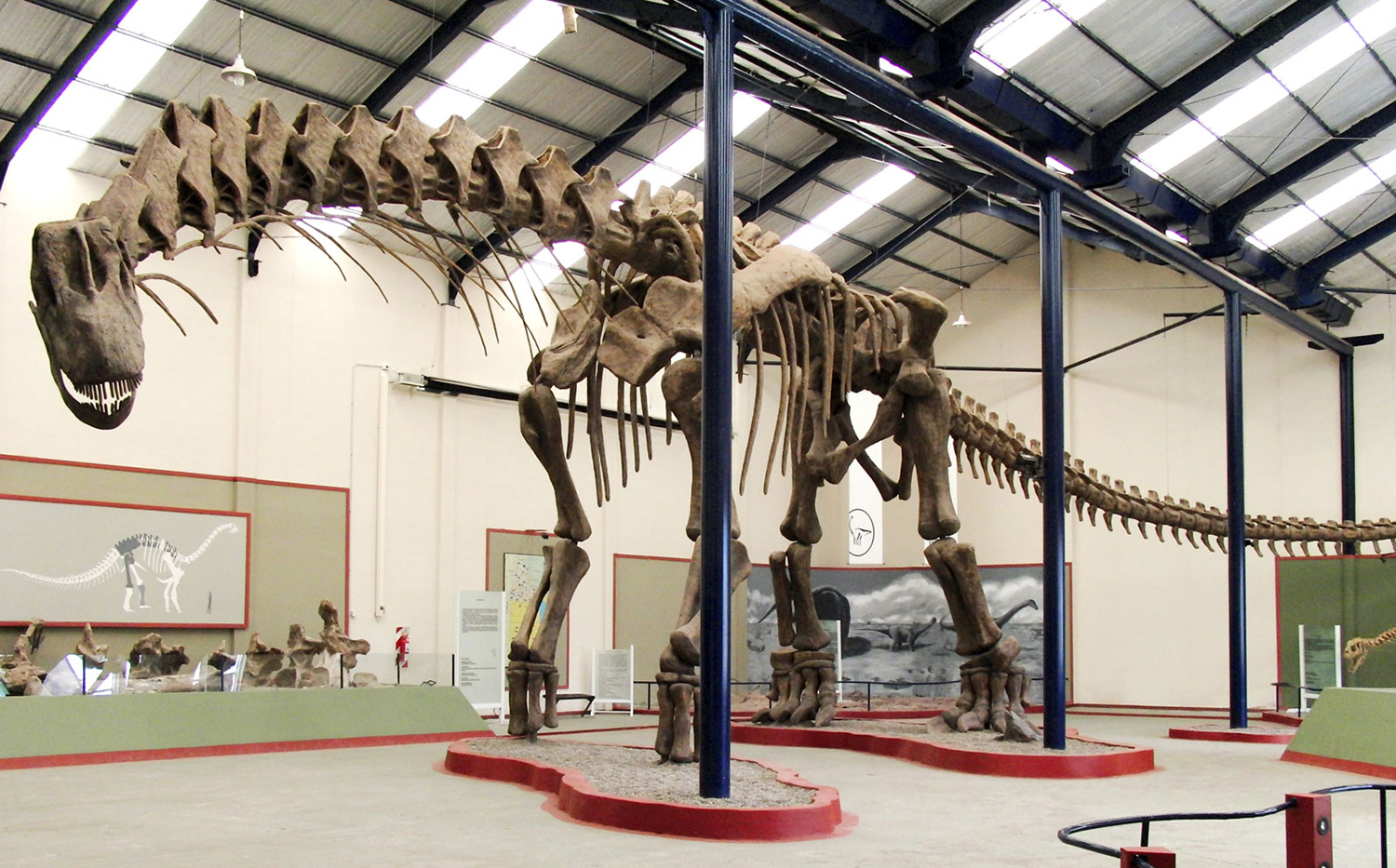
A skeleton of Argentinosaurus is on display in a museum setting.

William Irvin Sellers, Lee Margetts, Rodolfo Aníbal Coria, Phillip Lars Manning

Argentinosaurus may have been big, but it didn’t move very fast.

Scientists use a combination of the size, weight, muscle strength, and fossilized footprints of a dinosaur to estimate its top speed.

Here’s a list of dinosaurs and their speeds, from fastest to slowest. The slowpoke of the group, Argentinosaurus, was also the largest, weighing about 99 to 110 tons (90 to 100 metric tons).

Compsognathus…40 miles per hour (64 kilometers per hour)

Gallimimus…31 mph (50 km/h)*

Velociraptor…25 mph (40 km/h)

Allosaurus…21 mph (34 km/h)

Tyrannosaurus rex…18 mph (29 km/h)

Triceratops…16 mph (26 km/h)

Diplodocus…15 mph (24 km/h)

Ankylosaurus…6 mph (10 km/h)

Brachiosaurus…6 mph (10 km/h)

Euoplocephalus…5 mph (8 km/h)

Stegosaurus…4 mph (6 km/h)

Argentinosaurus…3 mph (5 km/h)

*Compsognathus and Gallimimus could run faster than Usain Bolt and Noah Lyles, two of the fastest humans ever recorded. Bolt and Lyles reached speeds of just under 28 mph (45 km/h).

A Great Lizard

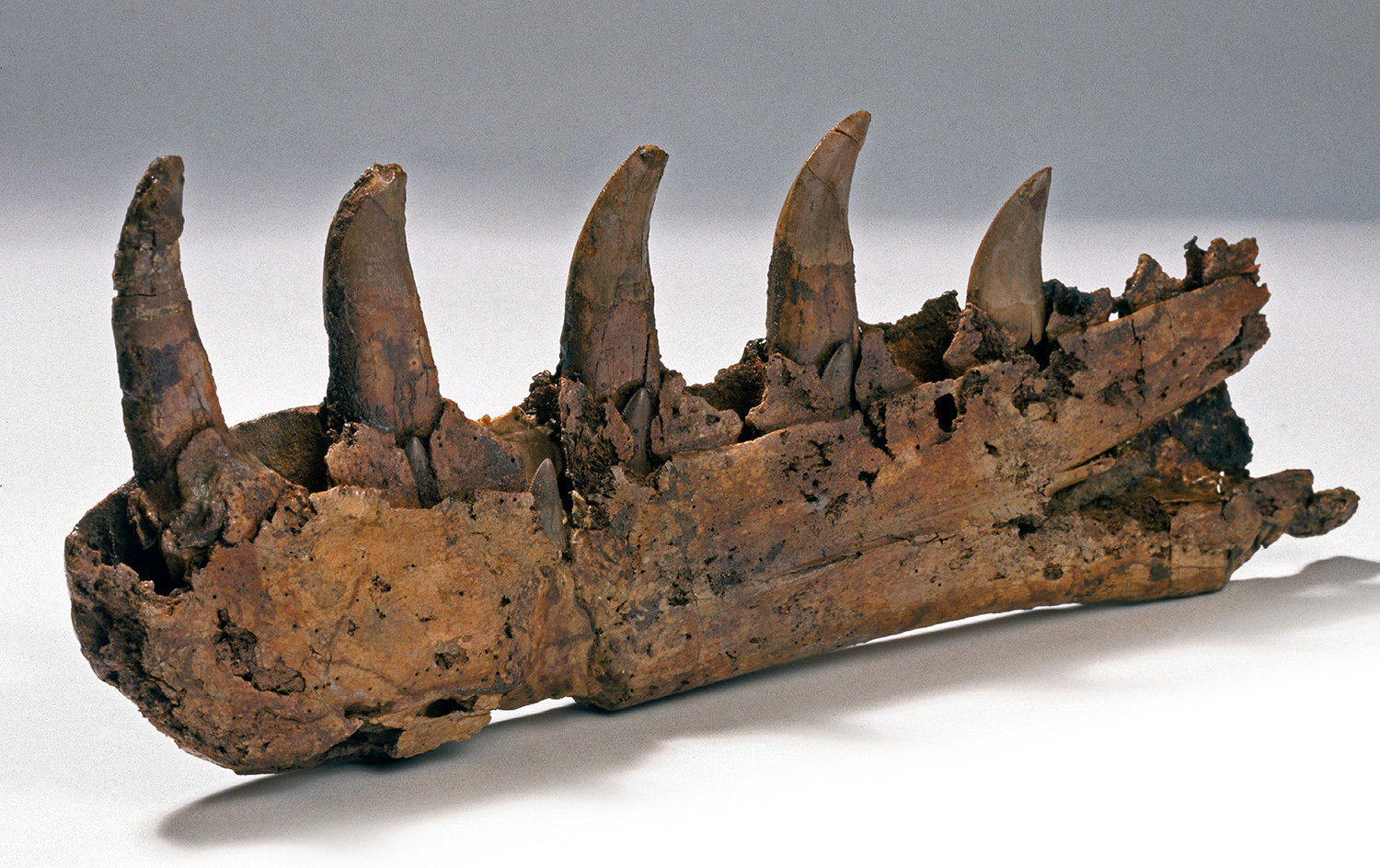
A Megalosaurus jawbone fossil

© The Natural History Museum/Alamy

Check out those teeth! Now part of a fossil, they once belonged to a type of dinosaur called Megalosaurus.

Megalosaurus was the first type of dinosaur scientists named and described, in 1824. Not knowing much about what they’d found, the scientists called it Megalosaurus because the name means “great lizard.”

You can learn more about Megalosaurus at Britannica!

Word of the Day Icon

Word of the Day

humdinger

Part of speech:

noun

Definition:

: something that is very impressive or exciting

Definitions provided by
Merriam-Webster Logo
Game Icon

Play

Word Search

Can you find all the dinosaurs that are hidden in this puzzle?

O
O
O
O
O

In Case You Missed It

When 5th graders asked Major League Baseball player Ozzie Albies which pet fish to get, he helped out in a big way.
March 11, 2026
Taryn Smith is the first American woman to row solo across the Atlantic Ocean.
March 5, 2026
A powerful waterfall doesn’t easily freeze, but this winter has been especially cold!
March 3, 2026
For Women’s History Month, we’re honoring two women who inspired many others to take to the skies.
February 26, 2026

Goats Gobble Christmas Trees

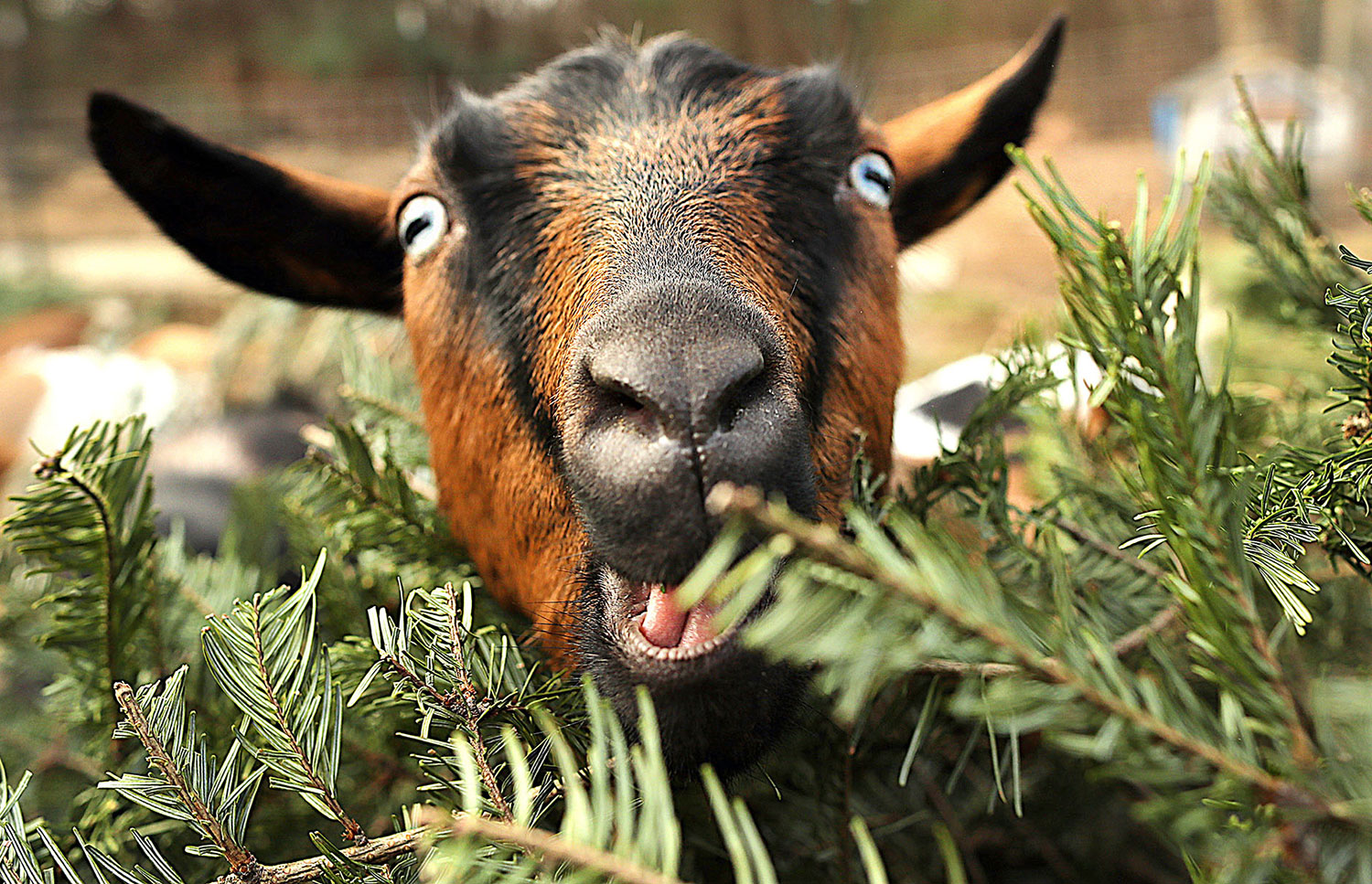
Closeup of a goat looking at the camera while eating a Christmas tree.

Goats Gobble Christmas Trees

What should be done with an old Christmas tree? One idea is to give it to a goat!

Closeup of a goat looking at the camera while eating a Christmas tree.

© John Tlumacki—Boston Globe/Getty Images

People who celebrate Christmas may face a problem when the holidays are over—what to do with the Christmas tree. Happily, a pine tree is a tasty treat for a goat!

“I was very surprised to find out that goats would want to eat a Christmas tree,” Chicago resident Jay Thomas told the Associated Press. Thomas had just donated his old tree to a farm called Urban Growers Collective. “A Christmas tree is all piney and spiney and sounds painful to me to eat! But they’re happy with it.”

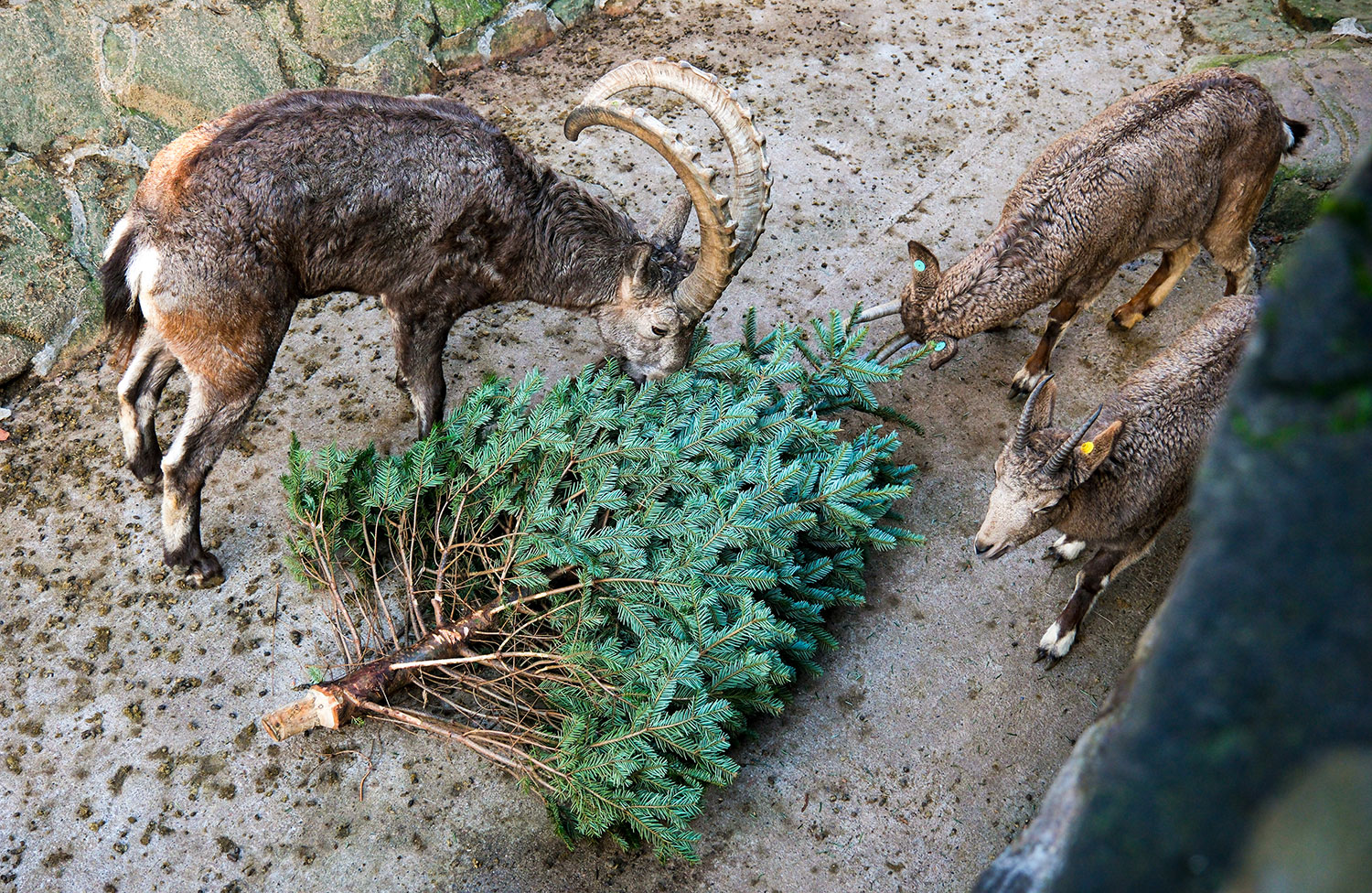
Each January, many zoos and farms ask people to donate their Christmas trees. The trees help feed goats during a time of year when the grass that goats like to eat isn’t growing. For the goats, pine trees aren’t just delicious—they also help control worms that can live in the animals’ intestines and cause health problems.

Overhead view of three goats eating a Christmas tree

© Halil Sagirkaya—Anadolu/Getty Images)

“They love it. It’s a treat for them, and the other cool thing is, it’s actually…a natural de-wormer,” Brent Fields told WOOD TV8. Fields runs Fields Farm in Comstock Park, Michigan. Fields said all real Christmas trees are great, as long as they’re donated without tinsel or ornaments. Experts also caution against donating Christmas trees that have been sprayed with pesticides, which are chemicals designed to control insects and other pests.

Goats aren’t the only animals that enjoy eating Christmas trees. Kangaroos, elephants, pigs, and even chickens have been known to feast on them. All of these animals have stomachs that are tough enough to digest pine trees.

Fields said there aren’t that many parts of a pine tree his goats won’t eat. “By the end of the day [when the goats are finished eating], it will be nothing but sticks.”

Face Thinking Icon

Did You Know?

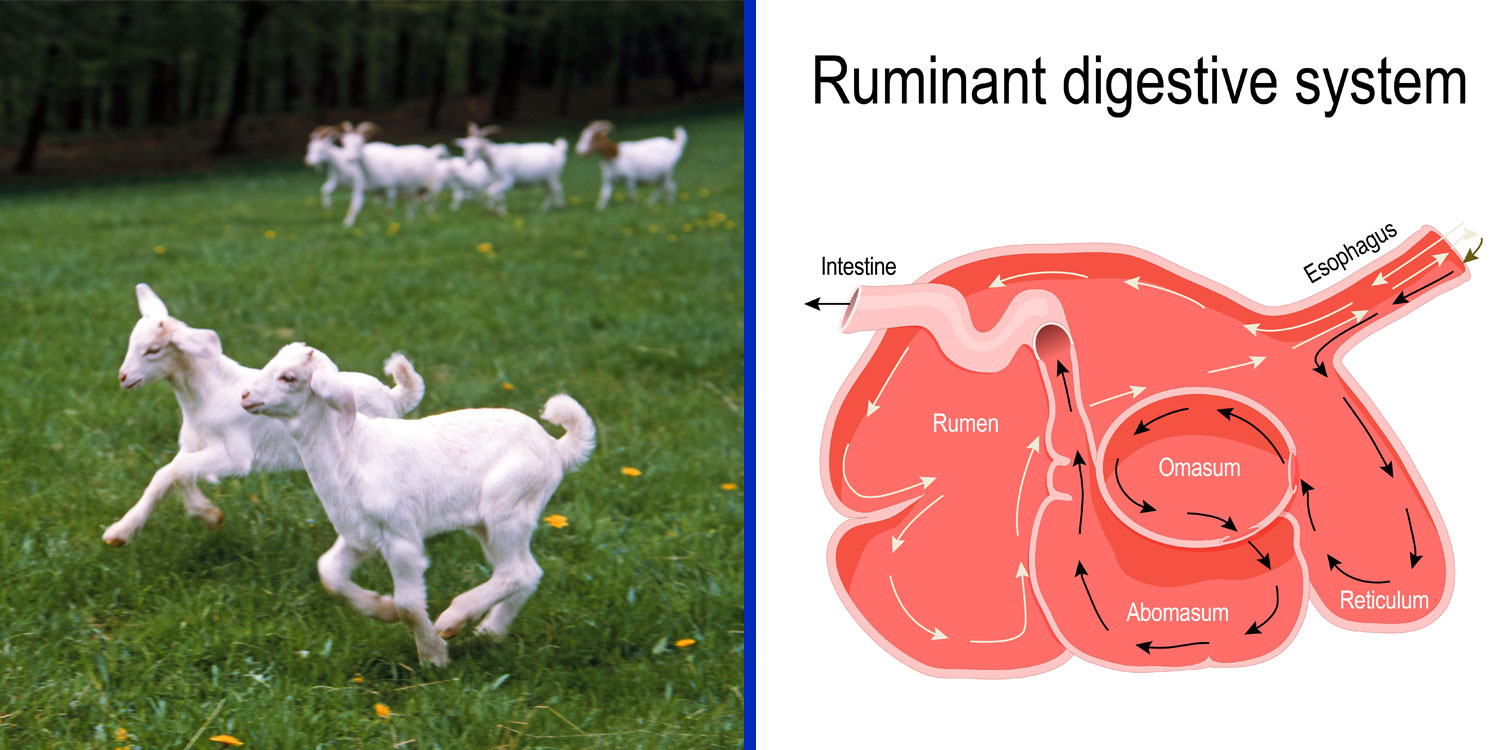
Have you heard that goats have four stomachs? That’s not quite true!

What is true is that a goat’s stomach has four chambers, or parts. Each chamber plays a different role in the digestion process, allowing the goat to digest tough plant fibers.

Side by side images of young goats running in a field and a diagram of a goat’s stomach with four chambers.

© AdstockRF, © ttsz/Getty Images; Photo composite Encyclopædia Britannica, Inc.

NEWS EXTRA!

Wildfires Strike Los Angeles

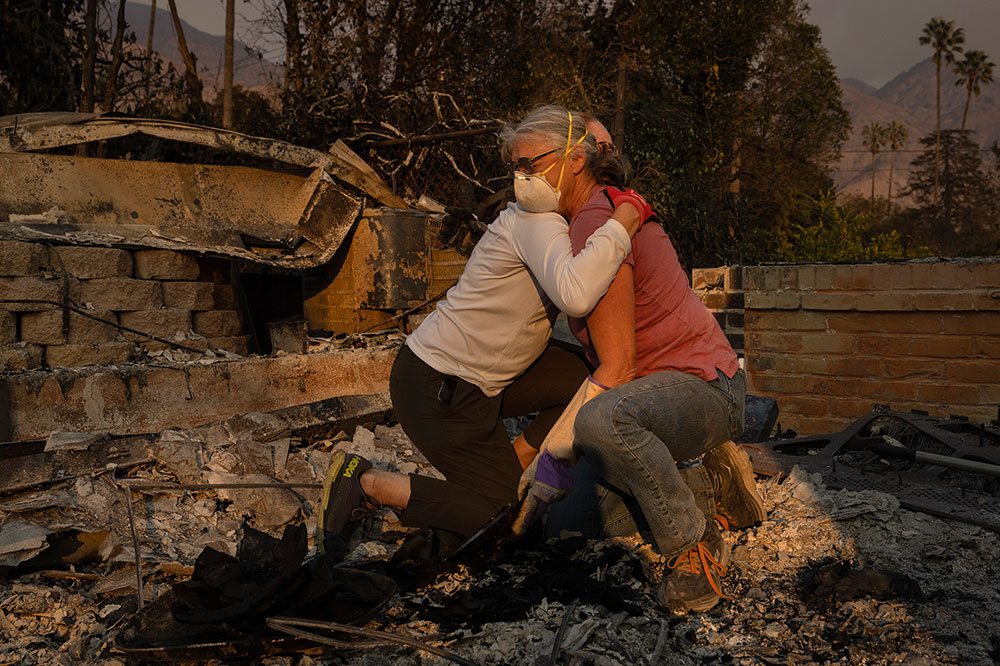
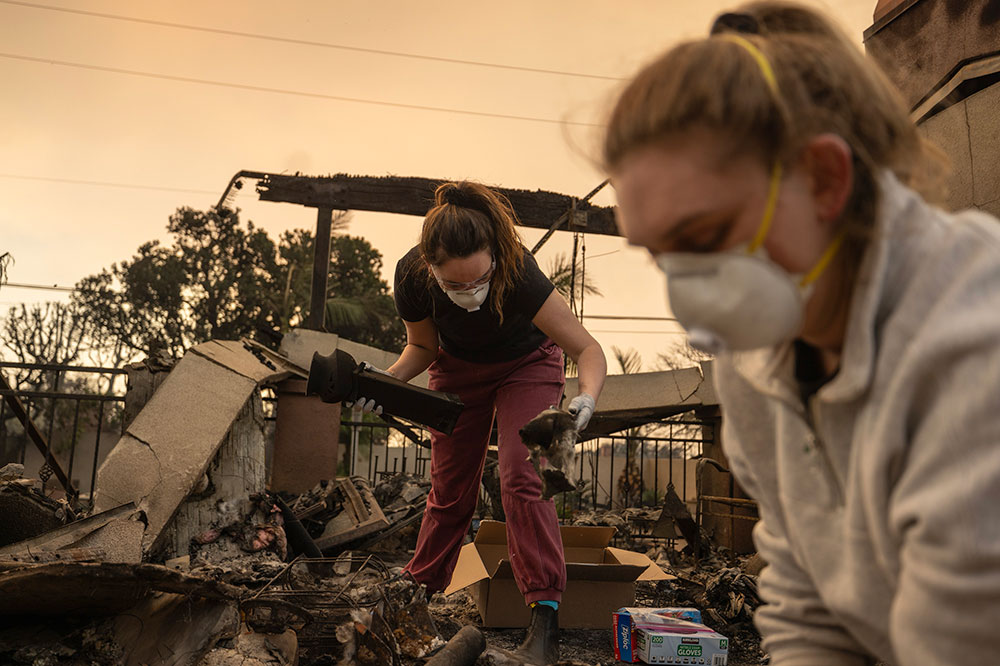
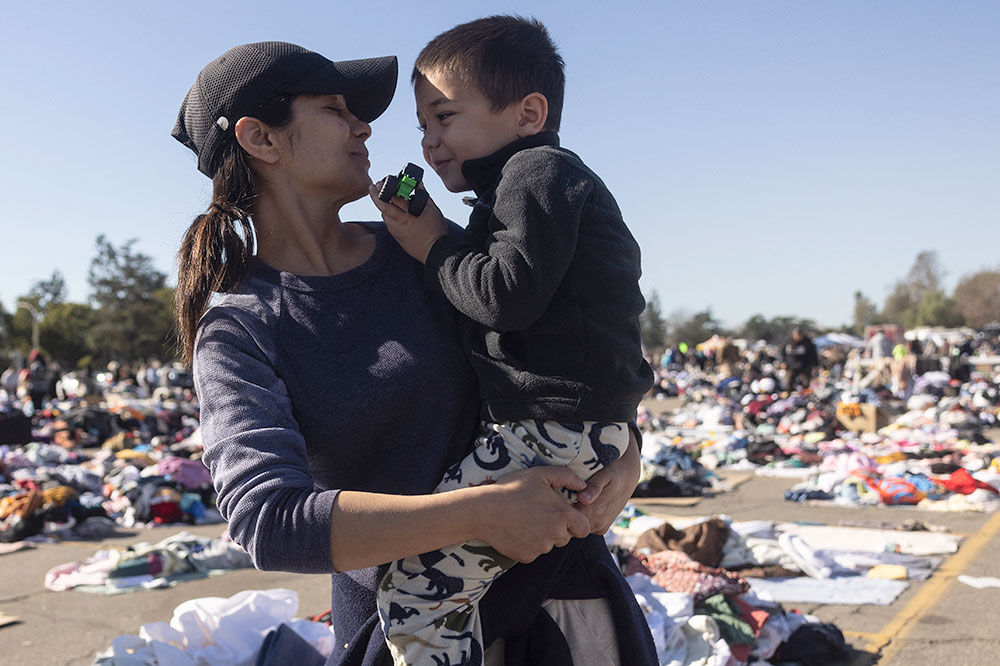
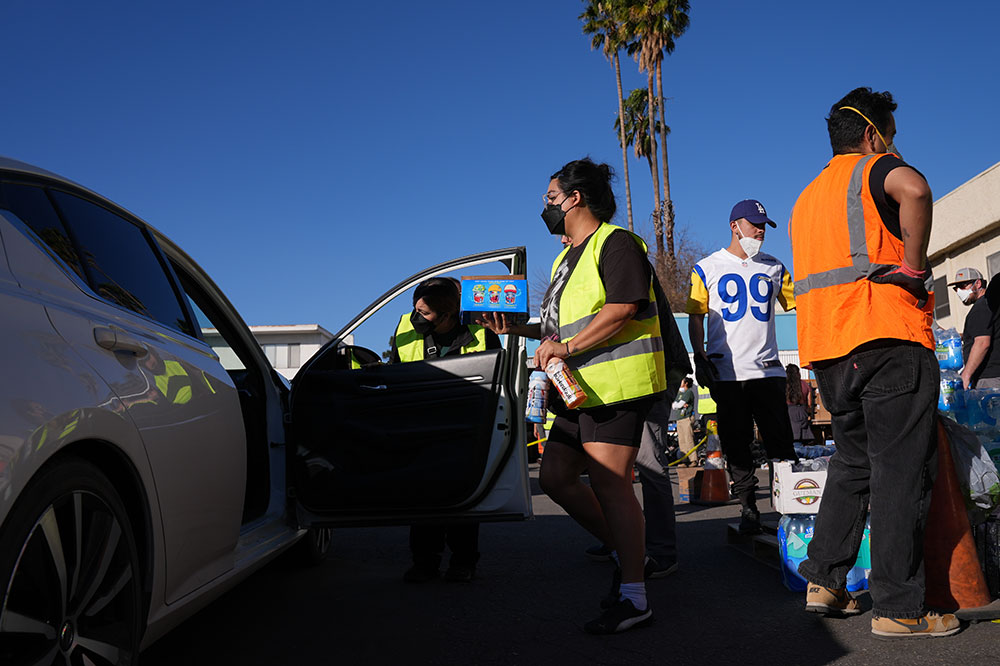
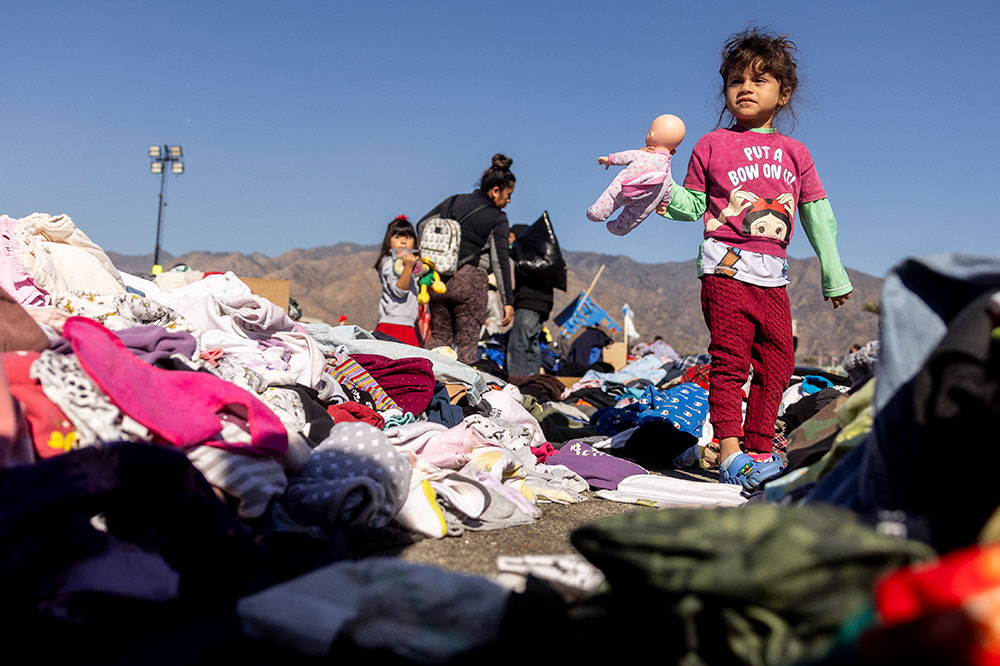
© Barbara Davidson—The Washington Post/Getty Images, © Barbara Davidson—The Washington Post/Getty Images, © Frederic J. Brown—AFP/Getty Images, © Etienne Laurent—AFP/Getty Images, © Lokman Vural Elibol—Anadolu/Getty Images, © Etienne Laurent—AFP/Getty Images, © Etienne Laurent—AFP/Getty Images

Thousands of homes and businesses have been destroyed by wildfires that broke out across Los Angeles, California, beginning January 7. It’s hard to describe the damage the fires have caused. What is clear is that people are coming together to help each other.

Fighting the Fires

Fanned by high winds, the fires spread quickly, making them difficult to fight. Several U.S. states, as well as Mexico and Canada, sent firefighters to California. They worked alongside the Los Angeles Fire Department to battle the flames.

Helping Neighbors

Residents, charities, and local businesses sprang into action. Some turned their buildings into collection sites where people could bring donations. Others offered rides to people who had been ordered to evacuate (leave) their homes.

Several hotels opened their doors to people who had to evacuate or who had lost their homes. And animal shelters took in pets whose owners had been forced to leave them behind. As local shelters became full, other rescue organizations arrived to fly animals to shelters in other states.

Giving Back

The fires have affected Los Angeles residents from all walks of life. Some are celebrities, while others are everyday people. Those who were less affected quickly offered their support. Beyoncé, for example, announced that her foundation would donate $2.5 million to those in need. Most of the kindness and generosity has come from regular Americans. They are donating food, clothing, supplies, and money.

Officials say Los Angeles appreciates the support. It may be needed for weeks and months to come.

Click through the slideshow above, which shows some of the people who are helping wildfire victims.  

Martin Luther King, Jr., Day

Martin Luther King has his arm linked with that of Coretta Scott King as they march along with other civil rights leaders.

© William Lovelace—Hulton Archive/Getty Images

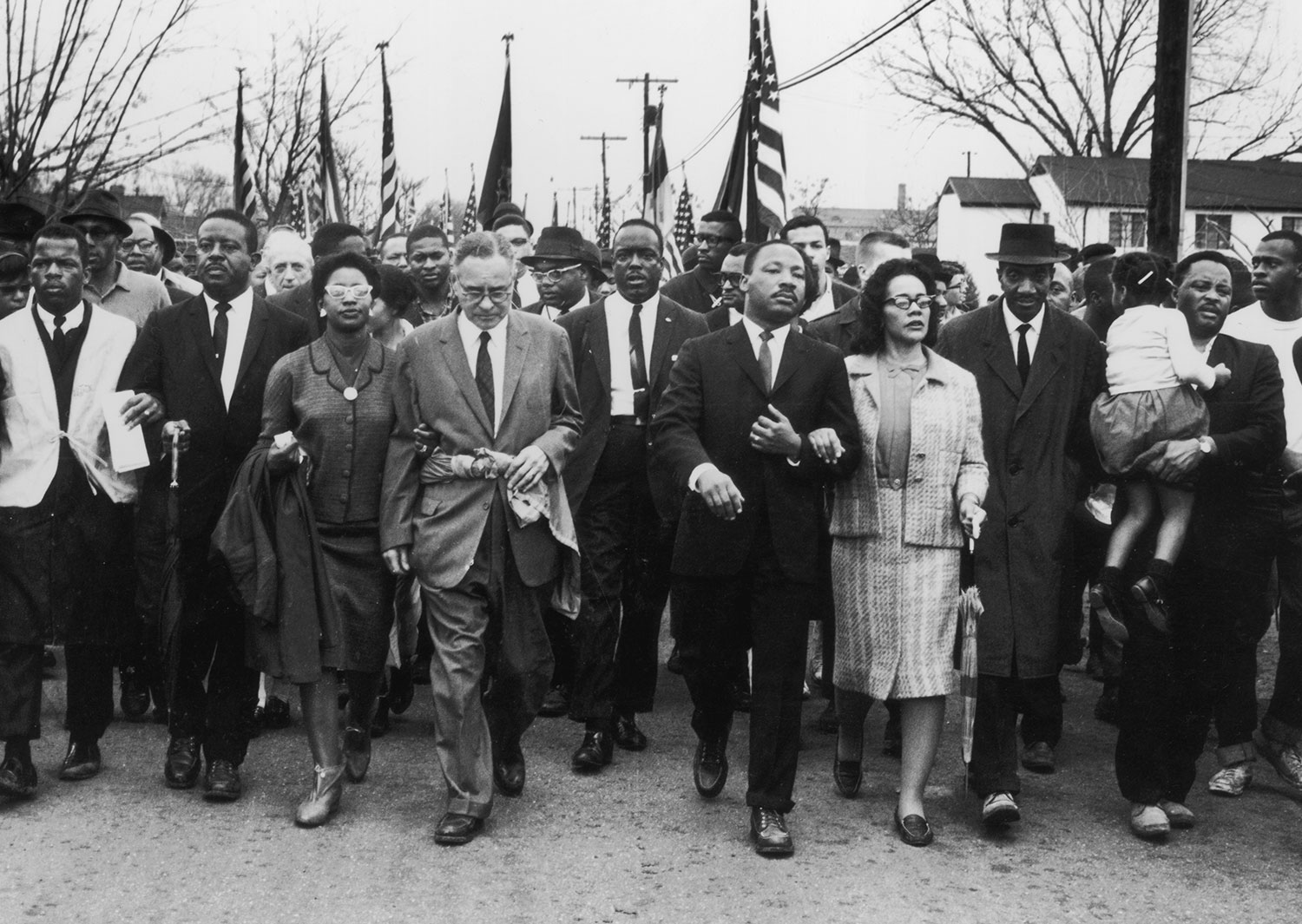
Martin Luther King, Jr., and his wife, Coretta Scott King (center-right) walk arm in arm during a march for civil rights from Selma to Mongomery, Alabama.

Today, January 20, 2025, is Martin Luther King, Jr., Day. The U.S. holiday marks King’s birthday. How did the civil right leader’s birthday become a national holiday? 

U.S. congressman John Conyers introduced a bill to honor King’s birthday in April 1968, not long after the civil rights leader was killed. But before a bill can become a law, it needs support from members of Congress. There was not enough support at the time, and the bill didn’t pass. Conyers would reintroduce the bill every year. 

During the 1970s, due partly to the hard work of King’s widow, Coretta Scott King, public support for the bill grew stronger. Congressional support also increased. By 1979, the bill had support from U.S. president Jimmy Carter and a petition with 300,000 signatures. Again, Congress voted on the bill. It lost by five votes. 

By 1983, public support for formal recognition of King was overwhelming. That year, both houses of Congress voted to make the third January of each year Martin Luther King, Jr., Day. President Ronald Reagan signed the bill into law on November 2, 1983.

Why We Need Farms

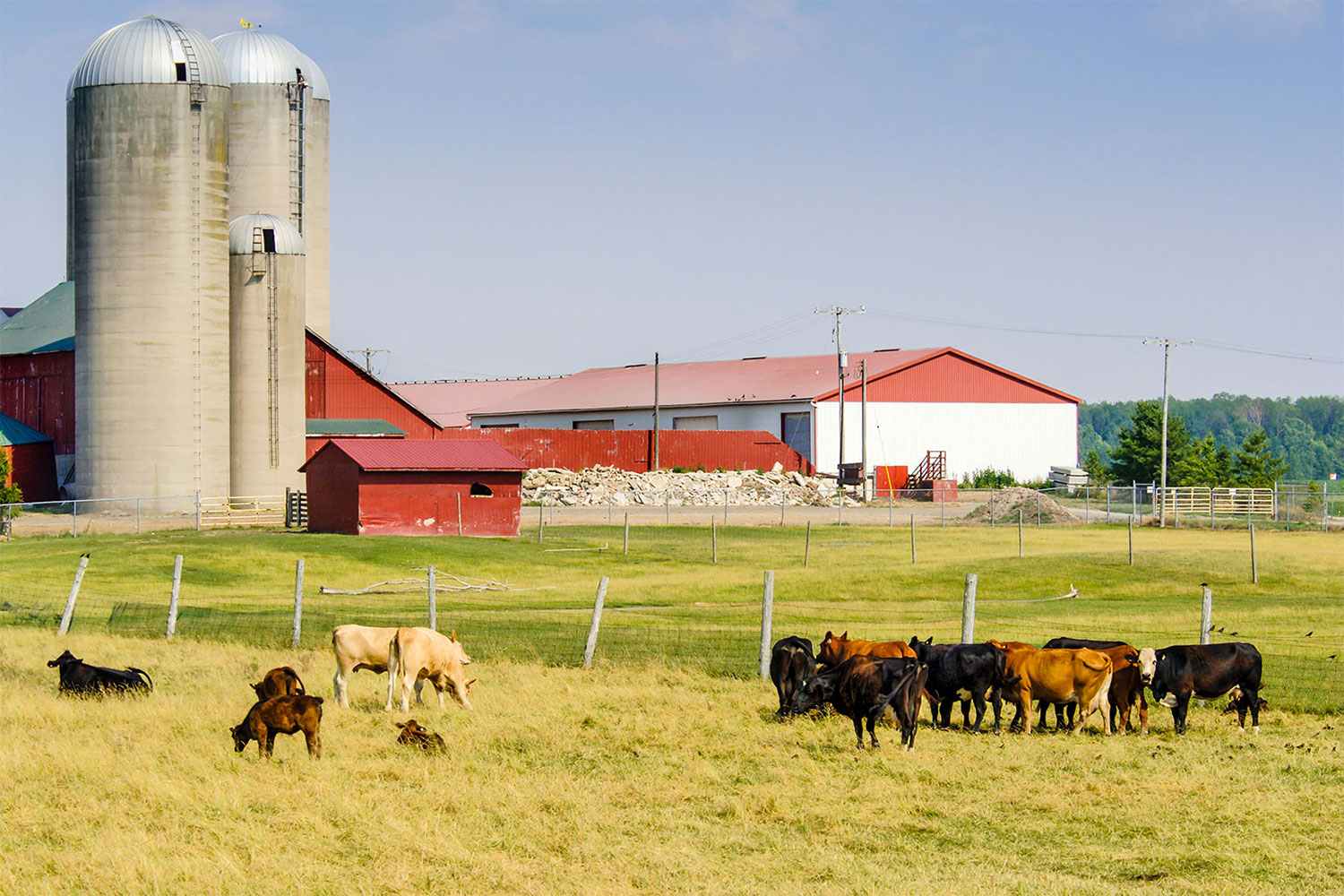
Cattle graze in a field with a barn and silos in the background.

© csfotoimages—iStock/Getty Images

Some of those tree-eating goats live on farms. If it wasn’t for farms, we wouldn’t have many of the things we depend on. You can learn more about agriculture, or farming, at Britannica!

Word of the Day Icon

Word of the Day

ruminant

Part of speech:

noun

Definition:

: an animal (such as a cow or sheep) that has more than one stomach and that swallows food and then brings it back up again to continue chewing it

Definitions provided by
Merriam-Webster Logo
Game Icon

Play

Word Search

Can you find all the words?

O
O
O
O
O

In Case You Missed It

When 5th graders asked Major League Baseball player Ozzie Albies which pet fish to get, he helped out in a big way.
March 11, 2026
Taryn Smith is the first American woman to row solo across the Atlantic Ocean.
March 5, 2026
A powerful waterfall doesn’t easily freeze, but this winter has been especially cold!
March 3, 2026
For Women’s History Month, we’re honoring two women who inspired many others to take to the skies.
February 26, 2026