Fossilized Footsteps
Scientists found footprints of a new species of armored dinosaur in the Canadian Rockies.
© Daniel Eskridge/Dreamstime.com
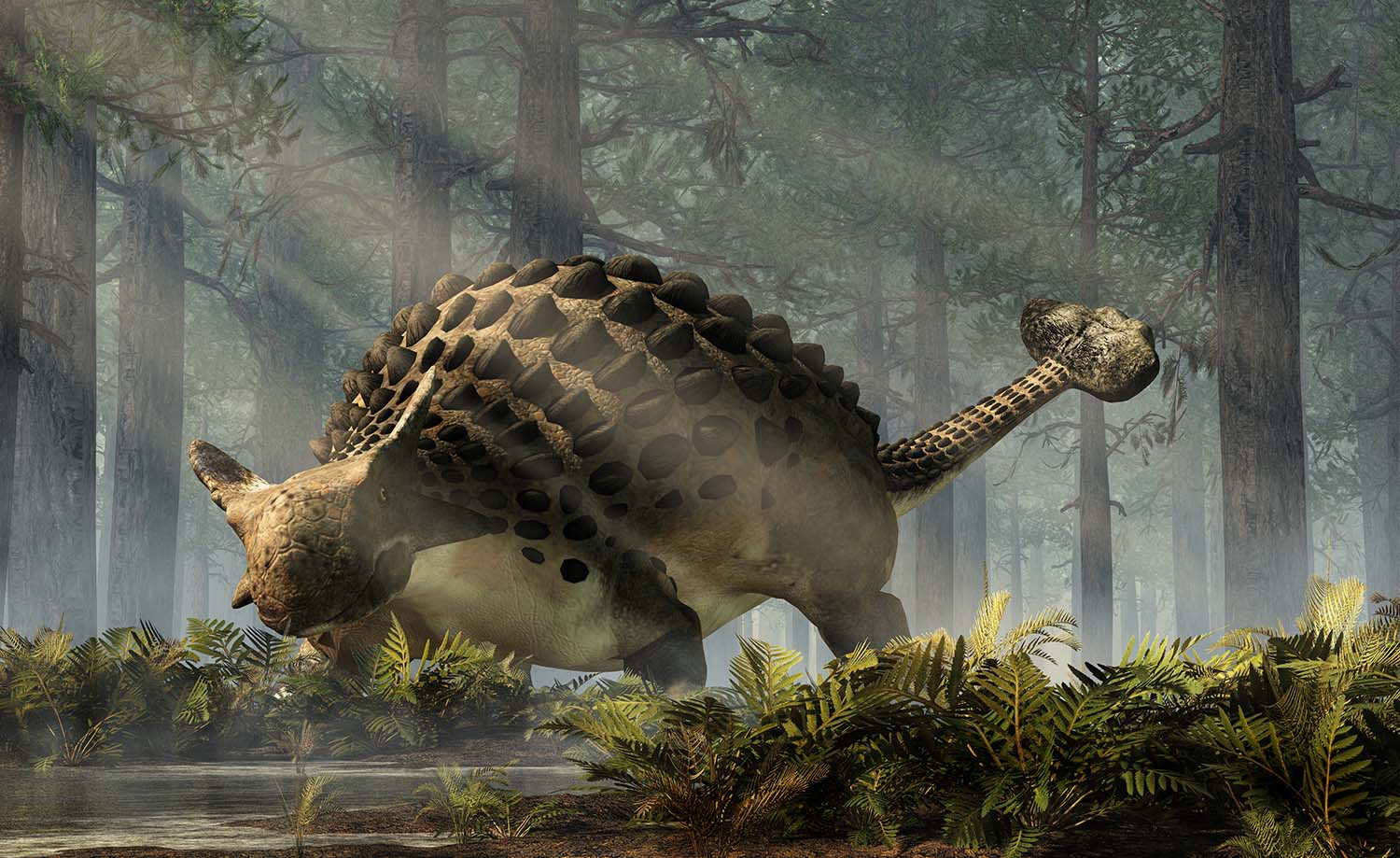
This image shows what a type of armored dinosaur called an ankylosaurus would have looked like. Notice the clubbed tail.
Millions of years ago, a dinosaur lumbered across ancient North America, leaving footprints in soft mud. The footprints eventually turned to rock and became frozen in time. Researchers now know these fossilized footprints belonged to the three-toed ankylosaurid, a new species of armored dinosaur with a stiff, sledgehammer-like tail. This is the first footprint discovery of this dinosaur type anywhere in the world.
Two sets of 100-million-year-old fossilized footprints—each made by a three-toed dinosaur—were found in the Canadian Rockies, a mountain range that goes across the Canadian provinces of Alberta and British Columbia. Paleontologists, scientists who study dinosaurs, have named the new species Ruopodosaurus clava. This species is related to ankylosaurs, armored dinosaurs that had four toes on each foot and a flexible tail.
Courtesy of Royal British Columbia Museum
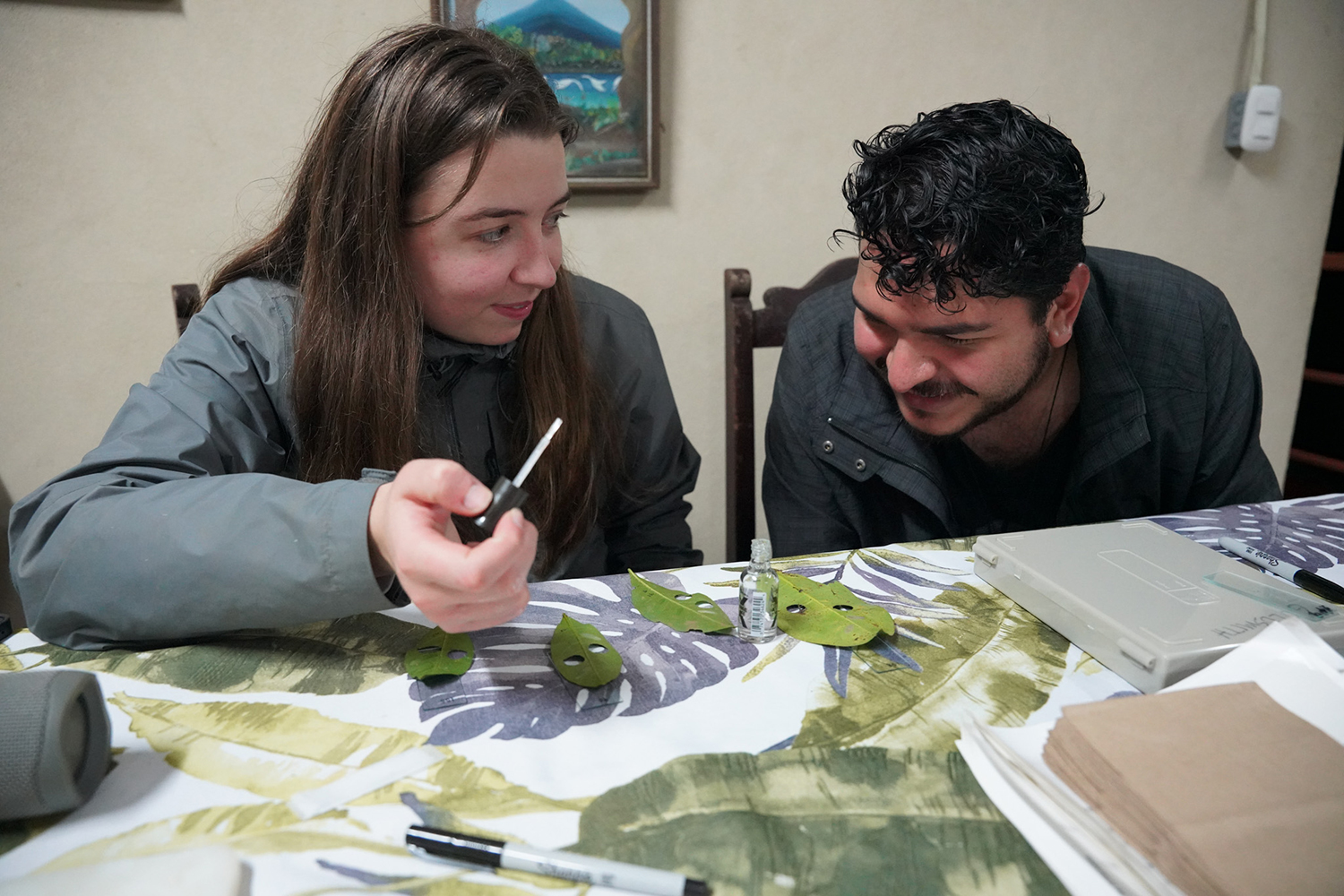
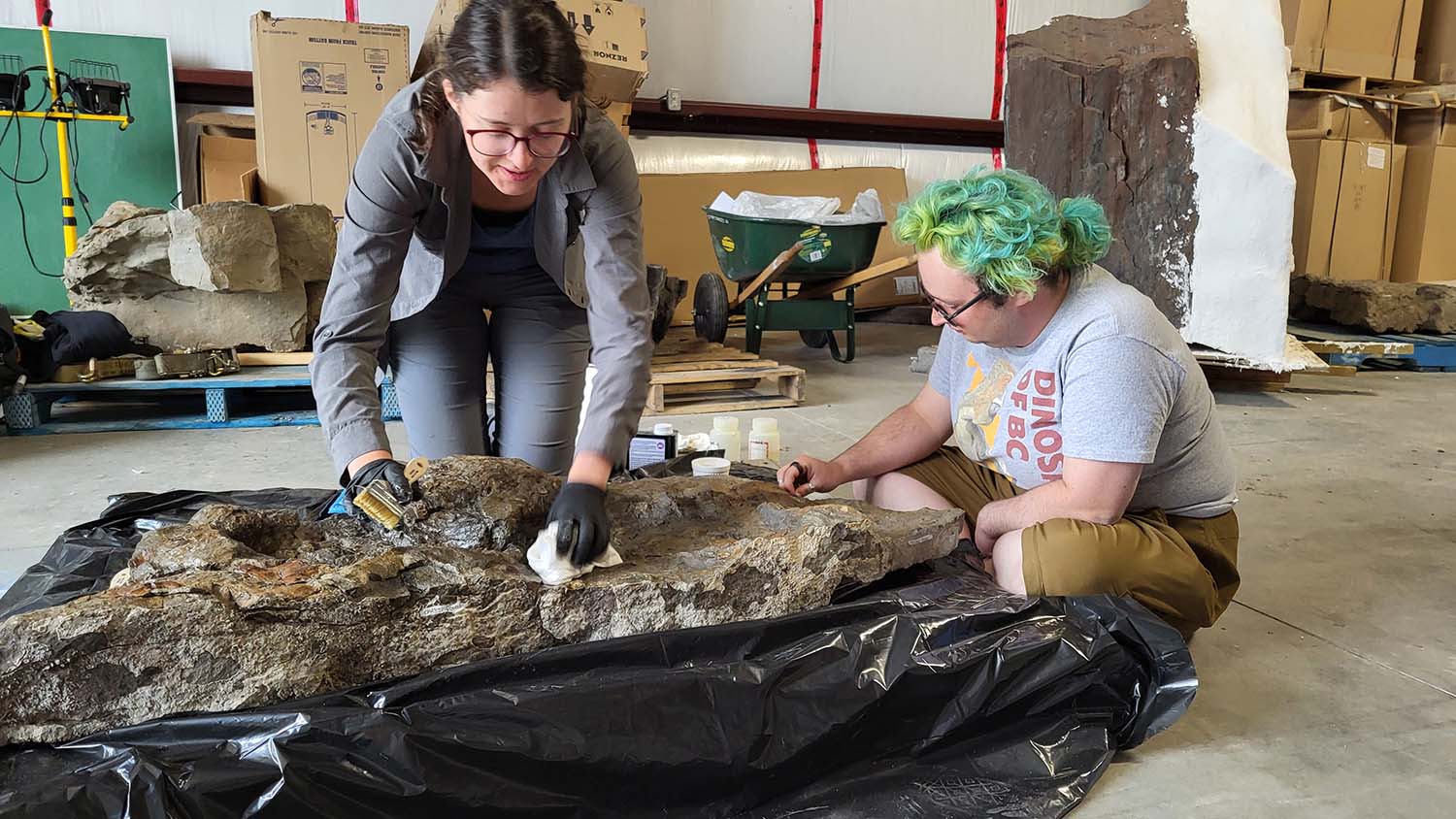
In this 2024 photo, Royal British Columbia Museum fossil preparer Calla Scott (left) and former University of Victoria student Teague Dickson (right) prepare a fossil.
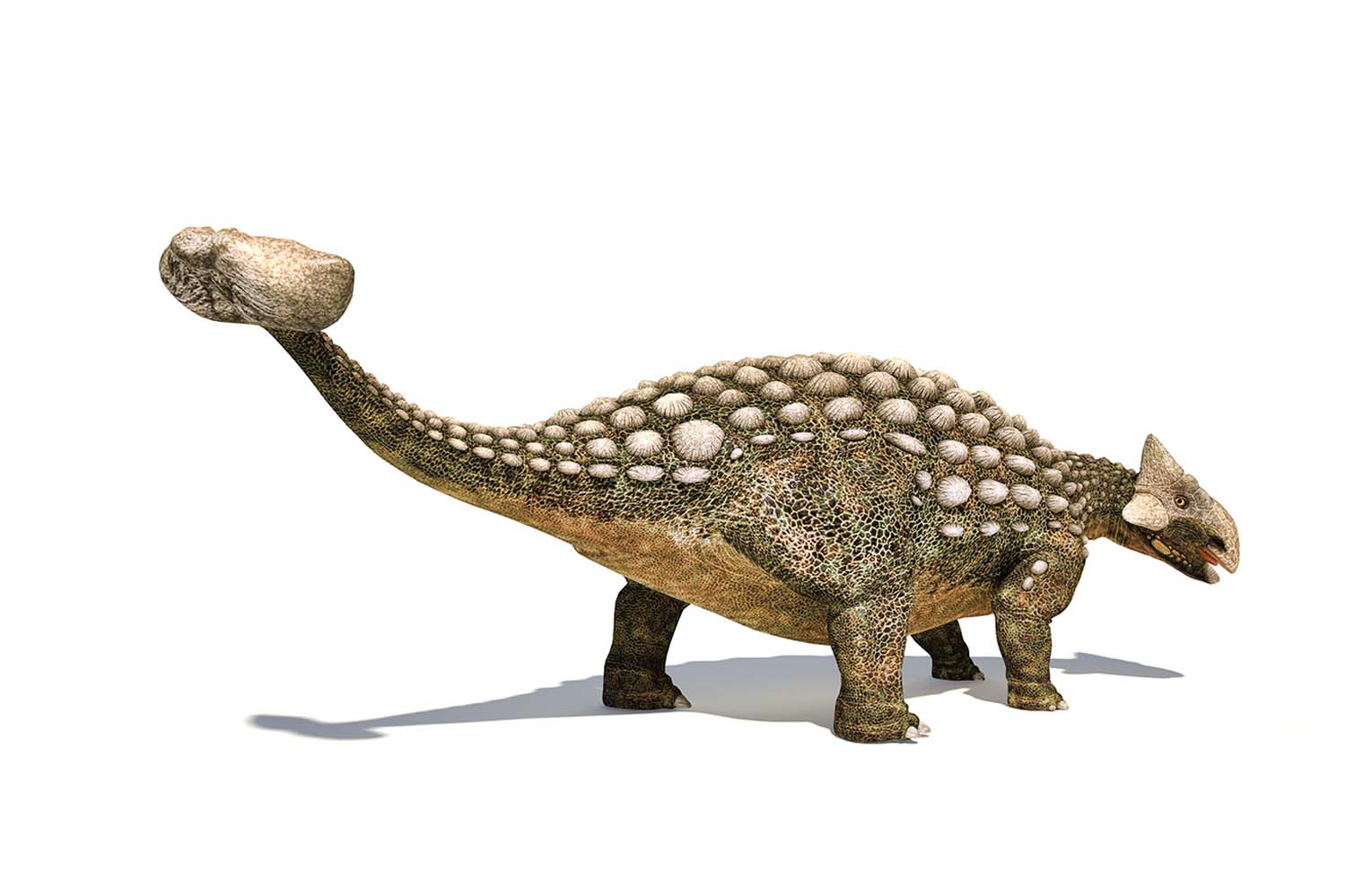
Paleontologists say the Ruopodosaurus clava was like other ankylosaurs in many ways. It was larger than a car, had spikes and armored plates on its back, and had a clubbed tail. The ankylosaurid’s tail was stiff and hard, making it useful for fighting off predators. This dinosaur was like a walking tank.
“While we don’t know exactly what the dinosaur that made Ruopodosaurus footprints looked like, we know that it would have been about 16–20 feet (5–6 meters) long, spiky and armored, and with a stiff tail or a full tail club,” said Victoria Arbour, a paleontologist who specializes in this group of dinosaurs.
Fossils of ankylosaurid skeletons have been found in North America, but paleontologists thought the group had disappeared about 100 million years ago. Thanks to the footprint discovery, paleontologists now know that ankylosaurids were still thriving at this time in North America.
“Ankylosaurs are my favorite group of dinosaurs to work on, so being able to identify new examples of these dinosaurs in British Columbia is really exciting for me,” said Arbour, who works at the Royal British Columbia Museum. “There’s still lots more to be discovered.”

Fun Fact
The clubbed tail of an ankylosaurs was powerful enough to break bones! The tail had seven bones fused together at the end, making it a strong defensive weapon.
© Leonello Calvetti/Dreamstime.com
Canada’s Dinosaur Park
© Dave G. Houser—The Image Bank Unreleased/Getty Images
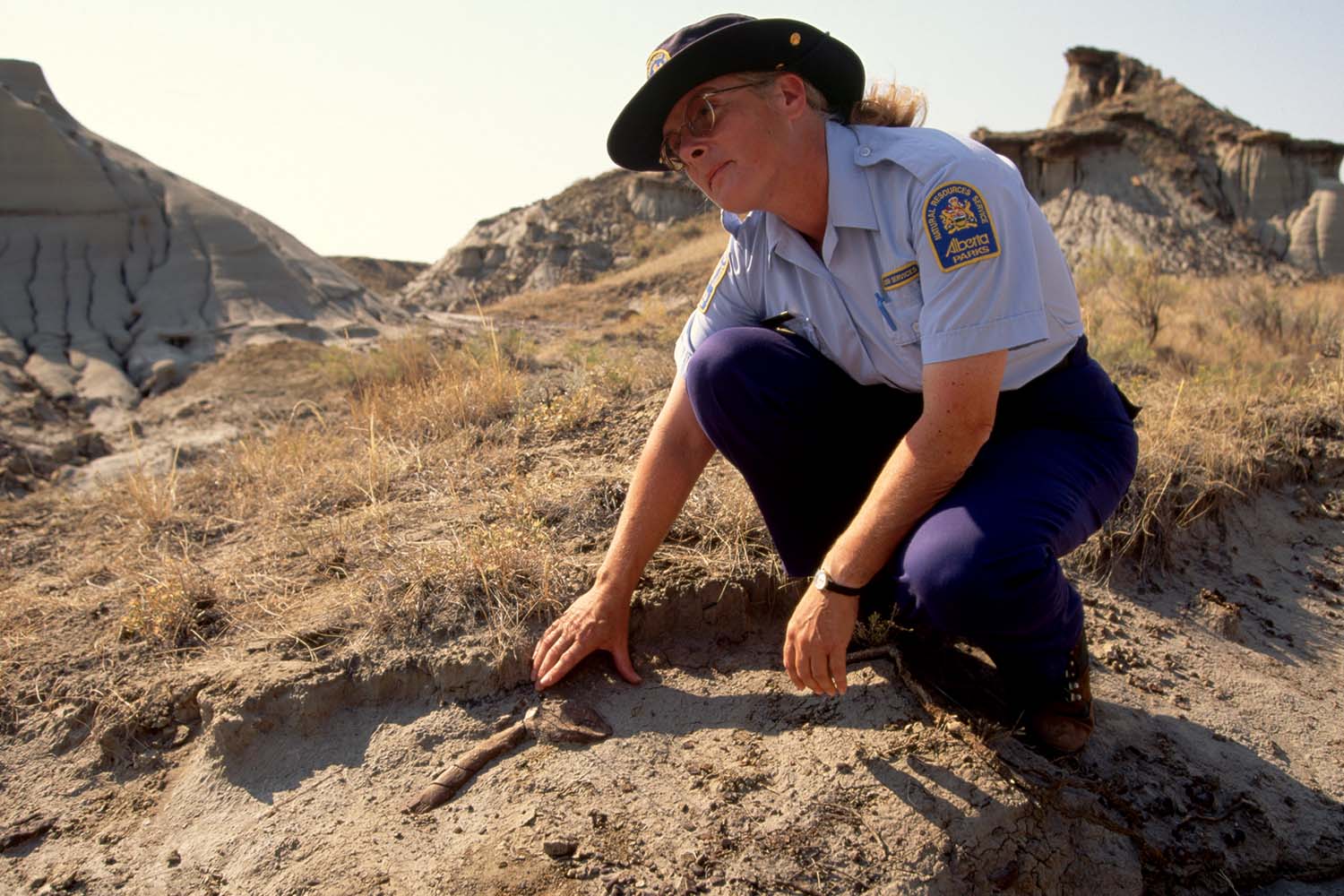
Dinosaur Provincial Park guide Hilary Tarrant shows off a fossil that was found in the park.
Amid Canada’s western badlands sits a dinosaur lover’s dream: a park filled with hundreds of dinosaur fossils. Dinosaur Provincial Park, in the nation’s Alberta province, is one of the richest sites for fossilized dinosaur species in the world.
Paleontologists have discovered more than 50 species of dinosaurs and more than 500 high-quality fossils. Visitors at the park can learn how to spot and identify fossils and learn how to make fossil casts like real paleontologists.
Tourists can also learn about the history of the site and the current animals that call the park home. The fossils reveal that the landscape of the park was once very different from what it is today. About 75 million years ago, the landscape had flowing rivers, lush green forests, and an inland sea. This landscape was teeming with life, which has been preserved in fossil form.
Today, the park is a badland ecosystem with dry canyons and towering rocks that have been carved by wind and rain. Few trees grow there, but it is still home to many animals such as snakes, coyotes, and pronghorns (sometimes called “pronghorn antelopes”).
Dinosaur Provincial Park is a UNESCO World Heritage site, which means it is important to people for its scientific and educational significance.
Meet the Ankylosaurus!
© Roman Nedoshkovskiy/Dreamstime.com
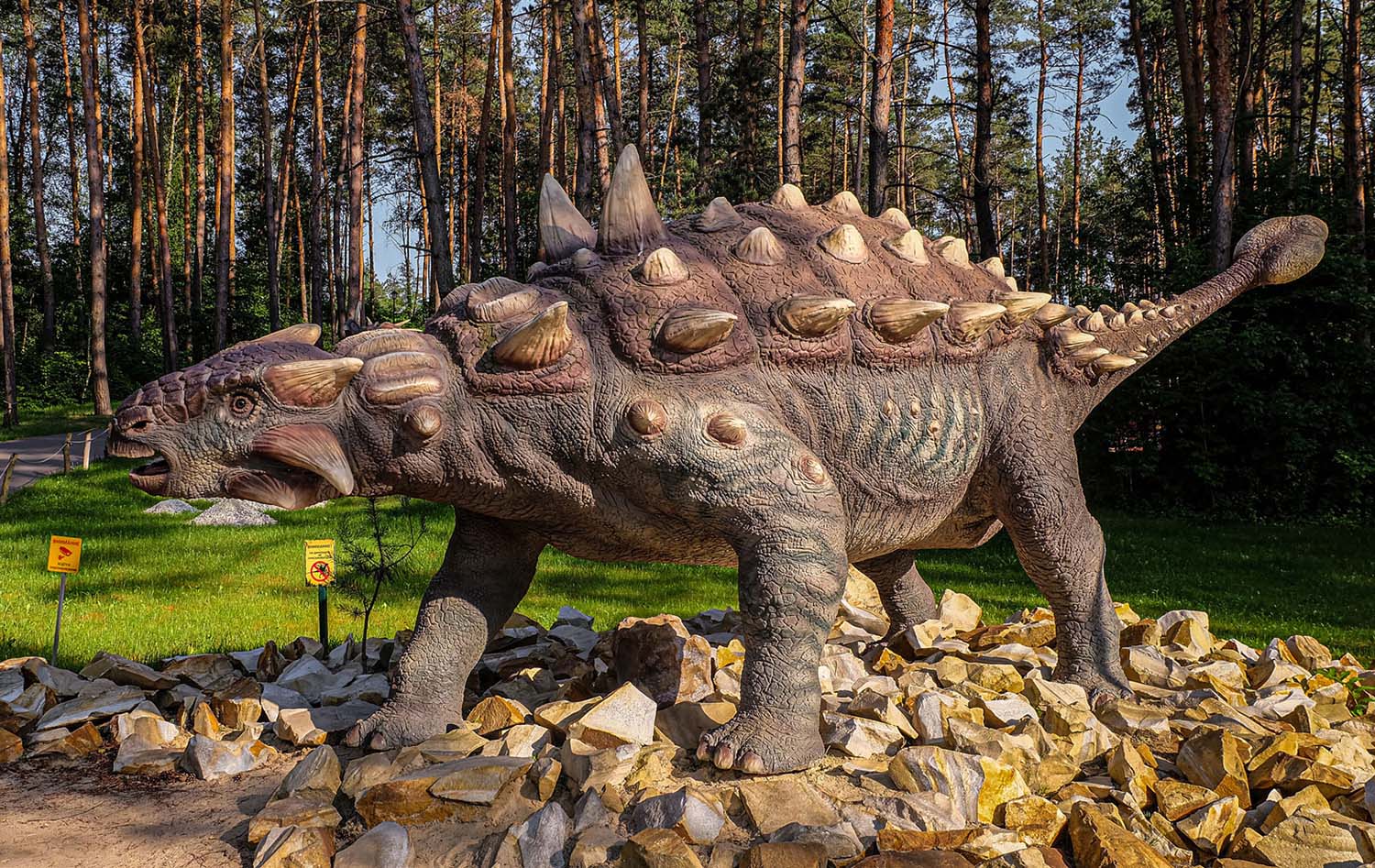
This statue of an ankylosaurus dinosaur is at Belgorod Dinopark in Belgorod, Russia.
Though the giant, armored Ankylosaurus seemed fierce, it was also a slow-moving herbivore that ate plants and shrubs. Learn more about this fascinating dinosaur at Britannica!

Word of the Day
evidence
noun
: something which shows that something else exists or is true


Play
Word Search