Clark Is WNBA-Bound

Caitlin Clark runs on the basketball court in front of a cheering crowd with a smile on her face.

Clark Is WNBA-Bound

Caitlin Clark proved her greatness during a standout college career. Now, she’s headed for the WNBA.

Caitlin Clark runs on the basketball court in front of a cheering crowd with a smile on her face.

© Matthew Holst/Getty Images

Caitlin Clark celebrates after breaking an NCAA scoring record during a game on February 15, 2024.

Caitlin Clark may not have a National Collegiate Athletic Association (NCAA) title, but she’s already a basketball legend. Clark earned superstar status as a guard for the University of Iowa Hawkeyes. Now, she’s headed for the WNBA.

Clark scored 30 points in the championship game of the NCAA women’s basketball tournament. It wasn’t enough to win against the undefeated University of South Carolina, which beat Iowa 87–75. But fans recognized a once-in-a-lifetime talent. Almost 19 million viewers watched the game on TV or online, making the event the most popular in the history of women’s college basketball. In the stadium, the crowd gave Clark a round of applause when she was subbed out after it became clear that South Carolina would win.

Caitlin Clark dribbles the ball during a game with an opposing player attempting to steal.

© Matthew Holst/Getty Images

Clark (number 22) drives against Greta Kampschroeder of the Michigan Wolverines during a game in February 2024.

This was Clark’s goodbye to college basketball, and she had left her mark. She is the NCAA’s all-time leading scorer, ranking higher than anyone in men’s or women’s U.S. college basketball. Her skills on the court are already being compared to those of the NBA’s Steph Curry and Damian Lillard. Speaking to the crowd after the championship game, South Carolina head coach Dawn Staley had nothing but praise for the opposing team’s top player.

“I want to personally thank Caitlin Clark for lifting up our sport,” Staley said. “She carried a heavy load for our sport…. You are one of the GOATs [greatest of all time] of our game, and we appreciate you.”

Staley said she believes Clark will elevate the WNBA, where she’ll be playing for the Indiana Fever next season.

Caitlin Clark holds up an Indiana jersey with the number 1 on it.

© Sarah Stier/Getty Images Sport

Clark, the number one WNBA draft pick, was selected by the Indiana Fever.

Clark herself is already used to a lot of attention—the kind of attention she’ll no doubt continue to get in the WNBA.

“I dreamed of playing in front of these types of crowds in these types of environments,” Clark told Good Morning America. “During every national anthem, or every pregame, I just try to take a deep breath and look around and, you know, soak in the environment because it seriously never gets old.”

Did You Know?

Caitlin Clark in uniform on the basketball court with the balls from the sports she has played circling her head.

John McClellan (CC BY-SA 2.0), © Steven Cukrov/Dreamstime.com; Animation Encyclopædia Britannica, Inc.

Growing up, Caitlin Clark played soccer, softball, and neighborhood football. She began to focus on basketball when she started high school.

Basketball for All
© Bettmann/Getty Images

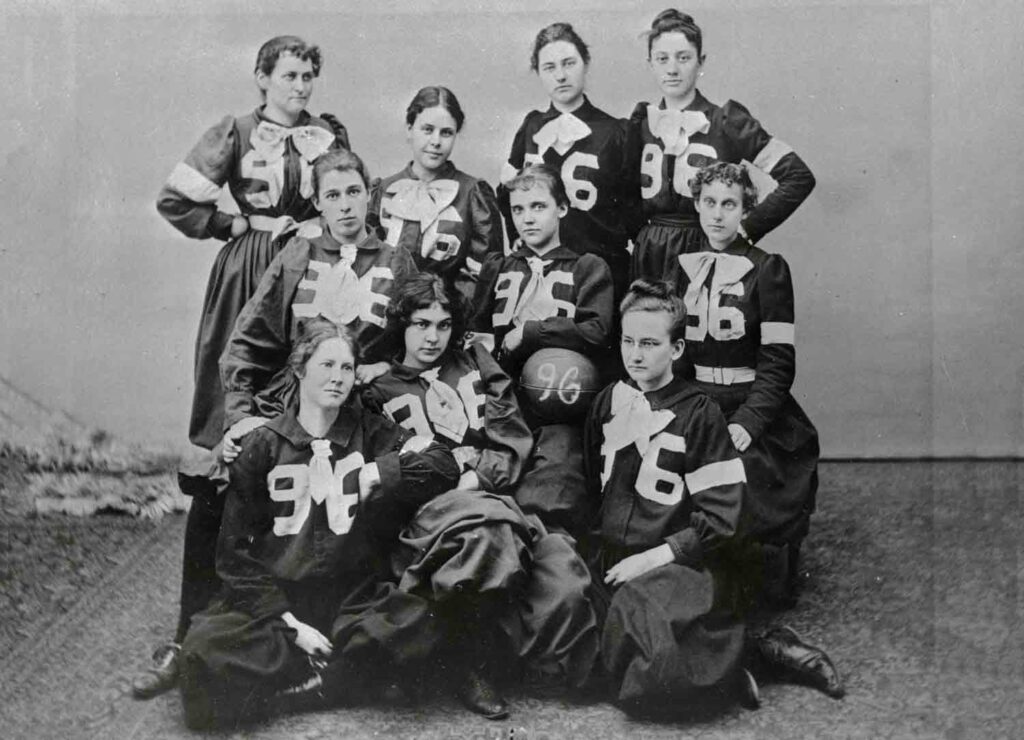
This 1896 photo of the Smith College varsity basketball team was taken just three years after Senda Berenson brought the game to the college.

When Senda Berenson, a physical education teacher at Smith College, decided to organize a basketball game, she probably realized that it would be controversial. She did it anyway.

The year was 1893, and Berenson had recently read about basketball, then a new sport. Its inventor, James Naismith, was a physical education teacher, just like Berenson. But Naismith taught men, while Berenson taught women. At the time, many people believed that women and sports didn’t mix. In fact, they felt it was improper for a woman to be an athlete. Berenson disagreed. She believed in the value of physical fitness for everyone. And when she read about basketball, she decided to organize a game at her all-women’s college.

The students had such a good time that within a few years, the first intercollegiate women’s basketball game was organized between Stanford University and the University of California. A reporter for the San Francisco Chronicle was impressed.

“There is not an instant of ennui [boredom] in basketball. All is motion, change, excitement,” the reporter wrote.

A group of young women in knee-length uniforms play basketball with a female coach watching.

Frances Benjamin Johnston Collection/Library of Congress, Washington, D.C. (LC-USZC4-9676)

Dating from about 1899, this photo shows young women playing basketball in the Western High School gym in Washington, D.C.

Hoops Is Number Two?

A football player has the number one spot on a podium while a basketball player and a football player each take a number two spot.

© Ilia Karpenko, Mast3r, Euang Thoummaly/Dreamstime.com; Animation Encyclopædia Britannica, Inc.

Football is the most popular sport in the U.S., while basketball and baseball vie for the number-two spot. What’s your number one? 

Learn more about basketball at Britannica!

WORD OF THE DAY

the crème de la crème

PART OF SPEECH:

noun

Definition:

: the very best people or things in a group

Definitions provided by
Merriam-Webster Logo

Word Flower

How many words can you make with these letters? All of your words must use the letter in the center.


O
O
O
O
O
O

In Case You Missed It

Figure skater Alysa Liu felt happy and confident at the 2026 Olympics. She skated off with a gold medal!
March 5, 2026
An all-women ranger team protects endangered animals on the Indonesian island of Sumatra.
February 26, 2026
Nima Rinji is showing the world the powerful spirit of the Sherpa people as he climbs the world’s tallest mountains.
February 19, 2026
Life wouldn’t be as fun without the work of these three inventors.
February 12, 2026

Harnessing a Wild River

A headshot of Simon Boughton next to the cover of The Wild River and the Great Dam.

Harnessing a Wild River

The Hoover Dam made the Southwestern United States a lot more livable, but is our planet paying the price? Author Simon Boughton shares his thoughts.

A headshot of Simon Boughton next to the cover of The Wild River and the Great Dam.
© Véronique Lefèvre Sweet, © Hachette Book Group

Simon Boughton’s new book, The Wild River and the Great Dam, tells the story of the Hoover Dam with photos and firsthand accounts.

The Colorado River is amazing. Flowing from the state of Colorado down to Mexico, the river provides water and electric power to people throughout the arid Southwest. This wouldn’t be possible without a feat of human engineering called the Hoover Dam. Built in the 1930s by the U.S. government, the dam harnessed the power of the unpredictable river, turning it into a valuable resource. But the Hoover Dam has also had negative environmental consequences. 

In a new book called The Wild River and the Great Dam, author Simon Boughton explores the construction of the dam and its impact on the natural world. The book is filled with historical photos and quotes from people who were involved in the Hoover Dam project. To mark Earth Day (April 22), In the News spoke to Boughton about how the dam has affected our planet. Here is a condensed and edited version of our conversation.

In the News: Why did you choose the Hoover Dam as your topic?

Simon Boughton: I had a childhood fascination with big things and big machines and building things. This book began with that childhood fascination with construction. I was interested in the audacious engineering story, just building this huge thing in the desert with new machinery. And it does turn out to be an engineering story about solving problems and building big things. The other thing that really spoke to me about it is that it turned out to be a really interesting human story as well as a piece of social history. I found it really fascinating.

ITN: In the book, you point out that the Southwest is largely desert. Why did people want to change that by building a dam that would supply water?

SB: It’s not an easy thing to settle in a desert. So, it was just a matter of practical necessity to support this flood of people that came from the East to the West during the late 19th century and early 20th century. In order for more people to live there, there has to be water.

ITK: This land had to be turned into something that was usable.

SB: Yeah, I mean, I’m very conscious when thinking about the story that I don’t think it was inevitable that this had to happen. It’s a story about something that, to some people, seemed like a good idea but turned out to have other consequences. I’m wary of sounding like it was something we had to do. It’s something we chose to do. 

ITK: It felt like from the government’s perspective that they believed that they had to do it. But that’s just one perspective. In your book, you quoted U.S. Secretary of the Interior Ray Lyman Wilbur. In 1930, he said the Hoover Dam would be “one of man’s greatest victories over nature.”

SB: Yeah, that’s particularly the language [of that era] of sort of bringing nature into subjugation. There’s also a quote about the river running wild through the West and resembling an untamed horse, and finally [after the dam was built], the horse being tamed and harnessed.

There are [also] these different ways that the word conservation came to be understood over the course of the 20th century. [At one time], if water reached the sea without being used, it was considered wasted, so that their version of conservation was that you had to put water to use. Today, we talk about conservation as something else—not using too much of a resource or being careful how we use it. 

ITK: Can you talk a little bit about the positive and negative impacts of the dam?

SB: The dam was a success in the short term. The amount of water that was stored by the dam and the amount of power that was generated by the dam was far in excess of what people thought they needed at the time. The impact of the building of the dam on the farming communities down river was almost immediate. Immediately, the supply of water became predictable and reliable and manageable. But because it was a success, it created a kind of hunger for more. I think what happened was that the government got caught up in this cycle of trying to squeeze more out of the river over the second part of the 20th century. The story became one of trying to get ahead of economic and population growth.

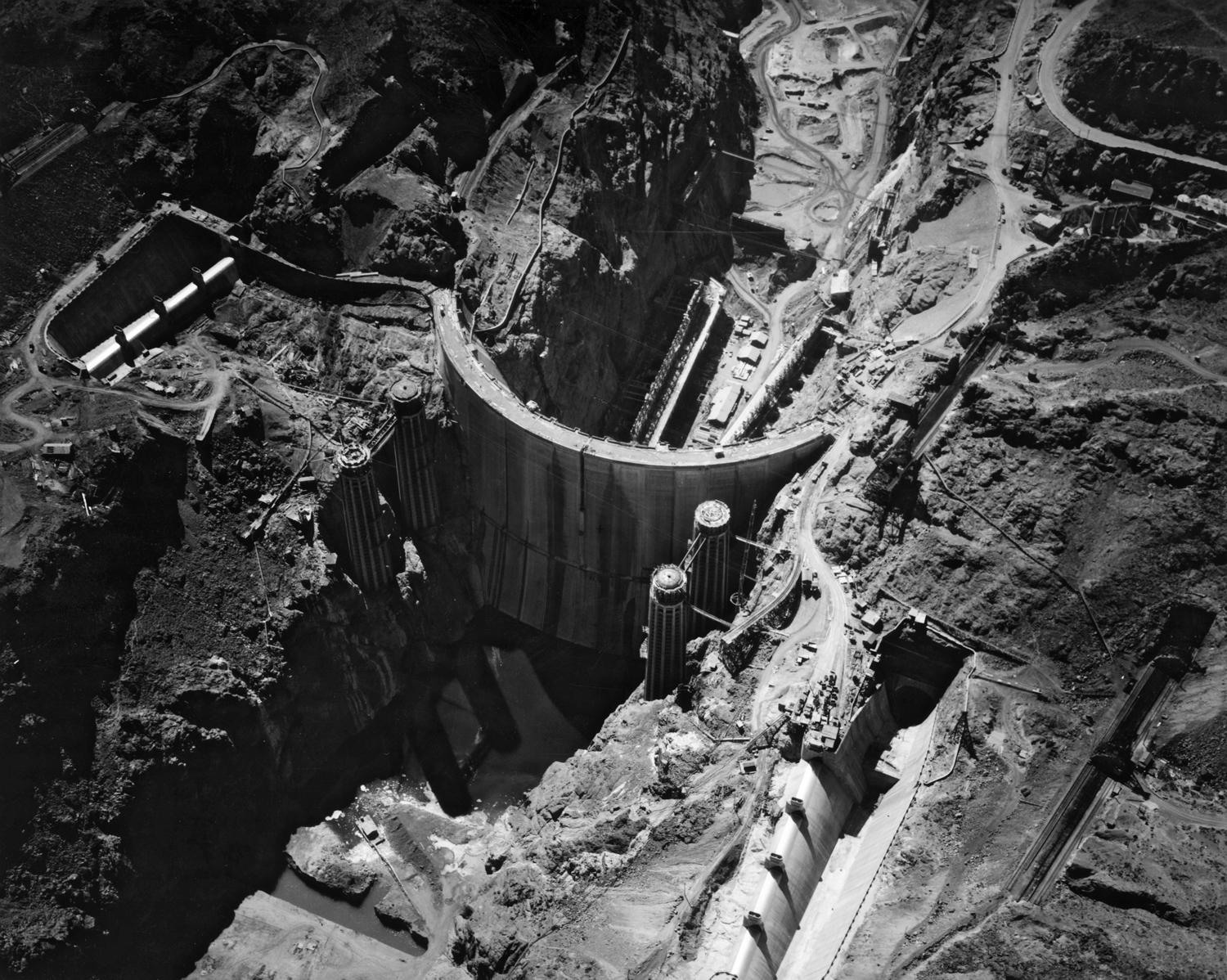
A dam is seen from above stretching over a riverbed.
© Hulton Archive/Getty Images
This 1935 photo shows the Hoover Dam shortly before construction was completed.

ITK: And then the government started building more dams.

SB: Yes, I think one consequence of the success of Hoover Dam was this rush to build on its success without really thinking through what the consequences might be. And then I think the other one is that they created a dependency on the Colorado River. 

IKN: You write in the book about how climate change has really made that problem worse because rainfall is less predictable. I’m sure that, back when the Hoover Dam was built, they weren’t thinking about climate change.

SB: Sure.

IKN: What can be done to deal with the effects of climate change?

SB: The dam was built because people wanted a solution to a resource problem, which was dry land with unpredictable cycles of droughts and floods. Cities and communities were growing, and they needed a solution. So really, the ingenuity and the creativity and the sense of purpose that built the Hoover Dam could be applied to the current situation. We are an ingenious species. You can think about building infrastructure that preserves water or uses it wisely, whether it’s through recycling water or using less water.

In the longer term, we ought to think about what we grow and when we grow it. So, for example, about 80 percent of the water that is taken out of the Colorado River goes to support agriculture. Farming is clearly something that is necessary for a growing population. On the other hand, a lot of that water goes to support things like cattle, for example, or avocados in winter. Do we need to have fresh vegetables in winter? Are there alternatives that are sustainable in terms of where we grow our food, how we grow it, and how we get it to where it’s needed? Those are really, really big questions. 

Did You Know?

Icons of different water-using appliances with drops of water in the background.
© Nadiinko, Pytyczech/Dreamstime.com; Animation Encyclopædia Britannica, Inc.

According to the United States Geological Survey, each American uses an average of 82 gallons of water a day at home.

Taking Urgent Action

A heavily flooded village is seen aerially.
© Kazi Salahuddin Razu—NurPhoto/Getty Images
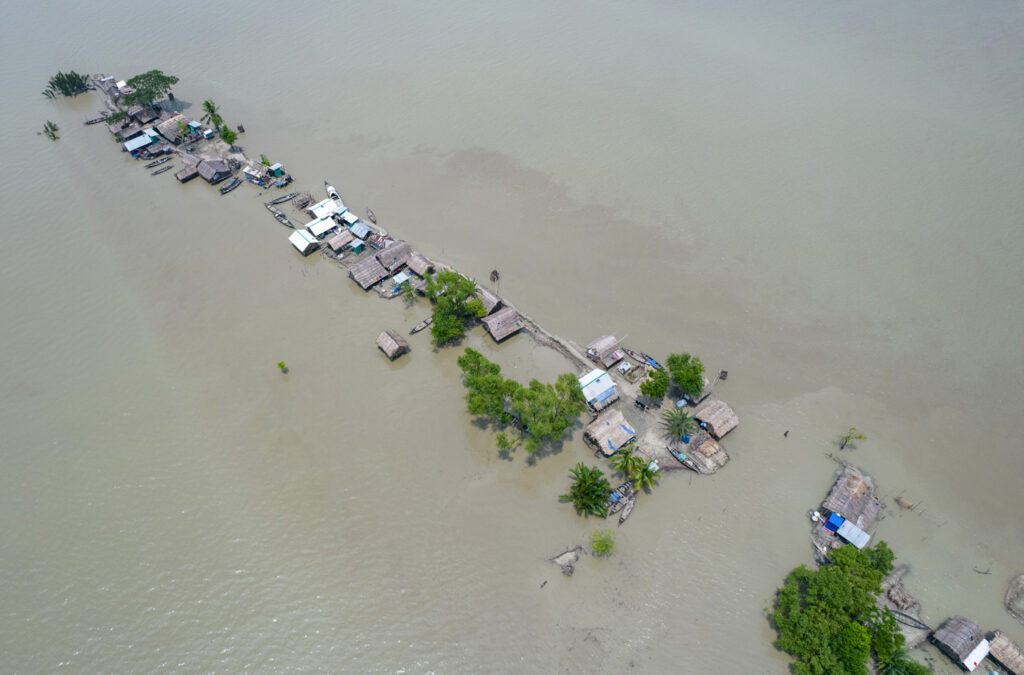
This August 2023 photo shows flooded homes in the coastal area near Khulna, Bangladesh. The area was farmable land until sea levels began to rise.

Around the world, teens and young adults are taking action to address the climate crisis. Tahsin Uddin, who’s in his early 20s, founded an organization called Lal Sabuj Society (LSS), which works to promote environmentally friendly practices such as planting trees, traveling by bicycle, and using renewable energy. Uddin also trains teenagers in mobile journalism (gathering and reporting news using smartphones), which he says is a valuable way to spread awareness about environmental issues.

Although climate change is an urgent issue all over the world, its impact is greater and more immediate in certain locations, including Uddin’s home country of Bangladesh.

NEWS EXTRA

South Carolina Wins NCAA Title

A group of young women pose in t-shirts that read “Champions” and a banner that reads “Final Four National Champions” as their coast holds up a trophy.
© Ben Solomon—NCAA Photos/Getty Images
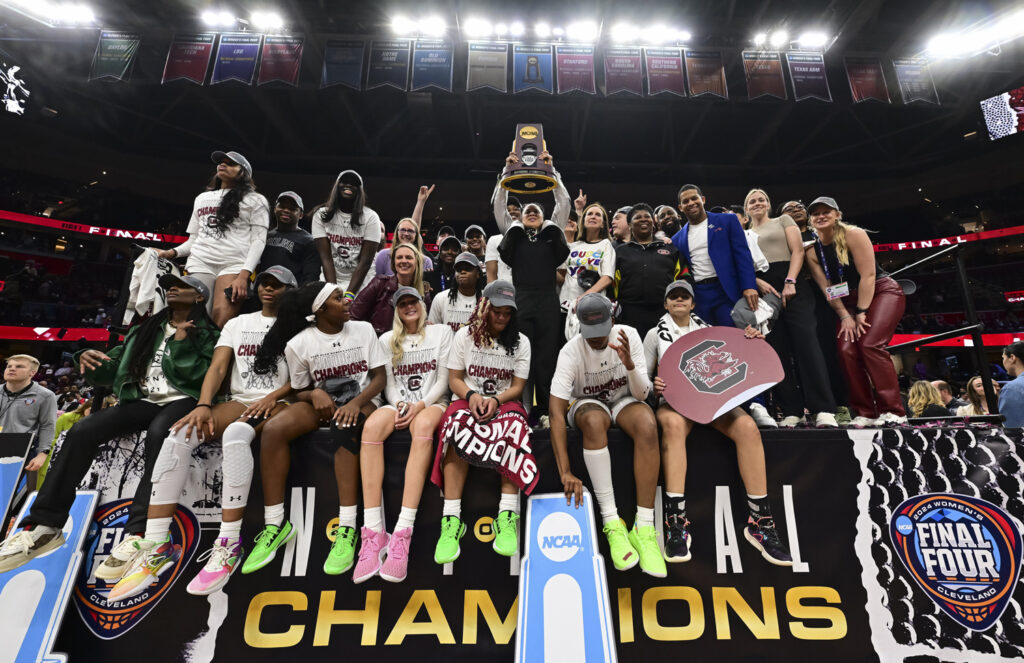
South Carolina coach Dawn Staley holds her team’s championship trophy.

For the second time in three years, the University of South Carolina Gamecocks are National Collegiate Athletic Association (NCAA) champions. In the final game of the NCAA tournament, South Carolina defeated the University of Iowa and its star player, Caitlin Clark, 87–75, finishing off an undefeated season. 

MVP Kamilla Cardoso scored 15 points and 17 rebounds despite an injured knee. Cardoso, who’s in her final year at South Carolina, just signed with the WNBA’s Chicago Sky. Freshman (first-year student) Tessa Johnson scored an impressive 19 points, suggesting that South Carolina will continue to be a powerhouse team for years to come. 

“We’re unbeatable,” said South Carolina guard Bree Hall. “That’s the statement that was made tonight.” 

Although Iowa missed out on the title, Caitlin Clark grabbed many of the headlines. For more about Clark, don’t miss the April 23 edition of In the News!

Earth Day Awareness

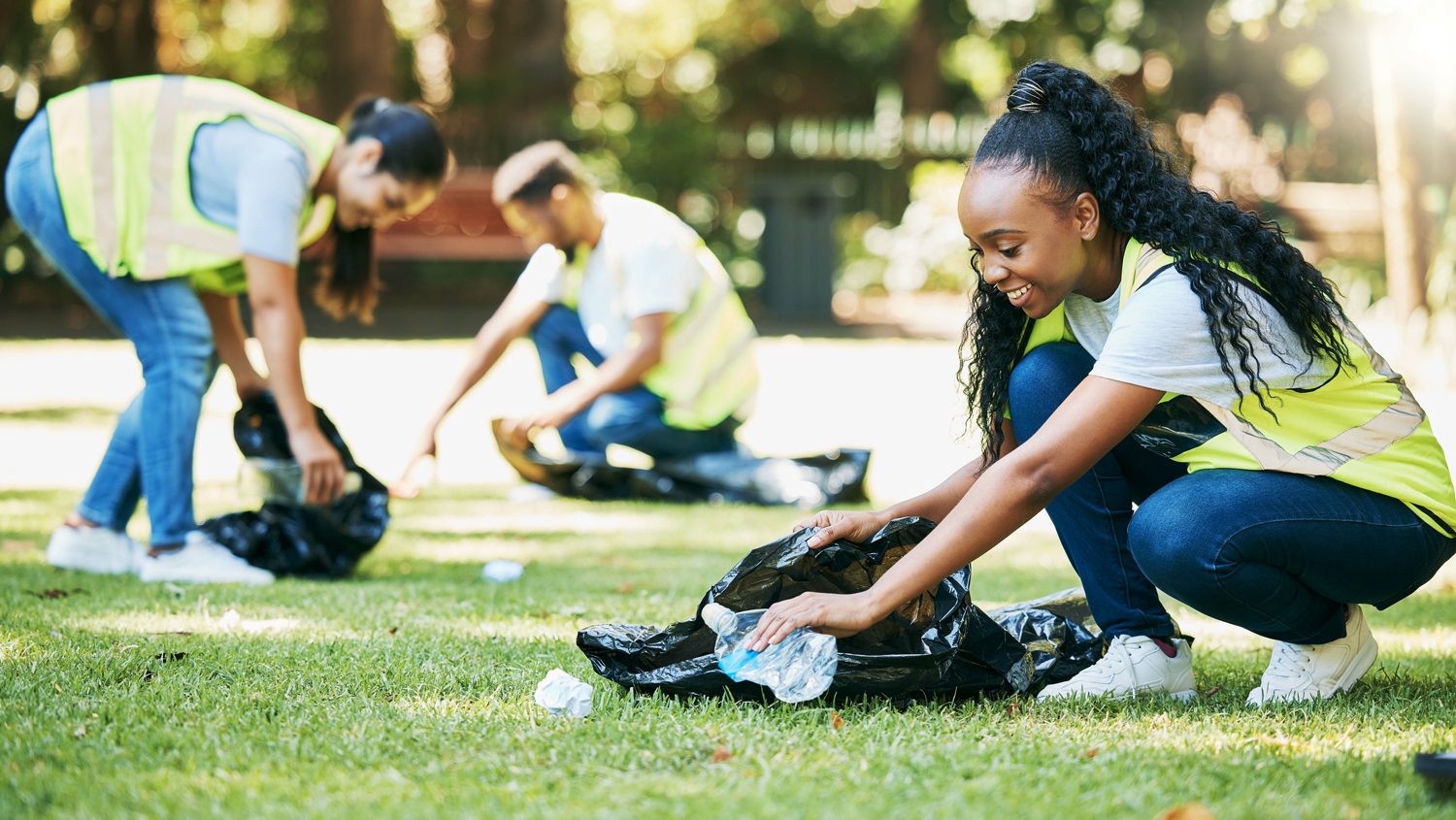
Three young people in a grassy area put litter into plastic bags.
© Yuri Arcurs/Dreamstime.com

Earth Day is on April 22. People often spend Earth Day engaging in environmentally friendly activities, like park cleanups. But Earth Day is also a reminder of the importance of everyday environmental awareness.

You can read more about Earth Day at Britannica.

WORD OF THE DAY

catalyst

PART OF SPEECH:

noun

Definition:

: a person or event that quickly causes change or action

Definitions provided by
Merriam-Webster Logo

Criss Cross

See if you can figure out where each word belongs in the grid.
O
O
O
O
O
O

In Case You Missed It

Figure skater Alysa Liu felt happy and confident at the 2026 Olympics. She skated off with a gold medal!
March 5, 2026
An all-women ranger team protects endangered animals on the Indonesian island of Sumatra.
February 26, 2026
Nima Rinji is showing the world the powerful spirit of the Sherpa people as he climbs the world’s tallest mountains.
February 19, 2026
Life wouldn’t be as fun without the work of these three inventors.
February 12, 2026

A Duke’s Castle

A medieval painting shows a man being arrested outside a castle door with three other people nearby.

A Duke’s Castle

Archaeologists have unearthed the ruins of a medieval castle and some of its contents.

A medieval painting shows a man being arrested outside a castle door with three other people nearby.

© The Picture Art Collection—Alamy

This medieval painting may show what the Château de l’Hermine looked like.

In the 15th century, a powerful duke abandoned his castle, leaving it to slowly decay. Archaeologists recently found the remains of this castle—along with artifacts its residents left behind.

The castle, known as the Château de l’Hermine, was built in the village of Vannes by John IV, Duke of Brittany, in 1381. Brittany is now part of France, but between the 10th and 16th centuries it was a feudal state, sort of like its own small country. Brittany was ruled by a series of dukes, and Vannes was its capital. The castle was used for about 100 years until it was abandoned by John’s grandson Francis II, also a duke. Another building was constructed on top of the castle ruins in the 1700s.

A large 18th century building with a lawn and flowers in front.

© Cezary Wojtkowski/Dreamstime.com

This hotel was built in the 1700s, on top of the castle ruins.

The newer building had once been a hotel. Archaeologists at the French National Institute of Preventative Archaeological Research (INRAP) were excavating the cellar and courtyard of the old hotel ahead of the construction of a new museum when they came across the castle ruins. 

Despite being buried for hundreds of years, the castle’s remains are well preserved, making it an incredible time capsule that reveals the life of a medieval duke. The building was about 138 feet (42 meters) long and 56 feet (17 meters) wide. Its walls were up to 18 feet (5.5 meters) thick. Like other medieval castles, the château was designed as both a home and a barrier against intruders.

Archaeologists uncovered several flights of stairs, leading them to believe that the castle may have been as many as four stories high. They also found latrines (early toilets) and drainage pipes, as well as a moat that surrounded the castle. The main part of the wooden bridge that once spanned the moat no longer exists, but its support piers do.

The moat held many items that belonged to the duke or his family, including metal dishes, jewelry, clothing, shoe buckles, pots, pans, keys, and padlocks.

INRAP says that the ruins are in unusually good condition. This suggests that John IV had the wealth and intelligence to build a castle that would stand the test of time.

“The remains indicate that John IV knew how to surround himself with the best engineers and craftsmen of the time,” INRAP said in a statement.

Fun Fact

A medieval castle’s latrine was often built above a hole in a wall so it would empty into a moat or river. The latrine was usually on an upper floor of the castle to prevent enemies from crawling in through the opening.

A latrine structure is built on the side of a castle wall.

© LIMARIO/stock.adobe.com

A Beautiful Barricade

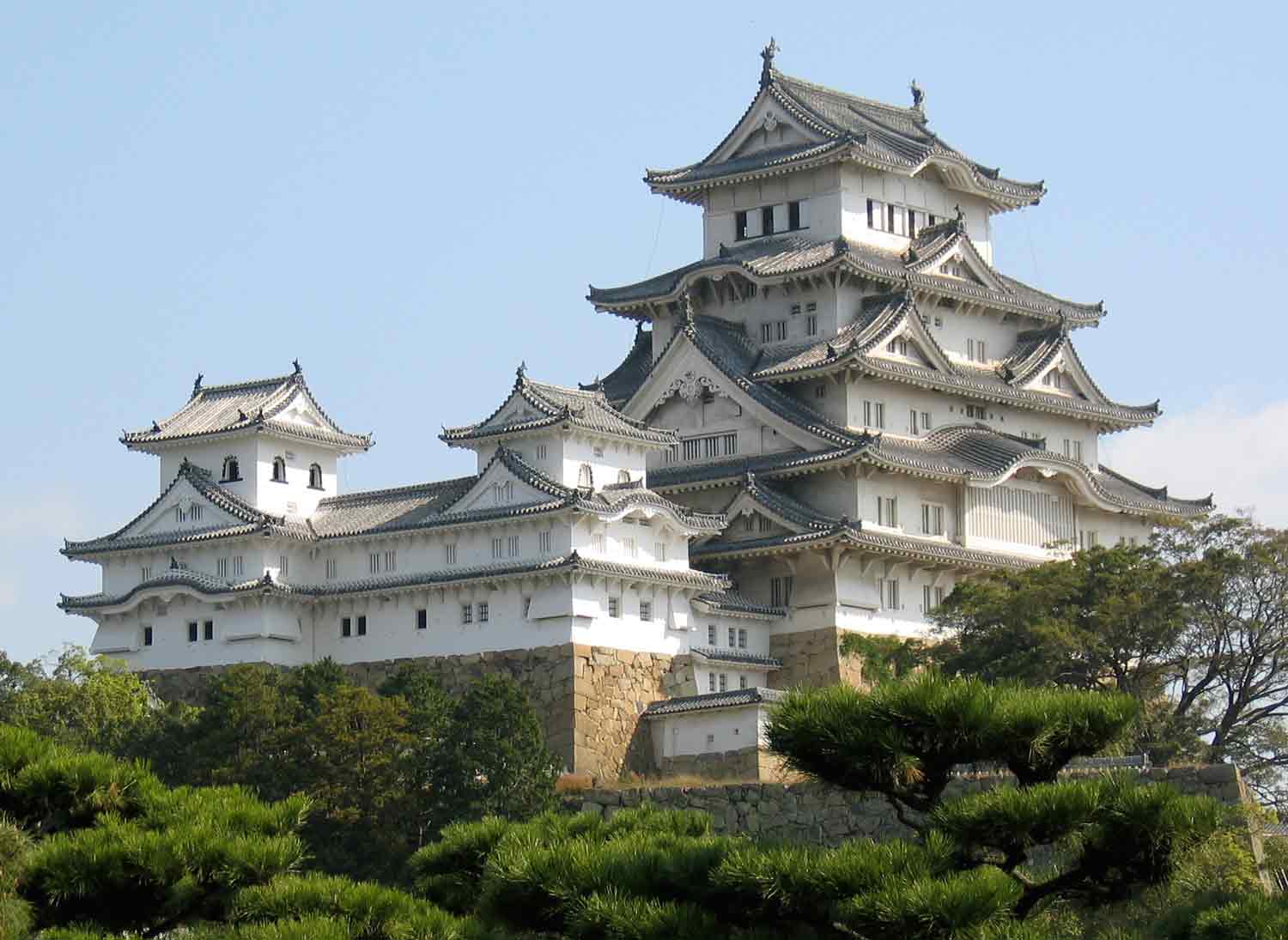
A white castle has a shingled roof, multiple curved eaves, and a stone foundation.

© Shawn McCullars

During the Middle Ages, Japan was split into clans—groups of people related by blood or marriage. Each clan was ruled by a member of the nobility who spent a lot of their time worrying about being invaded by a rival clan or a military leader called a shogun. Like many European rulers, Asian rulers built castles for protection.

Since Japanese castles were constructed from wood, many of them are no longer standing. One exception is Shirasagi Castle, or White Heron Castle, in the city of Himeji. White Heron Castle was originally built by the Akamatsu clan in the 14th century. As ruler after ruler took control of the castle, they added more to it. The structure that stands today was completed in 1609. 

It’s easy to think of a castle as a single building, but White Heron Castle is a complex of 83 buildings, interspersed among high walls, passageways, and staircases. The layout isn’t meant to be impressive or beautiful—it’s designed to be confusing. Would-be invaders ended up in a maze of passages full of dead-ends that would slow them down long enough to let castle guards fire on them.

White Heron Castle gets its name from its white eaves, which resemble a bird taking flight. The castle is white because its wooden walls are covered in plaster, which has helped the structure withstand fires, earthquakes, and wars for hundreds of years.

Safety Over Comfort

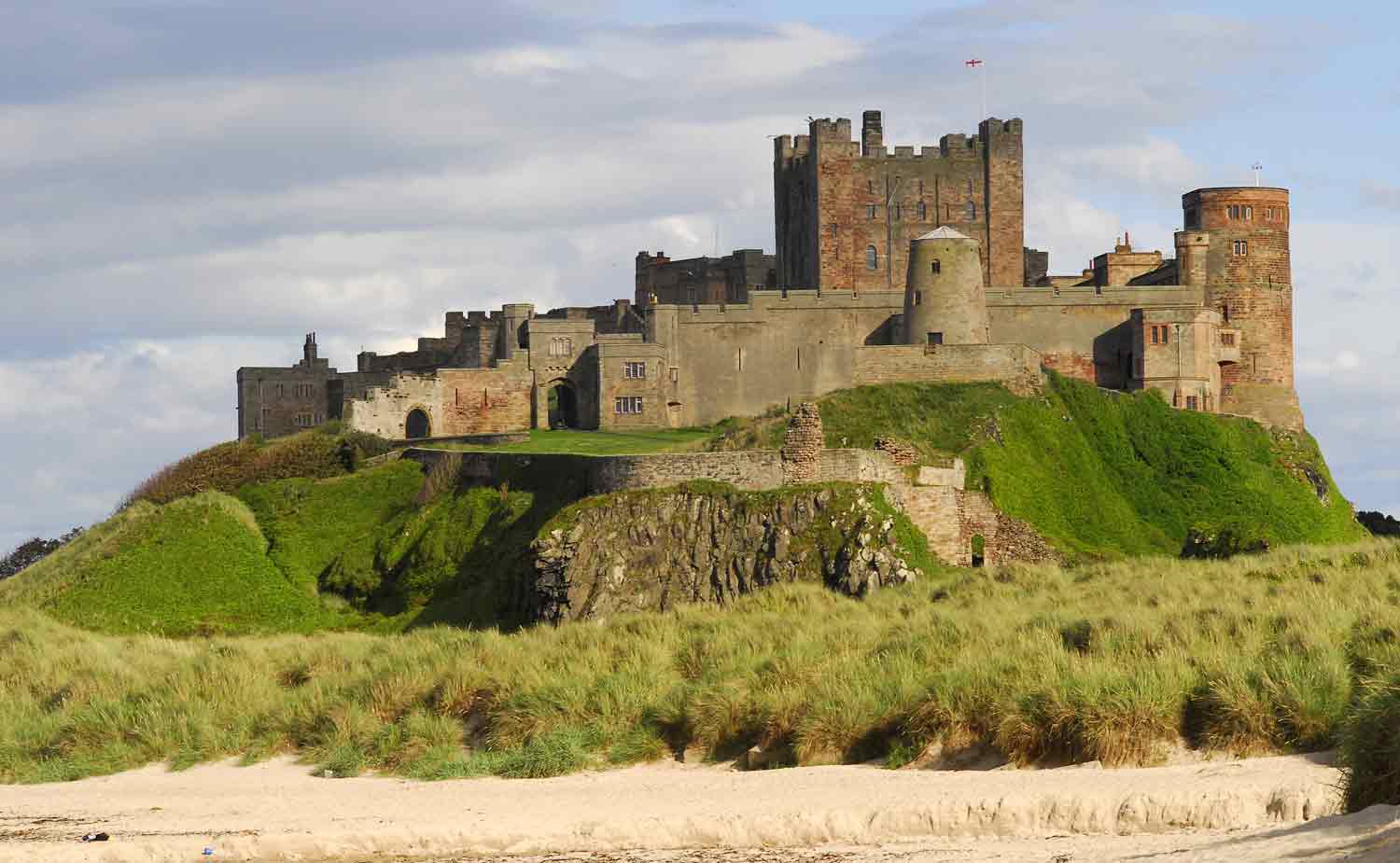
A stone castle sits high on a cliff.

© Darren Turner/Dreamstime.com

There’s a lot more to know about how castles were designed and defended during the Middle Ages. Check out Britannica to learn why medieval Europeans thought these fortifications were necessary.

WORD OF THE DAY

rampart

PART OF SPEECH:

noun

Definition:

: a tall, thick stone or dirt wall that is built around a castle, town, etc., to protect it from attacks — usually plural

Definitions provided by
Merriam-Webster Logo

Word Search

See if you can find all the words related to castles.

O
O
O
O
O
O

In Case You Missed It

Figure skater Alysa Liu felt happy and confident at the 2026 Olympics. She skated off with a gold medal!
March 5, 2026
An all-women ranger team protects endangered animals on the Indonesian island of Sumatra.
February 26, 2026
Nima Rinji is showing the world the powerful spirit of the Sherpa people as he climbs the world’s tallest mountains.
February 19, 2026
Life wouldn’t be as fun without the work of these three inventors.
February 12, 2026

Teens Value Time Without Phones

A teen girl and her mother look at their phones as they both think, She’s always on her phone.

Teens Value Time Without Phones

In a recent survey, teens and parents were asked for their views on phone use.
A teen girl and her mother look at their phones as they both think, She’s always on her phone.
© Hanna Syvak/stock.adobe.com

Parents often worry that kids and teens focus too much on their phones. But in a recent survey, many teens said they value time away from their devices.

Conducted in late 2023, the Pew Research Center survey gathered data from 1,453 U.S. teens aged 13 to 17, along with one parent or guardian per teen. Pew’s website says the survey aimed to get a sense of a generation in which teens are constantly online by seeking an answer to the question, “How are young people navigating this ‘always on’ environment?” Pew also wanted answers from parents, who are often concerned that spending too much time online might be harmful to kids.

Teen survey participants said they value their phones for many reasons. Sixty-nine percent of teens said their phones make it easier for them to pursue hobbies and interests, while 30 percent said the devices help them improve their social skills.

But the participants value time away from devices as well. Seventy-two percent of them said they often or sometimes feel peaceful without their phones, 44 percent said they sometimes feel anxious without them. Only 38 percent of the teens believe they spend too much time on their phones, while a little more than half said they think they strike a good balance between time spent on and away from their phones.

Meanwhile, some parents are keeping a close eye on their teens’ phone use, though this is mostly true for parents of younger teens. Almost 64 percent of parents of teens aged 13 to 14 look through their teens’ phones, while 41 percent of parents of teens aged 15 to 17 do so. Just under half the parents in the survey said they limit the amount of time their teens can be on their phones. 

Interestingly, parents and teens have different views of adult phone use. Thirty-one percent of parents said they often or sometimes get distracted by their phones while talking to their teens. But when teens were asked if their parents get distracted by their phones, 46 percent said yes.

Did You Know?

Soon, the typical smartphone may include features like a holographic display, the ability to function as a remote control for other appliances, wireless charging, and a foldable screen. Some of this technology already exists, but it’s expected to become far more common.
A hologram soccer player runs out of a smartphone screen.
© Aliaksandr Marko/stock.adobe.com

A Narrow Gap

According to a 2023 survey by health data management firm Harmony Healthcare IT, generations differ when it comes to the amount of time they spend looking at screens each day. But the generation gap, shown in the graph below, isn’t as wide as some may think. 

A graph compares the average amount of screen time for Gen Z, Millennials, Gen X, and Boomers.
© Pavlo Syvak/stock.adobe.com, © Yuliia Osadcha/Dreamstime.com; Infographic Encyclopædia Britannica, Inc.

Long Before IPhones…

An Apple II computer sits on a desk next to two floppy disk drives.
© Trong Nguyen/Dreamstime.com

Less than 50 years ago, Apple developed its first product—a circuit board. By 1977, Apple was producing the Apple II, seen here. Since there was no Internet, users loaded their software onto the computer using the disk drives on the left.


You can learn more about the company that makes the iPhone at Britannica.

WORD OF THE DAY

uncouth

PART OF SPEECH:
adjective
Definition:

: behaving in a rude way : not polite or socially acceptable

Definitions provided by
Merriam-Webster Logo

Word Search

See how many words you can find.
O
O
O
O
O
O

In Case You Missed It

Figure skater Alysa Liu felt happy and confident at the 2026 Olympics. She skated off with a gold medal!
March 5, 2026
An all-women ranger team protects endangered animals on the Indonesian island of Sumatra.
February 26, 2026
Nima Rinji is showing the world the powerful spirit of the Sherpa people as he climbs the world’s tallest mountains.
February 19, 2026
Life wouldn’t be as fun without the work of these three inventors.
February 12, 2026

Hello, Hyperloop?

Passengers sit inside a tube-shaped car that other passengers are boarding.

Hello, Hyperloop?

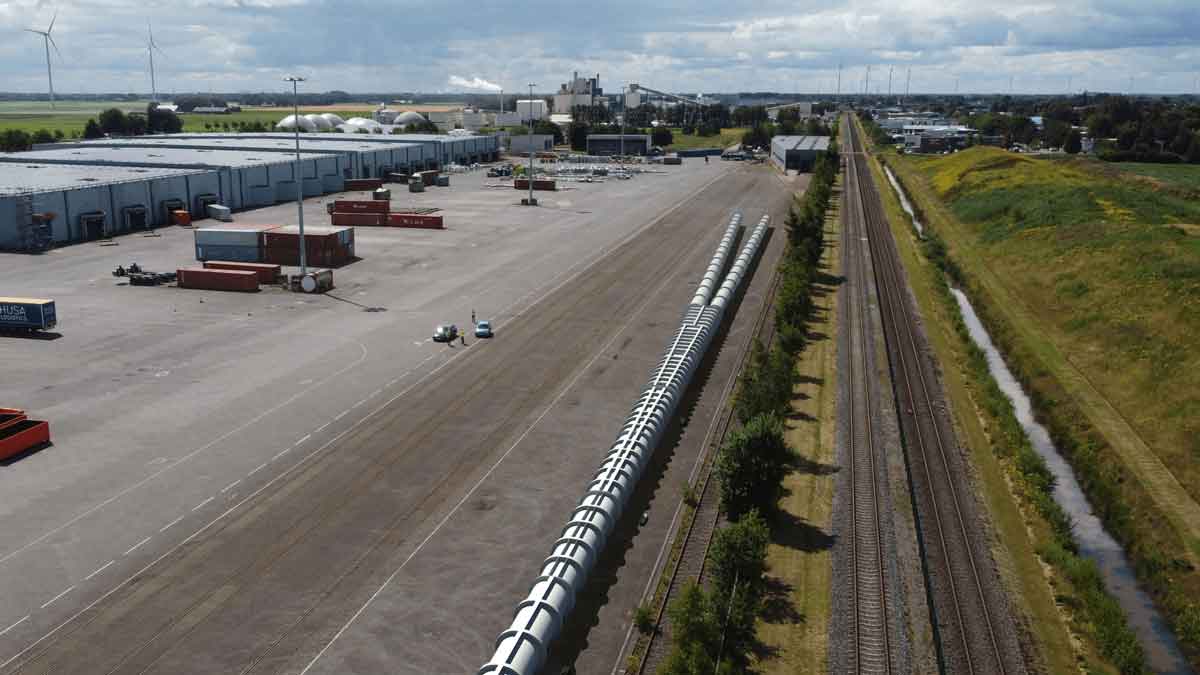
Engineers built a test track for the hyperloop, which could allow for land travel that’s as fast as an airplane.

Passengers sit inside a tube-shaped car that other passengers are boarding.

Courtesy of Hardt Hyperloop

This generated image shows what a hyperloop pod might look like on the inside.

Imagine being able to travel as fast as an airplane without ever taking flight. That’s the idea behind the hyperloop, a super speedy form of transportation technology that people have been hyping for years. Could the opening of a new test track mean the hyperloop is in our future?

Like a train, a hyperloop carries passengers in a pod, or car, along a track. But there are some key differences. Unlike train cars, hyperloop pods aren’t connected to one another, so a single pod can go in its own direction. Hyperloops are designed to travel much faster than a traditional train by moving with as little friction from the ground or the air as possible. This is achieved in a couple of ways. With help from electromagnets, the pods hover over the tracks. Also, technology sucks almost all the air out of the tubes. Some experts claim that hyperloop pods will be able to travel over 600 miles per hour (970 kilometers per hour).

Located at the Hyperloop Center in the Netherlands, the new test track is Europe’s longest so far, consisting of a 420-meter (1,400-foot) tube. There’s also a fork in the tube—a section where it splits into two directions. Experts say this is important if they hope to build tubes going to many places.

“[The fork] really creates a network effect where you sort of have a highway of tubes, and vehicles can take an on and offramp or they can take a lane switch to go to a different part of Europe or to a different destination,” Marinus van der Meijs, the technology and engineering director at Hardt Hyperloop, which built the test pod, told the Associated Press.

This isn’t the first time hyperloop hopes have been raised. In 2013, Elon Musk touted plans to open a hyperloop in California, but nothing has materialized so far. And in 2023, after spending several years developing technology, a U.S. company called Hyperloop One shut down. The new test track has revived the dream.

“I expect by 2030 you will have the first hyperloop route, maybe 5 kilometers (3 miles) in which people will actually be transporting passengers,” the Hyperloop Center’s director, Sascha Lamme, told the Associated Press.

Doubters say there’s not much chance the hyperloop will be successful. It would require governments to agree to build a network of tubes within countries and across borders. And that would cost a lot of money.

But Lamme is more optimistic.

“If you look at how highways were developed over time, it goes exponentially when the technology is ready,” he told the Guardian.

Courtesy of Hardt Hyperloop

Did You Know?

Scientists are developing a space elevator to carry supplies and even astronauts up to 12 miles (19 kilometers) above Earth’s surface, where they could be transferred into an orbiting vehicle. If it’s ever built, the elevator could limit the need to launch rockets, saving energy and money.

As seen from space, a tall structure stretches from Earth’s surface up to the International Space Station.

NASA/MSFC

Fast, Faster, Fastest

Just how fast would the hyperloop be? Check out this speed comparison.

© Wirestock, Yinan Zhang, Tupungato/Dreamstime.com, © hudiemm—E+/Getty Images, Hardt Hyperloop; Infographic Encyclopædia Britannica, Inc.

Do You Dare…

© Stock Footage, Inc.—Verve+/Getty Images

Reducing friction should allow the hyperloop to move incredibly fast. What enables a roller coaster to move…and how does it complete all those loops?

Find the answers at Britannica!

WORD OF THE DAY

pneumatic

PART OF SPEECH:
adjective
Definition:

 : using air pressure to move or work

Definitions provided by
Merriam-Webster Logo

Crossword

Answer the clues and fill in the grid.

O
O
O
O
O
O

In Case You Missed It

Figure skater Alysa Liu felt happy and confident at the 2026 Olympics. She skated off with a gold medal!
March 5, 2026
An all-women ranger team protects endangered animals on the Indonesian island of Sumatra.
February 26, 2026
Nima Rinji is showing the world the powerful spirit of the Sherpa people as he climbs the world’s tallest mountains.
February 19, 2026
Life wouldn’t be as fun without the work of these three inventors.
February 12, 2026

A Rare Solar Eclipse

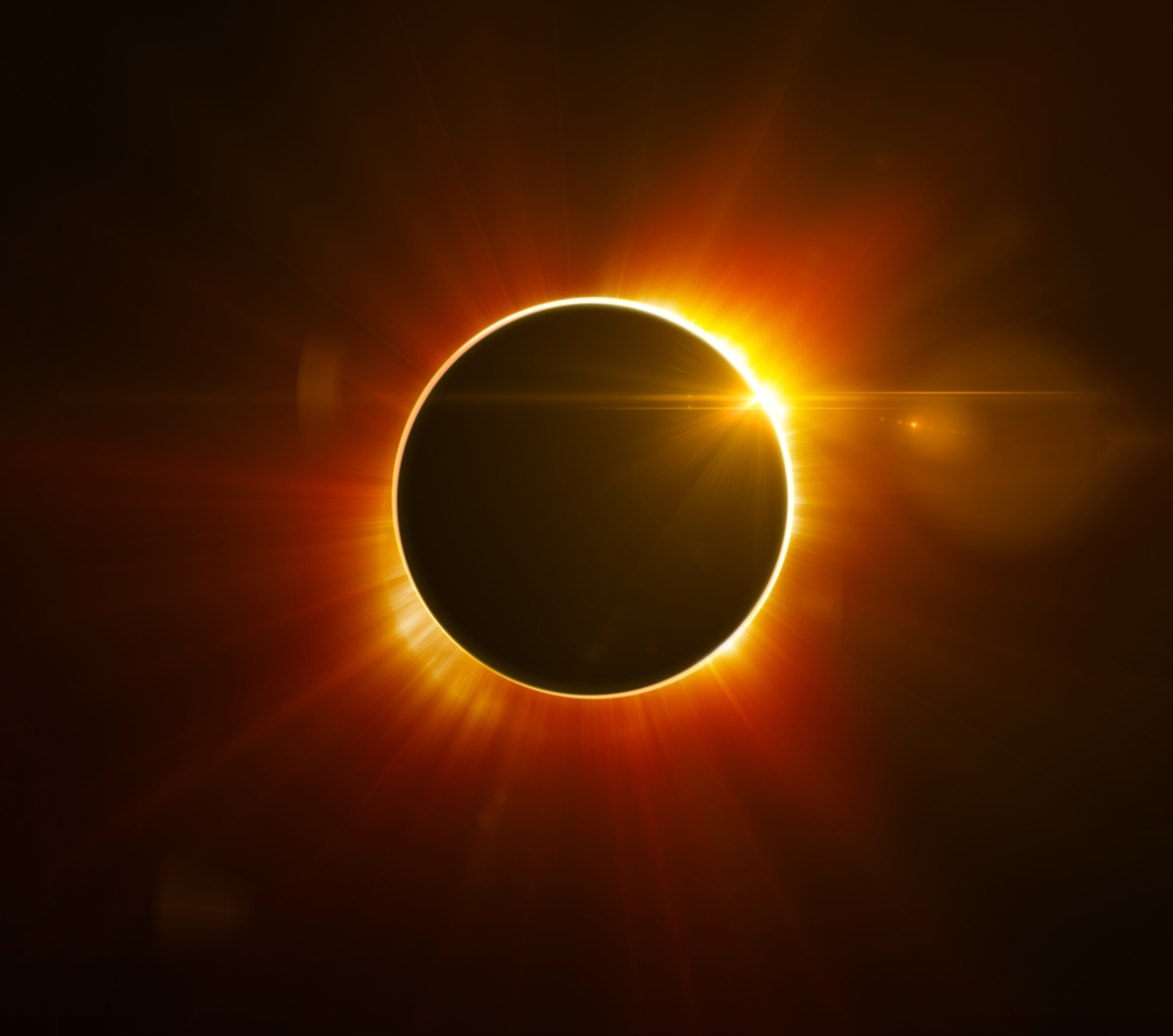
A total solar eclipse is shown at totality.

A Rare Solar Eclipse

On April 8, the United States will experience a total solar eclipse. How should you prepare? 

A total solar eclipse is shown at totality.
© teekid—E+/Getty Images

On April 8, North America will experience a rare event: a total solar eclipse. In some parts of Mexico, the United States, and Canada, the daytime sky will briefly go completely dark.

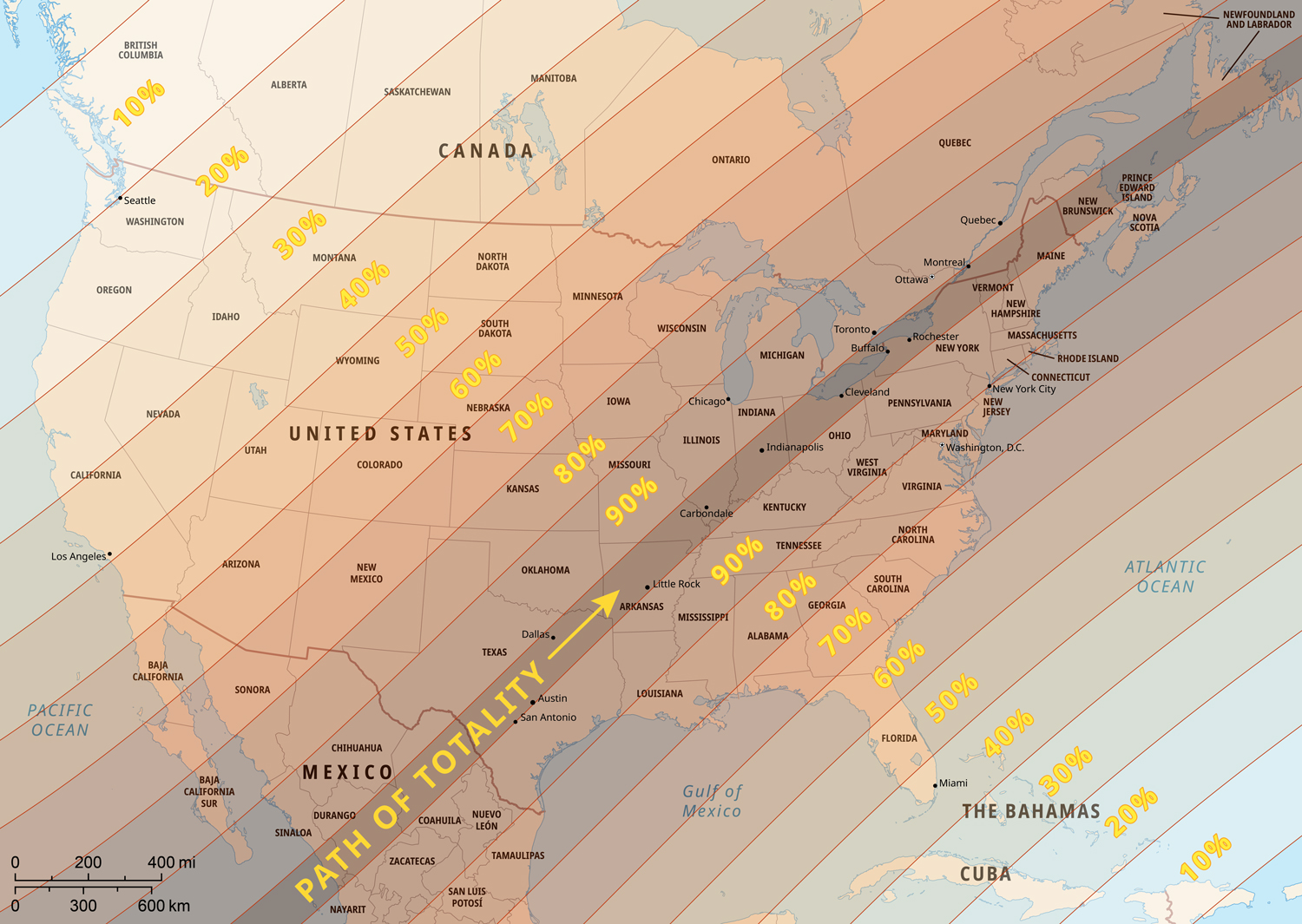
During a total solar eclipse, the Moon passes between Earth and the Sun, blocking sunlight from reaching some areas of Earth. Along a narrow band on the surface of our planet, called the path of totality, the sky goes completely dark for a short time and only the outer edge of the Sun (called the corona) can be seen.

On April 8, totality, or complete darkness, will begin over the Pacific Ocean and pass over Mazatlán, a city on the west coast of Mexico at about 2:07 p.m. Eastern time. From there, the Moon’s shadow will move over Mexico and into the U.S. and then Canada. Totality in the United States begins in Texas just before 2:30 p.m. Eastern time and ends in Maine at just after 3:30 p.m. Eastern time. Each location in the path of totality will be completely dark for only a few minutes or even seconds. But things won’t go back to normal right away. Before and after totality, each location will experience a partial solar eclipse—a period when the Moon is partially blocking the Sun.

Encyclopædia Britannica, Inc.
People who live in the path of totality will experience a total eclipse. In other areas, only a certain percentage of the Sun will be blocked from view.

North Americans who live outside the path of totality will experience a partial eclipse. Depending on their location, the Moon’s shadow might still cover quite a bit of sunlight, making the experience worth watching. The rarity of the event also makes it worth paying attention to. Most of the United States won’t experience another total solar eclipse until 2044. (Part of Alaska will experience a total eclipse in 2033.)

Experts say it’s important to experience the eclipse safely. Looking directly at the Sun is dangerous, even during an eclipse. If you’re planning to gaze up at the sky on April 8, do so only through a device that’s designed to protect your eyes, such as paper eclipse glasses or a handheld solar viewer.

© LeoPatrizi—E+/Getty Images, Source: NASA
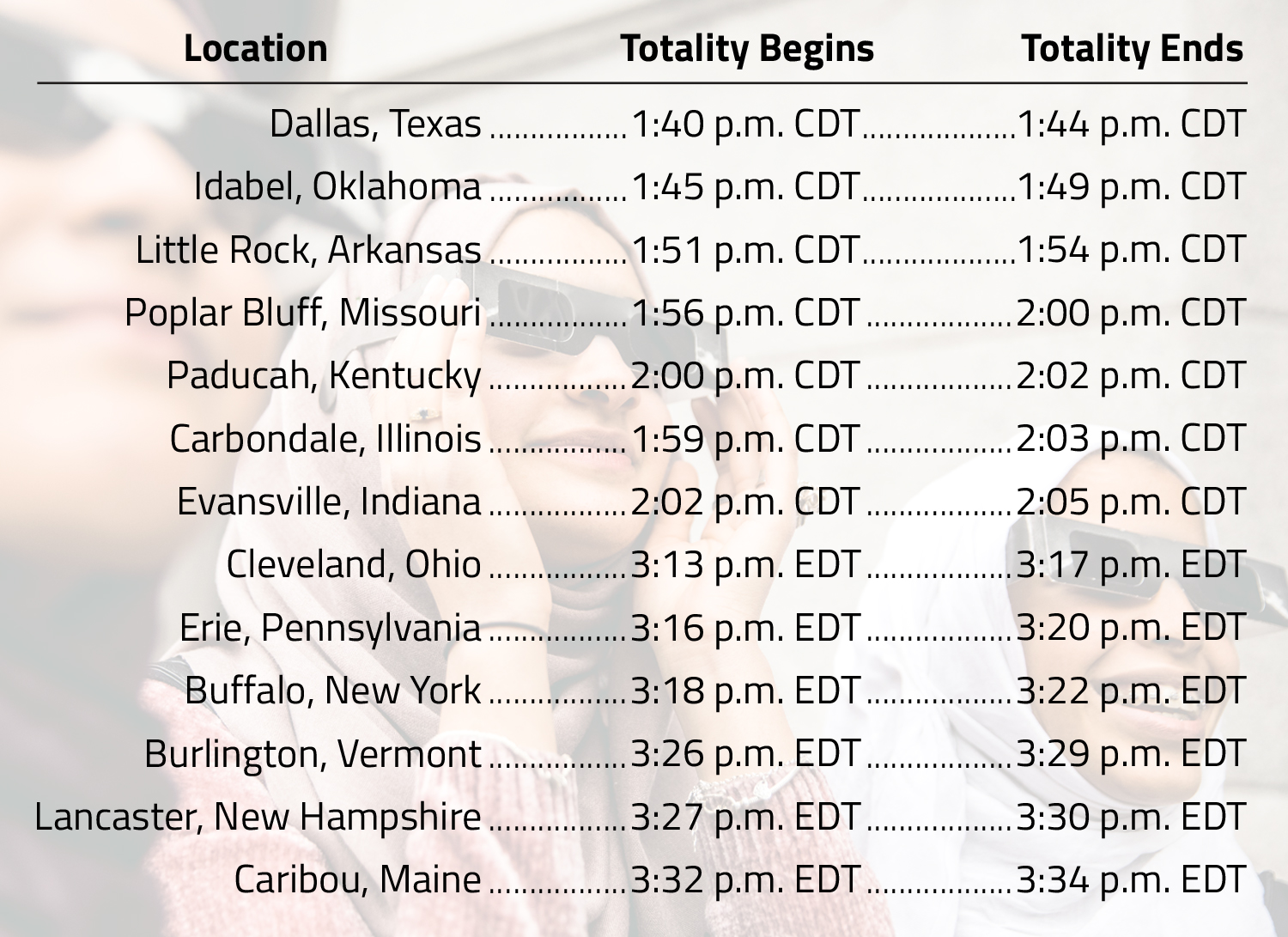
This table shows when totality, or total darkness, will begin and end in different U.S. towns and cities.

Did You Know?

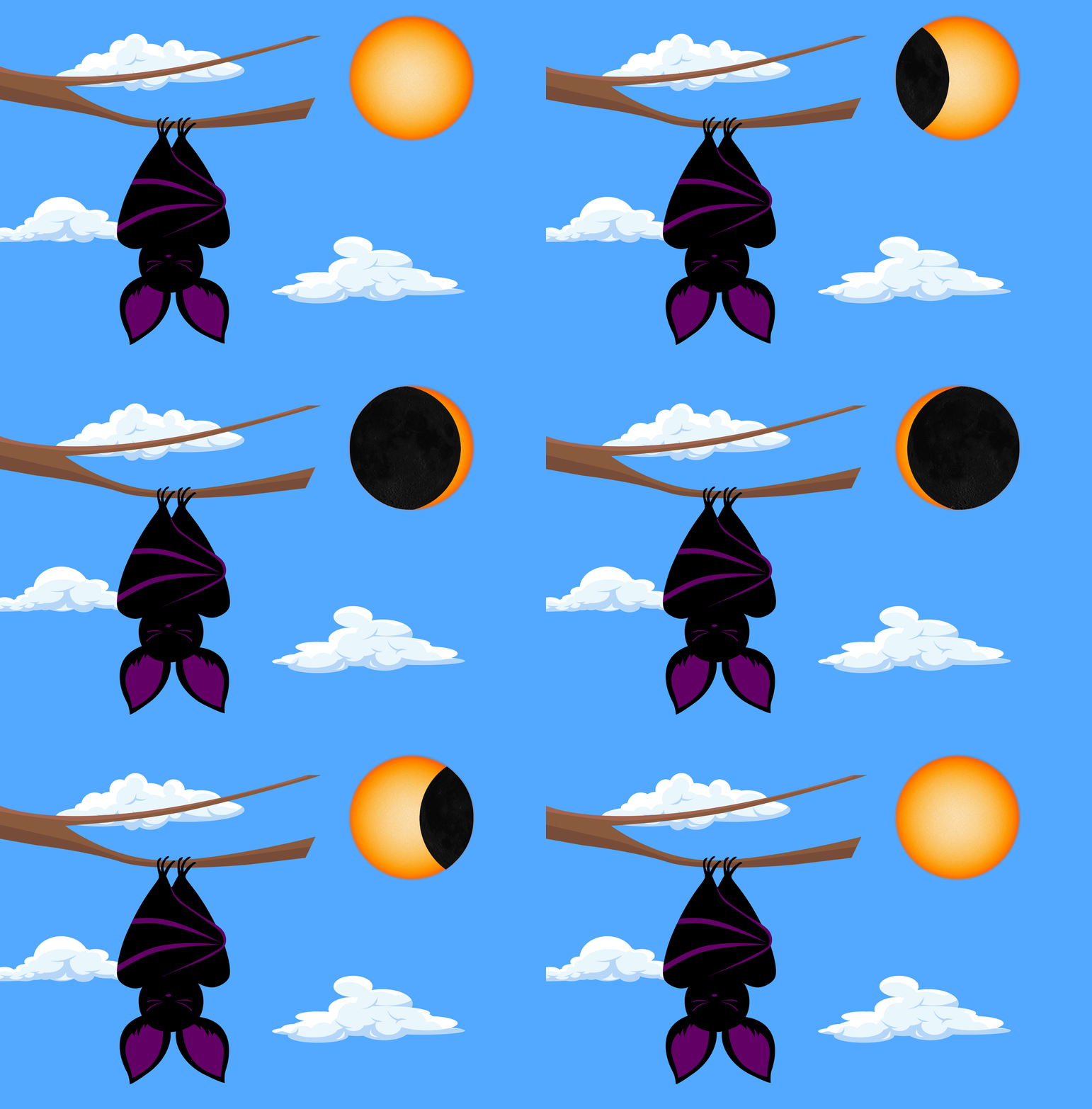
During solar eclipses, many animals change their behavior. Researchers have observed spiders dismantling their webs and nocturnal bats emerging from their roosts, as if these creatures think it’s nighttime.

A bat that is sleeping while hanging upside down on a branch opens its eyes when the Moon blocks the Sun.

© Dorozhkinak/Dreamstime.com, NASA/GSFC/Solar Dynamics Observatory; Animation Encyclopædia Britannica, Inc.

No Glasses? Here’s What You Can Do

Two hands hold a piece of paper with a rectangle of foil in the center over another piece of paper in sunlight.
NASA/JPL

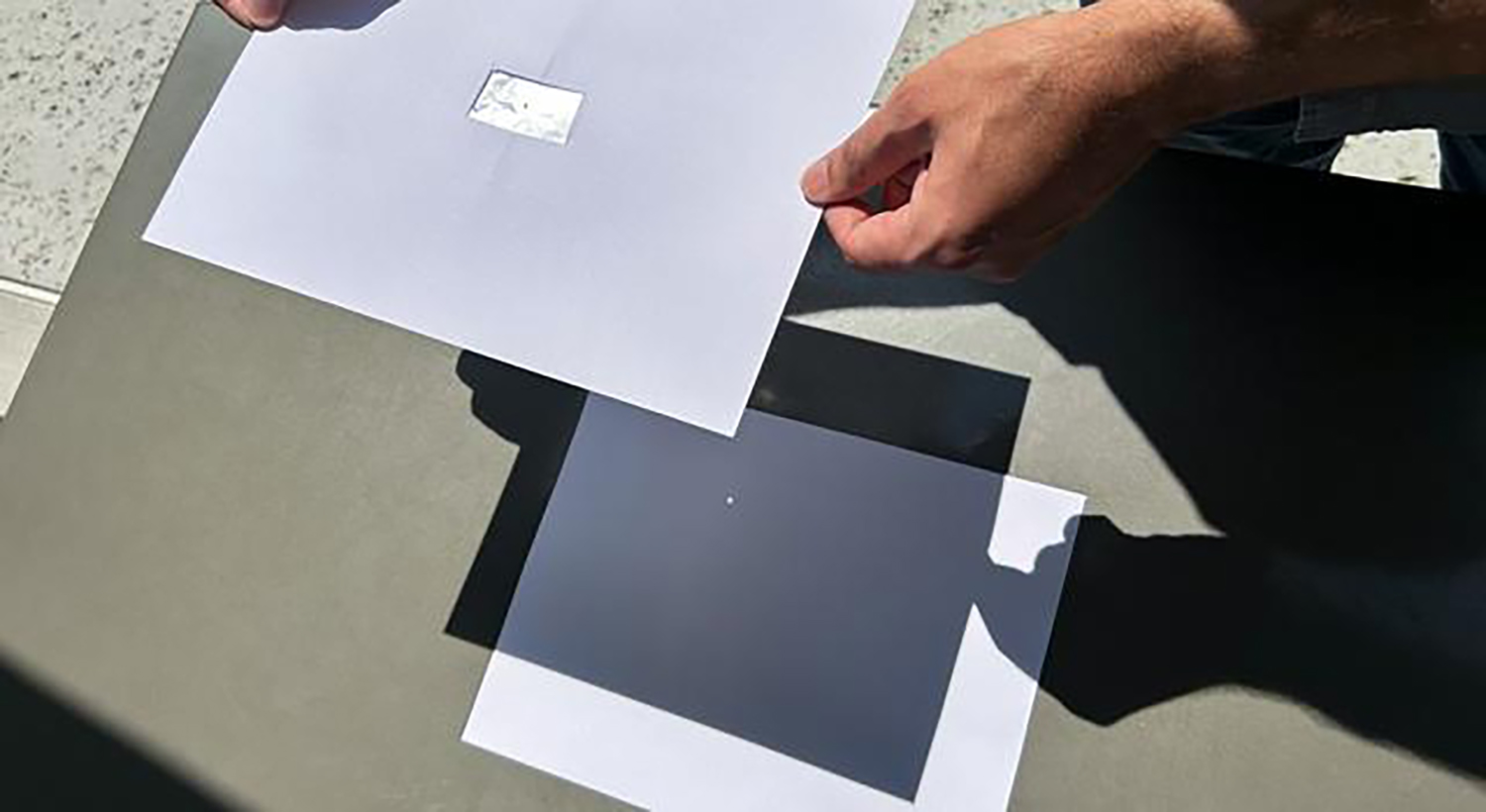
Never look at the Sun without proper protection. You can use a pinhole camera to experience a partial or total solar eclipse without looking at the sky. Here’s how to make one.

What You’ll Need

  • Two pieces of white card stock or paper
  • Aluminum foil
  • Tape
  • A pin, paper clip, or sharp pencil

Steps to Make the Camera

  1. Cut a 1 to 2-inch (2.5 to 5centimeter) square or rectangular hole in the middle of one of the pieces of card stock.
  2. From your aluminum foil, cut a rectangle that’s larger than the hole in the card stock.
  3. Tape the foil over the hole in the card stock.
  4. Use the pin, paper clip, or pencil to poke a small hole in the foil.
  5. Just before the eclipse, put the second piece of card stock on the ground as you stand with the Sun behind you.
  6. Hold the first piece of card stock (the one with the foil) over the second piece. You’ll see a circle of light on the second piece of card stock. The farther apart the two pieces of card stock are, the larger the circle will be.

As the Moon passes in front of the Sun, the Moon’s shadow will pass over the circle of light.

Total Solar Eclipse

© Din Iulian Silviu—Creatas Video+/Getty Images Plus

Did you know there’s more than one type of eclipse? You can learn more about eclipses at Britannica.

WORD OF THE DAY

aberrant

PART OF SPEECH:
adjective
Definition:
: different from the usual or natural type : unusual or abnormal
Definitions provided by
Merriam-Webster Logo

Word Search

Can you find all the words about eclipses?

O
O
O
O
O
O

In Case You Missed It

Figure skater Alysa Liu felt happy and confident at the 2026 Olympics. She skated off with a gold medal!
March 5, 2026
An all-women ranger team protects endangered animals on the Indonesian island of Sumatra.
February 26, 2026
Nima Rinji is showing the world the powerful spirit of the Sherpa people as he climbs the world’s tallest mountains.
February 19, 2026
Life wouldn’t be as fun without the work of these three inventors.
February 12, 2026

Teen Invents a Way to Control a Pest

A teen stands in front of a patio umbrella to which solar panels and wire mesh have been added.

Teen Invents a Way to Control a Pest

High school student Selina Zhang created a device that lures and kills the invasive spotted lanternfly.
A teen stands in front of a patio umbrella to which solar panels and wire mesh have been added.
Selina Zhang
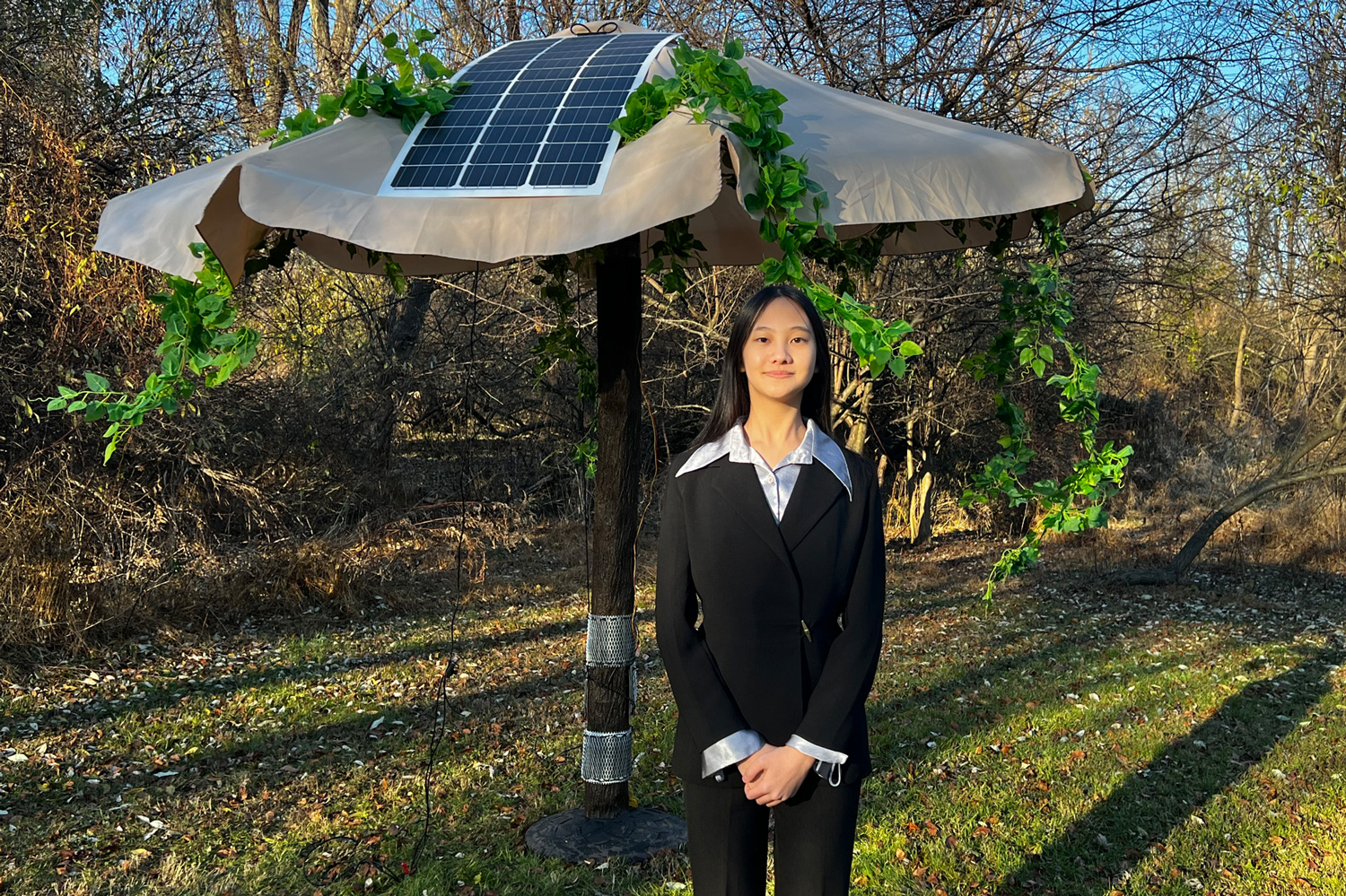
Selina Zhang used a patio umbrella to create ArTreeficial, which can detect and kill spotted lanternflies.

A high school student has invented a device that can detect and kill a harmful invasive species called the spotted lanternfly. Eighteen-year-old Selina Zhang’s invention, ArTreeficial, is a fake tree that uses artificial intelligence (AI) and electricity.

Zhang is from New Jersey, one of the 17 U.S. states where the spotted lanternfly has been damaging trees and crops since it arrived in the country aboard a ship from China a little over a decade ago. When Zhang learned about the insect, she began thinking about ways to get rid of it. She’s not the only one. Officials have tried battling the lanternfly with insecticides and other measures, but these solutions are harmful to the planet.

A teen stands in front of an invention presentation while holding up a poster with information about lanternflies.
Society for Science/Chris Ayers Photography

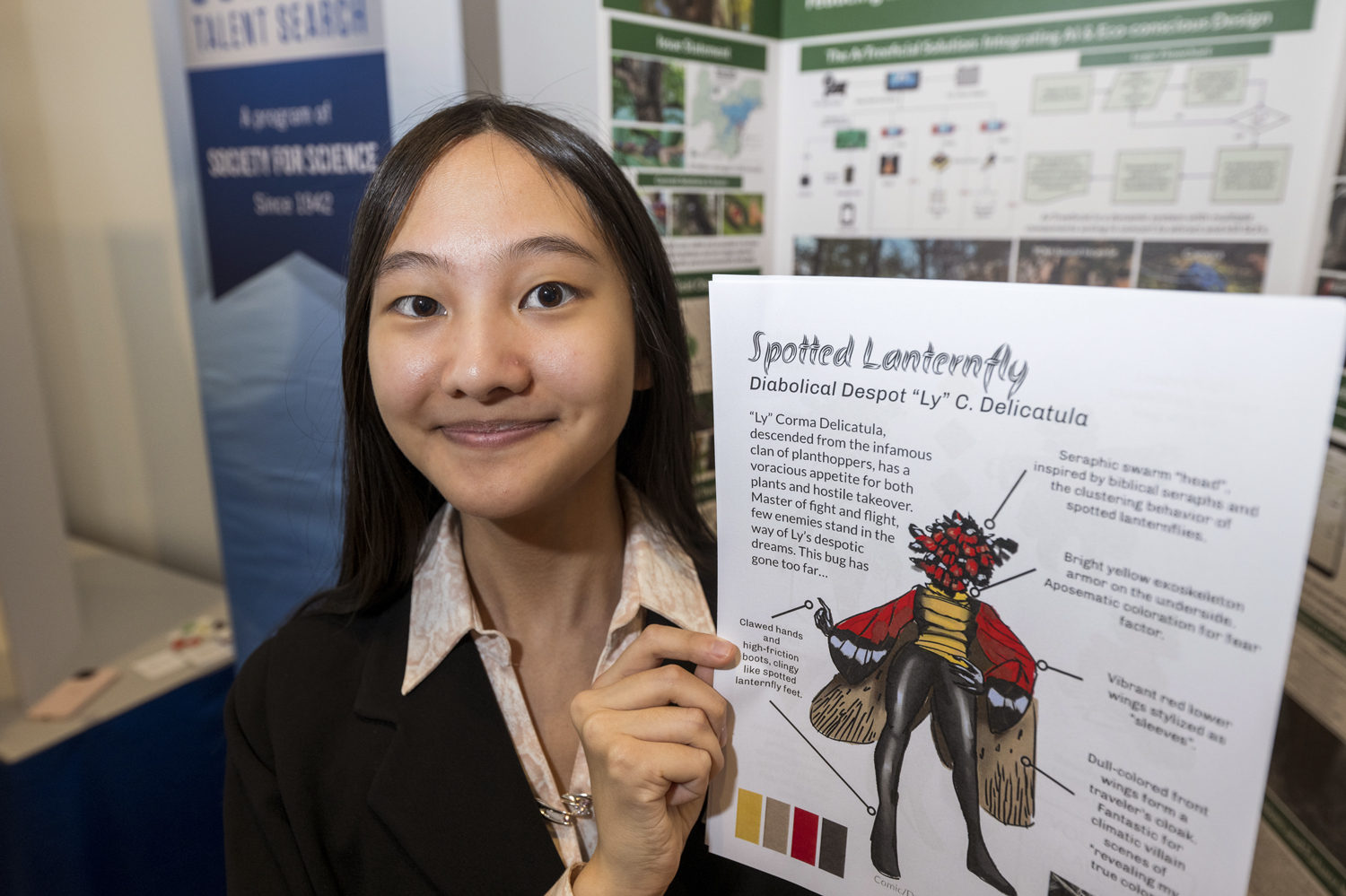
Zhang created this poster about lanternflies to use as part of her presentation at the Regeneron Science Talent Search.

Zhang started by observing lanternflies to learn how they move and where they land. Since lanternflies often land on the tree of heaven (also an invasive species in the U.S.), Zhang decided to build a structure that mimics that tree species, using her family’s patio umbrella. Employing ultrasound technology, the umbrella emits the scent of the tree of heaven to lure lanternflies. Zhang covered the “tree” with electronic mesh that can zap lanternflies and programmed an algorithm that can distinguish lanternflies from other species. 

A teen connects wires to an umbrella base that has been wrapped in mesh wire.
Selina Zhang

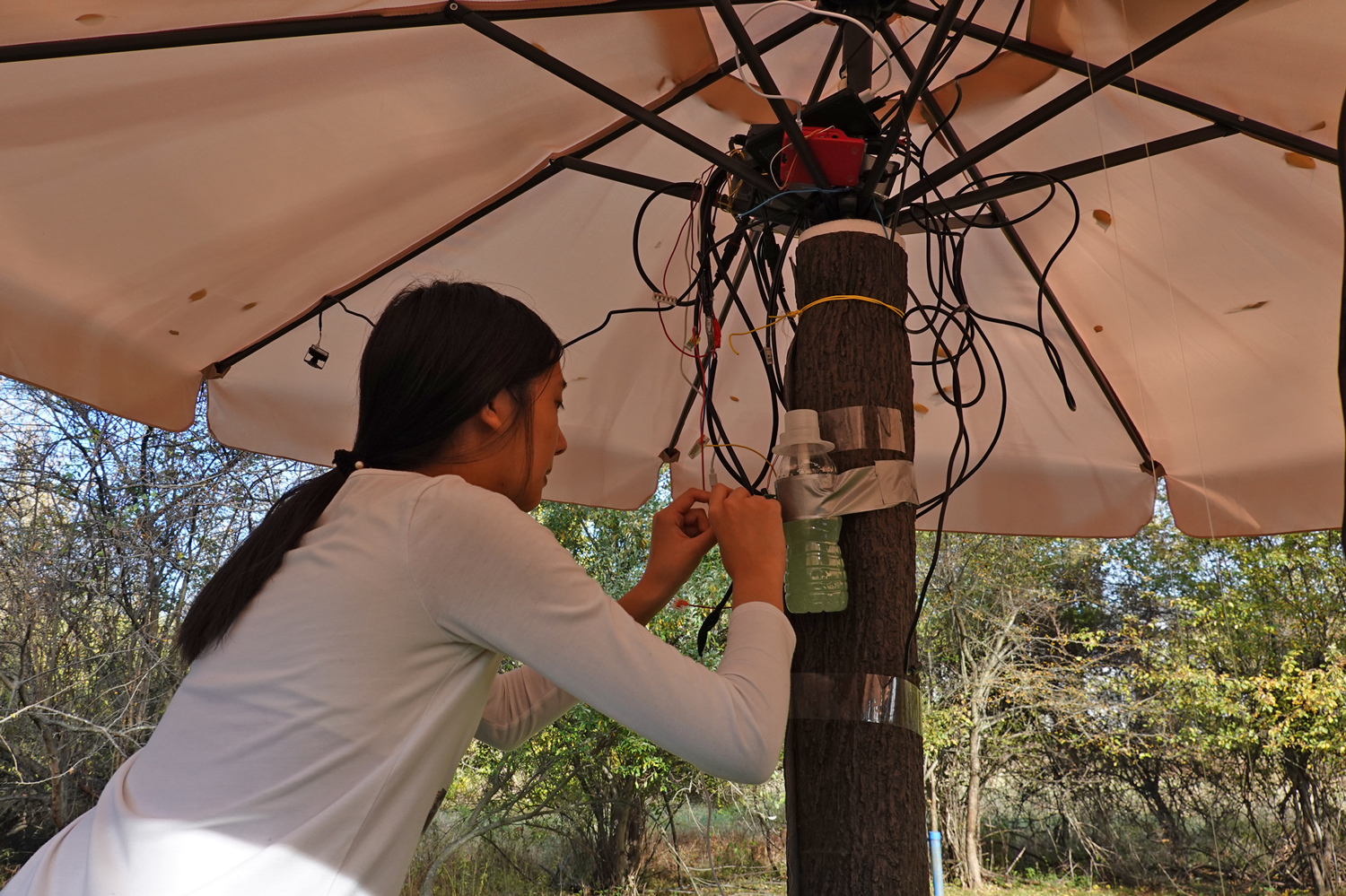
Zhang connects wires to her ArTreeficial lanternfly trap.

At first, Zhang put only a single layer of electronic mesh around the tree, but this caused a safety problem because of the risks associated with electrified metal. So she added another layer of mesh. Lanternflies get zapped only if they step on the inner layer.

Zhang’s innovation placed eighth at the 2024 Regeneron Science Talent Search, an annual competition for high school students. Zhang is hoping that she can mass-produce ArTreeficial and maybe even use the technology to control other pests.

Did You Know?

Officials have asked the public to help destroy the spotted lanternfly. They recommend spraying the invasive insects with a mixture of dish soap and water or simply crushing them instead of using insecticides, which can harm other species.

Another way to control the insects is to plant milkweed. Not only is milkweed poisonous to the spotted lanternfly, but it also attracts butterflies!

A lanternfly reacts to a milkweed plant by saying yikes, while a butterfly reacts by saying yum.
Lance Cheung/USDA Photo, © thawats/stock.adobe.com, © Mark Herreid/Dreamstime.com; Animation Encyclopædia Britannica, Inc.

The Python Problem

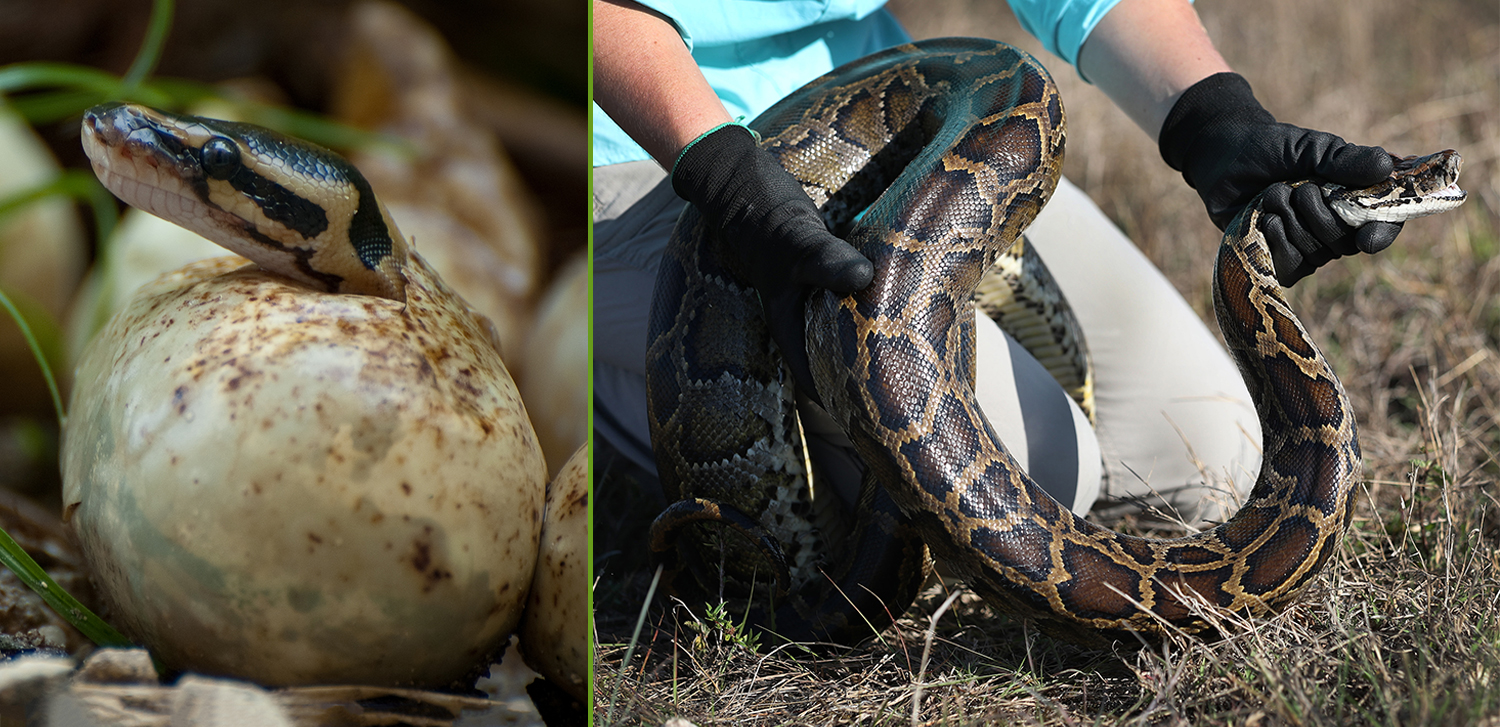
Side by side images of a python hatching and a handler holding an adult python.
© Heiko Kiera/Shutterstock.com, © Joe Raedle/Getty Images; Photo composite Encyclopædia Britannica, Inc.
Burmese pythons are powerful predators that don’t belong in Florida.

Growing up to 19 feet (5.8 meters) long, the Burmese python is one of the most awe-inspiring snakes on the planet. It’s non-venomous, but it’s a killer nonetheless. The Burmese python is a constrictor, meaning it squeezes its prey to death. Small mammals are no match for this snake, which has also been known to chow down on pigs, goats, and even alligators. Like other snakes, the Burmese python swallows its food whole, regardless of the size of the meal.

Burmese pythons are native to southern and Southeast Asia. But in recent years, they’ve been slithering around southern Florida, probably because they were dumped in the wild by people who kept them as pets until they could no longer handle them.

An invasive species in Florida, the Burmese python has damaged its adopted ecosystem. It preys on the state’s native species, some of which are endangered. Experts say Burmese pythons do not make good pets.

Florida officials say the last thing people should do is dump their pet pythons in the wild. The state’s Exotic Pet Amnesty Program connects exotic pet owners with experts and other qualified adopters who can safely care for these snakes.

Powerful Pythons

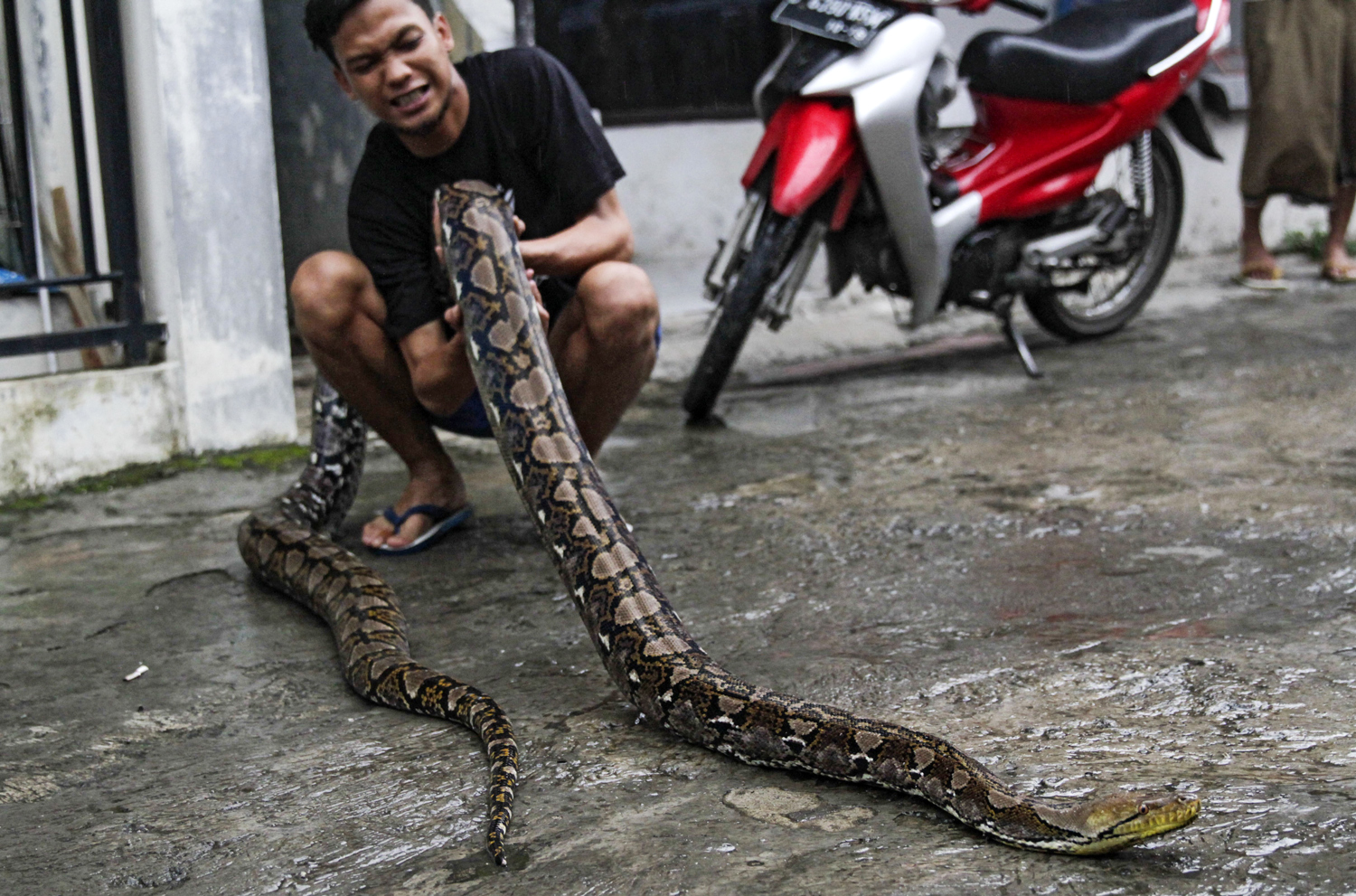
A man kneels on a street and holds a reticulated python with both hands.
© Eko Siswono Toyudho—Anadolu Agency/Getty Images

The Burmese python is enormous, but the reticulated python, seen here, is even larger.

Did you know that pythons find potential prey using heat-sensing organs in their lips? Learn more about these constrictors at Britannica School.

WORD OF THE DAY

eradicate

PART OF SPEECH:
verb
Definition:
: to remove (something) completely : to eliminate or destroy (something harmful)
Definitions provided by
Merriam-Webster Logo

Word Flower

How many words can you make from the letters in the flower? All your words must include the letter in the center.
O
O
O
O
O
O

In Case You Missed It

Figure skater Alysa Liu felt happy and confident at the 2026 Olympics. She skated off with a gold medal!
March 5, 2026
An all-women ranger team protects endangered animals on the Indonesian island of Sumatra.
February 26, 2026
Nima Rinji is showing the world the powerful spirit of the Sherpa people as he climbs the world’s tallest mountains.
February 19, 2026
Life wouldn’t be as fun without the work of these three inventors.
February 12, 2026

A Moon with an Ocean

A moon with many craters

A Moon with an Ocean

There’s an ocean under the surface of Mimas, one of Saturn’s moons. What does this mean for life beyond Earth?
A moon with many craters

NASA/JPL/Space Science Institute

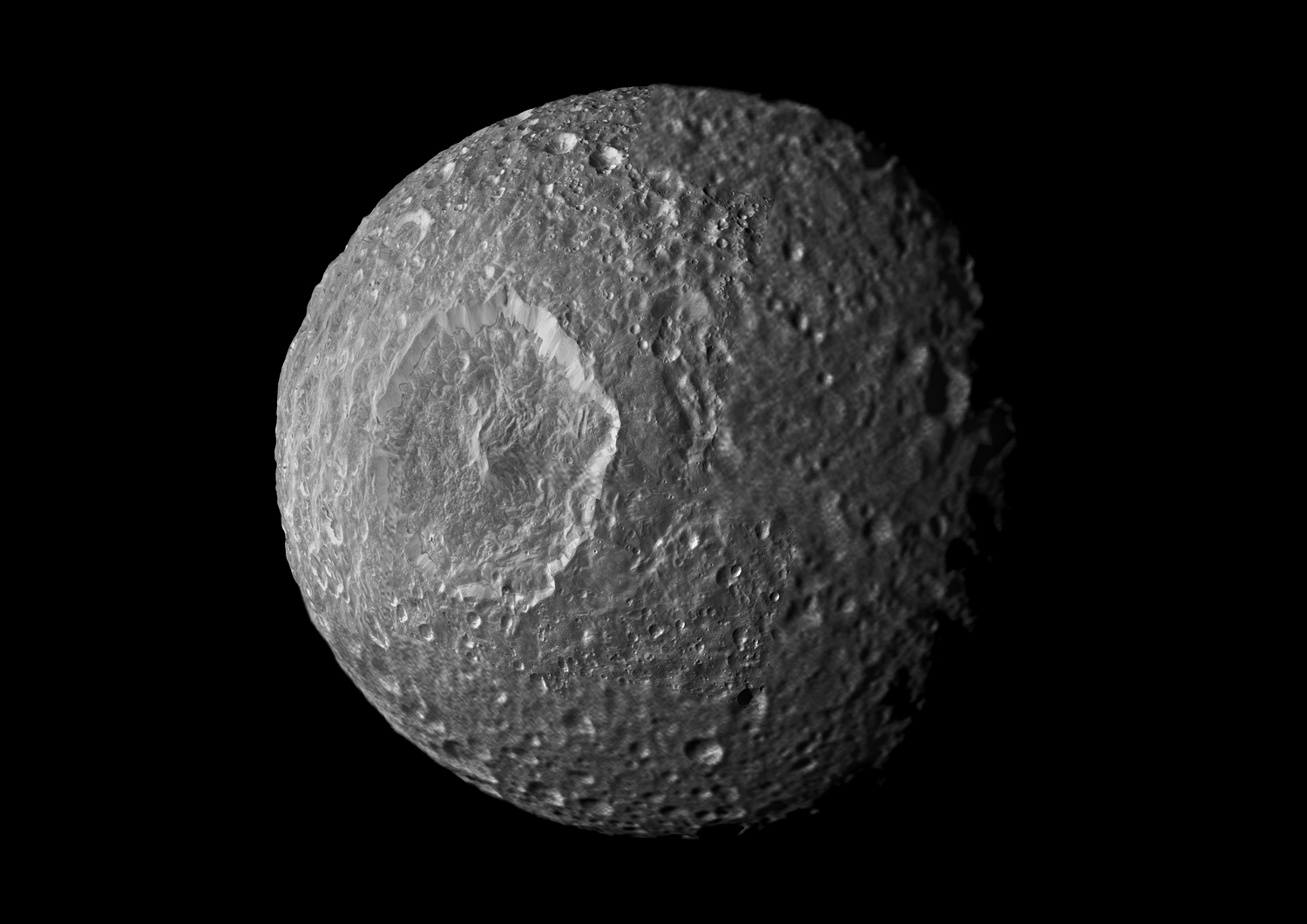
Mimas, one of Saturn’s moons, is known for the large crater that makes it look like the Death Star from the Star Wars movies.

Could life beyond Earth exist in our own solar system?

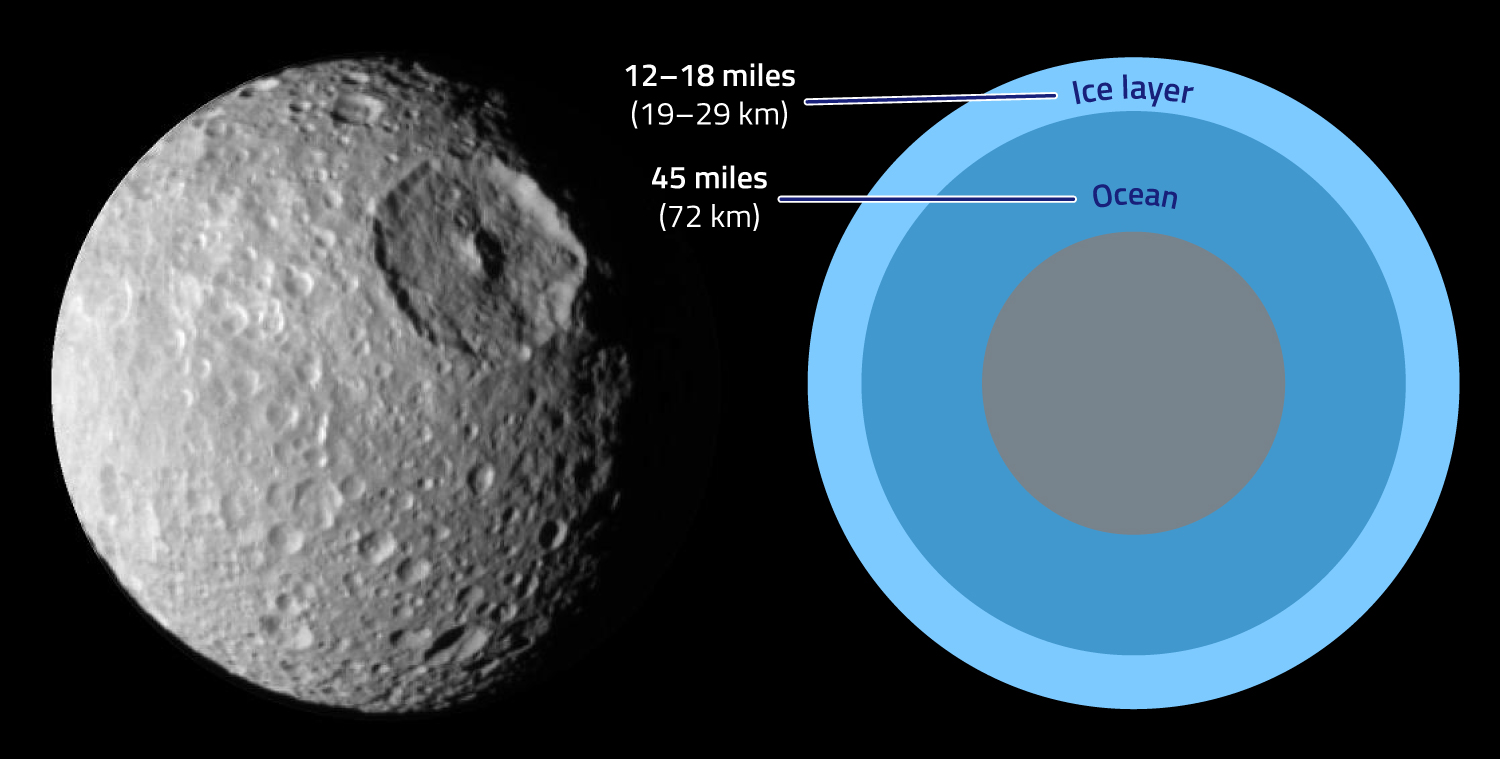
Scientists have discovered that there’s an ocean hidden beneath the icy surface of Mimas, one of Saturn’s moons. The finding suggests there may be more liquid water—which is needed to support life as we know it—beyond Earth than scientists had previously thought.

Until recently, Mimas’s biggest claim to fame may have been that a large crater on its surface makes it look like the Death Star from the Star Wars movies. Other than that, astronomers thought it was just a ball of ice. But when scientists studied images and data collected by a spacecraft called Cassini, they learned that Mimas’s orbit around Saturn is affected by something in the moon’s interior. Further calculations revealed the existence of an ocean.

Scientists believe that the ocean is 12 to 18 miles (20 to 30 kilometers) under the icy surface of Mimas, and that the water is about 45 miles (72 kilometers) deep. With a diameter just under 250 miles (400 kilometers), Mimas is tiny. The ocean makes up about half of its volume.

A photo of Mimas is next to a diagram showing the ice layer and ocean and their depths.
NASA/JPL/Space Science Institute; Infographic Encyclopædia Britannica, Inc.
The ocean under the icy surface of Mimas takes up a large percentage of the moon’s volume.

Mimas isn’t the only moon with an ocean under its surface. Two of Saturn’s other moons, Titan and Enceladus, and two of Jupiter’s moons, Europa and Ganymede, also have hidden oceans. As scientists continue to observe moons, they may find additional oceans to add to the list.

“If Mimas hides a global ocean, this means that liquid water could lie almost anywhere,” Valéry Lainey, one of the scientists involved in the recent discovery, told CNN. “We already have serious candidates for global oceans [on moons such as] Callisto, Dione, and Triton.”

Since liquid water is necessary to support life as we know it, finding oceans in our own solar system raises a lot of intriguing questions. Scientists say the ocean on Mimas is very young—less than 25 million years old. It probably formed too recently for life to have evolved within it. But it’s likely that scientists will continue to take a close look at the icy moons in our solar system for signs of oceans as well as life.

NEWS EXTRA!

April 1 Is Coming!

© Pai-Shih Lee—Moment/Getty Images

Back in 2022, we marked April Fools’ Day with an In the News page about legendary hoaxes and pranks. 

Did You Know?

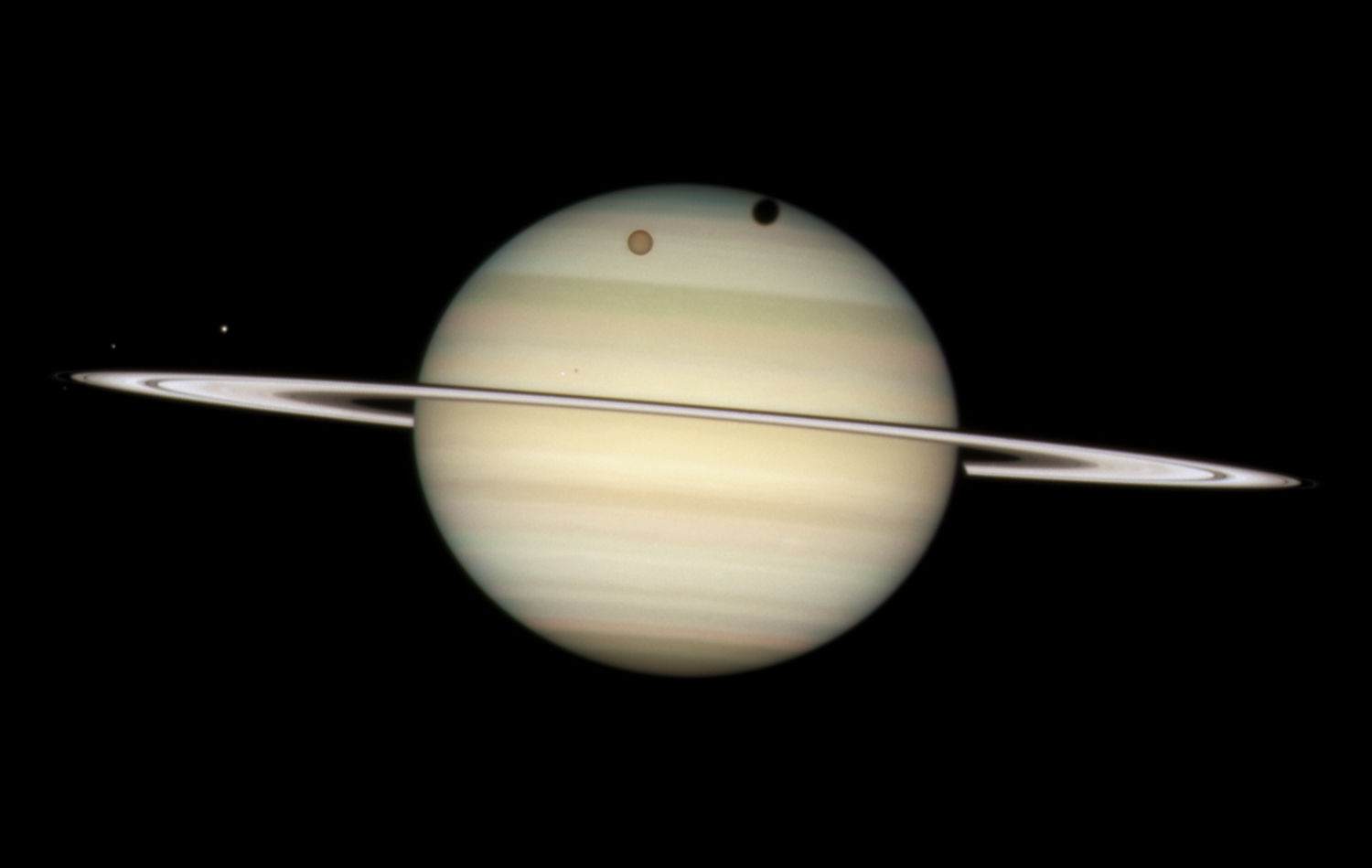
Saturn has 146 known moons. The biggest one, Titan, is larger than the planet Mercury.
NASA, ESA/Hubble Heritage Team (STScI/AURA)

A World with No Moon

© Quintessa/stock.adobe.com; Animation Encyclopædia Britannica, Inc.

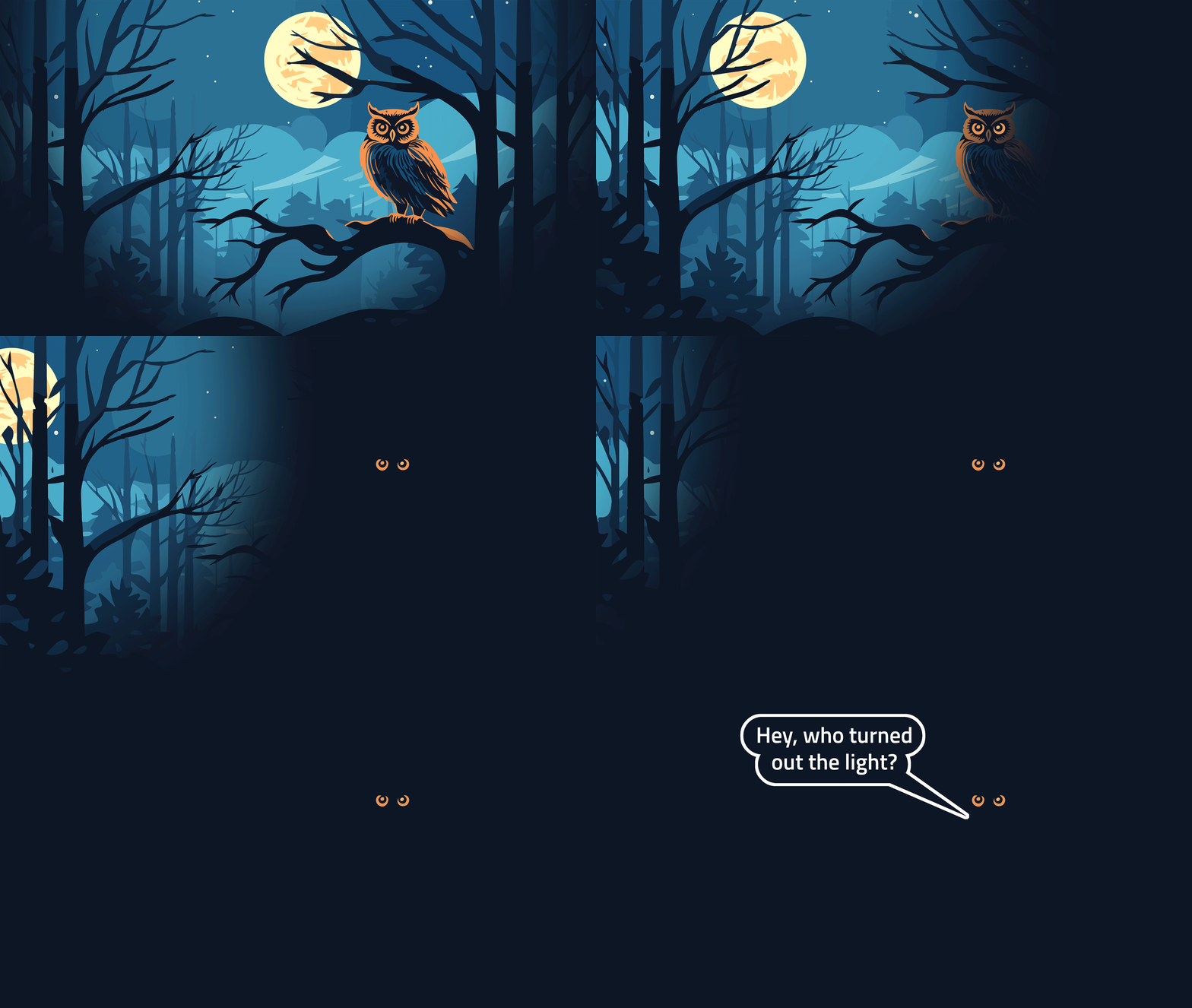
We may think our own moon is just an object to look at in the night sky. But what would happen if Earth’s moon somehow disappeared?

  • Ocean tides would be greatly reduced. The Moon’s gravity heavily influences the tides, which churn up the oceans and move water onto the shore. Coastal ecosystems rely on the movement of ocean water. Ocean currents also affect Earth’s climate. Without the Moon, the tides would be much smaller, Earth’s temperatures would be more extreme, and ecosystems would be different.

  • Earth’s axis would change. The Moon’s gravity pulls on Earth, keeping it tilted as it is. Without the Moon, Earth’s tilt, or angle, would be very different. This would affect the amount of sunlight our planet receives, drastically changing our climate.
  • Nights would be much darker. Darker nights wouldn’t just be a bummer. Predators that hunt at night rely on moonlight to help them spot their prey.
Looking for E.T.

U.S. Navy
So far, no one has any proof that life exists beyond Earth. But investigations are ongoing—with some intriguing results, like whatever is happening in this U.S. Navy video.  You can read more about extraterrestrial life at Britannica.

WORD OF THE DAY

subterranean

PART OF SPEECH:

adjective

Definition:
: located or living under the surface of the ground
Definitions provided by
Merriam-Webster Logo

Word Search

See if you can find all the words.
O
O
O
O
O
O

In Case You Missed It

Figure skater Alysa Liu felt happy and confident at the 2026 Olympics. She skated off with a gold medal!
March 5, 2026
An all-women ranger team protects endangered animals on the Indonesian island of Sumatra.
February 26, 2026
Nima Rinji is showing the world the powerful spirit of the Sherpa people as he climbs the world’s tallest mountains.
February 19, 2026
Life wouldn’t be as fun without the work of these three inventors.
February 12, 2026

An Epic Journey

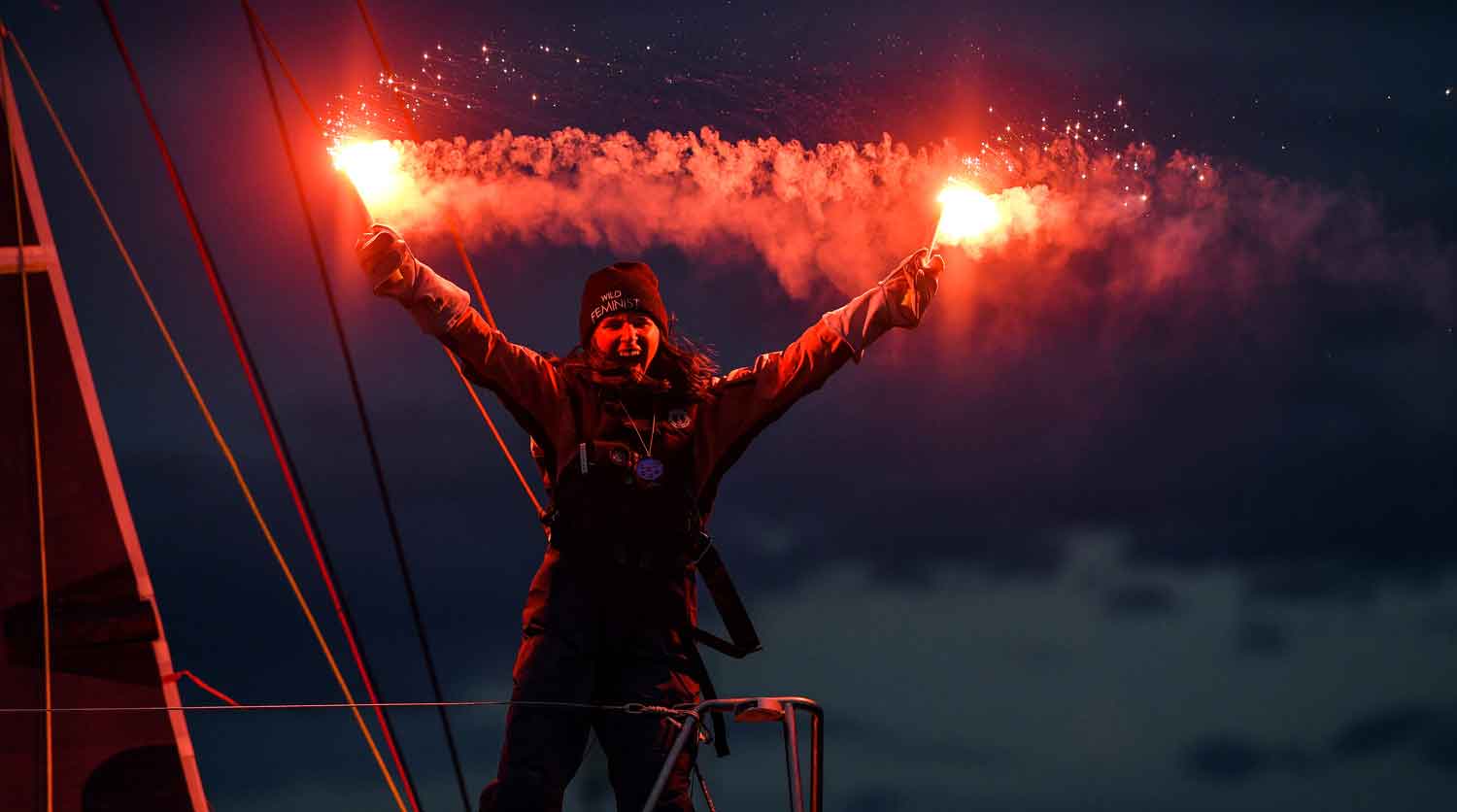
A woman stands on the prow of a boat and smiles as she holds out two flares.

An Epic Journey

Cole Brauer became the first American woman to sail around the world solo, after placing second in an international race.

A woman stands on the prow of a boat and smiles as she holds out two flares.

© James Tomlinson/Cole Brauer Ocean Racing Media

Cole Brauer just became the first American woman to sail around the globe alone. Brauer placed second out of 16 competitors in the Global Solo Challenge, a 30,000-mile (48,000-kilometer) race around the world.

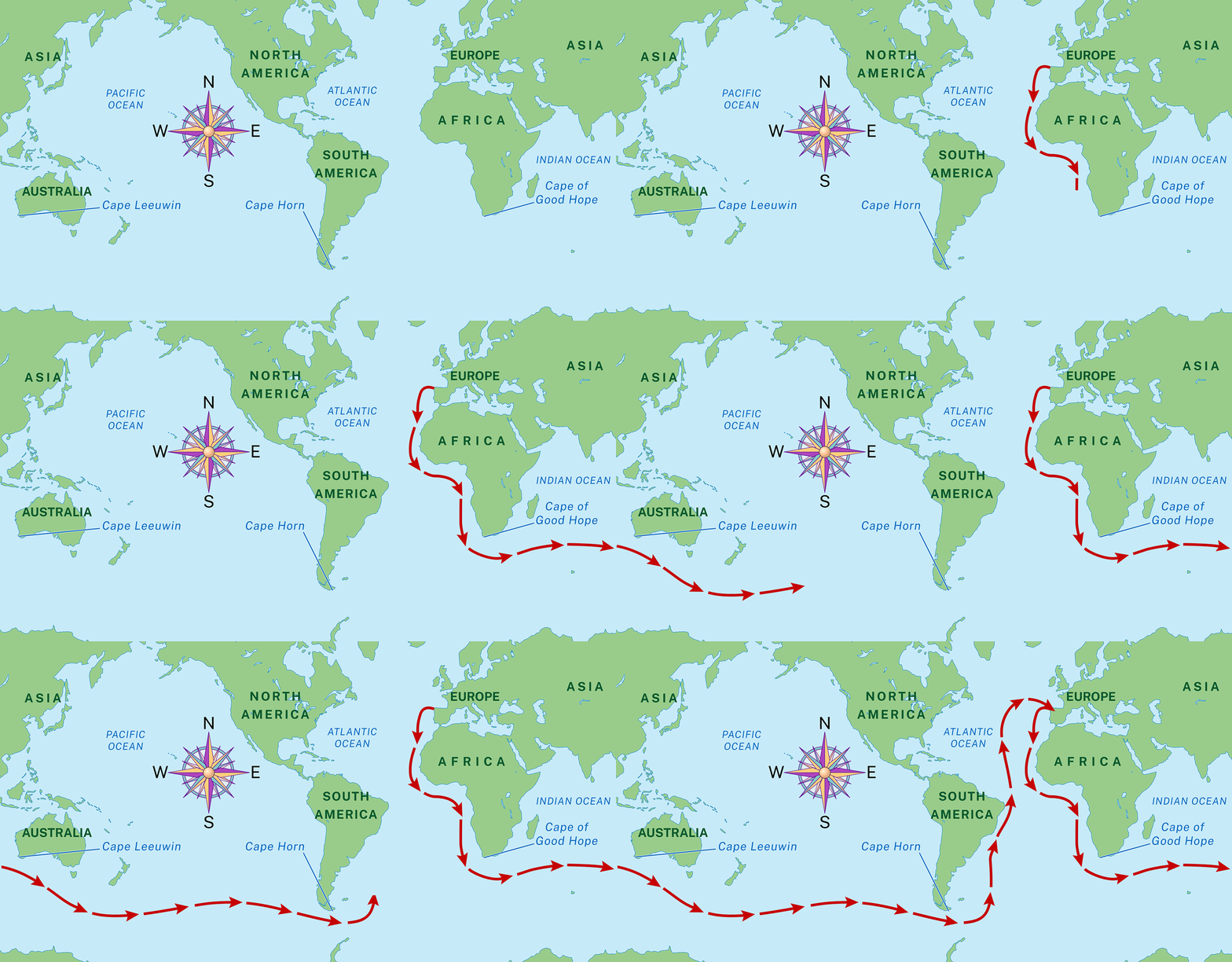
Brauer’s boat arrived at A Coruña, Spain, on March 7, 2024, after 130 days at sea. Setting out on October 29, Brauer sailed south along the west coast of Africa and rounded the Cape of Good Hope at the southern tip of the continent. She then headed east to Australia and on to South America’s Cape Horn, where frequent storms make the waters notoriously rough and boats must steer clear of icebergs. Finally, Brauer sailed across the Atlantic Ocean to Spain.

On a world map, a route is traced from Spain, around Africa, Australia, and South America, and back north to Spain.

Encyclopædia Britannica, Inc.

Sailing from Spain to Spain, Brauer made her way across oceans and around continents.

Although Brauer was able to use satellite communication to speak to her support team and make posts on social media, she was alone on the ocean. Along the way, she encountered many challenges. She had to navigate 30-foot (9-meter) waves. And at one point, she was so dehydrated that her team instructed her on how to insert an IV into her own arm. By the time Brauer finished the race, more than half the original competitors had dropped out due to their own difficulties.

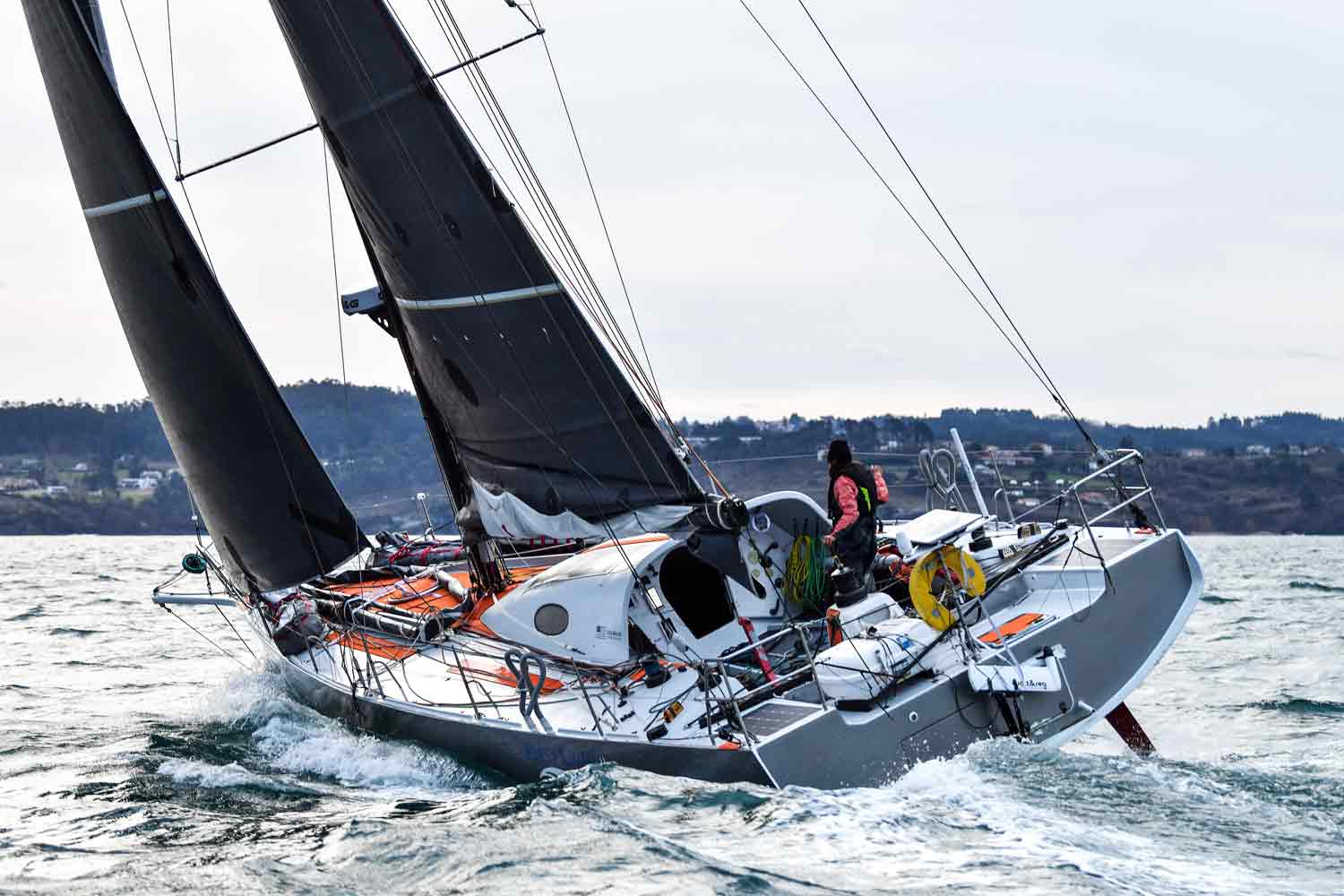
A woman stands at the controls of a sailboat.

© James Tomlinson/Cole Brauer Ocean Racing Media

Brauer approaches the Spanish coast as her journey around the world comes to an end.

Sailing around the world is so challenging that it’s rare for anyone to do it alone. Parts of the journey have been compared to climbing Mount Everest, the world’s tallest mountain. But experts say sailing solo is actually the harder of the two. That’s because solo sailors need to steer, deal with unpredictable weather conditions, and make all necessary repairs to their equipment. Brauer, who at 5 feet, 2 inches (157 centimeters) and 100 pounds (45 kilograms) is physically small, succeeded in all of this.

“[As a solo sailor,] the biggest [advantage] is your mental strength, not the physical one,” race organizer Marco Nannini told NBC News. “Cole is showing everyone that.”

Brauer, who is 29, was the youngest sailor and the only woman in the race. Currently, most sailors are male. She’s hoping to help change that by inspiring young girls.

“It would be amazing if there was just one girl that saw me and said, ‘Oh, I can do that too,’” Brauer told the Today show.

Did You Know?

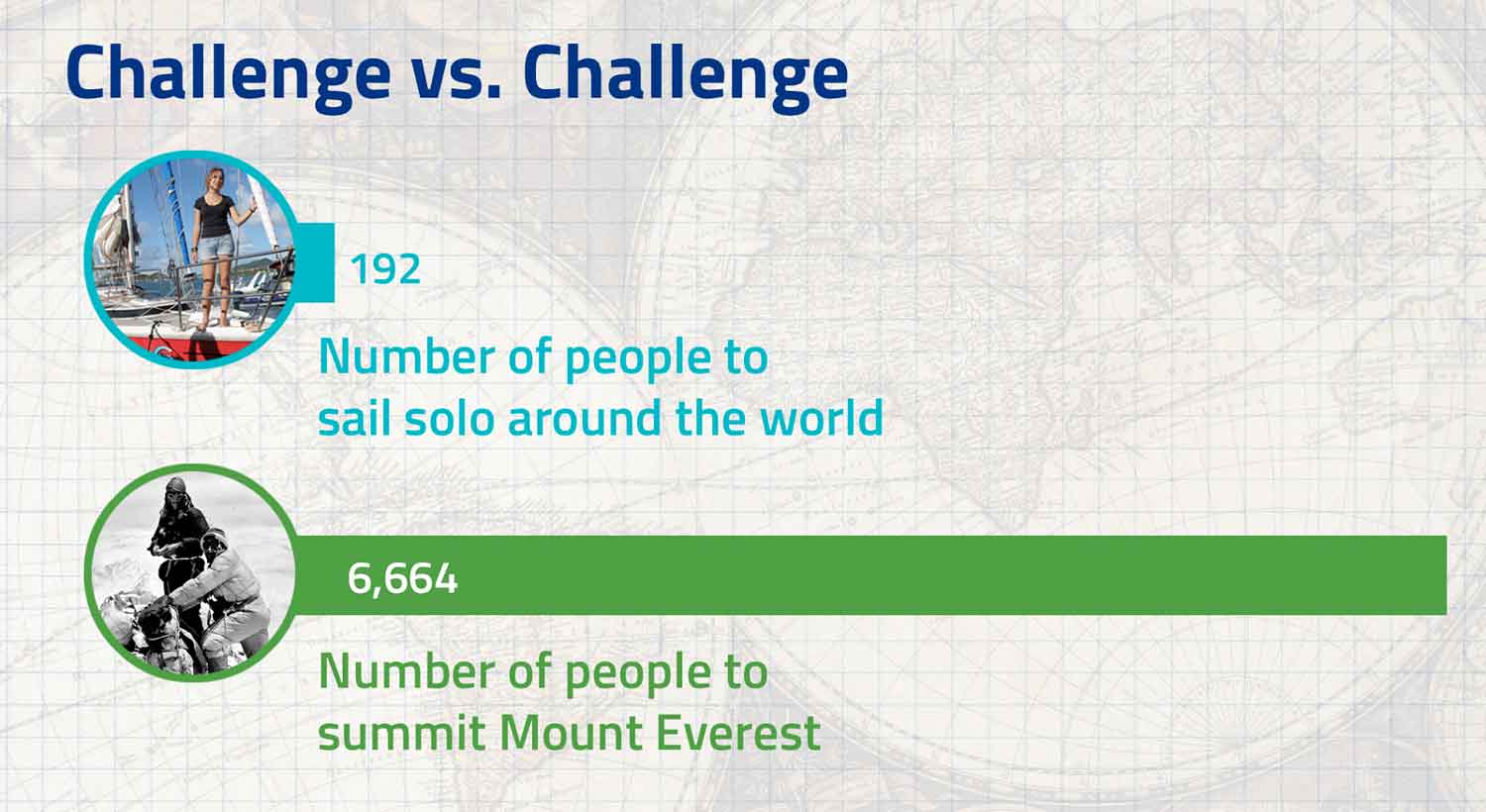
What’s more difficult—climbing Mount Everest or sailing solo around the world? It’s hard to say…but one of these accomplishments is definitely rarer than the other. The graph below shows how many people have completed each of these challenges, as of March 19, 2024. 

Pictured in the graph are Laura Dekker of the Netherlands, who in 2012 at age 16 became the youngest person ever to sail solo around the world, and Sir Edmund Hillary and Tenzig Norgay, who in 1953 became the first people to reach the summit of Mount Everest.

A graph showing that 192 people have sailed solo around the world while 6,664 people have summited Mount Everest.

© Jean-Michel Andre—AFP, Kuzma—iStock/Getty Images, SuperStock/Alamy; Infographic Encyclopædia Britannica, Inc.

An Early Female Globetrotter

A woman in men’s sailor clothes holds vegetation.

Collections of the State Library of New South Wales (FL3740678)

Jeanne Baret dressed in men’s clothing so she would be allowed to board a Navy ship.

More than 250 years before Cole Brauer became the first American woman to sail around the world, a woman named Jeanne Baret circled the globe in a sailboat. Baret didn’t sail solo—she was part of an expedition. But her story is remarkable because it dates back to a time when opportunities for women were severely limited.

Born in France in 1740, Baret was a servant for Philibert Commerson, a naturalist, or a person who studies the natural world. Over time, though, Baret began assisting Commerson with his observations of plants. In 1766, Commerson was asked to be the botanist (plant expert) on a round-the-world sailing expedition aboard a French Navy ship. Women weren’t allowed on naval ships, so in order to continue as Commerson’s assistant, Baret disguised herself as a man.

During the journey, Baret and Commerson gathered more than 6,000 plant samples. But Commerson suffered from several health problems, and Baret ended up doing most of the scientific work by herself. Experts believe it was Baret who discovered a flowering vine that she and Commerson called Bougainvillea. Although Commerson also gave the vine the scientific name Baretia, after its discoverer, it was later renamed Turraea, after Italian scientist Giogio della Turre.

Dangerous Waters

Choppy waters with peaks in the background.

© Joe Sohm/Dreamstime.com

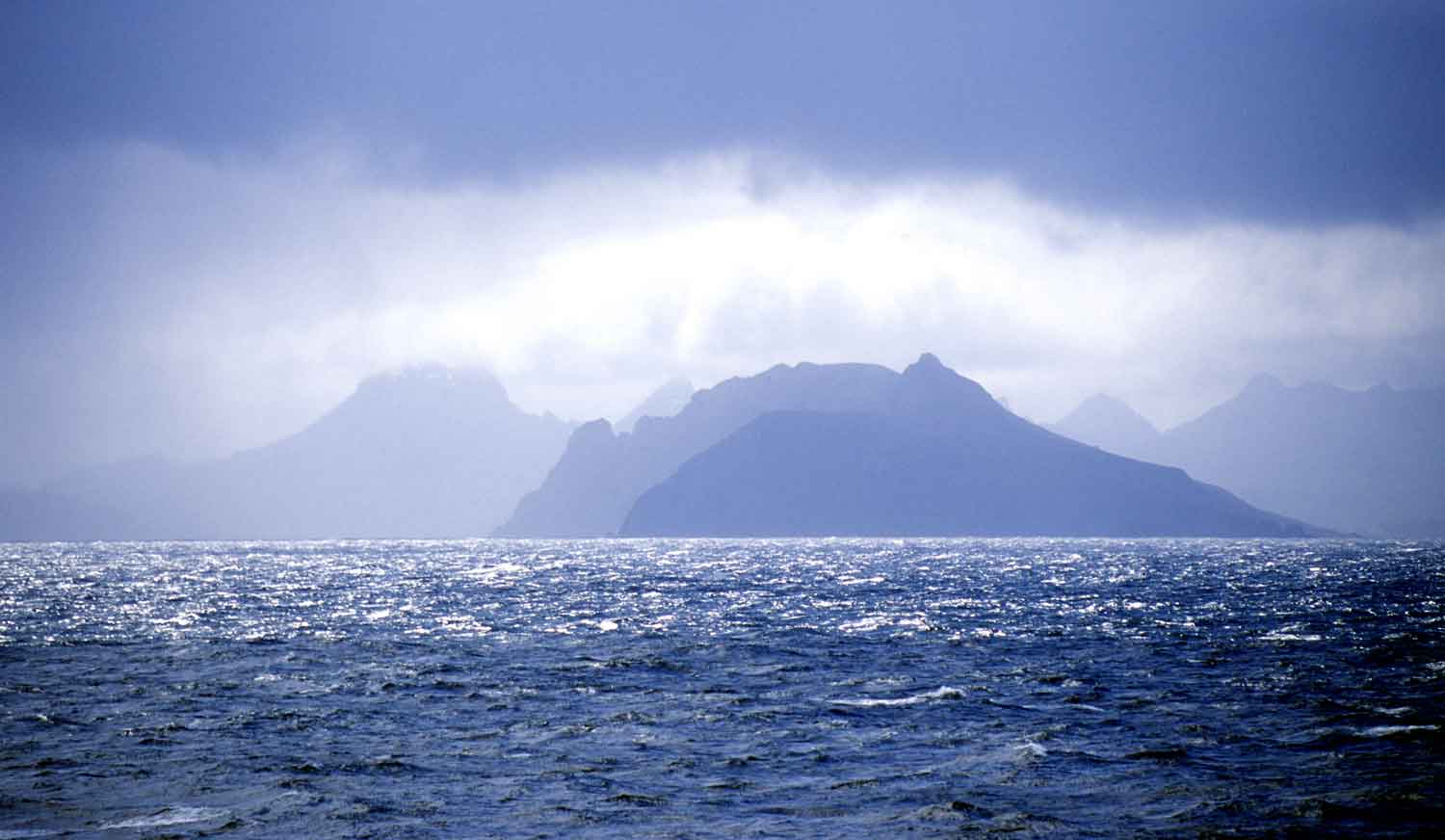
Imagine trying to navigate a sailboat through icebergs, storms, and choppy seas. That’s what it’s like to sail around Cape Horn, at the southern tip of South America. 

At Britannica you can check out a video of a sailing trip through this incredible part of the world.

WORD OF THE DAY

gumption

PART OF SPEECH:

noun

Definition:

: courage and confidence

Definitions provided by
Merriam-Webster Logo

Criss Cross

See if you can figure out where these adventurers from the past and present fit into the puzzle.

O
O
O
O
O
O

In Case You Missed It

Figure skater Alysa Liu felt happy and confident at the 2026 Olympics. She skated off with a gold medal!
March 5, 2026
An all-women ranger team protects endangered animals on the Indonesian island of Sumatra.
February 26, 2026
Nima Rinji is showing the world the powerful spirit of the Sherpa people as he climbs the world’s tallest mountains.
February 19, 2026
Life wouldn’t be as fun without the work of these three inventors.
February 12, 2026

Lawmakers Hope For More Therapy Dogs

An adult and five young children sit on a rug with a large dog that is wearing a yellow vest.

Lawmakers Hope For More Therapy Dogs

A bill in New Jersey would help increase the number of therapy dogs in the state’s elementary schools.
An adult and five young children sit on a rug with a large dog that is wearing a yellow vest.
Natalie Kolb—MediaNews Group/Reading Eagle/Getty Images

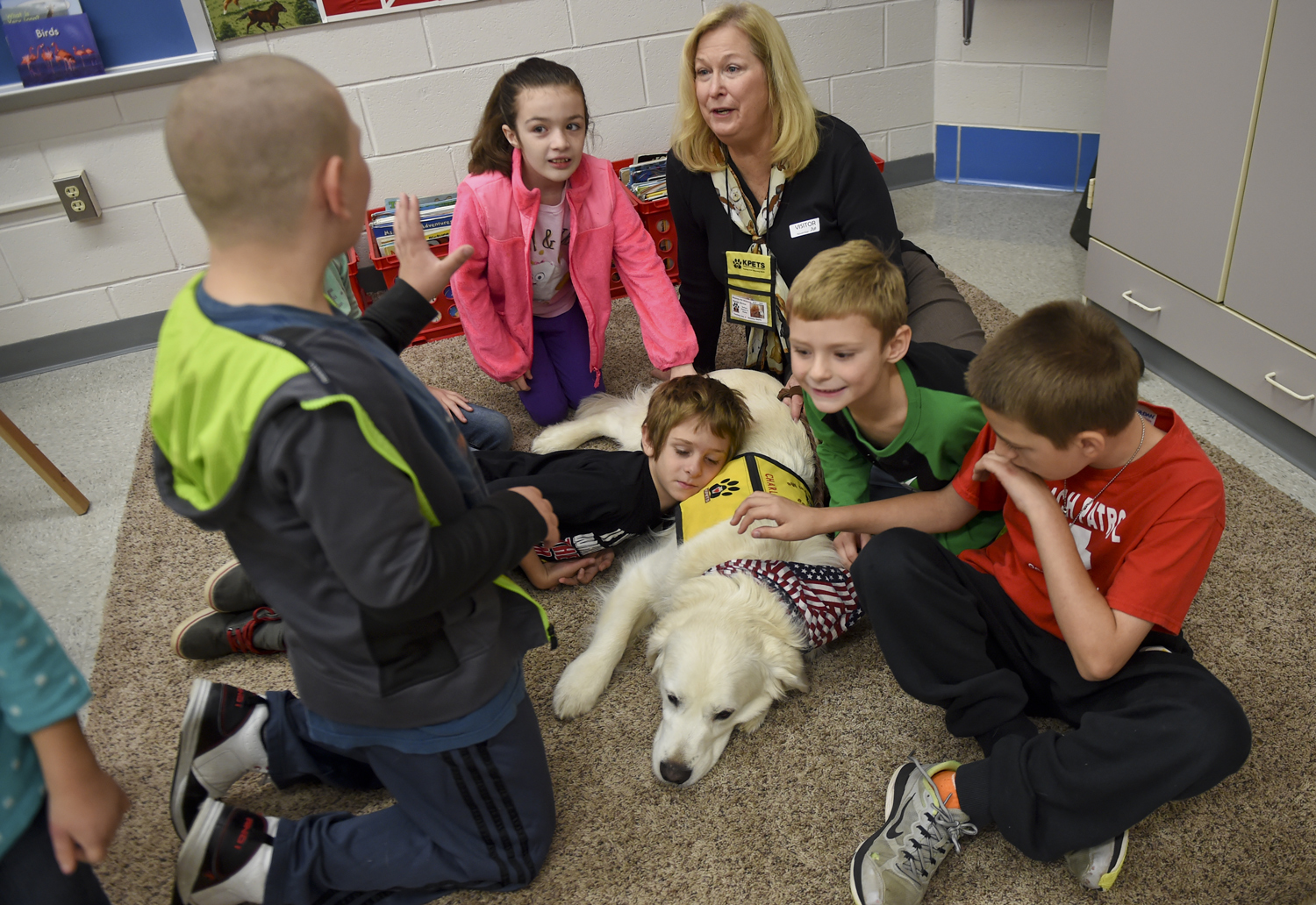
This 2016 photo shows elementary school students spending time with a therapy dog.

Schools in New Jersey may soon be playing host to some new, four-legged visitors. The state legislature is considering a bill to help bring more therapy dogs into public elementary schools.

The bill is bipartisan, meaning that it has support from both a Democratic and a Republican lawmaker. If passed, the bill would allow the New Jersey Department of Education to pick two school districts in each of the state’s three regions—northern, central, and southern New Jersey—for a three-year pilot (test) program. During this time, officials would study the effect of the program on students’ mental health and academic performance.

“[If the results are positive], then we hope we’ll be able to allow this program to be part of the curriculum and work throughout the state of New Jersey for every school district,” state senator Anthony Bucco, a Republican, told PIX11 News. Bucco is sponsoring the bill with Democratic state senator James Beach.

School therapy dogs are already used in many states, at the elementary school level all the way up through college. Researchers have evidence that spending time with animals can reduce levels of cortisol, a chemical the body produces in response to stress. Therapy dogs might also help students improve their academic performance.

“Research demonstrates that the use of therapy dogs in a school setting can improve confidence, motivation, and even school attendance,” Senator Beach said in a statement. 

Did You Know?

The first recognized therapy dog was a Yorkshire terrier named Smoky, who served during World War II. After she was discovered in a foxhole on the Pacific Island of New Guinea by Corporal Bill Wynne, Smoky became a valuable canine soldier, helping on construction projects as a digger and warning her unit of impending danger. Accompanied by Corporal Wynne, Smoky also visited sick and wounded soldiers in hospitals. Wynne said he believed Smoky gave many soldiers the motivation they needed to recuperate.
A sculpture of a Yorkshire terrier with a tag reading Smoky sitting in a military helmet.
bertknot (CC BY-SA 2.0)
This sculpture of Smoky is located outside Australia’s Royal Brisbane and Women’s Hospital, where the little dog once visited wounded soldiers.

Canine Counselors

A golden retriever sits at a table with a student in a classroom.
Daniel Roland—AFP/Getty Images

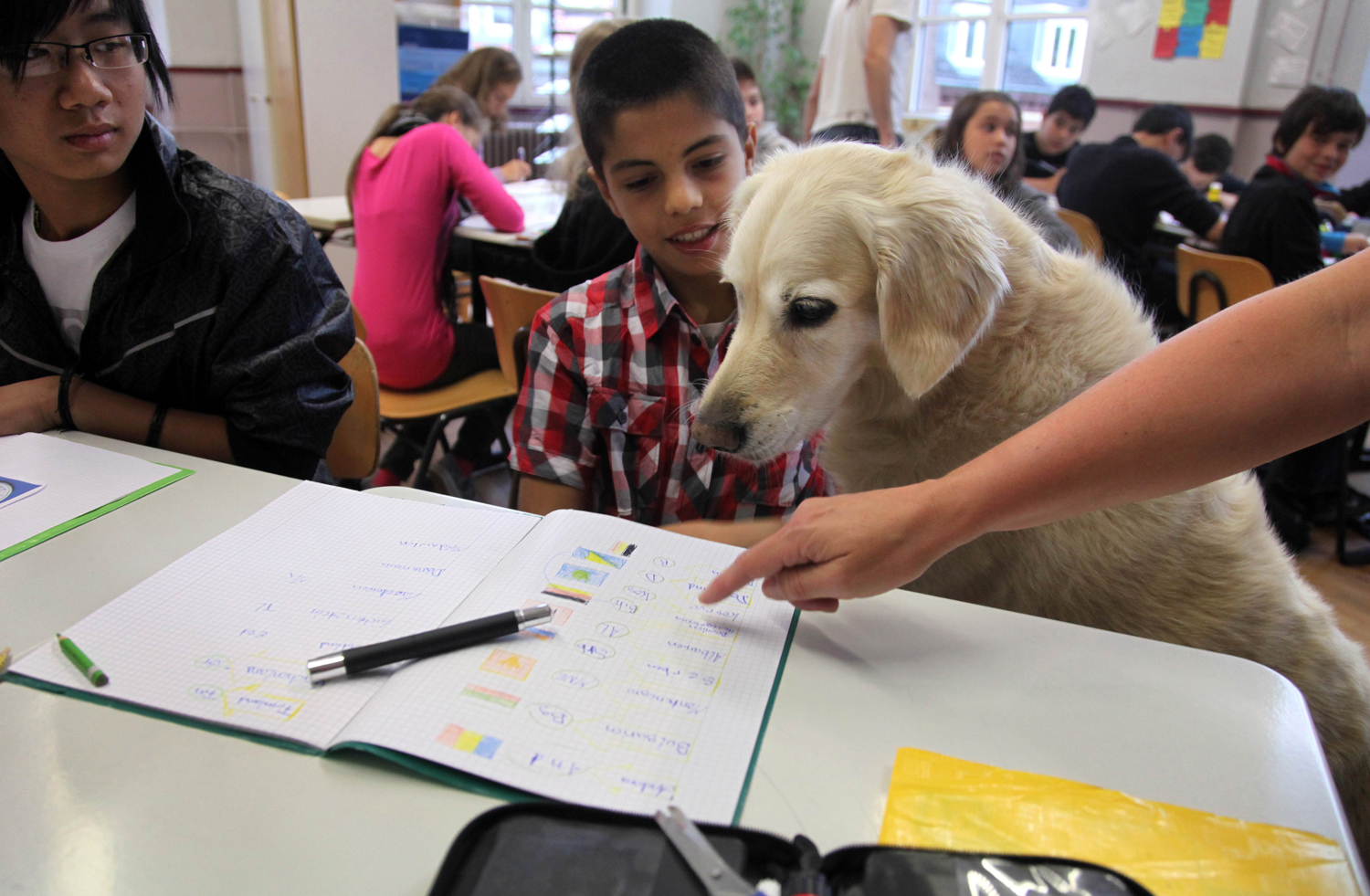
Why are dogs said to be ideal therapy animals? Here are just a few reasons.

They’re good listeners. Experts say spending time with dogs, which are social animals but also attentive to people, can help students improve their social skills.

They can motivate people. Students may be more motivated to come to school if they can spend time with a therapy dog.

They’re not judgmental. Wrong answers and other challenges are part of learning. Experts believe students may feel more confident practicing difficult skills in front of a dog.

They lower stress. Studies show that spending time with animals can decrease cortisol, a chemical the body produces when it’s stressed. And experts say stress can affect a person’s ability to learn.

They improve people’s moods. Experts say the presence of a dog can bring lightness and humor into a classroom, which can help students cope with anxiety disorders.

Animal Secrets

© Khlongwangchao—Creatas Video/Getty Images
Have you ever wondered why an ant works constantly without taking a break or how birds seem to know when to migrate? Some scientists dedicate their careers to studying animal behavior. You can read more about our knowledge of animal behavior, and what we still don’t know, at Britannica.

WORD OF THE DAY

gregarious

PART OF SPEECH:
adjective
Definition:
: enjoying the company of other people
Definitions provided by
Merriam-Webster Logo

Word Search

There’s no such thing as too many dogs. See if you can find all the dogs in this puzzle.
O
O
O
O
O
O

In Case You Missed It

Figure skater Alysa Liu felt happy and confident at the 2026 Olympics. She skated off with a gold medal!
March 5, 2026
An all-women ranger team protects endangered animals on the Indonesian island of Sumatra.
February 26, 2026
Nima Rinji is showing the world the powerful spirit of the Sherpa people as he climbs the world’s tallest mountains.
February 19, 2026
Life wouldn’t be as fun without the work of these three inventors.
February 12, 2026