Wendy’s Says Changes Are Coming

The exterior of a Wendy’s restaurant.

Wendy’s Says Changes Are Coming

Wendy’s is making some changes to its menu, but the company says it’s not raising prices.

The exterior of a Wendy’s restaurant.

© Andreistanescu/Dreamstime.com

Is Wendy’s raising its prices? Not exactly, but customers may soon see some changes on the fast-food chain’s menu.

In February, Wendy’s caused an uproar when it announced that it would be testing digital menus at its drive-throughs, as well as “dynamic pricing,” or “surge pricing.” Dynamic pricing is the practice of raising the price on goods and services during times when demand is highest. It’s already used at places like concert venues, bowling alleys, and movie theaters. Hotels, airlines, and ride-sharing apps like Uber use dynamic pricing as well. When Wendy’s used the term in its announcement, people took that to mean that hungry customers would soon see higher prices if they drove up to a Wendy’s at the wrong time.

But Wendy’s has since said that its announcement was misunderstood. The company says it has no plans to raise prices when demand is highest. Instead, it plans to lower prices when demand is low.

“We said these [digital] menu boards would give us more flexibility to change the display of featured items,” a Wendy’s spokesperson told NBC News. “Digital menu boards could allow us to change the menu offerings at different times of day and offer discounts and value offers to our customers more easily, particularly in the slower times of day.”

Wendy’s claims that the plan would benefit its customers. Robert Shumsky, a professor at the Tuck School of Business at Dartmouth, told National Public Radio (NPR) that this might be true.

“[Wendy’s] talked about, for example, getting more breakfast customers in,” Shumsky said. “They might actually reduce breakfast prices at certain times in order to encourage people to come during what they currently have as relatively low-demand periods.”

If Wendy’s goes ahead with the plan, there wouldn’t be any changes until 2025 or later.

Fun Fact
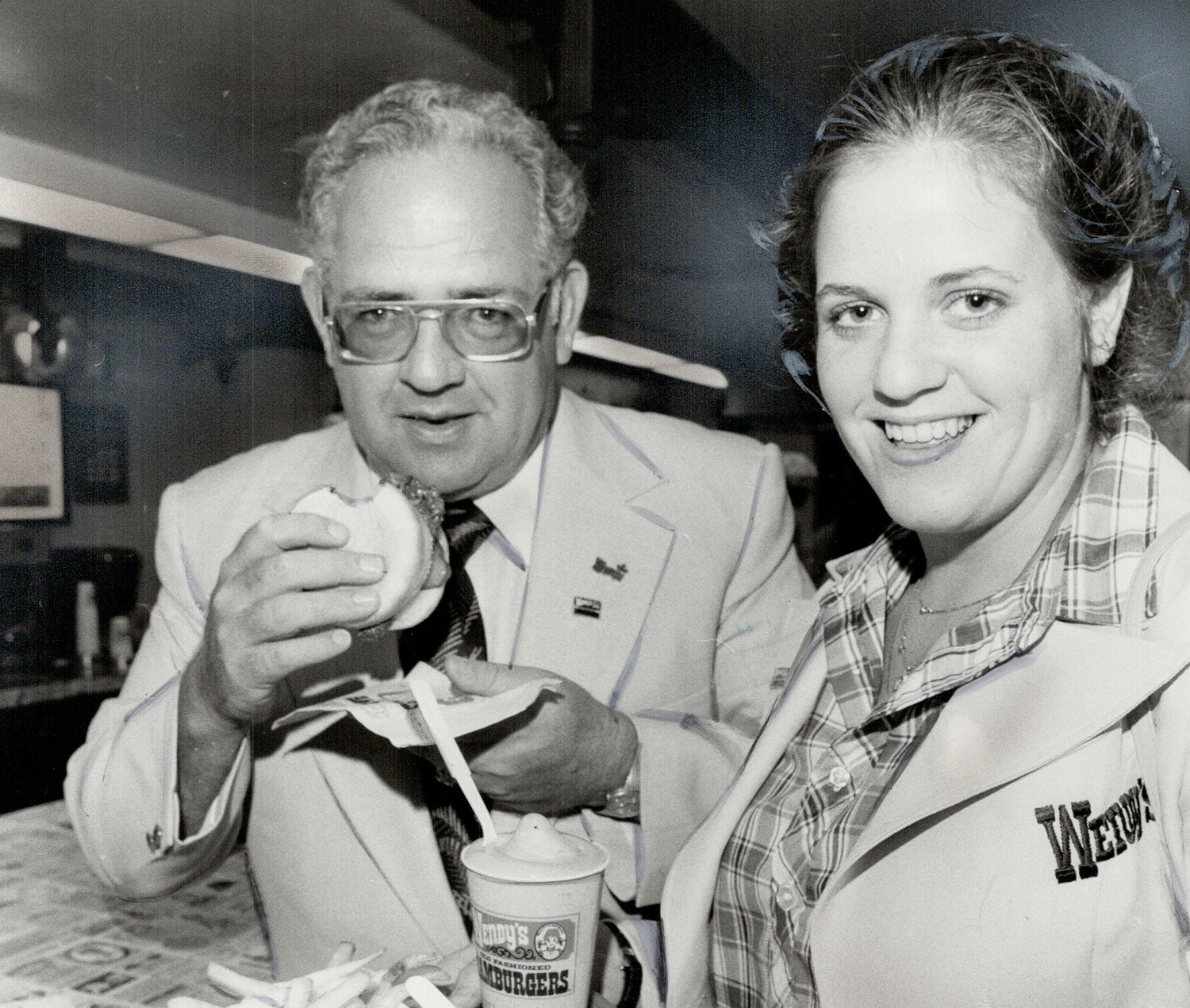
© Jeff Goode—Toronto Star/Getty Images

Wendy’s founder Dave Thomas and his daughter, Wendy. Yes, Wendy is real!

The first Wendy’s opened in 1969. The menu offered five items: hamburgers, chili, French fries, soft drinks, and the Frosty frozen dessert.

Happy Pi Day!

The number pi has an infinite number of digits!

 Encyclopædia Britannica, Inc.

The number pi has an infinite number of digits!

March 14 is Pi Day, which has nothing to do with pies but is still pretty cool to think about. Pi Day honors pi, a number that starts as 3.1415926535 and has an infinite number of digits. So far, pi has been calculated to more than 50 trillion digits to the right of the decimal point! But, understandably, most people shorten pi to 3.14, And, since you can write March 14 as “3/14,” that date is celebrated around the world as Pi Day.

If you’ve learned about pi in school, you may already be thinking of a circle. Pi is a somewhat magical ratio related to the measurements of a circle. Let’s say you have a pizza pie (that’s pie, not pi) shaped like a circle. If you measure across the widest part of the pizza, that’s the diameter. And if you measure all the way around the pizza, that’s the circumference.

© Zitramon/Dreamstime.com; Composite illustration Encyclopædia Britannica, Inc.

Here’s where the magic comes in: If you divide the circumference by the diameter, you’ll get a number that’s very close to 3.14, no matter what size your pizza is. And this is true for any circle.

The circumference and diameter of a pizza are given along with an equation in which circumference is divided by diameter to get 3.14.

© Zitramon/Dreamstime.com; Composite illustration Encyclopædia Britannica, Inc.

If all this talk about pie is making you hungry, there’s good news. Many people celebrate Pi Day by eating pie. Hey, why not?

Own a Piece of the Business

The logos of Church’s Chicken, Burger King, and other fast food chains are shown.

© Luca Marella/Dreamstime.com

Have you ever thought you’d like to run a business someday? One way to do it is to buy a franchise, the right to sell an existing product at a particular location. Wendy’s and many other fast-food companies operate through local franchises.

You can learn more about how franchises work at Britannica!

WORD OF THE DAY

brouhaha

PART OF SPEECH:
noun
Definition:

: great excitement or concern about something

Definitions provided by
Merriam-Webster Logo

Crossword

Use the clues to help you fill in the puzzle.

O
O
O
O
O
O

In Case You Missed It

The island of Corsica showed American colonists that a courageous revolution could defeat an empire.
May 7, 2026
Physicist Narinder Singh Kapany developed fiber optic cables, helping to make the Internet possible.
April 30, 2026
How can you tell whether photos and videos are real or made with AI? Here are a few tips.
April 24, 2026
A seemingly strange bank is saving one of Earth’s most valuable resources.
April 9, 2026

A Trailblazer’s Story

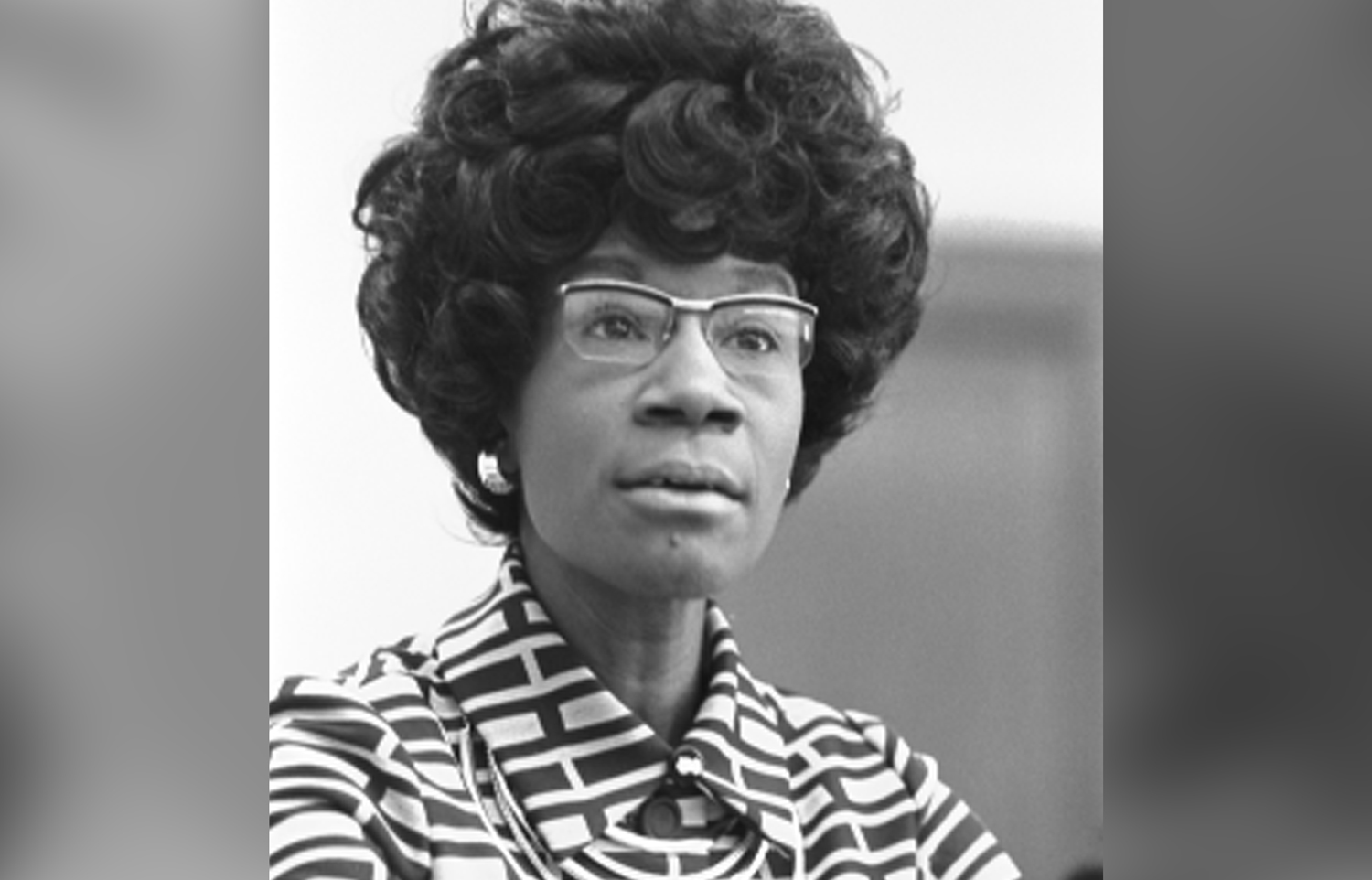
Portrait of Shirley Chisholm.

A Trailblazer’s Story

A new movie will tell the story of Shirley Chisholm, the first Black woman member of Congress.

Portrait of Shirley Chisholm.
Library of Congress, Washington, D.C. (LC-U9-25383-33)
This 1972 photo was taken as Representative Shirley Chisholm announced that she was running for president.

The story of the first Black woman in Congress is coming to Netflix on March 22. Shirley (rated PG-13), starring Regina King in the title role, traces the life and career of trailblazing lawmaker Shirley Chisholm.

“What she did was so pioneering,” King, who is also a producer on the movie, told Harper’s Bazaar. “She was a true maverick and, you know, we use this term all the time, but she was a true first.”

Born in Brooklyn, New York, in 1924, Chisholm started her career as a nursery school teacher, eventually earning a master’s degree in early childhood education from Columbia University. Chisholm’s desire to tackle race and gender inequality led her to become more and more politically active. She belonged to the Brooklyn chapters of the League of Women Voters, the National Association for the Advancement of Colored People (NAACP), and the Urban League. 

In 1964, Chisholm won a seat in the New York state legislature, representing her Brooklyn district. Four years later, she was elected to the U.S. House of Representatives, where no Black woman had ever held a seat.

Chisholm’s dedication to the causes she believed in earned her the nickname “Fighting Shirley.” She introduced more than 50 pieces of legislation, spoke out for racial and gender equality, opposed the Vietnam War, and championed increased funding to fight poverty.

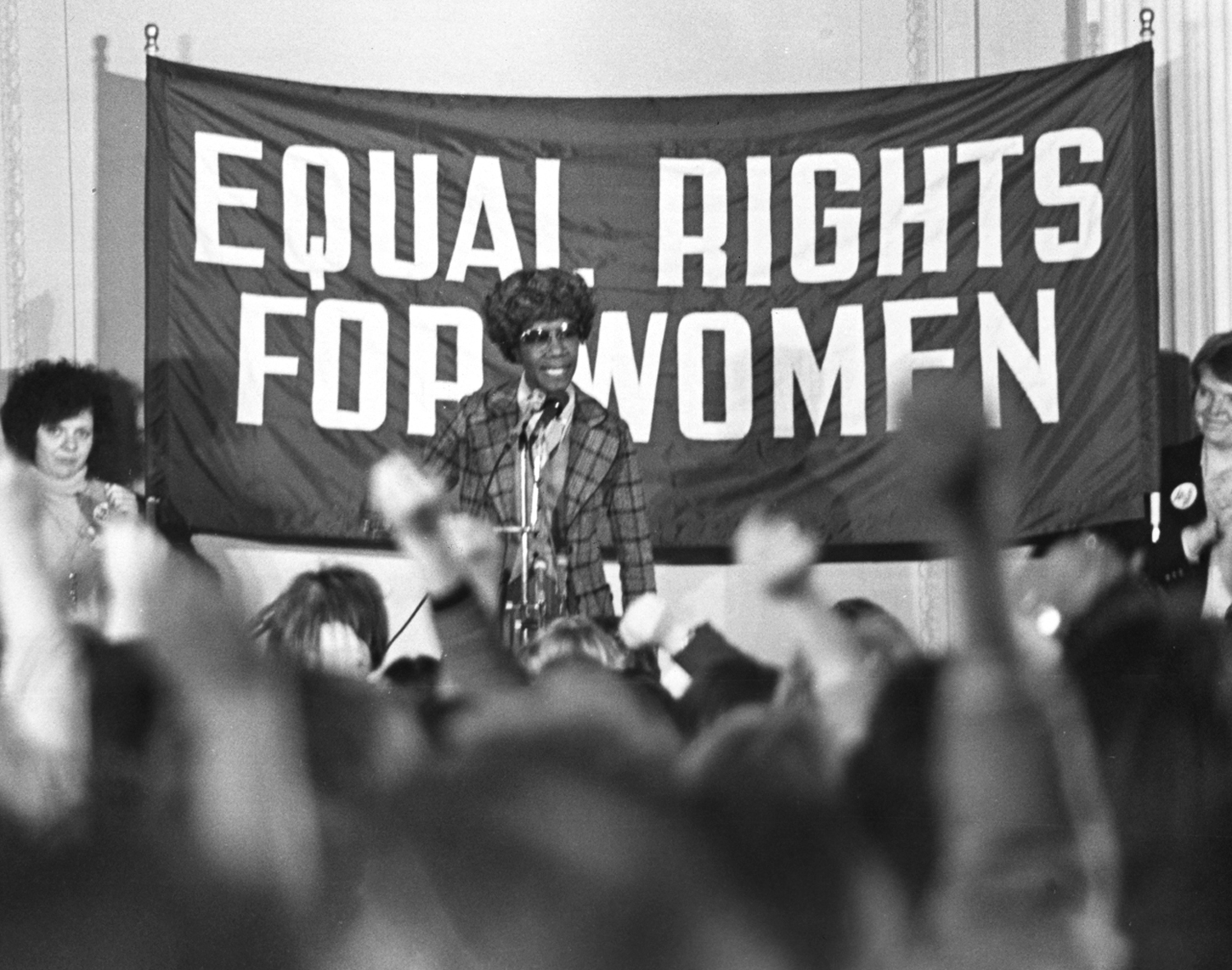
Shirley Chisholm speaks before a crowd and stands in front of the sign that reads equal rights for women.
Archive Photos/Getty Images
Representative Shirley Chisholm delivers a speech on women’s rights at an event in 1981.

In 1972, Chisholm campaigned to become the Democratic Party’s nominee for president. She was the first Black woman in the U.S. to seek the nomination from a major political party. However, she was not allowed to participate in televised debates and could not make televised speeches until she fought that decision in court. She eventually dropped out of the presidential race. Chisholm retired from Congress in 1983 and cofounded the National Political Congress of Black Women, an organization that supports political, educational, and economic opportunities for Black women. She died in 2005.

Chisholm’s biopic (biographical film) is being released 100 years after her birth. But King, who won an Academy Award in 2019 for her performance in If Beale Street Could Talk, says a movie about this political pioneer is long overdue.

“She felt such a strong sense of ‘If it’s not me, then who?’ And she didn’t see it any other way,” King told Harper’s Bazaar. “If no one else was doing it, she would take action.”

Did You Know?

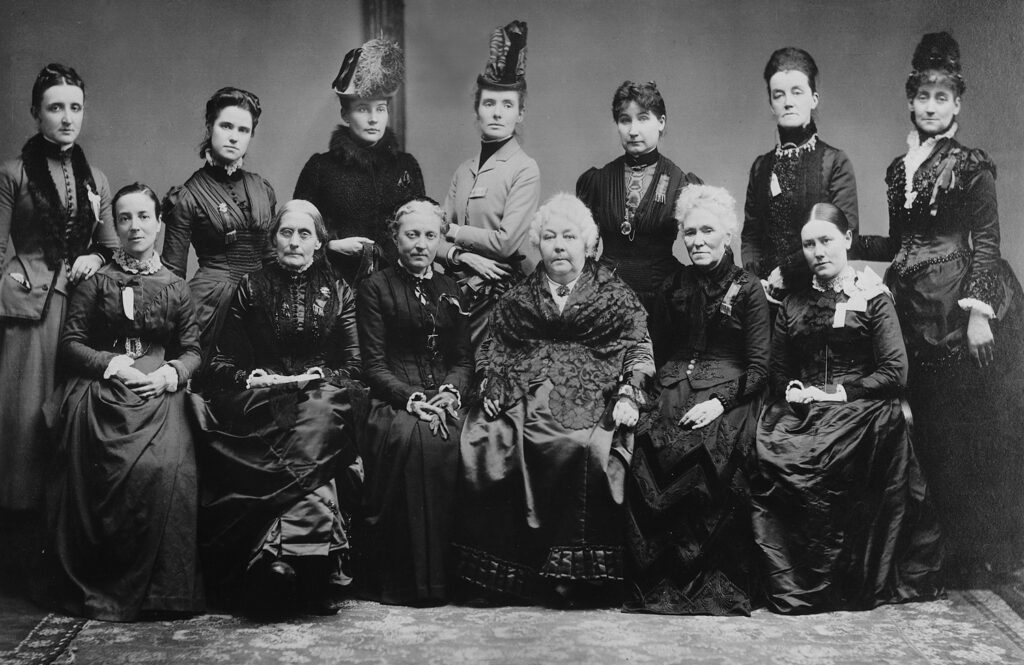
Elizabeth Cady Stanton was the first woman to run for Congress. Stanton ran in 1866, more than 50 years before the 19th Amendment (1920) gave women the right to vote.

The photo above shows Stanton (seated, third from right) at an 1888 gathering of suffragists, activists who fought to extend the vote to women.

Elizabeth Cady Stanton, Susan B. Anthony, and many other suffragists pose for a group photo
Library of Congress, Washington, D.C.

Slow Progress

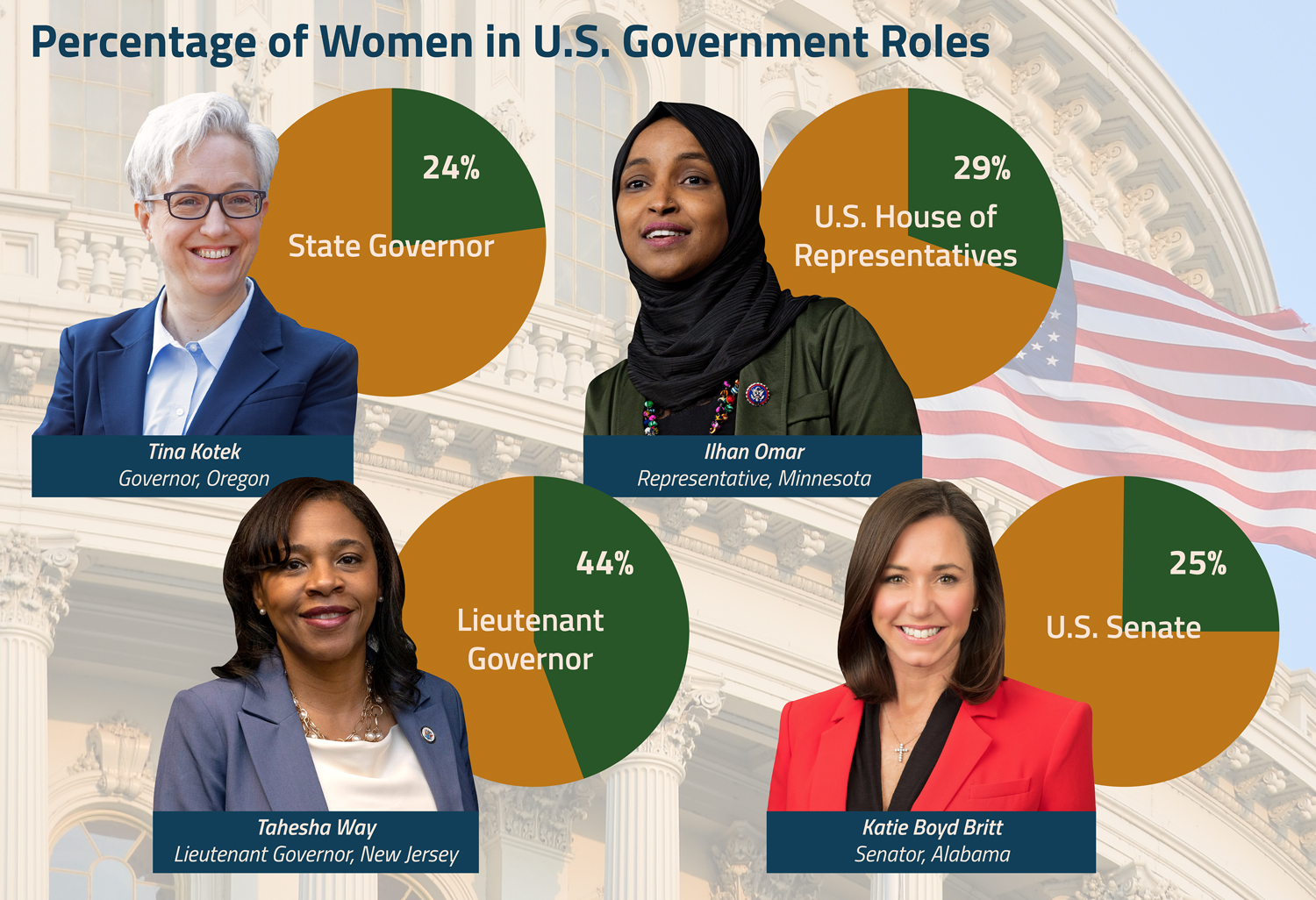
Today, there are many more women in government than there were when Shirley Chisholm served in Congress. But women are still underrepresented.

Pie charts show the percentage of female governors, representatives, senators, and lieutenant governors.
Tony Miller, © Michael Brochstein—SOPA Images/Shutterstock.com, New Jersey National Guard, Office of U.S. Senator Katie Britt, © Orhan Cam/Shutterstock.com; Infographic Encyclopædia Britannica, Inc.

International Women’s Day

North Wind Picture Archives, © PictureLux—The Hollywood Archive/Alamy, Addison N. Scurlock—Michael Ochs Archives, Bettmann/Getty Images, UPI/Bettmann Archive, NASA, Library of Congress (LC-USZ62-65195), National Portrait Gallery (NPG.87.43), Wellcome Collection, London; Photo composite Encyclopædai Britannica, Inc.

March is Women’s History Month in the United States, and March 8 is International Women’s Day around the world.

Learn more about International Women’s Day, and what it means, at Britannica.

WORD OF THE DAY

impetus

PART OF SPEECH:

noun

Definition:

: a force that causes something (such as a process or activity) to be done or to become more active

Definitions provided by
Merriam-Webster Logo

Wordrow

See if you can figure out the word. Type your guess. If a letter circle turns green, it is in the right place. If a letter circle turns gold, the letter is somewhere in the word, but it’s in the wrong place. All other letters are not part of the word.

O
O
O
O
O
O

In Case You Missed It

The island of Corsica showed American colonists that a courageous revolution could defeat an empire.
May 7, 2026
Physicist Narinder Singh Kapany developed fiber optic cables, helping to make the Internet possible.
April 30, 2026
How can you tell whether photos and videos are real or made with AI? Here are a few tips.
April 24, 2026
A seemingly strange bank is saving one of Earth’s most valuable resources.
April 9, 2026

Found at Last?

Amelia Earhart poses in front of her plane.

Found at Last?

A company believes it has found the wreckage of famed pilot Amelia Earhart’s plane. Does the evidence hold up?

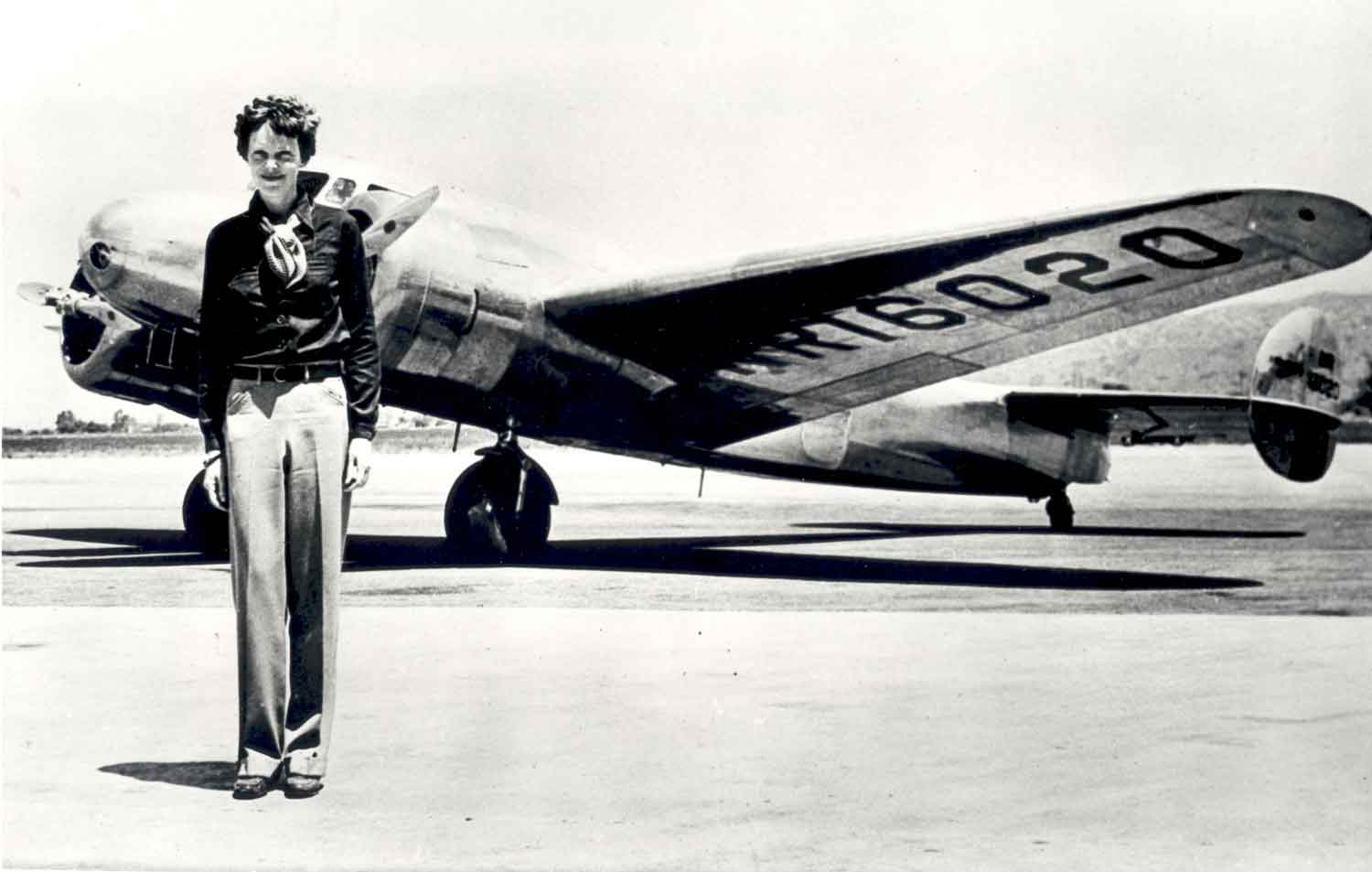
Amelia Earhart poses in front of her plane.

NASA

Amelia Earhart poses in front of her Lockheed Electra airplane.

A U.S. company believes it has located the wreckage of famed aviator Amelia Earhart’s plane, more than 86 years after it disappeared over the Pacific Ocean. Is one of history’s biggest mysteries about to be solved?

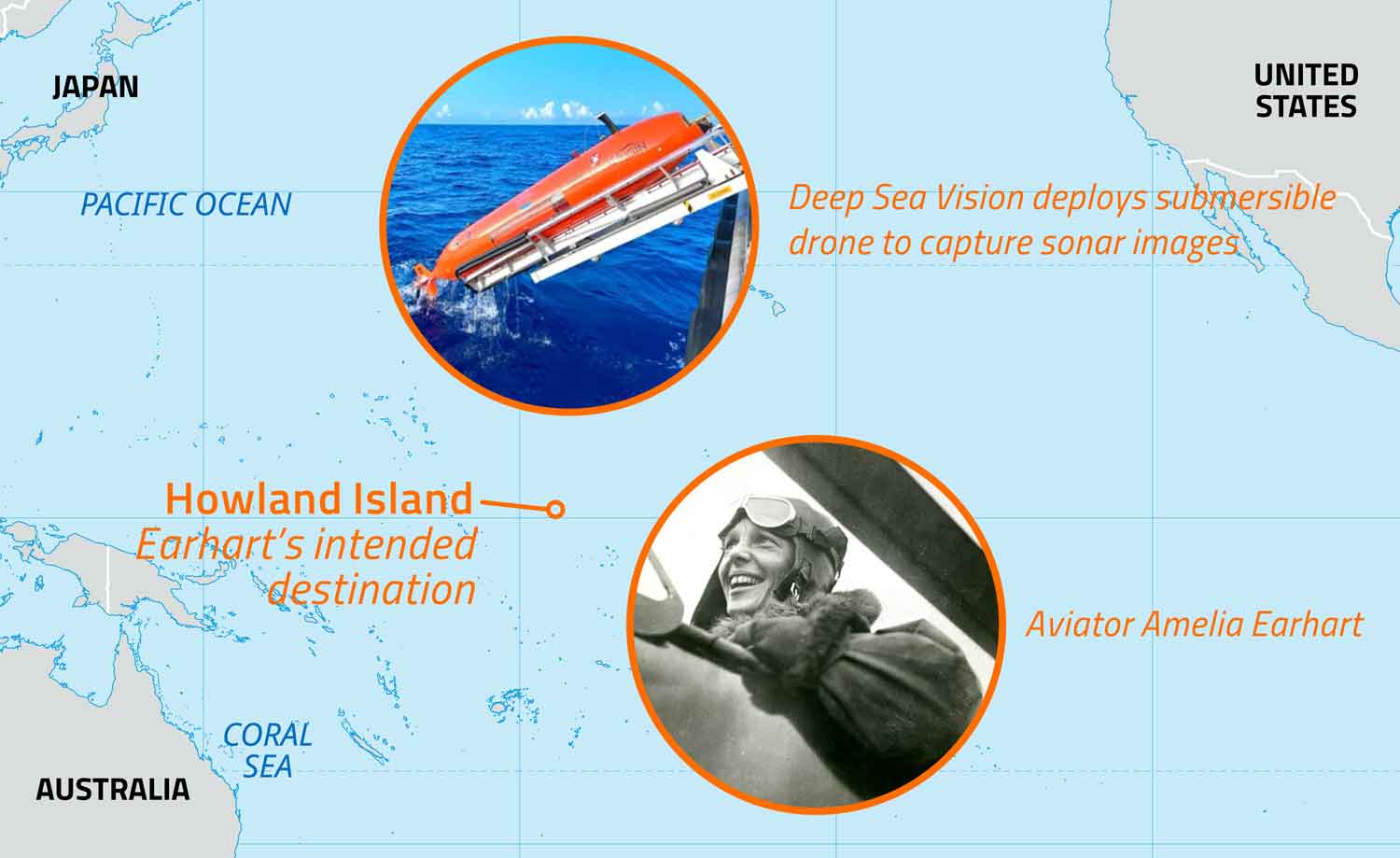
Earhart and navigator Fred Noonan were last heard from on July 2, 1937, when they sent several radio transmissions while trying to land on Howland Island in the Pacific. They planned to refuel on Howland and then continue Earhart’s attempt to become the first woman to fly solo around the world. Since the pair disappeared, many individuals and organizations have searched the area. So far, no one has been able to find any surefire evidence that can be traced to Earhart’s flight.

A map showing the location of Howland Island along with photos of Earhart and the submersible operated by Deep Sea Vision.

Deep Sea Vision; Photo illustration Encyclopædia Britannica, Inc.

Earhart intended to land on Howland Island in the Pacific Ocean.

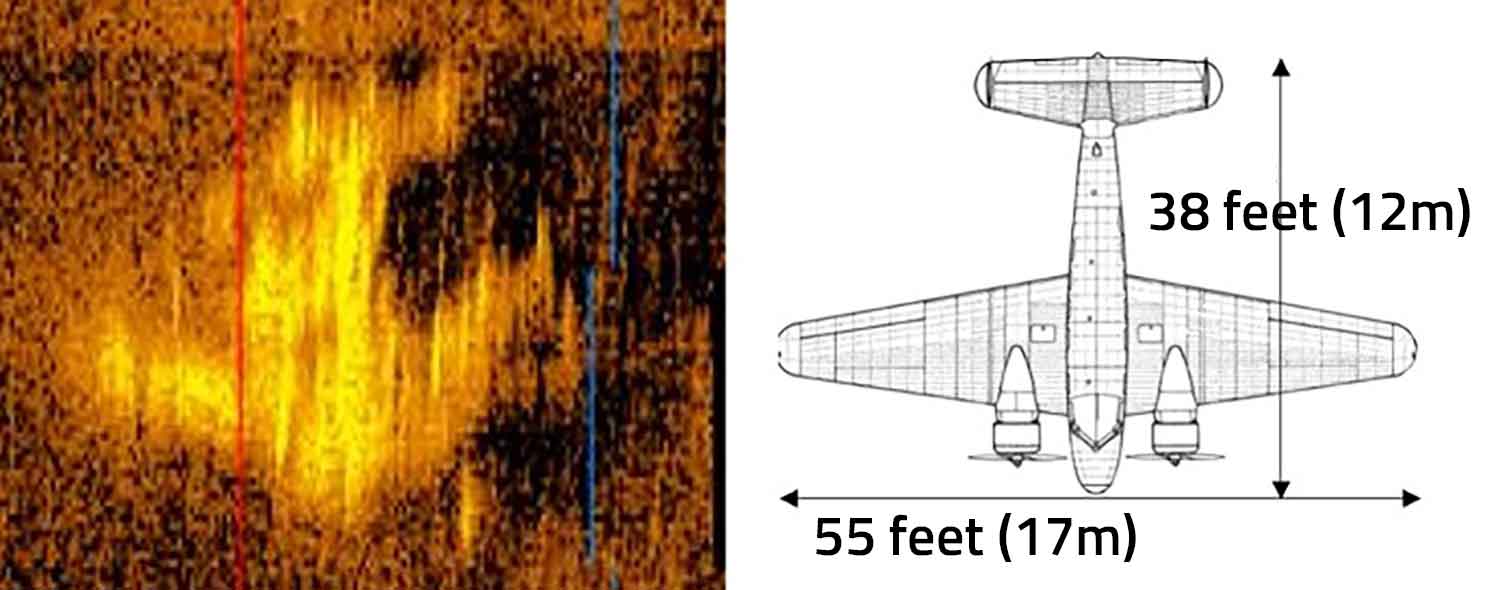
But recently, marine robotic company Deep Sea Vision captured a blurry image of an undersea object that could be the wreckage of Earhart’s plane. The company used sonar technology, which uses sound waves to map the ocean floor, in the area around Howland Island. 

“Deep Sea Vision scanned more than 5,200 square miles of ocean floor with a 16-person crew and the Kongsberg Discovery HUGIN 6000, the most advanced unmanned underwater drone,” the company posted on Instagram.

The newly found object, which is located about 100 miles (161 kilometers) from the island, appears to be the shape of a Lockheed 10-E Electra, the plane Earhart was piloting. The object is about 16,400 feet (4,999 meters) underwater.

Deep Sea Vision

A sonar image captured by Deep Sea Vision is shown alongside an illustration of Amelia Earhart’s plane.

But some people say it’s too early to conclude that Earhart’s plane has been found because there’s no proof. Deep Sea Vision is planning to investigate further. In the meantime, Dorothy Cochrane of the Smithsonian National Air and Space Museum says it’s best to wait before deciding the case is closed.

“Another [Deep Sea Vision] expedition will hopefully result in photographic images with more clarifying details as to [the object’s] identity,” Cochrane wrote on CNN.com.

Did You Know?

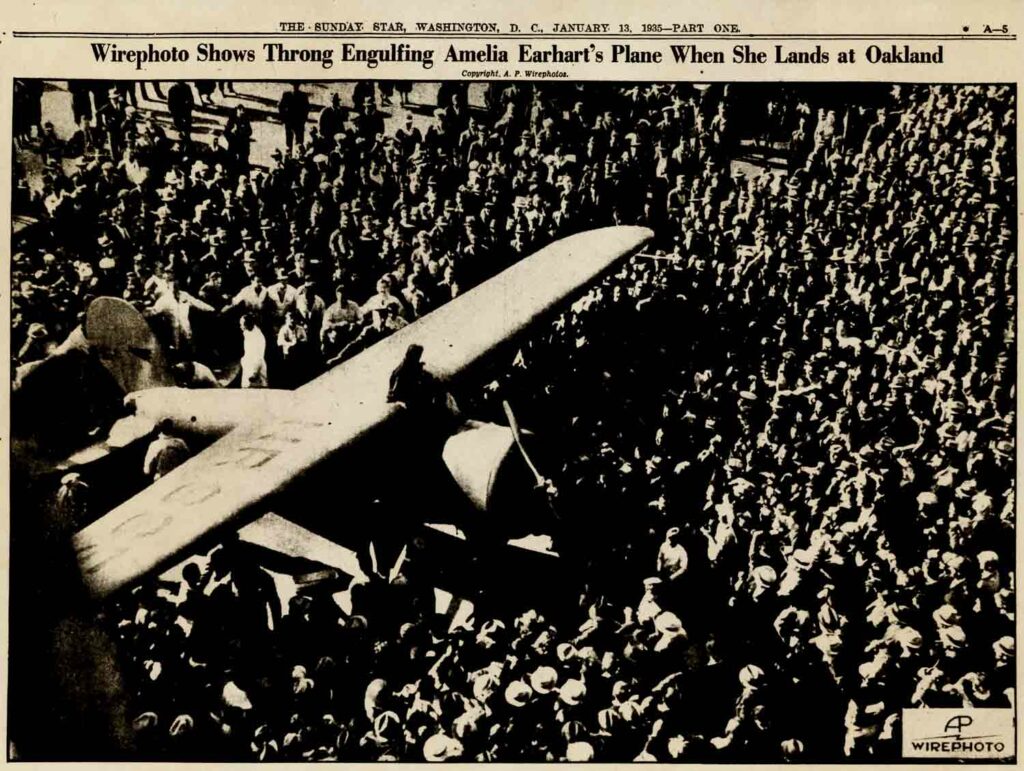
Chronicling America: Historic American Newspapers/Library of Congress, Washington, D.C. (sn83045462)

Published in 1935, this newspaper page reveals Amelia Earhart’s superstar status.

Amelia Earhart achieved many flying “firsts,” including becoming the first woman to fly solo across the Atlantic Ocean, in 1932. Her success made her a superstar. Earhart wrote books and articles about her flights and helped support the training of female pilots. And like today’s celebrities, she had her picture taken with movie stars and even became a fashion icon.

Flying High

Amelia Earhart was one of the most famous aviators of her day. But woman pilots took to the skies long before she did—and she inspired many more to follow in her footsteps. Here are just a few of them.

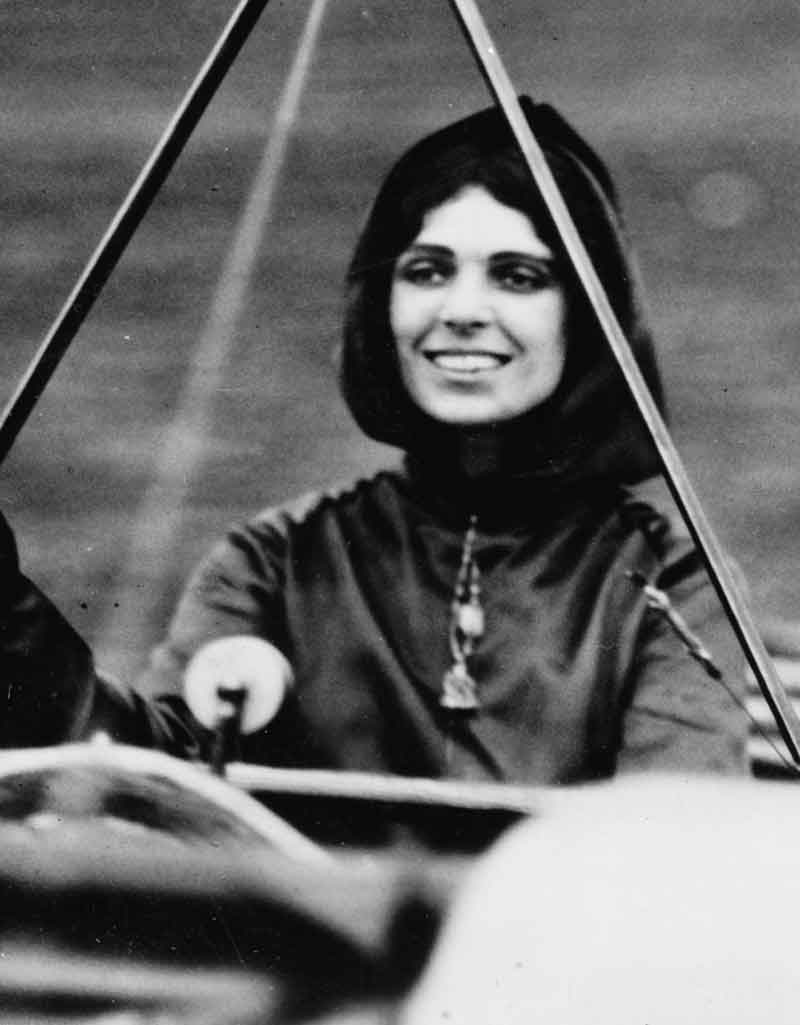
Harriet Quimby

Harriet Quimby became the first U.S. woman to earn a pilot’s license (1911) and the first woman to fly solo across the English Channel (1912).

Harriet Quimby smiles while sitting in an airplane cockpit.

George Grantham Bain Collection/Library of Congress, Washington, D.C. (LC-USZ62-35551)

Jeanne-Genevieve Labrosse

In 1798, Jeanne-Genevieve Labrosse of France became the first woman to fly solo in a hot air balloon. Labrosse would go on to make several more flights.


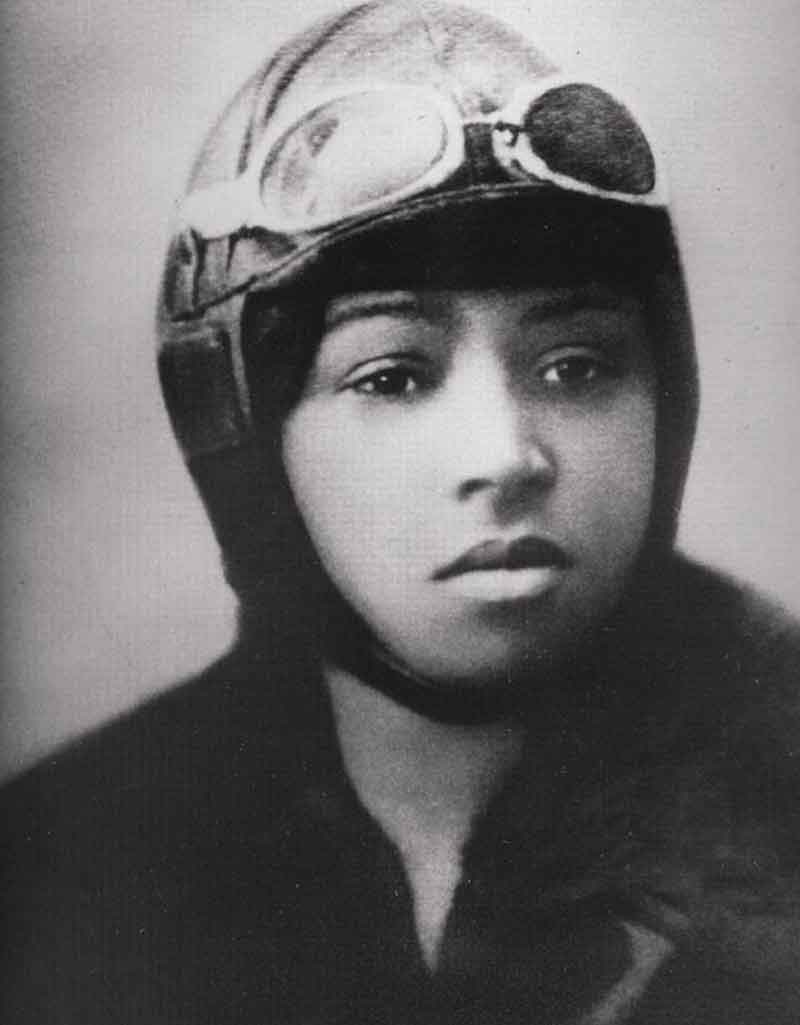
Bessie Coleman

In 1921, Bessie Coleman became the first Black American woman to earn a pilot’s license. Unable to get a license in the United States due to racism, she earned it in France. In 1922, Coleman completed the first public flight by a Black American woman.

Portrait of Bessie Coleman wearing a pilot helmet with goggles on her head.

NASA

Bessica Raiche

In 1910, Bessica Raiche became the first U.S. woman credited with flying an airplane solo. Raiche and her husband later started an airplane manufacturing company. After she stopped flying, Raiche became a doctor of medicine.


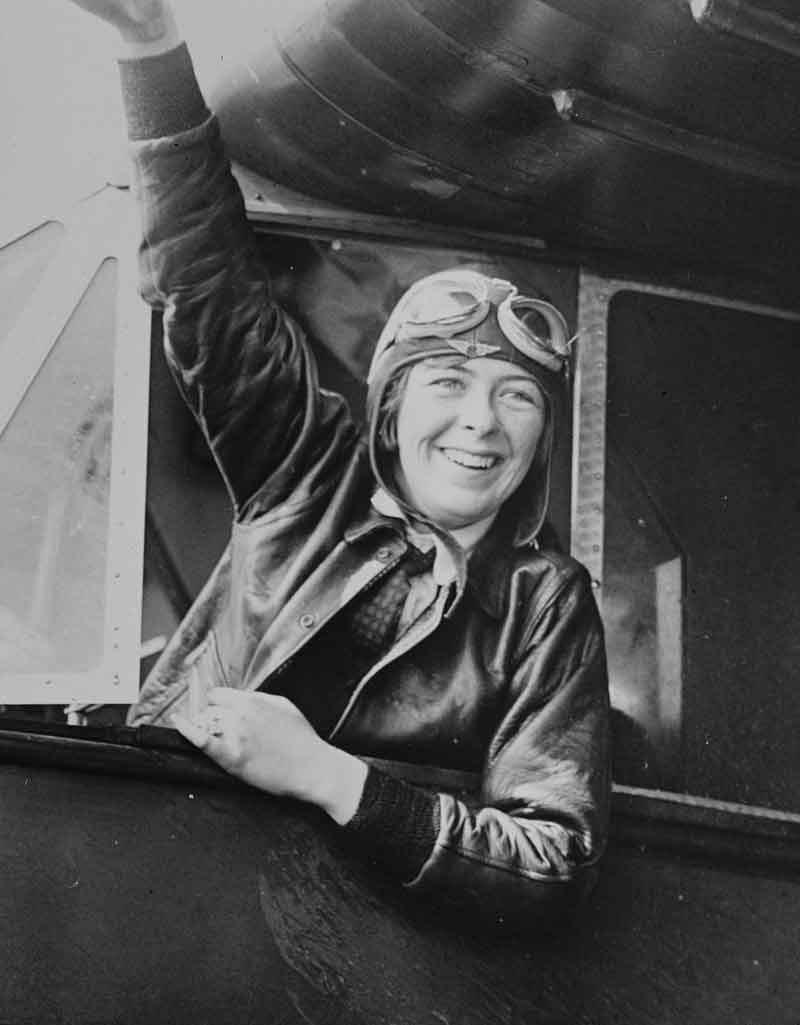
Elinor Smith

In 1927, Elinor Smith became the youngest licensed pilot in the world. She was 16. Smith would go on to set several aviation records.

Elinor Smith wears an aviator jacket with goggles on her head as she smiles and waves from an airplane cockpit.

Smith Archive/Alamy

Katherine Sui Fun Cheung

In 1932, Katherine Sui Fun Cheung became the first Asian American woman to earn a pilot’s license in the United States. Cheung made a living as a stunt pilot, performing loops, barrel rolls, and other tricks at air shows.


Willa Brown

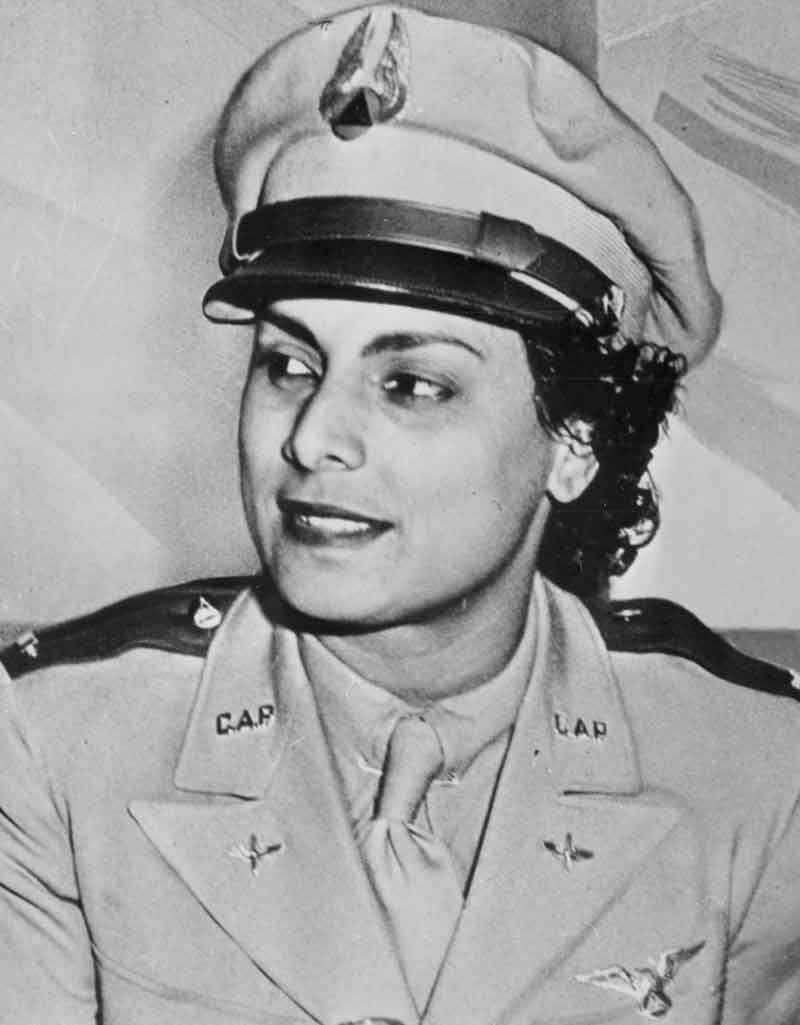
Willa Brown became the first Black American woman to earn a pilot’s license in the United States (1938) and the first to earn a commercial license (1939). She was also the first Black woman to become an officer in the Illinois Civil Air Patrol, an organization that supported the U.S. Air Force during World War II by performing homefront services that freed up eligible pilots so they could serve in the war overseas.

Willa Brown wearing a Civil Air Patrol uniform

Records of the Office of War Information/National Archives and Records Administration

Women’s History Month

Photo collage showing accomplished women in many fields from the past to the present.

seraficus—iStock, David Hume Kennerly, James D. Morgan, Jonas Gratzer, Azael Rodriguez, JP Yim, Space Frontiers—Archive Photos, Addison N. Scurlock—Michael Ochs Archives/Getty Images, U.S. Department of the Interior, Cia Pak/UN Photo; Photo composite Encycopædia Britannica, Inc.

March is Women’s History Month in the United States. You can learn about women who have made important contributions in many fields at Britannica.

WORD OF THE DAY

aeronautics

PART OF SPEECH:

noun

Definition:

: a science that deals with airplanes and flying

Definitions provided by
Merriam-Webster Logo

Wordrow

See if you can figure out the word. Type your guess. If a letter circle turns green, it is in the right place. If a letter circle turns gold, the letter is somewhere in the word, but it’s in the wrong place. All other letters are not part of the word.

O
O
O
O
O
O

In Case You Missed It

The island of Corsica showed American colonists that a courageous revolution could defeat an empire.
May 7, 2026
Physicist Narinder Singh Kapany developed fiber optic cables, helping to make the Internet possible.
April 30, 2026
How can you tell whether photos and videos are real or made with AI? Here are a few tips.
April 24, 2026
A seemingly strange bank is saving one of Earth’s most valuable resources.
April 9, 2026

Spreading Library Joy

Headshot of Mychal Threets next to map of Solano county with various icons representing books and learning.

Spreading Library Joy

Librarian Mychal Threets uses social media to encourage his followers to find joy at their local library.

Headshot of Mychal Threets next to map of Solano county with various icons representing books and learning.
Courtesy of Project15, www.project15.co, © Rainer Lesniewski, Ratch0013/Dreamstime.com; Photo illustration Encyclopædia Britannica, Inc.

Mychal Threets has become a library icon.

When Mychal Threets makes a video for his hundreds of thousands of social media followers, he usually talks about the place he loves the most: the library. Threets, a librarian himself, hopes to spread what he calls “library joy” by sharing uplifting stories and letting his followers know that the library is for everyone.

Threets was most recently the supervising librarian at the Fairfield Civic Center Library in Solano County, California, but his library journey started long ago. Beginning at age 3, he found magic among the books at his local library. When he got older, it made sense to carve out a career in public libraries. He got a job shelving books and then earned a master’s degree in library science. Today, he loves to see young people find the same library joy he did—children he refers to as “library kids.”

In one Instagram video, Threets tells his followers about a library kid who asked for chapter books about superheroes. Threets asked the kid if they were interested in graphic novels in addition to chapter books. The kid had never heard of graphic novels and was thrilled to find out there was even more to read about Black Panther and Thanos. They ended up borrowing two books and planned to return for more.

Threets is happy to see anyone return to the library—and hopes more people will make regular visits to their local public library. In addition to books, people at the Fairfield Civic Center Library can borrow musical instruments, baking equipment, and video games. There are audiobooks and resources in Spanish. There’s homework help, too. And in the bigger picture, the library is a place where everyone in the community can gather.

“The biggest resource is the library itself,” Threets told the Marin Independent Journal. “There is something for everybody.”

On February 23, Threets announced in an Instagram video that he would be leaving his job at the Fairfield Civic Center Library on March 1. Threets said he had made the decision in order to take care of his mental health, something he has always encouraged his followers to do. But Threets will keep a commitment to work with PBS as its resident librarian, a role he took earlier in February. Using social media, he’ll suggest books to read and continue to spread library joy.

Did You Know?

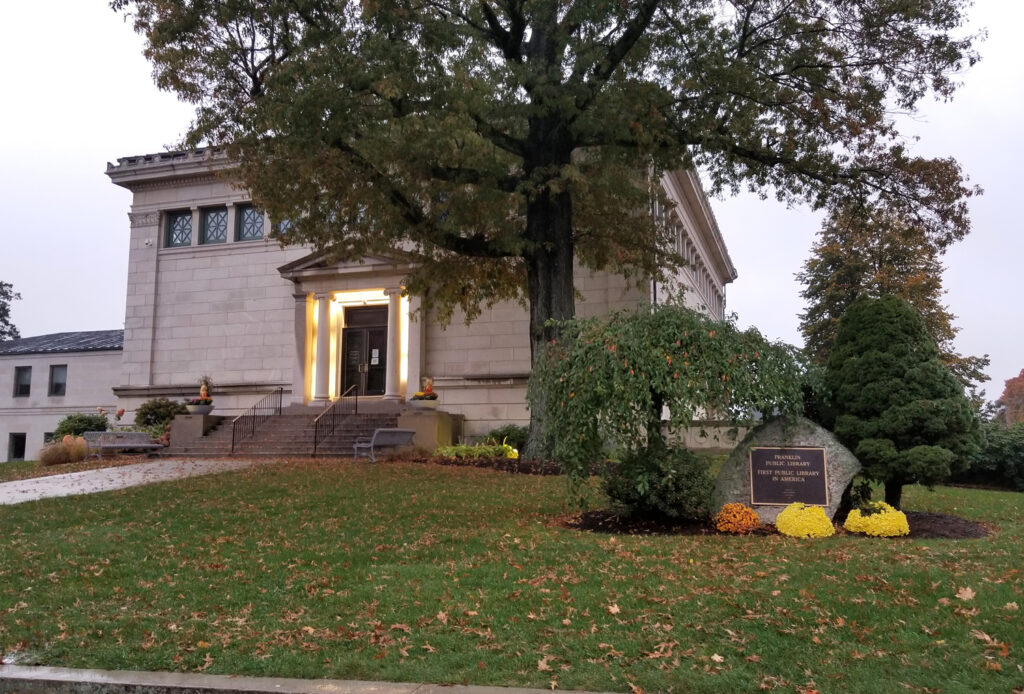
One of the earliest public libraries in the United States opened in Franklin, Massachusetts, in 1790. The people of Franklin had named their town after Benjamin Franklin. In return, they asked him to pay for a bell for their meeting house. Franklin gave books instead, explaining that “‘sense’ was preferable to ‘sound’.” Town leaders decided to make the book collection available to any resident.

Swampyank (CC BY 4.0)

The Franklin Public Library is the oldest in the country. Founded in 1790, it didn’t have its own building until 1904.

Read Across America

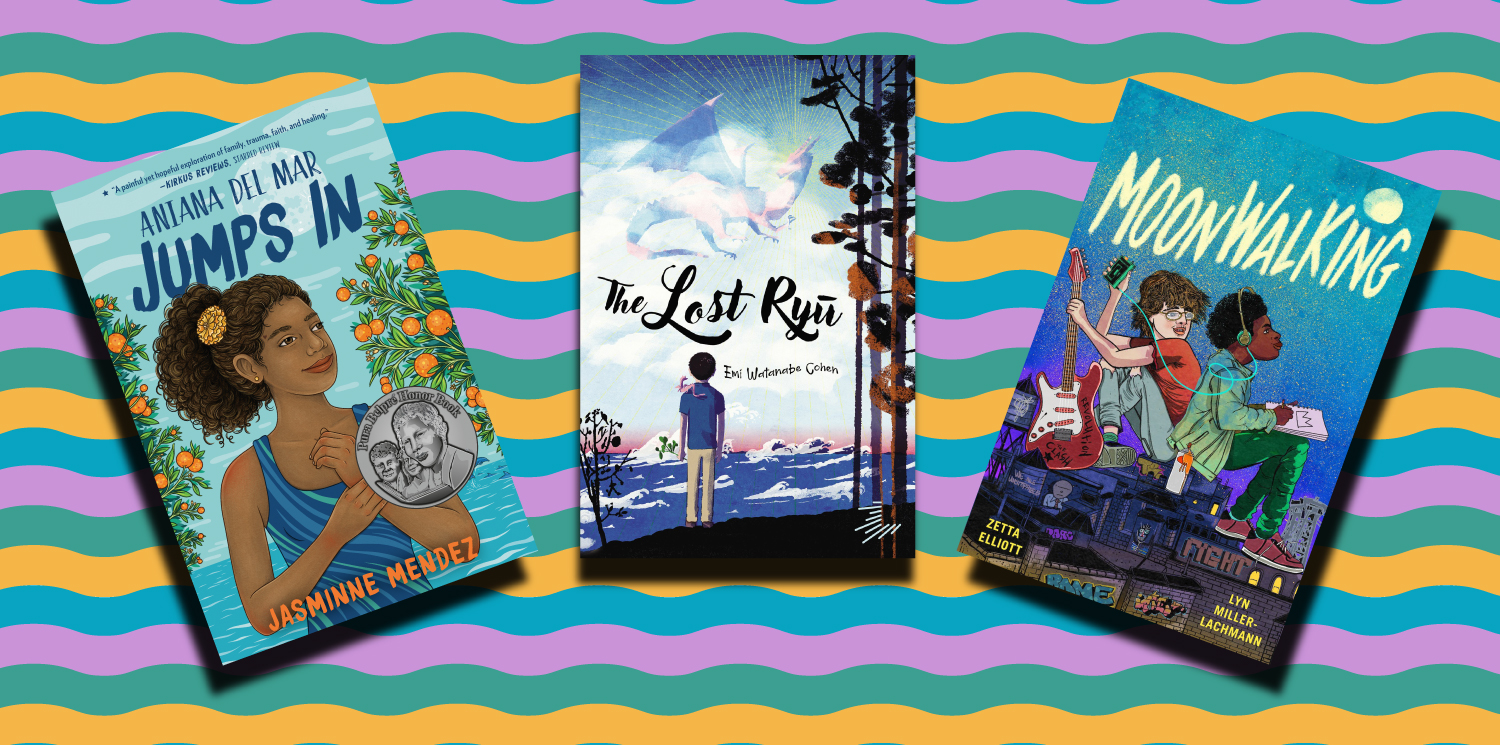
The book covers for Moonwalking, The Lost Ryū, and Aniana Del Mar Jumps In against a wavy, colorful background.
Penguin Random House, Levine Querido, Macmillan Publishers

March 2 is Read Across America Day. To mark the occasion, and to celebrate the power of books all year long, the National Education Association (NEA) posts book recommendations every month. Here are just a few of the NEA’s favorites.

Moonwalking, by Zetta Elliott and Lyn Miller-Lachmann

Two boys with seemingly different interests and backgrounds—punk rocker JJ and math geek/graffiti artist Pie—strike up a friendship and help each other navigate challenges at home and at school.

The Lost Ryū, by Emi Watanabe Cohen

Japan’s last big ryū—dragon—disappeared soon after World War II, long before Kohei was born. But Kohei somehow remembers the big dragons and understands the loss his ailing grandfather felt when they were gone. Kohei feels he must find the big ryū before it’s too late.

Aniana Del Mar Jumps In, by Jasminne Mendez

Aniana’s mother worries about the dangers of the water, but Aniana’s love for swimming is unshakeable. When Aniana is diagnosed with juvenile arthritis, swimming takes on a new meaning. Aniana faces a new future while her mother must rethink her fears.

Women’s History Month

An animated GIF shows portraits of prominent women from different fields and eras.
Addison N. Scurlock—Michael Ochs Archives, Stephen Shugerman, Andrew Burton, Clive Brunskill, Sasha—Hulton Archive, Hulton Archive/Getty Images; Library of Congress, Washington, D.C. (LC-DIG-ds-05052, LC-U9-25383-33, LC-DIG-ppmsca-23661); Courtesy of the Franklin D. Roosevelt Library and Museum; PRNewsFoto/XM Satellite Radio/AP Images; Sojourner Truth . . . From Her “Book of Life”; NASA;  Encyclopædia Britannica, Inc.; National Portrait Gallery, Smithsonian Institution (NPG.2009.36); © Tupungato/Dreamstime.com; Steve Petteway/Collection of the Supreme Court of the United States; Animation Encyclopædia Britannica, Inc.

March is Women’s History Month in the United States. The March 5 edition of “In the News!” will focus on women’s history. In the meantime, check out some related resources at Britannica!

WORD OF THE DAY

commonality

PART OF SPEECH:

noun

Definition:

: a shared feature or quality

Definitions provided by
Merriam-Webster Logo

Word Search

What kinds of books do you like? See if you can find all the book types—and the librarian who helps people find them.

O
O
O
O
O
O

In Case You Missed It

The island of Corsica showed American colonists that a courageous revolution could defeat an empire.
May 7, 2026
Physicist Narinder Singh Kapany developed fiber optic cables, helping to make the Internet possible.
April 30, 2026
How can you tell whether photos and videos are real or made with AI? Here are a few tips.
April 24, 2026
A seemingly strange bank is saving one of Earth’s most valuable resources.
April 9, 2026

Message in a Bottle

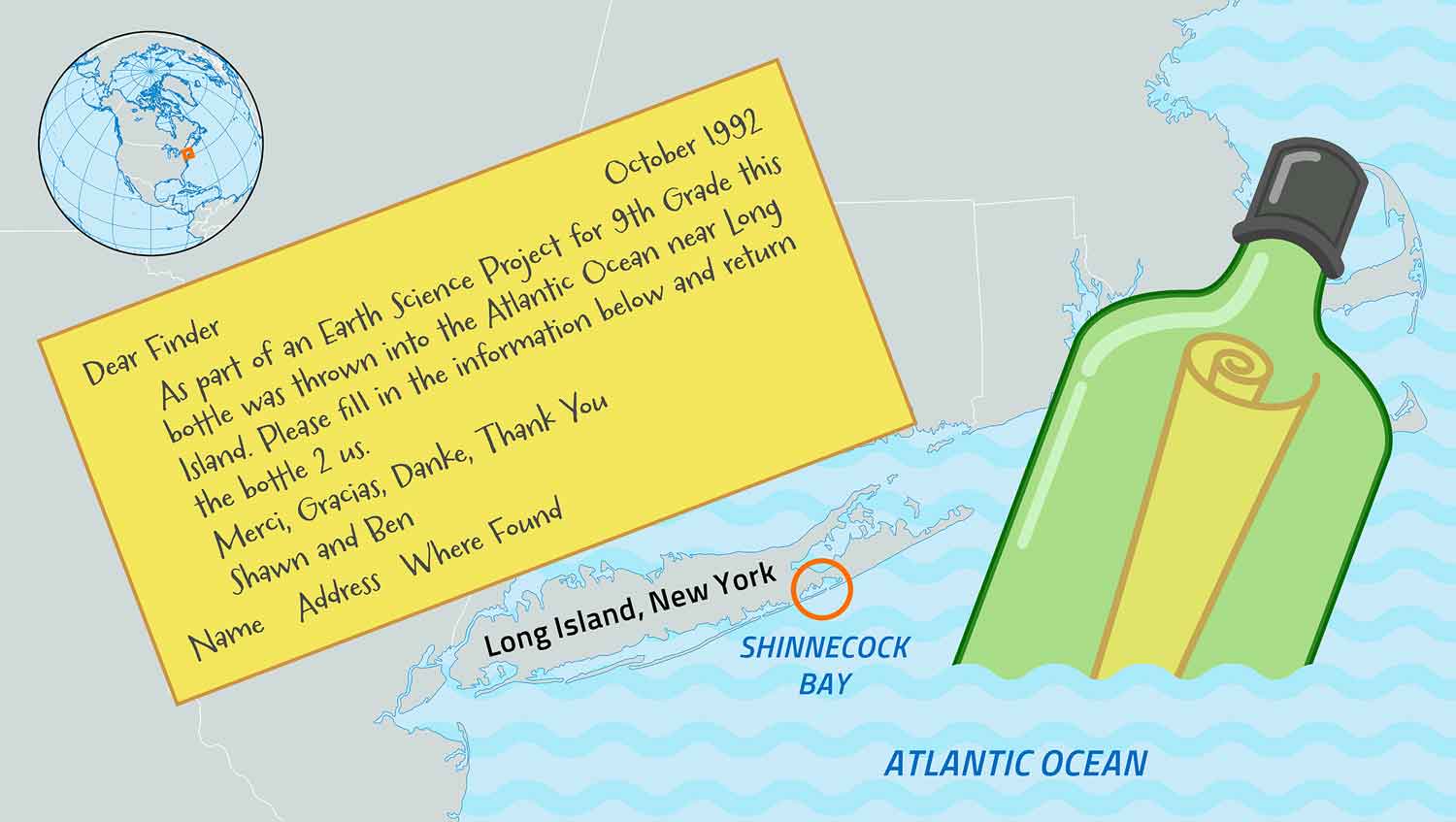
Students put a message in a bottle and threw it into the ocean. Thirty years later, the message was found.

Message in a Bottle

Students put a message in a bottle and threw it into the ocean. Thirty years later, the message was found.

Students put a message in a bottle and threw it into the ocean. Thirty years later, the message was found.

Encyclopædia Britannica, Inc.

When a teacher on New York state’s Long Island asked his science class to write messages and cast them into the Atlantic Ocean, he had no idea that one of the messages would help bring his students together more than 30 years later.

The bottle was found in early 2023 by Adam Travis, who spotted it in some marsh grass along Shinnecock Bay on Long Island. Inside, he found a piece of paper in perfect condition. It was dated 1992.

“Dear Finder,” the message read. “As part of an Earth Science project for 9th grade, this bottle was thrown into the Atlantic Ocean near Long Island. Please fill in the information below and return the bottle 2 us. Merci, Gracias, Danke, Thank You, Shawn and Ben.” 

The message was addressed from Mattituck High School on Long Island, so Travis went to the school’s alumni Facebook account and made a post about it. Pretty soon, comments were popping up.

The authors of the message were students in Richard E. Brooks’s Earth science class. The message in a bottle project was one of Brooks’s favorites. Brooks taught at Mattituck High School for 40 years. Based on the comments on the Facebook page, he was a favorite at his school. Many of his former students shared fond memories of their teacher.

“That shows that the things you do do matter, a lot, significantly,” Shawn Petretti, superintendent of the Mattituck-Cutchogue School District, told CBS News. “He had a significant impact.”

Brooks had passed away just a few months before, at age 83. The love he received on Facebook meant a lot to his son, John Brooks.

“My dad was never one to seek recognition, and it’s so fitting that he is now getting it,” John Brooks told CNN.

Over the years, people would stumble upon the bottles from Richard Brooks’s class in places as far away as Ireland and the Azores islands in Portugal, according to his son. Most bottles were found within four years. That makes the timing of this recent discovery—and its location close to home—very special.

“This development is just such a shot in the arm of positivity and heartwarming energy,” John Brooks said. He told CBS he planned to throw a message of his own into the ocean. He’ll write it about his dad.

“Maybe 32 years later, someone else will pick this up and have a smile on their face,” he said.

Did You Know?

© Hanna Syvak/stock.adobe.com; Composite illustration Encyclopædia Britannica, Inc.

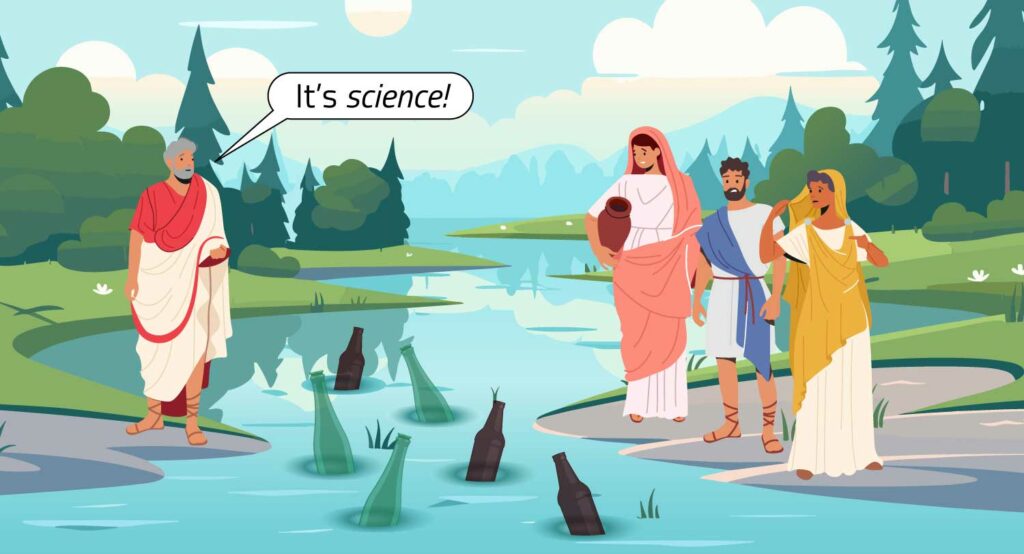
According to legend, a Greek philosopher named Theophrastus was a fan of messages in bottles. Although there’s no proof of this, Theophrastus may have deposited a few bottles in the water in 310 BCE to test his theory that the Atlantic Ocean flowed into the Mediterranean Sea.

Tackling the Plastic Problem

This map shows the locations of the planet’s five gyres.

The Ocean Cleanup

Rediscovered messages in bottles have yielded all sorts of amazing stories, but scientists say it’s not a good idea to toss any bottle into the ocean. After all, it’s pollution.

Oceanographer Erik van Sebille says there’s a good chance that a bottle that’s cast into an ocean will never reach land. And besides, our oceans already contain way too much human garbage.

Van Sebille has dedicated his career to studying plastic garbage. You may have heard that there are five massive patches of plastic floating in the oceans. Van Sebille says the waste is concentrated in this way because plastic debris, fishing gear, and other garbage floats along currents and gets drawn to the ocean’s five rotating gyres. Gyres, which are a bit like whirlpools, suck in objects and hold them there. 

The video shows an ocean cleanup project in progress.

The Ocean Cleanup

The Last Frontier

NOAA Fisheries

Back when Theophrastus possibly threw a bottle into the ocean, he didn’t know where the currents would take it, let alone much else about the sea.

Amazingly, there’s still a lot we don’t know about the oceans, which are so vast and deep that they’re difficult to explore. But the more we learn, the more we understand how important oceans are. 

Check out the video, which shows scientists investigating a newly discovered species deep under the sea. Then click the link to learn more about oceans at Britannica.

WORD OF THE DAY

garner

PART OF SPEECH:

verb

Definition:

: to collect or gather (something)

Definitions provided by
Merriam-Webster Logo

Word Flower

See how many words you can make from these letters. All of your words must use the letter in the center.

O
O
O
O
O
O

In Case You Missed It

The island of Corsica showed American colonists that a courageous revolution could defeat an empire.
May 7, 2026
Physicist Narinder Singh Kapany developed fiber optic cables, helping to make the Internet possible.
April 30, 2026
How can you tell whether photos and videos are real or made with AI? Here are a few tips.
April 24, 2026
A seemingly strange bank is saving one of Earth’s most valuable resources.
April 9, 2026

Teacher Wins a Grammy

Annie Ray poses in formal wear in front of a wall that says 66th Grammy Awards.

Teacher Wins a Grammy

Music teacher Annie Ray was honored at the Grammy Awards for her work with students with disabilities.

Annie Ray poses in formal wear in front of a wall that says 66th Grammy Awards.

Rodin Eckenroth/Getty Images Entertainment

Music teacher Annie Ray won a Grammy Award for teaching excellence.

Taylor Swift, Miley Cyrus, and SZA may have dominated the 2024 Grammy Awards, but not all the winners were recording artists. The 2024 Music Educator Grammy Award went to Annie Ray, a music teacher who started a program for students with disabilities.

Ray, who is orchestra director and head of the performing arts department at Annandale High School in Fairfax County, Virginia, started the Crescendo Orchestra to give all students the opportunity to learn about music. The students in the program have developmental and intellectual disabilities, and many are not verbal. But music is a language everyone shares, says Ray, who comes from a musical family and has played the harp since she was 5 years old.  

That belief helped spark the idea for the orchestra back in 2021. Ray teamed up with special education teachers to design the program. Students start by learning about rhythm, first with scarves and then with egg shakers. Eventually, they practice on a cardboard version of an orchestra instrument, learning how to care for it and store it properly. Finally, they receive the real thing. Ray also started a parent program that gives the students’ caregivers the opportunity to learn the same instruments as their children.


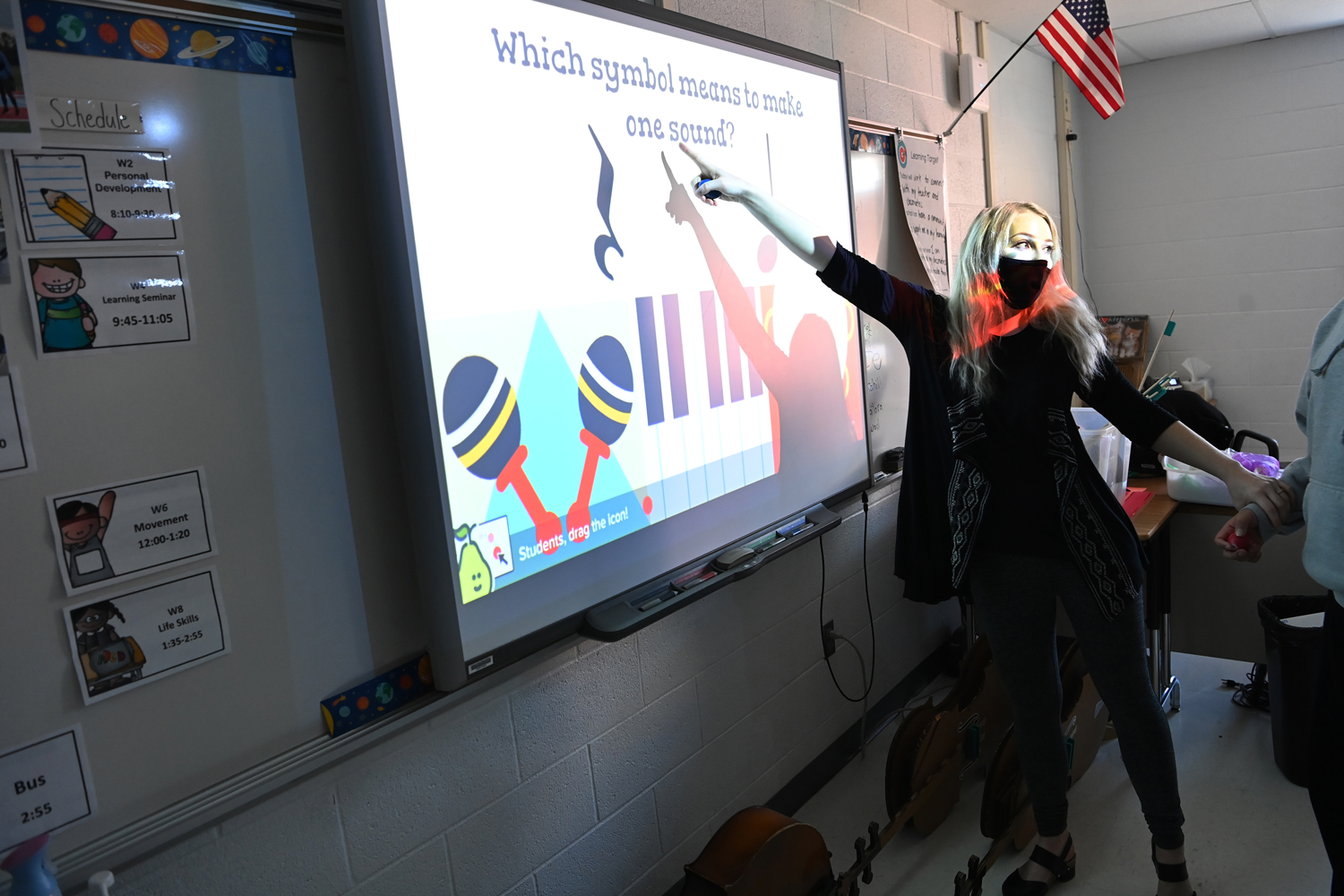
Annie Ray points to a screen that reads Which symbol is used to make one sound and shows several musical symbols.

Matt McClain—The Washington Post/Getty Images

In this 2021 photo, Annie Ray uses a projection screen to teach music to nonverbal students.

The Crescendo Orchestra program isn’t only about learning to play music. It’s about learning to work together—and realizing the value of making a mistake. Ray says the program has also given her a greater sense of the power of music.

“I really push my students to be bold, go outside their comfort zone and realize…we have to learn how to make bad sounds before we learn how to make good sounds,” Ray told National Public Radio (NPR).

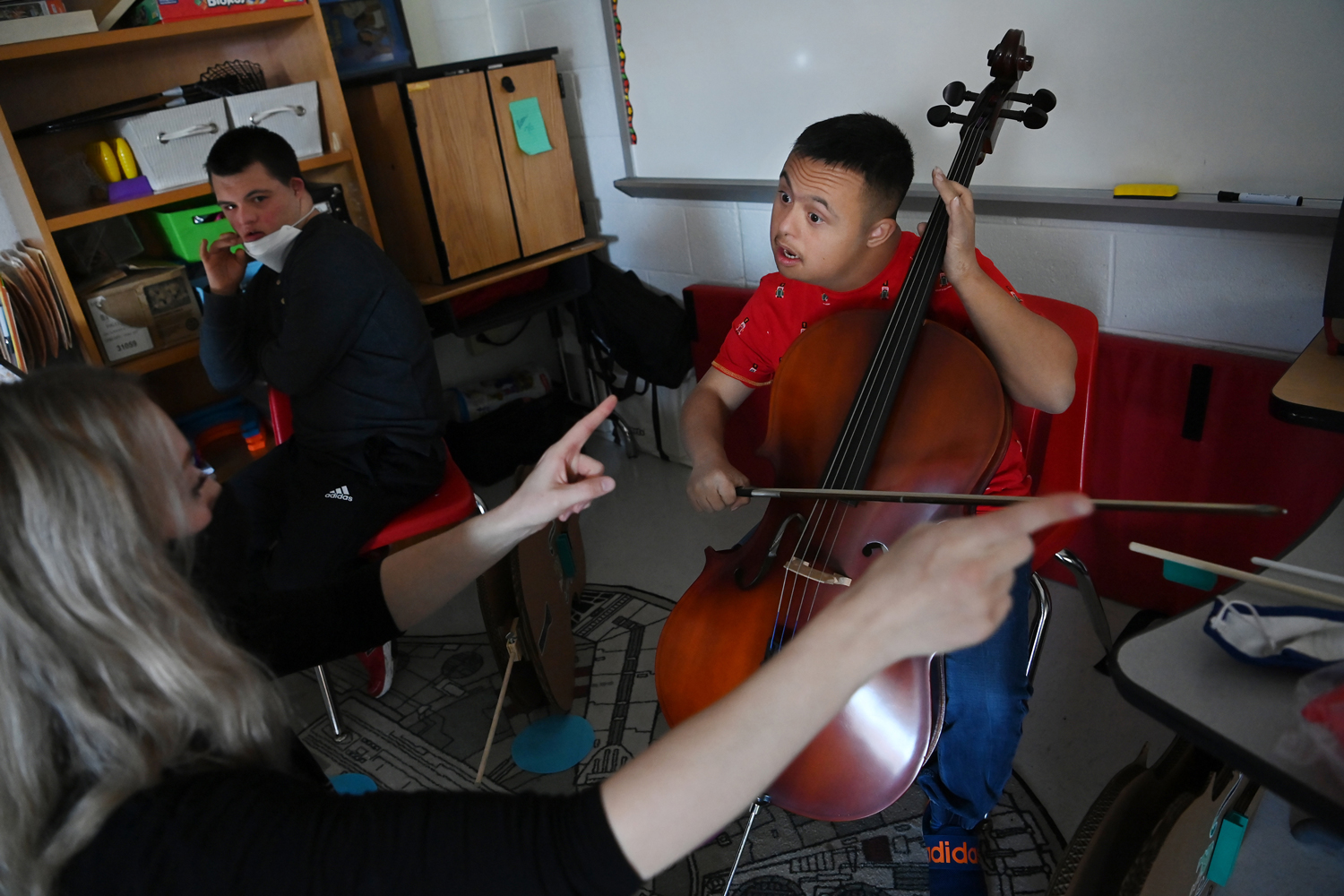
A high school student plays the cello and another sits in a chair as both look at Annie Ray as she provides instruction.

Matt McClain—The Washington Post/Getty Image

In this 2021 photo, Annie Ray works with students Kevin Juramillo (right) and Max Fay (left).

Along with the Grammy Award, Ray received $10,000, which she’ll use to expand her music program. She also had a chance to attend the Grammys, where Taylor Swift hugged her, and Meryl Streep told her about how a music teacher changed her life. 

“This is the students’ award,” she told NPR. “I’m just lucky enough to have been a part of their journey and their process and to have been taught by them.”

Did You Know?

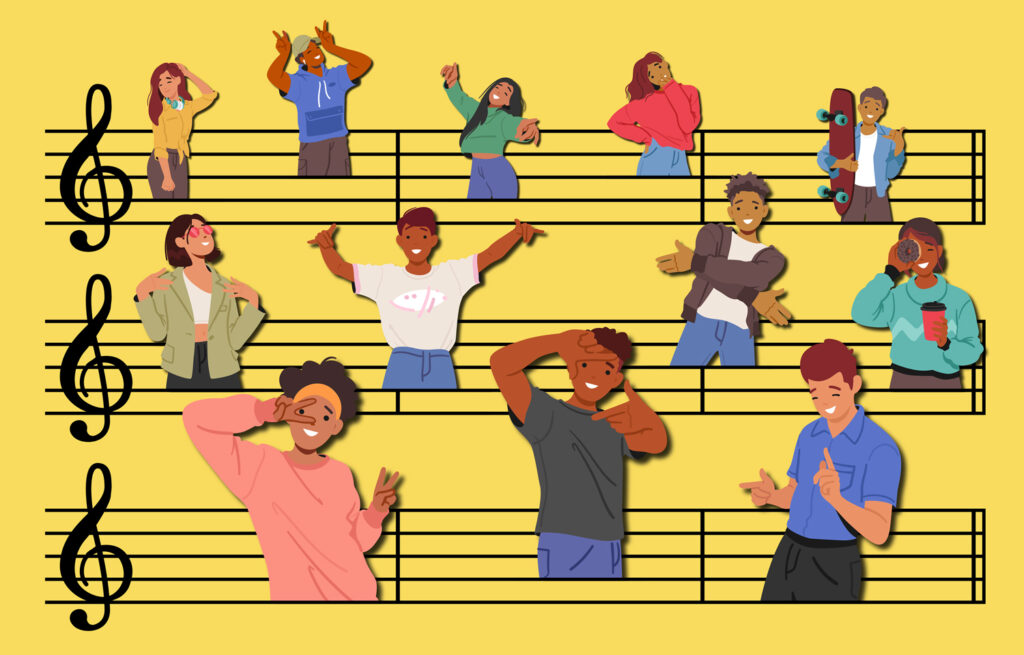
Studies have identified links between music education and greater confidence and creativity.

Students making various gestures conveying confidence are placed along three musical staves with treble clefs.
© Hanna Syvak/stock.adobe.com; Composite illustration Encyclopædia Britannica, Inc.

How a Teacher Inspired Lizzo

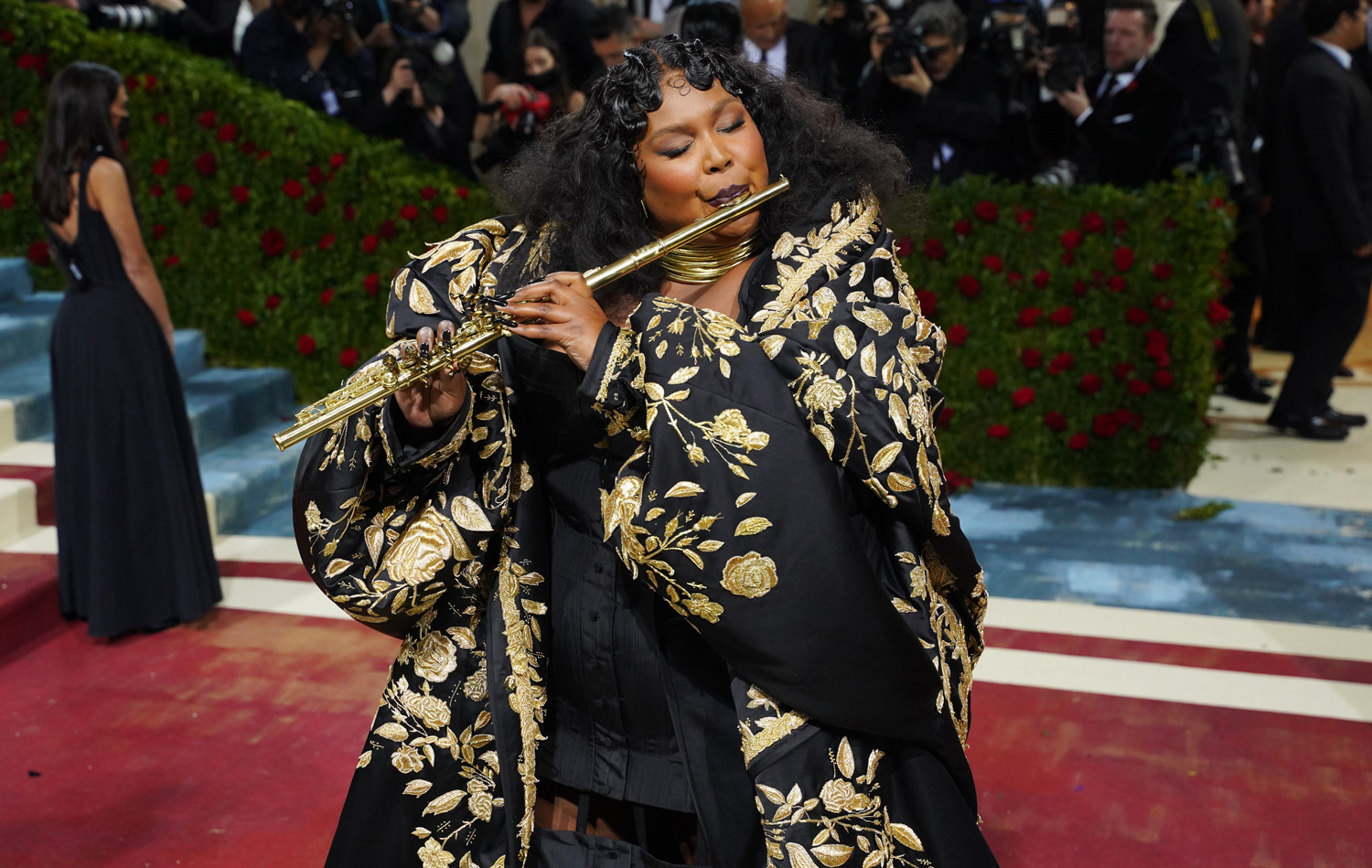
Lizzo is dressed in formal wear as she plays a flute on a red carpet in front of a crowd of photographers.
Sean Zanni—Patrick McMullan/Getty Images

These days, Lizzo is a Grammy-winning singer, songwriter, and flute player. But Lizzo wasn’t always Lizzo. She credits her high school music teacher with inspiring her to pursue her dreams.

Lizzo was born Melissa Jefferson in Detroit, Michigan, and moved to Houston, Texas, at age 10. Soon after, she started playing the flute in her middle school marching band. Melissa was already into music—she was a major fan of Beyoncé’s group, Destiny’s Child. But playing music was a whole new experience. She relished the feeling of accomplishment she got when she practiced her instrument and got better and better. She also loved the experience of working with other musicians to make a beautiful sound. Playing music together taught her how to work with others.

“[Playing in a marching band is] leaning on somebody and needing that support. I believe in the one sound. Everybody coming together to make that one sound,” Lizzo told CBS in 2019.

Although Lizzo worked hard to improve on the flute, she also had encouragement from Manny Gonzalez, her high school band teacher, who helped her get a college scholarship. A few years ago, she was reunited with him during a visit to her old high school. 

“You were like, ‘Get it together, girl, because you are special. Apply yourself.’ Those moments mean so much to me,” Lizzo told Gonzalez in a 2019 CBS News report. 

Lizzo’s dream changed over time. She originally wanted to be a classical musician but set her sights on pop when she discovered a love for singing and rapping. But her determination remained constant.

“I always knew that she would make it big,” Gonzalez told Texas Monthly. “Not just because she was good, but because she had her heart set on it.”

What’s Your Thing?

People doing different hobbies such as playing instruments, painting, and skateboarding.
© MicroOne/stock.adobe.com; Animation Encyclopædia Britannica, Inc.

Being successful at a hobby isn’t necessarily about becoming the very best. Sometimes, it’s just the experience of trying something new. People have had hobbies for thousands of years. You can learn more about hobbies at Britannica.

WORD OF THE DAY

avocation

PART OF SPEECH:

noun

Definition:

: an activity that you do regularly for enjoyment rather than as a job

Definitions provided by
Merriam-Webster Logo

Criss Cross

See if you can figure out where all the musical instruments fit into the puzzle.
O
O
O
O
O
O

In Case You Missed It

The island of Corsica showed American colonists that a courageous revolution could defeat an empire.
May 7, 2026
Physicist Narinder Singh Kapany developed fiber optic cables, helping to make the Internet possible.
April 30, 2026
How can you tell whether photos and videos are real or made with AI? Here are a few tips.
April 24, 2026
A seemingly strange bank is saving one of Earth’s most valuable resources.
April 9, 2026

Google’s New Video Tool

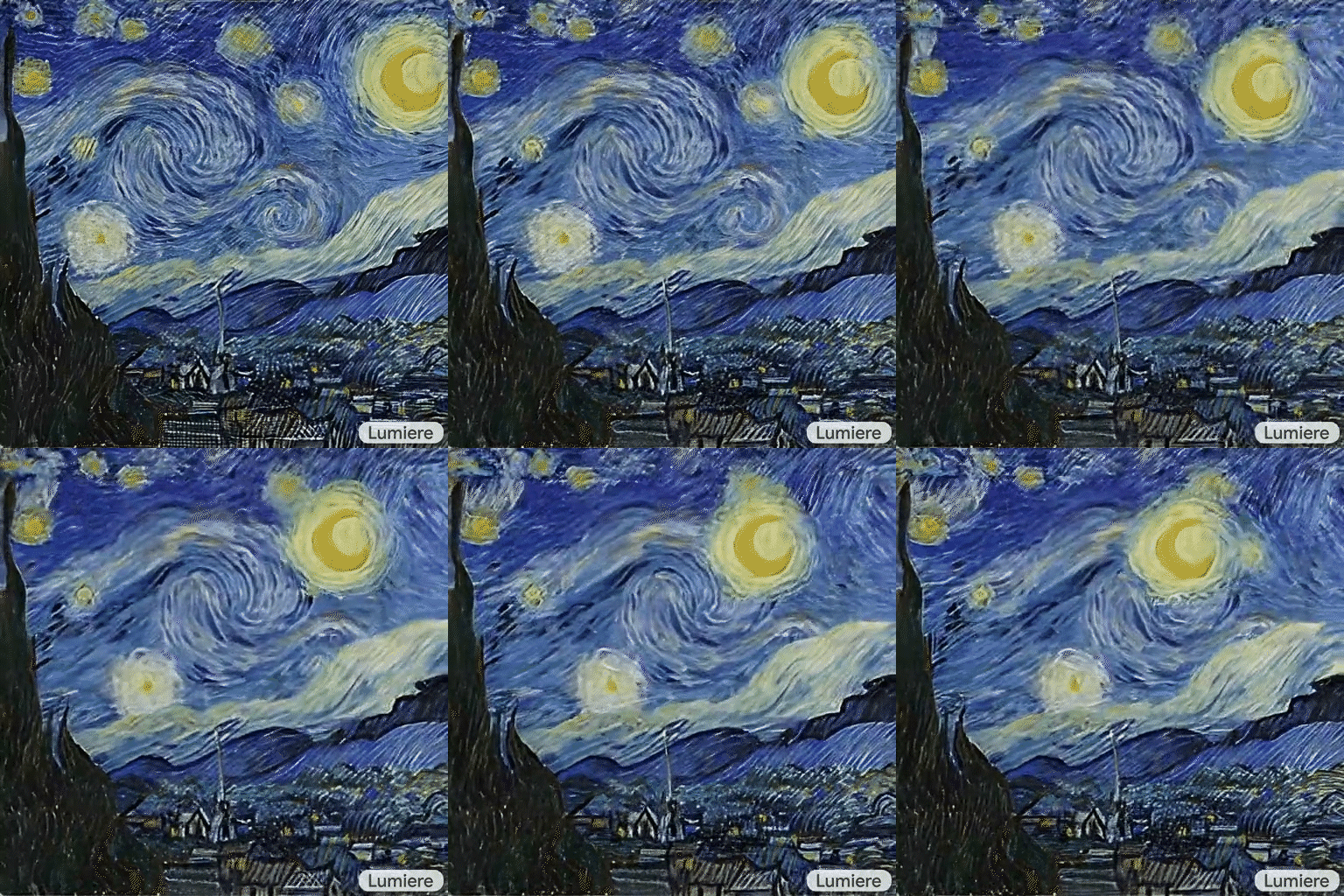
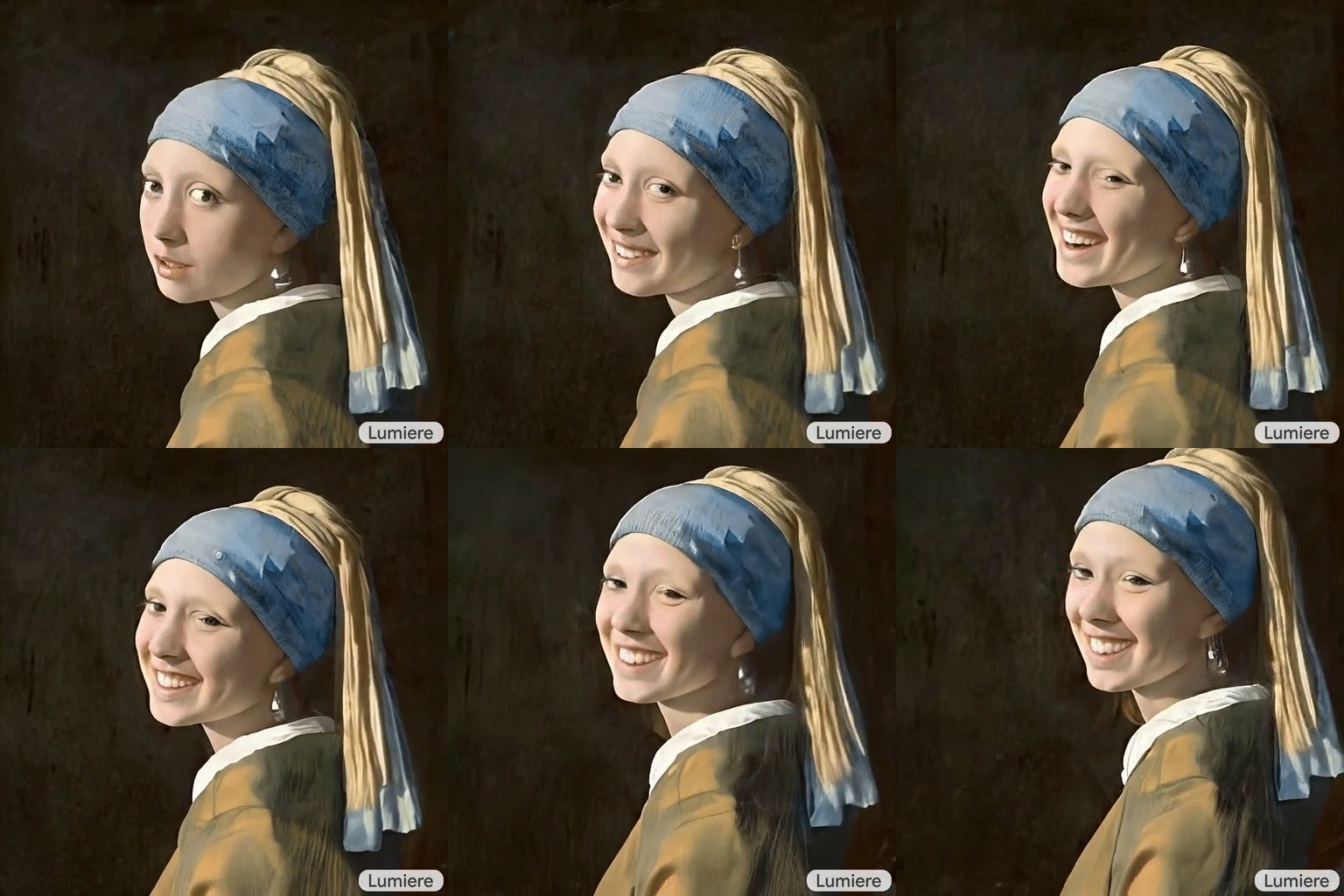
Animated Pillars of Creation, The Girl With the Pearl Earring, and Starry Night.

Google’s New Video Tool

Google Lumiere will let users create videos just by typing a short prompt.
Animated Pillars of Creation
Starry Night
The Girl With the Pearl Earring
Omer Bar-Tal (Google Research, Weizmann Institute), Hila Chefer (Google Research, Tel-Aviv University), Omer Tov (Google Research), et al. “Lumiere: A Space-Time Diffusion Model for Video Generation.” 2024.
Three examples of Google’s image-to-video technology.

If you’re interested in making videos simply by typing a text prompt, Google may soon have just the tool for you. It’s called Google Lumiere.
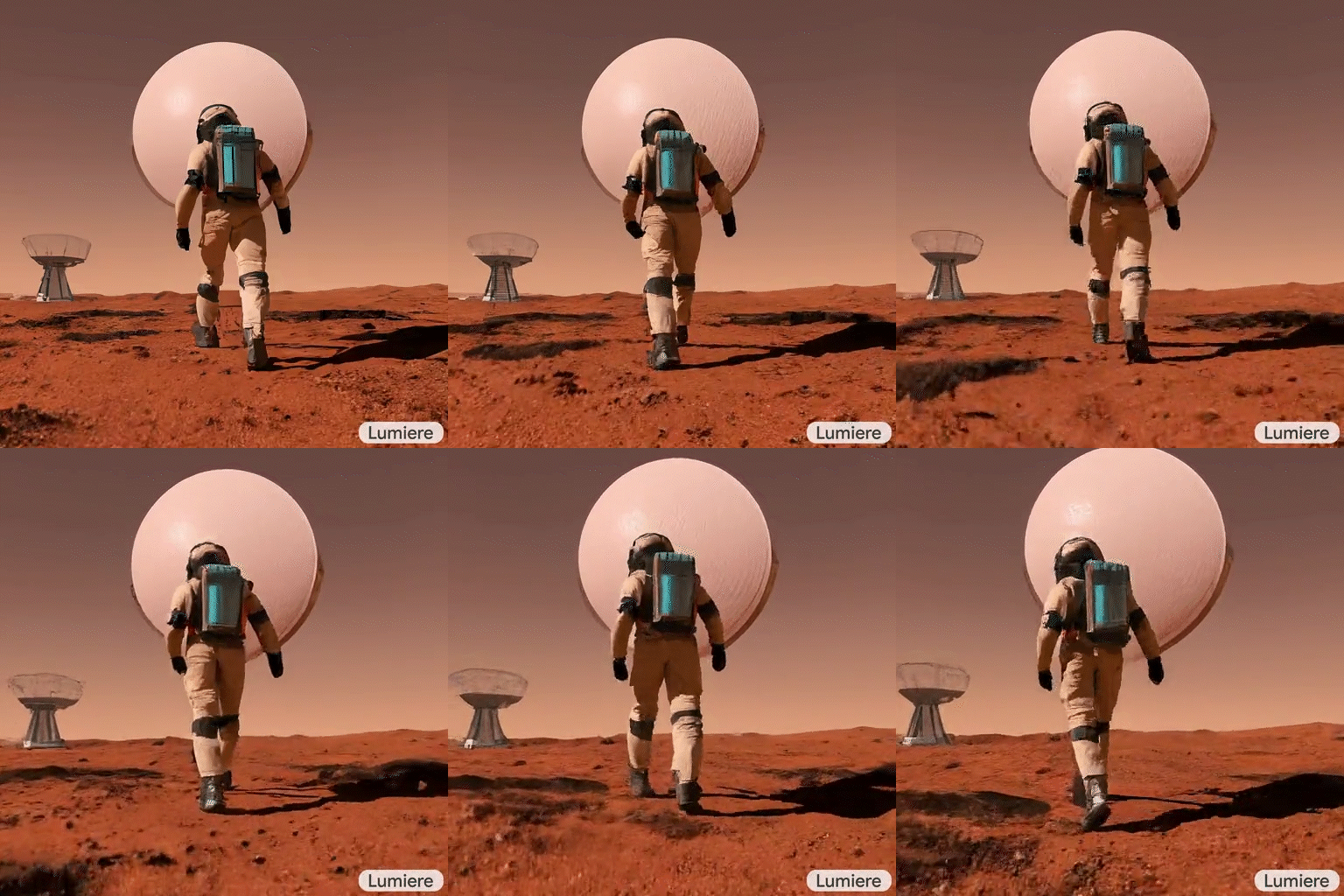
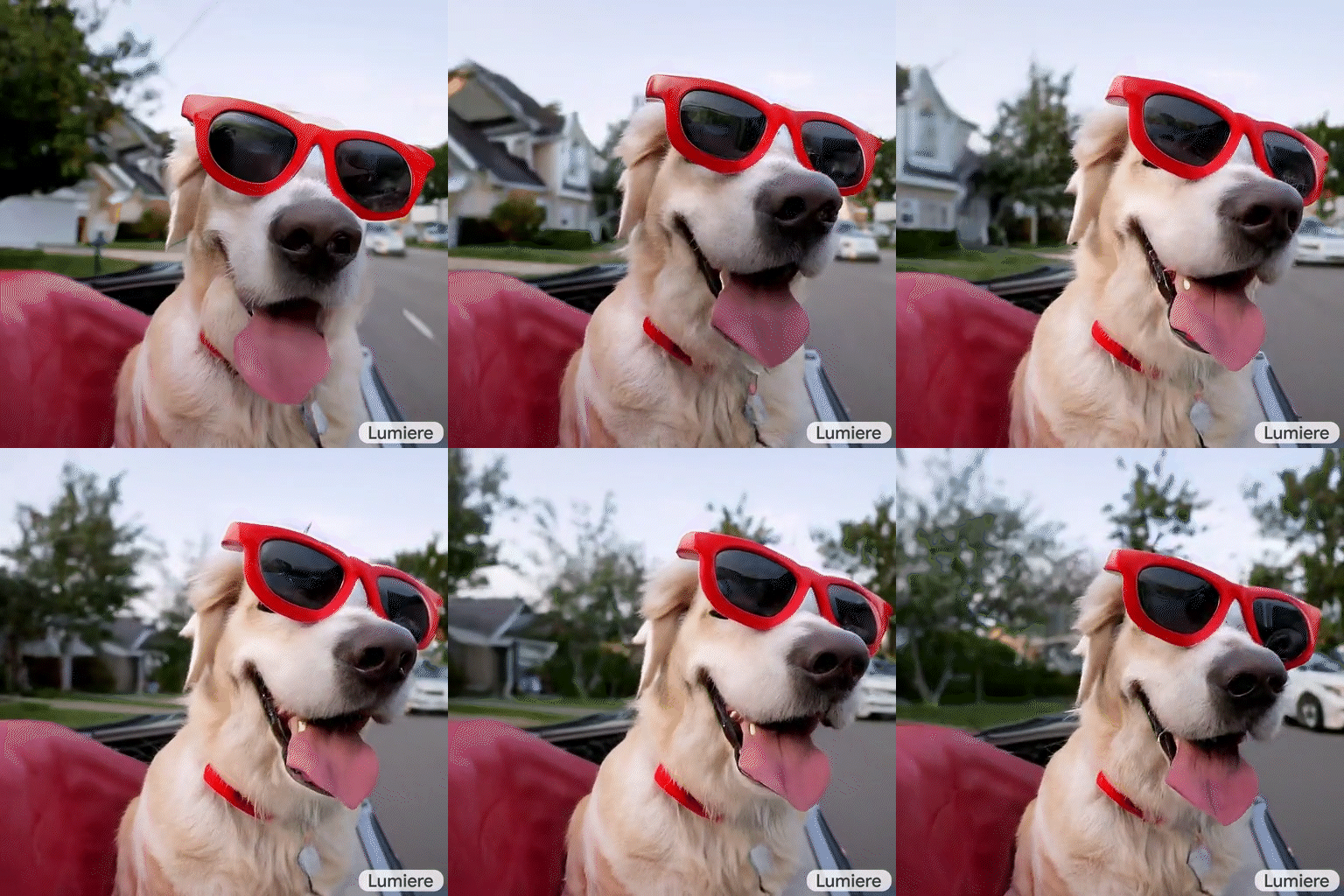
Lumiere uses artificial intelligence (AI) to generate videos based on a written description. A promotional video shows a text prompt reading, “Astronaut on the planet Mars making a detour around his base.” The resulting video shows a person in a space suit walking around the Red Planet. A prompt asking for a dog in sunglasses driving a car leads to a video showing a dog in sunglasses driving a car. These aren’t existing videos that Google found. They’re generated by AI, so the possibilities are endless.

Google isn’t the first company to develop this sort of technology. Many other companies have text-to-image creators, and a few have developed text-to-video generators like Lumiere. But many people who have watched Lumiere video clips report that, while Google’s product isn’t perfect, it creates the most realistic AI videos yet.

Animated dog with sunglasses driving a car,
astronaut walking on Mars
panda playing a ukulele

Omer Bar-Tal (Google Research, Weizmann Institute), Hila Chefer (Google Research, Tel-Aviv University), Omer Tov (Google Research), et al. “Lumiere: A Space-Time Diffusion Model for Video Generation.” 2024.

Three examples of Google’s text-to-video technology.

Lumiere has many additional capabilities. Users can turn images into videos, or just animate one part of an image. They can also edit existing videos and even repair damaged videos or fill in parts of a video that are missing.

As of February 2024, Lumiere was not yet available to use. But based on the video clips that Google has released, it’s easy to imagine what could be created in the future.

Did You Know?

In a 2023 study, people looked at images of real human faces and AI-generated human faces. The AI faces often fooled the test subjects, who believed they were real.

Try to guess if the faces below are real or AI-generated. Then hover over each one to see if you’re correct.

HUMAN

AI

HUMAN

AI

AI

HUMAN

AI

HUMAN

AI

© Tyler Olson/stock.adobe.com, © Leland Bobbe—DigitalVision/Getty Images, © Wavebreakmedia Ltd, Hel080808/Dreamstime.com, Sophie Nightingale

Fake or Not?

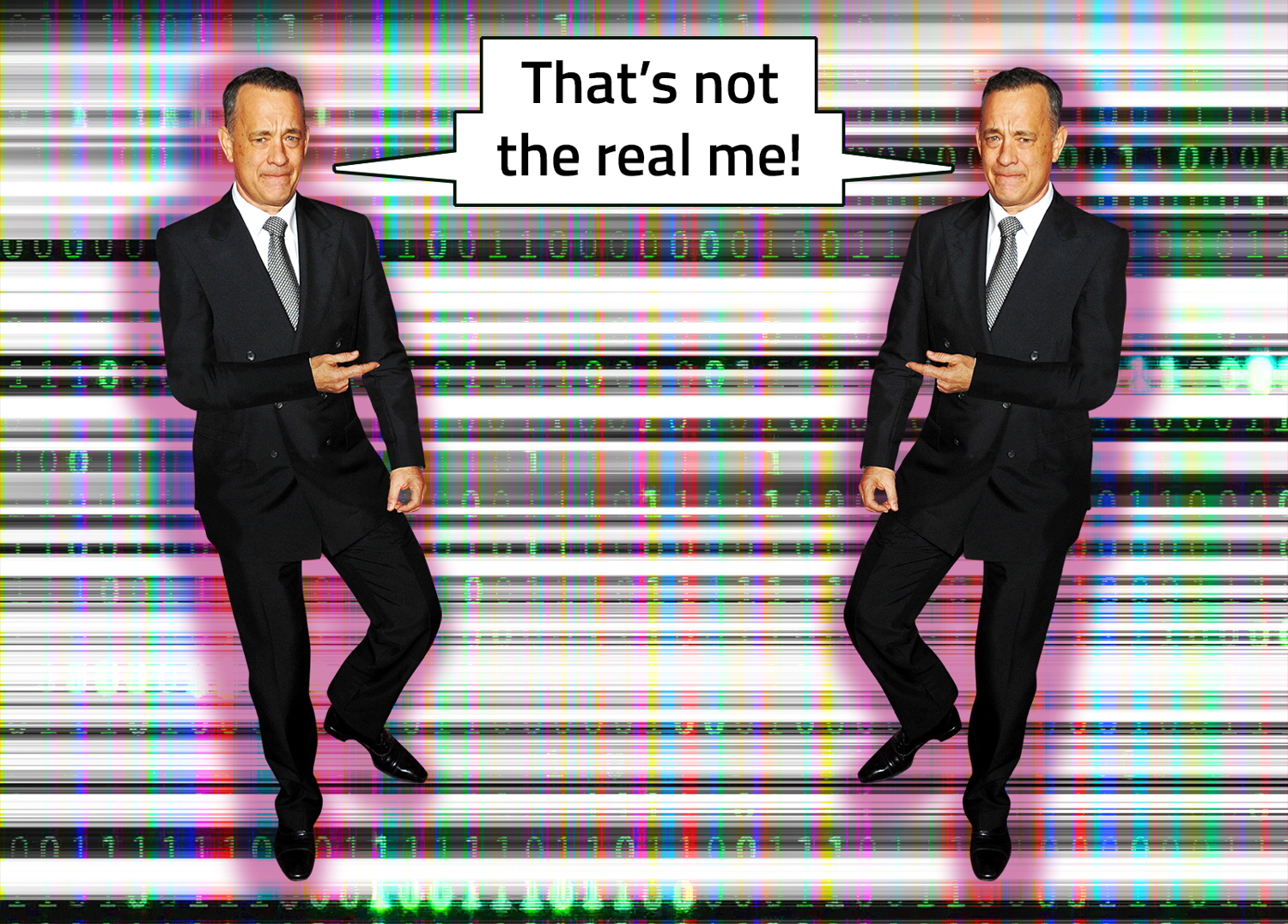
Tom Hanks pointing to a deepfake of himself, with each Hanks claim the other isn’t real.

© Featureflash, Donfiore/Dreamstime.com, © Hilch/Shutterstock.com; Photo illustration Encyclopædia Britannica, Inc.

AI technology can make it look like a dog is driving a car. So it makes sense that AI can also make it look like a famous person is saying something they never said.

A deepfake is an AI-generated image or video created to trick viewers into thinking that something happened that never did. One example is the creation of a social media video in which a celebrity appears to endorse, or recommend, a product that’s for sale. While celebrities sometimes make ads, deepfakes are different. They’re usually created without the celebrity’s knowledge or permission—and they’re not real.

Deepfakes are cause for concern because they could be used in harmful ways. For example, a person running for political office could manipulate the public’s trust by using the technology to make a video of their opponent saying something offensive.

Many people are calling on lawmakers to put limits on the use of deepfake technology.

Movie Magic

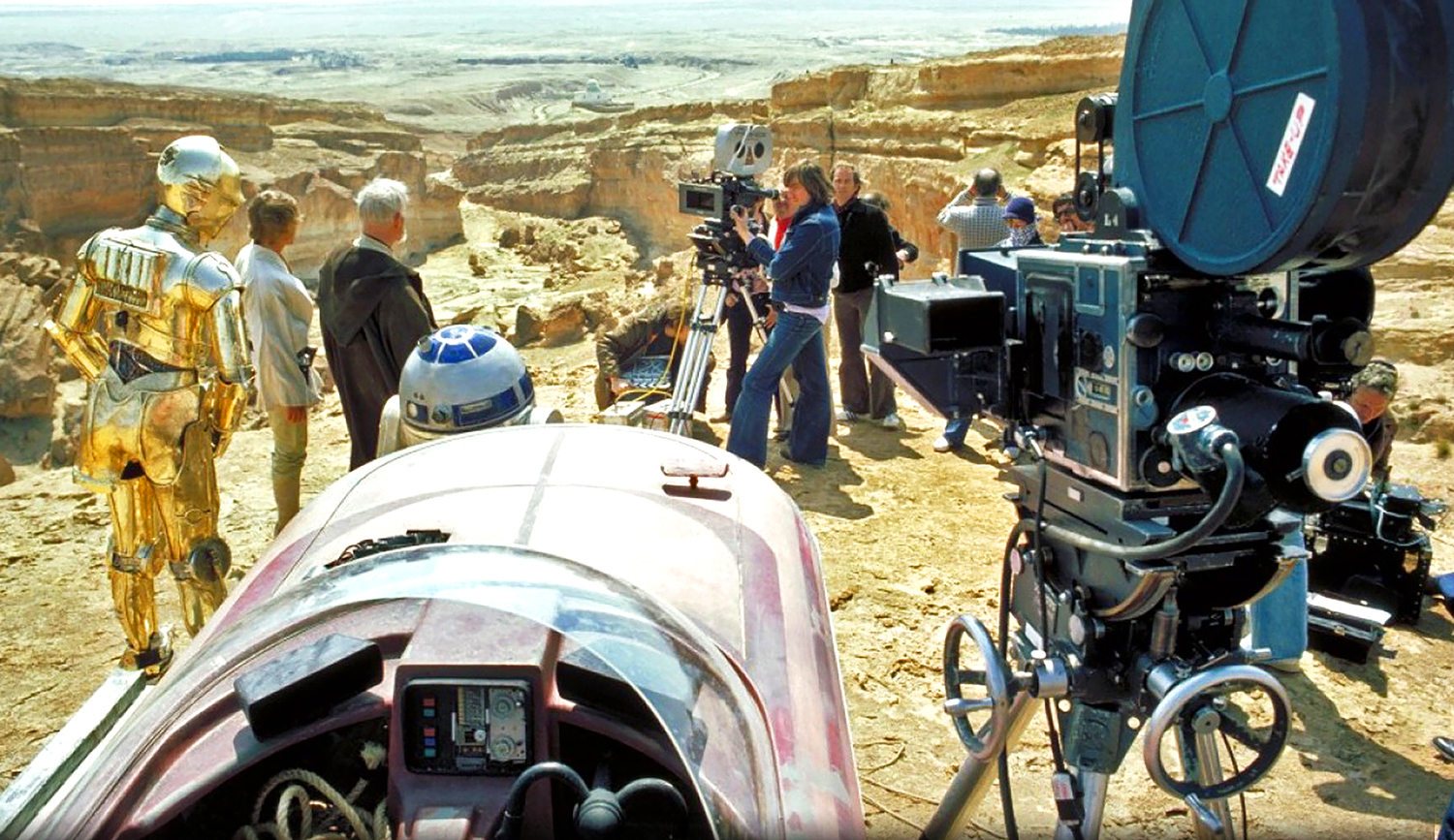
Behind the scenes of Star Wars IV, several characters stand in front of a camera at a remote canyon location.
© Twentieth Century Fox

Before there were online videos, there were movies. You can learn about filmmaking at Britannica!

WORD OF THE DAY

fabricate

PART OF SPEECH:

verb

Definition:
: to create or make up (something, such as a story) in order to trick people
Definitions provided by
Merriam-Webster Logo

Wordrow

See if you can figure out the word. Type your guess. If a letter circle turns green, it is in the right place. If a letter circle turns gold, the letter is somewhere in the word, but it’s in the wrong place. All other letters are not part of the word.

O
O
O
O
O
O

In Case You Missed It

The island of Corsica showed American colonists that a courageous revolution could defeat an empire.
May 7, 2026
Physicist Narinder Singh Kapany developed fiber optic cables, helping to make the Internet possible.
April 30, 2026
How can you tell whether photos and videos are real or made with AI? Here are a few tips.
April 24, 2026
A seemingly strange bank is saving one of Earth’s most valuable resources.
April 9, 2026

Ancient Teens Chewed Gum

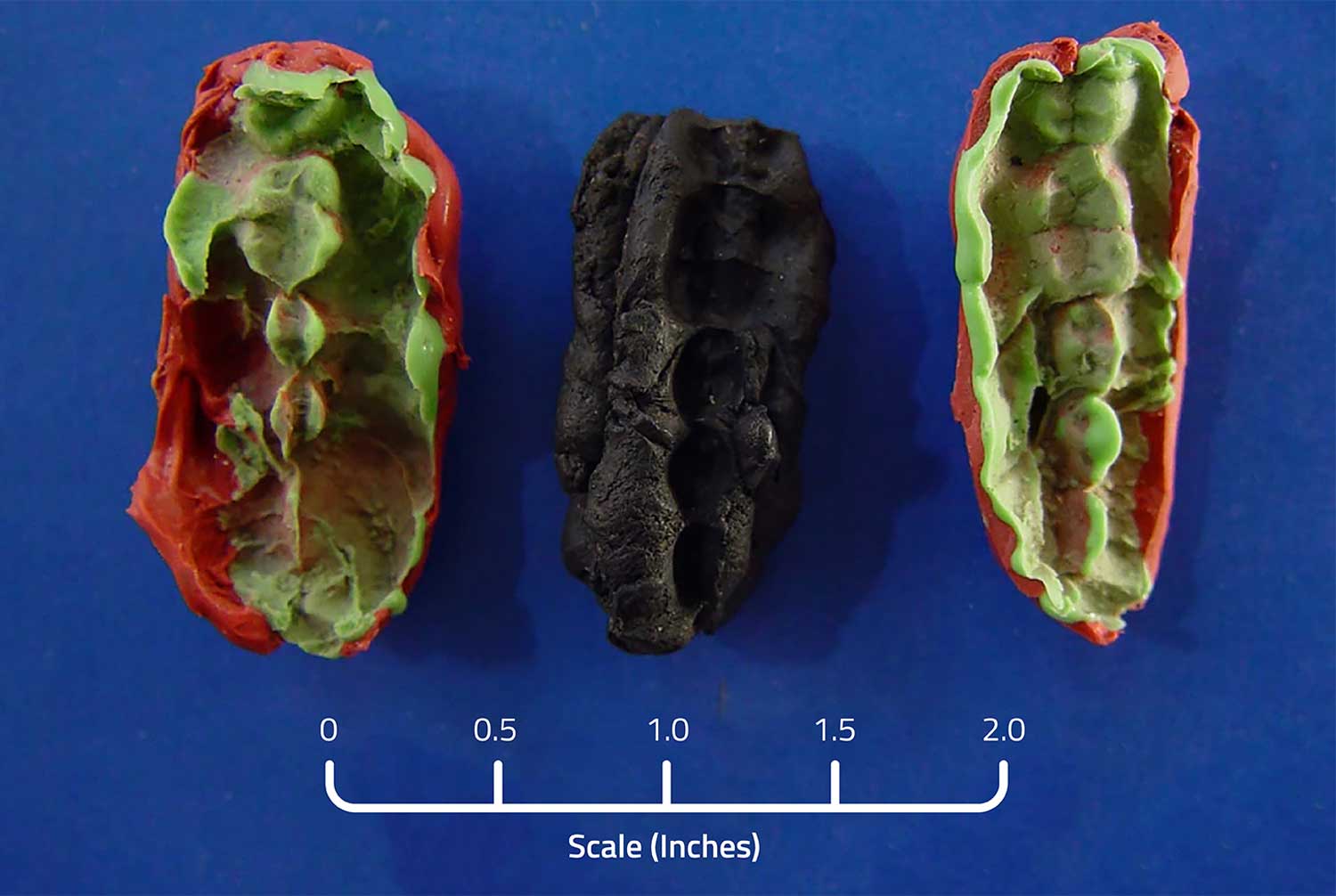
A piece of chewed black tree pitch and two casts, with a scale in inches.

Ancient Teens Chewed Gum

A type of gum chewed by teens nearly 10,000 years ago is revealing a lot about how at least some young people lived.

A piece of chewed black tree pitch and two casts, with a scale in inches.

Kashuba, N., Kırdök, E., Damlien, H. et al. Commun Biol 2, 185 (2019). https://doi.org/10.1038/s42003-019-0399-1

A piece of ancient gum (center) from a site in Sweden. The objects on either side are casts (molds) that were taken of the gum. 

Stone Age teens weren’t familiar with bubble gum, but they did chew another type of gum. Remnants of that sticky stuff are revealing a lot about their diet and oral health.

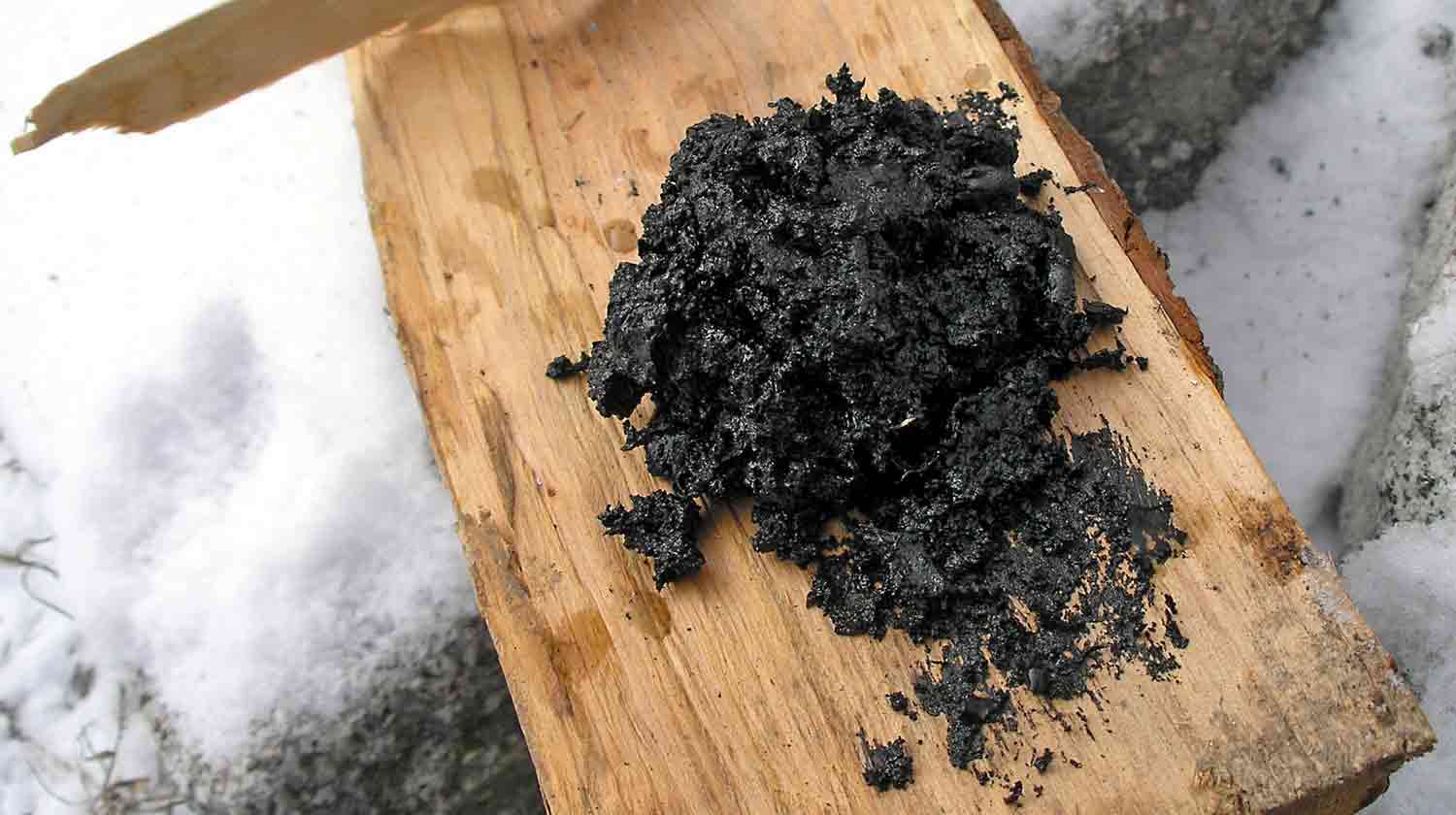
The “gum” in question is pitch, a sticky substance that comes from trees. Scientists found bits of prehistoric pitch at a site in Sweden in the 1990s. The pitch contained human saliva as well as teeth marks, indicating that it had been chewed. Further study revealed that the pitch was chewed between 9,890 and 9,540 years ago by male and female teens, as well as kids as young as 5 years old.

A pile of birch tar pitch atop a piece of wood in a snowy area.

Jorre (CC BY-SA 3.0)

This photo shows pitch from birch trees, which is what ancient teens once chewed.

Scientists aren’t sure why young people would have chewed the gum. The most likely reason is that they were making it sticky so that it could serve as glue for the assembly of tools and weapons, or to repair a hole in a boat. But there are other possibilities.

“[Tool assembly] is a most likely hypothesis,” Anders Gotherstrom, who co-authored a 2024 study on the ancient gum, told Agence France-Presse. “[Or it] could of course have been chewed just because they liked [it] or because they thought that [it] had some medicinal purpose.” 

Whatever the reason for it, the Stone Age gum habit tells scientists a lot about the people of that period—at least those who lived in that part of Sweden. Through a DNA analysis, scientists were able to determine that the ancient kids and teens had recently eaten deer, trout, apples, hazelnuts, and more.

Bacteria found on some of the gum indicated that at least one of the teens was suffering from gum disease. The tree pitch itself wouldn’t have caused the disease, so there had to be some other explanation. According to scientists, prehistoric children in that part of the world used their teeth as tools—to cut through furs and even whittle bones. It’s possible that this process introduced harmful bacteria to their mouths.

NEWS EXTRA

Super Bowl Champs!

Two football players hug in celebration on the field as other players in the same uniform look on.

Jeff Speer—Icon Sportswire/Getty Images

Kansas City Chiefs wide receiver Mecole Hardman celebrates with Chiefs quarterback Patrick Mahomes (number 15). Hardman caught the game-winning touchdown pass.

For the second year in a row, the Kansas City Chiefs are Super Bowl champions. The Chiefs scored a 25-22 victory over the San Francisco 49ers, becoming the first team to win two consecutive Super Bowl titles since the New England Patriots nearly 20 years ago.

The Chiefs are only the seventh team in NFL history to win four Super Bowls.

Did You Know?

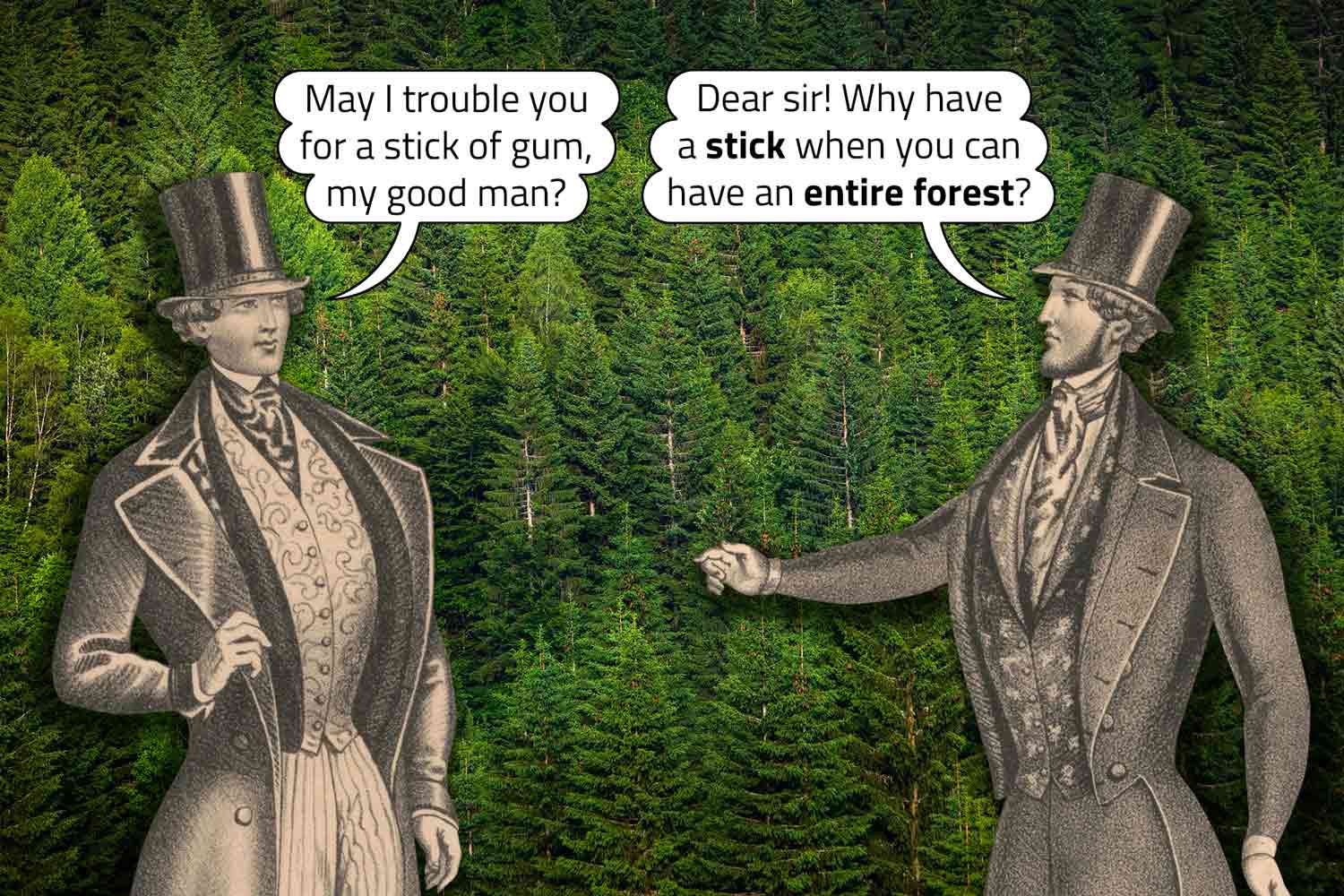
A man in 19th century clothing asks a similarly dressed man for a piece of gum and the other man directs him to a forest.

Wagner & M’Guigan/Library of Congress, Washington, D.C. (LC-DIG-pga-14024), © Zlikovec/Dreamstime.com; Photo illustration Encyclopædia Britannica, Inc.

The first branded chewing gum was introduced in 1848 by American John Bacon Curtis. Called State of Maine Pure Spruce Gum, it was made from spruce tree resin.

Who Used These Tools?

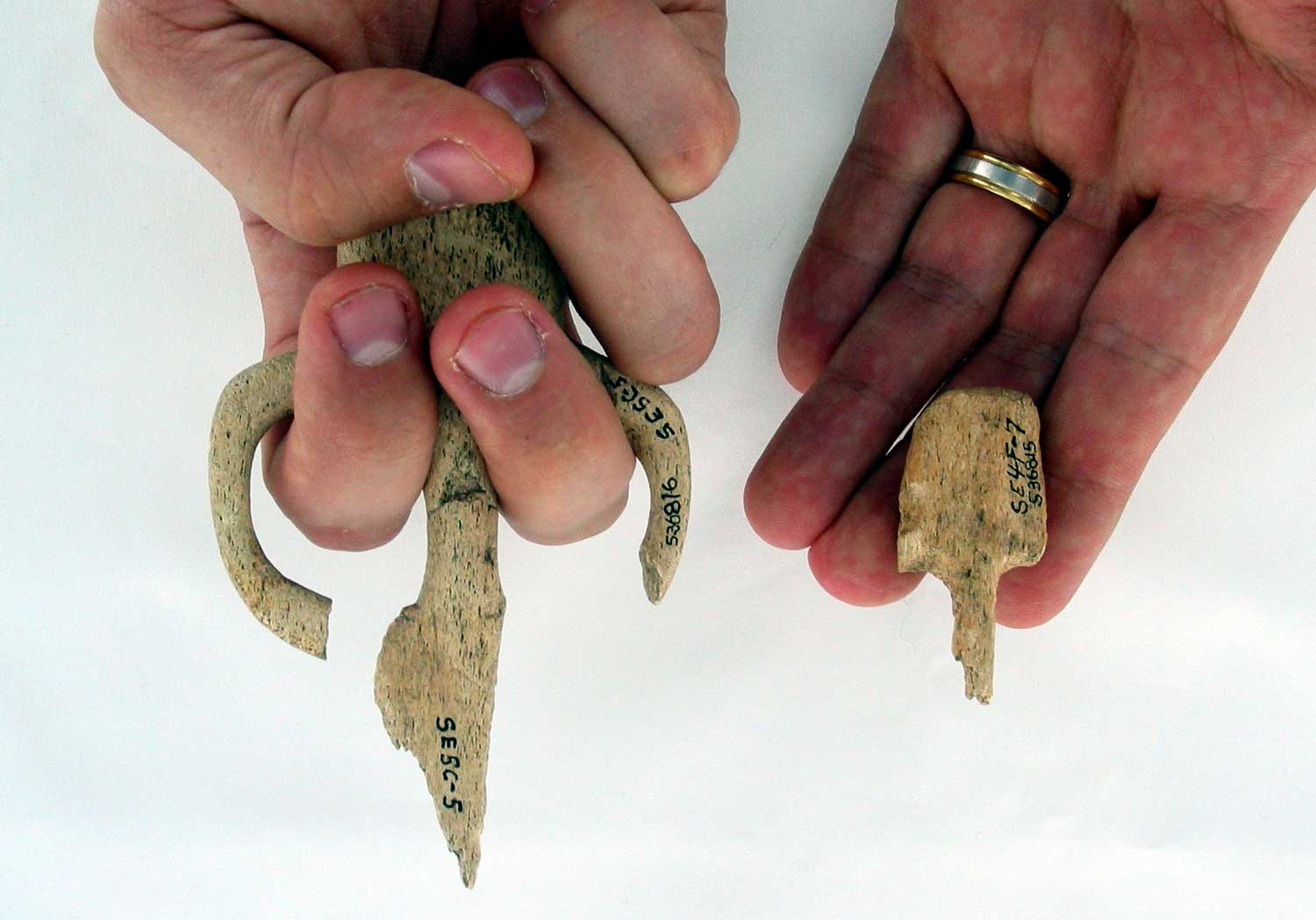
Two hands hold stone weapons, one much smaller than the other.

Dr. Robert J. Losey

These two stone weapons were discovered at a 1,700-year-old site in Oregon. Scientists believe the one on the right was designed for a child.

Life was not all fun and games for prehistoric kids and teens. A 2018 study examined tools and hunting weapons from a site in Oregon that dates back about 1,700 years and found that some of the artifacts were small enough to have been used by child-sized hands. Scientists believe that ancient children in the area were expected to practice using these items so they’d be experts by the time they reached adulthood.

Scientists have found similar, small-scale prehistoric items in Sweden, Russia, and Greenland, adding to the growing evidence that prehistoric parents expected their kids to learn useful skills. It makes sense since these skills would have been essential to survival.

Dig Into Archaeology

A man lies on his stomach and applies a brush to an object at an archaeological site.

David Mercado—Reuters/Newscom

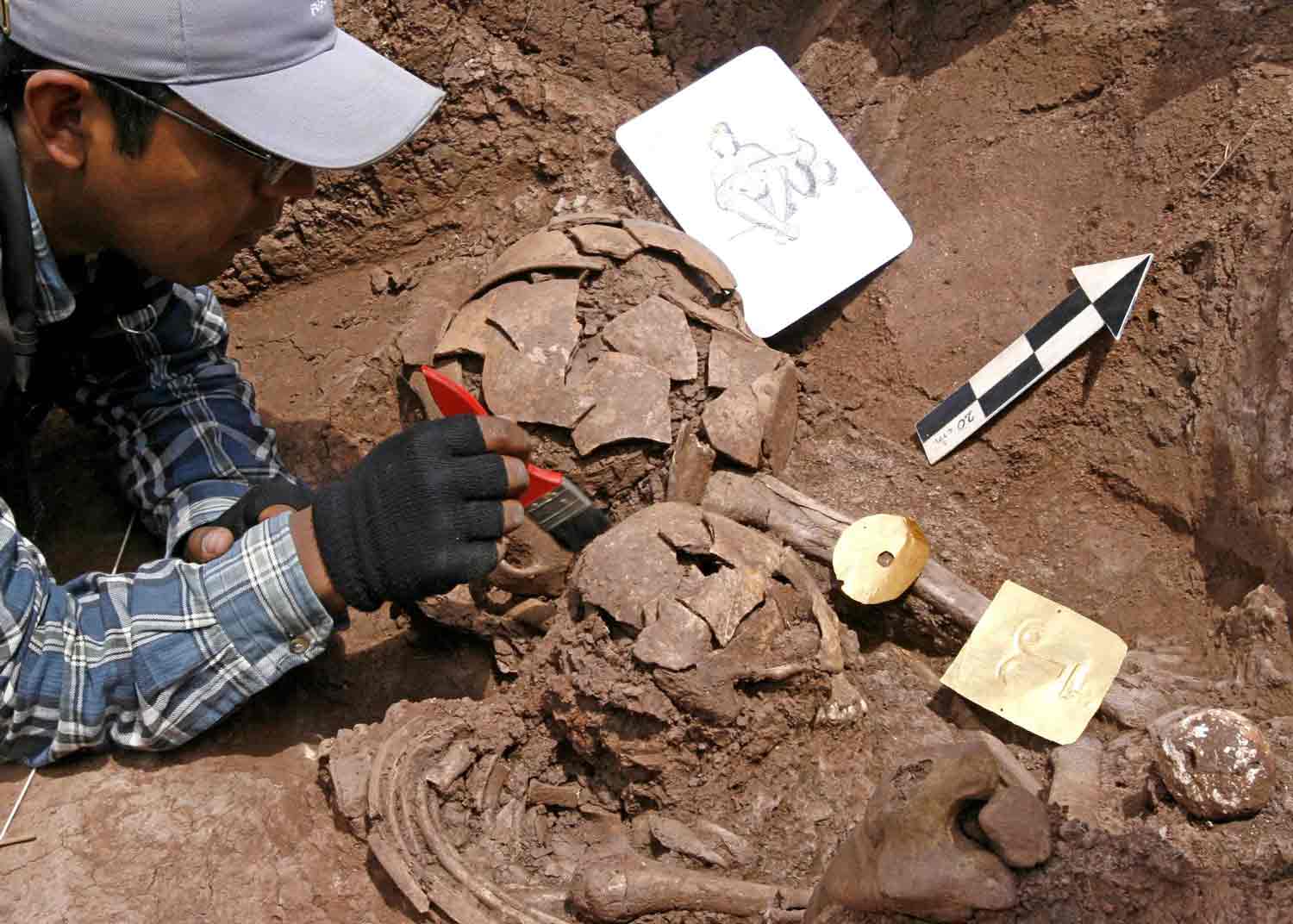
In this 2007 photo, archaeologist Roger Angel Cossio cleans the remains of a 1,300-year-old tomb discovered in western Bolivia.

Since humans existed long before writing was invented, learning about early humans requires a lot of detective work. Archaeologists learn about our ancient past by studying the materials ancient humans left behind. You can learn about this exciting field at Britannica!

WORD OF THE DAY

masticate

PART OF SPEECH:

verb

Definition:

: to chew (food)

Definitions provided by
Merriam-Webster Logo

Crossword

O
O
O
O
O
O

In Case You Missed It

The island of Corsica showed American colonists that a courageous revolution could defeat an empire.
May 7, 2026
Physicist Narinder Singh Kapany developed fiber optic cables, helping to make the Internet possible.
April 30, 2026
How can you tell whether photos and videos are real or made with AI? Here are a few tips.
April 24, 2026
A seemingly strange bank is saving one of Earth’s most valuable resources.
April 9, 2026

Coming This Spring…

An adult cicada with a black body, large wings, and red eyes sits on a leaf.

Coming This Spring…

In the spring of 2024, two broods of cicadas will emerge from under the ground and make their presence known!

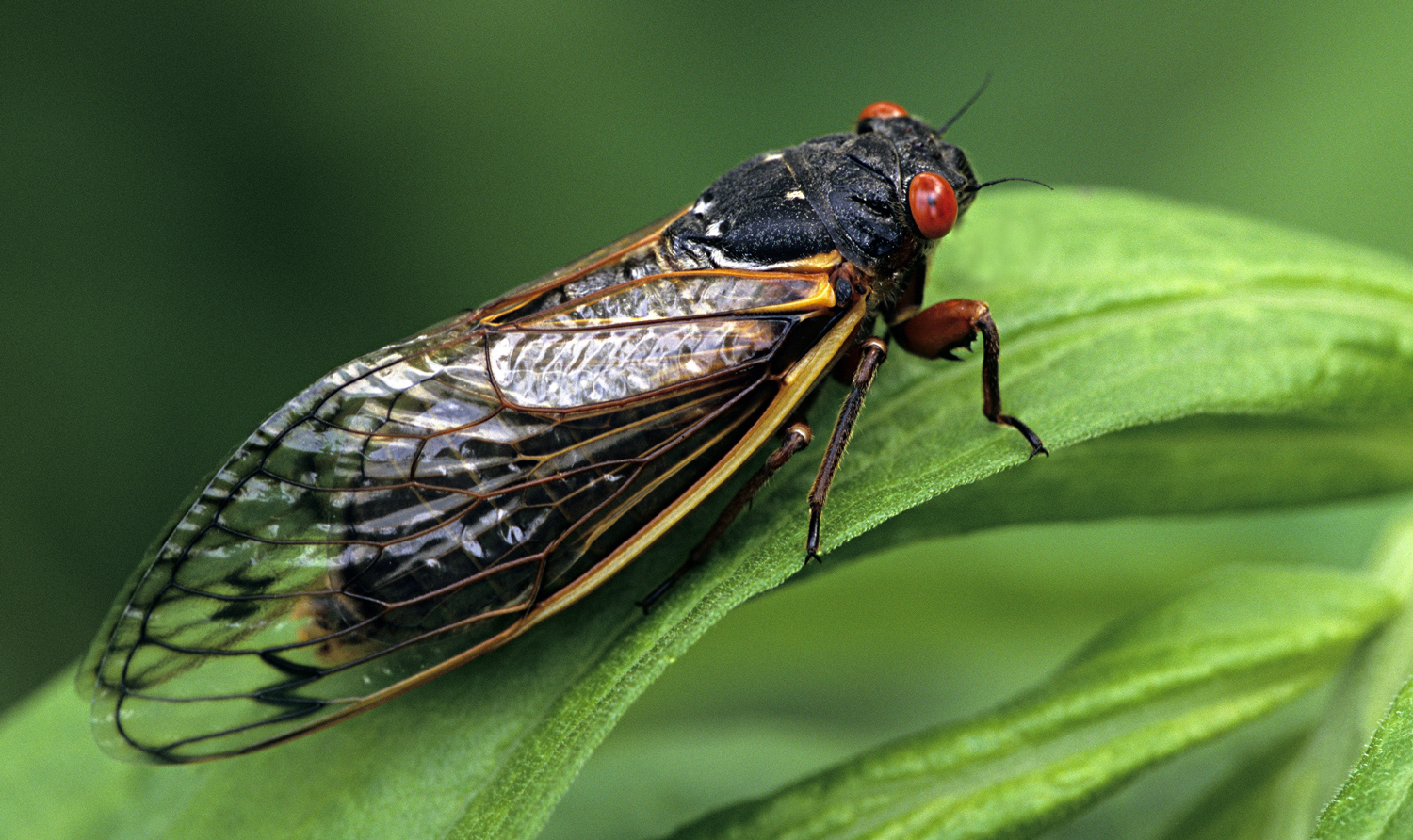
An adult cicada with a black body, large wings, and red eyes sits on a leaf.
© Ed Reschke-Stone/Getty Images
Cicadas like this one from the Northern Illinois brood make a lot of noise, but they’re harmless.

It’s going to be a loud spring in parts of the United States. In a very rare occurrence, two broods of cicadas will emerge almost simultaneously, after years underground.

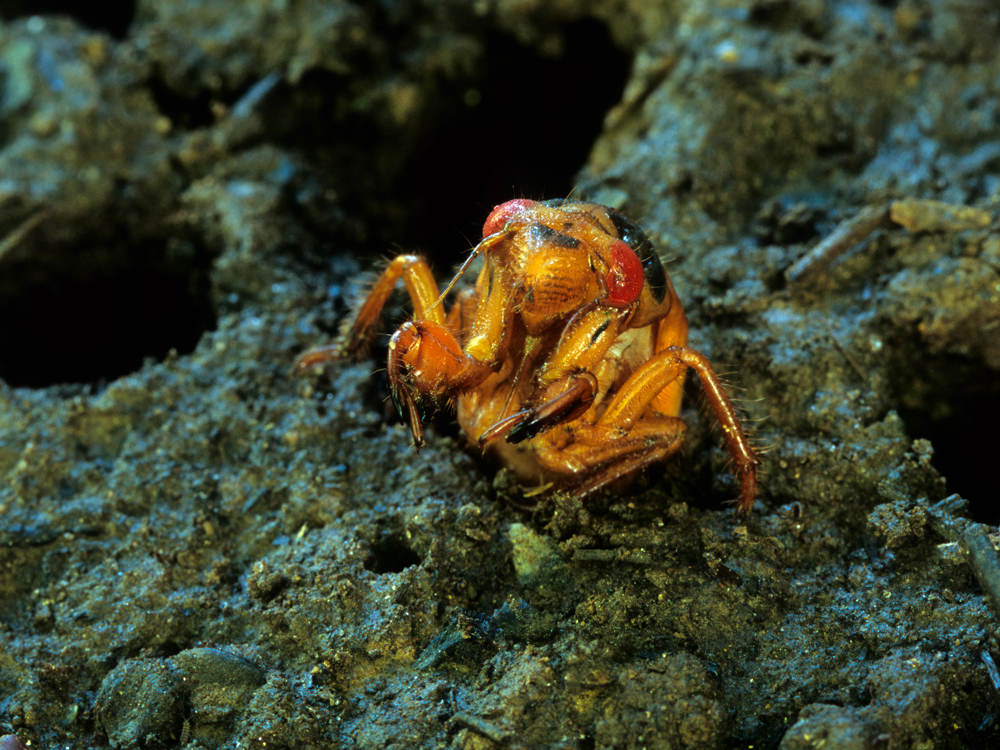
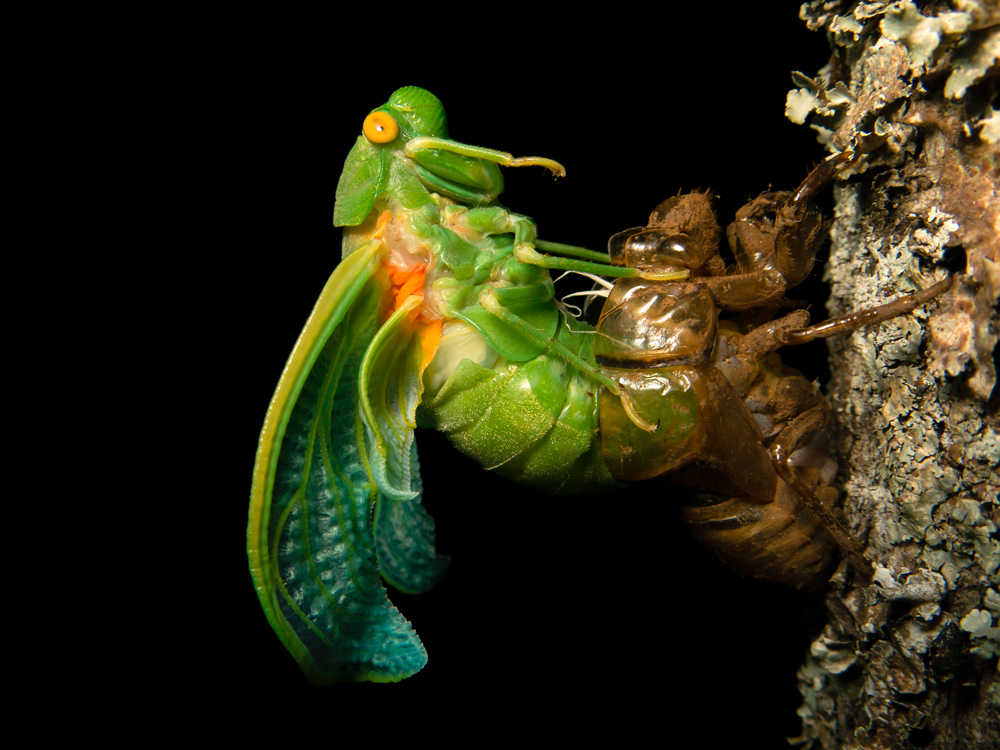
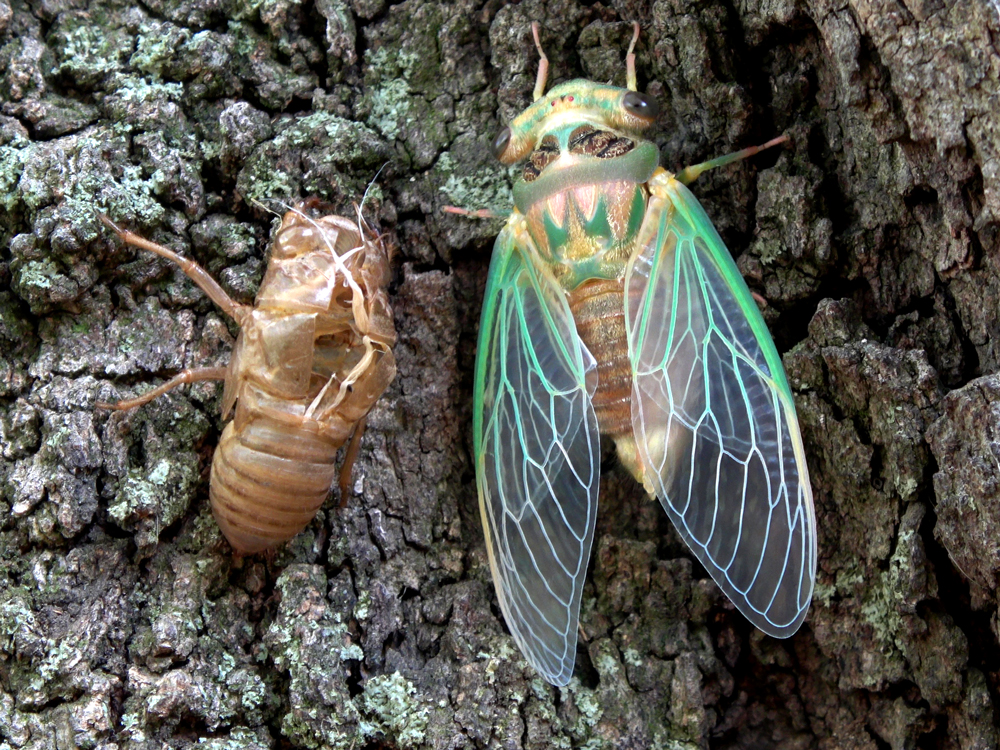
Periodical cicadas live for years, but they spend most of their lives underground in the nymph (immature) life stage. Every 13 or 17 years (depending on the species), the insects will emerge as adults, shedding their exoskeletons and taking to the skies to mate. Scientists call each group that emerges a brood.

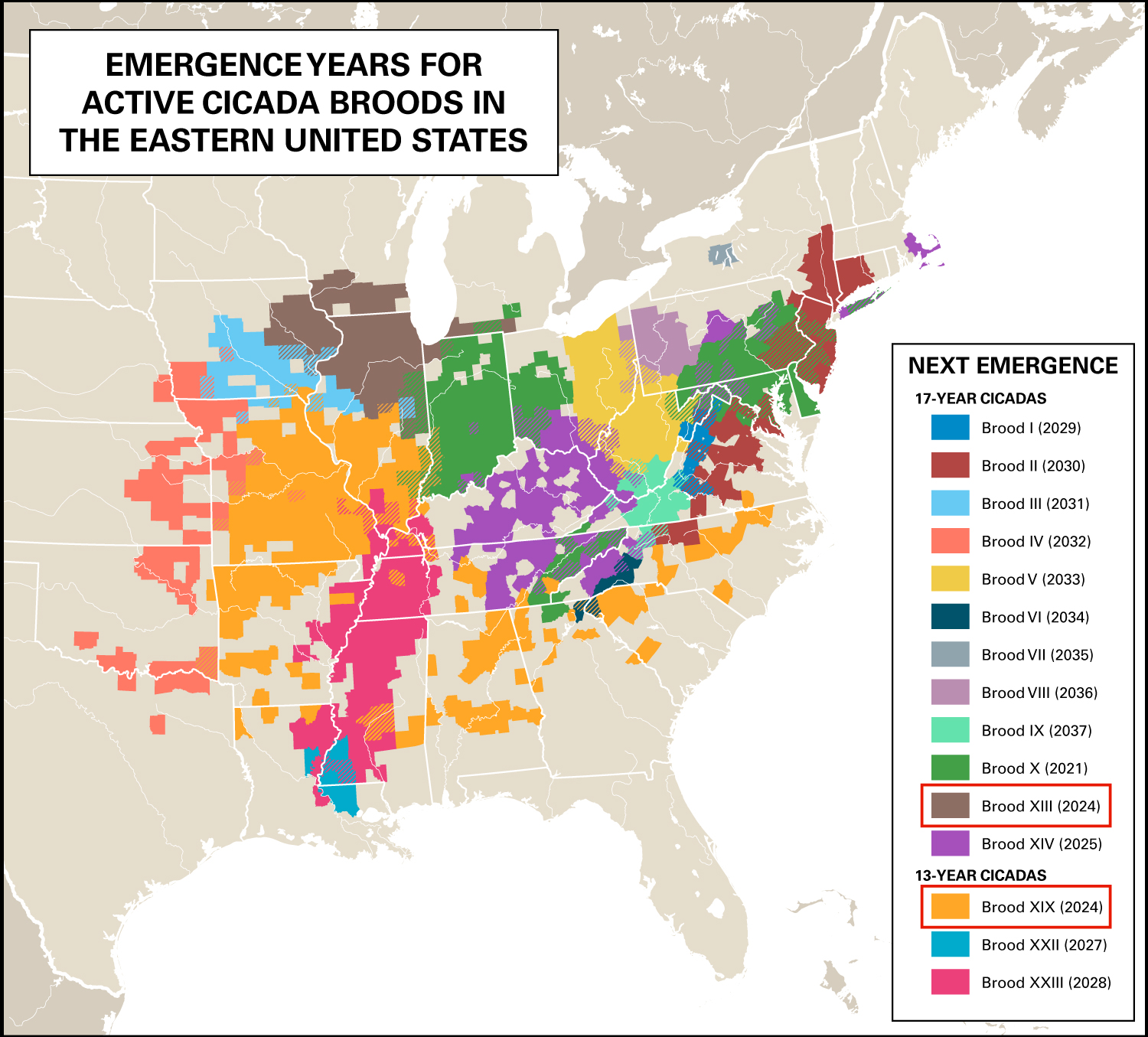
In late April and early May 2024, the Great Southern Brood, also known as Brood XIX, will emerge in several states, from Iowa down to Louisiana and from Oklahoma east to Virginia. It’s been 13 years since this brood was seen. Beginning in mid-May—after 17 years—the Northern Illinois Brood (or Brood XIII) will appear in Illinois as well as parts of Wisconsin, Indiana, and Michigan. Both broods will appear in southern Illinois. It’s extremely rare for the emergence of these two broods to overlap. The last time they appeared simultaneously was in 1803, when Thomas Jefferson was in the White House!

“Nobody alive today will see it happen again,” entomologist Floyd W. Shockley of the Smithsonian’s National Museum of Natural History told the New York Times.

The eastern United States with locations of cicada broods indicated by color.

Encyclopædia Britannica, Inc.

This map shows the locations of cicada broods in the United States. The two broods shown in red boxes on the key will emerge in the spring of 2024.

Scientists predict there will be billions of cicadas in the affected states—and residents will know it. That’s because, when cicadas emerge, the males “sing” to the females to get them to mate, collectively producing a noise that’s too loud to ignore. After mating, the females lay their eggs in trees, and the adults die after only four to six weeks above ground. The eggs fall and end up underground for another 13 or 17 years.

The periodical cicadas will be gone by sometime in June, but annual cicadas, which appear every summer, will be out in force to take their place.

Scientists say there’s no need to fear the insects, which don’t sting or bite. In fact, cicadas are a food source for birds and small mammals—and a fascinating sight for humans. Biologist Gene Kritsky encourages parents to take their kids right to the broods.

“If you’re lucky enough to live in an area where these things are going on, get your kids out there,” Kritsky told National Public Radio (NPR). “Watch this.”

© Gerry Bishop/Shutterstock.com, © TacioPhilip—iStock.com/Getty Images, © JohnCarnemolla—iStock/Getty Images

Fun Fact!

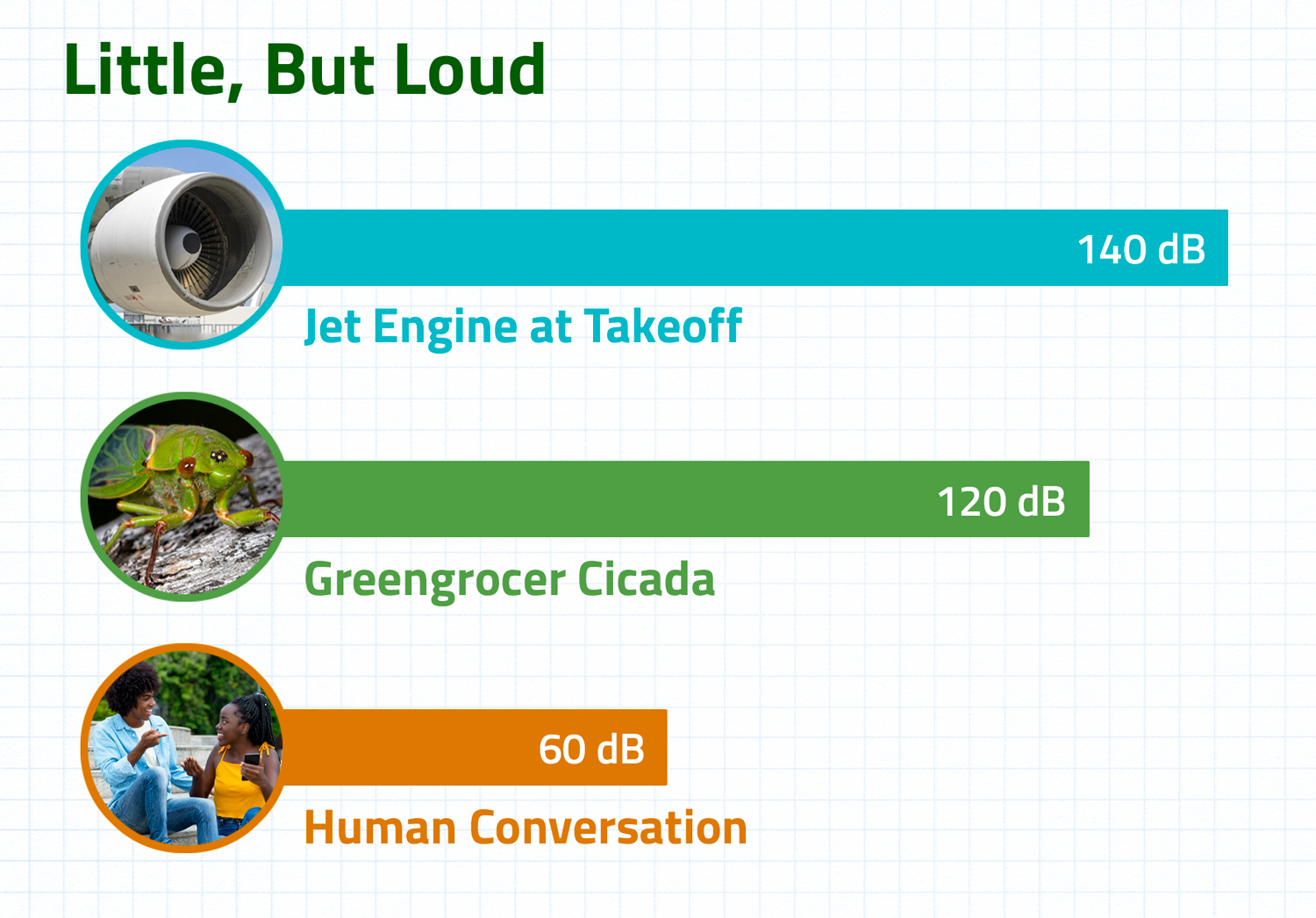
The chirp of Australia’s greengrocer cicada can reach 120 decibels. The chart below should give you an idea of just how loud that is.

Comparison of the decibel levels of the greengrocer cicada, a jet engine, and human conversation.

© Patrizio Martorana, Ken Griffiths, Kadettmann/Dreamstime.com; Infographic Encyclopædia Britannica, Inc.

An Early American Scientist

Science Source/Photo Researchers History/Getty Images, Frank Schulenburg (CC BY-SA 4.0); Composite image Encyclopædia Britannica, Inc.

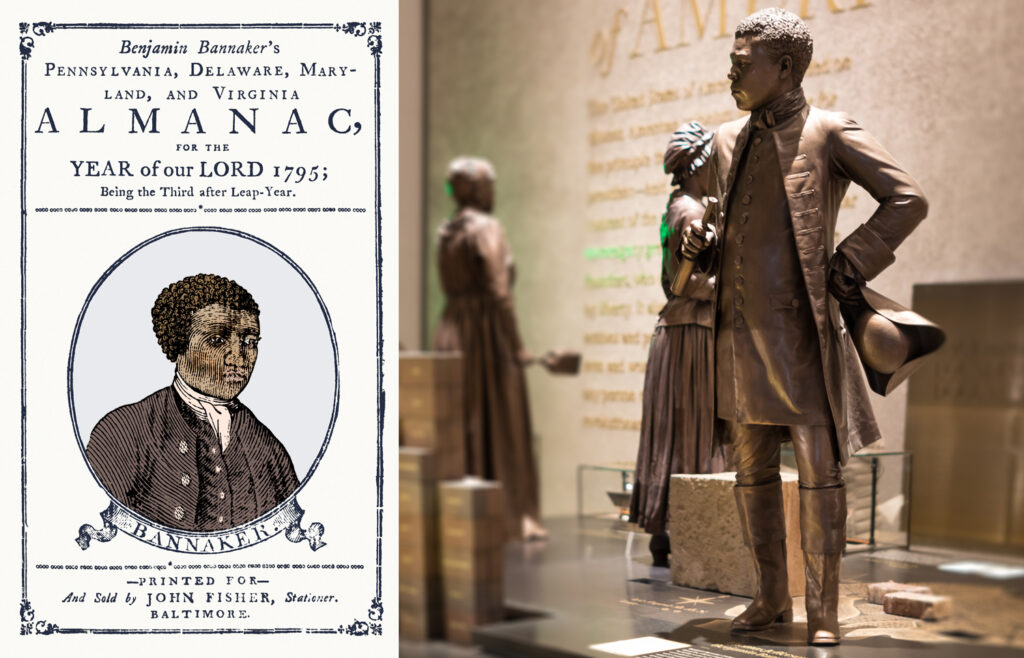
A 1795 edition of Benjamin Banneker’s almanac alongside a statue of Banneker, which is located in the Smithsonian’s National Museum of African American History and Culture in Washington, D.C.

Today, we know when to expect cicadas to emerge from underground. People may be annoyed by the sound, but no one is alarmed. That wasn’t always true, however. The first person to track the life cycle of cicadas may have been an 18th-century scientist named Benjamin Banneker.

Banneker was about 17 years old in 1749, when he witnessed the large insects on his family’s land in Maryland. Like many people of the time, he mistook the cicadas for harmful locusts and was relieved when they came to the end of their life cycle. Banneker observed cicadas again in 1766 and 1783. He noted that he saw the insects every 17 years and predicted a reappearance in 1800. He was right.

“Their periodical return is Seventeen years, but they, like the Comets, make but a short stay with us,” Banneker wrote.

In addition to making important observations about nature, Banneker developed many other talents. Born in 1731 to a free Black woman and a formerly enslaved man, Banneker was well educated—at a time when most Black Americans were enslaved and didn’t have the opportunity to attend school—and eventually became an astronomer, a mathematician, and an inventor. Most notably, he published astronomical almanacs with observations of the stars and planets and accurately predicted a 1789 solar eclipse.

Banneker also spoke out against slavery—to none other than Thomas Jefferson. In a 1791 letter to Jefferson, who was the U.S. secretary of state at the time, Banneker called out the fact that while Jefferson had called liberty a right in the Declaration of Independence, he also enslaved people.

Today, Banneker’s land in Maryland is open to the public as the Benjamin Banneker Historical Park and Museum.

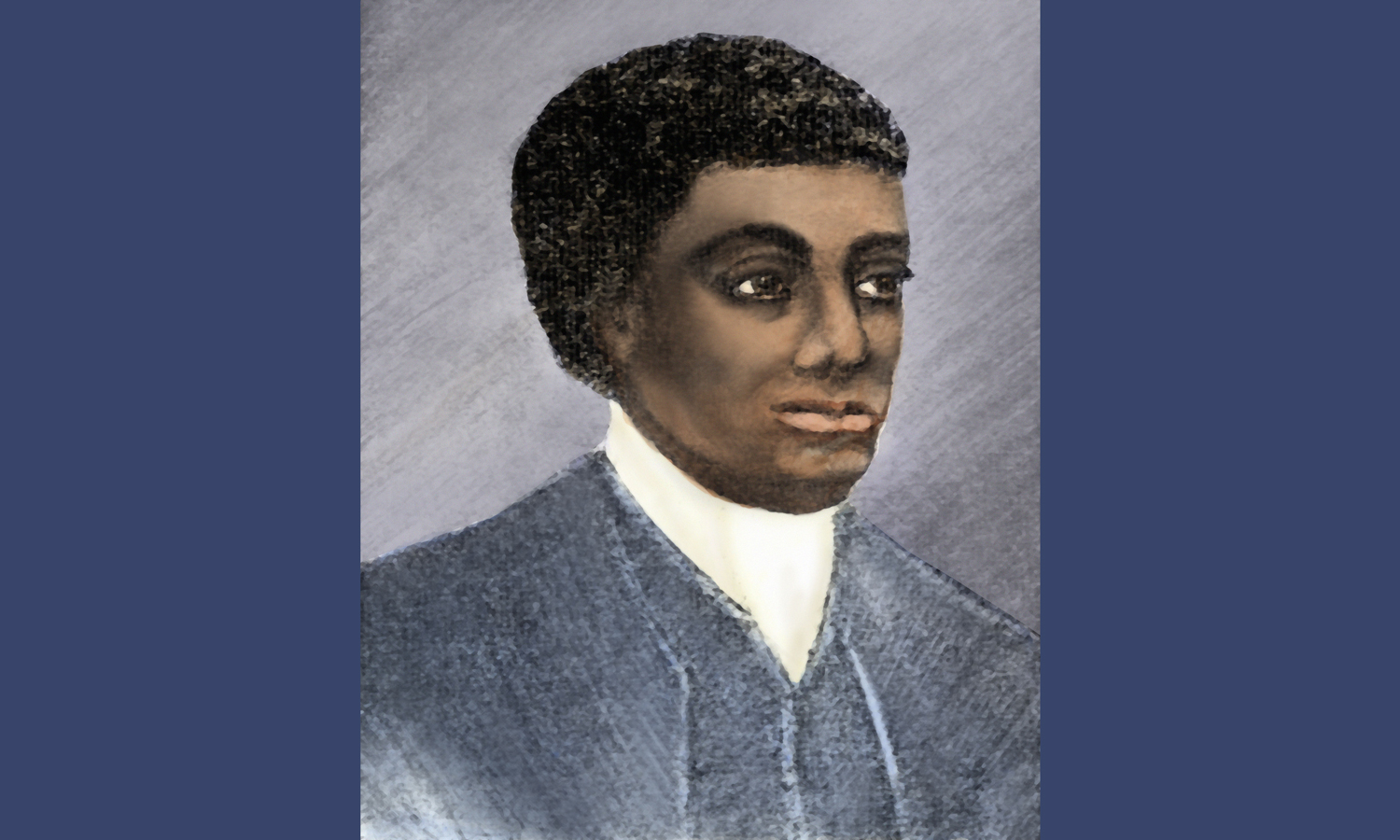
Benjamin Banneker

A portrait of Benjamin Banneker
North Wind Picture Archives/Alamy

You can read more about the life and accomplishments of Benjamin Banneker at Britannica.

WORD OF THE DAY

cacophony

PART OF SPEECH:

noun

Definition:

: unpleasant loud sounds

Definitions provided by
Merriam-Webster Logo

Word Search

See if you can find all the cicada-related words.

O
O
O
O
O
O

In Case You Missed It

The island of Corsica showed American colonists that a courageous revolution could defeat an empire.
May 7, 2026
Physicist Narinder Singh Kapany developed fiber optic cables, helping to make the Internet possible.
April 30, 2026
How can you tell whether photos and videos are real or made with AI? Here are a few tips.
April 24, 2026
A seemingly strange bank is saving one of Earth’s most valuable resources.
April 9, 2026

Ancient Roman Armor Comes to Life

A man and woman look at a reconstructed Roman arm guard on display on a table.

Ancient Roman Armor Comes to Life

Experts reconstructed an ancient Roman arm guard that’s nearly 2,000 years old.

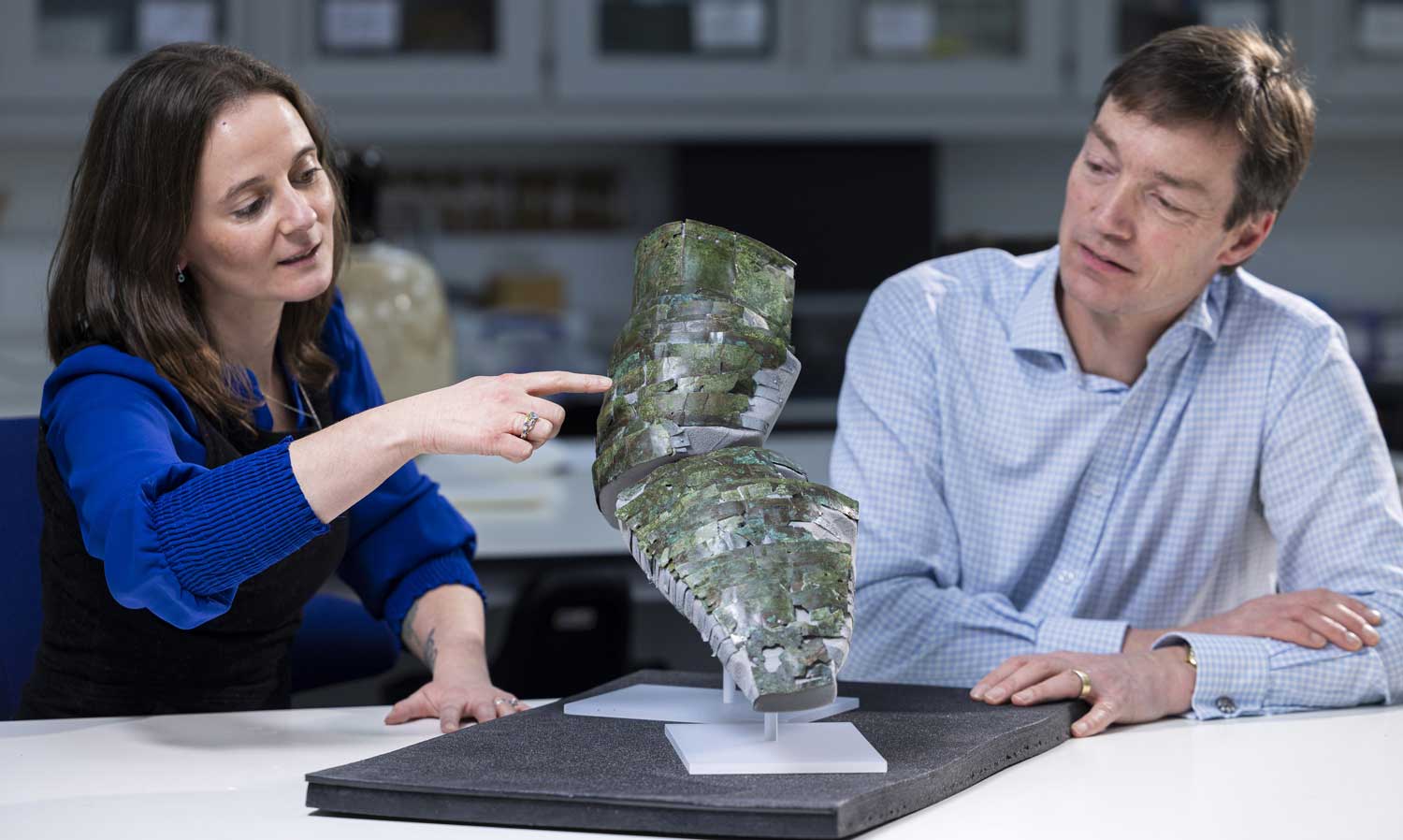
A man and woman look at a reconstructed Roman arm guard on display on a table.

© Duncan McGlynn, Courtesy National Museums Scotland

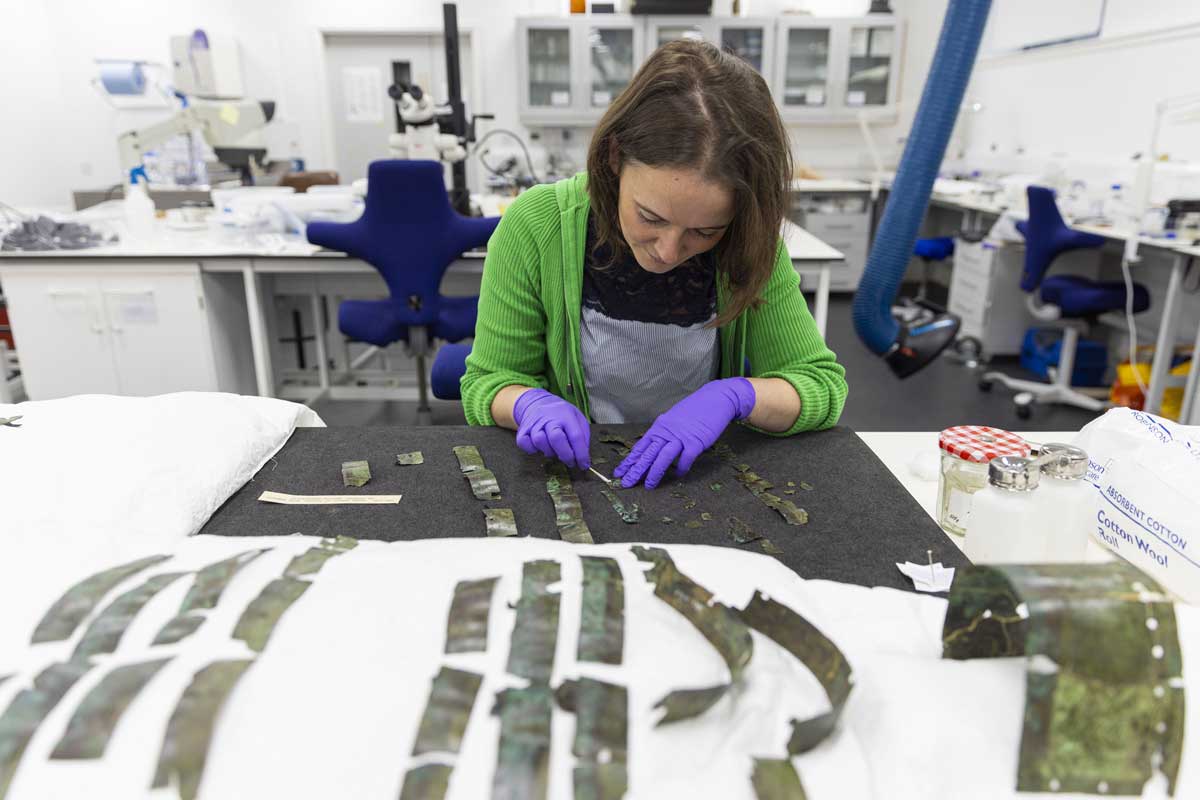
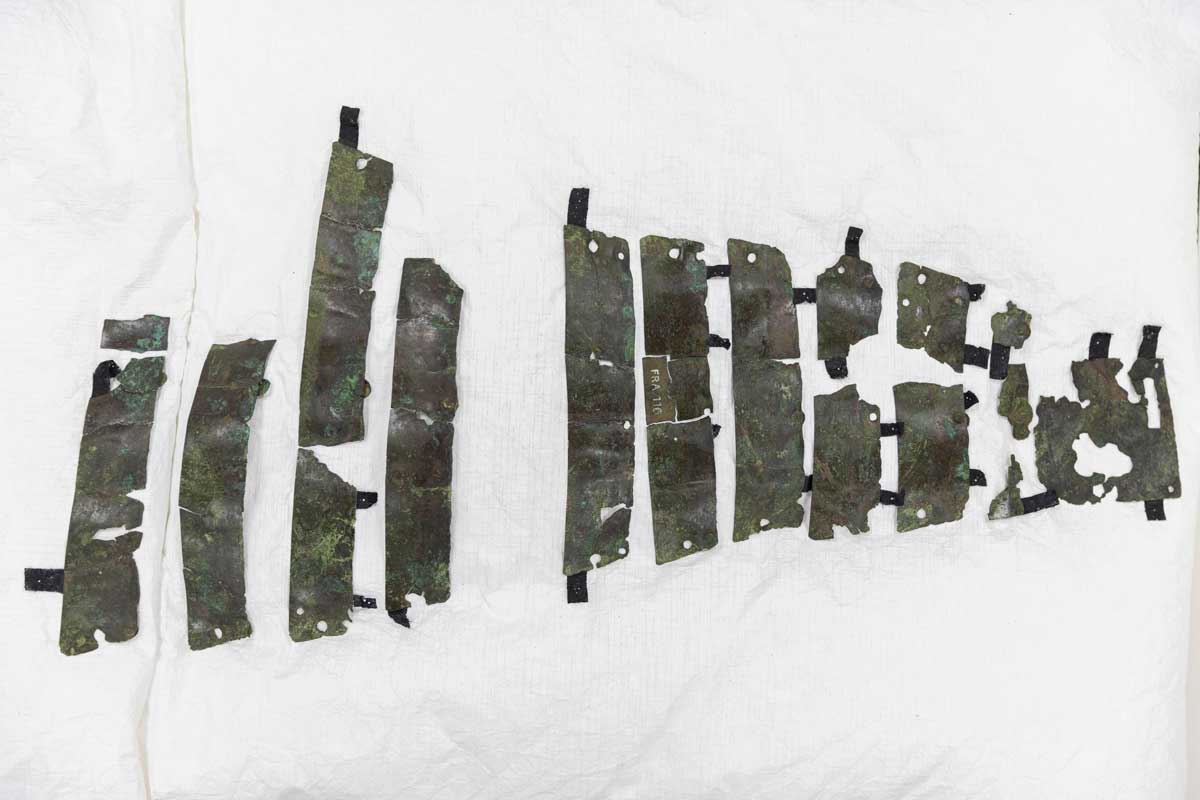
Conservator Bethan Bryan (left) and curator Dr. Fraser Hunter with an ancient Roman arm guard Bryan helped reconstruct from more than 100 pieces.

Thousands of years ago, the Roman Empire ruled over much of Europe and North Africa—and maintained its power with the help of armed soldiers. Now, a piece of Roman armor that was discovered in more than 100 pieces in Scotland has been reconstructed.

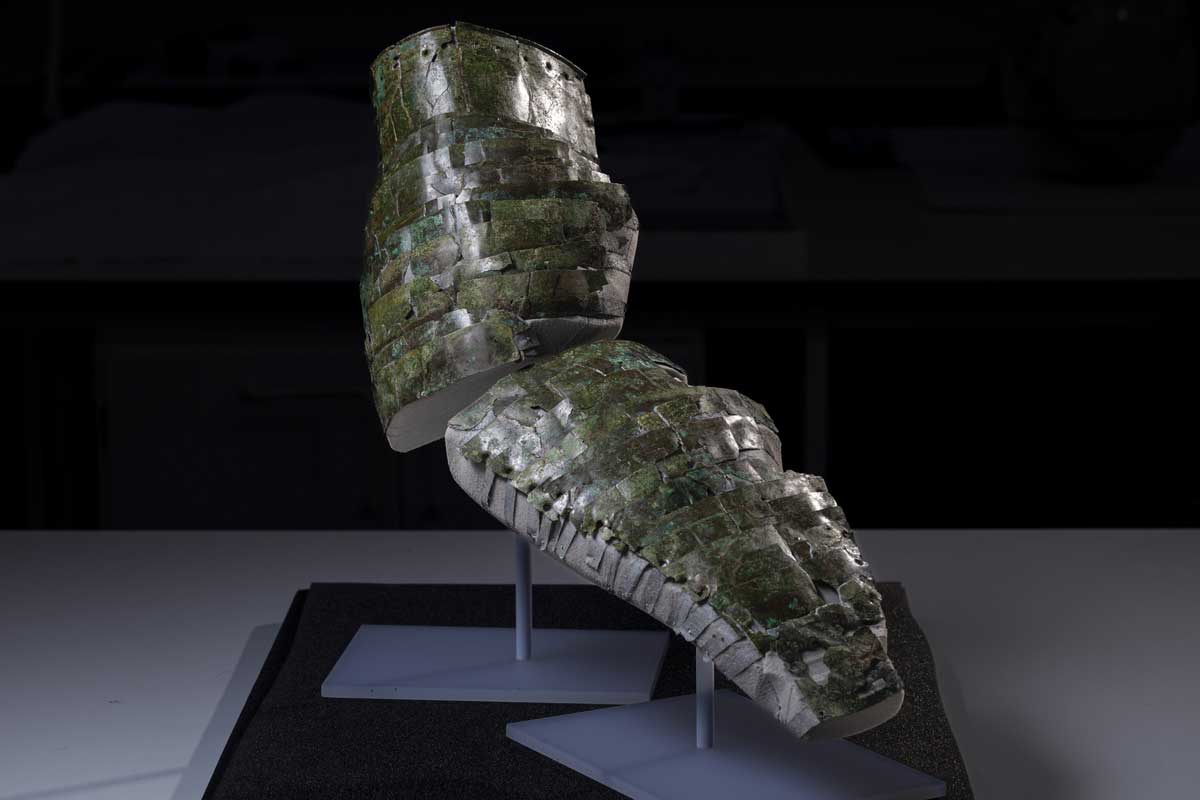
The arm guard was designed to be worn on the right arm of a soldier as he held a sword in that hand. The metal, along with attached leather padding, would have helped cushion blows from enemy weapons. Experts say that, while most arm guards were made of less expensive and more durable iron, this one was made of brass, suggesting that its owner was of a high military rank.

“It’s absolutely amazing. You get the sense of the protection this person had—and also the prestige,” Fraser Hunter of National Museums Scotland told the Observer. “It would have gleamed gold and would have looked absolutely spectacular when he was wearing it.”

© Duncan McGlynn, Courtesy National Museums Scotland

Richard Abdy, an expert on ancient Roman coins from the British Museum, noted that this style of arm guard would more commonly be worn by gladiators—men who were trained to fight other men or animals in arenas for public entertainment.

“The flexible arm guard is an iconic piece of equipment for Roman gladiators, so it is unusual to see it as a sword-arm protection for Roman soldiers, too,” Abdy said in a statement.

The arm guard was discovered in 1906 by British archaeologist James Curle at the site where a Roman military fort called the Trimontium once stood. The Romans attempted to conquer Scotland, but the local people fought back. The Romans left the area in about 180 CE due to violence and unrest—and abandoned the fort with the arm guard and other artifacts inside.

The arm guard is now on display at the British Museum in London, England, as part of an exhibit called “Legion Life in the Roman Army.” It will later be on permanent display at the National Museum of Scotland in Edinburgh, Scotland.

NEWS EXTRA

Happy Lunar New Year!

An Asian family of four in a living room decorating a flowered branch with citrus fruit.

© hxyume—E+/Getty Images

Lunar New Year, a major holiday in China and around the world, begins on February 10, 2024. This annual holiday takes place on the day of the year’s first new moon—sometime in late January or February.

Lunar New Year is celebrated over the course of 15 days. Celebrations take place in several countries. The best known is Chinese New Year.

Lunar New Year is an opportunity for a fresh start. People often clean their homes before the new year to remove any bad luck from the previous year. They also decorate their homes in. red, which is said to ward off bad luck.

The holiday is a time to gather. Families get together for a feast, and children receive red envelopes filled with money.

In the traditional lunar calendar, each year is represented by an animal. The year 2024 is the Year of the Dragon.

Did You Know?

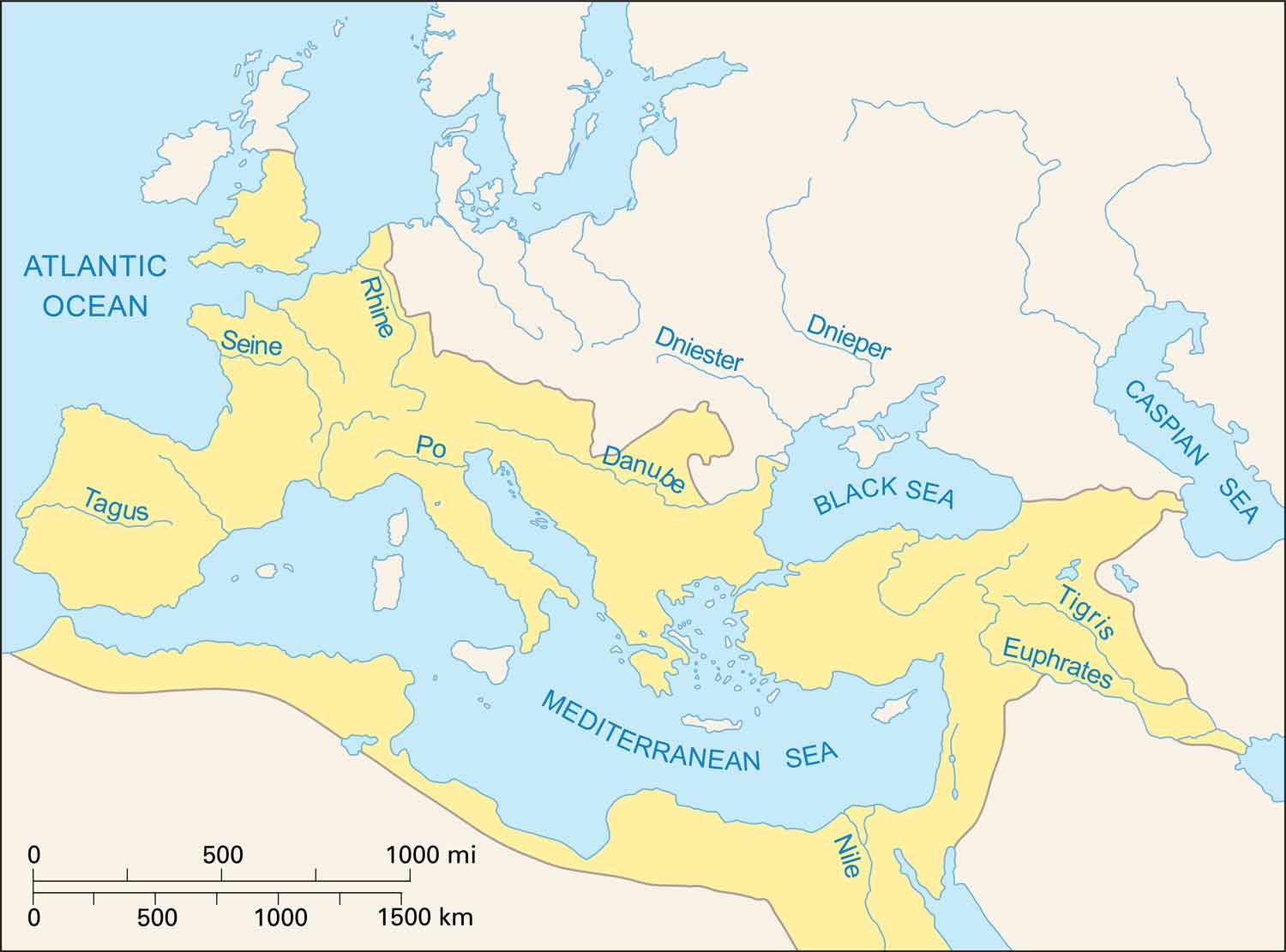
A map of Europe and northern Africa shows much of the region highlighted in yellow.

© Encyclopædia Britannica, Inc.

All the areas in yellow were part of the Roman Empire at its peak.

At its height, in 117 CE, the Roman Empire stretched 2,300 miles (3,700 kilometers) from north to south and over 2,500 miles (4,000 kilometers) from east to west. 

The Reach of the Romans

A brown brick aqueduct spans a river.

© Zechal/stock.adobe.com

The ancient Romans built this aqueduct in the 1st century CE to carry water from one location to another.

The ancient Romans influenced the languages, literature, laws, government, roads, and buildings of all the places they ruled.

  1. Politics. Between 509 BCE and 27 BCE, a period called the Roman Republic, the Romans replaced their monarchy with a democracy, though only free men could vote.
  2. Language. The modern languages of French, Spanish, Portuguese, Italian, and Romanian have their roots in Latin, the language of the ancient Romans.
  3. Architecture. The Romans designed and constructed great buildings. Some, like the Colosseum in Rome, are still standing.
  4. Engineering. The Romans took on huge engineering projects. They built hundreds of miles of roads that connected their empire and aqueducts to carry fresh water to their cities.
  5. Warfare. Rome’s army was so effective because it was highly trained and organized. The Roman army influenced later warfare.
  6. Literature. Rome produced great poets, such as Virgil, Horace, and Ovid. Their works influenced later writers, including Shakespeare.

Armor Through the Ages

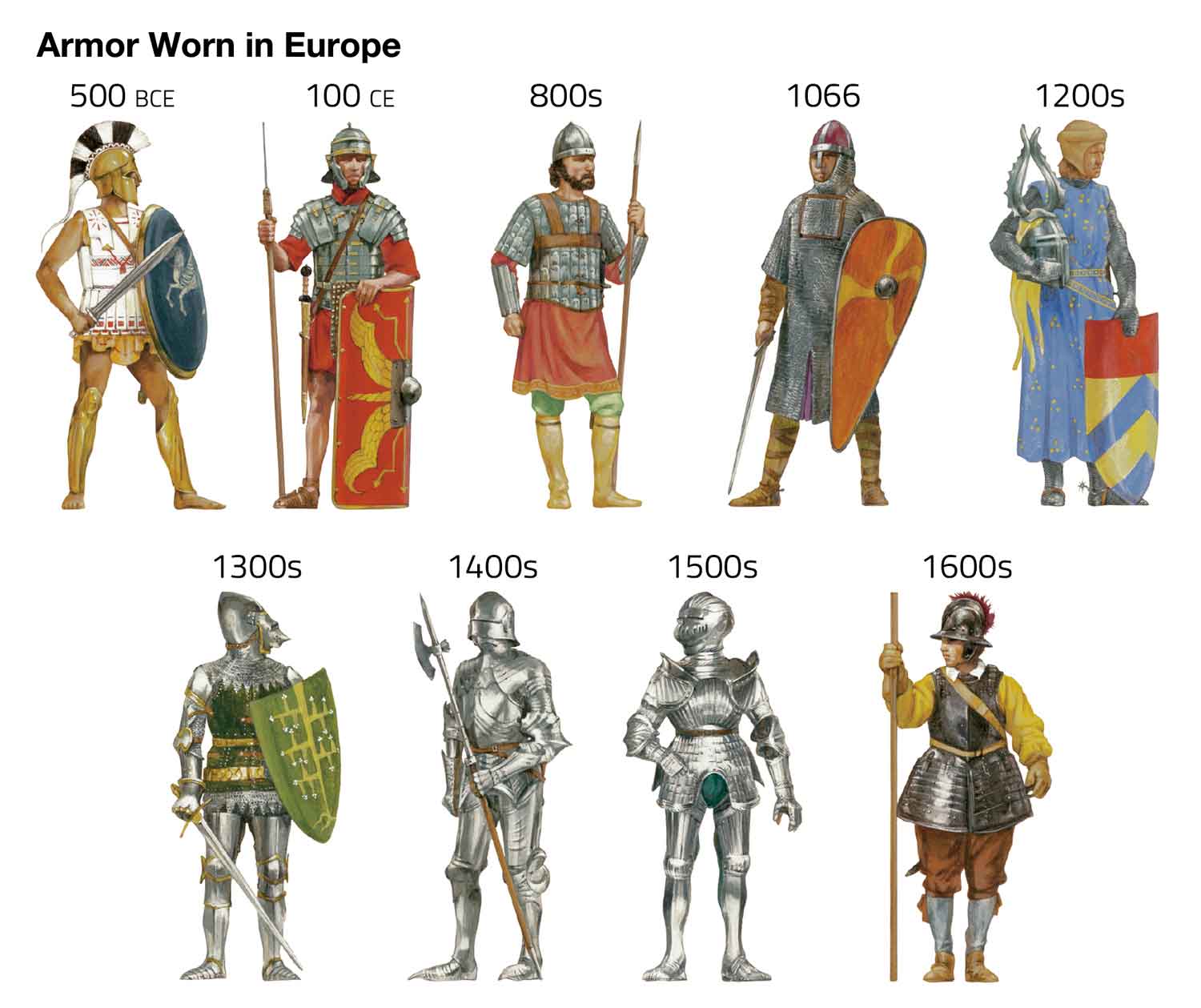
Illustration showing European armor from 500 BCE to the 1600s.

Encyclopædia Britannica, Inc.

By the time Roman soldiers put on their armor, protective clothing had been in existence for hundreds of years. You can read about the evolution of armor at Britannica.

WORD OF THE DAY

appurtenance

PART OF SPEECH:

noun

Definition:

: an object that is used with or for something — usually plural

Definitions provided by
Merriam-Webster Logo

Wordrow

See if you can figure out the word. Type your guess. If a letter circle turns green, it is in the right place. If a letter circle turns gold, the letter is somewhere in the word, but it’s in the wrong place. All other letters are not part of the word.

O
O
O
O
O
O

In Case You Missed It

The island of Corsica showed American colonists that a courageous revolution could defeat an empire.
May 7, 2026
Physicist Narinder Singh Kapany developed fiber optic cables, helping to make the Internet possible.
April 30, 2026
How can you tell whether photos and videos are real or made with AI? Here are a few tips.
April 24, 2026
A seemingly strange bank is saving one of Earth’s most valuable resources.
April 9, 2026