Coming This Spring…

An adult cicada with a black body, large wings, and red eyes sits on a leaf.

Coming This Spring…

In the spring of 2024, two broods of cicadas will emerge from under the ground and make their presence known!

An adult cicada with a black body, large wings, and red eyes sits on a leaf.
© Ed Reschke-Stone/Getty Images
Cicadas like this one from the Northern Illinois brood make a lot of noise, but they’re harmless.

It’s going to be a loud spring in parts of the United States. In a very rare occurrence, two broods of cicadas will emerge almost simultaneously, after years underground.

Periodical cicadas live for years, but they spend most of their lives underground in the nymph (immature) life stage. Every 13 or 17 years (depending on the species), the insects will emerge as adults, shedding their exoskeletons and taking to the skies to mate. Scientists call each group that emerges a brood.

In late April and early May 2024, the Great Southern Brood, also known as Brood XIX, will emerge in several states, from Iowa down to Louisiana and from Oklahoma east to Virginia. It’s been 13 years since this brood was seen. Beginning in mid-May—after 17 years—the Northern Illinois Brood (or Brood XIII) will appear in Illinois as well as parts of Wisconsin, Indiana, and Michigan. Both broods will appear in southern Illinois. It’s extremely rare for the emergence of these two broods to overlap. The last time they appeared simultaneously was in 1803, when Thomas Jefferson was in the White House!

“Nobody alive today will see it happen again,” entomologist Floyd W. Shockley of the Smithsonian’s National Museum of Natural History told the New York Times.

The eastern United States with locations of cicada broods indicated by color.

Encyclopædia Britannica, Inc.

This map shows the locations of cicada broods in the United States. The two broods shown in red boxes on the key will emerge in the spring of 2024.

Scientists predict there will be billions of cicadas in the affected states—and residents will know it. That’s because, when cicadas emerge, the males “sing” to the females to get them to mate, collectively producing a noise that’s too loud to ignore. After mating, the females lay their eggs in trees, and the adults die after only four to six weeks above ground. The eggs fall and end up underground for another 13 or 17 years.

The periodical cicadas will be gone by sometime in June, but annual cicadas, which appear every summer, will be out in force to take their place.

Scientists say there’s no need to fear the insects, which don’t sting or bite. In fact, cicadas are a food source for birds and small mammals—and a fascinating sight for humans. Biologist Gene Kritsky encourages parents to take their kids right to the broods.

“If you’re lucky enough to live in an area where these things are going on, get your kids out there,” Kritsky told National Public Radio (NPR). “Watch this.”


© Gerry Bishop/Shutterstock.com, © TacioPhilip—iStock.com/Getty Images, © JohnCarnemolla—iStock/Getty Images

Fun Fact!

The chirp of Australia’s greengrocer cicada can reach 120 decibels. The chart below should give you an idea of just how loud that is.

Comparison of the decibel levels of the greengrocer cicada, a jet engine, and human conversation.

© Patrizio Martorana, Ken Griffiths, Kadettmann/Dreamstime.com; Infographic Encyclopædia Britannica, Inc.

An Early American Scientist
Science Source/Photo Researchers History/Getty Images, Frank Schulenburg (CC BY-SA 4.0); Composite image Encyclopædia Britannica, Inc.

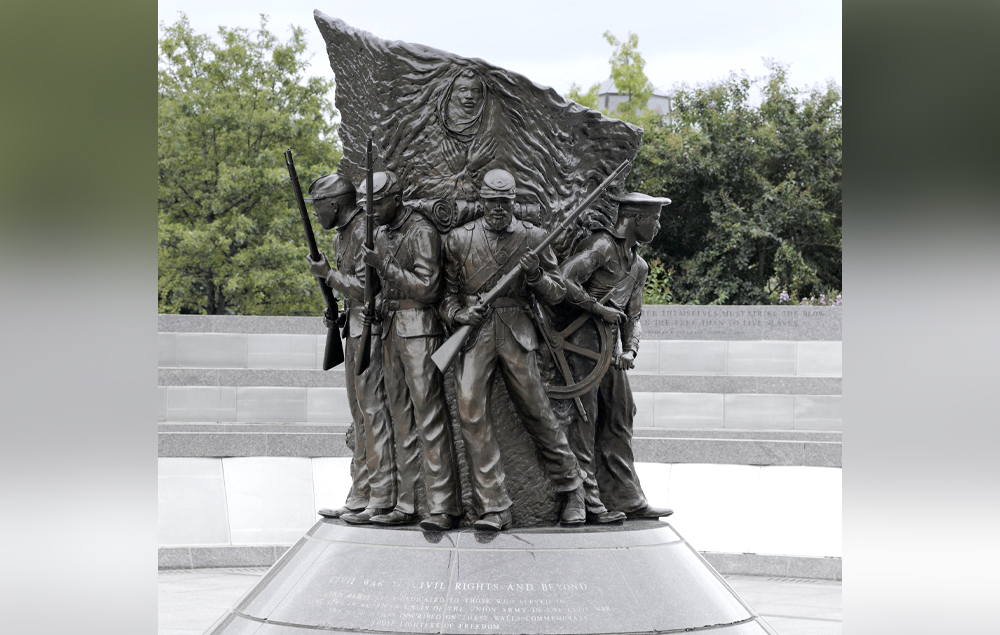
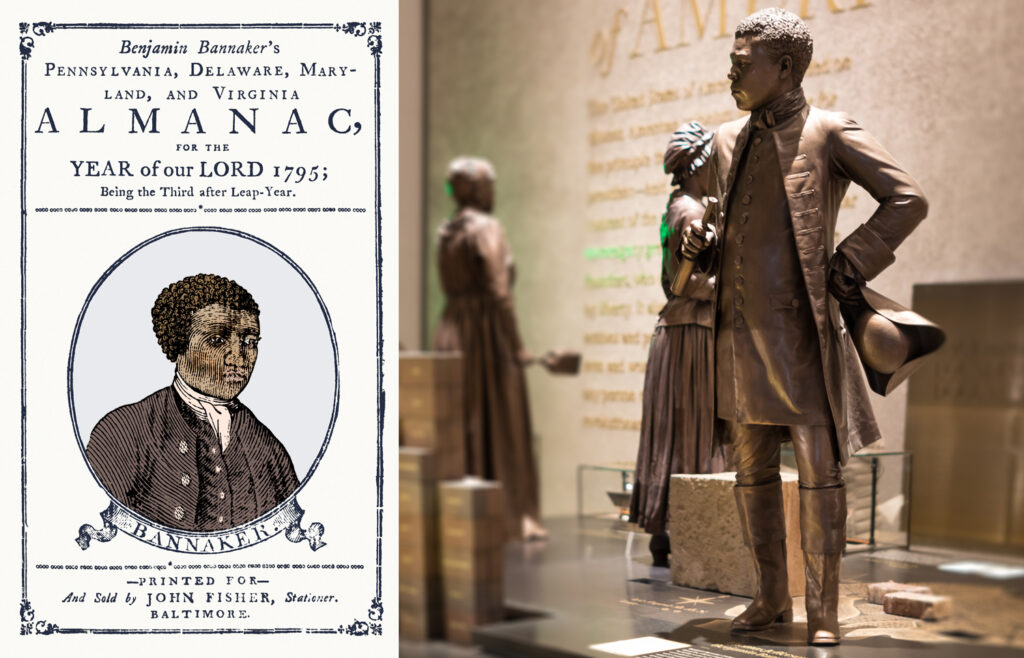
A 1795 edition of Benjamin Banneker’s almanac alongside a statue of Banneker, which is located in the Smithsonian’s National Museum of African American History and Culture in Washington, D.C.

Today, we know when to expect cicadas to emerge from underground. People may be annoyed by the sound, but no one is alarmed. That wasn’t always true, however. The first person to track the life cycle of cicadas may have been an 18th-century scientist named Benjamin Banneker.

Banneker was about 17 years old in 1749, when he witnessed the large insects on his family’s land in Maryland. Like many people of the time, he mistook the cicadas for harmful locusts and was relieved when they came to the end of their life cycle. Banneker observed cicadas again in 1766 and 1783. He noted that he saw the insects every 17 years and predicted a reappearance in 1800. He was right.

“Their periodical return is Seventeen years, but they, like the Comets, make but a short stay with us,” Banneker wrote.

In addition to making important observations about nature, Banneker developed many other talents. Born in 1731 to a free Black woman and a formerly enslaved man, Banneker was well educated—at a time when most Black Americans were enslaved and didn’t have the opportunity to attend school—and eventually became an astronomer, a mathematician, and an inventor. Most notably, he published astronomical almanacs with observations of the stars and planets and accurately predicted a 1789 solar eclipse.

Banneker also spoke out against slavery—to none other than Thomas Jefferson. In a 1791 letter to Jefferson, who was the U.S. secretary of state at the time, Banneker called out the fact that while Jefferson had called liberty a right in the Declaration of Independence, he also enslaved people.

Today, Banneker’s land in Maryland is open to the public as the Benjamin Banneker Historical Park and Museum.

Benjamin Banneker
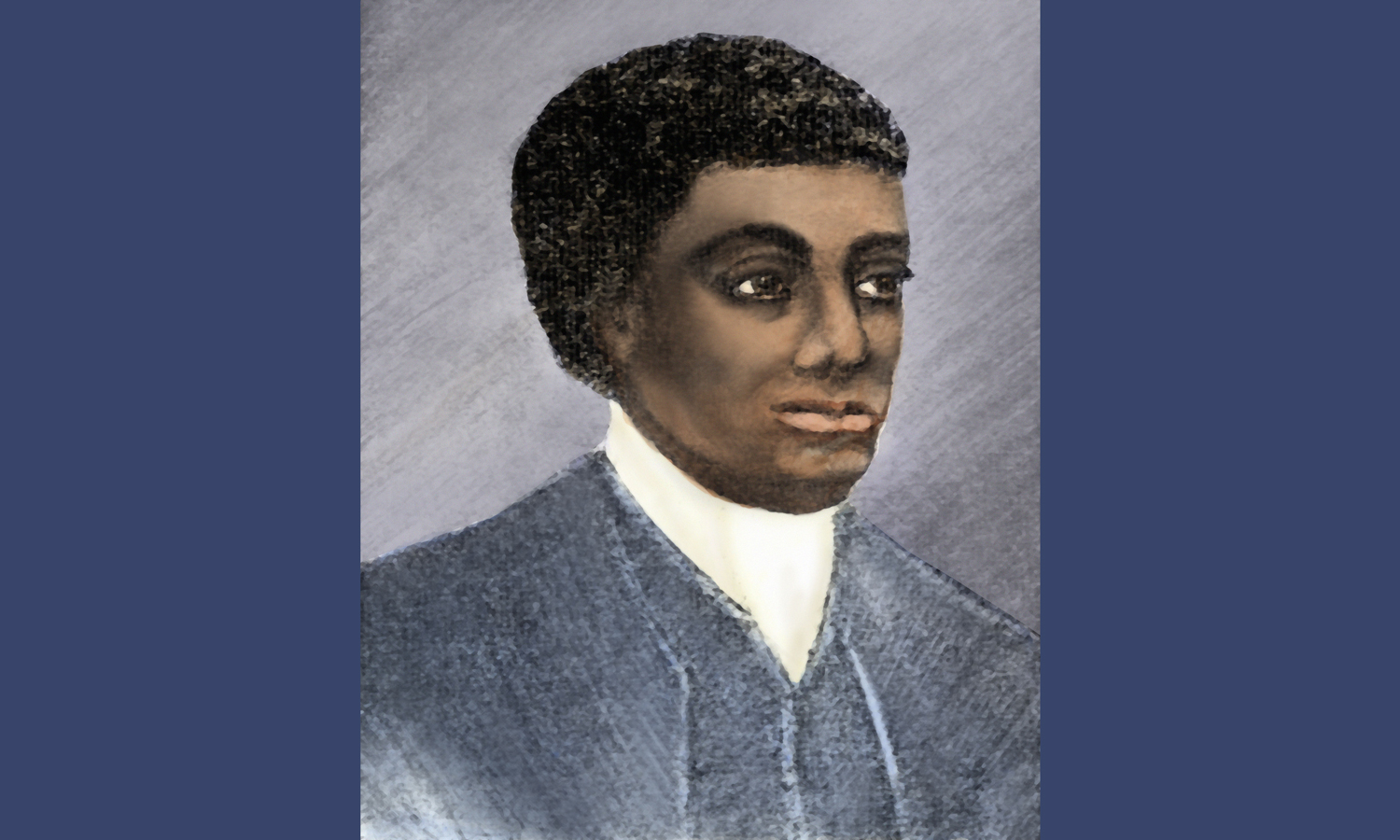
A portrait of Benjamin Banneker
North Wind Picture Archives/Alamy

You can read more about the life and accomplishments of Benjamin Banneker at Britannica.

WORD OF THE DAY

cacophony

PART OF SPEECH:

noun

Definition:

: unpleasant loud sounds

Definitions provided by
Merriam-Webster Logo

Word Search

See if you can find all the cicada-related words.

O
O
O
O
O
O

In Case You Missed It

Figure skater Alysa Liu felt happy and confident at the 2026 Olympics. She skated off with a gold medal!
March 5, 2026
An all-women ranger team protects endangered animals on the Indonesian island of Sumatra.
February 26, 2026
Nima Rinji is showing the world the powerful spirit of the Sherpa people as he climbs the world’s tallest mountains.
February 19, 2026
Life wouldn’t be as fun without the work of these three inventors.
February 12, 2026

Ancient Roman Armor Comes to Life

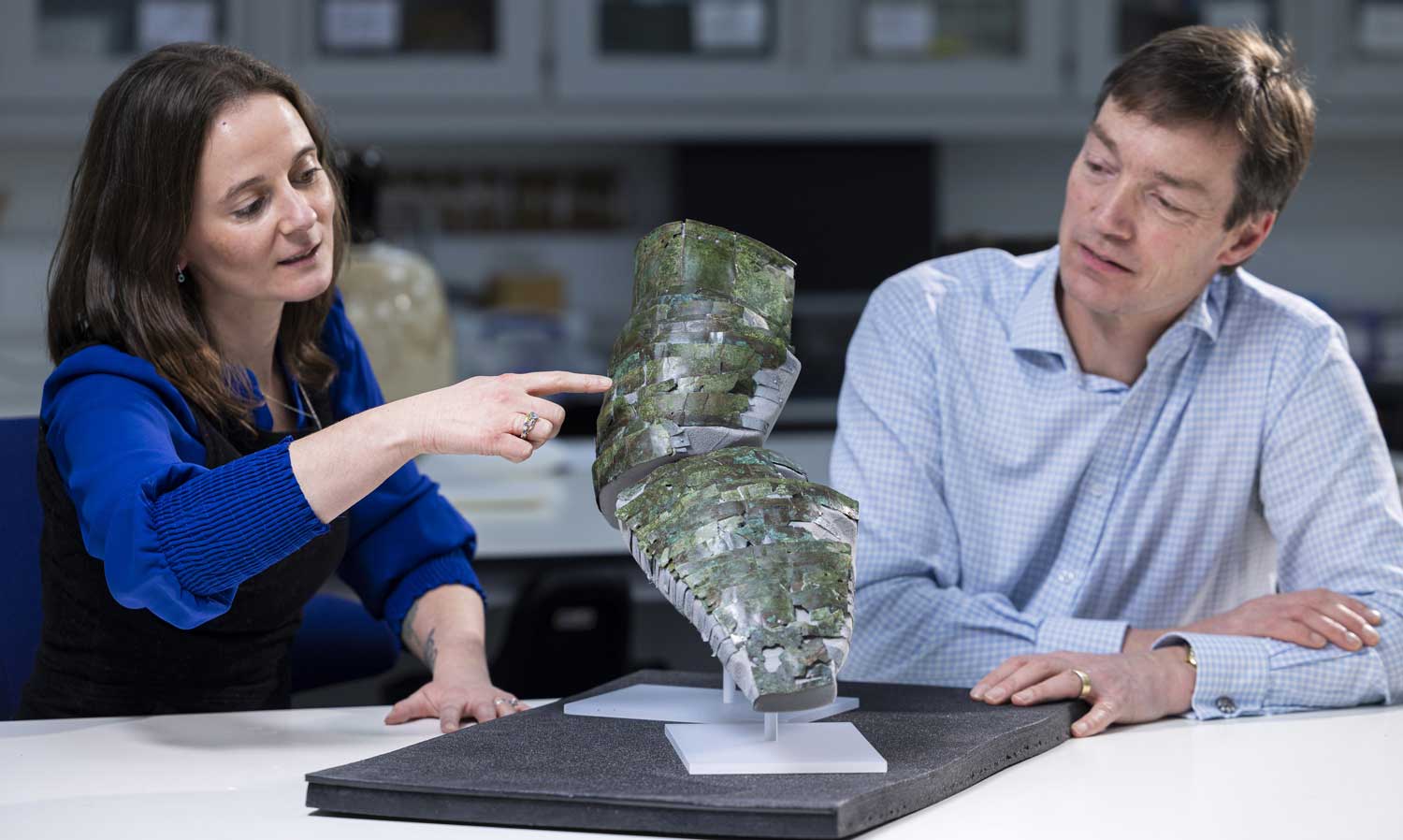
A man and woman look at a reconstructed Roman arm guard on display on a table.

Ancient Roman Armor Comes to Life

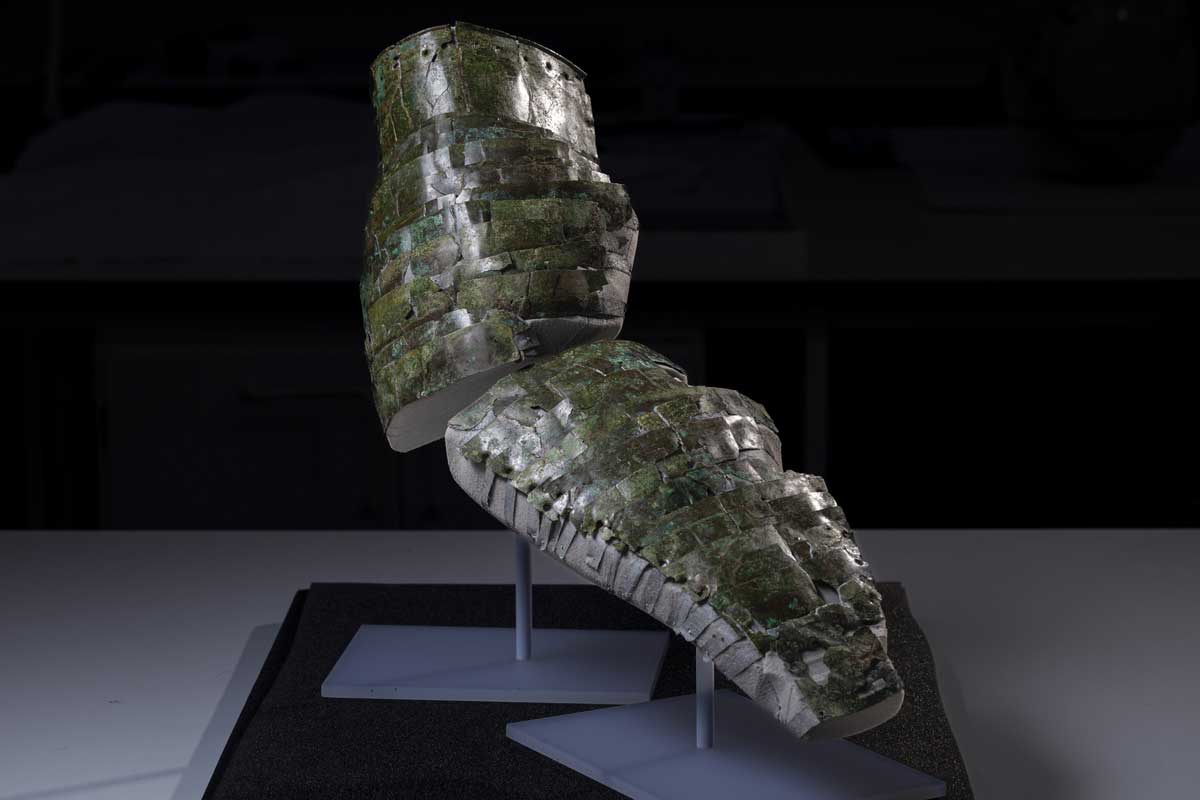
Experts reconstructed an ancient Roman arm guard that’s nearly 2,000 years old.

A man and woman look at a reconstructed Roman arm guard on display on a table.

© Duncan McGlynn, Courtesy National Museums Scotland

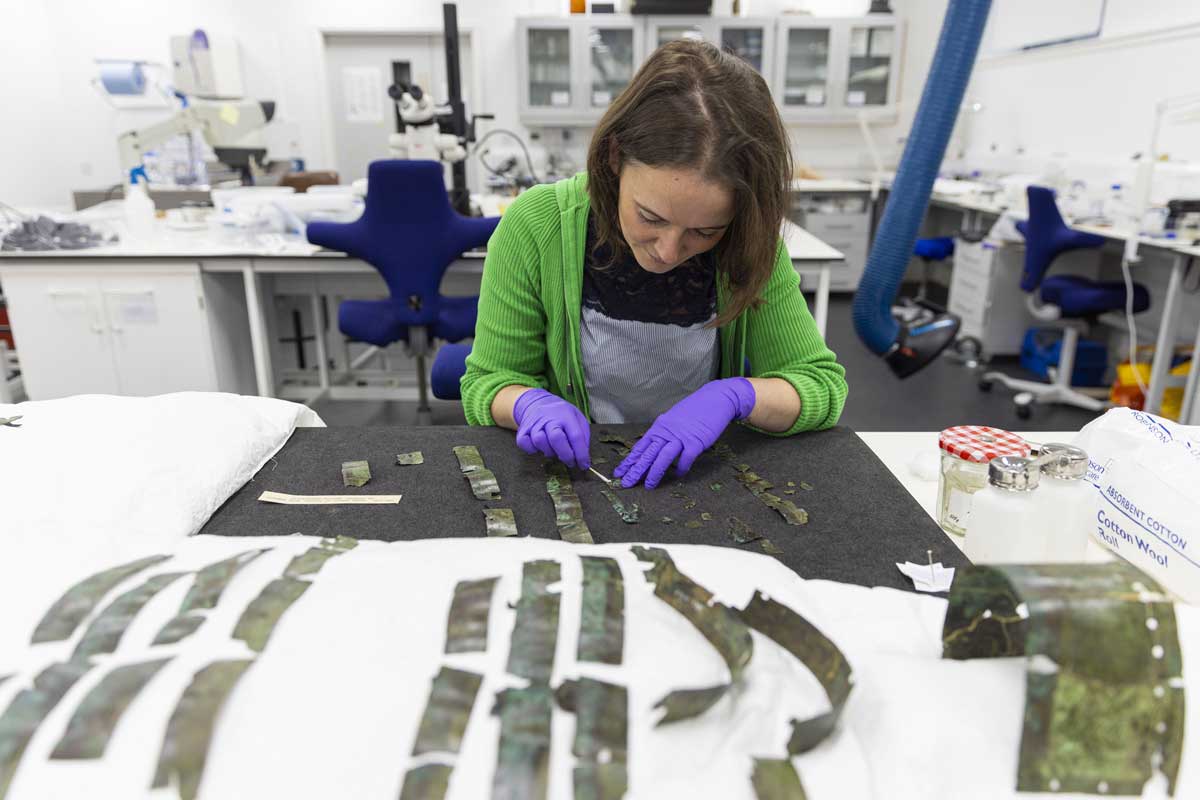
Conservator Bethan Bryan (left) and curator Dr. Fraser Hunter with an ancient Roman arm guard Bryan helped reconstruct from more than 100 pieces.

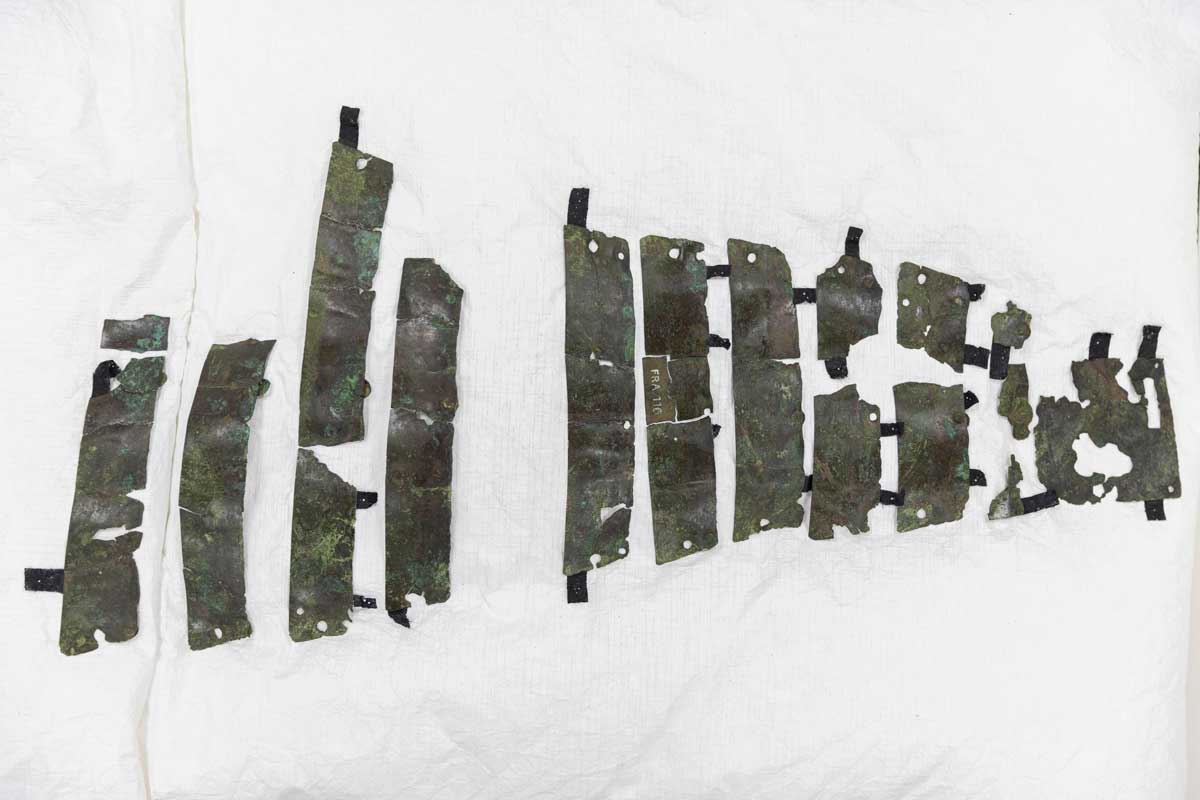
Thousands of years ago, the Roman Empire ruled over much of Europe and North Africa—and maintained its power with the help of armed soldiers. Now, a piece of Roman armor that was discovered in more than 100 pieces in Scotland has been reconstructed.

The arm guard was designed to be worn on the right arm of a soldier as he held a sword in that hand. The metal, along with attached leather padding, would have helped cushion blows from enemy weapons. Experts say that, while most arm guards were made of less expensive and more durable iron, this one was made of brass, suggesting that its owner was of a high military rank.

“It’s absolutely amazing. You get the sense of the protection this person had—and also the prestige,” Fraser Hunter of National Museums Scotland told the Observer. “It would have gleamed gold and would have looked absolutely spectacular when he was wearing it.”

© Duncan McGlynn, Courtesy National Museums Scotland

Richard Abdy, an expert on ancient Roman coins from the British Museum, noted that this style of arm guard would more commonly be worn by gladiators—men who were trained to fight other men or animals in arenas for public entertainment.

“The flexible arm guard is an iconic piece of equipment for Roman gladiators, so it is unusual to see it as a sword-arm protection for Roman soldiers, too,” Abdy said in a statement.

The arm guard was discovered in 1906 by British archaeologist James Curle at the site where a Roman military fort called the Trimontium once stood. The Romans attempted to conquer Scotland, but the local people fought back. The Romans left the area in about 180 CE due to violence and unrest—and abandoned the fort with the arm guard and other artifacts inside.

The arm guard is now on display at the British Museum in London, England, as part of an exhibit called “Legion Life in the Roman Army.” It will later be on permanent display at the National Museum of Scotland in Edinburgh, Scotland.

NEWS EXTRA

Happy Lunar New Year!

An Asian family of four in a living room decorating a flowered branch with citrus fruit.

© hxyume—E+/Getty Images

Lunar New Year, a major holiday in China and around the world, begins on February 10, 2024. This annual holiday takes place on the day of the year’s first new moon—sometime in late January or February.

Lunar New Year is celebrated over the course of 15 days. Celebrations take place in several countries. The best known is Chinese New Year.

Lunar New Year is an opportunity for a fresh start. People often clean their homes before the new year to remove any bad luck from the previous year. They also decorate their homes in. red, which is said to ward off bad luck.

The holiday is a time to gather. Families get together for a feast, and children receive red envelopes filled with money.

In the traditional lunar calendar, each year is represented by an animal. The year 2024 is the Year of the Dragon.

Did You Know?

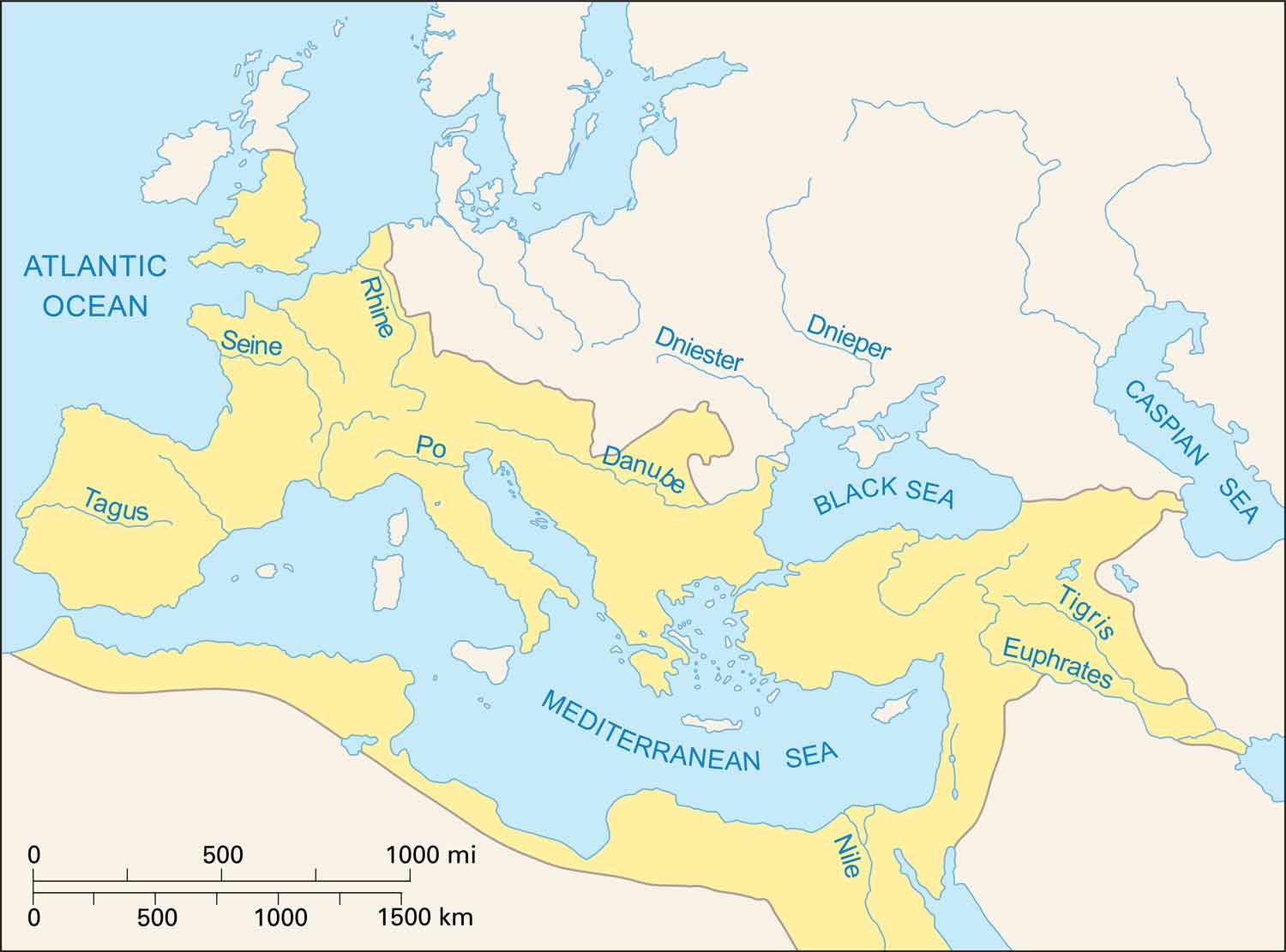
A map of Europe and northern Africa shows much of the region highlighted in yellow.

© Encyclopædia Britannica, Inc.

All the areas in yellow were part of the Roman Empire at its peak.

At its height, in 117 CE, the Roman Empire stretched 2,300 miles (3,700 kilometers) from north to south and over 2,500 miles (4,000 kilometers) from east to west. 

The Reach of the Romans

A brown brick aqueduct spans a river.

© Zechal/stock.adobe.com

The ancient Romans built this aqueduct in the 1st century CE to carry water from one location to another.

The ancient Romans influenced the languages, literature, laws, government, roads, and buildings of all the places they ruled.

  1. Politics. Between 509 BCE and 27 BCE, a period called the Roman Republic, the Romans replaced their monarchy with a democracy, though only free men could vote.
  2. Language. The modern languages of French, Spanish, Portuguese, Italian, and Romanian have their roots in Latin, the language of the ancient Romans.
  3. Architecture. The Romans designed and constructed great buildings. Some, like the Colosseum in Rome, are still standing.
  4. Engineering. The Romans took on huge engineering projects. They built hundreds of miles of roads that connected their empire and aqueducts to carry fresh water to their cities.
  5. Warfare. Rome’s army was so effective because it was highly trained and organized. The Roman army influenced later warfare.
  6. Literature. Rome produced great poets, such as Virgil, Horace, and Ovid. Their works influenced later writers, including Shakespeare.

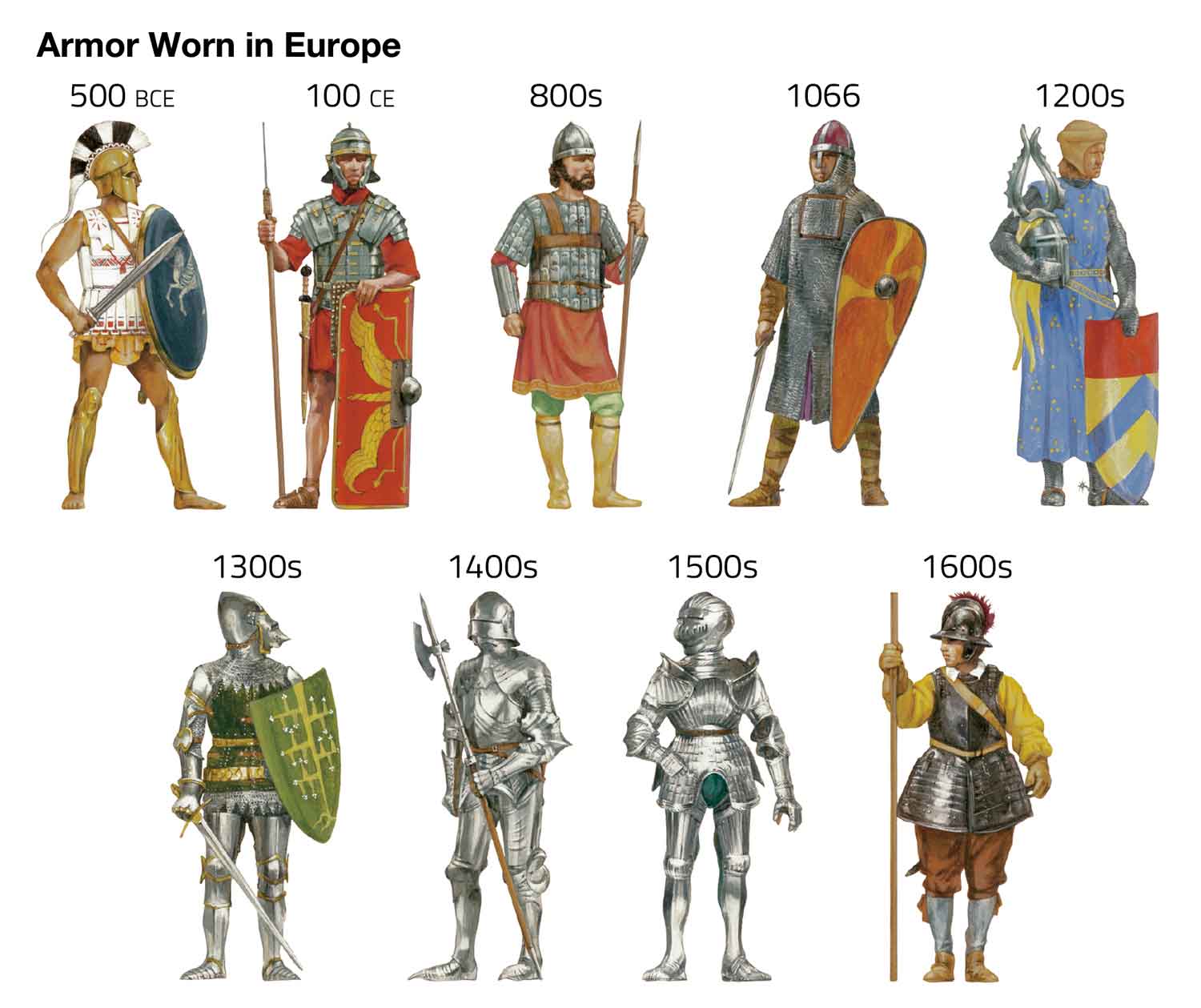
Armor Through the Ages

Illustration showing European armor from 500 BCE to the 1600s.

Encyclopædia Britannica, Inc.

By the time Roman soldiers put on their armor, protective clothing had been in existence for hundreds of years. You can read about the evolution of armor at Britannica.

WORD OF THE DAY

appurtenance

PART OF SPEECH:

noun

Definition:

: an object that is used with or for something — usually plural

Definitions provided by
Merriam-Webster Logo

Wordrow

See if you can figure out the word. Type your guess. If a letter circle turns green, it is in the right place. If a letter circle turns gold, the letter is somewhere in the word, but it’s in the wrong place. All other letters are not part of the word.

O
O
O
O
O
O

In Case You Missed It

Figure skater Alysa Liu felt happy and confident at the 2026 Olympics. She skated off with a gold medal!
March 5, 2026
An all-women ranger team protects endangered animals on the Indonesian island of Sumatra.
February 26, 2026
Nima Rinji is showing the world the powerful spirit of the Sherpa people as he climbs the world’s tallest mountains.
February 19, 2026
Life wouldn’t be as fun without the work of these three inventors.
February 12, 2026

Recreating History

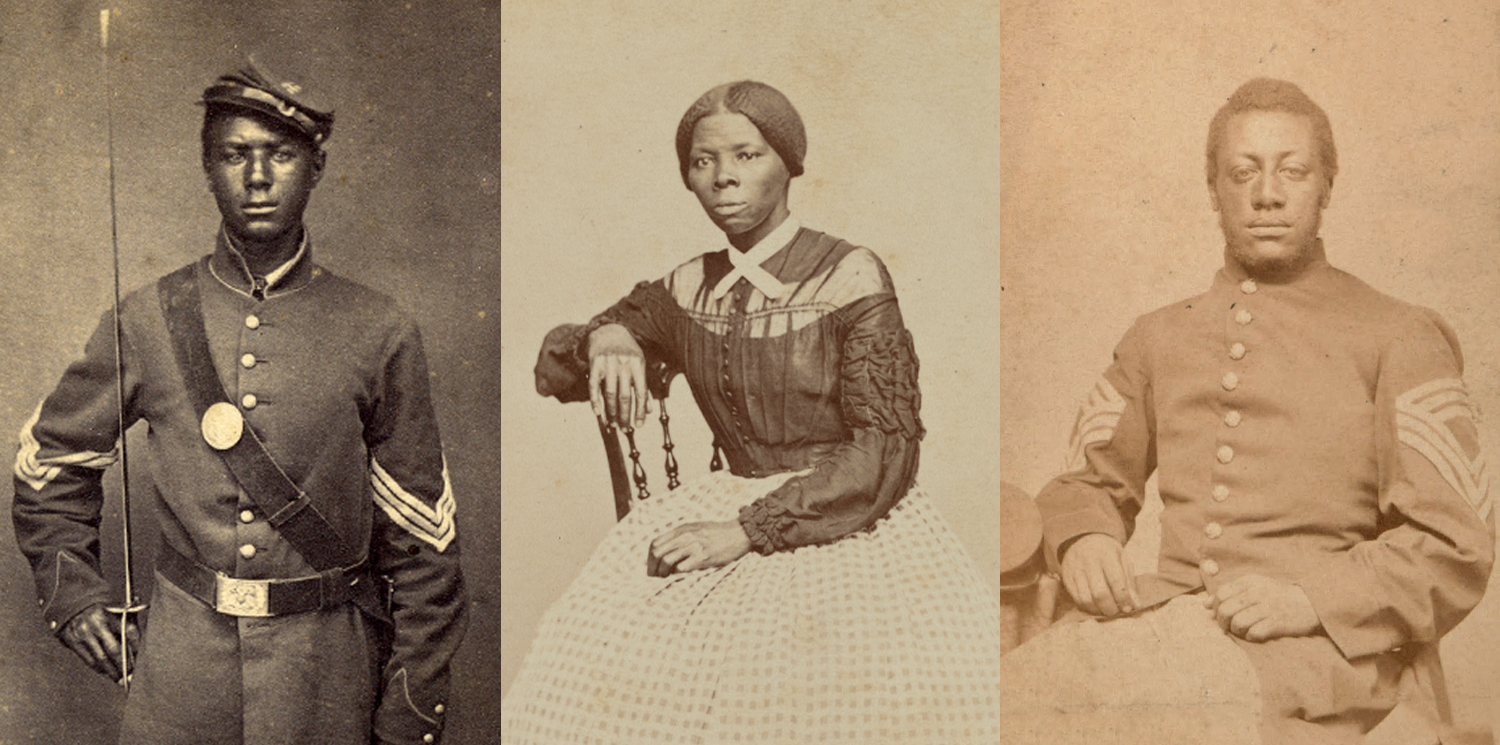
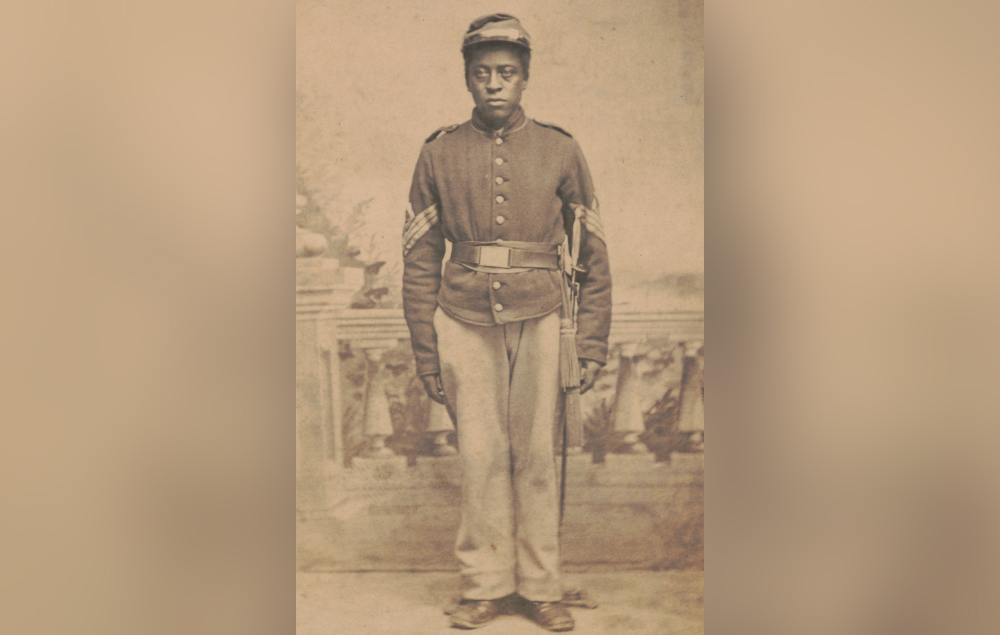
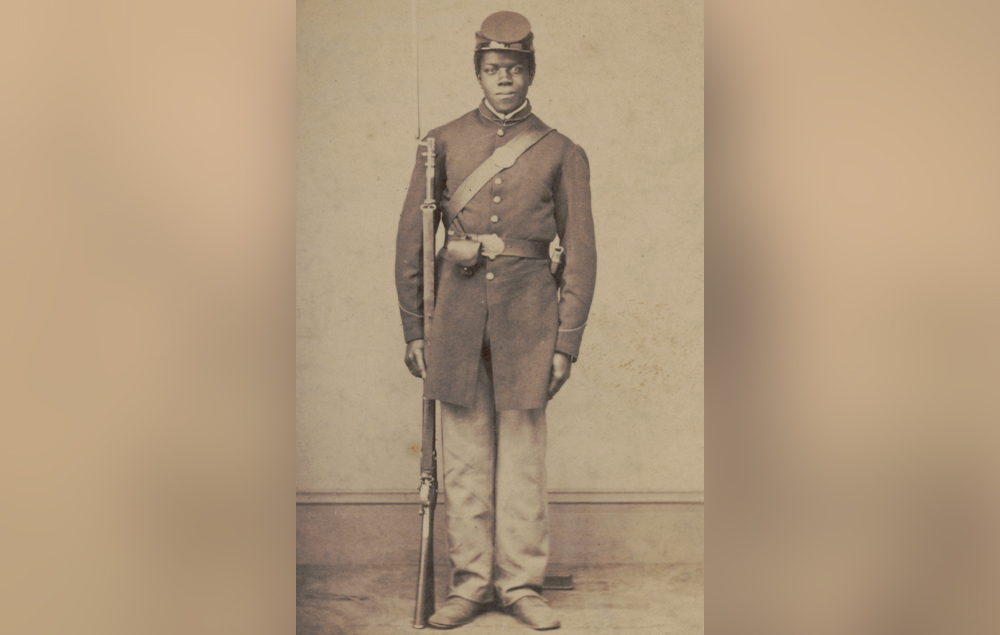
19th century portraits of Sergeant Andrew Jackson Smith, abolitionist Harriet Tubman, and Sergeant Major Lewis Douglass.

Recreating History

As part of a photography project, people are helping to recreate photos of Black ancestors who took part in the Civil War.
19th century portraits of Sergeant Andrew Jackson Smith, abolitionist Harriet Tubman, and Sergeant Major Lewis Douglass.
State Library of Massachusetts Special Collections Department, Library of Congress, Washington, D.C. (LC-DIG-ppmsca-54230), Museum of African American History, Boston and Nantucket (2011.005.12)
Photographer Drew Gardner has recreated portraits of many prominent figures from the Civil War, including (from left to right) Sergeant Andrew Jackson Smith, abolitionist Harriet Tubman, and Sergeant Major Lewis Douglass.

Kwesi Bowman was 21 when he posed for a photo wearing a blue Civil War Union army uniform. Bowman didn’t fight in the Civil War. In fact, he was born in the 21st century. But his great-great grandfather, Andrew Jackson Smith, was a war hero who risked his life to carry his regiment’s battle flag through enemy fire during the Battle of Honey Hill in 1864. Bowman’s photo shoot was part of a project in which descendants of Black Civil War soldiers recreate portraits of their ancestors.

The project is the brainchild of British photographer Drew Gardner. Gardner began taking photos of the descendants of famed historical figures many years ago, but he recently turned his attention to people who changed history but may never have been recognized for it. From there, he decided to try to track down descendants of enslaved people, including Black men who fought in the Civil War.

In 2023, Bowman and many other descendants gathered at a studio in New York City, where Gardner took portraits of them using a 19th-century camera. Each descendant reproduced the pose from their ancestor’s portrait and wore a near-copy of his uniform.

Most of these soldiers are not as well known as Andrew Jackson Smith, whose grandson, Andrew Bowman, Sr. (Kwesi’s grandfather), successfully campaigned to get him a Medal of Honor—the U.S. government’s highest military decoration—in 2001, decades after his death. And it wasn’t easy to link most of the soldiers with their descendants. While Americans whose families immigrated to the United States can often trace their family histories, descendants of enslaved people were included in fewer of the historical documents that researchers often rely on. For example, when enslaved people were listed in records, they were often unnamed. So Garner and a team of researchers had a lot of work to do.

In one case, the team set out to research a Civil War soldier named David Miles Moore, Jr., who was only a teenager when he enlisted in the Union army in 1863. Moore served in the 54th Massachusetts Volunteer Infantry, the unit of Black soldiers later depicted in the 1989 movie Glory. The researchers unearthed a record showing that Moore had filed for a military pension in 1897 and then found his name in the 1900 U.S. Census. From there, they traced Moore’s family to his living descendants, the Flowers family. It was 9-year-old Neikoye Flowers who recreated a portrait of Moore, holding a drum like the one his ancestor held.

Austin Morris recreated a portrait of his ancestor, Lewis Douglass, a Civil War soldier and the son of famous abolitionist Frederick Douglass. Morris, who is 20, has always known that Frederick Douglass was in his family tree. But dressing up like Lewis made him feel a special connection to the Douglasses.

“I was looking at his picture, thinking: I’m 20. He was in his 20s when the picture was taken. He fought in the war, and he was one of the first Blacks to sign up for it,” Morris told Smithsonian Magazine.

Neikoye Flowers’ mom, Janisse, says this portrait project is giving her son and his twin sister a similar sense of pride.

“They’re going to remember everything about this trip,” Janisse told Smithsonian. “And hopefully it turns that page in history where they can brag about this to their kids and grandkids.”

Did You Know?

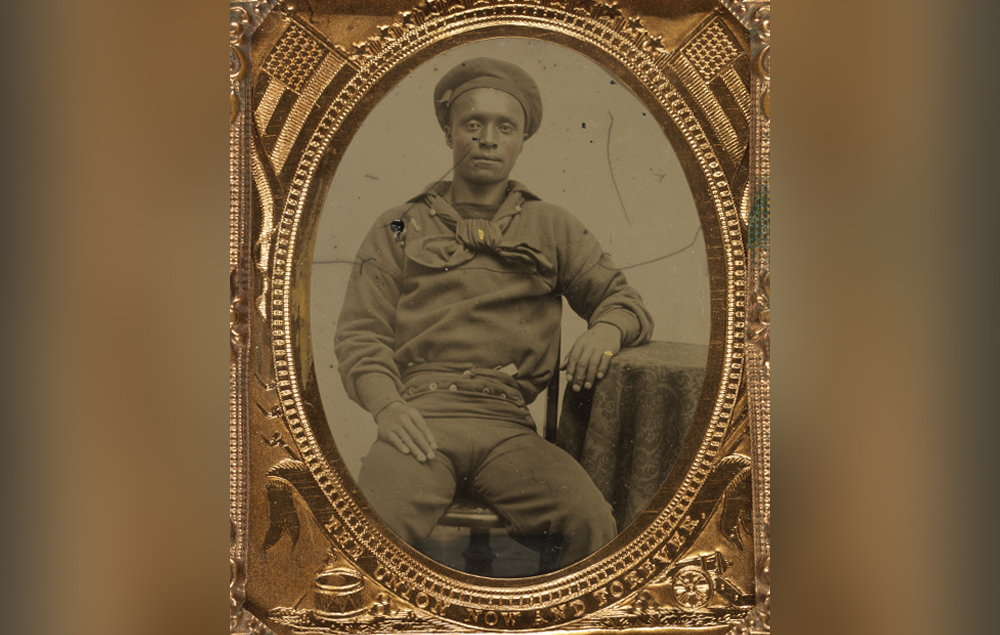
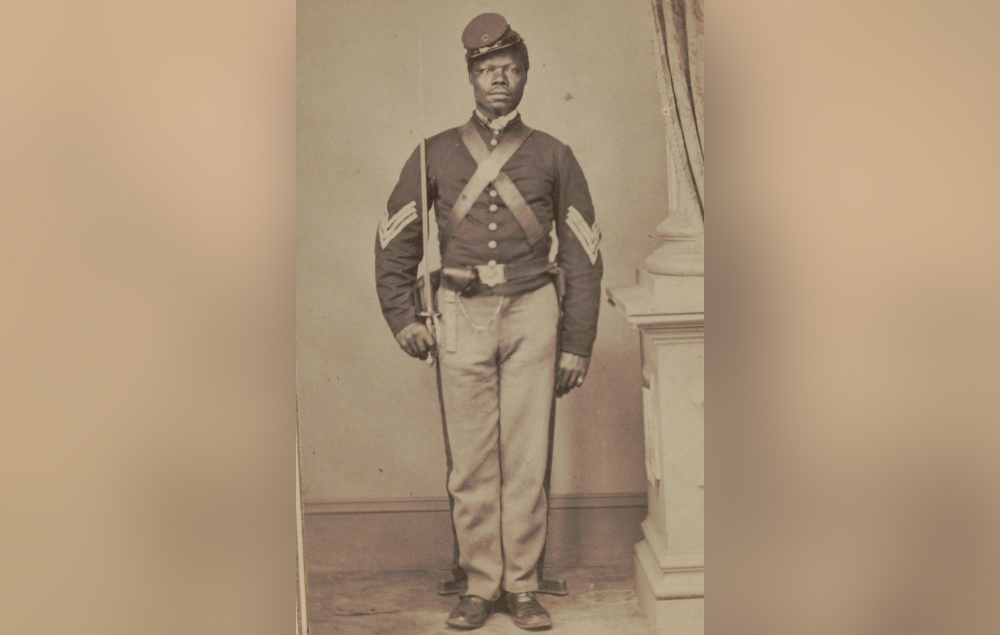
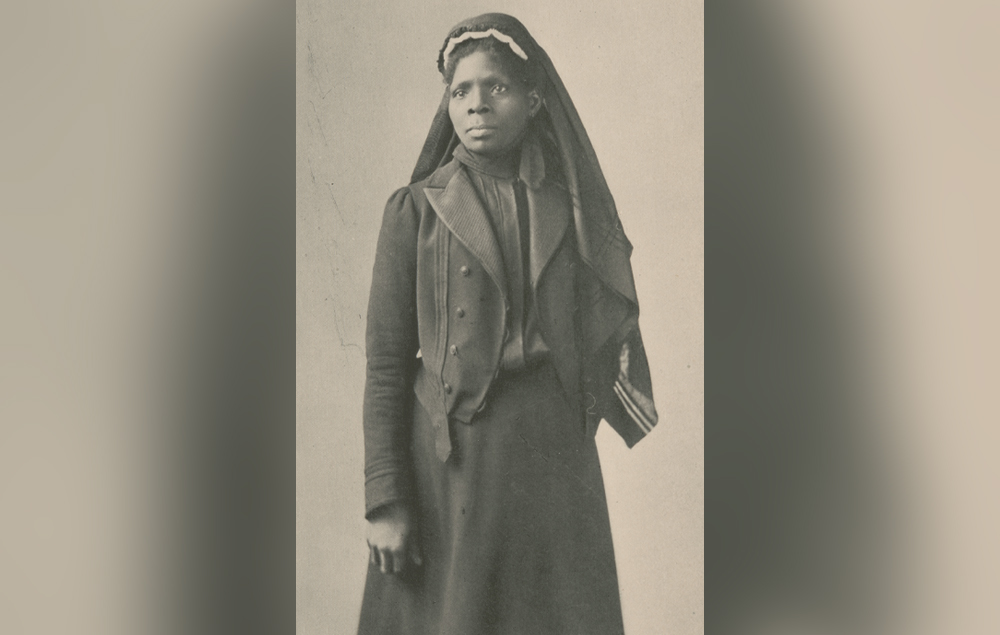
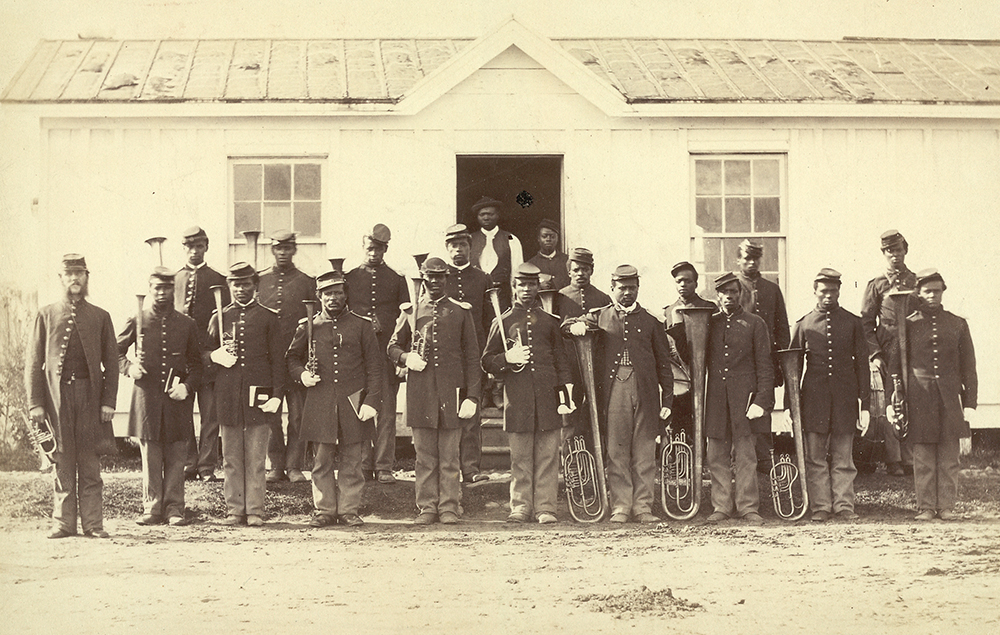
The United States first allowed Black men to enlist in the Union army in 1863, when the Emancipation Proclamation was issued. By the end of the Civil War, in 1865, about 198,000 Black soldiers had served in the U.S. Army and Navy.

Click through the slideshow, which shows some faces of the Civil War.

Civil War Photograph Collection/Library of Congress, Washington, D.C. (LC-DIG-ppmsc-02781), Liljenquist Family Collection/Library of Congress, Washington, D.C. (LC-DIG-ppmsca-57593), Liljenquist Family Collection/Library of Congress, Washington, D.C. (LC-DIG-ppmsca-72044), Liljenquist Family Collection/Library of Congress, Washington, D.C. (LC-DIG-ppmsca-69306), Liljenquist Family Collection/Library of Congress, Washington, D.C. (LC-DIG-ppmsca-72052), Sailor – Liljenquist Family Collection/Library of Congress, Washington, D.C. (LC-DIG-ppmsca-36959), Carol M. Highsmith’s America, Library of Congress Washington, D.C. (LC-DIG-highsm-04880)

Celebrate Black History Month

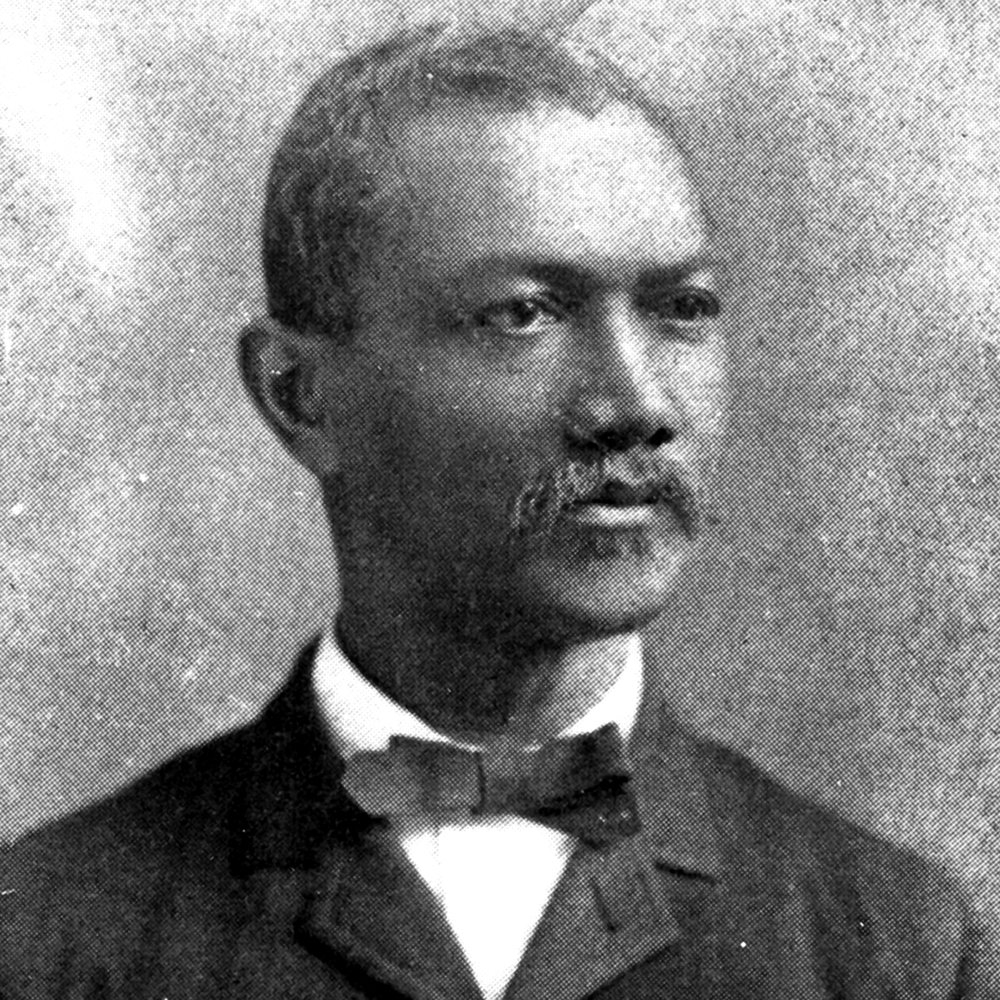
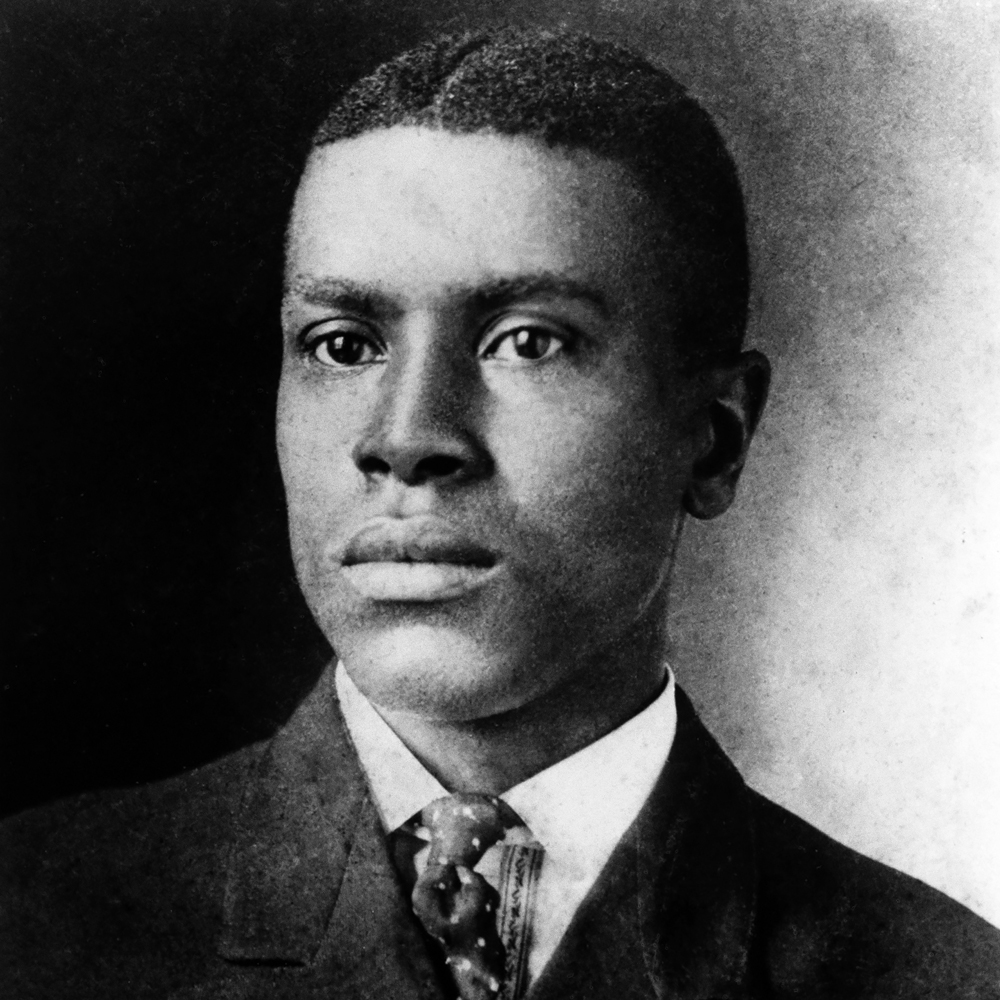
In honor of Black History Month, we’ve put together a list of some prominent and accomplished Black Americans. Check out Britannica to learn more.

Portrait of Alexander Augusta
Universal History Archive—Universal Images Group/Getty Images
Alexander Augusta (1825–1890). Born a free man in Virginia in 1825, Alexander Augusta became a doctor after studying medicine in Canada. (He was denied entry to medical school in the United States.) In 1863, as the Civil War raged, he wrote to President Abraham Lincoln and asked to be commissioned as a medical officer in the Civil War. The first Black American to receive such a commission, he served as the surgeon for an all-Black infantry of Union troops. Augusta also helped bring about equal pay for Black soldiers after he wrote to Congress about the matter. He would later become the nation’s first Black professor of medicine when he took a teaching job at Howard University in Washington, D.C.
Portrait of Oscar Micheaux
John Kisch Archive/Getty Images

Oscar Micheaux (1884–1951). The first major Black filmmaker in American history, Oscar Micheaux produced and directed more than 45 movies. Micheaux’s film career began in 1919 with The Homesteader, which was adapted from a novel he’d written about his experiences operating a farm on the American frontier. All of his films featured all-Black casts at a time when major movie studios often cast Black actors in minor or stereotypical roles. Micheaux made many types of films, and some of them directly addressed racism in America.  

Portrait of Augusta Savage
National Archives, Washington, D.C.

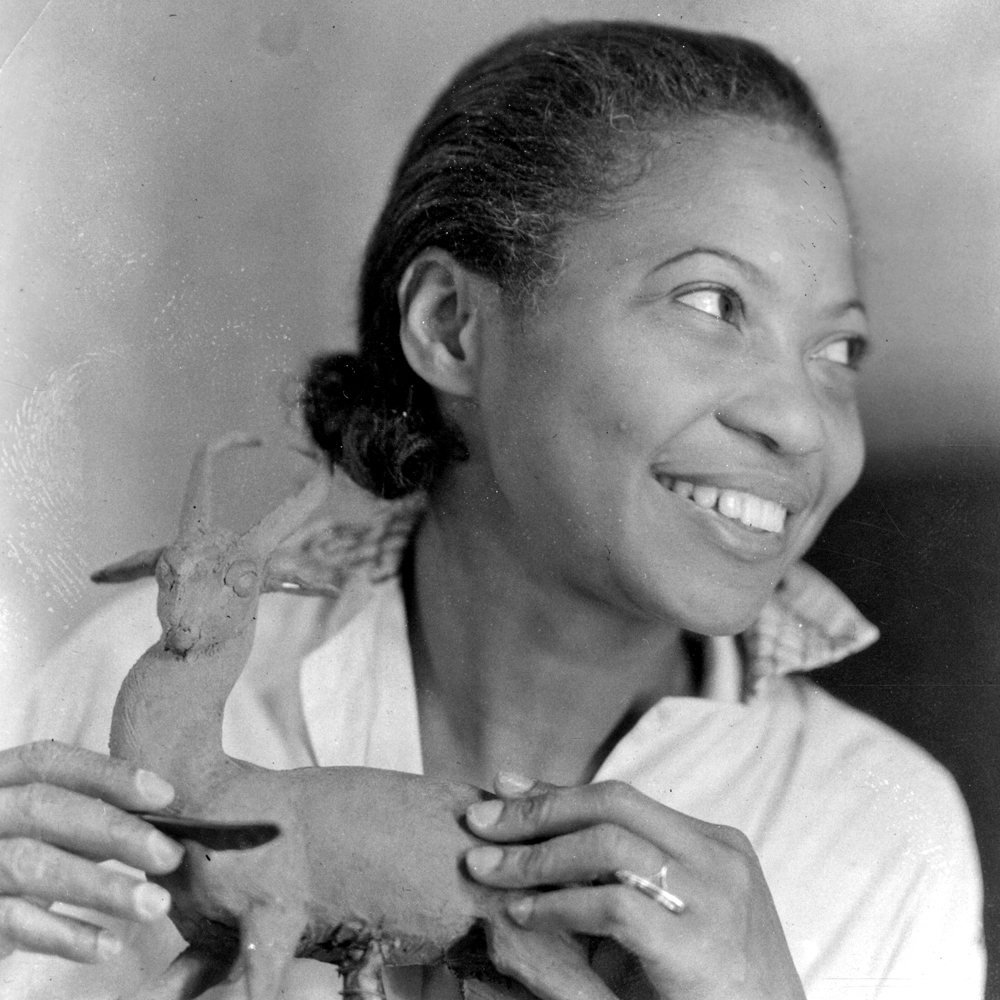
Augusta Savage (1892–1962). Augusta Savage first began making sculptures out of the red clay soil in her home state of Florida. In the early 1920s, she studied sculpture at the Cooper Union School of Art in New York City. During this time, the New York neighborhood of Harlem was home to many Black writers and artists who generated an explosion of creativity called the Harlem Renaissance. Savage moved to Harlem and gained recognition as part of this movement. Her sculptures depicted both well-known and unknown Black Americans.

Encyclopædia Britannica, Inc.

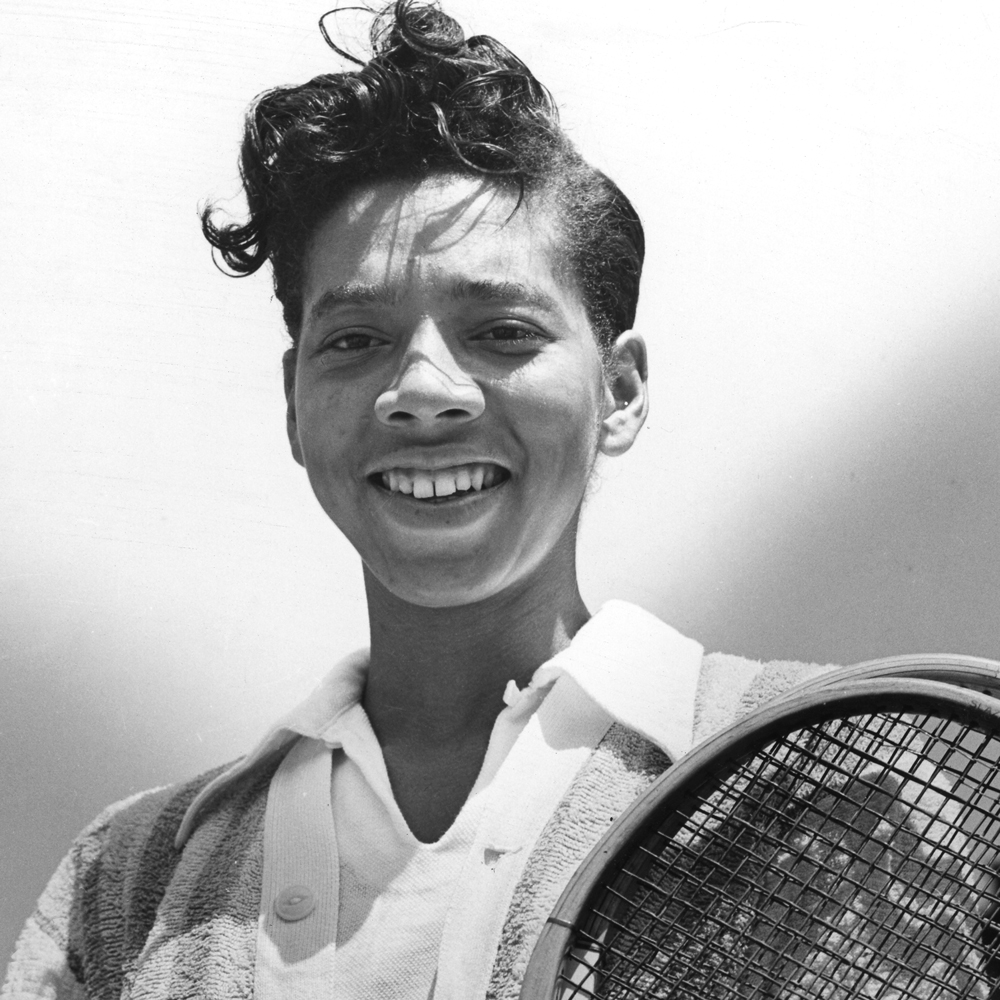
Althea Gibson (1927–2003). Althea Gibson was the top women’s tennis player in the mid to late 1950s, becoming the first Black player to win the French Open (1956), Wimbledon (1957 and 1958), and the U.S. Open (1957 and 1958). Raised in New York City, Gibson won her first singles championship in 1942, while still a teenager. For 10 years, beginning in 1947, she won the American Tennis Association’s women’s singles championship, as well as several matches in Europe and Asia. In 1964, Gibson began playing professional golf, becoming the first Black member of the Ladies Professional Golf Association (LPGA).

More About Black History

Portraits of prominent Black Americans from the past and present.
Library of Congress, Washington, D.C. (LC-DIG-ppmsca-08978, LC-USW3-001546-D, LC-USZ62-127236, LC-USZ62-27663); Addison N. Scurlock—Michael Ochs Archives, Kean Collection—Archive Photos, © Michael Ochs Archives, Evan Agostini/Getty Images; Smithsonian National Museum of African American History and Culture, Washington, D.C. (object no. 2009.50.2); PRNewsFoto/XM Satellite Radio/AP Images; AP Images; NASA; National Archives, Washington, D.C. (2803441); Pete Souza—Official White House Photo; Animation Encyclopædia Britannica, Inc.
Are you interested in learning more about Black history? Click below for links to information about people, events, and more!

WORD OF THE DAY

mettle

PART OF SPEECH:

noun

Definition:
: the force that moves something forward : the force that propels something
Definitions provided by
Merriam-Webster Logo

Word Flower

See how many words you can make from the letters in the flower. All the words must use the letter in the center.
O
O
O
O
O
O

In Case You Missed It

Figure skater Alysa Liu felt happy and confident at the 2026 Olympics. She skated off with a gold medal!
March 5, 2026
An all-women ranger team protects endangered animals on the Indonesian island of Sumatra.
February 26, 2026
Nima Rinji is showing the world the powerful spirit of the Sherpa people as he climbs the world’s tallest mountains.
February 19, 2026
Life wouldn’t be as fun without the work of these three inventors.
February 12, 2026

Is Driving About to Get Easier?

A car in a crowded parking lot with its wheels turned 180 degrees.

Is Driving About to Get Easier?

New technology allows a car’s wheels to turn up to 360 degrees.

A car in a crowded parking lot with its wheels turned 180 degrees.
© Hyundai Motor Group

Do you notice anything unusual about this Hyundai Ioniq 5?

Ask a driver what’s most challenging about operating a car, and they’re likely to say it’s parallel parking—maneuvering a vehicle into a space between two cars already parked on the side of a street. Parallel parking requires three precise turns of the steering wheel (more turns might be needed for a tight parking spot or with a nervous driver). But what if a car’s wheels could rotate 90 degrees, allowing the car to move sideways, right into that spot? A new technology makes this, and more, possible.

Hyundai Mobis’s new e-corner system allows a vehicle’s wheels to turn so they’re perpendicular to the vehicle. This enables drivers to move the car sideways (Hyundai calls this “crab driving” because crabs move sideways), diagonally, and even in a full, 360-degree spin. The Hyundai Motor Group says this makes it easier not only to parallel park but also to maneuver around parking lots, narrow streets, and obstacles in the road.

An overhead view of a car next to a parallel parking spot alongside a closeup of the car with its wheels turned 180 degrees.
© Hyundai Motor Group
Hyundai says its e-corner system makes it easy to move a car sideways into a parking space.

The system, which may take years to become available in commercially sold cars, can be used only in electronic vehicles (EVs). That’s because, with e-corner, each wheel operates independently, with its own motor. (In traditional, gas-powered vehicles, the wheels are powered by the internal combustion engine.)

Hyundai Mobis tested the technology by installing it in an EV called a Hyundai Ioniq 5. But even though the Ioniq demonstrated the technology, e-corner won’t be limited to Hyundai vehicles. Mobis is a supply company owned by Hyundai, and it can sell the technology to many automakers.

Did You Know?

© notviper–iStock/Getty Images, © Mr.siwabud Veerapaisarn/Dreamstime.com; Photo illustration Encyclopædia Britannica, Inc.

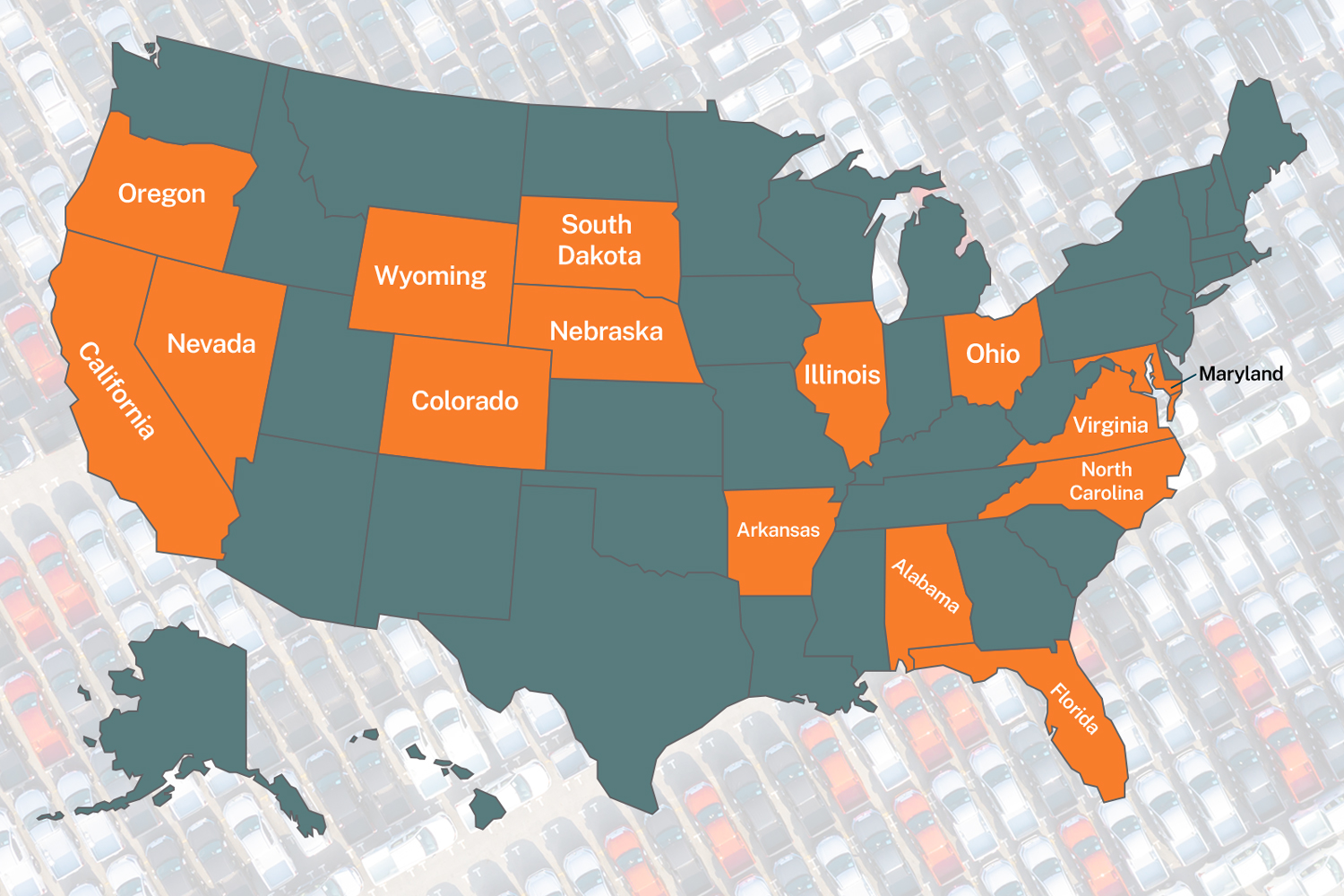
If you live in one of the states that’s labeled on this map, you won’t be tested on your parallel parking skills.

Is the ability to parallel park required to get a driver’s license in the United States? The answer is yes, unless you live in Alabama, Arkansas, California, Colorado, Florida, Illinois, Maryland, Nebraska, Nevada, North Carolina, Ohio, Oregon, South Dakota, Virginia, or Wyoming.


My New Car Comes With That?!

Most newer cars have features like a cupholder or a touch screen display. But over the years, some carmakers have introduced features that didn’t last long. Would these fairly weird features make you more likely to want a new ride?

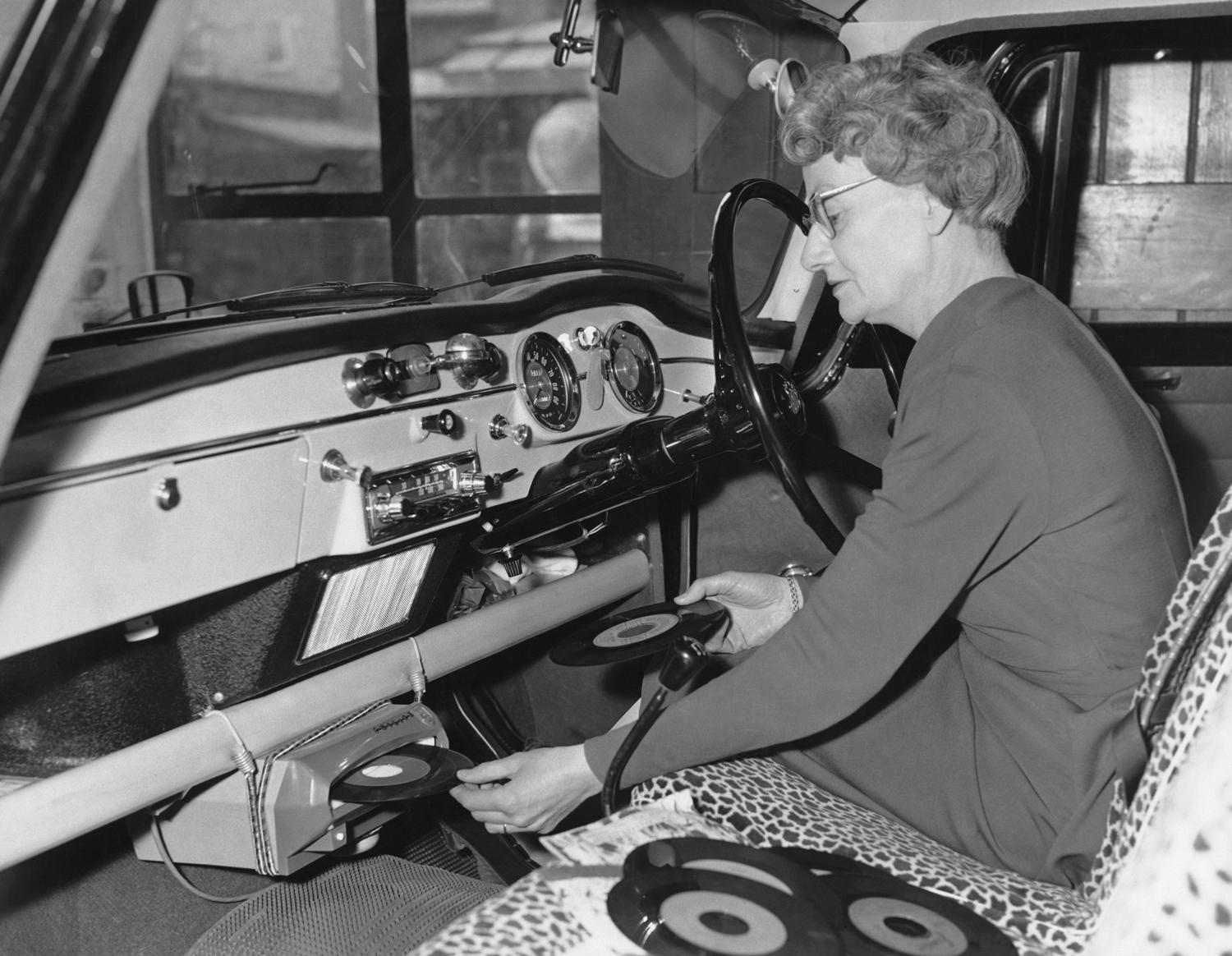
Record Player

In 1956, Chrysler began installing record players in some of its cars’ dashboards. That may make sense since carmakers would later offer cassette tape and CD players. But the idea never really took off.

A woman sits at the steering wheel on an old car and puts a 45 record into a below-dashboard record player.
© Hulton-Deutsch Collection—Corbis/Getty Images

Coffee Maker

Carmaker Fiat offered an espresso maker as an option in its 2013 500L model. The machine worked only when the car wasn’t moving, to avoid any accidents with hot liquids. But despite this safety precaution, Fiat stopped offering the espresso maker—and doesn’t even make the 500L anymore.

Ice Maker

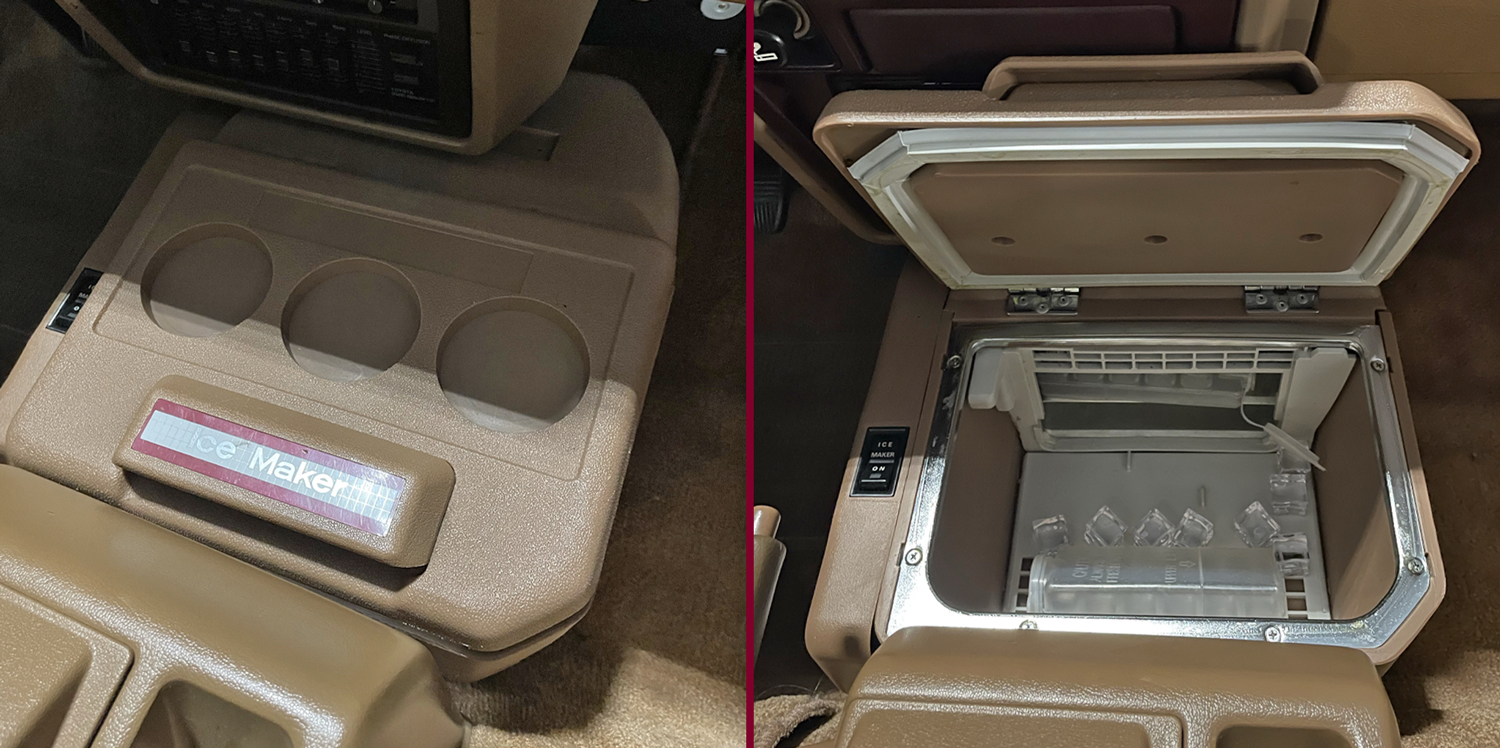
The 1984 Toyota Van had an optional tiny refrigerator that was cooled by the vehicle’s air conditioning lines. Inside the fridge, there were spill-proof ice trays!

Side by side photos of a dashboard ice maker closed and then open with ice cubes inside.
Tim Malone—Toyota Motor North America

Shower

When Honda first started making its CR-V, it included an outdoor shower attachment! This would have come in handy for people who decided to take a drive to the beach and needed to hose off their sandy feet.

Sweet Rides

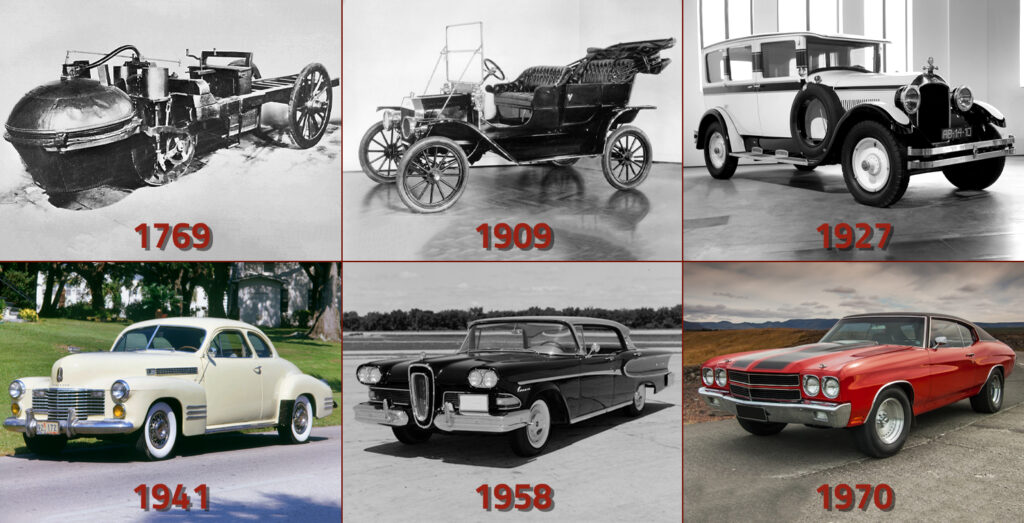
Examples of cars from 1769, 1909, 1927, 1941, 1958, and 1970.
National Motor Museum, Beaulieu, Hampshire; Ford Motor Company; © Bright, Sigurbjornragnarsson/Dreamstime.com; National Motor Museum—Heritage Images, Ken Fermoyle—The Enthusiast Network/Getty Images; Photo composite Encyclopædia Britannica, Inc.

Did you know that the first automobile was invented in 1769? But it would take more than a century before cars were common. Learn more about autos at Britannica!

WORD OF THE DAY

propulsion

PART OF SPEECH:

noun

Definition:

: the force that moves something forward : the force that propels something

Definitions provided by
Merriam-Webster Logo

Word Search

See how many automakers you can find in the puzzle.

O
O
O
O
O
O

In Case You Missed It

Figure skater Alysa Liu felt happy and confident at the 2026 Olympics. She skated off with a gold medal!
March 5, 2026
An all-women ranger team protects endangered animals on the Indonesian island of Sumatra.
February 26, 2026
Nima Rinji is showing the world the powerful spirit of the Sherpa people as he climbs the world’s tallest mountains.
February 19, 2026
Life wouldn’t be as fun without the work of these three inventors.
February 12, 2026

Cracking the Code

A rust-colored, 19th century dress on a mannequin is alongside a wrinkled paper with several handwritten lines.

Cracking the Code

A mysterious message was found in a dress from the 1880s. Finally, the owner of the dress understands what it means.
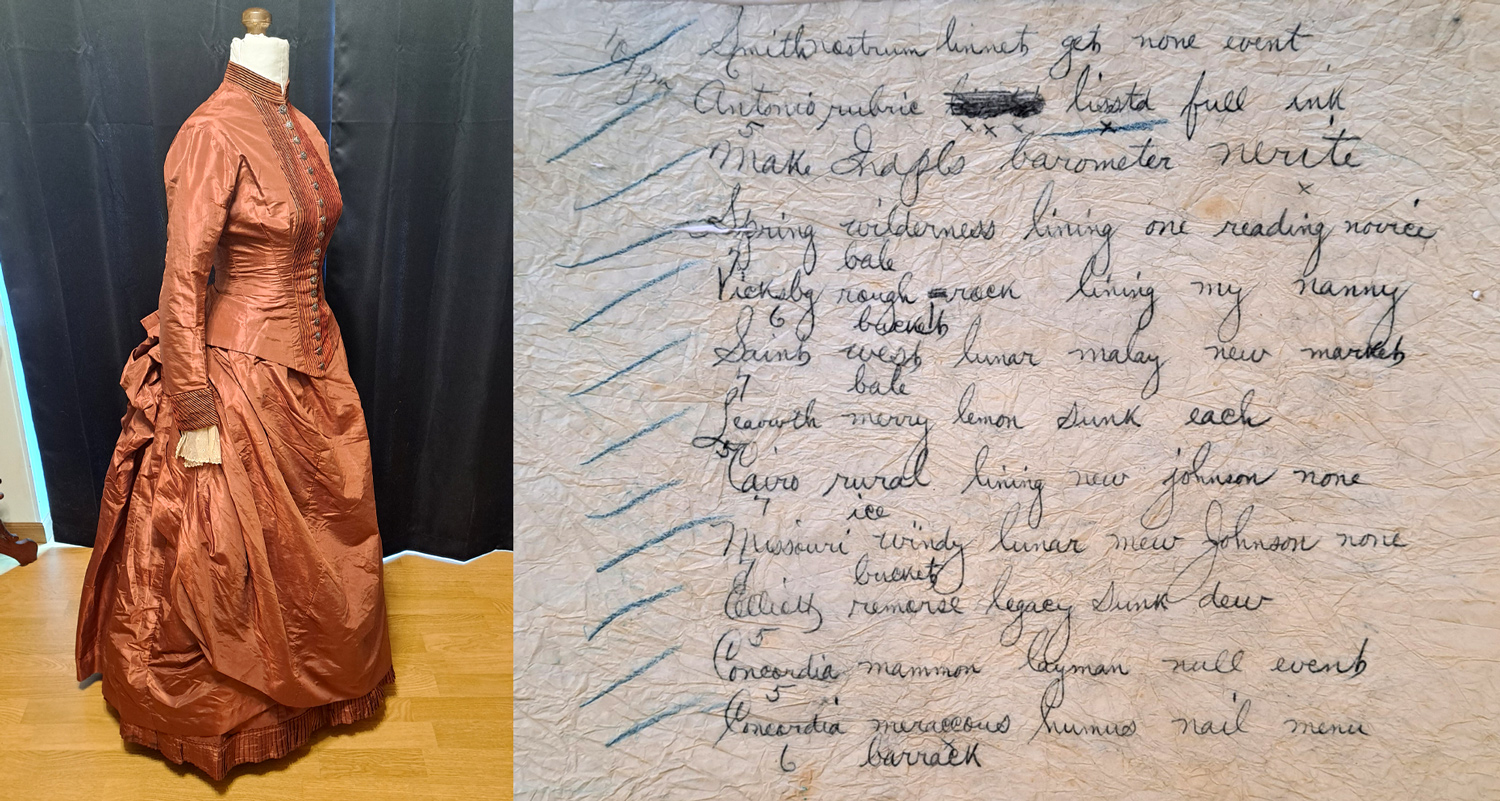
A rust-colored, 19th century dress on a mannequin is alongside a wrinkled paper with several handwritten lines.
Sara Rivers Cofield

When antique collector Sara Rivers Cofield found strings of unrelated words written on two pieces of paper from the 1880s, she had no idea what they meant—and neither did many code experts. Now, the mystery has been solved. It turns out that Rivers Cofield’s mysterious messages were probably old-fashioned weather reports.

Rivers Cofield found the messages in a hidden pocket of an antique dress she’d purchased in 2013. The handwritten words didn’t make much sense together. In fact, they didn’t seem related at all. One line read, “Bismark omit leafage buck bank,” and there were many more like it. Perplexed, Rivers Cofield went online and asked for help. Clearly, this was some kind of code—but what code was it, and how could it be cracked? 

A wrinkled piece of paper with several handwritten lines.
Sara Rivers Cofield

The line “Bismark omit leafage buck bank,” can be seen in this piece of paper. What does it mean?

Many people who studied the messages said they believed the code was designed for transmitting telegraphic messages. Invented in the 1830s, the telegraph was a device that could be used to quickly send messages (called telegrams) over distances long before email, texting, or even the telephone existed. The instant messaging of its day, the telegraph offered a much faster form of communication than letter writing. People who sent telegrams had to pay by the word, so it was preferable to make messages as short as possible. Telegraphic codes allowed senders to communicate a full sentence using just one or two words.
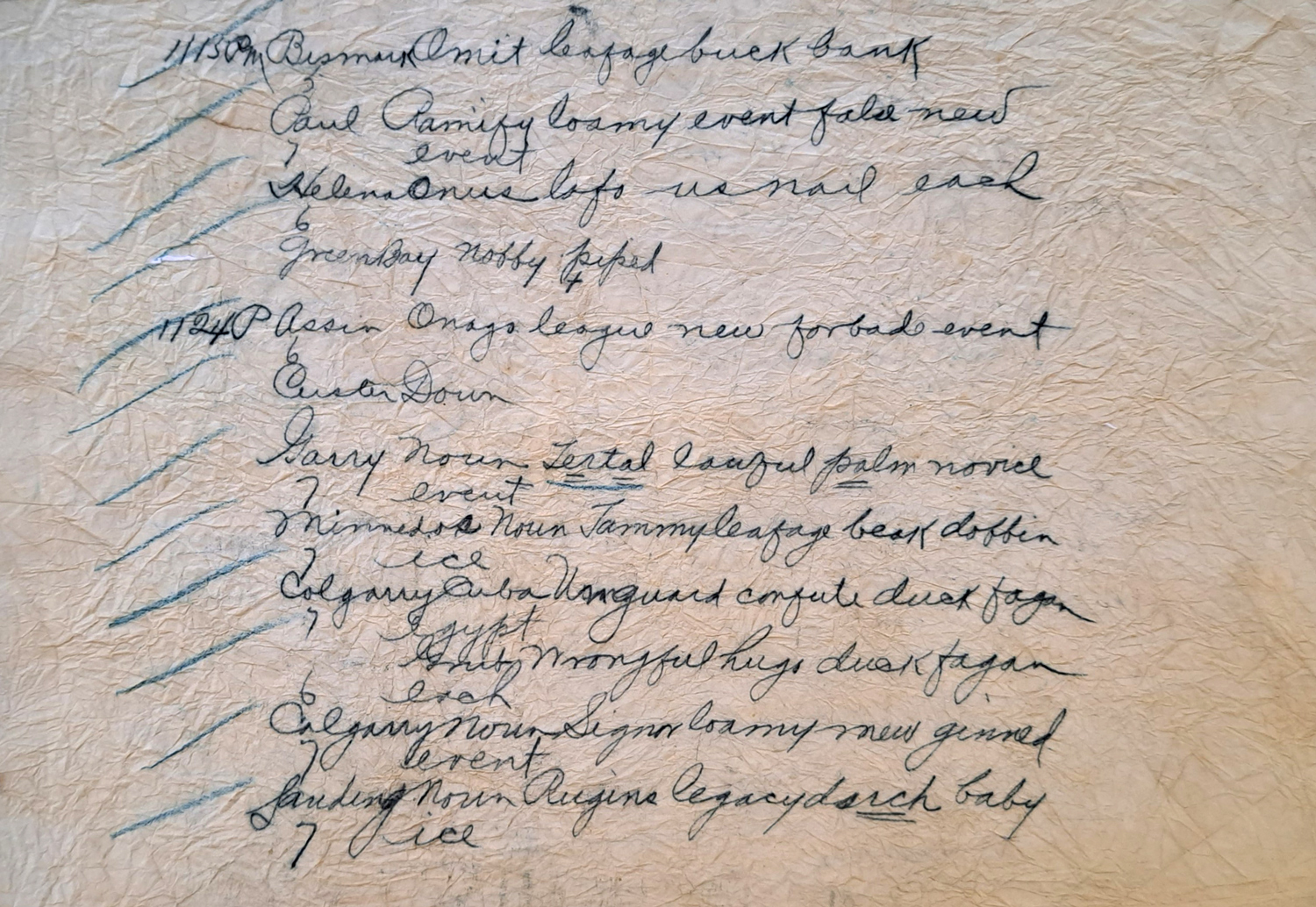
But if the messages in the antique dress were written in telegraphic code, which telegraphic code was it? Hundreds of codes were developed by the military, the railroads, and many other companies.
Sara Rivers Cofield

In 2022, research computer analyst Wayne Chan figured it out. After seeing the handwritten words transcribed online, Chan looked through about 170 code books, searching for matches. He found nothing at first. Then, in a book about the history of the telegraph, Chan read about weather codes. These codes were game changers in their day. For the first time, people received information about storms and other weather events via telegram instead of being taken by surprise.
With help from a librarian at the National Oceanic and Atmospheric Administration (NOAA), Chan obtained a copy of a late 19th century weather code book used by the U.S. Army Signal Corps and realized that the messages found in the dress were weather reports. Hidden in those “nonsense” words, there was information about temperature, barometric pressure, precipitation, and more.

Who wore the dress and carried those weather reports? No one knows for sure, but Chan and Rivers Cofield speculate that it might have been an employee at the U.S. Army Signal Service in Washington, D.C.

That part of the case will probably remain unsolved.

Did You Know?

Harris & Ewing Collection/Library of Congress, Washington, D.C. (LC-DIG-hec-42815), © Fizkes/Dreamstime.com; Animation Encyclopædia Britannica, Inc.

According to the CTIA, an organization that represents the wireless industry, Americans send more than 63,600 text messages per second.

Speaking in Code

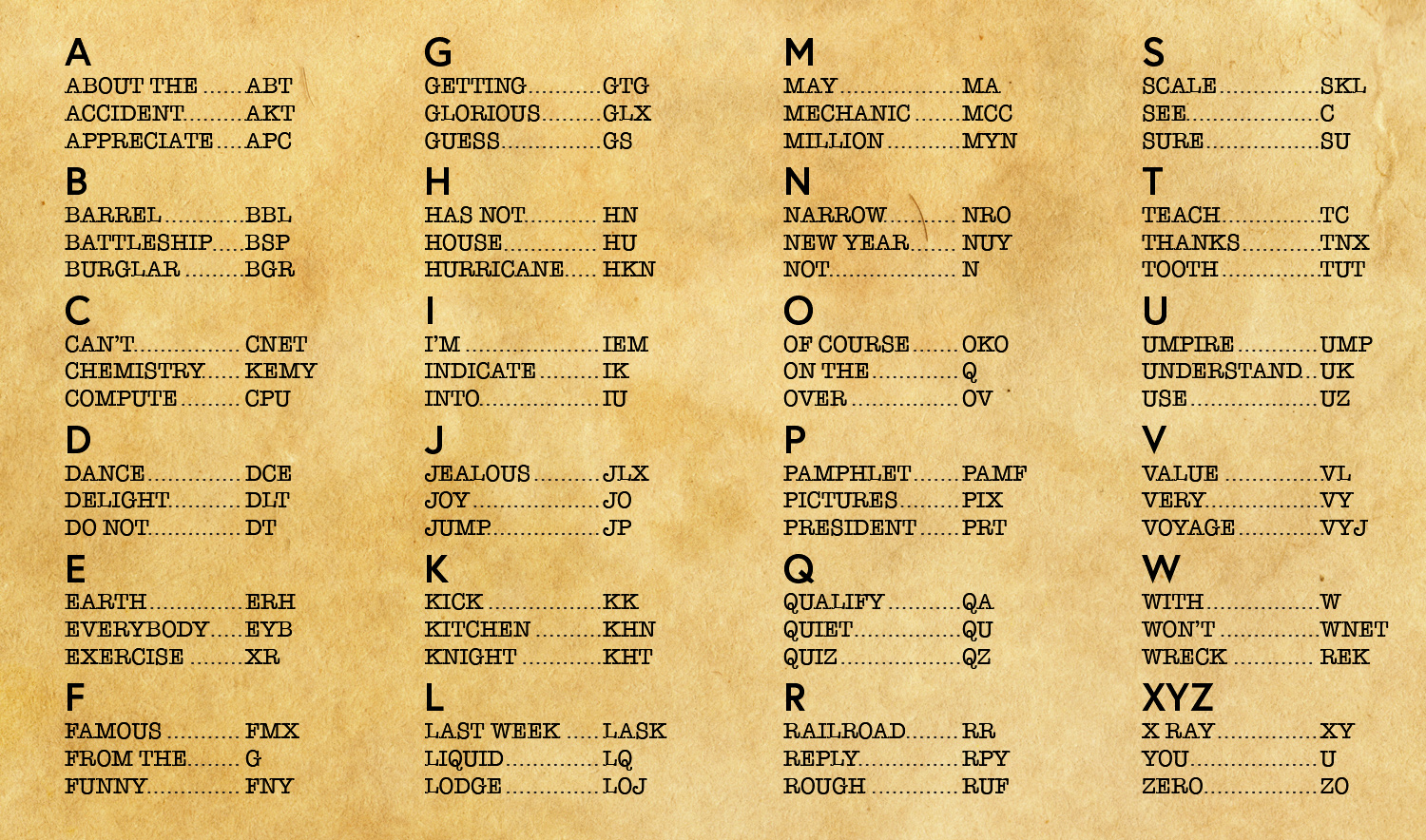
A weathered page shows a listing of words and phrases alongside their shortened, encoded equivalents.
Source: Evans Basic English Code, 1947; Photo illustration Encyclopædia Britannica, Inc.

This page is from a 1947 codebook called Evans Basic English. People could use many codes to make their telegrams shorter—and less expensive.

Telegraph codes didn’t just cut down on the cost of sending telegrams; they also helped keep information secure and private. To the untrained eye, some of these codes could be hard to decipher.

If the code shown above seems odd to you, imagine if someone from the 19th century took a time machine to the present day and saw an instant message or text message containing abbreviations like LOL, TIL, and BTW. Many such abbreviations date back to the early days of text messaging, when Short Message Service (SMS) messages were limited to 160 characters and texters had to get creative. 

Old-School Texts

© opal2—Creatas Video+/Getty Images Plus

Telegraph machines didn’t have keyboards with letters. So how did telegraph operators input messages?

Learn this and more at Britannica!

WORD OF THE DAY

cryptic

PART OF SPEECH:

adjective

Definition:

: difficult to understand : having or seeming to have a hidden meaning

Definitions provided by
Merriam-Webster Logo

Criss Cross

See if you can figure out where all the words go.
O
O
O
O
O
O

In Case You Missed It

Figure skater Alysa Liu felt happy and confident at the 2026 Olympics. She skated off with a gold medal!
March 5, 2026
An all-women ranger team protects endangered animals on the Indonesian island of Sumatra.
February 26, 2026
Nima Rinji is showing the world the powerful spirit of the Sherpa people as he climbs the world’s tallest mountains.
February 19, 2026
Life wouldn’t be as fun without the work of these three inventors.
February 12, 2026

Marvel Asks “What If…”

Closeup of the Marvel character Kahhori looking straight on with glowing eyes.

Marvel Asks “What If…”

A new superhero named Kahhori has the power to change the world in a Marvel TV show that explores alternate histories.

Closeup of the Marvel character Kahhori looking straight on with glowing eyes.

Courtesy of Marvel Studios

Kahhori is Marvel’s new superhero.

Marvel has a new superhero, and she has the power to change the world.

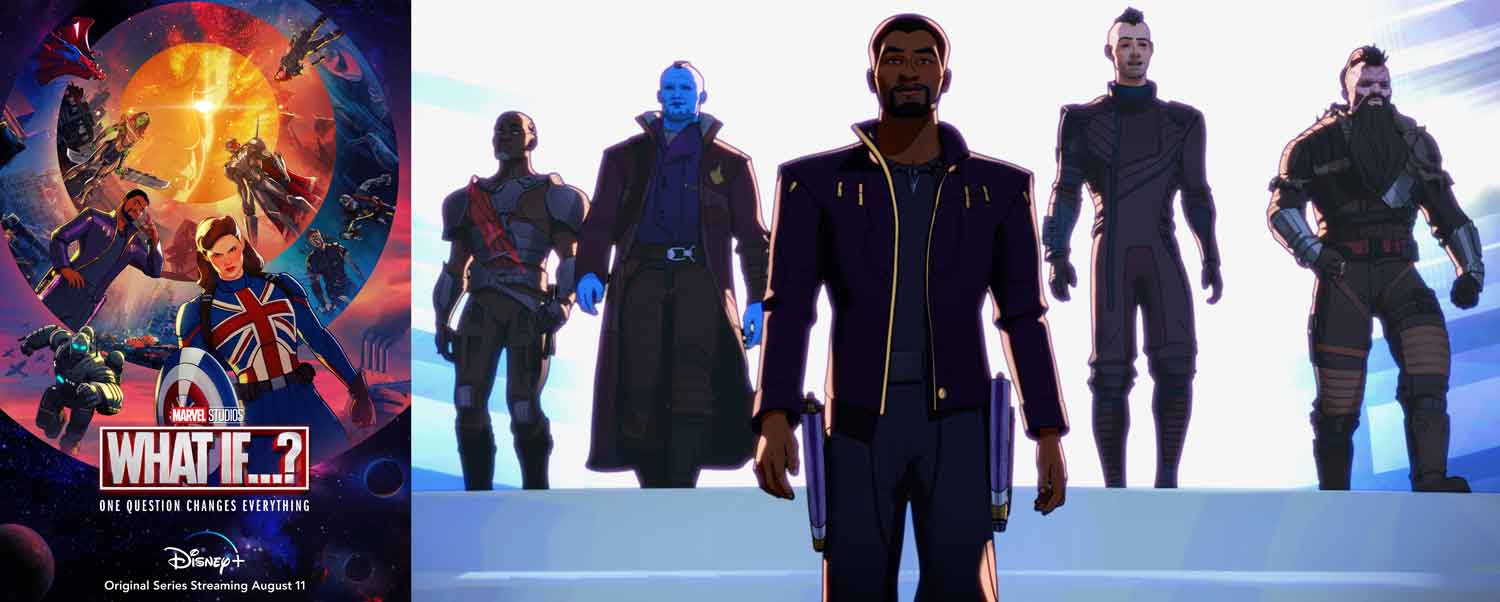
Kahhori (pronounced KAH-HORI), a young Mohawk woman, was introduced in the animated Marvel TV show What If…?, which explores what would happen if certain events had never taken place. Kahhori is living in what’s now New York state in the 1500s when Europeans arrive in the area and attempt to enslave the Indigenous people. By that time, the Mohawk nation had long been part of the Haudenosaunee Confederacy, an alliance of five Indigenous nations.

In real life, Europeans eventually colonized large areas of what’s now the United States and took the land where Indigenous people had been living for thousands of years. In the show, however, Kahhori discovers that she has incredible powers that enable her to help the Haudenosaunee fight back and negotiate a peace agreement. The Europeans leave the area without colonizing it, and the Haudenosaunee remain on their land.

“‘What if?’ That’s what I was thinking of,” Agnes “Sweets” Jacobs told North Country Public Radio, after watching a screening of the episode. Jacobs is a sub-chief of the Saint Regis Mohawk Tribe. “What if we didn’t welcome [the Europeans]?…What if we still lived in peace and harmony and took care of the earth the way we’re supposed to?” 

The episode is notable because Marvel Studios created it in consultation with Mohawk people. Almost all the dialog is in the Mohawk language and voiced by Mohawk actors. Details such as what Kahhori would have worn are accurate.

“[The people at Marvel] were faithful and they were steady and they were completely committed to treating us with the greatest respect,” Doug George-Kanentiio, who is Mohawk and who served as a historical consultant on the show, told North Country Public Radio.

What If…? is available to watch on Disney Plus.

Did You Know?

© Marvel Studios

Most episodes of What If…?, now in its second season, explore alternate stories for established Marvel superheroes. Episode titles include “What If…T’Challa Became a Star-Lord?” and “What If…the Avengers Assembled in 1602?”

What Is the Haudenosaunee Confederacy?

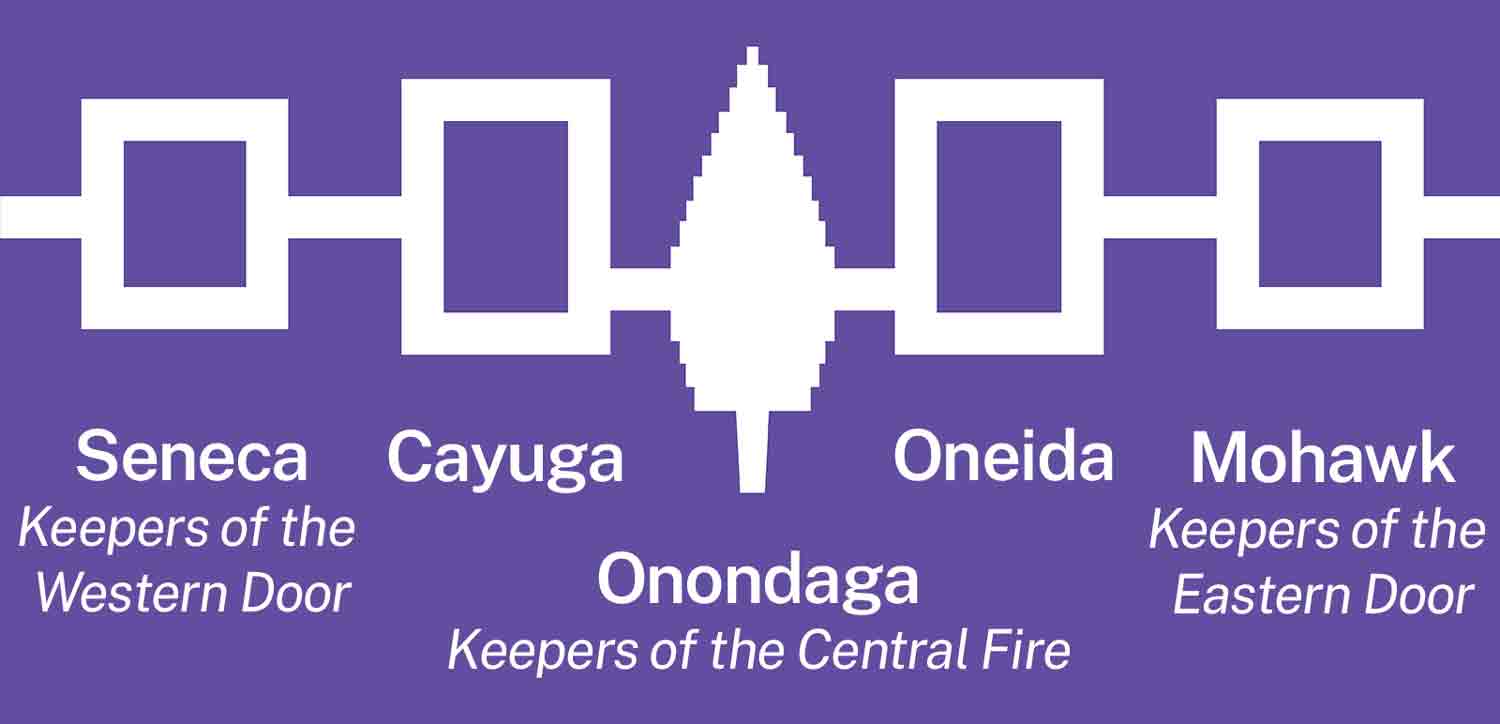
The Haudenosaunee Confederacy flag shows the Cayuga, Onondaga, Oneida, and Mohawk names linked together.

Courtesy of Brookhaven National Laboratory

The flag of the Haudenosaunee Confederacy shows the nations linked together.

The Haudenosaunee (sometimes called the Iroquois) Confederacy was formed about the year 1200, when the Seneca, Cayuga, Onondaga, Oneida, and Mohawk nations unified under a peace agreement. A sixth nation, the Tuscarora, would join the confederacy in the 1700s. Each of these nations has its own language and traditions.

The Confederacy was governed by a body called the Grand Council, which was made up of 50 hoyaneh, or leaders, from the original five nations. The council passed laws only after all the hoyaneh agreed, making it a representative democracy that existed long before the founders of the United States established a similar government. 

Kahhori, the main character in an episode of Marvel’s What If…?, is a Mohawk woman living in the confederacy in the 1500s, when Europeans arrive. The Europeans in the show are from Spain, but in reality the Spanish did not colonize New York. (Spain did colonize other parts of North America—including what are now Mexico, the southwestern United States, and Florida—as it developed a vast empire.) Instead, the Dutch, the French, and the English all explored and settled in New York and interacted with the Haudenosaunee. Both the Dutch and the English would colonize parts of New York—and eventually, as you’ve probably learned, New York became one of the 13 English colonies.

Marvel’s Beginnings

© Josefkubes/Dreamstime.com

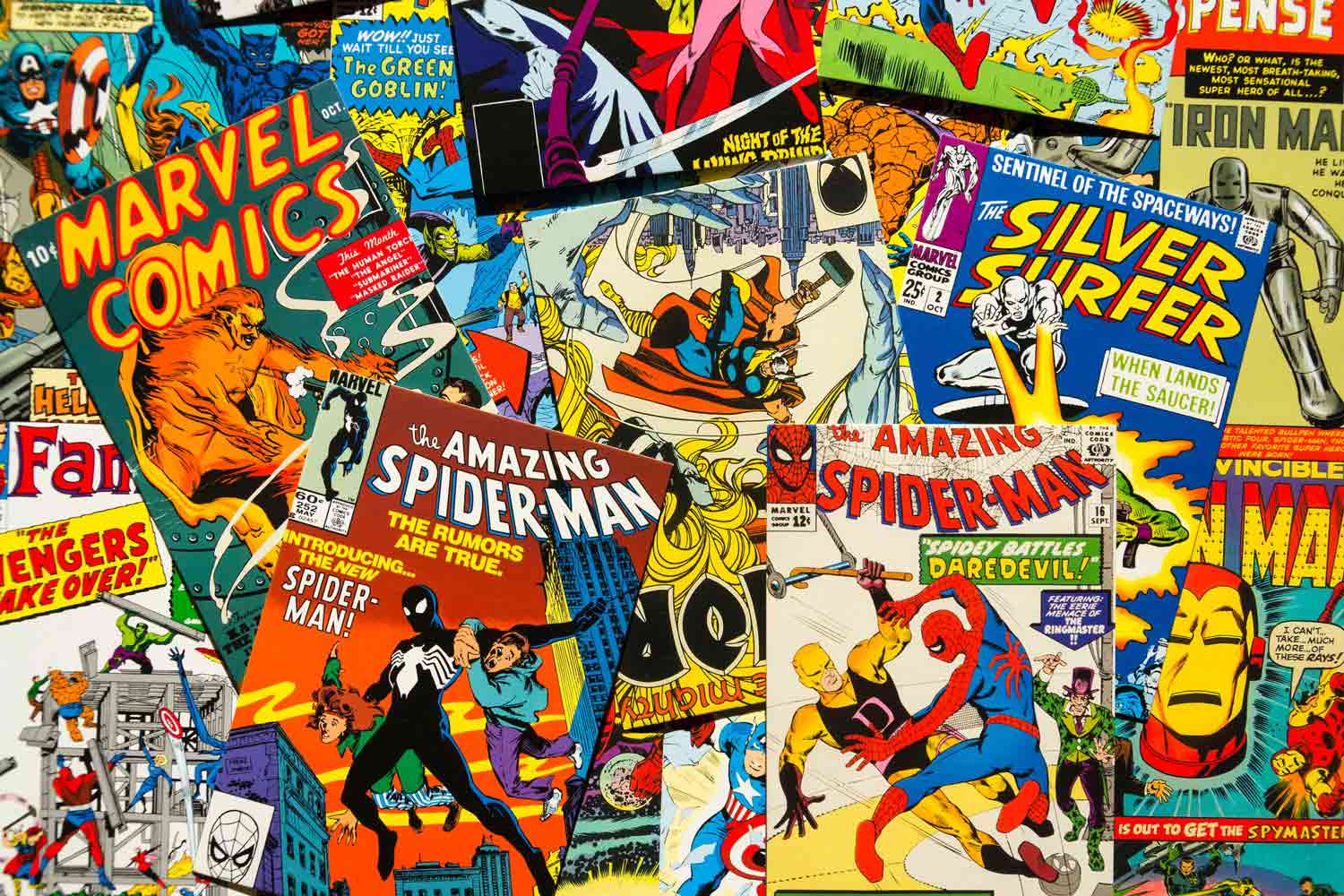
Today, Marvel Studios is a powerhouse company that catapults superheroes into superstardom. But Marvel began as a small comic book publisher. Read about its origins at Britannica!

WORD OF THE DAY

permutation

PART OF SPEECH:
noun
Definition:

: one of the many different ways or forms in which something exists or can be arranged — usually plural

Definitions provided by
Merriam-Webster Logo

Wordrow

Instructions: See if you can figure out the word. Type your guess. If a letter circle turns green, it’s in the right place. If a letter circle turns gold, the letter is somewhere in the word, but it’s in the wrong place. All other letters are not part of the word.

O
O
O
O
O
O

In Case You Missed It

Figure skater Alysa Liu felt happy and confident at the 2026 Olympics. She skated off with a gold medal!
March 5, 2026
An all-women ranger team protects endangered animals on the Indonesian island of Sumatra.
February 26, 2026
Nima Rinji is showing the world the powerful spirit of the Sherpa people as he climbs the world’s tallest mountains.
February 19, 2026
Life wouldn’t be as fun without the work of these three inventors.
February 12, 2026

Teen Defeats Tetris

A young teen poses in front of a video game system and holds Tetris accessories in his arms.

Teen Defeats Tetris

Thirteen-year-old Willis Gibson is the first person ever to beat the classic video game Tetris.
A young teen poses in front of a video game system and holds Tetris accessories in his arms.

David “aGameScout” Macdonald (YouTube: @aGameScout”)

Thirteen-year-old Willis Gibson, seen here after coming in third at the 2023 Classic Tetris World Championship, is the first person who ever made it to the end of the game.

Tetris is one of those video games that’s always been impossible to beat—until now. Thirteen-year-old Willis Gibson recently became the first person to reach what’s basically the end of a game of Tetris.

There’s no actual end to Tetris. The game involves manipulating shapes created from seven different configurations of four blocks so that they complete rows in a grid on screen. Each row disappears when it’s completed. If a player doesn’t complete enough rows, the blocks reach the top of the screen, and the game is over. The blocks fall faster and faster until the player can’t keep up. When developers designed Tetris, they figured it would beat everyone. The game isn’t made to be defeated.

A row of men and teens sit in front of screens holding game controllers and playing Tetris.

David “aGameScout” Macdonald (YouTube: @aGameScout”)

Gibson is a seasoned Tetris competitor. Despite reaching the end of Tetris, he’ll continue to take part in competitions. 

But experienced Tetris players know what happens when the game reaches its limits—a “kill screen” appears. In the past, only artificial intelligence has been able to reach that screen.

“When you do make it that far, the game can’t handle it, and it just crashes,” Gibson told NBC News. 

That’s what happened to Gibson. The Oklahoma teen, who has been playing Tetris since he was 11 and participates in Tetris tournaments, was playing the original Nintendo version of the game at home when he reached the kill screen. Gibson had advanced far enough that the software had stopped registering increases to his score—which was stuck at 999,999.

The entire game was recorded on video, including the dramatic conclusion. 

“Please, crash!” Gibson muttered to himself, just before the kill screen appeared. When the game stopped, he gasped and grasped his head in both hands, knowing what he had accomplished.

Even though he beat Tetris, Gibson’s not ready to walk away just yet. He told NBC News that he loves to participate in tournaments and plans to keep doing so.

Did You Know?

Tetris was created in 1984 by Alexey Pajitnov of the Soviet Union (now Russia). Pajitnov, seen in the photo below, said he designed the game for fun. It has since inspired a movie, a board game, and millions of gamers worldwide.

A man poses in front of a 1980s computer as digital Tetris shapes fall around him.

Wojtek Laski—Hulton Archive/Getty Images, Damian Yerrick; Animation Encyclopædia Britannica, Inc.

How Gaming Began

One of the first video games ever was called Tennis for Two. In the game, two people used separate handheld controllers to hit a ball back and forth.

Tennis for Two was developed in 1958, a time when computers existed but tablets, smartphones, home computers, and home consoles did not. Tennis for Two was demonstrated at an exhibition to show how computers could be useful to society. It played on an analog computer that didn’t have a screen. Gameplay was shown on a device called an oscilloscope.

Here’s Tennis for Two in action.

Courtesy of Brookhaven National Laboratory

The World of Gaming

Split screen of two teens along with usernames Blue Scuti and Mylesthegreat.

Check out the video to see Willis Gibson, who competes under the name Blue Scuti, go head to head with Myles the Great at a Classic Tetris Regional Tournament in December 2023.

You can learn more about video games, from coin-operated arcade machines to online multiplayer matchups, at Britannica!

WORD OF THE DAY

simulation

PART OF SPEECH:
noun
Definition:

: something that is made to look, feel, or behave like something else especially so that it can be studied or used to train people

Definitions provided by
Merriam-Webster Logo

Word Search

Instructions: Some classic video game titles and characters are hidden in this puzzle. See if you can find them.

O
O
O
O
O
O

In Case You Missed It

Figure skater Alysa Liu felt happy and confident at the 2026 Olympics. She skated off with a gold medal!
March 5, 2026
An all-women ranger team protects endangered animals on the Indonesian island of Sumatra.
February 26, 2026
Nima Rinji is showing the world the powerful spirit of the Sherpa people as he climbs the world’s tallest mountains.
February 19, 2026
Life wouldn’t be as fun without the work of these three inventors.
February 12, 2026

A House Where History Was Made

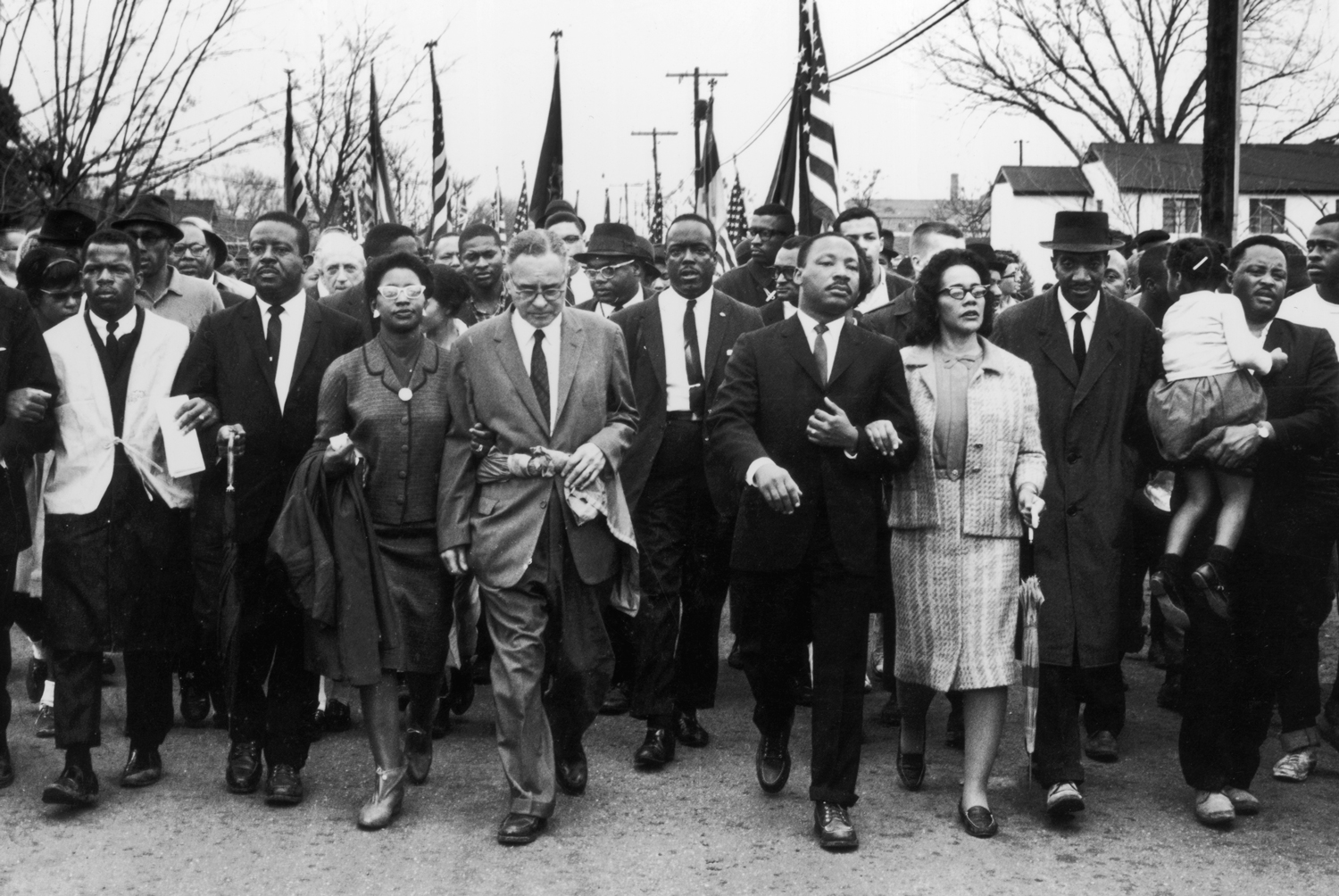
Martin Luther King, Coretta Scott King, John Lewis, and other civil rights activists walk down a street, some carrying American flags.

A House Where History Was Made

A house where Martin Luther King, Jr., planned a famous civil rights march is set to open to the public.
Martin Luther King, Coretta Scott King, John Lewis, and other civil rights activists walk down a street, some carrying American flags.
William Lovelace—Hulton Archive/Getty Images
Martin Luther King, Jr., his wife Coretta Scott King, and other civil rights activists march from Selma to Montgomery, Alabama, to demand equal voting rights.

A house in Selma, Alabama, where Martin Luther King, Jr., planned a famous civil rights march is being relocated and will soon be open to the public. The house will be moved to Dearborn, Michigan, to be part of a history museum called Greenfield Village.

Jawana Jackson, who grew up in the house, sold it to the Henry Ford Foundation so it could be recognized for its part in the civil rights movement. Jackson was 4 years old in 1965, when King and other civil rights leaders arrived at the house to plan marches from Selma to Montgomery, Alabama, in support of voting rights for Black Americans. The march was one of many that King and other leaders organized to protest racist laws and policies. While at the house, King had telephone conversations with U.S. president Lyndon Johnson. He urged President Johnson to support legislation expanding voting rights and protections to Black Americans. That same year, the U.S. Congress passed the Voting Rights Act of 1965.

Jackson’s parents offered King, an old friend who lived in Montgomery, the use of their home because they knew his work would be important to Jawana’s future.

“[Jawana] and children in this country and all around the world … deserve a better, a more even, a more just society. Whatever we can do to support you, we’re here,” Sullivan Jackson told King, according to the Pensacola News Journal.

“It became increasingly clearer to me that the house belonged to the world, and quite frankly, The Henry Ford [Foundation] was the place that I always felt in my heart that it needed to be,” Jawana Jackson told the Associated Press.

The foundation runs Greenfield Village, a history museum in Michigan that contains more than 80 historic structures. Soon, the Jackson home will be one of them. Officials are dismantling the home so it can be transported to Dearborn, where it will be rebuilt. Once open to the public, the home will contain some of King’s neckties and pants, as well as furnishings dating back to 1965.

The home is expected to open in the next three years.

Did You Know?

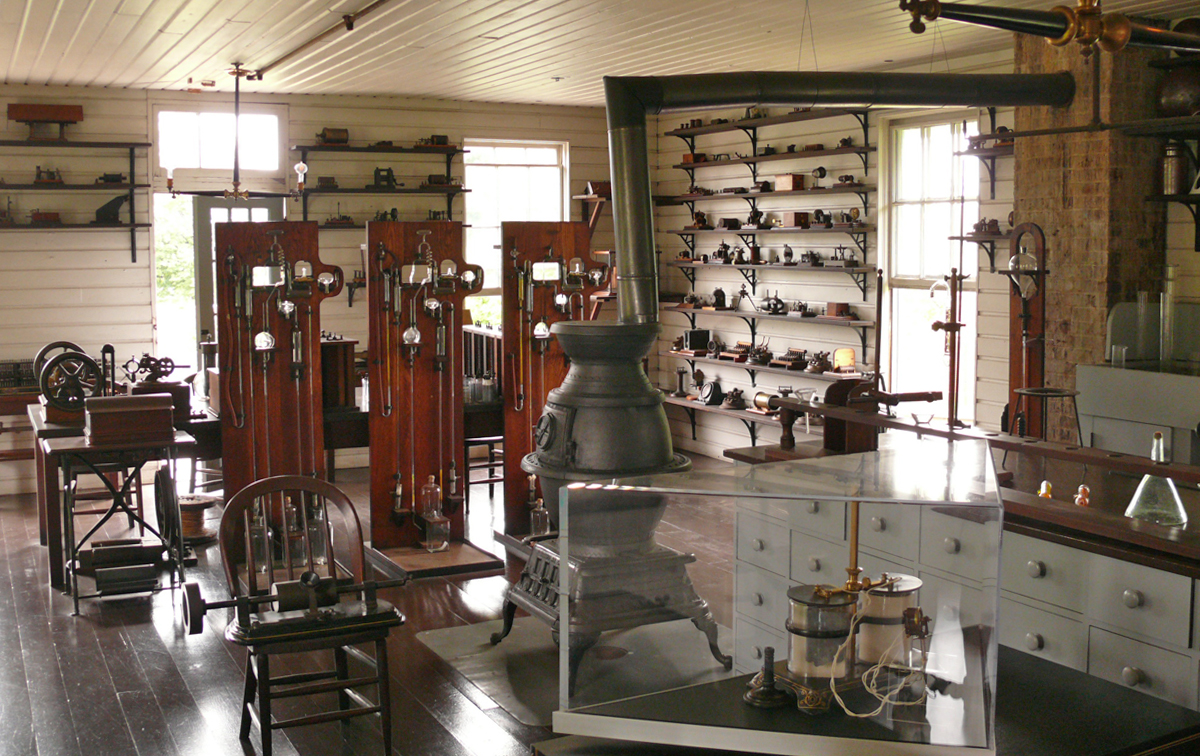
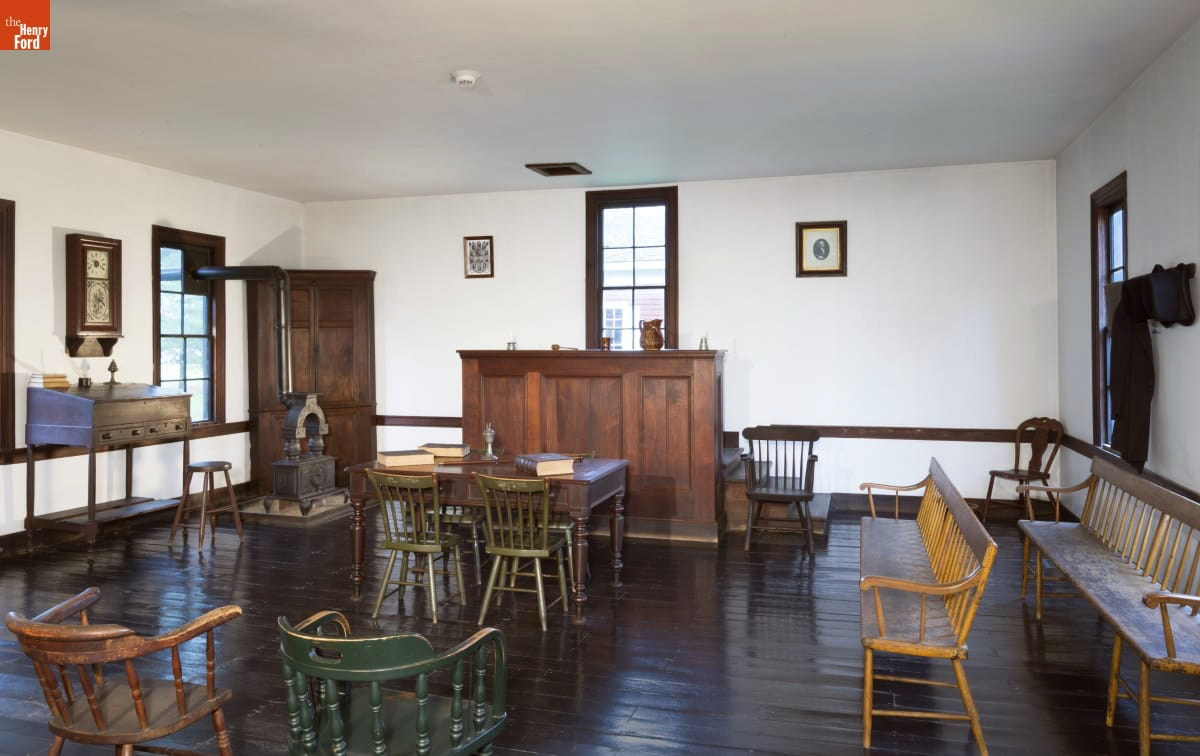
Greenfield Village includes a laboratory used by Thomas Edison, a courthouse where Abraham Lincoln tried cases as a young lawyer, and the home where the Wright brothers spent some of their childhood.
Edison – Mark Cameron (CC BY 2.0), Wright and Lincoln – From the Collections of The Henry Ford

Making MLK Day a Reality

Black and white photo of Coretta Scott King seated behind a microphone.
Bettmann/Getty Images
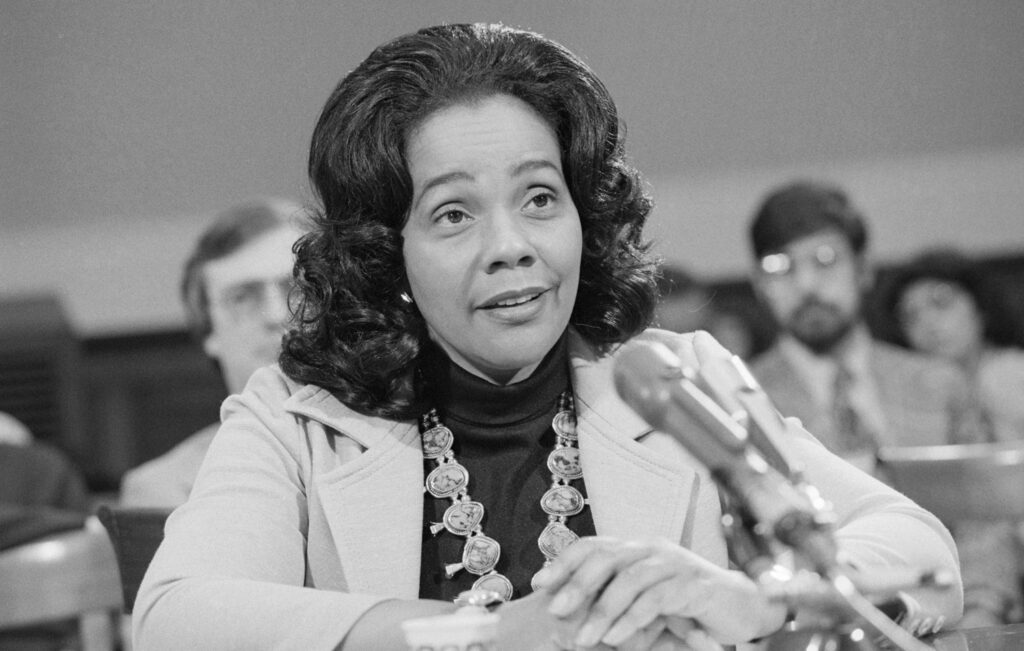
Coretta Scott King was a civil rights activist whose work helped bring about Martin Luther King, Jr., Day.

January 15, 2024, is Martin Luther King, Jr., Day, a U.S. holiday that marks King’s birthday and honors the civil rights leader. Martin Luther King, Jr., Day was established in 1983. But the origins of the holiday stretch back much further.

U.S. congressman John Conyers introduced legislation to honor King’s birthday in April 1968, just days after the civil rights leader was assassinated. Although Conyers had support from Black members of Congress, it was not enough to get the bill put up for a vote. He would reintroduce the bill every year.

During the 1970s, due partly to the hard work of King’s widow, Coretta Scott King, public support for the bill grew stronger. Congressional support also increased, and by 1979, the bill had enough backing to be voted on. But even with support from U.S. president Jimmy Carter and a petition with 300,000 signatures, Congress rejected the bill by five votes.

By 1983, public support for formal recognition of King was overwhelming. That year, both houses of Congress voted to designate the third January of each year as Martin Luther King, Jr., Day. President Ronald Reagan signed the bill into law on November 2, 1983.

The Life of a Civil Rights Leader

Click through the slideshow to learn about the life and work of Martin Luther King, Jr. Still curious? Check out Britannica for even more.

WORD OF THE DAY

venerate

PART OF SPEECH:
verb
Definition:
: to feel or show deep respect for
Definitions provided by
Merriam-Webster Logo

Crossword

O
O
O
O
O
O

In Case You Missed It

Figure skater Alysa Liu felt happy and confident at the 2026 Olympics. She skated off with a gold medal!
March 5, 2026
An all-women ranger team protects endangered animals on the Indonesian island of Sumatra.
February 26, 2026
Nima Rinji is showing the world the powerful spirit of the Sherpa people as he climbs the world’s tallest mountains.
February 19, 2026
Life wouldn’t be as fun without the work of these three inventors.
February 12, 2026

The Case of the Missing Tomatoes

Frank Rubio aboard the ISS and in front of some contained tomato plants.

The Case of the Missing Tomatoes

After several months, two tomatoes lost aboard the International Space Station have been found.

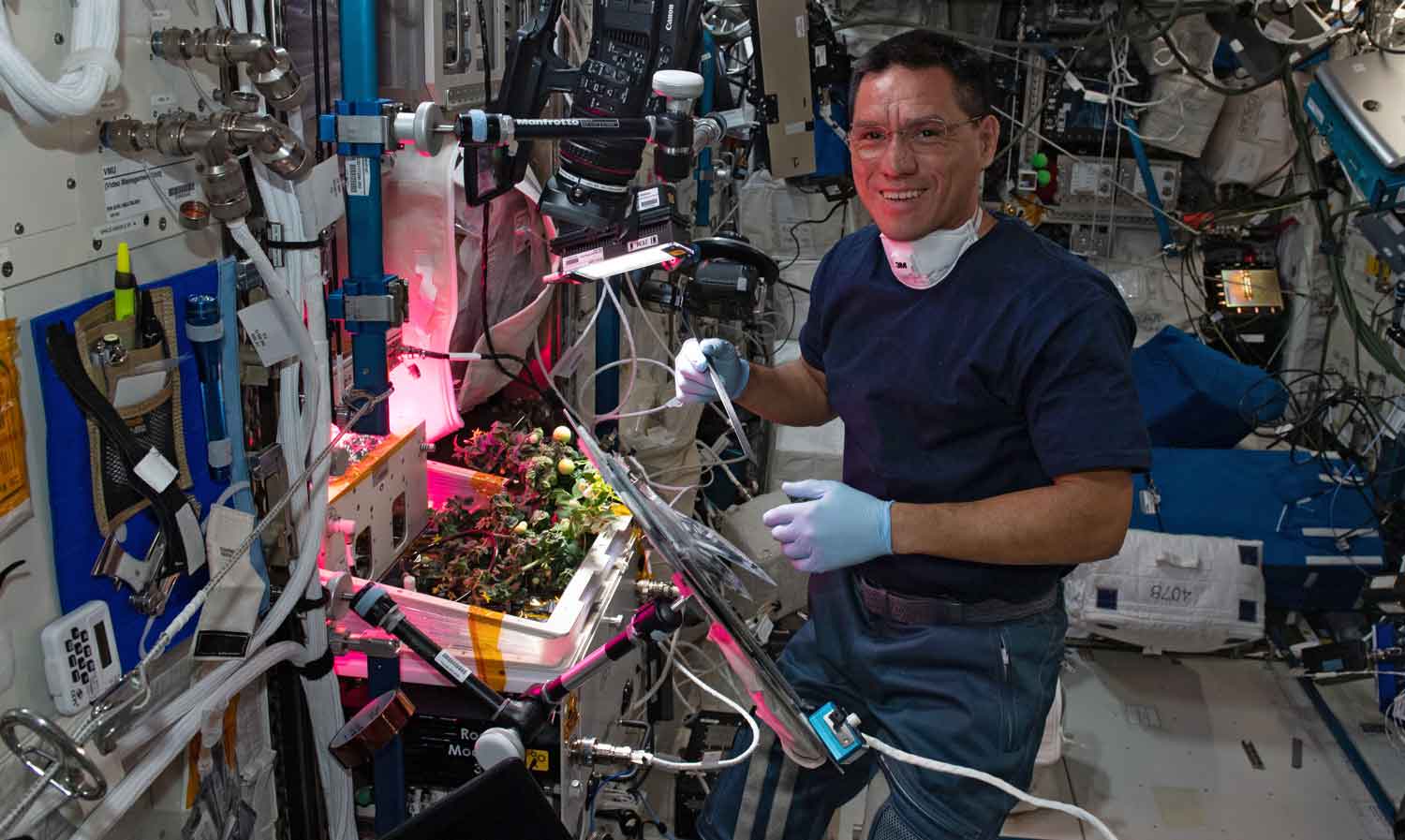
Frank Rubio aboard the ISS and in front of some contained tomato plants.

Koichi Wakata—Japan Aerospace Exploration Agency/NASA/JSC

Astronaut Frank Rubio lost tomatoes he’d grown aboard the International Space Station. Months later, the tomatoes were found.

Astronauts aboard the International Space Station (ISS) have finally solved a problem that vexed them for months: they’ve located two missing tomatoes.

The dwarf tomatoes were grown aboard the space station as part of ongoing research to see how well plants grow in space. But in March, shortly after U.S. astronaut Frank Rubio harvested the fruit, he lost it—which may be understandable, given that anything on the station that’s not tied down will float away.

“I put it in a little bag, and one of my crewmates was doing a [remote] event with some schoolkids, and I thought it’d be kind of cool to show the kids—‘Hey guys, this is [a] tomato harvested in space’,” Rubio said in October. “I was pretty confident that I Velcroed it where I was supposed to Velcro it … and then I came back and it was gone.”

Rubio spent hours searching unsuccessfully for the tiny tomatoes. Meanwhile, other astronauts jokingly accused him of eating them. Then, in September, it was time for him to return to Earth. Because the ISS is a low-humidity environment, Rubio predicted the fruit would quickly shrivel and become unrecognizable.

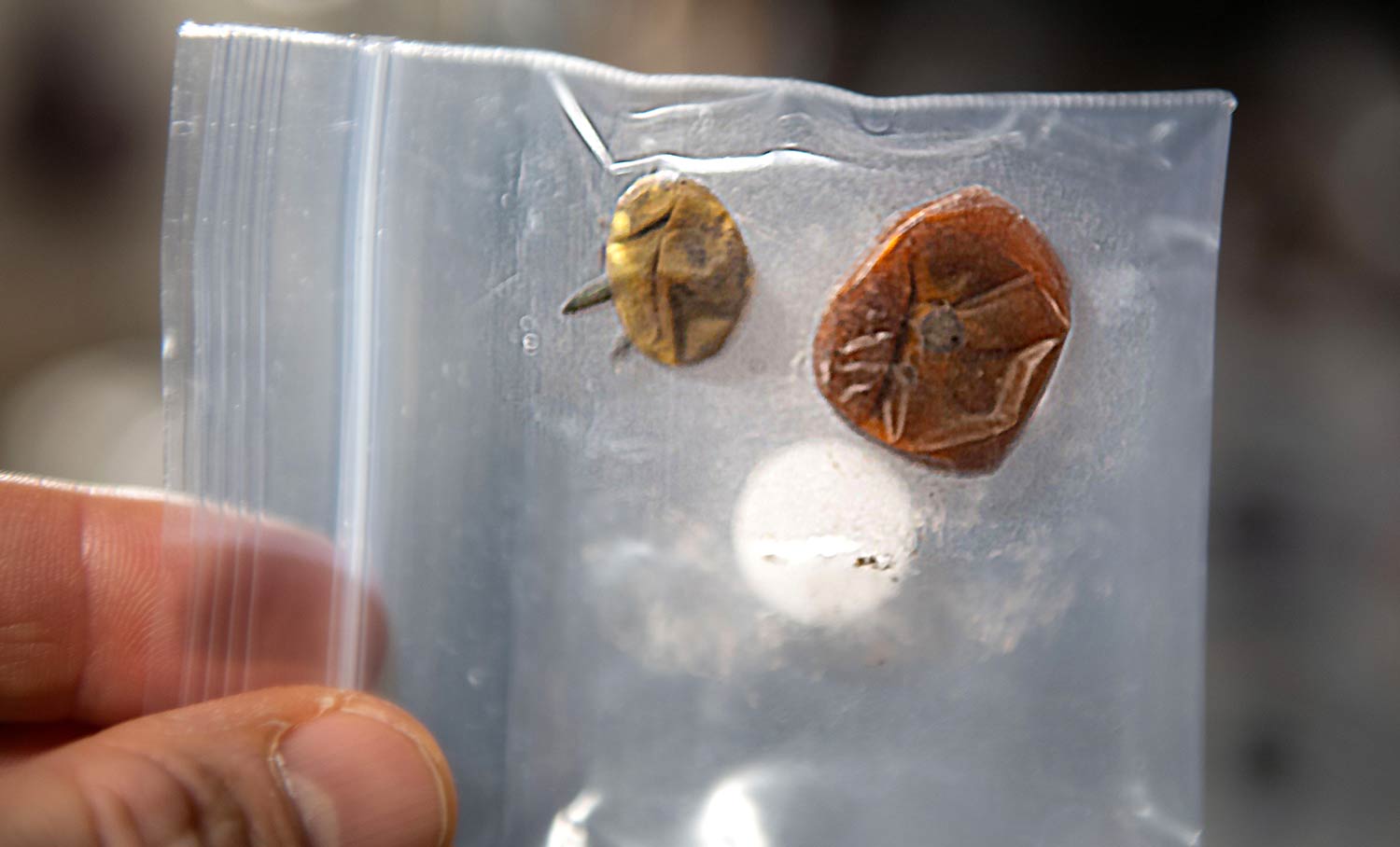
Then, in December, the good news came. The two tomatoes had turned up.

“Our good friend Frank Rubio, who headed home [already], has been blamed for quite a while for eating the tomato,” NASA astronaut Jasmin Moghbeli said during a December 6 livestreamed event celebrating the 25th anniversary of the ISS. “But we can exonerate him. We found the tomato.”

Mystery solved!

A hand holding two shriveled tomatoes in a clear plastic bag.

NASA/JSC

The tomatoes finally turned up, slightly worse for wear.

Did You Know?

Kevin O’Connell & Kevin Dav/NASA, © Ezthaiphoto/Dreamstime.com; Photo illustration Encyclopædia Britannica, Inc.

NASA, the U.S. government space agency, has invented many things we’ve ended up using on Earth, including the technology that enables tiny cameras (which is why smartphones can take pictures).

Growing Beyond Earth

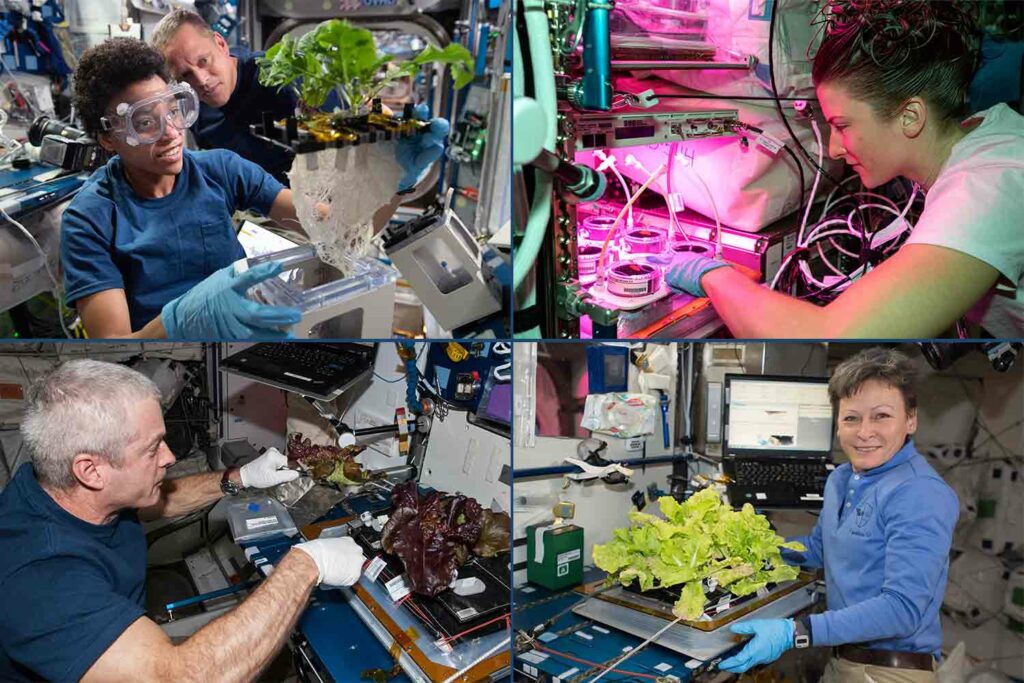
NASA/JSC, Peggy Whitson—NASA/JSC; Photo composite Encyclopædia Britannica, Inc.

Astronauts grow food aboard the ISS as part of the aptly named Veggie program. So far, they’ve been able to cultivate several plants, including lettuce, cabbage, mustard leaves, kale, and tomatoes, testing different combinations of red and blue artificial light to see how the plants respond.

NASA and other space agencies are looking to a future in which astronauts spend long periods of time in space—living on the Moon or even traveling to Mars. For this to be possible, they’ll need to supplement the astronaut diet of pre-packaged foods with fresh vegetables.

And they’re getting some help. Growing Beyond Earth is a program in which middle school and high school students across the United States grow vegetables in plant habitats that are designed to be similar to those used on the ISS. Select students present the results of these experiments to NASA astronauts.

Home (Far) Away From Home

The International Space Station in orbit with Earth in the background.

© Naeblys/stock.adobe.com

People have been traveling into space for less than 65 years—not a long period of time in terms of human history. So it’s incredible that, today, astronauts from around the world live and work in space. You can learn more about the International Space Station at Britannica.

WORD OF THE DAY

desiccated

PART OF SPEECH:

adjective

Definition:

 : having had the water removed

Definitions provided by
Merriam-Webster Logo

Word Flower

How many words can you make from the letters provided? All words must use the letter in the center of the flower.

O
O
O
O
O
O

In Case You Missed It

Figure skater Alysa Liu felt happy and confident at the 2026 Olympics. She skated off with a gold medal!
March 5, 2026
An all-women ranger team protects endangered animals on the Indonesian island of Sumatra.
February 26, 2026
Nima Rinji is showing the world the powerful spirit of the Sherpa people as he climbs the world’s tallest mountains.
February 19, 2026
Life wouldn’t be as fun without the work of these three inventors.
February 12, 2026

From NFL Pro to MIT Prof

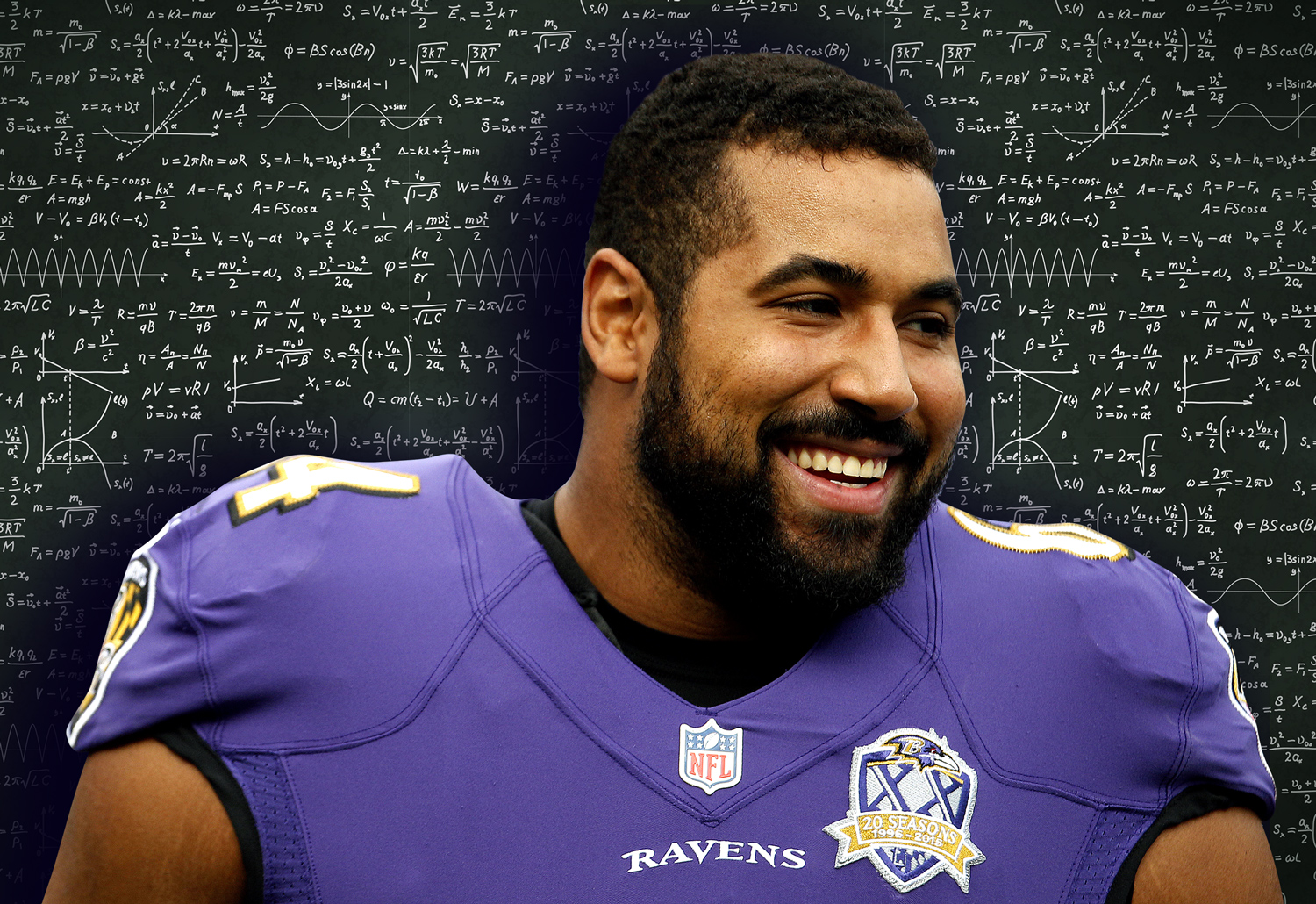
A smiling John Urschel in a football jersey in front of a backdrop showing math equations written on a blackboard.

From NFL Pro to MIT Prof

John Urschel left a pro football career to study math. Now he’s a college professor.
A smiling John Urschel in a football jersey in front of a backdrop showing math equations written on a blackboard.
Matt Hazlett/Getty Images Sport, © EvgeniyBobrov/stock.adobe.com; Photo illustration Encyclopædia Britannica, Inc.

Massachusetts Institute of Technology (MIT) has a new math professor with an unusual background: He used to play in the National Football League (NFL). Former Baltimore Ravens guard John Urschel began teaching at MIT in the fall of 2023.

Urschel discovered his love for math as a kid, when he happily tackled the math and puzzle workbooks his mom gave him and, as an 8th grader, took a college math class. By the time he got to college, he was a talented football player but possibly even more gifted in math. After the NFL drafted him, in 2014, he decided to apply to MIT to get a high-level degree called a Ph.D. MIT admits very few applicants, but Urschel got in.

What do you do when you play for the NFL in Maryland and you’re admitted to school in Massachusetts? If you’re John Urschel, you find a way to make it work. For one year, Urschel continued to play pro football full time while taking his MIT classes online. And while he juggled both responsibilities, he was happiest when he was studying math. In 2017, at age 26, Urschel decided to retire from the NFL so that he could devote his time to what he loved the most. He earned his Ph.D. in 2021.

“[MIT] is my favorite place in the world,” Urschel told Sports Illustrated in 2017. “I love being here. I love every day I’m here. The happiest I’ve ever been in my life is when I’m at MIT. Ever in my life. EVER in my life! Happiest ever.”

Now an assistant professor, Urschel says he hopes to inspire young people to study math, science, and engineering. Sometimes he gives talks to kids and teens—and he knows he can serve as an example of what’s possible.

“I know I wouldn’t be where I am today as a mathematician if it wasn’t for a lot of specific people, a lot of different mathematicians deciding that I was worth their time,” Urschel told ESPN in 2020.

Fun Fact!

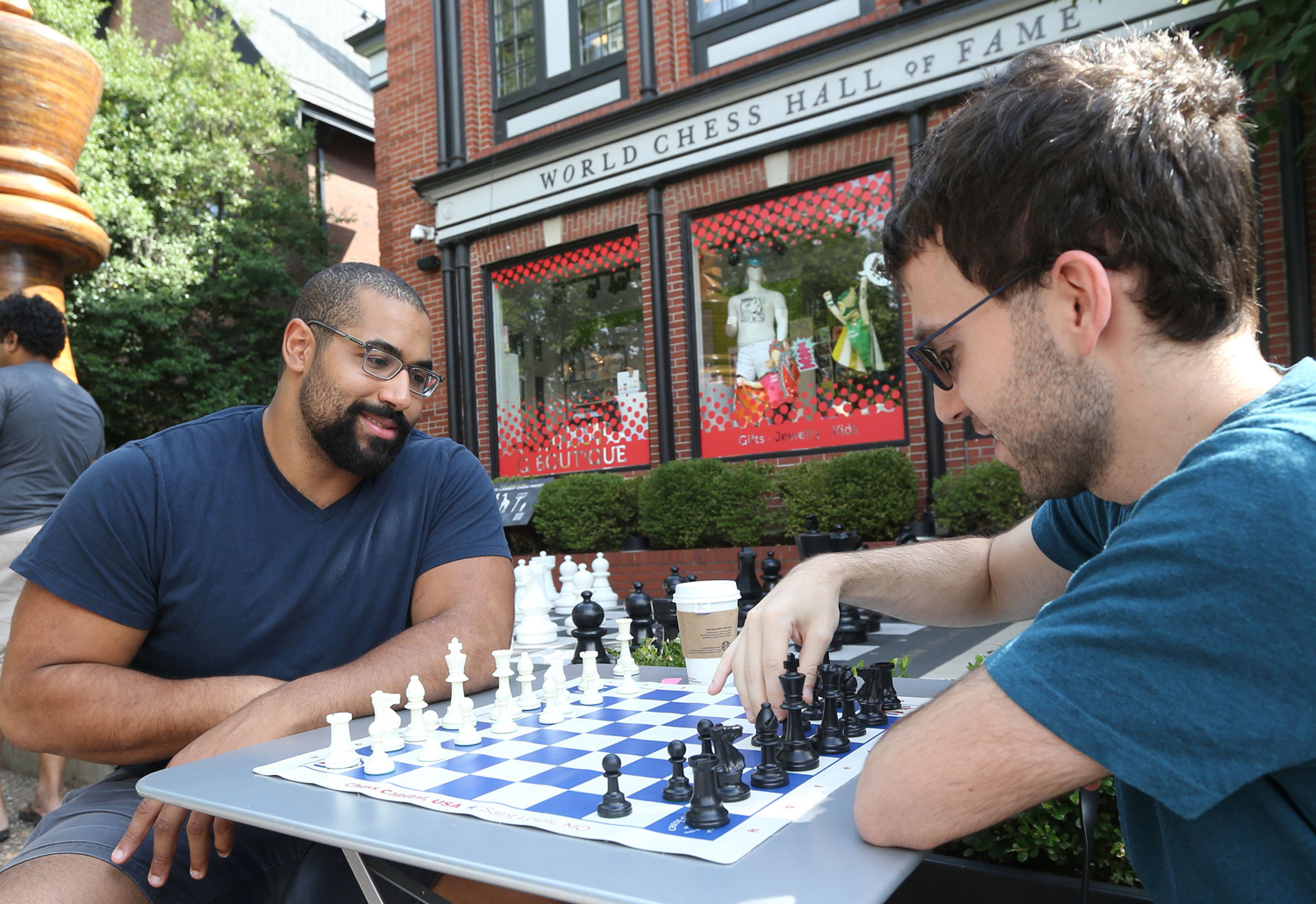
John Urschel and another man sit at an outdoor table and play chess in front of a storefront with a sign reading World Chess Hall of Fame.
Bill Greenblatt—AFP/Getty Images
John Urschel is one of many NFL players, past and present, who love the game of chess.

Life After Sports

You can’t play a sport at the elite level unless you’re among the very best. But some pros have continued to impress even after they retire by excelling in other areas! Here’s a list of former athletes who have had remarkable second careers.
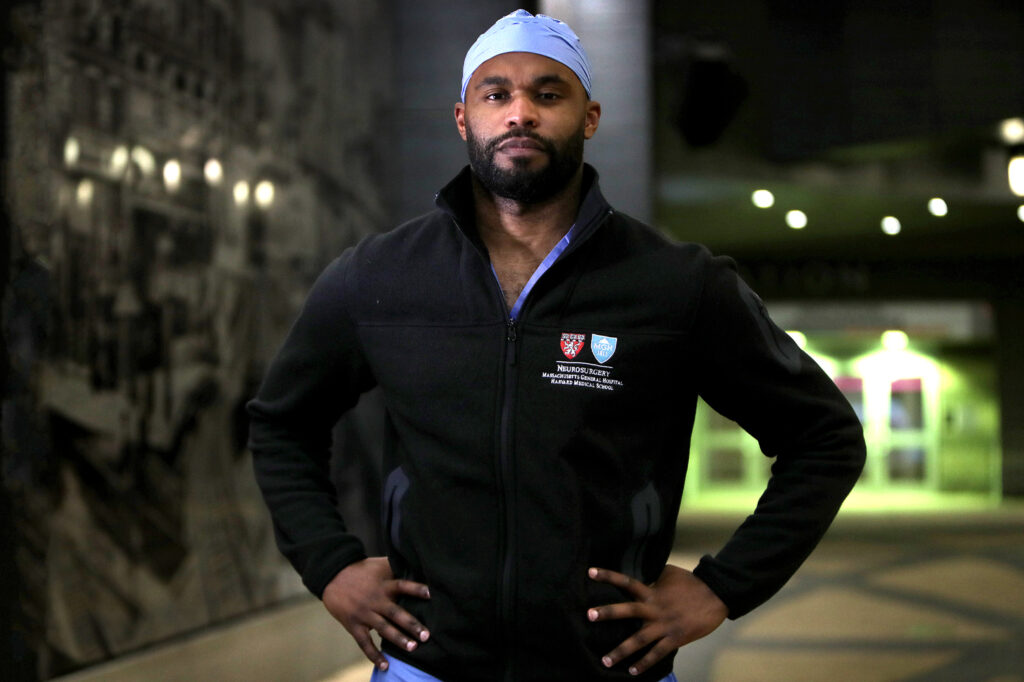
Myron Rolle poses while wearing a black zip up fleece over blue hospital scrubs.
Barry Chin—The Boston Globe/Getty Images
Myron Rolle

As a kid, Myron Rolle was interested in mainly two things: football and neuroscience. After earning a master’s degree in medical anthropology at Oxford University in England, Rolle spent three years playing for the NFL and then retired to attend medical school. Today, Rolle is a pediatric neurosurgeon. He also happens to be a talented singer and saxophone player!

Randy Johnson is poised to pitch a baseball while wearing a pinstripe uniform.
© Scott Anderson/Dreamstime.com
Randy Johnson
Randy Johnson studied photojournalism in college before he became a Major League Baseball pitcher. After retiring from the sport in 2010, Johnson returned to what he calls his “passion” and became a professional photographer.
Becky Hammon smiles in front of spectators while gesturing to her left.
Ethan Miller/Getty Images Sport
Becky Hammon
After 16 seasons as a Women’s National Basketball Association (WNBA) great, Becky Hammon became a professional basketball coach in a sport where men dominate the coaching positions. In 2014, she became the first woman to be fully recognized as a National Basketball Association (NBA) coach when she became assistant coach and Summer League head coach of the San Antonio Spurs. In 2023, she coached the WNBA’s Las Vegas Aces to a league championship.
Eddie George stands on stage wearing a tuxedo, holding flowers, and smiling.
Mark Sagliocco/Getty Images Entertainment
Eddie George

Former NFL running back Eddie George spent many years as an actor on the stage and screen, even starring in the Broadway musical Chicago. George has since returned to his sport, as Tennessee State University’s head football coach.

Danica Patrick stands with her arms folded while wearing a jacket on which several sponsor names appear.
© Walter Arce/Dreamstime.com
Danica Patrick

Danica Patrick followed up her career as the most successful female driver in the history of American car racing by becoming an entrepreneur. In 2020, she launched a line of athleisure clothing called Warrior by Danica Patrick. She’s also a TV racing analyst.

Terry Crews smiles and poses in front of a backdrop reading MovieGuide Awards with arms outstretched and wearing a tuxedo.
© Hutchinsphoto/Dreamstime.com
Terry Crews
After retiring from a six-season career in the NFL, Terry Crews became an actor, beginning in commercials and moving on to appearances in movies and major roles in the TV shows Everybody Hates Chris and Brooklyn Nine-Nine. Fun fact: Crews is also a talented artist and flute player.

A Master at Chess

© HarperCollins

To be a master at chess, you need a strategic mind and a lot of practice—which may be why some football players love the game. But not all great chess players are athletes, of course. 

Tanitoluwa Adewumi won a major kids’ chess tournament in 2019 at age 8. Now 13, he’s ranked high enough to be a chess master—one of the world’s top players.  

You don’t have to be a prodigy to love the game of chess. You can learn more about how to play at Britannica!


WORD OF THE DAY

numerate

PART OF SPEECH:
adjective
Definition:
: having the ability to understand and work with numbers
Definitions provided by
Merriam-Webster Logo

Criss cross

See if you can figure out how all the words fit into the grid.
O
O
O
O
O
O

In Case You Missed It

Figure skater Alysa Liu felt happy and confident at the 2026 Olympics. She skated off with a gold medal!
March 5, 2026
An all-women ranger team protects endangered animals on the Indonesian island of Sumatra.
February 26, 2026
Nima Rinji is showing the world the powerful spirit of the Sherpa people as he climbs the world’s tallest mountains.
February 19, 2026
Life wouldn’t be as fun without the work of these three inventors.
February 12, 2026