No More Flat Tires?

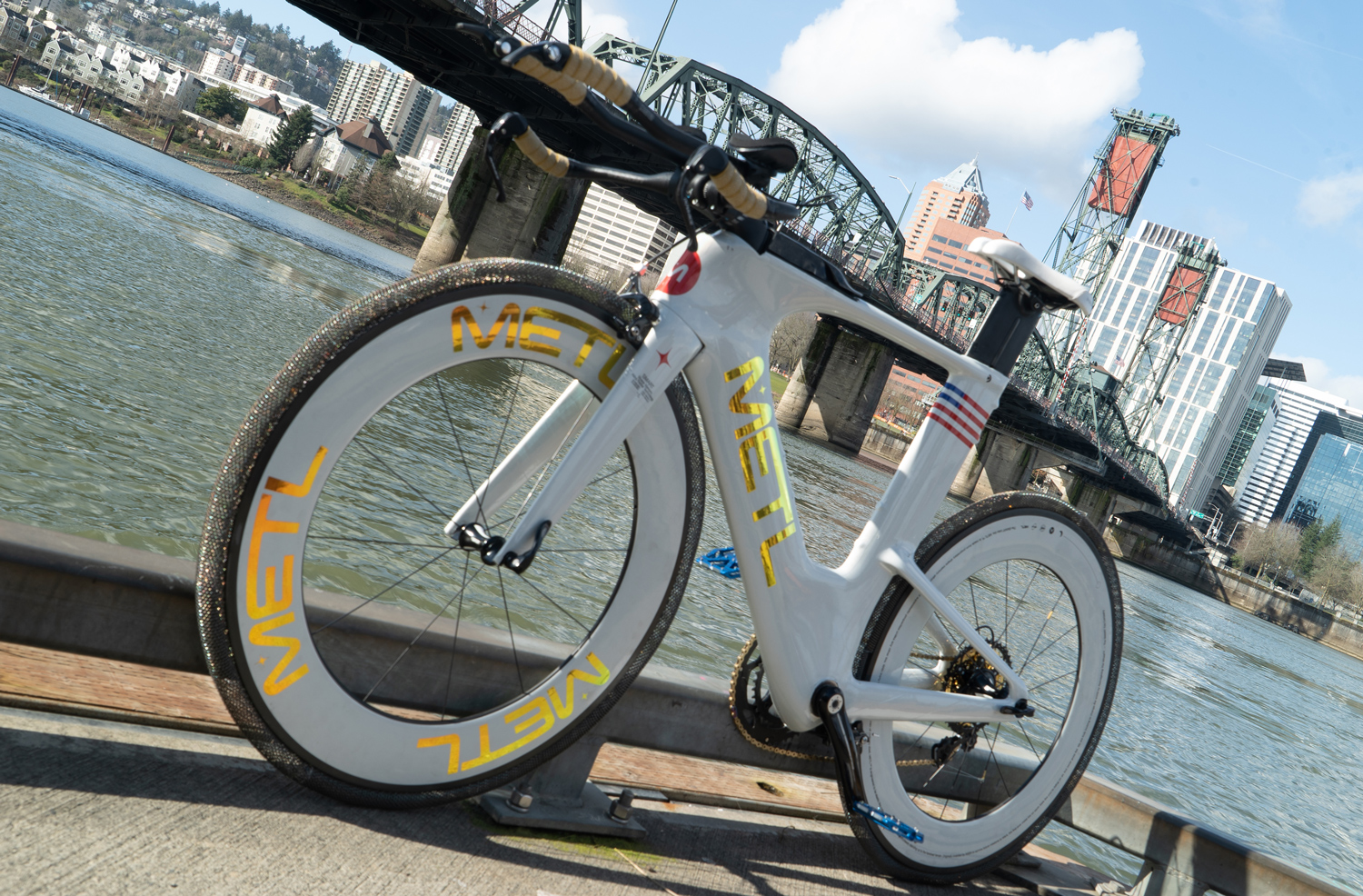
A white bicycle with shape memory tires leans against a bridge railing.

No More Flat Tires?

A new tire material is designed to withstand a tough environment—on Earth and beyond.
A white bicycle with shape memory tires leans against a bridge railing.
The SMART Tire Company
The SMART Tire Company says its new tires will make flats a thing of the past.

Anyone who has a bike or car knows how annoying it is to get a flat tire. Now, a U.S. company called The SMART Tire Company is selling an airless tire that it says will make flats a thing of the past. It’s designed for both terrestrial and extraterrestrial travelers.

The tire is based on a technology that was developed by NASA (the U.S. space agency) for use on its Mars rovers, the uncrewed vehicles that have been sent to explore the Red Planet. Rover wheels, which are aluminum cylinders containing springs, have worn down quickly because the Martian surface can be rough and the planet is extremely cold. So NASA created new wheels, covering them with a material called a shape memory alloy, which is strong but flexible. When the material is put under pressure, it collapses but then returns to its original shape.

© ESA/ATG Medialab
The new tire technology is meant to let Mars rovers roll over rocks and more.

The SMART Tire Company’s bicycle tire, called the METL tire, also uses this shape memory alloy. Because there’s no air pressure, the tire can’t go flat. The company claims that a METL tire will last for “the life of your vehicle.” 

The company says the bike tire is only the beginning. It envisions the technology being used for cars, jets, heavy machinery, and more. 

The video below shows what happened when the new tires were put to the test.

The SMART Tire Company

Fun Fact

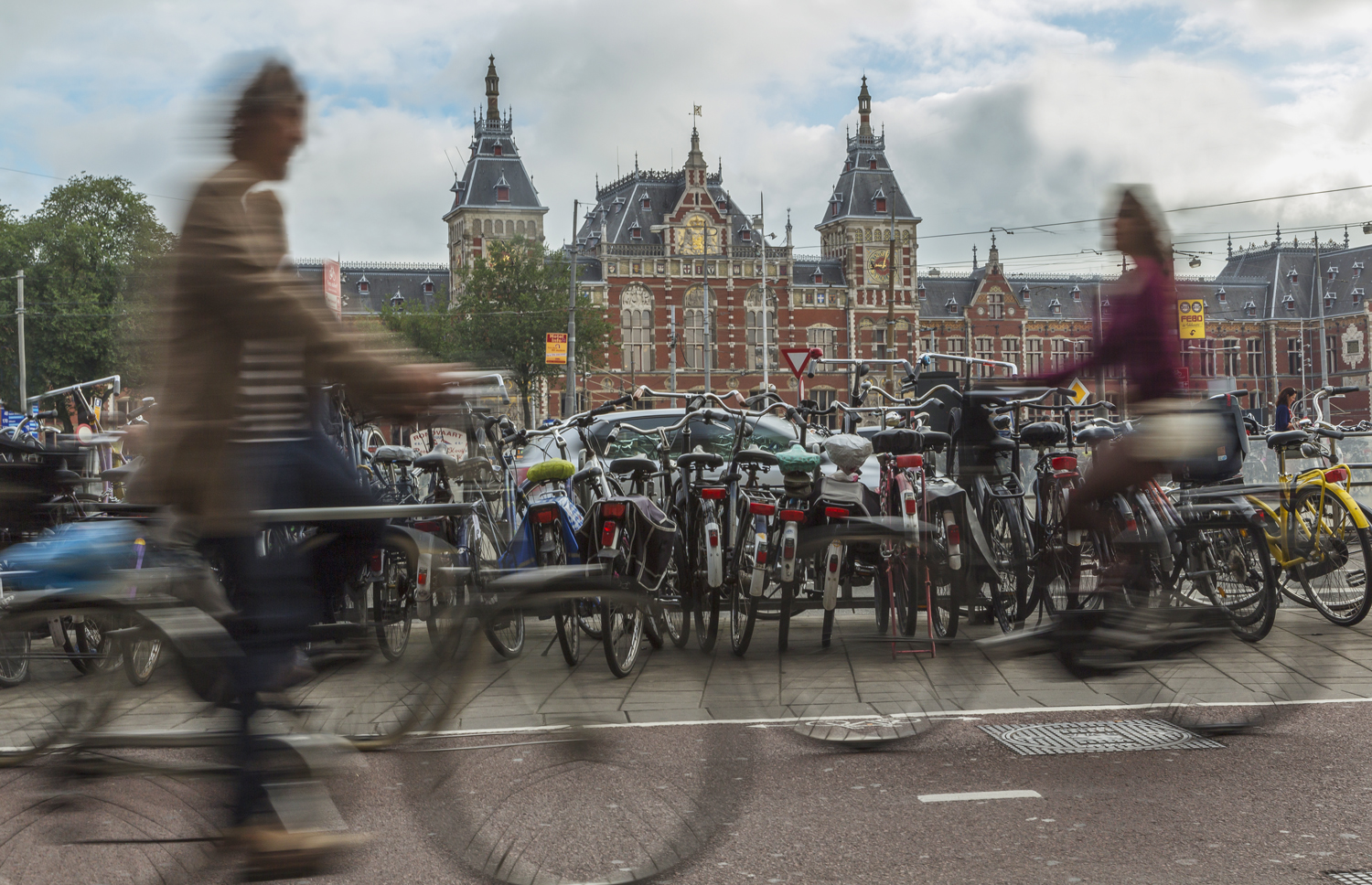
© Buena Vista Images—Stone/Getty Images

Cycling is big in the Netherlands. The European country has a population of about 17.5 million—and nearly 23 million bicycles.

Old School Tires

Engraving of several people riding or falling off boneshakers in a large room.
© GBM Historical Images/Shutterstock.com
In the 1860s, the boneshaker was a cool new ride…but it wasn’t exactly comfortable!

The development of the METL tire isn’t the first time the bicycle has gotten a makeover. An early version of the bicycle called the velocipede, invented in the 1860s, was also known as “the boneshaker” because riding it could be rough. Its wheels were made with wood and iron, so they didn’t help cushion the rider at all.

After 10 years or so, the velocipede was replaced by the “ordinary” bicycle. With its rubber tires, this new two-wheeler was a big improvement.

What’s Out There?

A green alien with a large head sits on a planet’s surface and look out at space.
© MediaProduction—Creatas Video/Getty Images

While rovers explore Mars, powerful telescopes are peering deep into space. Using these instruments, scientists have detected planets where conditions make life possible.

How likely is it that aliens exist? Learn more at Britannica!

WORD OF THE DAY

breakthrough

PART OF SPEECH:

noun

Definition:
: a sudden increase in knowledge, understanding, etc. : an important discovery that happens after trying for a long time to understand or explain something
Definitions provided by
Merriam-Webster Logo

Word Search

See if you can find all the words related to bicycles.
O
O
O
O
O
O

In Case You Missed It

The island of Corsica showed American colonists that a courageous revolution could defeat an empire.
May 7, 2026
Physicist Narinder Singh Kapany developed fiber optic cables, helping to make the Internet possible.
April 30, 2026
How can you tell whether photos and videos are real or made with AI? Here are a few tips.
April 24, 2026
A seemingly strange bank is saving one of Earth’s most valuable resources.
April 9, 2026

Biles is Back!

Simone Biles is horizontal in midair as she reaches for one of the uneven bars.

Biles is Back!

Simone Biles won multiple medals at the 2023 Artistic Gymnastics World Championships, becoming the most decorated gymnast ever.

Simone Biles is horizontal in midair as she reaches for one of the uneven bars.

Matthias Hangst/Getty Images Sport

Simone Biles competes on the uneven bars during the 2023 Artistic Gymnastics World Championships.

Simone Biles is back. The 26-year-old gymnast returned from a two-year break to win the individual all-around on October 6 at the 2023 Artistic Gymnastics World Championships. She’s now the most decorated gymnast ever.

Biles scored the individual all-around title two days after leading the U.S. team to their seventh gold medal in a row. She later won three more medals in individual events: gold medals in the floor exercise and balance beam and a silver medal in vault. Biles now has 30 world medals (including 23 gold medals), plus seven Olympic medals—more than anyone else in her sport. Biles is known for attempting some of the most difficult maneuvers ever. In fact, five gymnastics skills are named after her.

Multiple victories may not be the only reason Biles cried happy tears as she stood on the podium. This year’s event took place in Antwerp, Belgium, where Biles won her first world championship a decade ago.

“Ten years ago, I won my first worlds. Now we’re back here. So it was emotional,” Biles told reporters. “It means everything to me, the fight, everything that I’ve put in to get back to this place, feel comfortable and confident enough to compete.”

It’s been only a few months since Biles returned to gymnastics after stepping away in 2021. That year, at the Summer Olympics in Tokyo, Japan, she decided not to compete. Biles said that the pressure of the sport was affecting her mental health and she needed a break. Since then, she has worked with mental health experts to learn ways to manage stress.

Biles has now reestablished her dominance in the sport. Earlier this year, she won gold at the U.S. Championship. Next, she’s looking to compete at the 2024 Summer Olympics in Paris, France.

Did You Know?

A man holds up cutouts of two French bulldogs wearing scarves with the names Lilo and Rambo.

Robert Gauthier—Los Angeles Times/Getty Images

A fan holds up cutouts of Simone Biles’ French bulldogs at the 2020 Tokyo Olympics.

Simone Biles loves dogs. When she was growing up, her family had four German shepherds, and she now has two French bulldogs, named Lilo and Rambo.

“My dogs have made my life better,” she told Today. “They have made me happy when I’m at my low, and even whenever I’m at my high they’ve made it higher.…I wouldn’t trade them for the world.”

What’s the Hardest Sport?

Richard T. Gagnon/Getty Images Sport

Is ice hockey the world’s second-hardest sport?

Is it possible to rank sports by difficulty? The sports channel ESPN gave it a try.

A panel of experts created the ESPN list by looking at what 60 sports require in the areas of endurance, strength, power, speed, agility (the ability to change direction quickly), flexibility, nerve (the ability to overcome fear), durability (the ability to handle physical punishment), hand-eye coordination, and analytic aptitude (the ability to make quick mental decisions during a competition).

According to ESPN, boxing is the world’s hardest sport, followed by ice hockey, American football, and basketball. Gymnastics ranked number 8. What was the easiest sport on the list? Fishing.

What would your rankings look like?

The Best Ever?

Alex Livesey/Getty Images Sport

Many people first saw the greatness of Simone Biles when she struck gold at the 2016 Summer Olympics. You can learn more about the life and career of Simone Biles at Britannica.

WORD OF THE DAY

perseverance

PART OF SPEECH:

noun

Definition:

: the quality that allows someone to continue trying to do something even though it is difficult

Definitions provided by
Merriam-Webster Logo

Word Search

See if you can find all the words related to gymnastics.

O
O
O
O
O
O

In Case You Missed It

The island of Corsica showed American colonists that a courageous revolution could defeat an empire.
May 7, 2026
Physicist Narinder Singh Kapany developed fiber optic cables, helping to make the Internet possible.
April 30, 2026
How can you tell whether photos and videos are real or made with AI? Here are a few tips.
April 24, 2026
A seemingly strange bank is saving one of Earth’s most valuable resources.
April 9, 2026

Get Ready for a Ring of Fire

The Moon is in front of the Sun with a ring of light visible around the edges, against a red sky.

Get Ready for a Ring of Fire

On October 14, part of the world will experience an annular solar eclipse.

The Moon is in front of the Sun with a ring of light visible around the edges, against a red sky.

© Matthew Starling—iStock/Getty Images Plus

During an annular solar eclipse, the only part of the Sun that’s visible is a “ring of fire.”

On October 14, 2023, parts of the Western Hemisphere will experience an annular solar eclipse. The sky won’t go dark. Instead, the Sun and the Moon will align to form a “ring of fire.”

An annular eclipse is different from a total solar eclipse. During a total eclipse, the Moon passes between Earth and the Sun, blocking the Sun and causing the sky to go dark for a brief time. An annular eclipse happens when the Moon passes between Earth and the Sun but is at or near its farthest point from Earth. (Remember, the Moon’s orbit is elliptical, or oval shaped.) Since the Moon is a bit smaller in the sky, it doesn’t block the Sun completely, and a thin ring of light is visible—what some people call a ring of fire.

Annular eclipses are visible only in a zone called the path of annularity. The October 14 event will be visible in parts of Oregon, California, Idaho, Nevada, Utah, Colorado, Arizona, New Mexico, and Texas. It can also be seen in parts of Mexico, Central America, and South America.

A partial solar eclipse will be visible in other places. Because less of the Sun will be blocked, people in those locations won’t see the ring of fire.

In the United States, the annular eclipse will first be visible in part of Oregon at 9:13 a.m. Pacific Daylight Time and last be visible in part of Texas at 12:03 p.m. Central Daylight Time. The eclipse will then move over Mexico and Central America and, finally, South America.

If you have the opportunity to view the annular or partial eclipse, be safe. Don’t look at the Sun unless you’re wearing eclipse glasses or solar viewers. Regular sunglasses are not safe for viewing an eclipse.

NEWS EXTRA

Fat Bear Week

A large brown bear stands in shallow, moving water.

F. Jimenez/NPS

The voters have spoken! The 2023 winner of Fat Bear Week is a brown bear named 128 Grazer. 

Fat Bear Week is a yearly online contest in which the public picks its favorite out of 12 bears at Katmai National Park in Alaska. This time of year, the park’s bears are gobbling up salmon, fattening up so they can spend the winter hibernating. 

128 Grazer defeated the other finalist, 32 Chunk, getting 108,321 votes. The winning bear is a talented fisher-bear, able to get even the quickest salmon out of the water. She’s also given birth to two litters and is a protective mom to her cubs.

“[Grazer’s] combination of skill and toughness makes her one of [the river’s] most formidable, successful, and adaptable bears,” the National Park Service said.

Did You Know?

Carvings in a stone show circles within circles.

Courtesy of Michael Fox-Boynevalleytours.com

Have humans been recording eclipses for more than 5,000 years? Scientist Paul Griffin believes that a stone carving in Ireland dating back to around 3300 BCE represents a near-total solar eclipse. The carving shows large concentric circles being partially covered by smaller concentric circles. Griffin thinks these circles represent the Sun (the larger object) being blocked by the Moon.

Griffin calculated that an eclipse took place in 3340 BCE, which means he could be right about the meaning of the stone carving.

Mapping the Eclipse

The annular eclipse will be most visible within the yellow path shown on this map. Do you live anywhere near there?

A map of North and South America with a narrow yellow band running through a portion of each.

© Great American Eclipse, LLC (https://www.greatamericaneclipse.com/)

When Celestial Objects Align

Four photos showing a solar eclipse, as well as people and a dog wearing eclipse glasses.

© Matt Anderson Photography—Moment, Pablo Blazquez Dominguez/Getty Images, © Scaliger, Mira Agron/Dreamstime.com; Photo composite Encyclopædia Britannica, Inc.

With the right precautions (a pair of eclipse glasses), you can view eclipses that are visible in your area. 

We know what happens when the Moon passes between Earth and the Sun. Do Mercury and Venus ever pass between Earth and the Sun—and what happens then? Find out at Britannica!

WORD OF THE DAY

obscure

PART OF SPEECH:
verb
Definition:
: to hide or cover (something) : to be in front of (something) so that it cannot be seen
Definitions provided by
Merriam-Webster Logo

Wordrow

See if you can figure out the word. Type your guess. If a letter circle turns green, it is in the right place. If a letter circle turns gold, the letter is somewhere in the word, but it’s in the wrong place. All other letters are not part of the word.

You get six chances.

O
O
O
O
O
O

In Case You Missed It

The island of Corsica showed American colonists that a courageous revolution could defeat an empire.
May 7, 2026
Physicist Narinder Singh Kapany developed fiber optic cables, helping to make the Internet possible.
April 30, 2026
How can you tell whether photos and videos are real or made with AI? Here are a few tips.
April 24, 2026
A seemingly strange bank is saving one of Earth’s most valuable resources.
April 9, 2026

A Blue Spider?!

Side by side photos of a tarantula with bright blue markings in front of a white background.

A Blue Spider?!

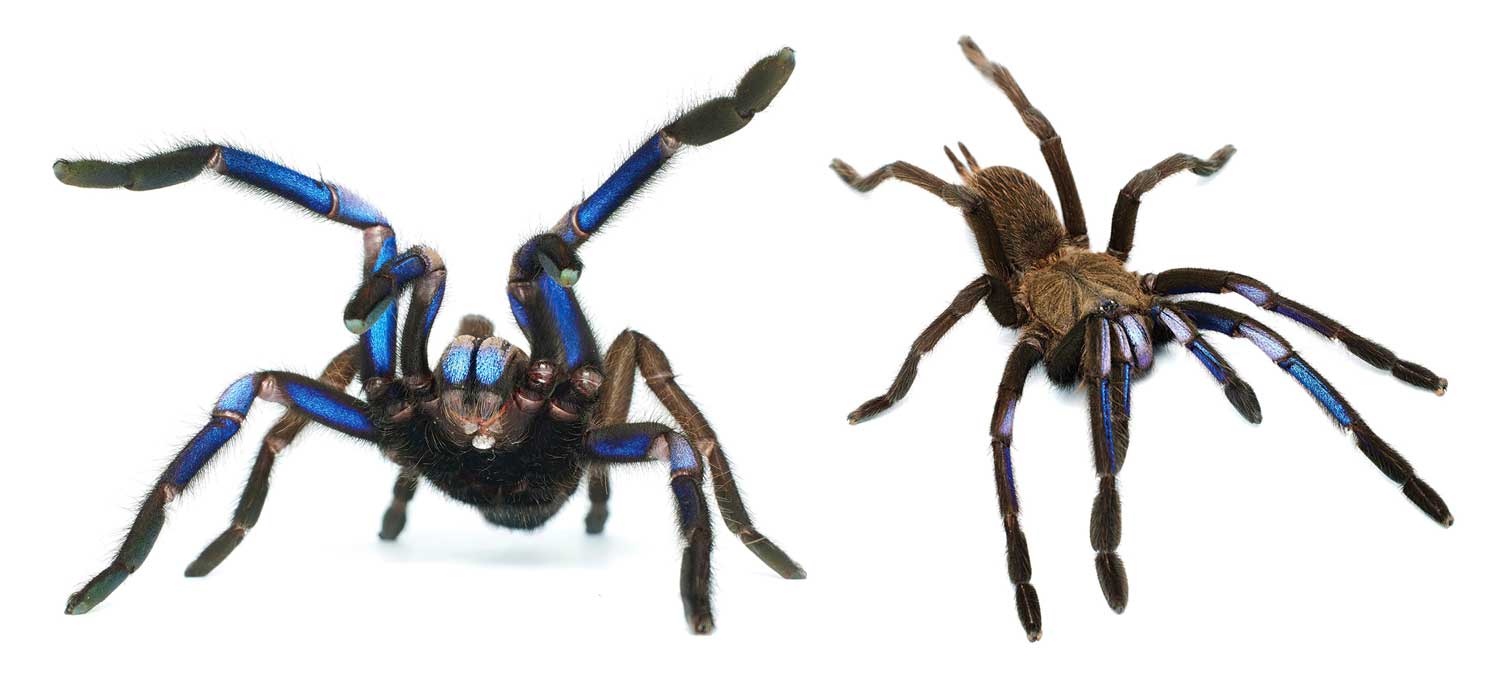
Scientists found a tarantula with bright blue markings!

Side by side photos of a tarantula with bright blue markings in front of a white background.

Chomphuphuang N., Sippawat Z., Sriranan P., Piyatrakulchai P., Songsangchote C./ZooKeys

Two views of Chilobrachys natanicharum’s bright blue markings.

Scientists were exploring a mangrove forest in Thailand when they came across a bright blue tarantula. The species has been named Chilobrachys natanicharum.

Scientists say the species can live on the ground or in trees. But in mangrove forests, which are wetlands, the tarantulas are limited to living in hollow trees. Hoping to study the blue spiders, the team of researchers climbed the trees and tried to lure some out. They were able to catch only two.

C. natanicharum, also called the electric blue tarantula, had been sold in commercial markets before but is just now being documented by scientists. Its color is one reason the species is so special.

“Blue is one of the rarest colors to appear in nature, which makes blue coloration in animals particularly fascinating,” entomologist Narin Chomphuphuang told CNN.

The blue tarantula’s color doesn’t come from pigment, which is what produces the color of human skin or hair. Instead, it’s caused by the makeup of tiny hairs on the tarantula’s body. Tiny structures in the hair manipulate the light that shines on them. In addition to the blue, the spiders can also have some violet coloring.

Scientists say C. natanicharum is one of the world’s rarest tarantulas, and they’re concerned about its future. The mangrove forests where the species was found are rapidly being cut down.

Did You Know?

John/snakecollector (CC BY 2.0)

Can a spider eat a bird? A spider that’s as large as a dinner plate can. The goliath bird-eating spider, a tarantula species, is the largest spider in the world. It can reach 12 inches (30 centimeters) in diameter.

In addition to small birds, this massive spider feasts on mice, lizards, snakes, bats, and insects.

Look, But Don’t Touch!

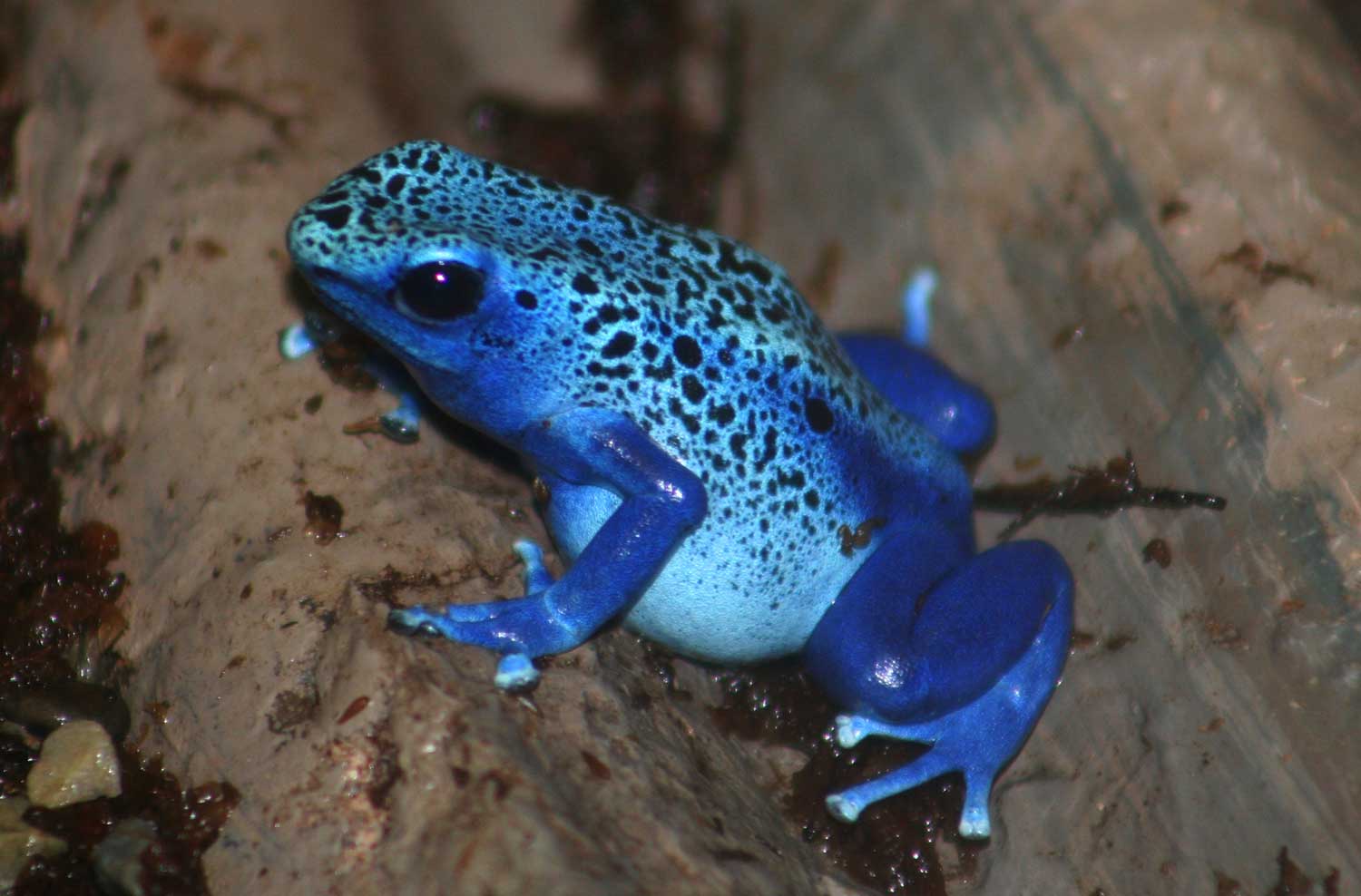
A bright blue speckled frog

© Ethan Kocak/Dreamstime.com

Blue is so rare in nature that anything blue tends to stand out. The blue poison dart frog’s eye-catching color makes it look like it was dipped in a can of paint. Since this South American rainforest species is active during the day, it might seem weird that it’s not designed to blend in with its surroundings. 

How does the frog protect itself? That bright blue coloring sends a message to hungry predators: keep your distance. And for good reason! The frog’s skin secretes a poison that can paralyze or even kill anything that tries to eat it.

The poison comes from eating extremely poisonous ants. Amazingly, frogs that are in captivity are harmless because they’re fed crickets and other insects that contain no poison.

Kind of Cute?

© Bryan and Wendy Mullennix—Verve+/Getty Images

Tarantulas may look a little creepy, but they’re actually pretty mellow. While these spiders do have fangs and venom (so they can kill their prey), most species pose no danger to humans.

Learn more about tarantulas at Britannica.

WORD OF THE DAY

anomaly

PART OF SPEECH:

noun

Definition:

: something that is unusual or unexpected

Definitions provided by
Merriam-Webster Logo

Crossword

O
O
O
O
O
O

In Case You Missed It

The island of Corsica showed American colonists that a courageous revolution could defeat an empire.
May 7, 2026
Physicist Narinder Singh Kapany developed fiber optic cables, helping to make the Internet possible.
April 30, 2026
How can you tell whether photos and videos are real or made with AI? Here are a few tips.
April 24, 2026
A seemingly strange bank is saving one of Earth’s most valuable resources.
April 9, 2026

United for the Climate

A group of people stand on a rocky beach with evergreen trees along the coast.

United for the Climate

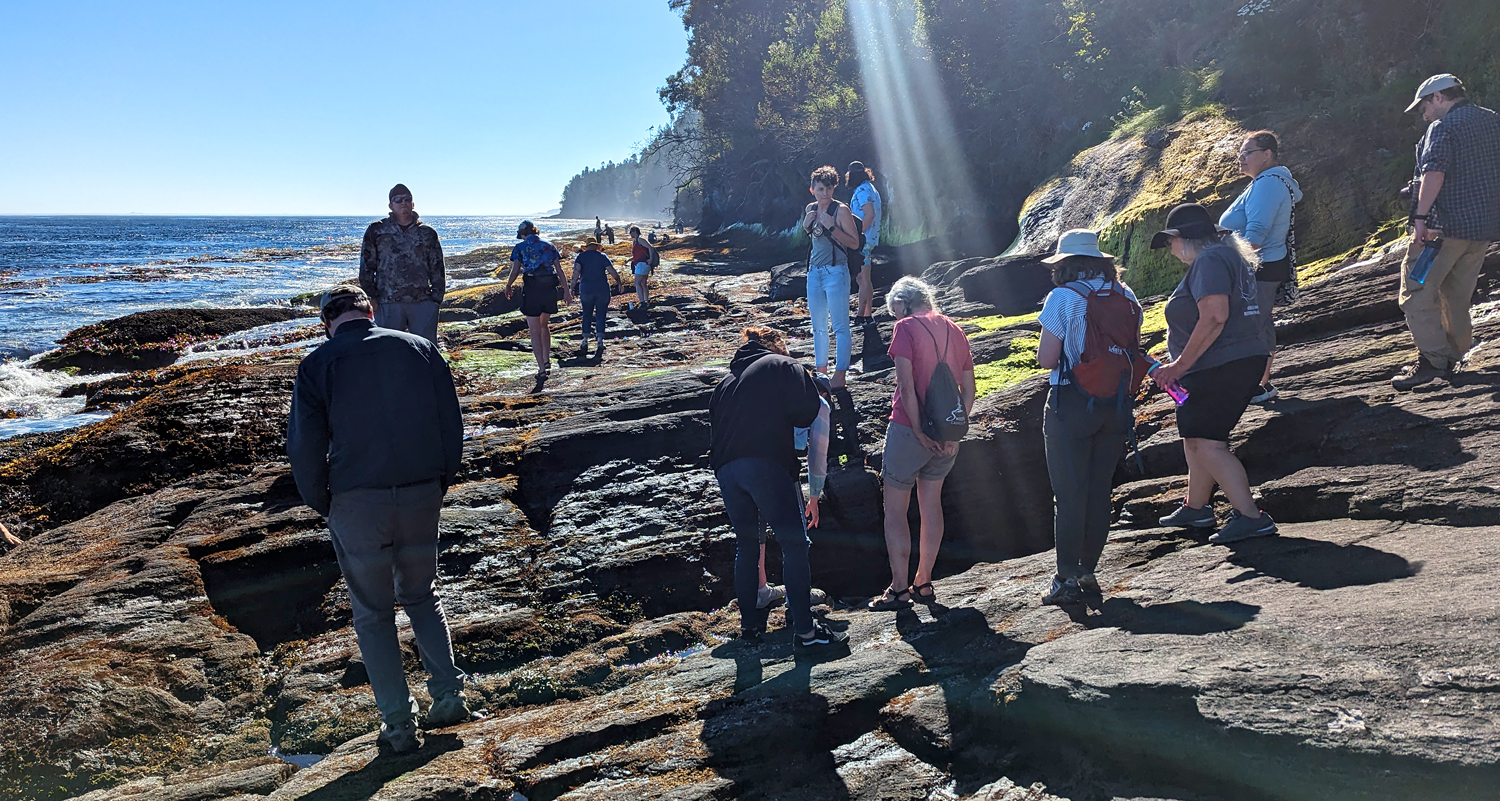
American Indians from various groups meet at climate camps to share ideas on how to address the climate crisis.

A group of people stand on a rocky beach with evergreen trees along the coast.

Courtesy of Affiliated Tribes of Northwest Indians

Indigenous people are among the most heavily affected by climate change. That is why, since 2016, American Indians from more than 70 nations have come together at climate camps to share solutions and support one another.

People from at least 28 American Indian nations and intertribal organizations gathered at a camp in Port Angeles, Washington, in August 2023. They discussed the many ways in which the effects of climate change are harming their livelihoods—plants have died due to excessive heat, a landslide has damaged a fish habitat (and food source for one community), and much more. Climate change affects everyone but particularly American Indians. Indigenous peoples rely on fish and other wildlife for food, medicine, and the survival of their cultures.

One of the topics of discussion was how to use millions of dollars the U.S. government set aside for Indigenous people in 2022 so that they can fund ways to adapt to climate change. Scientists presented information, and people from different groups shared projects they are working on. The Confederated Salish and Kootenai Tribes in Montana has already developed a climate response plan. Michael Durglo, Jr., head of this group’s climate change advisory committee, shared the details of the plan at the camp and invited others to use it. 

“You don’t have to steal it. It’s yours,” Durglo said. “Everything I have is yours.”

“[What] this camp has done for us is to help us know that there is the network, there is a supporting web out there, that we can help one another,” Jonny Bearcub Stiffarm told the Associated Press. Bearcub Stiffarm, of the Fort Peck Assiniboine and Sioux Tribes in Montana, attended the Port Angeles camp. “So we make new songs. We make new stories. We make new visions that we embrace for the positive outcome of our people. We make new warrior societies, new climate warrior societies.”

Check out the slideshow for more photos from the Port Angeles conference.

Annaliese Ramthun, Courtesy ATNI; Chas Jones, Courtesy ATNI; Jen Santry, Courtesy ATNI

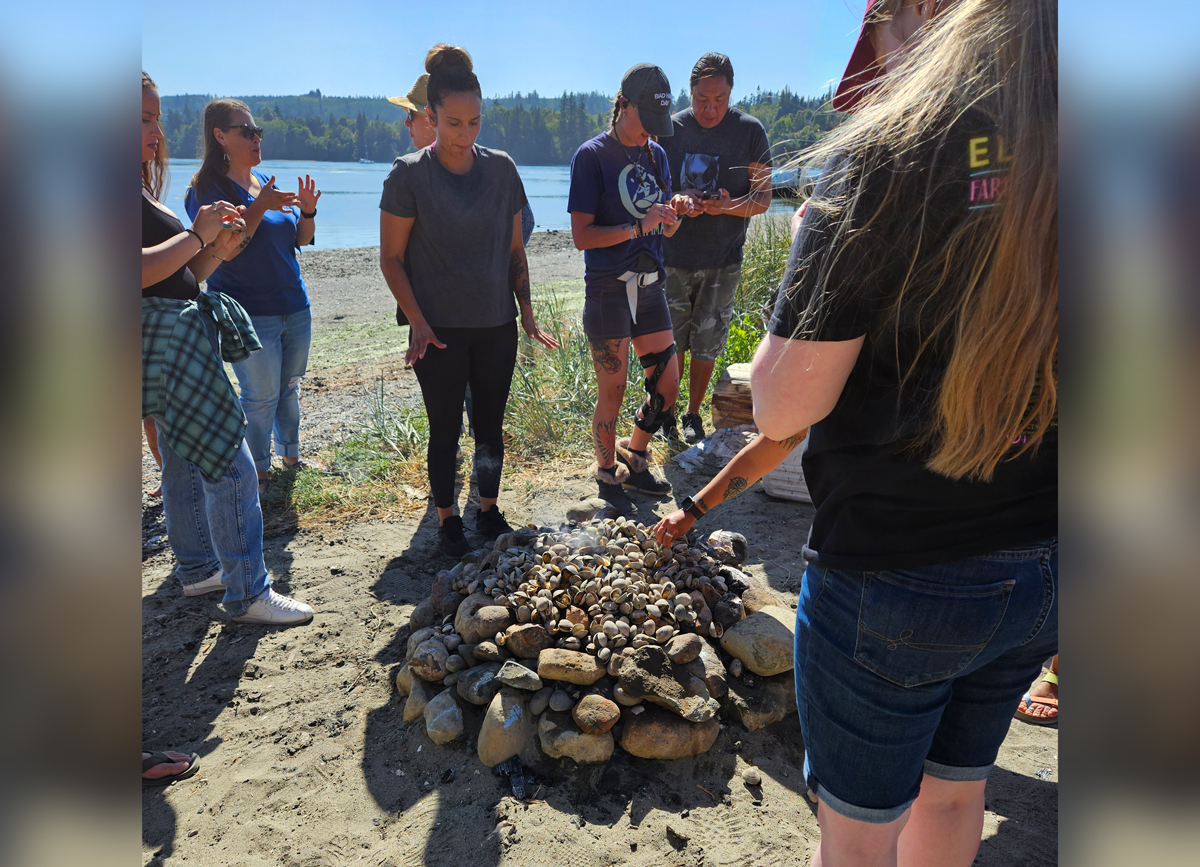
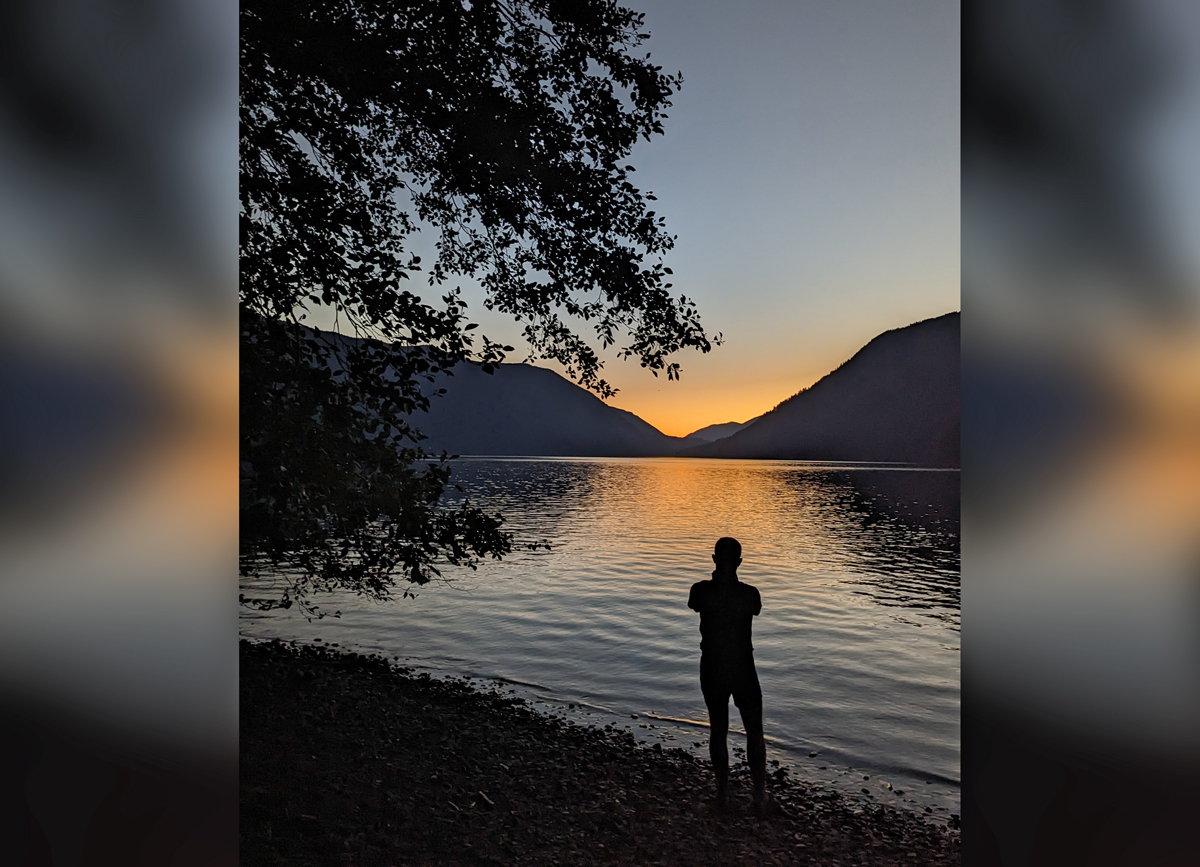
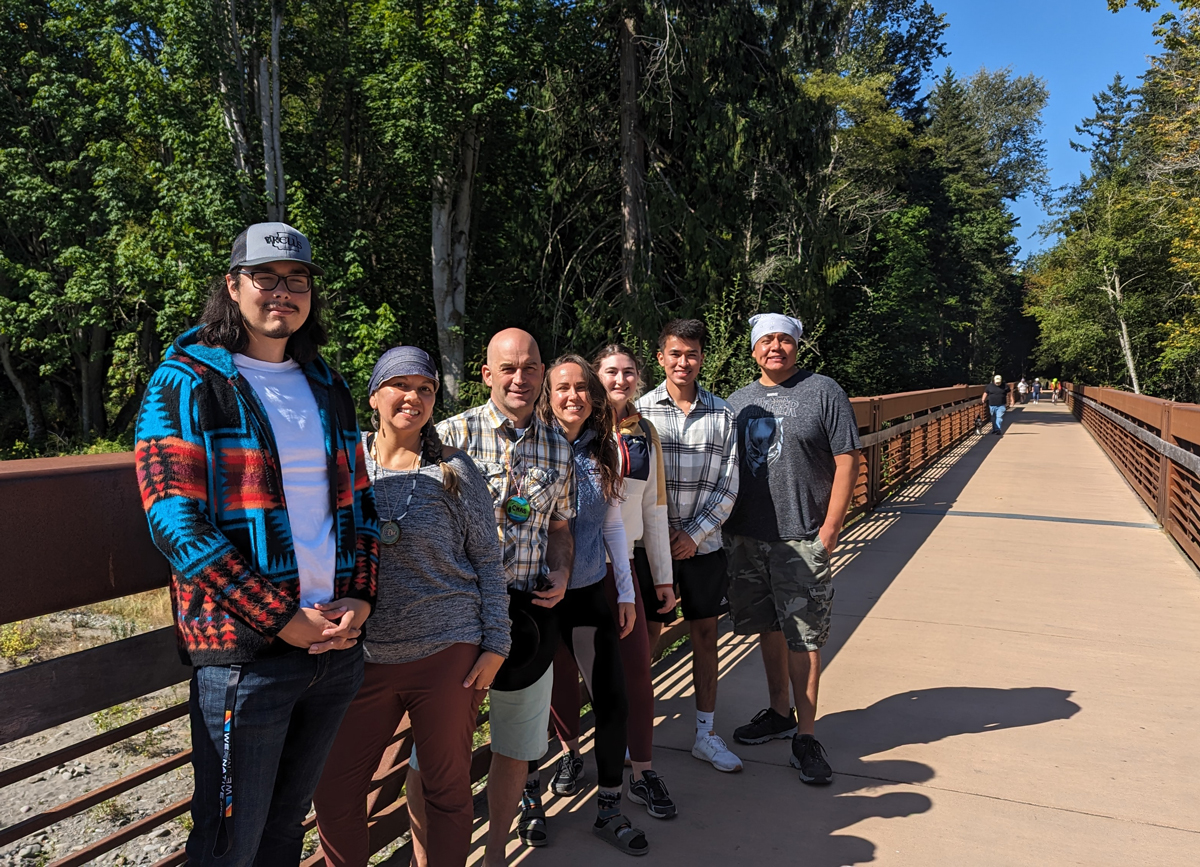
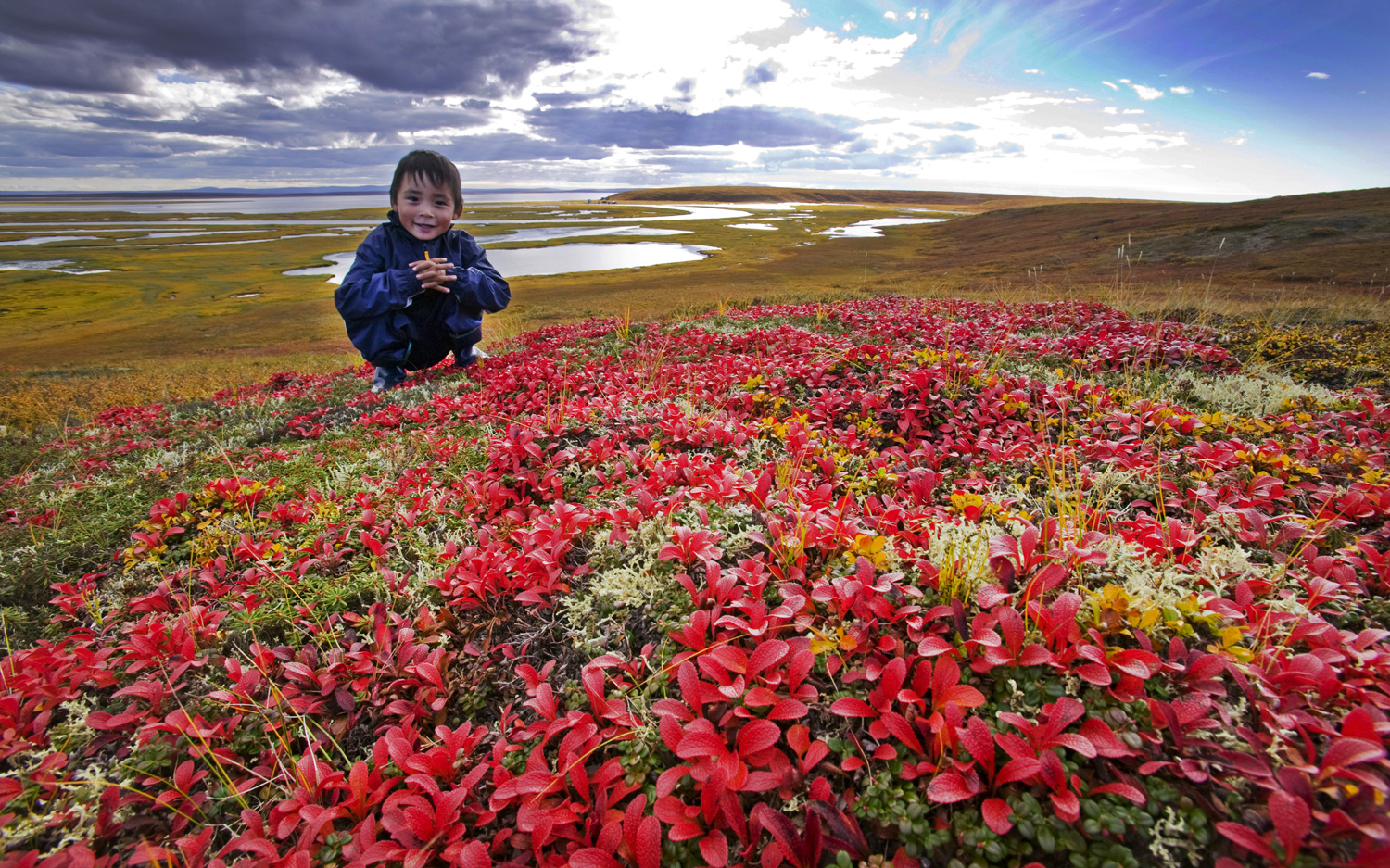
The attendees of the 2023 Tribal Climate Camp in Port Angeles, Washington, discussed challenges, shared ideas, and spent a lot of time in nature.

Did You Know?

© Ashley Cooper—Corbis/Getty Images

American Indian and Alaska Native cultures are tied directly to homelands. This idea is called the “power of place.”

Can This Cedar Be Saved?

© eppicphotography—iStock/Getty Images

Climate change is affecting Indigenous peoples by endangering resources on which they rely. 

The Western red cedar tree is important to the culture of the S’Klallam people of the northwestern United States. For more than 10,000 years, the S’Klallams have made canoes, clothing, mats, rope, baskets, boxes, utensils, and ceremonial masks from these local trees.

Today, the Western red cedar is endangered because of the effects of the climate crisis. Scientists say the tree needs abundant water and has not been able to adapt to drought conditions brought on by climate change.

“For the S’Klallam people, the cedar, or x̣páy in our language, is considered the tree of life,” Laura Price, cultural resources director for the Port Gamble S’Klallam Tribe, said at a recent conservation talk, as reported by the Jefferson Land Trust. “Every single piece of the tree is important. Cedar is a life-giving resource to our people and we look for opportunities to honor this gift.”

Indigenous Peoples’ Day

Three photos show people in traditional clothing celebrating by dancing and blowing into a conch shell.

Jessica Rinaldi—The Boston Globe/Getty Images, Joseph Prezioso—AFP/Getty Images

In the United States, the second Monday of October is Indigenous Peoples’ Day. The photos above show just a few of the celebrations that have taken place. In the top left photo, Cheyenne Fox Tree-McGrath of the Arawak Nation dances a communal dance. On the top right, a man blows into a conch shell. In the bottom photo, Indigenous dancers from a group called Cetiliztli Nauhcampa perform.

You can learn more about Indigenous Peoples’ Day, and why it’s celebrated, at Britannica.

WORD OF THE DAY

Indigenous

PART OF SPEECH:

adjective

Definition:

: of or relating to the earliest known inhabitants of a place

Definitions provided by
Merriam-Webster Logo

Word Flower

How many words can you make from these letters? All words must use the center letter.

O
O
O
O
O
O

In Case You Missed It

The island of Corsica showed American colonists that a courageous revolution could defeat an empire.
May 7, 2026
Physicist Narinder Singh Kapany developed fiber optic cables, helping to make the Internet possible.
April 30, 2026
How can you tell whether photos and videos are real or made with AI? Here are a few tips.
April 24, 2026
A seemingly strange bank is saving one of Earth’s most valuable resources.
April 9, 2026

Teen Finds Ancient Whale Skull

A teenager lies facing the ground using an instrument to excavate an object.

Teen Finds Ancient Whale Skull

Sixteen-year-old Lindsey Stallworth discovered a whale skull that’s millions of years old.
A teenager lies facing the ground using an instrument to excavate an object.
Alabama School of Mathematics and Science
Lindsey Stallworth excavates a fossil in a field on her family’s property.

A teen was looking for fossils in Alabama when she found the fossilized remains of a whale that died millions of years ago. Experts say the fossil may be of a species that was previously unknown.

Sixteen-year-old Lindsey Stallworth and her teacher, Drew Gentry, were digging on the Stallworth family’s property when they came across some fossilized bones. At first it wasn’t clear what they’d found. But as they continued to unearth their discovery and found that it included teeth, they realized it was a very large skull—about 4 or 5 feet (1 or 2 meters) long. Gentry, who is a paleontologist, later found information to suggest that the skull is about 34 million years old.

“It’s really hard to comprehend something that’s that many millions of years old, but it started to make more sense once we started getting the dirt away and saw what the skull might have looked like,” Stallworth told the Washington Post.

A man and a teen girl stand in a flatbed to which a large object has been secured with straps.
Alabama School of Mathematics and Science
Lindsey (right) and her teacher, Drew Gentry, pose with the ancient whale skull they discovered.
Gentry sent photos of the skull to some other scientists, who said it was a carnivorous whale. It may be a relative of a larger prehistoric whale called Basilosaurus cetoides, which was about 60 feet (18 meters) long. Gentry, who discovered two turtle species from fossils he found in Alabama, says it’s not unusual to find fossils of marine animals in the state. Millions of years ago, much of what’s now Alabama was covered by a shallow sea.
A teenager lies facing the ground using an instrument to excavate an object.
Alabama School of Mathematics and Science
Lindsey cleans the 34-million-year-old whale skull she discovered on her family’s property.
The skull is now being kept at the Alabama School of Mathematics and Science, where Stallworth is in 11th grade. Stallworth plans to continue to study it during the school year. Next summer, she and Gentry will work on uncovering the rest of the whale’s remains. They hope that, at some point, scientists can determine if the whale species is already known or new to science. “I was really overwhelmed [to find the fossil], but at the same time, I was just full with excitement,” Stallworth told NBC 15. “As a high schooler, I didn’t think I’d get to do any of this stuff.”

Did You Know?

MCDinosaurhunter/Rocky Mountain Dinosaur Resource Center (CC BY 3.0)

A sea covering what’s now Alabama was home to Protostega, an ancient sea turtle that was almost as big as a car!

An Ancient Sea

An illustration of a swimming fish with large, pointed teeth.
© Estebande/Dreamstime.com
Fossils show that millions of years ago, a predatory fish called Xiphactinus lived in what is now Alabama.

About 80 million years ago, high temperatures melted the polar ice caps and the oceans spilled over coastlines. A shallow sea that scientists call the Mississippi Embayment covered much of what’s now the southeastern United States. How do we know? The inhabitants of this sea left behind many, many fossils. In areas of the Southeast that are nowhere near the coast, it’s possible to find evidence of ancient marine life.

One of those places is Harrell Station, in Alabama. The fossils there paint a picture of a body of water brimming with gigantic sea turtles, sharks, and massive fish called coelacanths. The apex predator was the mosasaur, a marine reptile that could grow to 50 feet (15 meters) or longer and hunted pretty much every other creature.

Age of Monsters

An animal resembling a crocodile with fins swims with its mouth open and teeth showing.
© Mr1805/Dreamstime.com
Giant marine reptiles called mosasaurs lived during the Cretaceous Period, which ended 66 million years ago. During this time, dinosaurs were still roaming Earth—but their days were numbered. You can read more about the Cretaceous Period at Britannica.

WORD OF THE DAY

primeval

PART OF SPEECH:
adjective
Definition:
: very old or ancient
Definitions provided by
Merriam-Webster Logo

Word Search

See if you can find all the words related to finding artifacts.
O
O
O
O
O
O

In Case You Missed It

The island of Corsica showed American colonists that a courageous revolution could defeat an empire.
May 7, 2026
Physicist Narinder Singh Kapany developed fiber optic cables, helping to make the Internet possible.
April 30, 2026
How can you tell whether photos and videos are real or made with AI? Here are a few tips.
April 24, 2026
A seemingly strange bank is saving one of Earth’s most valuable resources.
April 9, 2026

Are Starbucks Cups Going Away?

Are Starbucks Cups Going Away?

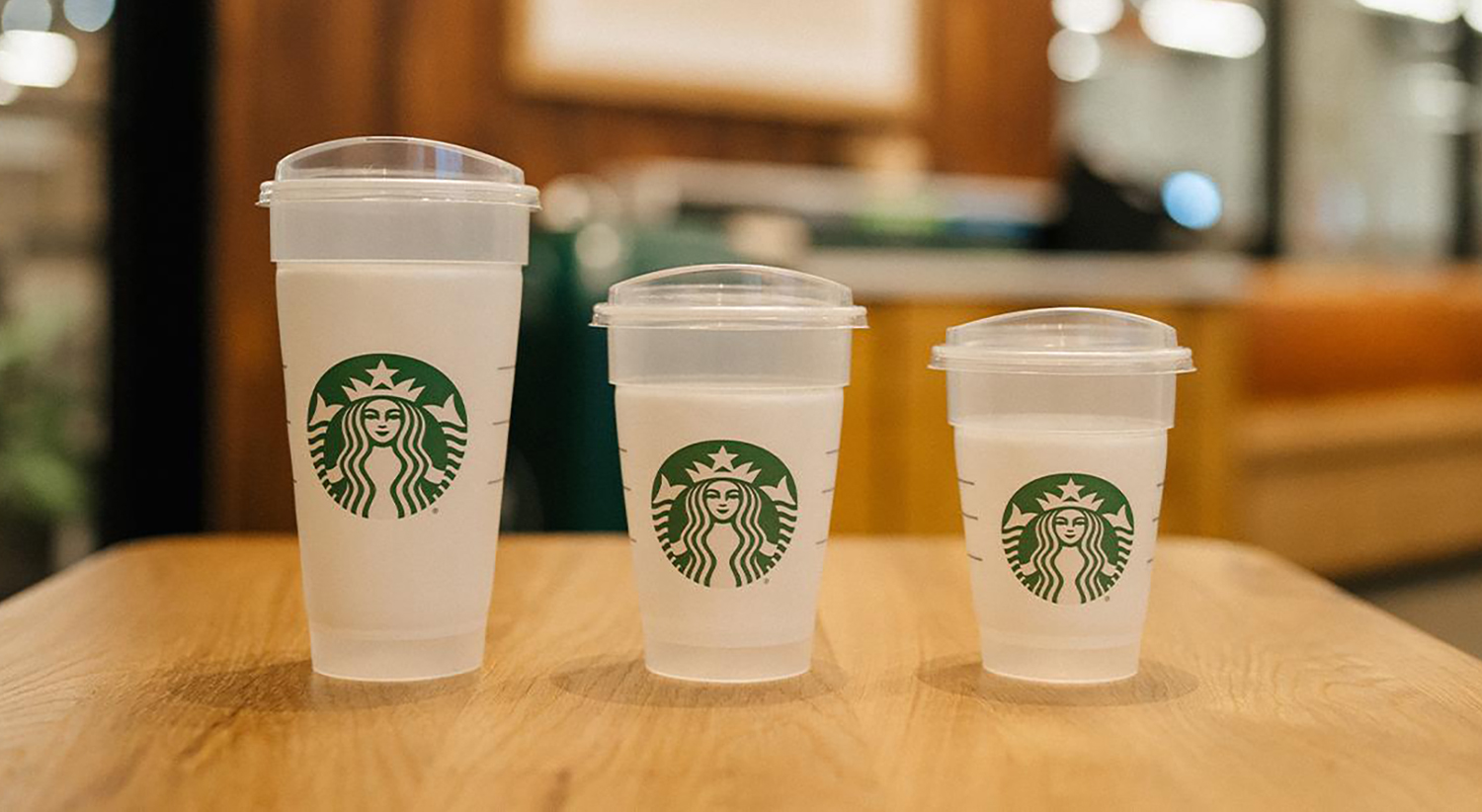
Starbucks says it’s planning to stop using disposable cups by 2030.
© Starbucks
Starbucks is beginning to give customers reusable cups like these.

Starbucks says it’s changing the way people get their coffee. The popular chain plans to stop providing disposable cups at any of its locations by 2030.

The plan is part of Starbucks’s effort to be more environmentally friendly, which includes a goal to reduce waste, water use, and carbon emissions in half by 2030. Each year, the company uses about seven billion disposable cups at its locations worldwide. Those cups, which bear the famous green Starbucks logo, have become iconic. But they’re also terrible for the planet. Water and energy are used to produce the cups, and the cups end up in landfills when thrown away.

Some Starbucks locations have already stopped using disposable cups. At these stores, customers can either bring their own mugs from home or get their beverage in a “borrowed” reusable cup. Cups can be returned to Starbucks, where they’re cleaned and used again.

A reusable cup is placed upside down in a cleaning device that says “316 cups saved.”
© Connor Surdi/Starbucks
A reusable cup is washed in a personal cup washer at a Starbucks location in Tempe, Arizona.

Why is Starbucks doing this? Experts say companies are aware that the public is concerned about the environment. But people also like convenience, which is why fast-food chains are so popular. Companies like Starbucks are betting that customers are looking for an easy way to reduce their waste.

A worker at a drive-thru window holds out a beverage in a mug while the driver holds out another beverage container.
© Connor Surdi/Starbucks
At some Starbucks locations, customers can bring their own mugs from home.

At a Starbucks in Tempe, Arizona, customers get one dollar off their beverage if they bring their own mug. The discount gives customers an extra incentive to grab a mug before they leave home.

“Saving the environment is important and all, but I probably come here more knowing that I’m going to get a dollar off,” Starbucks customer Bethany Patton told the Associated Press.

Fun Fact

A glass juice bottle against a green background.
© Alexandr Kornienko/Dreamstime.com

A glass vinegar or juice bottle can easily become a reusable water bottle. Add water and a spoonful of baking soda to the empty bottle and shake it to eliminate the smell. Then clean it with soap and water or in a dishwasher.

The Hidden Cost of Fast Food

A person taps a picture of a burger on an online menu and a label about the burger’s climate impact pops up.
© Pixel-Shot/stock.adobe.com, © Lisovskaya—iStock/Getty Images; Animation Encyclopædia Britannica, Inc.

Starbucks isn’t the only fast-food chain that contributes to the climate crisis. Most fast food is terrible for the planet. A big reason is that fast-food restaurants use tons of plastic and paper wrappers. Another reason has to do with the way the food is produced. For example, experts say it takes more than 400 gallons (1,500 liters) of water to make one hamburger. Not only does a cow drink water, but water is used to grow the food the cow eats.

But in 2022, a study found ways that fast-food restaurants can reduce their environmental impact. Researchers added labels to menu items. They found that when they added “high climate impact” to beef items, orders for those items fell by 23 percent. And when they put “low climate impact” next to chicken sandwiches and salads, orders for those items rose by 10 percent.

Problem Solvers

A woman sits at a computer next to a burger and imagines different sustainable food containers.
© Mykola/stock.adobe.com, © Tenny Teng/Dreamstime.com; Animation Encyclopædia Britannica, Inc.

Fast-food restaurants need more sustainable containers. But who will design them? That’s the job of engineers, people who design gadgets and machines. If you’re a problem-solver, you might be interested in engineering.

Learn more at Britannica!

WORD OF THE DAY

viable

PART OF SPEECH:
adjective
Definition:
: capable of being done or used
Definitions provided by
Merriam-Webster Logo

Wordrow

O
O
O
O
O
O

In Case You Missed It

The island of Corsica showed American colonists that a courageous revolution could defeat an empire.
May 7, 2026
Physicist Narinder Singh Kapany developed fiber optic cables, helping to make the Internet possible.
April 30, 2026
How can you tell whether photos and videos are real or made with AI? Here are a few tips.
April 24, 2026
A seemingly strange bank is saving one of Earth’s most valuable resources.
April 9, 2026

Food Fight!

A man wearing goggles in the center of a tomato covered crowd throws crushed tomatoes into the air.

Food Fight!

Every year, people gather in a Spanish town for La Tomatina, the world’s biggest food fight.

A man wearing goggles in the center of a tomato covered crowd throws crushed tomatoes into the air.

© Donvictorio/Dreamstime.com

Everyone who attends La Tomatina expects to get messy.

Thousands of people from all over the world traveled to Buñol, Spain, in August for La Tomatina, the biggest food fight on the planet. There was only one weapon in this friendly war: tomatoes.

La Tomatina takes place every year on the last Wednesday in August. Buñol officials are totally in on the fun. On the morning of the event, 120 tons of overripe tomatoes are brought into town by truck. Meanwhile, shop owners cover their storefronts with plastic. Participants put on old clothes and often don eye goggles. Everyone knows things are about to get messy.

The fight begins at noon. For safety reasons, there are a few rules. No one is allowed to carry or throw hard objects. Tomatoes must be squashed and softened before they are thrown. Also, everyone must stop throwing tomatoes when they hear the boom of a water cannon at the one-hour mark. Beyond that, the fight is a free-for-all. It’s crowded, chaotic, and extremely messy. But that’s what people love about it. After it’s all over, officials hose down the town, and it’s business as usual until August rolls around again!

© Donvictorio/Dreamstime.com

La Tomatina dates back to 1945, when some kind of food fight broke out in the streets of Buñol. No one is certain about the origins of that first battle, but it inspired town officials to turn tomato pelting into an annual event. Not everyone is a fan. Many people criticize the festival for wasting food. But officials say they use only tomatoes that are low quality and on the verge of rotting. They wouldn’t be good for anything else.

No doubt, thousands of people—and squishy tomatoes—will head for Buñol again next year.

Fun Fact

© Andrii Bezvershenko/Dreamstime.com, © fotokostic—iStock/Getty Images Plus; Animation Encyclopædia Britannica, Inc.

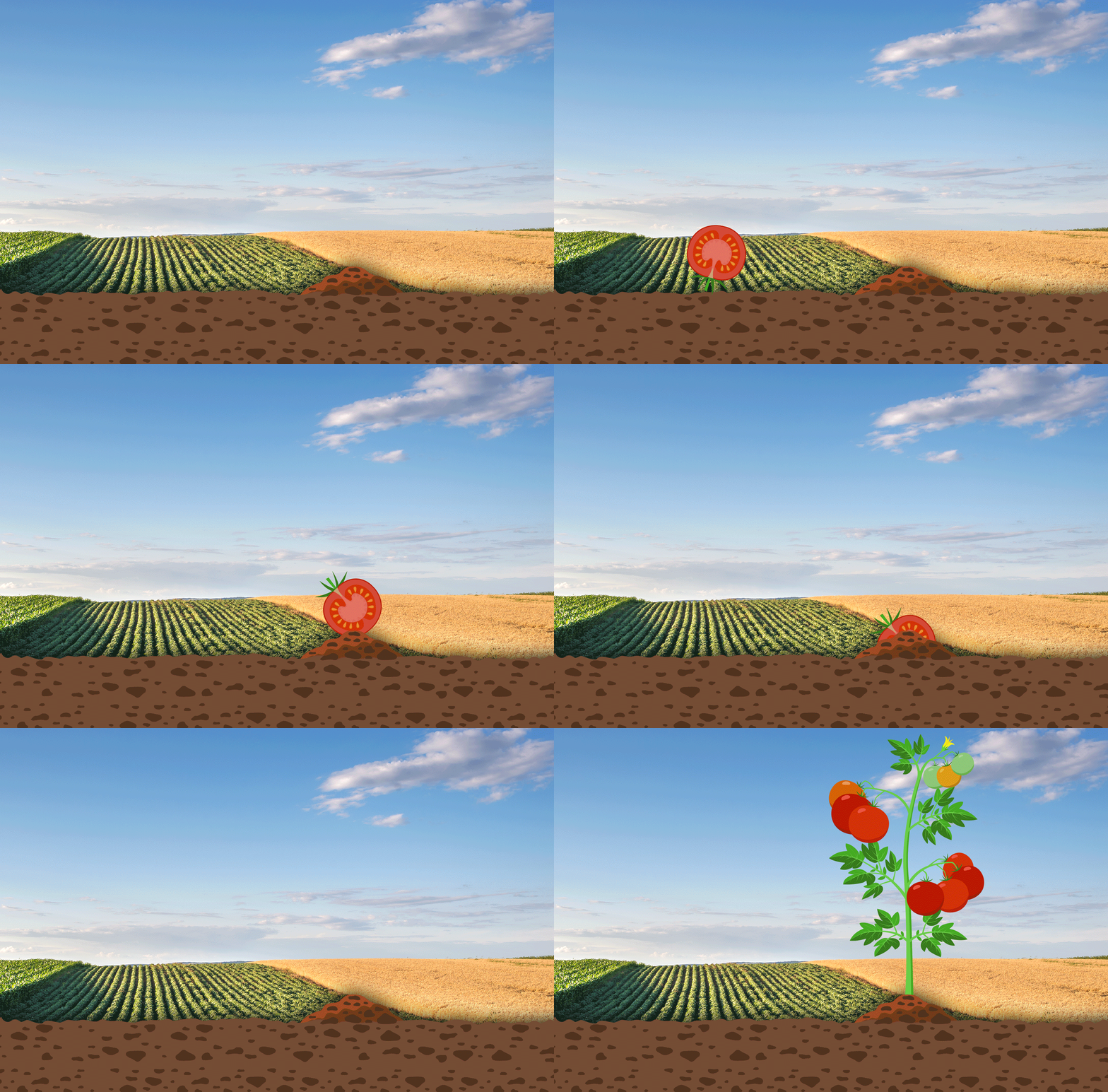
If you plant a few tomato slices in some soil, it’s possible to grow a new tomato plant!

Terrible Tomatoes?

Painting of a woman in the 1600s holding up a tomato and saying yikes.

The Metropolitan Museum of Art, New York City, The Jack and Belle Linsky Collection, 1982 (1982.60.32), www.metmusem.org, © PixaHub/stock.adobe.com; Photo illustration Encyclopædia Britannica, Inc.

Anyone who’s ever had a pizza can tell you that tomatoes are big in Italy. In fact, they’re staples in many European kitchens. But for hundreds of years, Europeans feared tomatoes.

Originally from the Americas, tomatoes made their way to Europe in the 1500s. The Aztecs, people who lived in what is now Mexico, ate tomatoes. But Europeans grew them only as pretty plants. That could be because around this time, a British botanist (a scientist who studies plants) named John Gerard wrote that tomatoes shouldn’t be eaten. The tomato plant was “of ranke and stinking savour,” Gerard said. In other words, it was pretty much poison.

It didn’t help that, over the years, European kings, queens, and nobles sometimes died after eating tomatoes. No one realized that the tomatoes weren’t the problem. Wealthy people often ate off fancy plates made of pewter, which contained a lot of lead. Unlike tomatoes, lead is toxic.

During the 1700s, European settlers in what’s now the United States started growing tomatoes. They dared to eat them and survived. It wouldn’t be until the 1800s that people in Europe accepted these fruits and started inventing delicious recipes—like cheese and tomato pizza.

Tenochtitlan, Tlacopan, and Tomatoes

A tomato goes into a face on an Aztec calendar.

© Luisrsphoto, Hyrman/Dreamstime.com; Animation Encyclopædia Britannica, Inc.

When Europeans set foot in the Americas, they found more than just tomatoes. The Aztecs had an advanced civilization that thrived for hundreds of years in what is now Mexico. They built cities, created calendars like the one shown here…and grew tomatoes (they called the fruit tomatl).

You can read more about the Aztecs at Britannica!

WORD OF THE DAY

besmirch

PART OF SPEECH:

verb

Definition:

: to cause harm or damage to (the reputation of someone or something)

Definitions provided by
Merriam-Webster Logo

Criss Cross

Each of these foods is native to the Americas. See if you can figure out where they go in the grid.

O
O
O
O
O
O

In Case You Missed It

The island of Corsica showed American colonists that a courageous revolution could defeat an empire.
May 7, 2026
Physicist Narinder Singh Kapany developed fiber optic cables, helping to make the Internet possible.
April 30, 2026
How can you tell whether photos and videos are real or made with AI? Here are a few tips.
April 24, 2026
A seemingly strange bank is saving one of Earth’s most valuable resources.
April 9, 2026

Climate Change Lawsuit

A group of children and young adults pose for a photo in front of a building.

A Win for Planet Earth

A group of kids and young adults won a lawsuit claiming that their state violated their right to a safe environment.
A group of children and young adults pose for a photo in front of a building.
William Campbell/Getty Images News
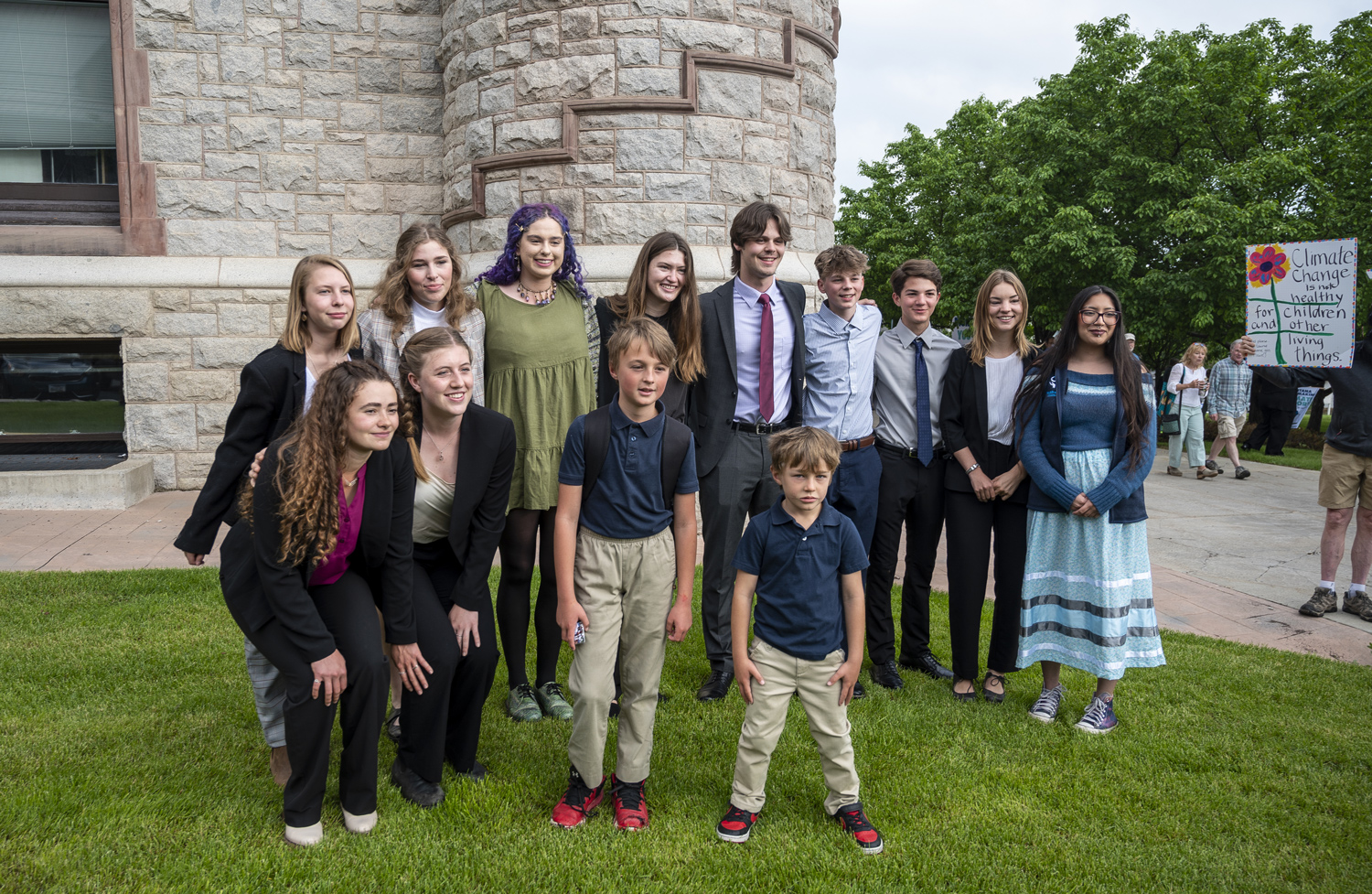
Thirteen of the plaintiffs in the Held v. Montana case pose for a photo. The plaintiffs were all children or young adults.

A group of kids, teens, and young adults scored a courtroom victory in August 2023, winning a lawsuit claiming that the state of Montana was violating their right to a clean and safe environment. The trial was the first of its kind in the United States, but it might not be the last.

The group of 16 plaintiffs filed the lawsuit in 2020, when they ranged in age from 2 to 19. The case was called Held v. Montana, after the oldest plaintiff, Rikki Held. The lawsuit claimed that Montana state agencies allowed the production of fossil fuels without considering their effect on the climate. When burned, fossil fuels create gases such as carbon dioxide, which contribute to climate change. Montana’s state constitution guarantees citizens a clean and healthy environment.

In her ruling, Judge Kathy Seeley wrote that Montana residents “have a fundamental constitutional right to a clean and healthful environment, which includes climate as part of the environmental life-support system.”

“I knew that we would win because we had such a strong case. This is about protecting our basic human rights,” said Held, who is now 22. 

Austin Knudsen, Montana’s attorney general, says he will appeal the decision. This means he’ll take the case to a more powerful court and ask for the decision to be reversed. The state had argued that the carbon dioxide produced there has little or no effect on climate change because it’s a tiny fraction of all the carbon dioxide produced in the world.

Experts say Judge Seeley’s decision sets a major precedent (meaning that courts will consider it when looking at similar cases). Currently, young people are suing several states, claiming that their right to a healthy environment has not been protected. In another climate case, a group of young people is suing the U.S. government.

The outcomes of these lawsuits will answer an important question. Do governments have a responsibility to protect their citizens from the effects of climate change?

Did You Know?

Planet Earth, wind turbines, solar panels, grass, and trees.
© Tn/stock.adobe.com

A growing number of countries are promising to achieve net-zero emissions. “Net-zero emissions” means that harmful greenhouse gas emissions created by human activities are exactly balanced out by action that reduces these emissions.

To reach net-zero emissions, we need to rely less on fossil fuels and more on energy sources that don’t contribute to climate change, like solar (the Sun) and wind.

Planet Earth: A Progress Report

Arnaud Bouissou—MEDDE/COP Paris
World leaders signed the Paris Agreement in 2015, at the United Nations Climate Change Conferences (COP21).

In 2015, 196 nations signed the Paris Agreement, an international treaty to curb climate change. (Additional nations joined the agreement later.) The goal of the treaty is to limit the increase in the global average temperature. Originally, nations set that limit to less than 2 degrees Celsius above the global average temperature before the Industrial Revolution, a time between 1880 and 1900 when the use of pollution-producing machinery increased. Since the Paris Agreement was signed, climate experts have said that increases in world temperatures should be limited to less than 1.5 degrees Celsius above preindustrial levels by the end of this century. 

That’s the target. To reach it, nations need to find ways to lower their greenhouse gas emissions. So far, research suggests that only a few countries, including Costa Rica, Ethiopia, Nepal, Nigeria, Norway, and the United Kingdom, are making significant progress.

The Work Continues

Ed Jones—AFP/Getty Images
What are nations doing to address climate change? You can read more at Britannica.

WORD OF THE DAY

antecedent

PART OF SPEECH:
noun
Definition:
: something that came before something else and may have influenced or caused it
Definitions provided by
Merriam-Webster Logo

Wordrow

O
O
O
O
O
O

In Case You Missed It

The island of Corsica showed American colonists that a courageous revolution could defeat an empire.
May 7, 2026
Physicist Narinder Singh Kapany developed fiber optic cables, helping to make the Internet possible.
April 30, 2026
How can you tell whether photos and videos are real or made with AI? Here are a few tips.
April 24, 2026
A seemingly strange bank is saving one of Earth’s most valuable resources.
April 9, 2026

Searching for a Monster

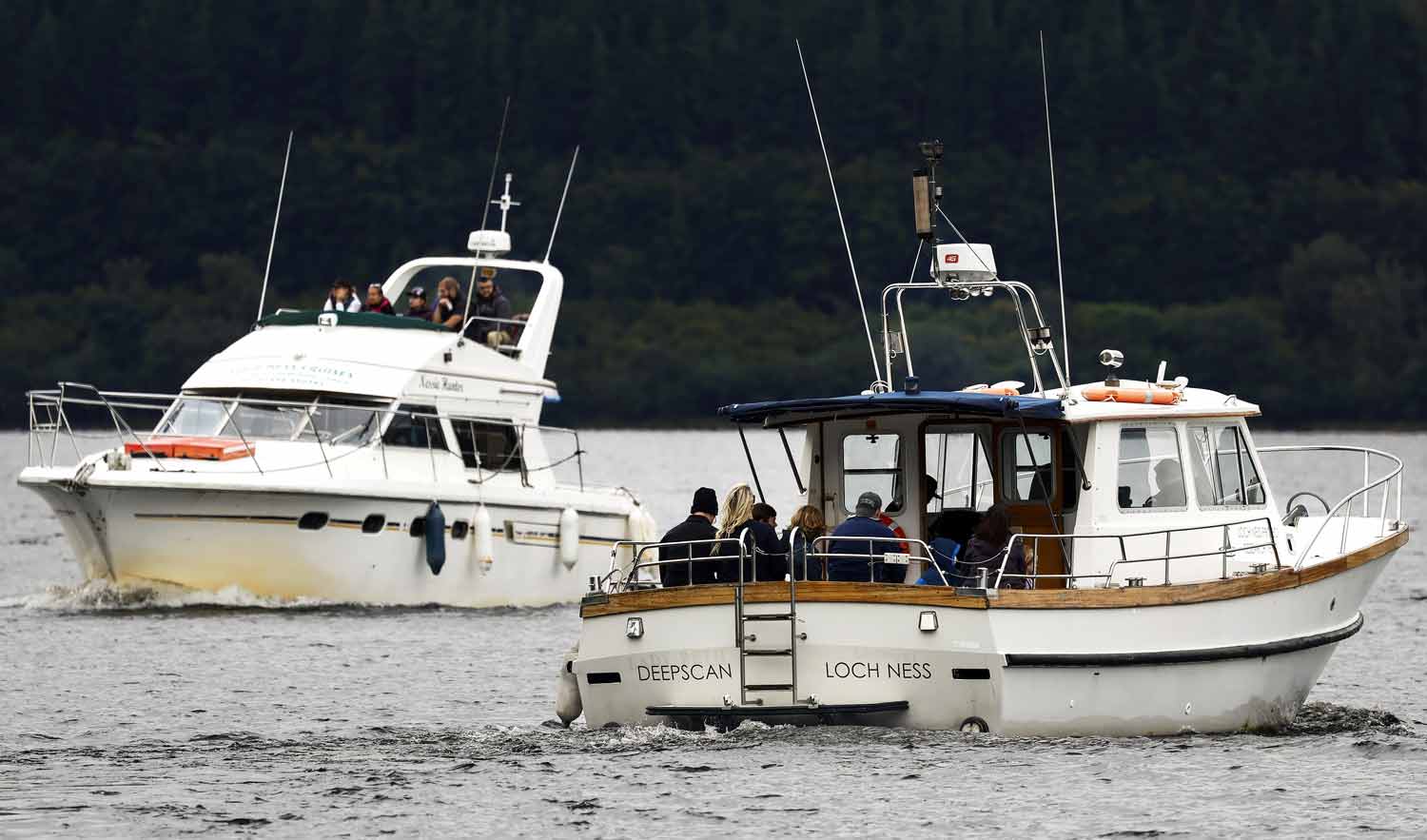
People aboard a boat called Nessie Hunter and a boat called Deep Scan Loch Ness on a body of water.

Searching for a Monster

A group of people gathered in Scotland to look for the legendary Loch Ness monster.

People aboard a boat called Nessie Hunter and a boat called Deep Scan Loch Ness on a body of water.

Jeff J Mitchell/Getty Images News

Volunteers armed with technology searched Loch Ness, hoping for signs of a monster called Nessie.

Legend has it that a monster lurks in a body of water in Scotland called Loch Ness. Could it be true? One weekend in August 2023, volunteers traveled to the loch, hoping for answers.

“We are looking for breaks in the surface and asking volunteers to record all manner of natural behavior on the loch,” Alan McKenna told the British Broadcasting Corporation. McKenna represents Loch Ness Exploration, an organization dedicated to searching for the monster. “Not every ripple or wave is a beastie. Some of those can be explained, but there are a handful that cannot.”

For two days, hundreds of monster hunters scanned the murky waters for any signs of the existence of “Nessie” (that’s the monster’s nickname). While people have been searching for the creature for generations, the chance of success is better than ever due to modern technology. The weekend’s volunteers brought along sonar equipment, which allows them to map the lake bed. They also brought thermal-imaging drones meant to detect heat (a sign of life), as well as hydrophones that can pick up sounds from deep under the water. And they had a deep faith that Nessie is real.

“I’m 90 percent convinced [the monster] exists,” Ken Gerhard, who researches creatures like Nessie, told NBC News. “I’ve never had a sighting or an observation, but if you immerse yourself in the evidence, you have over a thousand good sightings that are very consistent.”

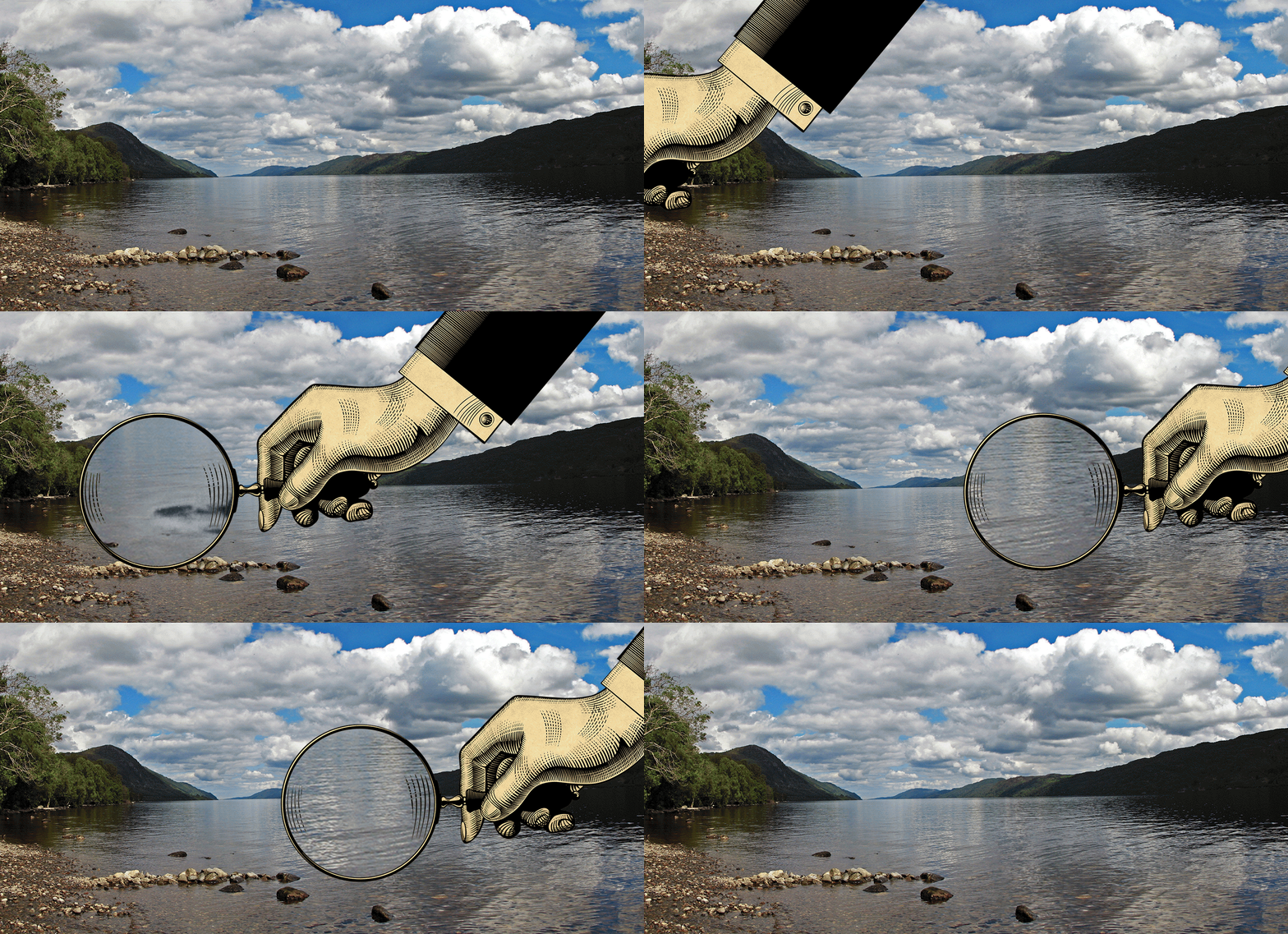
A magnifying glass passes over Loch Ness. In one spot, the outline of a monster can be seen.

© Raman Maisei, Tomas Legat/Dreamstime.com, © Historia/Shutterstock.com; Photo illustration Encyclopædia Britannica, Inc.

Does Nessie exist, or is she a figment of our imagination?

Many sightings have since been disproved. Alistair Matheson, who pilots a boat that takes searchers around the loch, said the vessel’s sonar had recently detected the outline of a monster. But it turned out to be a model of Nessie that had been used in a movie and then left on the lake bed. 

Still, some people argue that the enormous size of Loch Ness and its dark water keep the possibility of Nessie alive. It would be very easy for a creature to hide, they say.

No one that weekend uncovered proof that the monster exists. But as long as there’s a Loch Ness, the legend will live on.

Did You Know?

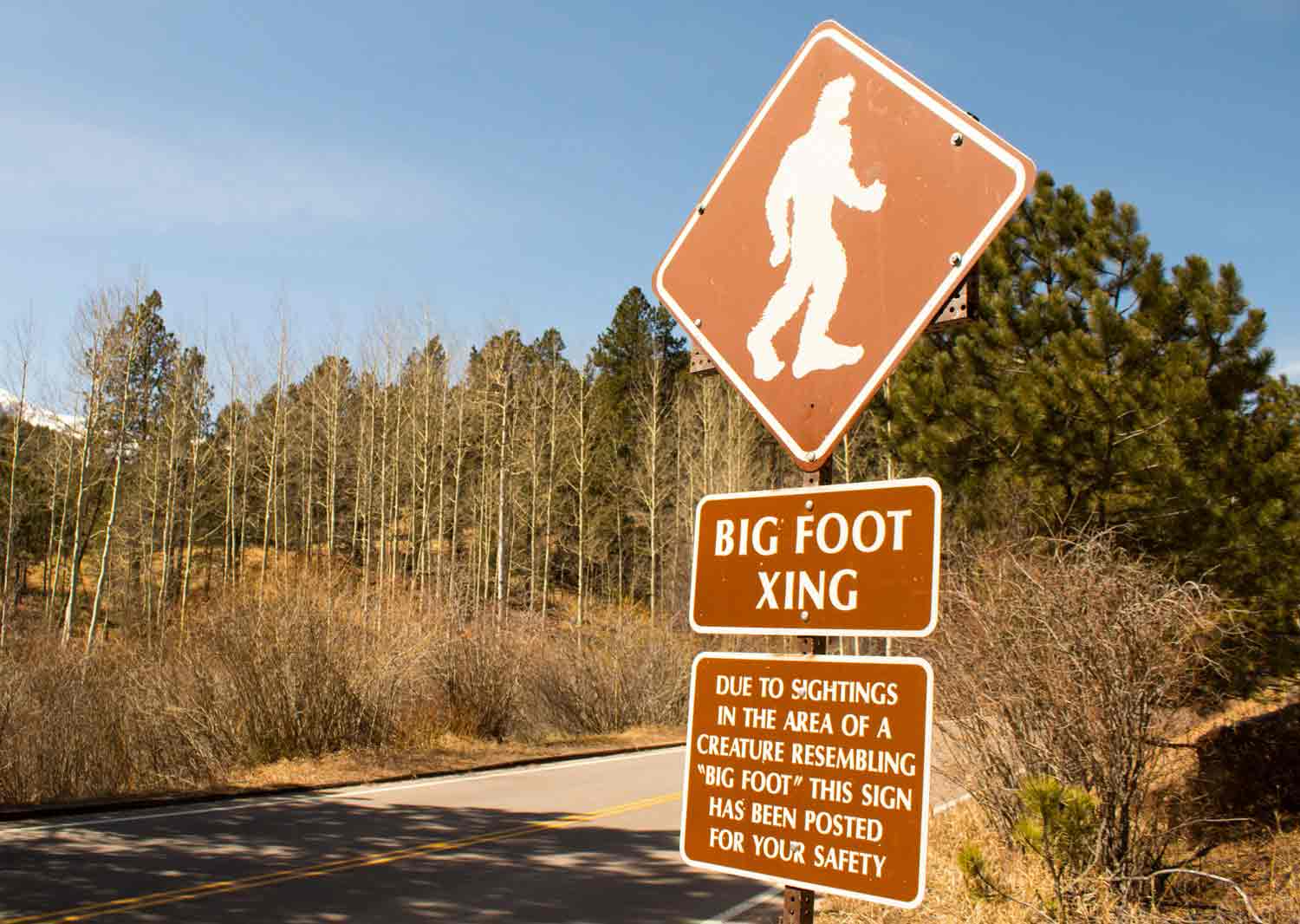
Road signs show an outline of a hair creature and a message stating that Bigfoot has been seen in the area.

© Pixelpodllc/Dreamstime.com

In many parts of the world, there have been sightings of different versions of an enormous, humanlike land creature. The northwestern United States is said to be home to Bigfoot, while the Himalayas of Asia are the territory of the Yeti, also known as the Abominable Snowman.

Numerous photos exist—but no one has ever been able to verify that the pictures are real.

The Legend of the Loch Ness Monster

© Historia/Shutterstock.com

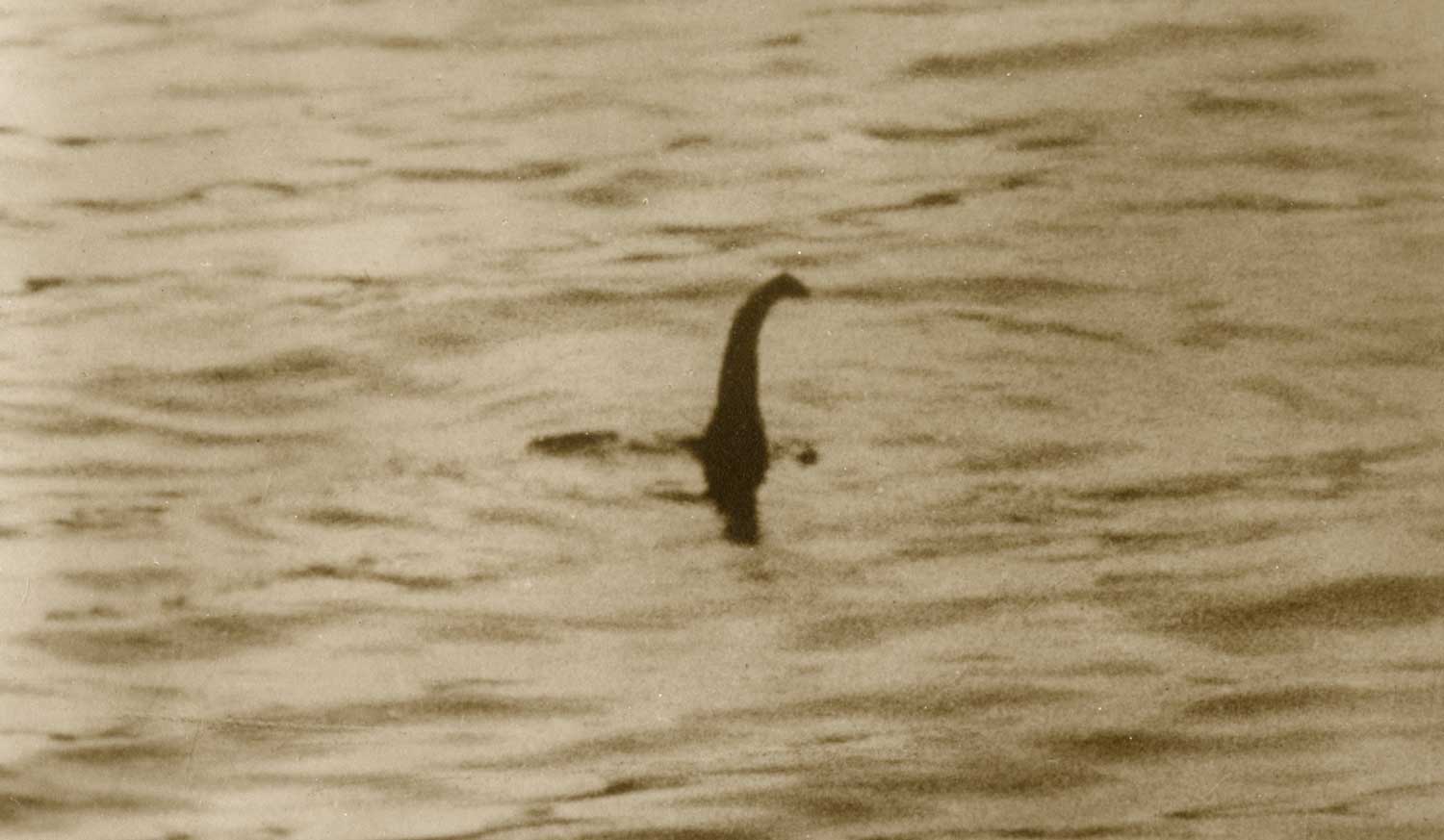
In 1934, a newspaper claimed that this photo showed the Loch Ness monster.

People have been reporting sightings of a monster in Loch Ness for hundreds of years. Ancient people called the Picts, who lived in Scotland starting in about 300 CE, made stone carvings of a creature with flippers. In 1933, a couple reported that they saw a giant beast that looked like a dragon cross the road in front of the loch and disappear into the water. After that, many more people claimed to have seen a monster, or at least signs that a monster exists.

In 1934, a British newspaper called the Daily Mail printed a photograph that it claimed showed the head and neck of the Loch Ness monster emerging from the water. Some people guessed that the photo, which was taken by an English doctor, was a plesiosaur—a marine reptile that has been extinct for 65.5 million years. Today, it’s widely believed that this photo was a hoax. Other photos that supposedly show the monster are also believed to be fake.

Does that mean there’s no monster in Loch Ness? Not necessarily. The search continues, and as technology improves, enthusiasts remain hopeful that Nessie will be revealed.

Real or Not?

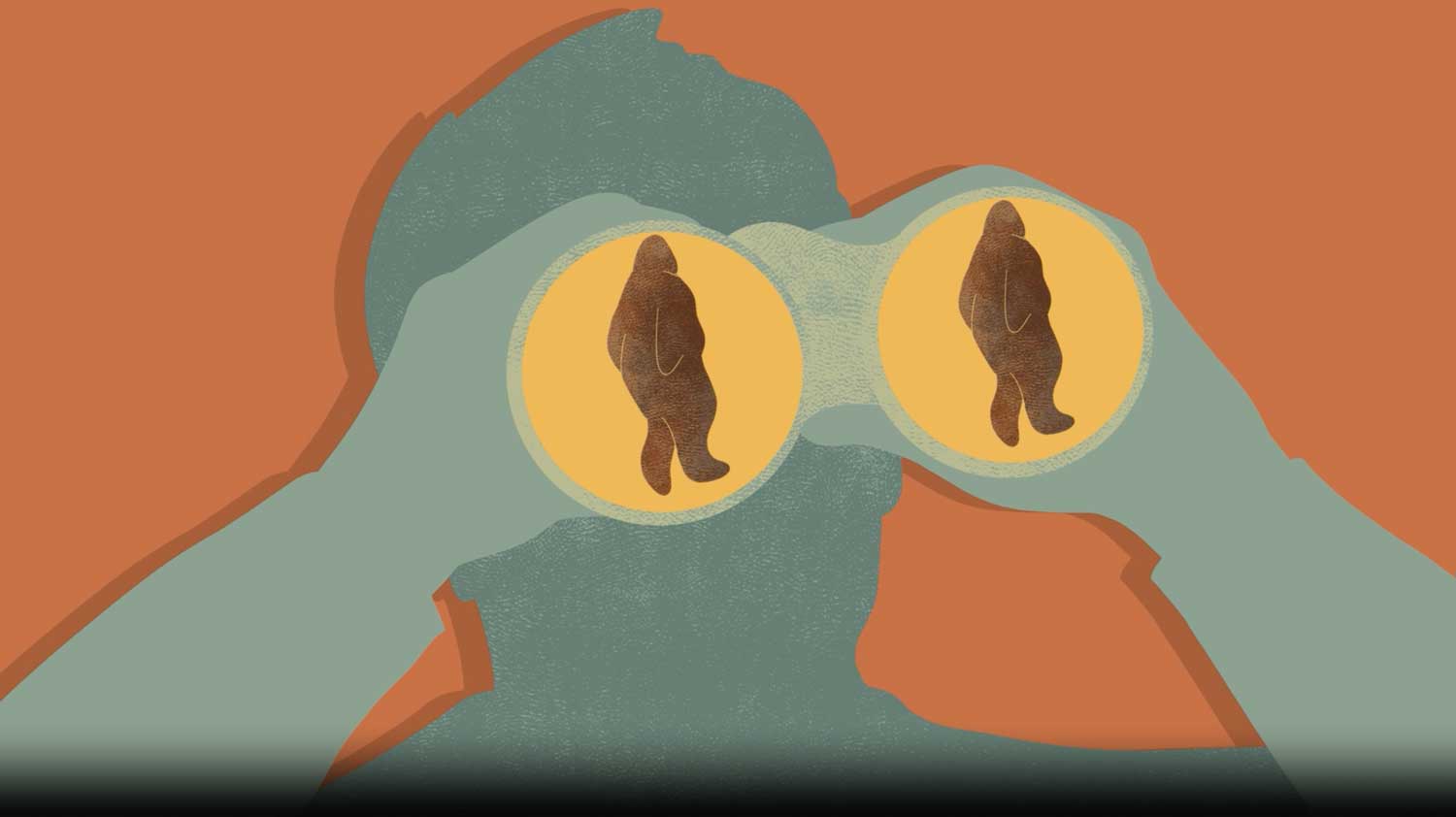
A hairy creature reflected in binoculars being held to a person’s eyes.

Encyclopædia Britannica, Inc.

Footprints…photos…videos… There are numerous signs that something is going on in the northwestern United States. But is there a real creature called Bigfoot, or is this the work of clever pranksters? That’s still being debated. You can read more about this enduring mystery at Britannica!

WORD OF THE DAY

chimera

PART OF SPEECH:
noun
Definition:

: something that exists only in the imagination and is not possible in reality

Definitions provided by
Merriam-Webster Logo

Word Search

No one has been able to find these beings. Can you?

O
O
O
O
O
O

In Case You Missed It

The island of Corsica showed American colonists that a courageous revolution could defeat an empire.
May 7, 2026
Physicist Narinder Singh Kapany developed fiber optic cables, helping to make the Internet possible.
April 30, 2026
How can you tell whether photos and videos are real or made with AI? Here are a few tips.
April 24, 2026
A seemingly strange bank is saving one of Earth’s most valuable resources.
April 9, 2026