Pigeons Trust Their Guts
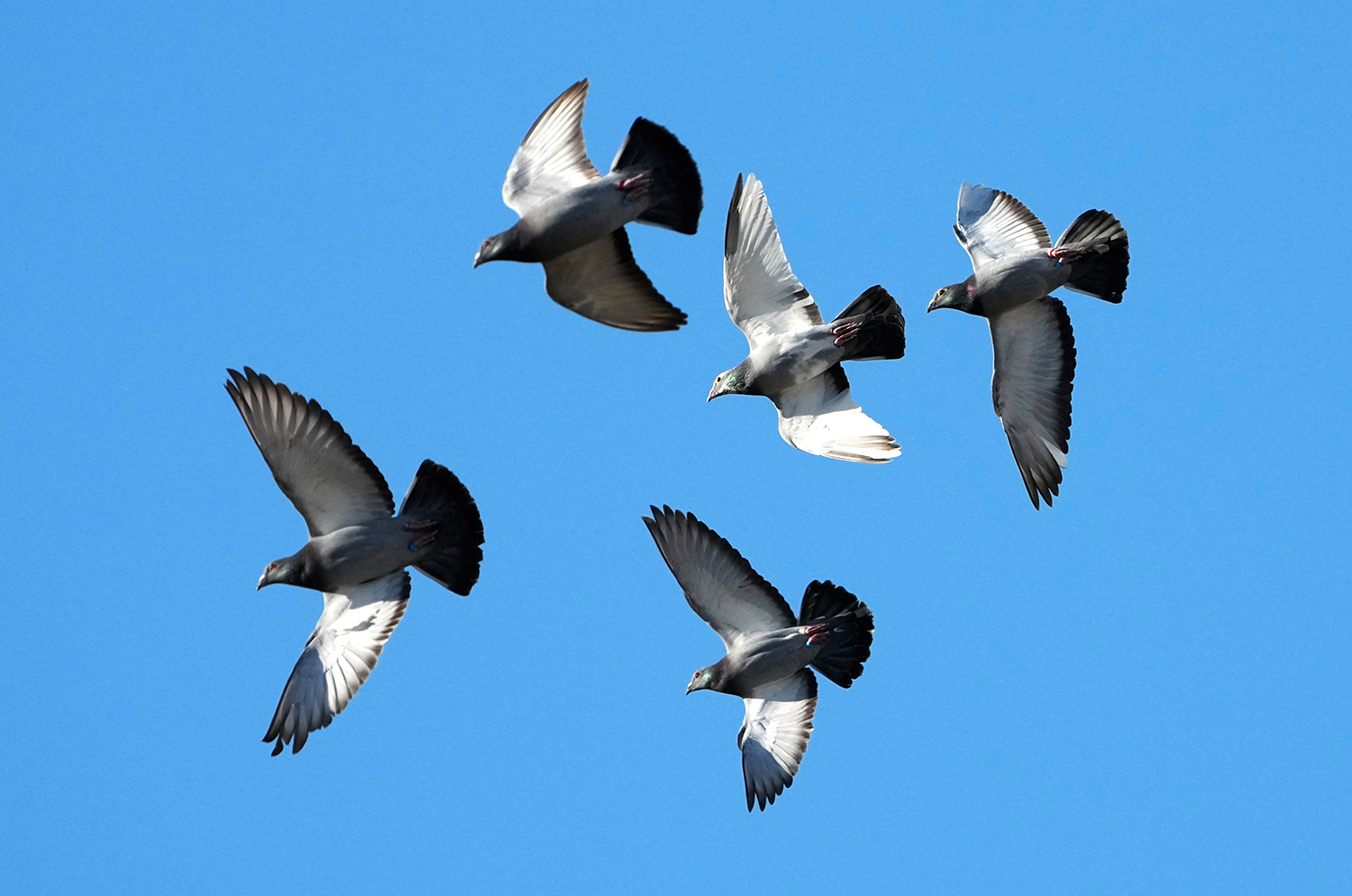
© Wolfram Steinberg/dpa—picture alliance/Getty Images
These homing pigeons, which live in Portugal, know how to find their way back to their home.
On October 4, 1918, near the end of World War I, an unlikely hero saved the lives of a battalion of U.S. soldiers trapped behind enemy lines. A homing pigeon, named Cher Ami, managed to fly 25 miles while badly wounded and partially blinded by bullets to deliver an important message from the battalion so that they could be rescued. His determination to fly home against all odds earned Cher Ami a medal for bravery from the French government.
Cher Ami was able to deliver his life-saving message—even while injured and blinded—due to a remarkable ability to always find his way home from any location and in any weather. This navigational sixth sense is common among homing pigeons. It’s the reason these pigeons were often used to deliver messages before telephones or radios existed. Many people have wondered how these birds can navigate with what appears to be little more than a gut instinct.
“The magnetic sense has been this mystery for almost 100 years,” Martin Wikelski, an animal behavior researcher, told the Associated Press. Now Wikelski and his colleagues have the answer—the magnetic sense is in the pigeon’s liver.
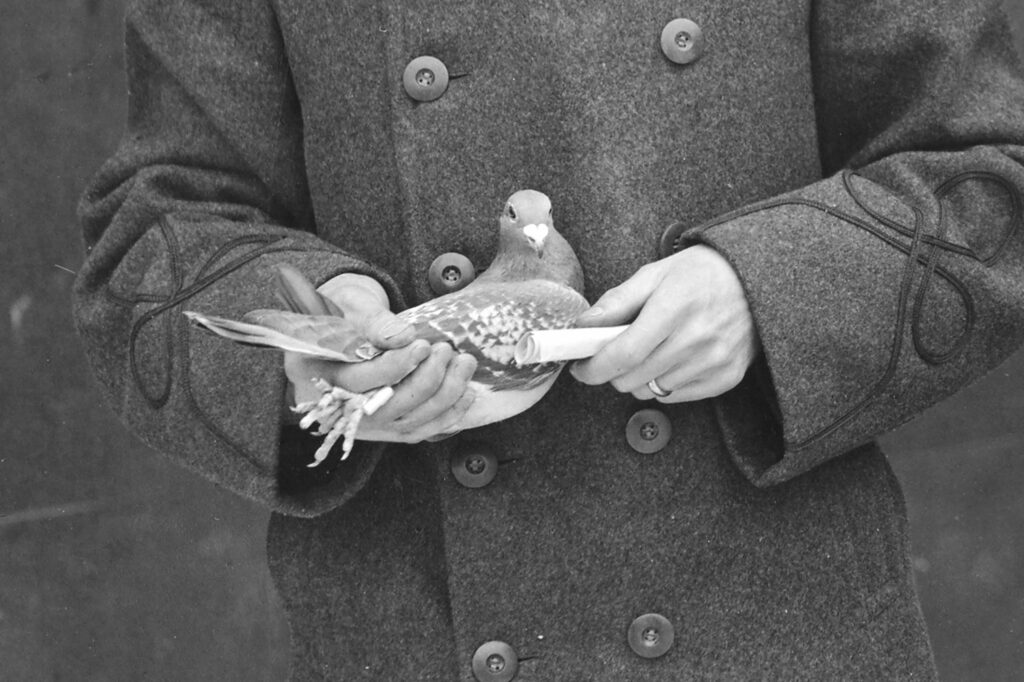
National Archives, Washington, D.C. (ID no. 55166221)
In this photo, which dates back to World War I, a U.S. Army lieutenant holds a homing pigeon that he is raising.
New research out of Germany reveals that pigeon navigation relies in part on specialized immune cells in the bird’s liver. These cells help the liver store iron, which seems to be the key to being sensitive to Earth’s magnetic field.
By detecting the planet’s magnetic signals, the birds know which direction to fly home, particularly when the weather is cloudy. In their research, the scientists temporarily removed these specialized cells from homing pigeons to see if they could still navigate home on cloudy days. They could not. It was only with these cells that a pigeon’s liver is able to send signals that point the bird in the right direction when it can’t take cues from the Sun.
For animals like Cher Ami, flying home can take more than a lot of guts—it can also take some special cells in the liver.
Did You Know?
Pigeons were used to deliver messages and mail for hundreds of years! More than 800 years ago, in 1150 CE, the Sultan of Baghdad created a pigeon post service.
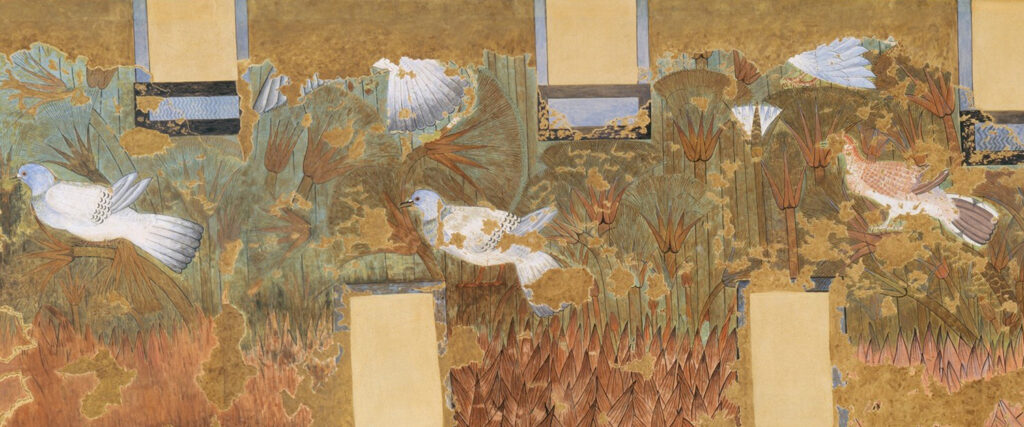
The Metropolitan Museum of Art, New York (Rogers Fund, 1930, 30.4.136). www.metmuseum.org
This mural, which shows pigeons and other birds, was in an ancient Egyptian palace. Egyptians may have used pigeons to deliver messages around 2,000 years ago.
Do Birds Like to Fly?
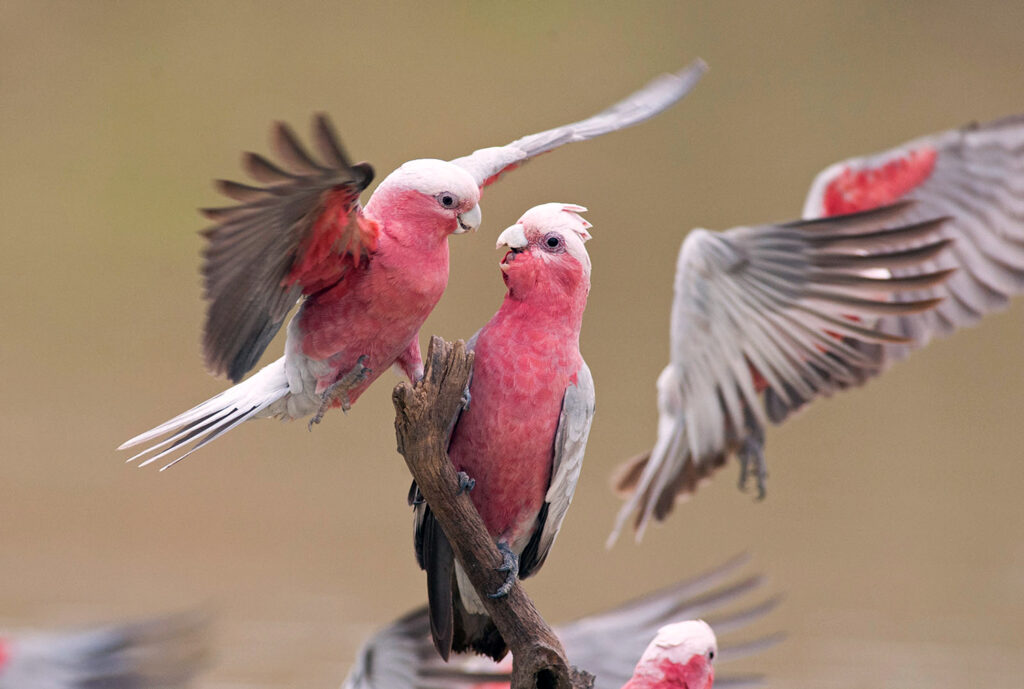
© 169169/stock.adobe.com
Flying seems to make galahs happy!
Many birds need to fly to find food or to escape predators, but do they ever fly just for fun? The answer is yes—at least for the galah, a type of Australian cockatoo.
Jorg Massen is a scientist who studies animal emotions, and he has long wondered how birds feel about flying. In fact, it is a question he has pondered since childhood.
“Birds often fly without an obvious purpose. Whether they do this because they enjoy flying is something I have wondered about my entire life,” said Massen. “Now, we finally had the tools and conditions to study this in a controlled way.”
Massen studied the emotions of 17 galahs at a bird park in the Netherlands. He did so by giving the birds chances to choose to fly in a flying demonstration and then studying their moods afterward. The birds nearly always chose to participate. After these flight demonstrations, Masson observed that the cockatoos would go foraging for food, despite having already eaten. This behavior means the birds are feeling good, explained Masson.
“This is a very natural behavior that animals show when they feel at ease,” he said.
Ultimately, Masson’s observations showed that the birds were in good moods for days after their flights. Finally, Masson had his long-awaited answer about birds.
“This research was driven by curiosity. As a child, you sometimes ask yourself questions that you cannot answer straight away,” said Massen. He also had some advice for other young minds wondering about the world.
“Stay curious and keep those questions in the back of your mind. You may well get the chance to answer them later in life.”
Don’t Go, Dodo
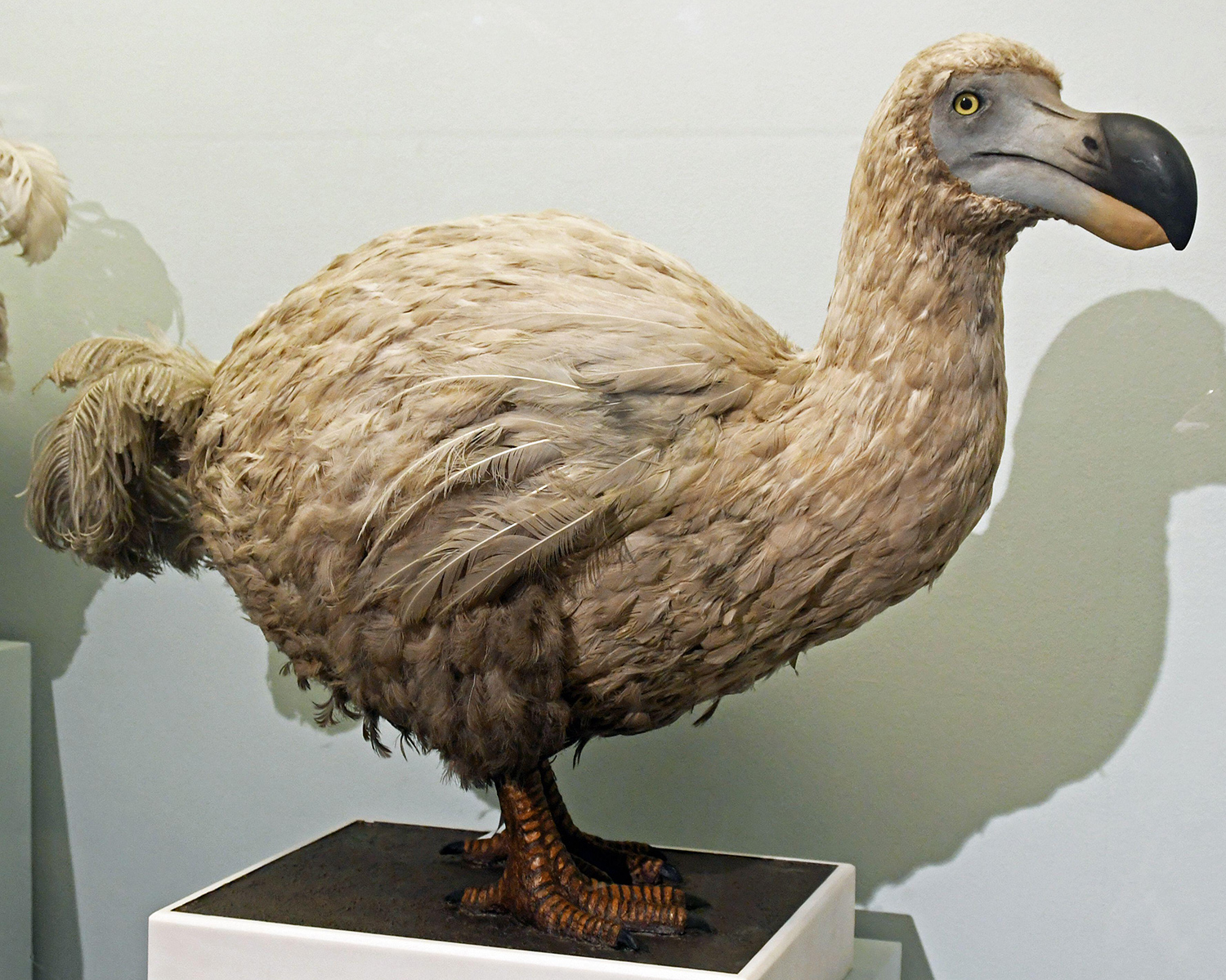
© Susie Kearley/Alamy
This taxidermied, or stuffed, dodo is on display at the Natural History Museum in London, England.
Have you ever heard someone say that something has “gone the way of the dodo”? The phrase, which means that something has fallen out of use, is inspired by the extinct dodo bird. But how did the dodo become the main example of extinction?
Read about what happened to this flightless bird at Britannica!
WORD OF THE WEEK
maneuver
noun
: a clever or skillful action or movement

Slide
How many words can you make from these letters? All words must use the letter in the center.
In Case You Missed It
How to Cite This Page
Here is how to cite this page using the MLA style. While every effort has been made to follow citation style rules, there may be some differences. Please refer to the appropriate style manual or other sources if you have any questions.
“In the News: Pigeons Trust Their Guts.” Britannica School, Encyclopaedia Britannica, 2 Aug. 2026. https://news.eb.com/level2/pigeons-trust-their-guts Accessed 3 Aug. 2026 [Replace this date with today’s date.]