Tortoise Time

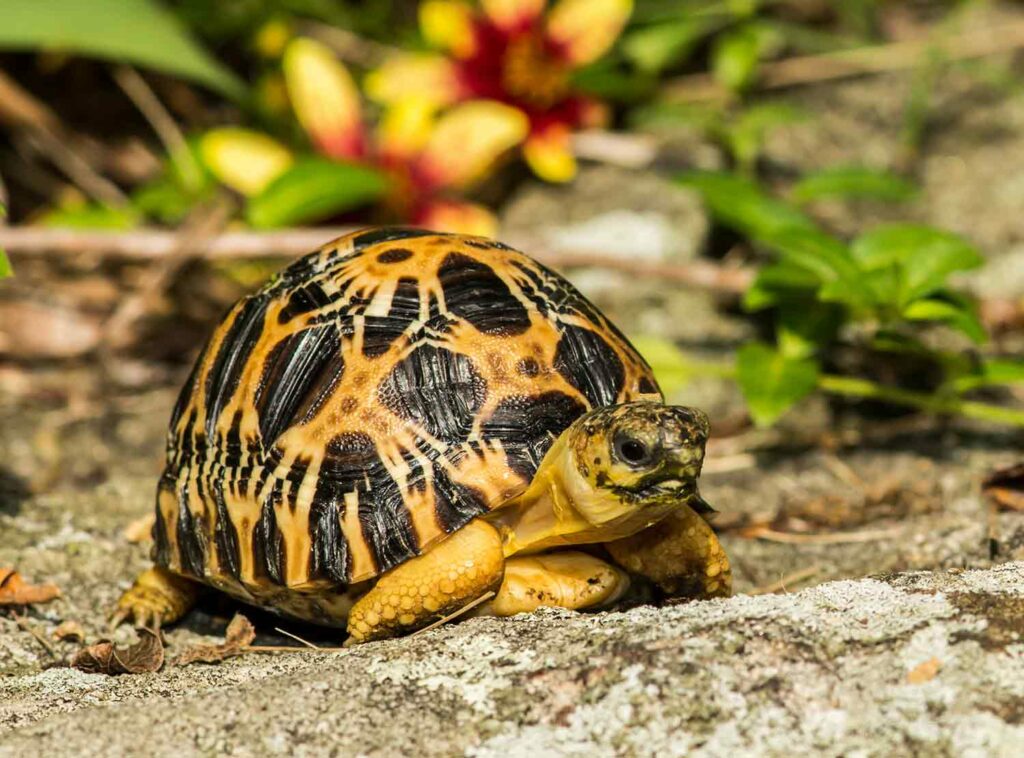
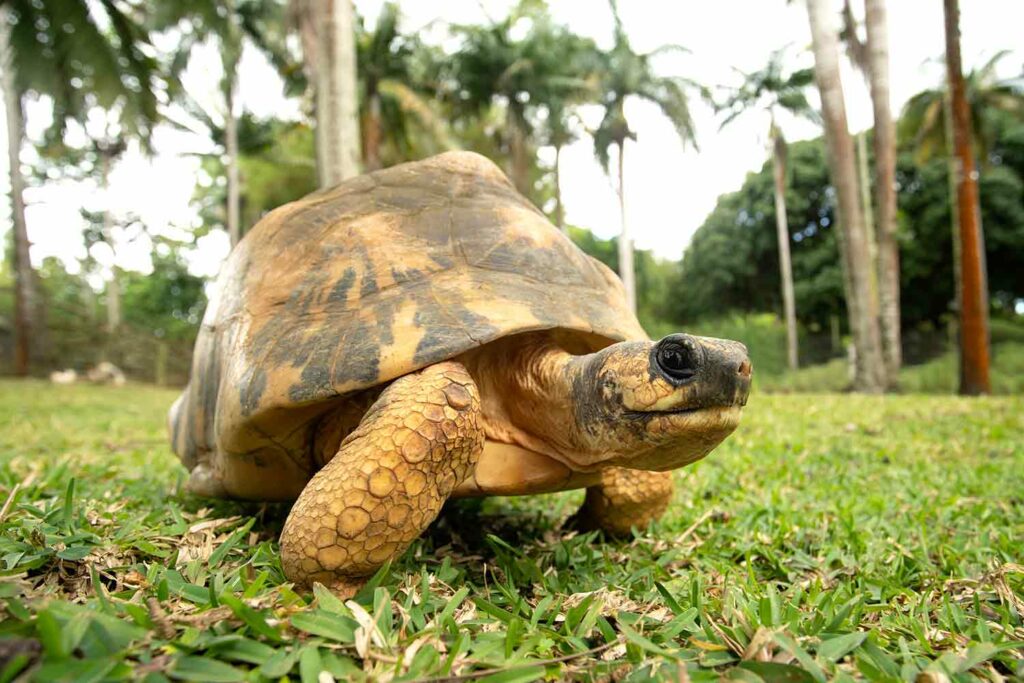
A tortoise stands on grass with palm trees in the background.

Tortoise Time

The Houston Zoo welcomed three tortoise hatchlings!

A tortoise stands on grass with palm trees in the background.

© prochym/stock.adobe.com

Mr. and Mrs. Pickles are radiated tortoises, like this one.

It’s celebration time at the Houston Zoo in Houston, Texas. In March 2023, the zoo welcomed three tortoise hatchlings (baby tortoises)!

The zoo’s two radiated tortoises, Mr. and Mrs. Pickles, are the dad and mom of the little ones. At age 90, Mr. Pickles is the oldest animal at the zoo. This is the first time he has become a dad. Experts say radiated tortoises can live to be more than 100 years old, but they don’t have very many young. In fact, one of the zoo’s herpetologists, or reptile experts, was surprised to see Mrs. Pickles laying three eggs.

Wild radiated tortoises live in Madagascar, which is an island country off the eastern coast of Africa. They bury their eggs in the soil to protect them until they hatch. But the soil in Houston is different from the soil in Madagascar. Experts knew that Mrs. Pickles’ eggs would not hatch without help from humans.

“The animal care team quickly went to work uncovering the eggs and getting them to the safety of the Reptile & Amphibian House,” the Houston Zoo wrote on its website.

© Jason Ondreicka/Dreamstime.com

Baby tortoises are called hatchlings.

The new hatchlings are named Jalapeño, Dill, and Gherkin. They’re not only cute. They’re also very important. In the wild, radiated tortoises are critically endangered, which means they are in danger of dying out. 

The zoo staff is getting to know the hatchlings. They’re easy to tell apart. Jalapeño has the darkest shell. Gherkin’s shell has a white dot in the middle. When the little tortoises get big enough, they’ll live with their parents. But they’re already part of the zoo’s family.

Fun Fact Icon

Fun Fact

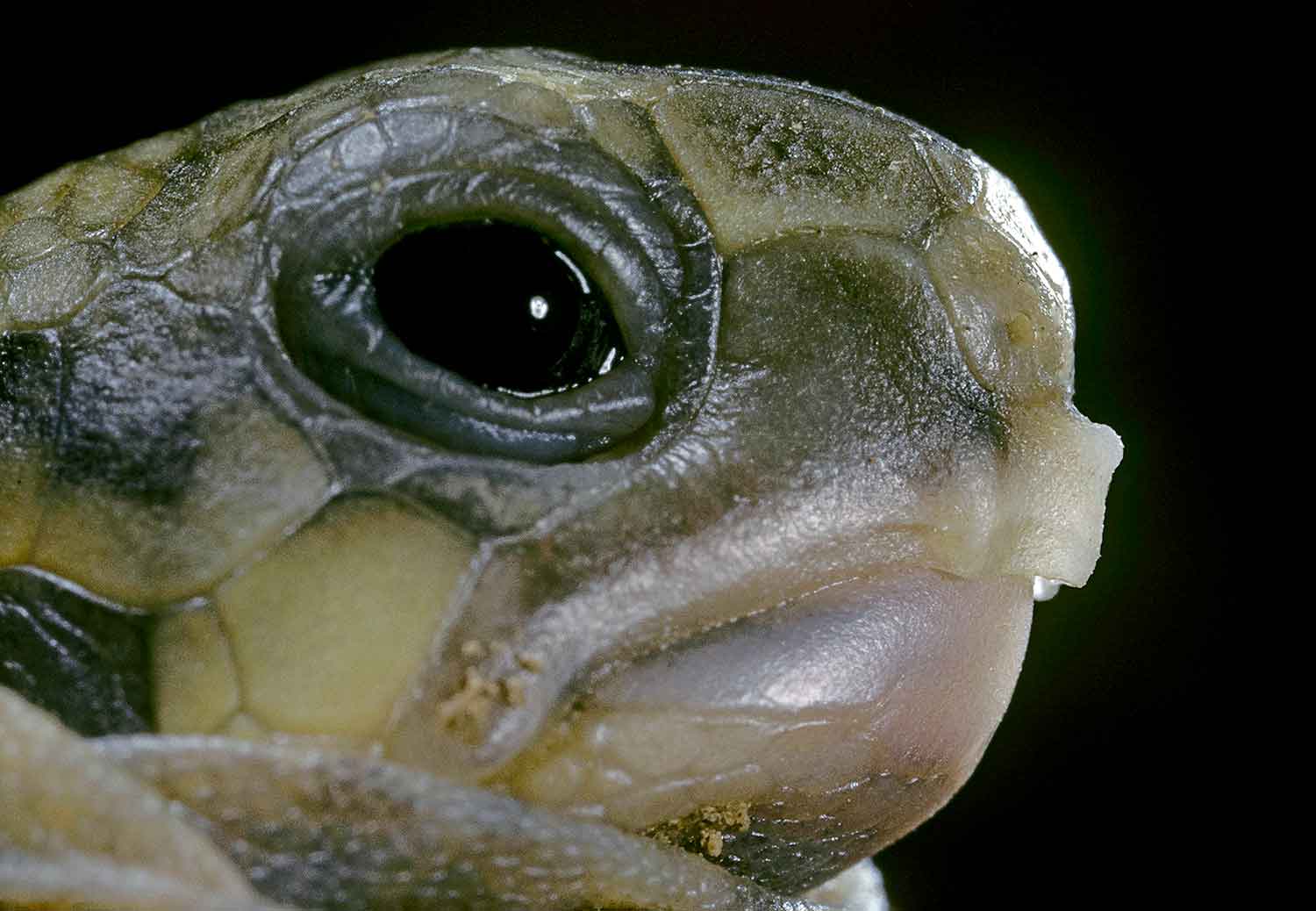
Closeup of a tortoise head with egg tooth

© Paul Starosta—Stone/Getty Images

Can you spot the egg tooth?

A tortoise grows a tooth, called an egg tooth, before it hatches. It uses the tooth to break the eggshell so that it can come out!

Turtle or Tortoise?

© Hotshotsworldwide, Jidewet/Dreamstime.com; Photo composite Encyclopædia Britannica, Inc.

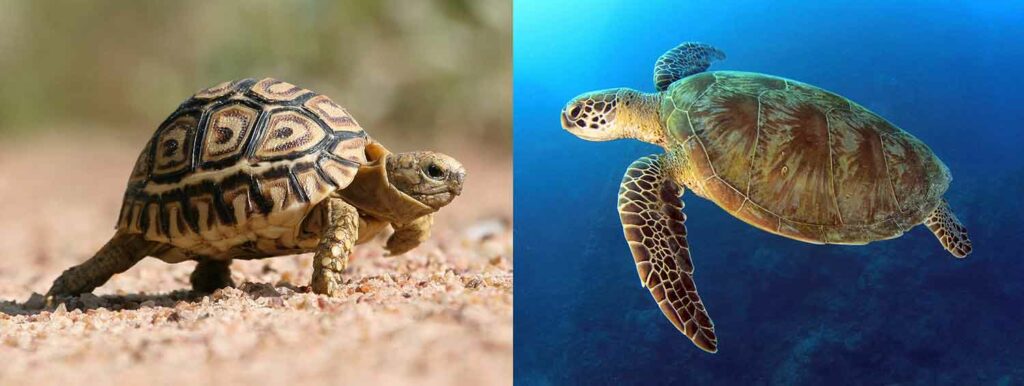
Tortoises live on land. Other turtles, like the one on the right, live mostly in the water.

Is a tortoise the same as a turtle? Let’s find out.

All tortoises are turtles, but not all turtles are tortoises. Many turtles live in the sea or in bodies of fresh water, like lakes. They go on land only to lay their eggs. Tortoises live on land all the time.

All turtles have a hard shell. A tortoise shell is rounded, like a dome. Turtles that live in water have flatter shells. Turtles also have flippers, or flattened feet. Both features help turtles swim.

Tortoises eat some meat but mostly grasses and leaves. Other turtles eat vegetation (plants) and meat. Depending on the species and where they live, turtles may eat worms, insects, jellyfish, and more.

Reptiles of All Kinds

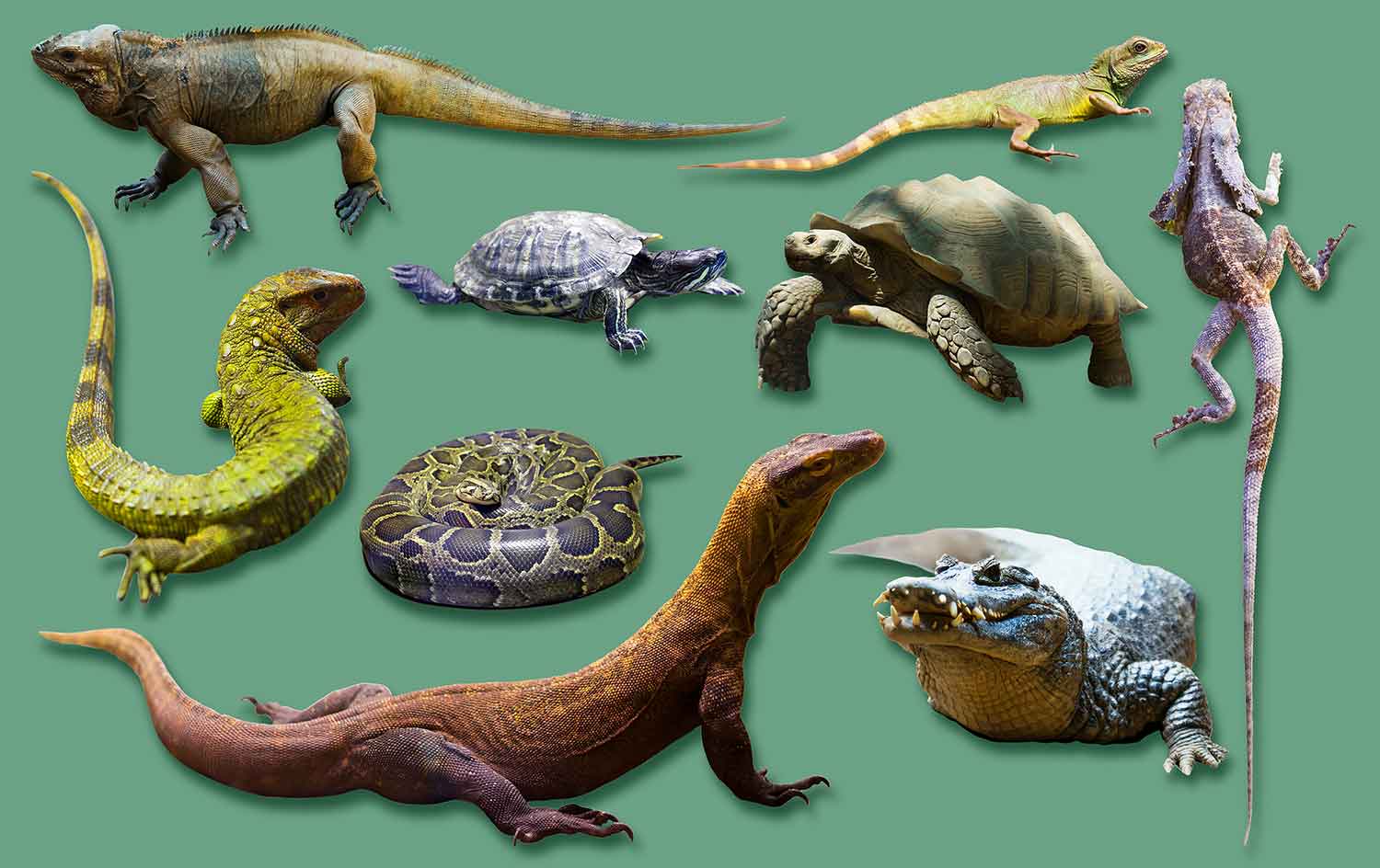
Composite showing a snake, lizards, turtles, and a crocodile.

© JackF/stock.adobe.com

Did you know that turtles, snakes, and crocodiles are all reptiles? You can learn more about reptiles at Britannica School!

Word of the Day Icon

Word of the Day

hatchling

Part of speech:

noun

Definition:

: a recently hatched animal : a very young bird, fish, etc., that has just come out from an egg

Definitions provided by
Merriam-Webster Logo
Game Icon

Play

Can you find all the lizards?

O
O
O
O
O

In Case You Missed It

These dinosaurs had very long claws. But they didn’t use them to fight.

03.31.23

Ryan Redington is the winner of the Iditarod, the world’s most famous sled dog race!

03.28.23

Kids in Iceland work hard to help baby puffins get where they need to go.

03.24.23

Mia Brookes did an amazing trick on snowy slopes. Now she’s a snowboarding champion!

03.21.23

Check Out These Fingernails!

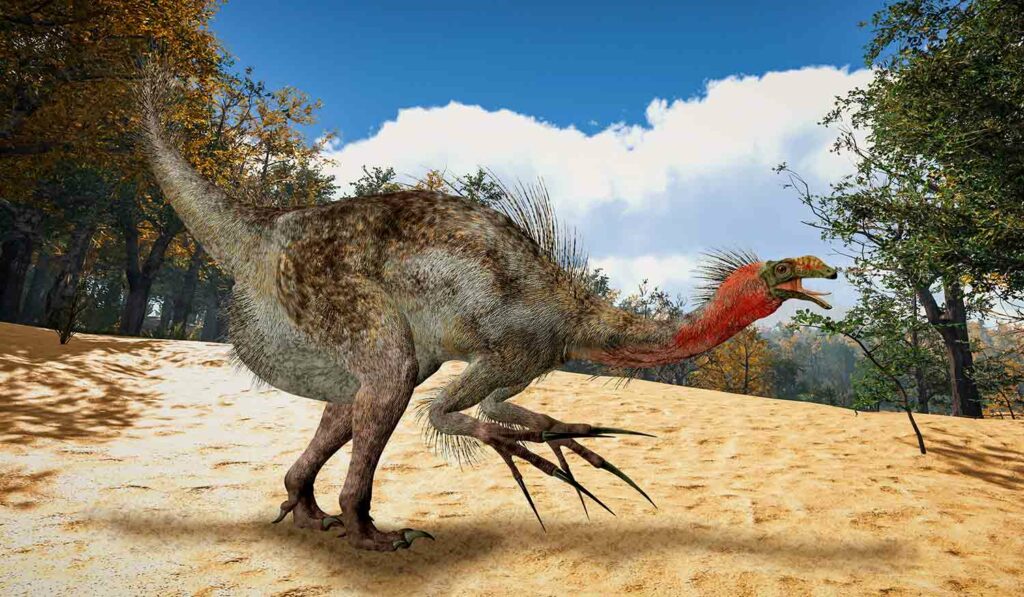
A dinosaur with a red head, a short tail, and very long claws on its front feet

Check Out These Fingernails!

These dinosaurs had very long claws. But they didn’t use them to fight.

A dinosaur with a red head, a short tail, and very long claws on its front feet

© Corey A Ford, Henry Saint John/Dreamstime.com; Photo illustration Encyclopædia Britannica, Inc.

Therizinosaurs were dinosaurs that lived between 100 million and 66 million years ago. They weighed up to six tons, making them as heavy as Tyrannosaurus rex. But the giant Therizinosaurus had something even T. rex didn’t have. Its claws were 3 feet (1 meter) long! That makes Therizinosaurus claws the longest of any animal that ever existed. 

You might think that Therizinosaurus used these claws to fight. That’s what scientists thought for a long time. But a new study shows that’s not true. Instead of being used as weapons or as digging tools, the claws were probably used to show off!

Scientists in England and China worked together to study Therizinosaurus claws. They used computers to scan the fossils of claws. Then they made computer models of the claws. These models were just like the real thing. But the scientists could study them without worrying about causing damage to them. The scientists worked to find out if the claws would have been good tools for fighting or digging. They did tests on the models. And they compared them to the claws that other animals have. What they learned is that Therizinosaurus claws were too long and narrow to fight or dig. The claws would not have been strong enough.

So, why did Therizinosaurus have such long claws? Scientists believe the claws were meant to attract mates. Today, many types of birds have bright feathers that send the message, “Hey, look at me!” The claws of Therizinosaurus probably had the same purpose.

NEWS EXTRA!

Happy April Fools’ Day!

Shoes with fake spiders, bugs and Happy Fools' Day note on white wooden table

© Liudmila Chernetska—iStock/Getty Images Plus

April 1 is April Fools’ Day! You can read all about fun April Fools’ Day tricks right here!

Fun Fact Icon

Fun Fact

© Moloko88, Ernest Akayeu/Dreamstime.com, Wellcome Collection, London (39916i, 40983i, 40985i); Photo illustration Encyclopædia Britannica, Inc.

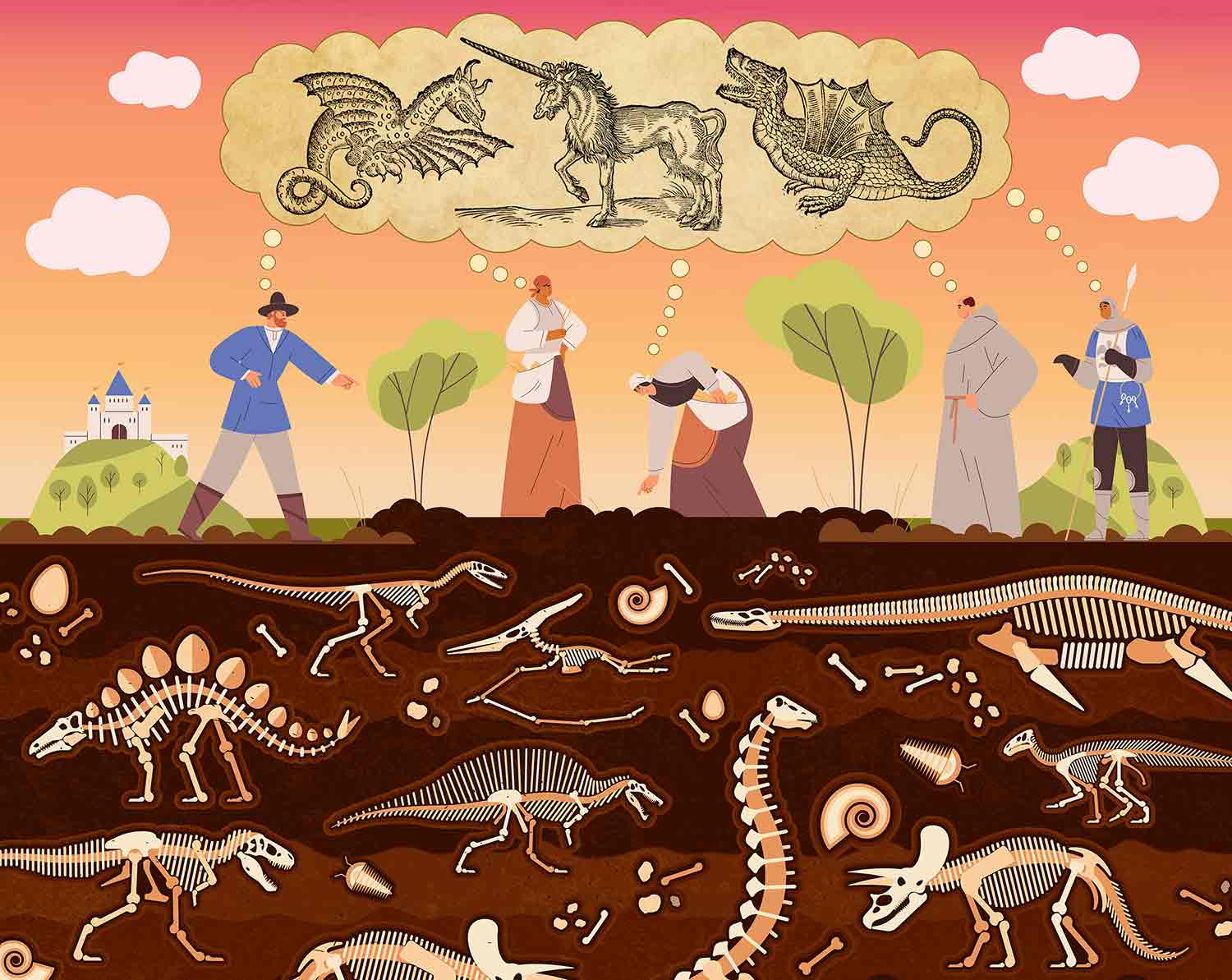
Dinosaurs died out long before the first humans appeared on Earth. When people first discovered dinosaur fossils, they were looking at bones of animals they had never seen. Scientists think these strange fossils may have led people to believe in creatures that aren’t real, like dragons and unicorns!

Bird Beauties

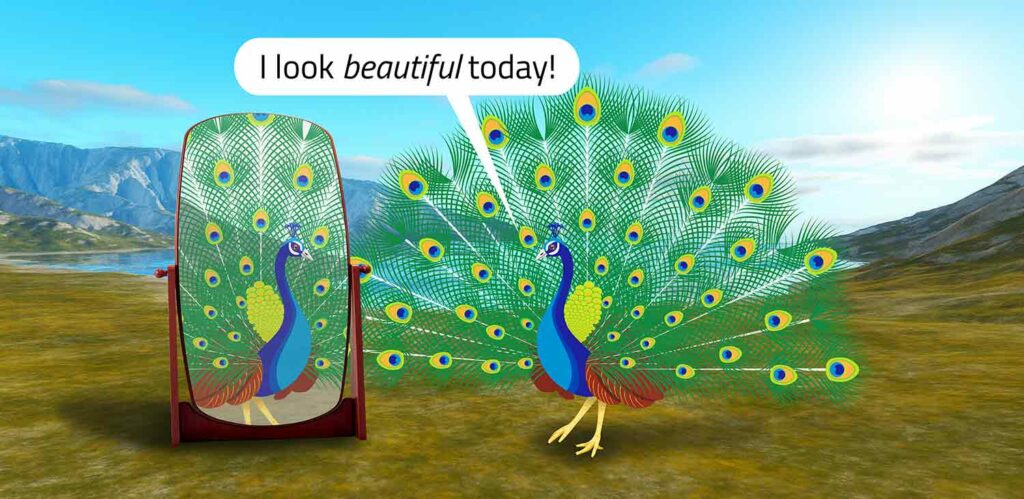
A peacock standing in front of a mirror and saying I look beautiful today.

© Markus Gann, Aidarseineshev/Dreamstime.com, © glamstock—Imazins/Getty Images; Photo illustration Encyclopædia Britannica, Inc.

You might know that peacocks are famous for their beautiful blue and green tail feathers. But did you know that only the males are blue and green? Females, which are called peahens, have brown feathers.

The males use their bright feathers to attract females. When they really want to show off, they fan out their tails. Scientists think peacocks also fan out their tails when they want to scare off predators—animals that try to eat them—like snakes or large wild cats.

Dinosaur Deep Dive

© Orlando Florin Rosu/Dreamstime.com

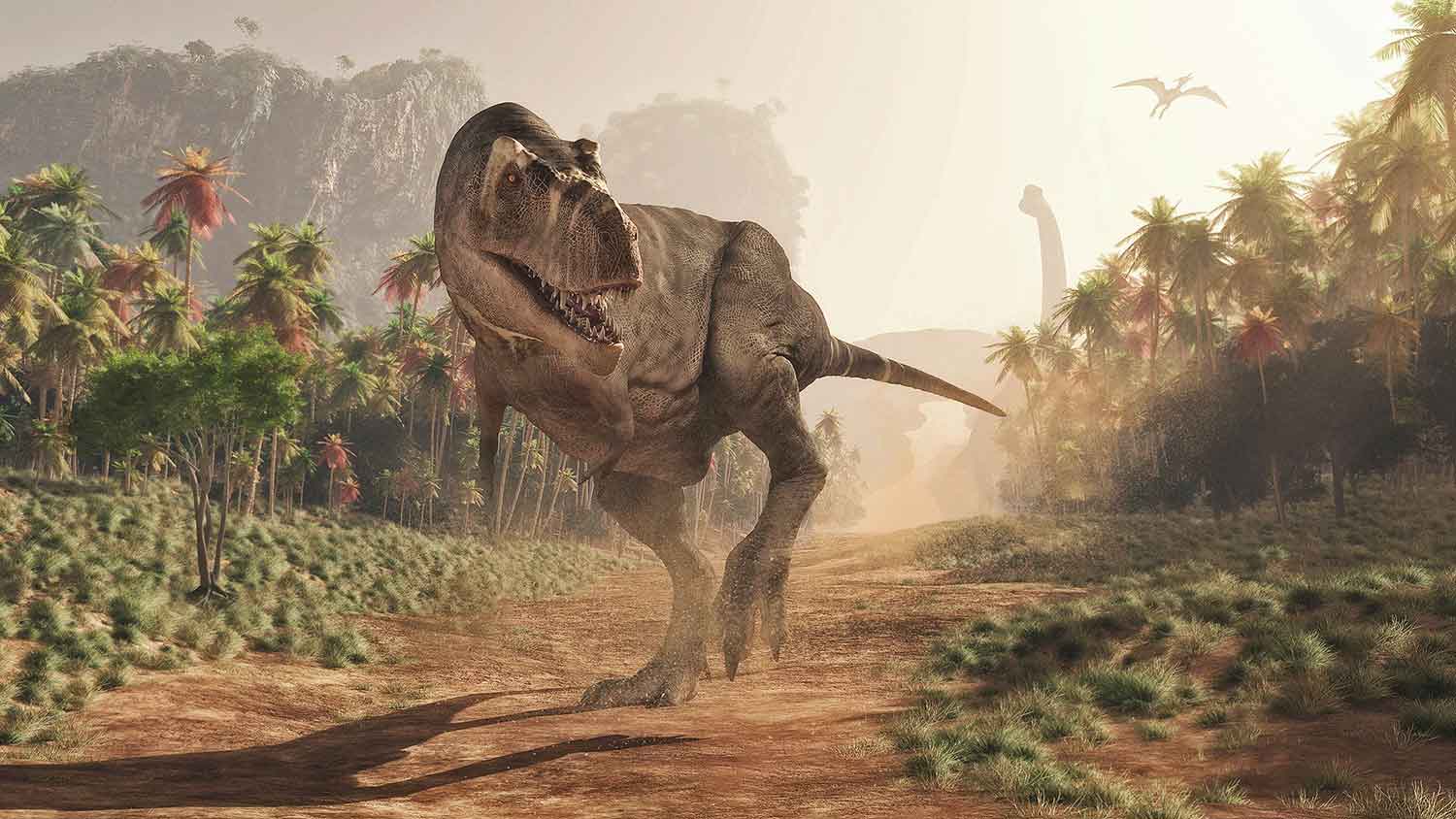
Did you know that the word dinosaur means “terrible lizard”? 

Do you have a favorite type of dinosaur? You can read about it at Britannica School!

Word of the Day Icon

Word of the Day

talon

Part of speech:

noun

Definition:

: one of the sharp claws on the feet of some birds

Definitions provided by
Merriam-Webster Logo
Game Icon

Play

How many answers do you know?

O
O
O
O
O

In Case You Missed It

Ryan Redington is the winner of the Iditarod, the world’s most famous sled dog race!

03.28.23

Kids in Iceland work hard to help baby puffins get where they need to go.

03.24.23

Mia Brookes did an amazing trick on snowy slopes. Now she’s a snowboarding champion!

03.21.23

Scientists plan to figure out what time it is on the Moon!

03.17.23

An Iditarod Champ

A man with each arm around a dog poses in front of a banner saying Iditarod Sled Dog Champion.

An Iditarod Champ

Ryan Redington is the winner of the Iditarod, the world’s most famous sled dog race!

A man with each arm around a dog poses in front of a banner saying Iditarod Sled Dog Champion.

Diana Haecker—The Nome Nugget/Reuters/Alamy

Ryan Redington

Ryan Redington is an Iditarod champion! On March 14, 2023, Redington won the world’s most famous dog sled race, crossing the finish line in Nome, Alaska.

“I can’t believe it,” Redington told the Associated Press. “It finally happened.”

This was the 15th time Redington entered the Iditarod. It’s a hard race to win! Mushers (people who drive dog sleds) and teams of dogs travel about 1,000 miles (1,600 kilometers) through freezing-cold Alaska. The racecourse takes them over two mountain ranges and quite a bit of ice.

The Iditarod has lots of rules. Every musher is required to take certain items meant to keep their whole team safe and warm, like a warm sleeping bag and booties to protect the dogs’ paws. There are also required rest stops so that everyone—dogs and humans—can recharge during the race.

All in all, it takes a little less than 10 days for most teams to get to the finish line. Redington did it in less than nine days. Redington is Inupiat. He is the sixth Alaska Native musher to win the Iditarod. He says he’s wanted to be the champ since he was a kid.

“It took a lot of work, took a lot of patience,” Redington told the Associated Press. “And we failed quite a few times…. But we kept our head up high and stuck with the dream.”

Fun Fact Icon

Fun Fact

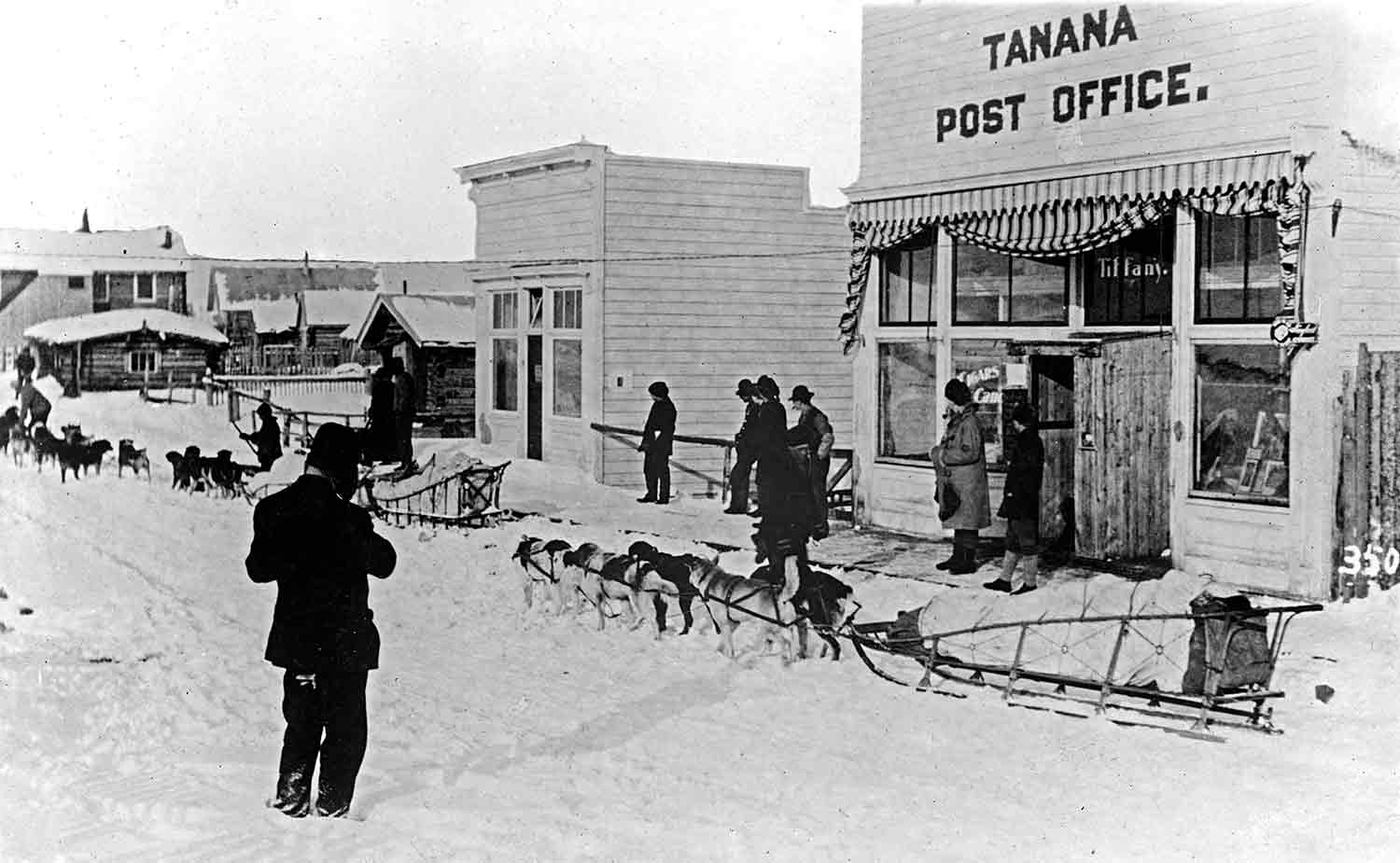
Black and white photo of two dog sleds and many dogs standing on a snowy street in front of the Tanana Post office.

National Photo Company Collection/Library of Congress, Washington, D.C. (LC-DIG-npcc-28025)

Part of the Iditarod race course follows an old mail trail. Back in the early 1900s, mail was delivered by dog sled in parts of Alaska!

Brave Balto

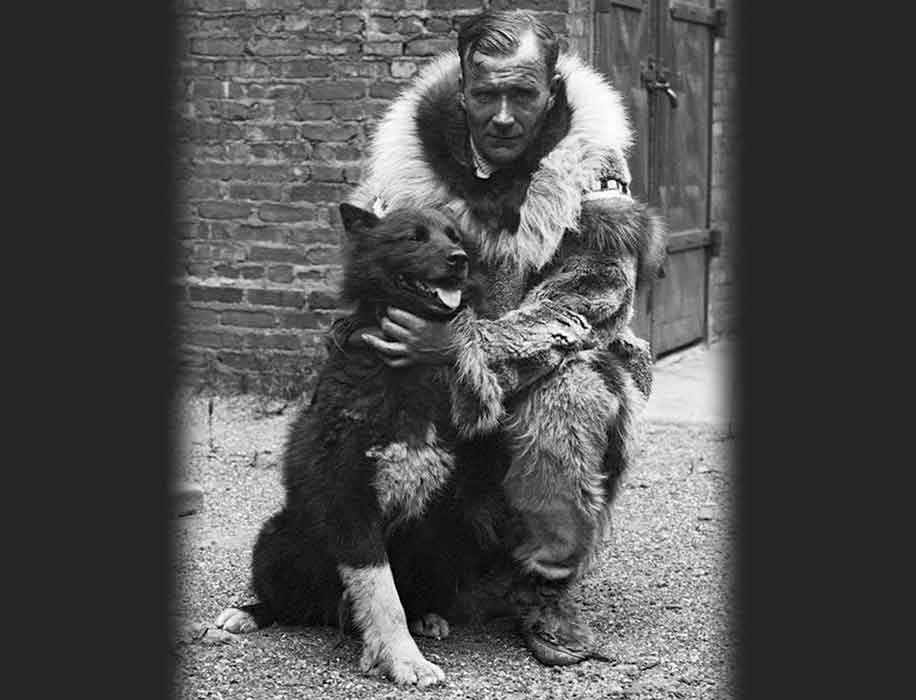
A man in a fur coat crouches on the ground with his arms around a husky-type dog.

FLHC A12/Alamy

Gunnar Kaasen and his sled dog, Balto, became heroes when they delivered medicine to Nome.

In 1925, a dog named Balto became a hero when he brought lifesaving medicine to a far-off town in Alaska.

In January 1925, a disease called diphtheria began spreading through the town of Nome, Alaska. The town doctor needed more medicine, but Nome was hard to reach in the winter. The only way to get there was by dog sled.

Twenty mushers (dog sled drivers) agreed to help take the medicine to Nome. They did it by relay. One musher would take the medicine part of the way down the trail. Then another musher would take over. Little by little, the medicine got closer to Nome.

The last musher was Gunnar Kaasen. Kaasen’s journey proved to be very hard. The temperature was so low that it was dangerous to be outside for too long. Plus, a blizzard blew snow so hard that Kaasen couldn’t see where he was going. 

But Kaasen’s lead dog, Balto, kept the sled going. He used his nose to figure out where the trail was. Since Gunnar couldn’t see anything, he had to trust Balto. The team traveled 54 miles (87 kilometers).

On February 2, 1925, Gunnar and his team of dogs arrived at Nome. The medicine was safe and sound, thanks to the hard work of many, many mushers and dogs.

Today, Balto is famous for his bravery. There’s even a movie called Balto, which tells the story of this canine hero!

A metal statue of a husky-type dog on a rock in a park setting

© Mkojot/Dreamstime.com

Balto is so famous that there’s a statue of him in New York City’s Central Park!

Alaska’s Biggest Race

Jim Watson—AFP/Getty Images

You can learn more about the Iditarod dog sled race at Britannica School!

Word of the Day Icon

Word of the Day

whiteout

Part of speech:

noun

Definition:

: a type of snowstorm in which blowing or falling snow and clouds make it very difficult to see

Definitions provided by
Merriam-Webster Logo
Game Icon

Play

All the hidden words are related to the Iditarod. Can you find them?

O
O
O
O
O

In Case You Missed It

Kids in Iceland work hard to help baby puffins get where they need to go.

03.24.23

Mia Brookes did an amazing trick on snowy slopes. Now she’s a snowboarding champion!

03.21.23

Scientists plan to figure out what time it is on the Moon!

03.17.23

A scientist discovered an insect in a part of the world where it hasn’t been seen for years.

03.14.23

Puffling Patrol!

Three kids on a sidewalk in winter clothing smile and two of them hold pufflings.

Puffling Patrol!

Kids in Iceland work hard to help baby puffins get where they need to go.

Three kids on a sidewalk in winter clothing smile and two of them hold pufflings.

Courtesy of Luke and Samantha Kuhn, www.bornindefiance.com

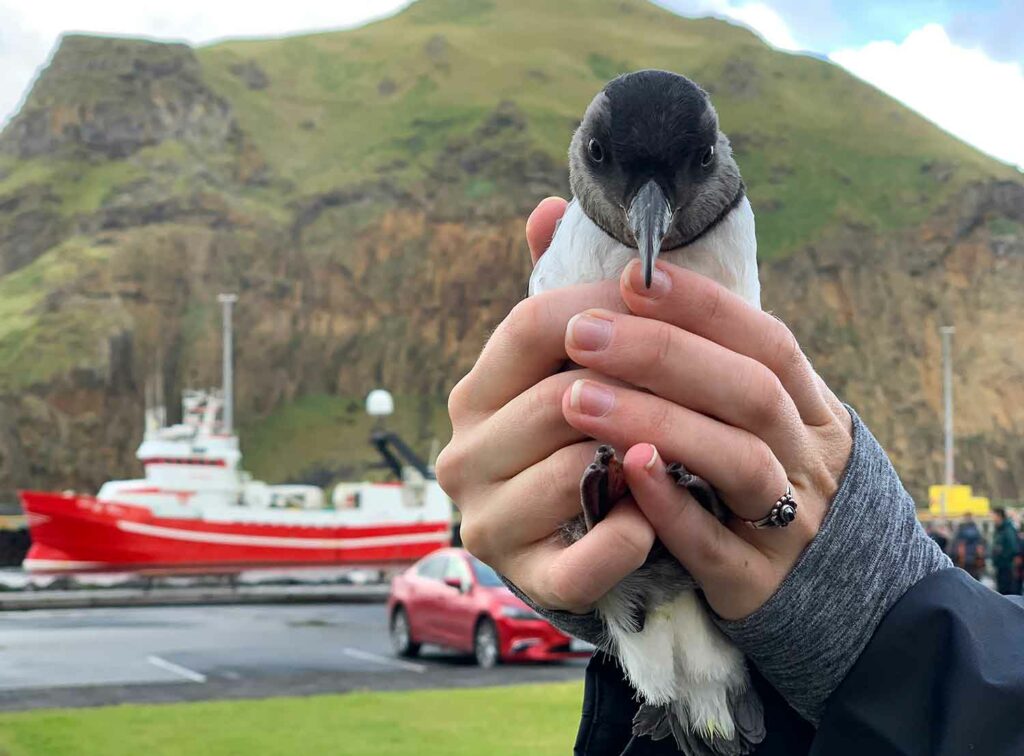
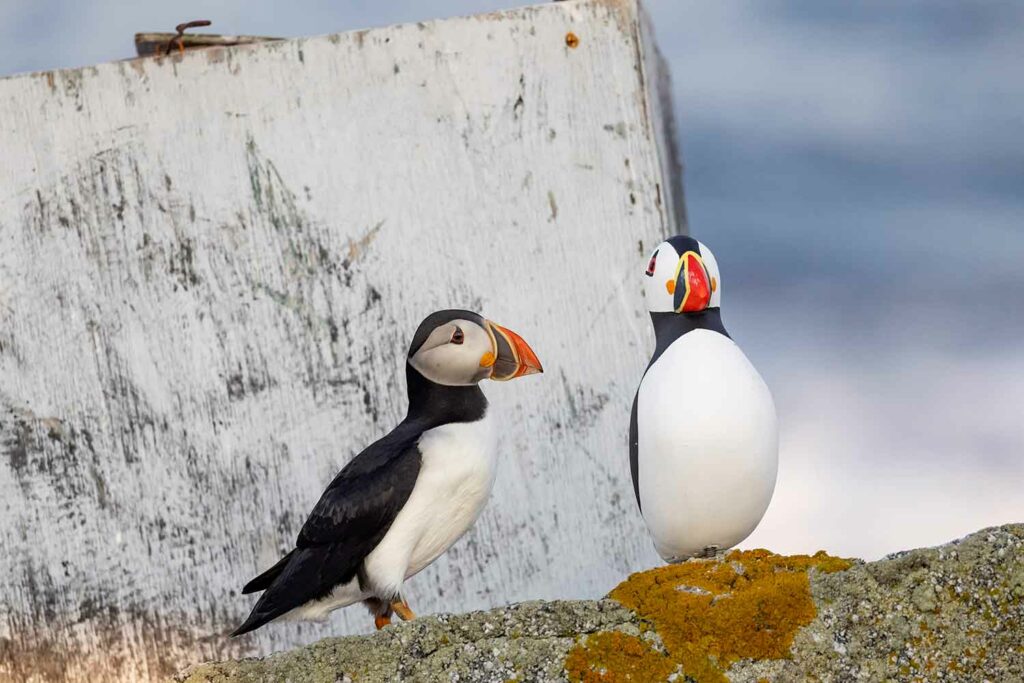
These pufflings will soon be on their way to the ocean, where puffins live!

Every year some kids in Iceland get to stay up late. They’re not watching TV or playing video games. They’re on Puffling Patrol. They’re saving adorable baby birds called pufflings.

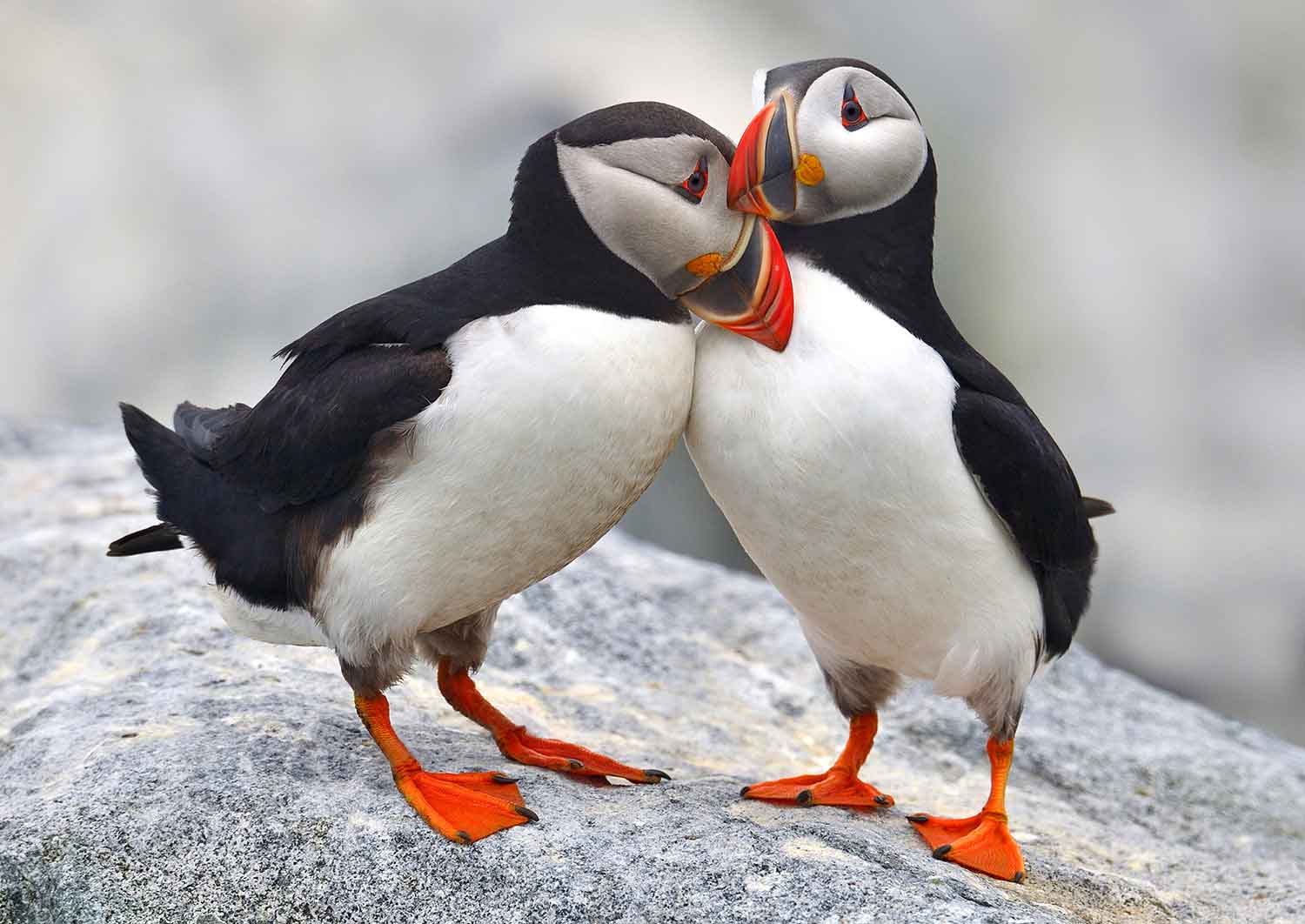
Pufflings are chicks that will grow up to be puffins. Puffins spend most of their lives on the ocean. In the spring, many puffins lay eggs on the cliffs of Iceland’s Westman Islands. When the chicks hatch, they fly out to sea by going toward the Moon’s light. But on one of the islands, streetlights have caused problems. The pufflings get confused and go the wrong way, toward the streetlights. That’s why they need humans to help them.

Courtesy of Luke and Samantha Kuhn, www.bornindefiance.com

Many kids and their parents go on Puffling Patrol. At night, they look for lost pufflings under cars and behind garbage bins. They pick up any pufflings they find and take them home. The next morning, the kids take the pufflings to the cliffs, by the ocean. Sometimes they toss the pufflings into the air. Other times they just put the chicks on the ground near the edge of the cliff. Either way, the pufflings do what they’re supposed to do. They fly out toward the ocean, where they belong.

The Puffling Patrol is very important. The puffin population has fallen in recent years because of climate change. By saving the pufflings, kids are giving them a chance to grow into adults. At some point, those same puffins will probably return to the Westman Islands to lay eggs, so new puffins can be born.

Fun Fact Icon

Fun Fact

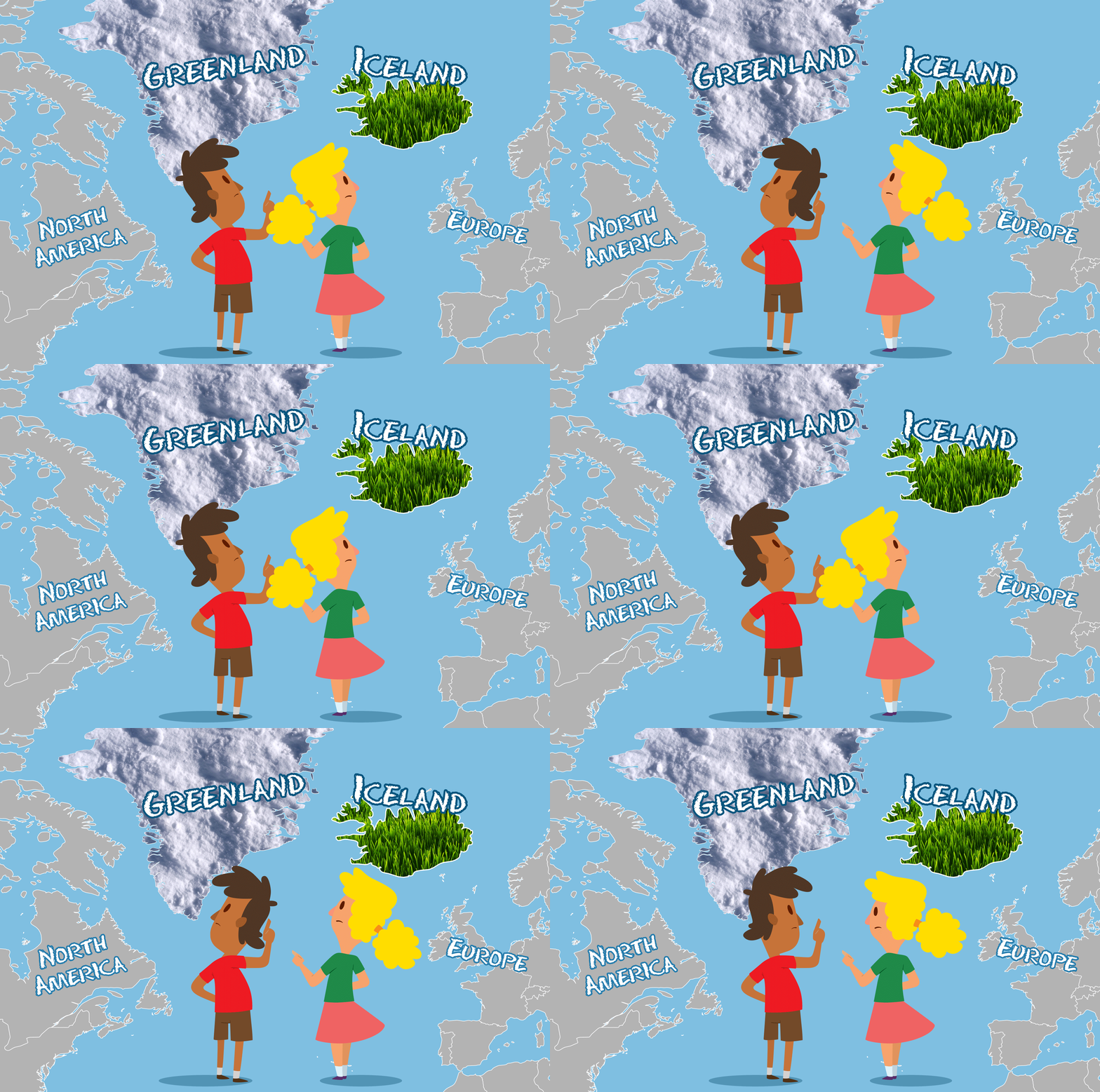
© Vector Moon, Pytyczech/Dreamstime.com; Animation Encyclopædia Britannica, Inc.

From its name, you might think Iceland is covered in ice. But only a small part of Iceland is covered by ice. Another island, called Greenland, isn’t as green as you might think. Most of Greenland is covered by ice!

Pretend Puffins

A real puffin looks at a puffin decoy on a cliff.

Jean Hall

Can you tell which puffin is real?

Sometimes scientists come up with creative ways to help animals. Scientists at the National Audubon Society, a group that works to protect birds, wanted to make sure that puffins were able to find places to reproduce (have chicks). 

Puffins lay their eggs on the coast of islands. When they see other puffins on the coasts, they’re more likely to go there. So scientists put fake puffins on the islands! These fake birds are called decoys.

The real puffins see the decoys and land on the islands. Once there, they figure out that the decoys are fake. But they’re able to find real birds and reproduce.

All About Puffins

© Tony/stock.adobe.com

We can’t get enough of puffins! Read about these cute birds at Britannica School.

Word of the Day Icon

Word of the Day

patrol

Part of speech:

noun

Definition:

: a group of people, vehicles, etc., that go through an area to make sure that it is safe : a group that patrols an area

Definitions provided by
Merriam-Webster Logo
Game Icon

Play

Wordrow

O
O
O
O
O

In Case You Missed It

Mia Brookes did an amazing trick on snowy slopes. Now she’s a snowboarding champion!

03.21.23

Scientists plan to figure out what time it is on the Moon!

03.17.23

A scientist discovered an insect in a part of the world where it hasn’t been seen for years.

03.14.23

Aptera’s new car doesn’t need gasoline or electricity. It can run on the power of the Sun!

03.10.23

Mia’s Magic

A young woman in snowboarding clothes and a medal around her neck smiles in front of the flag of Great Britain.

Mia’s Magic

Mia Brookes did an amazing trick on snowy slopes. Now she’s a snowboarding champion!

A young woman in snowboarding clothes and a medal around her neck smiles in front of the flag of Great Britain.

Alexis Boichard—Agence Zoom/Getty Images Sport; Map: © Pytyczech/Dreamstime.com

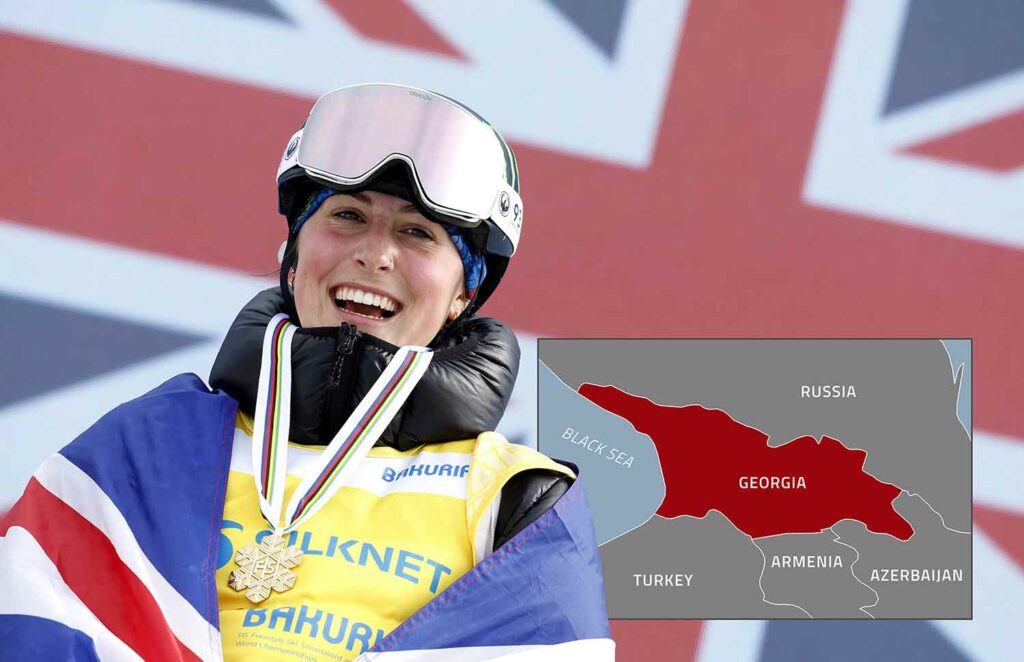
Mia Brookes became a champion at a snowboarding contest in the nation of Georgia. The map shows that Georgia is located near the nation of Russia.

Mia Brookes is a snowboarding champion, and she’s only 16! Brookes, who is from Great Britain, pulled off an amazing trick at the 2023 Freestyle Ski and Snowboarding World Championships in the nation of Georgia on February 27. She’s now the youngest world champion in her sport.

In snowboarding, a person stands on a board and slides down a surface that’s covered in snow. In the sport of snowboarding, athletes do tricks as well. Brookes is a slopestyle snowboarder. In slopestyle, snowboarders slide down a slope, or steep hill. Along the way, they go up ramps and rails, which sends them flying into the air. While in the air, the snowboarders do flips, spins, and other tricks and try to land on their feet.

A snowboarder on a board flies high over a slope as a man takes her photo.

Alexis Boichard—Agence Zoom/Getty Images Sport

Mia Brookes flew high at the world championships!

At the event in Georgia, Brookes did a trick called the CAB 1440 double grab. She flew off the ramp and spun four times, grabbing her snowboard twice as she did the trick. It was the first time anyone had successfully done the CAB 1440 in a women’s competition.

“I actually can’t believe [I did the CAB 1440],” Brookes later told GB Snowsport. “When I did it, I wasn’t sure I’d managed it. But I thought about it and was like…yep, I’ve done a [1440]!”

This was Brookes’s first time in a world event at this level—the highest level in her sport. And she’s just getting started. Look for Mia Brookes at the 2026 Winter Olympics in Italy!

Fun Fact Icon

Fun Fact

Sherman Poppen Papers, Archives Center, National Museum of American History. © Smithsonian Institution

Sherman Poppen (left) shows some versions of the Snurfer. An ad for the Snurfer is shown on the right.

One of the first people to come up with the idea for a snowboard was Sherman Poppen. In 1965, Poppen attached two skis together so his kids could try surfing on snow. He called his invention the Snurfer, because it was a lot like the surfboards people use to ride on ocean waves.

Did Poppen know he was helping to create an Olympic sport?

She Flew High!

A young woman in early aviation clothes waves from the cockpit of a plane.

Smith Archive/Alamy

Elinor Smith was one of the first people to fly a plane.

March is Women’s History Month. It’s a great time to celebrate some amazing women. Have you heard of Amelia Earhart or Bessie Coleman? They were both early pilots. Elinor Smith was another early pilot. And she was only a teenager! 

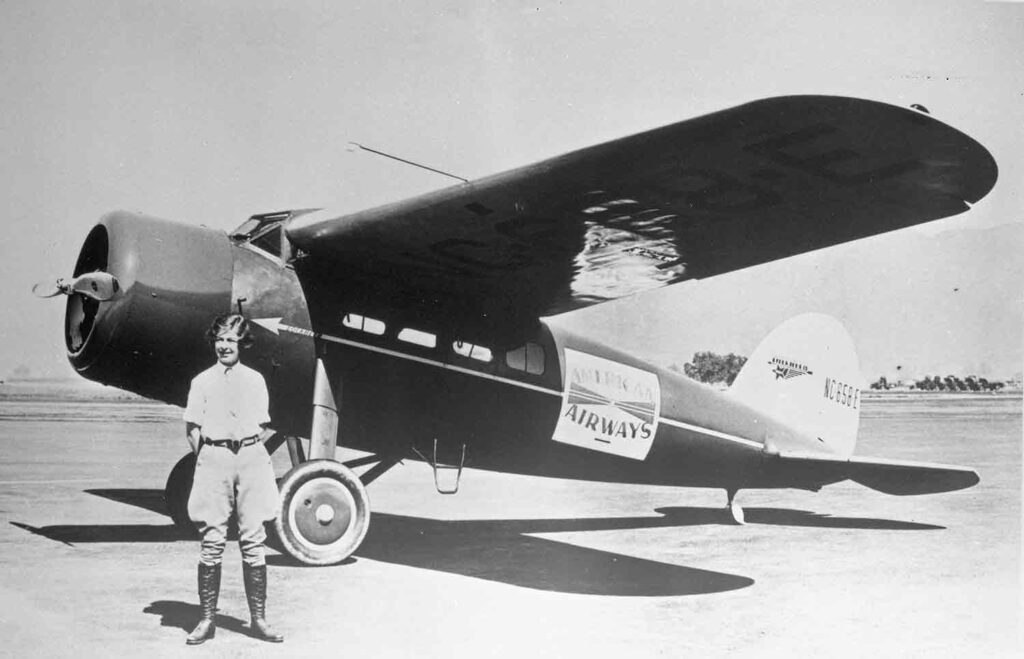
Smith was born in 1911, just eight years after the first airplane flight. She started taking flying lessons when she was about 10 years old. At age 15, she flew solo (alone) for the first time. One year later, when she was 16, she earned a pilot’s license. This was amazing, and not just because Smith was still a teenager. At the time—in 1928—most pilots were men.

A young woman wearing breeches and boots poses in front of a small plane.

Chronicle/Alamy

Elinor Smith was only 16 when she became a pilot.

Over and over, Smith proved how talented she was. When she was 17, some people told her they didn’t think a young woman could be a good pilot. They dared her to fly under all four of the bridges that spanned New York City’s East River. She did. Later that year, she flew solo for 13 hours and 17 minutes, longer than any woman had before. Not long after, she flew solo for 26 hours and 27 minutes.

Smith took a break from flying to raise her children. Then, in 1956, she started flying again—and didn’t stop until 2001. Smith died in 2010. She was 98 years old. 

Women’s History Month

Addison N. Scurlock—Michael Ochs Archives, Stephen Shugerman, Andrew Burton, Clive Brunskill, Sasha—Hulton Archive, Hulton Archive/Getty Images; Library of Congress, Washington, D.C. (LC-DIG-ds-05052, LC-U9-25383-33, LC-DIG-ppmsca-23661); Courtesy of the Franklin D. Roosevelt Library and Museum; PRNewsFoto/XM Satellite Radio/AP Images; Sojourner Truth . . . From Her “Book of Life”; NASA;  Encyclopædia Britannica, Inc.; National Portrait Gallery, Smithsonian Institution (NPG.2009.36); © Tupungato/Dreamstime.com; Steve Petteway/Collection of the Supreme Court of the United States; Animation Encyclopædia Britannica, Inc.

Celebrate Women’s History Month by reading about amazing women at Britannica School!

Word of the Day Icon

Word of the Day

audacious

Part of speech:

adjective

Definition:

: very confident and daring

Definitions provided by
Merriam-Webster Logo
Game Icon

Play

Try the Women’s History Month word search!

O
O
O
O
O

In Case You Missed It

Scientists plan to figure out what time it is on the Moon!

03.17.23

A scientist discovered an insect in a part of the world where it hasn’t been seen for years.

03.14.23

Aptera’s new car doesn’t need gasoline or electricity. It can run on the power of the Sun!

03.10.23

A company invented a straw that melts!

03.07.23

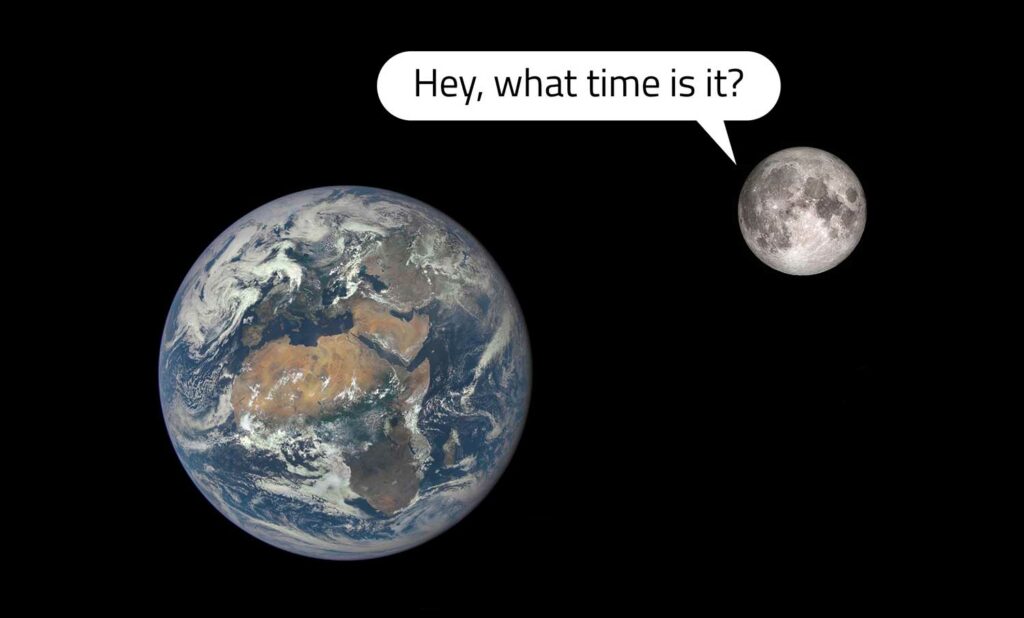
What Time Is It in Space?

Earth and the Moon are in space and a talk bubble shows the Moon asking Earth for the time.

What Time Is It in Space?

Scientists plan to figure out what time it is on the Moon!

Earth and the Moon are in space and a talk bubble shows the Moon asking Earth for the time.

NASA/JPL-Caltech/ESA; Photo illustration Encyclopædia Britannica, Inc.

What time is it on the Moon? Scientists say there is no set time on the Moon, and that could make things confusing when astronauts spend more time there.

On Earth, people have agreed on the time. For example, we all know when it’s 10 in the morning. Earth also has time zones for different parts of the planet. When it’s 10 a.m. in New York, it’s 9 a.m. in Texas. And it’s 4 p.m. in France. 

So, how do people work out the time in space? When astronauts go to space, they decide what time it is based on the time on Earth. For example, if they launched into space from Texas and it’s 9 a.m. in Texas, then it’s 9 a.m. in space, too!

But that won’t always work. Many trips to the Moon have been planned by people from different parts of the world. If people from different countries work together on the Moon, they will need to agree on what time it is. Why? Think about how hard it would be to get through a day if everyone at home or at school thought it was a different time! 

It won’t be easy to set a Moon time. First, nations will need to agree to one. Second, time doesn’t work the same way on the Moon that it does on Earth. If you put a clock on the Moon, it would go a tiny bit faster than it would on Earth. This has to do with the Moon’s distance from Earth’s gravity. But scientists will work on these problems together.

If it sounds tough to come up with a Moon time, here’s another question to think about. What time is it on Mars?

Fun Fact Icon

Fun Fact

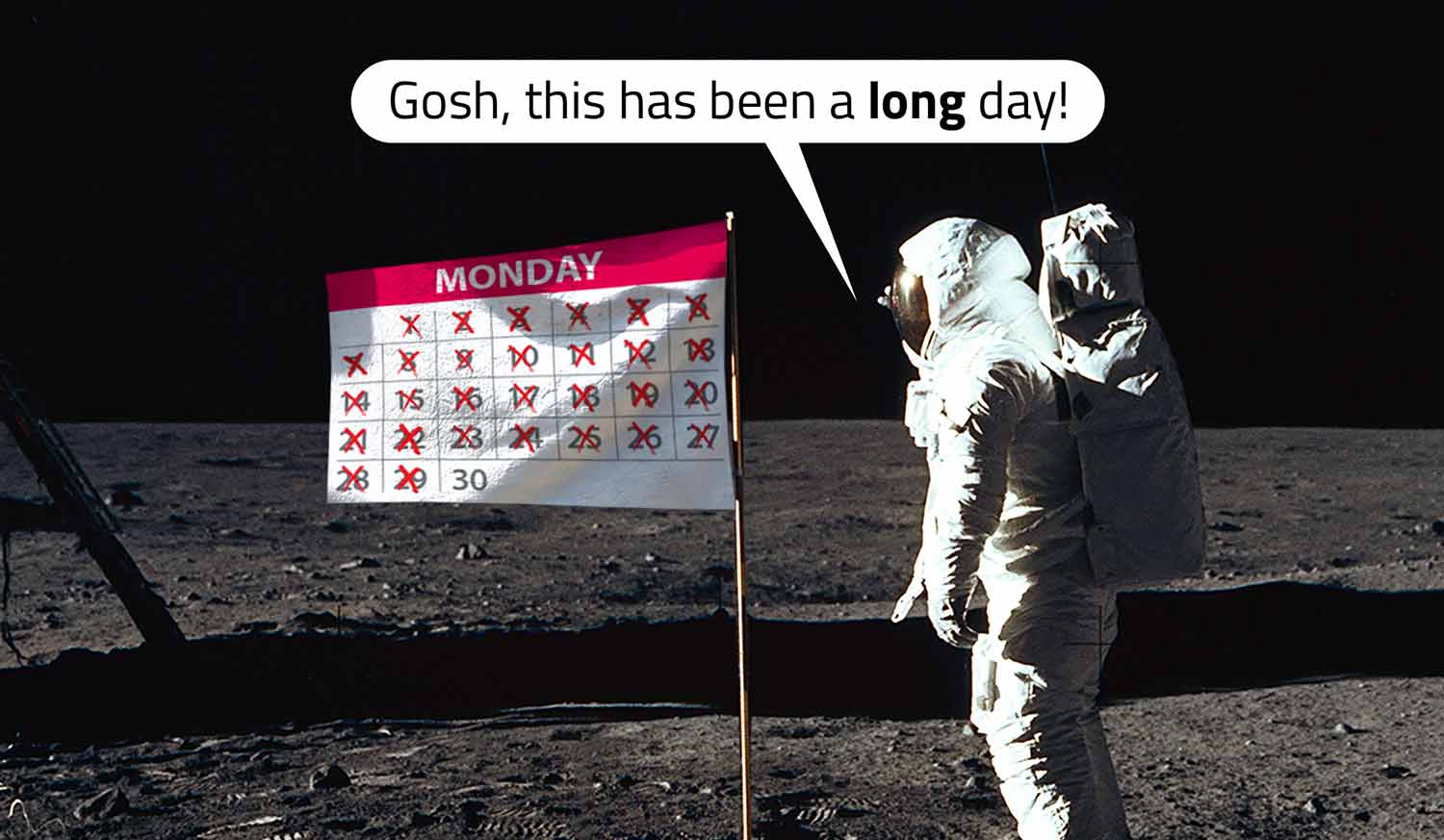
NASA, © dikobrazik/stock.adobe.com; Photo illustration Encyclopædia Britannica, Inc.

On Earth, one day lasts for 24 hours, from one sunrise to the next. 

On the Moon, one day lasts for almost 30 Earth days!

Why We Have Time Zones

In the United States, there are many time zones. When it’s 7 p.m. in New York, it’s 4 p.m. in California and 3 p.m. in most of Alaska. Everyone agrees about what time it is. But it wasn’t always like that!

For most of history, people used the Sun’s place in the sky to figure out what time it was. It was an easy way to get an idea of the time. But it wasn’t easy to get an exact time. A person in one town might say it was 3 p.m. while someone in the next town might say it was 3:20 p.m. This was okay if people stayed close to home. 

But it became a problem as people started traveling more. It was especially hard for railroad companies to do business. A company might say a train was leaving at 2 p.m., but what did that mean? So, in the 1880s, railroad companies created four time zones across the United States. 

It took a while, but in 1918, the U.S. government passed the Standard Time Act. This law created the time zones the U.S. has today. And it let everyone know what time it was.

The map below shows how time zones work. Click on Houston, Texas, the home of NASA. Then click on any black dot to see the time in any other part of the world when it’s Friday at 10:30 a.m. in Houston.

© Encyclopædia Britannica, Inc.

Hello, Moon!

NASA Scientific Visualization Studio

The video shows the Moon and how it moves during a whole year. The Moon is orbiting Earth. That means it’s moving on a path around Earth. What is it like on the Moon? Could we ever live there?

Learn more at Britannica School!

Word of the Day Icon

Word of the Day

lunar

Part of speech:

adjective

Definition:

: of or relating to the Moon

Definitions provided by
Merriam-Webster Logo
Game Icon

Play

Can you figure out where each word goes?

O
O
O
O
O

In Case You Missed It

A scientist discovered an insect in a part of the world where it hasn’t been seen for years.

03.14.23

Aptera’s new car doesn’t need gasoline or electricity. It can run on the power of the Sun!

03.10.23

A company invented a straw that melts!

03.07.23

Miriam Payne rowed a boat across the Atlantic Ocean in less than two months!

03.03.23

Insect, Lost and Found

An insect with two sets of wide wings against a white background

Insect, Lost and Found

A scientist discovered an insect in a part of the world where it hasn’t been seen for years.

An insect with two sets of wide wings against a white background

Michael Skvarla/Penn State

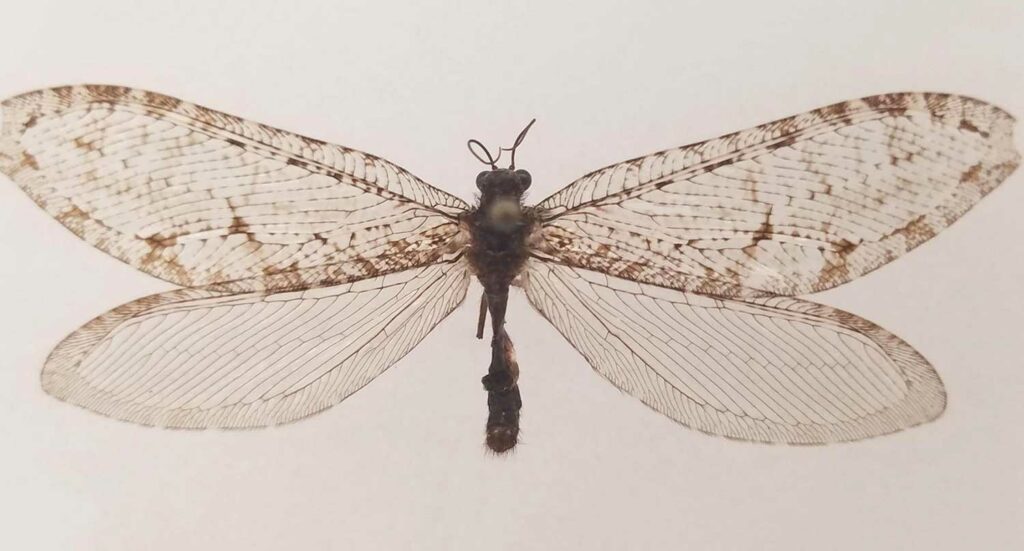
For an insect, the giant lacewing is a giant. Its wingspan is about 2 inches (6 centimeters).

Wow! A scientist in the U.S. state of Arkansas discovered a giant insect that hasn’t been seen in the eastern part of North America in more than 60 years.

The discovery took place in 2012. Michael Skvarla, who is an entomologist (a scientist who studies insects), was at Walmart to buy some milk. He spotted the winged insect on the wall of the building and took it home with him. Skvarla thought he had found a type of insect called an antlion.

In 2020, Skvarla was teaching a class online and decided to show his class the insect he found at Walmart. He put the insect (which was no longer alive) under a microscope so his students could study it. He told his students it was an antlion. But as Skvarla studied the insect closely, he realized it wasn’t an antlion. In fact, it was a very rare giant lacewing.

“We all realized together that the insect was not what it was labeled,” Skvarla said. “Here we were, making a true discovery.”

Giant lacewings have been around for much longer than humans. They first appeared during the Jurassic Period, which began 200 million years ago! That means giant lacewings were flying around while dinosaurs roamed Earth.

But that’s not the only amazing thing about this discovery. Giant lacewings were last seen in eastern North America in the 1950s. Scientists thought that the whole eastern North American population of giant lacewings had died out. 

So, why was a giant lacewing hanging around Walmart in 2012? Skvarla isn’t sure. It might have hitched a ride on a ship. But it’s possible that there are still some giant lacewings in eastern North America—they just haven’t been found yet!

Fun Fact Icon

Fun Fact

© wanetza—Vetta/Getty Images

One of the biggest insects in the world is the rhinoceros beetle. It can grow to 7 inches (18 centimeters) long! Rhinoceros beetles may be large, but they don’t hurt humans.

Happy Pi Day!

Did you know that March 14 is Pi Day? Pi is a number with many digits. Most people shorten pi to 3.14. Since you can write March 14 as 3/14, people celebrate this day as Pi Day!

Pi is sort of a magic number when it comes to circles. Check this out.

Let’s say you draw a circle. If you measure around the circle, you get its circumference. If you measure across the circle is at its widest point, you get its diameter.

Two wheels of Swiss cheese, one showing circumference and the other showing diameter with a mouse on either side.

© Catherine Douglas/Dreamstime.com; Composite illustration Encyclopædia Britannica, Inc.

If you divide the circumference of a circle by the diameter of the circle, you get a number that’s very close to 3.14. 

Let’s try it. Below, we have some cheese that’s shaped like a circle. Its circumference is 15.7 inches. Its diameter is 5 inches. If we divide 15.7 by 5, we get 3.14!

© Catherine Douglas/Dreamstime.com; Composite illustration Encyclopædia Britannica, Inc.

You can do this with any circle. You will always get a number that’s very close to 3.14.

All this math is making us hungry! The good news is that people have an amazing way to celebrate Pi Day. They eat pie!

It’s Einstein Day!

Harris and Ewing Collection/Library of Congress, Washington, D.C. (LC-DIG-hec-31012), © Liza Tkachuk/Dreamstime.com, © Alec/stock.adobe.com; Animation Encyclopædia Britannica, Inc.

March 14 isn’t just Pi Day. It’s also the birthday of Albert Einstein. You can learn more about this incredible scientist and his discoveries at Britannica School.

Word of the Day Icon

Word of the Day

entomology

Part of speech:

noun

Definition:

: a branch of science that deals with the study of insects

Definitions provided by
Merriam-Webster Logo
Game Icon

Play

Can you find all the types of pie?

O
O
O
O
O

In Case You Missed It

Aptera’s new car doesn’t need gasoline or electricity. It can run on the power of the Sun!

03.10.23

A company invented a straw that melts!

03.07.23

Miriam Payne rowed a boat across the Atlantic Ocean in less than two months!

03.03.23

Kids in Australia are finding cool books in unusual places!

02.28.23

Just Add Sunshine

A three-wheeled black and silver car with a tent mounted in the rear sits in a field with a stream and mountains in the background.

Just Add Sunshine

Aptera’s new car doesn’t need gasoline or electricity. It can run on the power of the Sun!

© Aptera

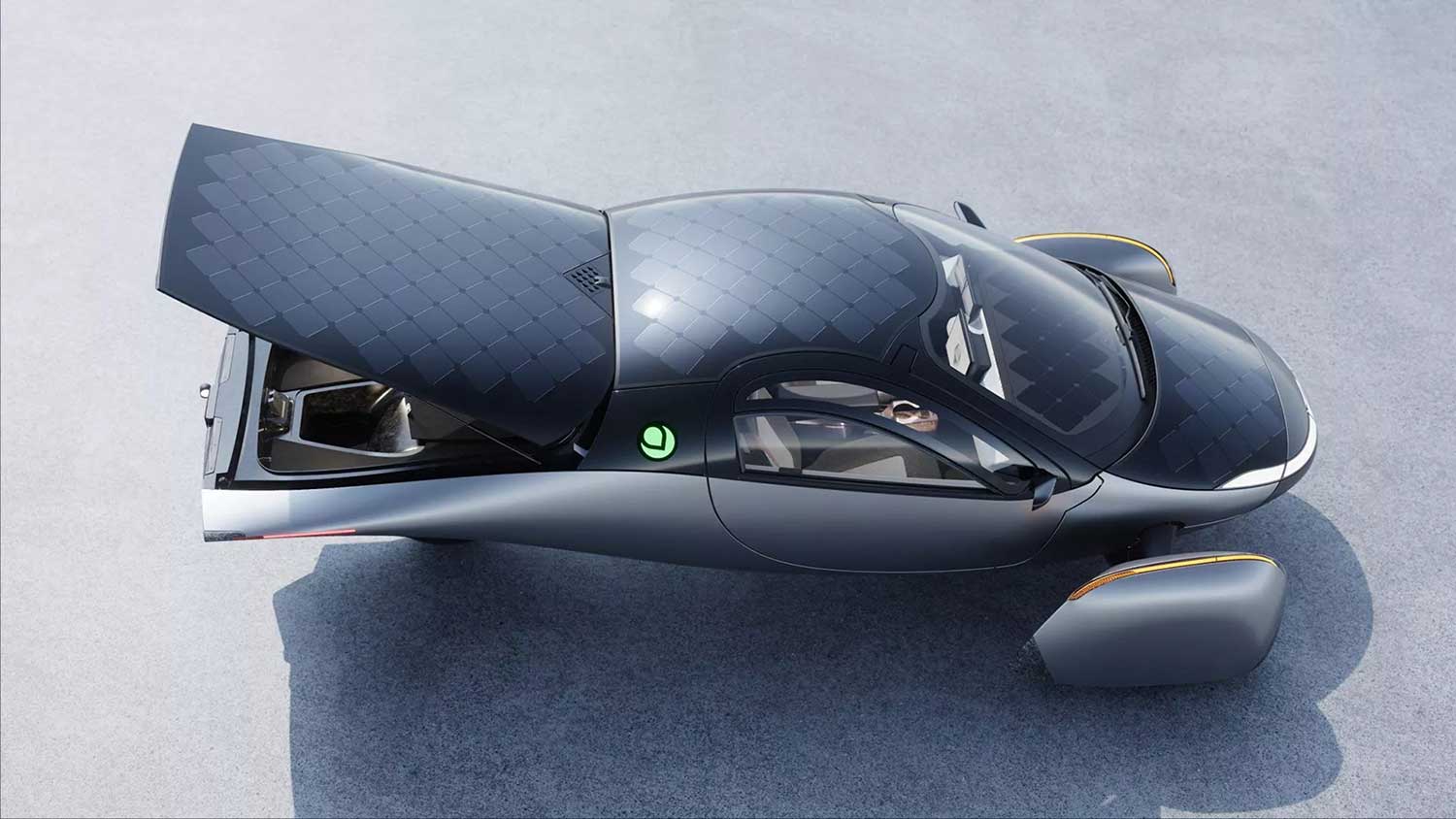
Electric vehicles (EVs) are getting more popular. One reason for this is they don’t pollute the air. But EVs aren’t always the best choice for long road trips. EVs need to be plugged in so their batteries can recharge, and plugging stations can be hard to find. That’s why a company called Aptera is making an EV that is solar powered. That means the car can run on power it makes from the Sun. 

Aptera’s new car, called the Launch Edition, has solar panels on its hood, roof, and back end. Just like solar panels on a house, the panels on the Aptera car capture the Sun’s energy. That energy is then used to power the car’s battery. Aptera says that on a sunny day, the car can drive for up to 40 miles (64 kilometers) using only the Sun’s energy. The car doesn’t need to be plugged in, so it uses less electricity than other EVs. 

What if it hasn’t been very sunny? That’s no problem. Like other EVs, Aptera’s Launch Edition car has a plug, so drivers can power their battery with electricity. A fully charged car can go for hundreds of miles before it needs to be plugged in or sit in the Sun for a while.

Aptera says it plans to start selling its Launch Edition later in 2023. However, making the cars will cost a lot of money. If Aptera can raise the money, these unusual-looking cars might be coming to a road near you!

Fun Fact Icon

Fun Fact

General Motors LLC

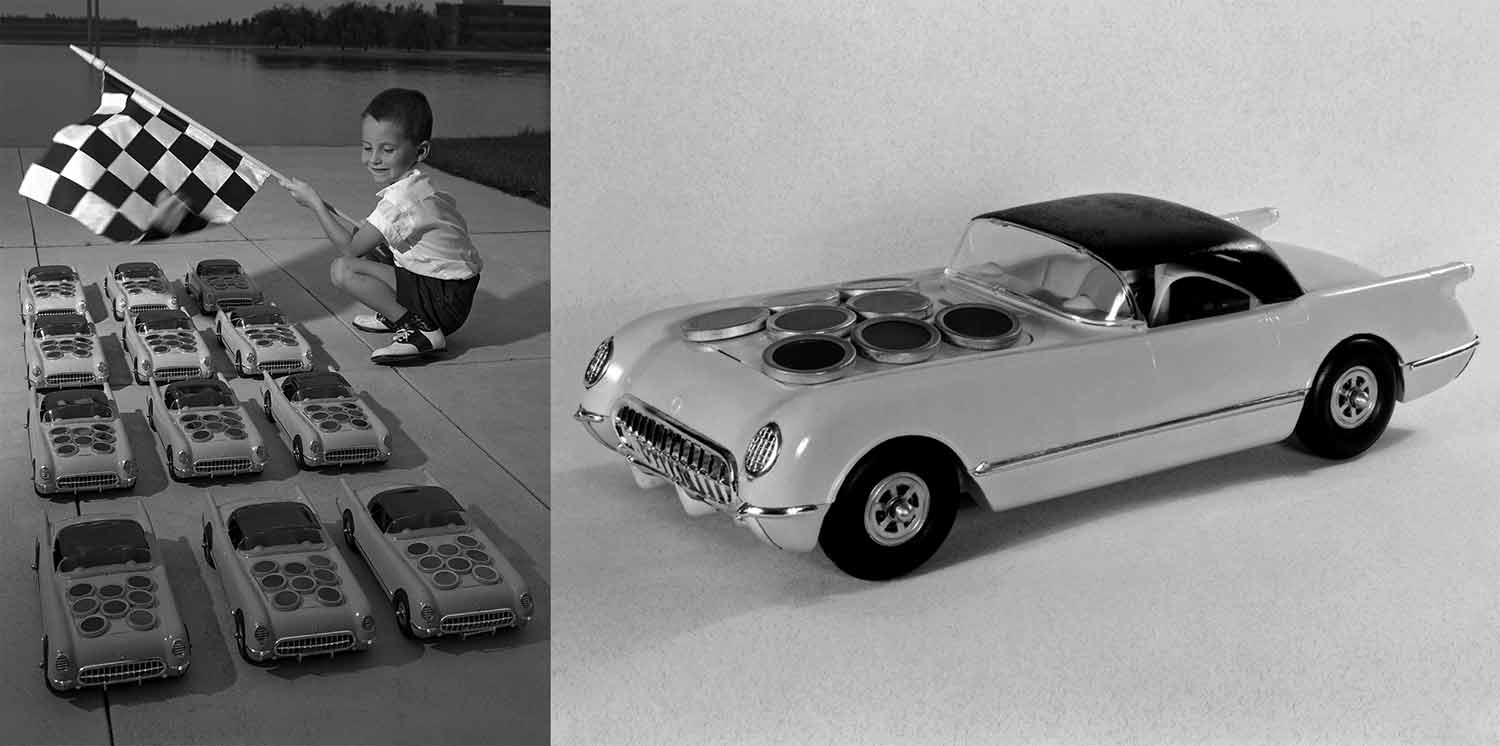
Did you know that the idea for solar-powered cars isn’t new? In 1955, William G. Cobb showed the public a solar-powered car called the Sunmobile. The Sunmobile was only 15 inches (38 centimeters) long—way too small to sit in. But it had solar panels that powered its small motor!

Trash to Treasure

© Mogilevchik, Maryvalery/Dreamstime.com; Animation Encyclopædia Britannica, Inc.

Can a car really run on garbage? With the right technology, cars can run on certain types of trash.

Some cars are electric. And companies are building cars that run on energy from the Sun. What else could power a car?

A man named Edmundo Ramos created a way for his car to run on garbage! 

Ramos is an engineer. That means he can build things to try to solve problems. Ramos thought about the problem with using gasoline to power cars. For one thing, burning gasoline creates pollution. Also, gasoline is made from oil. Oil is a natural resource that takes millions of years to create. The world has a limited supply of oil. 

Ramos built a system in the back of his car that can replace his gas tank. It took many tests to figure out what combination of garbage and air would power his car’s engine. In fact, Ramos spent 10 years trying different things until he finally found something that worked. Now, his car runs on garbage like fruit pits, the shells from nuts, and charcoal. Ramos says that his system allows his car to go for hundreds of miles and doesn’t pollute the air!

The Power of the Sun

A small brick house with solar panels on the sloped roof

© deepblue4you—E+/Getty Images

Solar panels can power cars. Did you know that solar panels already help power many homes? You can read more about how solar energy works at Britannica School.

Word of the Day Icon

Word of the Day

groundbreaking

Part of speech:

adjective

Definition:

: introducing new ideas or methods

Definitions provided by
Merriam-Webster Logo
Game Icon

Play

See how many words you can figure out.

O
O
O
O
O

In Case You Missed It

Miriam Payne rowed a boat across the Atlantic Ocean in less than two months!

03.03.23

Kids in Australia are finding cool books in unusual places!

02.28.23

Scientists found a meteorite—a rock from space—in Antarctica.

02.24.23

Scientists made the world’s first vaccine for bees!

02.17.23

Cool Idea!

Animation of a child holding a glass in which a straw is melting into liquid.

Cool Idea!

A company invented a straw that melts!

Animation of a child holding a glass in which a straw is melting into liquid.

© Visual Generation, Vitezslav Sispera/Dreamstime.com; Animation Encyclopædia Britannica, Inc.

Straws are a big problem. Most of them are made of plastic, which is harmful to the planet. A new company called The Ice Guys is aiming to solve the straw problem. They invented a straw that’s made of ice.

The Ice Straw is the first straw that’s all ice. It keeps drinks cool and then melts away, just like an ice cube.

The Ice Guys don’t actually sell straws made of ice. What they sell is a mold. To make ice straws, you just fill the mold with water (or juice) and put it in the freezer for at least 30 minutes. The mold is shaped so that the liquid freezes into straws.

Ice Straws can be used instead of plastic straws. Every year, people throw away millions of tons of plastic. This includes straws, wrappers, bags, bottles, and other containers. Plastic lasts for a long time. And a lot of it ends up in oceans, where it is harmful to ocean life. Experts say plastic straws are a very small part of the plastic problem. But anything we can do to use less plastic will help keep our planet cleaner and safer.

Many types of straws can be used instead of plastic. Some people use metal or glass straws. And some people decide not to use straws at all!

NEWS EXTRA!

International Women’s Day

In a street march of several women, a woman speaks into a megaphone flanked by two women holding a large sign

© Elena Baryshnikova/Dreamstime.com

Women march for their rights in Amsterdam, Netherlands, on March 8, 2020.

International Women’s Day is a holiday that is celebrated all over the world. It takes place on March 8. 

On International Women’s Day, people recognize how far women have come to win rights and fair treatment. This is also a day to think about what else should be done to make sure women are treated equally.

Face Thinking Icon

Did You Know?

Different colored plastic straws with international symbol for No.

© Ludmila Korotkova/Dreamstime.com

In 2011, 9-year-old Milo Cress started the Be Straw Free Campaign. His goal was to get people to use fewer plastic straws. Milo talked to companies about the plastic problem. He also gave speeches around the world.

Thanks to Milo and others, many companies have pledged (promised) to stop using plastic straws.

Is McDonald’s Changing its Ways?

© Wokephoto17—Moment/Getty Images, © Thomaspajot/Dreamstime.com; Animation Encyclopædia Britannica, Inc.

© Wokephoto17—Moment/Getty Images, © Thomaspajot/Dreamstime.com; Animation Encyclopædia Britannica, Inc.

Many companies sell their food in plastic containers. But some of them are making changes. Here’s the story of how McDonald’s has changed its ways.

In 1990, McDonald’s changed its hamburger containers. The old containers were made from a kind of plastic that is hard to recycle. The new containers were made of paper.

In 2018, McDonald’s started using cups that can be recycled. The old cups were made from a kind of foam. They weren’t easy to recycle. 

Also in 2018, McDonald’s stopped using plastic straws in the United Kingdom. The new straws are made from paper. But many people complained. They said the straws were hard to recycle.

In 2023, McDonald’s said it would stop using straws. It started using new plastic cups with a special lid that doesn’t need a straw. These cups use a lot of plastic. But companies say it’s better to use the cups than plastic straws because the cups are easier to recycle. 

McDonald’s has come up with a lot of ideas. Do they help the planet? What do you think?

The Plastic Problem

Sneakers, toothpaste, soda cans, wrapping paper, paper cups, and milk cartons.

© Chernetskaya, Oleg Dudko, Lim Seng Kui, Anmbph/Dreamstime.com, © tatyana_tomsickova—iStock/Getty Images Plus, © jules/stock.adobe.com

We use a lot of plastic. There’s plastic in our phones, our toys, our cars, and even our clothes. Did you know that all the items in these photos contain plastic?

What is plastic? And why is it bad for the planet?

Learn more at Britannica School.

Word of the Day Icon

Word of the Day

waste

Part of speech:

noun

Definition:

: material that is left over or that is unwanted after something has been made, done, used, etc.

Definitions provided by
Merriam-Webster Logo
Game Icon

Play

Wordrow

O
O
O
O
O

In Case You Missed It

Miriam Payne rowed a boat across the Atlantic Ocean in less than two months!

03.13.23

Kids in Australia are finding cool books in unusual places!

02.28.23

Scientists found a meteorite—a rock from space—in Antarctica.

02.24.23

Scientists made the world’s first vaccine for bees!

02.17.23

Miriam Payne Makes Waves

Miriam Payne Makes Waves

Miriam Payne rowed a boat across the Atlantic Ocean in less than two months!

Encyclopædia Britannica, Inc.

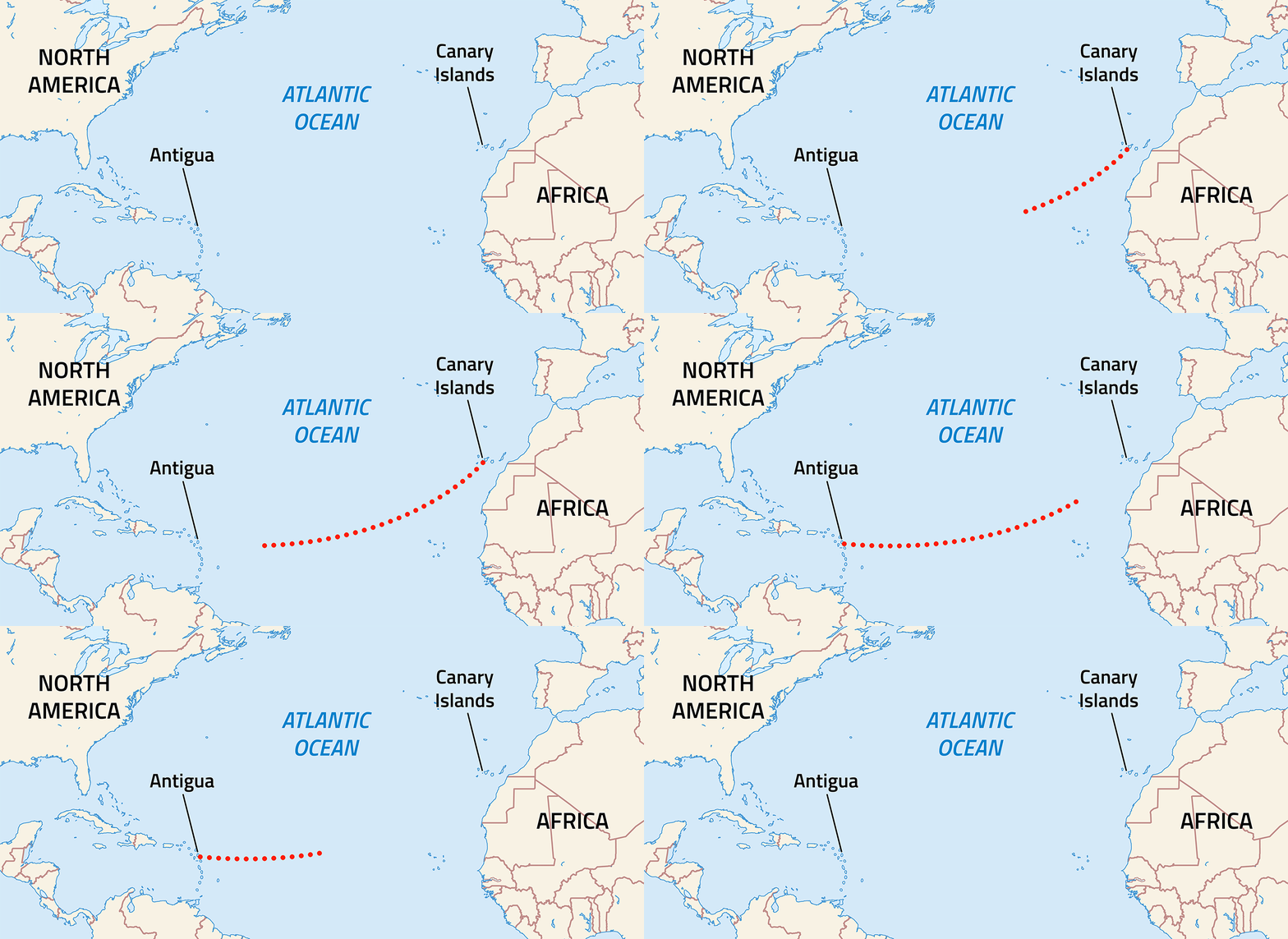
Miriam Payne rowed from the Canary Islands to the island of Antigua.

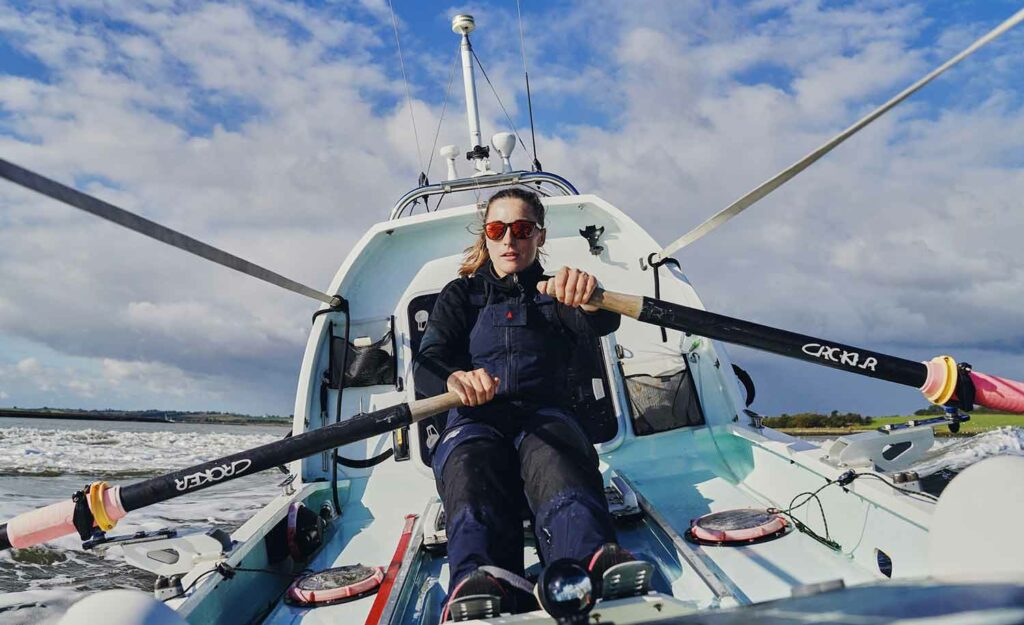
Imagine rowing a boat across an ocean. That’s just what a woman named Miriam Payne did. And she did it in less than two months!

Payne, who is 23, rowed across the Atlantic Ocean in 59 days, 16 hours, and 36 minutes. She did this as part of a race called the Talisker Challenge. People in the race can do it solo (alone) or in teams of up to five people.  The race starts at the Canary Islands, which are off the coast of Africa. Rowers travel west to Antigua, which is an island in the Caribbean Sea. The race is 3,000 miles (4,800 kilometers) long!

During the race, rowers must do everything themselves. They take their own food and water, and if anything happens to their boat, it’s up to them to fix it. (Two ships follow along, in case a rower or rowing team needs to quit the race.) Rowers do take breaks. Their boats have sleeping cabins, and special equipment that lets them know their location in the ocean. 

Payne said rowing under the hot Sun made her very tired. The last 10 miles (16 kilometers) were the toughest, even though she knew she was near the end of the race. 

“I was so tired. I just wanted to get to the end of the race so I could stop rowing,” she later told the British Broadcasting Corporation (BBC). But as she got close to Antigua, she could hear her family and friends cheering. They were waiting to greet her! This gave Payne the energy she needed to finish the race.

Payne arrived at Antigua on February 10. As she arrived, people in the crowd called out, “Way to go, Miriam! That’s it, you’ve done it!” Payne had finished the Talisker Challenge faster than any solo woman ever had before.

Fun Fact Icon

Fun Fact

© Jane Stockdale

Victoria Evans crossed the Atlantic Ocean fast!

Miriam Payne was the fastest solo woman to complete the Talisker Challenge. But another woman holds the Guinness World Record for completing the same route even faster. In 2022, Victoria Evans of England rowed across the Atlantic Ocean in just 40 days and 19 hours.

They Changed the World

March is Women’s History Month. You can read about the amazing women below and many more at Britannica School!

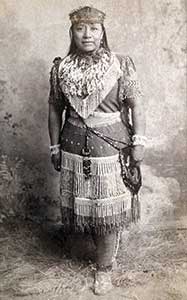
Sarah Winnemucca (1844–1891).

National Portrait Gallery, Smithsonian Institution (NPG.82.137)

Sarah Winnemucca was a Paiute (American Indian) speaker and writer. In 1872, the U.S. government made the Paiute people give up their land so white people could live there. Winnemucca gave speeches around the country. She wanted to let people know what was happening to the Paiute.
Jane Addams (1860–1935).

Library of Congress, Washington, D.C

Jane Addams spent her life helping people. In 1889, she opened Hull House in Chicago, Illinois. Hull House was a place where immigrants could go to get help building their lives in the United States. Addams also spoke in support of laws protecting the rights of workers and the right of women to vote.

Maria Tallchief (1925–2013).

© Baron—Hulton Archive/Getty Imges

Maria Tallchief was a ballet dancer. She was born on an Osage (American Indian) reservation. Her father was Osage, and her mother was white. Tallchief first danced in Europe and then joined the New York City Ballet. She is still thought of as one of the best ballerinas ever. Tallchief later taught ballet and founded the Chicago City Ballet.

Patsy Takemoto Mink (1927–2002).

Gwendolyn Mink—Patsy T. Mink Papers/Library of Congress, Washington, D.C.

Patsy Takemoto Mink was the first Asian American woman to be elected to the U.S. Congress. (Members of Congress make U.S. laws.) Mink helped to pass a law called Title IX (or Title Nine). Title IX requires schools to spend the same amount of money on girls’ and women’s sports and education programs as they do on programs for boys and men. 

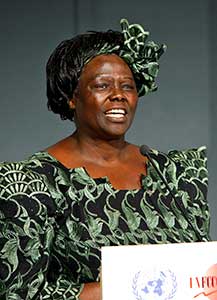
Wangari Muta Maathai (1940–2011).

Mark Garten/UN Photo

Wangari Muta Maathai was an environmentalist—a person who works to protect the planet. Born in Kenya, she started her career teaching about veterinary science—the care of animals. She later started the Green Belt Movement, a group that works to have trees planted. In 2003, Maathai became deputy minister of the environment, natural resources, and wildlife in Kenya.

Celebrate Women’s History

Addison N. Scurlock—Michael Ochs Archives, Stephen Shugerman, Andrew Burton, Clive Brunskill, Sasha—Hulton Archive, Hulton Archive/Getty Images; Library of Congress, Washington, D.C. (LC-DIG-ds-05052, LC-U9-25383-33, LC-DIG-ppmsca-23661); Courtesy of the Franklin D. Roosevelt Library and Museum; PRNewsFoto/XM Satellite Radio/AP Images; Sojourner Truth . . . From Her “Book of Life”; NASA;  Encyclopædia Britannica, Inc.; National Portrait Gallery, Smithsonian Institution (NPG.2009.36); © Tupungato/Dreamstime.com; Steve Petteway/Collection of the Supreme Court of the United States; Animation Encyclopædia Britannica, Inc.

Women have been making history for thousands of years. You can read more about women who changed the world at Britannica School.

Word of the Day Icon

Word of the Day

endurance

Part of speech:

noun

Definition:

: the ability to do something difficult for a long time

Definitions provided by
Merriam-Webster Logo
Game Icon

Play

Can you find all the words?

O
O
O
O

In Case You Missed It

Kids in Australia are finding cool books in unusual places!

02.28.23

Scientists found a meteorite—a rock from space—in Antarctica.

02.24.23

Scientists made the world’s first vaccine for bees!

02.17.23

Here’s the story of a young girl who helped change the country for the better.

02.14.23