Game Changer

Side by side images of a galaxy labeled Spitzer and Webb, with the stars appearing to be much clearer in the image labeled Webb.

Game Changer

Scientists expect that the James Webb Space Telescope will allow them to see space like never before.

Side by side images of a galaxy labeled Spitzer and Webb, with the stars appearing to be much clearer in the image labeled Webb.
NASA/JPL-Caltech (left), NASA/ESA/CSA/STScI (right)

Images of the Large Magellanic Cloud, taken by the Spitzer Space Telescope (left) and the James Webb Space Telescope (right).

Imagine being able to look back in time to see what the universe was like billions of years ago. Amazingly, powerful space telescopes have allowed scientists to do just that! And with the new James Webb Space Telescope, scientists are poised to get the clearest view yet of the distant past.

Launched in orbit around the Sun in December 2021, the James Webb Space Telescope is a joint project of the National Aeronautics and Space Administration (NASA), the European Space Agency (ESA), and the Canadian Space Agency (CSA). The Webb recently produced test images that suggested just how much it will be able to show scientists about the universe. For example, it captured an image of the Large Magellanic Cloud, a small galaxy that is a neighbor to our own Milky Way galaxy. When scientists compared the image produced by Webb to an image produced by Spitzer, a now-retired space telescope, they were stunned. Both telescopes were designed to detect infrared light, which can’t be seen by human eyes. But Webb’s image of the Large Magellanic Cloud was much more detailed than the one Spitzer captured. 

“It’s not until you actually see the kind of image that [Webb] delivers that you…go, ‘Wow, just think of what we’re going to learn.’ Spitzer taught us a lot. This is like a whole new world,” said Marcia Rieke, principal investigator for Webb’s near-infrared camera, at a news conference.

The Webb is also considerably more powerful than the Hubble Space Telescope, which has produced remarkable images of the universe since its launch in 1990.

Webb’s test images are just a preview of things to come. 

Scientists believe that when Webb becomes fully operational, around July 2022, it will be a game changer. In addition to capturing sharper images of stars, the telescope will be able to peer through the atmospheres of planets outside our solar system. Webb’s powerful mirrors will also be able to see the earliest light from galaxies that formed billions of years ago. Webb will be able to give us clear views of this ancient history because the light from stars can take billions of years to reach us. 

“Astronomy is not going to be the same again once we see what [Webb] can do with these first observations,” said Christopher Evans, Webb project scientist at the ESA, at the news conference.

Did You Know?
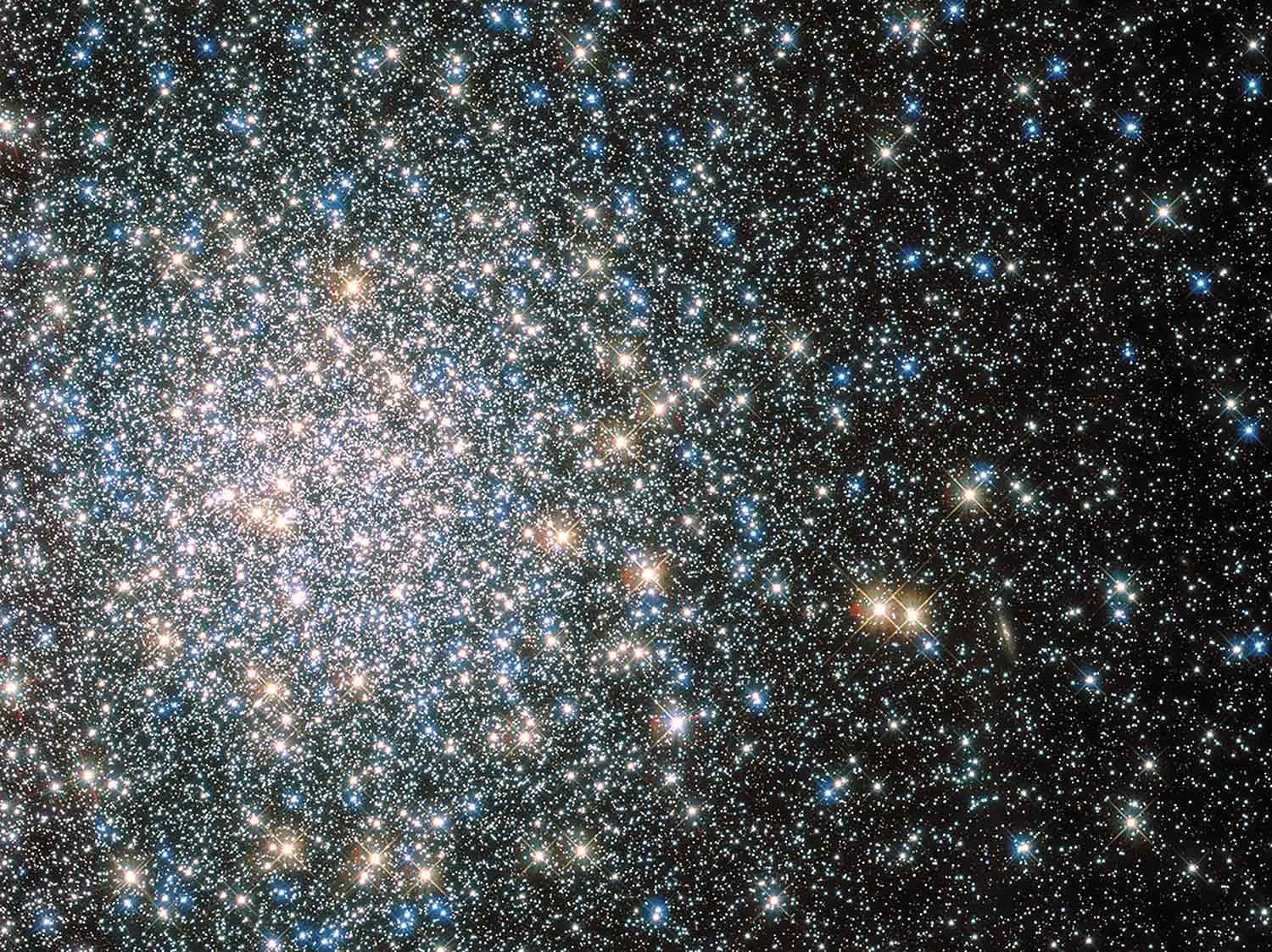
Image of many stars in space

NASA Goddard

When we look at stars, we’re looking back in time. This is because the light from stars, which travels at the speed of light, takes time to reach us. The Andromeda Galaxy is 2.5 million light-years away, so when we look at it through a telescope, the light that we see started traveling to us 2.5 million years ago.

The James Webb Space Telescope in Numbers
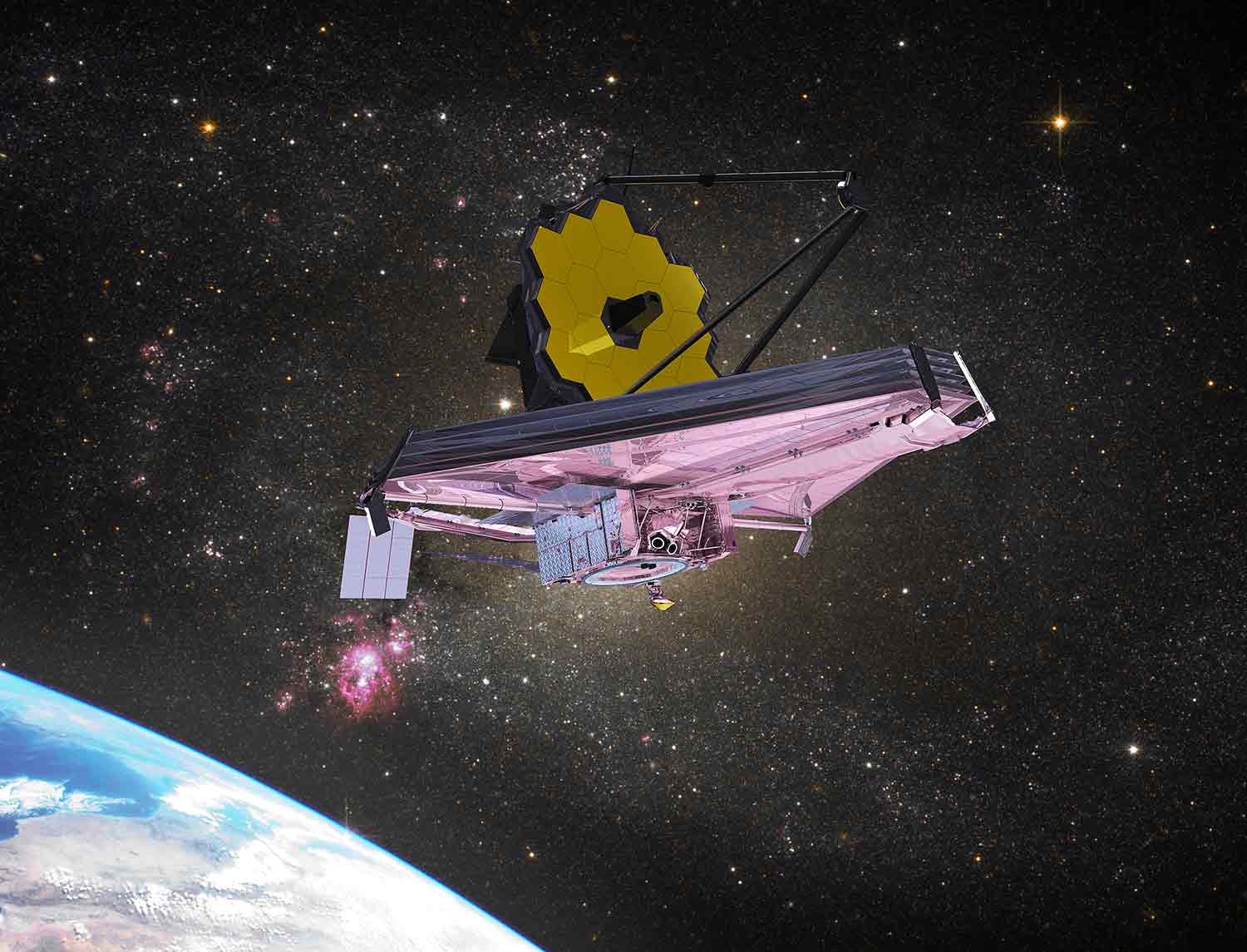
Illustration of James Webb Space Telescope in space with Earth in background

© Grejak/Dreamstime.com

13.5 billion. The number of years Webb will look back in time. Scientists hope to detect the heat given off by the first galaxies born after the  “Big Bang.”

14,300. The telescope’s weight in pounds (6,500 kilograms), which is about the same as a school bus.

100. The number of times more powerful the Webb is compared to the Hubble Space Telescope.

21. The width in feet (6.5 meters) of Webb’s primary mirror.

–379. The approximate temperature in degrees Fahrenheit (–228 degrees Celsius) at which Webb must be kept for it to operate properly. Some of the telescope’s instruments must be even cooler, or they will not be able to detect infrared light.

Eye in the Sky
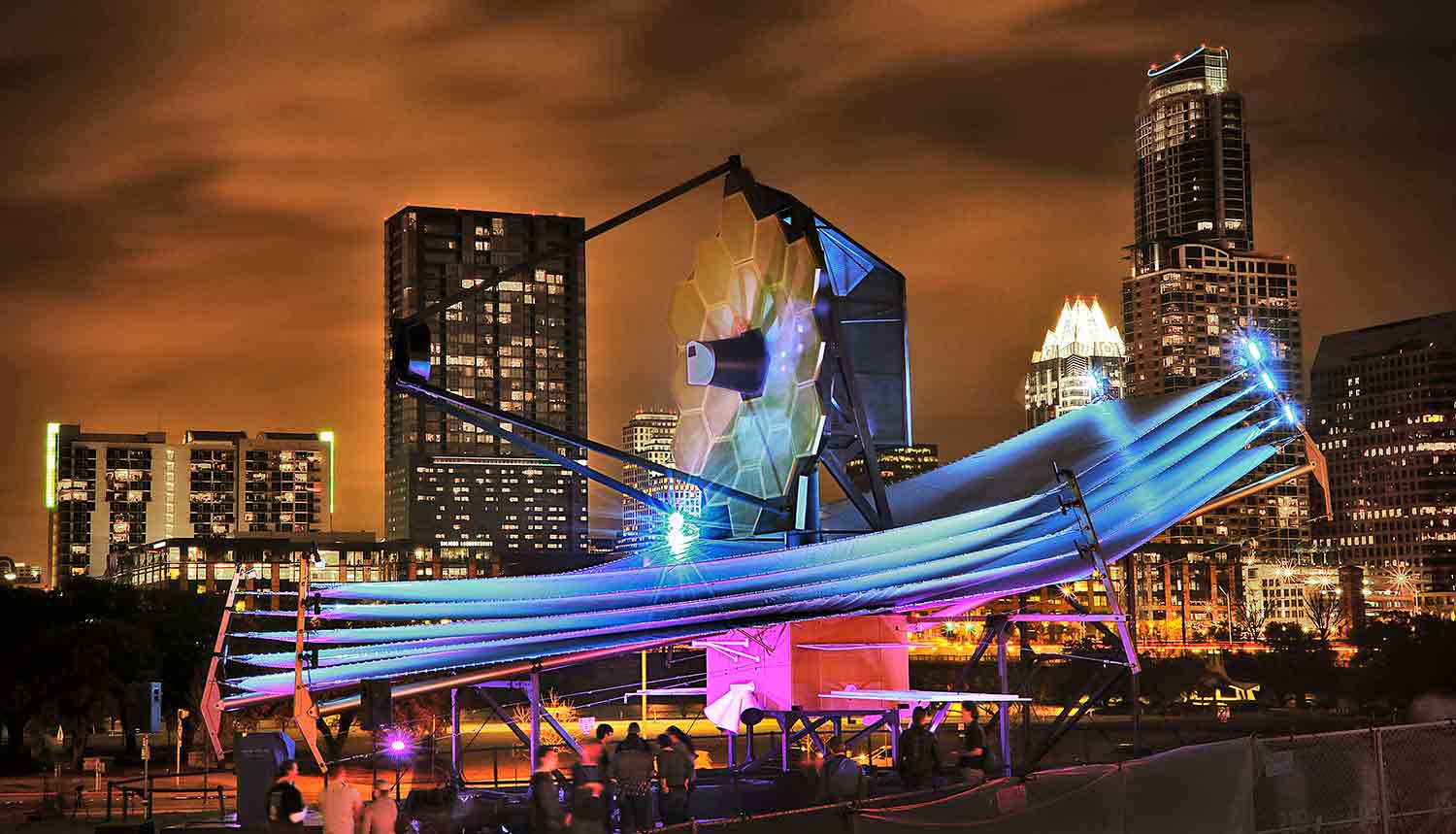
The James Webb Space Telescope is as tall as a three-story building. What secrets will this giant uncover?

NASA/Chris Gunn

A model of the James Webb Space Telescope was displayed in Austin, Texas, in 2013.

WORD OF THE DAY

auspicious

PART OF SPEECH:

adjective

Definition:

: showing or suggesting that future success is likely

Definitions provided by
Merriam-Webster Logo

Play

How many words can you find?

O
O
O
O
O

In Case You Missed It

Scientists have made a reconstruction of a woman who lived in what’s now Sweden 4,000 years ago.

05.19.22

Jacky Hunt-Broersma ran 104 marathons in 104 days, breaking a record.

05.13.22

A man who lost the power to speak can now use a computer to communicate.

05.10.22

May is Asian American and Pacific Islander Heritage Month. Two teens are working to make sure Asian American voices are heard.

05.06.22
Say Hello to the Stone Age

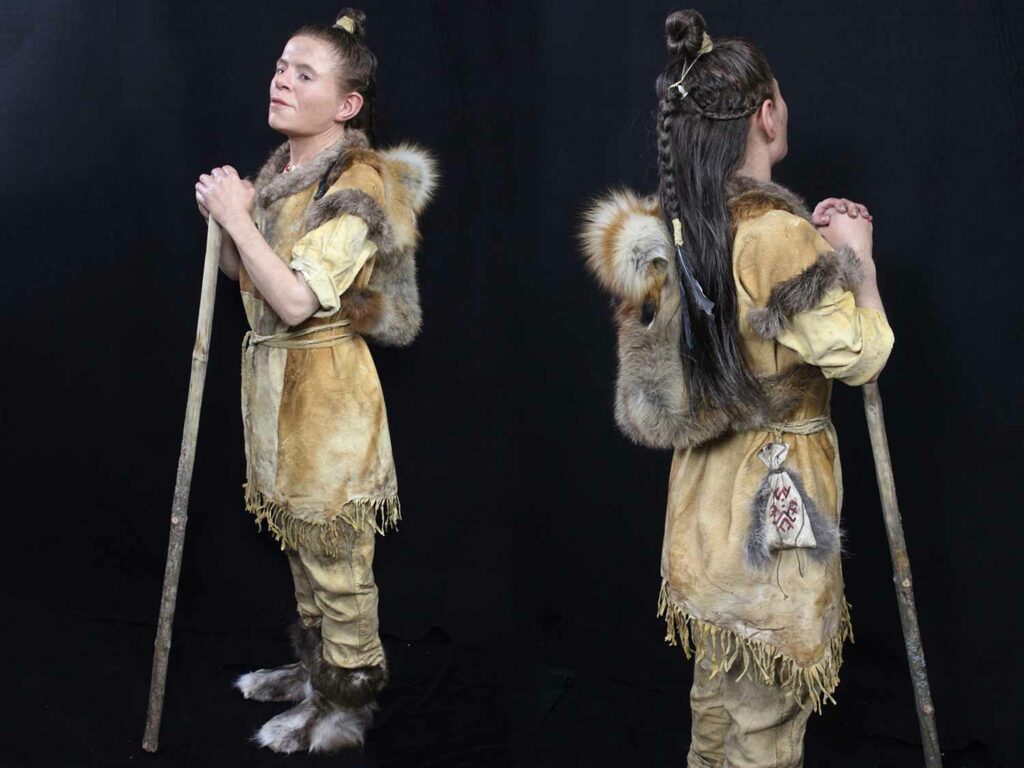
Front and back view of a lifelike model of a woman who lived during the stone age wearing fur and leather and holding a walking stick

Say Hello to the Stone Age

Scientists have made a reconstruction of a woman who lived in what’s now Sweden 4,000 years ago.

Front and back view of a lifelike model of a woman who lived during the stone age wearing fur and leather and holding a walking stick

Oscar Nilsson, courtesy of Västernorrlands museum; Composite Encyclopædia Britannica, Inc.

Get ready to meet a woman from the Stone Age.

Nearly 100 years ago, a road construction crew in Sweden found the remains of a woman who had died about 4,000 years earlier. Now, a forensic artist has made a reconstruction of what the woman might have looked like.

The likeness of the woman is on display at Sweden’s Västernorrlands Museum. Scientists used her skeleton to determine that the woman stood about 4 feet, 11 inches (149.9 centimeters) tall and was in her late 20s or early 30s when she died. To figure out what her face looked like, artist Oscar Nilsson scanned the woman’s skull and then made a copy of it with a 3D printer. He also used information thought to be true about the woman’s age and ethnicity, which can affect the shape of a person’s face.

Nilsson had to take some educated guesses about the woman’s appearance. Her DNA, which would have revealed traits such as hair color and eye color, was not well preserved. But scientists know that there were three large migration waves into ancient Sweden. The one that took place during the woman’s lifetime included pale-skinned farmers with dark hair and brown eyes. So they believe the woman may have had these traits. 

Scientists aren’t sure if the woman was a farmer. She lived during an era when many people were transitioning from hunting and gathering their food to living in one place and farming the land. She may have done one or the other, or both.

We don’t know everything about how ancient humans lived, but we’re getting closer to knowing what they looked like.

Did You Know?

© Shaikhkamalk1/Dreamstime.com

These are the ruins of what was the largest city in the ancient Indus Valley civilization. The ruins are located in what is now Pakistan.

The Stone Age woman described in the article lived 4,000 years ago in what’s now Sweden. During this era, humans were already developing early civilizations in many parts of the world, including Mesopotamia and regions now known as Central America, China, and India.

What did Britannica School have to say about one of these civilizations?

Creatures of the Stone Age

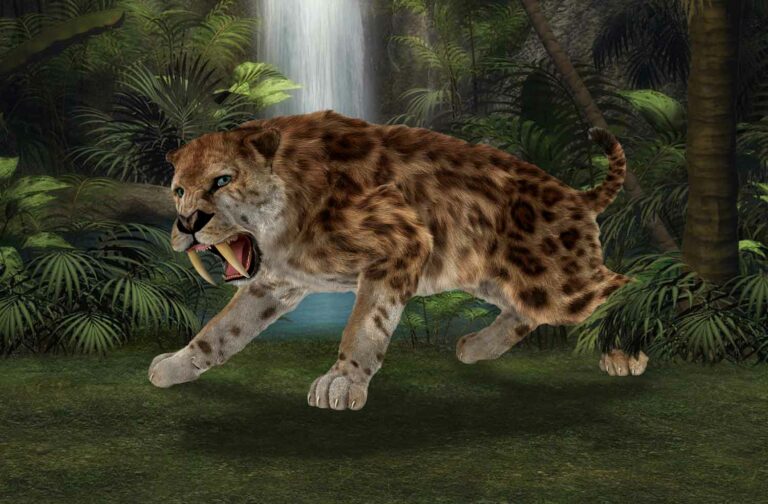
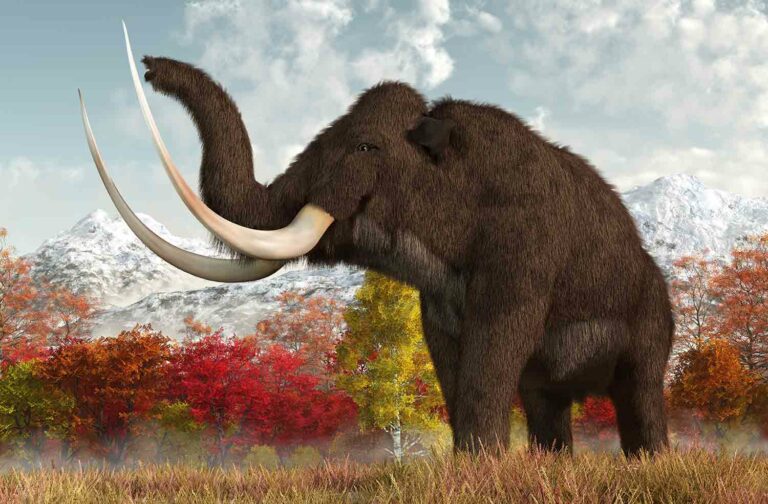
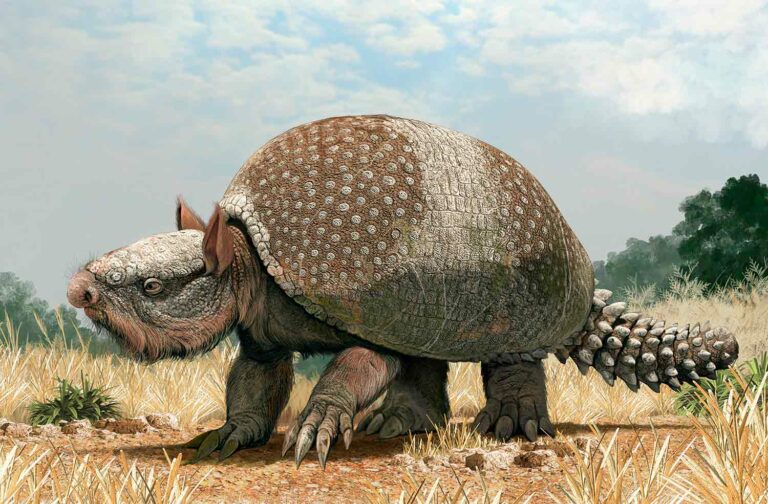
Mammoth – © Daniel Eskridge/Dreamstime.com Glyptodon – © Roman Garcia Mora—Stocktrek Images/Getty Images Smilodon – © Vac/Dreamstime.com, © Nelieta/Dreamstime.com; Photo illustration Encyclopædia Britannica, Inc.

Dinosaurs became extinct long before humans existed. But Stone Age humans did know some giant beasts—and may have caused some of them to go extinct. 

Saber-Toothed Cat

Think lions have big teeth? Ancient humans lived at the same time as this fanged cat, which went extinct about 8,000 years ago. In fact, it’s possible that humans helped bring saber-toothed cats to extinction by hunting them.

Woolly Mammoth

Modern humans know woolly mammoths from their mummies, remains of the animals that were incredibly well preserved after being trapped in ice. But for part of the Stone Age, woolly mammoths were alive and well. Mammoths became extinct about 10,000 years ago, probably because of a cooling climate.

Glyptodon

An armadillo is fairly small. Its ancient cousin, Glyptodon, was anything but. Weighing in at more than 2 tons (1.81 metric tons), this beast was about the size of a car and defended itself with its powerful tail. Humans knew Glyptodon but didn’t love it. In fact, they hunted the animal, possibly helping to hasten its extinction about 11,000 years ago. 

Dig These Detectives

How can we draw so many conclusions from human remains? Archaeologists dig up clues and find the answers.

© microgen—iStock/Getty Images Plus

WORD OF THE DAY

Neolithic

PART OF SPEECH:

adjective

Definition:

: of or relating to the time during the Stone Age when people used stone tools and began to grow crops, raise animals, and live together in large groups but did not read or write

Definitions provided by
Merriam-Webster Logo

Play

O
O
O
O
O

In Case You Missed It

Jacky Hunt-Broersma ran 104 marathons in 104 days, breaking a record.

05.13.22

A man who lost the power to speak can now use a computer to communicate.

05.10.22

May is Asian American and Pacific Islander Heritage Month. Two teens are working to make sure Asian American voices are heard.

05.06.22
Scientists think the first “cartoons” may have been created 15,000 years ago.

05.03.22

A Marathon a Day

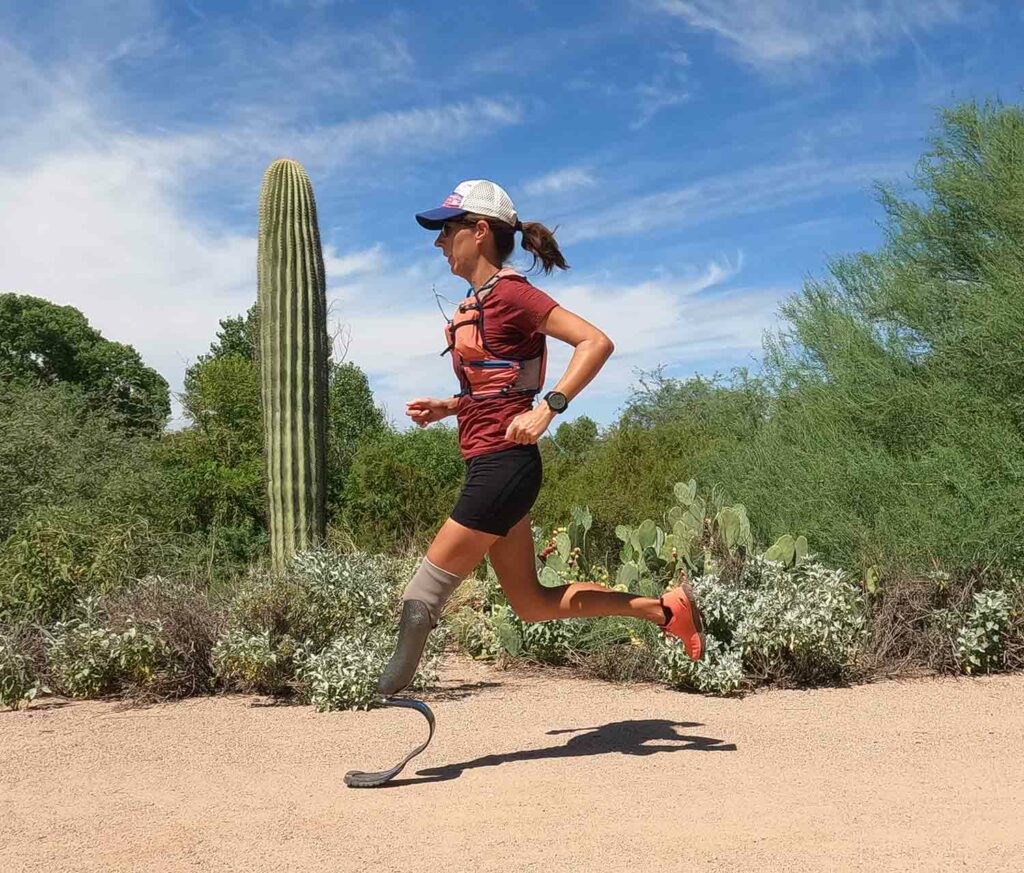
Woman with prosthetic leg running outdoors in desert terrain

A Marathon a Day

Jacky Hunt-Broersma ran 104 marathons in 104 days, breaking a record.

Woman with prosthetic leg running outdoors in desert terrain

Courtesy of Jacky Hunt-Broersma

When Jacky Hunt-Broersma was younger, she wasn’t into running. But after her left leg was amputated below the knee due to a rare type of cancer, she wanted to challenge herself. She became a dedicated long-distance runner—so dedicated that she recently ran 104 marathons in 104 days, breaking a world record.

“You kind of get put in this box of being disabled and it’s just really annoying,” Hunt-Broersma told ESPN. “And I’m super stubborn and like, ‘Well, no, I want to give running a go. I want to try it and just see.’”

Hunt-Broersma, who wears a prosthesis (an artificial limb) when she runs, originally challenged herself to complete 100 marathons in 100 days after another amputee, Alyssa Amos Clark, did 95 in 95 days. But when Kate Jayden beat Clark’s record with 101 marathons, Hunt-Broersma moved the goal post.

Each day, Hunt-Broersma ran the marathon length of 26.2 miles (42.2 kilometers). She mostly ran on trails near her home in Arizona or on a treadmill, though for Day 92, she ran the para-athletic race of the Boston Marathon. She reported her progress on social media and invited those tracking her progress to donate to an organization called Amputee Blade Runners. Hunt-Broersma raised more than $194,000 online for the organization, which provides free running prosthetics for amputees. 

Hunt-Broersma’s original goal was to complete 102 marathons, but she went ahead and did two more after Day 102. It may take Guinness World Records up to a year to verify that Hunt-Broersma broke the previous record. 

In the meantime, the tireless runner is training for a 240-mile ultra run, which will take place in Utah in October 2022.

Did You Know?

Hans Peters—Anefo/Nationaal Archief

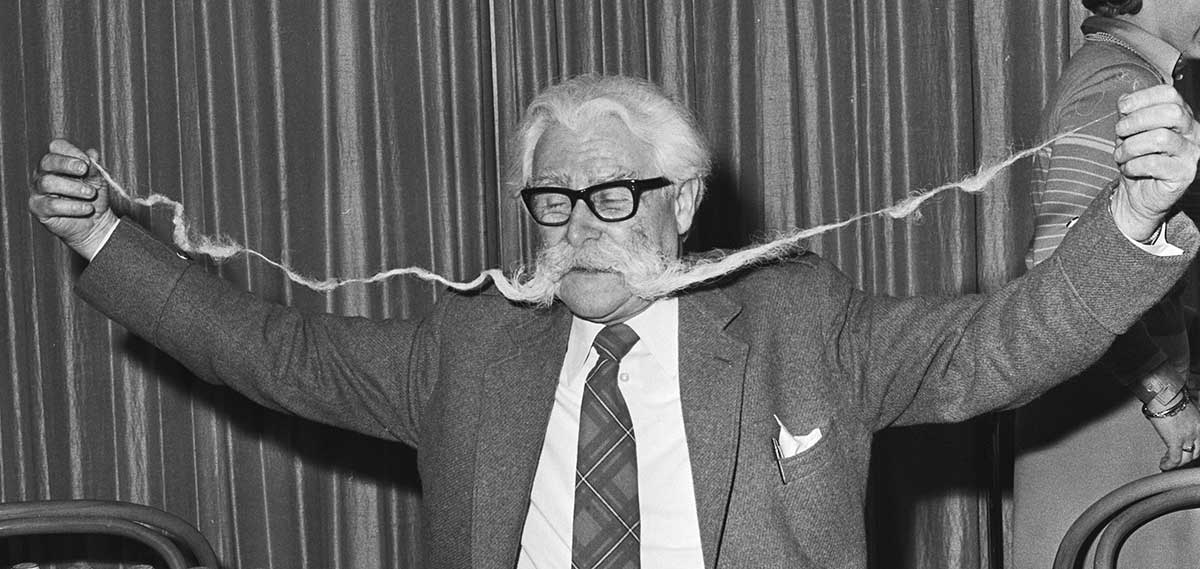
John Roy held the record for “longest mustache” beginning in 1977. His record has since been broken.

A record isn’t officially broken until Guinness World Records certifies it. According to Guinness World Records, a record title must be measurable, breakable, standardizable, verifiable, based on one variable (tallest, fastest, etc.), and…better than anyone else’s.

Sports Superlatives

Celtics – Hy Peskin/Alon Alexander/Alamy; Waitz – PCN Photography/Alamy; Pele – Pictorial Parade—Archive Photos/Getty Images; Ruth – National Photo Company Collection/Library of Congress, Washington, D.C. (LC-DIG-npcc-02009); Biles – © Zhukovsky/Dreamstime.com

To break a record in sports, you have to be the best of the best…or just really persistent. Here are a few official and unofficial sports records.

Most NBA Titles in a Row

Sure, your basketball team may have won a championship or two, but only the Boston Celtics have won eight NBA championships in a row. The Celtics’ amazing run took place between 1959 and 1966.  

Most New York City Marathon Titles

Grete Waitz of Norway won the New York City Marathon nine out of the 11 years that she entered the race. Considering that the race requires running for 26.2 miles (42.2 kilometers) against the world’s other top marathoners, that’s pretty amazing.

Most Soccer Goals

According to Guinness World Records, the Brazilian soccer legend Pelé holds the record for most career goals. Between 1956 and 1977, Pelé scored 1,283 goals in both official and unofficial matches.

Most Gymnastics Medals

There are so many reasons why American gymnast Simone Biles is the GOAT (greatest of all time). Here’s one: Biles has won 32 medals at international competitions, including the Olympics. 

Most Home Runs

We’re going way back for this baseball best-of. Out of 8,399 times at bat, George Herman Ruth (known as Babe Ruth) hit 714 home runs. That’s the highest home run percentage ever. Although Ruth retired in 1935, no one has broken that record.

The World’s Best

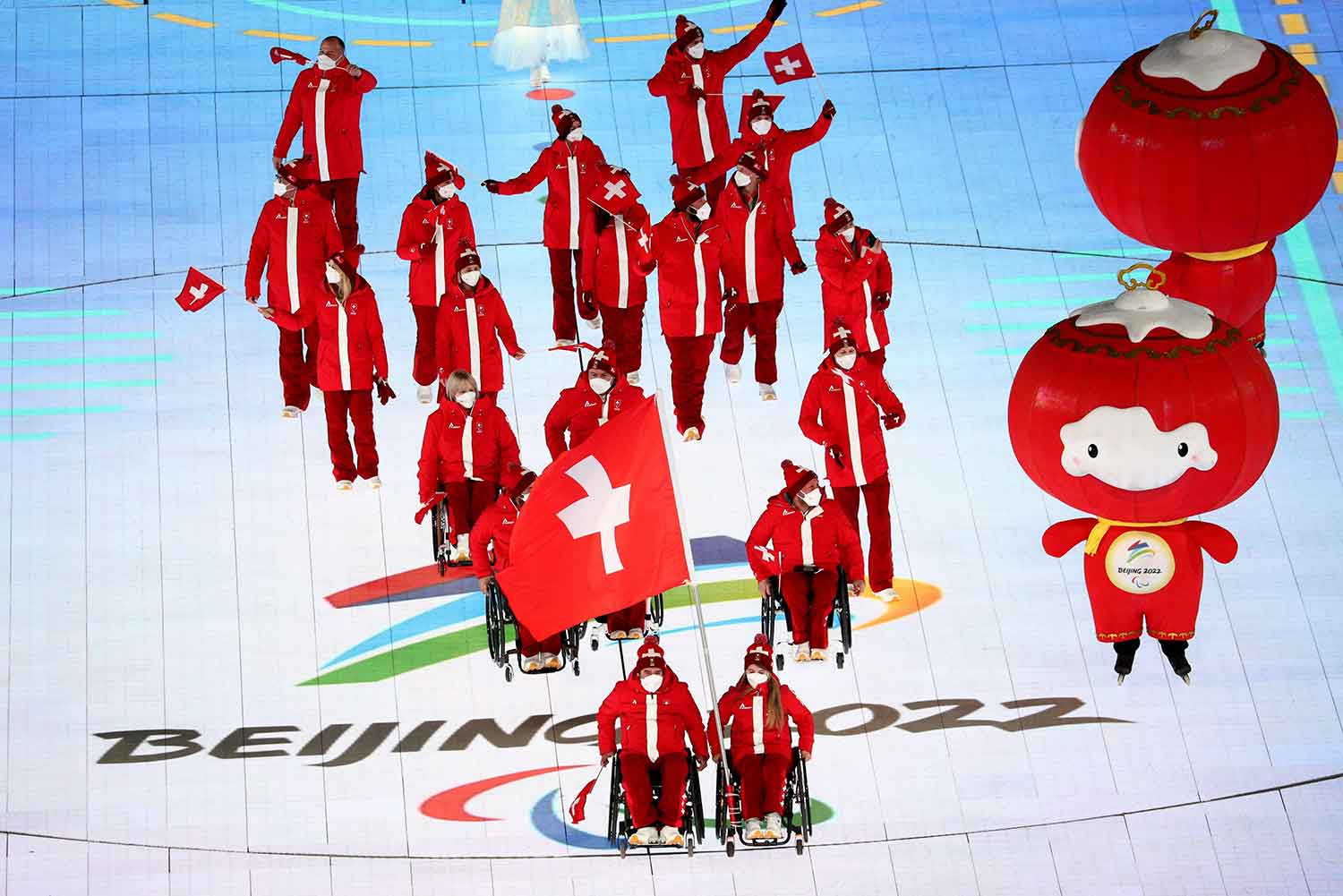
The Paralympic Games is an international, multi-event competition for athletes with disabilities.

Athletes in Swiss uniforms, some with Swiss flags and some using wheelchairs, in a stadium with Beijing 2022 painted on the floor

Soe Zeya Tun—Reuters/Alamy

WORD OF THE DAY

stamina

PART OF SPEECH:
noun
Definition:

great physical or mental strength that allows you to continue doing something for a long time

Definitions provided by
Merriam-Webster Logo

Play

See if you can find all 12 athletes.

O
O
O
O
O

In Case You Missed It

A man who lost the power to speak can now use a computer to communicate.

05.10.22

May is Asian American and Pacific Islander Heritage Month. Two teens are working to make sure Asian American voices are heard.

05.06.22

Scientists think the first “cartoons” may have been created 15,000 years ago.

05.03.22

Brain Implant Helps Man Communicate

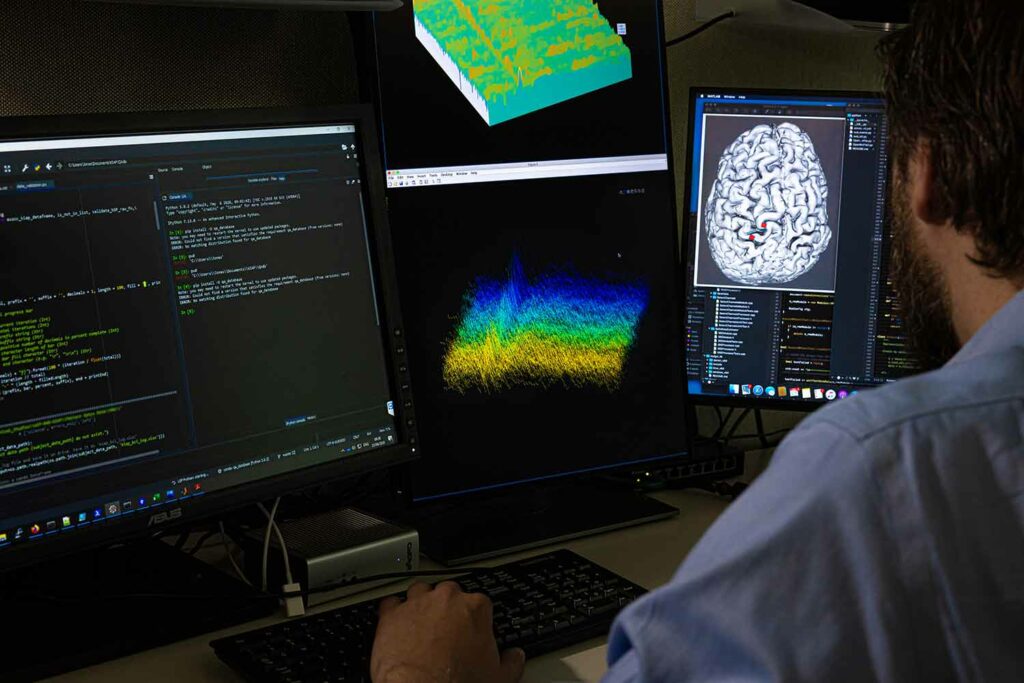
A man sits in front of three keyboard screens showing text, an image of waves, and an image of a brain.

Brain Implant Helps Man Communicate

A man who lost the power to speak can now use a computer to communicate.

A man sits in front of three keyboard screens showing text, an image of waves, and an image of a brain.

© Wyss Center

Researchers say a man who is paralyzed and cannot speak was able to communicate after receiving a brain implant.

The man has ALS, a disease that gradually causes a person to be unable to move. The man lost his ability to speak a few years ago and began communicating with his eyes. But his family knew that, eventually, he would be unable to move his eyes. So researchers decided to try something called auditory neurofeedback. 

Doctors placed an implant in the man’s brain, and then researchers started to work with him. The implant allowed them to show the man his brain activity on a screen. Any time someone moves their body—or even tries to—there’s brain activity. The researchers instructed the man to try to move his eyes and watched how this changed his brain activity. 

His brain activity would produce a sound wave, which people hear as a tone, or musical note. The greater the brain activity, the higher the tone. The man learned to attempt eye movement in a way that would produce a certain tone. When he wanted to say “yes,” he produced a higher tone. When he wanted to say “no,” he did nothing. This produced a lower tone.

Once the man learned to communicate yes and no, he could spell out sentences. He would say “no” to letters until he got to the right one. One by one, he would spell out the words.

Now the man can communicate with his family, all because of a device that’s in his brain.

Did You Know?

© Anita Chavan—Creatas Video+/Getty Images Plus

Neurons are brain cells that transmit information within the brain and between the brain and other parts of the body. Neurons have long extensions, which work sort of like wires. They send electrical currents down these extensions. When the current gets to the end of an extension, it releases a signal to other neurons.

The 10 Percent Myth

© Sean Nel/Dreamstime.com, © Luminis/Dreamstime.com; Animation Encyclopædia Britannica, Inc.

You may have heard that humans use only 10 percent of their brains. Some people have even speculated that we’d all be geniuses if humans could only unlock the other 90 percent. But is the “10 percent” notion true?

The truth is, we all use 100 percent of our brains, all the time. How do we know? For one thing, if we needed only 10 percent of our brains, most brain injuries would have no consequences because the damage would most likely be to that portion of the brain we don’t use. 

Also, living things evolve due to a process called natural selection. That is, species adapt over time so they have a better chance of survival in their environment.  Brain tissue requires lots of the body’s energy. It wouldn’t make sense if such an energy-hungry organ was mostly useless!

Instant Messaging

Our brains are constantly sending signals to other parts of our bodies to trigger them to do things we don’t even think about, like breathing!

© idimair/stock.adobe.com; Animation Encyclopædia Britannica, Inc.

WORD OF THE DAY

articulate

PART OF SPEECH:

verb

Definition:

: to express (something, such as an idea) in words

Definitions provided by
Merriam-Webster Logo

Play

How many words can you make from these letters? All your words must be at least four letters and use the letter in the center.

O
O
O
O
O

In Case You Missed It

May is Asian American and Pacific Islander Heritage Month. Two teens are working to make sure Asian American voices are heard.

05.06.22
Scientists think the first “cartoons” may have been created 15,000 years ago.

05.03.22

Scientists say fish can actually do math!

04.29.22

Voices Matter

Side by side photos of Jeenah Gwak and Hope Yu

Voices Matter

May is Asian American and Pacific Islander Heritage Month. Two teens are working to make sure Asian American voices are heard.

Side by side photos of Jeenah Gwak and Hope Yu

Jeenah Gwak (left) and Hope Yu (right) started a magazine together.

Courtesy of Jeenah Gwak and Hope Yu; Photo composite Encyclopædia Britannica, Inc.

In 2020, Jeenah Gwak and her mom were walking in New York City when a man began talking to them about an upcoming show. They didn’t want to hear the sales pitch, so they kept moving. That’s when the man called out, “[So you] don’t speak English, huh?”

Gwak, who is Korean American, knew she wasn’t the only Asian American who experienced racism. After she returned to her home in Bellevue, Washington, she texted her friend Hope Yu with an idea. Together, the friends launched an online magazine called What We Experience. The magazine aims to give Asian Americans a platform where they can share their stories.

“When I thought of the title, What We Experience, I wanted to highlight what we experience; the ‘we’ is emphasized,” Gwak told the Seattle Times. “The platform is a space for people to find solace with their own experiences in learning that they are not alone.”

Gwak and Yu, who are both in high school, assembled a group of volunteers around their age. The staff members create most of the content for the magazine. In essays, opinion pieces, poetry, and art, they discuss and explore racism, immigration, bias, culture, and more. They share their unique experiences but also find themes that bond them with other Asian Americans. 

The magazine, which is free, is published quarterly (four times a year). Gwak and Yu plan to continue What We Experience when they go to college next year.

Did You Know?

World map with countries and territories of Asia and the Pacific islands shaded in

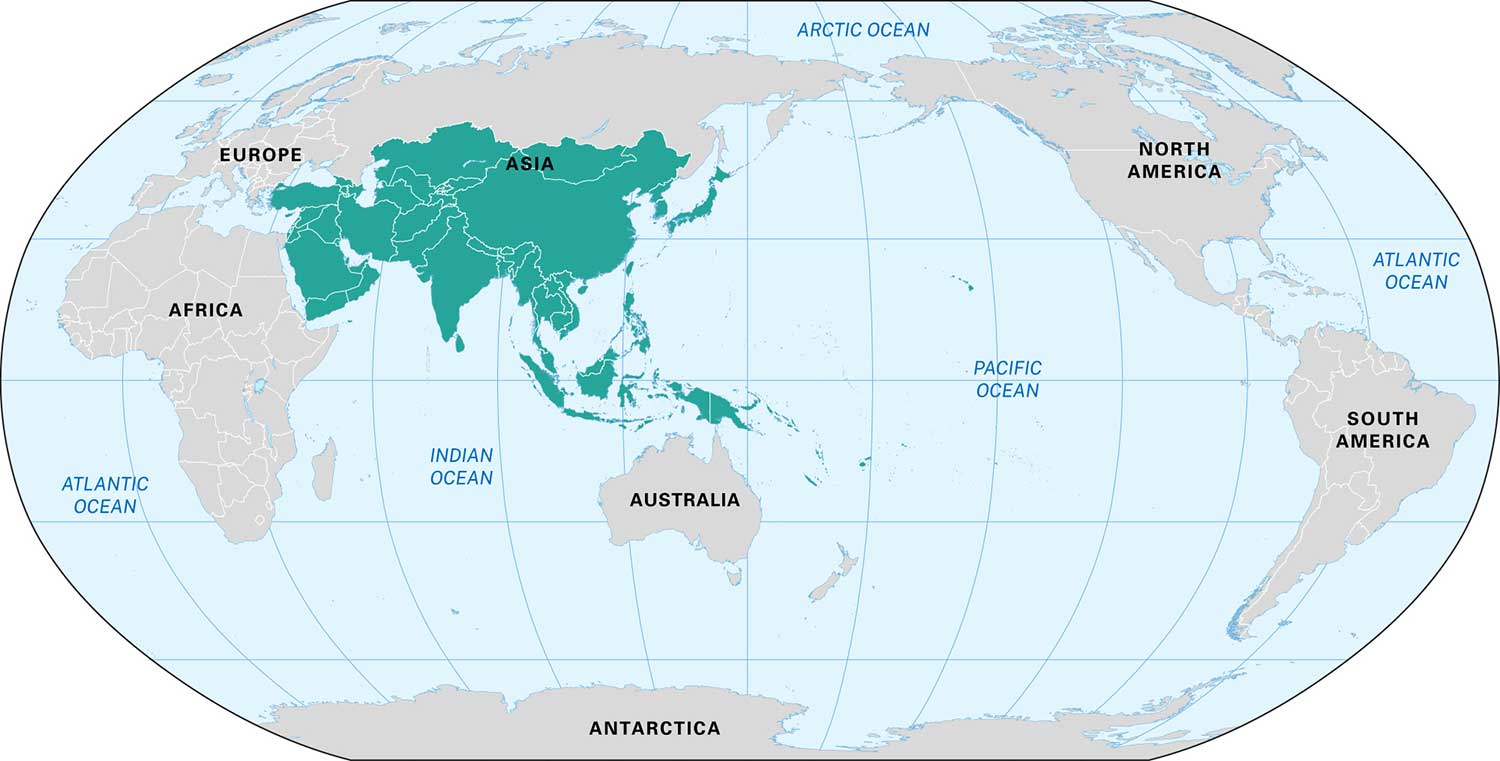
This map shows where the ancestors of Asian Americans and Pacific Islanders came from.

Encyclopædia Britannica, Inc.

Asian Americans and Pacific Islanders (AAPI) in the U.S. can trace their roots back to approximately 50 ethnic groups speaking over 100 languages. Their ancestors came from many places, including China, India, Japan, the Philippines, Vietnam, Korea, and Hawaii.

Amazing Athletes

Polamalu – Jonathan Ferrey/Getty Images; Ohno – Streeter Lecka/Getty Images; Paek – Pittsburgh Penguins Archives; Kim – © Zhukovsky/Dreamstime.com

These Asian American and Pacific Islander athletes were among the best to play their sports.

  • American football player Troy Polamalu spent 12 seasons with the Pittsburgh Steelers, taking the team to the playoffs seven times. Polamalu is known for making frequent visits to children’s hospitals and was named 2010 Walter Payton Man of the Year for his community service efforts.
  • Legendary speed skater Apolo Ohno won eight medals at three Olympic Games. Two of the medals were gold.
  • Hockey player Jim Paek grew up in Canada, not the U.S. He’s on the list because of his contributions to the National Hockey League (NHL), having won two Stanley Cups with the Pittsburgh Penguins. The first Korean-born player in the NHL, Paek is now the director of the Korea Ice Hockey Association.
  • Snowboarder Chloe Kim won her first Olympic gold medal at age 17. Now 22, with two Olympic golds and a World Championship title, there’s no telling what she’ll do next!

Check It Out!

Is there someone else you’d like to read about? Check out a collection of articles about Asian Americans!

GIF of faces of people of Asian descent appearing then disappearing

© LeoPatrizi—E+/Getty Images, © Ashwin Kharidehal Abhirama, Xin Hua, Belnieman, Goncaloferreira, Wong Sze Yuen, Godsandkings, Imtmphoto, Mr. Namart Pieamsuwan/Dreamstime.com; Animation Encyclopædia Britannica, Inc.

WORD OF THE DAY

inclusion

PART OF SPEECH:
noun
Definition:

: the act of including or the state of being included

Definitions provided by
Merriam-Webster Logo

Play

See if you can find all the words.

O
O
O
O
O

In Case You Missed It

Scientists think the first “cartoons” may have been created 15,000 years ago.

05.03.22

Scientists say fish can actually do math!

04.29.22

An easy-to-build box can help in the fight against COVID-19.

04.26.22
Was Cave Art the First Animation?

Rock wall with handprints surrounded by coloring of red and black

Was Cave Art the First Animation?

Scientists think the first “cartoons” may have been created 15,000 years ago.

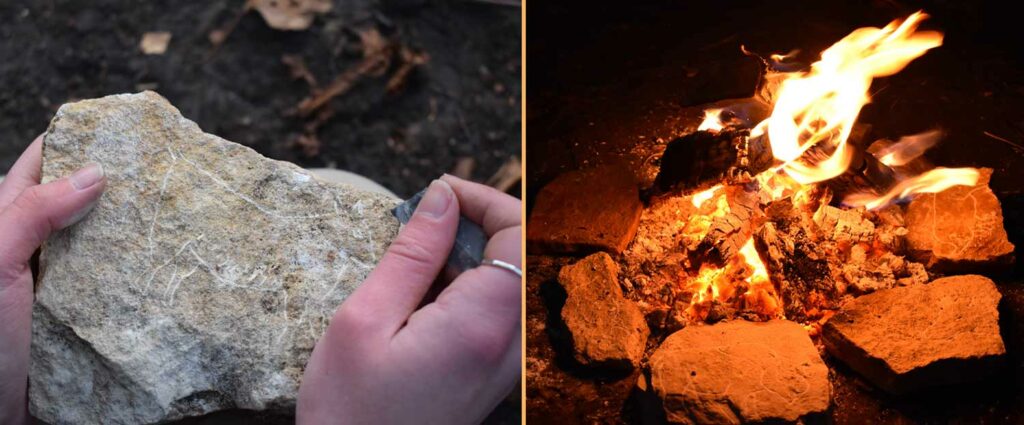
Side by side images showing a hand etching an image of an animal in a stone and stones placed near a fire.

Courtesy of Izzy Wisher, © Needham et al. 2022 PLOS One (CC-BY 4.0); Photo composite Encyclopædia Britannica, Inc.

Were GIFs invented thousands of years ago? Scientists believe that prehistoric people may have used tablets—stone tablets, not wireless tablets—to make their own form of animation. 

Researchers at the University of York and Durham University in the United Kingdom studied pictures of animals that had been carved into stone about 15,000 years ago in what is now France. They noticed heat damage on the stone tablets and concluded that the tablets had been placed very close to fire. They wanted to know why.

The researchers recreated the ancient stone tablets by carving their own illustrations into stone. They were careful to make the tablets look as the ancient ones would have looked when new—with clear lines outlining the animals. Then they placed the recreated tablets around a fire in positions that would cause the same heat damage markings they’d seen on the ancient tablets. This placement caused the illustrations of animals to appear to move and flicker, sort of like a primitive animated movie. 

“When you get this dynamic light across the surface, suddenly all these animals start to move; they start to flicker in and out of focus,” archaeologist Andy Needham of the University of York in the United Kingdom told Live Science.

Who knew animation was so ancient?

Fun Fact

Rock wall with handprints surrounded by coloring of red and black

© H_ctor Aviles—EyeEm/Getty Images

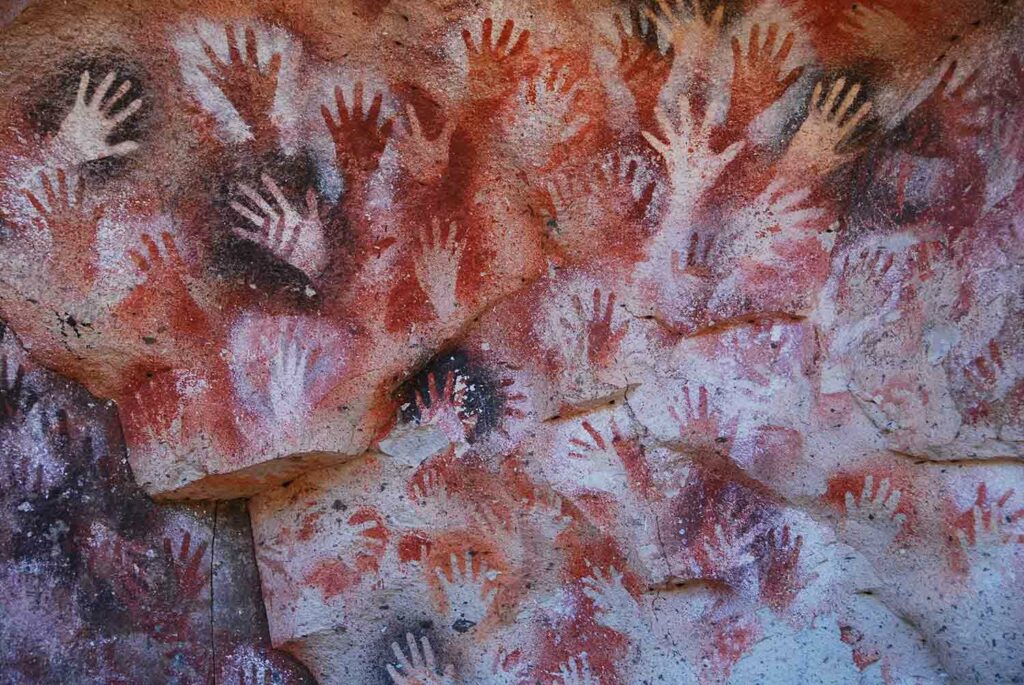
Scientists have discovered prehistoric handprints on cave walls. To make a handprint, ancient artists put one hand on the cave wall and then blew color, made from clay and other materials, all around it.

How Does Pixar Do It?

Close up of Buzz Lightyear in the driver’s seat of a vehicle

© Walt Disney Pictures

Some animated shows and movies capture an approximation of how people and animals actually move. Pixar movies are different. From Buzz Lightyear to Mei Lee, Pixar’s characters look almost real—or at least three-dimensional—despite being based on sketches. How does Pixar do it? 

Each movie starts with a storyboard—a visual layout of sketches that, laid out one after the other, tell the story of the film. These sketches help the artists figure out how to bring the story to life.

Next, the artists create concept art. This is when decisions will be made about the “look” of the film, including some of the colors used. 

Then it’s time for the characters to take shape—literally. In a process called computer modeling, the characters and sets are given shading to help them appear multidimensional in the finished product.

On the computer, the scene is laid out in front of a virtual camera. Like live actors, the characters are positioned based on camera angles. 

Movement begins with animation and simulation. Through the magic of computers, the characters move a lot like real people. Even hair and clothing move in reaction to the characters’ movements.  

Believe it or not, lighting is an important part of the process. Pixar uses virtual lighting to give each frame the right look. 

It’s no wonder that one Pixar movie can take years to make.

Cartoons Through Time

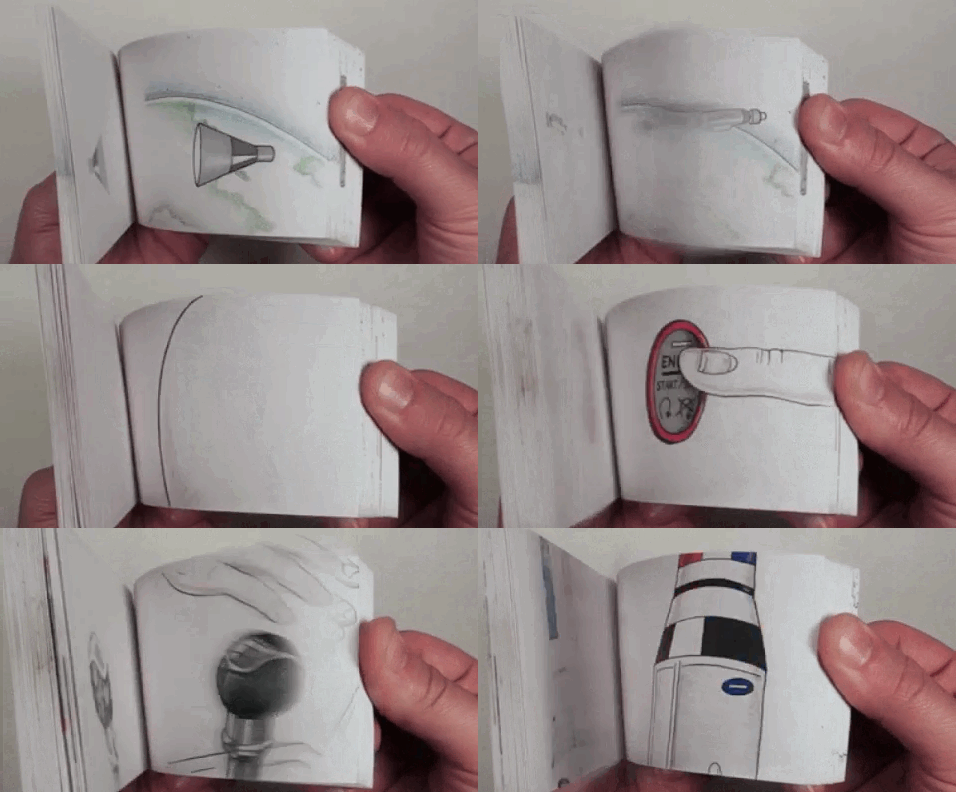
How were drawings brought to life before computers?

Flippy francesco (CC BY-SA 4.0)

WORD OF THE DAY

anthropology

PART OF SPEECH:

noun

Definition:

: the study of human races, origins, societies, and cultures

Definitions provided by
Merriam-Webster Logo

Play

O
O

In Case You Missed It

Scientists say fish can actually do math!

04.29.22

An easy-to-build box can help in the fight against COVID-19.

04.26.22
Just in time for Earth Day, world leaders are taking on the plastic problem.

04.22.22
One Fish, Two Fish

Four tropical fish wearing graduation caps in front of blackboard

One Fish, Two Fish

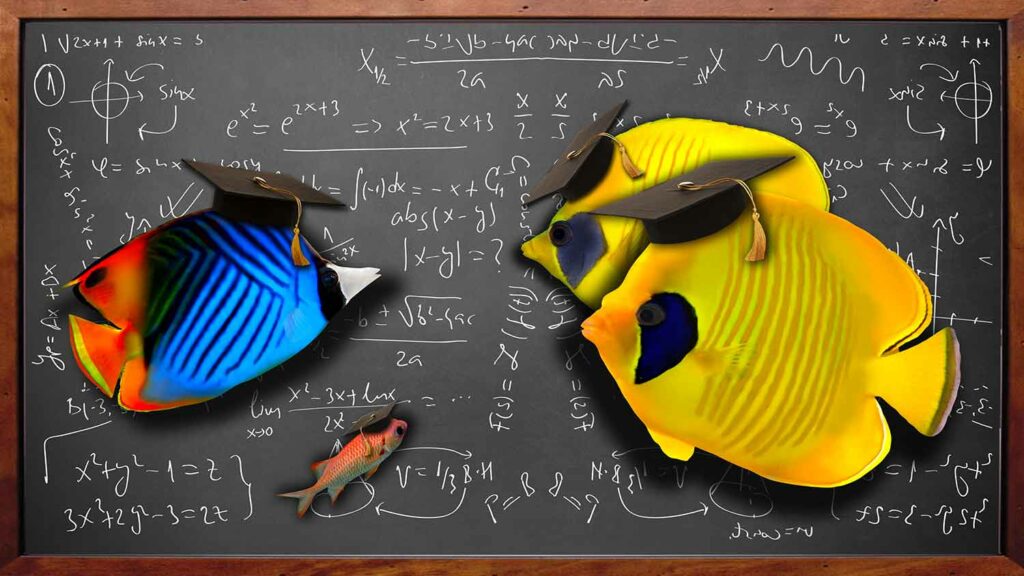
Scientists say fish can actually do math!

Four tropical fish wearing graduation caps in front of blackboard

© Africa Studio/Shutterstock.com; Fabio Balbi/Alamy; © vlad61_61/stock.adobe.com; Photo illustration by Encyclopædia Britannica

A group of scientists say they were able to train fish to do math.

No, this does not mean your pet goldfish can help you with your fractions. But in a recent study, stingrays and cichlids (a species of freshwater fish) demonstrated basic numerical skills.

“We trained the animals to perform simple additions and subtractions,” said Vera Schluessel of the Institute of Zoology at the University of Bonn in Germany.

Here’s how the study worked: Each fish was shown an image with between one and five shapes. The shapes were always either yellow or blue. Blue meant “add one to the number of shapes in the image,” while yellow meant “subtract one from the number of shapes in the image.” So, an image with three blue shapes meant “three plus one.” And an image with four yellow shapes meant “four minus one.” The fish would then be shown two new images and have to swim to the correct one. For example, a fish shown three blue shapes, or “three plus one,” had to swim to the card with four shapes.

Scientists trained the fish to do some simple problems by giving them treats when they got correct answers. Then it was time to test whether the fish really understood the concepts of addition and subtraction. The scientists did this by presenting the fish with problems they hadn’t seen before. The fish got most of the new problems right.

Some scientists not involved in the study think the results are a little…fishy. Or, at least, they question whether the fish were actually doing math. But the study authors say their findings provide clear evidence that these animals can add and subtract.

Looks like fish smarts are off the scales!

Fun Fact

A spider with several pieces of prey on its web

© KarinD/stock.adobe.com

Scientists have learned that many animals seem to understand numerical values. For example, orb-weaving spiders keep track of how many prey items they’ve wrapped up and saved. If some are removed from the spiders’ webs, they go looking for them!

The Smartest of Them All

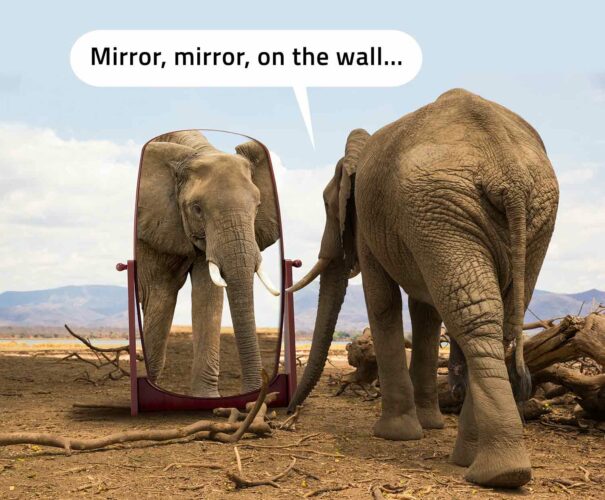
An elephant on a plain looks at itself in a mirror and says, “Mirror, mirror on the wall…”

© glamstock—Imazins/Getty Images, © jez_bennett—iStock/Getty Images Plus, © Enn Li Photography—Moment/Getty Images; Photo illustration Encyclopædia Britannica, Inc.

Which animals are the smartest? Well, humans are, at least by the standards of intelligence set by humans. Chimpanzees, our closest relatives, are also very bright. But don’t count out other animals!

Here are a few of the cleverest creatures.

Elephants are highly social and often work together to solve problems within their herds. Elephants can recognize themselves in mirrors—unlike cats and dogs, which seem to think their reflections are other animals.

Octopuses are a brainy bunch. In one experiment, an octopus figured out how to unscrew a container lid to retrieve the tasty morsel inside. In another, an octopus learned to recognize human individuals, responding positively to a friendly person while ignoring a person who was less friendly.

Goats can solve problems, especially when food is their reward. In one test, goats had to use their teeth to pull a rope down, activating a lever that they then had to lift with their mouths. Nine out of 12 goats were able to figure out the device after four tries, and most of them still remembered how to work the device 10 months later.

More Than Just Math Whizzes

How likely are you to encounter a stingray? It depends on where you live.

© Gabriel Visintin—EyeEm/Getty Images

WORD OF THE DAY

aptitude

PART OF SPEECH:

noun

Definition:

: a natural ability to do something or to learn something

Definitions provided by
Merriam-Webster Logo

Play

See if you can spot all the super smart animals. (Humans not included!)

O
O
O
O
O

In Case You Missed It

An easy-to-build box can help in the fight against COVID-19.

04.26.22

Just in time for Earth Day, world leaders are taking on the plastic problem.

04.22.22

Companies claim their devices make people and objects invisible.

04.19.22

Making Spaces Safer

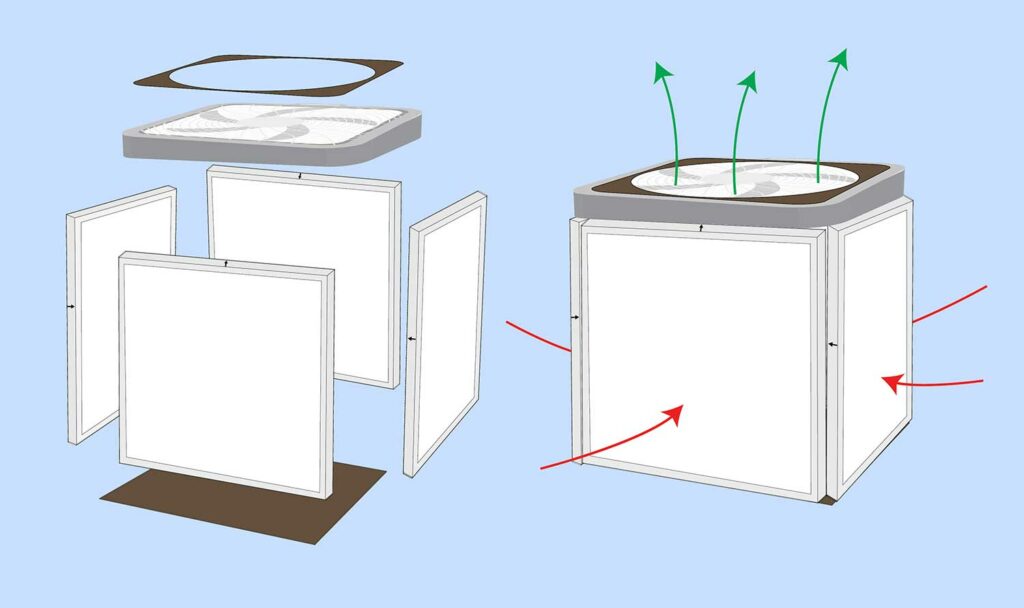
Diagram of four filters and a box fan fitting together alongside an illustration of a completed Corsi-Rosenthal box

Making Spaces Safer

An easy-to-build box can help in the fight against COVID-19.

Diagram of four filters and a box fan fitting together alongside an illustration of a completed Corsi-Rosenthal box

al.hu (CC BY 2.0)

A simple device that just about anyone can put together is proving to be a valuable tool in the fight against COVID-19. The Corsi-Rosenthal box is a build-it-yourself air filter that has been shown to reduce the number of virus particles in indoor settings. 

Scientists say air filtration is an important part of protecting people from COVID-19. That’s because the virus that causes COVID-19 can remain in the air for hours, even after an infected person leaves the area. Invented by engineer Dr. Richard Corsi and Jim Rosenthal, the head of an air filter company, the Corsi-Rosenthal box is a fairly inexpensive alternative to store-bought air-cleaning devices. Scientists at 3M, a company that makes air filters, tested the Corsi-Rosenthal box and found it was effective at capturing virus particles.

The ingredients for a Corsi-Rosenthal box are available at most hardware stores. They include a box fan, four or five high-quality furnace filters, some cardboard, and duct tape. Building instructions can be found on many websites. Assembling the device is as simple as putting flat objects together to form a cube.

Because they’re so easy to make, the boxes have become increasingly popular. Many people have built them for their homes and workplaces. Volunteers have also built boxes for schools and homeless shelters.

Experts caution that air cleaners alone are not enough to make indoor spaces safe. But, along with ventilation, vaccination, and mask-wearing, these portable devices can make a big difference.

In the fight against COVID-19, every weapon counts.

How to Build a Corsi-Rosenthal Box

 You will need:

  • Four MERV13 furnace filters
  • One box fan
  • Duct tape
  • A large piece of thick cardboard


  1. Duct tape four MERV 13 furnace filters so you form the sides of a cube. Make sure the filters are facing the right way. The air flow should go into the cube.
  1. Cut a piece of thick cardboard that is the same size as the filters. Duct tape this cardboard so it covers one of the open sides of the cube. This is the side of the box that will sit on the ground.
  1. There should be one remaining open side of the cube, at the top. This is where your box fan will go.
  1. Duct tape the box fan to this open side of the cube. Make sure the fan is facing the right way. The air from the fan should blow out of (not into) the cube.

Did You Know?

Sign from 1918 that reads Keep your bedroom windows open! Prevent influenza-pneumonia-tu

National Archives, College Park, MD (ARC Identifier: 45499333)

Scientists have learned a lot about viruses since 1918, when an influenza pandemic swept across the globe. But even 104 years ago, scientists understood that clean indoor air was important.

Stepping Up

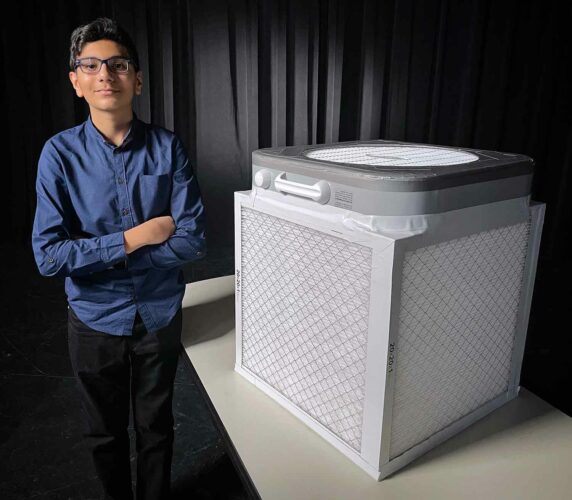
Teenage boy standing next to a Corsi-Rosenthal box

Courtesy of Kavita Taneja

A Canadian teenager named Shiven Taneja has built more than 60 Corsi-Rosenthal boxes for neighbors and local senior citizens. He built the first one for his grandparents and then decided he wanted to help others in need. 

Taneja decided to step up because he realized that it might be difficult for some people to do the physical work of building the boxes. Although the boxes are simple, putting them together requires a lot of bending and stretching.

It takes Taneja less than two hours to build one box. He charges about 119 U.S. dollars for each one. That’s just the cost of the materials, and it’s a lot less than the cost of a store-bought air filter.“ Not everyone can afford a [store-bought] filter,” Taneja told the Toronto Star. “[I realized] I can step up; I can do this.”

The Young Inventor

Sometimes solving problems means thinking outside the box. When he was a teenager, William Kamkwamba built a windmill so that his village would have electricity.

Taylor Jewell/Invision—AP/Shutterstock.com

WORD OF THE DAY

ingenuity

PART OF SPEECH:
noun
Definition:

: skill or cleverness that allows someone to solve problems, invent things, etc.

Definitions provided by
Merriam-Webster Logo

Play

Try to find all the words.

O
O
O
O
O

Putting Plastic on Blast

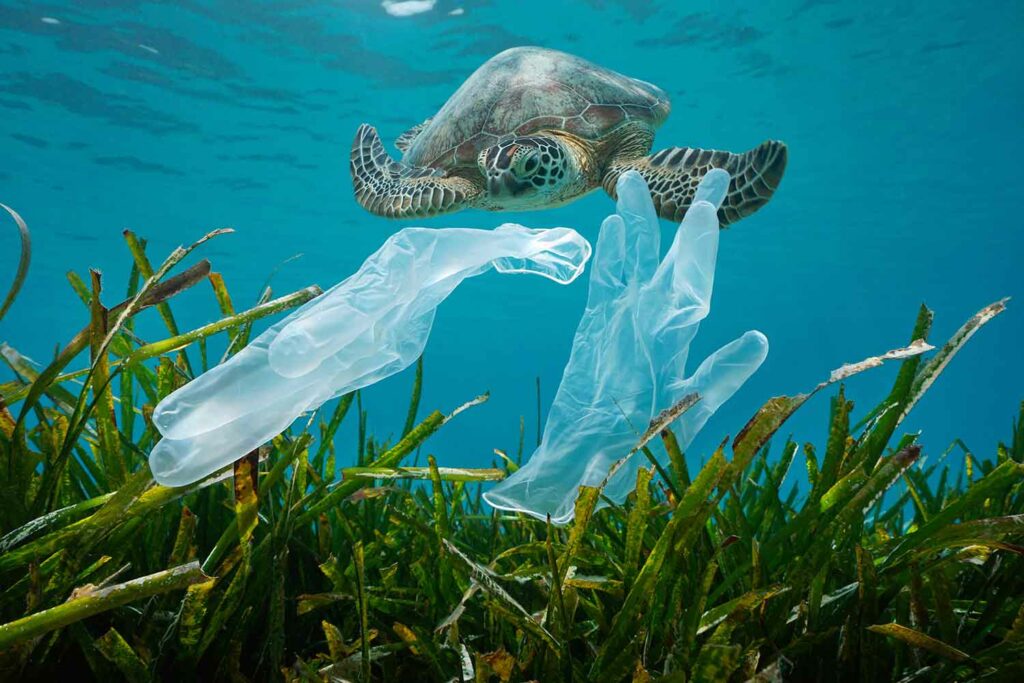
A sea turtle swims near a pair of plastic gloves

Putting Plastic on Blast

Just in time for Earth Day, world leaders are taking on the plastic problem.

A sea turtle swims near a pair of plastic gloves

© Damocean—iStock/Getty Images Plus

Could this be a solution to plastic pollution? 

On March 2, 2022, the United Nations (UN) announced that 175 nations had agreed to draw up a treaty that will legally require them to reduce plastic waste. Government leaders made the agreement at the fifth biennial (every other year) session of the UN Environment Assembly in Nairobi, Kenya. The meeting brought together leaders of governments, businesses, and more to discuss critical environmental issues.

Plastic is certainly a critical issue. Each year, about 11 million metric tons of plastic end up in the oceans and other bodies of water. A lot of this waste is single-use plastic, which is plastic that’s used once before it gets discarded. Single-use plastic items include plastic bags, straws, beverage bottles, and most food packaging. Plastic doesn’t decompose. Once in the water, it often breaks down into tiny pieces called microplastics. Sea life can get caught in large plastic items or swallow small pieces.

The agreement that was made at the UN conference is a step toward tackling the plastic problem. Leaders said they would limit the production of new plastic and increase plastic recycling and the design of more sustainable packaging. Currently, less than 10 percent of the world’s plastic gets recycled.

“Plastic pollution has grown into an epidemic,” said Espen Barth Eide, president of the UN Environment Assembly’s fifth session and Norway’s minister of climate and the environment. “With today’s resolution, we are officially on track for a cure.”

Did You Know?

Illustration of plastic bottles stretching from Earth to the moon and back, with a measurement of the distance

© Fish405/Dreamstime.com; © Oixxo/Dreamstime.com

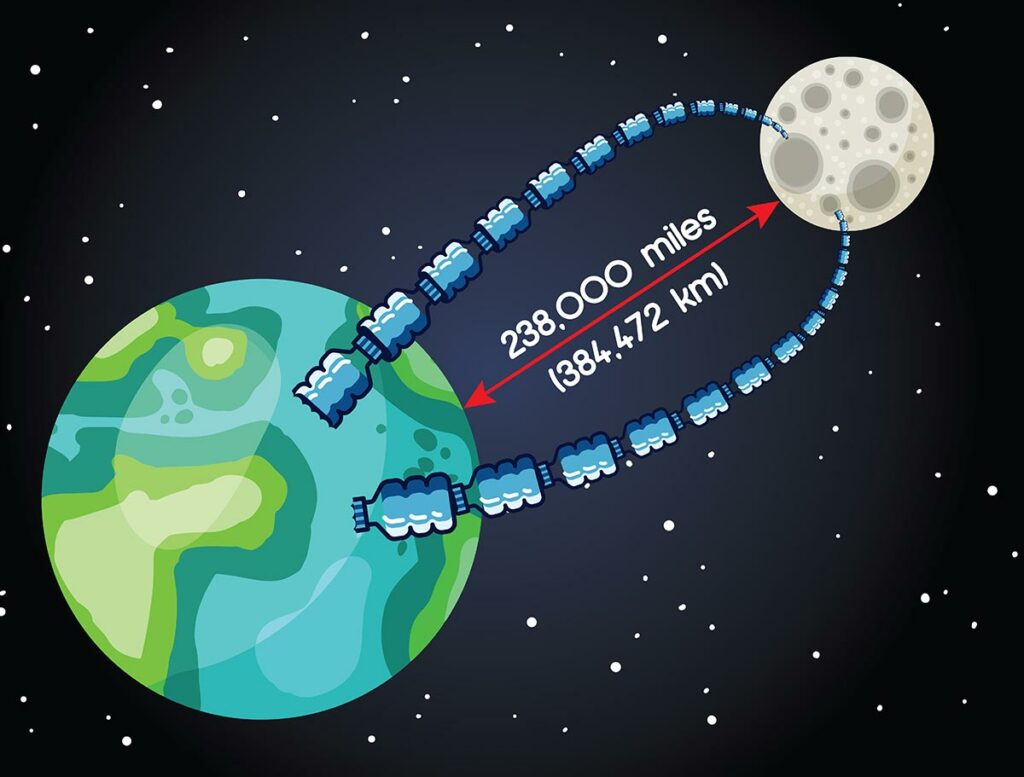
According to some estimates, humans throw away enough plastic every year to stretch from Earth to the moon and back!

What Can You Do?

There’s a lot you can do to tackle the plastics problem. Here are some ideas:


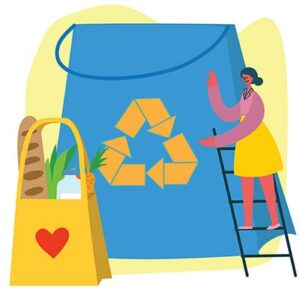
  • Reduce your use of single-use plastic. You can do this by carrying a reusable water bottle, using cloth bags for your groceries, and not using plastic utensils and straws.
Illustration of a woman with a recycling bag and recycling bin
Illustration of a woman on a ladder with a recycling bag and a shopping bag
  • When you do use plastic, see if it can be recycled. Most cities and towns post information online about which plastics they’ll recycle, and many grocery stores will accept plastic bags for recycling.
  • Organize a clean-up effort with family and friends at beaches or in parks. Bring along gloves, buckets, and plenty of sunscreen. It’s a good way to spend a day together, and it helps keep plastic away from wildlife.
Illustration of a man and woman putting recycling bags into recycling bins.

All illustrations: © Virinaflora/Dreamstime.com

Heroes for Planet Earth

A lot of people are working hard to protect our planet. Xiye Bastida is one of them.

A young woman speaks while holding a microphone

© Theo Wargo/Getty Images Entertainment

WORD OF THE DAY

sustainable

PART OF SPEECH:

adjective

Definition:

: able to be used without being completely used up or destroyed

Definitions provided by
Merriam-Webster Logo

Play

How many words can you make from these letters? All your words must use the letter in the center, and all must be four letters or more.

O
O
O
O
O

Invisibility Shield

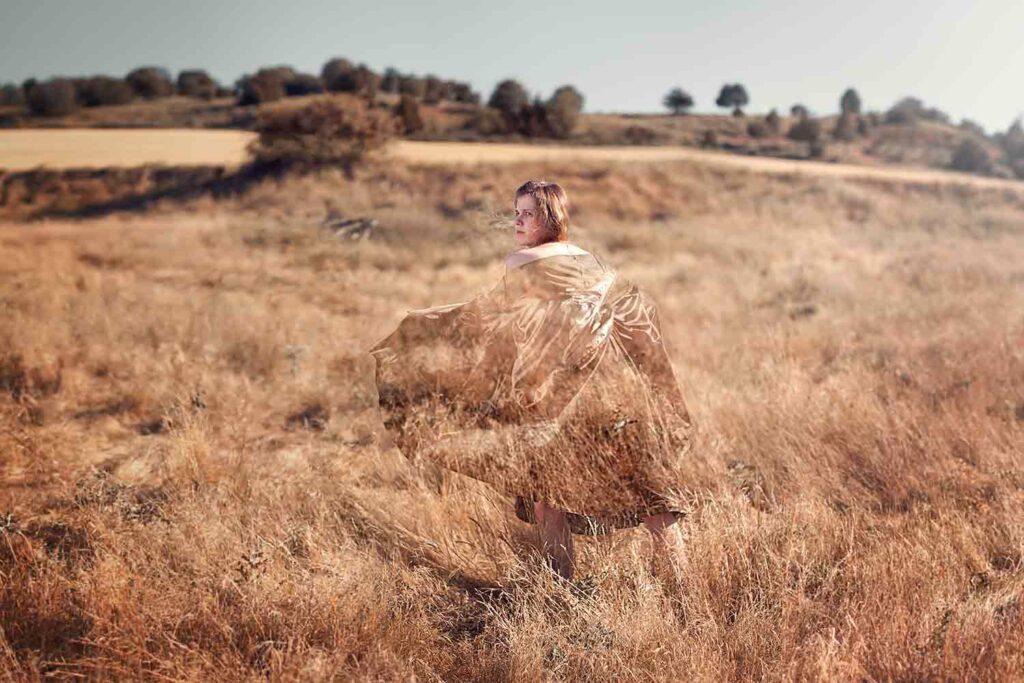
A person stands in a field dressed in material that makes her look partially invisible.

Are Invisibility Shields for Real?

Companies claim their devices make people and objects invisible. 

A person stands in a field dressed in material that makes her look partially invisible.

© Ruben Chase/stock.adobe.com

If you could have a superpower, what would it be? The ability to fly? How about the power to become invisible? While flying is still beyond our grasp, invisibility is becoming a reality—sort of. British company Invisibility Shield Co. is the latest to announce that it has created an invisibility shield.

It may sound like something out of The Hobbit or the Harry Potter books, but invisibility technology has been a real thing for a long time. A Canadian company called HyperStealth made waves in 2012 when it introduced a material called Quantum Stealth. HyperStealth designed the material for military equipment like parachutes, airplanes, and even uniforms. The company said it would make objects and people invisible. 

Similarly, Invisibility Shield Co.’s product, a lightweight rectangular panel, is meant to conceal the presence of anything that’s behind it. Unlike HyperStealth, Invisibility Shield Co. is selling its product to the public—so anyone can seemingly have a superpower. 

It turns out, though, that there’s nothing supernatural about achieving invisibility. It’s a matter of simple science. Invisibility materials change the path of light rays to make it look like the subject (the person or thing behind the materials) isn’t there. It’s not a perfect illusion. Through the shield, the background looks a bit blurry, so it doesn’t totally match its surroundings.

Even though users may not have superpower-level invisibility, they can still have fun. Invisibility Shield Co. boasts that its device is perfectly portable. The larger of the two sizes weighs less than 9 pounds (4.1 kilograms), and neither of the shields needs electricity.

The power of invisibility doesn’t come cheap. Invisibility Shield Co. is selling the larger of its two shields for about $390.

No one ever said being a superhero was easy.

Did You Know?

Quill and inkwell with disappearing ink on old yellowed paper

© Dmitr1ch—iStock/Getty Images Plus

During the American Revolution, spies for both the British and American armies used invisible ink made from ferrous sulfate and water. These stealthy spies would use the ink to add invisible messages to regular letters. Held over a candle, the hidden writing on the letter would appear.

Real-Life Spies

Black and white photo of Don Adams from Get Smart holding a shoe phone

© Warner Brothers—Moviepix/Getty Images

Though they can’t make themselves invisible, spies have always relied on a lot of different tools and tricks. Here’s a list of real-life gadgets that spies have used:

  • An exploding briefcase
  • An umbrella tipped with poison
  • Radio transmitters inside fake dog poop
  • A pigeon with a microphone strapped to its chest
  • A camera hidden inside a button
  • A pen with disappearing ink

Spies of Old

The ancient Egyptians and Chinese used spies more than 2,000 years ago.

© Kanwal Sandhu—Moment/Getty Images

WORD OF THE DAY

stealth

PART OF SPEECH:
noun
Definition:

: a secret, quiet, and clever way of moving or behaving

Definitions provided by
Merriam-Webster Logo

Play

How many words can you make from these letters? All your words must use the letter in the center, and all must be four letters or more.

O
O
O
O
O