The Youngest Ever!

A teenage boy smiles and stands in a field as he leans against a small plane with MackSolo.com on the wing.

The Youngest Ever!

Mack Rutherford just flew around the world, and he’s only 17!

A teenage boy smiles and stands in a field as he leans against a small plane with MackSolo.com on the wing.
© Mike Koss, courtesy of MackSolo.com

Mack Rutherford poses with his airplane in Seattle, Washington.

A pilot named Mack Rutherford just became the youngest person ever to fly solo (alone) around the world. Rutherford is 17 years old.

Rutherford’s small plane took off from Bulgaria, a country in Europe, on March 23, 2022. As Rutherford circled the globe, he flew over 52 countries and stopped in 30 countries to rest and refuel his plane. On August 24, 2022, he finished his journey in Bulgaria, where it had begun five months earlier.

A teenage boy in a flight suit smiles as he holds up two framed world record certifications.
© Beatrice DeSmet, courtesy of MackSolo.com

Mack Rutherford has broken two world records!

Rutherford has now broken two world records. Previously, the youngest person ever to fly around the world was 18 years old. Rutherford also became the youngest person ever to use an ultralight plane to travel all the way around the world. The person who held that record before was Mack’s own sister, Zara Rutherford! Zara was 19 years old when she finished an around-the-world flight in January 2022. 

Zara told reporters that she talked to Mack on the phone almost every day of his journey. 

“Our parents called him every day, and I joined in those conversations,” Zara said. “I gave him advice on the route, on the flight, so that I could be useful to him.”

© Beatrice DeSmet, courtesy of MackSolo.com

Mack Rutherford’s sister, Zara (right), finished an around-the-world flight in January 2022.

The trip was a dream come true for Mack Rutherford, who decided he wanted to be a pilot when he was 3 years old. In 2020, Rutherford became the youngest pilot in the world when he earned his license to fly at age 15. 

Rutherford has a message for kids like him. It’s posted on his school’s website.

“You don’t need to be an adult to do incredible things,” it says.

Fun Fact Icon

Fun Fact

North Wind Picture Archives/Alamy

Thomas Stevens poses with his penny farthing.

In 1886, Thomas Stevens finished a trip around the world on a type of early bicycle called a penny farthing! (He took ships when he had to cross bodies of water.)

Ways To Get Around

© Mastercard Popov/Dreamstime.com, © Vladyslav Starozhylov/Dreamstime.com, © ElementalImaging—E+/Getty Images, © nerthuz/stock.adobe.com, Adrian Pingstone, Encyclopædia Britannica, Inc.; Animation Encyclopædia Britannica, Inc.

Here are the fastest times people have traveled around the world using different machines. Which would you pick?

By airplane: 1 day, 7 hours, 27 minutes, and 49 seconds
By hot-air balloon: 11 days, 4 hours, and 20 minutes
By sailboat: 40 days, 23 hours, and 30 minutes
By bicycle: 78 days, 14 hours, and 40 minutes*
By tandem (two-person) bicycle: 263 days, 8 hours, and 7 minutes

*It’s not possible to travel around the world on land alone, so people who use land vehicles, like bicycles, have to travel by boat or plane in order to cross the sea.

Not Quite the First

Map reproduction courtesy of the Norman B. Leventhal Map & Education Center at the Boston Public Library

Portuguese explorer Ferdinand Magellan tried to become the first person to sail around the world in the 1500s, but he didn’t make it. 

Find out more at Britannica School!

Word of the Day Icon

Word of the Day

circumnavigate

Part of speech:

verb

Definition:

: to travel all the way around (something) in a ship, airplane, etc.

Definitions provided by
Merriam-Webster Logo
Game Icon

Play

How many words can you find?
O
O
O
O
O

In Case You Missed It

Experts say the number of tigers in the wild has risen.

09.02.22

A car called the Switchblade can drive or fly!
08.30.22
Bellen Woodard started her own crayon company—and wrote a book!

08.26.22

What if your school was on a boat or built out of bottles? Some kids are learning in some very unusual places!

08.23.22

A New Flying Car Takes Flight

A vehicle with a sloping windshield, wings, and a tail flies over a town.

A New Flying Car Takes Flight

A car called the Switchblade can drive or fly!

A vehicle with a sloping windshield, wings, and a tail flies over a town.

This art shows what the Samson Sky Switchblade would look like while flying.

Copyright 2022, Samson Sky

If you’re going to have a vehicle, why not get one that can drive and fly? That’s just what the Switchblade flying car does—and it could be available soon.

A company called Samson Sky has been working on the Switchblade for 14 years. The vehicle has already been tested on the road. In July 2022, the Switchblade got a boost from the Federal Aviation Administration (FAA), which is the government agency that makes rules for aircraft. The FAA approved the Switchblade for flight. Samson Sky is now doing flight tests and says the vehicle could be available to buy within weeks.

When it’s on the road, the Switchblade looks like a very unusual car. It has three wheels, a large windshield, and a sleek, sloping hood. There’s enough room inside for two people. When the driver decides to fly, the vehicle easily changes into a plane. With the push of a button, wings and a tail come out! 

To take flight, the Switchblade requires a runway, which means the driver needs to take it to airport. In the air, it can reach speeds of 160 miles per hour (257.5 kilometers per hour) and climb to 16,000 feet (4,876.8 meters). That’s much lower than a commercial plane, which flies at about 35,000 feet (10,668 meters). 

Several other flying cars are also being developed by other companies. These companies will also need government approval before they can sell their vehicles.

People who want to buy and operate Samson Sky’s Switchblade will need a few things first. For one, they’ll need about $170,000. That’s how much the vehicle is set to cost. They will also need a driver’s license and a license to fly private planes. 

Check out the video, which shows how the Switchblade spreads its wings.

Copyright 2022, Samson Sky
Face Thinking Icon

Did You Know?

A sample pilot’s license issued by the Federal Aviation Administration.

This is an example of a private pilot’s license.

Jonathan Thorne

Just as you need a license to drive a car, you need a license to fly a plane. There are different kinds of pilot’s licenses. To fly Samson’s Sky Switchblade, you need a private pilot’s license. To get a license, you must:

  • Be at least 17 years old
  • Go to “ground school,” where you learn about things like the weather and how planes fly
  • Go to “flight school” where you are taught how to fly a plane
  • Pass a flying test to show an expert that you can fly safely

The Swimming Car

The sQuba goes for a swim.

© Rinspeed

Is there anything more awesome than a flying car? How about a car that can swim? 

In 2008, a company called Rinspeed introduced the sQuba. The sQuba, which looked like a sports car, could drive on the road like any other automobile. But it also had paddles and propellers that allowed it to travel underwater, like a fish. The car even came with masks and oxygen tanks to allow its driver and passengers to breathe.

No one ever bought the sQuba. In fact, Rinspeed made only one. It turned out that the sQuba was very expensive to make, and not many people would want a swimming car. But it was a cool idea!

First To Fly

This video from 1909 shows Orville Wright getting into a plane and taking off.

Anyone who has ever flown—on a plane or in a car—can thank the Wright brothers. They were the first people to get an airplane into the sky.

Learn more at Britannica School!

Word of the Day Icon

Word of the Day

aviation

Part of speech:

noun

Definition:

: the business or practice of flying airplanes, helicopters, etc.

Definitions provided by
Merriam-Webster Logo
Game Icon

Play

How many words can you find?

O
O
O
O
O

In Case You Missed It

Bellen Woodard started her own crayon company—and wrote a book!

08.26.22

What if your school was on a boat or built out of bottles? Some kids are learning in some very unusual places!

08.23.22

Carson Pickett became the first athlete with a limb difference to play on the U.S. women’s national soccer team.

08.16.22

Someone spotted footprints outside a restaurant in China. It turns out, the footprints were made by dinosaurs!

08.09.22

Hope for Tigers

Hope for Tigers

Experts say the number of tigers in the wild has risen.
© slowmotiongli—iStock/Getty Images

Experts have good news about tigers! There are more of them than they thought. 

A group called the International Union for Conservation of Nature (IUCN) keeps track of plant and animal populations. The IUCN says there are between 3,726 and 5,578 tigers in the wild. That’s a lot more than the number of tigers the IUCN counted in 2015. That year, the IUCN estimated that the tiger population was 3,159.

It seems like there are many more tigers than there were in 2015. But experts say they’ve gotten better at counting animal species…so the old count was probably too low. 

Still, it’s good news for tigers, which are endangered (in danger of dying out). In the year 1900, there were about 100,000 tigers in the wild. They lived all across the continent of Asia. But it has become harder for tigers to survive. Much of the rain forests, grasslands, and swamps where tigers live has been taken over by humans—for building and for farming. Humans also hunt tigers. In many cases, it’s because tigers kill livestock (farm animals). Today, tigers are found in the wild only in India and a few other parts of Asia.

Governments and scientists are working hard to save tigers. They are expanding the amount of land that cannot be built on. They are also working to catch people who hunt tigers. Because of this, the tiger population is rising in some countries!

Experts hope that the next time they count the world’s tigers, their numbers will be even higher.

Fun Fact Icon

Fun Fact

© ANGHI/stock.adobe.com

Tigers are big cats. You can probably think of many ways a tiger is different from a house cat.

But in some ways, tigers and house cats are alike. For example, a house cat has the same number of teeth as a tiger!

Tigers Versus Lions!

© Eric Isselée/stock.adobe.com
Did you know that tigers and lions are both big cats? They’re alike in some ways. They’re both meat-eaters that you probably wouldn’t want to meet in the wild! But tigers and lions are different in many ways. Check it out!
Tigers
Lions

Size

Tigers may reach more than 10 feet (3.0 meters) long and weigh more than 600 pounds (272.2 kilograms).
Lions may be up to 9 feet (2.74 meters) long and weigh a little under 500 pounds (226.8 kilograms).

Home

Tigers live in parts of Asia, mostly in forests. They spend most of their lives alone.
Most lions live on grasslands and plains in Africa. They live in groups called prides.

Hunting Habits

Tigers hunt alone.
Female lions do most of the hunting, and they work together.

Do they swim?

Yes! Tigers have webbed feet, which makes them excellent swimmers. They may swim to cool off or to go after their prey.

Sometimes. Lions can swim, but they usually stay on land.
If a tiger and a lion were to fight each other, which one would win? It’s hard to say, but the tiger may have the advantage.
Why?
For one thing, tigers are a bit larger than lions. Also, tigers are used to fighting alone, while lions usually fight (or hunt) in groups. So, if one tiger and one lion fought each other, the win would probably go to Team Tiger.

All About Tigers

© Chris/stock.adobe.com

Want to know more about tigers?

Learn more at Britannica School!
Word of the Day Icon

Word of the Day

predator

Part of speech:

noun

Definition:
: an animal that lives by killing and eating other animals : an animal that preys on other animals
Definitions provided by
Merriam-Webster Logo
Game Icon

Play

See how much of the puzzle you can do.

O
O
O
O
O

In Case You Missed It

A car called the Switchblade can drive or fly!
08.30.22
Bellen Woodard started her own crayon company—and wrote a book!

08.26.22

What if your school was on a boat or built out of bottles? Some kids are learning in some very unusual places!

08.23.22

Carson Pickett became the first athlete with a limb difference to play on the U.S. women’s national soccer team.

08.16.22

Crayons for Everyone

Bellen Woodard sits at a table holding up her book, More than Peach.

Crayons for Everyone

Bellen Woodard started her own crayon company—and wrote a book!

© 2022 More than Peach. All rights reserved.

Bellen Woodard is an author, a public speaker, and the head of her own company. And she’s only 11. Woodard has already achieved so much, but she still has big dreams. She wants to help people be proud of who they are.

That’s why Woodard wrote a book called More than Peach. In the book, Woodard writes that when she was 8 years old, a boy in her class asked her to hand him the “skin-colored” crayon. The boy actually wanted the peach-colored crayon. It wasn’t the first time Woodard had heard someone called the peach crayon “skin-colored.” It made her wonder why this happened, when skin can be so many other colors.

“I found it pretty strange that…only one [color] was being called ‘skin-color’ crayon,” she writes in the book.

Soon after, Woodard started a project called More than Peach. She wanted to get more colorful crayons into classrooms—crayons that would let kids draw people with many different skin tones, or colors. Over time, Woodard turned her project into a company and started making crayons. The crayons are called More than Peach, just like the company. Woodard wants to show that it’s important to include everyone. 

Her efforts have attracted a lot of attention. Woodard has made speeches to organizations like the Girl Scouts and has met many leaders, including gymnast Simone Biles and former first lady Michelle Obama. She hopes to inspire other kids. She wants them to know that, if they see something that needs to be changed, they can do something about it.

Woodard’s message isn’t just that crayons need to be available in more colors. It’s also that everyone has value. Because peach isn’t the only skin color.

Fun Fact Icon

Fun Fact

Two boys color at desks while many large crayons appear behind them.
© hartcreations—E+, chas53—iStock/Getty Images; Animation Encyclopædia Britannica, Inc.

According to crayon company Crayola, the average kid wears down 720 crayons by age 10!

Young Authors

Have you ever written a story? Bellen Woodard got her story published as a book! Check out these other young authors.

When he was 7 years old, Lazarus Boutwell wrote The Magic of Dragons: A Book About Dragons. It’s all about the origin (start) of dragons.

Austin & Leigh

Nancy Yi Fan was 11 years old when she wrote Sword Bird. The novel is about what happens when two groups of birds decide they must go to war with each other.

HarperCollins

At age 9, Enioluwanimi Solaru wrote Lena Carls and the Power of Friendship, about a girl who tries to make friends after moving to a new town.

Carypress International Books
Illustration of three girls sitting on a bench in front of a school and smiling.

Telling Stories in Pictures

Jerry Pinkney looks into the camera with his hands folded.

© Jerry Pinkney Studio

Authors and artists tell stories in words and pictures. Jerry Pinkney brought many different characters to life by drawing illustrations for children’s books.

Learn more at Britannica School!

Word of the Day Icon

Word of the Day

diversity

Part of speech:

noun

Definition:

: the state of having people who are different races or who have different cultures in a group or organization

Definitions provided by
Merriam-Webster Logo
Game Icon

Play

See how much of the puzzle you can do.

O
O
O
O
O

In Case You Missed It

What if your school was on a boat or built out of bottles? Some kids are learning in some very unusual places!

08.23.22

Carson Pickett became the first athlete with a limb difference to play on the U.S. women’s national soccer team.

08.16.22

Someone spotted footprints outside a restaurant in China. It turns out, the footprints were made by dinosaurs!

08.09.22

Scientists say that migrating monarch butterflies are endangered, but we can act to help them.

08.02.22

Schools Like No Others

Students kick a ball on a playground next to a school building.

Schools Like No Others

What if your school was on a boat or built out of bottles? Some kids are learning in some very unusual places!

It’s back-to-school time! Did you know that there are millions of schools in the world?

Every school is special, but some are VERY different from all the rest. Check these out!

Oldest School

Shishi High School in Chengdu, China, opened in 141 BCE, making it the oldest school in the world. The school’s buildings have been rebuilt a few times, but Shishi has operated in the same location for more than 2,100 years!

Students kick a ball on a playground next to a school building.

HOUYIMIN (CC BY-SA 4.0)

Shishi High School is the oldest school in the world. It has been in the same location for more than 2,100 years!

Bottle School

A school in the Philippines is made out of used glass and plastic bottles! The bottles are filled with a sand and clay mixture. This mixture also holds the bottle walls together, making them nice and strong. Why build with bottles? Recycling used materials into something new is better for the planet than throwing those materials away. It means less waste!

Boat Schools

Flooding is common in Bangladesh, making it hard for kids to get to their schools. That’s why some kids go to school on boats! Every morning, the 23 floating schools move along rivers, picking up the students. Once the whole class is on board, the boats dock on riverbanks and school begins. 

Ziplining to School

In Colombia, one village is about a two-hour walk from the nearest school. That’s because going to school on foot means climbing down the side of a mountain and trekking across a canyon. Luckily, the kids from this village don’t walk to school. Instead, they take a zipline across the canyon! (The younger kids are always accompanied by a teen or an adult.) A person on a zipline can travel about as fast as a car.

© Mayur Kakade—Moment/Getty Images

A zipline can be a fast way to cross a valley.

Fun Fact Icon

Fun Fact

© Hey Darlin—DigitalVision Vectors/Getty Images; Animation Encyclopædia Britannica, Inc.

If you have a new pencil, it will last a long time before it gets too short to use. The average pencil can write 45,000 words. It can draw a line that is 35 miles (56.3 kilometers) long! That’s longer than the distance between Fort Worth and Dallas, Texas.

Way Back to School

Modern photo of the interior of a one-room schoolhouse with desks, a blackboard, and a wood burning stove.
© pabradyphoto—iStock/Getty Images Plus

In the 1800s, many American kids went to school in a one-room schoolhouse like this one.

What’s your school like? Back in the 1800s, many American kids, especially kids who didn’t live in cities, attended school in a one-room schoolhouse. One teacher taught all the kids in the school.

Schoolhouses

In some ways, classrooms in the 1800s were similar to today’s classrooms. Students sat at desks, and there was usually a larger desk for the teacher. But schoolrooms were different in many ways, too. There was no electricity and no central heating. In the middle or back of the room, there was a stove that burned wood to keep everyone warm. Someone had to chop the wood for the stove. That person was often the teacher!

In the 1800s, schools did not have indoor bathrooms. Instead, they had a privy or outhouse. This was a small building located somewhere near the schoolhouse. There was no plumbing, so you couldn’t flush anything!

The School Year

Today, most U.S. schools are open between August or September and May or June. But in the 1800s, the school year was different. For example, Wisconsin schools had two “terms.” The winter term lasted from November to April. The summer term lasted from May to August. Outside of cities, many families had farms. Boys from farming families often did not attend school for months at a time. They had to help their parents prepare fields for planting and then harvest, or pick, the crops.

Teachers

In the early 1800s, most teachers were men. By the 1860s, though, more women became teachers. Women teachers were not allowed to be married. If they got married, they had to quit their jobs. In many towns, the teacher lived with a local family.

 School Supplies

In the 1800s, paper was expensive, so many students used it only when they took tests. Most of the time, they wrote on slates, which were small chalkboards. Slates could be wiped clean and used again and again. Books were also expensive, so students often shared them instead of having their own.

School Days

Animation showing classrooms in different countries.
David Mutua—AU/UN IST Photo, © Samrat35, Olga Buiacova/Dreamstime.com, © GCIS/South African Government (CC BY-ND 2.0), © monkeybusinessimages—iStock, SolStock—E+, Chris Jackson—Chris Jackson Collection, skynesher—E+/Getty Images, © Agarianna76/Shutterstock.com; Animation Encyclopædia Britannica, Inc.

What are schools like in different countries?

Learn more at Britannica School!

Word of the Day Icon

Word of the Day

scholar

Part of speech:

noun

Definition:

: a person who has studied a subject for a long time and knows a lot about it : an intelligent and well-educated person who knows a particular subject very well

Definitions provided by
Merriam-Webster Logo
Game Icon

Play

Can you find all the school words?

O
O
O
O
O

In Case You Missed It

Carson Pickett became the first athlete with a limb difference to play on the U.S. women’s national soccer team.

08.16.22

Someone spotted footprints outside a restaurant in China. It turns out, the footprints were made by dinosaurs!

08.09.22

Scientists say that migrating monarch butterflies are endangered, but we can act to help them.

08.02.22

A powerful space telescope captured some amazing images of space!

07.26.22

Kick It Like Pickett!

Two women in different uniforms run toward a soccer ball on a field.

Kick It Like Pickett!

Carson Pickett became the first athlete with a limb difference to play on the U.S. women’s national soccer team.

Two women in different uniforms run toward a soccer ball on a field.

Carson Pickett (in the white uniform) recently played on the U.S. women’s national soccer team.

SPP Sport Press Photo/Alamy

Keep chasing your dreams. That’s what Carson Pickett’s dad has always told her. So Pickett never stopped doing what she loved—playing soccer. And in June 2022, she became the first person with a limb difference to play on the U.S. women’s national soccer team (USWNT). (When someone has a limb difference, it means that one of their arms or legs is not shaped in the usual way.) 

Pickett usually plays for a team called the North Carolina Courage, but she was chosen to fill in for Emily Fox for the USWNT game that took place on June 28, 2022. Pickett played for all 90 minutes of the game. She helped the U.S. team win a 2-0 victory against Colombia.

Pickett, who was born without a left hand or forearm, started playing soccer when she was 5. She loved the sport, and by the time she got to college, experts were calling her one of the best young players in the United States. Eventually, Pickett became a professional soccer player. She has played for many teams, but playing for the USWNT was an especially big moment in a big-deal career.

“I saw the crowd and everyone chanting ‘USA’ and I just knew that my biggest dream just came true,” she told Good Morning America. “I think it was so cool to see my parents in the stands and just all the little kids screaming your name and things like that. And honestly, it’s the best feeling I’ve ever had in my entire life.” 

But soccer isn’t the only thing that’s important to Pickett. In 2019, a photo of Pickett with a young fan went viral on social media. Like Pickett, the boy, Joseph Tidd, had been born without a left hand and forearm. Pickett wants to encourage people—especially kids—to be proud of what makes them different.

“Different people are my kind of people,” she told CBS News. “The world needs more of that.” 

Fun Fact Icon

Fun Fact

© selected-takes—Creatas Video/Getty Images, Ofer Koren/Artlist

On average, soccer players run 7 miles (11 kilometers) per game. This is more than athletes in any other sport. World Cup soccer players run as many as 9.5 miles (15 kilometers) in one game.

A Paralympic Legend

A woman in a wheelchair on a tennis court holds up her arms and smiles as a crowd cheers behind her.

Esther Vergeer may be the best tennis player ever.

Julian Finney/Getty Images Sport

The Paralympic Games is an international sporting event for athletes with disabilities. The event takes place just after the Olympics, in the same city.  Athletes from countries around the world compete in the Paralympics. 

One of the most famous athletes to compete at the Paralympics was wheelchair tennis player Esther Vergeer of the Netherlands. Between 2003 and 2012, Vergeer won 470 matches in a row. 

Her accomplishments also include eight Paralympic medals (including four gold medals) and 44 Grand Slam titles. (An athlete with a Grand Slam title has won all four of the world’s major tennis competitions that year.) 

Tennis players who are far more famous, like Roger Federer, haven’t been able to match all of Vergeer’s accomplishments! For this reason, many people believe that Vergeer was the best tennis player in the history of the sport.

Learn more about the Paralympics at Britannica School!

The World’s Most Popular Sport!

Esther Vergeer may be the best tennis player ever.

Meg Oliphant/Getty Images Sport

You can learn more about Carson Pickett’s sport—soccer—at Britannica School!

Read more at Britannica School!

Word of the Day Icon

Word of the Day

confidence

Part of speech:

noun

Definition:

: a feeling or belief that you can do something well or succeed at something

Definitions provided by
Merriam-Webster Logo
Game Icon

Play

See if you can find all the soccer words.

O
O
O
O
O

In Case You Missed It

Someone spotted footprints outside a restaurant in China. It turns out, the footprints were made by dinosaurs!

08.09.22

Scientists say that migrating monarch butterflies are endangered, but we can act to help them.

08.02.22

A powerful space telescope captured some amazing images of space!

07.26.22

Does this spider look like the face on a can of Pringles potato chips? The people at Pringles think so!

07.19.22

Dinosaur Tracking

A closeup of a footprint in the ground that has been outlined in white

Dinosaur Tracking

Someone spotted footprints outside a restaurant in China. It turns out, the footprints were made by dinosaurs!

Lida Xing

A diner was eating outside at a restaurant in China when they spotted some footprints—very large footprints. These were no ordinary animal tracks. It turns out they were made millions of years ago…by dinosaurs!

Paleontologists (scientists who study fossils from long ago) used special instruments called 3D scanners to study the fossilized footprints and determine their origin. According to paleontologist Dr. Lida Xing, the prints date back about 100 million years, to a time called the Cretaceous period. They were made by two sauropods. 

A sauropod was a type of dinosaur that had a small head and a long neck and tail. Dr. Xing said the sauropods that made the footprints probably measured about 26 feet (8 meters) in length. They were actually on the small side. Some sauropods could reach almost 100 feet (30 meters). That’s the length of three school buses! Sauropods were so heavy that the ground probably shook when they walked. 

But while they were big enough to take down a lot of other dinosaurs, sauropods were vegetarians. They didn’t eat meat. Because they were so big, sauropods had to look for endless amounts of vegetation to eat. Paleontologists say that could be what the pair of sauropods were doing when they made the footprints that have survived for so long.

Footprints don’t always last for millions of years, even when they’re fossilized. Many footprints and other fossils may have been lost when they were built on or paved over before they could be discovered. But the sauropod footprints were discovered in a location that was once a farm, and the prints were buried in dirt and sand. Covered over like this, the prints were protected from damage. The dirt and sand were removed when the property was turned into a restaurant.

The restaurant owner has fenced off the area where the footprints are in order to protect them. It’s as if there’s a treasure on his property.

“The footprints were very deep and quite obvious,” Dr. Xing told CNN. “But [for a long time] nobody had thought about [the possibility that they were made by dinosaurs].”

Fun Fact Icon

Fun Fact

Dinosaurs didn’t actually have flea collars, but they did have fleas!

© fotokitas/stock.adobe.com, © Ksena2009/Dreamstime.com; Photo illustration Encyclopædia Britannica, Inc.

Dinosaurs were sometimes bothered by fleas! Scientists know this because they’ve found fossils of prehistoric fleas preserved in ancient tree sap called amber. The fleas that bugged dinosaurs were different from tiny fleas that can make dogs and cats itch in at least one way—they were much bigger!

Dino Detectives

Scientists learn about dinosaurs by studying their fossilized bones. But bones aren’t the only things dinosaurs left behind. Here are five other examples of fossils that help scientists piece together what dinosaurs were like.

1

Footprints. Preserved dinosaur footprints, also called ichnites, were left behind when a dinosaur walked on soft ground. By studying the shape of a fossilized footprint, scientists can estimate how heavy a dinosaur was, whether it walked on two legs or four, and even how quickly it was moving.

A fossilized footprint with three toes

© releon8211/stock.adobe.com

2

Eggs and nests. Did you know that dinosaurs hatched from eggs? Fossilized dinosaur eggs can tell scientists the approximate size of the baby dinosaur inside. The number of eggs and whether the eggs are found in a nest or an underground burrow can reveal how different dinosaurs cared for and protected their young.

A group of white, oblong eggs that have been fossilized

© Martin Leber/Dreamstime.com

3

Poop. Fossilized dinosaur poop, or coprolites, can provide scientists with a lot of information. By studying coprolites, scientists can learn what kind of dinosaur made them and what the dinosaur ate.

© Wirestock/stock.adobe.com

4

Bite marks. Dinosaurs sometimes fought each other, and they weren’t gentle. Scientists can study bite marks on fossilized bones to learn the ways in which dinosaurs fought and how strong they were. By studying bite marks, scientists learned that dinosaurs sometimes attacked and killed members of their own species.

A piece of a T. rex bone with bite marks from another T. rex and an inset showing a closeup of the bite marks.

© 2010 Longrich et al. PLoS ONE 5(10): e13419

5

Feathers. Fossilized dinosaur feathers can reveal what feathered dinosaurs looked like. Scientists can even study melanosomes, tiny structures inside the feathers that can be seen only through a microscope. Melanosomes can give scientists information about the color of a feather.

© Cheattha/stock.adobe.com

Want to know more about fossils?

Terrible Lizards!

© Mark Garlick—Science Photo Library/Getty Images

Did you know that some dinosaurs were smaller than chickens?

There’s a lot more to learn at Britannica School!

Word of the Day Icon

Word of the Day

fossil

Part of speech:

noun

Definition:

: something (such as a leaf, skeleton, or footprint) that is from a plant or animal which lived in ancient times and that you can see in some rocks

Definitions provided by
Merriam-Webster Logo
Game Icon

Play

Can you find all the dinosaurs and dinosaur-related words?

O
O
O
O
O

In Case You Missed It

Scientists say that migrating monarch butterflies are endangered, but we can act to help them.

08.02.22

A powerful space telescope captured some amazing images of space!

07.26.22

Does this spider look like the face on a can of Pringles potato chips? The people at Pringles think so!

07.19.22

Scientists at NASA hope to find out more about the strange stuff people have seen in the sky.

07.12.22

Butterflies Need Our Help

Cluster of monarch butterflies

Butterflies Need Our Help

Scientists say that migrating monarch butterflies are endangered, but we can act to help them.

© Jose Carlos Macouzet Espinosa—Creatas Video+/Getty Images Plus

Have you ever seen a monarch butterfly? Monarchs, which are found mostly in North America and Central America, are famous for their beautiful orange, black, and white wings. But in the past several years, it’s been harder to find some monarchs—because there aren’t as many as there used to be. Scientists say that migrating monarch butterflies are endangered, which means they’re in danger of dying out.

The International Union for Conservation of Nature (IUCN), a group that keeps track of species populations, has added the migrating monarch butterfly to its “red list” for the first time. The red list is a list of species whose populations have fallen to the point where they are “threatened.” When something is threatened, it means that its future is not certain. There are more than 41,000 species on the red list.

According to the IUCN, the number of monarchs in North America has fallen by at least 22 percent in the past 10 years. That’s almost one-quarter of the monarch butterfly population. Scientists believe there are a few reasons for this. The butterflies have lost much of their habitat, including parts of forests where they stay during the winter. They’ve also been harmed by pesticides, which are poisons that farmers use to kill pests that eat crops. And, like many species, monarch butterflies are affected by climate change.

Not all monarch butterflies are in trouble. The problem is affecting only the monarch butterflies that migrate, or fly from one place to another each year. Every autumn, millions of these monarchs fly south, from colder parts of North America to California and Mexico, where they spend the winter. They fly north again as the weather warms up in the spring. 

The migration of the monarch butterfly is thousands of miles—the longest in the insect world. The sight of the butterflies is so beautiful that crowds sometimes gather to see thousands of the orange insects sleeping in the trees.

But scientists say there are reasons to hope monarch butterflies will be around for a long time. Putting a species on the red list can make people aware that it needs help. And there are ways to help, including by protecting forests and using fewer pesticides. 

Ordinary people can help too. Monarch butterflies lay their eggs on a plant called milkweed, and caterpillars (young butterflies) feed on the milkweed. People who have backyards can help monarchs by planting milkweed.

“There is still time to act,” Scott Hoffman Black, a scientist who works to help save species, told CNN.

Fun Fact Icon

Fun Fact

How Far Do They Migrate?

Infographic showing migration distances for the Arctic tern, gray whale, leatherback turtle, monarch butterfly, and common buckeye butterfly.
© Uryadnikov Sergey, thawats/stock.adobe.com, © Buddhapong Wongsanont, Brian Magnier/Dreamstime.com, © doescher—iStock/Getty Images Plus; Photo illustration Encyclopædia Britannica, Inc.

Some monarch butterflies fly as many as 3,000 miles (4,828 kilometers) to reach their winter home. If you were in a car going at top speed, it would take you about 50 hours (more than two full days) to travel that far!

Butterfly or Moth?

The leopard lacewing butterfly (left) and the cecropia moth (right) look similar, but there are differences!

© Susan Walker—Moment/Getty Images, © CathyKeifer—iStock/Getty Images Plus; Photo composite Encyclopædia Britannica, Inc.

Moths are a lot like butterflies. Both have large wings. And both start out as eggs, change into caterpillars, and then become adults. But moths and butterflies aren’t the same. Here are some differences.

1

Butterflies are usually more colorful than moths. Moth wings may have different colors, but they’re not as bright as butterfly wings.

2

Butterflies fold their wings upright over their backs. Moths hold their wings open, hiding their abdomens (bellies).

3

Butterfly antennas are thin, and the ends are shaped like balls. Moth antennas are feathery, sort of like soft combs.

4

Most butterflies are active during the day, while most moths are active at night.

5

You might think that both moth and butterfly caterpillars make cocoons, but that’s not quite true. Moth caterpillars make cocoons, which are wrapped in silk. Butterfly caterpillars make a chrysalis, which is hard and smooth.

More About Moths…
and Butterflies!

© Bornin54, Steve Byland, Candyspics, Thatree Charoenpornpimongul, Victoria Martin, Rosemarie Kappler, Valeriy Kirsanov/Dreamstime.com, © nanoya—iStock/Getty Images, © Christian Musat/stock.adobe.com; Animation Encyclopædia Britannica, Inc.

Do you want to learn more about butterflies and moths? Read about them at Britannica School!

Word of the Day Icon

Word of the Day

monarch

Part of speech:

noun

Definition:

: a person (such as a king or queen) who rules a kingdom or empire

Definitions provided by
Merriam-Webster Logo
Game Icon

Play

Can you find all the words?

O
O
O
O
O

In Case You Missed It

A powerful space telescope captured some amazing images of space!

07.26.22

Does this spider look like the face on a can of Pringles potato chips? The people at Pringles think so!

07.19.22

Scientists at NASA hope to find out more about the strange stuff people have seen in the sky.

07.12.22

A man walked high above a crowd–on a tightrope!

06.28.22

Wonderful Webb

Wonderful Webb

A powerful space telescope captured some amazing images of space!

NASA, ESA, CSA, STScl, and B. Holler and J. Stansberry (STScl)

What do you get when you build the most powerful space telescope ever? Some pretty amazing images! The James Webb Space Telescope was launched into space in December 2021. And now, it’s showing us space like we’ve never seen it before.

The Webb telescope orbits around our Sun, so it’s close to Earth. Yet it can capture images of space objects that are millions of miles away. And those images are really clear. What’s the secret? Webb has infrared cameras. These cameras can detect (see) light that the human eye—and many other telescopes—cannot. Webb can receive images through space dust, which is where stars and planets form!

Some of the most beautiful images show nebulae, which are clouds made up of swirling dust and gases. Sometimes this dust and gas has been ejected, or released, by a dying star. 

Webb captured an image of the Southern Ring Nebula. The image shows the dying star in the center of the nebula. The image also includes a brighter star. That star is not dying, but it will one day. When that happens, scientists say, it will probably eject a nebula of its own.

New stars also form from the dust of nebulae. One of Webb’s images shows the Carina Nebula, where many stars are forming. The image shows stars in and around a cloud of dust that looks like mountains.

Webb is just getting started. It could continue to capture images for another 20 years! Scientists hope to get images of exoplanets—planets that are outside our solar system. Some of these planets may have what it takes to support life! Scientists want to peer far into the universe to learn more about how it began. 

What else will they find? They’re not sure, but they can’t wait to find out!

Face Thinking Icon

Did You Know?

Encyclopaedia Britannica, Inc.

Stars are different colors. The hottest ones are blue, and the coolest ones are red. Our Sun is a yellow star, which means its temperature is somewhere in the middle.

A Time Machine

NASA Goddard

When we look at stars, we’re looking back in time. Why?

Light travels at the speed of light. That’s very fast, but stars are really far away, so their light takes time to reach us. It can take millions or billions of years for light from parts of the universe to reach Earth! So when we look at an image of a very distant place in the universe, what we see is what the universe looked like a very long time ago.

Let’s look at an example.

Suppose a star is five light-years from Earth. That means the light from that star takes five years to reach Earth. When we look up at that star, we’re actually seeing it as it looked five years ago! When a powerful telescope captures an image of a galaxy that is millions of light-years away, that image is showing the galaxy as it looked millions of years ago!  

Webb of Wonders

Illustration of the James Webb Space Telescope in orbit above Earth

© Grejak/Dreamstime.com

The James Webb Space Telescope is just getting started. What else can it show us?

Word of the Day Icon

Word of the Day

stellar

Part of speech:

adjective

Definition:

: of or relating to the stars

Definitions provided by
Merriam-Webster Logo
Game Icon

Play

Can you find all the words?

O
O
O
O
O

In Case You Missed It

Does this spider look like the face on a can of Pringles potato chips? The people at Pringles think so!

07.19.22

Scientists at NASA hope to find out more about the strange stuff people have seen in the sky.

07.12.22

A man walked high above a crowd–on a tightrope!

06.28.22

Hyundai’s new cars are called UMVs, and they don’t need roads to get where they’re going!

06.21.22

Spider, You Look Familiar…

A kidney garden spider sits next to cans of Pringles potato chips

Spider, You Look Familiar…

Does this spider look like the face on a can of Pringles potato chips? The people at Pringles think so!

A kidney garden spider sits next to cans of Pringles potato chips

© ePhotocorp/Dreamstime.com, © Steve Cukrov/stock.adobe.com; Photo illustration Encyclopædia Britannica, Inc.

Which one is which??

There’s something funny about the kidney garden spider. The markings on its back look like a face with a thick mustache! It’s not just any face, though. It appears to be the face of the man on cans of Pringles brand potato chips. Now, the people at Pringles want the spider species to have a new name: the Pringles Spider. 

Pringles has posted an online petition to try to get the kidney garden spider renamed. A petition is a form that people can sign to show they want something to happen. The Pringles petition says, “We’re [asking] the arachnid community to do what’s right and recognize this very real spider as the Pringles Spider.” (An arachnid is an eight-legged animal with a body in two parts.)

It’s not likely the kidney garden spider cares what it’s called. After all, it would rather eat a bug than a potato chip. The spider, which is found in South, East, and Southeast Asia, catches its meals by building a circle-shaped web called an orb web. It places a curled-up leaf at one end of the web and builds a silky “roof” for the leaf. Then, it creeps under the roof and hides. When prey lands on the web and tries to get untangled, it makes the web vibrate. Feeling the vibrations, the spider rushes out to get its meal. 

And why is it called the kidney garden spider? It often lives in gardens, and its two large markings are shaped like kidneys.

Still, there are plenty of people who think the spider should be named for Pringles instead. Thousands of people signed the Pringles petition in the first week after it was first posted.

The public doesn’t get to make the final decision, though. Scientists give animals their names. So far, “the arachnid community” hasn’t commented.

Face Thinking Icon

Did You Know?

Animation of a spider coming down from its web and offering a bandage to a boy with a scraped knee

© Yanisa Deeratanasrikul/Dreamstime.com, © Gstudioimagen/Dreamstime.com, © Iryna Naskova—iStock/Getty Images Plus, © Topgeek/Dreamstime.com; Animation Encyclopædia Britannica, Inc.

For thousands of years, people used spider webs to treat cuts and wounds! They might have done this because they believed that spiders brought good luck. Today, scientists know that spider webs are coated with a chemical that fights bacteria, so the webs might keep wounds from becoming infected.

Home Sweet Home

Kidney garden spiders build orb webs. These are the circular webs that are most familiar to us—the kind you might have seen in the movie Charlotte’s Web. But not every spider builds an orb web. 

Check out what some spiders like to call home.


Sheet-Web Spiders

These small spiders build webs that look like sheets and are attached to grasses or tree leaves. Unlike orb webs, sheet webs aren’t sticky. Instead, prey gets tangled in these webs!

© Martin Siepmann—imageBROKER/Getty Image

Sheet-web spiders build webs that are easy to get tangled in!

Funnel-Web Spiders

Many spider species build funnel webs, which are shaped like tunnels but with a wide opening. These spiders wait inside the funnel for prey to wander onto the webbing. Then, they rush to the prey and grab it!

A spider sits at the opening of a funnel web with leaves and other vegetation around.

© Mushy/stock.adobe.com

This spider will go to the back of its funnel web to wait for prey.

Trap-Door Spiders

These spiders don’t build webs at all. Instead, they dig narrow tunnels that they line with silk. Often, they put a “trap door” at the opening of the tunnel. The door looks a lot like the surrounding leaves and dirt, so it’s hard for passing prey to notice it. The spider hides in the tunnel and waits for the silk lining to vibrate, because that means there’s something crawling around outside. Is it a meal? The spider darts out the door to catch its prey and carries it inside, where it’s trapped.

Gwen Pearson, Purdue Entomology

The prey doesn’t know the trap-door spider is near until it’s too late!

Creepy Cuties

© Mauro Rodrigues/stock.adobe.com

A scorpion has a stinger at the end of its tail.

What do spiders, scorpions, and ticks have in common? They’re all arachnids! Check out this lovable group of creepy-crawlies.

Word of the Day Icon

Word of the Day

octopod

Part of speech:

adjective

Definition:

: having eight feet, limbs, or arms

Definitions provided by
Merriam-Webster Logo
Game Icon

Play

Can you find all the words?

O
O
O
O
O

In Case You Missed It

Scientists at NASA hope to find out more about the strange stuff people have seen in the sky.

07.11.22
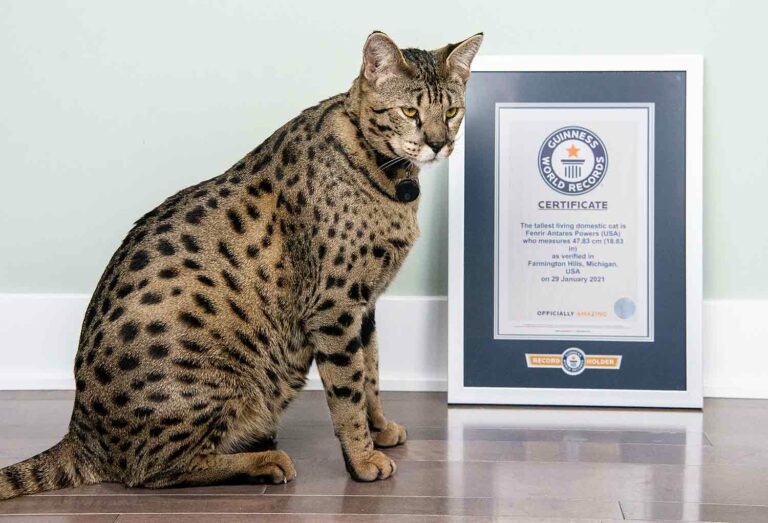
A man walked high above a crowd–on a tightrope!

06.28.22
Hyundai’s new cars are called UMVs, and they don’t need roads to get where they’re going!

06.21.22
A 14-year-old named Harini Logan won the 2022 Scripps National Spelling Bee.

06.14.22