New Rules, Better Baseball?

A baseman stands on a very large base catching a ball as a hitter slides toward the base.

New Rules, Better Baseball?

Major League Baseball’s new rules are designed to make baseball more exciting to watch.
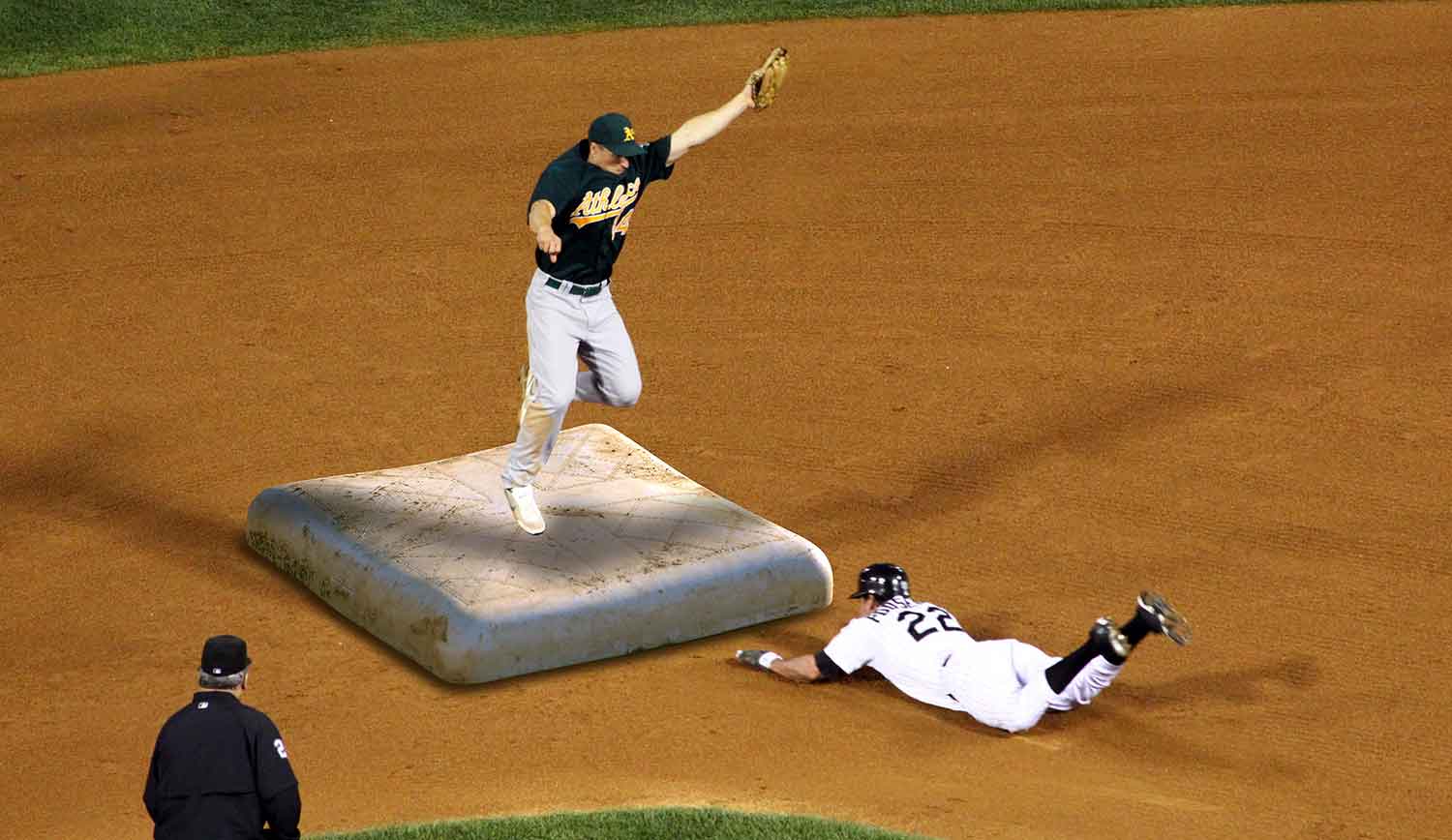
A baseman stands on a very large base catching a ball as a hitter slides toward the base.

© Lawrence Weslowski Jr, Ligonography/Dreamstime.com; Photo illustration Encyclopædia Britannica, Inc.

MLB’s new bases aren’t quite this large, but they’re large enough to make stealing easier.

How do you make sports exciting to watch? It’s not always enough to recruit talented athletes. The game itself needs to be well paced and full of action. Major League Baseball (MLB)’s new rules, which took effect with the opening of the 2023 season, are designed to bring a little more exhilaration to the ballfield.

Here’s how MLB’s new rules are designed to address some common complaints about baseball.

Not Enough Hits!

Batting averages have been declining, meaning that batters aren’t doing as well as they used to. MLB wants fans to see more hits (exciting) and fewer strikeouts (less exciting). 

“Fans want to see base runners,” Matt Duffy, infielder for the Kansas City Royals, told the New York Times. “They want to see first-to-third, they want to see triples, they want to see home runs. They don’t want to see strikeouts and nobody on base and 350 pitches thrown in a game.”

To increase the number of hits, MLB is putting a limit on “shifts.” In baseball, a shift is a movement of players from their traditional positions in the infield or outfield. Recently, teams have been more likely to move their infield players so there’s an extra player on one side—usually between first and second base. This puts left-handed batters at a disadvantage because it makes it harder for them to get a hit. 

The new rule is that there must be two infielders on each side of second base—never three on one side of the base.
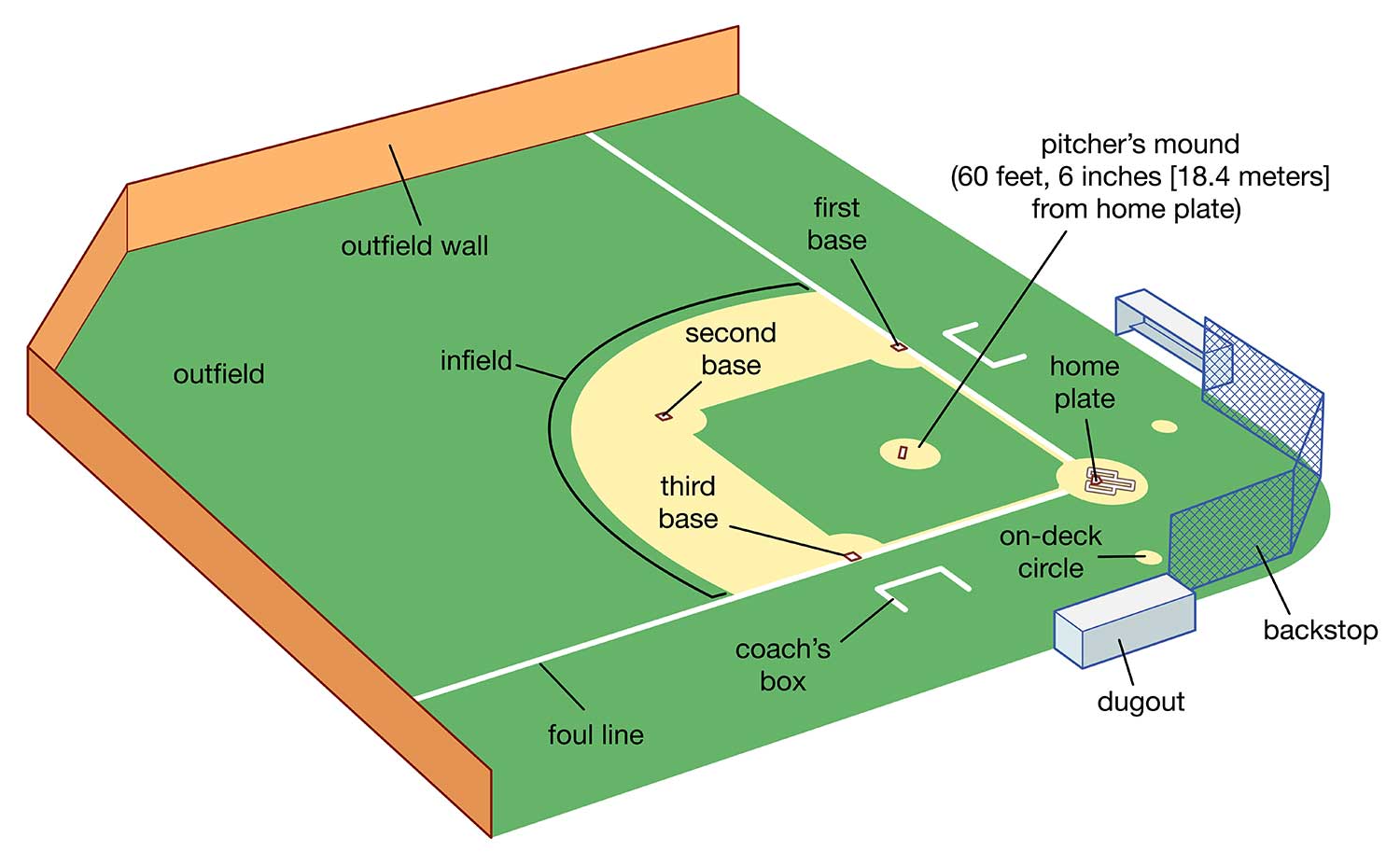
Baseball field with bases, infield, outfield, and pitcher’s mound labeled.

© Merriam-Webster Inc.

New MLB rules limit the number of infielders on one side of a base.

Not Enough Action!

Last season, the average MLB game lasted for more than three hours, partly because there were long stretches of inactivity between plays. 

This season, there’s a limit of 30 seconds between batters. There are also limits on the amount of time that can be taken between pitches and the amount of time batters can take to be in the batter’s box and ready for the pitch.

Not Enough Stolen Bases!

MLB says baseball fans want to see more stolen bases—when a player goes to the next base before the batter at home plate has even hit the ball. 

In part to encourage players to try to steal, MLB has made the bases larger. Now there’s less distance between the bases, so it’s easier to get from one to the next.

Duffy says he’s happy that his sport is putting the fans first.

“A lot of people think our job, as an industry, is to win games,” Duffy said. “No. Our job is to entertain first. If the product as a whole is not entertaining, people aren’t going to come.”

Did You Know?
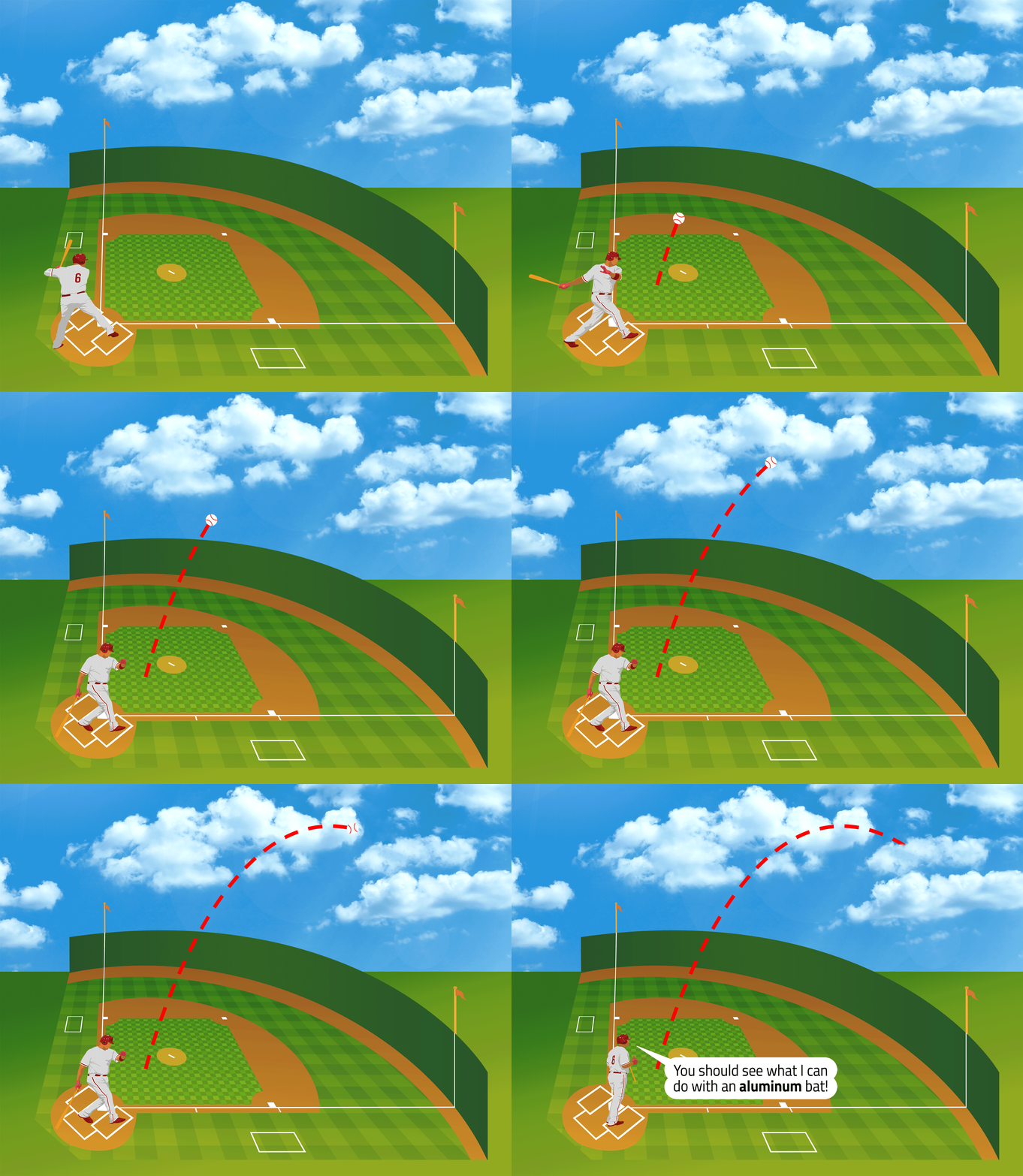
© Jkkphotos, Enterlinedesign/Dreamstime.com, © Vladitto—iStock/Getty Images; Animation Encyclopædia Britannica, Inc.

Baseball bats can be made of wood or aluminum, a type of metal. But aluminum bats aren’t allowed in the major leagues. Why not? When an aluminum bat hits a baseball, it makes the ball go farther than a wooden bat. Combine that with the awesome batting talent of major league players, and baseballs would fly so high and be hit so hard that they could injure people on the field and in the stands. Plus, it takes more skill to get a home run with a wooden bat. And seeing raw talent is always exciting.

Baseball Poetry
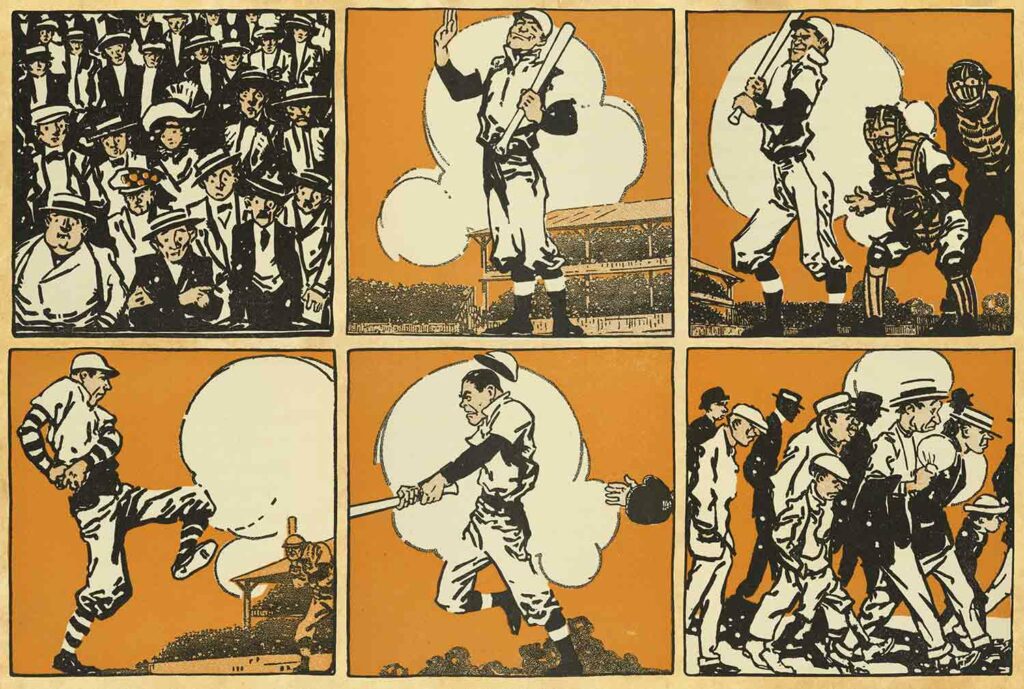
Rare Book Division/The New York Public Library Digital Collection

These illustrations were created in 1912 to go with the poem, “Casey at the Bat.”

April is National Poetry Month in the United States. Did you know that baseball has been inspiring poets for more than 100 years? In fact, one of America’s most famous poets—Walt Whitman—was a baseball reporter back in the 1850s.

Why do poets love baseball so much? Maybe it’s the drama of the sport. Here’s a little bit of one of the most famous baseball poems ever, “Casey at the Bat,” which was written by Ernest L. Thayer in 1888.

There was ease in Casey’s manner as he stepped into his place;
There was pride in Casey’s bearing and a smile lit Casey’s face.
And when, responding to the cheers, he lightly doffed his hat,
No stranger in the crowd could doubt ’twas Casey at the bat.

Ten thousand eyes were on him as he rubbed his hands with dirt;
Five thousand tongues applauded when he wiped them on his shirt.
Then while the writhing pitcher ground the ball into his hip,
Defiance flashed in Casey’s eye, a sneer curled Casey’s lip.

Baseball has everything a poet needs: rhythm, suspense, action, and emotion. Even baseball terms—like changeup, southpaw, bullpen, and grounder—seem poetic.

An MLB Record Holder

Ron Jenkins/Getty Images Sport

Aaron Judge holds the American League record for number of home runs in a single season.

You can read about Judge’s career—so far—at Britannica School.

WORD OF THE DAY

exhilaration

PART OF SPEECH:

noun

Definition:

: a feeling of great happiness and excitement

Definitions provided by
Merriam-Webster Logo

Word Search

See if you can find all the baseball words.

O
O
O
O
O
O

In Case You Missed It

Scientists believe there might be life on planets that don’t rotate, or spin.

04.07.23

Chloe Ricketts is the youngest person ever to sign with the National Women’s Soccer League.

04.04.23

For decades, space suits were designed with men in mind. But now NASA is introducing new space suits that will fit people of many different sizes.

03.31.23

TikTok is limiting the amount of time kids and teens can use the video-sharing app.

03.28.23

Life On Other Worlds

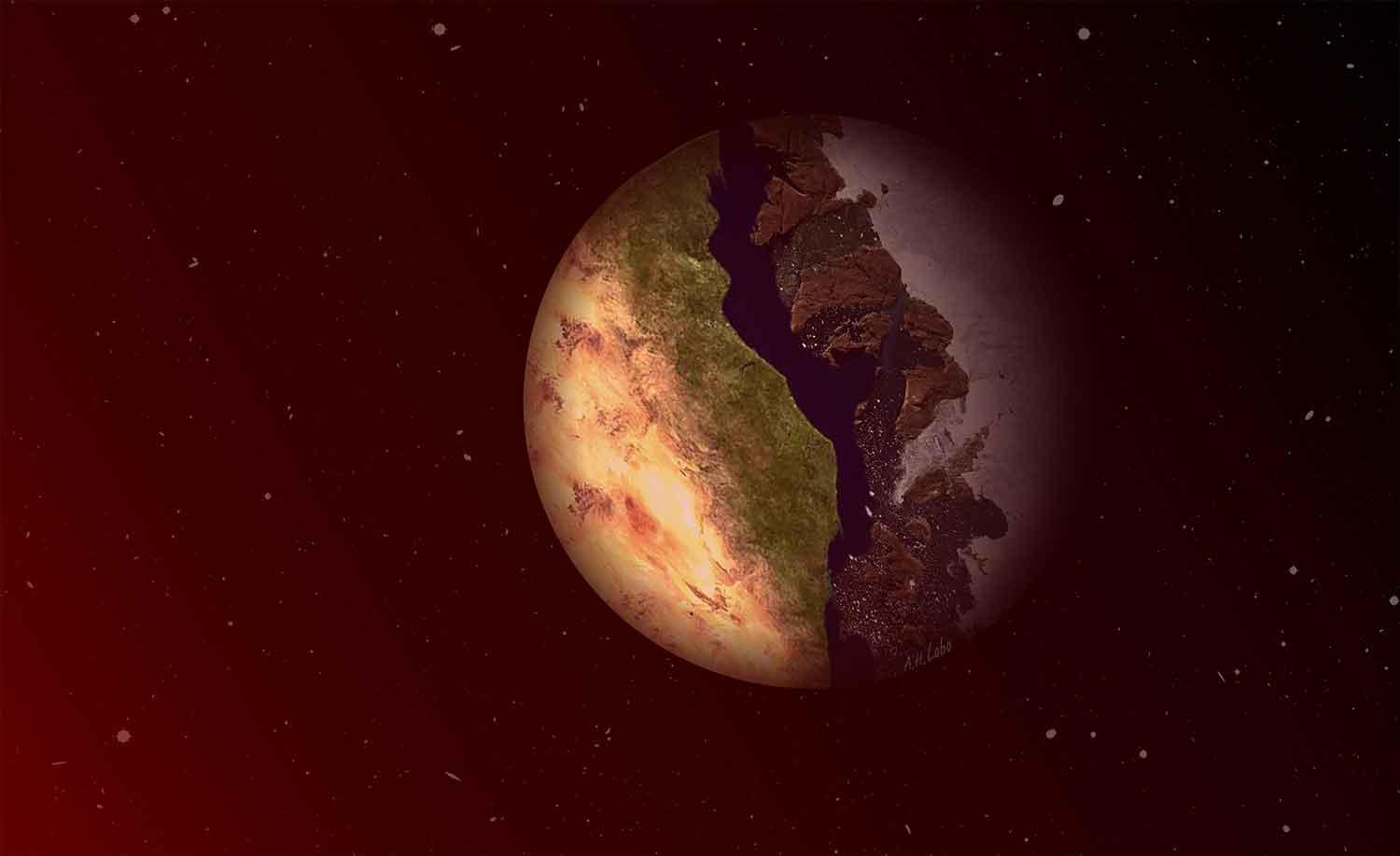
A planet with a dark side, a light side, and a belt in the middle.

Life On Other Worlds

Scientists believe there might be life on planets that don’t rotate, or spin.

A planet with a dark side, a light side, and a belt in the middle.

Ana H Lobo

This artistic rendition shows what a planet’s terminator zone might look like.

Scientists are searching for Earth-like planets that could sustain life. But what if life could exist on planets that have little in common with Earth? Astronomers from the University of California, Irvine, are studying the possibility of life in areas called terminator zones.

Terminator zones exist on planets that don’t rotate, or spin. Earth’s rotation ensures that no one side of the planet is always facing the Sun. It’s the reason why we have days and nights. But on planets that are tidally locked, meaning they don’t rotate, one side is always facing the planet’s star while the other side is always dark. A thin strip, or belt, around the planet sits between the light and dark sides. It’s in this belt, the terminator zone, that conditions could be just right for liquid water—and life.

“You want a planet that’s in the sweet spot of just the right temperature for having liquid water,” said astronomer Ana Lobo, who led a recent study of such planets. “This [would be] a planet where the dayside can be scorching hot, well beyond [livability], and the night side is going to be freezing, potentially covered in ice. You could have large glaciers on the night side.”

How common are tidally locked planets? Pretty common, scientists say. These planets orbit M-dwarf, or red dwarf, stars, which scientists believe make up about 70 percent of stars in the known universe. That doesn’t mean all tidally locked planets have livable zones. But it does raise some interesting possibilities about what else is out there.

NEWS EXTRA

Headed To the Moon

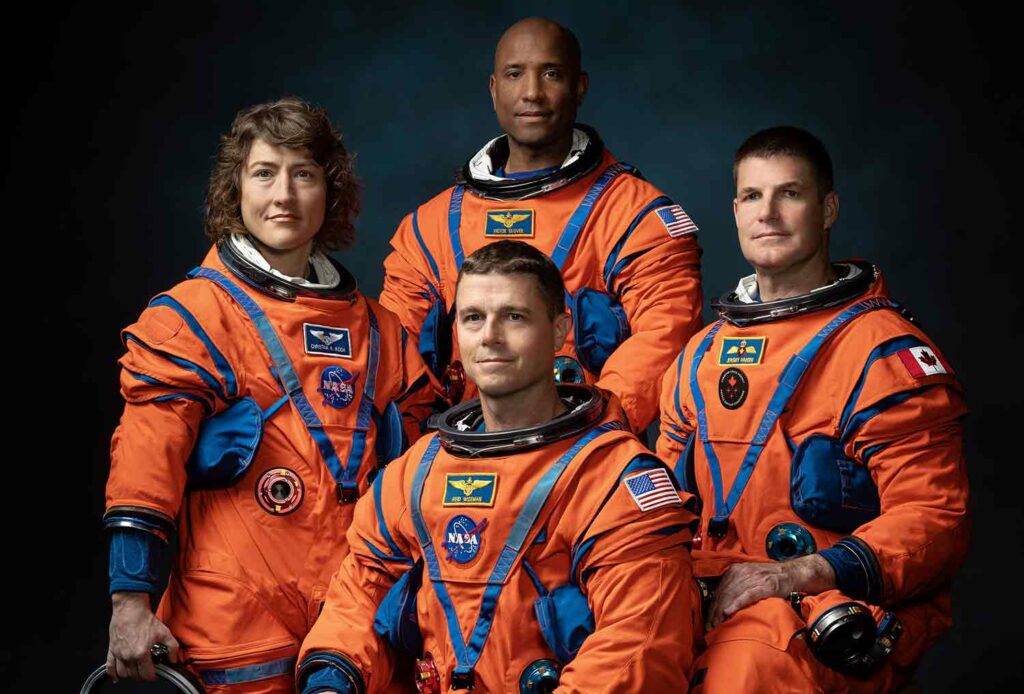
Four people pose in orange and blue spacesuits.

NASA

The Artemis II crew includes (clockwise from left) Christina Koch, Victor Glover, Jeremy Hansen, and Reid Wiseman.

NASA has named the four astronauts who will take part in Artemis II, the first crewed mission to the Moon since 1972. In a mission scheduled for late 2024, the astronauts will orbit the Moon 10 times and then return to Earth. Meanwhile, they will perform tests in preparation for a 2026 mission in which astronauts will land on the Moon. 

Reid Wiseman, Commander

Born in Baltimore, Maryland, Reid Wiseman lived and worked on the International Space Station for 165 days in 2014. While on the space station, he helped conduct scientific experiments and led 13 hours of space walks outside the station. Wiseman also commanded the NEEMO 21 Mission, in which astronauts conduct a simulated space mission underwater.

Victor Glover, Pilot

Born in Pomona, California, Victor Glover piloted a SpaceX spacecraft to the International Space Station in 2020 and then served as Flight Engineer aboard the station during a long-term mission. While living on the station, Glover helped conduct scientific experiments and participated in four spacewalks. With Artemis II, Glover will become the first Black American ever to go to the Moon.

Christina Koch, Mission Specialist

Born in Grand Rapids, Michigan, Christina Koch set a record for the longest single spaceflight by a woman, with a total of 328 days in space while living and working on the International Space Station in 2019 and 2020. During this time, she helped conduct scientific experiments. She also participated in six spacewalks, including three all-women spacewalks. With Artemis II, Koch will become the first woman ever to go to the Moon. 

Jeremy Hansen, Mission Specialist 

Born in London, Ontario (in Canada), Jeremy Hansen will become the first non-American to fly to the Moon. Hansen trained as a military pilot and has explored the deep ocean as part of a project to simulate deep-space exploration. Artemis II will be his first trip to space. 

Artemis II is part of the larger Artemis program, which aims to someday land astronauts on Mars. 

“Am I excited?” Koch said when the announcement was made. “Absolutely!”

Did You Know?

NASA/JPL-Caltech/M. Russo, A. Santaguida (SYSTEM Sounds)

Each musical note in this video represents the discovery of an exoplanet. What happens as time passes?

An exoplanet is a planet that exists outside our solar system. As of March 2023, more than 5,300 exoplanets had been discovered!

Spot the Planet

NASA/JPL-Caltech/R. Hurt (IPAC)

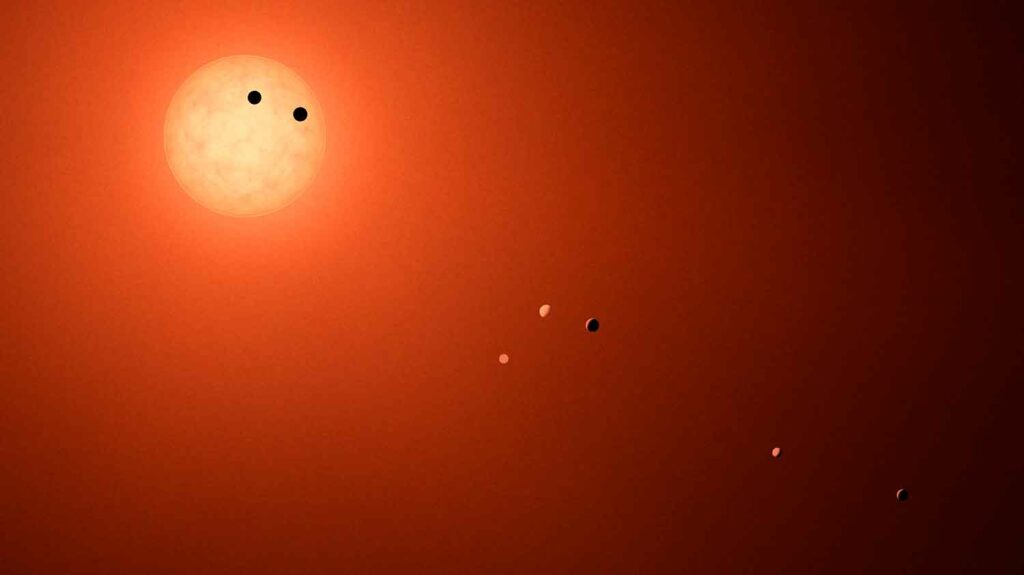
This illustration gives an idea of what a telescope might show as two planets pass in front of their star.

It’s fairly easy for telescopes to detect potentially habitable (livable) planets orbiting M-dwarf stars. Here’s why.

An M-dwarf star is fairly cool, as stars go. So, for a planet in its solar system to be warm enough for liquid water, it needs to orbit close to the star. A planet in that habitable region would complete a full orbit about every few weeks. 

Okay, so what does that have to do with our telescopes detecting planets? A telescope can detect a far-off planet when the planet passes in front of its star, changing the star’s brightness. If a planet does this every few weeks, we have a better chance of finding it.

Hello Out There

NASA, ESA, and F. Summers, G. Bacon, Z. Levay, J. DePasquale, L. Hustak, L. Frattare, M. Robberto, M. Gennaro (STScI), R. Hurt (Caltech/IPAC), M. Kornmesser (ESA)

Until very recently, humans knew only about the planets in our own solar system. No one could confirm that any other planets existed until the first exoplanets were discovered in 1992. Since then, more than 5,300 exoplanets have been discovered. That makes our eight-planet neighborhood look pretty tiny!

It also raises a question… What else is out there?

You can read about how astronomers study exoplanets, and much more, at Britannica School.

WORD OF THE DAY

likeness

PART OF SPEECH:

noun

Definition:

 : a picture of a person

Definitions provided by
Merriam-Webster Logo

Wordrow

See if you can figure out the word. Type your guess. If a letter circle turns green, it is in the right place. If a letter circle turns gold, the letter is somewhere in the word, but it’s in the wrong place. All other letters are not part of the word.

O
O
O
O
O
O

In Case You Missed It

Chloe Ricketts is the youngest person ever to sign with the National Women’s Soccer League.

04.04.23

For decades, space suits were designed with men in mind. But now NASA is introducing new space suits that will fit people of many different sizes.

03.31.23

TikTok is limiting the amount of time kids and teens can use the video-sharing app.

03.28.23
A group of students did a space experiment and learned something NASA didn’t even know.

03.24.23

A Pro at 15

Chloe Ricketts kicking a ball on a soccer field in a match with other teens

A Pro at 15

Chloe Ricketts is the youngest person ever to sign with the National Women’s Soccer League.

Chloe Ricketts kicking a ball on a soccer field in a match with other teens

US Youth Soccer National League

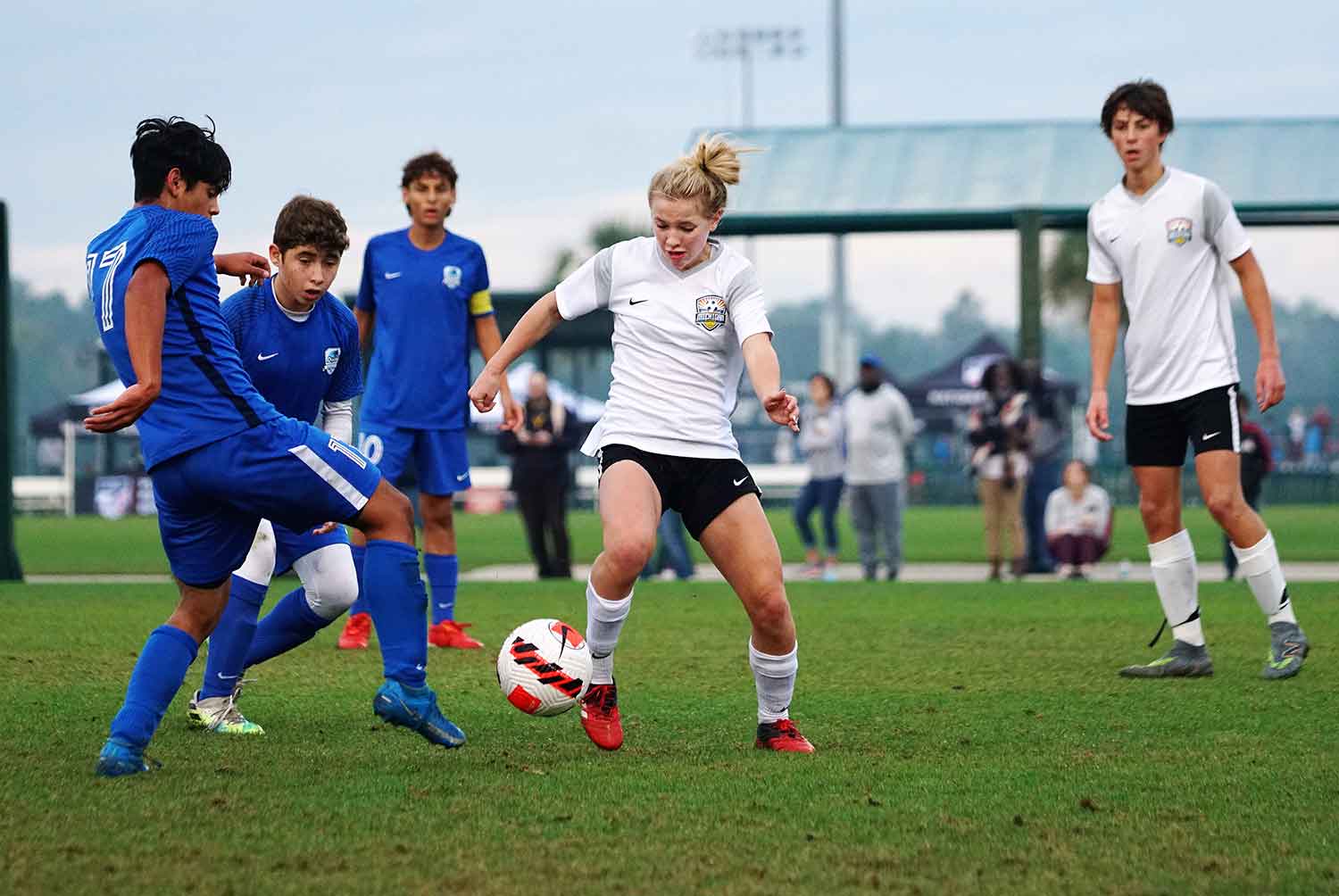
Chloe Ricketts (center) will play for the Washington Spirit.

Chloe Ricketts just became a professional soccer player…and she’s only 15. On March 3, Ricketts became the youngest person ever to sign a contract with the National Women’s Soccer League (NWSL) in the United States. 

Ricketts signed a three-year deal with the Washington Spirit, after participating in the Spirit’s winter training program at the team’s invitation. Spirit leaders were impressed with Rickett’s ability to keep up with veteran players on a team that won the NWSL Championship in 2021.

“The opportunity to join the Washington Spirit on a professional contract is a dream come true,” Ricketts said in a statement on the Spirit’s website. “Now, let’s go win another championship!”

Because of her age, Ricketts will attend school virtually as part of her contract. She follows in the footsteps of Olivia Moultrie, who was three days older than Ricketts when she signed with the Portland Thorns in Portland, Oregon, in 2021. 

Ricketts had big goals at an early age. In 2022, she was the youngest person ever to sign with AFC Ann Arbor, which is part of a semi-professional league called USL League Two. At the time, she said she wanted to play for the U.S. women’s national soccer team, which plays national teams worldwide and is currently the best women’s soccer team in the world.  

“It’s a really high [aspiration], but I would like to be the best [player] in the world someday,” Ricketts told MLive in 2022. “Play on the national team, go overseas and play someday.”

At 15, she has plenty of time to make that happen.

Fun Fact

Sphere with one half a soccer ball and the other half a globe

© Ronniechua/Dreamstime.com, © michal-rojek—iStock/Getty Images; Photo illustration Encyclopædia Britannica, Inc.

Soccer (or association football) is the most popular sport in the world. It’s played in almost every country. In the year 2000, there were an estimated 1.3 billion soccer fans!

Wide Words of Sports

What do sports give us? Exercise and entertainment, for sure. But have you ever thought about all the expressions that come from the world of sports? See if you recognize these sports idioms.

Expression:

Get your head in the game

What it means:

concentrate; pay attention

Expression:

Play to win

What it means:

be serious about winning

Expression:

Keep your eye on the ball

What it means:

remember your goal

Expression:

That’s par for the course

What it means:

that’s normal

Expression:

A level playing field

What it means:

fair or even

Expression:

The ball is in your court

What it means:

it’s your turn to act or make a move

The Goal-Getter

© Jerry Coli/Dreamstime.com

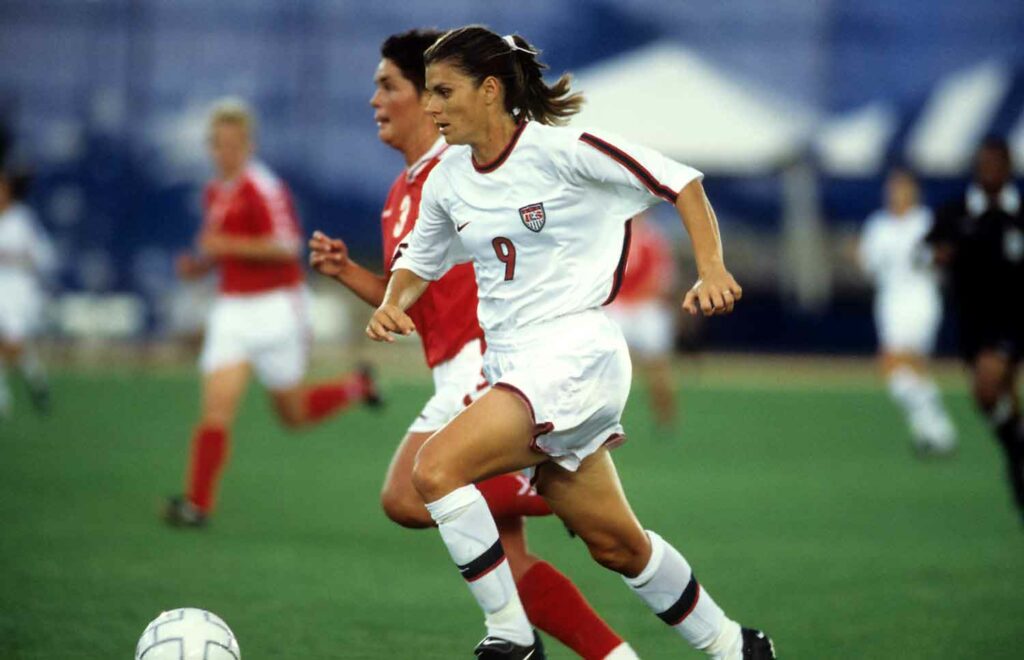
Mia Hamm was only 15 years old when she signed with the U.S. women’s national soccer team. Hamm’s record-smashing ability to score goals helped the team earn World Cup victories in 1991 and 1999 and Olympic gold medals in 1996 and 2004.

You can read more about Mia Hamm at Britannica School!

WORD OF THE DAY

winningest

PART OF SPEECH:

adjective

Definition:

(always used before a noun)

: having the greatest number of wins : most successful

Definitions provided by
Merriam-Webster Logo

Word Search

See if you can find all the spring sports.

O
O
O
O
O
O

In Case You Missed It

For decades, space suits were designed with men in mind. But now NASA is introducing new space suits that will fit people of many different sizes.

03.31.23

TikTok is limiting the amount of time kids and teens can use the video-sharing app.

03.28.23
A group of students did a space experiment and learned something NASA didn’t even know.

03.24.23

Crystalyne Curley is the first female Speaker of the Navajo Nation Council.

03.21.23

Space For More People

A black helmet and space suit with orange and blue trim on display in front of a black curtain

Space For More People

For decades, space suits were designed with men in mind. But now NASA is introducing new space suits that will fit people of many different sizes.

A black helmet and space suit with orange and blue trim on display in front of a black curtain

© Axiom Space

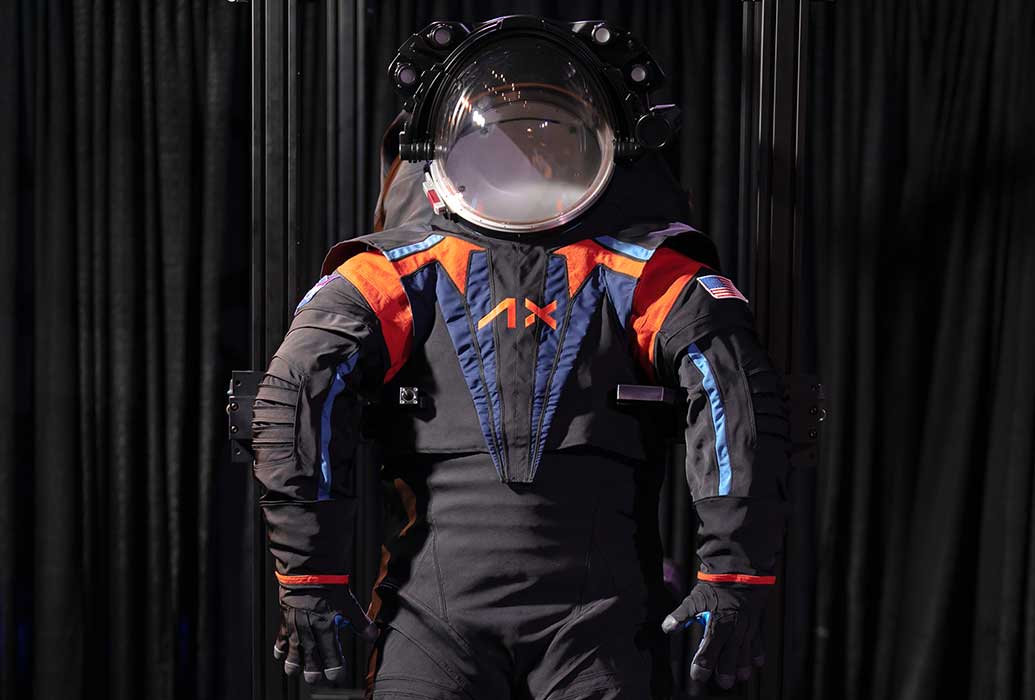
The new space suits are designed for NASA by a company called Axiom Space.

In 2019, NASA (the National Aeronautics and Space Administration) was set to make history by sending an all-woman team of astronauts on a spacewalk. But the plan was scrapped at the last minute. The reason? NASA didn’t have enough space suits that would fit the women. The first all-women spacewalk eventually took place—several months later, after NASA made sure the right space suits were available. These events made it clear that, in at least one way, space travel was set up without women in mind. 

But NASA now has plans for a redesigned space suit. The new suit will be more flexible and better able to fit people of many different sizes. And that means it will be more likely to fit women, who are, on average, smaller than men. This is the first time NASA has fully redesigned its space suits since 1981. 

When it comes to space suits, fit is extremely important. The suits need to be pressurized to provide oxygen so that the wearer can survive in space. If a space suit fails to work properly, an astronaut can die.

NASA aims to have the new space suits ready by 2025, in time for the space agency’s Artemis III mission. During Artemis III, astronauts will set foot on the Moon for the first time in more than 50 years. NASA has pledged “to land the first woman and first person of color on the surface of the Moon” as part of the Artemis III crew.

Bill Nelson, who leads NASA, said that the space suits “will open opportunities for more people to explore and conduct science on the Moon than ever before.”

NEWS EXTRA

Happy April Fools’ Day!

Shoes with fake spiders, bugs and Happy Fools' Day note on white wooden table

© Liudmila Chernetska—iStock/Getty Images Plus

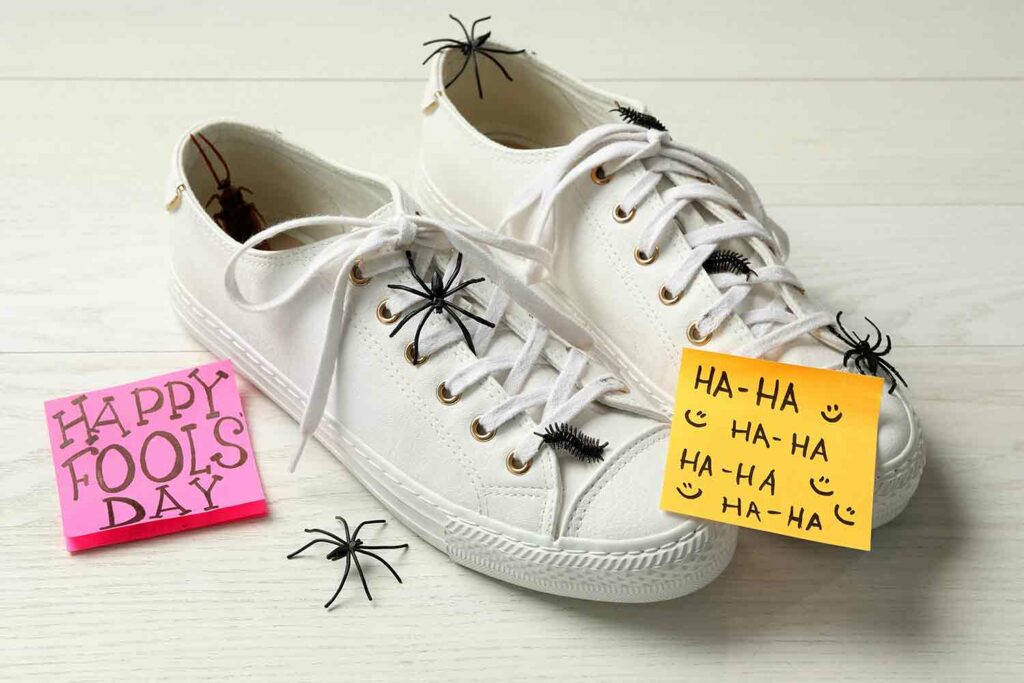
Did aliens fly over London, England, in 1989? Or was it an elaborate April Fools’ prank? Check out the story here!

Did You Know?

© studioworkstock/stock.adobe.com, NASA, © michal-rojek—iStock/Getty Images; Photo illustration Encyclopædia Britannica, Inc.

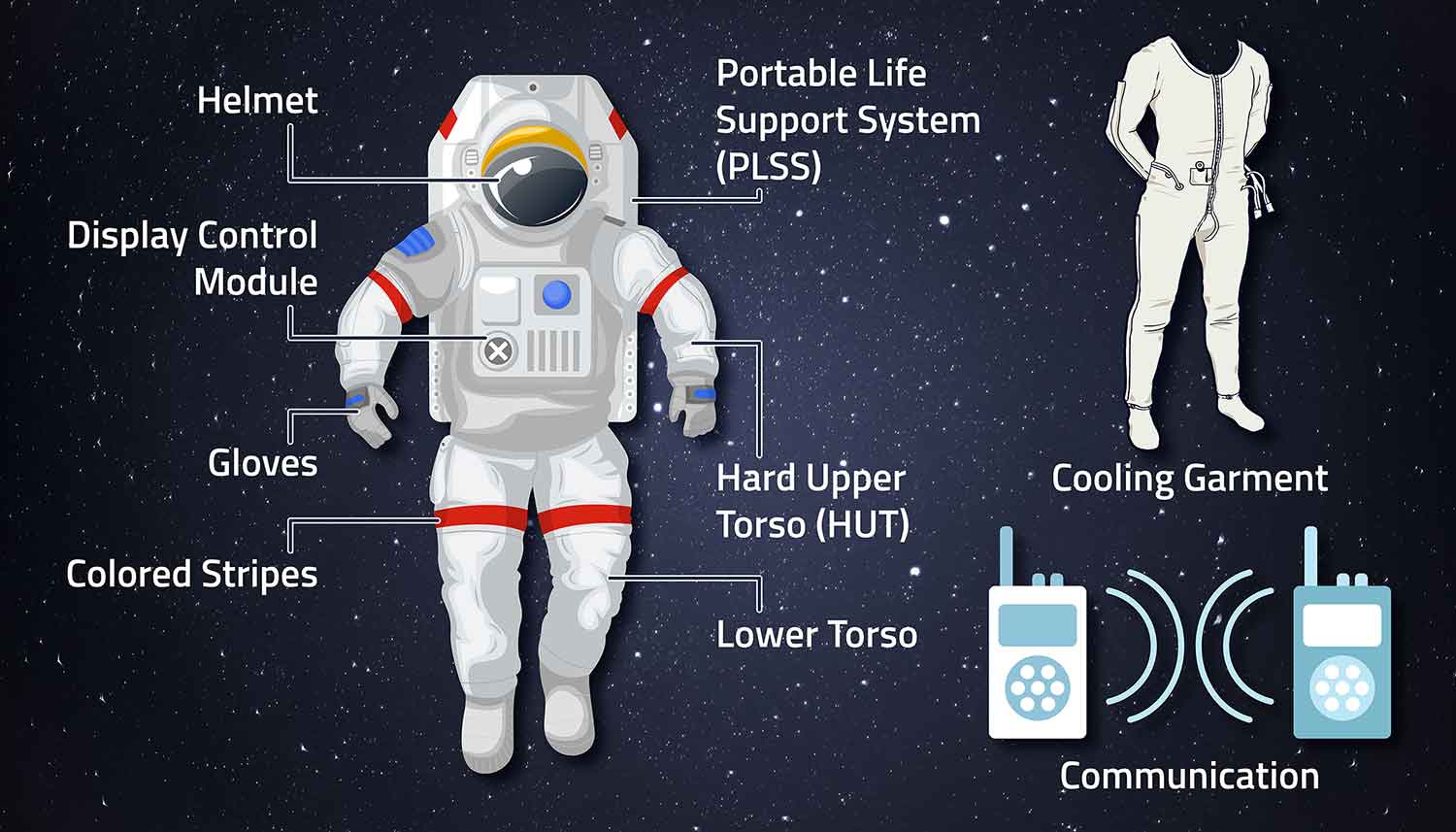
Space suits are designed to keep astronauts safe in a hostile environment. Here’s just some of what they do:

  • Provide oxygen for the astronaut to breathe in
  • Expel the carbon dioxide the astronaut breathes out
  • Protect the astronaut from extreme temperatures
  • Provide some protection against space radiation

At Home in Space?

© ESA—P. Carril

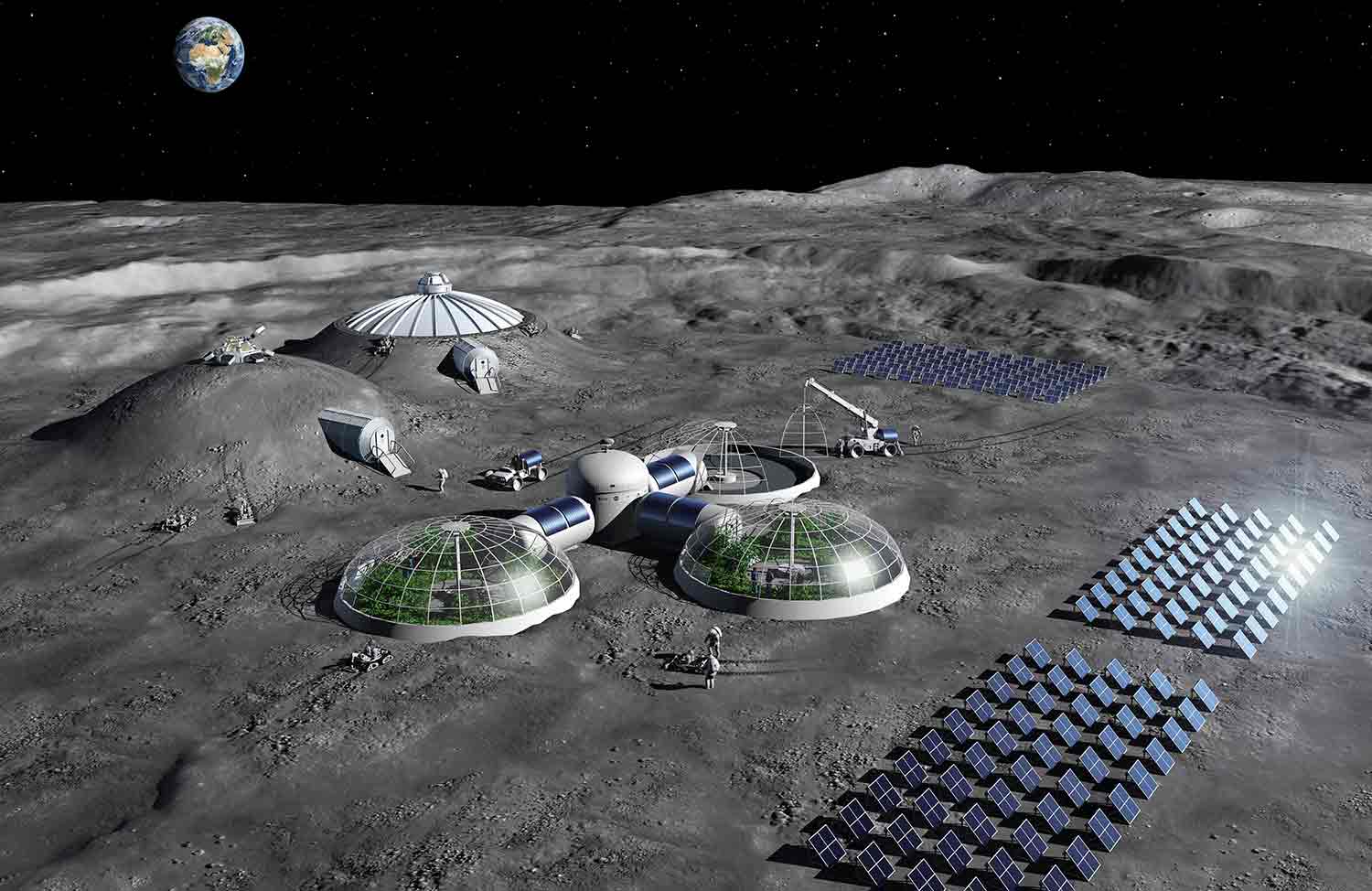
This artist impression of a Moon Base shows solar panels capturing the energy of the Sun, along with greenhouses where food could be grown.

NASA plans to send astronauts to the Moon and beyond. During the Artemis III mission, scheduled for 2025, astronauts will land near the Moon’s South Pole, where no human has ever set foot. 

The lunar South Pole has resources that humans can use, including a good supply of sunlight, which can power spacecraft and other equipment. Scientists also know that there’s ice at the lunar South Pole, but they’re not yet sure how large that water supply is.

Eventually, NASA will build a base camp on the Moon to allow astronauts to stay there for up to two months. NASA hopes the Moon will be a jumping-off point for human exploration of more distant places in space. 

Imagine astronauts using the Moon as a rest stop on the way to Mars!

A Whole New World

NASA

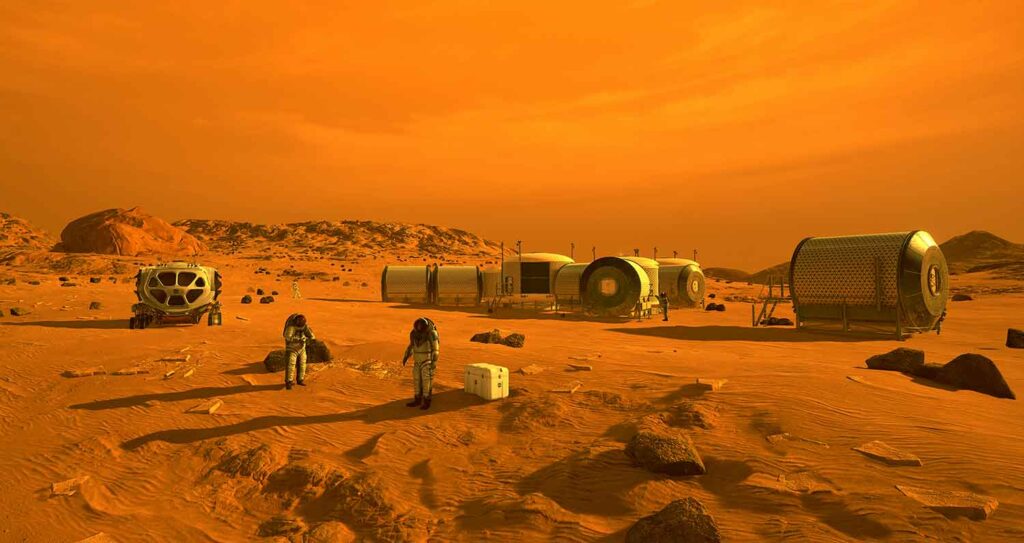
Human missions to Mars are scheduled to take place within your lifetime—as part of the Artemis space program. Would you be interested in a trip to the Red Planet?

You can learn more at Britannica School!

WORD OF THE DAY

trajectory

PART OF SPEECH:

noun

Definition:

: the curved path along which something (such as a rocket) moves through the air or through space

Definitions provided by
Merriam-Webster Logo

Crossword

See how many answers you know!

O
O
O
O
O
O

In Case You Missed It

TikTok is limiting the amount of time kids and teens can use the video-sharing app.

03.28.23
A group of students did a space experiment and learned something NASA didn’t even know.

03.24.23

Crystalyne Curley is the first female Speaker of the Navajo Nation Council.

03.21.23

Many people work five days a week. But studies show that a four-day workweek might be good for workers and companies.

03.17.23

TikTok Time Limit

A person holds a phone with the TikTok logo on the screen. Above is a ticking clock with the TikTok logo as a hand.

TikTok Time Limit

TikTok is limiting the amount of time kids and teens can use the video-sharing app.

A person holds a phone with the TikTok logo on the screen. Above is a ticking clock with the TikTok logo as a hand.

© skynesher—E+, bortonia—DigitalVision Vectors/Getty Images,; Animation Encyclopædia Britannica, Inc.

TikTok is limiting the amount of time kids and teens can use the video-sharing app. The company says it made the decision in response to concerns that the use of social media is affecting the mental health of young people.

Under the new rules, TikTok users ages 13 to 18 are now able to use the app for 60 minutes a day. They need to enter a passcode if they want to extend their time on TikTok. TikTok says this extra step is meant to require teens to make an active decision to spend an extended period of time on the app. Users under 13 also have a 60-minute limit. They can extend their time by 30 minutes, but only if a parent or guardian enters a passcode. 

TikTok is one of many apps that have been criticized for its possible impact on younger users. Experts have expressed concern that using social media may have a negative effect on mental health. They say that looking at social media content can lead people to compare themselves to others and feel like they don’t measure up. One new study showed that when kids and teens take breaks from social media, they feel better about themselves. In the study, volunteers ages 17 to 25 who were experiencing anxiety or depression were asked to limit their time on social media to 60 minutes a day for three weeks. Another group of volunteers didn’t change their social media habits. The group that limited their screen time reported feeling happier and having a more positive self-image.

But Linda Charmaraman, a researcher who studies young people and social media use, says it’s not quite accurate to conclude that time spent on social media is a bad thing. Many users can get a lot out of connecting with other people on social media, as long as those connections are healthy.

“In that case, the motivation behind what you’re doing on social media is more important than how long you’re spending on it,” she told National Public Radio.

Did You Know?

© Bangkok Click Studio/stock.adobe.com; Photo illustration Encyclopædia Britannica, Inc.

© Bangkok Click Studio/stock.adobe.com; Photo illustration Encyclopædia Britannica, Inc.

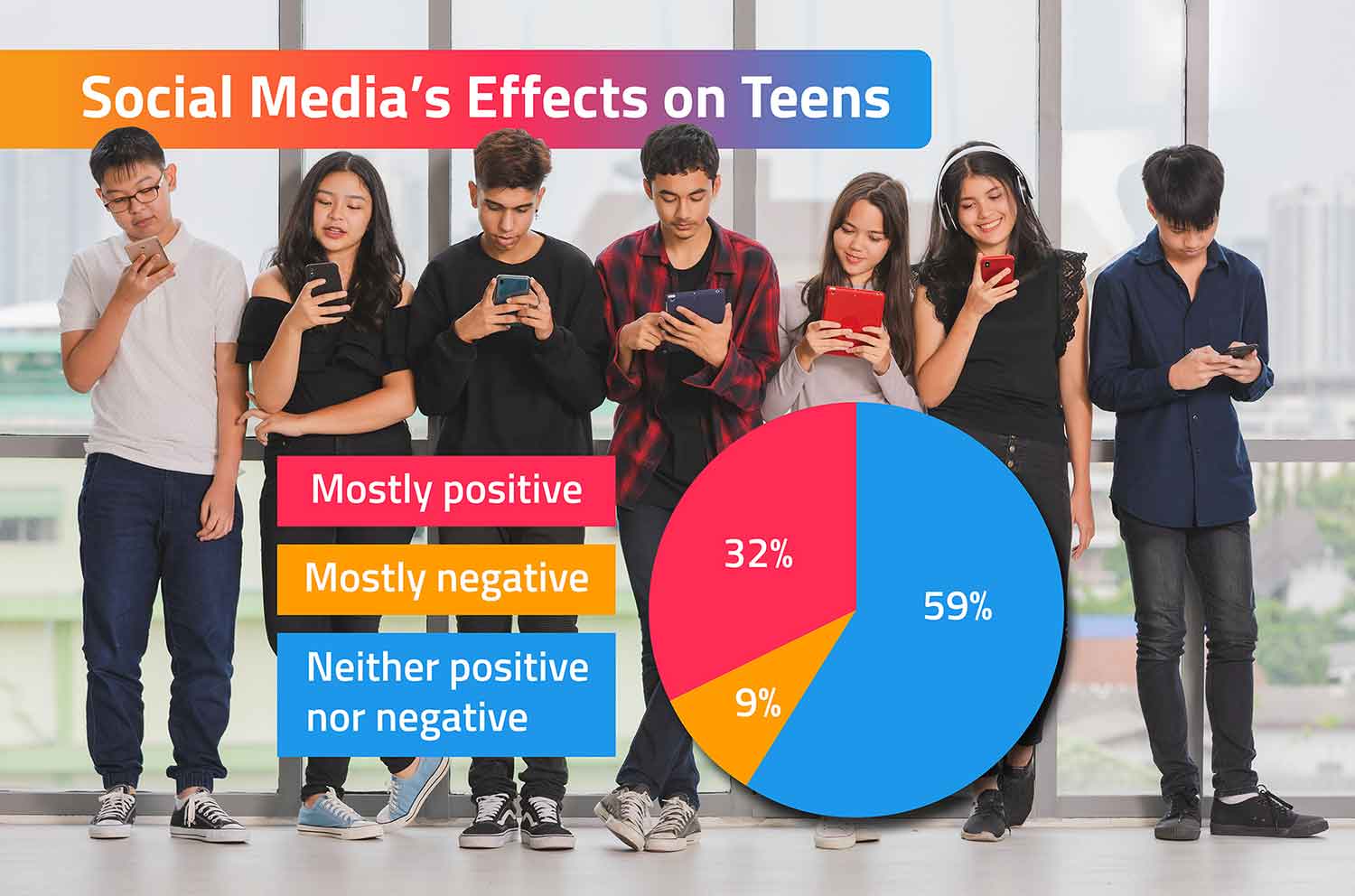
In a 2022 survey by Pew Research Center, 33 percent of U.S. teens ages 13 to 17 said social media helps them feel a lot more connected with what’s going on in their friends’ lives. Thirty-two percent said social media sites have a mostly positive effect on them. Nine percent said the effect was mostly negative. The rest said the effect was neither positive nor negative.

When Was the First Meme?

© Vladyslav Yushynov/Dreamstime.com; Composite image Encyclopædia Britannica, Inc.

If you have a favorite meme, chances are pretty good that it came from the Internet. Internet memes owe some of their popularity to a baby that, in the 1990s, became one of the Internet’s first influencers. 

In 1996, a video of a computer-generated dancing baby went viral in the United States. At the time, the Internet wasn’t nearly as widely used as it is now. But people did have email accounts. The “Dancing Baby” video went viral when people started emailing it to each other. (Viral videos would explode when YouTube came along in 2005, followed by TikTok in 2016.)

But was the dancing baby the world’s first meme? No, not at all. Memes are much, much older than the Internet. Any cultural idea that gets spread around is a meme. Internet memes include emojis, viral videos, and pictures with funny captions or other text. Before the Internet, memes like slang, jokes, and fables were often spread by word of mouth—and they still are today.

It’s possible that memes have been around for as long as humans.

The Truth About TikTok

Encyclopædia Britannica, Inc.

TikTok has a lot of uses. It’s even used for educational videos like the one here. But while TikTok is popular, it’s also controversial.

You can learn more at Britannica School!

WORD OF THE DAY

meme

PART OF SPEECH:

noun

Definition:

: an idea, behavior, style, or usage that spreads from one person to another in a culture

Definitions provided by
Merriam-Webster Logo

Wordrow

See how many words you can find.

O
O
O
O
O
O

In Case You Missed It

A group of students did a space experiment and learned something NASA didn’t even know.

03.24.23

Crystalyne Curley is the first female Speaker of the Navajo Nation Council.

03.21.23

In ancient times, the Maya people built a network of roads that would have allowed them to trade and communicate over long distances.

03.14.23

Eighth graders used engineering to help people who are facing challenges.

03.10.23

Would an EpiPen Work in Space?

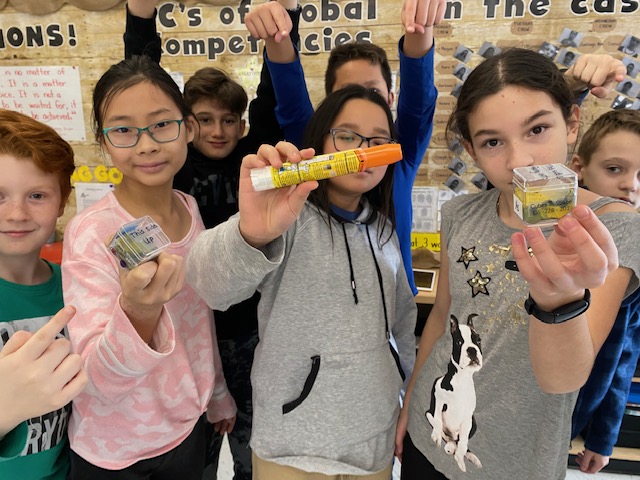
A group of students pose together holding vials, plastic cubes, and an EpiPen.

Would an EpiPen Work in Space?

A group of students did a space experiment and learned something NASA didn’t even know.

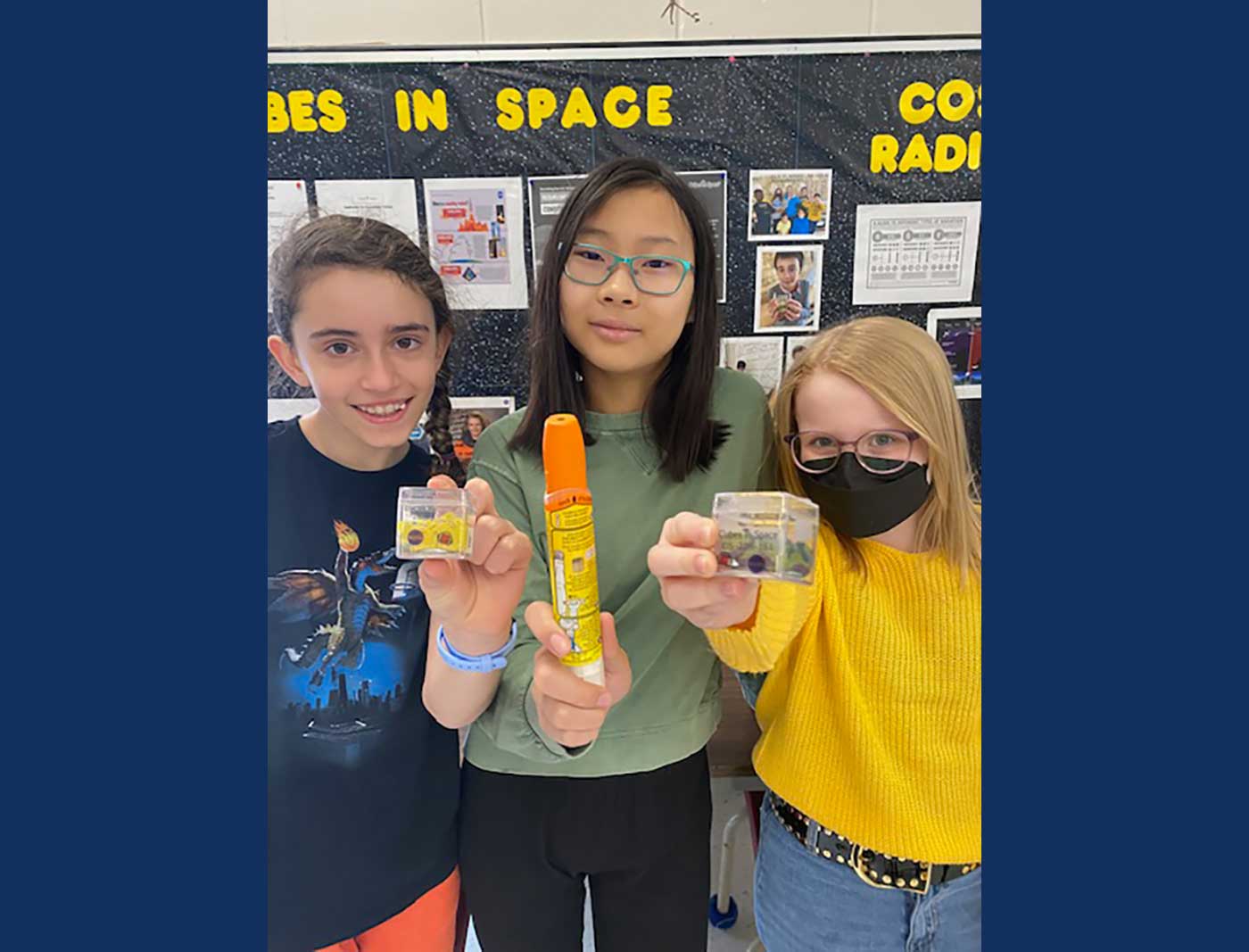
Three young people pose together, with two holding clear plastic cubes and the other holding an EpiPen.

Program for Gifted Learners, St. Brother André

Students wanted to see if EpiPens (like the one seen in the middle of this photo) would work in space.

EpiPen auto-injectors are devices that deliver lifesaving treatment to people who are having severe allergic reactions. But do they work in space? A group of students in Canada did an experiment that suggests the answer is no.

The students wondered how the cosmic radiation in space would affect epinephrine, the medication inside an EpiPen. They applied—and were accepted—to iEDU and NASA’s Cubes in Space program, which lets young people send their science experiments into space. The students prepared samples of two substances. One was pure epinephrine. The other was epinephrine in a sterile solution, which is what EpiPens contain. NASA then launched the samples into space—one on a rocket and the other on a high-altitude balloon.

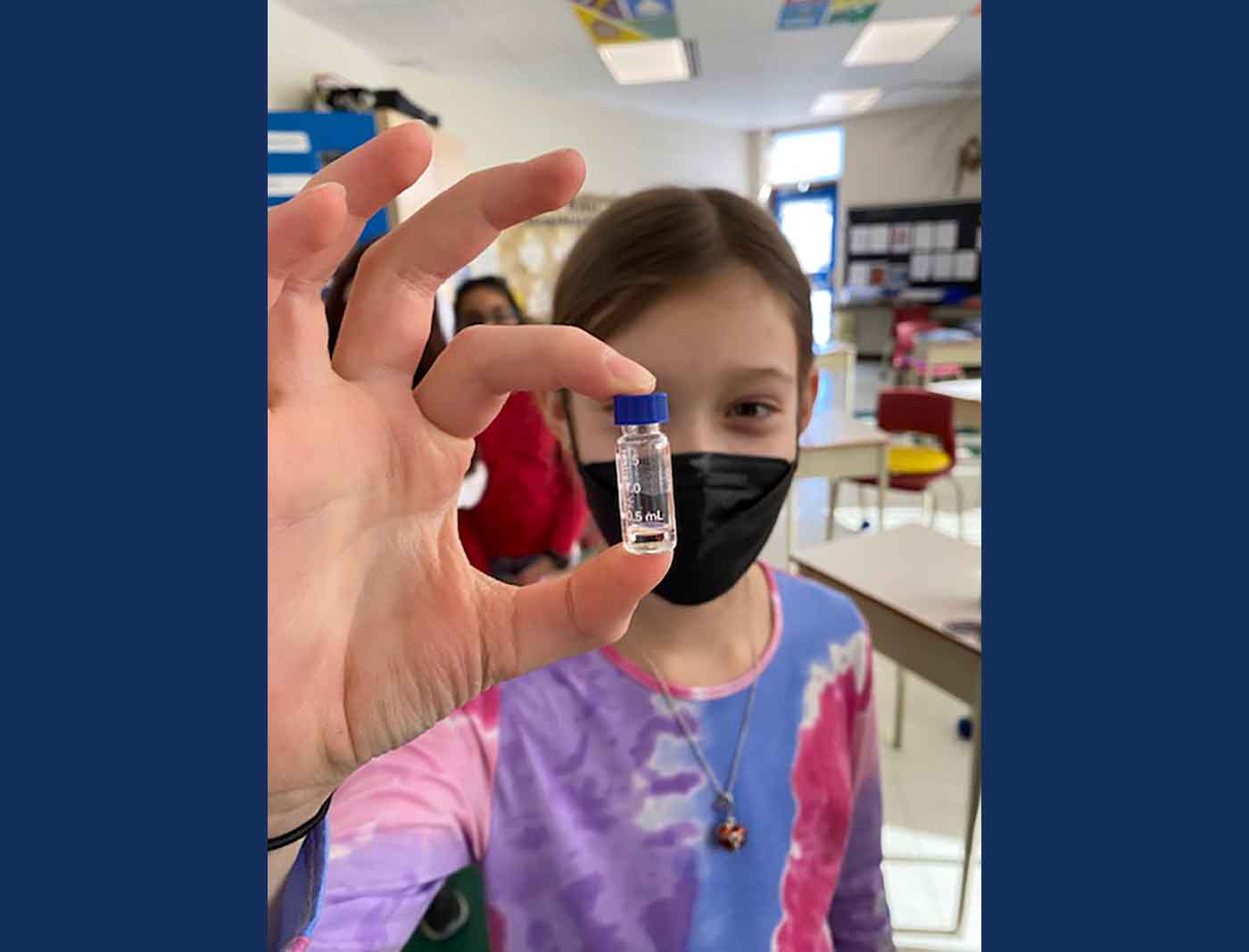
A girl in a classroom holds a vial with clear liquid inside.

Program for Gifted Learners, St. Brother André

The students sent epinephrine, the medication inside an EpiPen, into space.

Before and after the launch, the students sent the samples to a lab for testing. This allowed them to compare the samples before and after they had been in space. Scientists found that the pure epinephrine samples were only 87 percent pure after returning from space. The other 13 percent had turned into benzoic acid derivatives, which are poisonous. The EpiPen solution samples no longer contained epinephrine after being in space, suggesting that if a person tried to use an EpiPen during a space mission, it would be ineffective.

“It was pretty cool,” student Hannah Thomson told Global News. “NASA didn’t know.”

The experiment is important because space agencies and private companies are planning new human missions to space. The results raise questions about whether astronauts would be able to rely on important medications during these missions. 

Now the students are working on a capsule they hope will protect the EpiPen solution from cosmic radiation.

“You feel like you’re making a real change,” student Benjamin Sum told Global News. “A lot of the time it feels like it’s just adults. But kids can actually be involved.”

A group of students pose together holding vials, plastic cubes, and an EpiPen.

Program for Gifted Learners, St. Brother André

Did You Know?

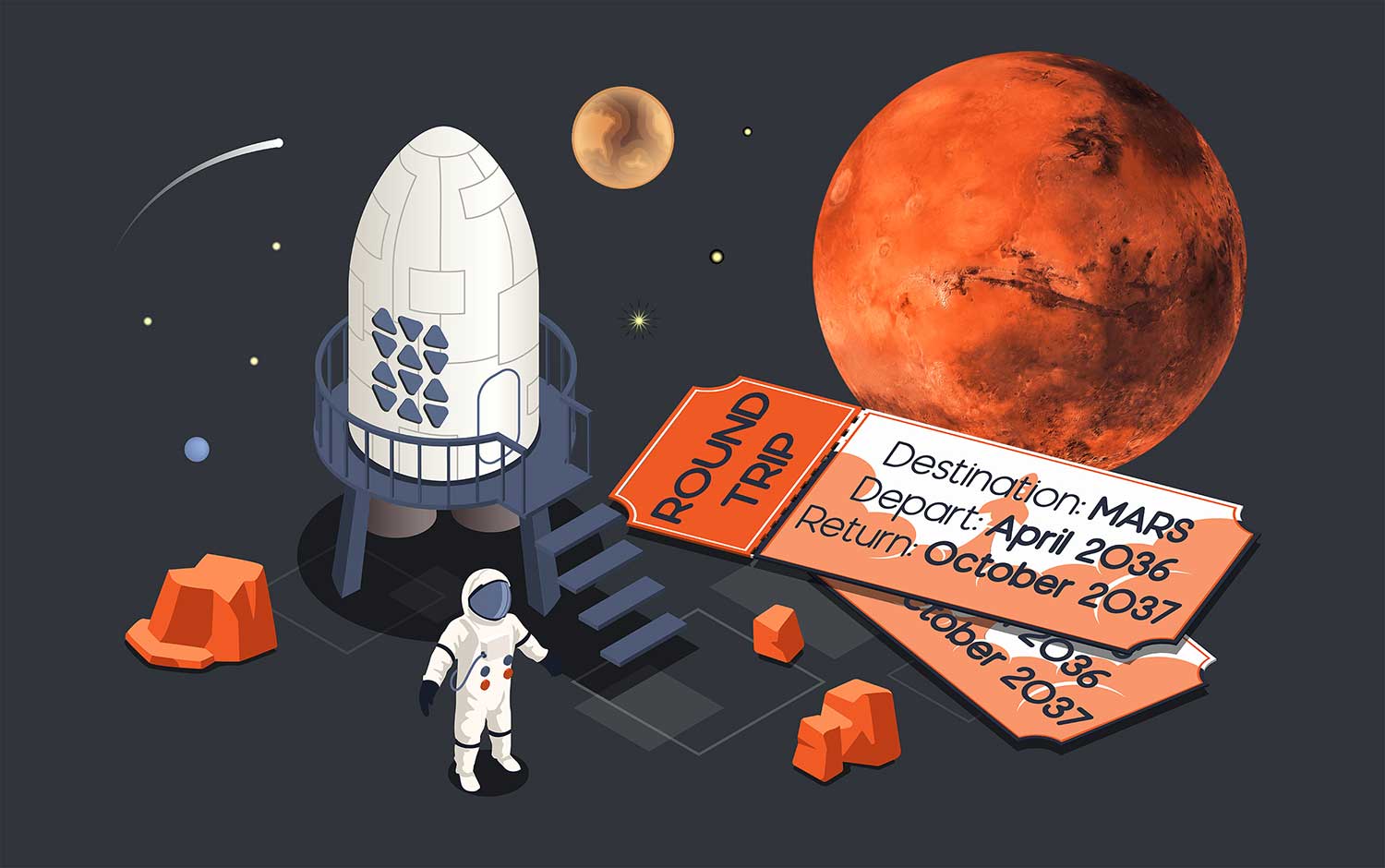
Mockup showing Mars, an astronaut with a space capsule, and roundtrip tickets to Mars departing April 2026 and arriving back October 2027.

© Studiostockcreator, Martin Holverda/Dreamstime.com; Composite illustration Encyclopædia Britannica, Inc.

NASA is aiming to send humans to Mars by the late 2030s or early 2040s. It will take about 500 days (nearly a year and five months) to get to Mars and back.

Don’t Catch These Rays!

NASA Goddard Space Flight Center, courtesy of NASA/DOE/Fermi LAT Collaboration, Tom Bash and John Fox/Adam Block/NOAO/AURA/NSF, JPL-Caltech/UCLA

A NASA space telescope pinpointed a source of high-energy cosmic rays, shown here.

Students found that cosmic radiation seems to have affected the medication in EpiPens. What is cosmic radiation?

Cosmic radiation (sometimes called cosmic rays) is made up of tiny parts of atoms that speed through outer space. Some cosmic radiation comes from the Sun, but most of it originates from farther away in the galaxy. 

The particles from cosmic radiation are harmful to humans. Earth’s atmosphere protects us from the effects of this radiation. Astronauts in low Earth orbit (like the astronauts who live and work on the International Space Station) also have some protection. But farther out in space, there is no such protection. According to NASA, long-term exposure to cosmic radiation damages the body’s cells and can lead to heart disease, nervous system damage, and cancer. 

As space agencies plan for longer space missions, including some as far away as Mars, scientists are studying ways to prevent these problems. They’re researching more protective materials for spacecraft and space suits. They’re also working on ways to make faster rockets so that astronauts can get through the radiation more quickly.

What’s Out There?

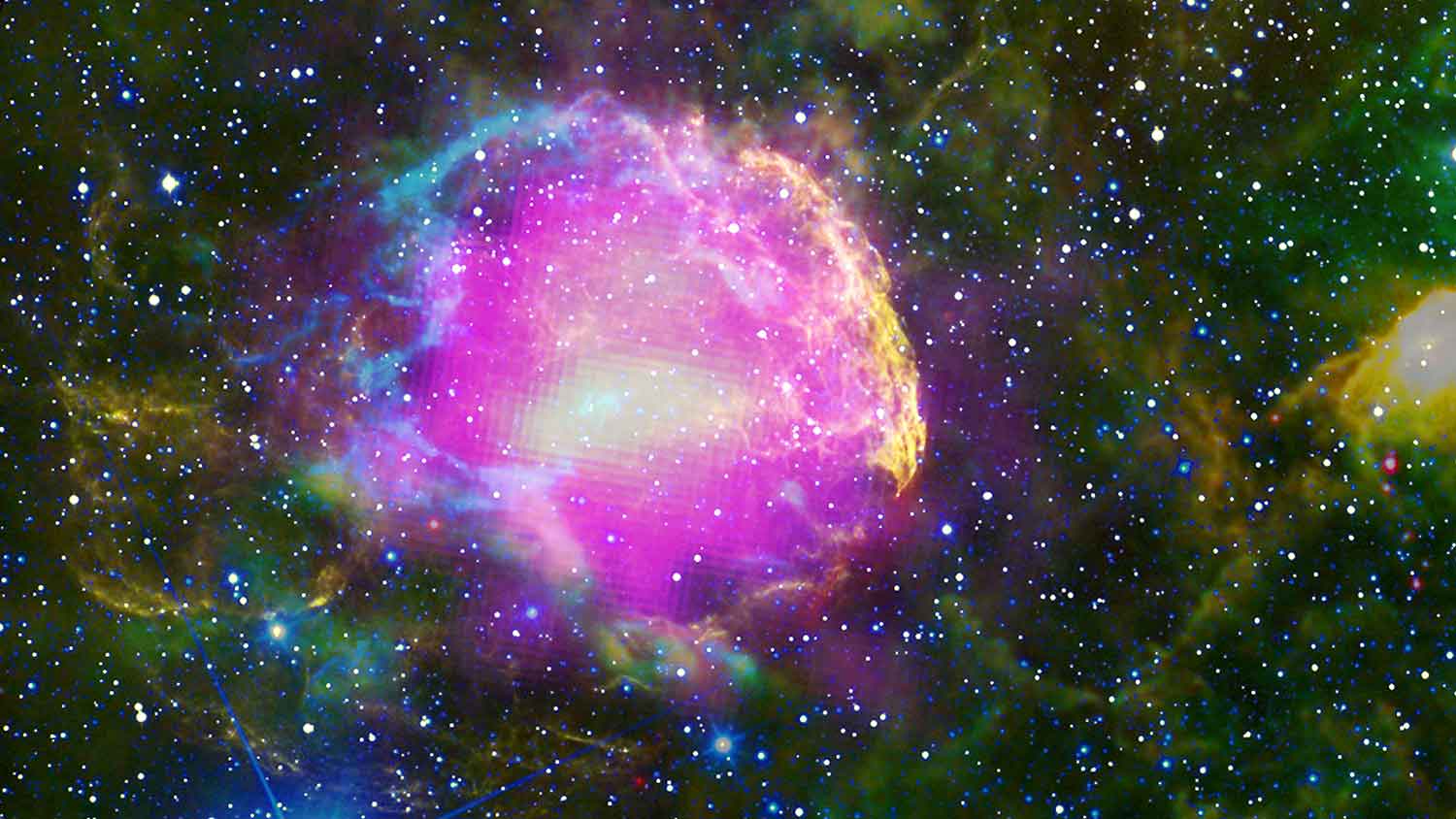
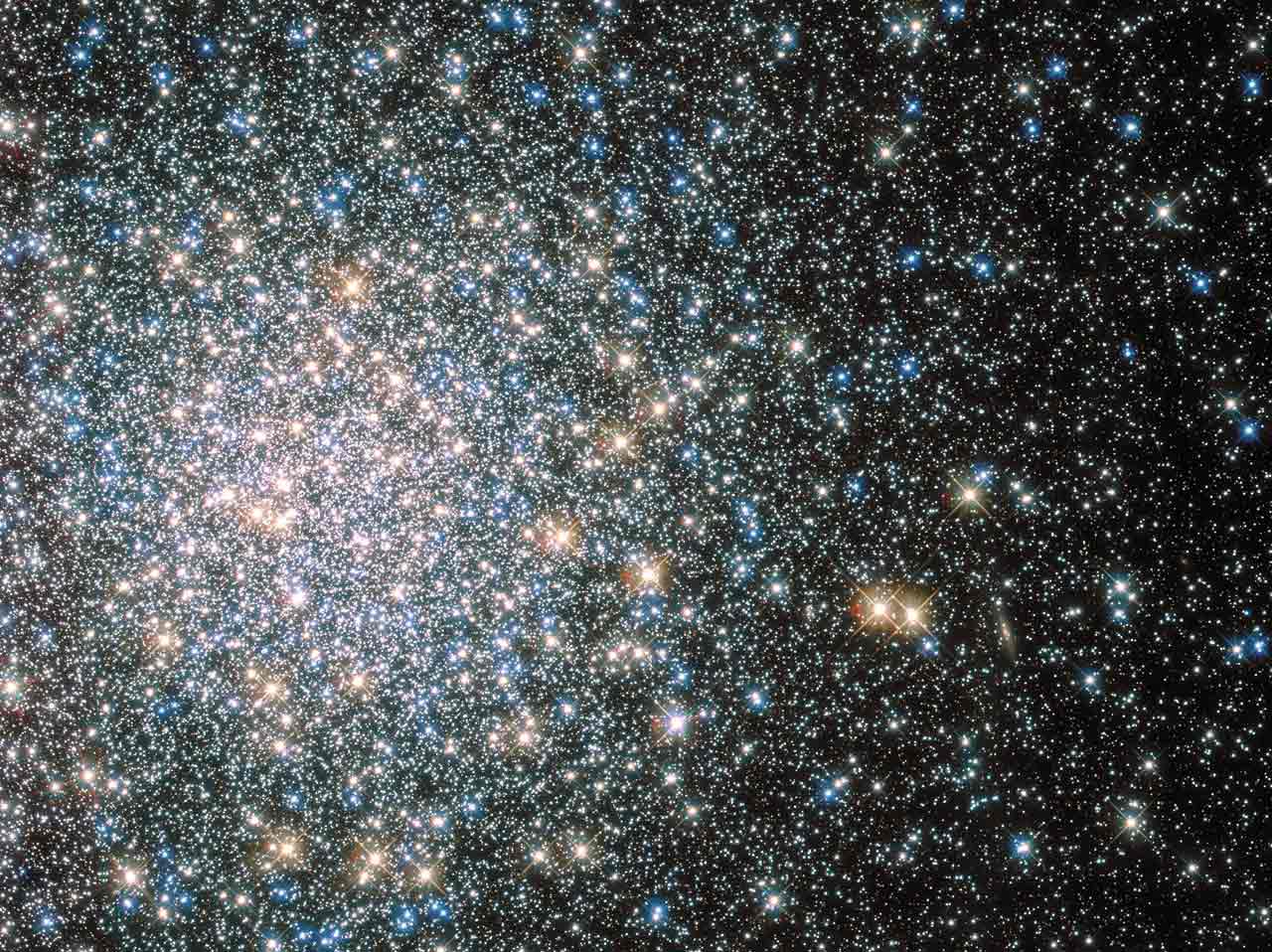
A cluster of stars in space

NASA Goddard

We’ve been exploring space since the 1950s and studying it for thousands of years. But we’ve barely scratched the surface. What do we know about the universe—and what’s still unknown?

You can learn more at Britannica School!

WORD OF THE DAY

inquisitive

PART OF SPEECH:

adjective

Definition:

: tending to ask questions : having a desire to know or learn more

Definitions provided by
Merriam-Webster Logo

Wordrow

O
O
O
O
O
O

In Case You Missed It

Crystalyne Curley is the first female Speaker of the Navajo Nation Council.

03.21.23

In ancient times, the Maya people built a network of roads that would have allowed them to trade and communicate over long distances.

03.14.23

Eighth graders used engineering to help people who are facing challenges.

03.10.23

Writer, photographer, and filmmaker Benjamin Mack-Jackson’s images of Ukraine tell the story of a war.

03.07.23

Making History

A woman speaks into a microphone at a podium.

Making History

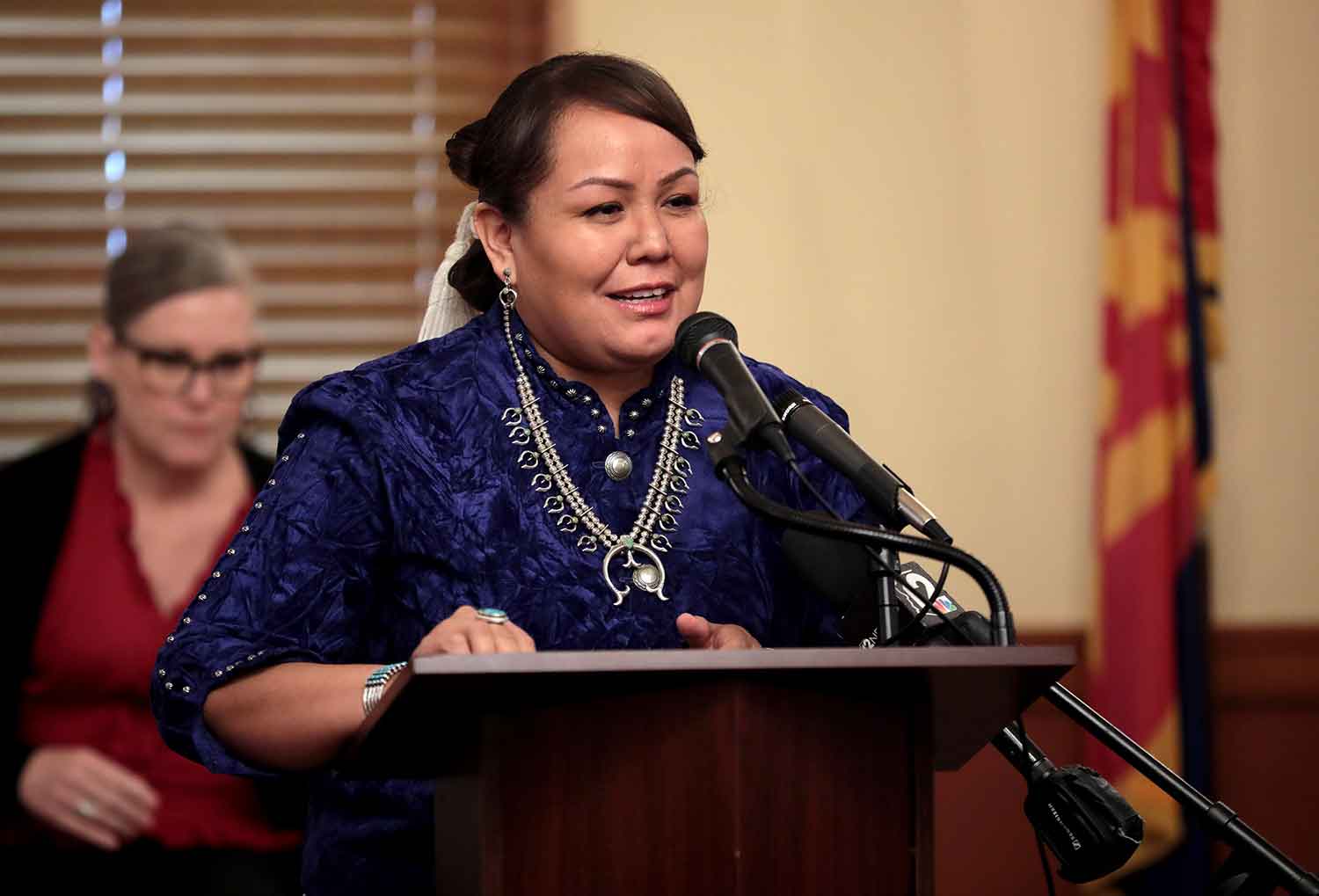
Crystalyne Curley is the first female Speaker of the Navajo Nation Council.

A woman speaks into a microphone at a podium.

Gage Skidmore (CC BY-SA 2.0)

Crystalyne Curley just made history by getting elected to a powerful position in the government of the Navajo Nation. Now, she wants to use her influence to help enrich people’s lives.

In January 2023, Curley was elected Speaker of the Navajo Nation Council, which is the legislative (lawmaking) branch of the Navajo government. The Council is made up of 24 delegates who represent the people living in different areas of the Navajo reservation. Curley was elected to her first term in the Council in 2022. She became Speaker after a vote within the Council. This makes her a leader within the Council. Curley appoints delegates to committees, calls special sessions, makes budget recommendations, and more. 

Curley has been in the public eye for a long time. She first ran for the Council several years ago. Previously, she was senior public information officer for former Navajo Nation president Jonathan Nez.

As Speaker, Curley wants to improve the quality of life on the Navajo reservation, where many people lack basic resources. American Indian groups say the lack of resources is due partly to U.S. government rules that make it difficult for American Indian communities to make improvements. Curley has firsthand experience with need.

“I’m one of the products of no electricity [and] no water, and to this day I still don’t have cell service within my home, and it’s these troubles that some of the leaders don’t know the struggle of,” Curley told AZ Central. “I wanted to use my platform to speak for those who live far off the highway, that live in the rural parts of our nation.”

Curley, who speaks the Navajo language, also wants to make sure that Navajo history is respected and preserved.

“We have to use our Navajo language, our culture,” Curley said. “That’s what drives me, is fundamentals of our values and our culture and our language. We need to teach that to our Navajo children to continue to speak our language.”

Did You Know?

Different tribal flags flash on and off the screen.

yfpro/Shutterstock.com; Animation Encyclopædia Britannica, Inc.

The Navajo Nation is one of 573 tribal governments in the United States. Tribal governments have sovereignty, or the right to self-govern. In many ways, tribal governments are similar to state governments. They have the power to establish their own government structures, make their own laws, build roads, run schools, and more. Like state governments, tribal governments are subject to oversight by the U.S. government and are required to follow many U.S. laws.

Changemakers

March is Women’s History Month. To celebrate, we’re highlighting just a few remarkable women. You can learn more about all of them—and many more—at Britannica School.

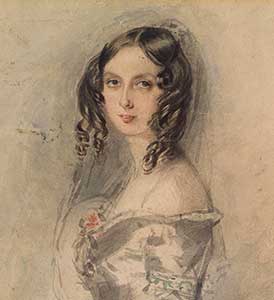
Ada Lovelace (1815–1852).

A mathematician at a time when most women had few educational opportunities, Lovelace invented a program for an early prototype of a computer. In fact, she’s often called the first computer programmer.

Carl H. Pforzheimer Collection of Shelley and His Circle/From The New York Public Library Digital Collection

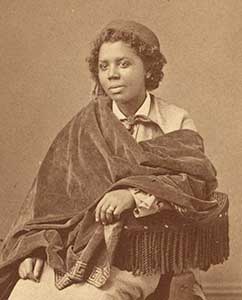
Edmonia Lewis (1844–1907).

Born in New York to a Black man and a woman of African and Ojibwa heritage, Lewis studied art at Oberlin College during the Civil War. Her marble sculptures highlight the stories of Black Americans and those who championed their freedom.

Schomburg Center for Research in Black Culture, Prints and Photographs Division/New York Public Library Digital Collection

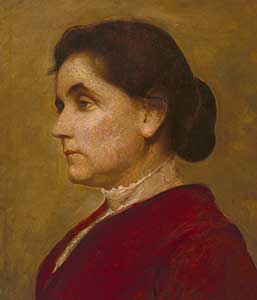
Jane Addams (1860–1935).

A firm supporter of women’s suffrage (women’s right to vote) and workers’ rights, Addams is best known as the founder of Hull House in Chicago, Illinois. Hull House provided services to immigrants, including educational opportunities and social programs.

National Portrait Gallery, Smithsonian Institution, Washington, D.C.; partial gift of Mrs. Nancy Pierce York and Mrs. Grace Pierce Forbes (object no. NPG.78.48)

Alice Wong (born in 1974).

Alice Wong was born with a condition called spinal muscular atrophy, which damages nerve cells in the brain and spinal cord over time. Her own experiences sparked an interest in fighting for the rights of people with disabilities. Today, she is the founder and director of the Disability Visibility Project. The organization works to increase representation of people with disabilities in the media.

© Eddie Hernandez

There’s more to explore. Check out the July 19, 2022, edition of “In the News!” to read about women who paved the way for equal rights in the United States.

A Rich History

Animated GIF showing people, artifacts, lifestyle, and crafts of the Navajo culture

© grandriver—E+, CoolPhotography—iStock/Getty Images, From “Fifth Annual Report of the Bureau of Ethnology to the Secretary of the Smithsonian Institution” 1880, © Feije Riemersma, Reid Dalland, Anna Krivitskaia, Mickem, George Burba/Dreamstime.com, © enrico113/stock.adobe.com; Animation Encyclopædia Britannica, Inc.

Crystalyne Curley holds a leadership position in the government of the Navajo Nation. The Navajo people have a long and rich history. They were in the southwestern part of what’s now the United States long before Europeans arrived in North America. You can read more about the Navajo people at Britannica School.

Find out at Britannica School!

WORD OF THE DAY

parity

PART OF SPEECH:

noun

Definition:

: the state of being equal

Definitions provided by
Merriam-Webster Logo

WordRow

Word Search

O
O
O
O
O
O

In Case You Missed It

Many people work five days a week. But studies show that a four-day workweek might be good for workers and companies.

03.17.23

In ancient times, the Maya people built a network of roads that would have allowed them to trade and communicate over long distances.

03.14.23

Eighth graders used engineering to help people who are facing challenges.

03.10.23

Writer, photographer, and filmmaker Benjamin Mack-Jackson’s images of Ukraine tell the story of a war.

03.07.23

Would a Four-Day Workweek Work?

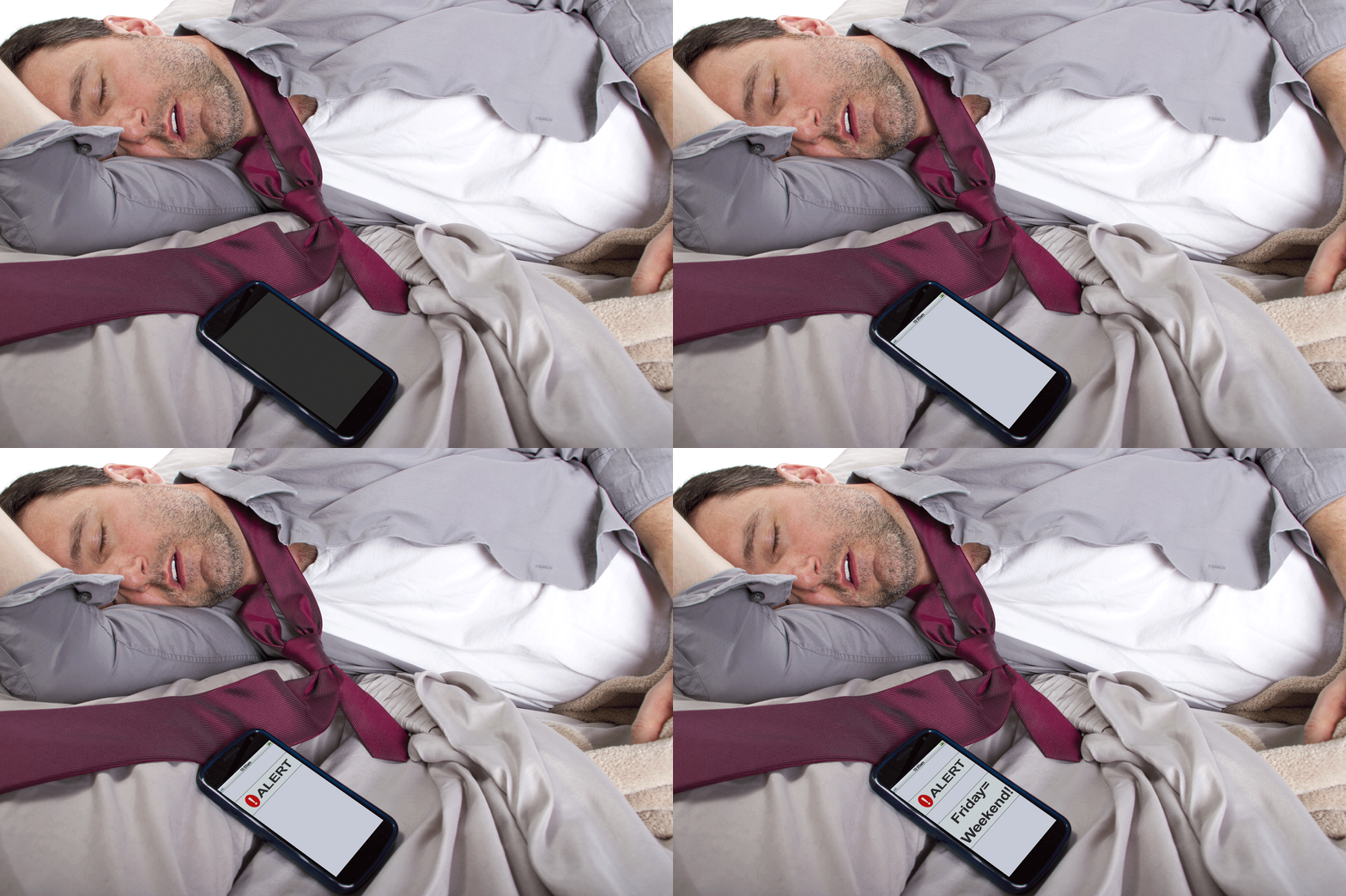
A man in an open shirt and loosened tie sleeps as his phone gives an alert that Friday is part of the weekend.

Would a Four-Day Workweek Work?

Many people work five days a week. But studies show that a four-day workweek might be good for workers and companies.

A man in an open shirt and loosened tie sleeps as his phone gives an alert that Friday is part of the weekend.

© Innovatedcaptures/Dreamstime.com; Animation Encyclopædia Britannica, Inc.

Could workers around the world soon get an extra day off every week? Recently, several studies have shown that reducing a workweek from five days (or 40 hours a week) to four days (or 32 hours a week) has a range of benefits for both companies and employees. 

In the studies, companies that normally operate on a five-day workweek agreed to try out a four-day workweek without lowering their workers’ pay. Most of the companies found that the employees got just as much work done in four days as they had in five days. In some cases, employees got even more work done. Some of the companies found they made more money. And employees said they had more time to rest, exercise, and be with their families. Overall, most of the companies and employees were happier with the four-day workweek—and most of the companies in the studies decided to stick with it.

A four-day workweek wouldn’t be realistic for everyone. The workers in the studies are paid a yearly salary that remains the same no matter how many hours they work. Many workers are paid by the hour. If they worked fewer hours, they would earn less money—unless their hourly wage was increased. And some industries can’t just shut down for an extra day each week. For example, cutting nurses’ hours would require hospitals to hire more people to take care of patients. 

But the buzz around the four-day workweek is getting louder. Researchers say that if the idea catches on, it could be a game changer for millions of workers worldwide.

Did You Know?

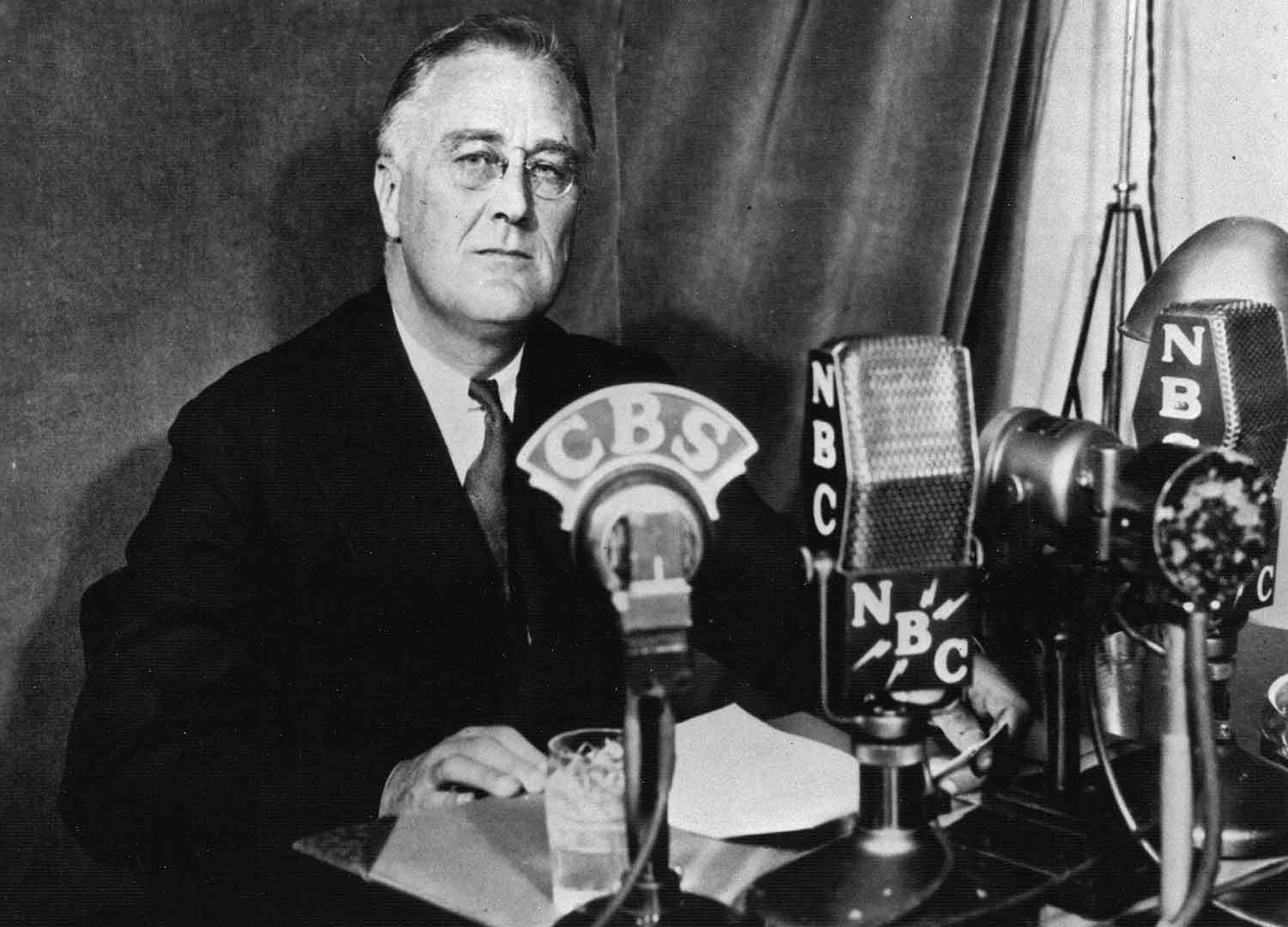
Franklin D. Roosevelt sits in front of radio microphones and looks at the camera.

Courtesy of the Franklin D. Roosevelt Library and Museum website; version date 2009

President Franklin D. Roosevelt, seen here in 1934, signed a law shortening the workweek.

Before the 1930s, U.S. workers who were paid by the hour often worked 10 to 12 hours a day six days a week. In 1938, President Franklin D. Roosevelt signed the Fair Labor Standards Act, which limited the workweek to 44 hours for hourly workers. (This was later reduced to 40 hours.) Companies were required to pay anyone working over that limit one-and-a-half times their hourly wage.

Four-Day School Week?

© alexdndz/stock.adobe.com; Animation Encyclopædia Britannica, Inc.

People are talking about a four-day workweek. What about a four-day school week?

Some U.S. schools are already operating on four-day schedules. They’ve partly made up for the reduced number of days by extending the school day an average of 50 minutes. The effects of this shortened week have been mixed. 

According to recent studies, most parents and students like the four-day week. Students say they get more sleep, and parents say their kids spend the extra time working, helping around the house, doing hobbies, and hanging out with their families. Schools say they save money because some school employees are paid by the hour. And many teachers say they spend their day off preparing lessons—and they appreciate the additional time.

But the studies suggest that students may learn less when they go to school for only four days a week. During a school year, students are expected to make a certain amount of progress—in reading, math, and other areas. The studies show that students who go to school for four days a week progress more slowly than students who are in school for five days.

Work Rules

Library of Congress, Washington, D.C. (LC-DIG-nclc-01581)

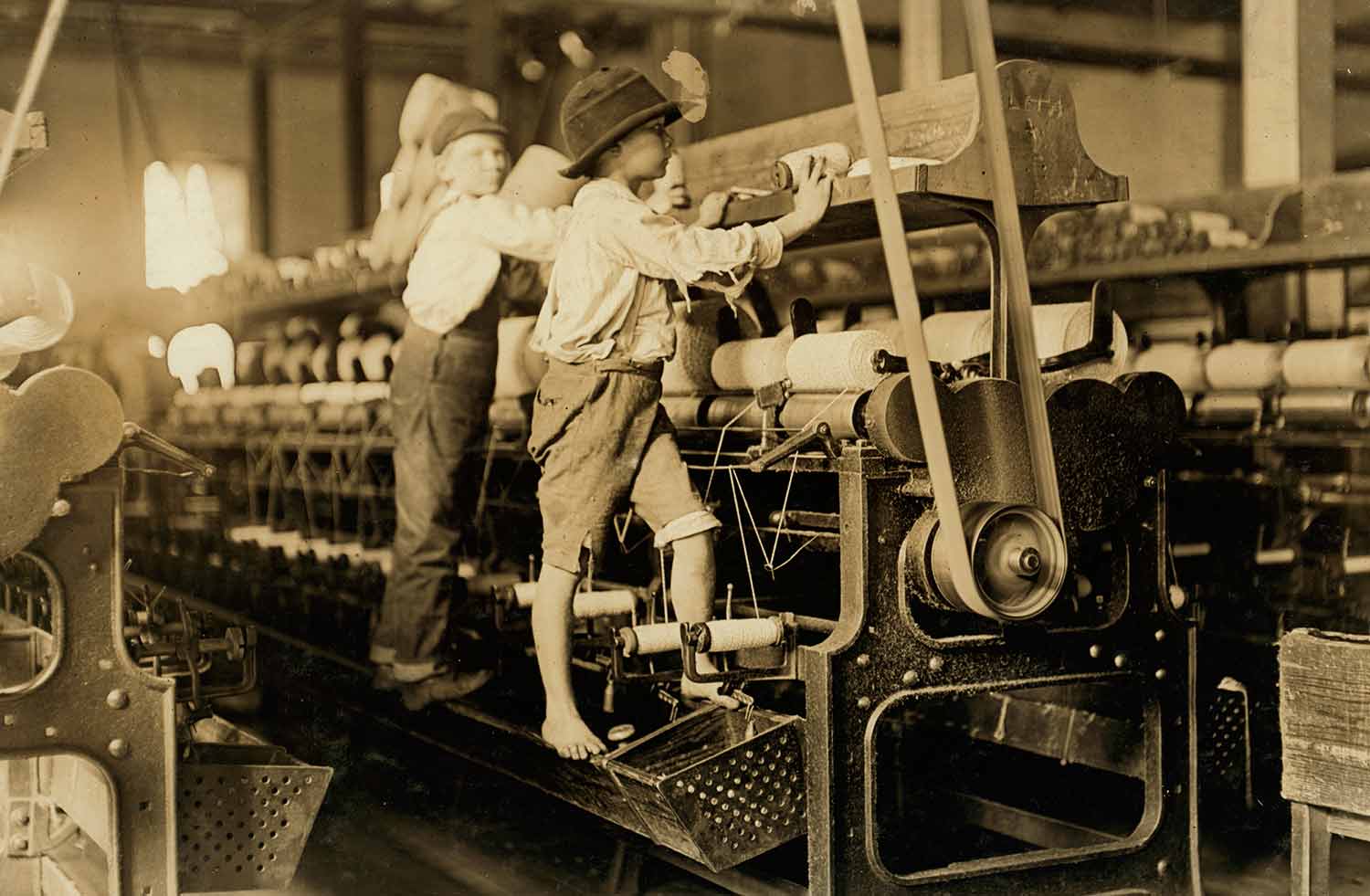
Before there were laws limiting child labor, many children in the U.S. worked long hours in dangerous jobs.

Many of the benefits that workers have, like shorter hours and health insurance, exist because governments made laws requiring them. There are also laws limiting how much children can work. What do you think it was like to be a worker before these laws existed? 

You can learn more at Britannica School!

WORD OF THE DAY

avocation

PART OF SPEECH:

noun

Definition:

: an activity that you do regularly for enjoyment rather than as a job

Definitions provided by
Merriam-Webster Logo

Criss Cross

All of the words describe things to do when you’re not in school. See if you can put the words in the right spots.

O
O
O
O
O
O

In Case You Missed It

In ancient times, the Maya people built a network of roads that would have allowed them to trade and communicate over long distances.

03.14.23

Eighth graders used engineering to help people who are facing challenges.

03.10.23

Writer, photographer, and filmmaker Benjamin Mack-Jackson’s images of Ukraine tell the story of a war.

03.07.23

In celebration of Women’s History Month, here’s the story of an all-female battalion that played a vital role in World War II.

03.03.23

Ancient Superhighways

Several men lined up side by side in a wooded area.

Ancient Superhighways

In ancient times, the Maya people built a network of roads that would have allowed them to trade and communicate over long distances.

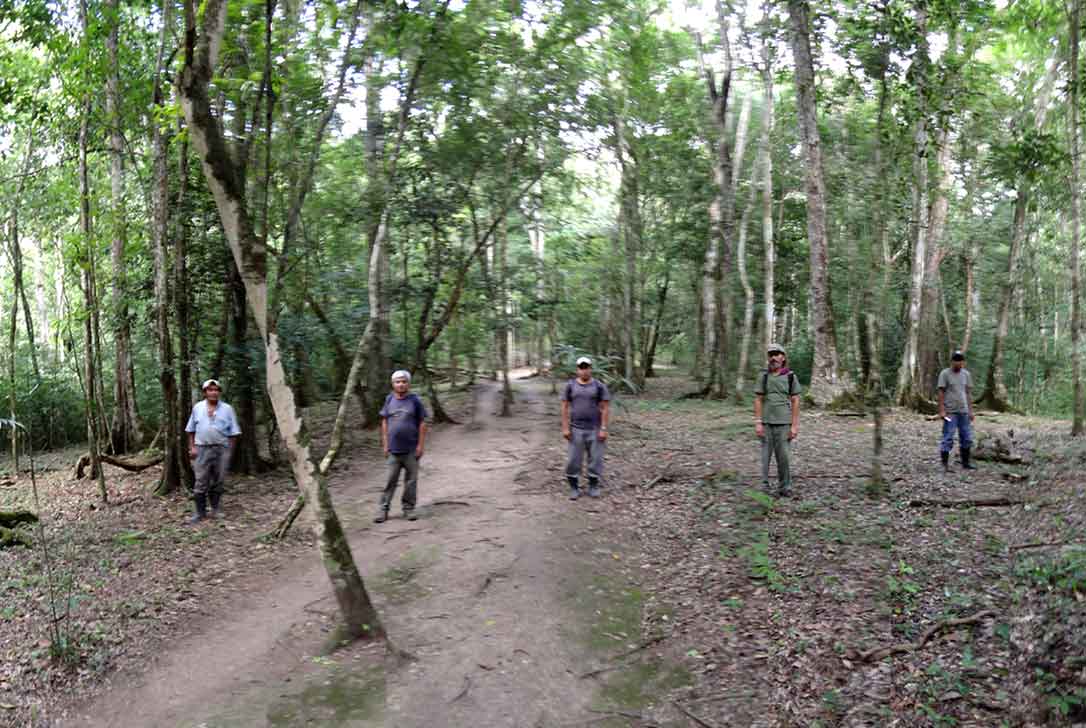
Several men lined up side by side in a wooded area.

Hansen, R., Moraels-Aguilar, C., Thompson, J., Ensley, R., Hernandez, E., Schreiner, T., . . . Martinez, G. (2022). LiDAR analyses in the contiguous Mirador-Calakmul Karst Basin, Guatemala. (CC BY 3.0)

This photo shows the location of one of the Maya roads. Researchers found that this road was about 40 meters (131 feet) wide.

Some ancient people were amazingly advanced. Scientists know this because they’ve studied civilizations like the Maya. More than 2,000 years ago, the Maya people of North and Central America built large cities with palaces and pyramids. They were successful farmers. They even studied the planets and came up with an accurate calendar. But a new discovery reveals that the Maya civilization was even more sophisticated than anyone realized. Scientists have learned that the Maya had a system of interconnecting roads. 

“[The roads are] the world’s first superhighway system,” Richard Hansen, a professor of anthropology at Idaho State University, told CNN.

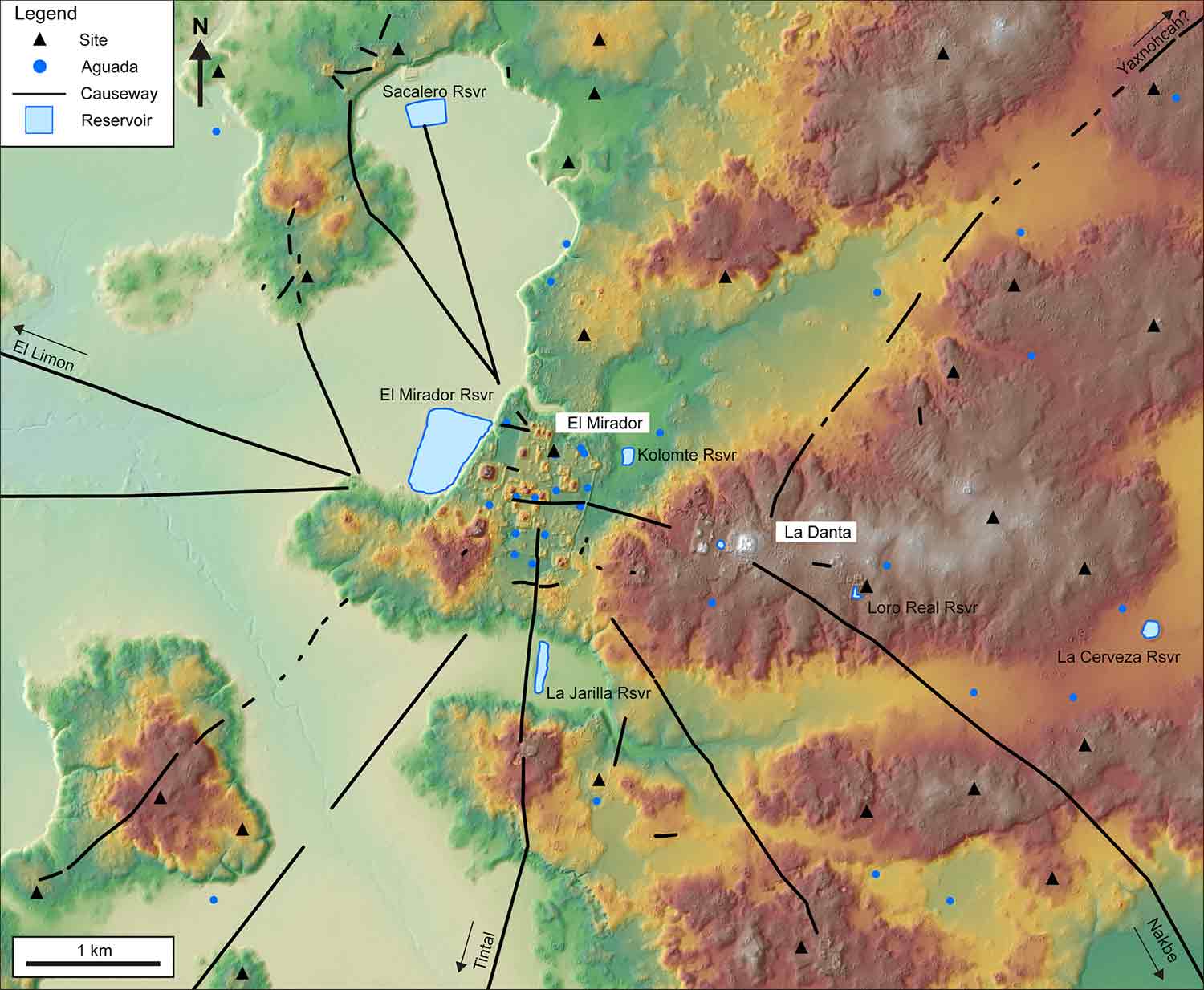
An elevation map on part of Guatemala with causeways labeled

Hansen, R., Moraels-Aguilar, C., Thompson, J., Ensley, R., Hernandez, E., Schreiner, T., . . . Martinez, G. (2022). LiDAR analyses in the contiguous Mirador-Calakmul Karst Basin, Guatemala. Ancient Mesoamerica. Cambridge University Press, 2022. (CC BY 3.0)

The Maya causeways, or roads, stretched across vast distances. The darker colors on this map indicate areas of higher elevation.

Hansen led a recent study in which scientists used laser technology to look under the thick canopy of trees in the rainforest of Guatemala. The researchers discovered a 650-square-mile (1,700-square-kilometer) area containing the ruins of hundreds of Maya cities and towns. A system of stone roads—called sacbeob (“white roads”) in the Mayan language—connects these cities and towns. The roads are made of mud and stone and covered with a layer of white plaster that reflects moonlight, making the surface easier to see at night in a dark jungle.

An elevation map on part of Guatemala with causeways labeled

Hansen, R., Moraels-Aguilar, C., Thompson, J., Ensley, R., Hernandez, E., Schreiner, T., . . . Martinez, G. (2022). LiDAR analyses in the contiguous Mirador-Calakmul Karst Basin, Guatemala. Ancient Mesoamerica. Cambridge University Press, 2022. (CC BY 3.0)

Laser technology showed scientists where the Maya people built roads.

The size of the road network reveals a lot about the Maya civilization. In many ways, it was modern. Building the roads would have required complicated plans as well as cooperation between cities and towns. And the roads’ existence means there would have been a lot of travel and communication between towns.

Did You Know?

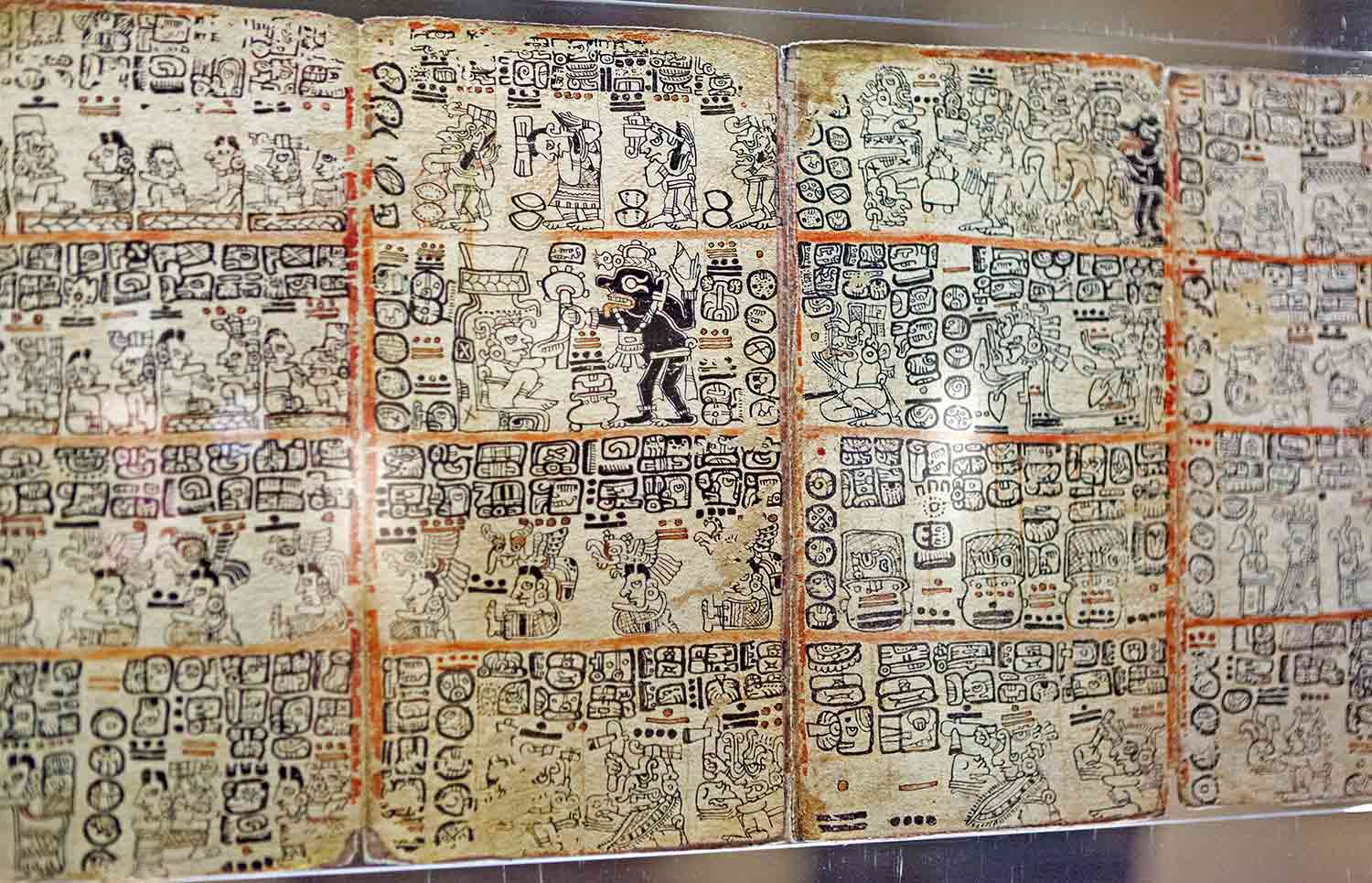
Sixteen panels showing hieroglyphics

© Dmitriy Moroz/Dreamstime.com

The Madrid Codex is one of the few surviving Maya codices.

The Maya people had a writing system, called hieroglyphics, and produced many books, called codices. Scientists often learn about people of the past by studying their writing. But when the Spanish conquered the Maya in the 1500s, they burned most of the codices.

Happy Pi Day!

An animation shows digits of pi being added one after the other.

Encyclopædia Britannica, Inc.

The number pi has an infinite number of digits!

The Maya people developed an advanced system of mathematics. They even came up with the number zero, as well as a place value system.

Speaking of math, this is the time of year when we honor pi. Pi is a number that starts like this: 3.1415926535. Pi has an infinite number of digits. So far, pi has been calculated to more than 50 trillion digits to the right of that decimal point! But, understandably, most people shorten pi to 3.14. And, since you can write March 14 as “3/14,” that date is celebrated around the world as Pi Day.

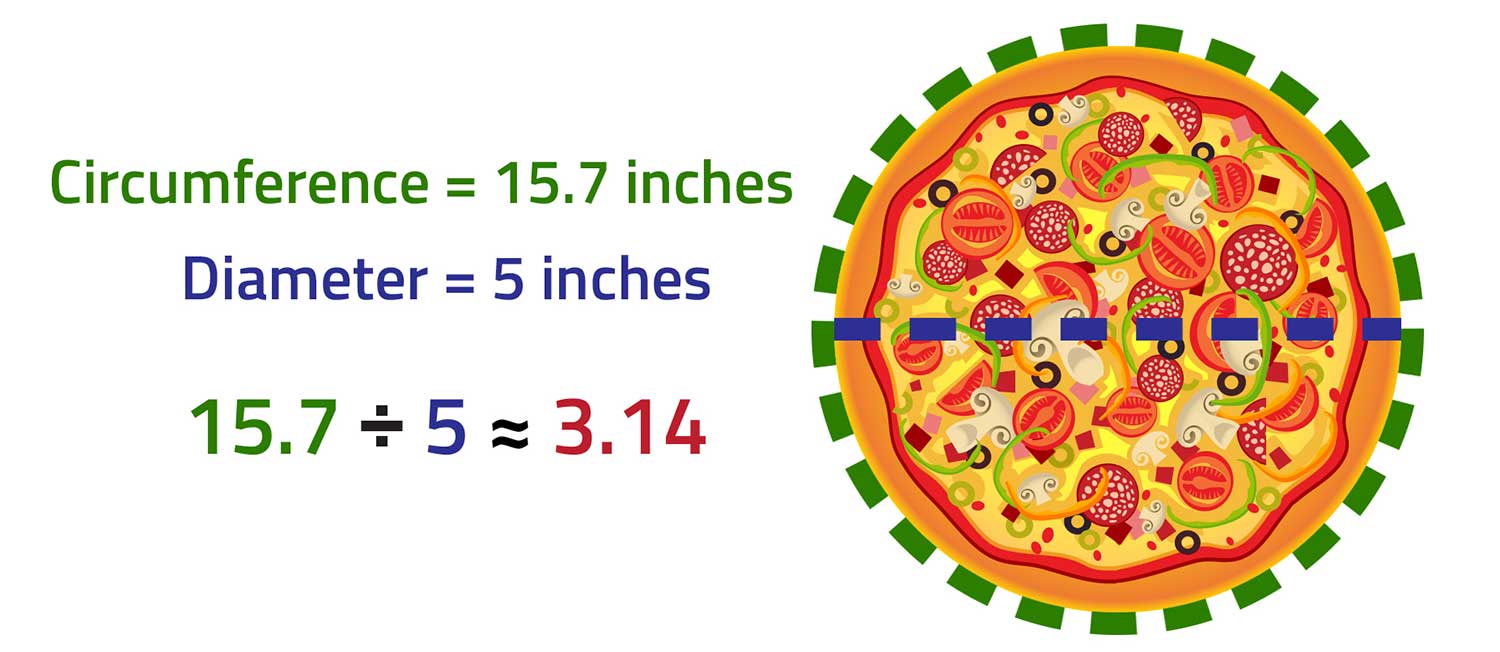
If you’ve learned about pi in school, you may already be thinking of a circle. Pi is a somewhat magical ratio related to the measurements of a circle.Let’s say you have a pizza pie (that’s pie, not pi) shaped like a circle. If you measure across the widest part of the pizza, that’s the diameter. And if you measure all the way around the pizza, that’s the circumference.

© Zitramon/Dreamstime.com; Composite illustration Encyclopædia Britannica, Inc.

Here’s where the magic comes in: If you divide the circumference by the diameter, you’ll get a number that’s very close to 3.14…no matter what size your pizza is. And this is true for any circle.

© Zitramon/Dreamstime.com; Composite illustration Encyclopædia Britannica, Inc.

If all this talk about pie is making you hungry, there’s good news. Many people celebrate Pi Day by eating pie. Hey, why not?

Maya Marvels

© Lia Koltyrina/Shutterstock.com

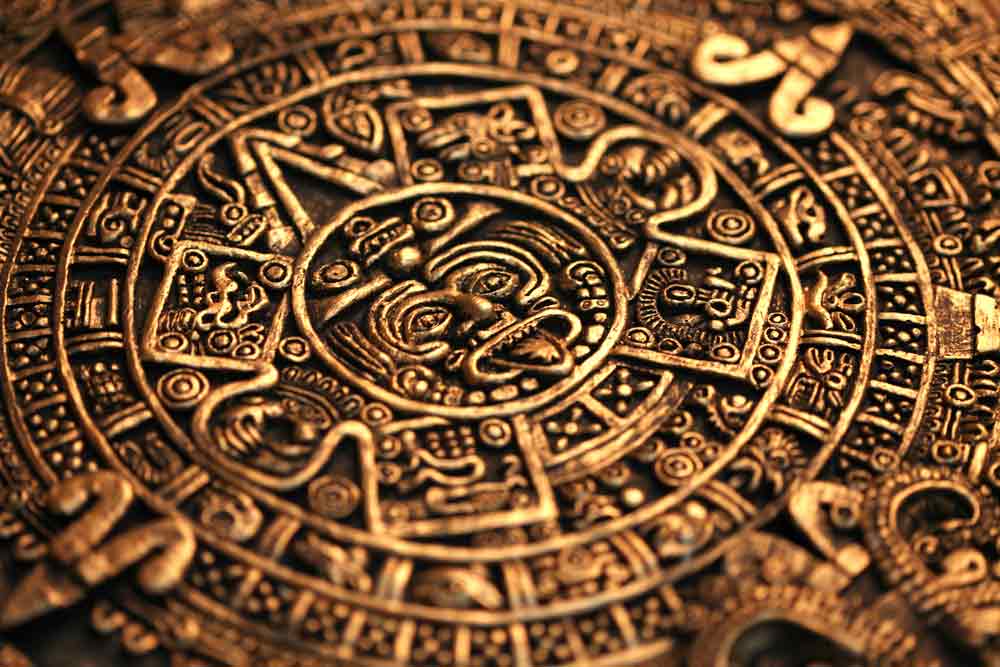
Did you know that, even without telescopes and other instruments to observe the sky, the Maya people were able to predict solar eclipses? They tracked eclipses on a complex calendar, like the one shown here. There’s a lot more to know about the Maya.

Learn more at Britannica School!

WORD OF THE DAY

philomath

PART OF SPEECH:

noun

Definition:

: a lover of learning, especially a student of mathematics

Definitions provided by
Merriam-Webster Logo

Word Search

See if you can find all the types of pie.

O
O
O
O
O
O

In Case You Missed It

Eighth graders used engineering to help people who are facing challenges.

03.10.23

Writer, photographer, and filmmaker Benjamin Mack-Jackson’s images of Ukraine tell the story of a war.

03.07.23

In celebration of Women’s History Month, here’s the story of an all-female battalion that played a vital role in World War II.

03.03.23

Amina Luqman-Dawson’s award-winning novel takes readers to a real-life place where people made a home after escaping enslavement.

02.28.23

How Can I Help?

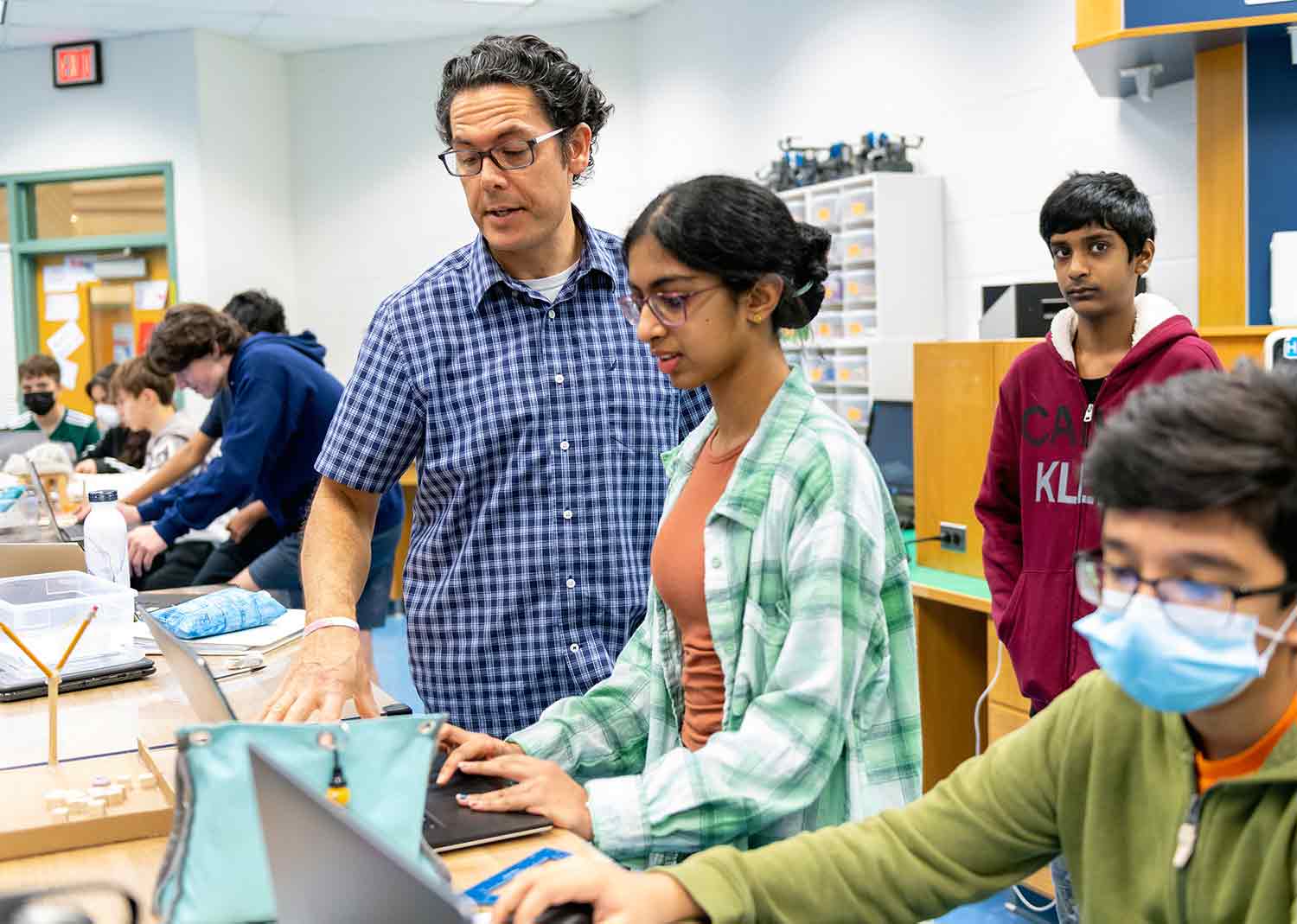
In a classroom, a teacher and student look at a computer as other students work at tables.

How Can I Help?

Eighth graders used engineering to help people who are facing challenges.

In a classroom, a teacher and student look at a computer as other students work at tables.

Karen Bolt/Fairfax County Public Schools

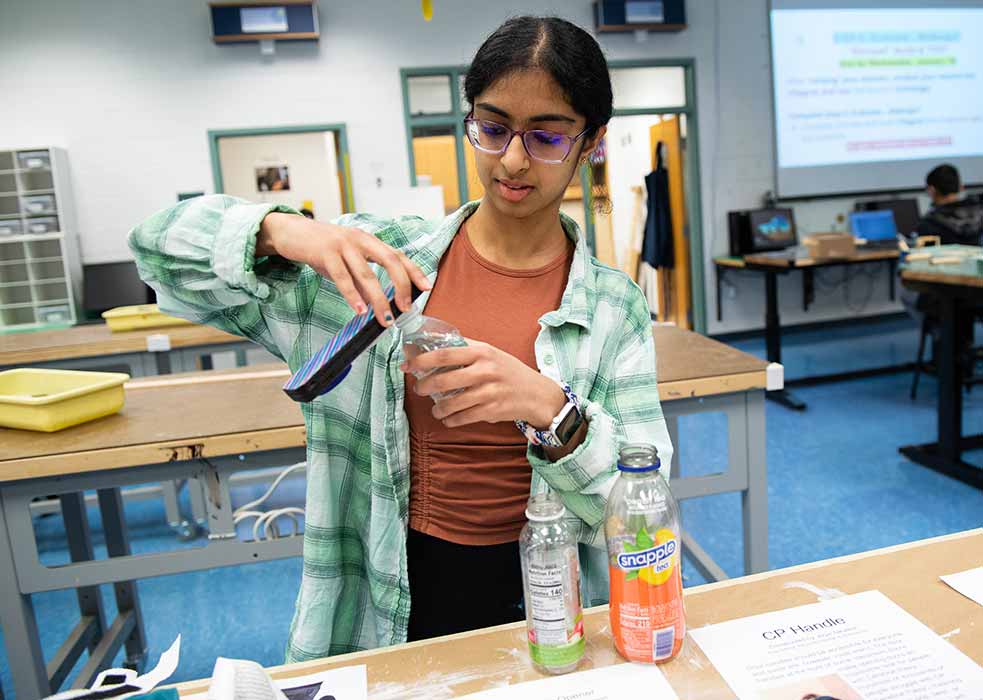
Rachel Carson Middle School teacher Mark Bolt challenges his students to engineer products that can help people.

A group of eighth graders came up with creative solutions to help family and friends who were facing challenges. And they used their engineering skills to do it. Teacher Mark Bolt calls this “engineering with empathy.”

Engineering with Empathy is a unit in Bolt’s engineering class at Rachel Carson Middle School in Herndon, Virginia. Empathy is the ability to notice and share in the feelings of others. Bolt says that engineers, who use science, math, and tools to come up with solutions to problems, need empathy.

“Engineers need to understand their users’ needs, and put themselves in the users’ shoes, in order to then build an effective solution,” Bolt explained in an article on the Fairfax County Public Schools website.

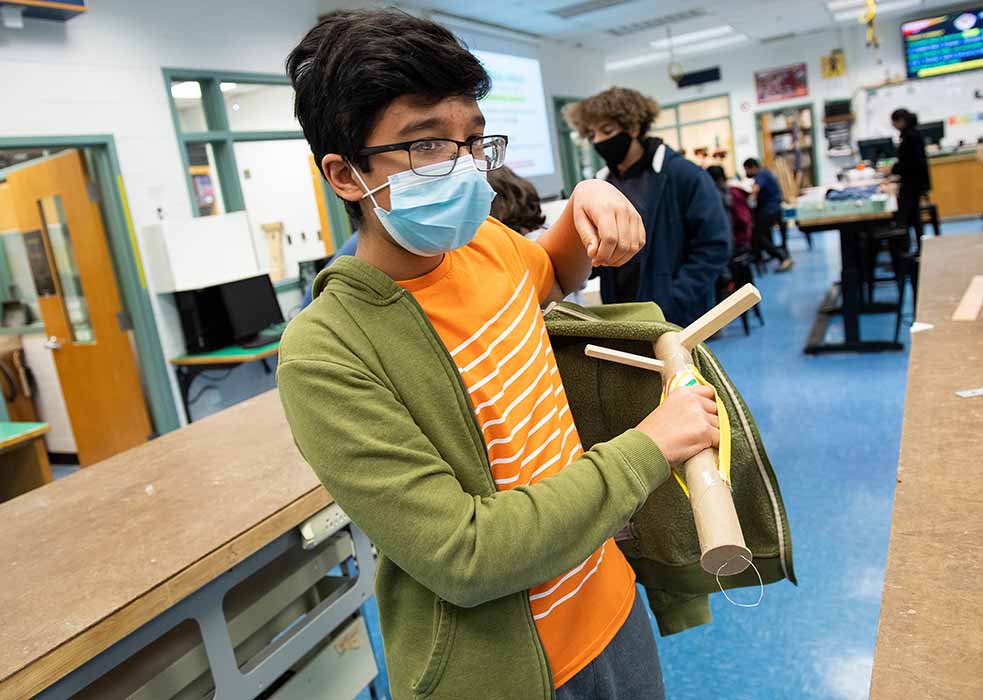
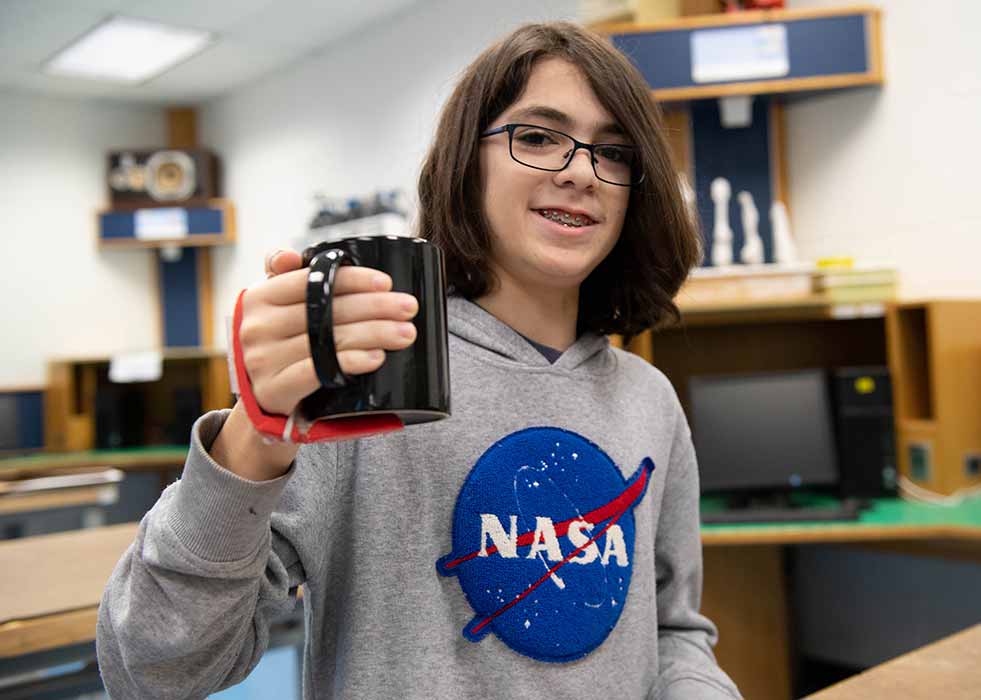
Bolt’s students did exactly this. Aasritha Duriseti saw her grandmother struggling to open a bottle cap and made a bottle opener that’s easy to grip. Roman Moreno-Hines noticed that his grandfather, who has arthritis, has trouble holding a coffee cup. He invented a robotic “third thumb” that holds onto the bottom of a mug.

Engineers go through a process to create, test, and then improve their inventions. When Rishab Nanduri made a back brace to help ease his dad’s back pain, his classmates suggested he improve it by adding foam material that could massage the wearer’s muscles.

According to the Washington Post, each device was adjusted several times as it was developed. Bolt says that when things don’t work as planned, it’s an opportunity to learn.

“If we want to do better, we have to have a chance to fail,” the teacher told the Washington Post.

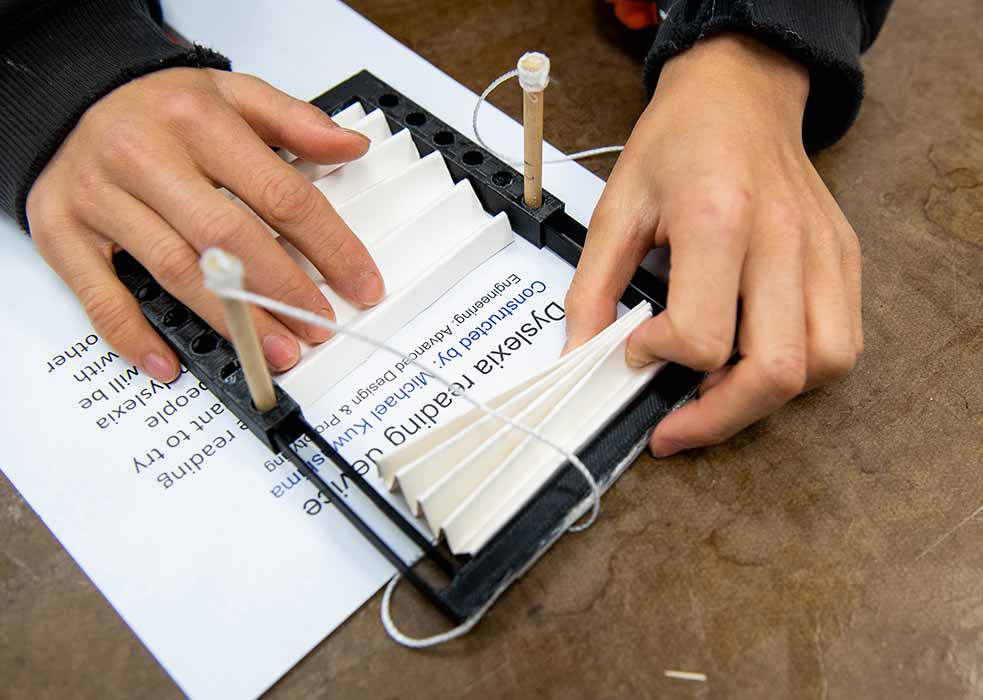
Check out the slideshow to see some of the students’ inventions.

Karen Bolt/Fairfax County Public Schools

Did You Know?

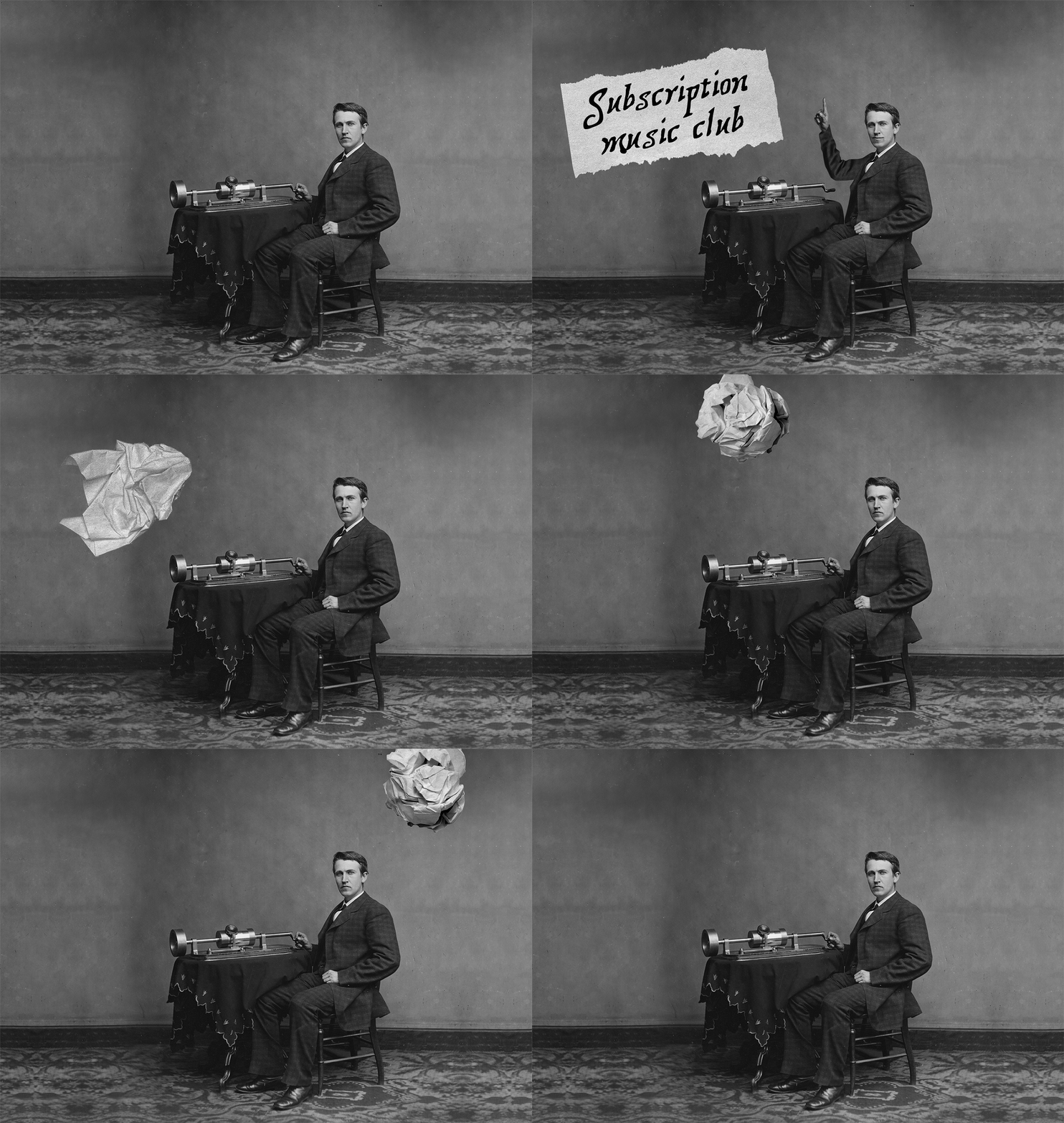
Young Thomas Edison sits at a table and points to paper scraps with the names of failed inventions appearing and being crumpled above him

Brady-Handy Photograph Collection/Library of Congress, Washington, D.C. (LC-DIG-cwpbh-04044), © Kenishirotie/Dreamstime.com, varèche; Animation Encyclopædia Britannica, Inc.

When Thomas Edison was working on the light bulb, he and his team of inventors came up with thousands of ideas that failed when tested. 

In fact, many of Edison’s other ideas didn’t work out either.

Fashion for All

A woman with a cane and a man formally dressed in front of a backdrop that says Christian Siriano

Rachel Murray/Getty Images Entertainment

Actor Selma Blair (left) and designer Christian Siriano pose together at an event. Blair says she might want to work with Siriano on a line of adaptive clothing.

Actor Selma Blair was diagnosed with multiple sclerosis (MS) in 2018. MS is a condition that can affect a person’s ability to move their body. Blair says that for her, MS makes it harder to put on clothing and makeup. She’s not alone. Many people with disabilities find that buttons, zippers, eye pencils, and other items can be challenging to use. That’s where adaptive products come in.

Adaptive fashion is a field in which clothes are engineered to be easier to put on and take off. For example, a designer might make a sweater that has a large opening for the neck or a jacket that closes with Velcro or magnets instead of buttons. 

Adaptive clothing has become increasingly available. Blair, who loves to use clothing to express herself, says she might want to create her own fashion line one day. She’s even thought about working on it with fashion designer Christian Siriano, who is a friend of hers.

“I would like to partner with someone like Christian Siriano on a line [of clothing] for everyone,” Blair told Harper’s Bazaar in 2019. “It can still be chic. You shouldn’t have to sacrifice style.” 

In 2022, Blair announced that she’s working with Guide Beauty on a line of makeup that’s easier to grip while using. Blair told Self she’s interested in beauty products that are “considerate and thoughtful to people’s experiences.”

Driving Innovation

Side by side portrait of a man and a set of patent illustrations for a three-way traffic signal

The Cleveland Press Collection, Michael Schwartz Library at Cleveland State University, U.S. Patent and Trademark Office; Composite photo Encyclopædia Britannica, Inc.

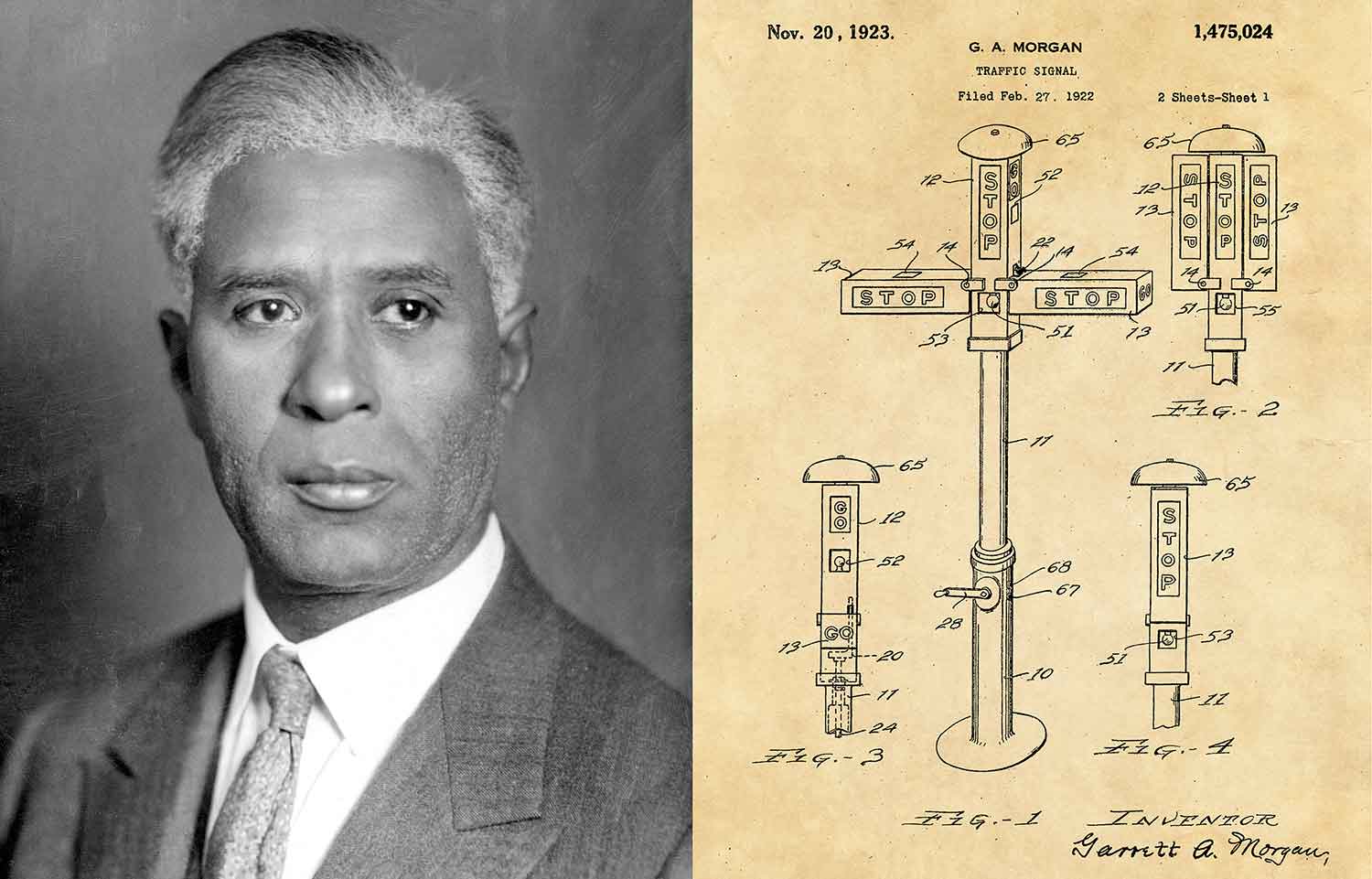
Inventor Garrett Morgan designed a three-way traffic signal. He received a patent for it in 1923.

Inventor Garrett Morgan noticed a problem with traffic and came up with a solution to fix it. In the 1920s, driving cars was still a fairly new thing, and there weren’t as many safety measures as there are now. Traffic signals had two settings: go and stop. There was nothing in between, leading to a lot of accidents as drivers hit the brakes without warning.

Morgan’s 1923 invention, a three-way traffic signal, paved the way for today’s green-yellow-red traffic lights.

That’s smart engineering.

Learn more at Britannica School!

WORD OF THE DAY

adaptive

PART OF SPEECH:

adjective

Definition:

used to assist a person with a disability in performing a certain task or activity

Definitions provided by
Merriam-Webster Logo

Crossword

See if you know the answers!

O
O
O
O
O
O

In Case You Missed It

In celebration of Women’s History Month, here’s the story of an all-female battalion that played a vital role in World War II.

03.03.23

Amina Luqman-Dawson’s award-winning novel takes readers to a real-life place where people made a home after escaping enslavement.

02.28.23
Companies are releasing search engines powered by artificial intelligence. But how well do these search engines work?

02.24.23

Scientists built a robot that can go from solid to liquid to solid again.

02.17.23