Unlocking a Mystery
Archaeologists are studying objects from a famous shipwreck in the hopes of finding out what happened.
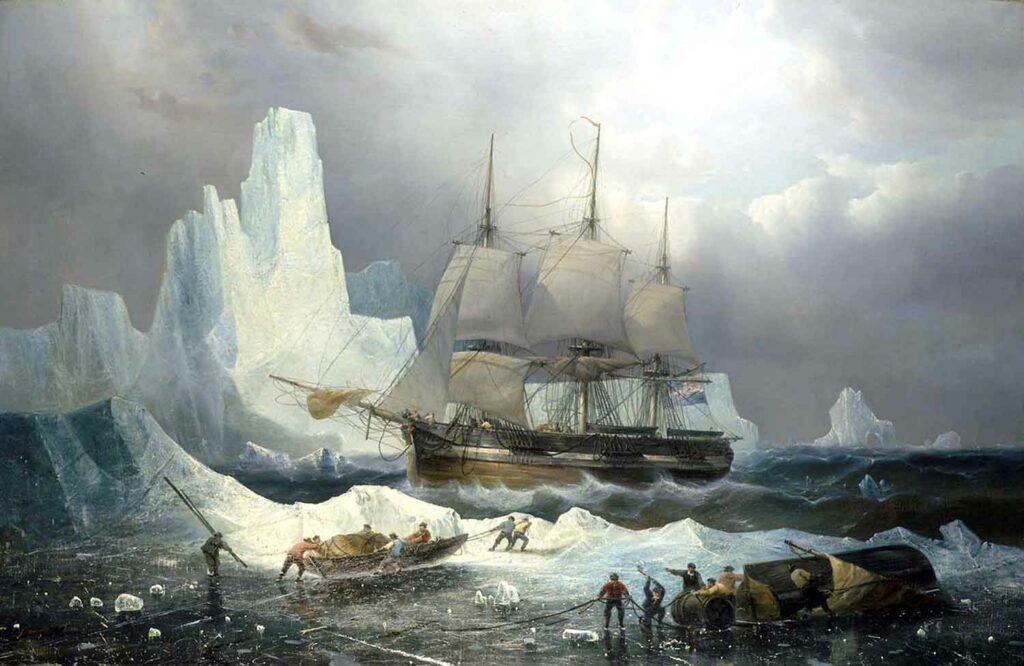
L Archive/Alamy
The story of the Erebus shipwreck was imagined in this 1846 painting by François Etienne Musin, HMS Erebus in the Ice.
Archaeologists trying to solve a 175-year-old mystery may have uncovered some tantalizing clues. They’re hoping a journal found among the remains of a ship called the HMS Erebus will help reveal what happened to the ship’s crew.
The story of the Erebus began in 1845. The Erebus was one of two ships that set sail from England that May on a mission to find the Northwest Passage, which was thought to be a route from the Atlantic Ocean to the Pacific Ocean. Led by Sir John Franklin, the voyage took the HMS Erebus and the HMS Terror through icy Arctic waters. The ships were not up to the task. By 1846 both the Erebus and the Terror, along with Franklin and 129 crewmembers, were trapped in ice.
According to a note that was later found on an Arctic island, some of the crew abandoned the ship and searched for help. Local Inuit (Indigenous) people later reported seeing some Europeans around this time as well. But despite the efforts of the crew, they did not make it, and the final chapter of their story was lost.
Thanks to Inuit oral histories and modern technology, archaeologists were able to locate the Erebus in 2014 and the Terror in 2016. Since that time, divers have recovered hundreds of artifacts from both wrecks. The objects include a hairbrush with strands of hair, kitchen items, and a wax seal with a fingerprint. Many of them are well preserved because they have been protected from decay by the freezing water.
Researchers plan to study all the objects, but they’re particularly interested in the leather journal they found on the wreck of the Erebus. The book still has its pages, and there’s even a writing utensil.
“We came across a folio—a leather book cover, beautifully embossed—with pages inside. It actually has the feather quill pen still tucked inside the cover like a journal that you might write in and put on your bedside table before turning in,” Ryan Harris, chief underwater archaeologist, told the Canadian Broadcasting Corporation (CBC).
Divers found the journal in a pantry, suggesting it might only contain a record of the ship’s food supply. But there’s a chance it will help them learn the fate of Franklin and his crew.
Did You Know?
According to the United Nations Educational, Scientific, and Cultural Organization (UNESCO), there are about three million shipwrecks in the world. Less than 1 percent of them have been explored! On the map below, click on each spot to learn more about a shipwreck that took place there.
Encyclopædia Britannica, Inc.
Ancient Shipwreck
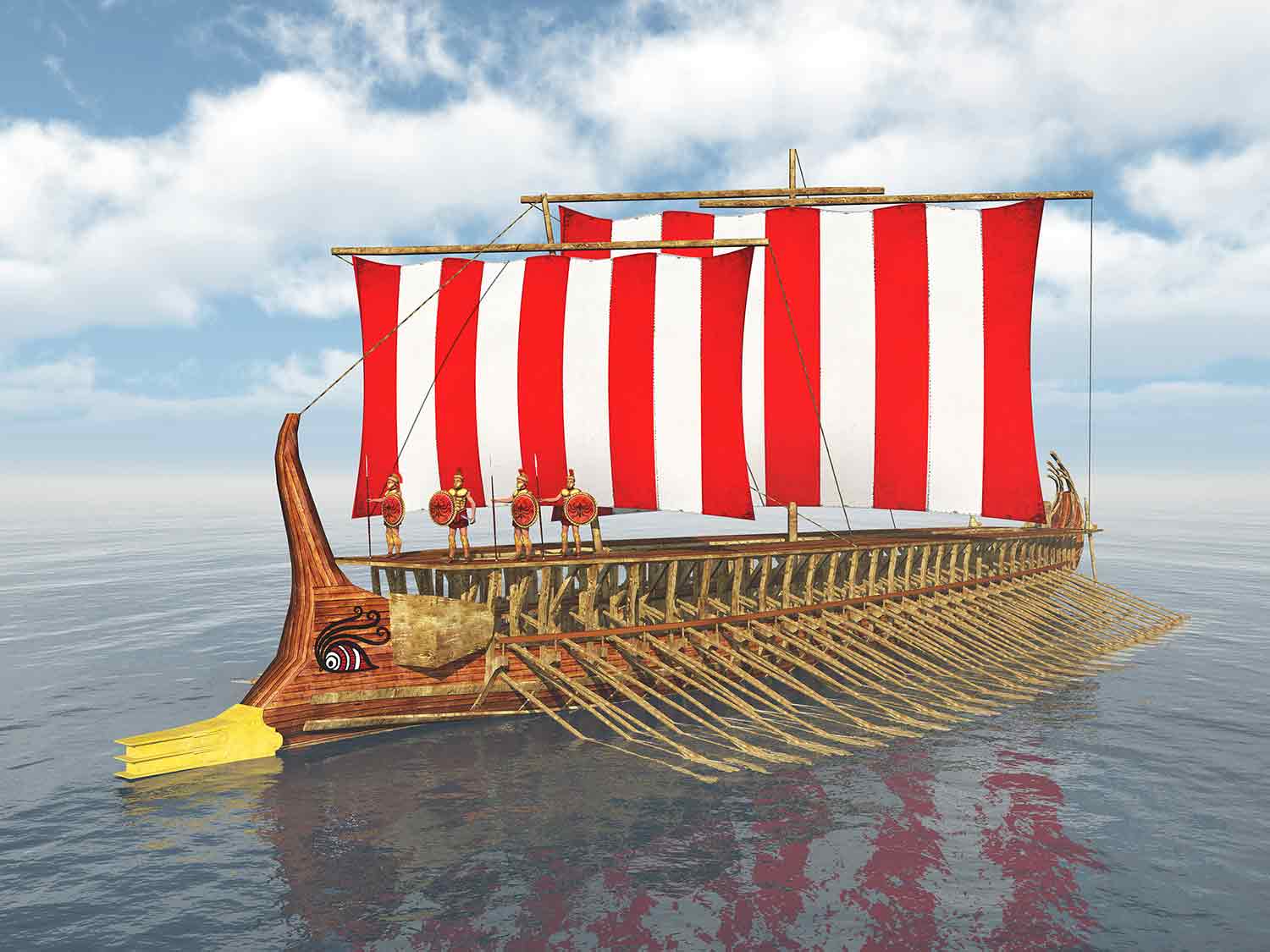
© MR1805—iStock/Getty Images Plus
This computer illustration shows what an ancient galley would have looked like.
Just how long can a ship be preserved underwater? New discoveries are testing the limits.
In 2021, divers located a shipwreck dating back to ancient Greece in the Abū Qīr Bay near Alexandria, Egypt. The European Institute for Underwater Archaeology (IEASM) says the ship dates back to the second century bce, which is about 2,200 years ago.
Experts believe the ship was docking near the city of Heracleion, Egypt, when an earthquake caused a nearby temple to collapse. (Famously, Heracleion was partly destroyed in this earthquake and later sank into the water after a flood.) Stone from the falling building hit and sank the ship, burying it deep under the water—but also protecting it from decay. Scientists used sonar to detect the presence of the ship beneath layers of hardened clay.
The ship, called a galley, was more than 82 feet (25 meters) long. It probably had a giant sail but was powered mostly by oars. These types of ships were mainly used on the Nile River, which empties into the Abū Qīr Bay.
“The finds of fast galleys from this period remain extremely rare,” said Franck Goddio, president of IEASM.
Shortcut Across the World
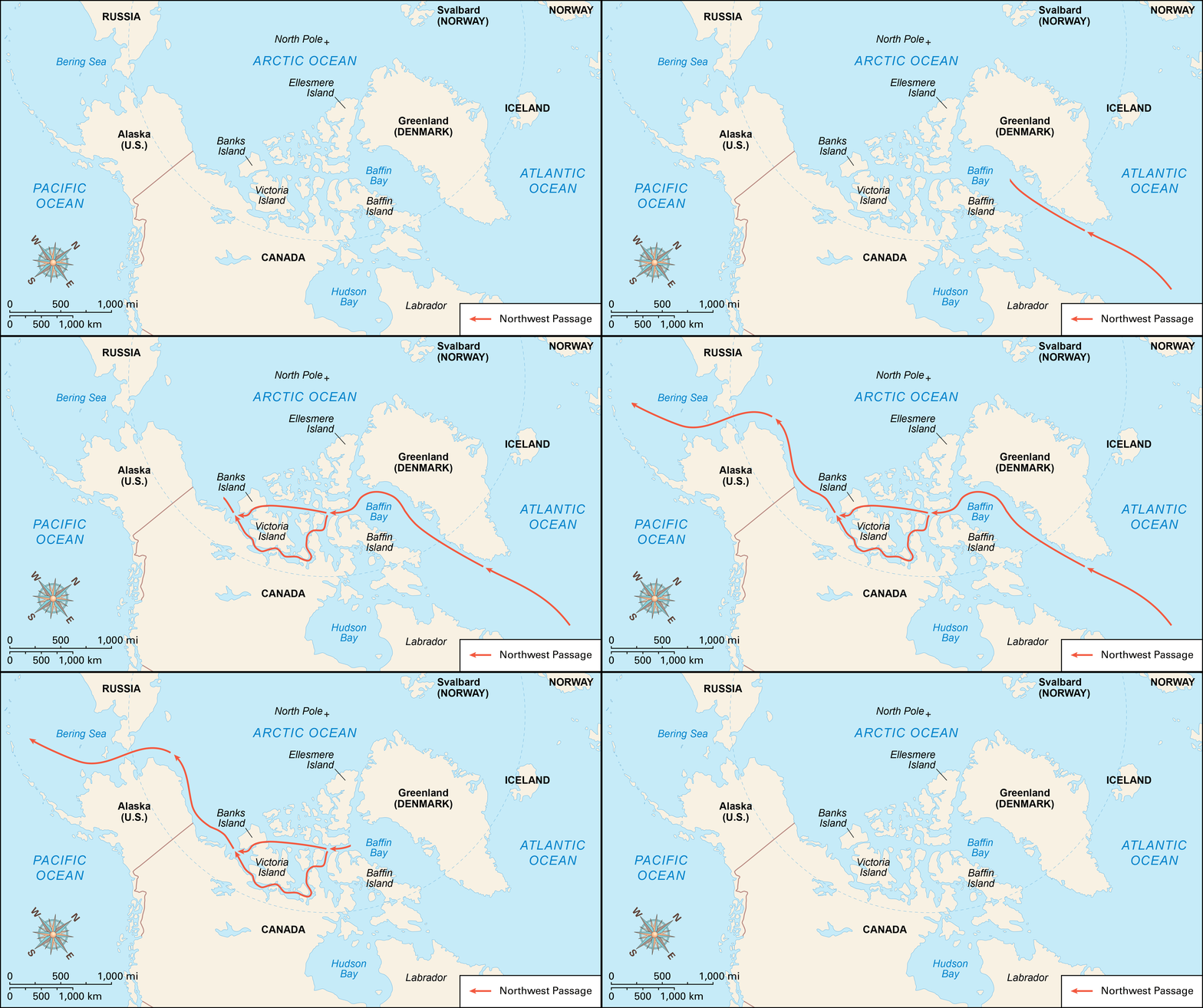
The crews of the HMS Erebus and the HMS Terror were looking for the Northwest Passage. Many people lost their lives trying to navigate this sea route. What is the Northwest Passage, and why is it so important?
Find out at Britannica School!
WORD OF THE DAY
detritus
noun
: the pieces that are left when something breaks, falls apart, is destroyed, etc.

Word Search
Can you find all the words?
In Case You Missed It
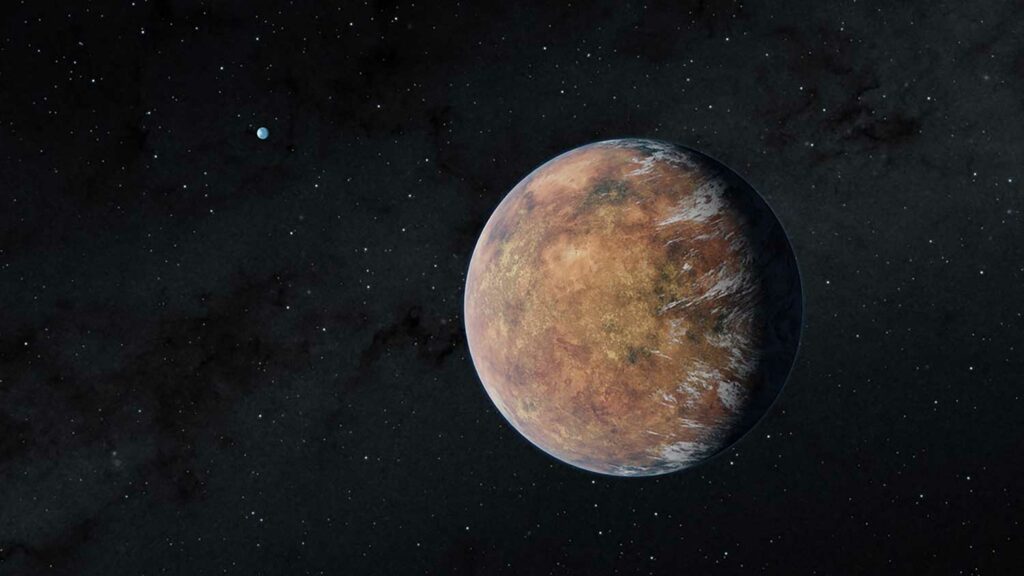
Scientists have identified a planet that has many of the characteristics needed to support life. What do they know so far?
01.24.23
LeBron James is about to become the highest scorer in NBA history!
01.20.23
Dr. Martin Luther King’s daughter, Dr. Bernice King, is carrying on her father’s work.
01.13.23
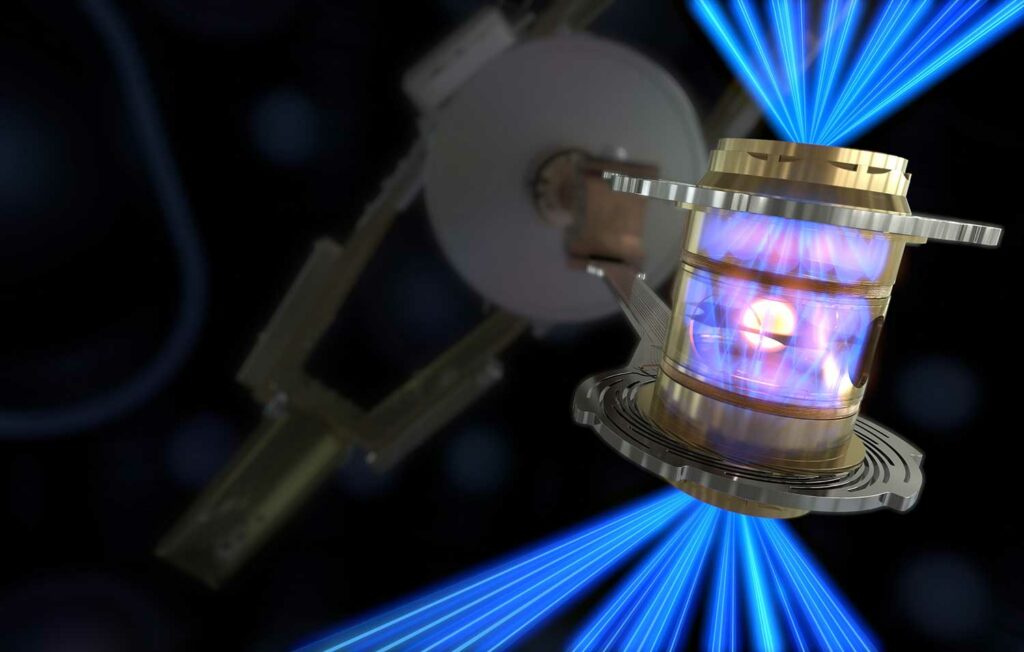
Scientists were able to get more energy out of a nuclear fusion reaction than they put in. They say this is a milestone in the search for clean energy.
01.10.23