Just Add Sunshine

A three-wheeled black and silver car with a tent mounted in the rear sits in a field with a stream and mountains in the background.

Just Add Sunshine

Aptera’s new car doesn’t need gasoline or electricity. It can run on the power of the Sun!

© Aptera

Electric vehicles (EVs) are getting more popular. One reason for this is they don’t pollute the air. But EVs aren’t always the best choice for long road trips. EVs need to be plugged in so their batteries can recharge, and plugging stations can be hard to find. That’s why a company called Aptera is making an EV that is solar powered. That means the car can run on power it makes from the Sun. 

Aptera’s new car, called the Launch Edition, has solar panels on its hood, roof, and back end. Just like solar panels on a house, the panels on the Aptera car capture the Sun’s energy. That energy is then used to power the car’s battery. Aptera says that on a sunny day, the car can drive for up to 40 miles (64 kilometers) using only the Sun’s energy. The car doesn’t need to be plugged in, so it uses less electricity than other EVs. 

What if it hasn’t been very sunny? That’s no problem. Like other EVs, Aptera’s Launch Edition car has a plug, so drivers can power their battery with electricity. A fully charged car can go for hundreds of miles before it needs to be plugged in or sit in the Sun for a while.

Aptera says it plans to start selling its Launch Edition later in 2023. However, making the cars will cost a lot of money. If Aptera can raise the money, these unusual-looking cars might be coming to a road near you!

Fun Fact Icon

Fun Fact

General Motors LLC

Did you know that the idea for solar-powered cars isn’t new? In 1955, William G. Cobb showed the public a solar-powered car called the Sunmobile. The Sunmobile was only 15 inches (38 centimeters) long—way too small to sit in. But it had solar panels that powered its small motor!

Trash to Treasure

© Mogilevchik, Maryvalery/Dreamstime.com; Animation Encyclopædia Britannica, Inc.

Can a car really run on garbage? With the right technology, cars can run on certain types of trash.

Some cars are electric. And companies are building cars that run on energy from the Sun. What else could power a car?

A man named Edmundo Ramos created a way for his car to run on garbage! 

Ramos is an engineer. That means he can build things to try to solve problems. Ramos thought about the problem with using gasoline to power cars. For one thing, burning gasoline creates pollution. Also, gasoline is made from oil. Oil is a natural resource that takes millions of years to create. The world has a limited supply of oil. 

Ramos built a system in the back of his car that can replace his gas tank. It took many tests to figure out what combination of garbage and air would power his car’s engine. In fact, Ramos spent 10 years trying different things until he finally found something that worked. Now, his car runs on garbage like fruit pits, the shells from nuts, and charcoal. Ramos says that his system allows his car to go for hundreds of miles and doesn’t pollute the air!

The Power of the Sun

A small brick house with solar panels on the sloped roof

© deepblue4you—E+/Getty Images

Solar panels can power cars. Did you know that solar panels already help power many homes? You can read more about how solar energy works at Britannica School.

Word of the Day Icon

Word of the Day

groundbreaking

Part of speech:

adjective

Definition:

: introducing new ideas or methods

Definitions provided by
Merriam-Webster Logo
Game Icon

Play

See how many words you can figure out.

O
O
O
O
O

In Case You Missed It

Miriam Payne rowed a boat across the Atlantic Ocean in less than two months!

03.03.23

Kids in Australia are finding cool books in unusual places!

02.28.23

Scientists found a meteorite—a rock from space—in Antarctica.

02.24.23

Scientists made the world’s first vaccine for bees!

02.17.23

Cool Idea!

Animation of a child holding a glass in which a straw is melting into liquid.

Cool Idea!

A company invented a straw that melts!

Animation of a child holding a glass in which a straw is melting into liquid.

© Visual Generation, Vitezslav Sispera/Dreamstime.com; Animation Encyclopædia Britannica, Inc.

Straws are a big problem. Most of them are made of plastic, which is harmful to the planet. A new company called The Ice Guys is aiming to solve the straw problem. They invented a straw that’s made of ice.

The Ice Straw is the first straw that’s all ice. It keeps drinks cool and then melts away, just like an ice cube.

The Ice Guys don’t actually sell straws made of ice. What they sell is a mold. To make ice straws, you just fill the mold with water (or juice) and put it in the freezer for at least 30 minutes. The mold is shaped so that the liquid freezes into straws.

Ice Straws can be used instead of plastic straws. Every year, people throw away millions of tons of plastic. This includes straws, wrappers, bags, bottles, and other containers. Plastic lasts for a long time. And a lot of it ends up in oceans, where it is harmful to ocean life. Experts say plastic straws are a very small part of the plastic problem. But anything we can do to use less plastic will help keep our planet cleaner and safer.

Many types of straws can be used instead of plastic. Some people use metal or glass straws. And some people decide not to use straws at all!

NEWS EXTRA!

International Women’s Day

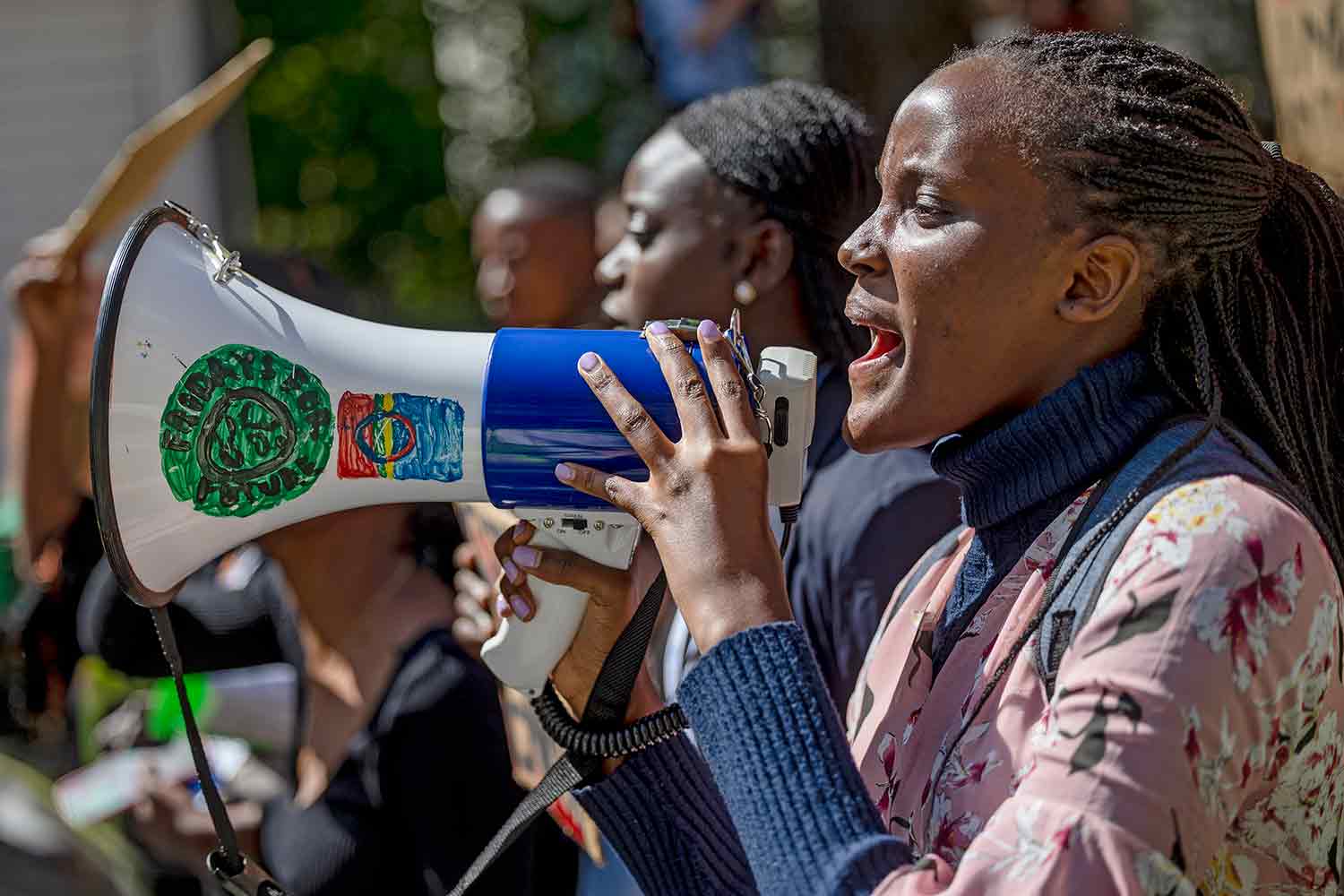
In a street march of several women, a woman speaks into a megaphone flanked by two women holding a large sign

© Elena Baryshnikova/Dreamstime.com

Women march for their rights in Amsterdam, Netherlands, on March 8, 2020.

International Women’s Day is a holiday that is celebrated all over the world. It takes place on March 8. 

On International Women’s Day, people recognize how far women have come to win rights and fair treatment. This is also a day to think about what else should be done to make sure women are treated equally.

Face Thinking Icon

Did You Know?

Different colored plastic straws with international symbol for No.

© Ludmila Korotkova/Dreamstime.com

In 2011, 9-year-old Milo Cress started the Be Straw Free Campaign. His goal was to get people to use fewer plastic straws. Milo talked to companies about the plastic problem. He also gave speeches around the world.

Thanks to Milo and others, many companies have pledged (promised) to stop using plastic straws.

Is McDonald’s Changing its Ways?

© Wokephoto17—Moment/Getty Images, © Thomaspajot/Dreamstime.com; Animation Encyclopædia Britannica, Inc.

© Wokephoto17—Moment/Getty Images, © Thomaspajot/Dreamstime.com; Animation Encyclopædia Britannica, Inc.

Many companies sell their food in plastic containers. But some of them are making changes. Here’s the story of how McDonald’s has changed its ways.

In 1990, McDonald’s changed its hamburger containers. The old containers were made from a kind of plastic that is hard to recycle. The new containers were made of paper.

In 2018, McDonald’s started using cups that can be recycled. The old cups were made from a kind of foam. They weren’t easy to recycle. 

Also in 2018, McDonald’s stopped using plastic straws in the United Kingdom. The new straws are made from paper. But many people complained. They said the straws were hard to recycle.

In 2023, McDonald’s said it would stop using straws. It started using new plastic cups with a special lid that doesn’t need a straw. These cups use a lot of plastic. But companies say it’s better to use the cups than plastic straws because the cups are easier to recycle. 

McDonald’s has come up with a lot of ideas. Do they help the planet? What do you think?

The Plastic Problem

Sneakers, toothpaste, soda cans, wrapping paper, paper cups, and milk cartons.

© Chernetskaya, Oleg Dudko, Lim Seng Kui, Anmbph/Dreamstime.com, © tatyana_tomsickova—iStock/Getty Images Plus, © jules/stock.adobe.com

We use a lot of plastic. There’s plastic in our phones, our toys, our cars, and even our clothes. Did you know that all the items in these photos contain plastic?

What is plastic? And why is it bad for the planet?

Learn more at Britannica School.

Word of the Day Icon

Word of the Day

waste

Part of speech:

noun

Definition:

: material that is left over or that is unwanted after something has been made, done, used, etc.

Definitions provided by
Merriam-Webster Logo
Game Icon

Play

Wordrow

O
O
O
O
O

In Case You Missed It

Miriam Payne rowed a boat across the Atlantic Ocean in less than two months!

03.13.23

Kids in Australia are finding cool books in unusual places!

02.28.23

Scientists found a meteorite—a rock from space—in Antarctica.

02.24.23

Scientists made the world’s first vaccine for bees!

02.17.23

Miriam Payne Makes Waves

Miriam Payne Makes Waves

Miriam Payne rowed a boat across the Atlantic Ocean in less than two months!

Encyclopædia Britannica, Inc.

Miriam Payne rowed from the Canary Islands to the island of Antigua.

Imagine rowing a boat across an ocean. That’s just what a woman named Miriam Payne did. And she did it in less than two months!

Payne, who is 23, rowed across the Atlantic Ocean in 59 days, 16 hours, and 36 minutes. She did this as part of a race called the Talisker Challenge. People in the race can do it solo (alone) or in teams of up to five people.  The race starts at the Canary Islands, which are off the coast of Africa. Rowers travel west to Antigua, which is an island in the Caribbean Sea. The race is 3,000 miles (4,800 kilometers) long!

During the race, rowers must do everything themselves. They take their own food and water, and if anything happens to their boat, it’s up to them to fix it. (Two ships follow along, in case a rower or rowing team needs to quit the race.) Rowers do take breaks. Their boats have sleeping cabins, and special equipment that lets them know their location in the ocean. 

Payne said rowing under the hot Sun made her very tired. The last 10 miles (16 kilometers) were the toughest, even though she knew she was near the end of the race. 

“I was so tired. I just wanted to get to the end of the race so I could stop rowing,” she later told the British Broadcasting Corporation (BBC). But as she got close to Antigua, she could hear her family and friends cheering. They were waiting to greet her! This gave Payne the energy she needed to finish the race.

Payne arrived at Antigua on February 10. As she arrived, people in the crowd called out, “Way to go, Miriam! That’s it, you’ve done it!” Payne had finished the Talisker Challenge faster than any solo woman ever had before.

Fun Fact Icon

Fun Fact

© Jane Stockdale

Victoria Evans crossed the Atlantic Ocean fast!

Miriam Payne was the fastest solo woman to complete the Talisker Challenge. But another woman holds the Guinness World Record for completing the same route even faster. In 2022, Victoria Evans of England rowed across the Atlantic Ocean in just 40 days and 19 hours.

They Changed the World

March is Women’s History Month. You can read about the amazing women below and many more at Britannica School!

Sarah Winnemucca (1844–1891).

National Portrait Gallery, Smithsonian Institution (NPG.82.137)

Sarah Winnemucca was a Paiute (American Indian) speaker and writer. In 1872, the U.S. government made the Paiute people give up their land so white people could live there. Winnemucca gave speeches around the country. She wanted to let people know what was happening to the Paiute.

Jane Addams (1860–1935).

Library of Congress, Washington, D.C

Jane Addams spent her life helping people. In 1889, she opened Hull House in Chicago, Illinois. Hull House was a place where immigrants could go to get help building their lives in the United States. Addams also spoke in support of laws protecting the rights of workers and the right of women to vote.

Maria Tallchief (1925–2013).

© Baron—Hulton Archive/Getty Imges

Maria Tallchief was a ballet dancer. She was born on an Osage (American Indian) reservation. Her father was Osage, and her mother was white. Tallchief first danced in Europe and then joined the New York City Ballet. She is still thought of as one of the best ballerinas ever. Tallchief later taught ballet and founded the Chicago City Ballet.

Patsy Takemoto Mink (1927–2002).

Gwendolyn Mink—Patsy T. Mink Papers/Library of Congress, Washington, D.C.

Patsy Takemoto Mink was the first Asian American woman to be elected to the U.S. Congress. (Members of Congress make U.S. laws.) Mink helped to pass a law called Title IX (or Title Nine). Title IX requires schools to spend the same amount of money on girls’ and women’s sports and education programs as they do on programs for boys and men. 

Wangari Muta Maathai (1940–2011).

Mark Garten/UN Photo

Wangari Muta Maathai was an environmentalist—a person who works to protect the planet. Born in Kenya, she started her career teaching about veterinary science—the care of animals. She later started the Green Belt Movement, a group that works to have trees planted. In 2003, Maathai became deputy minister of the environment, natural resources, and wildlife in Kenya.

Celebrate Women’s History

Addison N. Scurlock—Michael Ochs Archives, Stephen Shugerman, Andrew Burton, Clive Brunskill, Sasha—Hulton Archive, Hulton Archive/Getty Images; Library of Congress, Washington, D.C. (LC-DIG-ds-05052, LC-U9-25383-33, LC-DIG-ppmsca-23661); Courtesy of the Franklin D. Roosevelt Library and Museum; PRNewsFoto/XM Satellite Radio/AP Images; Sojourner Truth . . . From Her “Book of Life”; NASA;  Encyclopædia Britannica, Inc.; National Portrait Gallery, Smithsonian Institution (NPG.2009.36); © Tupungato/Dreamstime.com; Steve Petteway/Collection of the Supreme Court of the United States; Animation Encyclopædia Britannica, Inc.

Women have been making history for thousands of years. You can read more about women who changed the world at Britannica School.

Word of the Day Icon

Word of the Day

endurance

Part of speech:

noun

Definition:

: the ability to do something difficult for a long time

Definitions provided by
Merriam-Webster Logo
Game Icon

Play

Can you find all the words?

O
O
O
O

In Case You Missed It

Kids in Australia are finding cool books in unusual places!

02.28.23

Scientists found a meteorite—a rock from space—in Antarctica.

02.24.23

Scientists made the world’s first vaccine for bees!

02.17.23

Here’s the story of a young girl who helped change the country for the better.

02.14.23

A Book Treasure Hunt

Animation of books emerging from a kangaroo’s pouch, the Sydney Opera House, a crocodile’s mouth, and more.

A Book Treasure Hunt

Kids in Australia are finding cool books in unusual places!

Animation of books emerging from a kangaroo’s pouch, the Sydney Opera House, a crocodile’s mouth, and more.

© Olga Kurbatova/Dreamstime.com, © Rimma Rimma/Dreamstime.com; Animation Encyclopædia Britannica, Inc.

Kids in Australia are finding hidden treasures! Thousands of books have been hidden all over a town called Braidwood for anyone to find.

The books are hidden in places like trees, bushes, and shop windows. They’re placed inside a plastic bag with a note that says, “You are the lucky finder of this book. Read it, enjoy it, and then re-hide it for someone else to enjoy.” 
Kids who find a book are asked to write their name inside the front cover before hiding it again. Then it’s easy to see how many people found and enjoyed each book.

Courtesy of Samantha Dixon

The idea for this treasure hunt came from Samantha Dixon, who lives in Braidwood. Dixon is a mom who knows how much fun it can be to find hidden surprises. For a while, there were painted rocks hidden around Braidwood for kids to find. Dixon thought, “What if we hid books instead?”  Now, many kids are having a great time finding, reading, and hiding books. 

“It’s lovely to watch the little kids’ faces when they find the books,” Dixon told Australia’s ABC News. “It’s a bit magical.”

NEWS EXTRA!

Black History Month

A GIF that scrolls through the portraits of many well known and influential Black Americans

Library of Congress, Washington, D.C. (LC-DIG-ppmsca-08978, LC-USW3-001546-D, LC-USZ62-127236, LC-USZ62-27663); Addison N. Scurlock—Michael Ochs Archives, Kean Collection—Archive Photos, © Michael Ochs Archives, Evan Agostini/Getty Images; Smithsonian National Museum of African American History and Culture, Washington, D.C. (object no. 2009.50.2); PRNewsFoto/XM Satellite Radio/AP Images; AP Images;  NASA; National Archives, Washington, D.C. (2803441); Pete Souza—Official White House Photo; Animation Encyclopædia Britannica, Inc.

February is Black History Month in the United States. Want to read more? Check out the January 31 edition of In the News!

Fun Fact Icon

Fun Fact

Three covers from the Book Scavenger series on top of a map with a magnifying glass

Macmillan Publishers, © Bakhtiar Zein/Dreamstime.com; Photo illustration Encyclopædia Britannica, Inc.

Do you know about the Book Scavenger stories? This series (group of books) by Jennifer Chambliss Bertman is all about kids who use clues to look for hidden books!

Little Free Libraries

Governor Tom Wolf (CC BY 2.0); Paul Sableman (CC BY 2.0); © Linda Williams/Dreamstime.com; Carol Jacobs-Carre (CC BY-SA 2.0); Infrogmation of New Orleans (CC BY 2.0); Josh Larios (CC BY-SA 2.0)

Read Across America Week starts on March 2, 2023. A library is a great place to find a book. But did you know that not all libraries are buildings?

All over the world, people are building Little Free Libraries. A Little Free Library is a small cabinet or box that people can put outside their homes and fill with books. Anyone can take a book or leave a book! 

Check out the slideshow to see some creative ways people have set up their libraries.

Books Are the Best!

David Stokes; Photo composite Encyclopædia Britannica, Inc.

How can you find something great to read? You might want to look for a book that won the Newbery Medal. This award is given to one book each year.

Word of the Day Icon

Word of the Day

unearth

Part of speech:

verb

Definition:

: to find or discover (something) that was hidden or lost

Definitions provided by
Merriam-Webster Logo
Game Icon

Play

Can you put the words in the right places?

O
O
O
O
O

In Case You Missed It

Scientists found a meteorite—a rock from space—in Antarctica.

02.24.23

Scientists made the world’s first vaccine for bees!

02.17.23

Here’s the story of a young girl who helped change the country for the better.

02.14.23

A team of people took home the top prize at a contest for snow sculptures!

02.10.23

It Came From Space

It Came From Space

Scientists found a meteorite—a rock from space—in Antarctica.

Courtesy of Maria Valdes

Scientists found a rock from space in Antarctica! The rock, called a meteorite, is one of the largest ever found in that part of the world. 

Scientists found the meteorite during a trip to Antarctica in January 2023. The meteorite is about the size of a cantaloupe, which is a kind of melon. But since the meteorite is made up mostly of metal, it’s very heavy for its size. In fact, it weighs almost 17 pounds (8 kilograms)!

Meteorites are rocks that fall from space and land on Earth’s surface. Along with the planets, many other objects orbit the Sun. Some of them are pieces of rock. Sometimes a small rock gets close to Earth’s atmosphere and falls to Earth. That’s a meteorite. Scientists think the one they found fell to Earth tens of thousands of years ago.

Scientists often look for meteorites in Antarctica. That’s because Antarctica is a very dry place. In fact, it’s a desert! Most meteorites are found in deserts because there’s very little rain or snow to damage them. So they can sit in one spot and remain unchanged. Plus, Antarctica is frozen. Since meteorites are dark colored, they’re easy to spot on the white ice. So far, scientists have found about 45,000 meteorites in Antarctica. They think there might be 300,000 more!

NEWS EXTRA!

Black History Month

A GIF that scrolls through the portraits of many well known and influential Black Americans

Library of Congress, Washington, D.C. (LC-DIG-ppmsca-08978, LC-USW3-001546-D, LC-USZ62-127236, LC-USZ62-27663); Addison N. Scurlock—Michael Ochs Archives, Kean Collection—Archive Photos, © Michael Ochs Archives, Evan Agostini/Getty Images; Smithsonian National Museum of African American History and Culture, Washington, D.C. (object no. 2009.50.2); PRNewsFoto/XM Satellite Radio/AP Images; AP Images;  NASA; National Archives, Washington, D.C. (2803441); Pete Souza—Official White House Photo; Animation Encyclopædia Britannica, Inc.

February is Black History Month in the United States. Want to read more? Check out the January 31 edition of In the News!

Fun Fact Icon

Fun Fact

© Fabio Lamanna/Dreamstime.com

The largest meteorite ever found is called the Hoba meteorite. It was discovered in Namibia, a country in Africa. The Hoba meteorite weighs almost 60 tons!

What’s the Difference?

© Kerrick, ratpack223, GRECLAURENTIU, Trifonov_Evgeniy—iStock/Getty Images Plus, ©Mark Garlic—Science Photo Library/Getty Images; Photo composite Encyclopædia Britannica, Inc.

© Kerrick, ratpack223, GRECLAURENTIU, Trifonov_Evgeniy—iStock/Getty Images Plus, ©Mark Garlic—Science Photo Library/Getty Images; Photo composite Encyclopædia Britannica, Inc.

If you read today’s article, you know that a meteorite is a rock from space that has fallen to Earth’s surface. But do you know what a meteoroid is? How about an asteroid? Let’s check out what each of these objects is.

An asteroid is a rocky object that orbits the Sun but is smaller than a planet. Like Earth, asteroids are billions of years old. Scientists believe that a few large asteroids have hit Earth. They think that an asteroid killed the dinosaurs and many other living things when it hit our planet 66 million years ago. It left behind a giant crater (dent in the ground) in Mexico.

Comets also orbit the Sun. But unlike asteroids, which are made up of rock, comets are made up of ice and dust.

A meteoroid is a piece of an asteroid or a comet that has broken off. Meteoroids orbit the Sun. 

If a meteoroid enters Earth’s atmosphere, it vaporizes, or becomes a gas. Then it’s called a meteor. A meteor may be seen from Earth as a streak of light in the sky.

Sometimes meteoroids don’t vaporize completely, and they land on Earth’s surface as rocks called meteorites.

Space Rocks Rock!

© Allexxandar—Creatas Video+ /Getty Images Plus

The video shows a meteor shower. You can learn about meteor showers—and more—at Britannica School!

Word of the Day Icon

Word of the Day

cosmic

Part of speech:

adjective

Definition:

: of or relating to the universe or outer space

Definitions provided by
Merriam-Webster Logo
Game Icon

Play

How many space objects can you find?

O
O
O
O
O

In Case You Missed It

Scientists made the world’s first vaccine for bees!

02.17.23

Here’s the story of a young girl who helped change the country for the better.

02.14.23

A team of people took home the top prize at a contest for snow sculptures!

02.10.23

Nine-year-old Molly Sampson discovered the fossil of a shark tooth that’s bigger than her hand!
02.07.23

Bee Healthy

A honeybee queen sits on a honeycomb.

Bee Healthy

Scientists made the world’s first vaccine for bees!

A honeybee queen sits on a honeycomb.

© Mirko Graul/Shutterstock.com

When bees get sick, it can cause big problems for people. In 2023, scientists said they created a vaccine that can help honeybees stay healthy. It’s the world’s first vaccine for honeybees.

A vaccine is something that is put in an animal’s body to help protect the animal from a certain disease. There are vaccines for humans and many other species of animals. The vaccine that scientists made for honeybees protects them against a disease called foulbrood. Foulbrood can kill off entire hives of honeybees. 

Honeybee health is very important to people. That’s because honeybees are pollinators. They fly to plants that have flowers to collect pollen and nectar. The pollen and nectar are food for all the bees in the hive. When bees visit flowers, they end up spreading pollen from flower to flower. If plants aren’t pollinated, they can’t grow seeds to make new plants. And all the fruits and vegetables we eat come from plants. Without pollinators like bees, we wouldn’t have a lot of our food.

So, the bee vaccine isn’t meant to help just the bees. It’s meant to help humans, too, by protecting our food supply.

Many vaccines are given by needle, but bees are way too small for that. The bee vaccine is fed to the queen bee—the bee that lays all the eggs for the hive. Once the queen bee is protected from the disease, all the eggs she lays will be protected from the disease as well.

Fun Fact Icon

Fun Fact

© Igor Zubkov/Dreamstime.com, © Littlewormy/Dreamstime.com; Photo illustration Encyclopædia Britannica, Inc.

Honeybees must visit about two million flowers to make enough honey to fill one jar!

Which Bee is Which?

© mahroch—Creatas Video+/Getty Images

In this video, the queen bee is easy to spot. She’s marked with the number 46.

Every bee in a honeybee hive has a job to do. Let’s take a closer look.

Every honeybee hive has a queen bee. This female bee is larger than the other female bees. Her only job is to lay eggs so that new bees can hatch and grow into adults. The queen is cared for by other female bees, which feed her a special food called royal jelly. 

The honeybees you’re most likely to see flying around are worker bees. These bees are all female. Some worker bees take care of the queen or the larvae (young bees). Others collect pollen and nectar and bring it back to the hive. Others store the pollen and nectar and make honey. Some workers keep the hive clean. Others guard the hive to keep humans and other animals out.

Drones are male bees. Drones don’t collect pollen, clean, or do any of the other jobs the workers do. A drone’s job is to mate with the queen. When the weather turns cold and the hive needs to save its food supply for the winter months, the drones get kicked out by the worker bees.

It’s not easy being a bee!

We Need Bees

© tunart—E+/Getty Images

The bee in the photo is covered in pollen. It will take that pollen to the next flower. This is one way plants are pollinated. Learn more about bees at Britannica School!

Word of the Day Icon

Word of the Day

colony

Part of speech:

noun

Definition:

: a group of plants or animals living or growing in one place

Definitions provided by
Merriam-Webster Logo
Game Icon

Play

Can you find all the types of bees?

O
O
O
O
O

In Case You Missed It

Here’s the story of a young girl who helped change the country for the better.

02.14.23

A team of people took home the top prize at a contest for snow sculptures!

02.10.23

Nine-year-old Molly Sampson discovered the fossil of a shark tooth that’s bigger than her hand!
02.07.23
During his life, Wilson Bentley took more than 5,000 photos of snowflakes.
02.03.23

New Doll Honors an Early Pilot

New Doll Honors an Early Pilot

A new Barbie doll has been created to celebrate the life of a talented pilot named Bessie Coleman.

NASA

Bessie Coleman was the first Black American woman to earn a pilots’ license.

A new Barbie doll has been created to celebrate the life of a talented pilot named Bessie Coleman. Coleman was the first Black woman in the United States to earn a license to fly a plane.

The Bessie Coleman doll is dressed in a green aviator suit. (Early pilots were often called aviators, which means “fliers.”) Gigi Coleman is Bessie Coleman’s grandniece. She worked with Mattel, the company that makes Barbie dolls, to create the Bessie doll. 

“We hope through this doll more people will discover Bessie’s story and be inspired,” Gigi Coleman said.
A doll in early 20th century aviator clothing stands in front of a toy propeller plane.

© Mattel

The Bessie doll was created to honor the life of Bessie Coleman.

Bessie Coleman was born in 1892 in Texas. She was a child when the first planes were flown, and as she got older, she decided she wanted to be a pilot. But at the time, flying schools in the U.S. would not teach women, and they would not teach Black people. Coleman moved to France, where she earned a pilot’s license in 1921. 

Coleman became a stunt flier at public shows, performing tricks like flying her plane in a figure eight. People began to call her Brave Bessie. She toured the country, doing flight shows and giving speeches. She would not perform unless Black people were allowed to be in the audience.

Coleman died in an accident in 1926. Today her story lives on. The Bessie Coleman doll is just one way she is celebrated.

A woman holds a Bessie Coleman doll and poses with six women in airline uniforms.

© Mattel

Bessie Coleman’s grandniece, Gigi Coleman (center) took a flight with an all Black woman crew to celebrate the new doll.

NEWS BREAK

Earthquake in Turkey and Syria

Louai Beshara—AFP/Getty Images

Rescue teams worked at the site of a fallen building in Syria after a major earthquake struck on February 6, 2023.

On the morning of February 6, 2023, a powerful earthquake shook the nations of Turkey and Syria. Just hours later, there was another quake. The shaking caused buildings to fall. Many people died.   

Governments and others from around the world are sending medical workers, supplies, and food to the area. Many individuals are also stepping up to help. In Washington, D.C., people brought boxes full of supplies to the Turkish embassy—the home of Turkey’s representative in the U.S. Reginald Jamison was one of the people who brought supplies. 

“When you see people in need, that’s the proper thing to do,” Jamison told WTOP News.

Face Thinking Icon

Did You Know?

Bill Larkins (CC BY-SA 2.0)

This plane is a lot like the one that James Herman Banning and Thomas C. Allen flew across the United States.

In 1932, James Herman Banning and Thomas C. Allen became the first Black Americans to fly across the United States.

Celebrate Black History Month!

February is Black History Month. Here are just a few Black Americans you might want to read about. You can learn more about them at Britannica School!

Barbara Johns (1935–1991).

Part of a sculpture showing Barbara Johns protesting with her classmates, one holding a sign saying, “We want equal education.”

Frank Tozier/Alamy

This sculpture was made to honor Barbara Johns and others who worked for civil rights.

In 1951, schools in the southern United States were segregated. That means there were separate schools for Black and white students. Government leaders did not give Black schools as much money to pay for repairs. So the school that Barbara Johns went to was not as nice as the schools that white students attended. When Johns was 16, she led students out of her school as a way of saying this needed to change. She helped make change happen. A few years later, schools were no longer allowed to be segregated.

John Lewis (1940–2020).

Portrait of John Lewis outdoors with the Capitol Building in the background.

Courtesy of the office of U.S. Representative John R. Lewis

Congressman John Lewis spent much of his life working for equal rights.

John Lewis was an important person in the civil rights movement. In 1965, he led a march in Alabama. The marchers wanted more Black Americans to be allowed to vote. Lewis later became a member of the U.S. Congress. He spent his life working so that people were treated more fairly.

Amanda Gorman (born in 1998).

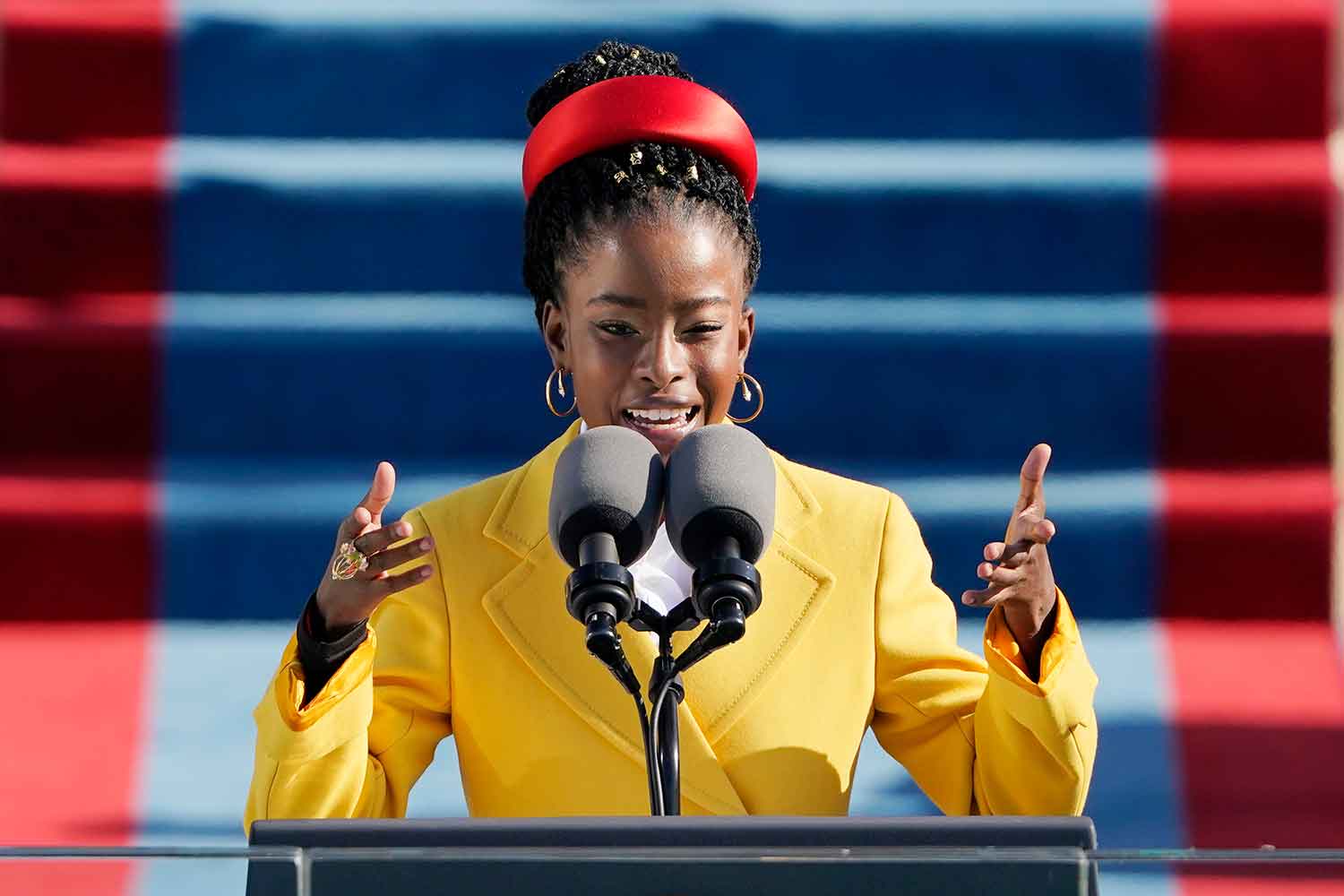
Amanda Gorman speaks at a podium.

Pool/Getty Images News

Amanda Gorman read her poem when President Joe Biden was inaugurated.

Amanda Gorman started writing poems when she was a child. When she was 17, she wrote her first book of poetry. She was named the National Youth Poet Laureate in 2017. That means she was the most important young poet in the United States. In 2021, Gorman appeared at the presidential inauguration, when the new president was sworn in. There, she read her poem, “The Hill We Climb.”

A Fearless Flyer

Michael Ochs Archives/Getty Images

There’s more to learn about Bessie Coleman.

Word of the Day Icon

Word of the Day

aviation

Part of speech:

noun

Definition:

: the business or practice of flying airplanes, helicopters, etc.

Definitions provided by
Merriam-Webster Logo
Game Icon

Play

Use the clues to help you fill in the boxes.

O
O
O
O

In Case You Missed It

A team of people took home the top prize at a contest for snow sculptures!

02.10.23

Nine-year-old Molly Sampson discovered the fossil of a shark tooth that’s bigger than her hand!
02.07.23
During his life, Wilson Bentley took more than 5,000 photos of snowflakes.
02.03.23
Here’s the story of a young girl who helped change the country for the better.
01.31.23

Making Snow Art!

Three people kneel in front of a snow sculpture of a person with his face in his hand.

Making Snow Art!

A team of people took home the top prize at a contest for snow sculptures!
Credit: Melinda Kempfer Pearson, Winterfun and Kerem Yucel—AFP/Getty Images

You can make sculptures out of many materials, including clay, wax, and marble. But some people are really good at sculpting with snow! That includes a team of snow sculptors who took home the top prize at the 2023 World Snow Sculpting Championship in Stillwater, Minnesota.

First prize went to the House of Thune, whose team members included Dusty Thune, his sister Kelly Thune, and David Aichinger. The team is from Minnesota. They defeated 11 other teams from around the world. 

The winning sculpture is called “Journey.” It shows two people who are unhappy and tired. But the sculpture’s story isn’t totally sad. Dusty Thune says his team wanted to show that people can go through hard times and then pick themselves up and put themselves together again. 

Each team was given a giant block of snow to work with. They had 72 hours to sculpt whatever they wanted—and anyone was allowed to come and watch. The House of Thune team had tools that were made especially for sculpting snow. 

Unlike sculptures made of clay or marble, the snow sculptures won’t last long. Even though Minnesota winters are usually cold, “Journey” will eventually be gone forever. But new snow will fall—and new sculptures can be made!

What would you make out of a big block of snow?

NEWS EXTRA!

Black History Month

A GIF that scrolls through the portraits of many well known and influential Black Americans

Library of Congress, Washington, D.C. (LC-DIG-ppmsca-08978, LC-USW3-001546-D, LC-USZ62-127236, LC-USZ62-27663); Addison N. Scurlock—Michael Ochs Archives, Kean Collection—Archive Photos, © Michael Ochs Archives, Evan Agostini/Getty Images; Smithsonian National Museum of African American History and Culture, Washington, D.C. (object no. 2009.50.2); PRNewsFoto/XM Satellite Radio/AP Images; AP Images;  NASA; National Archives, Washington, D.C. (2803441); Pete Souza—Official White House Photo; Animation Encyclopædia Britannica, Inc.

February is Black History Month in the United States. Want to read more? Check out the January 31 edition of In the News!

Fun Fact Icon

Fun Fact

A large butter sculpture of a cow and two adults and two children who are doing dairy-related work.
© Delmas Lehman/Dreamstime.com
This sculpture was on display at the Pennsylvania Farm Show in 2018. It’s made of 1,000 pounds (454 kilograms) of butter!
Some people make sculptures out of butter! They show off their delicious creations at state fairs all over the United States.

How To Make Polymer Clay

Side-by-side photos of a painted clay bowl and clay discs with painted on design.
Photos by Linda Catalano, courtesy of New York Handmade Collective

Want to try sculpting? You can use something called polymer clay. Polymer clay is sold at many stores, but it’s also possible to make it. Below is a recipe for polymer clay. You’ll need to use the stove, so be sure to get an adult to help you.

  • ¾ cup white glue
  • 1 cup cornstarch
  • 2 tablespoons mineral oil
  • 1 tablespoon lemon juice
  • A nonstick pot
  • A wooden spoon
  • A plastic bag that can be sealed
White liquid in a black pot with a wooden spoon
Step 1
Put the glue into the nonstick pot. Add the cornstarch and mix them together. Then add the mineral oil and lemon juice. Mix all the ingredients well.
Thick and pasty white material in a black pot with a wooden spoon
Step 2
Cook the mixture over low heat. Try to stir it the whole time, if you can. Eventually, the mixture will look like mashed potatoes.
A ball of white clay on a white surface
Step 3
Turn off the stove and remove the pot from the heat. The mixture will be hot. With help from an adult, put the mixture into a resealable plastic bag. Leave the top open until it is cooled. Then seal the bag, squeezing out as much air as you can. Store the mixture in the refrigerator until you want to use it. When you take it out, you will be able to form it into a ball and work with it.
A small white clay gnome with some bottled kitchen products in the background
Step 4
When you’re ready to make your sculpture, you can use paper clips, emery boards, sponges, and all sorts of other tools to help you shape the clay!
Photos by Linda Catalano, courtesy of New York Handmade Collective

Ready, Set, Sculpt!

A colorful plastic fish sculpture, a metal horse sculpture, a small jade sculpture, and a large bronze abstract sculpture

Rusty Clark (CC BY 2.0), © Sue Smith/stock.adobe.com, © AC Manley/Shutterstock.com, Los Angeles County Museum of Art, Gift of Mr. and Mrs. Paul E. Manheim (M.67.72.12), www.lacma.org; Photo composite Encyclopædia Britannica, Inc.

People have been making sculptures for thousands of years. Can you think of some creative materials you could use for sculpting?
Word of the Day Icon

Word of the Day

chisel

Part of speech:
noun
Definition:
: a metal tool with a flat, sharp end that is used to cut and shape a solid material (such as stone, wood, or metal)
Definitions provided by
Merriam-Webster Logo
Game Icon

Play

See if you can figure out the word.
O
O
O
O
O

In Case You Missed It

Nine-year-old Molly Sampson discovered the fossil of a shark tooth that’s bigger than her hand!
02.07.23
During his life, Wilson Bentley took more than 5,000 photos of snowflakes.
02.03.23
Here’s the story of a young girl who helped change the country for the better.
01.31.23
Two big book prizes are announced in January.

01.27.23

Megalodon Tooth

A young child stands in shallow water and holds up a large fossil of a shark tooth.

Nine-Year-Old Finds Giant Shark Tooth

Nine-year-old Molly Sampson discovered the fossil of a shark tooth that’s bigger than her hand!
A young child stands in shallow water and holds up a large fossil of a shark tooth.
Alicia Sampson (www.thefossilgirls.com, Instagram: @fossilgirls_md)
Molly Sampson shows off her discovery, a megalodon tooth fossil.

Molly Sampson has always loved fossils, especially fossils of shark teeth. In December 2022, Molly, who is 9, spotted one of the biggest shark tooth fossils you can find. The 5-inch (13-centimeter) tooth had once belonged to a giant shark species called megalodon. Megalodons lived millions of years ago. Today, megalodons are extinct, meaning they have all died out. 

Molly discovered the megalodon tooth on a beach in Maryland. She and her older sister were wading in the Chesapeake Bay and using tools called fossil sifters. With the sifters, they were able to sift through sand and see if there were any fossils in it. The sisters hoped to find shark teeth, but they had no idea what was waiting for them. Standing in water up to her knees, Molly spotted the amazingly large tooth.

“I went closer, and in my head, I was like, ‘Oh, my, that is the biggest tooth I’ve ever seen!’” Molly told National Public Radio (NPR). “I reached in and grabbed it, and dad said I was shrieking.”

About a week later, the family took the fossil to a museum. Experts at the museum studied the fossil and said Molly was right. It was a real megalodon tooth!

A display case shows many shark teeth of different sizes labeled by species.
Alicia Sampson (www.thefossilgirls.com, Instagram: @fossilgirls_md)
So far, Molly has collected more than 400 shark teeth! This is just part of her collection.

Molly has been searching for fossils with her dad and sister since she was very young. She wants to be a paleontologist when she gets older. (A paleontologist is a scientist who studies fossils.) Her family records Molly and her sister’s discoveries on an Instagram account. They hope to inspire other kids to explore the outdoors.

At 9 years old, Molly has already done tons of exploring!

NEWS EXTRA!

Black History Month

A GIF that scrolls through the portraits of many well known and influential Black Americans

Library of Congress, Washington, D.C. (LC-DIG-ppmsca-08978, LC-USW3-001546-D, LC-USZ62-127236, LC-USZ62-27663); Addison N. Scurlock—Michael Ochs Archives, Kean Collection—Archive Photos, © Michael Ochs Archives, Evan Agostini/Getty Images; Smithsonian National Museum of African American History and Culture, Washington, D.C. (object no. 2009.50.2); PRNewsFoto/XM Satellite Radio/AP Images; AP Images;  NASA; National Archives, Washington, D.C. (2803441); Pete Souza—Official White House Photo; Animation Encyclopædia Britannica, Inc.

February is Black History Month in the United States. Want to read more? Check out the January 31 edition of In the News!

Fun Fact Icon

Fun Fact

Sand shark with teeth visible seen from below
© Bob/stock.adobe.com
This sand shark has a lot of teeth!
Sharks’ teeth often fall out. That’s no problem, though. Sharks have many rows of teeth. And they grow new teeth all their lives. When one tooth falls out, a new one takes its place!

Big Shark, Big Teeth

A woman stands in a megalodon jaw bone on the left and an illustration of megalodon with a length measurement of 55 feet is on the right.
Heritage Auctions/Shutterstock.com, © Herschel Hoffmeyer/stock.adobe.com, © zozulinskyi/stock.adobe.com; Photo illustration Encyclopædia Britannica, Inc.
Just how big was megalodon? This photo shows the size of its jaws.

The word megalodon means “giant tooth.” That’s a good name for a shark with such big teeth!

Big teeth usually belong to big animals that eat meat. Scientists know that megalodon was huge. It may have been the biggest predator ever to live in the sea! Megalodon probably hunted whales, sharks, seals, and fish.

What hunted megalodon? Nothing! If you were a sea animal millions of years ago, you didn’t mess with megalodon. Scientists say it was at the top of the food chain, meaning that it had no predators. 

Leftovers From the Past

Quadrant showing fossils of a fish, dinosaur eggs, a reptile, and a pterosaur.
© Marcos Souza, Nikolay Antonov, Chris Hill/Dreamstime.com, © Zens photo—Moment/Getty Images; Composite image Encyclopædia Britannica, Inc.
This image shows four fossils. Clockwise from top left, they are a fish, dinosaur eggs, a reptile, and an ancient flying reptile called a pterosaur.
Some fossils are millions of years old! What are fossils?
Learn more at Britannica School.
Word of the Day Icon

Word of the Day

prehistoric

Part of speech:

adjective

Definition:
: of, relating to, or existing in the time before people could write
Definitions provided by
Merriam-Webster Logo
Game Icon

Play

All of the words in the puzzle are related to fossils.
Can you find them?
O
O
O
O
O

In Case You Missed It

During his life, Wilson Bentley took more than 5,000 photos of snowflakes.
02.03.23
Here’s the story of a young girl who helped change the country for the better.
01.31.23
Two big book prizes are announced in January.

01.27.23

Jude Kofie is an amazing piano player!

01.24.23

The Man Who Loved Snowflakes

Charlie Brown and Linus watch as snow falls.

The Man Who Loved Snowflakes

During his life, Wilson Bentley took more than 5,000 photos of snowflakes.

Black and white photo of an older man outdoors in a coat and hat standing behind a camera

Courtesy of the Jericho Historical Society/snowflakebentley.com

Snowflake Bentley at work behind his camera

Are snowflakes really as beautiful as everyone thinks? The answer is yes! We know this thanks to a man named Snowflake Bentley, who spent his life studying and taking photos of snowflakes. Now, these photos can be seen online!

Bentley, whose real first name was Wilson, was born in 1865 in Vermont, where winters are very snowy. Luckily for Bentley, he loved snow. 

When he was a teenager, Bentley started looking at snowflakes under a microscope, which is an instrument that makes small objects look bigger. Bentley was amazed when he noticed that each snowflake seemed to have its own special design. He felt as if snowflakes were beautiful art. There was just one problem—snowflakes melt, and the art is lost forever. So Bentley decided he needed to capture pictures of snowflakes before it was too late. He started by trying to draw snowflakes, but that took too long. So, instead, he began to photograph the flakes.

Over the course of his life, Bentley took more than 5,000 photos of snowflakes. He never found any two that were the same. In 1899, the Natural History Museum in London, England, bought 355 of Bentley’s photos. The photos are now online so that anyone can look at them. 

Bentley and his hobby were also celebrated in a 1998 picture book called Snowflake Bentley.

If you live in a place where it snows, see if you can catch a few snowflakes. You’ll never see the same design twice!

NEWS EXTRA!

Black History Month

A GIF that scrolls through the portraits of many well known and influential Black Americans

Library of Congress, Washington, D.C. (LC-DIG-ppmsca-08978, LC-USW3-001546-D, LC-USZ62-127236, LC-USZ62-27663); Addison N. Scurlock—Michael Ochs Archives, Kean Collection—Archive Photos, © Michael Ochs Archives, Evan Agostini/Getty Images; Smithsonian National Museum of African American History and Culture, Washington, D.C. (object no. 2009.50.2); PRNewsFoto/XM Satellite Radio/AP Images; AP Images;  NASA; National Archives, Washington, D.C. (2803441); Pete Souza—Official White House Photo; Animation Encyclopædia Britannica, Inc.

February is Black History Month in the United States. Want to read more? Check out the January 31 edition of In the News!

Fun Fact Icon

Fun Fact

From the Library and Archives, Natural History Museum, London; Animation Encyclopædia Britannica, Inc.

A snowflake’s shape depends on the temperature and amount of moisture in the cloud where it forms. Some snowflakes might be very similar, but no two snowflakes are exactly the same.

Snapping Snowflakes

Photo of Snowflake Bentley transferring a snowflake to a slide next to different snowflake photos taken by Bentley

Courtesy of the Jericho Historical Society/snowflakebentley.com; Animation Encyclopædia Britannica, Inc.

The photo on the left shows Wilson “Snowflake” Bentley moving snowflakes to a slide. The photos on the right were taken by Bentley.

How did Wilson Bentley take photos of snowflakes? Very carefully! Here’s what he did.

Bentley caught falling snowflakes on a board that was painted black. Then he used a magnifying glass to look closely at each flake and pick his favorites. 

Next, it was time to move a few snowflakes onto a glass slide. Bentley did this with a long, thin splinter of wood. He had to be careful not to breathe on the snowflakes, or they would melt! Then he used the edge of a feather to press the flakes flat on the slide.

Bentley attached a camera to his microscope. Then he placed the glass slide with the snowflakes under the microscope and took a photo!

All About Snow

Charlie Brown and Linus watch as snow falls.

© Lee Mendelson and Bill Melendez Productions/United Feature Syndicate/CBS; Animation Encyclopædia Britannica, Inc.

What makes every snowflake different? Learn more at Britannica School!

Word of the Day Icon

Word of the Day

unique

Part of speech:

adjective

Definition:

: used to say that something or someone is unlike anything or anyone else

Definitions provided by
Merriam-Webster Logo
Game Icon

Play

Can you find all the words about winter?

O
O
O
O
O

In Case You Missed It

Jude Kofie is an amazing piano player!

01.24.23

Scientists say an animal that lived millions of years ago was as long as three school buses!

01.20.23

Bernice King is the daughter of Martin Luther King, Jr. Find out how she is continuing her father’s work.

01.13.23

Jonathan the tortoise just celebrated his 190th birthday!

01.10.23